


 Claim Ownership
The Thinking Photographer's Podcast
Subscribed: 0Played: 2
Subscribe

© Niall Benvie 2025
Description
Have you got all the technical stuff about photography down and are actually more interested in ideas and making exciting new work? Work that expresses something about YOU? Then listen on.
These are coffee-break length episodes and, just like the dark chocolate that goes so well with strong coffee, they are rich, dense and, we hope, satisfying.
Niall has been a leading outdoor photographer and writer for more than 30 years and enjoys sharing what he has learned during that time. With his wife, Charlotte, they run Food and Photography Retreats Ltd., combining first class hospitality with tuition on photography, cooking and creativity more generally.
14 Episodes
Reverse

You’ve got to be a little careful online these days when you bandy-about words like “addiction”. So let me assure you, and those all, ever-vigilant AI bots on the trail of miscreants, that the only drugs I’m talking about here are hormones our own bodies produce. And when it comes to the consequence of the addiction to them, well, I think you’ll find that they are a big factor in driving personal growth. And where’s the harm in that?

Today, I’ve an interesting proposition for you. It’s the sort of thing that when someone first floats the idea, you’ll probably think it’s a lot of nonsense. After all it goes all against that the magazine, the books, the experts… tell us. I’m going to argue that imperfect photographs are actually more believable than ones where everything is , just so. Just as they’re meant to be. I’m going to make a case for photographing nature as it is - rather than as we want it to be.
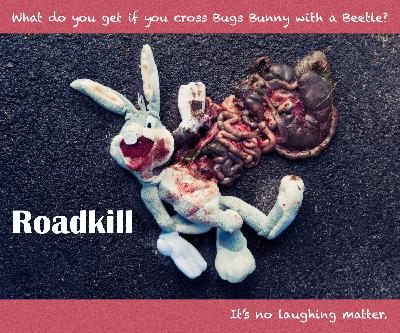
This is a long one today, folks, because there is a lot to say about communication and how and why it fails. And I’m going to talk about it in the context of self preservation, or, if you prefer the term, nature conservation. Now, I know it’s not fashionable nowadays, but I try not to pontificate on things I have no experience of. This, as it happens though, is one that I do, although not always with great success. Fortunately, there are lessons to be learned from failure `and I’ve had a chance to learn a lot this way over the years.If you’re wondering what all this has to do with photography, I’d say everything, really. Photography is the world’s universal language now, the most ubiquitous way of sharing ideas and experiences. So, I think it pays for you and me, as photographers to understand how to connect with the people we want to hear us and for you to learn from some of my mistakes.
Niall and Charlotte moved from Scotland to live in France at the height of the pandemic. In the final episode of this first series you can learn about the creative challenges and opportunities such a move creates.South Morvan Natura 2000 site.Stay, learn and eat with Charlotte and NiallGet MENUette- our newsletter - for free.Written, presented and produced by Niall Benvie, Food and Photography Retreats Ltd.Natural sounds recorded in the field by Niall BenvieMusic provided by Epidemic Sound.

Niall asks why there is a fascination with lifeless planets while life on Earth is so gravely imperiled - and gains an insight into miracles in the process.Earthrise photograph.Curiosity Rover images.Jostein Gaarder’s Maya.Francis Fukuyama’s End of History.Elon Musk’s wish to settle Mars.Stay, learn and eat with Charlotte and NiallGet MENUette- our newsletter - for free.Written, presented and produced by Niall Benvie, Food and Photography Retreats Ltd.Natural sounds recorded in the field by Niall BenvieMusic provided by Epidemic Sound.
Is “fine art photography” a term bandied around to make generic photography seem more serious - or just a sales ruse. Niall probes this question and describes why most of his own work is certainly not “art” - but some might be.Art and money laundering.Tracey Emin’s Crucifixion.Stay, learn and eat with Charlotte and NiallGet MENUette- our newsletter - for free.Written, presented and produced by Niall Benvie, Food and Photography Retreats Ltd.Natural sounds recorded in the field by Niall BenvieMusic provided by Epidemic Sound.
You can probably think of many, but this week, Niall describes what he sees at the two fundamentally different types of photograph that arise from a desire either to tell a story or, simply, to describe the appearance of things. It pays to know which you’re making before you release the shutter.Stay, learn and eat with Charlotte and NiallGet MENUette- our newsletter - for free.Written, presented and produced by Niall Benvie, Food and Photography Retreats Ltd.Natural sounds recorded in the field by Niall BenvieMusic provided by Epidemic Sound.
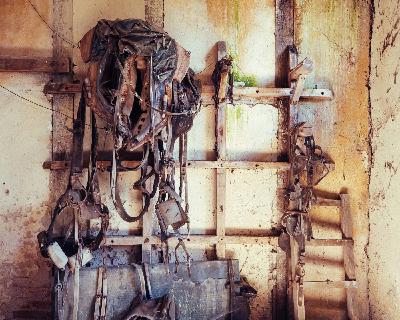
In recent years, Niall has made a side-gig of urbex photography. But is this really any surprise for a nature photographer? This episode encourages you to re-evaluate your concept of “nature photography” and appreciate the fragility of culture.The transcript.A history of urban exploration.The law and urbex.Colour grading templates.Stay, learn and eat with Charlotte and NiallGet MENUette- our newsletter - for free.Written, presented and produced by Niall Benvie, Food and Photography Retreats Ltd.Natural sounds recorded in the field by Niall BenvieMusic provided by Epidemic Sound.

As AI technology seeps into more and more corners of our lives, Niall makes the case for nature photography to remain real - and describes hurdles AI just can’t cross.See Boris Eldagsen’s image.See Mid journey-created images.Stay, learn and eat with Charlotte and NiallGet MENUette- our newsletter - for free.Written, presented and produced by Niall Benvie, www.foodandphotographyretreats.comNatural sounds recorded in the field by Niall BenvieMusic provided by Epidemic Sound. © Niall Benvie, 2025. All rights reserved.

A few years ago, I thought i’d had my Dragon’s Den moment. I would dazzle the sceptical venture capitalists, save lives and win acclaim. You see, in places with high populations of moose, or elk as we call them in Europe, places such as Newfoundland and Sweden, people die every year in collisions with these tall, lanky animals. When a car strikes one, the elk doesn’t go underneath- it comes through the windscreen, sometimes with fatal consequences for the driver as well. So, my idea was to fit external airbags so that when a strike occurred, the bag would deploy and deflect the animal away from the car. Genius, I thought…until I went to check if anyone else had thought of this…and found that Volvo had, with bags designed to reduce injuries to pedestrians. There went my fortune. Yet this is just one example of the parallel genesis of ideas, And I think I might know what’s going on.
Volvo’s external airbags. Grrrr.Vincent and Michel Munier’s Au Fil des SongesWild Wonders of EuropeMeet Your NeighboursThe Jumping Squirrel clichéThe Diving Kingfisher clichéLaurie Campbell
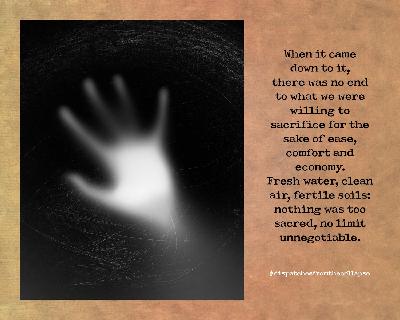
It’s funny, isn’t it, how there is a world of difference being in a rut and being in the groove? In one, your life is going nowhere. In the other you’ve struck some sort of creative vein, and mining it is pure joy. Well, normally. But in the case of my project, Dispatches from the Collapse, the ideas and images that came together in 2019, were anything but joyful. I found myself as midwife to a pretty ugly litter. What’s worse, though, is that I’ve revisited and re-tested the assumptions I made when I delivered them and, each one seem, well, depressingly hale and hearty. Here’s the project’s description:“When I made the images in this series, hope was far from my mind. Rather, I imagined the pictures as relics found in a drawer in an abandoned house, decades from now. The imagery and messages attached to them are from an earlier period, just as an unspecified collapse was getting under way. The words are rueful, sometimes even bitter, often with an unspoken “I told you so”. In them I draw attention to a wide range of post- collapse scenarios with a view, in part, to highlight our current naivety and abject lack of preparedness for what is to come.”Don’ let that put you off listening, please! You can always challenge my ideas…
The images from Dispatches from the CollapseThe spread of misinformation on social mediaRisks of hyper-connectivityReasons for rising sea levelsGrowth in size of carsDecline of flying insects in GermanyPaul Kingsnorth Life versus the MachineDerrick Jensen on psychopathyGreta Thunberg activismPopulist isolationismEnvironmentally-induced migrationDerrick Jensen and hope

If you think that composition is only about creating balance between the elements of a photograph, I’ve got news for you: it can be about an awful lot more. And today, I’m going to make make the case for placing the subject in the part of the frame that is appropriate- rather than correct.
Bob Holmes, veteran travel photographerJoe Cornish, photographerClive Bell’s theory of Significant Form

Over the last 30 years or so, I’ve visited and revisited an idea I stumbled upon at the very start of my career. You might even call it an insight - it certainly helped me to understand what I was doing. It’s an idea I’ve revisited, many times over the years to see if it still holds water. And you know what? I think it does! I’m talking about the concept of edges and how we, as people, as well as photographers, naturally gravitate towards them. Those can be edges in space - where the land meets the see and the sky meets the land, for example; in time - the transitions between the season or dawn and dusk; or in being - very old and very young subjects. In respect of expressive pictures, at least. Perhaps because the idea has stood the test of time remarkably might just mean that there’s something fundamental in our creative work that the concept of edges helps up to understand.As always, I’d love it if you’d share your ideas on this topic, on the Show webpage. Oh and, please, help us along the way , would you, with a review and a rating, ideally a 5 star one. It all helps other folks to discover our place down by the stream.
Jim Brandenburg’s Buster on the ice flowPeter Matthiesen’s The Snow LeopardOn losing our connection with naturePhotographer Patrik LarssonPhotographer Eliot PorterAn explanation of abstract art

What a lovely day it is here; it’s the toadflax end of summer now. The bee eaters and hoopoes have flown south but the sun is beating down and the sky’s the colour of a cornflower. Just perfect. It’s not the sort of day you’d want to spend inside a gallery but galleries do crop up in today’s chat. And that’s kind of inevitable whenever you discuss art. Especially art with a capItal A. Ever happy to put my head above the parapets, I’m going to layout ideas on how we might critique nature photography, why it’s not taken seriously by the galleries and why some, at least, I think should be.As always, I’d love it if you’d share your ideas on this topic, on the Show webpage. Oh and, please, help us along the way , would you, with a review and a rating, ideally a 5 star one. It all helps other folks to discover our place down by the stream.
Comments


Download from Google Play

Download from App Store
 United States