


 Claim Ownership
Conversations: Our Evolving World
Subscribed: 2Played: 5
Subscribe

© Copyright 2026, Australian Broadcasting Corporation. All right reserved.
Description
Great minds making sense of our fast-changing world. Guests including Cheng Lei, Jonathan Haidt and Brolga Barns: authors of A Memoir of Freedom and The Anxious Generation, and the founder of The Kangaroo Sanctuary, sit down for a Conversation withRichard Fidler and Sarah Kanowski. In this collection of episodes, we’ve reached back into the rich archive and curated a selection of episodes where our guests speak about lived experiences and concepts like society, technology, democracy, war, survival and adaptive skills, generational differences, science, and justice etc. To binge even more great episodes of the ‘Conversationspodcast’ with Richard Fidler and Sarah Kanowskigo the ABC listen app (Australia) or wherever you get your podcasts. There you’ll find hundreds of the best thought-provoking interviews with authors, writers, artists, politicians, psychologists, musicians, and celebrities.
50 Episodes
Reverse
China's cultural revolution was murderously violent and culturally devastating; millions of people, artefacts and ideas went up in smoke. So what's fuelling today's Neo-Maoist movement and nostalgia for that period?In 1966, the Chinese revolutionary leader Mao Zedong went to war against his own government.What followed was ten years of murderous violence and utter insanity, until Mao's death in 1976.Children were urged to denounce their parents, teachers were beaten to death in front of howling mobs, youths were 're-educated', the economy was ruined, and so much of the precious cultural heritage of a great, ancient society went up in smoke.The 'Great Proletarian Cultural Revolution' left such deep scars on China, that subsequent leaders have tried to bury its memory.But, still some young Chinese people — 'Neo-Moaists' — have a sense of nostalgia for the violent revolution they didn't even live through.In order to understand what's going on in China today, you need to know what happened in those strange and terrifying years, and how it affected President Xi Zinping, who had a front row seat to the terror.Further informationBombard the Headquarters is published by Black Inc.To binge even more great episodes of the Conversations podcast with Richard Fidler and Sarah Kanowski go the ABC listen app (Australia) or wherever you get your podcasts. There you’ll find hundreds of the best thought-provoking interviews with authors, writers, artists, politicians, psychologists, musicians, and celebrities.Find out more about the Conversations Live National Tour on the ABC website.This episode of Conversations explores political violence, revolution, propaganda, China, Asia, totalitarianism, Farewell my Concubine, Asia Pacific, Lenin, Marxism, Socialism, civil war, the long march, neo-Maoist movement, great leap forward, political upheaval, class warfare, status quo, drain the swamp, mass murder, infanticide, conspiracy theories, Tiananmen Square, red guards, coup, dictatorship, nostalgia.To binge even more great episodes of the ‘Conversations podcast’ with Richard Fidler and Sarah Kanowski go the ABC listen app (Australia) or wherever you get your podcasts. There you’ll find hundreds of the best thought-provoking interviews with authors, writers, artists, politicians, singers, psychologists, musicians, and celebrities.
Cheng Lei's years in detention in China, on trumped-up espionage charges, go from cruel and isolating, to absurd and romantic when she gets moved into a cell with three other women.The Chinese-Australian journalist was held in detention in China for more than three years, accused of selling state secrets to foreign people and powers.In episode one of this two-part series, Lei explained how the charges hinged on a document that was read out publicly on television, and how she survived the cruelty of interrogations and being kept in isolation.In this episode, Lei's details how her experience of detention changed as she moved out of solitary confinement, but still under lock and key with three other women.In cell 112, Lei and the other women sang songs when the guards weren't watching, they fought, they bonded and they communicated secretly with the prisoners in a cell next door.The knocking, for which Lei was punished, climaxed in a covert proposal.Eventually, Lei saw sunlight again. With the help of the Australian Government, she was released and flown back home to Melbourne, where she was reunited with her children (now teenagers), rebuilt her life and can be publicly critical of the paranoid and image-conscious state security system that locked her behind bars for years.Further informationListen to the first part of Richard's extraordinary conversation with Cheng Lei here.Cheng Lei: A Memoir of Freedom is published by HarperCollins.Cheng Lei: My Story is a documentary made by Sky News Australia. It is available to stream at SkyNews.com.au.Conversations' Executive Producer is Nicola Harrison. This episode was produced by Meggie Morris.Find out more about the Conversations Live National Tour on the ABC website.This episode of Conversations explores CCP, Covid, propaganda, communism, paranoia, Marise Payne, Scott Morrison, family separation, career changes, jail, justice system, Chinese Communist Party, embassy, diplomatic relations, CCTV, state broadcaster, media, television, news anchor, single mothers, trade, tariffs, books, writing, motherhood, parenting, Tiananmen Square, personal stories, origin.To binge even more great episodes of the ‘Conversations podcast’ with Richard Fidler and Sarah Kanowski go the ABC listen app (Australia) or wherever you get your podcasts. There you’ll find hundreds of the best thought-provoking interviews with authors, writers, artists, politicians, singers, psychologists, musicians, and celebrities.
When journalist Cheng Lei was detained by Chinese state security agents, she thought would be freed within the week. Instead, she was held on absurd espionage charges for more than three years, much of that time spent in isolation.When Cheng Lei moved back to the country of her birth after the dramatic opening up of China to the world, she was a part of something exciting and historic.That all changed after Xi Jinping came to power, and Australia's relations with China deteriorated.In this first episode of a two-part series, Lei explains how eventually, she found herself detained on bogus espionage charges, and held for more than three years in a Chinese detention centre.For the first six months of her detention, Lei was isolated and alone except for the rotating female guards who stood over her 24 hours a day.Lei was not allowed to speak to these guards, she was forced to sit on the edge of her bed for 14 hours a day, she had to ask permission to do anything, she was not allowed to close her eyes and intermittently she was taken to a room, tied down in a chair and interrogated about allegedly sharing state secrets with foreigners.Lei learned how to ration books, she practised German vocabulary, wrote scripts in her head and thought of her two children to stay sane under torturous conditions.Further informationListen to the second part of Richard's extraordinary conversation with Cheng Lei here.Cheng Lei: A Memoir of Freedom is published by HarperCollins.Cheng Lei: My Story is a documentary made by Sky News Australia. It is available to stream at SkyNews.com.au.Conversations' Executive Producer is Nicola Harrison. This episode was produced by Meggie Morris.Find out more about the Conversations Live National Tour on the ABC website.This episode of Conversations explores CCP, Covid, propaganda, communism, paranoia, Marise Payne, Scott Morrison, family separation, career changes, jail, justice system, Chinese Communist Party, embassy, diplomatic relations, CCTV, state broadcaster, media, television, news anchor, single mothers, trade, tariffs, books, writing, motherhood, parenting, Tiananmen Square, personal stories, origin.To binge even more great episodes of the ‘Conversations podcast’ with Richard Fidler and Sarah Kanowski go the ABC listen app (Australia) or wherever you get your podcasts. There you’ll find hundreds of the best thought-provoking interviews with authors, writers, artists, politicians, singers, psychologists, musicians, and celebrities.
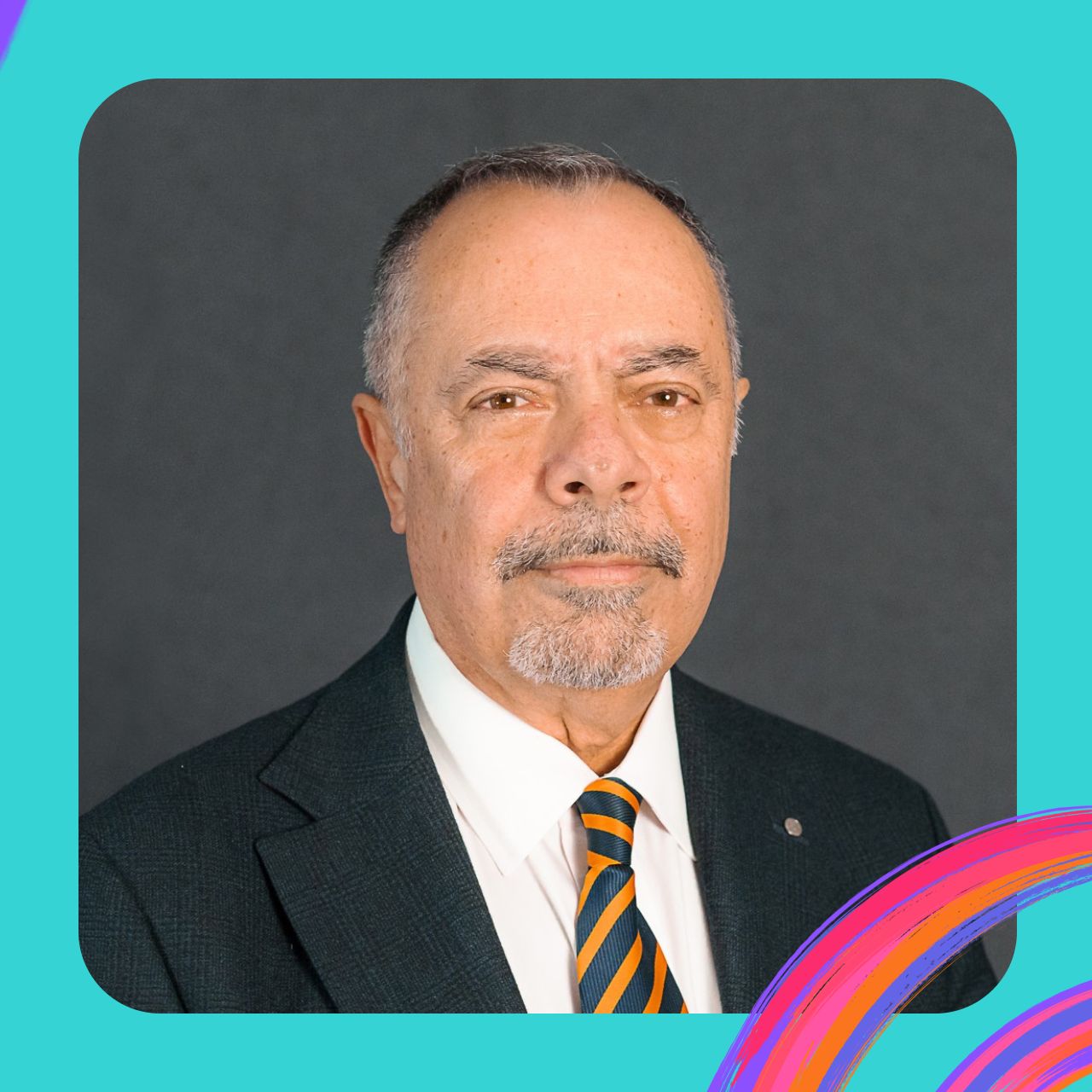
While working as an undercover cop, Nick Kaldas played a drug baron in the market for vast quantities of hemp oil, tracked a fugitive with a penchant for hair transplants, and posed as a hit man for a spurned lover.Nick was a 21-year-old immigrant lad from Egypt when he decided to join the NSW Police Force.He soon rose up the ranks from working as a junior constable on the beat, then as one of the first Arab-Australian undercover cops, to becoming one of the most senior police officers in Australia.While undercover, Nick tracked a fugitive with a hair transplant, bought hemp oil and heroin at the Sydney Hilton, and was hired as a hit man by a spurned lover.He then had stints as the head of the homicide squad, the gangs squad and led some of NSW's biggest criminal investigations as Deputy Police Commissioner. Nick's work also took him to Iraq to rebuild the police force after the fall of Saddam Hussein’s regime.Since leaving the NSW Police, Nick has continued his work in international law enforcement.This episode of Conversations explores crime, gangs, Egypt, migration, the Arab world, Syria, Iraq, Saddam Hussein, policing, law enforcement, corruption, inquiry, undercover cops, films, Batman, Northern Territory, NT Police Commissioner, Michael Murphy.Behind the Badge is published by Angus and Robertson.To binge even more great episodes of the ‘Conversations podcast’ with Richard Fidler and Sarah Kanowski go the ABC listen app (Australia) or wherever you get your podcasts. There you’ll find hundreds of the best thought-provoking interviews with authors, writers, artists, politicians, psychologists, musicians, and celebrities.
Australian writer Tim Winton on the stories which inspired his latest novel, 'Juice', a story of determination, survival, and the limits of the human spirit.'Juice' is an astonishing feat of imagination.It takes us to a far-off future on a superheated planet, where people must live like desert frogs in Northwest Australia. They go underground for the murderously hot summer months, before emerging in winter to grow and make what they can.The nameless narrator of the book is travelling with a child under his protection. They are taken hostage by a man with a crossbow, who takes them to the bottom of a mine shaft.There, the narrator has to tell his story to the bowman in the hope that he won't kill them.This episode of Conversations explores climate change, science, climate justice, storytelling, writing, books, narrative, fiction, Australian writers, Cloudstreet, Western Australia, coral bleaching, Pilbara, Ningaloo Reef, Putin, Trump, American politics, global politics, Russia, oligarchs, tariffs, trade wars, artists protesting, romantasy, climate change refugees.Juice is published by Penguin.This conversation was recorded in front of a live audience at Adelaide Writers' Week.
Would you want to live for longer? Forever? Have your mind preserved and uploaded into something non-human? And is it even possible? Neuroscientist Dr Ariel Zeleznikow explores challenging ideas about life and death.From adding a few decades onto a life span, to suspending the aging process altogether, and more radically, uploading a preserved brain and consciousness into an entirely different physical structure, Ariel's research is at the cutting edge of neuroscience.These seem like strange ideas, scientifically and morally, but Ariel says that with the advent of new techniques of brain preservation and the recent successful attempts at mapping consciousness, we could be looking at drastically longer lives in the future.This episode of Conversations explores weird science, epic stories, brain preservation, the aging process, how to stop ageing, getting older, brains, minds, souls, humanity, morality, lifespan, cancer, brain disease, Walt Disney, cryogenic freezing, genomes, biology, neurology, philosophy, ethics.The Future Loves You: How and Why We Should Abolish Death is published by Penguin.
Lawyer turned journalist Eileen Ormsby on her journey deeper and deeper into the internet's 'evil twin', where, under the cloak of anonymity, people sell buy and share anything a person is willing to pay for. Eileen Ormsby had just returned to university to study journalism when her friend told her about a website called The Silk Road.Created by American libertarian, Ross Ulbricht, it was essentially like any other e-commerce marketplace, the kind that people use to order books and homewares, except that it sold illicit drugs and fake ids.Eileen became fascinated with the platform, how it operated, who used it and where existed -- in a secretive part of the internet colloquially known as 'the dark web'.As Eileen journeyed further and further into the darkest corners of the underbelly of the internet, she came across scammers, hit men and horrendous truths, some of which spilled out into her real life.To binge even more great episodes of the ‘Conversations podcast’ with Richard Fidler and Sarah Kanowski go the ABC listen app (Australia) or wherever you get your podcasts. There you’ll find hundreds of the best thought-provoking interviews with authors, writers, artists, politicians, psychologists, musicians, and celebrities.This episode of Conversations explores the dark web, Ross Ulbricht, libertarian, drug dealing, the deep web, FBI, CIA, AFP, undercover agents, Facebook, Meta, Google, Instagram, social media, Donald Trump, Elon Musk, AlphaBay, illicit drugs, addiction, murder, hitman, scams, bitcoin, crypto, crypto currency, investigative journalism, presidential pardon, assassination.
Conversations is bringing you a summer treat — a collection of Richard's most memorable guests through out the years. Ross Gittins is one of Australia’s most popular newspaper columnists. For five decades, he has explained the inner workings of the Australian economy to readers in plain English through his three weekly columns in the Sydney Morning Herald.Ross Gittins is one of Australia’s most popular newspaper columnists.For five decades, Ross has explained the inner workings of the Australian economy to readers in plain English through his three weekly columns in the Sydney Morning Herald.He's often contacted by readers who tell him he's helped them understand interest rates, negative gearing, and other facets of the economy that would have once been privy to only those in power.For Ross, his touchstone is his own early life story.His outlook on life was largely formed by his frugal, hard-working parents, who were Salvation Army officers who lived through the Great Depression.This episode of Conversations contains discussions about family, Australian history, journalism, economics, the depression, Salvation Army, religion, Christianity, politics, finance, writing, newspapers, editors, publishing, mortgages, interest rates, home ownership, investments, income, Australian society, baby boomers, young people, generational wealth, inheritance, negative gearing, flexible work, job market, women at work, employment, workplace, childcare, cost of living, real estate.
Social psychologist Jonathan Haidt says it is time to reinstate the play-based childhood to bring our kids back from life online and into the real world, away from their increasing obsession with devices. It’s a fact of modern life that children who are given smart phones are able to access pornography, real images of violence and harmful comparisons with their friends and also influencers around the world.Social psychologist, Jonathan Haidt argues that as the social norms have changed, and younger and younger children have been allowed access to their own devices, their participation in the real world has suffered.Jonathan’s theory is that in order to combat the addicting influence of technology on our kids’ lives, families and society must encourage and allow children to enjoy free play, independence and responsibility in the real world.He says, rather than despairing at the current state of childhood, we have the power to give children fun, excitement and a passport to the real world.This episode of Conversations touches on Australia's social media ban, screen addiction, smart phones, online gaming, social media, mental health, teens, childhood, free play, children's independence, risk, outdoor play, child development, Facebook, Instagram, TikTok, gaming, and Jonathan Haidt.
Following the coup of 2021, Australian economist Sean Turnell received an email from a "secret friend", warning him he was being watched by Myanmar's military. Moments later, the police closed in on him.Sean Turnell is an Australian economist with longstanding connections to Myanmar, the nation formerly known as Burma.In 2016, Sean was appointed as senior economic advisor to the dissident Aung San Suu Kyi, who had become the country's prime minister after decades of military rule.The country had another election, and democracy was cemented. But the military staged a coup in 2021, and Sean was arrested and charged with being a spy, and imprisoned in a sealed room the size of a shipping container.For nearly two years, Sean struggled to keep his mind and body together, while his wife and the Australian government campaigned for his release.This episode of Conversations touches on an epic life story, personal story, grief, memoir, reflection, death, modern history, an exploration of Myanmar, political history, Burma, civil war, prison, jail, death row, political prisoners.Further informationSean's memoir An Unlikely Prisoner and Sean's recollection of the economic rehabilitation program, Best Laid Plans: The inside story of reform in Aung San Suu Kyi's Myanmar are published by PenguinTo binge even more great episodes of the ‘Conversations podcast’ with Richard Fidler and Sarah Kanowski go the ABC listen app (Australia) or wherever you get your podcasts. There you’ll find hundreds of the best thought-provoking interviews with authors, writers, artists, politicians, singers, psychologists, musicians, and celebrities.
Jon Owen's mum enrolled him in a computer science degree at University - expecting him to build a flourishing career; which he did. It just wasn't the one that everyone expected. (R)Jon Owen came to Australia as a small child.He survived playground racism at school, and became a high achiever.His family expected him to excel at school and university and go on to a flourishing career.And that's exactly what he did — in a way that nobody could have predicted.Jon was near the end of his computer science degree when he chose a life of 'intentional downward mobility'.He began working with the homeless, the addicted and the disenfranchised, and living with them too.Today he's the Pastor and CEO at Sydney's Wayside Chapel in Kings' Cross.This story is about family of origin, ancestry, life stories, disadvantage, drug use, children, faith, charity, social work, refugees, asylum seekers, Christianity, Jesus, family stories, family life, homelessness, caring, love, and downward mobility
From sharks with wheels of teeth, to gargantuan sharks like the megalodon, palaeontologist John Long has traced the long and storied history of these oceanic hunters.Sharks and humans have a complicated relationship.We have long considered them monsters and super predators that should be eliminated for our own safety.But sharks are much more than scary and fearsome.The history of this incredible animal stretches back hundreds of millions of years.From sharks with wheels of teeth, to the ascent of the super predators like the megalodon, palaeontologist John Long has traced the long and storied history of these hunters, asking how they've managed to survive extinction despite everything that's been thrown at them.This episode of Conversations explores science, origin stories, ancient history, sharks, palaeontology, the ocean, climate change, megalodon, hunting and predators.Further informationThe Secret History of Sharks: The Rise of the Ocean's Most Fearsome Predators is published by HachetteTo binge even more great episodes of the ‘Conversations podcast’ with Richard Fidler and Sarah Kanowski go the ABC listen app (Australia) or wherever you get your podcasts. There you’ll find hundreds of the best thought-provoking interviews with authors, writers, artists, politicians, singers, psychologists, musicians, and celebrities.
In this two-part series, historian Paul Ham traces how our definition and understanding of the human soul has transformed over thousands of years. Humans have been probing their own invisible inner voice since the Stone Age. But where did the concept of the soul even come from? And is it really what separates the living from the dead?Historian and writer Paul Ham has traced how our definition and understanding of the human soul has changed over thousands of years.Human beings have been probing their own inner voice, what it means and how it makes us feel, since the Stone Age.The human soul has long thought to be an invisible, inner essence that makes each of us distinctively different from the rocks and trees, and which also separates the living from the dead.But where did it come from? Who invented the concept of the soul? And do we still believe in the soul as inextricably linked to the human spirit?In this two-part series, Paul investigated first what the pre-modern world called 'the soul'. In this episode, he explores how the concept of the soul disappeared, and became 'the mind' in the modern era.This episode touches on ancient history, philosophy, neurology, religion, death, epic storytelling, faith, exploration and memory.
In this two-part series, historian Paul Ham traces how our definition and understanding of the human soul has transformed over thousands of years. Humans have been probing their own invisible inner voice since the Stone Age. But where did the concept of the soul even come from? And is it really what separates the living from the dead?
People travel from all over the world to learn about horses from Ken Faulkner. But after a life-threatening riding accident on his favourite horse, Smoke, Ken had to learn to walk and ride again, rediscovering himself in the process
Ken Wyatt was born at Roelands Mission in outback WA, where his mother had been taken as a small girl, after she was stolen from her family. More than 60 years later, he became Australia's first Indigenous Minister for Indigenous AustraliansKen Wyatt was born at Roelands Mission in outback WA, where his mother had been taken as a small girl, after she was stolen from her family. More than 60 years later, he became Australia's first Indigenous Minister for Indigenous AustraliansKen Wyatt has Yamatji, Wongi and Noongar ancestry. He came into the world as a premature baby on a mission south of Perth called Roelands Farm, run by the Protestant Church. From 1938 to 1973, Roelands housed more than 500 forcibly removed Aboriginal children from all over Western Australia. One of those children was Ken's mother Mona, who was separated from family at just 4 years old.Mona married Don and they built a life for themselves away from Roelands, in Nannine, a railway fettler’s camp in remote WA. That's where Ken grew up, as one of 10 children. Ken went on to enjoy a fulfilling life as a teacher, and he was in his fifties when he decided to have a tilt at politics.He joined the Liberal Party, and in 2010 he was elected as the first Aboriginal member of the House of Representatives. Wearing a kangaroo skin cloak given to him by Noongar elders in Perth, Ken made his first speech in Federal Parliament, about his extraordinary journey from Roelands to Canberra.To binge even more great episodes of the ‘Conversations podcast’ with Richard Fidler and Sarah Kanowski go the ABC listen app (Australia) or wherever you get your podcasts. There you’ll find hundreds of the best thought-provoking interviews with authors, writers, artists, politicians, singers, psychologists, musicians, and celebrities.
Archaeologist David Wengrow has discovered an entirely new way to think about the history of humanity, from the origins of farming, cities, democracy and slavery to civilisation itself.What sort of world could we create if we stopped believing that inequality is the price of progress?More than a decade ago, archaeologist David Wengrow started exploring this question with his friend the late David Graeber, an anthropologist.Together they unearthed a new picture of humanity's past and our shared future.The two Davids found many examples from human history of societies which flourished without kings, bureaucracies, palaces and poorhouses.They realised that the notion that humans have to surrender equality for modernity is not only untrue; it's boring, because it fails to recognise how politically creative humans can be.On Anzac Day in 1935, a tiger shark vomited up a tattooed human arm inside a Sydney aquarium.When Phil Roope looked into the cold case he found an astounding true tale of Sydney's fascination and horror around sharks in the 1930s, a severed arm emblazed with boxing tattoos, a homicide, police corruption, a Gladstone Bag, and a thriving smuggling racket for drugs, stockings and lead paint.To binge even more great episodes of the ‘Conversations podcast’ with Richard Fidler and Sarah Kanowski go the ABC listen app (Australia) or wherever you get your podcasts. There you’ll find hundreds of the best thought-provoking interviews with authors, writers, artists, politicians, psychologists, musicians, and celebrities.Further informationShark Arm is published by Allen and UnwinFurther informationThe Dawn of Everything is published by PenguinRichard's conversation with David Wengrow was recorded live at the Sydney Writers' Festival
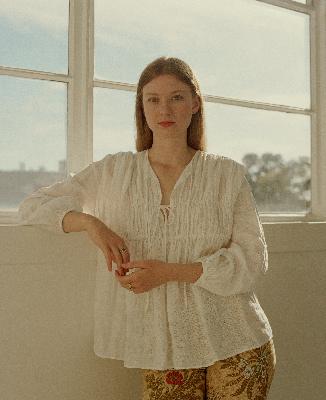
Bri Lee on the brutal series of events which began her life as a writer tackling injustice in our courts, the beauty industry, and in our schools (CW: description of legal processes relating to sexual assault)
The hardship, cruelty and loneliness of the mission system during the Great Depression didn't crush Aunty Ruth Hegarty's spirit. She found her voice, God and her family.In 1929 during the Great Depression, Ruth Hegarty travelled with her mother and grandparents to Barambah, later known as Cherbourg Aboriginal Mission. After being told someone there would help them find a new home, they soon discovered they weren't allowed to leave.At 4 years of age, Ruth was separated from her family. She grew up as a dormitory girl, and was sent out to work as a domestic servant when she turned 14.But the cruelty and loneliness of the mission system didn't crush Ruth's spirit.Ruth found her voice, she found God, and she became a matriarch to five generations of descendants.Content warning: this episode contains discussions about abuse, family violence, and Stolen GenerationsFurther InformationRuth's books Is that you, Ruthie? and Bittersweet Journey are published by University of Queensland Press.Ruth's life story has been adapted into a play written and directed by Leah Purcell.To binge even more great episodes of the ‘Conversations podcast’ with Richard Fidler and Sarah Kanowski go the ABC listen app (Australia) or wherever you get your podcasts. There you’ll find hundreds of the best thought-provoking interviews with authors, writers, artists, politicians, singers, psychologists, musicians, and celebrities.
Darryl Jones on the dramatic lives of Australia's city-dwelling native birds

Comments

Download from Google Play

Download from App Store
 United States