


 Claim Ownership
Conversations: Psychology & Relationships
Subscribed: 26Played: 90
Subscribe

© Copyright 2026, Australian Broadcasting Corporation. All right reserved.
Description
The world's greatest minds in therapy, emotional intelligence and addiction; including Esther Perel, Glennon Doyle and Dr. Gabor Maté: from hit podcasts Where Do We Begin and We Can Do Hard Things, and the bestseller The Myth of Normal, sit down for a Conversation withRichard Fidler and Sarah Kanowski. In this collection of episodes, we’ve reached back into the rich archive and curated a selection of episodes where our guests speak about lived experiences and concepts like narcissism, psychopaths, domestic violence, trauma, healing, hope and love etc. To binge even more great episodes of the ‘Conversationspodcast’ with Richard Fidler and Sarah Kanowskigo the ABC listen app (Australia) or wherever you get your podcasts. There you’ll find hundreds of the best thought-provoking interviews with authors, writers, artists, politicians, psychologists, musicians, and celebrities.
50 Episodes
Reverse
For journalist Kate Halfpenny, moving to a beachside town during Melbourne's lockdowns seemed like the perfect way to unwind and escape her huge mortgage. Then she had to contend with the triple whammy of perimenopause, her husband's alcoholism and distance from family and friends.For the first time in her life, Kate had an empty house, no job commitments and no city life to distract her.She was able to indulge daily in her love of boogie boarding and surf-side walks with her dog, Maggie.One day at the beach, Kate saw her elderly father struggling in the surf.Kate's husband Chris was in the water next to him, but was acting strangely and couldn’t manage to haul him out of the dangerous water.That evening, Chris confessed his alcoholism to Kate and the couple faced the inevitable decisions they would have to navigate, together and apart.Further informationBoogie Wonderland is published by Affirm Press.This episode was produced by Alice Moldovan.Conversations' Executive Producer is Nicola Harrison.Find out more about the Conversations Live National Tour on the ABC website.This episode of Conversations deals with good divorce, Melbourne covid lockdowns, seachange, addiction, alcoholism, supporting an alcoholic, women in media, perimenopause, midlife, being alone, boogie boarding and relationships.
From relationships and loneliness, to indecision and burnout, Jemma Sbeg is your guide to navigating your 20s, and looking back on that decade with a new perspective.When Jemma Sbeg started recording a podcast in the back of her Subaru about her quarter life crisis, she had no idea just how many people she would reach.But other people her age were desperate for guidance through their 20s - a decade a lot of us romanticise before we get there, and after we leave.It's a decade of massive growth for humans, when we make big decisions about relationships, careers and our own identities, but Jemma felt like she had no idea HOW to make the right choices.She had studied psychology at university, and so looked to psychological research papers to help her and her friends navigate attraction, heartbreak, friendship, imposter syndrome, career anxiety, burn out, mental health and living a happy life.Jemma's biggest lesson is realising while time is finite, we do have so much of it to "figure it out", and chances are you'll still be working many things out in your 30s, 40s, 50s and 60s.Person in Progress: A Roadmap to the Psychology of Your 20s is published by Hachette Australia.Jemma's podcast is called The Psychology of your 20s.If you liked this episode of Conversations, you might also enjoy listening to Doctor Hilton Koppe on his experience of PTSD, journalist Ros Thomas on her research into loneliness or psychologist Dr Tracy Westerman on psychology in remote Australia.To binge even more great episodes of the Conversation podcast with Richard Fidler and Sarah Kanowski go the ABC listen app (Australia) or wherever you get your podcasts. There you’ll find hundreds of the best thought-provoking interviews with authors, writers, artists, politicians, psychologists, musicians, and celebrities.This episode of Conversations explores psychology, podcasts, research, books, writing, anxiety, TikTok, social media, ADHD, self-diagnosis, growing up, how to survive your 20s, stay at home dads, heartbreak, mortality, death anxiety, social anxiety, university, what to study, how to get over heartbreak, first loves, building a career in media.
Loneliness is a universal experience, for each of us at some point in our lives. Journalist Ros Thomas travelled the world to investigate, and find the antidote. To binge even more great episodes of the 'Conversation podcast' with Richard Fidler and Sarah Kanowski go the ABC listen app (Australia) or wherever you get your podcasts. There you’ll find hundreds of the best thought-provoking interviews with authors, writers, artists, politicians, psychologists, musicians, and celebrities.Ros spent a year travelling around the world to research something all of us have experienced — loneliness.She met an old man who had learned to thrive through crushing grief with the help of a small, desktop robot.Ros visited a share house in Sweden where pensioners live with young asylum seekers, who care for each other like grandparents and grandchildren.And she explored her own early and devastating experience of loneliness — when her father abandoned the family when Ros was a tiny child.This episode of Conversations touches on loneliness, isolation, being a friend, social connection, community modern history, life story, fatherhood, absent fathers, personal stories, family dynamics, fathers, solutions to loneliness, the loneliness epidemic, Churchill Fellowship and connection.
The renowned physician discusses the role of trauma in our lives, showing up as addiction, chronic disease and mental illness — and how recognising his own led to true healing.To binge even more great episodes of the Conversation podcast with Richard Fidler and Sarah Kanowski go the ABC listen app (Australia) or wherever you get your podcasts. There you’ll find hundreds of the best thought-provoking interviews with authors, writers, artists, politicians, psychologists, musicians, and celebrities.Dr Gabor Maté was born in Budapest to a Jewish family, just before Nazi tanks rolled into the city.His mother risked handing him to a stranger on the street to try and get him to safety.Many years later, after establishing himself as a successful physician in Canada, Gabor looked at the problems in his work and marriage and wondered if they were linked to that early trauma.He uses his own experiences as the test case for the effects of trauma on the body and is now internationally renowned for arguing that trauma casts a long shadow in our lives, showing up in addiction, ADHD, chronic disease and mental illness.Gabor argues that realising the impact of trauma of all kinds allows for real healing — as has happened in his own life.Dr Gabor Maté's new book written with Daniel Maté is called The Myth of Normal: Trauma, Illness and Healing in a Toxic Culture and is published by Penguin Random House.This episode of Conversations deals with trauma, early childhood trauma, mental illness, addiction, ADHD, chronic illness, epic life stories, origin stories, healing, autoimmune disease, and therapy.
Two of the most important men to Gus Worland departed his life in shocking and unexpected ways. Gus' grief led him to dig deeper into what it means to be a strong man and re-frame vulnerability as something powerful.TV and radio host Gus Worland grew up with some deeply rooted ideas about what it meant to be a man and a good bloke.When Gus was just 10 years old, his father left the family home for reasons Gus didn't understand or even know about until many years later.Then, when Gus was an adult, the role model who had filled the gap left by his father also disappeared.All the unresolved grief he felt prompted Gus to almost spontaneously open up one morning on his radio program on Triple M.What began as an impulsive moment of vulnerability turned into a national conversation, and led Gus to dig deeper into his own understanding of what it means to be a strong man.Content warning: this episode of Conversations discusses suicide and mental health issues.If you or anyone you know needs help there is always someone available at:Lifeline on 13 11 14Beyond Blue on 1300 22 46 36MensLine Australia on 1300 789 978This episode of Conversations explores sexuality, fatherhood, parenting, love, homosexuality, male suicide epidemic, masculinity, vulnerability, honesty, origin stories, opening up, seeking help, depression, anxiety, suicidal ideations, speaking up, mateship, friendship, the Grill Team, mental fitness, coming out stories.Further informationYou can learn more about Gus' work in suicide prevention at the Gotcha4Life Foundation here.Boys Do Cry is published by Penguin.To binge even more great episodes of the ‘Conversations podcast’ with Richard Fidler and Sarah Kanowski go the ABC listen app (Australia) or wherever you get your podcasts. There you’ll find hundreds of the best thought-provoking interviews with authors, writers, artists, politicians, singers, psychologists, musicians, and celebrities.
Jelena Dokic overcame adversity, poverty and violence to rise to the top of the tennis world. Years later, her revelations about her father's abuse stunned the world. (CW: discussion of domestic violence and coercive control).Jelena Dokic overcame adversity, poverty and violence to rise to the top of the tennis world. Years later, her revelations about her father's abuse stunned the world. (CW: discussion of domestic violence and coercive control).After arriving in Australia with her family as a refugee, Jelena Dokic became a tennis champion while still a teenager.But her father’s drunken outbursts at Jelena’s tournaments got even more headlines than her playing.What the world didn’t know was that Jelena’s father was also violently assaulting her and had been since the day she first picked up a tennis racquet.Jelena finally found the courage to tell the truth about what happened to her, but she discovered that was only the first step in escaping her father.Further informationThe documentary Unbreakable is out nowHelp and support is always availableYou can call 1800 Respect on 1800 737 732Lifeline on 13 11 14Butterfly Foundation on 1800 33 4673Content warning: this episode of Conversations contains discussion about domestic violence and coercive control.This episode of Conversations also talks about sport, training, family, origin stories, parenting, relationships, childhood trauma, sports commentary, online trolls, refugees, security, control, family violence, therapy, mental health, identity, disordered eating, books, documentary film, reflection, culture, meaning, Australian, counselling, conversational story, and memoir.To binge even more great episodes of the ‘Conversations podcast’ with Richard Fidler and Sarah Kanowski go the ABC listen app (Australia) or wherever you get your podcasts. There you’ll find hundreds of the best thought-provoking interviews with authors, writers, artists, politicians, singers, psychologists, musicians, and celebrities.
Dr Tracy Westerman grew up in the Pilbara, where suicide and mental health issues have deeply scarred Indigenous communities. So this Nyamal woman decided to do something about it.Nyamal woman Tracy Westerman grew up in some of the most remote parts of Western Australia, moving from a station to a town called Useless Loop, eventually landing in the mining town of Tom Price.Tracy, the daughter of an Aboriginal mother and a white father, became the first person who was educated entirely in Tom Price, from kindergarten to year 12, to go on to University.When she arrived in Perth, she had never been on a bus or on an escalator, but she was fired up to study psychology.Tracy wanted to use the skills she learned in the city to deliver practical mental health care to Aboriginal people, and to help entire communities reeling from the impact of suicide and other mental health issues.Along the way to obtaining her doctorate, Tracy has become a businesswoman, the WA Australian of the year, and she was awarded an Order of Australia Medal.Her next mission is to build an army of Indigenous psychologists to continue the work she's already started.Further informationJilya is published by University of Queensland Press.You can learn more about Dr Westerman's work here.To binge even more great episodes of the ‘Conversations podcast’ with Richard Fidler and Sarah Kanowski go the ABC listen app (Australia) or wherever you get your podcasts. There you’ll find hundreds of the best thought-provoking interviews with authors, writers, artists, politicians, singers, psychologists, musicians, and celebrities.Nyamal woman Tracy Westerman grew up in some of the most remote parts of Western Australia, moving from a station to a town called Useless Loop, eventually landing in the mining town of Tom Price.Tracy, the daughter of an Aboriginal mother and a white father, became the first person educated entirely in Tom Price, from kindergarten to year 12, to go on to University.When she arrived in Perth, she had never been on a bus or on an escalator, but she was fired up to study psychology.Tracy wanted to use the skills she learned in the city to deliver practical mental health care to Aboriginal people, and to help entire communities reeling from the impact of suicide and other mental health issues.Along the way to obtaining her doctorate, Tracy has become a businesswoman, the WA Australian of the year, and she was awarded an Order of Australia Medal.Her next mission is to build an army of Indigenous psychologists to continue the work she's already started.This episode of Conversations discusses mental health care, mental health struggles, First Nations mental health, remote communities, interracial relationships, psychology, university, PhD study, tertiary education, the Pilbara, Nyamal, traditional owners, Indigenous psychologist.
Joh Jarvis was a high-flying boss when grief from a terrible loss began to overwhelm her. She tried therapy, exercise and healthy eating. Then she found Vedic meditation, and the experience was 'psychedelic'.Joh Jarvis is a Vedic meditation teacher.Every week, she travels into Rikers Island Prison — a notorious jail in New York City — to teach meditation to hardened criminals.Joh grew up in Adelaide and had always wanted to live amidst the bright lights of New York.After a stint as a bicycle courier, she worked her way up to management at the ABC.As she approached 50, she had a well-paying job, a nice house, and strong connections with friends and family. But long-term grief had hollowed her out, and she asked herself, is this all there is?Then she was introduced to Vedic meditation, and she says her first encounter was 'psychedelic'.To binge even more great episodes of the ‘Conversation podcast’ with Richard Fidler and Sarah Kanowski go the ABC listen app (Australia) or wherever you get your podcasts. There you’ll find hundreds of the best thought-provoking interviews with authors, writers, artists, politicians, psychologists, musicians, and celebrities.This episode touches on epic life stories, family dynamics, grief, loss, reflection, Vedic meditation, meditation, personal stories, origin stories, death, career, giving back, New York City, Rikers Island prison, incarceration, justice system, prison system, mindfulness and mantras.
While struggling with PTSD, social researcher Rebecca Huntley chose an unconventional and underground path to healing — MDMA therapy.Rebecca Huntley is well known to many Australians for her formidable intellect and career as a broadcaster, an author and a social researcher.But despite her impressive public-facing life, in private, Rebecca's trauma from a difficult upbringing refused to leave her.At 50, she walked the Camino in Italy and realised that after 30 years of therapy, she was still living with a great deal of anger about what had happened to her as a child.She decided to take a radical step to deal with her PTSD and her suffering. She had three sessions of MDMA therapy, delivered by an underground healer. The treatment changed Rebecca's life and her view of the world.This conversation discusses therapy, trauma, psychedelics, drugs, parenting, grief, family, mothers, ancestry, fathers, family dynamics, domestic violence, going no contact, exploration and loss.To binge even more great episodes of the ‘Conversation podcast’ with Richard Fidler and Sarah Kanowski go the ABC listen app (Australia) or wherever you get your podcasts. There you’ll find hundreds of the best thought-provoking interviews with authors, writers, artists, politicians, psychologists, musicians, and celebrities.
When psychologist Ariane Beeston started having delusions after the birth of her son, and hallucinating that he was a dragon, she had to learn how to become the patient.Ariane Beeston thought that when her son was born, she would feel that immediate rush of love that everyone told her to expect, and that motherhood would come naturally to her.But that's not what happened.Instead, Ariane started having delusions about her own death, she became paranoid that social services would take her child away from her, and she hallucinated that her baby boy was actually a dragon.For months, Ariane hid her symptoms, afraid and ashamed of what she was feeling and seeing.When she gathered the courage to ask for help, Ariane, a trained psychologist, had to learn how to become the patient, as she navigated a diagnosis of postpartum psychosis.Further informationBecause I'm Not Myself You See is published by Black Inc. BooksResourcesCOPE: Centre of Perinatal ExcellenceSupport lines and resources recommended by COPEPANDA National Helpline 1300 726 306 — available Monday to Friday, 9am to 7.30pm, Saturday, 9am to 4pm AEST/AEDT.PANDA: Perinatal Anxiety and Depression Australia post natal psychosis informationPregnancy Birth Baby information on postpartum psychosis (Australian Government website)Gidget Foundation Australia (focuses on emotional wellbeing of expectant parents)Postpartum psychosis fact sheet from COPEPostpartum psychosis information (Royal Women's Hospital Melbourne)To binge even more great episodes of the ‘Conversations podcast’ with Richard Fidler and Sarah Kanowski go the ABC listen app (Australia) or wherever you get your podcasts. There you’ll find hundreds of the best thought-provoking interviews with authors, writers, artists, politicians, singers, psychologists, musicians, and celebrities.
As a teenager Adele Dumont started pulling out her hair from the root.Eventually she created a bald spot the size of a 20-cent piece at the crown of her head.Adele would sometimes enter a trancelike state, covertly sitting on her bathroom floor, picking at her scalp for hours on end.The urge to pull at her hair was uncontrollable, and secret.When Adele finally put a name to her behaviour, she learnt that trichotillomania has a complex history and psychological understanding, much of which remains unknown.Further informationThe Pulling is published by ScribeSome helpful resources on trichotillomania include Trich Stop and The TLC Foundation for Body-Focused Repetitive BehavioursTo binge even more great episodes of the ‘Conversations podcast’ with Richard Fidler and Sarah Kanowski go the ABC listen app (Australia) or wherever you get your podcasts. There you’ll find hundreds of the best thought-provoking interviews with authors, writers, artists, politicians, singers, psychologists, musicians, and celebrities.
Professor Ian Hickie has spent decades trying to understand clinical depression. Where does it come from? What role do genes play? And most importantly – what works to release its chokehold?Ian Hickie has spent his career trying to help people at their darkest times. He's a psychiatrist who is particularly passionate about taming the black dog of depression.Depression is not a simple puzzle to solve. Ian has seen how the right medical treatment can lift someone out of even the worst depression; but he has also tried to answer some of the most important questions about clinical depression.Is it genetic? Is it caused by trauma? What role do the seasons play? Why is long COVID a risk factor in developing depression? And most importantly – what works to release its hold on someone?Further informationThe Devil You Knew is published by Penguin Random HouseTo binge even more great episodes of the ‘Conversations podcast’ with Richard Fidler and Sarah Kanowski go the ABC listen app (Australia) or wherever you get your podcasts. There you’ll find hundreds of the best thought-provoking interviews with authors, writers, artists, politicians, singers, psychologists, musicians, and celebrities.
Penny grew up consumed by catastrophic thoughts and developed habits to try to ward off impending doom. It turned out she had been living with obsessive compulsive disorder for 30 yearsPenny Moodie grew up consumed by catastrophic thoughts and ideas - that her parents would die in a car crash, that her mother was not really her mother, or that she had somehow contracted HIV aids.It's not unusual for children to worry about their parents and their own safety, but for Penny these anxieties went much further.She thought she could ward off catastrophes by doing specific things, by developing compulsive behaviours and routines.It turns out, Penny had been living obsessive compulsive disorder for more than 30 years before she was diagnosed.Only recently has Penny been able to understand what she's truly afraid of, to discard her constant state of anxiety and to finally take joy in the simple pleasures of life.Further informationThe Joy Thief: How OCD steals your happiness and how to get it back is published by Allen & UnwinTo binge even more great episodes of the ‘Conversations podcast’ with Richard Fidler and Sarah Kanowski go the ABC listen app (Australia) or wherever you get your podcasts. There you’ll find hundreds of the best thought-provoking interviews with authors, writers, artists, politicians, singers, psychologists, musicians, and celebrities.
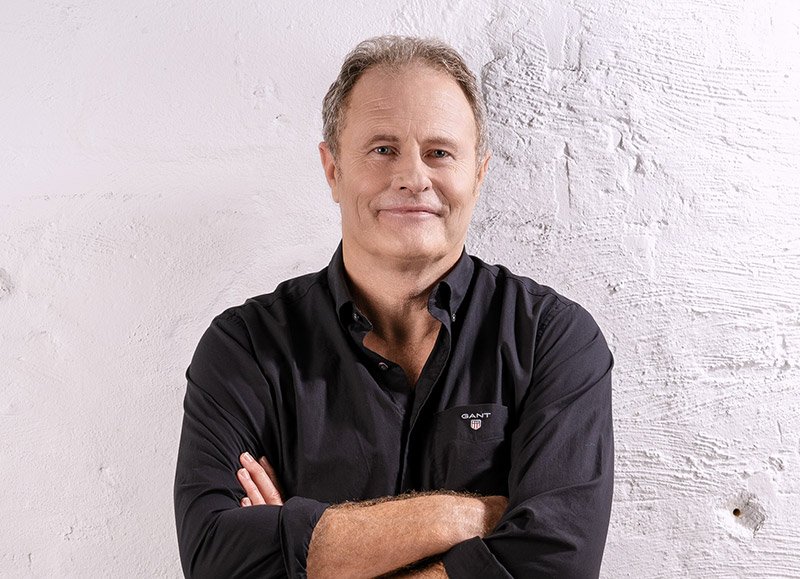
Coalminer turned broadcaster Craig Hamilton was in his 30s when he had a psychotic episode on Broadmeadows train station. In the aftermath, his life was completely changed (CW: mentions suicide)Craig Hamilton began his working life as a coal miner in Newcastle north of Sydney. He worked deep underground, knocking down walls and digging through tunnels through the inky blackness. One day after many years in the mines, Craig got a chance to be on the radio for 5 minutes talking about cricket. He found he was a natural - and it began an entirely new chapter in his life. He was talented scouted by the ABC, and after working part-time in various broadcasting jobs while he also worked underground, Craig won a full-time job. It was a huge moment in his life, as for many years he'd believed he didn't have a way out of the mining industry. His career as a sports broadcaster took off quickly, and he was chosen to be commentary team for the Sydney Olympics.As he was travelling to the Olympic stadium one day, Craig was on Broadmeadows train station when he had a psychotic episode. He was handcuffed and taken by the police to a locked ward in Newcastle Hospital.After he was diagnosed with Bipolar Disorder, Craig knew he had to be part of the solution in mental health. He began to give public talks about his own story. Help and support is always availableYou can call Lifeline 24 hours a day on 13 11 14Phone and online counselling is available through MenslineFurther informationWatch the trailer for the documentary The PromiseLearn about Craig's work as a public speaker and mental health advocateTo binge even more great episodes of the ‘Conversations podcast’ with Richard Fidler and Sarah Kanowski go the ABC listen app (Australia) or wherever you get your podcasts. There you’ll find hundreds of the best thought-provoking interviews with authors, writers, artists, politicians, singers, psychologists, musicians, and celebrities.
 1
1Dr Robert Waldinger on what it takes to live a happy life. Robert Waldinger has spent most of his working life trying to understand the secret to human happiness. He’s Professor of Psychiatry at Harvard Medical School and the Director of the Harvard Study of Adult Development. The project has been tracking what makes for a joyful life for more than eight decades and points to meaningful relationships as the key to human fulfilment. Bob tries to apply the insights from the study to his own life, where beyond his research, he’s also a Zen priest.Further informationThe Good Life: Lessons from the World's Longest Study on Happiness is published by Penguin To binge even more great episodes of the ‘Conversations podcast’ with Richard Fidler and Sarah Kanowski go the ABC listen app (Australia) or wherever you get your podcasts. There you’ll find hundreds of the best thought-provoking interviews with authors, writers, artists, politicians, singers, psychologists, musicians, and celebrities.
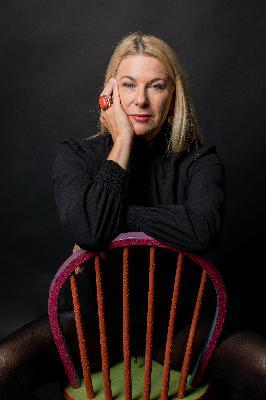
Mandy Nolan didn't fit in as a child, in the country town where she grew up. But later in life, her differences became her superpower (CW: discusses domestic violence and addiction)
Over her many decades as a practising psychiatrist, Veronica O'Keane developed a fascination for our memory, how it functions in the brain, and the role it has in shaping our identity
Once journalist and author Kate Legge recovered from the news her husband of 30 years was cheating on her, she uncovered four generations of infidelity through his family
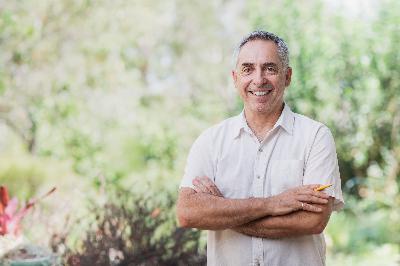
Hilton Koppe on how his life as a soccer-obsessed country GP changed forever when he became a patient himselfHilton Koppe grew up knowing his parents wanted him to become a doctor. When he got the marks to make it into medicine, they were overjoyed.By the time he was 30, he'd started working as a country GP. Hilton then became a beloved local doctor in Northern NSW, and he worked there for more than 3 decades.But a few years ago, Hilton's own health suddenly went awry. He started experiencing constant neck pain, and then the side of his face went numb.He was sent him for an MRI, which revealed nothing.But then his own GP gave him an unexpected diagnosis of Post Traumatic Stress Disorder, related in part to his work as a doctor.This news up-ended almost everything about Hilton's life.Further informationHilton's memoir is called One Curious DoctorTo binge even more great episodes of the ‘Conversations podcast’ with Richard Fidler and Sarah Kanowski go the ABC listen app (Australia) or wherever you get your podcasts. There you’ll find hundreds of the best thought-provoking interviews with authors, writers, artists, politicians, psychologists, musicians, and celebrities.
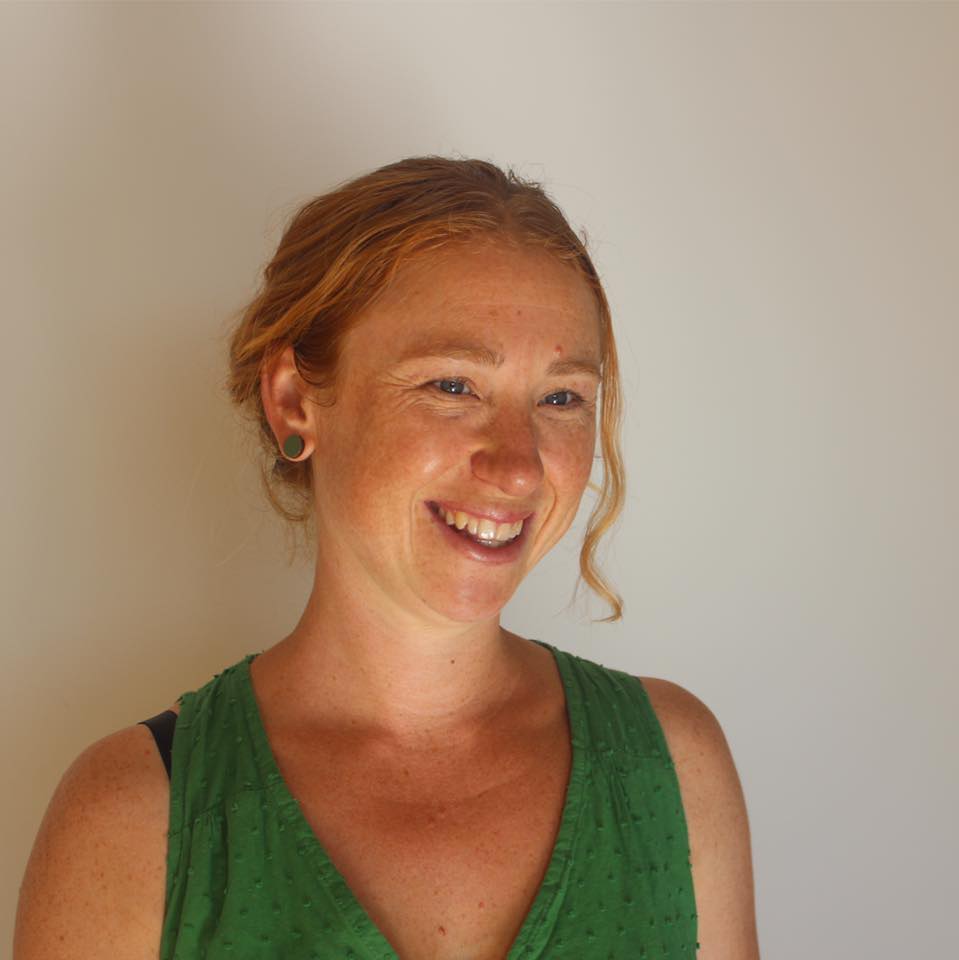
Oceane was 18 when she attempted to take her own life. After a painstaking climb back into life, 20 years later she is a midwife, a writer and a mother of three (CW: mentions suicide and sexual assault)

Comments

Download from Google Play

Download from App Store
 United States