


 Claim Ownership
The Digital Executive
Subscribed: 398Played: 2,132
Subscribe

© © 2026 The Digital Executive
Description
Best 10-minute, daily tech podcast on emerging technologies, hundreds of Silicon Valley CEOs, Influencers and Celebrities. Hosted by technology executive and creator of Coruzant Technologies.
1210 Episodes
Reverse

In this episode of The Digital Executive Podcast, host Brian Thomas speaks with Arjun Arora, founder of Advisor AI, an AI-native platform transforming how educational institutions support student success and workforce readiness. Drawing from his own experience as a first-generation immigrant navigating complex systems, Arjun shares how access to the right guidance and resources can dramatically accelerate personal and professional growth.Arjun explains that today’s education landscape faces mounting challenges—from declining enrollment and low retention rates to increasing pressure to demonstrate real economic outcomes for students. Advisor AI addresses these issues by scaling high-quality, personalized advising through AI, enabling institutions to guide students more effectively from enrollment to graduation and into the workforce.A key theme of the conversation is the role of AI as an enabler—not a replacement—for human relationships. By automating time-consuming planning and information-gathering tasks, AI allows advisors to focus on deeper, more meaningful interactions with students. This human-centered approach is especially impactful for first-generation and underserved learners, helping them create clear, actionable pathways toward their goals in a fraction of the time.Looking ahead, Arjun envisions AI dramatically simplifying and accelerating the student journey—turning what once took weeks into minutes—while empowering institutions to deliver more strategic, data-driven support. As education continues to evolve, platforms like Advisor AI are poised to bridge gaps in access, improve outcomes, and unlock greater economic mobility for learners worldwide.If you liked what you heard today, please leave us a review - Apple or Spotify. See Privacy Policy at https://art19.com/privacy and California Privacy Notice at https://art19.com/privacy#do-not-sell-my-info.

In this episode of The Digital Executive Podcast, host Brian Thomas welcomes Nicolas Genest, serial founder and CEO of CodeBoxx. A former multi-exit CTO who has helped build technology organizations generating over $1 billion in annual revenue, Nicolas shares the key insight that shaped his entrepreneurial journey: great technology companies are ultimately built by great people.Nicolas discusses how his experience leading development teams taught him that talent and motivation matter more than traditional credentials. At CodeBoxx, he’s proving that technologists can come from anywhere—from baristas to nurses to rideshare drivers—if they are given the right training, tools, and opportunity. The company’s AI-first education model focuses on teaching practical skills quickly, helping learners master modern development tools and launch into tech careers in as little as eight to sixteen weeks.The conversation also explores how AI-native development tools are changing the speed and economics of building software. By teaching platforms and tools such as OpenAI Codex, Cursor AI, and Google Gemini, CodeBoxx helps both developers and business leaders rapidly turn ideas into working products. Nicolas also highlights a unique human-in-the-loop coaching model where developers can quickly connect with experienced mentors to overcome technical roadblocks and keep projects moving.Looking ahead, Nicolas believes the rapid acceleration of AI will create a growing divide between organizations that embrace AI-native development and those still building software the old way. CodeBoxx aims to bridge that gap by equipping individuals and companies with the tools, training, and mindset needed to thrive in an AI-driven future—ensuring fewer people are left behind in one of the most transformative technological shifts of our time.If you liked what you heard today, please leave us a review - Apple or Spotify. See Privacy Policy at https://art19.com/privacy and California Privacy Notice at https://art19.com/privacy#do-not-sell-my-info.

In this episode of The Digital Executive Podcast, host Brian Thomas speaks with Trevor Colhoun, Founder and CEO of TPN Health, a national clinician network and care navigation platform focused on improving the quality, accessibility, and accountability of behavioral healthcare. Drawing from personal experiences with a family member navigating addiction treatment, Trevor shares how he discovered just how fragmented and analog the behavioral health system remains, and why that realization inspired him to build a better infrastructure.Trevor explains that one of the biggest barriers in behavioral healthcare isn’t just stigma or access, it’s the lack of a clear value proposition. Patients, providers, and payers often lack transparency around treatment paths, outcomes, and costs. TPN Health was designed to address this challenge by building a digital network that verifies and connects clinicians, providing real-time insight into provider availability, specialties, geographic reach, and credentials. By aggregating and digitizing this data, the platform helps bring much-needed transparency and connectivity to a historically disconnected market.The conversation also explores the importance of clinical credibility and trust when introducing technology into sensitive areas like mental health and addiction care. Rather than prioritizing technology first, TPN Health focuses on building trusted relationships with providers while digitizing essential processes such as credentialing, education, and referral networks. Trevor emphasizes that while AI can help optimize operational workflows and connectivity, therapeutic care itself must remain human-centered.Looking ahead, Trevor outlines a future where behavioral healthcare becomes more structured, data-driven, and accessible. By directly connecting providers, payers, and patients, and simplifying processes like credentialing, payment, and care navigation—TPN Health aims to reduce costs, improve provider compensation, and deliver better outcomes for patients. As the behavioral health crisis continues to grow, platforms like TPN Health could play a crucial role in transforming the system into a more transparent, efficient, and patient-focused ecosystem.If you liked what you heard today, please leave us a review - Apple or Spotify. See Privacy Policy at https://art19.com/privacy and California Privacy Notice at https://art19.com/privacy#do-not-sell-my-info.

In this episode of The Digital Executive Podcast, host Brian Thomas welcomes Viktor Ihnatiuk, a veteran Bitcoin and Web3 engineer and the co-founder and CEO of UTEXO. With more than a decade of experience building crypto infrastructure and scaling Web3 ventures, Viktor shares the journey that shaped his path from engineer to serial entrepreneur and leader in the blockchain ecosystem.Viktor discusses the motivation behind building UTEXO, a Bitcoin-native stablecoin settlement network backed by Tether. He explains the limitations of traditional blockchain payment systems—such as block times and transaction fees—and how the Bitcoin Lightning Network enables faster, scalable, and more efficient off-chain transactions. By combining Lightning with emerging technologies like the RGB protocol, UTEXO aims to create a payment infrastructure capable of handling massive transaction volumes with near-instant settlement while keeping costs predictable.The conversation also explores the delicate balance between privacy and regulatory compliance in crypto. Viktor outlines how Bitcoin’s UTXO model and client-side validation can protect user privacy while still allowing safeguards such as transaction blacklisting for suspicious activity. This hybrid approach could help bridge the gap between decentralized innovation and real-world regulatory requirements.Looking ahead, Viktor envisions Bitcoin evolving beyond a store of value into a global financial settlement layer. As technologies like Lightning mature, he believes Bitcoin could power high-speed payments, trading systems, and entirely new financial applications. Through innovations like UTEXO, the next decade of crypto may unlock Bitcoin’s full potential as both a programmable financial infrastructure and the backbone of mainstream digital payments.If you liked what you heard today, please leave us a review - Apple or Spotify. See Privacy Policy at https://art19.com/privacy and California Privacy Notice at https://art19.com/privacy#do-not-sell-my-info.

In this episode of The Digital Executive, host Brian Thomas speaks with Jaisimha Rao, Founder and CEO of Niqo Robotics, an agricultural technology company building AI-powered robots for precision farming. A former BlackRock vice president who managed multi-billion-dollar portfolios during the 2008 financial crisis, Rao shares how the discipline, risk management, and long-term thinking from finance helped shape his entrepreneurial journey into agricultural robotics.Rao explains how Niqo Robotics developed one of the first commercial “green-on-green” AI spot-spraying systems, enabling machines to identify individual plants among dense crops and apply treatment only where needed. By processing decisions directly on the farm using edge AI, the system helps farmers reduce chemical usage by up to 60%, improving both sustainability and cost efficiency.The conversation also explores the growing role of robotics in addressing labor shortages in agriculture, from AI-powered weeders operating in U.S. lettuce fields to precision tools designed for India’s smallholder farmers. Rao discusses how village-level entrepreneurs, service-based models, and policy support can help bring advanced agricultural technology to smaller farms worldwide—ensuring AI-driven precision farming is accessible beyond large industrial operations.If you liked what you heard today, please leave us a review - Apple or Spotify. See Privacy Policy at https://art19.com/privacy and California Privacy Notice at https://art19.com/privacy#do-not-sell-my-info.

In this episode of The Digital Executive, host Brian Thomas sits down with Dr. Colin Robertson, Chief Product Officer at Zinzino and an environmental physiologist with a PhD in exercise physiology. With a career spanning elite sports performance, clinical health strategy, and global wellness initiatives, Dr. Robertson shares how pivotal moments—from working with Olympic athletes to returning to the hospital as a clinical exercise physiologist—shaped his mission to bridge high-performance science with everyday health.Dr. Robertson explains how rigorous sports science and clinical research can be translated into practical, scalable wellness products that benefit both athletes and the general population. He also dives into the complexities of Omega-3 supplementation, highlighting the importance of scientific measurement, proper dosing, and ethical sourcing as the global demand for nutritional solutions grows.Looking ahead, Dr. Robertson explores the future of personalized wellness, where advances in wearable technology, blood analysis, and non-invasive diagnostics will enable hyper-individualized health strategies. By moving beyond one-size-fits-all advice and embracing data-driven insights, he believes the next decade will redefine how individuals optimize performance, nutrition, and long-term health.If you liked what you heard today, please leave us a review - Apple or Spotify. See Privacy Policy at https://art19.com/privacy and California Privacy Notice at https://art19.com/privacy#do-not-sell-my-info.

In this episode of The Digital Executive, Brian Thomas sits down with Pramin Pradeep, Co-Founder and CEO of BotGauge AI, to explore why traditional quality assurance is breaking under the pressure of modern release cycles.Pramin explains how software delivery has accelerated from quarterly releases to daily—and even hourly—deployments, leaving legacy QA models struggling to keep pace. BotGauge AI addresses this gap with an autonomous QA-as-a-service model that combines AI-native testing agents with forward-deployed engineers to ensure accuracy, speed, and accountability.He shares how this hybrid “human-in-the-loop” approach can shrink test coverage timelines from months to weeks, dramatically improving release velocity while maintaining quality. Pramin also outlines why the next decade of innovation won’t just be about faster coding—but about building autonomous quality infrastructure from the ground up.For engineering leaders racing to ship without sacrificing stability, this conversation highlights why AI-first QA may be the true competitive advantage.If you liked what you heard today, please leave us a review - Apple or Spotify. See Privacy Policy at https://art19.com/privacy and California Privacy Notice at https://art19.com/privacy#do-not-sell-my-info.

In this episode of The Digital Executive, Brian Thomas reconnects with Vikram Chalana, CEO and Co-founder of PictoryAI, to discuss how AI is transforming video creation for businesses and creators.Vikram shares how steep learning curves and expensive outsourcing made traditional video tools inaccessible to most users. PictoryAI was built to eliminate complexity—replacing timeline-based editing with a simple, PowerPoint-style interface and solving the “cold start” problem by instantly turning blogs, scripts, and ideas into ready-to-edit videos.He also explains the company’s strategic decision to leverage best-in-class AI models rather than build their own, enabling scalable innovation while staying focused on user experience. Beyond product, Vikram dives into building resilient growth channels in an unpredictable digital landscape and why culture, anchored in curiosity, speed, data, respect, and openness, matters more than technology alone.As AI becomes a powerful amplifier, Vikram emphasizes that sustainable leadership comes from strong values, adaptability, and a culture that embraces continuous learning.Listeners can connect with Vikram Chalana on LinkedIn or learn more about AI video creation at https://www.pictory.ai.If you liked what you heard today, please leave us a review - Apple or Spotify. See Privacy Policy at https://art19.com/privacy and California Privacy Notice at https://art19.com/privacy#do-not-sell-my-info.

In this episode of The Digital Executive, Brian Thomas sits down with Alex Roy Rajan, Founder and CEO of SalesboxAI, to explore how AI is transforming modern go-to-market strategy.Alex shares why traditional GTM models are fundamentally broken—fragmented systems, lead-centric thinking, non-actionable signals, and manual execution that slows revenue teams down. He explains how SalesboxAI replaces campaign-driven workflows with a signal-driven engine powered by collaborative AI agents, including intent, outreach, advertising, and orchestration agents working together in real time.The conversation dives into balancing automation with authentic, human-centric engagement—using AI to amplify empathy, relevance, and creativity rather than replace them. Looking ahead, Alex outlines the shift from AI-assisted to AI-native revenue organizations, where unified platforms act as a “single revenue brain,” continuously learning and orchestrating actions across the customer lifecycle.For modern CMOs and CROs, the future demands AI literacy, human-AI workflow orchestration, and faster decision velocity in an always-on marketplace.If you liked what you heard today, please leave us a review - Apple or Spotify. See Privacy Policy at https://art19.com/privacy and California Privacy Notice at https://art19.com/privacy#do-not-sell-my-info.

In this episode of The Digital Executive, host Brian Thomas sits down with Carmit Glick, CEO of Ship4wd, shares how digital platforms are transforming global freight amid rising tariffs, geopolitical shifts, and ongoing supply chain disruption. With more than two decades in international trade, Carmit explains why traditional logistics models can’t keep pace with today’s volatility—and how real-time pricing, route transparency, and 24/7 digital access are becoming essential for businesses, especially SMBs. She discusses cultural resistance to change, the growing need for risk mitigation, and how digital freight marketplaces empower companies to adapt quickly, diversify suppliers, and compete confidently in an increasingly unpredictable global economy.If you liked what you heard today, please leave us a review - Apple or Spotify. See Privacy Policy at https://art19.com/privacy and California Privacy Notice at https://art19.com/privacy#do-not-sell-my-info.
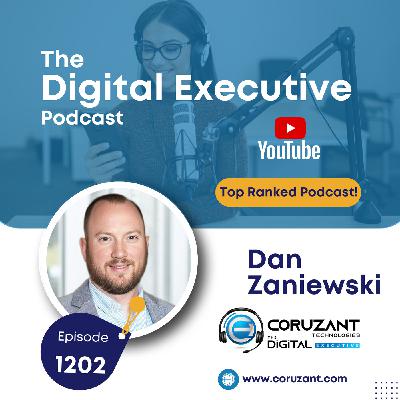
In this episode of The Digital Executive, Brian Thomas sits down with Dan Zaniewski, Chief Technology Officer at Auvik, to explore how MSPs and IT leaders can navigate today’s increasingly complex technology landscape.With over 20 years in technology leadership, Dan shares why fragmented tooling remains one of the biggest challenges for managed service providers, who often juggle 10+ platforms across networks, SaaS apps, endpoints, security, and now AI systems. As shadow AI and tool sprawl accelerate, MSPs are being pushed beyond infrastructure management into governing digital behavior, compliance, and risk at scale.Dan explains why true multi-tenancy, cloud-native architecture, continuous automated discovery, and deep observability are essential to delivering reliability across millions of devices and applications. He also unpacks where automation creates the most immediate value—eliminating repetitive operational tasks and accelerating root cause analysis—while cautioning against overhyping AI without proper governance and deterministic safeguards.Looking ahead, Dan predicts the rise of the IT generalist, outcome-driven AI deployment, and embedded AI governance as core infrastructure. The next five years, he argues, won’t reward teams with the most tools—but those who prioritize visibility, simplicity, automation, and proactive governance.If you liked what you heard today, please leave us a review - Apple or Spotify. See Privacy Policy at https://art19.com/privacy and California Privacy Notice at https://art19.com/privacy#do-not-sell-my-info.

In this episode of The Digital Executive, Brian Thomas speaks with Jude Odu, Founder and President of Health Cost IQ, about the staggering $1.6 trillion in annual waste embedded in the U.S. healthcare system.Drawing from his doctoral research, Jude explains how more than half of employer-sponsored health plan spending can be lost to overcharges, billing errors, inflated pharmacy costs, and fraud—often because waste is built into the business model. He shares how AI-driven claims auditing, predictive modeling, and pharmacy optimization can deliver immediate, measurable savings for self-funded employers.Jude also introduces his upcoming book, Model Optimal Care, a framework built specifically for self-insured employers. Centered on transparency, accountability, integration, engagement, and technology enablement, the model empowers organizations to treat healthcare as a managed asset—not a fixed cost.Looking ahead, Jude outlines three major shifts shaping the next decade: self-funding as the default model, fiduciary PBM reform, and operationalized price transparency. The message is clear—the tools exist. The question is who will lead.If you liked what you heard today, please leave us a review - Apple or Spotify. See Privacy Policy at https://art19.com/privacy and California Privacy Notice at https://art19.com/privacy#do-not-sell-my-info.

In this episode of The Digital Executive, Brian Thomas sits down with Pamela Eyring, President of The Protocol School of Washington, to explore why protocol, executive presence, and cultural intelligence matter more than ever in today’s AI-driven business world.Pamela explains that while AI can accelerate workflows and draft communications, it cannot build trust, interpret diplomatic nuance, or repair strained relationships. In high-stakes global environments—where hierarchy, symbolism, and cultural sensitivity shape outcomes—human behavior becomes a strategic advantage.She shares how her school’s award-winning training goes beyond theory to transform behavior through practical application, role play, and real-world simulations. From government officials to corporate executives and global leaders, Pamela highlights the growing demand for formal etiquette as a form of risk management—protecting reputations, preventing costly missteps, and accelerating trust.The conversation also addresses the gap many tech leaders face when transitioning from informal, disruption-driven cultures into diplomatic and international arenas where protocol and presence are critical. Pamela outlines three essential skills for the next generation of global leaders: cultural intelligence, executive presence under pressure, and strategic diplomacy.In a world increasingly shaped by technology, this episode makes a compelling case that credibility, composure, and authentic human connection cannot be automated.If you liked what you heard today, please leave us a review - Apple or Spotify. See Privacy Policy at https://art19.com/privacy and California Privacy Notice at https://art19.com/privacy#do-not-sell-my-info.
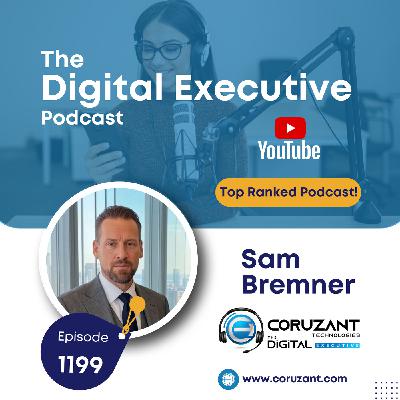
In this episode of The Digital Executive, host Brian Thomas sits down with Sam Bremner, Co-Founder and Managing Partner of IVEST Consumer Partners, to explore why licensing has evolved from a marketing tactic into a board-level growth strategy.With global licensed merchandise and services reaching $369 billion, Sam explains the two major forces fueling the surge: capital-light expansion and high-margin royalty models that appeal to institutional investors. He breaks down why franchise IP continues to outperform digital-native brands in long-term value creation—and how experienced operators can successfully convert audience engagement into scalable consumer products.Sam also shares how corporate brands are institutionalizing licensing into structured, investable revenue platforms, creating predictable cash flows that attract private equity. From entertainment giants to global retailers, he outlines how companies can unlock new royalty streams, expand into adjacent categories, and position IP as a durable financial asset class.The conversation closes with insights into the future of IP-backed securities, governance standards required by institutional capital, and why disciplined data, transparency, and diversified licensing exposure are critical for underwriting brand royalties in today’s market.If you liked what you heard today, please leave us a review - Apple or Spotify. See Privacy Policy at https://art19.com/privacy and California Privacy Notice at https://art19.com/privacy#do-not-sell-my-info.

In this episode of The Digital Executive, host Brian Thomas sits down with Adam Belmont, senior public relations and strategic communications executive, to discuss what it really takes for brands to stand out in today’s saturated and AI-influenced media landscape.Adam explains that the biggest mistake companies make is talking about themselves instead of focusing on the audience they’re trying to serve. He emphasizes that people buy from people—not faceless brands—and that empowering leaders and team members to show up authentically builds far greater trust and influence than hiding behind a company logo.The conversation also explores the disconnect between business strategy and communication strategy, with Adam highlighting why communications teams must have a seat at the table from the very beginning. Rather than being treated as a reactive function during crises, PR should operate as a proactive, always-on engine that steadily builds credibility, visibility, and long-term momentum.Looking ahead, Adam shares why clarity, credibility, and meaningful storytelling will separate breakout brands from those that get lost in the noise—especially as AI-generated content and generative search reshape how companies are discovered and validated. The takeaway: communications is no longer an afterthought—it’s a core business function that directly impacts growth, reputation, and relevance.If you liked what you heard today, please leave us a review - Apple or Spotify. See Privacy Policy at https://art19.com/privacy and California Privacy Notice at https://art19.com/privacy#do-not-sell-my-info.
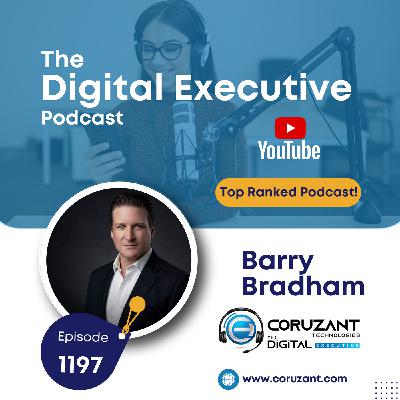
In this episode of The Digital Executive, host Brian Thomas sits down with serial entrepreneur and systems architect Barry Bradham to explore how business owners can eliminate operational chaos through intentional design, automation, and AI. Barry explains why rising revenue can mask broken systems, fragmented communication, and founder bottlenecks—and how to recognize when your business has outgrown its infrastructure.He shares a powerful framework: process creates order, technology creates scale, and AI creates acceleration. Rather than chasing shiny new tools, Barry urges entrepreneurs to focus on clarity, integration, and aligned systems that reduce cognitive load and prevent burnout. From avoiding common AI implementation mistakes to building connected digital infrastructure, this conversation delivers practical insights for leaders who want sustainable growth, calmer operations, and real leverage in an accelerating tech landscape.If you liked what you heard today, please leave us a review - Apple or Spotify. See Privacy Policy at https://art19.com/privacy and California Privacy Notice at https://art19.com/privacy#do-not-sell-my-info.
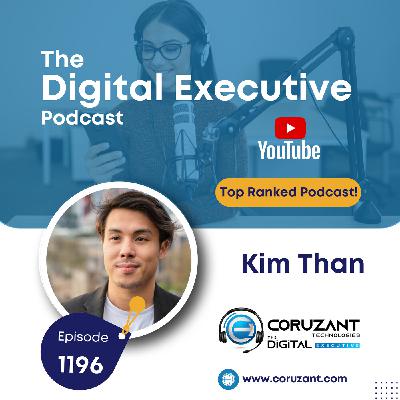
In this episode of The Digital Executive, host Brian Thomas sits down with Kim Than—founder of The Genius PR—and breaks down why technically strong Web3 and AI companies often fail to gain traction. After working with 300+ emerging tech firms, Kim explains that product alone isn’t enough—trust, narrative, timing, and brand authority determine market success.He shares why founders must think beyond product-led growth, how long-term positioning beats short-term hype, and why AI can replicate technology—but not authentic personal brands. Kim also unpacks the difference between company branding and personal branding, offering practical advice for founders looking to stand out in crowded, fast-moving markets.If you’re building in AI, crypto, or emerging tech, this episode is a masterclass in turning visibility into credibility—and credibility into growth.If you liked what you heard today, please leave us a review - Apple or Spotify. See Privacy Policy at https://art19.com/privacy and California Privacy Notice at https://art19.com/privacy#do-not-sell-my-info.

In this episode of The Digital Executive, host Brian Thomas sits down with Rajesh Khazanchi, CEO and Co-founder of ColorTokens, to explore what it takes to scale a hyper-growth cybersecurity company while staying ahead of evolving threats. Rajesh shares how ColorTokens has grown over 300% annually by balancing automation, lightweight processes, and a culture focused on solving big, meaningful problems.Rajesh dives into the shift from “assume you’re safe” to “assume you’re breached,” explaining what true breach readiness looks like in large enterprises and why containment—not prevention alone—is the new benchmark. He uses real-world analogies to illustrate how organizations can limit the blast radius of cyberattacks and maintain operational continuity even under pressure.The conversation also looks ahead to the next frontier in enterprise security, including AI-driven agents, governance gaps, and the growing risks of autonomous systems accessing sensitive data. Rajesh outlines proactive strategies such as microsegmentation, isolation frameworks, and controlled AI deployments to help organizations build resilience before the next wave of cyber threats hits.This episode offers a practical, forward-looking perspective on scaling innovation, building cyber resilience, and preparing for the agentic AI era.If you liked what you heard today, please leave us a review - Apple or Spotify. See Privacy Policy at https://art19.com/privacy and California Privacy Notice at https://art19.com/privacy#do-not-sell-my-info.

In this episode of The Digital Executive, host Brian Thomas sits down with Dr. Morris L. Parker, entrepreneur, author, and founder of True Concierge and Luxury Transportation Academy, to explore what it really takes to deliver premium experiences consistently. Dr. Parker shares why talent alone isn’t enough and how discipline, standards, and systems create predictable, elite performance.Drawing from his book The CMO Mindset, Morris explains how structure and accountability transformed his own journey and why motivation and effort without systems eventually lead to inconsistency, stress, and missed opportunities. He outlines the core systems leaders should implement—daily non-negotiables, clear scoreboards, operating playbooks, and continuous improvement loops—to maintain control and excellence under pressure.The conversation also dives into what will separate premium brands in the next decade, emphasizing consistency, proactive communication, trust at scale, and leadership that refuses to settle for “close enough.” Dr. Parker offers practical insights for leaders and service professionals who want to elevate their standards, build repeatable processes, and become the obvious choice for high-end clients.If you liked what you heard today, please leave us a review - Apple or Spotify. See Privacy Policy at https://art19.com/privacy and California Privacy Notice at https://art19.com/privacy#do-not-sell-my-info.
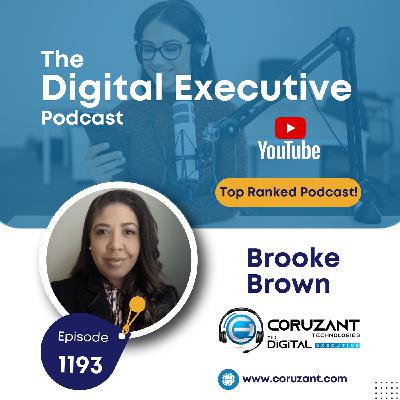
In this episode of The Digital Executive, host Brian Thomas sits down with Brooke Brown, Vice President of Product Management at Relias, to explore how AI and interoperability are transforming healthcare technology. Brooke shares key product challenges healthcare organizations face today—especially around data integration, regulatory complexity, and workforce enablement—and how modern technology is helping clinicians and administrators make better, faster decisions.She explains where AI is delivering immediate value, particularly in surfacing regulatory changes, reducing compliance risk, and improving operational efficiency, while emphasizing the importance of keeping humans in the loop for patient safety and trust. Brooke also discusses how product leaders balance speed, compliance, and quality in highly regulated environments and how AI-driven decision support can empower experts rather than replace them.Looking ahead, Brooke outlines how AI, data interoperability, and product-led innovation will reshape healthcare delivery over the next decade—accelerating precision medicine, improving outcomes, and addressing staffing shortages. This conversation offers a forward-looking view of how healthcare organizations can harness technology to deliver safer, smarter, and more resilient care.If you liked what you heard today, please leave us a review - Apple or Spotify. See Privacy Policy at https://art19.com/privacy and California Privacy Notice at https://art19.com/privacy#do-not-sell-my-info.


Download from Google Play

Download from App Store
 United States
Hello
$100 Registration Bonus Eksklusibo sa jet!
Maging Miyembro ng daddy at Makatanggap ng $100 Agad!
Magsimula sa fresh: Makakuha ng $100 Welcome Bonus!
Magsimula sa fresh: Makakuha ng $100 Welcome Bonus!
sherbet Registration Bonus: Libreng $100 Para sa Mga Bagong User!
Magparehistro sa supernova at Makakuha ng $100 Bonus Kaagad!
Magparehistro sa supernova at Makakuha ng $100 Bonus Kaagad!
Sumali sa jazz Ngayon at Kumuha ng $100 Welcome Bonus!
Sumali sa jazz Ngayon at Kumuha ng $100 Welcome Bonus!
Simulan ang Iyong Paglalaro sa 500 casino na may Libreng $100 Bonus!
$100 Bonus Agad Para sa Mga Bagong User ng highway!
Bagong User? Sumali sa sol at Makatanggap ng $100 Bonus!
Makakuha ng $100 Bonus Kapag Nagparehistro sa exclusive Ngayon!
Para sacar na token casino - https://casinoonline-br.com/token-casino/, você precisa fornecer dados bancários e uma foto de um documento de identidade para validação. O processo de saque é rápido e seguro, e a plataforma garante que todas as suas transações financeiras sejam protegidas por tecnologia de criptografia.
Ao solicitar um saque na 777luc bet - https://casinoonline-br.com/777luc-bet/, você precisará enviar dados bancários, além de uma cópia do seu documento de identidade. A plataforma é altamente segura e garante que todos os fundos sejam protegidos, utilizando criptografia para prevenir qualquer tipo de fraude ou roubo de dados.
A br89 bet - https://casinoonline-br.com/br89-bet/ garante a segurança dos seus saques exigindo que os usuários enviem dados como informações bancárias e um documento com foto. Todos os dados são protegidos por criptografia avançada, assegurando que seus fundos sejam transferidos de maneira rápida e sem riscos.
Na hora de sacar seus ganhos na dc casino - https://casinoonline-br.com/dc-casino/, será necessário enviar alguns dados como número da sua conta bancária e um documento oficial. A plataforma adota altos padrões de segurança para garantir que suas informações financeiras e pessoais estejam sempre protegidas.
Para retirar dinheiro na t89 bet - https://casinoonline-br.com/t89-bet/, você precisa fornecer dados como informações bancárias e um documento de identificação. A plataforma utiliza criptografia de alto nível para proteger suas transações e garantir que seus fundos sejam transferidos de forma rápida e sem riscos.
Se você deseja sacar seus ganhos na apk pix bet - https://casinoonline-br.com/apk-pix-bet/, será necessário enviar dados como informações bancárias ou de carteira digital e um documento oficial com foto. A plataforma garante a segurança das suas transações financeiras, utilizando sistemas de proteção de dados que asseguram rapidez e segurança.