


 Claim Ownership
OpenTalk by Carlos Conde
Subscribed: 2Played: 5
Subscribe

© Carlos Conde
Description
Podcasts on politics, human rights, social justice, civil liberties, freedom of expression in the Philippines
carlosconde.substack.com
carlosconde.substack.com
12 Episodes
Reverse
Sa podcast episode na ito, ikinwento ni Caloy Conde ang nangyari sa loob ng Pre-Trial Chamber I ng International Criminal Court kahapon. Tinalakay din nya ang napakagaling na talumpati ni Atty. Joel Butuyan, ang isa sa mga abogado ng mga biktima ng “drug war.” Tinuligsa nya ang pamamaraan ng mga DDS para i-harass ang mga kritiko ni Duterte, pati na ang mga abugado. At inilahad din niya ang pagka-dismayado niya sa mga DDS — kasama na ang mga kaibigan at kamag-anak at mga taong mahigpit kuno ang paniniwala sa Diyos — na ayaw tanggapin ang katotohanan tungkol sa idolo nila. Basahin ang post na ito ni Caloy noong March 2025 tungkol sa mga “mini-Dutertes” na ito: This is a public episode. If you would like to discuss this with other subscribers or get access to bonus episodes, visit carlosconde.substack.com
In this episode of #OpenTalk with Caloy Conde, we go inside the work of two investigative journalists from Rappler — Dwight de Leon and Lian Buan — who helped uncover massive corruption scandals involving the DPWH, congressmen, and powerful political families.They reveal the painstaking process behind their exposés on Rep. Zaldy Co, the DPWH flood control scandal, and political contractors across the Philippines — from expensive document fees at the SEC, to threats, intimidations, and the crucial role of citizen-powered journalism.This conversation explores:-- How investigative journalists vet anonymous tips-- The hidden conflicts of interest between politicians and contractors-- The difficulties and dangers of exposing corruption-- How Filipinos’ “oversharing culture” on social media helps investigations-- Why investigative journalism matters for democracy#Rappler #OpenTalkPodcast #InvestigativeJournalism #DPWHCorruption #ZaldyCo #PhilippinePolitics #PressFreedom #CitizenJournalism #RapplerExposé #PhilippineCorruption #Newsbreak #PoliticalDynasties This is a public episode. If you would like to discuss this with other subscribers or get access to bonus episodes, visit carlosconde.substack.com
In this episode of #OpenTalk with Caloy Conde, climate advocate John Leo Algo, national coordinator of Aksyon Klima Pilipinas, reveals shocking details about how the Philippine government’s spends its climate budget over the years and how the Department of Public Works and Highways, which gets the biggest slice of the piece, is not even attending climate consultations.JL discusses how over 80% of the climate-tagged funds in next year’s budget will go to the DPWH, mostly for flood control projects — many of which are now under scrutiny for alleged corruption, inefficiency, and lack of transparency.****Link to the DBM’s budget and expenditures for 2024, 2025, 2026: https://www.dbm.gov.ph/wp-content/uploads/BESF/BESF2026/B21.pdf ****The conversation also tackles:🌏 How corruption in flood control affects climate resilience🏛️ The ₱1 trillion “climate budget”: Where will the money actually go?📊 DPWH gets 80% of climate funds—why this is a problem🌏 The mismatch between infrastructure-heavy projects and real climate action📊 How the Climate Change Commission (CCC) and other agencies struggle with monitoring and accountability🏛️ How ordinary citizens can demand accountability: The need to localize climate action so LGUs and communities can genuinely respond to the crisis💬 Anti-corruption advocacy and the role of civil society: Why public pressure and civic engagement remain crucial in fighting corruption📊 The upcoming COP30 and updates on the Loss and Damage FundThis episode takes a deep dive into the intersection of climate policy, governance, and corruption—a must-watch for anyone concerned about how climate funds are being used (or misused) in the Philippines. This is a public episode. If you would like to discuss this with other subscribers or get access to bonus episodes, visit carlosconde.substack.com

Why do Ilocanos remain deeply loyal to the Marcos family — even decades after Ferdinand Marcos Sr.’s dictatorship? Why do people love Rodrigo Duterte even after all the human rights abuses?In this episode of Open Talk with Caloy Conde, sociologist Ash Presto explains her important fieldwork on political polarization, loyalist mentality, and emotional politics in the Philippines.Ash, currently pursuing her PhD in Australia, discusses her study on the youth of the so-called Solid North in the Ilocos region, exploring how Marcos nostalgia, public discourse, and creative engagement shape how Ilocanos — especially Gen Z — understand and express political loyalty.🎧 Topics include:-- How Filipinos normalize corruption and political misconduct-- Why “loyalist mentality” goes beyond fake news and regionalism-- The emotional and cultural roots of Marcos devotion-- How Gen Z Ilocanos use social media and creative activism to navigate polarization-- Comparing Marcos and Duterte loyalist behavior This is a public episode. If you would like to discuss this with other subscribers or get access to bonus episodes, visit carlosconde.substack.com
When the Integrated Bar of the Philippines (IBP) awarded former President Rodrigo Duterte the “Golden Pillar of the Law Award,” the backlash was immediate and intense. Critics say the move is tone-deaf, given Duterte’s record of human rights violations and the bloody war on drugs.In this episode of #OpenTalk with Caloy Conde, Atty. Ted Te — former Supreme Court spokesperson and FLAG (Free Legal Assistance Group) secretary general — explains why this award undermines the integrity of the legal profession and sends the wrong message to Filipino lawyers and the public.Highlights:– Why the IBP award for Duterte shocked many-- The IBP’s justification for honoring Duterte– Should Duterte be emulated as a “pillar of justice”?-- The controversy surrounding the award’s inscription– The ethical contradiction of honoring Duterte-- How the legal community reacted-- The meaning of the lawyer’s oath and ethical duty-- The broader impact on justice, rule of law, and human rights in the Philippines– What this controversy says about the state of justice in PH This is a public episode. If you would like to discuss this with other subscribers or get access to bonus episodes, visit carlosconde.substack.com
They unpack the Philippine Senate resolution urging the ICC to grant house arrest for former President Rodrigo Duterte, and why this has no legal bearing under the Rome Statute.Key issues discussed include:-- Why house arrest does not exist in ICC rules-- The fairness principle in ICC detention facilities-- Disinformation about Duterte’s health and detention conditions-- How the Senate resolution serves Philippine domestic politics-- The Duterte family’s continuing political influence-- The Marcos administration’s dilemma in handling ICC cooperation-- The rights of thousands of victims of the drug war-- Why this case matters for international criminal justice👉 Don’t forget to like, share, and subscribe to Open Talk for more in-depth discussions on Philippine politics, human rights, and international law. This is a public episode. If you would like to discuss this with other subscribers or get access to bonus episodes, visit carlosconde.substack.com
Mass protests and unrest in Indonesia are once again shaking Southeast Asia’s largest democracy. Rooted in economic inequality, misgovernance, and official indifference, today’s turmoil echoes the country’s turbulent history going back to 1965.In this episode, Human Rights Watch senior researcher Andreas Harsono explains how severe economic hardships — including the “disappearance” of 10 million members of the middle class — fueled public anger that in recent days bubbled into the surface especially after the death of a gig driver in the hands of the police. The violence that erupted has resulted in death and mayhem and threatens to upend Indonesian society.Andreas, also a longtime journalist, warns that what is happening in Indonesia is a cautionary tale for the Philippines, where similar problems of inequality, corruption, and weak governance persist. He offers three pieces of advice to Filipinos: learn from the mistakes of their past, repeal repressive laws, and improve media and journalism.Carlos and Andreas unpack:-- Why corruption and economic collapse triggered unrest in Indonesia-- The historical parallels to Indonesia’s bloody past and the Philippines' own turbulent history-- The human cost of losing a middle class-- Why Filipinos should pay close attention👉 Subscribe for more deep-dive discussions on human rights, democracy, and accountability in Asia.#Indonesia #Philippines #HumanRights #Corruption #Inequality #AndreasHarsono #HRW #SoutheastAsia #GoJek This is a public episode. If you would like to discuss this with other subscribers or get access to bonus episodes, visit carlosconde.substack.com
In this episode of #OpenTalk, journalist Carlos Conde interviews Ken Roth, former executive director of Human Rights Watch and author of the new book "Righting Wrongs." They dive into the urgent state of human rights advocacy, the challenges facing the International Criminal Court (ICC), and the global fight for accountability.Ken Roth stresses the importance of the Assembly of States Parties in resolving the leadership crisis surrounding ICC Prosecutor Karim Khan, who is currently on leave after facing allegations. Roth explains why the ICC cannot afford to be “headless” at a time when it must tackle pressing cases around the world.The discussion also examines the case of Rodrigo Duterte, the former Philippine president now detained in The Hague on charges of crimes against humanity. Roth argues that Duterte’s arrest and potential trial should serve as a stark warning to autocrats everywhere who believe they can escape justice.If you’re interested in international justice, human rights, accountability for authoritarian leaders, and the role of the ICC, this conversation is essential viewing.👉 Don’t forget to like, share, and subscribe for more conversations on global human rights, justice, and democracy.SECTIONS00:00 Why Ken Roth wrote "Righting Wrongs"– Ken’s book is part memoir but it really is a strategy lesson for how information can be deployed to force government to respect human rights– Human rights work doesn’t always work but it works a lot– Does naming and shaming still work?– Human rights as an imposition by the west– it’s a convenient argument for an autocrat– Sacrifice civil liberties for better governance is part of the Lee Kuan Yew myth– 9 out of 10, autocrats serve themselves; Lee was the exception that proves the rule12:04 The ICC Prosecutor Karim Khan controversy and why it needs to be resolved FAST– The ICC’s Office of the Prosecutor is essentially headless at a time when important decisions have to be made– Assembly of States Parties has the power to remove Khan if they want but there needs to be a fair process– The next prosecutor should be genuinely independent– Befuddled why Putin has not been charged for any of bombing20:19 Duterte’s arrest and trial at The Hague-- Duterte is a lesson to the world's autocrats– The argument that ICC only focuses on cases in sub-Saharan Africa is old– One fair criticism against the ICC is that it has only convicted warlords so far, not leaders or government officials– Duterte arrest shows the naïveté of leaders that they can get away with mass atrocities as long as they are in office– Duterte is an important lesson for the Putins and Netanyahus of the world– Duterte case is not only a positive for the ICC but also a positive for justice– The Philippines should rejoin the ICCLearn more about Ken Roth and his book here: https://www.kenroth.org/#HumanRights #ICC #RodrigoDuterte #KenRoth #OpenTalk#philippines #philippinepolitics #HRW #humanrightswatch #rightingwrongs #memoir #vladimirputin #benjaminnetanyahu #israel #russia #karimkhan #gaza #genocide #accountability #justice This is a public episode. If you would like to discuss this with other subscribers or get access to bonus episodes, visit carlosconde.substack.com
Walden Bello, the esteemed Filipino progressive and public intellectual, has written a memoir about the political battles he has waged over the years and how love fits in all of those struggles. In this OpenTalk episode, Walden talks about the demons that he tried to vanquish – from inequality in the Philippines (as a communist cadre) to US interventionism and imperialism – and the loves he pursued along the way. This is the first part of Walden’s interview with Caloy Conde; the second part, which will be uploaded later this week, will be about what Walden thinks of the corruption scandal that’s roiling the Philippines and how all that is linked to the country’s lingering structural problems. Walden will be at the Manila International Book Fair at MOA SMX today, at 11am, to sign copies of your book. This is a public episode. If you would like to discuss this with other subscribers or get access to bonus episodes, visit carlosconde.substack.com
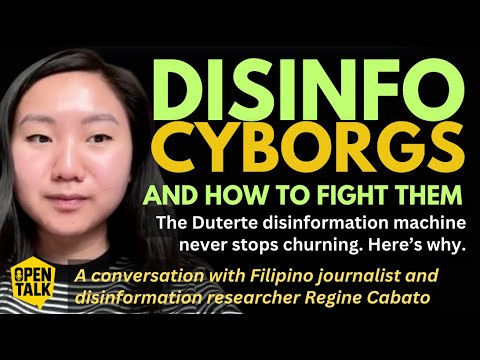
In this OpenTalk episode, Carlos Conde and journalist Regine Cabato delve deep into the world of what Regine calls the Duterte “disinformation cyborgs,” who runs them, why they keep churning disinformation, and who benefits from all that. A former Washington Post reporter who is now on a Chevening scholarship in the UK where she studies politics and the disinformation ecosystem, Regine provides valuable insights and startling revelations about how the “disinformation industry” in the Philippines works.Watch the full episode here:EPISODE HIGHLIGHTS* The disinformation machine never stops churning* Who are doing this? Nobody has a normal life and fulltime job can do this* A lot of what you see online is manufactured, paid for* The Duterte disinformation machine is a cyborg – half human half machine* The disinformation industry is not even just a cottage industry. Billions are spent.* Public relations political strategists at the top* Organic influencers are targeted; they are the target market; they preach to the choir* They exaggerate real pro-Duterte sentiments* They pit Cebuanos against Tagalogs to create the anti-Bisaya Duterte construct* The goal is to keep the people divided; to keep Filipinos polarized* Regional language barrier is real; this fills an information gap* There needs to be content creators on the democraty side, on the journalism side* Important to train regional journalists vs information manipulation* People want not just facts but framing; they want to be told what's important* Journalists have to compete in the chaos* We have to explain to people that journalists are the go-to source for credible information* People have lost their capacity for longform comprehension* We have not fully recovered from the Duterte years of undermining the media* We have to explain to people how platforms work, the dynamics of how media works* Influence the influencers* Journalists should do PR for their own stories and investigations, to measure impact This is a public episode. If you would like to discuss this with other subscribers or get access to bonus episodes, visit carlosconde.substack.com
This episode stemmed from the current brouhaha over public works corruption in the Philippines as revealed recently, particularly involving certain big-ticket contractors, the Department of Public Works and Highway, and members of the legislature. KEY PODCAST POINTS * The DPWH flood-control project and the Discaya controversies * The many reasons why corruption is hard to vanquish in the Philippines * Corruption as a way of life * The dominance of political dynasties and why they're the key drivers of corruption * Corruption normalized but also the public engages also with the practice for practical economic reasons * Why the corruption accountability mechanisms, such as the Ombudsman and the Sandiganbayan, have been failures * Would President Marcos Jr., the son of the most corrupt president the Philippines has ever had, change things for the better? * Why Marcos appointment of the next Ombudsman will be a key indicator of how serious he is in mitigating if not eradicating corruption * The role of civil society and advocates for reform * Corruption as a human rights issue and why corruption has a direct link to human rights violations such as the "drug war" killings * How should the public contribute in the fight against corruption? It starts with small things. This is a public episode. If you would like to discuss this with other subscribers or get access to bonus episodes, visit carlosconde.substack.com

In this first episode of my new podcast, I talk briefly about what comes next after my departure from Human Rights Watch. But more important, I provide some updates on the current political climate in the Philippines, why Vice President Sara Duterte is poised to win the presidency in 2028, and, finally, the dismal human rights record of the Marcos administration, some “improvements” notwithstanding. This is a public episode. If you would like to discuss this with other subscribers or get access to bonus episodes, visit carlosconde.substack.com
Comments

Download from Google Play

Download from App Store
 United States