DiscoverBRCA & Beyond
BRCA & Beyond
Claim Ownership

BRCA & Beyond

Author: Marisa Stachelski

Subscribed: 0Played: 0
Share

Description

BRCA & Beyond is where real talk meets real life with a gene mutation. I’m Marisa, a BRCA2 previvor, colon cancer survivor, wife, and mom of two, and I know firsthand how overwhelming, emotional, and downright confusing this journey can be. But here’s the truth — your gene mutation does not define you. Your choices do. And there is a full, beautiful life waiting beyond this diagnosis.


Here, we’ll talk about the decisions no one ever expects to face, the emotions that come with them, and the messy, beautiful, complicated life that happens in between. You’ll hear honest stories (mine and others’), practical tips, and guides that make the path a little clearer. We’ll welcome guests who share their own journeys and expertise, offering fresh perspectives, hope, and encouragement. We’ll laugh when we can, cry when we need to, and remind each other that joy still exists, even in the chaos.


Whether you’re newly diagnosed, deep into decision-making, or simply searching for connection, this is a space to feel understood, supported, and never alone. Pull up a seat, friend. We’re in this together.


Hosted on Acast. See acast.com/privacy for more information.

24 Episodes
Reverse
What happens when cancer risk isn’t just a possibility… but a pattern in your family?In this episode of BRCA & Beyond, I’m joined by Vanessa Federico, also known as the BRCA Babe, who shares what it’s really like to grow up knowing hereditary cancer is part of your story.Vanessa is a BRCA1 carrier and one of three sisters, where she and one sister carry the gene and the other doesn’t. That alone brings a layer of complexity that so many families quietly navigate but rarely talk about out loud. We talk about what it feels like to sit at that crossroads, knowing your family history, understanding your risk, and having to make decisions that don’t come with clear answers.From starting surveillance in her twenties, to choosing a risk-reducing mastectomy at 30, to becoming a mom after her surgery, Vanessa shares her experience in a way that feels honest, grounded, and real. Vanessa Federico stepped into previvorhood with resilience and purpose after testing positive for the BRCA1 gene mutation. As a mother and runner, she uses her voice to shed light on hereditary cancer risk and the emotional realities that come with it, while also embracing the messy, beautiful balance of family life. Through her platform, Vanessa shares her journey with honesty, vulnerability, and a dose of humor, helping to normalize the previvor experience and make difficult conversations feel a little less heavy. Her mission is to create a space where women feel supported, informed, and empowered every step of the way. You can follow her journey on Instagram at @brcababeboston.This conversation isn’t about having all the answers.It’s about what it looks like to live through the questions.If you’ve ever felt the weight of family history, struggled with what decision is right, or wondered what life actually looks like on the other side of these choices, this one will stay with you. Hosted on Acast. See acast.com/privacy for more information.
What does it actually feel like to live with a genetic mutation like BRCA, Lynch syndrome, or other hereditary cancer risks?Not the medical side. Not the statistics.In this episode, I’m talking about the space in between — the place where you’re not sick, but you’re not untouched either.Living with a genetic mutation or high cancer risk changes how you think, how you make decisions, and how you move through your life… even when everything looks completely normal on the outside.We talk a lot about prevention and cancer. But we don’t talk enough about what it feels like to live in the middle of it.In this conversation, I’m opening up about:the feeling of not fitting anywhere — not in the cancer world, but not outside of it eitherthe internal “imposter” feeling of questioning whether your experience is validthe quiet, constant “what if” that lives in the backgroundhow this impacts your body, identity, relationships, and everyday lifethe weight of making preventative decisions that permanently change your bodyand why this experience can feel so isolating, even when you’re surrounded by supportIf you’ve ever felt like: “I’m not sick… but I’m not okay either” this episode will put words to that feeling.Whether you are BRCA positive, living with Lynch syndrome, CHEK2, ATM, or navigating any form of hereditary cancer risk — this conversation is for you.BRCAgenetic mutationhereditary cancer riskprevivorBRCA anxietyLynch syndromehigh cancer riskpreventative surgeryliving with BRCAcancer risk anxiety Hosted on Acast. See acast.com/privacy for more information.
Will I Ever Feel Normal Again? Healing and Finding a New NormalAfter a cancer diagnosis, genetic mutation discovery, or life-changing medical news, one question quietly sits in the back of so many minds:Will I ever feel normal again?In this episode of BRCA & Beyond, Marisa shares an honest conversation about the emotional reality that often follows a diagnosis. Beyond the appointments, decisions, surgeries, or surveillance plans, there is a deeper journey happening — one that involves identity shifts, grief, healing, and learning how to live in a body that suddenly feels different.After being diagnosed with Stage 1 colon cancer at 37 and discovering she carries the BRCA2 gene mutation, Marisa found herself asking the same question so many survivors and previvors ask:Will I ever feel normal again after diagnosis?This episode explores the emotional aftermath of diagnosis and what healing actually looks like in real life — not the clinical version, but the human one.In this conversation, Marisa talks about:• The emotional impact of a cancer or genetic mutation diagnosis• Why many survivors and previvors struggle with feeling “normal” again• Anxiety, intrusive thoughts, and health fears after diagnosis• The identity shift that can happen after major medical decisions• Learning how to trust your body again• Why healing is not linear• How to begin building a new normal after diagnosisWhether you are navigating cancer survivorship, living as a previvor with hereditary cancer risk, undergoing surveillance, or adjusting to life after preventative decisions, this episode is a reminder that you are not alone in these feelings.Healing does not mean returning to who you were before.Sometimes healing means slowly discovering who you are becoming — and finding a new normal along the way.If you have ever asked yourself “Will I ever feel normal again after diagnosis?”, this conversation is for you.🎙 BRCA & Beyond is a podcast for previvors, survivors, and anyone navigating hereditary cancer risk, genetic mutations, preventative decisions, and life after diagnosis. Through real conversations, expert insights, and shared experiences, this space exists so no one has to walk this path alone.life after cancer diagnosiswill I ever feel normal againhealing after cancer diagnosisfinding a new normal after diagnosisBRCA previvorhereditary cancer riskanxiety after cancer diagnosislife after preventative surgerycancer survivorship journeygenetic mutation diagnosis Hosted on Acast. See acast.com/privacy for more information.
March is Colorectal Cancer Awareness Month, and in this episode I’m sharing the story that started everything.At 37 years old, I was diagnosed with stage 1 colon cancer after experiencing symptoms that many people dismiss — bloating, cramping, and blood in my stool. A colonoscopy not only found the cancer, it removed it before it had the chance to spread.In this episode, I talk about:• The colon cancer symptoms that led me to seek answers• Why colorectal cancer rates are rising in younger adults• The powerful role of screening and colonoscopy in early detection• The genetic testing that later revealed my BRCA2 mutation• How early detection can truly save livesColorectal cancer is now one of the leading causes of cancer death in adults under 50 — but it is also one of the most preventable and treatable cancers when caught early.If you’re 45 or older, have symptoms that feel unusual, or have a family history of cancer, this conversation could change the way you think about screening.This episode is both my story and an important reminder: listen to your body, advocate for yourself, and never ignore symptoms. colon cancerTopics Covered in This Episode• colon cancer symptoms • colorectal cancer screening • colonoscopy and early detection • colon cancer in younger adults • genetic testing and BRCA2 mutations Hosted on Acast. See acast.com/privacy for more information.
If you’re preparing for a mastectomy—whether it’s a preventative mastectomy because of a BRCA gene mutation or a mastectomy as part of breast cancer treatment—this episode is for you.I recorded this one because I have quite a few women in my own circle heading into mastectomies this month, and this has been an ongoing conversation between me and these women for weeks now. Real texts, real voice notes, real "What do I even do with all of this?” moments—sharing tips we’ve learned the hard way and the little things that end up making a huge difference. At some point I just thought… this shouldn’t stay private. So I’m bringing it here to all of our friends at BRCA & Beyond.This isn’t a “do it perfectly” guide, and it’s not meant to replace your medical team. It’s a supportive walk-through of how to prepare for a mastectomy mentally, emotionally, physically, and practically—in a way that feels human and doable, especially if you’re trying to hold life together while a surgery date is sitting on your calendar.We talk honestly about anticipatory anxiety in the days and weeks leading up to surgery...how that date can start to feel like doomsday and how complicated it is to be saying goodbye to a part of your body that’s tied to identity, femininity, motherhood, and sexuality…while also being the very thing you’re being told could someday harm you. If you’ve had the sobbing fests, the random waves of panic, the “I’m fine—wait, I’m not fine” moments… you’re not alone. I also share what helped me most: therapy early on, having a safe place to let the emotions out, and finding support that doesn’t require you to explain every single detail.From there, we get into physical preparation for mastectomy recovery: what the movement restrictions can look like, how long drains might be in, why muscle loss happens, and how gentle movement, walking, stretching, hydration, and prioritizing protein before and after surgery can truly support healing. I also share what I wish I did more of before my surgeries and why your body will thank you later for even small efforts now.And then we slow down and get very practical, because the practical prep matters. We talk about meal prepping and freezing food, setting up a meal train, and stocking easy high-protein snacks for the low-energy days. I walk through a real-life “recovery nesting” plan—including things like a recliner or lift chair (a total game-changer), what to wear after surgery (button-down pajamas, zip hoodies, elastic sweatpants), surgical bras and drain management, slippers or slides (because bending down is a whole situation), bath wipes and shower routines when you’re scared to get incisions wet, mastectomy pillows for comfort and protecting your chest (especially around kids), and a seat belt cushion for rides to follow-ups.We also talk about the first mirror moment — the “oh… this is real” moment — and the emotional side of adjusting afterward: body image, grief, relief, frustration, and how healing is not linear. I share why lining up support before surgery matters so much, including community resources like FORCE, and how giving your loved ones practical “jobs” ahead of time can make recovery feel less overwhelming.If this episode gives you even one thing that helps you feel steadier going into surgery and recovery, I’m so glad you’re here. This is a big surgery and a big season—and none of us were ever prepared to have to prepare for something like this in the first place… but you’re doing the right thing by gathering support and making it easier where you can.You’ve got this—and I promise you’re going to be okay. Hosted on Acast. See acast.com/privacy for more information.
What really happens after you get your genetic test results?In this episode of BRCA & Beyond, Marisa sits down with genetic counselor Sharon Pollack from JScreen to walk through what genetic testing can reveal—and what those results can mean for you and the people you love.Sharon has a strong background in both cancer and reproductive genetics. She earned her master’s degree in human genetics from Sarah Lawrence College and holds a master’s in bioethics from the Albert Einstein College of Medicine. She now works in an outreach and education role at JScreen, where she focuses on increasing awareness, empowering individuals with knowledge, and making genetic screening more accessible and understandable.Together, Marisa and Sharon talk about • What genetic counselors actually do • The emotional and family impact of genetic results • The difference between positive, negative, and VUS results • How genetic mutations are passed through families • Why cascade testing matters • What to expect after a genetic testIf you’ve ever wondered whether genetic testing is right for you or what your results could mean...this conversation will help you feel more informed, supported, and prepared.JScreen is a national nonprofit genetic testing and education program that offers clinical-grade at-home saliva testing for hereditary cancer risk. Their tests are processed through Myriad Genetics, a leading laboratory in genetic testing, and include access to licensed genetic counselors to guide you through the process and your results.You can order a kit directly to your home and complete the process with professional support every step of the way.Learn more or order a test:Visit JScreen.orgUse promo code BRCAandBeyond10 for $10 off your test. Hosted on Acast. See acast.com/privacy for more information.
Cancer Prevention Month… For Us, It’s Every Day With a Genetic MutationFebruary is Cancer Prevention Month. But for those of us living with a genetic mutation like BRCA, prevention isn’t something we think about once a year—it’s part of everyday life.In this episode of BRCA & Beyond, Marisa shares an honest, real conversation about what cancer prevention actually looks like when your risk is hereditary. From daily lifestyle choices to medical surveillance and preventative surgeries, this episode breaks down the difference between general wellness advice and true hereditary cancer risk management.Marisa opens up about her own experience—how she exercised, ate well, and still faced a stage 1 colon cancer diagnosis—and why that doesn’t make healthy habits pointless. Instead, she explains how movement, nutrition, hormone balance, inflammation reduction, and metabolic health all play an important role in supporting the body, even when your DNA can’t be changed.This episode is for anyone:Living with a BRCA or other genetic mutationNavigating hereditary cancer riskConsidering preventative surgeryFeeling overwhelmed by prevention decisionsWondering what prevention really looks like beyond lifestyle adviceIf you’ve ever felt like the typical “just be healthy” message doesn’t fully apply to you, this conversation will help you feel more informed, more grounded, and less alone.Because when your risk is genetic, prevention isn’t a month. It’s a way of life. Hosted on Acast. See acast.com/privacy for more information.
In this episode of BRCA & Beyond, Marisa sits down with Rori Zura—breast cancer survivor, certified Cancer Exercise Specialist, and founder of Foobs & Fitness to talk about what recovery really looks like for previvors and survivors, before, during, and after surgery and treatment.After navigating years of breast health concerns and a strong family history of cancer, Rori was diagnosed with triple-negative breast cancer at just 33 years old during the COVID-19 pandemic. During treatment, fitness became her anchor—not to “fix” her body, but to stay connected to it and reclaim a sense of control. That experience reshaped her life and led her to become a certified Cancer Exercise Specialist and ultimately create Foobs & Fitness.From prehab to rehab, this conversation dives into the often-overlooked side of healing: rebuilding strength, protecting range of motion, navigating muscle loss, and learning how to move safely after mastectomy, reconstruction, hysterectomy, chemotherapy, and radiation. Rori shares expert insight on the rehab gap many people face after being discharged, the physical and emotional impact of recovery, and why individualized, cancer-informed movement is essential for long-term healing.Whether you’re preparing for preventative surgery, actively in treatment, or navigating life after cancer, this episode offers practical guidance, reassurance, and real-world strategies to help you reconnect with your body in a way that feels safe, supported, and empowering.Today, through Foobs & Fitness, Rori supports both previvors and survivors with in-person and virtual programs designed specifically for every stage of the journey, helping people use movement as a lifeline to rebuild strength, confidence, and trust in their bodies during survivorship and beyond.Connect with Rori & explore Foobs & Fitness:Website: https://foobsandfitness.com/Instagram: @foobsandfitnessIf you or someone you love is facing preventative surgery, cancer treatment, or survivorship, this episode is a must-listen for anyone looking for compassionate, informed, and realistic guidance on rebuilding after it all. Hosted on Acast. See acast.com/privacy for more information.
In this episode of BRCA & Beyond, Marisa talks about what healing can look like after preventative surgery, when survival mode eases, but your nervous system and emotions are still catching up.This conversation covers scanxiety, fight-or-flight responses, and the emotional side of recovery that can show up long after surgeries are done. From nervous system regulation to unexpected body image struggles, Marisa shares how the body continues to process medical stress even when life looks “back to normal” on the outside.If you’ve experienced preventative surgery, mastectomy recovery, reconstruction, hereditary cancer risk, or life after cancer, this episode offers connection and validation around the emotional layers of healing that often come next. It’s for anyone learning how to feel safe in their body again while navigating life after BRCA, colon cancer recovery, or major health decisions.Founding PartnerThis episode is brought to you by our founding partner, Auntie Tats’s Candle Shoppe.Each candle is hand-poured in small batches using clean, thoughtful ingredients like beeswax and coconut wax. No harsh chemicals, just soft, calming scents that help you slow down, breathe a little deeper, and feel more grounded in your space.And if you’ve been walking through recovery, grief, health anxiety, or big life transitions, you already know how important those quiet moments are.Find them at www.auntietatsscandleshoppe.com and on Instagram @auntietatsscandles—woman-owned and proudly supporting this community. Hosted on Acast. See acast.com/privacy for more information.
🎙️ Episode DescriptionMarisa sits down with the two women behind the powerful film Love, Danielle—actor, writer, and producer Devin Sidell and executive producer Amy Byer Shainman for an honest, thoughtful conversation about the emotional side of hereditary cancer, identity, healing, and what it really means to rebuild your life after a life-changing diagnosis.🎬 About the FilmWhen Danielle, a happily married thirty-something, tests positive for a BRCA1 gene mutation, she learns that this puts her at a very high risk of developing breast and ovarian cancer. Thanks a lot, DNA.She struggles to carry on with daily life working at her bakery with her husband Pat and hanging out with her well-meaning but clueless friends—while watching her older sister Amy undergo chemotherapy for breast cancer. Danielle begins to face the weight of a life-altering decision: whether to preemptively remove her “ticking time bomb” breasts and reproductive organs before cancer has a chance to strike.Her decision-making process is layered with flashbacks to a complicated childhood, anesthesia-induced dreams, and difficult confrontations with her recovering alcoholic mother and self-absorbed television-star father. Ultimately, Danielle must learn how to prioritize her health, her future, and herself.🎥 Where to Watch Love, DanielleYou can stream Love, Danielle on Apple TV, Amazon Prime Video, Google Play, and YouTube, or purchase a DVD copy.The film is also available for educational licensing through SWANK.com.Love, Danielle is currently being utilized by conferences and educational settings and is often paired with live Q&A sessions with Devin Sidell and Amy Byer Shainman for patient and provider education and empathy training.To license the film, visit SWANK.com and request a quote.🌸 Meet the Women Behind the FilmDevin Sidell is an actor, writer, and producer who received her B.A. from Princeton University before returning to Los Angeles to pursue a career in film, television, and theatre. She has appeared on Malcolm in the Middle, The O.C., NUMB3RS, Ray Donovan, Brooklyn Nine-Nine, NCIS, Mayans MC, and Crazy Ex-Girlfriend, and in Rob Zombie’s feature film 31 (Official Selection, Sundance Film Festival). Devin is also a recurring sketch performer on Jimmy Kimmel Live!A BRCA1 mutation carrier with a family history of breast and ovarian cancers, Devin chose to undergo both a preventative double mastectomy and preventative hysterectomy/oophorectomy in 2017 — earning her the label of “previvor.”Amy Byer Shainman is a BRCA1 carrier, previvor, advocate, author, and film producer dedicated to educating and empowering individuals and families affected by hereditary cancer syndromes. Known as BRCA Responder, she is the executive producer of the award-winning films Love, Danielle and Pink and Blue: Colors of Hereditary Cancer, and the author of the award-winning medical memoir Resurrection Lily: The BRCA Gene, Hereditary Cancer & Lifesaving Whispers from the Grandmother I Never Knew. Amy brings clarity, compassion, and visibility to the hereditary cancer community through storytelling and lived experience.💗 Connect & Learn MoreFollow the film and its creators:Film: @lovedanielle.filmAmy: @BRCAresponderDevin: @devin.sidell www.devinsidell.comWebsite: www.lovedaniellefilm.com Hosted on Acast. See acast.com/privacy for more information.
Ovarian cancer risk changes the way you think about your body and your future in ways that reach far beyond a medical chart.In this episode, Marisa shares the deeply personal story behind one of the hardest decisions she has ever had to make. She opens up about choosing a salpingectomy to reduce her ovarian cancer risk while protecting her hormones, her long-term health, and her quality of life.She walks through the appointment that left her gutted, the information that completely changed her plan, and the doctors who helped her slow down instead of rush into life-altering surgery. She also speaks honestly about the emotional weight of making permanent decisions around fertility, menopause, and your body while still healing from everything your body has already been through.This decision affects so much more than risk reduction. It can change timelines, future plans, and even what you thought your life might look like.This is not a medical lecture. It is a real conversation about choice, grief, relief, second opinions, and choosing a path that honors both your life and your body. Hosted on Acast. See acast.com/privacy for more information.
I’ve never really loved New Year’s Eve. Even as a kid, it always made me feel a little sad, like I could feel time moving before I really understood what that meant. And after my diagnosis, that feeling changed into something deeper. Suddenly, a new year wasn’t about becoming better or fixing myself. It was about being here. Still breathing. Still holding my kids. Still getting another chance at a life I once wasn’t sure I would have.In this episode, I open up about the moment I realized that even after surviving, I was still quietly postponing my life...waiting for after surgery, after recovery, after the next scan, and after the fear calmed down, while life was happening all around me.We talk about what it’s really like to live with BRCA, genetic mutations, and hereditary cancer risk. How your relationship with your body changes. How time feels louder. How joy can start to feel risky. And how easy it is to stay in survival mode long after the bravest choices have already been made.If you’ve ever looked “fine” on the outside but felt like you were still living in the middle of everything on the inside… this episode is for you.You’re not behind. You’re healing. And you don’t have to wait for “after” to start living.This is your permission to choose life — right now. 🤍 Hosted on Acast. See acast.com/privacy for more information.
Three days before Christmas in December 2022, my world shifted.In this episode, I share what it was really like to receive heavy medical news during the holidays, before there was a plan, answers, or clarity. Just fear, uncertainty, and the pressure to keep showing up while the rest of the world was celebrating.This conversation isn’t just about one diagnosis. It’s about navigating medical uncertainty during the holidays...whether you’re waiting on results, facing a genetic mutation, preparing for preventative surgery, recovering from treatment, or sitting in that uncomfortable in-between where nothing is clear yet.I talk about the shock of unexpected test results, hearing difficult news confirmed out loud, and the loneliness that can exist even when you’re surrounded by people. About smiling through gatherings while your mind is somewhere else. About carrying something heavy while trying to protect the joy around you.If this season feels harder than it looks, this episode is for you. We talk about giving yourself grace, letting the holidays be different, saying no when you need to, and protecting your peace when everything already feels like too much.You’re not doing the holidays wrong.You’re just navigating something really hard — and you’re not alone. 🤍 Hosted on Acast. See acast.com/privacy for more information.
In this episode we’re diving into the often-unspoken emotional and mental health layers of a BRCA or cancer diagnosis, the anxiety, grief, fear, and mental load that can linger long after the medical conversations end.I’m joined by Laura, a licensed psychotherapist in New York and New Jersey and a National Certified Counselor, who works closely with women navigating trauma, anxiety, grief, physical illness, self-esteem struggles, religious and spiritual concerns, and relationship challenges. Laura has a special passion for supporting previvors—individuals living with increased hereditary cancer risk, including BRCA carriers—and understands the unique emotional toll that comes with knowing your risk before illness ever appears.Together, we talk about why these feelings are so common, why they make sense, and how women can begin to process the invisible trauma that often accompanies a diagnosis or genetic discovery. This conversation is validating, grounding, and a reminder that your emotional experience deserves just as much care as your physical health.If you’ve ever felt overwhelmed, emotionally exhausted, or unsure why this journey feels heavier than you expected—this episode is for you.✨ Connect with Laura: Instagram: @healinginstrides Website: https://www.healinginstridestherapy.com/🎧 Listen now wherever you get your podcasts. Hosted on Acast. See acast.com/privacy for more information.
In this episode, Lauren Yerkes shares the life-altering moment that reshaped everything: being diagnosed with Stage 2B Triple Negative Breast Cancer in April 2022, just three days before her 38th birthday. She later learned she was also BRCA2 positive, adding another layer to an already overwhelming journey. What followed was a season of fear, resilience, and transformation that she never could have prepared for.Lauren opens up about the shock of her diagnosis, the emotional weight of facing such an aggressive cancer at a young age, and how treatment changed her physically and mentally. But she also takes us into the unexpected part of her story, the part that became her purpose.After finishing treatment, Lauren created Post Swim, a post-mastectomy swimwear brand designed to support women who are healing, rebuilding confidence, and learning to love their bodies again. What began as her personal struggle grew into a mission to help survivors feel seen, supported, and comfortable in their skin.This conversation is honest, warm, and deeply inspiring. If you’ve ever wondered how Post Swim came to be—or how someone finds purpose inside the hardest chapter of their life — this is an episode you won’t want to miss. And as a special thank-you to our listeners, Lauren is offering 20% off your Post Swim order with the exclusive code LIVINGWITHBRCA. Hosted on Acast. See acast.com/privacy for more information.
In this episode, I sit down with Tanner Roe, a 32-year-old flight attendant from San Diego whose life changed the moment she heard the words “you have breast cancer.” Diagnosed with Stage 1B breast cancer and currently in active treatment, Tanner has become a source of strength and honesty in a season most of us can’t imagine.Through humor, vulnerability, and a willingness to share the parts people don’t always talk about, Tanner has found her own way to navigate the fear, the heaviness, and the uncertainty, while giving herself full permission to feel every hard moment along the way. She shares her journey openly in hopes of helping others feel seen, understood, and less alone.In this conversation, Tanner opens up about:The moment her diagnosis changed everythingWhat active treatment has looked and felt likeHow she finds moments of humor amid the hardAllowing herself to process the emotional weight of it allHow listening to your intuition could quite literally save your lifeWhat intimacy looks like during treatmentTo follow Tanner’s journey, find her on Instagram at @Tbroe11.For more on her cold-capping experience, her Penguin case study is available here:https://penguincoldcaps.com/user-stories/tanners-cold-capping-story/This episode is real, raw, and full of the kind of strength you can feel. Tanner’s story will stay with you long after you listen. Hosted on Acast. See acast.com/privacy for more information.
In this powerful and deeply personal episode, Marisa opens up about the early symptoms; she tried to rationalize the pain, the moments she was doubled over, and the day she saw blood in her stool and knew something was seriously wrong. She shares the raw truth about how easily she could have ignored the signs… and how that one decision to listen to her intuition changed everything.You’ll hear her walk through her colon cancer diagnosis, the shock of discovering she carried the BRCA2 gene mutation, and how understanding her genetics helped her take back control of her health and her future. This episode is a reminder of how important it is to notice repeated symptoms, trust your gut, and speak up even when it feels uncomfortable.You’ll also hear about the emotional side of advocating for yourself, the fear, the second-guessing, the frustration when providers dismiss concerns, and the courage it takes to say, “No, something isn’t right.”Throughout the conversation, Marisa shares what early detection actually looks like across hereditary cancers.She also discusses how many women struggle to access genetic testing through traditional providers and shares JScreen as a resource for those seeking clarity without barriers.Through www.jscreen.org, listeners can order an at-home saliva kit, return it easily, and have it analyzed through Myriad Genetics’ gold-standard hereditary cancer panel, which includes BRCA1, BRCA2, and over 60 genes connected to cancers. A genetic counselor reviews results with you so you understand exactly what they mean for your life and your family.Benefits of JScreen: – No clinic wait-times – No need to find your own prescriber – Post-test genetic counseling – Access to trusted, high-quality testing – Easy for relatives to get tested too – The right test with the right interpretationThe program fee is $49, and listeners can use promo code BRCAandBeyond10 for $10 off. Insurance is billed afterward, and many people pay $0 out-of-pocket. A $249 self-pay cap is available for those with high deductibles or who don’t meet traditional “criteria” for testing.But at the heart of this episode, beyond any program or test, is a simple truth:Listening to your body matters. Your genes matter. And early detection truly can save your life. Hosted on Acast. See acast.com/privacy for more information.
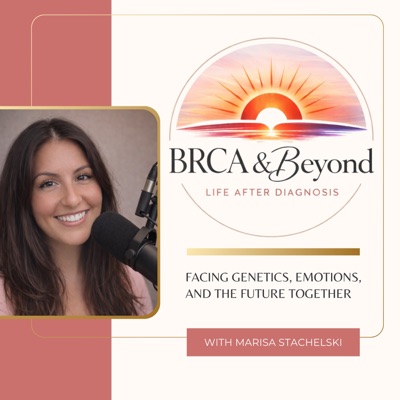
After months of discomfort, expanders, and emotional exhaustion, the day finally came, exchange surgery. In this episode, I share what it was really like: the calm I felt heading into the operating room, waking up without the hard weight of expanders for the first time, and all the things no one tells you about recovery.It wasn’t perfect...there was swelling, bruising, and that strange “in-between” feeling of adjusting to a new body again, but this time, I knew the process, the restrictions, and the rhythm of healing. I even found moments of humor, peace, and perspective that made me realize just how far I’d come.From the quiet after surgery to the unexpected laughter along the way, this episode is for anyone navigating the “after” part of their BRCA or reconstruction journey.I also share how you can connect with me and our growing community, whether you want to talk, share your story, or even join me as a guest on the podcast.Because healing isn’t just about recovery — it’s about rediscovery. And sometimes, it starts with a laugh, a scar, and a story that reminds you you’re not alone. Hosted on Acast. See acast.com/privacy for more information.
In this raw and honest episode, I share what happened after my nipple-sparing double mastectomy, the days of drains, the strange world of tissue expanders, and the mix of fear and faith that followed. From the relief of having my drains finally removed, to the panic attack I had during my first fill in the Holland Tunnel, this episode pulls back the curtain on what recovery really feels like.You’ll hear the truth about expanders, the tightness, the tingling, the emotional toll of living in a body that doesn’t yet feel like your own, and the small, quiet moments of progress that begin to rebuild you from the inside out.This isn’t just about surgery. It’s about learning to trust your body again, finding peace through faith, and realizing that healing isn’t just physical, it’s emotional, spiritual, and deeply personal.If you’re navigating your own BRCA journey, facing surgery, or supporting someone who is, this episode is a reminder that you’re not alone in the fear, the discomfort, or the slow rediscovery of who you are becoming. Hosted on Acast. See acast.com/privacy for more information.
The days leading up to my preventative double mastectomy felt like living in slow motion. Every bedtime routine, every hug with my boys, every glance in the mirror carried a weight I can’t fully describe. I prayed. I cried. I tried to hold onto ordinary moments, knowing life would never feel the same.In this raw episode, I take you into those final days before surgery, the surreal walk into the operating room, and what it was like to wake up in a body that no longer felt like mine. I share the pain of drains and expanders, the grief that crashed over me in the shower, and the strange coexistence of fear and peace.I also talk about my choice to undergo a nipple-sparing mastectomy — and why, for me, holding onto anything I could mattered. The lift and reduction I had beforehand, the identity I lost, and the faith that gave me clarity when I needed it most.This isn’t just a story about surgery. It’s about grief, motherhood, faith, and finding resolve when everything feels broken. If you’re facing your own surgery or supporting someone who is, I want you to know: you’re not alone in the fear, the grief, or the healing. Hosted on Acast. See acast.com/privacy for more information.
loading
Comments 
loading