


 Claim Ownership
Climate Cowboys
Subscribed: 17Played: 1,069
Subscribe

© Climate Cowboys
Description
Climate Cowboys | The founders and futurists building the hard-tech frontier.
A generation of the most talented engineers built photo-sharing apps and SaaS on top of SaaS. None of it helped the power stay on, the supply chains hold, or the country make the things we need.
The smartest people in tech are finally moving into real tech. Tech with a physical footprint: batteries, grid software, microbes that mine copper, and machines that pull carbon out of cement. This is the building business. The sovereignty business. The stewardship business.
Hosted by Silas Mähner, we interview the elite founders, builders, and operators executing on the hard-tech frontier. No fluff—just peer-to-peer deep dives into what it actually takes to scale hardware, energy infrastructure, and industrial decarbonization.
💼 Building your team? If you need to staff the frontier, get in touch with Roosevelt Talent at roosevelttalent.com.
climatecowboys.substack.com
A generation of the most talented engineers built photo-sharing apps and SaaS on top of SaaS. None of it helped the power stay on, the supply chains hold, or the country make the things we need.
The smartest people in tech are finally moving into real tech. Tech with a physical footprint: batteries, grid software, microbes that mine copper, and machines that pull carbon out of cement. This is the building business. The sovereignty business. The stewardship business.
Hosted by Silas Mähner, we interview the elite founders, builders, and operators executing on the hard-tech frontier. No fluff—just peer-to-peer deep dives into what it actually takes to scale hardware, energy infrastructure, and industrial decarbonization.
💼 Building your team? If you need to staff the frontier, get in touch with Roosevelt Talent at roosevelttalent.com.
climatecowboys.substack.com
294 Episodes
Reverse
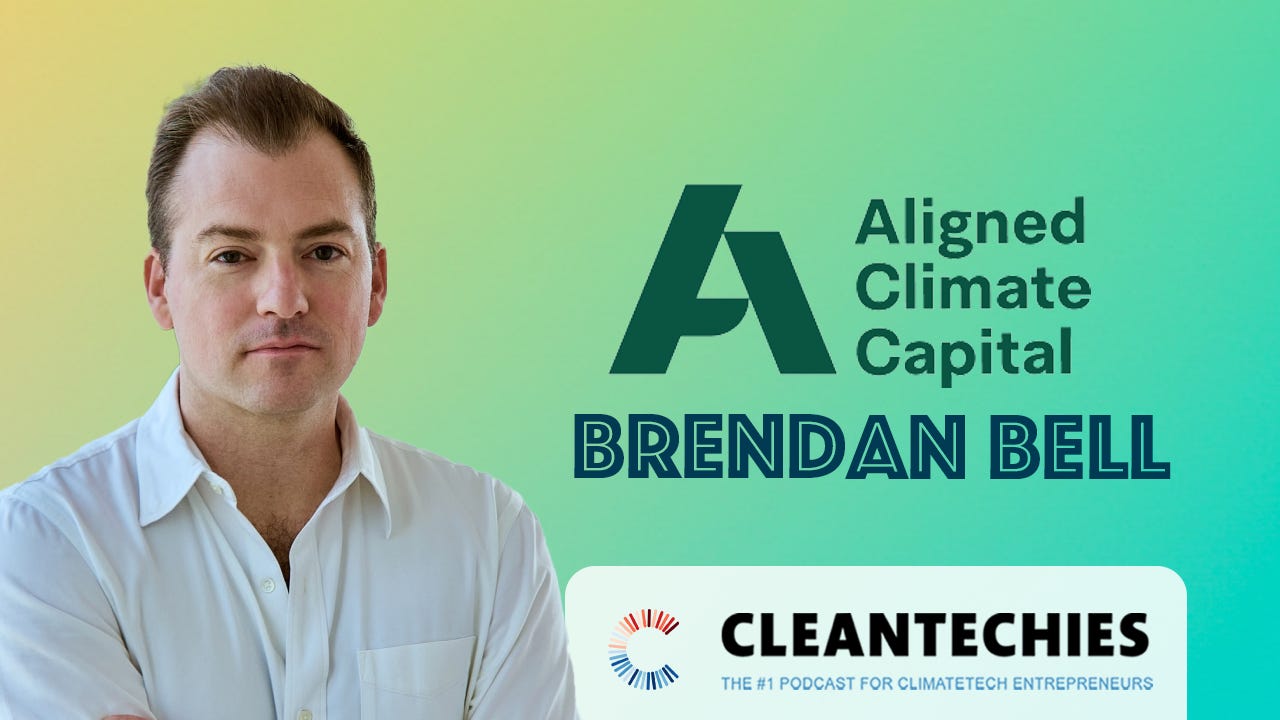
This is a free preview of a paid episode. To hear more, visit climatecowboys.substack.comToday’s episode dives into the nuanced world of climate finance and infrastructure with Brendan Bell, Chief Operating Officer and Partner at Align Climate Capital. Unlike most investors who play in either venture or infrastructure, Align straddles both worlds—backing early-stage companies while also owning and operating clean energy assets.Brendan shares his unusual path from the Sierra Club to the U.S. Senate, the Department of Energy’s Loan Programs Office, and now into the private sector. Along the way, he offers candid insights into what makes a strong infrastructure investment, how venture-backed technologies eventually scale into bankable assets, and why understanding both sides of the capital stack is critical to accelerating the clean energy transition.This is a masterclass on the interplay between policy, venture innovation, and hard infrastructure. If you’ve ever wondered how moonshot technologies meet the realities of capital markets and project finance, this conversation will give you the inside view.
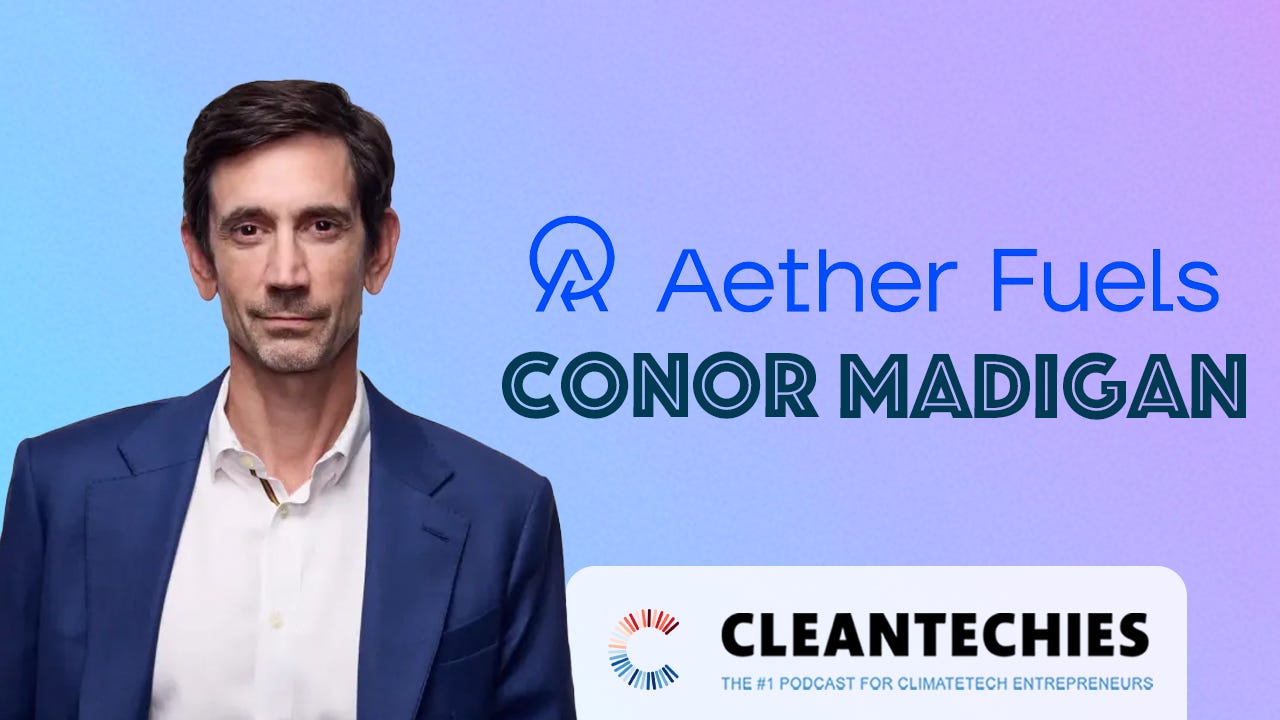
CleanTech founder Conor Madigan (Aether Fuels) reveals sustainable fuel tech breakthroughs, smart hiring, & building resilient climate startups.Join us as Conor Madigan, Founder and CEO of Aether Fuels, shares how their innovative tech is set to decarbonize aviation and shipping by drastically cutting costs and boosting fuel yield from waste streams. A second-time founder, Conor also unpacks his proven strategies for building high-talent, low-ego teams and fostering constructive tension for optimal results.Listen on: Apple Podcasts | Spotify | YouTube | Pocket CastsMemorable Quotes:"The overall result of that is to cut the capex of a plant by about 50%." — Conor Madigan"Until you've built a big network of your own... it's pretty invaluable to have a top-notch recruiter." — Conor Madigan"If you compare an electrified system versus a fired system, you can boost the output by about 20%." — Conor Madigan"I… try to create a constructive sort of tension inside of an organization by pairing together certain personality traits." — Conor MadiganIn this episode, we discuss:00:53 - Introduction to Conor Madigan and Aether Fuels03:55 - Aether Fuels' core technology and market05:27 - The innovation: cutting CAPEX and boosting yield28:00 - The year-long "funnel" to choose the right climate problem30:59 - Conor's philosophy on team building: high talent, low ego32:00 - Creating constructive tension in R&D vs. Engineering38:35 - Why senior hires need to be "player-coaches" at startups40:30 - Transparent communication during challenging times46:00 - Policy trends and market drivers for SAF49:50 - Cost parity expectations for Aether Fuels' productLinksConor Madigan | Aether FuelsConnect with Somil on LinkedIn | Connect with Silas on LinkedInFollow CleanTechies on LinkedInThis podcast is NOT investment advice. Do your homework and due diligence before investing in anything discussed on this podcast. This is a public episode. If you'd like to discuss this with other subscribers or get access to bonus episodes, visit climatecowboys.substack.com/subscribe

In this episode of Climate Cowboys, host Silas Mahner sits down with Sampriti Bhattacharyya, founder and CEO of Navier, at their headquarters in Alameda, California.While traditional maritime manufacturing remains antiquated and reliant on brute force, Navier is taking a fundamentally different approach: building all-electric hydrofoiling vessels that literally "fly" above the water—reducing drag by 90% and slashing operational costs by 15x.Sampriti breaks down her journey from MIT roboticist to building a generational American maritime company, her vision for a "generalized marine vessel platform" (the Nvidia chip of the sea), and why she chose conviction over hype when VC investors doubted her timeline.⚡ SUPPORT THE SHOW & JOIN THE MOVEMENT:Become a Paid Subscriber: Unlock exclusive deep dives, founder insights at Climate Cowboys Substack.⏱️ TIMESTAMPS:00:00 – Intro & What is Navier? Building the Generalized Marine Vessel Platform02:47 – Why maritime innovation stalled and how efficiency unlocks economies07:54 – Computing, manufacturing, and robotics: Enabling hydrofoiling tech11:45 – Sampriti’s origin story: High-energy physics to MIT underwater drones16:54 – Go-To-Market Strategy: Gathering real-world data with recreational boaters20:59 – The "Nvidia Chip" of the sea: Separating the base layer from the payload27:07 – Overcoming VC skepticism and ignoring funding hype35:03 – 3 Guiding Principles: Scale, Range, and Reliability46:07 – The Video Game Analogy: Choosing to play on "level seven"55:54 – Rebuilding American maritime and the frontier builder spirit01:03:50 – Expanding the frontier with optimism over "hall monitor" energy🤝 SPONSORS:Lehmann’s Terms: Master your message for high-stakes media, investor pitches, and stage appearances. Learn more at ltmediatraining.com.Climate Finance Solutions (CFS): Secured over $1.6B in grant funding with a 90%+ success rate. Discover grant opportunities at ClimateFinanceSolutions.com.Roosevelt Talent: Headhunting and talent acquisition for frontier and CleanTech startups at half the price. Find your next hire with Roosevelt Talent.🔗 CONNECT & FOLLOW:Connect with Silas Mahner on LinkedInFollow Climate Cowboys on LinkedIn This is a public episode. If you'd like to discuss this with other subscribers or get access to bonus episodes, visit climatecowboys.substack.com/subscribe

#291 Building Physical Infrastructure at the Speed of Software | Cole Ashman | PilaHow Pila is decentralizing home energy storage, cutting $7,000 in installation soft costs, and upgrading the grid one smart node at a time.Listen: Apple Podcasts | Spotify | YouTube | Pocket CastsKey Quotes“We’re reinventing the home battery by spreading it out throughout the home... they automatically recognize each other, they communicate over this mesh network.” – Cole Ashman“A whole home battery today is gonna cost like $15,000. About half of that is soft cost installation, design, permitting, like BS.” – Cole Ashman“The power grid that we have is built around like the worst case. You know, like we’ve built a 10-lane super highway, but on most days the utilization is 40%.” – Cole Ashman“Software is becoming so easy to replicate in the world of LLM-generated code... having a physical place in the world and a platform that’s generating new useful data is being so much more interesting and defensible.” – Cole AshmanEpisode OverviewWhole-home backup power traditionally requires $15,000 upfront, expensive electrical work, and months of permitting. As retail electricity prices skyrocket and outages multiply, home energy resilience remains out of reach for most people.Cole Ashman, Founder & CEO of Pila (ex-Tesla, Span), is fixing this with modular battery nodes that plug straight into standard wall outlets. Operating over a wireless mesh network, Pila delivers instant outage protection and load balancing with zero installation costs—making energy storage accessible to renters and homeowners alike.Key Topics Covered:Positioning CleanTech: Why pitching safety, comfort, and savings beats leading with "climate."Hardware Moats: How physical infrastructure protects against AI software replication.Grid Economics: Using distributed batteries as shock absorbers to lower peak-demand costs.Check Out Our Sponsors!Lehmann’s Terms: Executive media training and message positioning for CleanTech leaders preparing for high-stakes investor pitches and national press. Learn more.Climate Finance Solutions (CFS): Expert grant funding strategy. Secured over $1.6B in non-dilutive government funding for climate tech startups with a 90%+ success rate. Learn more.Roosevelt Talent: Technical headhunting for frontier and energy tech companies. Delivering top 5% candidates at half the price of traditional recruiters. Connect with Roosevelt.Timestamps00:00 – Intro & The Pila Solution: Modular batteries for every outlet04:33 – Un-stealthing and fundraising against rising retail power rates08:19 – Storytelling: Sell reliability and savings over climate anxiety16:36 – Bypassing the $15K installation barrier and permitting bloat18:40 – B2B Playbook: Deploying networks across multi-family real estate21:54 – Smart Monitoring: Predicting appliance failures via outlet data34:19 – HardTech Moats: Why physical infrastructure wins in the AI era43:00 – Hardware Velocity: Tesla Energy takeaways on scaling manufacturing54:07 – Grid Optimization: Distributed batteries as shock absorbersLinks & ResourcesGuest: Cole Ashman | Pila EnergyHost: Silas Mähner on LinkedInSocials: Climate Cowboys on LinkedIn | YouTubeDisclaimer: This content is for educational purposes only and does not constitute financial or investment advice. This is a public episode. If you'd like to discuss this with other subscribers or get access to bonus episodes, visit climatecowboys.substack.com/subscribe

#290 Meet The Hottest Grid Solution... A Kitchen Stove? w/ Sam Calisch | CopperHow Copper is bypassing expensive electrical panel upgrades and grid bottlenecks by hiding smart battery storage inside beautiful induction stoves.Listen on: Apple Podcasts | Spotify | YouTube | Pocket CastsSelect Quotes From This Episode:“You could have free wind and solar out on the grid, and you’d still be paying about as much as you are today just to get it to your house.” – Sam Calisch“Installing the best home batteries are like 1200, 1500 bucks a kilowatt hour... If we instead put batteries into an appliance that already has efficient sales channels... we cut out that extra 10x.” – Sam Calisch“What you see is what you get. There’s an authenticity in material... It’s real California walnut. It’s not spray-painted plastic.” – Sam Calisch“For too long homes have been just a consumer of electricity... We’re entering a world where homes have the opportunity to be bi-directional consumers and producers of power.” – Sam CalischWhat’s the solution to rising electricity prices? Kitchen stoves.Despite dropping solar and wind generation costs, home electric bills continue to surge—with up to 70% of utility costs going toward delivery infrastructure.In this episode, Sam Calisch, co-founder of Copper, breaks down how putting smart batteries inside induction stoves bypasses expensive 240V panel upgrades, avoids peak grid demand, and elevates the home cooking experience while turning homes into active grid participants.Check Out Our Sponsors!Lehmann’s Terms: Media and pitch training for clean tech founders and executives preparing for high-stakes media, TV, and investor appearances.Climate Finance Solutions (CFS): Global consulting firm helping climate tech companies secure non-dilutive government grant funding ($1.6B+ secured with >90% success rate).Roosevelt Talent: Specialized headhunting and recruitment for energy tech, battery, and frontier startups—delivering top talent at half the traditional recruiter cost.📝 Show Notes & Timestamps:00:00 – Intro & Sam’s background in math, physics, and early climate tech.04:33 – The grid’s delivery problem: Why cheap solar doesn’t mean cheap electricity bills.08:18 – The “Trojan Horse” Strategy: Why Copper put a battery inside an induction stove.10:35 – Bypassing the electrician shortage and avoiding 240V panel upgrades.14:00 – Building Emotional Value: Why a product needs to be more than just a spreadsheet ROI.16:00 – The Design Philosophy: Authentic materials, California walnut, and the “walk-up test.”24:47 – Expanding the Vision: Selling to apartments and licensing tech to legacy appliance OEMs.33:21 – Timing the Market: Why legacy companies couldn’t build this 10 years ago (The battery cost curve).38:43 – Escaping “throwaway culture” and building durable, high-quality hardware.47:04 – The Bi-directional Home: Transforming houses from passive consumers to active grid participants.51:06 – Manufacturing in the U.S. and reigniting the American builder’s spirit.Links & Resources:Connect with Sam Calisch | CopperConnect with Silas Mähner on LinkedInFollow Climate Cowboys on LinkedInDisclaimer: This podcast is NOT investment advice. Do your homework and due diligence before investing in anything discussed on this podcast. This is a public episode. If you'd like to discuss this with other subscribers or get access to bonus episodes, visit climatecowboys.substack.com/subscribe

Comments

Download from Google Play

Download from App Store
 United States