


 Claim Ownership
The revenue machine
Subscribed: 2Played: 3
Subscribe

© All rights reserved
Description
Passionnate about car rental company transformation in yield management, Emmanuel Scuto interviews the industry experts to put the light on revenue management.
Hosted on Ausha. See ausha.co/privacy-policy for more information.
35 Episodes
Reverse

"Certainty at times doesn't mean black and white. Certainty means I'm going to go in the right direction based on the data that I have."Fabian Bartnick began his career in hospitality by chance, starting at the front desk and night shifts at Heathrow, where he was introduced to revenue management through hands-on projects. He quickly progressed through roles in reservations and multi-property revenue management, eventually joining IHG and later moving to the technology side with Ideas, where he helped build the consulting division for EMEA. Fabian’s journey led him to co-found a company focused on revenue management for restaurants (F&B), leveraging his expertise in tech, revenue management, and events. His approach emphasizes the importance of both data-driven decisions and human insight, especially in dynamic environments like restaurants, where immediate feedback and adaptability are crucial. Fabian is recognized for pioneering the adaptation of revenue management principles from rooms to F&B, advocating for immersive learning, and fostering collaboration between operations and revenue teams.Chapter00:00:00 Introduction and cultural anecdotes00:04:30 Fabian’s background and entry into revenue management00:13:20 Early training and learning by doing00:23:10 The role of mindset and non-data information00:29:40 Embracing uncertainty and decision reversibility00:36:00 Transition to RMS technology and industry observations00:46:30 Founding a restaurant revenue management company00:54:00 Challenges in F&B data and operational realities01:06:00 Table and seat optimization vs. menu and server performance01:15:00 Personal learning habits and advice for young professionalsMusicRage Against The Machine - Killing In The NameDisturbed - The Sound of SilenceHosted on Ausha. See ausha.co/privacy-policy for more information.

Is tourist demand collapsing? Don't make the classic mistake of slashing prices by following your competitors. It's a trap that erodes margins without generating volume.1The real solution lies elsewhere: in analytical discipline and a Revenue Management strategy founded on data and direct marketing. Discover the 4 essential steps to manage your business with method and composure, even in a storm.1Read the full article on the WeYield Blog: Why Slashing Prices Is Never EnoughWhat Shady Younis intervention during the Revenue Management Conference March 2024 in Berlin How Boost Car Rental Business Success? Shady YounisHosted on Ausha. See ausha.co/privacy-policy for more information.
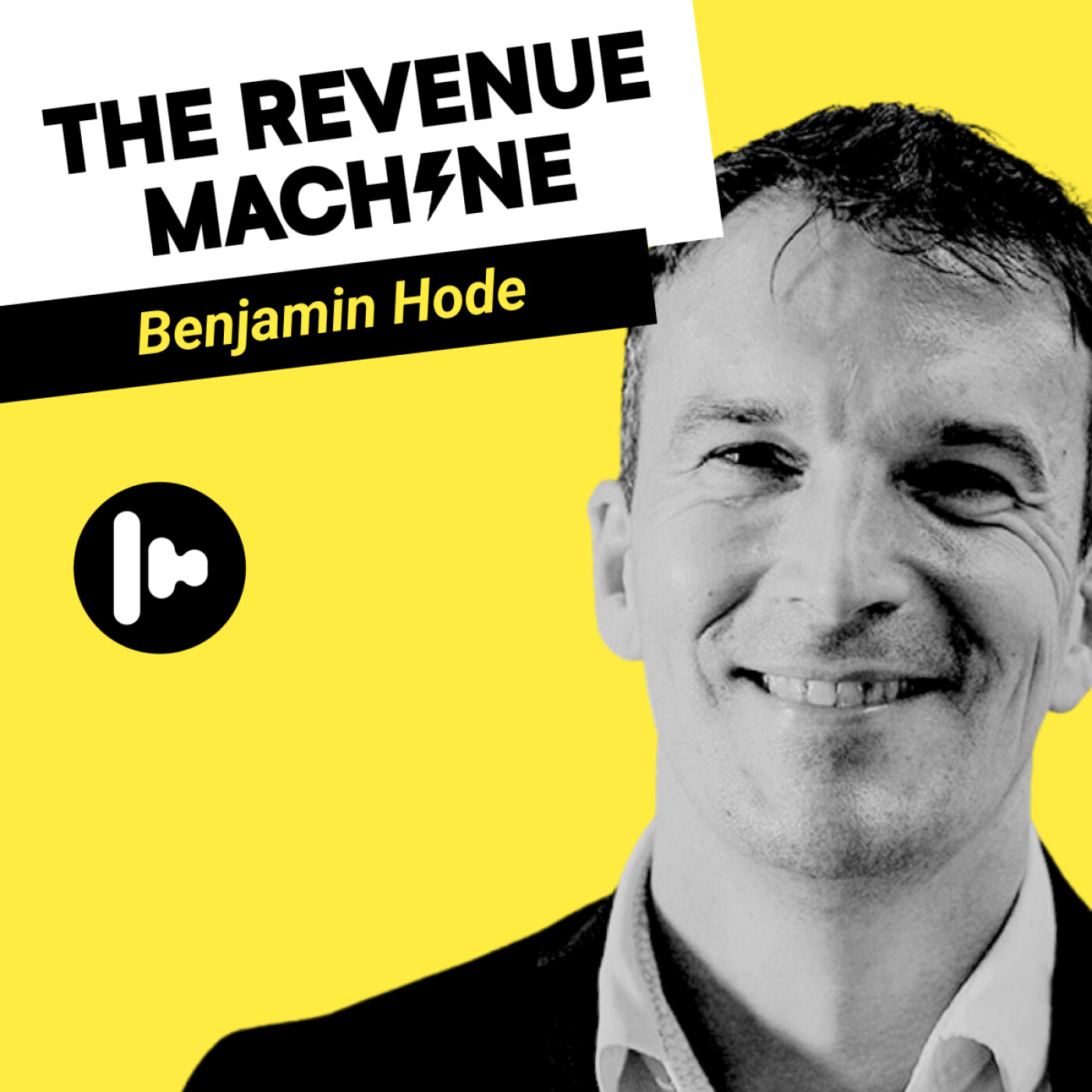
"Essayez, essayez : les succès compenseront les échecs"CarrièreBenjamin Hode, originaire de Nantes, a débuté sa carrière dans le secteur de la location de voitures en tant que préparateur saisonnier chez Europcar.Sa passion pour la gestion et les voitures l'a conduit à occuper des postes dans la gestion de flotte, la gestion de projet, puis finalement dans la gestion des revenus, où il a été le pionnier des pratiques RM chez Europcar Atlantique.Benjamin s'est ensuite orienté vers le conseil et a fondé WeBoost, où il aide les sociétés de location de voitures à mettre en œuvre et à externaliser leurs stratégies de gestion des revenus.Sa carrière se caractérise par une approche pratique, une volonté d'apprendre de ses erreurs et un désir de partager ses connaissances, que ce soit par le biais d'engagements universitaires ou d'expériences innovantes en matière de tarification dans le secteur de l'hôtellerie. L'histoire de Benjamin est celle d'un apprentissage continu, d'une grande capacité d'adaptation et d'un engagement à rendre la gestion des revenus accessible et efficace.Benjamin Hode sur Linked inChapitres00:00:00 Le parcours de Benjamin : ses racines nantaises et ses débuts professionnels00:13:45 Débuts dans la location de voitures et la gestion de flottes00:22:10 Transition vers le RM chez Europcar Atlantique00:34:20 Les leçons clés du RM : apprendre de ses erreurs et s'adapter00:45:00 Évolution technique : données, automatisation et touche humaine00:58:30 Conseil et création de WeBoost : externalisation de la gestion des revenus01:10:00 Application du RM au bar : tarification dynamique du prix de la bière01:20:15 Formation, partage des connaissances et implication universitaire01:30:00 Réflexions, conseils et conclusionsRéférencesTony Lesaffre (Europcar Atlantique)Denis Maure (Europcar Atlantique)Emmanuel de BrossesOlivier Martin, Stairway ManagementRenaud DionNelson Mandela : « Je ne perds jamais. Soit je gagne, soit j'apprends. »MusiqueKassav’ - Zouk la sé sel médikaman nou niNinho - Goutte d’eau (Hip Hop Symphonique)Hosted on Ausha. See ausha.co/privacy-policy for more information.

Career Summary of the IntervieweeTiago Gomes Santos began his career with a degree in history and initially worked as a teacher. Due to limited opportunities, he transitioned into retail sales, where he developed a strong foundation in customer service and cross-selling techniques. Over time, Tiago became fascinated by neuro-marketing and behavioral science, leading him to specialize in sales optimization. He spent seven years at Frontline Performance Group (FPG), focusing on car rental coaching and ancillary sales. Eventually, Tiago founded his own consultancy, dedicating 95% of his time to helping car rental companies across Europe improve their ancillary sales strategies, customer experience, and team performance.References DiscussedFrontline Performance Group FPGBooksSurrounded by Idiots by Thomas EriksonSapiens by Yuval Noah HarariInfluence by Robert CialdiniThinking, Fast and Slow by Daniel KahnemanMusicAC/DC Live at River Plate (YouTube)Macklemore & Ryan Lewis - Can't Hold Us (YouTube)Hosted on Ausha. See ausha.co/privacy-policy for more information.

"There is no magic in AI: every tool has its limits, and the human must always remain behind the wheel to ensure the best revenue management decisions."Christian Cadéré, CTO at WeYield, has a strong background in mathematics and computer science, starting with a PhD focused on graph algorithms and game theory. He co-founded a startup in the early 2010s, navigating the rise of SaaS and cloud computing, and later joined a fintech company before moving to WeYield over six years ago. At WeYield, Christian blends his expertise in research, software development, and user experience to deliver practical AI-driven solutions for car rental and revenue management. His approach emphasizes making technology accessible, focusing on data quality, and ensuring that human expertise remains central in decision-making processes. Christian is also praying to develop critical and creative thinking within the companies but also at schools with kids. Hosted on Ausha. See ausha.co/privacy-policy for more information.

"The major leverage for revenue optimization is being able to properly forecast per length of stay and being able, based on those forecasts, to assess which length of stay to favor at which moment."Career Summary of Xavier ZakoianXavier Zakoian, founder and CEO of Kowee has dedicated over 30 years to revenue management across diverse industries. He began his career at Air France Cargo, pioneering revenue management for cargo by adapting airline techniques to freight. He then moved into the media sector, developing revenue optimization tools for advertising sales houses and later implementing these strategies at NRJ, a major French media company.In 2013, Xavier founded Kowee, focusing on revenue management for the parking industry, especially at airports. His achievements include introducing dynamic pricing and forecasting models tailored to the unique challenges of parking, such as balancing short- and long-stay demand and integrating real-time data. Xavier’s journey highlights the importance of top management support, adapting KPIs, and the evolving role of AI in revenue management.Chapter00:00:00 Introduction and background of Xavier Zakoian00:06:30 Early career at Air France Cargo and revenue management beginnings00:16:00 Transition to media industry and advertising revenue management00:27:00 Challenges of implementing RM in B2B and importance of top management00:36:00 Moving to Kowee: founding story and inspiration00:43:00 Revenue management principles applied to parking sector00:54:00 Segmentation and dynamic pricing in airport parking01:07:00 Competition, demand patterns, and pre-booking vs. drive-ups01:19:00 Real-time forecasting, AI, and technical challenges in parking RM01:32:00 Lessons learned, failures, and advice for future revenue managersReferences discussedBenoît Retembourg (LinkedIn)Abraham Toledano (in memoriamIDEAS Revenue Solutions (Parking RM competitor) Lyon Airport (first Kowee consulting client)Mathieu Stricker (Kowee co-founder, LinkedIn)Ernesti (company founded by Xavier’s children) Music referencesMark Knopfler / Dire Straits – "Sultans of Swing" YouTubeChrissie Hynde – "I Shall Be Released" YouTubeHosted on Ausha. See ausha.co/privacy-policy for more information.

« Imagine if you get 1% better in pricing what would be the result at the end of the year »In this episode of The Revenue Machine Podcast, Emmanuel Scuto interviews Stefan Schoesser, founder of Decurade Consulting and former head of franchise pricing at Sixt International. Stefan shares his journey from hotel management studies to a decade at Sixt, where he specialized in supporting franchisees with pricing strategies and data-driven tools. He highlights the challenges of empowering local operators with the right tools, data, and training, and the importance of focusing on internal metrics over competitor prices. Stefan’s consulting firm now helps car rental companies identify and optimize their "value engines"—core business processes like pricing and fleet planning—by implementing clear structures, KPIs, and process documentation. The conversation emphasizes the need for dedicated pricing roles, continuous learning, and the practical limits of AI without strong data and processes.Linked In Stefan SchoesserChapter00:00:00 Stefan introduction00:13:00 Role at SIXT: supporting franchise pricing00:34:00 Why operators focus too much on competitors00:47:00 Importance of dedicated staff and process documentation01:01:00 Knowledge sharing between franchise and corporate01:16:00 Implementing KPIs and clear responsibilities01:30:00 AI in pricing: limits and prerequisites01:43:00 Book recommendation and closing thoughtsReferencesJames Clear, author of Atomic HabitsMontgomery Blair, podcastDr. Henrik Imhoff, SVP & Chief Pricing Scientist, head of Operations Research Sixt InternationalJames Adams, Executive Vice President and Chief Commercial Officer, Avis Budget GroupRomain Charié, CEO and co-Founder of RevBell, podcastMusicDecurade anthemJessie J "Price Tag"Hosted on Ausha. See ausha.co/privacy-policy for more information.
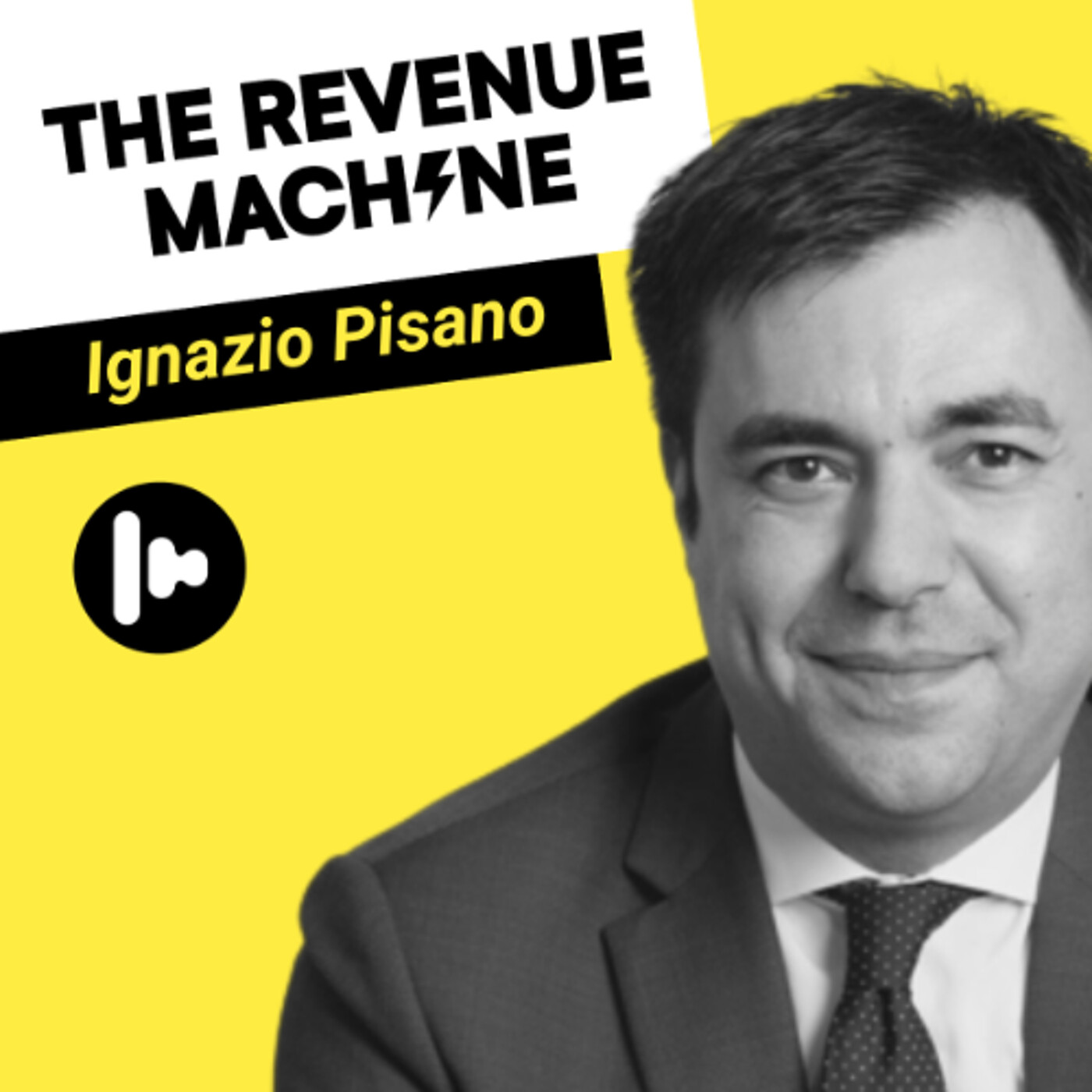
"You always want to have a human behind the machine because so far I have never seen even the most sophisticated RMS being entirely autonomous or capable to take autonomously decisions."
SUMMARY
Ignazio Pisano’s journey in revenue management began by chance in hotel operations in Italy, where he quickly developed a passion for hospitality and data analysis. Starting from front desk roles, he transitioned into revenue management at a time when dynamic pricing was just emerging.
Ignazio gained experience across hotels, resorts, and car rental industries, working with major brands like NH Hotels, Europcar, Pierre & Vacances, and Louvre Hotels. He led the deployment of several revenue management systems (RMS), including pioneering projects with tools like EZRMS, Opticar, GDA, and Duetto.
Ignazio’s achievements include driving digital transformation, managing complex capacity and pricing challenges, and successfully implementing RMS in both hospitality and mobility sectors. His approach emphasizes the importance of human expertise alongside technology, and he advocates for gradual, well-supported change management in organizations.
Chapter
00:00:00 Introduction and music selection
00:04:30 Ignazio’s early career in hotel operations
00:12:10 Transition to revenue management and first experiences
00:19:00 The evolution from static to dynamic pricing
00:25:45 Early RMS tools and the rise of electronic distribution
00:32:20 Move to Europcar and differences in car rental RM
00:41:00 Capacity management challenges in car rental
00:50:30 Technology limitations and legacy systems
00:58:15 Complexity of pricing and inventory in car rental
01:07:00 Duration bands and selling at a loss in car rental
01:15:30 RMS implementation: goals, challenges, and resistance
01:25:00 The role of AI and the irreplaceable human factor
01:32:45 Advice for successful RMS adoption and change management
01:41:00 Learning habits and sources of inspiration
01:47:30 Reflections on career successes and failures
01:54:00 Closing music and final thoughts
References
Ignazio Pisano (LinkedIn)
His music
Led Zeppelin – Kashmir (YouTube)
REM – Losing My Religion (YouTube)
Companies/Tools Mentioned:
Duetto
EZRMS (now part of IDeaS)
Amadeus
NH Hotels
Europcar
Pierre & Vacances
Louvre Hotels GroupHosted on Ausha. See ausha.co/privacy-policy for more information.
Pascal Niffoi's journey in revenue management began after studying mathematics, leading him to an initial experience in flow management before transitioning to Air France in 2000. He described Air France as the "Champions League" of revenue management, providing a strong foundation in a well-established system. His desire for more rapid change led him to Disney, where he encountered a less integrated approach with separate pricing and yield departments, and a focus on country of origin rather than contribution.
At Disney, Niffoi focused on integrating pricing and yield, re-segmenting demand by contribution, and expanding the scope of revenue management. However, organizational resistance to these changes ultimately contributed to his departure.
Subsequently, at Pierre & Vacances, Niffoi took on a leadership role, aiming to modernize revenue management practices and implement dynamic pricing.
Despite support for these initiatives, progress was slower than desired due to technical and organizational factors, leading to his decision to co-found Revbell. Through Revbell, Niffoi advocates for a holistic view of revenue management, emphasizing revenue integrity – ensuring that the revenue intended from a sale is actually realized by addressing issues like unapplied fees or incorrect commissions. He also stresses the importance of using intrinsic KPIs that directly measure the effectiveness of revenue management levers, rather than solely focusing on overall occupancy, average price, and revenue.
Niffoi's diverse experiences have shaped his perspective on the evolution of revenue management, highlighting the importance of foundational principles, holistic integration, data-driven decisions, and effective change management. He emphasizes continuous learning through exposure to diverse client problems and the value of intellectual honesty.
Chapter
00:05:38 Introduction to Pascal Niffoi and his mathematic background and Air France structural experience
00:11:19 Niffoi's move to Disney highlighting the separation of pricing and yield.
00:28:07 Niffoi's time at Pierre & Vacances as the head of revenue management and the the transition to founding Revbell (originally NandC) with Romain Charié
00:34:05 - Discussion on the concept of revenue integrity
References Shared:
L'entreprise, une affaire de cœur by Hubert Joly.
The Infinite Game by Simon Sinek.Hosted on Ausha. See ausha.co/privacy-policy for more information.

Are you navigating the complex world of revenue management and distribution in the car rental? This week, we’re joined by industry veteran Mark Richards, who brings decades of experience in the car rental sector to the Revenue Machine.
Mark shares his unique insights on the evolution of the car rental market, from the rise of online travel agents to the emergence of new affiliation programs. Discover how the tier one legacy brands have adapted to market changes and how tier two players are now making waves.
- Tier one car rental companies : Avis Budget Group, Hertz-Dollar-Thrifty, Sixt, Enterprise-National-Alamo, Europcar-Goldcar
- Tier two : Ace, AutoUnion, Autowill, Carwiz, GreenMotion, NP Autos (Priceless, NextCars), SurpriceCars, etc
Mark discusses the challenges of brand loyalty, the importance of understanding customer needs, and the potential game-changers in urban mobility. For him, the subscription model is a way to improve the usage of car rental and strengthen the loyalty of customers to the brand.
He also gives tips for independent car rental companies on choosing the right affiliation programs, and he shares his vision for the future of car rental and its relationship with technology and emerging trends.
Whether you're a car rental expert or a revenue manager in another industry, you'll gain valuable perspectives that will help you to **optimize your business strategies and stay ahead of the competition**. Don't miss this episode!
Chapter
0:00:00 Introduction and Background Mark Richards shares his career journey in the car rental industry
0:09:30 The "mushroom" period
Includes analysis of the "mushroom" period of new brokers and how legacy brands initially reacted.
0:35:10 The Emergence of Tier Two Brands and Affiliation
0:43:15 Tip of Mark to select an affiliation program
0:55:50 A look at what the future of car rental networks and OEM's
1:08:30 Continuous learning in a rapidly changing business environment
Reference
WeYield Forum 2025 in London https://www.weyield.io/events/weyield-forum-london-2025-wtm
Thomas Cook car hire https://www.thomascook.com/extras/car-hire
Starcar https://www.starcar.de/en/
Sani Car https://sani.co.za/
Localiza https://www.localiza.com/others/en-usHosted on Ausha. See ausha.co/privacy-policy for more information.

« My best way of learning is to fail»
This document is an interview with Eduardo Hernandez, the commercial manager at KeyGo Rent in Alicante. He discusses his career transition from the ceramic tile industry during 20 years to the car rental industry.
Hernandez explains that pricing in the ceramic tile industry is relatively straightforward, with price lists lasting for a year and prices remaining stable.
He contrasts this with the car rental business, which is much more dynamic, with prices fluctuating rapidly based on demand and market conditions. Hernandez emphasizes the importance of having a separate pricing department to manage pricing strategy and optimize revenue. « Used cars are like fishes: the more you keep them on the parking lot, the more it smells ».
He also discusses the significance of building a strong direct sales channel (35% of sales through the company's website generating double RPD), in addition to working with brokers. Hernandez highlights the need for efficiency in the car rental business, focusing on fleet management and pricing strategies to maximize profitability with the highest customer review possible (4,5). His yield management success factors are : define a strategy, set the good fleet (not to much) accordingly, price according to demand not to competition.
The key element is to be efficient. He also touches on the impact of technology and automation in the car rental industry, emphasizing the continued importance of human oversight and decision-making to boost the profitability of the company.
The interview concludes with Hernandez sharing his personal philosophy and approach to business, emphasizing the importance of strategy, adaptability, and continuous learning.
Eduardo shared his personal philosophy of continuous learning and drawing parallels between golf and life.
Chapters
0:00:00 Info about the major flood hit Valencia in October 24 (120000 cars destroyed)
0:09:10 introduction of Eduardo Hernandez who transitioned from the ceramic tile industry to the automobile and car rental industry.
0:15:30 Pricing difference between a tile business and car rental
0:30:30 How to improve utilization with a central pricing approach
0:47:20 Why quality in price and customer satisfaction is more important than a volume-only business
1:01:00 Key success factors generated by the yield management approach : change the way things are done and fight the resistance
1:25:00 How to learn more about yourself and the other while playing golf
References
https://www.linkedin.com/in/eduardohernandezmartin/
Key Go rent https://www.keygorent.com/es/principal/index
Dataseeker https://www.dataseekers.com/en/
WeYield https://www.weyield.io/Hosted on Ausha. See ausha.co/privacy-policy for more information.

The podcast interview features Samuel Francisco, a revenue manager with a unique background in molecular biology (PHD): quite unique isn’t it?
Samuel transitioned into the business world, applying his research skills and analytical mindset to optimize revenue for various ventures, starting with Airbnbs in the Azores, then hotels and the car rental. He emphasizes the importance of continuous learning, open-mindedness, and strategic partnerships.
Samuel discusses his approach to revenue optimization, focusing on operational efficiency, pricing strategies, and ancillary services. He highlights the importance of understanding market dynamics, competitor analysis, and adapting strategies to different industries. He also emphasized the importance of the time needed for his interlocutors to nurture new ideas before accepting and implementing them.
Samuel also shares his experience implementing revenue management systems and building a successful website for a hotel group (putting his direct website as number source of reservation), emphasizing the importance of user-friendly interfaces and data-driven decision-making. The conversation concludes with Samuel's personal insights on overcoming challenges, the importance of work-life balance, and his dedication to creating inclusive tourism experiences for families with autistic children.
Chapter
0:00:00 Samuel Francisco and his doctorate in molecular biology
0:11:30 how Samuel started his career in tourism with Airbnb coming from the scientific world
0:25:10 adopt a new mindset and switch to hospitality to improve performance
0:48:25 how to work with partners who can transform us
1:02:10 duplicating the model from hotel to car was a challenge
1:22:10 caring for autism in the family and communityHosted on Ausha. See ausha.co/privacy-policy for more information.

For me, this is a crucial question: how can I improve my performance in a highly competitive environment?This question is often asked by fairly experienced customers who have a good knowledge of their market. Yet they feel frustrated by the difficulty of increasing their average price (RPD) without touching the price, which is too closely scrutinized by competitors. The conversation brought to you today summarizes an article written by Emmanuel Scuto, founder of WeYield and a revenue machinist for almost 25 years in the car rental industry. In this podcast, we aim to share with you the observed constraints and the solutions we've come up with at WeYield. Note: these recommendations are aimed at rental companies who are in direct competition on the same site. They are located in airports, car rental centers or train stations. Definition: demand is considered inelastic or rigid when the sales volume or conversion rate does not fall in the face of a price increase (or a high price). Demand becomes elastic when it is highly sensitive to any price variation.This conversation has been generated by the AI NotebookLM.google.com (beta) and it is based on Emmanuel Scuto's article published on https://www.weyield.io/blog-posts/tip-how-to-increase-rpd-without-increasing-pricesHosted on Ausha. See ausha.co/privacy-policy for more information.

Welcome to a new episode of the podcast Revenue Machine, the only one dedicated to Revenue Management. Today, Emmanuel Scuto interviews Romain Charié. Romain, co-founder of the consulting firm N&C, initially pursued studies in aeronautics before specializing in business-oriented data analysis. His experience at Air France allowed him to combine his two passions. Although the airline has sophisticated processes and tools, human intervention remains essential for decision-making. Excessive automation can lead to a loss of control over tools and analysis.
One of the advantages of an RMS (Revenue Management System) is its speed and depth of analysis. However, when external factors disrupt the model (weather, strikes, security risks, etc.), the analyst must take over. For example, seasonality is never identical from one year to the next, requiring a flexible approach to analysis. At Air France, Romain compiled all documents and procedures related to optimization techniques into a White Paper, which became the bible for every revenue manager, ensuring a consistent approach to analysis.
In the car rental sector, where stock uncertainty makes precise forecasting impossible, Romain found that grouping cars into broad categories was sufficient to achieve accurate probability assessments. His last corporate experience was within the Revenue Development team at Disneyland Paris, where the existing forecasting tool was ultimately ill-suited to the evolving booking behaviors of clients.
Since 2014, Romain has partnered with Pascal Niffoi, with whom he worked at Air France and Disneyland Paris, to establish their consulting firm focused on optimization. They believe an analyst must always understand why a tool made a recommendation. They observed two reactions to their RMS Revbell: complete acceptance or rejection in favor of the more familiar Excel. To enhance RM analysts' skills, they offer checklists and procedures.
As passionate professionals, Romain and Pascal also aim to explain the levers of price action in the media. Regardless of the industry, they believe that volume is a key factor in profitability, even before the pursuit of average price.Hosted on Ausha. See ausha.co/privacy-policy for more information.

« I wake up every morning believing that I do not know much »
Montgomery Blair, a seasoned expert in revenue management, emphasizes continuous learning and innovation. With a strong background in data science and analytics, he pioneered the implementation of a revenue management system for Dollar Rent A Car in the late 1990s, revolutionizing leisure pricing based on demand forecasting.
At Avis Budget Group, Montgomery advanced their Revenue Management system, integrating fleet management and corporate contracts into the optimization process. He highlights the importance of balancing dynamic pricing with corporate flat rates to maximize profitability, noting that losing low-rate corporate accounts can often lead to higher overall returns by freeing up availability for higher-paying customers.
Montgomery underscores the need for internal collaboration, suggesting that the real competition often lies within the organization, between departments managing different segments. He advises focusing on maximizing contractual segments before optimizing discretionary pricing.
In the car rental industry, Montgomery advocates for leveraging supply flexibility, driving cost efficiency, and making smarter data-driven decisions. He stresses the importance of correctly defining problems and accurately measuring performance, particularly in fleet decisions. Lastly, he encourages professionals to embrace innovation, take calculated risks, and stay engaged through industry conferences to drive significant advancements.
Chapter
0:00:00 introduction of Montgomery Blair starting in car rental late 1990’s
0:29:30 what are the key dimensions to look at in RM
0:40:10 The overall level of fleet
0:51:25 AI and measuring performance
1:03:10 Should duration band pricing be stopped?
1:08:10 How to share analytics in a digest format
References
It’s your ship from Captain Michael Abrashoff
Principles of economics by Alfred MarshallHosted on Ausha. See ausha.co/privacy-policy for more information.

With over 30 years of experience in Revenue Management (RM) at Dollar-Thrifty and Hertz, primarily serving franchisees, I have witnessed the evolution of the industry. I began my journey when Travelocity emerged as the first online travel agency, predating Expedia. This period marked a significant shift as pricing became a critical factor in customer decision-making with the advent of the internet in the early 2000s. At Dollar, our IT manager developed a separate tool to manage prices independently from the regular reservation system, which was groundbreaking at the time.
Car rental licensees reacted differently to RM shift. Some were progressive and open to new strategies to enhance competitiveness, while others were primarily concerned with costs. A portion of the licensees initially struggled to grasp the importance of these changes. Over time, customers have been conditioned to search for the best rates, necessitating a disciplined approach to fleet management to influence better booking behaviors. During peak seasons, despite high prices, people continue to travel, indicating that car rental costs are not a major factor in destination choices.
Fleet management decisions, such as opting for purchase options that lead to over-fleeting, can impact revenue. Initially, Dollar acted as an outsourced revenue manager with limited information about the fleet. A framework was established between licensees and the RM team at headquarters to create a pricing corridor, allowing flexibility without requiring rental operator approval for each price change. Trust built over months and years led internal clients to consult the RM team on broader issues beyond pure RM topics.
High-level performance in car rental necessitates a solid foundation and daily discipline. It begins with accurately calculating the usable fleet available each day, monitoring no-show rates by day of the week, tracking reservation trends, and analyzing competitor behavior. Manual rate monitoring is inefficient; daily RM practices are vital. When uncertain, revenue managers should test their hypotheses, as the results can sometimes be surprising and significantly impact yield.
The presence of players making illogical pricing decisions can disrupt the entire market. Conversely, systematic yield management by key players benefits the market as a whole. To enhance processes, trying new methods or features that promise better results is encouraged. However, mastering the fundamentals and practicing them consistently is crucial for success. Simply pressing buttons or expecting a system to work magic will not suffice.
Maximizing revenue opportunities requires a strategic approach distinct from operational decisions. A revenue manager equipped with the right tools and strong fundamentals can make optimized decisions regarding "when, where, and what" actions to take, even in unexpected situations. This ability to adapt and optimize in real-time is both challenging and rewarding.
In summary, effective revenue management in car rental is an investment that pays off through consistent, disciplined practices and a willingness to embrace innovation while maintaining a strong grasp of the basics. This approach ensures that revenue opportunities are maximized and the business remains competitive and profitable.
Chapter
00:00:00 Introduction of Andy, how did the RM start at Dollar
00:13:10 Beginning of the pricing by duration and check-out
00:23:30 Reaction of licensees confronted to the revenue management project
00:30:30 Summer pricing, car dealers: influence factors
00:38:40 Process to onboard a licensee in the Central RM
01:00:00 Advices on best practices
01:16:20 Market benefits of all car rental implementing yield management properly
01:20...Hosted on Ausha. See ausha.co/privacy-policy for more information.

"identifier les attributs de valoriser avant d'agir sur les prix"
Quand la tactique consiste à simplement augmenter les prix, le risque est de venir heurter la valeur perçue par le client et de ne pas atteindre les résultats globaux. Sur le marché du pneu automobile, la concurrence est intense. Mais la perception premium par le client permet d'avoir une différence prix forte par rapport à la concurrence.
Pour réussir, il est essentiel de se pencher sur les attributs de valorisation : ce qui différencie par rapport à la concurrence mais qui est valorisé par le consommateur pour être converti en prix. Tester la perception prix permet de mesurer l'élasticité des clients au prix : un changement de prix ne coûte rien, est facile et très rapide à mettre en oeuvre.
L'augmentation des prix n'enclenche pas forcément une fuite du volume lorsque le produit et la marques sont supportés par le marketing et la communication associée via les attributs de valorisation. Une cartographie de ces attributs prend seulement quelques semaines. Cela peut être fait en interne
La promotion n'est pas du pricing mais un mécanisme commercial de simulation temporaire de la demande habillé par le marketing. Un outil pricing est une option pour simuler l'élasticité de prix. Pour être efficace, il doit être contrôler par un pricer. Il y a toujours quelqu'un qui va prendre une décision sur le prix mais c'est malheureusement rarement une fonction dédiée.
La verticalité du prix permet gérer une différenciation fine. L'exemple du pricing Décathlon est est une référence dans le domaine. Segmenter l'offre permet d'offre plus de service associé au prix. Le gain possible est entre +3 et +8% de marge.
Les aptitudes pour être un bon revenue management : aimer la data, la manipuler, la formater tout en sachant prendre du recul pour garder à l'esprit comment la décision va être interpréter par le client sur le marché cible.
Chapitre
00:00:00 présentation d'Alexandre
00:17:50 Rester customer centric et les attributs de valeur
00:30:10 Tester la perception en jouant avec les prix
00:40:10 Comment réaliser des tests d'attributs de valorisation
00:52:40 Attention à l'impact de la promotion permanente
00:58:04 A quoi sert un outil pricing
01:08:00 Pourquoi la fonction prix est-elle si peu développée
01:14:00 L'exemple du pricing chez Decathlon
01:27:50 Comment devenir un bon pricer
01:39:01 Le challenge pricing d'AlexandreHosted on Ausha. See ausha.co/privacy-policy for more information.
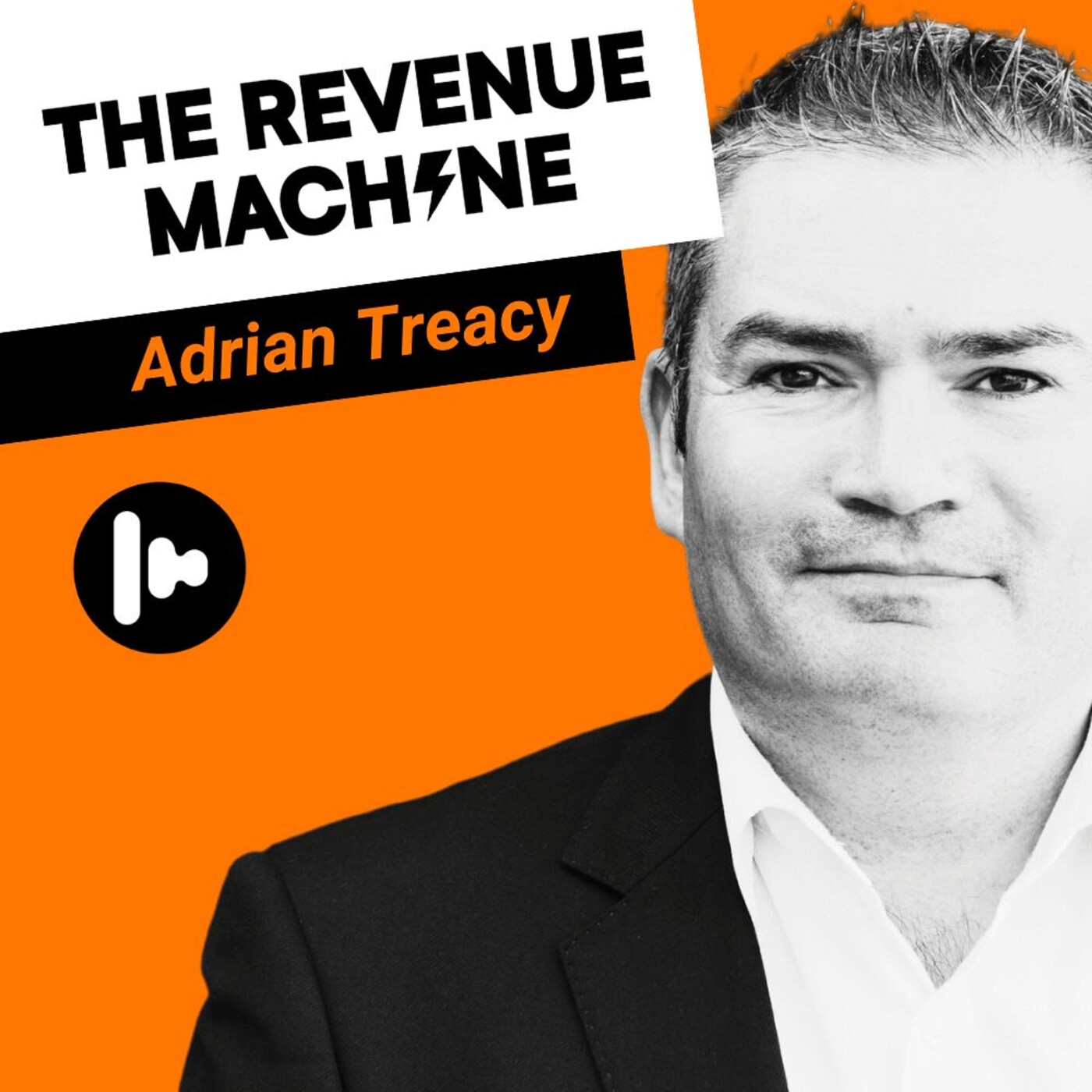
"The only element between you and the success you crave is yourself"
Episode abstract
1/ System-Mind Synergy: Explore optimizing the synergy between our systems and mental faculties for peak performance.
2/ Adapting to Volatility: Uncover strategies for maximizing mental agility amidst extreme market volatility and uncertainty.
3/ Harnessing Past Experience: Evaluate how leveraging past experiences can bolster our resilience and adaptability to embrace discomfort and change effectively.
4/ Cultivating a New Mindset: Implement actionable tactics to cultivate and embed a growth-oriented mindset, fostering innovation and adaptability in dynamic environments.
Adrian, with over 15 years of experience in car rental in Ireland working for Enterprise and Sixt in various capacities such as Operations, Channel Management, and Sales, understands the pivotal role car rental operations play in serving customers, often being their initial point of contact after long flights. Transitioning from the bustling front office to the quiet back office was initially jarring for him, prompting introspection about his career path.
He delves into the power of thought, citing statistics that reveal how people's thoughts shape their realities. Adrian advocates for conscious reprogramming of the subconscious mind to foster positive change gradually, emphasizing the mind's inability to distinguish between reality and imagination. He urges professionals to focus on their own businesses rather than fixating on competitors, stressing the importance of recognizing one's unique value proposition.
Adrian encourages embracing change incrementally, acknowledging that personal growth necessitates accepting failure and experimenting with resilient, profitable ventures. He outlines three types of goals—A, B, and C—highlighting the significance of pursuing goals driven by burning desires. Visualizing success mentally is underscored as a potent tool in achieving these objectives. In essence, Adrian advocates for a proactive mindset, strategic focus, and a willingness to evolve in the dynamic car rental industry.
Chapter
00:00:00 Adrian Treacy introduction
00:19:20 How the mindset approach got started
00:34:30 Revenue management and mindset
00:47:14 Setting a new paradygm, our new mental software
00:53:45 How to overcome fear as a driver not to start
01:13:14 3 types of goals A, B, C till the endHosted on Ausha. See ausha.co/privacy-policy for more information.

Guillaume Gery est l'un précurseur dans le yield management en location de voitures depuis 20 ans. Il est parti d'un pricing figé, imprimé dans des catalogues, vers une optimisation plus flexible. Il réaliser que dans une haute saison, il y a des basses saisons et qu'il y a aussi des hautes saisons en période de faible activité qu'il faut également optimiser.
Comment aborder la culture du changement? En accompagnant les collaborateurs pour les faire grandir associé à un système d'information efficace supporté par un esprit pionnier et permettant d'embarquer tout le monde avec un cadré autorisant l'erreur. Les éceuils sont nombreux et il faut accepter d'abandonner un confort, une sorte de maitrise ouatée finalement dangereuse.
A court terme, la mise en place du yield coûte de l'argent. Mais avec une vision stratégique à long terme, l'impact sur le compte d'exploitation et sur l'amélioration des compétences des collaborateurs sont des gains majeurs pour l'entreprise. Le Yield permet de repenser son organization car avec cette méthode, la société n'est gérée de la même façon.
La puissance de calcul est un soutien essentiel pour accélérer l'analyse. Donc, il faut être un peu fainéant pour laisser la machine faire ce pour quoi elle est faite. Mais un équilibre entre l'humain et la machine reste essentiel : la machine est puissante pour faire ce qu'on lui a demandé de faire (éxécutant) ; l'humain conserve son intuition et demande à l'ordinateur de lui fournir les données explicatives (tacticien). Un conseil : l'agilité et la rapidité ne doivent pas prendre le pas sur la prise de recul et l'analyse.
Quels sont les bonnes aptitudes pour un yield manager? La compétence technique peut toujours être apprise en interne ou via l'apport extérieur. Mais l'état d'esprit avec l'envie de se dépasser est essentiel pour être un bon revenue manager. "Mon grand-père disait qu'il n'y a pas de mauvais outils, il n'y a que des mauvais ouvriers"
Séquence
- 0:00:00 Présentation de Guillaume Gery
- 0:15:35 Accès aux data et nouvelles mentalitésles : les débuts du yield
- 0:28:20 Yield : gains financiers et nouvelles compétences
- 0:40:54 Sois fainéant et laisse travailler la machine.
- 0:57:08 Le profil du bon revenue manager
- 1:10:03 Comment continuer à apprendre ?
- 1:19:15 le conseil de Guillaume à GuillaumeHosted on Ausha. See ausha.co/privacy-policy for more information.

Ce podcast est produit par WeYield, la société de Yield Management et réalisé par Emmanuel Scuto.
L'approche tarifaire peut avoir une impact fort sur la valeur. Elise a expérimenté ces techniques d'optimisation du revenu apprises au cours de ses expériences passées (Club Med, Louvre Hotels, Media) sur son premier bien immobilier. L'idée lui est ensuite venue de créer J'Affiche Complet pour aider les propriétaires de locations saisonnières à mettre en place et gérer leur grille tarifaire et optimiser leur distribution. Depuis 2023, Elise organise un évènement majeur pour ce secteur avec comme point d'orgue l'événement "Rendez-vous de la location saisonnière" (mai 2024 pour la prochaine édition).
Nous apprenons au cours de cet échange que le Yield management est souvent confrontée à deux obstacles humains : d'une part, certains décisionnaires sont très motivés pour déléguer cette tâche à un expert ; d'autres perçoivent sa mise en place comme une perte de responsabilité. Il est crucial de partager une vision et un objectif global clairs. Il est également essentiel de bien comprendre les objectifs des différentes parties prenantes afin d'aligner la stratégie
Les caractéristiques d'un bon gestionnaire du revenu sont les suivantes :
- Excellentes compétences en communication (orales et écrites), parfois dans un rôle d'évangélisateur interne et externe.
- Capacité à mener le changement avec une approche pédagogique.
- Souci de la qualité des résultats.
- Forte appétence pour les chiffres, une maîtrise excellente d'Excel et une rigueur extrême.
- Capacité à remettre en question les pratiques établies.
Séquences
- 0:00:00 à 0:07:35 Présentation d'Elise Ripoche
- 0:07:35 à 0:28:20 Les débuts en optimisation d'achat d'espaces publicitaires et dans l'hôtelerie
- 0:28:20 à 0:43:50 C'est quoi un bon revenue manager? Comment adresser le travail en distanciel?
- 0:43:50 à 0:54:00 Le why de J'Affiche Complet et l'approche de la tarification dans des projets de vie
- 0:54:00 à 1:05:45 Le How de J'Affiche Complet et la prise de risque avec le Rdv de la location saisonnière
- 1:05:45 à 1:17:15 Comment vulgariser le Revenue Management?
- 1:17:15 à 1:23:55 L'accompagnement humain avec un expert et le peer-training
- 1:23:55 à 1:29:15 Le feedback de l'équipe et les mastermind pour continuer de s'améliorer
- 1:29:15 à jusqu'à la fin Le conseil d'Elise aujourd'hui à la Elise d'hierHosted on Ausha. See ausha.co/privacy-policy for more information.

Comments

Download from Google Play

Download from App Store
 United States