


 Claim Ownership
Environmental Law Monitor
Subscribed: 12Played: 137
Subscribe

© Bracewell
Description
Hosted by Daniel Pope and Taylor Stuart, the Environmental Law Monitor is a place for thoughtful conversations ranging from the latest developments to perennial topics like litigation, enforcement and compliance assurance
55 Episodes
Reverse
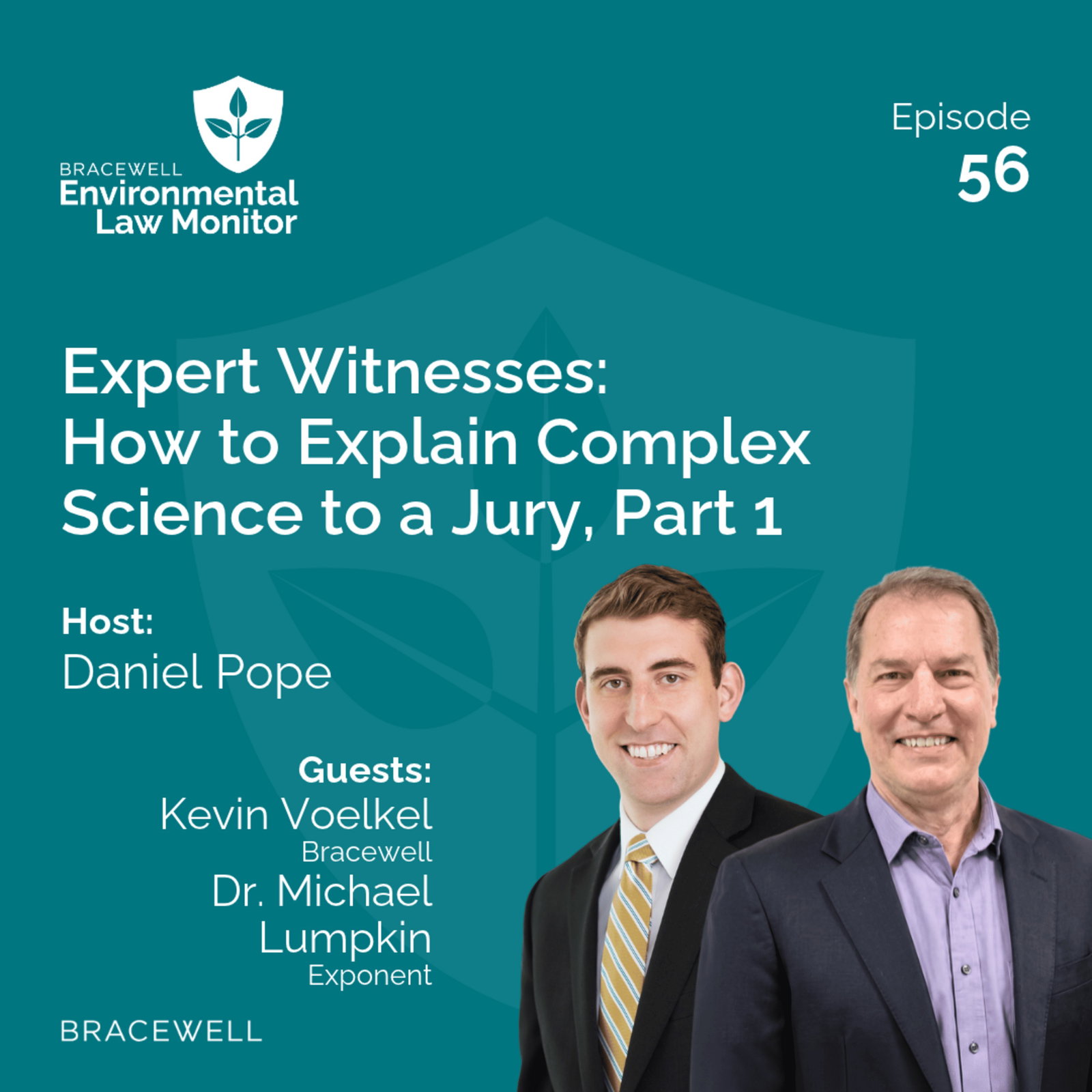
In environmental disputes and toxic tort cases, the science is often the central issue. In this episode of the Bracewell Environmental Law Monitor, Kevin Voelkel, a partner in Bracewell’s environment, lands and resources practice, and Dr. Michael Lumpkin, Senior Managing Scientist at Exponent, a scientific and engineering consulting firm, join host Daniel Pope to discuss how experts and lawyers explain complex science to judges, juries and regulators. In the first of two episodes, they examine the role science plays in environmental disputes and toxic tort cases, and why an expert’s job is to defend good science rather than a side.According to the guests, an effective expert starts with intuitive concepts and builds toward the technical details, using analogies listeners already know. Dr. Lumpkin explains how a factory floor can make a computer model of the human body understandable, and how an executive summary can work like a movie trailer. Kevin adds why advocates need a high-level map before zooming in on the assumptions that drive a case. The conversation also looks at expert objectivity, how reports are structured and the common mistake of jumping into a complex topic without context. Part two of this conversation turns to disputed science and cross-examination.
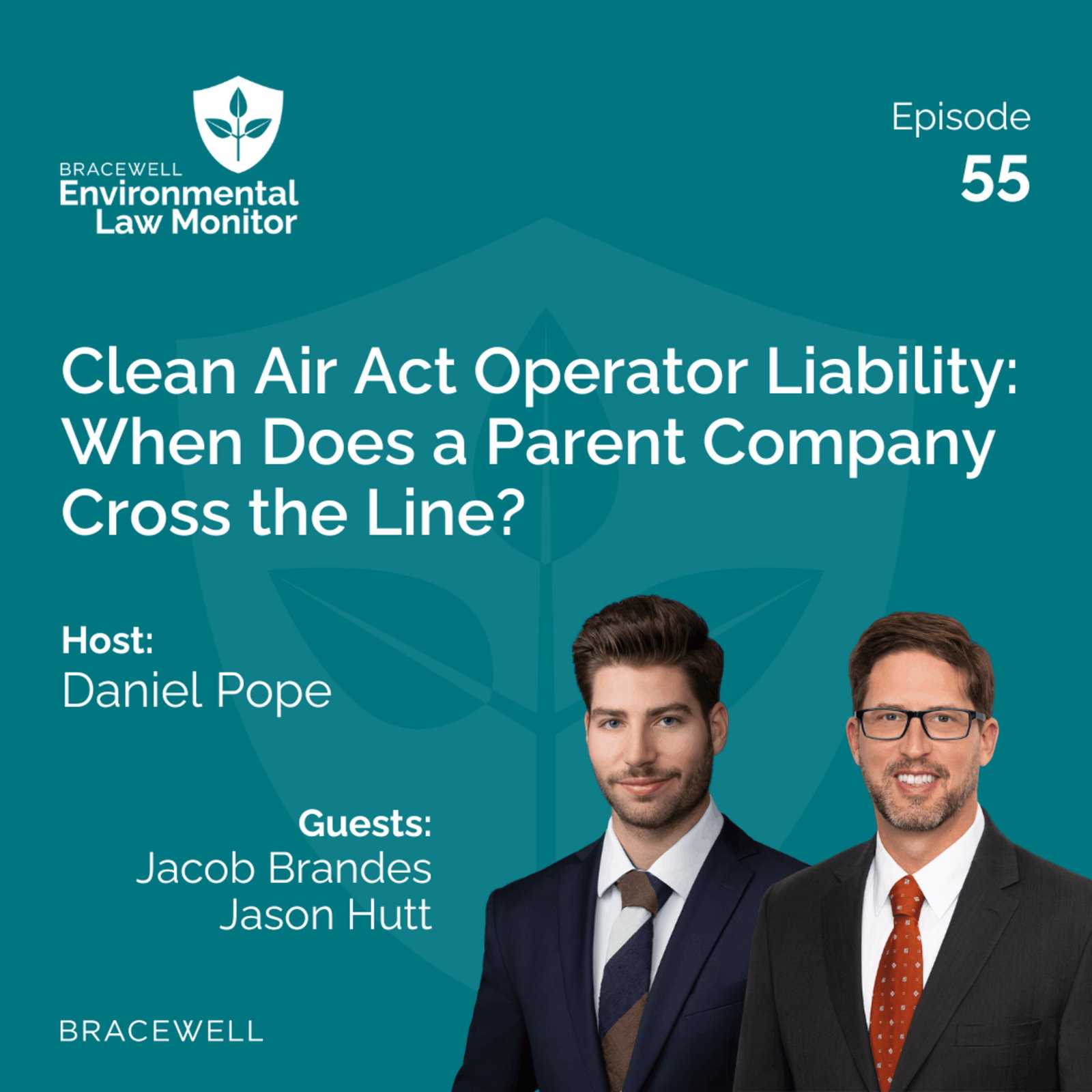
In this episode of the Environmental Law Monitor, Jason Hutt and Jacob Brandes, attorneys in Bracewell’s environment, lands and resources practice, join host Daniel Pope to discuss parent-company operator liability under the Clean Air Act through United States v. EES Coke Battery, LLC. They examine the district court’s application of the Supreme Court’s Bestfoods framework beyond its familiar CERCLA cleanup context.A company can face operator liability when it participates in and controls a facility’s day-to-day environmental operations, even if another entity holds the permit. Jason and Jacob outline the facility’s permitting and reporting violations, the penalties and relief ordered, and the court’s reasoning for holding three parent entities liable alongside the subsidiary. The conversation also looks closely at the evidence of control: broad master services agreements, parent-company involvement in operations and authority over compliance spending.
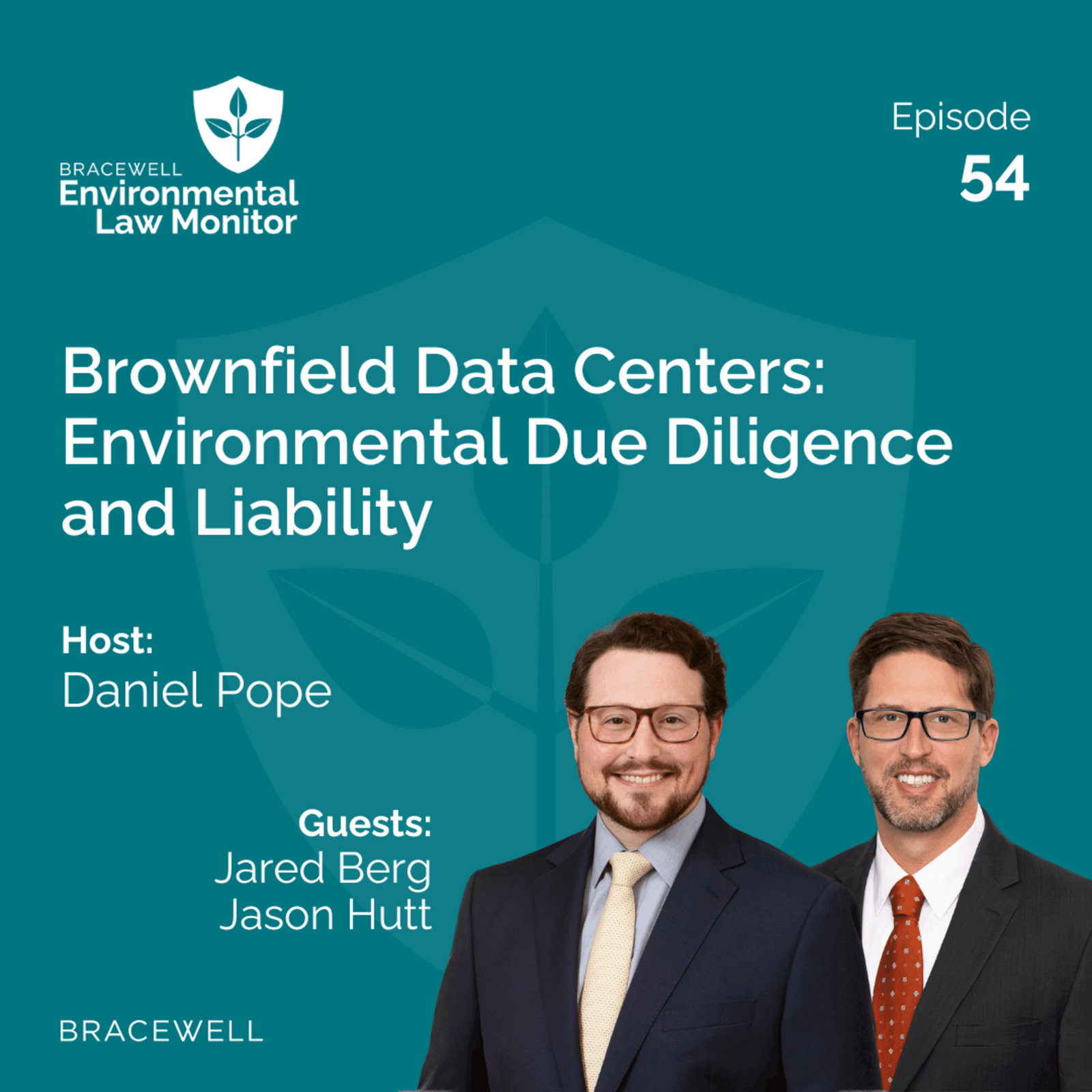
In this episode of the Environmental Law Monitor, Daniel Pope shares a conversation from Bracewell's Data Center Counsel with Jared Berg and Jason Hutt. The trio explores why brownfield sites — former industrial properties like old power plants and steel mills — are increasingly attractive to data center developers thanks to existing power infrastructure and water access. They discuss navigating CERCLA liability, conducting thorough environmental due diligence, structuring asset sales to manage legacy contamination risk, and the growing debate over water usage in Texas. The conversation also highlights how brownfield programs can protect developers and why state and local policy engagement is critical to project success.
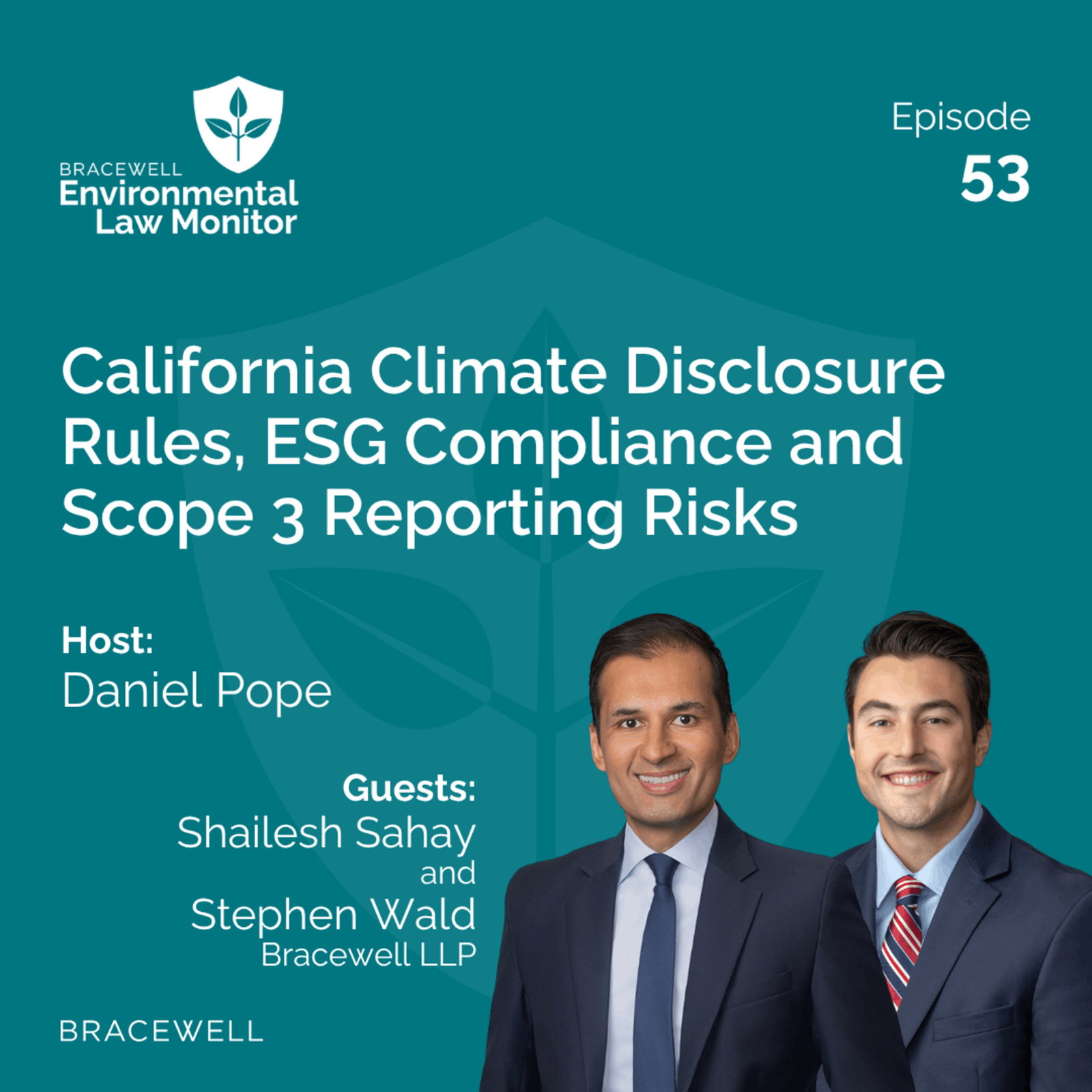
In this episode of the Bracewell Environmental Law Monitor, host Daniel Pope is joined by Shailesh Sahay and Stephen Wald to discuss how ESG compliance is evolving as California and international regulators take the lead on climate disclosure requirements.The conversation explores California’s emerging greenhouse gas disclosure regimes — including SB 253 and SB 261 — and the complexities of Scope 1, 2 and 3 emissions reporting. Scope 1 covers direct emissions from company operations; Scope 2 covers purchased energy; and Scope 3 covers indirect emissions across a company’s value chain, including supply chain and downstream activities. The group also examines the growing role of international ESG frameworks, particularly in Europe, and the ongoing evolution of global reporting standards.The episode addresses litigation risks tied to environmental claims, carbon offsets and greenwashing allegations, along with the governance implications for corporate directors under evolving compliance obligations. While federal ESG initiatives have slowed, environmental disclosure and climate-related compliance requirements continue to expand, creating new legal, operational and governance risks for companies across industries.
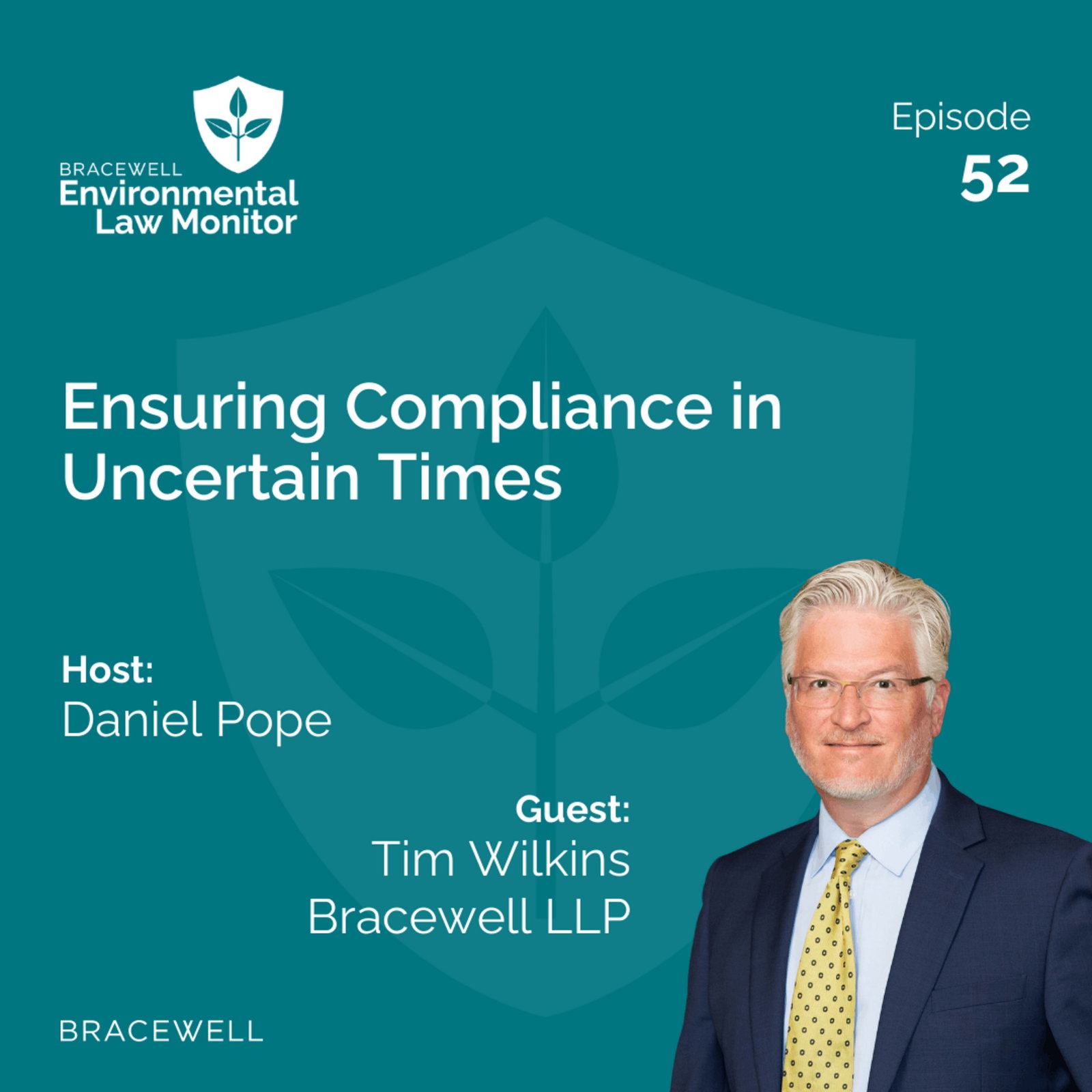
A quieter federal enforcement environment presents both risk and opportunity. On this episode of Environmental Law Monitor, Daniel Pope and Tim Wilkins explore how companies should respond. While EPA enforcement actions have declined, the underlying statutes, regulations and permits remain in force. The five-year federal statute of limitations means that today’s violations may be tomorrow’s enforcement targets.The episode focuses on practical strategies such as: reinforcing compliance cultureleveraging audit toolsensuring corrective actions are both effective and well documentedDaniel and Tim highlight continued scrutiny from state agencies and non-governmental organizations, reminding companies that enforcement exposure extends beyond EPA.

Comments

Download from Google Play

Download from App Store
 United States