


 Claim Ownership
Vine Abiders Podcast
Subscribed: 6Played: 151
Subscribe

© Chris White
Description
Theological studies with Chris White an author, filmmaker and podcaster. Holiness, Wesleyan, Early Church.
vineabiders.substack.com
vineabiders.substack.com
18 Episodes
Reverse
In Part 3 of the Lord’s Prayer series, we focus on the line:“And do not lead us into temptation, but deliver us from evil.”This portion of the prayer is often misunderstood, but it turns out to be one of the most practical and powerful parts of Jesus’ teaching on prayer—especially when understood as a daily prayer for strength, protection, and faithfulness.Strength for Today, Not TomorrowOne of the central takeaways from this teaching is the idea that the Lord’s Prayer trains believers to pray for today’s needs, not tomorrow’s anxieties. Just as we pray for daily bread, we are also meant to pray for daily strength. Scripture repeatedly warns against carrying tomorrow’s burdens today, reminding us that each day has enough trouble of its own.When prayer is focused on the present day, it changes how we walk through life. Even small challenges—meetings, difficult conversations, emotional strain, distractions, impatience—become worthy of prayer. This creates a posture of constant dependence on God, not just during crises but throughout ordinary life. Over time, this daily focus builds faith, as we begin to see God’s help in specific, concrete ways.Trials vs. Temptation: An Important DistinctionA key issue addressed in this teaching is the apparent tension in Scripture:* Jesus teaches us to pray, “Lead us not into temptation.”* James tells us that God does not tempt anyone.The resolution lies in understanding the Greek word peirasmos, which can mean either trial or temptation, depending on context. Trials are often allowed—and even appointed—by God for growth and maturity. Temptation, however, comes from the evil one, who seeks to use those trials as opportunities for sin.God may allow trials, but He does not tempt. Instead, Satan works within trials, attempting to draw believers into bitterness, rebellion, unbelief, or outright sin. This is why the prayer does not ask to avoid all hardship, but instead asks for protection and deliverance within hardship.A Prayer of Daily Spiritual WarfareThis portion of the Lord’s Prayer is best understood as a daily spiritual warfare prayer. Spiritual warfare is not limited to dramatic encounters or deliverance ministries—it is primarily about resisting temptation. Scripture consistently frames the Christian life as a call to stand firm against the devil by faith, obedience, and reliance on God.When we pray, “Deliver us from the evil one,” we are asking God to:* Protect us from Satan’s schemes* Strengthen us where we are weakest* Guard our hearts and minds in moments of pressure* Provide a way of escape when temptation arisesThis prayer acknowledges that the enemy is real, active, and intentional—and that we need God’s help daily to remain faithful.Job as the Model: Faithfulness Without SinThe Book of Job provides one of the clearest biblical pictures of what is truly at stake in trials. Job’s suffering was extreme, but the central question of the book is not why bad things happen, but why Job does not sin.Despite grief, loss, physical pain, and pressure from those around him, Job refuses to curse God or abandon his integrity. Scripture repeatedly emphasizes this point: “In all this, Job did not sin.” His victory was not emotional strength or composure—it was faithfulness.This challenges the common assumption that spiritual success in trials means feeling peaceful or positive. Instead, the real victory is resisting bitterness, resentment, and rebellion, even when circumstances are unbearable.The “Evil Day” and Spiritual GrowthScripture speaks of seasons called “the evil day”—periods of intense testing that offer the potential for maximum spiritual growth. These moments are not automatically beneficial. Growth only occurs if believers stand firm in holiness rather than giving in to sin.Trials can either refine faith or harden hearts. The difference lies in how we respond. The Lord’s Prayer equips believers for both ordinary days and extraordinary trials by teaching us to seek God’s strength before temptation overwhelms us.Why Resisting Sin MattersThe teaching also explores why Satan is so invested in tempting believers to sin. Biblically, sin leads to death, and death is described as the domain over which Satan exercises power. The mission of Christ was not merely to forgive sins, but to destroy the works of the devil and free humanity from bondage to sin and death.Resisting temptation is not a minor issue—it is central to spiritual freedom. Scripture presents salvation as a transfer from the domain of darkness into the kingdom of Christ. Each act of obedience reinforces that freedom; each surrender to sin strengthens bondage.The Heart of the PrayerWhen understood fully, “Lead us not into temptation, but deliver us from the evil one” can be paraphrased like this:Father, I accept the trials you have appointed for me today, knowing they are meant for my good. But protect me from the evil one who seeks to use them to lead me into sin. Give me the strength I need today to remain faithful.This is not a prayer for an easy life—it is a prayer for victory, faithfulness, and perseverance.Final EncouragementThe Lord’s Prayer is not meant to be rushed or recited thoughtlessly. It is a framework for daily dependence on God, training believers to seek His provision, forgiveness, protection, and strength one day at a time. When prayed with intention, it becomes a powerful weapon in daily spiritual warfare.To stay connected, subscribe to the Vine Abiders Substack:👉 This is a public episode. If you would like to discuss this with other subscribers or get access to bonus episodes, visit vineabiders.substack.com
In Part Two of our study of the Lord’s Prayer, we turn our attention to one of Jesus’ most challenging and weighty petitions:“Forgive us our debts, as we also have forgiven our debtors.” (Matthew 6:12)These words force us to wrestle with forgiveness—not only God’s forgiveness toward us, but our responsibility to forgive others. This teaching explores what Jesus truly meant, how the early Church understood this prayer, and why forgiveness remains central to abiding in Christ today.---What Does “Debts” Really Mean?One of the first questions this passage raises is why Matthew uses the word *debts*, while Luke records Jesus saying *sins*, and many Christians are familiar with the word *trespasses*. When examined closely, these terms all describe the same spiritual reality: wrongdoing before God.A “debt” is something owed. In a spiritual sense, sin places us in a position of obligation before God—an obligation we cannot repay on our own. Jesus’ language emphasizes our complete dependence on God’s mercy rather than our own merit.---Why Do Believers Keep Asking for Forgiveness?A common modern assumption is that forgiveness is a one-time event that permanently covers all future sins. However, Jesus teaches His disciples—already followers—to pray regularly for forgiveness. This implies that forgiveness is not merely a past transaction but an ongoing relational reality.Scripture repeatedly affirms this pattern. First John calls believers to confess their sins. James urges Christians to repent. Jesus Himself instructs His disciples to pray daily for forgiveness. These passages show that repentance and forgiveness are part of a living, abiding relationship with God, not a formality reserved for conversion alone.--- Forgiveness Is Relational, Not Merely LegalThroughout the New Testament, forgiveness is presented as relational rather than purely judicial. God’s forgiveness restores fellowship, cleanses the conscience, and renews intimacy with Him. When sin is ignored or unconfessed, that relationship is damaged—not because God stops loving us, but because sin disrupts communion.Early Church writers consistently affirmed this understanding. Figures such as Clement of Rome, John Chrysostom, and Cyril of Jerusalem taught that repentance and forgiveness were ongoing necessities in the Christian life. For them, Jesus’ prayer was meant to be lived, not merely recited.--- “As We Forgive Our Debtors”Perhaps the most sobering part of this prayer is that Jesus directly links God’s forgiveness of us to our forgiveness of others. This is not an isolated teaching. Jesus reiterates it immediately after the Lord’s Prayer, and it appears repeatedly throughout the Gospels.Unforgiveness, Scripture warns, hardens the heart, breeds bitterness, and places the believer in spiritual danger. Forgiving others is not optional or secondary—it is essential to faithful discipleship. To refuse forgiveness is to contradict the mercy we ourselves depend on.--- The Spiritual Danger of UnforgivenessThe teaching emphasizes that unforgiveness does real spiritual harm. It distorts our view of God, damages relationships, and can lead to drifting away from Christ. Jesus’ warnings about forgiveness are not threats meant to produce fear, but loving cautions meant to keep believers rooted in humility and grace.Forgiveness does not excuse wrongdoing or ignore justice. Instead, it releases our claim to vengeance and entrusts judgment to God.--- Abiding Through Repentance and MercyAt its core, this petition of the Lord’s Prayer calls believers to a life of ongoing repentance, humility, and mercy. To abide in Christ is to remain responsive to conviction, quick to confess sin, and eager to forgive others just as we have been forgiven.Jesus teaches us to pray this way because He desires a living, relational faith—one marked by dependence on God’s grace and love for others. This is a public episode. If you would like to discuss this with other subscribers or get access to bonus episodes, visit vineabiders.substack.com
In this episode of Vine Abiders, we return to a verse-by-verse study of the Sermon on the Mount, focusing on Matthew 6:9–13 and the first half of the Lord’s Prayer. While Jesus gives many examples of prayer throughout the Gospels, this is the only place where He explicitly commands His disciples, “Pray in this way.” That alone signals that the Lord’s Prayer holds a unique and formative place in the life of the Church.The Context: Prayer That Is Neither Performative nor MechanicalThe Lord’s Prayer comes immediately after Jesus’ critique of two defective forms of prayer:* prayer offered to be seen by others, and* prayer reduced to meaningless repetition.Jesus reminds His listeners that the Father already knows what they need before they ask. Prayer, then, is not about informing God, manipulating outcomes, or earning favor. Instead, it is meant to shape the heart of the one who prays. The Lord’s Prayer functions as a corrective—a way of re-forming piety around trust, dependence, and proper orientation toward God.Is the Lord’s Prayer a Template or a Liturgy?Christians often treat the Lord’s Prayer as a loose template for other prayers. While it certainly contains themes that appear elsewhere in Scripture, the command “Pray in this way” seems to mean more than “pray like this.” The early church clearly understood Jesus to be instructing His followers to actually pray these words.The Didache, one of the earliest Christian documents outside the New Testament, explicitly instructs believers to pray the Lord’s Prayer three times a day. This practice likely grew out of Jewish prayer rhythms, which themselves appear to be reflected in Daniel’s habit of praying three times daily during the exile (Daniel 6:10). The Lord’s Prayer, then, was understood as a fixed, formative prayer—something meant to be repeated, but never mindlessly.“Our Father”: Prayer as a Corporate ActThe prayer begins not with “My Father,” but “Our Father.” Even when prayed in private, the Lord’s Prayer reminds us that we approach God as members of a family. Christian prayer is never purely individualistic. The plural language places us within the larger body of Christ and serves as a quiet check against spiritual isolation.Addressing God as Father was itself radical. While the concept appears occasionally in the Old Testament, it was not common in Jewish prayer. Jesus’ consistent use of Father language—and His invitation for His disciples to do the same—signals an unprecedented intimacy grounded in relationship rather than distance or fear.“Who Is in Heaven”: Intimacy Without SentimentalityThe phrase “who is in heaven” balances the closeness implied by Father. God is near enough to hear us, yet exalted enough to answer us. This pairing preserves reverence while avoiding sentimentality. It mirrors the tension found in Jewish prayers like the Kaddish, which hold together God’s nearness and His holiness.“Hallowed Be Your Name”: A Petition, Not a StatementAlthough it sounds like a declaration, “Hallowed be Your name” is best understood grammatically as a request: May Your name be treated as holy. It is a plea for God’s reputation to be set apart, honored, and glorified in the world.This kind of prayer is deeply biblical. Throughout the Old Testament, God’s people regularly ask Him to act in such a way that His name would be glorified among the nations (e.g., Ezekiel 36:23). The priority here is crucial: before asking for anything for ourselves, we begin by aligning our hearts with God’s glory.This petition also invites participation. When we pray for God’s name to be hallowed, we implicitly ask that our own lives would reflect His character rather than obscure it.“Your Kingdom Come”: A Subversive HopeThe request for God’s kingdom to come lies at the heart of Jesus’ teaching. The kingdom was inaugurated in Jesus’ ministry and continues to grow through the expansion of its citizens, even as it awaits its final, visible consummation.Praying “Your kingdom come” is not redundant. It orients our priorities away from personal kingdoms and toward God’s purposes. It also carries an unmistakably subversive edge. In the Roman world, Christians were often viewed with suspicion precisely because they prayed for another kingdom—one that relativized every earthly power.This petition closely parallels language found in the Jewish Kaddish, which similarly asks God to establish His kingdom speedily. Jesus’ prayer, however, places that hope squarely within His own kingdom mission.“Your Will Be Done on Earth as It Is in Heaven”This line expresses daily surrender. It is a conscious rejection of the impulse to bend God’s will toward our own desires. Instead, it trains us to desire what God desires.The phrase also carries eschatological and spiritual-warfare dimensions. Heaven already reflects perfect obedience to God’s will; earth does not. Praying for God’s will to be done on earth is a request for the defeat of rival wills and the advance of God’s purposes. Scripture affirms that prayer matters—“The prayer of a righteous person accomplishes much” (James 5:16). It is not unreasonable to believe that this prayer actively participates in God’s work against the powers opposed to Him.“Give Us This Day Our Daily Bread”The phrase “daily bread” translates a rare Greek word (epiousios) that appears nowhere else in ancient literature. Its meaning likely points to essential bread—the sustenance necessary for existence.This request echoes Israel’s experience with manna in the wilderness, where dependence on God was daily and hoarding was forbidden. Jesus’ teaching consistently points in this direction: do not worry about tomorrow; trust God for today.Practically, this invites a discipline of bringing concrete, daily needs to God—rather than anxieties about distant futures. Even secular psychology recognizes the relief that comes from “offloading” worries; prayer does this in the presence of a God who actually hears and acts.The plural language again matters. “Give us” invites awareness of others’ needs and calls the believer toward generosity. When we have enough, this prayer can become a request that God would use us to supply what others lack.Finally, Scripture also allows for a spiritual dimension here. Jesus calls Himself the Bread of Life (John 6), and reminds us that man does not live by bread alone. The prayer, then, can rightly be understood as asking for both physical provision and spiritual sustenance—Christ Himself sustaining us day by day.Looking AheadThis episode covers only the first half of the Lord’s Prayer. The remaining petitions—concerning forgiveness, temptation, and deliverance—will be addressed in the next teaching. Together, they reveal a prayer that not only asks God for help, but slowly reshapes the one who prays it. This is a public episode. If you would like to discuss this with other subscribers or get access to bonus episodes, visit vineabiders.substack.com
My new book The Deformation is out: https://www.amazon.com/dp/B0G5HXNS82 This is a public episode. If you would like to discuss this with other subscribers or get access to bonus episodes, visit vineabiders.substack.com
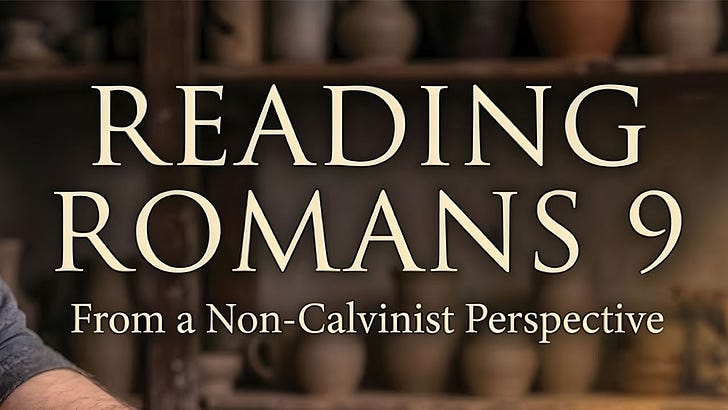
This chapter ended up being much longer than normal. It also made sense as a standalone book. So I published it as a Kindle and Paperback book on Amazon called Reading Romans 9 from a Non-Calvinist Perspective by Chris WhiteRomans chapter 9 stands at the center of a significant theological debate—the question of divine sovereignty and human freedom. For many within the Reformed or Calvinist tradition, this chapter is seen as the clearest biblical evidence for their views.The Calvinist Interpretation of Romans 9The importance of Romans 9 for Calvinism cannot be overstated. It is viewed as the foundational text for the doctrine of unconditional election—the belief that God, according to His sovereign will and purpose, chooses to save some and not others, entirely apart from anything foreseen in them, whether faith or works.As The Gospel Coalition summarizes, in Romans 9:“Paul teaches the (Calvinist) doctrine of unconditional election—the teaching that God chooses to save some and not others, not based on anything in them (whether faith or fruit, present or foreseen), but based solely on his sovereign will and purpose.”This chapter is also the main passage that Reformed believers turn to in support of predestination—the belief that God, before the foundation of the world, predetermined the course of all things, from the smallest detail to the greatest events. Human history in every detail unfolds exactly as God has decreed it, and that nothing is a result of independent or autonomous human decisions. As Martin Luther famously wrote in The Bondage of the Will, the idea of free will is a “mere lie.”The Early Church ViewWhile many today associate Romans 9 with the doctrine of predestination, this was not how the earliest Christians understood the passage. In fact, a deterministic reading of Romans 9—one that sees God as arbitrarily choosing some people for salvation and others for damnation—first appeared among certain Gnostic sects in the second century. These groups taught that human destinies were fixed by divine decree, that some were created as “spiritual” and destined for salvation while others were “material” and destined for destruction.Early Christian leaders such as Irenaeus, Origen, and Chrysostom strongly rejected these ideas. They saw the Gnostic-style interpretation of Romans 9—that some were born good and others born evil or damned—as a distortion of both Scripture and God’s character. For the first four centuries of the church, the freedom of the human will was taken for granted. The early fathers—interpreting Romans 9 within the broader scriptural witness—consistently rejected any notion of unconditional predestination that nullifies human responsibility.This was the standard reading in the Greek and Latin churches: divine mercy and human freedom work in concert, and the text was never taken to teach a unilateral, unconditional predestination of individuals to salvation or damnation. It was not until the fifth century that a more deterministic view of Romans 9 gained traction in Christian theology—introduced by Augustine of Hippo, a former Gnostic himself. Augustine’s later writings on grace and predestination drew heavily from Romans 9 and became the foundation for what would later evolve into Calvinist theology.I will be arguing against the Reformed interpretation of Romans 9 by first outlining the major problems I see with that view, and then walking through the chapter verse by verse to address each of the most difficult passages in detail. Before examining Romans 9 though, it’s important to understand what Calvinists believe and why this chapter is central to their system.The Core of CalvinismAt the core of Calvinism is unconditional election—the belief that God, before creation, chose certain individuals for eternal life and passed over others, not because of anything He foresaw in them—no faith, no merit, no decision—but solely according to His own sovereign will.Calvinists insist this choice is not “arbitrary,” meaning random or unjust, but rather unconditioned—based on nothing outside of God Himself. Yet from the human perspective, it is precisely arbitrary in that human actions, faith, or response to God make no difference in the outcome.This unconventional idea is made necessary because of another Calvinist doctrine called Total Depravity, the teaching that humanity is so completely corrupted by sin that no one can even desire God or believe in Him without first being regenerated. According to this view, people are not merely fallen or weak but spiritually dead—incapable of responding to God in any meaningful way.But this was also the key idea of the early Gnostics, who, though using different terminology, taught that humanity was divided between those capable of receiving divine light and those who were not. The early Christians rejected this fatalistic anthropology as heresy because it denied the freedom and moral responsibility of human beings.Calvinists believe that because humanity is so corrupted by total depravity, no one can have faith in God by an act of their own free will. Faith, in their system, is not something a person initially chooses, but something that results from being elected—a choice God made apart from anything the individual has done or ever will do.In short they believe:* If humans are totally unable, election must be totally unconditional.* Calvinists claim to teach “salvation by faith alone” but in reality they teach salvation by election alone, since faith itself is possible only for those whom God has already arbitrarily chosen.Human belief, repentance, or response plays no real role in determining one’s destiny; election is the only thing that matters, and election is something that in their view no one has control over.Sovereignty, Foreknowledge and PredestinationBefore continuing I want to be transparent about the perspective from which I approach this study. I believe that God’s sovereignty and human freedom are not mutually exclusive. The Reformed view often treats God’s sovereignty as if it cancels human will, but Scripture and the early Church fathers consistently present a more dynamic relationship. God reigns absolutely—but He reigns over free creatures, not puppets.Defining SovereigntyEven the word “sovereignty” itself has taken on a new meaning within Calvinism. In Reformed theology, sovereignty is often defined as God’s absolute control over every event—that nothing happens that He has not predetermined. But that is not what the word means.According to Merriam-Webster, sovereignty means “supreme power or authority.” A king, for example, can be sovereign over his country—his rule and authority are unquestioned—yet things can still occur within his realm that he did not personally will or decree. If a thief steals a loaf of bread in his kingdom, it does not mean the king is any less sovereign.Likewise, God’s sovereignty means that He has ultimate authority over creation, not that He predetermines every act that takes place within it. This is not because He lacks control, it’s because it is seemingly His will to rule over creatures with a free will to choose or not to choose Him. To put it another way, God’s sovereign will was to create creatures with free will.Predetermination vs. PredestinationOne of the most important distinctions to make here is between predestination and predetermination.* Predetermination means that events and choice are fixed and caused directly by God.* Predestination, on the other hand, refers to God’s plan or intention—a destiny prepared for those who love Him (Romans 8:28–30).I like to think of it as a father preparing a destiny for his son. Imagine a father who buys his son land, farming tools, and seeds for planting—everything he needs for a good life as a farmer. That future is prepared, even predestined for the son. But the son still has the freedom to embrace it or reject that predestined future. He may work the field as his father intended, or he can squander his inheritance and waste his life in drugs and alcohol. The father’s plan was good, but the son’s choices still mattered.Here are a couple quick verses showing that God’s creatures can reject His will for them:But the Pharisees and the lawyers rejected God’s purpose for themselves, not having been baptized by John. (Luke 7:30)… How often I wanted to gather your children together, the way a hen gathers her chicks under her wings, and you were unwilling. (Matthew 23:37b)God’s Foreknowledge and Human FreedomAnother important thing to discuss before we get started is the idea of God’s foreknowledge. Throughout Scripture, God’s “choosing” does not seem to be arbitrary or detached from His wisdom. His decisions seem to flow from foreknowledge—from knowing the hearts of people and how they will respond to His grace:* “Chosen according to the foreknowledge of God the Father” (1 Peter 1:2).* “Before I formed you in the womb I knew you” (Jeremiah 1:5).* “Those whom He foreknew, He also predestined” (Romans 8:29).God’s sovereignty seems to operate in harmony with His knowledge of the human heart. His plans are never random or unjust; His foreknowledge takes into account who will respond to Him in faith and who will not.The Early Church on Foreknowledge and FreedomThe earliest Christians taught this as well. John of Damascus wrote:“We know that God foreknows all things, but He does not predetermine all things. For He foreknows the things that depend on us, but He does not predetermine them.”God’s foreknowledge, he explained, is timeless awareness, not coercion. He foreknows freely chosen acts as free acts; He doesn’t turn them into necessities by knowing them.John Chrysostom, commenting on Romans 8:29, emphasized that God’s choosing is based on His foreknowledge of human faith.“For whom He did foreknow, He also did predestinate... He did not merely say, ‘He foreknew,’ but, ‘whom he foreknew,’ i.e., whose willingness He knew before...”Origen likewise wrote:“For it is not be

The orphanage we support: https://joyfulheartshome.com/ This is a public episode. If you would like to discuss this with other subscribers or get access to bonus episodes, visit vineabiders.substack.com

We’ve been going through the Sermon on the Mount, and in this post, we’re looking at Matthew 5:43–48: **“You have heard that it was said, ‘You shall love your neighbor and hate your enemy.’But I say to you, love your enemies and pray for those who persecute you,so that you may be sons of your Father who is in heaven;for He causes His sun to rise on the evil and the good,and sends rain on the righteous and the unrighteous.For if you love those who love you, what reward do you have?Do not even the tax collectors do the same?If you greet only your brothers, what more are you doing than others?Do not even the Gentiles do the same?Therefore, you are to be perfect, as your heavenly Father is perfect.”(Matthew 5:43–48 NASB)This passage is about how we are to love our enemies — and Jesus tells us that in doing this, we are to emulate God Himself. God causes the rain to fall on both the just and the unjust. He is merciful to those who love Him and also to those who hate Him. While we were still sinners, God loved us — and Jesus tells us that we are to be like that.Our love should be teleios — complete, whole, mature. It should encircle everybody — not just the good people, but the bad people too.Understanding “Love Your Neighbor”Jesus follows a familiar pattern here. He quotes something from the Old Testament Law, then clarifies or corrects a misunderstanding about it.In this case, He begins with “You shall love your neighbor.” That’s a direct quote from Leviticus 19:17–18, which says:“You shall not hate your fellow countryman in your heart;you may surely reprove your neighbor, but shall not incur sin because of him.You shall not take vengeance, nor bear any grudge against the sons of your people,but you shall love your neighbor as yourself; I am the Lord.”(Leviticus 19:17–18 NASB)So “neighbor” in this context refers primarily to “the sons of your people” — likely fellow Israelites and Gentile proselytes who had joined the covenant community. In other words, “neighbor” meant people inside the camp.But notice something interesting in Leviticus: “You shall not hate your fellow countryman in your heart.” That’s a heart-level commandment.Sometimes people think Jesus raised the moral bar when He said that hatred is like murder or lust is like adultery, but the truth is that heart-level commandments have always been in the Law. Even in Leviticus, hatred of another person was sin.And it goes further: “You may surely reprove your neighbor, but you shall not incur sin because of him.” That means correction or rebuke must be done without hate or bitterness. It must be done with love — or not at all.That’s a strong rebuke to those who justify anger as “righteous indignation.” If you hold grudges, harbor resentment, or relish outrage, Scripture says that’s sin. Even if it feels justified, if it’s born out of anger and not love, it’s sin.“You Have Heard It Said... Hate Your Enemy”So what about the second part — “and hate your enemy”?That phrase, “hate your enemy,” isn’t actually found in the Old Testament Law. So what was Jesus referring to?There are two main ways interpreters understand it:Some believe Jesus was referring to the Old Testament’s commands to destroy Israel’s enemies.For example, in God’s instructions concerning Amalek:Then the Lord said to Moses, “Write this in a book as a memorial and recite it to Joshua, that I will utterly blot out the memory of Amalek from under heaven.” Moses built an altar and named it The Lord is My Banner; and he said, “The Lord has sworn; the Lord will have war against Amalek from generation to generation.”(Exodus 17:14–16 NASB)And in Deuteronomy 7:1–6, God tells Israel to destroy the Canaanite nations and to “show them no mercy.” Those who interpret Jesus’ words this way believe these kinds of passages were essentially commands to “hate your enemies.”There’s also Psalm 139:21–22, where David says:Do I not hate those who hate You, O Lord?And do I not loathe those who rise up against You?I hate them with the utmost hatred;They have become my enemies.(Psalm 139:21–22 NASB)But even here, David concludes by saying:Search me, O God, and know my heart;Try me and know my anxious thoughts;And see if there be any hurtful way in me,And lead me in the everlasting way.(Psalm 139:23–24 NASB)So even David reflects on whether this hatred was righteous. It’s not a blanket endorsement of hatred—it’s a moment of inner wrestling before God.The other major view — and the one I lean toward — is that Jesus was correcting a rabbinic or cultural tradition rather than quoting the Old Testament itself.By the time of Jesus, certain Jewish sects and teachers — especially the Essenes at Qumran — had developed what might be called a theology of “sanctified hatred.” This was the idea that love and hate could both be sacred if directed at the right targets: love toward God and His people, and hatred toward sinners and outsiders.This concept is clearly reflected in the Dead Sea Scrolls, particularly the Community Rule (1QS), which describes the Essene initiation oath:“To love all the sons of light, each according to his lot in the counsel of God,and to hate all the sons of darkness, each according to his guilt in the vengeance of God.”(1QS 1:9–11)Another Essene text known as the War Scroll (The War of the Sons of Light Against the Sons of Darkness, 1QM) uses the same dualistic imagery to describe an ongoing holy war between two opposing spiritual camps:“The Sons of Light shall battle against the army of the Sons of Darkness… the men of the pit shall not prevail against them.”(1QM 1:1–3)Meanwhile, rabbinic literature from later centuries also reflects similar sentiments about maintaining enmity under certain conditions. For example, Maimonides (12th century) wrote in Mishneh Torah, Hilchot De’ot 6:6 that a scholar may harbor resentment “until his offender asks pardon.” While written long after Jesus’ time, this reflects an enduring tradition in which hostility could be viewed as justified or even virtuous if directed toward the unrepentant.So by the first century, the idea that hatred could be holy — that one should “love the sons of light and hate the sons of darkness” — was part of the religious culture.That is the mindset Jesus could be confronting when He said:“You have heard that it was said, ‘You shall love your neighbor and hate your enemy.’ But I say to you, love your enemies and pray for those who persecute you.”In other words, Jesus was overturning not Moses’ Law, but a living cultural tradition that had justified hatred as an expression of holiness.Love Your Enemies and Pray for Those Who Persecute YouJesus’ command isn’t just theoretical — it’s deeply practical.For years I treated commands like this as idealistic advice. But once I started taking Jesus’ words literally — believing that His commands were meant to be done, not just admired — things began to change.When I began to see “love your enemies” as a command to obey, not just an unreachable ideal, it became one of the clearest evidences that I was truly in the faith. The ability to love people I used to resent — even those who have wronged me — is a sign of transformation.Jesus gives both the command and the method:“Love your enemies” — and how? “Pray for those who persecute you.”It’s hard to hate someone you’re praying for.Why Praying for Your Enemies MattersPraying for your enemies does several things:* It softens bitterness and ends the cycle of rumination.* It re-humanizes those who’ve hurt you.* It slowly transforms hatred into compassion.If you find yourself replaying wrongs, take that thought captive and pray for that person instead.Paul echoes this in Romans 12:14 —“Bless those who persecute you; bless and do not curse.”Jesus Himself prayed for those crucifying Him:“Father, forgive them; for they do not know what they are doing.”(Luke 23:34)And Stephen did the same as he was being stoned:“Lord, do not hold this sin against them.”(Acts 7:60)When you pray for your enemies, don’t just pray that God would “fix” them or “open their eyes.” That’s good, but go deeper.Pray for their good — for their families, their health, their joy, their provision. That kind of prayer transforms your heart even more than it changes theirs.And if you really want to accelerate forgiveness, keep them high on your prayer list.Seeing Your Enemies Through CompassionIt helps to remember that everyone — even your worst enemy — was once a little child. Many have been deeply wounded or deceived by Satan.When you understand the tragedy of sin, and the horror of eternal separation from God, compassion naturally follows.Scripture says:“Do not rejoice when your enemy falls,and do not let your heart be glad when he stumbles,or the Lord will see it and be displeased,and turn His anger away from him.”(Proverbs 24:17–18 NASB)We’re told not to delight in the downfall of our enemies, because God Himself takes no pleasure in the death of the wicked:“As I live,” declares the Lord God,“I take no pleasure in the death of the wicked,but rather that the wicked turn from his way and live.”(Ezekiel 33:11 NASB)Why Love Your Enemies?Jesus tells us plainly why:“So that you may be sons of your Father who is in heaven; for He causes His sun to rise on the evil and the good, and sends rain on the righteous and the unrighteous.”(Matthew 5:45)In other words, when we love our enemies, we’re acting like our Father. That’s what God is like — merciful, patient, compassionate.“The Lord is compassionate and gracious,Slow to anger and abounding in lovingkindness.”(Psalm 103:8)“Do you not know that the kindness of God leads you to repentance?”(Romans 2:4)“The Lord is patient toward you, not wishing that any should perish, but that all should come to repentance.”(2 Peter 3:9)And because this is who God is, this is who His children must become.“Be kind to one another, tender-hearted, forgiving each other, just as God in Christ also has forgiven you.”(Ephesians 4:32)“Be merciful, just as your Father is merciful.”(Lu
IntroductionWelcome back to Vine Abiders, where we study the words of Jesus verse by verse and learn what it really means to live as His disciples. In this study, we’ve come to one of the most misunderstood teachings in all of Scripture — “An eye for an eye and a tooth for a tooth.”For many of us, that phrase immediately brings to mind vengeance or retribution — the idea of getting even. But as we’ll see, that’s not what the law originally meant at all. Jesus wasn’t overturning the Old Testament here; He was deepening it, revealing the heart behind it.This section of the Sermon on the Mount, found in Matthew 5:38–42, teaches something radical: the way of non-resistance — not retaliating when wronged, not clinging to our rights, and trusting God to be our defender.The Pattern of the Sermon on the MountThroughout this section of the Sermon on the Mount, Jesus follows a clear pattern.He quotes a command from the Old Testament — “You have heard that it was said…” — and then amplifies it to reveal the deeper heart behind the law:* “You shall not murder” → Don’t even be angry.* “You shall not commit adultery” → Don’t even lust.* “Love your neighbor” → Love even your enemies.In each case, Jesus affirms the law’s moral foundation, but then intensifies it. He takes it from the realm of outward compliance to inward transformation.So when He says, “You have heard that it was said, ‘An eye for an eye and a tooth for a tooth,’” He isn’t contradicting Moses. He’s revealing the spiritual principle beneath it — and pushing it further.What “An Eye for an Eye” Really MeantThe law of “eye for eye, tooth for tooth” comes from Leviticus 24:17–20 and similar passages in Exodus 21 and Deuteronomy 19.“If a man injures his neighbor, just as he has done, so it shall be done to him: fracture for fracture, eye for eye, tooth for tooth.”This wasn’t a call to revenge. It was a sentencing guideline — a judicial principle of proportional justice. Its purpose was to limit punishment, not to encourage it. It was designed to ensure that justice was measured, fair, and equal — preventing the endless cycles of blood feuds that plagued ancient societies.In fact, this law was rarely practiced literally in Israel’s history. Over time, it was replaced by monetary compensation. By Jesus’ day, Israel was under Roman occupation and had no authority to carry out capital punishment — that’s why the Jews had to bring Jesus before Pilate.Why These Laws ExistedGod gave these laws to Israel as a way to restrain sin and preserve holiness in a fallen world. They acted as guardrails, protecting His people from moral chaos.In a small, tightly knit community where disobedience carried severe consequences, sin was taken seriously. Even if we call that “legalism,” it worked. It kept evil in check.But Israel drifted from this system. By the time of the Judges, Scripture says, “Everyone did what was right in his own eyes.” The guardrails were gone — and corruption flourished.A Law Meant to Limit VengeanceFor years, I misunderstood this verse. I thought Jesus was overturning the Old Testament, saying, “The law told you to take revenge, but I tell you not to.”But that’s not what’s happening.Jesus wasn’t rejecting the Mosaic law — He was affirming its intent and intensifying its application.The original law — “eye for an eye” — limited vengeance. Jesus takes it a step further:“You’ve heard it said: Don’t take more than what’s owed.But I say: Don’t take vengeance at all. Don’t even resist an evil person.”That’s the pattern we’ve seen all along. It’s not reversal, it’s revelation.A Biblical Example: Escalating VengeanceIn Genesis 34, when Dinah was raped, her brothers responded by killing every man in the city. That’s vengeance without restraint — a tragic example of how quickly justice can spiral into bloodshed.The law of “eye for an eye” was meant to stop that cycle — to prevent violence from escalating endlessly.Where vengeance multiplies destruction, God’s justice limits it.Justice vs. VengeanceThere’s a crucial difference between justice and vengeance.When justice is carried out lawfully, within God’s order, it’s obedience. But when someone takes matters into their own hands — acting outside of that system — it becomes vengeance.That’s true both in ancient Israel and today. Even in modern courts, when a judge issues a sentence according to the law, it’s not personal revenge. It’s the lawful administration of justice.In the same way, when God commanded Israel to carry out sentences, it wasn’t about emotional retaliation — it was about obedience to His law.The Call to Non-ResistanceThen Jesus takes it deeper.“Do not resist an evil person.If someone slaps you on the right cheek, turn to him the other also.”This is one of the hardest teachings in Scripture. It’s the call to non-retaliation — to live in a way that mirrors Christ’s meekness, even when wronged.The early church took this seriously. In the first few centuries of Christianity, non-resistance was one of the defining marks of a true disciple.They believed Jesus meant what He said. And because they lived that way, they stood out in a world of violence and pride.The Apostles Reaffirm the Same TeachingPaul, Peter, and the early church all reaffirm this same principle.Romans 12:17–21 says:“Never pay back evil for evil to anyone... Never take your own revenge...Do not be overcome by evil, but overcome evil with good.”1 Thessalonians 5:15:“See that no one repays another with evil for evil.”1 Peter 3:9:“Do not return evil for evil or insult for insult, but give a blessing instead.”The apostles didn’t soften Jesus’ command. They doubled down on it.Why Vengeance Feels So Good — and Why It’s So DangerousThere’s a reason we love revenge stories. They light up something in our brains — that little dopamine hit when the bad guy “gets what’s coming.”But Jesus calls us to walk away from that emotional payoff. That’s not the Kingdom’s way.Ignatius, one of the early church fathers, said:“When you are wronged, be patient.When slandered, bless.When persecuted, endure.When hated, return love.When cursed, pray.”That’s what it means to follow Christ.Martin Luther’s ReversalInterestingly, Martin Luther rejected this teaching outright. He called it “foolishness” to turn the other cheek. To Luther, the Sermon on the Mount wasn’t meant to be lived — it was meant to show us that we can’t live it.He believed Jesus’ impossible standard was meant only to drive us to grace.But that interpretation — though influential — departs from how the early church read these words. They saw the Sermon on the Mount not as an unattainable ideal, but as a blueprint for discipleship.And they lived it — even when it cost them their lives.When You’re WrongedJesus also says,“If anyone wants to sue you and take your shirt, let him have your coat also.”That’s not natural. It’s faith in action.Paul echoes this in 1 Corinthians 6:7:“Why not rather be wronged? Why not rather be defrauded?”That’s radical obedience. It’s trusting God when you’re being mistreated.Why? Because obedience isn’t about results — it’s about trust. God says, “Vengeance is Mine.” Do we trust Him enough to let Him handle it?The Second Mile“If anyone forces you to go one mile, go with him two.”Roman soldiers had the right to force civilians to carry their packs for one mile. Jesus tells His followers to go two.That’s not weakness — that’s witness.That’s showing the world what grace looks like in action.Giving Without Resistance“Give to him who asks of you, and do not turn away from him who wants to borrow from you.”This isn’t just about generosity — it’s about non-resistance in giving. When someone asks, we don’t withhold.It’s a call to open-handedness — to live with the same self-giving spirit that Jesus displayed.Why Live This Way?Why would anyone live like this — refusing to retaliate, giving up their rights, letting others take advantage?Because Jesus promised there’s a reward for those who do.“Love your enemies, do good, lend expecting nothing in return,and your reward will be great, and you will be sons of the Most High.”— Luke 6:35–36“Blessed are those who are persecuted for righteousness’ sake,for theirs is the kingdom of heaven.”— Matthew 5:10“If you are insulted for the name of Christ, you are blessed,because the Spirit of glory and of God rests upon you.”— 1 Peter 4:14When we refuse vengeance, God takes up our cause.He shapes our character, strengthens our hope, and uses our lives as a witness to the world.Conclusion: The Way of TrustGod’s eye is on the one who refuses vengeance.He fights for them, provides for them, shapes them, and uses their obedience to change others.That’s faith — trusting that if we live His way, He’ll take care of the rest.The early church believed that, lived that, and the world was never the same. This is a public episode. If you would like to discuss this with other subscribers or get access to bonus episodes, visit vineabiders.substack.com

TL;DRThe Reformers taught that God legally credits Christ’s perfect obedience to believers—an unchangeable courtroom verdict called imputed righteousness.But Scripture’s emphasis is not on a legal transfer; it’s on union with Christ—a living participation in His life. Our righteousness isn’t Christ’s moral record applied to us, but God’s righteousness shared with us through being in Him.In this view, salvation is relational and dynamic, not static or abstract. Remaining or abiding in Christ is essential; righteousness endures only as long as that union does. The call to holiness is therefore not optional but vital, because our standing before God depends on abiding in the Righteous One, not merely on a past declaration.On Imputed Righteousness and Union with ChristIf there was one doctrine that was a signature of the Reformation, held in especially high regard by Calvinists and Lutherans, it was the doctrine of Imputed Righteousness.Imputed righteousness, as taught in Reformed circles, is the teaching that Christ’s sinless life and perfect obedience to God’s law are credited to the believer’s account, as if they themselves had obeyed perfectly.The doctrine is usually expressed in judicial terms, meaning that when Christ’s righteousness is imputed or accounted to the believer, it is like a not-guilty verdict in a courtroom—a once-and-for-all change in the believer’s ledger.In this view, God in a sense no longer “sees” the sinner but His Son instead. In other words, righteousness is treated as a kind of legal fiction—God regarding us as if we had lived a perfect life, even though we have not.There are aspects of the way imputed righteousness is taught that have been held since the earliest days of the church, while other parts originate with Luther, Calvin, and other Reformers.First, let me be clear: I am not denying that righteousness is, in some sense, credited to believers through faith—Scripture plainly teaches this. As Paul writes:“Abraham believed God, and it was credited to him as righteousness.” (Romans 4:3)What I am questioning is how that righteousness is given. The Reformers taught that Christ’s perfect obedience is literally and permanently transferred to the believer’s account. I disagree with that mechanism.The righteousness we receive is not Christ’s moral performance credited to our name but is shared with us through union with Christ. And as we’ll see, that difference is not a small one—it has extremely serious implications.Union With ChristI would argue that in order to understand imputed righteousness, we need to first understand the doctrine known as Union with Christ.If you have read the New Testament, you have likely noticed the repeated phrases “in Christ” or “in Him.” The idea is that, in a mysterious yet very real way, Christians are joined to Christ; we are said to be a part of His body.It is one of the most common themes in the New Testament. For example, Christians are said to be crucified with Christ, buried with Christ, raised with Christ, seated with Christ in the heavenly realms, hidden with Christ in God, alive in Christ, a new creation in Christ, blessed with every spiritual blessing in Christ, redeemed in Christ, forgiven in Christ, justified in Christ, sanctified in Christ, triumphing in Christ, and more.I would argue that the idea of us being “in Christ” is not poetic language but a real thing that happens to a Christian upon salvation. We are literally in Him in the same way that the Holy Spirit is in us. And why not? This is, after all, exactly what Jesus prayed to the Father would happen in the new covenant:John 17:21–23“That they may all be one; even as You, Father, are in Me and I in You, that they also may be in Us, so that the world may believe that You sent Me.The glory which You have given Me I have given to them, that they may be one, just as We are one;I in them and You in Me, that they may be perfected in unity, so that the world may know that You sent Me, and loved them, even as You have loved Me.”So the idea is that Jesus was in God in the same way we are in Christ.It is not a perfect analogy, but it is something like three Russian dolls: the largest one being God, the middle one Jesus, and the smallest one us.How Union Shares Every BlessingThe consistent New Testament idea is that all the blessings that we can claim as Christians are ours only because Jesus has been given those blessings by God, and we share in them if we are in Him—if we abide in Him.For example, the Bible says that we are co-heirs with Christ. Christ has been given the Kingdom by God, and if we are in Him, we also share in that inheritance:Ephesians 1:11“In Him we have obtained an inheritance…”(Notice it says “in Him.”)His rewards are our rewards. Jesus says it this way, speaking to the Father:John 17:22“The glory which You have given Me I have given to them, that they may be one, just as We are one.”Another important example: Jesus has attained eternal life, and Scripture says that if we are in Him, we share in His eternal life.1 John 5:11–12“And the testimony is this, that God has given us eternal life, and this life is in His Son.He who has the Son has the life; he who does not have the Son of God does not have the life.”John 6:56–57“He who eats My flesh and drinks My blood abides in Me, and I in him.As the living Father sent Me, and I live because of the Father, so he who eats Me, he also will live because of Me.”John 14:19–20“After a little while the world will no longer see Me, but you will see Me; because I live, you will live also.In that day you will know that I am in My Father, and you in Me, and I in you.”Abiding and Remaining in ChristThe union-with-Christ idea cuts both ways, though. The New Testament is full of passages showing that one who abides in Him can fall away, be cut off, or be spit out.“Every branch in Me that does not bear fruit, He takes away; and every branch that bears fruit, He prunes it so that it may bear more fruit.” (John 15:2a)Paul makes it clear that we can be cut off from the olive tree:“…if you continue in His kindness; otherwise you also will be cut off.” (Romans 11:22)Abiding or remaining in Christ is spoken of as conditional over and over in the New Testament.“For we have become partakers of Christ, if we hold fast the beginning of our assurance firm until the end.” (Hebrews 3:14)“Yet He has now reconciled you in His fleshly body through death, in order to present you before Him holy and blameless and beyond reproach—if indeed you continue in the faith…” (Colossians 1:22–23a)I would even argue that when Jesus spits out the lukewarm believers in Revelation, that shows that those believers were at one time abiding in Him—in order to be spit out of Him, they had to be in Him.So let’s bring all this back to Imputed Righteousness.In the end, both the early church and the Reformers sought to explain how believers come to share in Christ’s blessings—chief among them, His right standing before the Father. The difference, as I said earlier, lies in the mechanism by which that sharing is understood to occur.The Reformers believed Christ’s righteous record was credited to the believer’s account as a legal declaration of innocence. In this model, the believer’s status before God changes instantly and irrevocably, as if Christ’s perfect obedience were transferred to their ledger.The early church, by contrast, understood salvation less as a legal transaction and more as a transformational participation in the life of Jesus.The exchange between Christ and the believer is not a legal swap of status but a sharing of blessings and rewards that Jesus is the rightful owner of—including eternal life. The believer’s transformation in status is not a fiction maintained by divine bookkeeping.In addition, for the Reformers, righteousness was a completed judicial act in which God declares the believer righteous once and for all. Within this legal framework, justification was understood as irreversible—just as a person acquitted in court cannot be tried for the same offense twice.The early church, however, understood righteousness not as something handed down but as something entered into—a participation in the very life of Christ. It was not a status that could exist apart from Him, but a reality that continued only through ongoing union with Him. In that view, righteousness could not be treated as permanently secured in the abstract, because its endurance depended on remaining in Christ, the source of it.Proof Texts for Imputed RighteousnessWith all that in mind, let’s consider the main proof texts for the Reformed view of imputed righteousness. Here I would point out that the doctrine of Union with Christ is arguably the main point of these passages. If you have never noticed it before, you probably will now.Philippians 3:9“…and may be found in Him, not having a righteousness of my own derived from the Law, but that which is through faith in Christ, the righteousness which comes from God on the basis of faith.”There are key truths here that Christians of every tradition can affirm: this righteousness is wholly from God and truly found in Christ. Again, the real difference lies not in its source but in its means—whether righteousness is something legally transferred to the believer, or something personally shared through a living union with Christ.When Paul says he wants to be “found in Him,” this is not a decorative phrase. It is the controlling idea of the whole passage. The righteousness Paul describes is not stored somewhere outside of Christ and then credited to him; it exists only within that living union.The next phrase says—“not having a righteousness of my own derived from the Law.” Both sides would agree that the believer’s righteousness is not self-generated. The question is whether Paul means God declares the believer righteous because Christ’s record is applied forensically, or whether he means the believer shares in God’s righteousness through union with Christ.T
Matthew 5:33–37 NASB“Again, you have heard that the ancients were told, ‘You shall not make false vows, but shall fulfill your vows to the Lord.’But I say to you, make no oath at all, either by heaven, for it is the throne of God, or by the earth, for it is the footstool of His feet, or by Jerusalem, for it is the city of the great King.Nor shall you make an oath by your head, for you cannot make one hair white or black.But let your statement be, ‘Yes, yes’ or ‘No, no’; anything beyond these is of evil.” YouVersion | The Bible App | Bible.comJesus here is not merely refining how we swear; He is forbidding oath-making entirely.And later, James 5:12 NASB reinforces the same teaching:“But above all, my brothers and sisters, do not swear, either by heaven or by earth or with any other oath; but your yes is to be yes, and your no, no, so that you may not fall under judgment.” YouVersion | The Bible App | Bible.comWith those texts in view, let us walk through what the Bible teaches about oaths and vows, why this is serious, and how it applies today.Oaths vs. Vows — Clarifying the TermsTo understand what Jesus forbids, we should distinguish between oaths and vows (or solemn promises).* Oath: a public guarantee of one’s speech or promise, often invoking God or something sacred to validate one’s truthfulness (e.g. “I swear before God that this is true”). It is directed toward assuring others of your sincerity or faithfulness.* Vow: a solemn promise or dedication made before God, binding oneself to some act, abstention, service, or offering (e.g. a personal vow to fast, a Nazirite vow, or in some forms a marriage vow).The difference is subtle but important: oaths are about proving the truth of one’s statement, often by invoking God’s name, whereas vows are about committing oneself before God. The Bible treats both seriously—but in different categories.Biblical Foundations: Why Oaths Are Prohibited, Vows Are RegulatedOld Testament ContextThe Old Testament contains many passages about oaths and vows. A few examples:* Numbers 30:2 (NASB):“If a man makes a vow to the LORD, or swears an oath to bind himself by a pledge, he shall not break his word; he shall do according to all that proceeds out of his mouth.”* Deuteronomy 23:21–23 (NASB) says in part:“When you make a vow to the LORD your God, you shall not delay to pay it, for the LORD your God will certainly require it of you; and if you refrain from vowing, it would not be a sin in you. But you shall be careful to fulfill what has passed your lips, for you vowed to the LORD your God what you have promised with your mouth.”* Ecclesiastes 5:4–5 (NASB) warns:“When you vow a vow to God, do not delay in paying it; for He has no pleasure in fools. Pay what you vow. Better not to vow than to vow and not pay.”From these, we see that:* Vows are not abolished—but once made, they are serious and must be honored.* God expects integrity: if you set your word before Him, you should fulfill it.* The failure to vow is not, in itself, sin; but making a vow lightly is dangerous.Also, the Third Commandment—“You shall not take the name of the Lord your God in vain” (Exodus 20:7)—is widely understood to forbid not only profanity but also misuse of God’s name, including perjury (using God’s name to back up false statements). In Leviticus 19:12 we read:“You shall not swear falsely by My name, so I will not hold guiltless the one who takes My name in vain. I am the LORD.”Violating an oath made in God’s name is, thus, a serious defilement—dragging His name into a lie.Historical examples underscore God’s seriousness:* Saul and the Gibeonites (2 Samuel 21): Because Saul broke a long-standing oath to the Gibeonites, Israel faced famine and reaped dire consequences.* Zedekiah’s oath to Babylon (2 Chronicles 36; Ezekiel 17): Though his oath was to a pagan king, God judged him for violating it—showing that oaths sworn even to unbelievers carry weight before the Lord.These examples demonstrate that God regards oaths as binding—even toward those who are not God’s people.Jesus’ Teaching: A Radical ProhibitionIn the Sermon on the Mount, Jesus radicalizes the old commands. Rather than permitting oaths under certain conditions, He says:“make no oath at all … But let your statement be, ‘Yes, yes’ or ‘No, no’; anything beyond these is of evil.”He is sweeping away the loopholes and excusing formulas the Pharisees employed (e.g. “I swear by the temple, but not by the gold of the temple”). In doing so, He insists on a posture of sincerity and utter simplicity. His followers are to live in such honesty that no oath is needed.James echoes this command nearly in the same words:“Do not swear … but your yes is to be yes, and your no, no, so that you may not fall under judgment.”Jesus’ and James’ warnings: invoking God’s name to reinforce our word is unnecessary if our life is built on truthfulness. Reliance on outward guarantees points to a deeper lack of integrity.Why Oaths Matter to God* Borrowing God’s reputationWhen we swear by God, we are effectively putting His name on the line for our truthfulness. If we break our oath, we not only break trust with the person but we bring dishonor onto God, dragging His reputation into falsehood.* Character disclosureJesus’ command implies that Christians ought to exhibit such consistent truthfulness that no additional assurance is needed. Integrity should characterize every word we speak—so “Yes” is trusted, “No” is trusted, without needing external guarantees.* Accountability and judgmentThe text warns that those who misuse oaths may fall under God’s judgment. It signals that God doesn’t take lightly what His name is enlisted into.Modern Applications: Where Oaths Appear TodayLet’s look at some modern contexts in which oaths arise, and how a Christian committed to Jesus’ teaching might handle them.Legal & Civil Oaths* Court oaths / affidavits* Jury oaths* Public office oaths* Citizenship oathsIn many legal systems (especially in the U.S.), one can legally affirm rather than swear an oath. Christians historically (e.g. Quakers, Mennonites, Amish) have used affirmations to avoid swearing by God’s name while still giving a binding pledge. If forced to choose, one should request an affirmation and avoid religious language like “so help me God” or raising ones hand etc.Military Service & Allegiance OathsThis is one area where things start to overlap with other serious questions for Christians—like violence, allegiance, and obedience to Christ. The early church took Jesus’ words about oaths very seriously, but they also took other words of His just as literally—particularly the command to love your enemies.For them, loving your enemies meant not killing them. That conviction, combined with Jesus’ clear prohibition against taking oaths, was one of the main reasons early Christians refused to join the military. They couldn’t reconcile swearing allegiance to Caesar or pledging to obey military commands with following the One who said, “Do not resist an evil person.”If this is something you’re wrestling with, I’d really encourage watching a short documentary called What If Jesus Meant Every Word That He Said? It’s a thought-provoking look at how some people in the military have wrestled with taking Jesus’ teachings seriously—especially on non-violence and allegiance.As for me, I’m still working through all of this too. I don’t claim to have it all figured out. But I do know that if you’re in the military or thinking about joining, the oath issue alone should at least give you pause. The same goes for anyone taking any kind of formal pledge of allegiance.If you’re convicted by Jesus’ teaching about oaths, there may be alternatives available. Most branches of service or government institutions have provisions for people who object to oath-taking on religious grounds—usually an “affirmation” clause that removes the religious invocation. But even so, I’d say there are bigger issues at play in the military context than just the oath itself.Marriage VowsMarriage is a covenant. The Bible does not prescribe a fixed ceremonial vow formula, but many modern wedding vows function similarly to oaths (“I vow to … before God …”). While these are not explicitly prohibited, we should treat them as solemn promises, with caution regarding invoking God’s name lightly. Simplifying them to clear affirmations of covenant might better reflect the spirit of Jesus’ teaching.What to Do When Past Oaths or Vows Are BrokenIf you have taken oaths or made vows and have not kept them:* Confess before God, seeking His mercy.* Where possible, fulfill the vow or oath in a righteous way (if it is not sinful).* In some cases—if the vow was rash, frivolous, or sinful—prayerful repentance and seeking God’s guidance is appropriate rather than attempting fulfillment at all cost.* From now on, commit to speaking truthfully without reliance on oaths.The key is not to despair but to become more faithful in speech from here forward.Living Without Oaths — A Witness of IntegrityMost of us have made statements like “I swear to God,” or promised “I’ll never do X” in strong terms. But now that we see the weight of those words, we are called to a higher path: let our “Yes” be “Yes,” and our “No” be “No”—with no need for oath-making.A Christian who lives this way will manifest consistent integrity, and the world may see in that reliability a quiet but powerful testimony to the God we serve. This is a public episode. If you would like to discuss this with other subscribers or get access to bonus episodes, visit vineabiders.substack.com
Divorce, Remarriage, and the Teaching of JesusWelcome back to Vine Abiders. In our study through the Sermon on the Mount, we’ve come to Matthew 5:31–32—the words of Jesus on divorce and remarriage. It’s not an easy passage. In fact, this subject has followed me in a unique way.Last year I wrote a book on it—Remarriage After Divorce: A Biblical Defense of the Traditional Christian View. I didn’t publish it under my full name but under C.A. White, because I was hesitant to make it public. It’s a hard teaching. In America, almost everyone knows someone who has been divorced and remarried. Writing about it feels like a direct challenge to people we love.But the Sermon on the Mount won’t let us skip difficult words. Jesus’ next subject is divorce and remarriage, so today I’m going to walk through the main arguments of that book and summarize what Scripture and church history actually say.Three Views Within Evangelical ChristianityThere are three main positions in the church today:* The Permissive ViewDivorce is allowed in cases such as fornication or abandonment, and remarriage is permitted in those cases. This is common in modern evangelicalism.* The No-Divorce ViewDivorce is never allowed for any reason, and remarriage is only possible after the death of a spouse. This is relatively new and niche, though it has modern proponents.* The Traditional ViewDivorce may be permitted in limited cases, but remarriage while the former spouse lives is always adultery. This was the view of the early church and is the position I defend.The Witness of the Early ChurchFor most of church history, the consensus was clear: divorce might be tolerated in some situations, but remarriage was forbidden as long as the spouse was alive.William Heth and Gordon Wenham’s Jesus and Divorce puts it bluntly:“To list those who hold that remarriage after divorce is contrary to the gospel teaching is to call a roll of the best-known early Christian theologians… in all, 25 individual writers and two early councils forbid remarriage after divorce.”This wasn’t fringe. It was universal. The change came with the Reformation.How the Reformation Changed EverythingErasmus, an early reformer, was among the first to suggest that remarriage might be a “social good.” His reasoning wasn’t biblical but pragmatic—remarriage, he thought, could relieve social pressures and emotional pain.Luther went further. He argued that adultery was a capital offense in Old Testament law. Since adulterers “deserved death,” they could be considered dead in God’s eyes, and the innocent spouse was therefore free to remarry.Ironically, the same Luther who often dismissed the Old Testament as binding on Christians leaned on Old Testament stoning laws to justify remarriage. From there, Protestant teaching began to diverge from the early church.What Jesus Actually SaidWhen we read all of Jesus’ statements together, three related sins emerge:* Divorcing a spouse and marrying another is adultery. (Mark 10:11–12; Luke 16:18; Matthew 19:9)* Marrying someone who has been divorced is adultery. (Luke 16:18; Matthew 5:32)* Improperly divorcing someone makes them guilty of adultery. (Matthew 5:32)This isn’t just about divorce. The real issue is remarriage.Take Luke 16:18:“Everyone who divorces his wife and marries another commits adultery, and he who marries one who is divorced from a husband commits adultery.”Notice the universality: “everyone.” There is no exception clause for remarriage.Or Mark 10:11–12:“Whoever divorces his wife and marries another woman commits adultery against her; and if she herself divorces her husband and marries another man, she is committing adultery.”This passage makes clear that the sin applies to both sexes. Whether husband or wife initiates, remarriage is adultery.Matthew 5 and Matthew 19Matthew 5:31–32 is, in my view, the Rosetta Stone for understanding Matthew 19:9.In Matthew 5, Jesus says that improper divorce causes the innocent spouse to commit adultery when they inevitably remarry. The exception clause (“except for immorality”) protects the innocent party from being guilty of causing that sin. But it says nothing about remarriage being allowed.When we get to Matthew 19, the grammar is more difficult:“Whoever divorces his wife, except for immorality, and marries another woman, commits adultery.”Does the exception apply to divorce only, or also to remarriage? The early church, whose native language was Greek, interpreted it to apply only to divorce. They never read it as permission to remarry.The disciples’ shocked reaction confirms this. They said, “If the relationship of the man with his wife is like this, it is better not to marry.” Their extreme response only makes sense if Jesus was teaching that remarriage after divorce is never permitted.Paul’s SummaryPaul echoes this perfectly in 1 Corinthians 7:10–11:“But to the married I give instructions (not I, but the Lord), that the wife should not leave her husband—but if she does leave, she must remain unmarried, or else be reconciled to her husband.”Divorce? Possible.Remarriage? Not permitted.Reconciliation? Encouraged.That’s the consistent pattern of Scripture.Deuteronomy 24 and the Logic PuzzleMuch of the modern debate about divorce and remarriage really comes back to Deuteronomy 24:1–4. This passage is the starting point for the Pharisees’ question to Jesus in Matthew 19, and it’s also where we see how easy it is to miss the original point. At first glance, the text seems to assume that divorce will happen — it takes for granted that a husband might write his wife a certificate of divorce if he finds “some indecency” in her. But the real emphasis is on what happens next: if she marries another man and that marriage ends (either by divorce or by death), she may not return to her first husband, “since she has been defiled.”The crucial detail is that the woman’s defilement comes not from the divorce itself, but from the remarriage. That is what renders her “defiled.” Some modern pastors try to argue that the defilement is tied to the first divorce or to the idea of returning to a former spouse, but that doesn’t make sense of the structure. The law is written like a logic puzzle: no matter how you trace the “if” statements, you end up at the same conclusion — it is the remarriage that introduces defilement.And notice how airtight this is. Even if the second husband dies (which would normally make remarriage permissible), the text still says she is defiled. The inspired conclusion is unavoidable: yes, divorce happens, but remarriage while the original spouse lives is prohibited.Did Divorce Always Imply Remarriage?This brings us to a critical modern question: does the right to divorce inherently include the right to remarry? Many scholars sympathetic to remarriage argue that it does. They suggest that in Jewish practice, a writ of divorce automatically carried with it permission to remarry — otherwise, what would be the point?But when we examine the actual evidence, that case falls apart. The scholar David Instone-Brewer is often cited as proving that ancient divorce certificates included the right to remarry. But in fact, only about one-third of the surviving documents say anything about remarriage. What do they all mention? The return of the dowry. That was the central legal function of the writ: ensuring that a woman’s inheritance was not stolen from her when she was sent away.So why do some certificates add a remarriage clause? Likely because, by Jesus’ day, remarriage had become the cultural assumption — even though it contradicted the law’s deeper logic. Writing “you are free to marry another” into a minority divorce documents was not proof that God had sanctioned it. It was a human addition, reflecting the Pharisees’ and Sadducees’ permissive mindset.And this is where the Essenes provide an important counterpoint. This Jewish sect — likely the one John the Baptist was associated with — taught that while divorce could occur, remarriage was not lawful. Their conclusion matched the plain logic of Deuteronomy 24. So, contrary to the “universal consensus” that Instone-Brewer claims, at least some Jewish voices in the Second Temple period stood firmly against remarriage after divorce.The Disciples’ Shock and the Eunuch TeachingAll of this context helps explain the disciples’ stunned reaction in Matthew 19. Jesus is not merely weighing in on whether “indecency” meant adultery or something trivial like burnt food. He is cutting through the Pharisees’ favorite debate and returning to the real point of Deuteronomy 24: divorce may happen, but remarriage is adultery.That is why the disciples respond, “If this is the situation between a husband and wife, it is better not to marry.” They realized the stakes: once married, you are bound unless your spouse dies. Divorce does not open the door to a new marriage. And this is why Jesus immediately shifts into the teaching about eunuchs — a teaching that only makes sense if His point was that some people will have to remain single for the sake of the kingdom.The Hardest QuestionThis leads to the most difficult issue: what about those who are already remarried while their first spouse lives?John Piper, who holds the same traditional view, argues that such people should repent in heart but remain in the remarriage, honoring their current vows. Others make similar arguments.But I struggle with this. Would we give the same counsel to someone in a homosexual marriage? Or to someone who made vows in a cult? Why should adultery be treated differently?I don’t pretend to have all the answers. This is why I hesitated to even release the book. I fear both saying too much and saying too little. But we cannot simply presume upon God’s mercy when His Word is this clear.Why It MattersPaul warns in Galatians 5 that “adultery, fornication, and uncleanness” are works of the flesh—and that those who do such things will not inherit the kingdom of God. This isn’t academic. It’s eternal.The ear

Lust, Adultery, and the Fear of the Lord: Taking Jesus at His WordWe’ve reached Matthew 5:27–30 in the Sermon on the Mount, where Jesus confronts lust head-on:“You have heard that it was said you shall not commit adultery, but I say to you that everyone who looks at a woman with lust for her has already committed adultery with her in his heart. If your right eye makes you stumble, tear it out and throw it from you, for it is better for you to lose one of the parts of your body than for your whole body to be thrown into hell. If your right hand makes you stumble, cut it off and throw it from you, for it is better to lose one of the parts of your body than for your whole body to go into hell.”The plain sense is hard to miss. As anger is to murder, so lust is to adultery; and the stakes are eternal. For years I resisted that plain sense, assuming it was impossible for men not to lust—so Christ must mean something else, a kind of reverse psychology to push us toward grace. But that reading collapses under two things: the testimony of the early church and the consistency of the rest of Scripture.What the earliest Christians taughtBefore Constantine the church spoke with striking unity about salvation, holiness, and judgment. They believed Jesus meant exactly what He said and that Christians must actually obey Him. Consider these early witnesses:Justin Martyr (A.D. 100–165): “For not only he who in act commits adultery is rejected by Him, but also he who desires to commit adultery: since not only our works, but also our thoughts, are open before God. And many will be found who have restrained themselves from the commission of adultery; but who have not abstained from adulterous desire. And such will be convicted by this very teaching of Christ, as being sinners, and as possessing adulterous lust.”c. A.D. 175: “We are so far from practicing promiscuous intercourse that it is not lawful among us to indulge even a lustful look. For He says, ‘He that looks on a woman to lust after her has committed adultery already in his heart.’”They did not teach sinless perfection or salvation by works; they did teach that a believer can fall away and that “once saved, always saved” was a later innovation opposed by the fathers and associated with Gnostic errors. (For a longer treatment, see my documentary Once Saved, Always Saved on YouTube.)Lust and adultery: not a clever analogy, but a factPart of Jesus’ force here is descriptive: if you indulge lust, your “I’ve never committed adultery” badge is meaningless. If circumstances aligned—privacy, proposition, timing—you know where a lusting heart wants to go. Everyone recognizes the “dirty old man” who leers yet boasts he’s never cheated; no one calls that righteousness. Lust is adultery of the heart, full stop.Scripture’s wider witnessJesus’ warning isn’t isolated. The New Testament stacks passage upon passage with the same seriousness and the same outcome:* Mark 7:21–23: “For from within, out of the heart of men, proceed the evil thoughts, fornications, thefts, murders, adulteries… All these evil things proceed from within and defile the man.”* 1 Corinthians 6:9–10: “Do you not know that the unrighteous will not inherit the Kingdom of God? Do not be deceived: neither fornicators… nor adulterers… will inherit the Kingdom of God.”* Ephesians 5:3–6: “But sexual immorality and all impurity and covetousness must not even be named among you… For you may be sure of this, that everyone who is sexually immoral or impure… has no inheritance in the Kingdom of Christ and God. Let no one deceive you with empty words, for because of these things the wrath of God comes upon the sons of disobedience.”* Colossians 3:5–8: “Put to death therefore what is earthly in you: sexual immorality, impurity, passion, evil desire… On account of these, the wrath of God is coming.”* 1 Thessalonians 4:3–8: “For this is the will of God, your sanctification: that you abstain from sexual immorality… that no one transgress… because the Lord is an avenger in all these things… Whoever disregards this, disregards not man, but God, who gives His Holy Spirit to you.”* Revelation 21:8: “…the sexually immoral… their portion will be in the lake that burns with fire and sulfur, which is the second death.”The pattern is consistent: this is not optional; the consequence is hell. “Let no one deceive you with empty words.”Don’t let anyone steal your treasureScripture exalts the fear of the Lord as a priceless gift and a protective fountain:* “He will be the stability of your times… and the fear of the LORD is his treasure.” (Isaiah 33:6)* “The fear of the LORD is a fountain of life, that one may avoid the snares of death.” (Proverbs 14:27)* “By the fear of the LORD one keeps away from evil.” (Proverbs 16:6)Today many say “fear” simply means reverence. But if you’re trapped in bondage—and lust is a dopamine-driven bondage—the fear of God is the rope that can pull you out. If “once saved, always saved” isn’t true and hell awaits those who persist in unrepentant sin, then the fear of the Lord becomes your lifeline. Don’t let anyone steal it.My testimony: “The first look is temptation; the second look is sin”I used to believe it was impossible not to lust. The breakthrough came with a simple distinction: you can’t control the first look; you can absolutely refuse the second. That second look is the choice to lust. Realizing that made obedience plausible—and then, by the Spirit, actual. Around the same time the Lord freed me from alcohol (my chief bondage), He freed me from pornography and from choosing lust. It’s been two and a half years. I’m careful not to boast; I still police “loopholes” like second-glancing a face. But genuine freedom is real.Freedom has come with a surprising feature: the suffering diminishes. Early on, resisting felt unbearable—like the day I rode past a line of women in bikinis and nearly reeled under the temptation. More recently, spending a day amid swimsuits at Nashville’s Opryland water park, I still didn’t look—and the inner battle, while real, was far lighter than two years prior. I don’t blame Babylon for being Babylon; I’m responsible for my eyes and my heart. And walking out that day, I felt the deep relief of no longer living in a bottomless pit of diminishing returns and growing slavery.Repentance that sticks: teetotaling, burned bridges, and the fear of GodWhite-knuckling and dabbling keep you enslaved. The bridge back to sin must be burned. That’s what the fear of the Lord does—turns “I’ll try to quit” into “I’m done for good.”A few hard-won lessons from that process:* Teetotaling is the only option. Keep “dipping a toe,” and you’ll be back under it. You can die out there in backsliding. Repeated returns quench the Holy Spirit and open doors to the enemy’s temptations. Six months later, you’re numb to conviction and shopping for doctrines that excuse the bondage.* Support groups aren’t the engine of freedom. Use them if they help, but recognize they often replace the fear of God with the fear of disappointing people. That may restrain you for a while; it won’t burn the bridge.* Expect the loopholes. “Just the face.” “Just audio.” “Just if she’s not married.” Satan will throw a menu of compromises. Refuse them all.And when you do slip, don’t presume on grace. Confess immediately and return like the prodigal for good—not for another month of cycles.“If your right eye makes you stumble…”I’ve heard “hyperbole” in nearly every sermon on Matthew 5:29–30. There is hyperbole in the first clause (“tear it out… cut it off”); gouging eyes and severing hands don’t cure the heart. A blind person can lust; a one-handed person can still sin. But the second clause is sober, literal truth:“For it is better for you to lose one of the parts of your body than for your whole body to go into hell.”On masturbation: some insist it’s always sin. I’m cautious. It is usually sin and tangled with dopamine addiction, and I wouldn’t be surprised if the Lord convinced me it’s always sin. At minimum, treat it as a holiness issue before God, not a loophole.Hell is real—and intolerableJesus spoke more about hell than heaven, using graphic language shared across Scripture. If you’ve softened hell into something tolerable—or into nonexistence—reconsider. I keep a YouTube playlist of vetted “hell testimonies”; the first is Bill Wiese’s 23 Minutes in Hell. What struck me was the consistency and the trauma: bodies that “regenerate” only to be tormented again; a world “more real” than this one; heat, stench, darkness, demonic cruelty—witnessed by people who seem deeply marked and unlikely to fabricate it. You don’t build a life on experiences, but let Scripture interpret them: nothing is worth your soul. Burn the bridge.Suffering as part of sanctificationResisting temptation is a form of suffering Scripture actually commends:1 Peter 4:1–6: “Since, then, Christ has suffered in the flesh, you must also arm yourselves with a determination to do the same, because he who has suffered in the flesh has done with sin, that, in future, you may spend the rest of your earthly lives governed not by human passions, but by the will of God; for you’ve given time enough in the past to the doing of things which the Gentiles delight in pursuing.”Over time, the suffering of saying “no” recedes; the freedom grows. That is the fruit of repentance and the Spirit’s power, not of loopholes or clever self-talk.The final wordJesus’ words are not optional. Lust is not harmless; it is adultery of the heart, and its end is hell. But there is real hope: repent, receive the Holy Spirit’s power, and treasure the fear of the Lord. Burn the bridge. Don’t let anyone steal that treasure from you. It is, as Proverbs says, a fountain of life.We’ll continue alternating livestreams and Deformation chapters on Substack. Subscribe there for email notifications and to follow along as we keep digging into the words of Jesus—and by His grace, doing them. This is a public episode.
The Consequences of Anger: A Study of Matthew 5:23–26Welcome back to the Vine Abiders study. We are continuing our walk through the Sermon on the Mount. Last week, we began looking at Jesus’ “new commandments” in Matthew 5:21–22, where He equates anger with murder. This week, we move into verses 23–26, which are still about anger, but focus more on its consequences.Recap: Jesus on Anger (Matthew 5:21–22)Jesus says: “You have heard that the ancients were told, ‘You shall not commit murder,’ and ‘Whoever commits murder shall be liable to the court.’ But I say to you that everyone who is angry with his brother shall be guilty before the court; and whoever says to his brother, ‘You good-for-nothing,’ shall be guilty before the Supreme Court; and whoever says, ‘You fool,’ shall be guilty enough to go into the fiery hell.”We asked the question: what are we going to do with Jesus’ teaching? He seems to be giving us new commandments to follow, which is very different from the way most evangelical churches present this passage. Luther and later Protestant tradition often taught that Jesus’ impossible commands were simply meant to show us we cannot obey. But the early church understood differently. Polycarp, a disciple of John the Apostle, said: “He who raised Him up from the dead will raise us up also, if we do His will and walk in His commandments, and love what He loved, keeping ourselves from all unrighteousness, covetousness, love of money, evil speaking, false witness, not rendering evil for evil, railing for railing, blow for blow, or cursing for cursing.”The early church was consistent. They did not teach sinless perfection. They did not teach salvation by works. They taught that salvation is free and undeserved, but that abiding in Christ means continuing in Him—keeping His commandments by the power of the Spirit. When Jesus says anger is equivalent to murder, He is stating truth, not exaggeration. Indulging lust means the only thing keeping you from adultery is opportunity. Indulging anger means the only thing keeping you from murder is opportunity. Virtue is not found in the absence of opportunity; it is found in resisting the desire itself.Anger as AddictionAnger is addictive. Biochemically, it produces dopamine just like alcohol, pornography, or gambling. The strongest dopamine rush comes when anger feels justified—when someone cuts you off in traffic, when rage-bait floods your feed, or when you see someone “get what’s coming to them.”For years I believed anger and lust could not be resisted, that temptation always led to sin. But I came to realize something simple and life-changing: “The first look is temptation. The second look is sin.” I can’t avoid seeing the girl walking down the street. I can’t avoid the initial spark of anger when I’m wronged. But I can resist indulging it. That’s the difference, and that’s where victory lies. Like any addiction, it’s hard at first, but resisting gets easier with practice. Resist the devil, and he will flee.The Fear of the LordNo one overcomes a loved addiction without something monumental motivating them. Meth addicts know it destroys them but keep using. Anger is no different. What then is strong enough to break its hold? The Bible tells us: the fear of the Lord.Isaiah 33:6 calls it “His treasure.” Proverbs 14:27 says, “The fear of the Lord is a fountain of life, that one may avoid the snares of death.” Proverbs 16:6 declares, “By the fear of the Lord one keeps away from evil.”Do not let anyone steal this treasure from you. Many churches today downplay the fear of God, redefining it as mere reverence. But Scripture is clear: fear is fear. Jesus Himself warned about hell repeatedly, and the early church embraced holy fear as the path away from sin. Without it, the bondage of anger will never be broken.Anger and PrayerMatthew 5:23–24 says, “Therefore, if you are presenting your offering at the altar, and there remember that your brother has something against you, leave your offering there before the altar and go; first be reconciled to your brother, and then come and present your offering.”Jesus says reconciliation is a higher priority than sacrifice, even higher than prayer. Before you pray, forgive. Mark 11:25–26 reinforces this: “Whenever you stand praying, forgive, if you have anything against anyone, so that your Father who is in heaven will also forgive you your transgressions. But if you do not forgive, neither will your Father forgive your transgressions.”Peter writes in 1 Peter 3:7 that husbands must honor their wives “so that your prayers will not be hindered.” He goes on to say, “The eyes of the Lord are toward the righteous, and His ears attend to their prayer, but the face of the Lord is against those who do evil.”If you feel like your prayers are dead, consider whether unforgiveness is at the root. Scripture is blunt: God will not hear the prayers of those who will not forgive.Doors to the EnemyPaul warns in Ephesians 4:26–27: “Be angry, and do not sin; do not let the sun go down on your anger, and give no opportunity to the devil.” Anger gives Satan a foothold. Bitterness grieves the Holy Spirit. Cain’s story in Genesis 4 illustrates this. God told him, “Sin is crouching at the door; its desire is for you, but you must master it.” Cain refused, and his anger led to murder.Hebrews 12:14–15 warns that bitterness can cause many to be defiled, and that those who refuse to pursue peace and sanctification “will not see the Lord.” This is not a minor issue. Anger, left unchecked, can destroy faith itself.Settle QuicklyJesus continues in Matthew 5:25–26: “Make friends quickly with your opponent at law while you are with him on the way, so that your opponent may not hand you over to the judge, and the judge to the officer, and you be thrown into prison. Truly, I say to you, you will not come out of there until you have paid the last penny.”The immediate context is debtor’s prison in Roman society. But the principle is broader. Settle disputes quickly, before they escalate. Paul echoes this in 1 Corinthians 6, rebuking believers for suing one another. He says, “Why not rather be wronged? Why not rather be defrauded?”The cure for anger is dying to your rights. If you cling to fairness, you will never find peace. But if you lay down your rights—if you turn the other cheek, if you let go of your coat as well as your shirt, if you walk the extra mile—you will be free.Practical StepsFear God. Recognize that anger can damn the soul. Reconcile quickly. Do not take believers to court. Esteem others higher than yourself. Pray for your enemies, especially those who fuel your anger. Practice losing arguments and letting others have the last word. It is healing to die to self.ConclusionAnger may feel justified, but indulging it is deadly. It blocks your prayers, opens doors to Satan, defiles the soul, and endangers salvation. But through the power of the Holy Spirit, through holy fear, and through humble obedience to Jesus, anger can be overcome.Take Jesus at His word. Reconcile quickly. Forgive freely. Live at peace with all people. The path away from anger is not weakness—it is freedom.Vine Abiders ResourcesPodcast: Apple & Spotify (search Vine Abiders)Livestream: Wednesdays at 7 PM EST (YouTube & Facebook)Long-form series: The Deformation Series on Substack This is a public episode. If you would like to discuss this with other subscribers or get access to bonus episodes, visit vineabiders.substack.com

Join me for the first Vine Abiders episode 1, a livestream with Chris White, the producer of the documentary “Once Saved Always Saved?” Summary: In Matthew 5, Jesus makes it clear that anger is no small matter. He equates it with murder in the same way He equates lust with adultery. The early church understood […] This is a public episode. If you would like to discuss this with other subscribers or get access to bonus episodes, visit vineabiders.substack.com

This is part 4 of a series that will later be turned into a video on this channel This is a public episode. If you would like to discuss this with other subscribers or get access to bonus episodes, visit vineabiders.substack.com

This is part 3 of a series which will later be turned into a video series on this channel This is a public episode. If you would like to discuss this with other subscribers or get access to bonus episodes, visit vineabiders.substack.com

This is part 2 of a series that will later be turned into a video series and book. This is a public episode. If you would like to discuss this with other subscribers or get access to bonus episodes, visit vineabiders.substack.com

This is the first installment of a multi part series. More notes to come soon. This is a public episode. If you would like to discuss this with other subscribers or get access to bonus episodes, visit vineabiders.substack.com
Comments


Download from Google Play

Download from App Store
 United States