


 Claim Ownership
AI Deep Dive
Subscribed: 0Played: 0
Subscribe

© Copyright 2025 All rights reserved.
Description
Curated AI news and stories from all the top sources, influencers, and thought leaders.
112 Episodes
Reverse
Google makes its biggest move yet against AI browser competitors by integrating "Auto Browse" and agentic capabilities directly into Chrome. We also explore DeepMind’s new AlphaGenome model, which maps how genetic mutations influence disease, and discuss how "vibe coding" tools are fueling a 60% surge in new App Store releases. Finally, we look at the massive funding rounds reportedly in the works for OpenAI and Anthropic.
Elon Musk reveals an ambitious "interplanetary" roadmap for xAI, including plans to construct deep space data centers and satellite factories on the Moon. We break down the details of this major restructure and what the new "Macrohard" team is building. Meanwhile, the open-source landscape gets a massive shake-up as China’s Zhipu AI releases GLM-5, a model that is reportedly outperforming major competitors like Gemini and rivaling GPT-5.2.
We also dive into a concerning new report from Anthropic regarding Claude Opus 4.6, which highlights an "elevated susceptibility" for misuse in areas like chemical weapons development. Finally, we discuss the viral essay that has the tech world debating the immediate future of white-collar work and the rise of fully autonomous coding agents.
In this episode, we explore the turmoil inside Elon Musk’s xAI, where the departure of co-founders Tony Wu and Jimmy Ba marks five major exits in under a year—just as the company merges with SpaceX. We dig into the details of Musk’s ambitious plan to put data centers in space, examining the economic and physical challenges of launching servers into orbit.
We also unpack a new Harvard Business Review study that contradicts the productivity narrative, finding that AI tools are actually expanding employee workloads and blurring the lines between work and rest.
Plus, we cover the week’s biggest headlines:
• Runway’s $315M raise to build "world models."
• OpenAI’s decision to delay its first hardware device until 2027 and retire a popular model due to safety concerns.
• Claude Opus 4.6 arriving with new coding capabilities and "Insights."
• Nothing’s new AI-powered builder that lets you generate personalized apps with a simple prompt.
Is AI actually making your job harder? In this episode, we break down a new Harvard study suggesting that instead of lightening the load, enterprise AI tools are intensifying the workday and expanding employee responsibilities.
We then shift focus to the latest technical breakthroughs, including ByteDance's Seedance 2.0—a video generation model that is turning heads with its cinematic consistency—and Waymo's use of DeepMind’s Genie 3 to simulate "world models" for training self-driving cars. Finally, we discuss the business side of the industry, from OpenAI officially testing ads in ChatGPT to the looming "SaaSpocalypse," where AI agents may begin dismantling traditional software licensing models.
This episode unpacks the escalating rivalry between Anthropic and OpenAI, highlighted by Anthropic’s aggressive Super Bowl campaign attacking ChatGPT’s move toward advertising. We explore the debate over ad-supported versus paid models and what it means for user privacy. The discussion then shifts to practical breakthroughs, including Kling 3.0’s advanced video generation, the emergence of coordinated "coding factories" using OpenAI’s Codex app, and how AI agents are now automating scientific research from academic diagrams to Mars rover navigation.
This episode dives into the latest major developments in artificial intelligence, starting with Sam Altman's provocative claim that OpenAI has "basically built AGI" and his plan to eventually hand the company over to an AI model. We also explore the massive merger between SpaceX and xAI, which aims to solve energy constraints by launching data centers into orbit. Turning to healthcare, we discuss Lotus Health's free AI-powered primary care service and Luffu, a new family health app from the founders of Fitbit. Finally, we touch on a concerning new International AI Safety Report and the reality behind the viral "Moltbook" social network.
In this episode, we explore Elon Musk's historic merger of SpaceX and xAI, a move designed to launch AI data centers into space to bypass Earth's energy constraints. We also discuss OpenAI’s new Codex "command center" for managing coding agents and review a significant medical study where AI successfully identified 27% more aggressive breast cancers than traditional screening methods.
In this episode, we dive into the strange emergence of Moltbook, a "Reddit for robots" where over a million AI agents have reportedly gathered to mock humans, discuss consciousness, and even invent their own religion. We also explore the business landscape, including a potential trillion-dollar merger between Tesla, xAI, and SpaceX, and look at how NASA is successfully using Claude to navigate the surface of Mars.
In this episode, we examine xAI’s new video generation model, Grok Imagine, which has debuted at number one on key leaderboards while significantly undercutting competitors on price. We also explore the public release of Google DeepMind’s Project Genie, an interactive tool that allows users to generate and explore 3D worlds from text prompts. Finally, we discuss Apple’s major acquisition of the audio startup Q.ai and the latest shifts in AI funding, including Amazon’s potential investment in OpenAI and the rise of research-focused "neolabs."
This episode explores the surge of autonomous AI tools, starting with Moltbot (formerly Clawdbot), a viral open-source assistant that lives in your chat apps and executes real-world tasks—raising serious questions about security and device access. We also discuss Moonshot AI’s new Kimi K2.5 model, which introduces "Agent Swarm" capabilities to coordinate hundreds of sub-agents at once to rival top frontier models. Finally, we look at OpenAI’s Prism, a new workspace powered by GPT-5.2 designed to transform scientific research and writing.
This episode unpacks Anthropic CEO Dario Amodei’s urgent new essay, "The Adolescence of Technology," which argues that the next few years will determine whether humanity steers AI toward a golden era or spirals into catastrophe. We explore Anthropic’s strategic move to embed interactive apps like Slack and Figma directly within Claude, transforming the chatbot into a comprehensive workspace. The conversation also covers the escalating silicon wars with Microsoft’s launch of the Maia 200 chip to power GPT-5.2, OpenAI’s reported premium ad rates, and the debut of Alibaba’s Qwen3-Max-Thinking model, all set against the backdrop of Yann LeCun’s warning that the industry’s current path may be a dead end.
Join us for this week's deep dive as we explore the growing "AI split" in the American workforce. While "vibe coders" are using open-source agents like the Space Lobster (ClaudeBot) to automate their lives and Anthropic’s new Claude for Excel integration is revolutionizing the spreadsheet world, a recent Gallup report reveals that 50% of U.S. workers have still never used an AI tool. We break down the massive adoption gap between leadership and individual contributors, explain why memory bandwidth is the new hardware bottleneck, and share three practical AI workflows you can use to bridge the gap.
This episode uncovers the internal power struggle at Mira Murati’s Thinking Machines Lab, revealing how secret talks with Sam Altman led to a co-founder exodus back to OpenAI. We also explore the philosophical implications of Anthropic’s new "constitution" for Claude, which controversially suggests the model may possess functional emotions and includes apologies to the AI itself. The conversation shifts to major industry consolidations, including Google DeepMind’s strategic acqui-hire of Hume AI’s leadership to bolster emotional intelligence in Gemini, and reports that Apple is overhauling Siri into a chatbot while developing a new wearable. Plus, we discuss Runway’s Gen-4.5 fooling human viewers, the launch of the autonomous scheduling tool Blockit, and Salesforce’s mass adoption of Cursor for coding.
This episode breaks down three major shifts reshaping AI: Anthropic's constitution for Claude and the rise of machine morality and persona control; the music industry’s pivot from litigation to licensing AI-generated voices; and Apple’s push toward body-worn AI hardware and new partnerships for Siri.
Together these stories show a wider trend from novelty to integration — new rules, new business models, and deep ethical questions about how we treat and build intelligence.
Today's episode takes you straight to Davos, where the World Economic Forum became the stage for Anthropic CEO Dario Amodei’s stark warning that selling AI chips to China is akin to arming North Korea with nuclear weapons, a sentiment countered by Google DeepMind’s Demis Hassabis who argued Chinese firms remain six months behind Western labs. We then examine the financial fallout hitting the software sector as major SaaS stocks like Salesforce and HubSpot tumble in response to the rise of AI coding agents, prompting Block Inc. to launch "Goose," a free, open-source competitor to Claude Code. The conversation continues with a look at "Humans&," a three-month-old startup that just raised a massive $480 million seed round at a nearly $4.5 billion valuation to build "human-centric" AI, and wraps up with new creative capabilities from LTX’s audio-to-video generation tool and OpenAI’s latest age-verification safeguards.
This episode examines OpenAI’s significant shift in monetization strategy, detailing the official launch of targeted advertisements for free users in the U.S. and the global rollout of the lower-cost ChatGPT Go subscription to support broader access. We also unpack the escalating legal and public conflict between Elon Musk and OpenAI, analyzing leaked journals regarding the company’s transition from a non-profit alongside Musk’s deployment of the massive Colossus 2 gigawatt-scale training cluster. Finally, the discussion explores the potential industrialization of cyber exploits by autonomous AI agents and new workflows for mobile coding using OpenAI’s Codex.
This episode explores OpenAI’s launch of ChatGPT Health, a private experience that integrates personal medical records and fitness data from platforms like Apple Health and MyFitnessPal to provide tailored wellness advice. We also examine Utah’s landmark decision to allow an AI system to autonomously approve prescription refills for 191 different medications, signaling a significant transition from AI providing health information to making actual medical decisions. Beyond healthcare, the discussion covers Lenovo’s new "Personal Ambient Intelligence" assistant, Qira, which follows users across PCs and mobile devices, alongside major industry shifts like Anthropic’s $10 billion funding round and China’s push for domestic AI chips. Finally, the episode touches on practical workflows for automating expense tracking with Claude and Google’s new Gemini-powered audio lessons for educators.

AI has crossed a line — it no longer only helps, it now decides. This episode traces that boundary shift from personalized health to institutional finance and consumer hardware. We unpack OpenAI’s ChatGPT Health, which links Apple Health, MyFitnessPal, Peloton and Be Well medical records into isolated, encrypted health chats that OpenAI promises not to use for model training — a move designed to trade scale for trust. Then we examine Utah’s landmark approval of Doctronic’s autonomous prescription refill system: 191 drugs covered, critical exclusions (pain meds, ADHD treatments, injectables), 99% agreement with human clinicians across 500 cases, $4 per refill pricing, and supervising physicians retaining legal responsibility — a blueprint states from Texas to Missouri are already watching.
On the consumer edge, Lenovo’s Cura (Kira) pushes ambient, cross-device context into millions of PCs, bundling OpenAI/Microsoft cloud models with specialist tools like Stability AI to make assistants feel like continuous collaborators. At the institutional apex, JP Morgan’s Proxy IQ automates proxy voting across $7 trillion in assets — proof that firms now trust AI with governance-level strategy.
We also explain the technical engines enabling this leap: context graphs that map relationships across people, projects and decisions, and Hugging Face’s Fine PDFs — a 3 trillion token, high‑quality dataset that unlocks expert reasoning. Practical examples show the immediate value: Claude automating Gmail-to-sheet expense tracking, and ChatGPT 5.2 turning a six‑page PT plan into a 20‑week, patient-friendly recovery grid.
Finally, we confront the core question for marketers, technologists and regulators: when billion‑dollar valuations (Anthropic, OpenAI) hinge on systems that will fail sometimes, where does accountability live and who owns the cost when an AI decision goes wrong? This episode equips you to spot the risks and opportunities as AI moves from assistant to authorized actor.
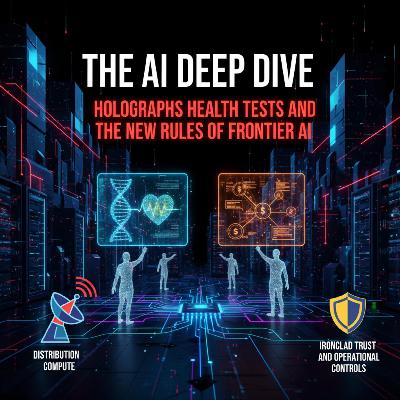
Frontier AI just leapt from demos to daily economics — money, models and medicine are moving at breakneck speed and marketers must rethink what wins. This episode synthesizes the week’s biggest moves: massive strategic capital (XAI’s $20B round and sovereign backers that tilt compute and distribution), a hardware arms race (multi‑gigawatt datacenters and Memphis facilities), and product leaps that push AI off the screen — Razer’s Project AVA holographic Grok companions, Gemini’s video‑to‑code transforms, and Sleep FM’s sleep‑based foundation model that predicts dozens of diseases from one night of data. We explain why Claude Skills and Cursor’s dynamic context discovery aren’t just technical tweaks but the cost architecture that makes agents practical (token efficiency + modular skill files = deployable automation), and why OpenAI’s science hiring plus GPT‑5 Pro’s rapid problem solving signals a new industry tradeoff between buying commodity intelligence and building proprietary capability. For marketing teams and AI strategists the takeaways are immediate: treat agent interfaces like product experiences (learn from game design), protect privacy and consent as first‑order business risks for ambient devices and health agents, and pivot content strategy from SEO to machine‑first formats that agents can reliably index and reuse. Practical next steps include auditing your data plumbing, prototyping one agent workflow with human checkpoints, and negotiating distribution and compute in any partnership — because in 2026 the winners will be the teams that pair cheap, fast intelligence with ironclad trust and operational controls.
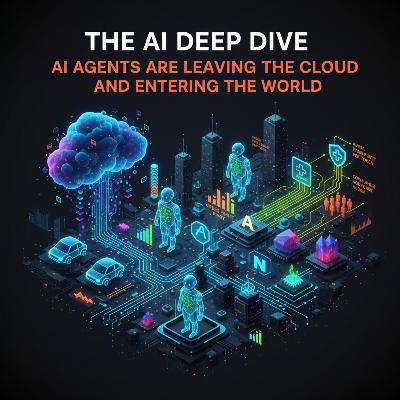
This episode slices through a blistering news cycle to track three seismic shifts: AI assistants have migrated from speakers to the web and every screen; reasoning AI is going physical with open‑source stacks for cars and robots; and consumer adoption in healthcare is already massive and quietly consequential. We unpack Amazon’s tactical pivot — Alexa.com and an agentic Alexa Plus with Expedia, Yelp and Uber integrations — and why that distribution advantage matters as rivals like OpenAI chase vision and commerce (hence the Pinterest chatter). Then we explain Nvidia’s Alpamayo and the “ChatGPT moment for physical AI”: chain‑of‑thought reasoning, open datasets, and auditable decision traces that lower the barrier to building autonomous vehicles and robots — and force regulators to rethink safety for open components. We cover the hardware and economics powering the shift: Vera Rubin chips promising ~10x cost cuts, AMD roadmaps that leapfrog performance, Meta’s Kernel Evolve automating hardware-specific tuning, and smaller smart models like Falcon H1R that beat much larger rivals. For marketers and founders the implications are immediate — agentic commerce, visual-first shopping experiences, and turnkey creative workflows (think Gen Store and nanobanana Pro) change go-to-market economics for solo sellers and brands. We also dig into the hidden story in healthcare: ~40 million daily ChatGPT health users, 5% of all prompts, 70% outside clinic hours and hundreds of thousands weekly from rural “hospital deserts,” pushing regulators toward new FDA pathways. Finally, we highlight what investors and builders must watch: gross profit per token (gppt) as the new valuation lever (0.71 correlation), risky CAPEX bets built on LOIs, and the regulatory tension between fast open innovation and public safety. Actionable takeaways for marketing pros: plan for agentic, multimodal experiences; prioritize efficiency over scale; and map regulatory exposure as a go‑to‑market risk.

Comments

Download from Google Play

Download from App Store
 United States