


 Claim Ownership
In Such A Time: Conversations on Jewish Life, Leadership & Meaning
Subscribed: 0Played: 0
Subscribe

© Rabbis Jonathan Jaffe and Leora Londy
Description
IN SUCH A TIME is a podcast from Temple Beth El of Northern Westchester, hosted by Rabbis Jonathan Jaffe and Leora Londy. Through candid conversations and thoughtful reflection, the rabbis explore what it means to live, lead, and seek meaning through a Jewish lens. From personal stories to pressing issues, each episode invites listeners into a timely dialogue about Jewish life — in such a time as this.
35 Episodes
Reverse
What if the most misunderstood—and seemingly bizarre—book of the Torah actually holds the key to living a meaningful, connected, and sacred life today? In this episode of In Such a Time, Rabbi Jonathan Jaffe and Rabbi Leora Londy journey through the often-overlooked Book of Leviticus, exploring everything from ancient rituals of purity, sacrifices, and illness to how those concepts inspire the way we build relationships, create holiness in our daily lives, and even structure our Friday night Shabbat tables.You’ll hear stories both harrowing and humorous, like how Rabbi Jonathan Jaffe gave a dvar Torah on purity with actual blood dripping down his face, and discover why the Torah’s teachings on illness and community were actually radical and compassionate for their time. The conversation turns thoughtful and provocative as the rabbis wrestle with changing societal boundaries, the meaning behind ancient laws, and how to bring the awe and intentionality of temple rituals into modern Jewish living.Don’t miss this deep dive that might just change how you see a part of our tradition most people skip over!Episode Overview:00:00 Welcome back; setting up the Book of Leviticus and its themes01:26 What is Vayikra? Early memories and stories from Tazria-Metzora02:06 The challenge of impurity and awkward Torah portions04:43 Bar/bat mitzvah struggles with Leviticus and finding relevance06:59 What Leviticus is really about: sacrifices, purity, and closeness09:57 Animal sacrifice as spiritual connection and replacement with prayer12:23 Ritual purity, the separation of life and death, and gender dynamics15:07 Illness, stigma, and how Leviticus advances ancient compassion19:02 Kohanim, communal responsibility, and the model of accountable leadership21:00 Sacrifice as community-building—like a biblical barbecue24:01 The visceral impact of ancient sacrifice versus modern prayer26:07 Shabbat dinner and structuring modern spiritual moments from Leviticus31:47 Boundaries in relationships and evolving perspectives on holiness33:37 Wrestling with Leviticus’ values in a contemporary context36:27 Leviticus as experiential education and Sinai re-enactment39:17 The chiastic structure—holiness at the Torah’s center41:02 Leviticus as constitution: striving for sacredness and being “all in”42:05 Inviting deeper study and wrapping up with resources and reflections
What if traveling to the U.S. from Israel meant sneaking across borders, hiding your Jewish identity, and relying on bus rides, taxis, and flights through countries that aren't always friendly to Jews? In this episode, Rabbi Benny Minich shares his extraordinary journey—literally and figuratively—from Crimea to Israel to the United States, peeling back the curtain on what it means to be Jewish, a rabbi, and a Reform movement leader today.Hosted by Rabbi Jonathan Jaffe, this episode dives into Benny’s personal story: escaping war zones, leading a reform community under fire (sometimes literally), and finding creative ways to keep his congregation connected when school is closed, flights are canceled, and air raid sirens send everyone to the bomb shelter. Benny unpacks the complexities of Israeli religious life, the unique challenges of building non-Orthodox community in Israel, and how his experiences in American synagogues changed his own vision of Jewish life. Against a backdrop of current headlines and conflict, this is a hopeful, inspiring conversation about resilience, innovation, and the global Jewish family.Timestamped Overview:00:00 Introduction and Benny’s dramatic journey to America04:00 Benny’s upbringing in Crimea and path to Israeli Reform rabbinate08:00 Russian-speaking Jews in Israel and Reform community growth12:00 Family realities: life during wartime, bomb shelters, closed schools19:00 Humor, community, and coping strategies in crisis23:00 The state of the Reform movement in Israel & political challenges31:00 Government, synagogue funding, and legal battles for recognition36:00 Lessons from American synagogues & reciprocal learning41:00 Pluralism, identity, and raising Jewish kids across borders45:00 What’s next: adventures in America, building bridges, and hope
What if the greatest threat to peace isn’t war—but silence?In this episode of "In Such a Time," Rabbis Jonathan Jaffe and Leora Londy record on Purim, glitter and all, confronting the deep anxieties and hopes stirred by the unfolding conflict with Iran, Israel’s precarious situation, and the emotional toll it takes on Jews worldwide.With rare honesty, the rabbis debate the difference between true peace and mere quiet, reveal why Israelis resonate with displays of power, and wrestle with the limits of diplomacy in a turbulent Middle East. They share personal reflections—both have family and roots in Israel—and touch on the very real risks for Jews everywhere when headlines flare. Along the way, themes of resilience, boundary-setting, and hope for a freer, safer Iran emerge, interwoven with timely Purim insights about power and survival.Plus, the episode doesn’t shy away from the internal struggles within Israel itself, drawing sharp parallels between religious extremism in Iran and restrictive trends at the Western Wall, leaving listeners with food for thought about Jewish identity, freedom, and what it really means to “love your country.”Episode Overview:[00:00] Welcome & Purim vibes[00:20] Opening up about the emotional toll of new conflict[01:12] The exhaustion and uncertainty of ongoing war[02:43] Navigating Jewish, Israeli, and Western perspectives on power[06:15] The realities of strength and maintaining boundaries in the Middle East[08:07] Inspiration from Iranian protestors & Purim’s message[09:00] The complicated nature of leadership and outcomes[10:40] Reflecting on diplomacy, consequences, and American foreign policy[13:07] The challenge of balancing idealism and reality[14:35] When optimism meets harsh realities—Jewish survival and trust[17:19] Facing critiques of Israel and the morality of war[18:07] The dehumanizing effects of modern warfare[20:28] Military service: cultural gaps between Israel and the West[22:18] Rethinking sacrifice, heroism, and generational shifts in Israel[25:18] Stories of young Israelis and changing models of military service[26:54] Hopes for a peaceful resolution and Iranian freedom[29:03] What’s at stake for Jews worldwide and the region[33:14] The Western Wall, religious extremism, and Jewish identity[35:41] Wrapping up with hope, humor, and a Purim sendoff
What if the villain of Purim, Haman, isn’t as evil as you thought—and Esther, the celebrated heroine, isn’t quite so perfect? Dive into a conversation that will challenge everything you think you know about the Book of Esther.In this episode of "In Such a Time," Rabbis Jonathan Jaffe and Leora Londy bring fresh eyes to the Purim story, exploring the complex motivations and personalities of its most famous figures. Together, they peel back layers of traditional interpretation, examine feminist perspectives on Vashti and Esther, and draw provocative modern parallels—from the MeToo movement to the ethical dilemmas of power and vulnerability in today’s society.Key highlights include:Reframing Vashti as a proto-MeToo figure standing up to harassmentThe gray morality of Esther, Haman, and Mordechai—are they really hero and villain?Why the commandment to blot out Amalek may be more about confronting our own inner darkness than an ancient enemyThe enduring struggle between Jewish identity in the diaspora and the land of Israel, and what Esther means for Jews todayThoughtful debate on how Purim’s story relates to modern day extremism, leadership, and personal transformationIf you’ve ever been curious about the deeper messages of Megillat Esther or the relevance of Purim in today’s world, this warm, lively episode will leave you with new insights and big questions.Episode Overview:00:00Introduction and why Esther’s story is more relevant (and tricky) than ever00:57Vashti, Esther, and feminist readings of Megillat Esther03:33Exploring gray areas: Are the good guys really that good?05:58The origins of the story—is Esther fiction or fact?07:43Amalek, morality, and revenge—ancient enemies and internal struggles12:09How the Book of Esther is being interpreted in today’s world17:10Rethinking Haman’s motivations—enemy or opportunist?26:45Esther in the diaspora vs. Israel—a tale still playing out today31:05Is Esther really a heroine? Character complexity and personal growth39:17Final takeaways: embracing complexity and wishing a meaningful PurimListen to rethink, reflect, and rediscover the Purim story you thought you knew!

What if we told you that one of Judaism's most joyous holidays is also its most misunderstood—and, for some, even the least favorite? Rabbi Jonathan Jaffe and Rabbi Leora Londy dive headfirst into the revelry, complexity, and deep meaning behind Purim. From festive street parties in Israel to the hidden existential lessons of the Book of Esther, this conversation explores why Purim is so much more than just costumes and cookies.You'll hear honest confessions about Purim preferences, a spirited debate about diaspora vs. Zionism, and powerful insights into how this holiday can empower and challenge us—no matter where we live. They tackle everything from the pressures of mishloach manot to the mystical importance of masks and the unexpected spiritual connections between Purim and Yom Kippur. Whether you love or dread Purim, this episode will change the way you see it.Timestamped Overview:00:00: Welcome & holiday setup00:25: The Purim debate—love vs. dislike01:16: Behind-the-scenes of Israeli Purim celebrations04:03: Purim parties, costumes, and foodie traditions05:47: Revelry and the psychological/spiritual timing of Purim07:55: The dual nature of Purim in Jerusalem09:05: Zionist and diaspora narratives in Purim11:04: Esther, hiddenness, and spiritual seeking14:41: Choosing empowerment in diaspora Jewish life15:34: The enigmatic "drink until you don't know" tradition16:38: Mysticism: costumes, masks, and revealing truth18:34: Discovering Jewish identity in and out of Israel20:04: Hiddenness, revelation, and preparation for freedom20:47: Code-switching, names, and forging identity22:35: Purim's relevance for Westchester and modern communities23:20: A critique of Purim as a "kids’ holiday"25:00: Celebrations, traditions, and the fish phenomenon26:09: Adult engagement and meaningful ritual29:06: The wisdom of the 5 Megillot and Purim’s message for adults31:47: The cycle of joy and sadness in Jewish life33:19: Randomness, lots, and embracing depth behind the celebration34:33: The Fast of Esther and connections to Yom Kippur36:26: Looking ahead: a deeper dive into the Book of EstherReady to discover the real Purim? Press play.

What if everything you’ve been told about fighting antisemitism isn’t just ineffective—but could actually fuel the problem? Rabbis Rabbi Jonathan Jaffe and Rabbi Leora Londy dive headfirst into the controversy sparked by a $15 million Super Bowl ad, dissecting whether public campaigns against antisemitism truly help—or just reinforce Jewish vulnerability.They unpack the critiques swirling around the ad’s messaging, and explore Bret Stephens’ provocative call for Jews to “stop fighting hatred” and instead invest in Jewish life and identity. Is Jewish resilience found in building bridges and institutions or simply by “leaning in” to authentic Jewish practice? The episode tackles the tension between withdrawal from public advocacy versus the risks of becoming insular, and asks whether Jewish identity should hinge on opposition to antisemitism or on positive, lived experiences.Listen as Rabbi Jonathan Jaffe and Rabbi Leora Londy share personal stories about raising children safely in America, discuss the ebb and flow of Jewish history—from Mount Sinai Hospital to Brandeis University—and debate the complexities of intermarriage and inclusion in today’s Jewish community. As they reflect on powerful moments with their teens, the hosts leave us with a message of hope: Maybe the most sacred work is neither fighting nor fleeing, but deepening relationships and living Jewish authenticity.Episode Overview by Timestamp:00:00: Welcome and introduction to the week's conversation00:19: Setting the stage: Super Bowl antisemitism ad and Bret Stephens’ speech01:01: Hosts’ reactions to the ad, and issues around “victimhood”04:34: Comfort, discomfort, and playing into antisemitism05:51: Martin Buber, self-understanding, and the futility of fighting hatred06:48: Is money spent fighting antisemitism wasted?08:47: The ebb and flow of Jewish history and communal strategies11:10: Teens’ response: less reactionary, more rooted Jewish identity13:13: College safety, guidance counselors, and Jewish identity after Oct 715:05: What are the actionable steps? Learning and investing in Judaism18:42: The risks of leaving the public arena19:46: What does it mean to be Jewish—identity vs. opposition20:39: Sustaining Jewish identity: holding onto values and knowledge22:28: The dilemma of inclusivity, standards, and intermarriage24:25: Real-life examples—the most Jewish kids sometimes come from intermarriage27:12: Personal stories: Is it worth explaining yourself to others?29:42: Is one conversation at a time the way the world works?33:27: Recap of the second, AI-generated rebuttal ad35:39: Diasporic Jew vs. Israeli Jew—narrative fatigue and what comes next37:38: The power of authentic relationships (Pardon The Interruption, community, allies)41:48: Final reflections & a hopeful call for deeper Jewish identity and connectionSubscribe, listen, and ask yourself: Should we redefine what it means to be Jewish—starting now?
What if the most transformative moments in Jewish prayer aren’t found in the words—but in the music you didn’t even know was shaping your spirit?In this revelatory episode of “In Such a Time,” Rabbis Jonathan Jaffe and Leora Londy pull back the curtain on their very different—but unexpectedly harmonious—musical journeys into the rabbinate. Whether you think you’re “not a music person,” grew up bored by synagogue choirs, or can’t imagine prayer without melody, this conversation exposes how the sounds and silence of Jewish life have quietly been shaping us all along.You’ll hear Rabbi Jonathan Jaffe reveal his musical roots in Hawaiian slack key guitar and rock bands, and why his childhood counted synagogue music as little more than “filler”—before a single encounter in San Francisco flipped everything he believed. Rabbi Leora Londy shares the hidden power of growing up with a cantor-mother, geeking out on the “sounds of the season,” and the shock of standing in an unfamiliar synagogue in Florence where her musical “Jewish GPS” stopped working.Highlights from this episode include:The hilarious and humbling stories (“I only learned bassoon for the grade!”) behind each rabbi’s path to spiritual songleadingUnpacking why Jewish prayer can feel stale or electrifying—and why feeling lost in the music might actually be a sacred momentThe tug-of-war between tradition and innovation: Should services be a familiar playlist or a boundary-pushing “concert”—and what happens when congregants push back?Powerful vignettes from transformative musical moments: women’s nigun circles, rain-soaked prayer gatherings, and kids who learn Shabbat tunes before they know what they mean.An invitation to listeners to reflect: What music moves you? And how alive could Jewish community feel if you let yourself sing (or dance!) along?Whether you’re a foot-tambourine-wielding Shabbat rocker or a reluctant participant on the back row, this episode will make you rethink the soundtrack of your Jewish soul.Episode Overview with Timestamps:00:00: Welcome, introduction & theme—why talk about music and prayer?00:32: Rabbi Leora Londy shares her musical upbringing & the deep role of Jewish liturgy at home05:48: Rabbi Jonathan Jaffe confesses his lack of early musical connection to synagogue—and why that matters07:52: A dive into Hawaiian and “slack key” guitar: how secular music influences Jewish life11:35: Turning from rock music to Jewish songleading—unexpected spiritual connections14:15: The aliveness of jazz, hip hop, and authentic, unscripted prayer17:08: How synagogue environment and music shape mood—subtle signals of community19:43: The balance between curation, creativity, and meeting congregants’ expectations22:19: The “sounds and smells of the season”—how music marks sacred time in Jewish life24:02: The shock and beauty of experiencing unfamiliar Jewish musical traditions25:21: Israel’s unique blend of pop and sacred song—how secular music echoes the sacred26:17: Discovering the power of communal singing in Jerusalem, summer camp, and bomb shelters30:29: Deep dives into women’s song circles and reclaiming forbidden melodies34:37: Making prayer less “performance,” more community: tools for bringing everyone into the experience36:36: Open questions to listeners: What are you open (or not open) to trying in prayer?37:13: Real-world recommendations for musical, inspiring services in Westchester, NYC and beyond39:01: The awkwardness (and necessity) of authenticity—what Jewish worship can learn from “Sister Act”-style churches42:07: Why nigunim (wordless melodies) matter, and stories that will move you to tears46:36: A rabbinic “band”—what happens when the clergy have as much fun as the kids48:34: Wrapping up with a beloved nigun—and an invitation to let melody shake your soulReady to rediscover how music stirs meaning, belonging, and surprise in Jewish life? Hit play.
What happens when the sacred act of protest collides with violence—and what does Judaism truly say about standing up, dissent, and crossing the line? This week’s episode of “In Such A Time” dives explosively into the turbulent debates around recent ICE protests in Minnesota, exploring not just policy and politics but the very essence of Jewish ethical responsibility in moments of national crisis.Rabbi Leora Londy and Rabbi Jonathan Jaffe take listeners on a passionate journey through the layered complexities of protest: When does protest become hooliganism? Is it ever justified to block law enforcement if you believe the law itself is unjust? As scenes of violence and heartbreak unfold on American streets, the rabbis wrestle openly with agreement, disagreement, and the dilemma of witnessing human suffering versus respecting the law. They challenge listeners to move beyond empty platitudes, question the purpose and consequences of collective action, and to reflect deeply on the micro- and macro-level effects protest has on society.Key highlights include:Personal and Jewish historical reflections on the necessity—and limits—of protest, including the example of Abraham’s challenge to God.The emotional and ethical impact of ICE enforcement and the way immigration sweeps have affected families and community.The danger of protest culture drifting into the performative or the cult-like, and the need for informed, purposeful activism.A raw debate about human rights, law enforcement, and the responsibilities of governments and citizens.Parallels between American protests and those in Israel, especially around policy, collective behavior, and heartbreaking losses from violence.A poignant closing as both rabbis grapple with their anxieties for democracy and offer prayers for peace, human dignity, and thoughtful civic engagement.Timestamped Episode Overview:00:00: Welcome and introduction to the topic of protest and ICE.01:21: Initial reflections on the health of protest in democracy and Jewish perspectives.03:27: Differentiating types of protest: nonviolent, hooliganism, blocking law enforcement.07:53: Wrestling with moral responsibilities when faced with injustice.12:03: The human side of immigration, due process, and compassion.18:25: Emotional distress, policy vs. humanity, how enforcement impacts families.23:29: Lively debate over political platitudes versus concrete policy solutions.31:37: Parallels with Israeli protests and tragic consequences of collective action.40:49: The psychology of protest movements, cult-like behaviors, and collective action.44:21: Personal responsibility, informed activism, and impacts of protest in society.49:56: Inspiring moments of global protest, hope, and calls for humane policy and peace.This episode is a must-listen for anyone grappling with the meaning of protest, the future of democracy, and the demands of conscience—revealing just how fraught and vital these conversations are in such a time.
What do kosher hot dogs, mummified chickens, and a mall food court have in common? In this surprisingly candid and humorous episode of "In Such a Time: Conversations on Jewish Life, Leadership and Meaning," hosts Rabbi Leora Londy and Rabbi Jonathan Jaffe dig deep into the intricacies—and idiosyncrasies—of kashrut, the Jewish dietary laws.From Kalua pig at Hawaiian bat mitzvahs to high-priced Passover pizzas at the American Dream Mall, they explore how keeping kosher shapes identity, creates community, and offers spiritual meaning, even amidst the chaos of modern life. Along the way, you'll hear about their personal journeys: why Rabbi Jonathan Jaffe draws the moral line at mammals, how Rabbi Leora Londy navigates diner omelets and chicken nuggets for her kids, and why the "cold dairy" salad might be the most Jewish lunch order of all.Their thoughtful conversation reveals why the rules of kashrut go far beyond food—they’re about humility, boundary, mindfulness, and authentic connection, whether you're buying groceries in Spring Valley, arguing for kosher kitchen standards at synagogue, or pondering why a Tel Aviv restaurant offers shrimp… on matzah.Key highlights include:The origins and evolving purpose of kashrut, from biblical times to the modern Reform movementHow keeping kosher connects Jews to their community, tradition, and everyday spiritualityEthical conundrums, arbitrary boundaries, and the challenges of kosher dining in Israel vs the diasporaJoyful and sometimes absurd stories from kosher supermarkets, food courts, and childhood science experimentsRecommendations for local kosher eateries and why the kosher scene is changing (spoiler: less sushi!)How kashrut teaches patience, humility, and the value of not always getting what you wantEpisode Overview[00:00:00] Welcome and intro to Jewish life, leadership, and meaning[00:00:20] Exploring kashrut: definitions, personal journeys, and ethical lines[00:05:07] What the Torah says (and doesn’t say) about kosher laws[00:08:08] How kashrut fosters Jewish identity and community[00:10:43] Reform Judaism’s evolving stance on “kitchen Judaism”[00:14:02] Supermarket stories, communal moments, and kosher pride[00:15:41] Mall food court sociology and kosher eating in public spaces[00:20:02] The reality of keeping kosher in Israel versus the diaspora[00:26:03] Arbitrary rules, cold dairy jargon, and childhood dietary dilemmas[00:29:11] Boundaries, humility, and teaching kids about kosher values[00:32:07] Connecting to ancestral diets, biblical vegetarianism, and mummified chickens[00:37:57] Favorite kosher restaurants, markets, and new trends in kosher dining[00:43:17] Wrap-up: kosher salt trivia and closing thoughtsFor anyone curious about what it truly means to keep kosher—or looking for some great foodie tips!—this episode is both enlightening and entertaining.
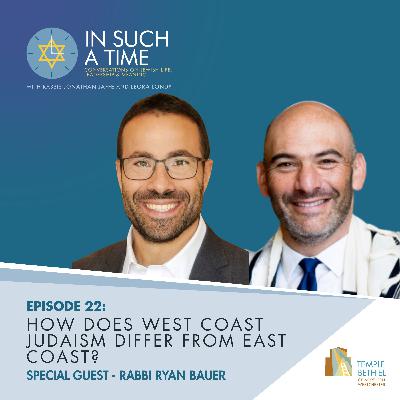
In this eye-opening episode of In Such a Time: Conversations on Jewish Life, Leadership and Meaning, Rabbi Jonathan Jaffe sits down with his longtime friend and colleague, Rabbi Ryan Bauer, Senior Rabbi of Temple Emanuel in San Francisco, to reveal the fascinating, sometimes hilarious, and truly surprising contrasts between Jewish community life on the East and West Coasts.Get ready for stories you won’t believe: from the wild logistics of booking B’Nai Mitzvahs years in advance (complete with Google Docs and “party wars”) to why brisket is king in New York while lox and bagels reign supreme in San Francisco—even at shivas. You’ll hear about the reality of serving a congregation that churns by 10-15% each year, the entrepreneurial spirit that makes San Francisco’s Jewish scene an incubator for innovation (and failure!), and the culture shock Rabbi Jonathan Jaffe faced moving to the New York suburbs—where parking and family networks rule the day.Key highlights include:The secret story behind Temple Emanuel’s $117 million renovation—why they didn’t add parking, and what they did instead.How demographic trends shape everything, from religious school logistics to what’s served at break-fast.Shocking differences in Jewish life: suburban “date wars” for B’Nai Mitzvahs, urban young adult surges, and the crisis of community in a city where no one stays in town forever.How East Coast Jews crave tradition and continuity, while West Coast Jews rewrite the book every week, often literally.The power and pitfalls of keeping your congregation innovative—and why sometimes, failure is the expectation.This episode is a must-listen for anyone curious about how place shapes Jewish identity, leadership, and ritual—or for anyone who has ever wondered why their synagogue serves so much babka or can’t find a parking spot on the High Holidays.Episode Overview:[00:00:00] Intro Announcer welcomes listeners and sets the stage.[00:00:20] Rabbi Jonathan Jaffe introduces Rabbi Ryan Bauer, recounting their shared history and careers.[00:01:07] Rabbi Ryan Bauer shares the background of Temple Emanuel and his Bay Area journey.[00:03:00] Both discuss their formative years in Jewish leadership and the Bay Area context.[00:05:47] Dissecting the challenge of leading megasynagogues versus quick cultural resets.[00:06:46] The Temple Emanuel renovation: $117M, Third Temple inspiration, and the deliberate absence of parking.[00:08:24] Creating community: shifting from rabbi-centric to people-centered design.[00:09:49] The drama of synagogue parking on the East Coast vs. San Francisco.[00:10:47] School zoning, “hamlet” drama, and B’Nai Mitzvah scheduling gymnastics.[00:12:49] Navigating churn and the struggle to form lasting community in a transient urban Jewish world.[00:14:35] Family networks and the challenge of building community in suburbs, “competition” for event dates, and differences in lifecycle celebrations.[00:17:04] Addressing food, family, and High Holiday attendance—matzo ball soup, lox, and brisket wars.[00:21:31] Age demographics and the lack of young adults in suburban synagogues.[00:22:05] The ongoing success of young adult programming at Emanuel and the impact of COVID shut-downs.[00:24:03] Comparing professions, entrepreneurism, and risk-taking in the two regions’ communities.[00:26:57] Why innovation—and even failure—is second nature in San Francisco Jewish life.[00:28:05] Wild wedding requests, different definitions of “traditional,” and final thoughts on East vs. West Coast Jewish culture.Tune in to laugh, learn, and have your assumptions about Jewish community turned upside down!

What if the morality of war wasn’t just debated in the halls of Congress, but had been dissected by Jewish scholars for centuries? This week’s episode of "In Such a Time: Conversations on Jewish Life, Leadership and Meaning" dives into one of the most dramatic news stories of the week—the U.S. raid to capture Venezuelan President Maduro—and confronts it with the wisdom of Jewish law.Join Rabbi Jonathan Jaffe and Rabbi Leora Londy as they untangle the ancient Jewish principles behind warfare, asking: Was this a defensive act, or a dangerous show of unchecked power? Is there a Jewish lens through which we can make sense of modern international conflicts?Key highlights include:The shocking parallels between Maimonides’ (Rambam's) categories of war—obligatory vs. discretionary—and America’s military actions abroad.Spirited debate about whether Jewish law is still relevant when looking at today’s wars, and why it sometimes feels so personal or so distant.Thoughtful discussion on moral responsibility and the risks of executive power, illustrated by historical comparisons to the Noriega arrest and the current state of democracy in Venezuela.A candid reflection on America’s role in the world: Are we the moral exemplar or simply another self-interested nation? And what happens to our character when leaders stop admitting fault?Touching moments where both rabbis wrestle with personal uncertainty, searching for clarity amidst chaos, and reflect on what it means to be American, Israeli, and Jewish in a turbulent era.If you’ve ever wondered how ancient texts can illuminate the ethical gray areas of today’s headlines—or if you’ve felt uneasy about the intersection of faith, politics, and war—this episode offers honest dialogue, historical context, and challenges listeners to think deeper.Timestamped Episode Overview[00:00:00] – Welcome and introduction byIntro Announcer[00:00:20] –Rabbi Jonathan Jaffeintroduces the topic: Jewish law and the U.S. raid on Venezuela[00:01:27] –Rabbi Leora Londyexplains Rambam’s two categories of war: obligatory vs. discretionary[00:02:19] – Defining the purposes and structure of warfare in Jewish tradition[00:03:07] – Who holds authority in Jewish law: king, Sanhedrin, Urim and Tumim[00:03:55] – Framing the Venezuela raid: Does Jewish law apply? Comparing obligatory and discretionary war[00:06:49] – Debating immediate vs. elective military actions; parallels to Noriega’s arrest[00:13:21] – Concerns about executive power, democracy, and moral boundaries[00:21:04] – Why ancient halacha feels personal in Israel but distant in America[00:25:47] – America’s self-perception as a moral beacon and its changing role in the world[00:30:02] – Contrasting ideologies: rationalism vs. idealism; the need for a moral compass[00:33:06] – The struggle for accountability and responsibility among nations and leaders[00:34:53] – Waging war ethically: the necessity of humility and self-examination[00:37:13] – Democracy vs. dictatorship: Reflections on Venezuela, Israel, and world leadership[00:38:37] – Closing thoughts and call to subscribeDon’t miss this episode—where timeless Jewish wisdom meets the unpredictability of current events.
What if your most meaningful connection to your loved ones—after they’re gone—comes from how you choose to mourn, not what you do for them? This week’s episode of In Such a Time asks: Who is Shiva really for, and what happens when centuries-old Jewish burial traditions face modern challenges like cremation and composting?Join Rabbi Leora Londy and Rabbi Jonathan Jaffe for a deeply thoughtful—and sometimes unexpected—conversation on Jewish rituals surrounding death, the afterlife, and mourning. From the sometimes misunderstood observance of Shiva to the dilemmas posed by new trends like green burials and body composting, our rabbis pull back the curtain on the complex layers of Jewish tradition, personal choice, and communal responsibility.Key highlights include:The origins and real purpose of Shiva, including heartfelt advice for mourners: “Shiva is for you, not for your loved one.”Honest, often personal reflections on cremation, including its conflict with Jewish law, traumatic historical memory, and practical realities—and why rabbis struggle with their role.A candid look at composting and other eco-friendly burial options—are these spiritual, practical, or just disruptive to centuries of Jewish practice?The hidden beauty of Jewish cemeteries: how physical spaces and shared rituals connect generations and keep memory alive.Why making clear funeral and burial arrangements might be one of the greatest gifts you can leave for those you love.Touching stories—from Israeli cemeteries to family legacy—and conversations about how remembering the dead shapes the lives of the living.Whether you’re wrestling with end-of-life choices, supporting someone grieving, or questioning how tradition fits in a changing world, this episode delivers honest wisdom, fascinating history, and practical insight—with warmth and a sense of humor.Episode Overview with Timestamps:[00:00:00] Introduction: Framing Jewish leadership and meaning in times of loss.[00:00:30] Common questions about Shiva and “how long is seven, Rabbi?”[00:01:10] The true roots and observance of Shiva—and how it’s often misunderstood or transformed into dinner parties.[00:02:20] Anxiety around hosting Shiva and the importance of letting mourners mourn.[00:03:10] Balancing tradition and meeting people where they’re at—providing halakhic guides and honoring personal choice.[00:04:43] Discussion: Social aspects of Shiva and its evolving forms across regions.[00:06:15] Shiva: For mourners, not the deceased.[00:08:00] Different regional cultural expectations for Shiva.[00:09:25] Cremation: Personal stories, theological and historical dilemmas (Holocaust memory, ecological concerns).[00:14:22] Jewish view of the body’s holiness and why physical burial matters—including anecdotes from Israel and experience with non-traditional burials.[00:21:12] The spiritual and psychological importance of laying bodies to rest.[00:23:30] The rise of composting/green burial: What’s Jewish? What’s not?[00:24:22] The unique meaning and connections created by family cemeteries, legacy, and memorialization.[00:29:37] Russian-Jewish headstones: how burial traditions reflect cultural adaptation.[00:31:18] Hawaii’s ocean burials—and what it reveals about community, place, and memory.[00:33:00] What rabbis can (and can’t) bless in terms of burial—and why tradition continues to matter.[00:34:30] Medieval midrash: Remembering the dead as healing for the living.[00:37:03] Final advice: Why preparing clear burial wishes is a gift to your loved ones.[00:39:21] Closing: How Jewish tradition supports mourners and the enduring power of legacy.Ready to uncover what Jewish tradition really says about death—and what it means for the living? Listen now.
What if Judaism doesn’t have a clear doctrine about the afterlife?In this eye-opening, two-part episode of "In Such a Time," Rabbi Jonathan Jaffe and Rabbi Leora Londy unravel one of the most avoided—and misunderstood—topics in Jewish life: death, grief, and what comes “next.” From candid childhood questions to the complexities of funerals in Israel, the hosts dive deep into how Jews talk (or don’t talk) about death, and why our discomfort might reveal more than our beliefs.Key highlights include:The shock of how little the Torah directly says about the afterlife, in contrast to other religionsRabbi Jonathan Jaffe breaking down four main Jewish "lanes" of belief surrounding death—from physical resurrection to the impact of legacyRabbi Leora Londy sharing poignant stories of children processing loss, and the transformative role of the chevra kadisha (burial society)A frank discussion on the differences between Israeli and American funerals, and how culture and superstition shape ritualHonest confession from both rabbis about what they actually believe, why certainty isn’t necessary, and how Jewish ritual helps everyone—doubters and believers alike—find meaning and comfortPowerful guidance on grief, remembrance, and why funerals might be the most life-affirming Jewish event of allIf you think death is a subject left for whispers and dark corners, this episode will surprise you. Prepare for stories that break open taboos, challenge easy answers, and equip you for the moments that matter most.Timestamped Overview:00:00 –Intro Announcersets the stage for a frank conversation on Jewish life, leadership, and meaning00:20 –Rabbi Jonathan Jaffeintroduces the theme: Jewish beliefs about death and the afterlife, sparked by a congregant’s experience at a Christian funeral01:36 –Rabbi Leora Londydiscusses why Jews avoid talking about death and how childhood questions unlock the topic03:25 – The role of children at funerals and how Jewish burial practices confront the reality of death05:01 – Cultural contrasts between American and Israeli funerals and the existential weight of remembrance in Israel07:16 –Rabbi Jonathan Jaffeoutlines four central Jewish perspectives on the afterlife—physical resurrection, spiritual afterlife, return to the divine, and legacy through memory12:46 –Rabbi Leora LondyRabbi Jonathan Jaffeandget personal about their own beliefs and the comfort (and discomfort) around religious “certainty”17:15 – Why funerals are life-affirming, and what Jews really remember about their loved ones29:39 – The emotional toll of officiating and mourning, and how Jewish ritual provides structure to weather grief35:50 – Yearly rituals, Yizkor, and how communities continually support mourners38:56 – The power of commemorating death days (Yahrzeit), tying together loss and new beginnings39:53 – What’s next: A preview of part two with practical questions around Jewish mourning and the afterlifeThis episode is packed with insights, vulnerability, and guidance for anyone grappling with questions of mortality—Jewish or not.
What if being publicly Jewish came with new dangers—even in places you’ve always felt safe? In this riveting episode of "In Such a Time," Rabbis Jonathan Jaffe and Leora Londy confront the unsettling reality facing Jewish communities after a horrific attack at Bondi Beach in Australia, which has sent shockwaves throughout the Diaspora. Together, they grapple with what this tragedy means for Jewish identity, communal gatherings, and the very notion of safety in Jewish spaces both in America and abroad.Listeners will be drawn into a deep and raw discussion about fear, resilience, and anger. Rabbi Leora Londy shares the heartbreak of responding to her child’s worries and reflects on the tension between pride and self-preservation. Rabbi Jonathan Jaffe, wrestling with frustration, questions whether Jews will ever again gather freely outdoors, and challenges the community’s growing acceptance of security restrictions as a new normal.The episode also takes an honest look at how American Jews perceive Israel—debunking alarmist caricatures and exploring why its reality often differs so greatly from the images projected abroad. The rabbis dive into historic responses to persecution, examine the complex interplay between Diaspora and Israeli Jewish life, and fiercely defend the importance of living Jewishly with pride and substance, not just in reaction to hatred.Throughout, listeners will hear the rabbis reflect on mourning, heroism, the major schisms in Jewish history, and the new anxieties shaping conversations about aliyah, travel, and the future of Jewish safety. Finally, the episode closes on a note of hope—seeing Jewish strength shine, even as communities everywhere light Hanukkah candles under challenging circumstances.Episode Overview:[00:00:00] Introduction and dedication to victims of Bondi Beach attack[00:01:22] Processing the tragedy: Emotional responses, conversations with children, and the fear of not being fully safe[00:03:39] Anger, leadership failures, and questions about the future of public Jewish gatherings[00:05:38] The ongoing dialogue about anti-Semitism, Jewish identity, and how the world’s hate often targets Jews first[00:07:54] Reflecting on security in Diaspora communities and the shift from openness to restriction[00:13:39] Lessons from Jewish history: Resilience, authenticity, martyrdom vs. self-preservation[00:21:05] American Jewish perceptions of Israel and addressing myths vs. reality[00:27:20] The miracle and challenges of Israel, Diaspora connections, and the power of multicultural Jewish life[00:38:28] Closing: Safety in Israel vs. Diaspora, evaluating risks, and the evolving dream of Zionism[00:42:19] Outro and ways to connect with the rabbis and Temple Bethel episode is a must-listen for anyone thinking deeply about Jewish identity, community safety, and the choices facing Jews today.
What if everything you thought you knew about Hanukkah was wrong? In this episode of "In Such a Time," Rabbis Rabbi Jonathan Jaffe and Rabbi Leora Londy unravel the true story behind the Festival of Lights—revealing its messy origins, historical surprises, and the wild ways its meaning keeps evolving. Is Hanukkah really about fighting oppression… or is there much more below the surface? You’ll hear the rabbis candidly discuss childhood memories, Israeli traditions, the role of food (think sufganiyot and homemade beeswax candles), and why the holiday's symbolism differs so sharply between America and Israel.Key highlights include:The surprising roots of Hanukkah: Why the Maccabees’ story isn’t in the Bible—and why their zealotry may shock modern listeners.Hanukkah’s dual identity: How Zionist, secular, and religious communities reinterpret the holiday to suit their values.The tension between assimilation and tradition: How American Jews have transformed Hanukkah into a holiday of inclusion, and what that means for Jewish identity today.Personal anecdotes: From New York winter darkness to Israeli honey-sweet celebrations, and the powerful memory of lighting a Hanukkiah made from bullet casings in a military town.Honest conversations about changing rituals, the influence of Christmas, and what the next generation of Hanukkah might look like.With wit, warmth, and deep historical insight, this episode is both a celebration and a challenge: How do Jews stay rooted in tradition without losing relevance—or their distinctiveness—in a changing world? If you’re looking to deepen your understanding of Hanukkah and reflect on what “Jewish continuity” really means, this discussion is for you.Episode Overview:[00:00:00] Introduction & Podcast Welcome[00:00:21] Hanukkah Childhood Memories and Family Traditions[00:01:28] Hanukkah in Israel: Sufganiyot, Candle Lighting, and Community Celebrations[00:02:57] Hanukkah as a Zionist Holiday & Massive Lego Hanukkiah[00:03:49] Hanukkah in New York vs. Hawaii: Seasonal Contrasts[00:05:36] Hanukkah’s Home-Based Traditions & Changing Rituals[00:07:03] The Real Story Behind Hanukkah: Civil War, Disorganized Religion, and Changing Narratives[00:08:12] The Hasmonean Ruins & The Drive for Jewish Continuity[00:10:37] Rededication, Sukkot Connection, and the Miracle Narrative[00:13:25] The Maccabees: Zealotry vs. Modern Reinterpretation[00:15:20] Hanukkah in the U.S.: Diversity, Inclusion, and Christmas Influence[00:16:12] The Maccabees as Enforcers? A Modern Comparison[00:17:08] Religious vs. Secular Observance: Miracle or Resilience[00:18:00] The Miracle of Light: Faith, Ritual, and Meaning[00:20:03] Hanukkah and Jewish Survival: Assimilation & Persistence[00:22:20] Tradition vs. Change: How Hanukkah Has Evolved[00:23:41] Ranking Jewish Holidays and Hanukkah’s Changing Status[00:24:55] How Shifting Priorities Shape Jewish Observance[00:26:30] The Next Generation: Hanukkah’s Bittersweet Future[00:29:33] History Moves in Cycles: Rediscovering Hanukkah’s Deeper Meaning[00:30:24] The Importance of Keeping Judaism Jewish[00:34:08] Hanukkiot of Bullet Casings: Military Memory and Jewish Identity[00:36:04] The Responsibility & Symbolism of Israeli Militarism[00:37:00] Closing Reflections and a Wish for a Joyful, Meaningful HanukkahTune in and discover the Hanukkah you never knew—and may never see the same way again.
What happens when synagogue affiliation is no longer defined by denominational labels like Reform, Conservative, or Orthodox—but instead, by politics and stances on Israel?In this eye-opening episode of Lou Diamond: In Such a Time (“Episode 16”), co-hosts Rabbi Jonathan Jaffe and Rabbi Leora Londy dive deep into the shifting landscape of American Jewish life. The conversation shatters assumptions about how Jews identify today, revealing that denominational boundaries may be fading while politics—especially relating to Israel—ramp up as the decisive factor in community engagement.You’ll learn about:The historical roots of Jewish denominations and why the original purpose behind them may no longer resonate.The personal journeys of Rabbi Leora Londy and Rabbi Jonathan Jaffe, who share how growing up across multiple Jewish movements shaped their perspectives and spiritual fluidity.How synagogue membership and Jewish organization participation are being increasingly determined by political views, particularly regarding Zionism and Israel—and the risks of turning Jewish communities into political islands.Insider stories about rabbis, educational choices, and what happens when congregants challenge a synagogue’s stance on Israel.The tension between the desire for inclusive, meaningful spiritual communities and the pressure to pick sides on hot-button issues.The big question: As individualism and politics reshape Jewish engagement, what does the future hold for denominational labels, communal boundaries, and the essence of Jewish identity?Whether you’re a curious seeker, committed member, or just passionate about the evolving story of Jewish life, this conversation will spark reflection and debate. Are we at the threshold of a “wilderness moment” where communal norms are up for reinvention—or are we risking fragmentation beyond repair?Timestamped Episode Overview:[00:00:00] Welcome and episode intro: redefining Jewish affiliation[00:00:22] History of Jewish denominations[00:01:58] The evolution of Reform, Conservative, and Orthodox movements[00:03:15] Personal experiences of movement fluidity[00:05:45] Blending of denominational practices in modern synagogues[00:09:26] Gender perspectives and synagogue inclusion[00:13:31] Navigating Jewish spaces—where do rabbis go to pray?[00:19:16] The rise of politics as the organizing principle in Jewish life[00:23:05] Polarization over Israel and Zionism: personal stories and concerns[00:32:04] Balancing community inclusivity with core synagogue values[00:36:35] Should politics take center stage in the synagogue?[00:41:04] Responding to antisemitism and its impact on Jewish identity[00:41:54] The future: movements, organizations, individualism, and spiritual belonging[00:44:40] Closing reflections and gratitudeDon’t miss this provocative episode—subscribe and join the conversation as Judaism faces one of its most defining crossroads.
What if your rabbi’s outfit had more to do with your spiritual experience than you ever imagined? In this eye-opening episode of In Such a Time: Conversations on Jewish Life, Leadership and Meaning, Rabbis Jonathan Jaffe and Leora Landi dive deep into the controversial world of fashion, physical presentation, and the unique scrutiny faced by rabbis—especially women—in Jewish communities.You’ll be shocked by the stories shared, from being asked to “turn into a man” for ceremonies in Israel to being gifted shoes by congregants in the U.S., all revealing just how much clergy are judged by how they look, and how these judgments intersect with power, gender, and leadership. Rabbi Landi opens up about the internal and external pressures faced around style, body image, and what it means to “look” like a rabbi, while Rabbi Jaffe explores the low expectations men benefit from and what happens when these stereotypes get perpetuated—even by bobbleheads!The conversation isn’t just about clothes: it’s about identity, boundaries, values, and how congregational norms shape everything—even which career doors open for female and LGBTQ rabbis. From the theological meaning behind priestly garments in the Torah to the real-life negotiations rabbis must make between authenticity and relatability, this episode will make you rethink what you see (and don’t see) at the pulpit.Whether it’s deciding what to wear for the High Holidays, figuring out the messaging behind headbands and kipot, or considering the subtle double standards for women in leadership, Rabbis Jaffe and Landi bring humor, vulnerability, and gripping honesty to a taboo topic. If you’ve ever wondered how much appearance matters in sacred spaces—or how to respectfully address your clergy—this is the episode you can’t miss.Episode Highlights & Timestamped Overview:[00:00:00] Intro: What rabbis look like and why congregations care[00:01:17] Rabbi Landi’s Israel stories: Being asked to find a man for ceremonies[00:02:45] Challenges for women in leadership; rabbinic fashion scrutiny[00:04:17] Real congregant interactions: Unexpected comments and gifts[00:05:10] Bobbleheads & Rabbi stereotypes: The “old man” caricature[00:06:09] Clothing, identity & Torah: Meaning behind priestly garments[00:10:16] Formality, approachability, and synagogue culture shift[00:11:01] Robes, tallit, and the pressures of female clergy presentation[00:12:11] Gender roles, dress codes, and contradictory feelings[00:13:05] Head coverings as a statement: Politics, identity, and fashion[00:17:07] Synagogue “norms”; double standards for female clergy[00:19:02] Navigating rabbinic identity in Israel vs. the U.S.[00:23:29] The “whole package” dilemma for female rabbis[00:26:05] Authenticity and relatability: Sharing personal life on the bima[00:32:10] Dress & awe: Creating sacred moments vs. showing up “as you are”[00:34:46] Gendered interactions: Congregant stories about body boundaries[00:38:41] Practical advice for respectfully addressing female clergy[00:41:14] Social media, taboo, and owning rabbinic styleDownload, listen, and join the conversation on Jewish leadership, identity, and what’s truly “appropriate” on the bima.
What happens when two rabbis admit they don't really like Thanksgiving—and one confesses he grew up celebrating Christmas with a tree and milk for Santa? In this eye-opening episode of “In Such a Time: Conversations on Jewish Life, Leadership and Meaning,” Rabbi Jonathan Jaffe and Rabbi Leora Londy get candid about navigating non-Jewish holidays as Jewish Americans. Get ready for surprising personal stories, moments of humor, and the tough questions faced by modern Jewish families as they balance tradition, assimilation, and the lure (or loathing) of turkey and tinsel.From volunteering at homeless shelters in lieu of turkey dinner, to longing for forbidden Halloween costumes, to the boundaries (and blurry lines) around Christmas trees, this week’s conversation is a heartfelt exploration of what it means to observe—or opt out of—American holidays through a Jewish lens. The hosts dissect where they draw the line between participating in broader cultural moments and holding fast to religious identity, sharing their own family compromises (think: Tofurky and Shabbat trick-or-treating) and how those decisions impact their children.Key Highlights:Rabbi Jonathan Jaffe’s confessions about celebrating both Hanukkah and Christmas as a child—and his take on why Thanksgiving food really isn’t that great.Rabbi Leora Londy’s reflections on volunteering during Thanksgiving and the tension of assimilating while protecting Jewish particularism.Honest dialogue about the "slippery slope" of participating in non-Jewish holidays and the challenge of setting (and justifying) family boundaries.The fascinating story of Russian-Jewish New Year tree traditions (“Novigod”) in Israel, and the reasons we cling to childhood rituals.Advice for navigating questions from congregants about celebrating Christmas, plus a bit of classic Jewish parental guilt for good measure.This episode will challenge your assumptions, make you laugh, and inspire you to think about your own family’s practices in a whole new way.Timestamped Overview:00:00:00 – Intro Announcer sets the stage for this week’s discussion on Jewish life and non-Jewish holidays.00:00:20 –Rabbi Jonathan Jaffe and Rabbi Leora Londy compare their vastly different upbringings around Thanksgiving and other “American” holidays.00:03:43 – The rabbis explore what it’s like to grow up NOT celebrating Halloween or Christmas, and how interfaith work shaped Rabbi Leora Londy’s exposure to other traditions.00:04:42 –Rabbi Jonathan Jaffe shares why he’s never loved Thanksgiving and offers a culinary hot take.00:06:00 – The emotional significance of celebrating Thanksgiving as an immigrant in Israel.00:09:29 – Where do families draw the line? Strategies for handling Thanksgiving, Halloween, and Christmas as Jewish parents.00:13:18 – The complexity of Jewish families celebrating Christmas and Hanukkah together, and the contradictions therein.00:18:48 – The discomfort with blurring boundaries between holidays, “Hanukkah bushes,” and Christian universalism.00:22:11 – How Halloween serves as a test case for American Jewish communities and their boundaries.00:26:44 – The surprise of Novigod “Christmas trees” in Israel and the power of cherished childhood traditions.00:35:02 – Advice for families: How to fill the void with Jewish joy, not just holiday “fixes.”00:38:29 – Outro and resources for further engagement.Whether you cherish your Thanksgiving feast or wonder how to talk to your kids about Christmas lights, this episode offers authentic, thoughtful, and sometimes hilarious insight into Jewish life today.
What happens when a New York election upends Jewish unity and safety—and a wave of hope collides with centuries-old fears?This electrifying episode of In Such a Time dives deep into the shockwaves reverberating through New York’s Jewish community after Momdani’s mayoral victory. Hosts Rabbi Jonathan Jaffe and Rabbi Leora Londy tackle the complicated fallout, exploring why so many Jews—especially younger, non-Orthodox voters—prioritized values like diversity, economic justice, and inclusion over traditional concerns about Israel and antisemitism.Listeners will be captivated by brutally honest reflections: Why did core Jewish values shift so drastically for a new generation? Is Jewish physical and emotional safety being overlooked in pursuit of broader social ideals? Rabbi Jonathan Jaffe shares candid worries about the privilege of invisibility and the chilling reality for outwardly Jewish New Yorkers, while Rabbi Leora Londy weighs the painful trade-offs between self-interest, women’s safety, and collective Jewish responsibility.Together, the rabbis wrestle with the rise of anti-Zionism, the power of hope, and how flawed media narratives shape Jewish identity and voting patterns. They confront the tension between healing fractured communities and challenging dangerous rhetoric, never shying away from tough questions about assimilation, generational divides, and what it truly means to be a Jew—in New York and beyond.At heart, this episode is a wake-up call: How will Jewish leaders re-engage a community redefined by skepticism, idealism, and unease? Will new hope bring cohesion, or is deeper fracture inevitable?Timestamped Highlights Overview:[00:00:00] – Intro to Jewish Life, Leadership, and current questions facing the community[00:00:29] – Framing the impact of Momdani’s election & generational shifts in Jewish identity[00:02:38] –Rabbi Leora Londyon the erosion of Jewish unity and instilling new values[00:04:26] – Are Jewish safety and cohesion being neglected? Alarm over political rhetoric[00:05:21] – Why young Jews view Israel as less central, even negative; sympathy vs. critique[00:07:17] – The tension between privilege and public Jewish vulnerability[00:08:13] – Fear, hope, and the chilling question: Are New York Jews safe in 2025?[00:11:14] – Voting as Jews, women, and parents: the painful calculus between competing values[00:17:33] – Unpacking Mamdani’s worldview: anti-Zionism, scapegoating, and media influence[00:20:43] – Why young Jews mistrust Israel and how social media warps reality[00:24:50] – The seduction of hopeful narratives and their dark side—rewriting history and risk[00:26:10] – Islamophobia and antisemitism: drawing boundaries, challenging false equivalence[00:31:15] – The privileged pains of New York youth: entitlement, expectation, and disappointment[00:37:02] – Empathy for young voters—real struggles behind the hope[00:39:25] – Jewish leaders’ dilemma: opposition, collaboration, or listening to new voices[00:41:00] – Parenting, education, and reclaiming Jewish identity in a fractured moment[00:44:20] – Hanukkah vs. Purim antisemitism: assimilation’s dangerous cost[00:47:37] – Closing wisdom: The privilege and power of joyful Jewish identityTune in for a riveting, no-holds-barred conversation that challenges, inspires, and demands reflection from Jews—and all New Yorkers—living in such a time.
What if the most celebrated Jewish rite of passage—the B’Nai Mitzvah—has unintentionally become a barrier to lifelong Jewish engagement, rather than the gateway it was meant to be?In this eye-opening episode of “In Such a Time Conversations on Jewish Life, Leadership and Meaning,” hosts Rabbi Jonathan Jaffe and Rabbi Leora Londy pull back the curtain on the history, complexities, and personal realities behind the B’Nai Mitzvah, revealing how decades of synagogue decisions have shaped this ritual—from meaningful spiritual transformation to occasionally rote memorization and lavish celebrations.The rabbis candidly share their own B’Nai Mitzvah experiences, highlighting moments of genuine connection—and missed opportunities. They unpack how American synagogue structures evolved to center the B’Nai Mitzvah as the “diploma event” of Jewish life, sometimes at the cost of deeper Jewish education and continuity. Hear their passionate conversation about the pitfalls of conflating Hebrew chanting with Jewish literacy, the impact of outsized parties, and the critical importance of authentic family Jewish practice.Key highlights include: why post-mitzvah engagement matters more than ever, bold questions about the rites and rituals (should we even keep the Haftarah?), and refreshing, practical ideas for parents and communities who want to make Jewish milestones truly meaningful. This episode will challenge you to rethink not only what a B’Nai Mitzvah means—but what it could become.Episode Overview & Timestamps:00:00:00 – 00:04:33: Personal B’Nai Mitzvah memories fromRabbi Leora LondyandRabbi Jonathan Jaffe: the process, communal involvement, and “cramming” for the big day.00:04:34 – 00:08:02: The emotional aftermath, sense of responsibility, and what it means to be counted as part of a minyan.00:08:03 – 00:12:48: The American synagogue’s transformation: How B’Nai Mitzvah became the centerpiece, fueling membership and financial support, and the dangers of equating preparation with genuine education.00:12:51 – 00:17:19: Challenges for continuity: Are we setting kids up for Jewish adulthood, or just for relief when it’s “over”? Thoughts on practical knowledge versus ritual memorization.00:17:20 – 00:28:30: What are the right outcomes? The synagogue’s efforts to foster lasting connection, working with teens, and the importance of community bonds.00:28:31 – 00:33:11: Rethinking curriculum: Real-world Jewish learning, experiential education, and the debate about keeping tradition vs. adapting old rituals.00:33:12 – 00:41:39: The family’s role: Can synagogues make kids Jewish without Jewish homes? Comparative insights from Israel and innovative ideas for deeper spiritual preparation.00:41:40 – 00:47:39: The party paradox: The rise of extravagant celebrations vs. authentic, values-driven alternatives, especially in the wake of COVID restrictions.00:47:40 – 00:53:04: Final reflections: Why lasting identity comes from real involvement, not just ceremonies; passing on Jewish legacy in a way that truly endures.Whether you’re a parent, educator, or lifelong learner, this episode will inspire you to ask the big questions about what Jewish tradition means today—and what it could mean tomorrow.

Comments

Download from Google Play

Download from App Store
 United States