


 Claim Ownership
HR Voices
Subscribed: 1Played: 0
Subscribe

© Rebecca Taylor
Description
Bold insights and real talk from top HR leaders shaping the future of work. Each episode delivers real stories and actionable strategies to build thriving, compliant workplace cultures that prioritize employee well-being in a rapidly evolving world.
HR Voices is brought to you by All Voices, the platform that cuts hours of manual HR work with step-by-step workflows and AI to assist with investigations, performance improvement, accommodations, leave requests, and more so you can get back to the human side of HR.
Learn more at https://allvoices.co
HR Voices is brought to you by All Voices, the platform that cuts hours of manual HR work with step-by-step workflows and AI to assist with investigations, performance improvement, accommodations, leave requests, and more so you can get back to the human side of HR.
Learn more at https://allvoices.co
60 Episodes
Reverse
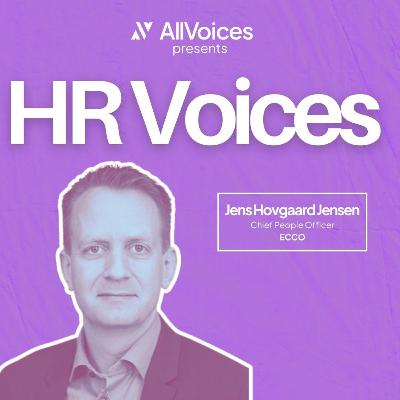
SummaryWhat should HR do when a former employee posts about culture after signing a settlement with a non-disparagement clause—sue, ignore, or investigate? Jens H Jensen, Vice President of People & Culture at Echo Americas, brings a global HR lens to a real-world “social media retaliation” scenario (Sue v. Bevins). He breaks down why “being right” legally can still be wrong for brand and business, how jurisdiction and remote work complicate action, and why leaders must model disciplined scenario planning over impulse. Jens outlines a pragmatic way to weigh reach vs. the Streisand effect, legal odds vs. opportunity cost, and individual allegations vs. systemic culture signals. He also details decision ownership (CEO–CFO–CHRO), when posts cross the line (e.g., naming individuals), and the limits of documentation in an era of AI transcripts and ubiquitous recordings. Expect a decision framework you can use tomorrow: assess risks, assign value, define thresholds, and ask better questions before you act.Timestamps[00:45] – The case setup: settlement, social post, and alleged retaliation[01:44] – First principles: global lens, legal realities, and the Streisand effect[04:19] – When to act: reach, amplification risk, and defining “disparagement”[05:29] – Jurisdiction matters: remote employees, free speech, and visa-era scrutiny[07:52] – Scenario planning: winning, losing—and why outcomes aren’t binary[11:11] – Separate issues: the post vs. the underlying culture/discrimination claims[12:49] – Thresholds for response: named individuals, brand protection, and “pig wrestling”[19:53] – Weighing pressures: legal fees, opportunity cost, employer brand[22:44] – Decision ownership: CEO–CFO–CHRO alignment and owner/customer optics[26:51] – Documentation realities: AI recordings, note hygiene, and risk tradeoffs[30:18] – Leader advice: ask better questions; synthesize org views before choosingTakeaways- Quantify scenarios before acting—model win/lose outcomes, amplification risk, and opportunity cost of pulling teams into litigation.- Check jurisdiction early—remote/former employee location can change what’s enforceable and advisable.- Separate the social post from the underlying claims—triage credibility, patterns, and whether an internal investigation is warranted.- Define thresholds for response—act when posts name individuals or materially harm brand; avoid fueling the Streisand effect otherwise.- Align decision ownership—use the CEO–CFO–CHRO (and owners where relevant) to balance legal risk, optics, cost, and strategy.- Tighten documentation hygiene—capture key performance and exit data, while recognizing AI/recording realities can both help and heighten risk.SponsorAllVoices brings all your employee relations work together in one place. No more jumping between spreadsheets, emails, and legacy systems just one place to document and manage reports, cases, investigations, and performance conversations. It helps you run a more consistent process, takes busywork off your plate with AI, and makes it easier to spot trends early, so you can work proactively, not just put out fires.See a demo at https://www.allvoices.co/
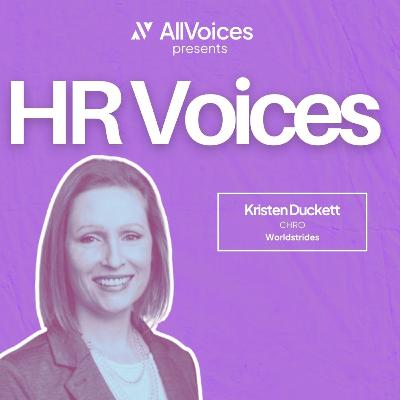
SummaryWhat happens when an AI hiring tool is accused of discrimination—and your brand, hiring engine, and employee trust are all on the line? In this episode, Rebecca Taylor sits down with Kristen Duckett, Chief Human Resources Officer at WorldStrides, to dissect the Mobley v. Workday case and what it means for HR leaders using AI in talent selection. With a background in executive recruiting and hands-on experience leading an AI steering committee, Kristen details how to build real governance—not just policies on paper. She explains automation bias and why explainability features matter, how to audit outcomes without stifling innovation, and who to involve (CHRO, Legal, CIO, Product) at each step. You’ll hear how to message internally and externally when the pressure is high, why HR must investigate before defending, and practical ways to pause high-risk AI features while keeping hiring moving.Timestamps[00:45] – New format: Real-life employee relations scenarios and why specifics matter[02:21] – The Mobley v. Workday case: AI bias claims and employer liability[03:02] – Governance first: CHRO accountability, training, access controls, and audits[07:40] – Automation bias explained and using explainability features to spot issues[10:32] – Building an AI steering committee: CHRO, Legal, CIO, and Product[12:19] – When to involve recruiting: avoiding defensiveness while getting facts[22:33] – Communicating under scrutiny: facts first, transparent updates, no platitudes[28:36] – Avoid knee-jerk reactions: pause resume screening, keep low-risk AI (e.g., scheduling)Takeaways- Establish cross-functional AI governance—form a CHRO-led steering committee with Legal, CIO, and Product.- Train recruiters to counter automation bias; use explainability features and require human judgment on final decisions.- Audit outcomes regularly for disparate impact; don’t “set and forget” vendor tools—validate, test, and re-test.- Communicate early and clearly: investigate before defending; share what you know, what you don’t, and what’s next.- Pause high-risk features (like screening) while maintaining low-risk automations (like scheduling) to keep hiring moving.- Own the outcome—CHROs are accountable for tool selection, safeguards, and continuous improvement, regardless of intent.SponsorAllVoices brings all your employee relations work together in one place. No more jumping between spreadsheets, emails, and legacy systems just one place to document and manage reports, cases, investigations, and performance conversations. It helps you run a more consistent process, takes busywork off your plate with AI, and makes it easier to spot trends early, so you can work proactively, not just put out fires.See a demo at https://www.allvoices.co/
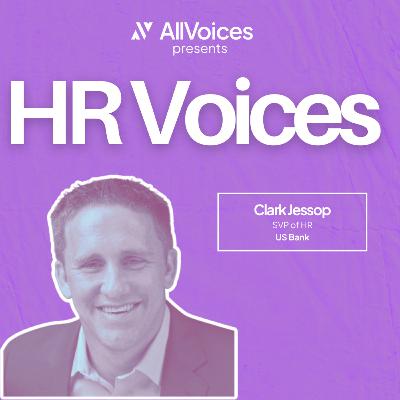
SummaryAI is accelerating everything—but speed without clarity creates noise. Clark Jessop, Senior Vice President of HR at US Bank and HR lead for the company’s digital, data & AI, and product teams, shares how he helps leaders manage acceleration without losing focus. He explains why discernment is the defining human skill in the AI age, how to simplify decision flows and clarify decision rights, and where human judgment must be protected. Clark breaks down shifting HR from calendar-driven to outcome-driven, co-creating solutions with business partners, and reducing friction so teams can move faster. Expect practical frames—the “control tower” approach to signals and noise, building listening strategies that scale—and closing advice on designing work for the AI era, staying optimistic, and developing real AI fluency.Timestamps[00:00] – Welcome and Clark’s path: broadcast roots, tech roles, and move to HR leadership[00:52] – Role at US Bank: supporting digital, data & AI, and product; innovation balanced with risk[02:39] – Managing acceleration: data overload, the control-tower metaphor, and decision rights[05:51] – Human skills that matter: discernment over features; outcomes as the North Star[08:13] – 2026 priorities: outcome-driven HR, reducing friction, aligning talent to value; when “on time” still hurts the business[13:08] – Co-creation with the business: build together for better solutions and faster adoption[20:06] – Closing advice: design work for the AI era, stay optimistic, and build true AI fluencyTakeaways- Clarify decision rights and design workflows that protect the moments requiring human judgment.- Shift from calendar- and process-driven HR to outcome-driven work that reduces friction and noise.- Co-create programs with business leaders to reflect real constraints and speed adoption.- Use scalable listening and internal brand checks to align functions and surface blind spots.- Practice radical candor—high care and high directness—to improve trust and execution.- Build AI fluency (beyond search) to experiment, create, and shape how work is done in the AI era.SponsorAllVoices brings all your employee relations work together in one place. No more jumping between spreadsheets, emails, and legacy systems just one place to document and manage reports, cases, investigations, and performance conversations. It helps you run a more consistent process, takes busywork off your plate with AI, and makes it easier to spot trends early, so you can work proactively, not just put out fires.See a demo at https://www.allvoices.co/
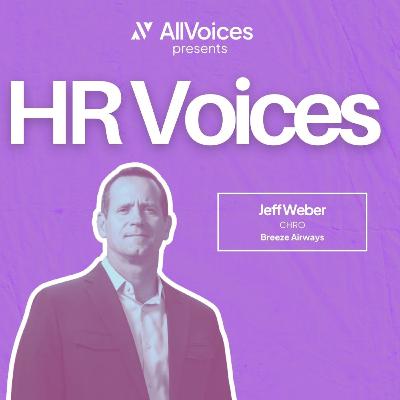
SummaryHow do you keep a fast-growing, always-in-motion workforce informed, aligned, and delivering standout service—while adding a new aircraft every month? Jeff Weber, Chief People Officer at Breeze Airways, shares how the airline is scaling a people-first culture across a distributed, frontline operation. Founded during COVID by David Neumann, Breeze targets underserved airports with a “seriously nice” guest experience—and it shows with NPS in the 70s. Jeff, who came from software, breaks down what it takes to staff a point-to-point model across many locations, onboard 1,000+ new hires a year, and give teams the tools they need in the flow of work. He details weekly CEO-led calls by role to drive connection and clarity, an AI-enabled HR assistant (Harper by WISC) that handles tier-one/two questions in Teams and email, and short-form training that becomes instant job aids on phones and iPads. You’ll also hear how Breeze builds scalable listening loops—active Q&A, pulse surveys, and focus groups—while decentralizing culture through local ambassador committees and community work, including Make-A-Wish flights. Jeff closes with a clear charge to HR: act as internal consultants who partner on business outcomes in a complex, margin-tight industry.Timestamps[00:22] – Breeze context: founding during COVID, growth, A220 fleet, and adding an aircraft monthly[03:14] – Why Jeff joined from tech; building a software-like culture to elevate guest experience (NPS in the 70s)[05:04] – Hypergrowth people challenges: point-to-point staffing, onboarding at scale, and training new leaders[07:26] – Keeping a distributed frontline connected: weekly function calls with the CEO, values, and safety[08:52] – Practical AI in HR: Harper (WISC) for instant answers, policy links, and faster path to productivity[12:47] – Short-form, in-the-flow training: turning courses into mobile job aids for real-time use[15:40] – Scalable listening: active Q&A, pulse surveys, focus groups, and a safe culture for healthy friction[20:58] – Local ownership of culture: ambassador committees, community service, and Make-A-Wish partnershipsTakeaways- Run weekly, CEO-hosted calls by role to keep distributed teams connected and aligned.- Deploy an AI HR assistant to deflect tier-one questions, route to resources, and speed path to productivity.- Convert training into bite-size job aids accessible on mobile at the exact moment of need.- Build scalable listening loops—chat Q&A, pulse surveys, and focus groups—to surface and act on feedback.- Distribute culture locally via ambassador committees and community partnerships so values are felt, not just stated.- Recast HR as internal consultants who partner on business outcomes, not just policy and process.SponsorAllVoices brings all your employee relations work together in one place. No more jumping between spreadsheets, emails, and legacy systems just one place to document and manage reports, cases, investigations, and performance conversations. It helps you run a more consistent process, takes busywork off your plate with AI, and makes it easier to spot trends early, so you can work proactively, not just put out fires.See a demo at https://www.allvoices.co/
SummaryIn a farm-to-door, 24/7 operation, how do you keep 2,500 people aligned, motivated, and truly high-performing?Claire Ko, Chief People Officer at FreshDirect—the pioneer of online grocery delivery—shares how her lean people team supports a complex, tech-enabled business spanning production, logistics, merchandising, and corporate functions. Claire offers a view inside FreshDirect’s direct relationships with farms and fisheries, food-waste reduction efforts, and a new fair-trade initiative sending $1 per bunch of organic bananas back to farmers—purpose that fuels pride and performance.She breaks down “Engagement for Success,” a company-wide framework that centers monthly, employee-led conversations defining personal success and linking work to business impact, complete with ongoing documentation to strengthen reviews and growth plans. Claire also tackles calibration pitfalls, perspective-shifting tools like her “magic-wand” team exercise, and why clarity, recognition, and manager accountability matter most. She closes on HR’s human advantage in an AI era: connection, motivation, and the courage to remove obstacles so people can do their best work.Timestamps[00:45] – Guest intro and FreshDirect’s direct-from-farm model[01:56] – Sustainability in action: reducing food waste and fair-trade bananas[02:52] – HR in a complex, tech-enabled operation: competing expectations across teams[04:35] – Leadership basics: clarity, recognition, and time with the team[06:42] – “Engagement for Success”: purpose, design, and expected outcomes[10:43] – Monthly employee-led success conversations and yearlong documentation[14:25] – Rethinking performance reviews: beyond KPIs and the calibration trap[15:35] – The “magic-wand” exercise: revealing potential and redefining what’s possible[19:14] – The human advantage in an AI era: engagement, motivation, and trustTakeaways- Implement monthly, employee-led success check-ins that define outcomes, surface obstacles, and tie work to business impact.- Document progress and engagement continuously to inform fair, future-focused performance reviews.- Equip managers to remove blockers and recognize wins; make clarity and follow-through nonnegotiable.- Use perspective-shifting prompts (e.g., the “magic-wand” team exercise) to reveal potential and set bolder goals.- Connect roles to company purpose—such as sustainability partnerships—to boost pride, retention, and high performance.SponsorAllVoices brings all your employee relations work together in one place. No more jumping between spreadsheets, emails, and legacy systems just one place to document and manage reports, cases, investigations, and performance conversations. It helps you run a more consistent process, takes busywork off your plate with AI, and makes it easier to spot trends early, so you can work proactively, not just put out fires.See a demo at https://www.allvoices.co/
SummaryWhat happens when a designer leads HR? Michael Bodziner, Co–Chief Human Resources Officer at Gensler—the global architecture and design firm with 56 offices and 6,400 people—shares how a 40-year career from intern to studio director to CHRO shaped a people-first approach that boosts retention and performance. Michael explains how he translated retail customer-experience thinking into an employee-experience playbook, why “don’t let fear be the deciding factor” guided his leap into HR, and how focusing on strengths—“aces and spaces”—builds higher-performing teams. He details the shift from transactional HR to strategic partnership, Gensler’s co-leadership model (including his pairing with co-CHRO Larissa Gray to balance culture with compliance), and how that structure sustained the firm through COVID. Michael also offers a pragmatic view on AI: use it to automate the busywork so HR can spend time coaching leaders, improving the team member experience, and retaining top talent. Expect candid lessons on designing culture at scale, knowing your people deeply, and making courageous career moves.Timestamps[00:45] – Guest intro: 40-year journey from intern to co-CHRO at a global firm[03:38] – From designer to studio director: putting people first and reducing turnover[06:01] – The Starbucks ask: moving into HR—and “don’t let fear be the deciding factor”[09:57] – Rebuilding HR around the team member experience to compete for talent[12:42] – Taking the CHRO role weeks before COVID and leading people strategy[13:11] – Co-leadership at Gensler: pairing culture with compliance (with co-CHRO Larissa Gray)[18:37] – “Aces and spaces”: strengths-led development and managers who truly know their people[24:23] – Practical AI: automating transactions so HR can be a strategic partnerTakeaways- Map the employee experience like a customer journey to improve engagement and retention.- Adopt co-leadership to balance external growth with internal culture, and strategy with compliance.- Coach managers to know each person’s aspirations and align work to strengths.- Build teams around “aces and spaces”—pair strengths to cover gaps and raise performance.- Use AI to handle transactional HR (e.g., routine comms, admin) and free time for strategic work.- Make courageous career moves—don’t let fear be the deciding factor.
SummaryHow do you keep a largely frontline workforce engaged across 135 dealerships and 12 states—while embracing the rise of side hustles? Jules Gianneschi, Chief Human Resources Officer at America’s Car‑Mart (a publicly traded, integrated auto sales and finance company based in Rogers, AR), shares how her team builds a purpose-led culture around a clear mission: keeping customers on the road. Jules explains why normalizing second jobs can actually improve retention, how whole‑health wellness (physical, mental, and financial) drives performance, and why authenticity at work reduces “energy tax” and boosts productivity. She breaks down Car‑Mart’s “boomerang” culture, the associate value proposition built from employee interviews, and the power of local leadership in rural communities where reliable transportation changes lives. Jules also offers two simple HR rituals—Hour of Power and Hallway Huddles—that upskill teams and keep HR connected to the business. She closes with practical interview advice leaders can use to create psychological safety and see candidates at their best.Timestamps[00:45] – Who is America’s Car‑Mart? Integrated sales/finance model, footprint, and purpose[01:51] – The CHRO view: supporting frontline associates and a lean corporate team[02:40] – The rise of second jobs: economic drivers, passion projects, and retention upside[05:15] – Whole‑health wellness: physical, mental, and financial programs that meet people where they are[07:50] – Authenticity and energy management; building the EVP; “boomerang” employees and core values[14:30] – Mission clarity in action: rural markets, transportation access, and GMs as community leaders[16:35] – Community engagement that builds loyalty: local events, service projects, and everyday hospitality[18:05] – HR rituals: Hour of Power (weekly learning) and Hallway Huddles (monthly stand‑ups)[22:05] – Interview advice for candidates—and how managers create safety to get real signalsTakeaways- Normalize side hustles to boost retention—offer stable schedules and transparency, not secrecy.- Operationalize whole‑health wellness: pair benefits with mental health support and financial education.- Build your EVP from associate interviews and data; anchor it to clear, lived values.- Clarify the mission (“keep customers on the road”) so every frontline role sees its impact.- Empower local leaders—make managers the face of the brand in their communities.- Install lightweight learning and comms rituals (Hour of Power, Hallway Huddles) to upskill HR and stay close to the business.- Create psychological safety in hiring: invite candidates to name nerves so you can evaluate true fit and potential.
SummaryWhen politics and technology collide with your mission, how do you keep people engaged and moving forward? Elizabeth Mattila, SVP and Chief Human Resources Officer at the Environmental Defense Fund (EDF), shares how a 1,000-person, global NGO sustains morale, builds true employee voice, and modernizes talent practices. Elizabeth explains EDF’s science-driven, bipartisan approach to advocacy—and how transparent communication, town halls, and a clear legal strategy help teams stay focused even amid policy headwinds. She details two structural levers for engagement: a new, peer-elected Staff Council that represents employees worldwide and a Culture Council advancing DEI with data from annual engagement surveys. On talent, Elizabeth breaks down EDF’s shift to skills-based career growth and cross-functional mobility—making advancement less about tenure and more about capabilities. She also outlines why annual pay equity snapshots fall short, and how EDF now runs equity analyses on-demand for real transparency. Finally, Elizabeth flags rising AI threats in hiring—from deepfake candidates to data risks—and why HR must partner with security to protect the org. Expect practical ideas to future-proof HR in mission-driven and global contexts: employee voice at scale, real-time equity, and skills as the new currency.Timestamps[00:00] – Welcome and guest introduction[00:53] – EDF 101: mission pillars, size, and global footprint[03:05] – Supporting a hybrid, multinational workforce and compliance[04:30] – Policy headwinds and morale: keeping the mission alive[05:46] – AI risks in hiring: deepfakes, fake candidates, and data security[07:58] – Transparency in action: science-led advocacy, legal strategy, town halls[12:30] – Building employee voice: Staff Council, Culture Council, and engagement insights[14:58] – Skills-based careers, cross-functional mobility, and real-time pay equityTakeaways- Establish formal employee voice mechanisms (e.g., peer-elected Staff Council) to enable two-way communication across regions and levels.- Use a dedicated Culture/DEI council and engagement data to prioritize actions that matter beyond “topics of the moment.”- Shift to skills-based talent management—define required capabilities, publish transparent pathways, and support cross-functional moves.- Move from annual to on-demand pay equity analysis to keep pace with hiring and attrition and to increase trust.- Sustain morale in mission-driven orgs with radical transparency, bipartisan partnerships, and clear plans of action.- Protect hiring integrity by collaborating with security to counter AI-driven applicant fraud and safeguard sensitive data.SponsorAllVoices brings all your employee relations work together in one place. No more jumping between spreadsheets, emails, and legacy systems just one place to document and manage reports, cases, investigations, and performance conversations. It helps you run a more consistent process, takes busywork off your plate with AI, and makes it easier to spot trends early, so you can work proactively, not just put out fires.See a demo at https://www.allvoices.co/
Integrating at Scale: Associa’s CHRO on Culture, Identity, and Bottom‑Up AISummaryHow do you integrate 16 acquisitions at once without losing the soul of each local business? Chelle O’Keefe, Executive Vice President and Chief Human Resources Officer at Associa—the largest property and community management company in North America—shares a practical playbook for scaling culture while honoring local identity. With 30,000+ communities and 4 million homeowners across the U.S., Canada, and Mexico, Associa grows primarily through M&A. Chelle explains how her team balances standardization with autonomy, why new acquisitions with seller-owners need a different glide path, and how reframing “loss of control” as “evolving identity” changes resistance into buy-in.She details a bottom‑up approach to AI—automating painful, repetitive work first—and a real-world example of using AI to model 401(k) scenarios that saved significant cost. Chelle also breaks down Associa’s succession strategy in a niche industry, including a new tool pushing frontline leaders to develop their replacements and maintain high internal promotion rates. Expect candid insights on titles, urgency traps, and building leaders who can thrive through constant change.Timestamps[00:45] – Associa overview: largest in community management, acquisitive growth, scale across North America[01:23] – Integrating 16 companies at once: standard platforms vs. local differentiation in employee experience[03:13] – Managing “branch presidents”: core branches vs. new acquisitions with seller-owners[05:46] – From control to identity: why titles matter and creating space during integration[09:28] – Escaping the urgency trap: learning, networking, and the realities of HR’s “lonely” role[12:02] – Bottom‑up AI: start with painful, repetitive work instead of forcing AI into processes[14:58] – AI case study: modeling 401(k) scenarios, validating with providers, and saving money[17:42] – Succession at scale: promoting from within, frontline ownership, and a new succession toolTakeaways- Lead integrations through identity alignment—don’t erase local culture; evolve it.- Define two playbooks: one for core branches and one for newly acquired, seller-led teams.- Slow down where it matters—acknowledge title changes and create space for employees to be heard.- Apply AI from the bottom up: automate repetitive, low‑value tasks before redesigning everything.- Pilot AI on real business problems, then validate with experts to ensure accuracy and trust.- Push succession planning to the frontline—develop replacements to enable upward mobility and retention.SponsorAllVoices brings all your employee relations work together in one place. No more jumping between spreadsheets, emails, and legacy systems just one place to document and manage reports, cases, investigations, and performance conversations. It helps you run a more consistent process, takes busywork off your plate with AI, and makes it easier to spot trends early, so you can work proactively, not just put out fires.See a demo at https://www.allvoices.co/
Care for Caregivers: Bright Star Care’s CXO on Community, Consistency, and AI in HiringSummaryHow do you build connection and consistency for a largely solo, non-desk workforce? Heather Bresick-Smith, Chief Experience Officer at Bright Star Care (formerly CHRO), shares how the home healthcare franchisor is reshaping employee experience across 13–14k caregivers through community, clear lanes of ownership, and smart tech. Heather breaks down the shift from HR to Experience—employee, client, and soon owner experience—plus formal change management to drive franchisee adoption. She reveals Bright Star’s new employer brand pillars—connection at our core, flexibility that fits your life, and care that starts within—and why the first 90 days are the retention tipping point. Heather details a network-wide LMS for consistent onboarding and career paths, an employee mobile app that becomes the “virtual office” for distributed caregivers, and where AI fits: sourcing, screening, scheduling, and predictive signals that prioritize highly motivated candidates with a clean human handoff. She closes with how franchisee roundtables turn local wins in recruiting and retention into system-wide standards.Timestamps[00:45] – From CHRO to CXO: experience “lanes,” client/employee/owner experience, and change management[03:17] – Splitting people ops vs. franchisee-facing support to scale impact[04:06] – The caregiver challenge: isolation, recruiting vs. retention, and the 90-day stickiness milestone[06:39] – Employer brand pillars: connection, flexibility, and “care that starts within”[09:03] – The employee mobile app as the virtual office: messaging, recognition, and education on-the-go[12:24] – Standardizing learning: network-wide LMS, robust 90-day onboarding, CE, and career paths[15:10] – Practical AI in hiring: sourcing/screening/scheduling and predictive signals for candidate prioritization[17:30] – The “people leader co-pilot” vision: just-in-time guidance for interviews, feedback, and HR risk[19:48] – Stronger together: franchisee collaboration and turning best practices into system normsTakeaways- Define clear experience lanes (employee, client, owner) and formalize change management to boost adoption across franchises.- Design for early retention: build programs that carry caregivers past the 90-day threshold and target candidates who mirror your best performers.- Lead with “care that starts within”: make caregiver well-being a visible pillar of your employer brand and day-to-day operations.- Create community for distributed workers: use a mobile app for real-time messaging, recognition, and learning—treat it like the office.- Standardize a network-wide LMS to deliver consistent onboarding, CE, and career pathways that reduce burnout and turnover.- Use AI judiciously: automate sourcing/screening/scheduling, leverage predictive motivation signals, and ensure a warm, timely human handoff.SponsorAllVoices brings all your employee relations work together in one place. No more jumping between spreadsheets, emails, and legacy systems just one place to document and manage reports, cases, investigations, and performance conversations. It helps you run a more consistent process, takes busywork off your plate with AI, and makes it easier to spot trends early, so you can work proactively, not just put out fires.See a demo at https://www.allvoices.co/
Onsite-First HR: Fortis Fire & Safety’s CPO on Transparency, Incentives, and Practical AISummaryHow do you build trust and clarity for a largely frontline, onsite workforce amid inflation pressures and AI-fueled change? Stephanie Roseman, Chief People Officer at Fortis Fire & Safety—a national provider of fire suppression, alarms, and integrated security—shares a practical playbook. She breaks down what her latest employee survey surfaced (financial squeeze, job security, career growth, and communication) and how Fortis turns data into action: branch-level insights, manager enablement, and company-wide town halls. Stephanie details her transparency mantra—“I’ll tell you everything I can as soon as I can”—and how she handled benefits changes with in-person roadshows and red/green clarity on employee impact. She’s also simplifying complexity, shrinking the handbook to a 40-page core, and building transparent incentive programs that reward productivity and safety behaviors. Finally, Stephanie dives into practical AI: scaling personalization in performance and development, boosting recruiting capacity, and cross-referencing HR and operations data for analyst-level insights—plus AI coaching tools that help managers practice tough conversations. Expect concrete, repeatable tactics for any people leader supporting onsite teams.Timestamps[00:45] – What Fortis does and why HR in fire/safety mirrors “background” risk prevention[01:53] – Employee survey findings: financial squeeze, job security, growth, and comms; onsite-first culture[03:59] – From data to action: branch-level insights, manager enablement, and upcoming town halls[06:26] – Benefits changes done right: face-to-face roadshows and red/green impact clarity[10:05] – Simplification: 40-page core handbook and building transparent, behavior-based incentives[13:01] – Personalizing development at scale with AI: clearer paths to the next level[14:03] – Practical AI in ops and recruiting: cross-system analytics and capacity for high-touch hiring[17:33] – AI coaching for managers and why “safe practice” improves tough conversationsTakeaways- Turn survey data into local action: equip frontline managers with branch-specific insights and clear follow-ups.- Practice radical transparency with boundaries: “Tell everything you can as soon as you can” to build trust.- Make benefits changes unmistakably clear: meet people in person and label positive/negative impacts directly.- Simplify to strengthen understanding: distill policies into a short, usable core and treat employees like adults.- Tie incentives to observable behaviors (e.g., productivity, driver safety) with criteria everyone can see.- Use AI to scale, not replace: automate sourcing and analysis, and support managers with coaching tools.SponsorAllVoices brings all your employee relations work together in one place. No more jumping between spreadsheets, emails, and legacy systems just one place to document and manage reports, cases, investigations, and performance conversations. It helps you run a more consistent process, takes busywork off your plate with AI, and makes it easier to spot trends early, so you can work proactively, not just put out fires.See a demo at https://www.allvoices.co/
AI-Native HR: Omnissa’s CPO on Hyper-Personalization, Skills Intelligence, and Human ConnectionSummaryHow can HR lead AI adoption without losing the human core of work? Sunaina Lobo, Chief People Officer at Omnissa—an AI-driven digital workforce platform carved out of VMware—shares how she’s building a modern “hire-to-retire” experience just six weeks into the role. Sunaina explains why people teams must be change leaders, not just technology adopters, and how AI lets HR leapfrog legacy models like shared services to deliver truly personalized, scalable support. She walks through a practical talent development use case—using conversational intelligence to transform career conversations—so managers can focus on relationships while AI captures insights and suggests development paths. Sunaina also breaks down personalization in total rewards, the realities of a distributed workforce across 18 countries, the shift from rear-view HR metrics to predictive, insights-driven decision-making, and why engagement depends on hyper-human interaction and purpose-led cultures. If you’re redefining HR’s operating system, this episode offers a clear blueprint.Timestamps[00:45] – Guest intro: Omnissa’s VMware roots and Sunaina’s “hire-to-retire” mandate[02:50] – Why HR must lead AI adoption: change management over tools[04:45] – Leapfrogging shared services: AI bots for personalized employee support[06:20] – Talent development, reimagined: conversational intelligence for career conversations[09:00] – Total rewards in the AI era: from one-size-fits-all to hyper-personalization[11:30] – Engagement is human: community, connection, and “putting the H back in HR”[15:30] – Five focus areas: hyper-personalization, global talent, insights-driven HR, purpose, skills intelligence[18:10] – Aligning product and people: building an AI-native employee experience[18:50] – From anecdotes to evidence: using AI to connect HR metrics to business outcomes[20:40] – Guardrails: augment with AI, but keep the human conversation centralTakeaways- Lead AI adoption as a change initiative—design for human behavior, not just new tools.- Map HR processes end-to-end; automate repeatable steps and reserve managers for high-value conversations.- Flip career conversations with conversational intelligence to capture insights and generate development options.- Personalize benefits and rewards based on employee life stage and preferences, not averages.- Build community and manager capability to counter remote isolation and boost engagement.- Shift from rear-view reporting to predictive, insights-driven HR and tie people data to business outcomes.- Treat skills intelligence as a strategic asset—identify, develop, and deploy skills for competitive advantage.SponsorAllVoices brings all your employee relations work together in one place. No more jumping between spreadsheets, emails, and legacy systems just one place to document and manage reports, cases, investigations, and performance conversations. It helps you run a more consistent process, takes busywork off your plate with AI, and makes it easier to spot trends early, so you can work proactively, not just put out fires.See a demo at https://www.allvoices.co/
Human-First Employee Relations: Greystar’s Director on Multi-State Investigations, AI, and TrustSummaryHow do you lead fair, fast, and human investigations across dozens of jurisdictions—with California in the mix—and still keep people at the center? Andrea Brunet, Director of Employee Relations at Greystar, supports 2,400 employees across multiple states for the global real estate leader. She shares how rigorous organization, clear triage, and deep partnership with field leaders power compliant, compassionate employee relations. Andrea explains her system for managing time-sensitive cases (think EEOC and wage-and-hour), why rapport lets HR deliver risk-based guidance leaders can hear, and how to handle AI-authored complaints without losing the human story. Expect practical insights on turning “small” complaints into root-cause patterns, coaching managers through tough conversations, and preserving dignity in terminations—so HR is seen as a trusted partner, not “Toby.”Timestamps[00:01] – Role and scope: Greystar’s footprint, multi-state support, and California complexity[02:25] – Staying organized: tracking investigations, deadlines, and time-sensitive compliance[04:44] – Building trust: collaborating with leaders and giving risk-based recommendations[06:52] – AI in ER: the upside, the pitfalls, and why a phone call reveals the real story[10:03] – From symptoms to root cause: the “coffee complaint” and pattern-spotting in ER[11:39] – HR as connective tissue: first and last impressions and company-wide impact[14:19] – Service mindset: triaging requests, team collaboration, and shedding the “Toby” stereotype[18:45] – Dignity in terminations: coaching leaders through hard conversations and de-escalationTakeaways- Build a simple, durable tracking system (spreadsheets or case management) to manage investigations and meet hard deadlines.- Earn trust early so leaders accept risk-based guidance—even when it’s not the answer they hoped for.- Treat AI-generated complaints as a starting point; connect live to hear the human behind the text.- Look beyond surface issues to identify patterns and root causes; small complaints can reveal bigger gaps.- Position HR as organizational triage: route quickly, respond personally, and reduce friction across functions.- Protect dignity in difficult moments: frame decisions as business-driven, allow pauses, and coach leaders to de-escalate.SponsorAllVoices brings all your employee relations work together in one place. No more jumping between spreadsheets, emails, and legacy systems just one place to document and manage reports, cases, investigations, and performance conversations. It helps you run a more consistent process, takes busywork off your plate with AI, and makes it easier to spot trends early, so you can work proactively, not just put out fires.See a demo at https://www.allvoices.co/
Scaling Through Change: SolarWinds’ People Leader on Functional HRBPs, Sales Talent, and AI-Driven PerformanceSummaryWhat does it take to steer a 25-year-old tech company through going private while raising the performance bar? David Hanrahan, SVP of People Success at SolarWinds, shares how his team is navigating culture integration with a data-driven parent company, reorganizing HR for impact, and using AI to modernize performance. With 2,100+ employees and deep tenure across the business, SolarWinds is balancing “what’s worked” with a sharper go-to-market focus. David explains why he shifted HRBPs from site-based support to functional teams (GTM, R&D, G&A), how he built trust quickly across global sites, and why HR must solve revenue problems—starting with hiring and retaining top “native sales” talent. He also opens up about building an attrition prediction model (and what they learned when v1 missed), plus how AI writing assistants can free managers to be coaches, not scribes. He closes with a research-backed principle: managers who truly understand their team’s work dramatically boost performance, engagement, and retention.Timestamps[00:45] – SolarWinds overview: going private, observability software, and the change agenda[02:17] – Balancing long company history with Turn/River’s speed and data-orientation[04:42] – Rewiring HRBPs: from site-based coverage to functional alignment (GTM, R&D, G&A)[07:19] – Earning trust fast: global site visits, human updates, and building rapport remotely[11:44] – HR as business problem-solver: zeroing in on “native sales” talent to drive bookings[14:06] – Attrition prediction model: partnering with IT and learning from first-pass misses[15:06] – AI in performance: writing assistants, meeting people where they are, manager as coach[22:13] – The performance multiplier: managers who truly understand the workTakeaways- Align HRBPs by function, not just site, to strengthen partnership with global business priorities.- Build trust quickly through intentional face time and human touches—even in remote-first contexts.- Aim HR at revenue levers: hire and retain top “native sales” talent to fuel bookings growth.- Treat analytics as experiments: iterate on models that miss and learn from actual attrition drivers.- Use AI to handle synthesis and writing so managers can coach, set trade-offs, and elevate performance.- Make “manager understanding of work” a habit—it doubles high performance and slashes attrition.SponsorAllVoices brings all your employee relations work together in one place. No more jumping between spreadsheets, emails, and legacy systems just one place to document and manage reports, cases, investigations, and performance conversations. It helps you run a more consistent process, takes busywork off your plate with AI, and makes it easier to spot trends early, so you can work proactively, not just put out fires.See a demo at https://www.allvoices.co/
Ignite Our Heartbeat: IMG Academy’s CPO on Hybrid Culture, Burnout, and Purpose-Driven HRSummaryWhen half your workforce is on a Florida campus and half is fully remote, how do you sustain one culture, prevent burnout, and support growth in a world of constant change? Lisa Strasman, Chief People Operations Officer at IMG Academy and former President of NCSA (acquired by IMG Academy), shares how the world’s leading sports education brand aligns people, performance, and purpose. She outlines IMG Academy’s unique mix—boarding school and elite training in Bradenton, year-round camps, and IMG Academy+ for mental performance, nutrition, and college recruiting guidance—and explains how “athlete DNA” fuels a high-performing team. Lisa unpacks the realities of hybrid culture, why careers must be treated as dynamic, and how their engagement surveys directly shape priorities. She also details their 2026 people-first goal—Ignite Our Heartbeat—designed to elevate the employee experience so staff can better serve student-athletes and families. Expect practical guidance on closing the communication loop, reducing burnout (especially for remote employees), and connecting daily work to a mission that matters.Timestamps[00:45] – IMG Academy overview: campus, camps, and IMG Academy+ (mental performance, nutrition, recruiting)[02:48] – CPO scope: 2,200 employees split between Bradenton campus and fully remote[03:56] – Hybrid culture in practice: pace of change, bridging onsite and virtual teams[05:26] – Nonlinear careers: growth without rigid ladders and HR’s role in transparency[07:12] – Engagement survey insights: burnout, work-life balance, development, and communication[08:45] – From insights to action: 2026 goals and “Ignite Our Heartbeat”[10:51] – Role evolution: from President/COO to CPO and integrating acquired cultures[13:04] – Athlete DNA at work: hiring for coachability, resilience, and teamwork[15:02] – Closing advice: connect everyday work to a mission that mattersTakeaways- Anchor culture to a clear mission and consistently spotlight real impact stories.- Listen with regular engagement surveys—and close the loop by tying programs to what employees said.- Build hybrid rituals that serve both onsite and remote teams; make communication inclusive and repeat key messages.- Treat careers as dynamic; offer development that builds confidence without rigid paths.- Tackle burnout proactively—especially for remote staff—through workload norms, energy checks, and manager enablement.- Align people priorities with business outcomes; make people-first goals (like “Ignite Our Heartbeat”) visible, measurable, and owned across the org.SponsorAllVoices brings all your employee relations work together in one place. No more jumping between spreadsheets, emails, and legacy systems just one place to document and manage reports, cases, investigations, and performance conversations. It helps you run a more consistent process, takes busywork off your plate with AI, and makes it easier to spot trends early, so you can work proactively, not just put out fires.See a demo at https://www.allvoices.co/
Steady in the Storm: TPI’s CPO on Leading HR Through Chapter 11 with Transparency and TrustSummaryWhen your company files Chapter 11, HR becomes the steady hand the business needs. Deane Ilukowicz, Chief People Officer at TPI Composites—the world’s largest industrial manufacturer of wind turbine blades—shares how she’s guided a nearly 10,000-person, global workforce through restructuring with clarity and care. From saying “I don’t know” the right way to co-owning tough conversations with leaders, Deane breaks down the practices that build trust under intense uncertainty. She explains why protecting your HR team’s emotional health is non-negotiable, how resilience and psychological safety actually show up day to day, and why “policies as guardrails” beats rigid rulebooks. Deane also offers a simple, repeatable framework for continuous performance feedback and closes with a charge to every HR pro: be a business leader first. Expect concrete guidance on communicating when you can’t share everything, keeping operations running while showing empathy, and earning—then keeping—your strategic seat at the table.Timestamps[00:45] – Guest intro: TPI’s footprint, scale, and manufacturing context[02:15] – Chapter 11 realities for HR and leading with transparent context[04:27] – Protecting the HR team: humane reductions and co-delivering hard news[05:41] – Resilience and psychological safety: giving HR safe space to process[08:21] – Truthful performance: using PIPs well to drive clarity and engagement[11:48] – Continuous feedback in practice: the “one thing” framework[15:21] – Presence, empathy, and grace; policies as guardrails while staying flexible[21:02] – Business-first HR: understand how the company makes money to keep your seatTakeaways- Lead with transparent context—state what you know, what you don’t, and when you’ll update.- Protect your HR team’s well-being; co-own difficult conversations with leaders and allow space to decompress.- Build resilience and psychological safety by normalizing pauses, resets, and candid check-ins.- Make feedback continuous: one thing that went well, one to improve, and one to do differently.- Use PIPs as development tools grounded in clear expectations, not as a step toward termination.- Earn strategic influence by mastering your business model, value drivers, and risks.SponsorAllVoices brings all your employee relations work together in one place. No more jumping between spreadsheets, emails, and legacy systems just one place to document and manage reports, cases, investigations, and performance conversations. It helps you run a more consistent process, takes busywork off your plate with AI, and makes it easier to spot trends early, so you can work proactively, not just put out fires.See a demo at https://www.allvoices.co/
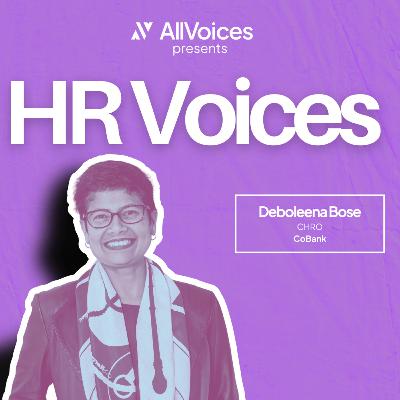
Intentional Culture at CoBank: CHRO Debulina Bose on Mission-First HR and AI with EmpathySummaryHow do you unify a national, largely exempt workforce while navigating AI and rapid growth? Debulina Bose, Chief Human Resources Officer at CoBank, shares how a mission-first approach—serving rural America and strengthening food security—drives hiring, development, and culture across 1,400 associates. As a cooperative, CoBank makes long-term people decisions, not quarter-by-quarter tradeoffs. Debulina details how her team uses Gallup StrengthsFinder to build diverse-by-thinking teams, why empathy, listening, and judgment will differentiate talent in an AI-enabled workplace, and where AI fits today—from HR chat assistants for FAQs to Copilot for tone and productivity. With 40% of employees new in the last three years, she outlines CoBank’s 2026 priority: building an intentional, co-created culture that matches the mission and the moment. Expect practical ideas for hiring for purpose, applying the “five whys,” and using AI as a thought partner—while keeping humans firmly in the loop.Timestamps[00:45] – Guest intro: CoBank’s mission to serve rural America and Debulina’s remit as CHRO[01:54] – Workforce snapshot: 1,400 associates, HQ in Denver, national footprint, largely exempt[03:02] – Unifying a distributed culture: hiring and promoting for mission alignment[04:34] – The cooperative advantage: long-term lens for talent and development[05:33] – StrengthsFinder in action: diversity of perspectives and team assimilations[08:03] – AI anxiety to clarity: empathy, listening, and judgment as differentiators[11:36] – Practical AI: HR knowledge assistant for FAQs; Copilot to refine difficult messages[17:43] – 2026 focus: “intentional culture” with 40% new hires—engagement over edictsTakeaways- Hire for purpose: prioritize mission alignment to unify distributed teams and decisions.- Anchor people strategy in the long term—especially in a cooperative or stakeholder model.- Use StrengthsFinder to design teams with diverse thinking styles and run effective assimilations.- Deploy AI where it scales routine work (FAQ chatbots) and boosts clarity (tone refinement), not where empathy is required.- Teach human skills that AI can’t replicate: deep listening, judgment, critical thinking, and the “five whys.”- Co-create culture during periods of heavy hiring—engage employees broadly instead of issuing top-down values.SponsorAllVoices brings all your employee relations work together in one place. No more jumping between spreadsheets, emails, and legacy systems just one place to document and manage reports, cases, investigations, and performance conversations. It helps you run a more consistent process, takes busywork off your plate with AI, and makes it easier to spot trends early, so you can work proactively, not just put out fires.See a demo at https://www.allvoices.co/
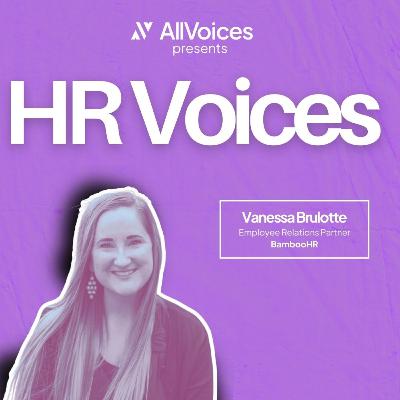
Catch It at a Simmer: BambooHR’s Vanessa Brulotte on Employee Relations, Clear Communication, and AI in HRSummaryWhen employees only reach HR at “eruption,” it’s already too late. Vanessa Brulotte, Employee Relations Partner at BambooHR, shares how to build a trusted, centralized ER function that catches issues at a simmer—so leaders and employees can collaborate toward resolution instead of crisis. With nine years at BambooHR across TA, HR, and ER, Vanessa brings practical frameworks for fairness and consistency, from creating visible “safe spaces” in a hybrid environment to setting shared expectations and alignment before projects go off the rails. She unpacks why communication fails even with good intent, how to avoid ruinous empathy, and simple habits—like recap notes—that prevent misinterpretation (cue the Amelia Bedelia lesson). Vanessa also dives into AI’s role in HR today: use it to scale clarity and prep tough conversations (think SBI-F talk tracks), ask it to push back, and put guardrails in place—never as legal counsel. The episode closes with a reminder many HR pros need: protect your own wellbeing, set boundaries, and show up with calm when it matters most.Timestamps[00:45] – Vanessa’s path at BambooHR and why she built a centralized ER function[02:22] – Fairness, consistency, and creating a trusted “safe space” for employees[05:20] – Hybrid visibility: why showing up onsite builds access and credibility[07:58] – The real reason communication fails—and how to catch issues at a simmer[08:27] – Alignment before action: roles, decisions, contributors, and deadlines[11:00] – High vs. low context communication (and the Amelia Bedelia effect)[12:37] – Recap to prevent rework: simple practices that keep teams aligned[14:12] – AI in HR: scaling clarity, SBI-F talk tracks, and asking for pushback[16:09] – Guardrails, not legal advice: using AI responsibly[19:30] – HR wellbeing: boundaries, mental health, and showing up with calmTakeaways- Build trust early so issues surface at a simmer—long before crisis and escalation.- Drive clarity: align on who decides, who is responsible, who contributes, and by when.- Over-communicate with intent—use recap notes, confirm “what good looks like,” and avoid ruinous empathy.- Prepare difficult conversations with the SBI-F framework; practice and plan language in advance.- Use AI as a thought partner to draft talk tracks and challenge your thinking—ask it to play devil’s advocate.- Set and socialize AI guardrails; never treat AI outputs as legal counsel.- Protect your own capacity: limit doomscrolling, set boundaries, and create pauses to bring calm to charged moments.SponsorAllVoices brings all your employee relations work together in one place. No more jumping between spreadsheets, emails, and legacy systems just one place to document and manage reports, cases, investigations, and performance conversations. It helps you run a more consistent process, takes busywork off your plate with AI, and makes it easier to spot trends early, so you can work proactively, not just put out fires.See a demo at https://www.allvoices.co/
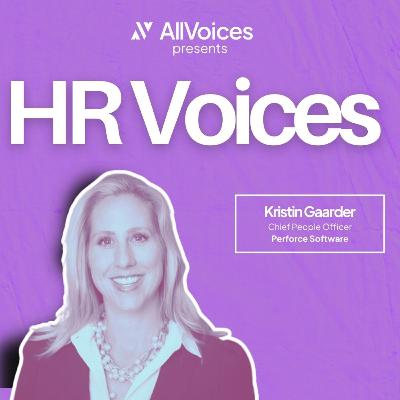
Empathy at Scale: Perforce’s CPO on AI, Authentic Hiring, and Leading IndividualsSummaryWhen change is constant and AI is rewriting work, how do you create clarity, safety, and performance for a global workforce? Kristin Gaarder, Chief People Officer at Perforce Software (2,000 employees across 30+ countries), shares how her team supports technologists navigating rapid transformation, geopolitical uncertainty, and change fatigue—without losing the human thread. She unpacks the real risks AI introduces to talent acquisition (think synthetic candidates and system infiltration) and why Perforce is reintroducing in-person touchpoints to validate skills and character. Kristin details a company-wide leadership learning journey: from building high-performing teams on trust and healthy conflict to leading each individual with empathy and precision. She also breaks down Perforce’s listening architecture—small group sessions, town halls, pulse and engagement surveys, CEO surveys, and always-on feedback forms—to replace “hallway chatter” in distributed teams and rebuild trust through action. Expect practical ways to teach curiosity and critical thinking, normalize not having all the answers, and anchor change in empathy, stability, and clarity.Timestamps[00:45] – Guest intro: Perforce’s global footprint and technical workforce[01:37] – The pace and volume of change: AI’s impact, global uncertainty, and employee anxiety[04:10] – Skills for the next decade: curiosity, critical thinking, and discerning AI outputs[06:21] – Talent acquisition in an AI era: preventing “synthetic candidates” and bot infiltration[07:55] – Back to basics: why in-person interviews may return—and what to look for in humans[09:24] – Leading without all the answers: humility, listening widely, and pivoting fast[10:35] – Replacing hallway feedback: listening sessions, surveys, and building trust remotely[13:08] – Perforce’s leadership journey: high-performing teams to individualized leadership[15:36] – Development in practice: better feedback, personalized plans, and AI as a tool[17:22] – Closing principles: meeting people with empathy, stability, and clarityTakeaways- Fortify talent acquisition against AI risks—verify identity, add human touchpoints, and assess learnability, not perfection.- Build a multi-channel listening system (small groups, pulse/engagement/CEO surveys, town halls) and act visibly on feedback.- Coach leaders to run high-performing teams grounded in trust, healthy conflict, and clear results.- Shift from team-only leadership to individualized leadership—meet each person where they are, when they need it.- Teach curiosity and critical thinking so employees can evaluate AI outputs and navigate ambiguity.- Anchor change in empathy, stability, and clarity to create psychological safety and enable faster, better decisions.SponsorAllVoices brings all your employee relations work together in one place. No more jumping between spreadsheets, emails, and legacy systems just one place to document and manage reports, cases, investigations, and performance conversations. It helps you run a more consistent process, takes busywork off your plate with AI, and makes it easier to spot trends early, so you can work proactively, not just put out fires.See a demo at https://www.allvoices.co/
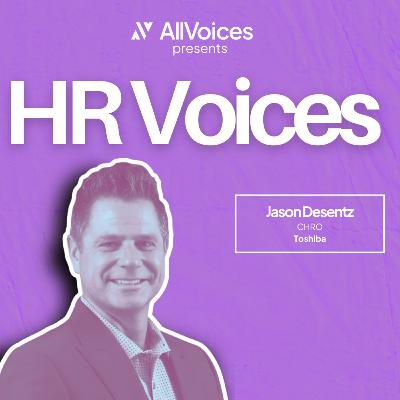
Reinventing a 150‑Year‑Old Startup: Toshiba’s CHRO on Influence, COEs, and AISummaryHow do you modernize a century-old manufacturer under private equity—while unifying fragmented HR teams and systems? Jason Richard Desentz, Chief Human Resources Officer for Toshiba in the Americas, breaks down what it really takes to lead transformation at scale. With roots in Detroit automotive and training in Lean Six Sigma, plus an MBA and DBA, Jason explains why today’s CHRO must think like a business operator first. He shares a simple but powerful career framework—rotating between HR centers of excellence and field roles (“work on” vs. “work in” the process)—that builds credibility and speed. Jason also unpacks the politics of change: how to socialize ideas early, tailor the pitch, and win stakeholder buy-in. He frames AI as an enhancement, not a replacement, and makes the case for cultures that embrace smart risk-taking and fast learning from mistakes. Expect practical guidance on consolidating legacy orgs, avoiding complacency, and bringing Gen Z voices to the table—all while keeping the business, people, and process aligned.Timestamps[00:45] – CHRO scope at Toshiba: PE-backed reinvention and consolidating standalone units[03:23] – From legacy to reinvention: “a 150-year-old startup” mindset to refresh processes and culture[06:45] – The modern CHRO: business acumen, P&L fluency, and Lean roots[07:32] – COEs vs. field HR: “work on” vs. “work in” the process and career pathing[09:49] – Influence over edict: politics, context, and stakeholder buy-in[12:11] – AI as enhancement, not replacement; right- vs. left-brain leadership[14:03] – Normalize mistakes: psychological safety, coaching, and the 5% rule[19:02] – Closing playbook: persistence, calibration, and learning from Gen Z/AlphaTakeaways- Audit legacy processes with a startup lens to align with future culture and strategy.- Sharpen business fluency—P&L, operations, and Lean—to elevate HR’s strategic impact.- Rotate between COE and field roles; volunteer for cross-functional projects to accelerate learning.- Socialize early and sell smart: build context, coalition, and influence before implementation.- Treat AI as an enhancement: blend left-brain data with right-brain values; calibrate tools to your org.- Create psychological safety for calculated risk-taking; learn fast from mistakes and move on.SponsorAllVoices brings all your employee relations work together in one place. No more jumping between spreadsheets, emails, and legacy systems just one place to document and manage reports, cases, investigations, and performance conversations. It helps you run a more consistent process, takes busywork off your plate with AI, and makes it easier to spot trends early, so you can work proactively, not just put out fires.See a demo at https://www.allvoices.co/

Comments

Download from Google Play

Download from App Store
 United States