


 Claim Ownership
The Speed Lab Podcast
Subscribed: 6Played: 190
Subscribe

© Universal Speed Rating LLC
Description
Introducing The Speed Lab Podcast by Universal Speed Rating. Hosted by Les Spellman, Danny Foley, and Cici Murray, The Speed Lab Podcast dives into all things performance to help you train smarter and play faster.
21 Episodes
Reverse
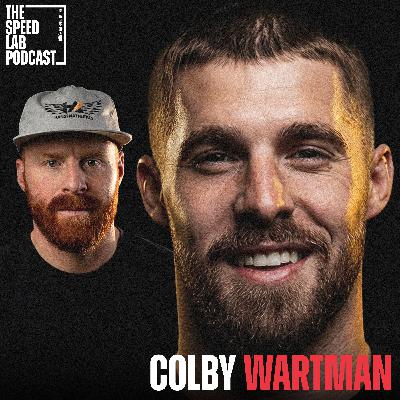
Episode 21 – Eccentric Loading, Sprint Mechanics & Building Athletes That Last | ft. Colby Wortman
Guest host Darren Hansen sits down with Colby Wartman, Speed Lab Director and owner of Origin Performance in Dickinson, ND. Colby shares his personal journey through addiction and sobriety, the mentorship that shaped his coaching philosophy, and how eccentric loading has become the foundation of his athlete development system. From the TreadMetrics leg press to resisted runs and depth jumps, Colby breaks down the tools and methods behind his results — plus a candid conversation on youth athlete burnout and what college coaches are really looking for today.
Timestamps
* 0:00 – Intro & Hero/Hardship/Highlight
* 3:07 – Colby's background & new facility build
* 5:40 – Eccentric loading philosophy & Coach Pete Leno
* 11:55 – TreadMetrics eccentric leg press deep dive
* 19:47 – Recovery, programming frequency & in-season management
* 22:05 – Youth athlete overload & burnout
* 29:23 – Sprint mechanics: negative foot speed & ground attack cues
* 36:35 – Colby's core training toolkit
* 38:27 – Simplifying speed development for coaches
* 41:13 – Shifting to a speed-first program
* 43:40 – What college coaches actually want from athletes
* 44:53 – Where to find Colby & wrap up
If you are interested in getting connected with Colby, Darren, and 200+ private facilities in the country - see if your facility is a fit for the Speed Lab Partnership: https://universalspeedrating.com/learn-more-partner-with-universal-speed-rating-speed-lab-podcast

Guest host Darren Hansen sits down with Erica Mulholland to talk about coaching young female soccer players the right way: balancing skill work with strength, reducing overuse injuries, and why load management + recovery matter way more than most athletes realize. Erica shares how a meniscus tear changed her approach, what she's seeing with ACL injuries in young girls, and the big rocks coaches should focus on if they want athletes to stay healthy and keep improving long-term.
Timestamps (Key Moments)
* 0:29 – Erica's early inspiration: discipline, hard work, and chasing big goals
* 1:11 – Meniscus tear → wake-up call on load management + recovery
* 4:09 – Why "skills-only" training fails young girls (and drives overuse injuries)
* 4:29 – ACL injuries becoming more common in young girls (and what pushed Erica deeper into S&C)
* 15:59 – Calling out bad coaching trends you see on Instagram (and why it matters)
* 48:33 – Where to find Erica / socials
Get Connected:Learn more about how becoming a Speed Lab helps you build faster athletes and a more sustainable sports performance business: https://universalspeedrating.com/learn-more-partner-with-universal-speed-rating-speed-lab-podcast
 1
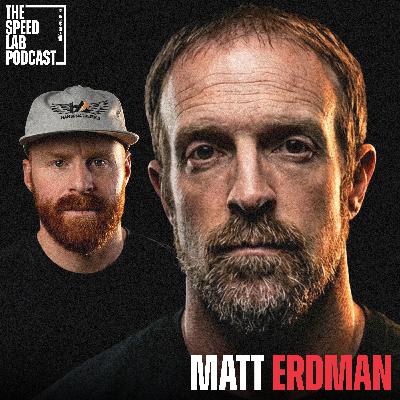
1In this episode of The Speed Lab Podcast, guest host Darren Hansen sits down with coach and mentor Matt Erdman for a powerful conversation on the art of coaching. Matt Erdman Owns Veritas Athletic Performance and is a Universal Speed Rating Speed Lab Director.
They dive deep into building trust with athletes, the power of positive communication, adapting coaching style to the individual, and why relationships—not just programming—drive long-term results. This episode is packed with practical insights for coaches, gym owners, and anyone looking to create a stronger training culture that actually lasts.
Timestamps
00:00 – Intro & why Matt Erdman stands out as a coach
03:30 – Opening a facility: lessons learned & early mistakes
06:20 – Systems, organization, and why clarity matters
07:20 – Transition into The Power of Positive Selection
11:10 – Coaching delivery, trust, and athlete relationships
14:15 – Universal Speed Rating milestone & impact
15:25 – Individualizing coaching styles (men vs women, personalities)
18:05 – Building culture & uniting rival athletes
21:10 – Being approachable without lowering standards
24:10 – Consistency, clarity, and losing athlete trust
27:20 – Coaching less, saying more with fewer words
29:15 – Meeting athletes where they are mentally & physically
33:10 – Creating "wins" even on bad training days
35:05 – Communicating progress to parents
37:20 – Building resilient athletes beyond speed & strength
39:15 – Final thoughts & closing remarks
If you'd like to learn more about how to working with Universal Speed Rating in your facility, schedule a call: https://universalspeedrating.com/learn-more-partner-with-universal-speed-rating-speed-lab-podcast
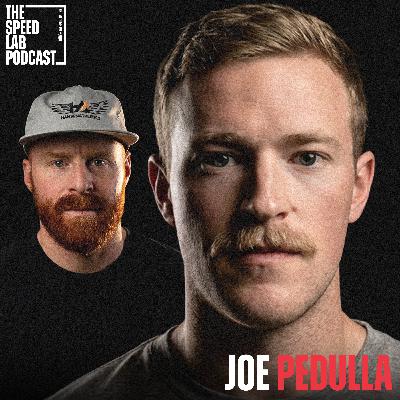
Darren Hansen sits down with Joe Pedulla to discuss rethinking acceleration training, working with youth athletes, and practical coaching strategies for time-constrained programs. They explore how to identify athlete types, balance strengths vs. weaknesses in training, and prepare for their upcoming webinar.
Timestamps
00:00 - Introduction & Triple H (Hardship, Highlight, Hero)
05:09 - Rethinking Acceleration: Joe's general philosophy
07:50 - Teaching young athletes: Gorillas vs. Cheetahs framework (force production vs. speed)
10:16 - Visual cues for coaches to identify athlete movement types
16:02 - Training strengths vs. weaknesses: when to focus on each
17:20 - In-season training: keeping athletes engaged and stimulated
19:21 - Working with limited time (2-3 hours/week with athletes)
23:40 - Sled training loads and programming discussion
32:58 - Why sleds rarely make athletes slower + recovery considerations
34:56 - Lateral movement patterns and "squat accelerators" in sport
39:18 - Program design: subtle changes for different athlete profiles
44:56 - Acceleration vs. deceleration: what separates athletes at game speed
47:27 - Where to follow Joe + closing thoughts
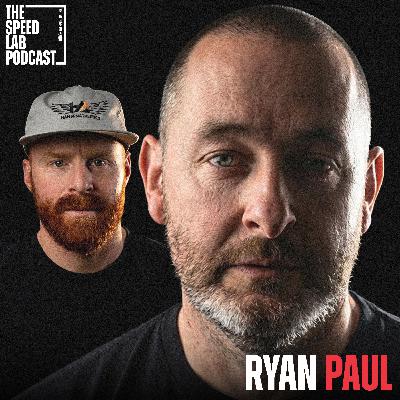
The Speed Lab Podcast - Episode 17
Substitute host Darren Hansen of HansenAthletics sits down with Ryan Paul, owner of New Athlete and veteran performance coach with over two decades of experience training athletes. With more than 12,000 athletes trained since 2001, Ryan shares his evolution from conjugate periodization to an eccentric-focused training philosophy centered on force reduction and deceleration. The conversation dives deep into why athletes often return from college slower despite being stronger, the critical importance of teaching athletes to absorb force before producing it, and how long-duration isometrics (up to 300 seconds) are transforming athlete durability and performance. Ryan also breaks down his unique assessment methods using lunge positions to identify sprinting tendencies and explains why training volume in the weight room should better reflect the demands athletes face on the field.
Timestamps
* 0:00 - Introduction with Darren Hansen
* 0:44 - Ryan Paul's background and 23+ years of athlete development
* 2:41 - Evolution from conjugate training and its limitations
* 3:54 - Why athletes get hurt decelerating, not accelerating
* 5:08 - Common deficiencies: athletes can produce force but can't absorb it
* 7:29 - Why college athletes return slower but stronger
* 9:39 - Programming ratios: ~80% eccentric/deceleration work
* 11:08 - Long-duration isometrics explained (5–300 seconds)
* 16:01 - Cueing isometric lunges and assessing sprint type
* 20:49 - Using USR technology to validate training observations
* 22:29 - Redefining "recovery" and reducing systemic inflammation
* 26:21 - Personal results from eccentric training
* 27:01 - Favorite movements: Bulgarian split squats and toddler patterns
* 29:34 - Crawling, coordination, and cortex development
* 31:00 - Daily integration of eccentric training
* 31:45 - Results: healthier athletes, better repeatability, reduced injury severity
* 33:26 - Advice for coaches: match training volume to game demands
* 36:21 - Closing remarks
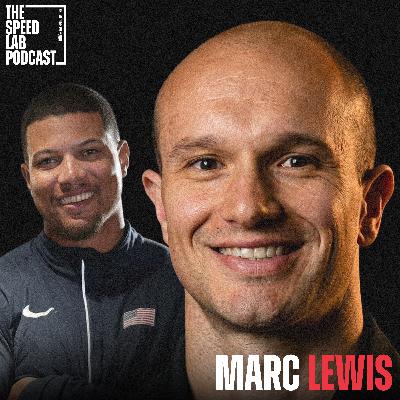
In this episode of The Speed Lab Podcast, Les Spellman sits down with Dr. Marc Lewis, Director of Applied Sports Science for the Houston Texans, for a deep, practical conversation on what sport science really looks like inside elite performance environments.
Dr. Lewis shares his unconventional journey — from military service to earning a PhD and leading applied sport science at the NFL level. Together, they unpack how sport science evolved in the U.S., why systems matter more than tech, how to actually manage athlete load (without "doing less"), and what coaches at any level can apply immediately.
The Universal Speed Rating partners with private training facilities around the country that want to improve their speed system and grow their business. If you are interested in becoming a Speed Lab, click the link below to schedule an intro call with our team.
https://universalspeedrating.com/learn-more-partner-with-universal-speed-rating-speed-lab-podcast
Episode Timestamps
00:00 – Introduction & context
02:00 – Marc Lewis's early life & military background
06:00 – Discovering human performance
10:00 – Education path & research foundation
14:00 – Entering sport science before it was a role
18:00 – Why sport science over traditional strength coaching
22:00 – Evolution of sport science in the U.S.
27:00 – Building systems vs chasing technology
32:00 – Athlete communication & buy-in
37:00 – Load management philosophy in team sports
44:00 – Practical guidance for high school coaches
52:00 – Fatigue monitoring & force plate philosophy
1:00:00 – Hidden stressors in NFL football
1:04:00 – Final thoughts & future of performance
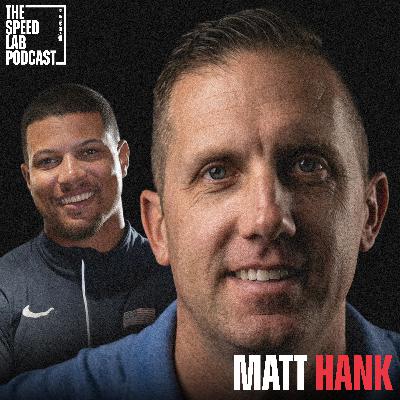
In this episode of The Speed Lab Podcast, host Les Spellman sits down with Matt Hank to challenge conventional speed training.
They dive deep into acceleration and max velocity mechanics, why most coaching cues get lost in translation, and how elite speed is actually developed.
The Universal Speed Rating is looking to work with more elite training businesses through our Speed Lab partnership. If you are interested in systemizing your speed training and growing your business, click the link below to schedule a intro call with our team.
https://universalspeedrating.com/learn-more-partner-with-universal-speed-rating-speed-lab-podcast
Episode Timestamps
00:00 – Matt's background & entry into speed training
03:50 – Why respectful disagreement moves the industry forward
05:00 – Building athletes from the ground up
08:50 – USR milestone & why testing matters
09:32 – Horizontal force vs coaching language
14:00 – Organizing acceleration in a weekly plan
19:00 – Key components of an acceleration model
21:00 – Assessing athletes & teaching coaches what to see
25:15 – Principles of max velocity
27:00 – Do sprint drills actually matter?
32:40 – Strength, coordination, and late swing mechanics
36:50 – Forward foot speed explained
38:09 – Why flexion-based drills fall short
42:17 – Why getting better at drills ≠ getting faster
44:18 – What "works" vs what actually improves speed
48:00 – Extension, reflexive movement, and elite sprint models
52:20 – Reactive vs non-reactive athletes
55:00 – Physical qualities vs coaching cues
58:00 – Advice for athletes right now
59:00 – Individual differences in sprinting
01:01:00 – Closing thoughts on open dialogue & growth

In this episode, Les Spellman sits down with Scott Salwasser, Head NFL Combine Coach at EXOS, to break down what goes into preparing elite athletes for the NFL Combine.
From managing 50+ athletes at once, to profiling speed safely, to using force plates, and the 1080 Sprint to drive real performance.
Scott walks through EXOS's intake process, how data impacts programming and how low-volume, high-intensity speed work wins in the long run.
The Universal Speed Rating is seeking to partner with more elite training businesses nationwide through our Speed Lab initiative. If you are interested in systemizing your speed training and growing your business, click the link below to schedule a call with our team.
https://universalspeedrating.com/learn-more-partner-with-universal-speed-rating-speed-lab-podcast
Episode Timestamps
00:00 – 02:30: Reconnecting, Sparta roots, and why the old-school stuff still matters
02:30 – 05:30: Scott's path to EXOS and stepping into a leadership role
05:30 – 08:30: How EXOS manages 50+ combine athletes without chaos
08:30 – 12:15: Weekly speed structure: acceleration, max velocity, resisted sprinting
12:15 – 16:45: Intake process: PT evals, force plates, LVP testing, and profiling safely
16:45 – 20:30: How data actually changes training (and when it should)
20:30 – 24:30: Force plate insights, asymmetries, RSI, and individualizing plyos
24:30 – 28:30: Strength profiling, OPR, and why some athletes need to train fast — and others heavy
28:30 – 31:00: Kaiser squats, barbell work, and combine-specific realities
31:00 – End: 225 bench pacing, combine lessons learned, and coaching takeaways
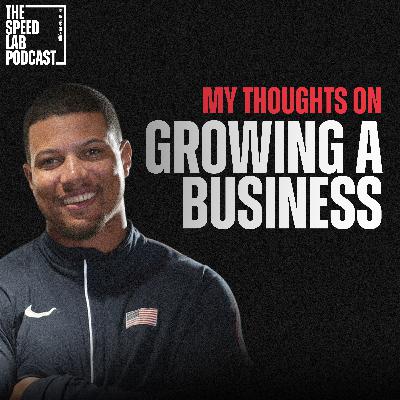
In this different type of episode, Les shares the messy, unpolished origin story: from building the first "Speed Lab" in a school closet, to testing elite athletes before the system even existed, to struggling financially while trying to scale something no one had ever built before. He breaks down how analytics, education, business systems, and community became the pillars that carried the company past 200 Speed Labs worldwide.
If you are interested in learning more about becoming a Speed Lab, schedule a time with our team at the link below.
https://universalspeedrating.com/learn-more-partner-with-universal-speed-rating-speed-lab-podcast
Episode Timestamps
00:00 – 01:02: Why this episode is personal + hitting 200 Speed Labs
01:02 – 03:40: How COVID, fatherhood, and a school basement led to the first Speed Lab
03:40 – 07:15: The first athletes tested & discovering what a "Speed Lab" really was
07:15 – 12:10: Standardizing speed, early testing chaos, and building the MPH database
12:10 – 17:17: Building software, courses, systems — and why community became the backbone
17:17 – 20:35: Burnout, overexposure, money struggles, and NFL players stepping up to invest
20:35 – 24:57: Finding his role, rediscovering the excitement, and blending family + business life
24:57 – 27:28: Lessons learned: Start before you're ready & simplify everything you build
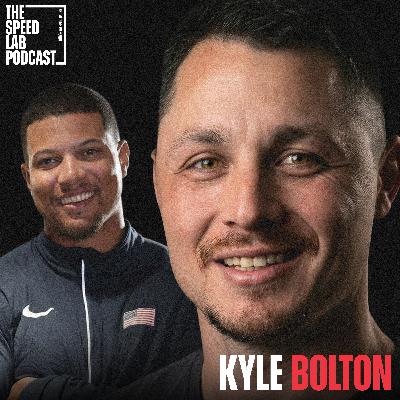
In this episode, Les Spellman sits down with Kyle Bolton, Oregon Football Director of Speed & Performance, to break down how a top program actually builds, measures, and keeps speed all year long. They get into Oregon's offseason blueprint, GPS and testing, how they balance Big Ten size with real game speed, and what NIL + the transfer portal mean for today's strength/speed coaches. Kyle also shares what separates college speed work from combine prep and what athletes should be doing now if they want a shot at the league later.
The Universal Speed Rating is looking to partner with more elite training businesses around the country with their Speed Lab partnership. If you are interested in systemizing your speed training and growing your business, click here [https://universalspeedrating.com/learn-more-partner-with-universal-speed-rating-speed-lab-podcast] to schedule a call with our team.
Episode Timestamps
* 00:00 – Intro & Kyle's path to Oregon
* 02:30 – Building Oregon's offseason speed plan
* 07:15 – Testing, GPS, and making data actually useful
* 12:00 – Getting bigger for the Big Ten without losing speed
* 21:30 – In-season speed, "go" drills, and game-speed standards
* 35:15 – Fastest dudes on the team & what they're hitting
* 42:25 – NIL, coaching future, and where the job is headed
* 55:25 – Combine prep vs college speed & advice to athletes

In this episode, Les Spellman sits down with legendary quarterback developer Jordan Palmer for a deep dive into what it really takes to build elite quarterbacks. Jordan has trained some of the NFL's biggest names - Josh Allen, Sam Darnold, Joe Burrow - and in this episode, he pulls back the curtain on his evaluation process, the mental and physical traits that separate good from great, and why quarterback development is about movement first, mechanics second.
Jordan shares never-before-told stories about Josh Allen's breakthrough during the COVID offseason, what Sam Darnold learned from watching Brock Purdy in San Francisco, and why the quarterback coaching industry is 20 years behind golf.
Episode Timestamps
0:00 – Intro: How Jordan would develop Les into a quarterback
3:21 – The mental and emotional filter: What Jordan looks for before anything physical
7:41 – How Jordan assesses learning ability and football IQ
9:39 – Breaking down film evaluation: Anticipation, accuracy, and spatial awareness
13:43 – The Josh Allen question: What changed year over year?
19:41 – Sam Darnold's secret weapon: Resilience and routine
20:00 – Quarterbacks who've been "counted out" and came back (Baker, Geno, Sam)
22:24 – Why Sam's year in San Francisco was more valuable than anyone realizes
26:24 – The LPGA swing coach revelation: "Is everyone doing this wrong?"
29:22 – The philosophy: Quarterback is about movement, not just mechanics
39:57 – Physical development before technique: The missing piece in youth QB training
43:11 – The nutrition gap: Parents invest in training but miss the fundamentals
53:28 – How youth sports schedules have changed—and why delivery systems must adapt
57:38 – Changing the conversation at the kitchen table
58:55 – The lowest hanging fruit for elite performance: Nutrition and sleep
1:02:12 – Where to find Jordan Palmer and QB Summit services
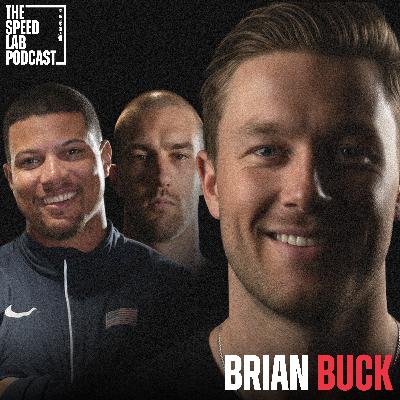
In this episode, Les and Danny sit down with Brian Buck to dive deep into force plate profiling, injury risk patterns, amortization mechanics, and how elite athletes can monitor and improve movement efficiency across the stretch-shortening cycle.
Brian breaks down practical training application, in-season vs off-season decision-making, and how technology, bloodwork, movement data, and performance therapy all fit together to support long-term athlete durability.
The Universal Speed Rating is looking to partner with more elite training businesses around the country. If you are interested in systemizing your speed training and growing your business, click here [https://universalspeedrating.com/learn-more-partner-with-universal-speed-rating-speed-lab-podcast] to schedule a call with our team.
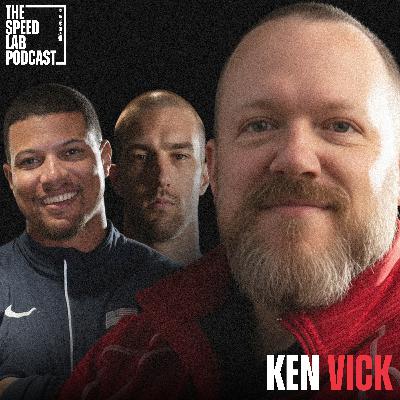
In this episode, Les and Danny are joined by Ken Vick, owner of Velocity Sports Performance, to break down the balance between precision and health in athlete development. They explore how overload, youth specialization, and modern training models impact injury trends across sports. From youth stress fractures to the NBA's rising injury rates, they dive into how coaches can build capacity without breaking athletes down.
The Universal Speed Rating is looking for more sports performance businesses to partner with to systemize your speed training and help grow your business. If you are interested in learning more, click here [https://universalspeedrating.com/learn-more-partner-with-universal-speed-rating-speed-lab-podcast] to schedule an introduction call with our team.
Episode Timestamps
* 00:00–02:00 – Intro and overview
* 09:00 – Balance vs. Precision in performance and health
* 14:00 – Chronic injuries in youth athletes
* 18:00 – Can we "out-train" bad workload strategies?
* 20:00 – Injury spikes in NBA, MLB, and youth sports
* 22:00 – Early specialization and long-term effects
* 26:00 – Training frameworks and proactive approaches
* 56:00 – Data-driven decision making for coaches
* 1:11:30 – Correcting the NBA injury stat & closing thoughts
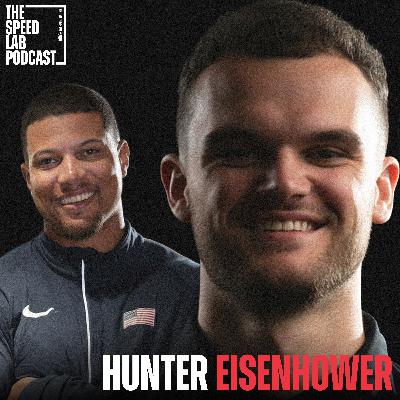
Hunter Eisenhower, Associate Head Coach, Sports Performance, for Arizona State men's basketball, breaks down his "Force System" training methodology and introduces his Archetype Quadrants.
See how Hunter challenges traditional strength training by focusing on four pillars: High Force (deceleration), Fast Force (speed/elasticity), Slow Force (tendon health), and Human Force (fundamental movement). Learn practical strategies for profiling athletes and designing programs that optimize performance—with or without force plates.
Interested in learning more about the Universal Speed Rating? Click here [https://universalspeedrating.com/learn-more-partner-with-universal-speed-rating-speed-lab-podcast]to schedule a short call with our team.
Episode Timestamps
00:00 - Introduction & Hunter's background
01:06 - Creating the Four System
02:15 - Fast Force: Speed & elasticity
02:42 - Slow Force: Tissue health & injury prevention
03:14 - Human Force: Fundamental movement patterns
03:38 - Archetype Quadrants explained
05:24 - Four System exercise examples
1:10:20 - Case study: Patellar tendinopathy
1:12:33 - Building normative data
1:13:21 - Simplifying force plate metrics
1:13:59 - The simplicity principle in coaching
1:15:14 - Practitioners adopting the system
1:16:40 - Closing thoughts & future episodes
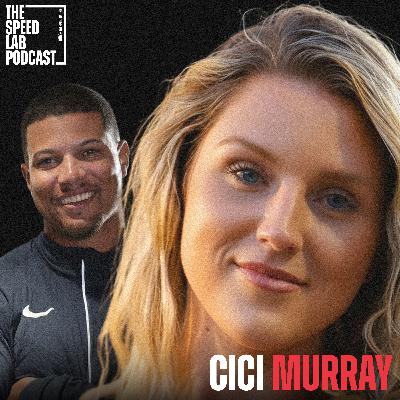
In this episode of The Speed Lab Podcast, Les and Cici dive deep into what it really takes to make an NFL 53-man roster — from the grind of training camp to the politics behind roster cuts. They discuss how performance, personality, and availability often outweigh raw talent, and share firsthand stories from elite athletes like T-Mac and others who've fought their way through the system.
The conversation expands into profiling athletes, tendon efficiency, data tracking, and how different physical and mental traits shape player development from high school to the pros.
Interested in learning more about the Universal Speed Rating? Click here [https://universalspeedrating.com/learn-more-partner-with-universal-speed-rating-speed-lab-podcast] to schedule a quick call with our team.
Episode Timestamps
00:00 – 05:30 • Opening banter & introduction
05:30 – 10:30 • The brutal reality of making a 53-man NFL roster
10:30 – 15:30 • What rookies face between college and the draft
15:30 – 20:30 • Balancing health, opportunity, and the grind
20:30 – 25:00 • Inside T-Mac's training structure and workload
25:00 – 30:00 • Force profiling, tendon efficiency, and athletic resilience
30:00 – 35:00 • Speed mechanics, reactive strength, and acceleration profiles
35:00 – 40:00 • Eccentric strength, propulsion, and elite-receiver analysis
40:00 – 45:00 • Collaboration between coaches, data, and athlete management
45:00 – 50:00 • Leadership, confidence, and women in sports performance
50:00 – 55:00 • GPS tech, game-speed tracking, and practice data
55:00 – 01:00:00 • Coaching creativity from NFL pros to high school athletes
01:00:00 – 01:04:30 • Work-life balance, family priorities, and future goals
In this episode of The Speed Lab Podcast, Les and Danny dive into the rising problem of youth sports injuries, the balance between health and performance, and why early specialization is hurting athletes more than helping them. They break down how the NFL Combine creates short-term athletes instead of long-term pros, the responsibility shared by coaches, parents, and agents, and why true longevity comes from smarter planning, recovery, and communication.
Interested in learning more about the Universal Speed Rating? Click here [https://universalspeedrating.com/learn-more-partner-with-universal-speed-rating-speed-lab-podcast] to schedule a quick call with our team.
Timestamps
* 00:00 – 02:22 – Opening banter and setting the stage
* 02:22 – 06:12 – Rise in youth injuries since 2000; early specialization issues
* 06:12 – 10:10 – Balancing performance vs. health; smarter stress management
* 12:01 – 13:32 – S&C's growth and risks of over-relying on data
* 15:31 – 17:18 – NFL Combine critique; Dr. Marcus Elliott insights
* 23:03 – 25:56 – Longevity and dynamic athlete profiles
* 35:37 – 41:27 – ACLs, UCLs, and stress fractures in youth sports
* 46:52 – 49:52 – Advice for parents: breaks, oversight, and avoiding early specialization
* 53:26 – 57:44 – NFL rookies' transition struggles and workload spikes
* 60:15 – 63:16 – Coaching accountability and communication
* 67:02 – 70:42 – NFL as a starting point, not the end; athlete ownership
* 73:28 – 76:03 – Evolution of strength coaches and embracing variability
* 76:21 – End – "Strong enough is strong enough"; closing thoughts
In this episode of The Speed Lab Podcast, Les Spellman and Kyle Bolton dive into how athletes can unlock new levels of performance by rethinking training loads, recovery, and the role of velocity-based profiling. From balancing intent with execution to how coaches can make training data meaningful for both athletes and parents, this episode is packed with insights that bridge science, coaching, and real-world application.
Interested in learning more about the Universal Speed Rating? Click here [https://universalspeedrating.com/learn-more-partner-with-universal-speed-rating-speed-lab-podcast] to schedule a quick call with our team.
Episode Timestamps
* 00:00 – Intro Setting the stage for today's focus on athlete development and training insights.
* 02:15 – Training Loads & Velocity-Based Profiling Why profiling athletes by velocity matters and how it can impact speed and strength outcomes.
* 08:40 – Recovery & Adaptation Discussion on balancing intensity with proper recovery so athletes can actually progress instead of burn out.
* 15:05 – Communicating Data to Parents & Athletes Breaking down "coach speak" into simple, practical terms so parents and athletes buy in.
* 22:30 – Event & Camp Preparation How AI tools and structured planning can reduce guesswork for coaches organizing camps and clinics.
* 29:45 – Closing Thoughts Final takeaways on bridging the gap between science, coaching, and athlete results.

In this episode of The Speed Lab Podcast, Les and Danny dive deep into the lessons from the NFL Combine, athlete rehab, and the balance between art and science in coaching. They share behind-the-scenes insights on calf strain rehab, the role of connective tissue, the challenges of interdisciplinary work, and how to create individualized plans inside a team environment.
Interested in learning more about the Universal Speed Rating? Click here [https://universalspeedrating.com/learn-more-partner-with-universal-speed-rating-speed-lab-podcast] to schedule a quick call with our team.
Episode Timestamps
* 0:00 – 4:30 | Crash course beginnings, chaos, and lessons learned
* 4:30 – 11:00 | Solving problems in human performance & staying curious
* 15:30 – 17:15 | Quadrants as a blueprint for sprint mechanics
* 26:30 – 33:00 | Inside calf strain rehab: long-duration isometrics, recovery, and daily oversight
* 35:00 – 37:15 | Connective tissue vs. muscle dominance — why strains happen
* 41:00 – 43:30 | Why rest and separation of health/performance fails athletes
* 53:30 – 55:30 | The paradox of concentric vs. eccentric force
* 58:30 – 1:04:00 | Foot mechanics, posterior tibialis, and performance impact
* 1:10:30 – 1:13:30 | Leadership lessons: range of motion, reliability, and profiling
* 1:16:40 – 1:19:45 | Individualization within team programming
* 1:26:15 – 1:29:45 | NFL complexity and building continuity of care
* 1:33:00 – End | The future of performance, human connection, and relationships
In this solo episode of The Speed Lab Podcast, Les Spellman breaks down one of the most misunderstood aspects of sprinting: the stretch shortening cycle (SSC) and the critical role of pre-tension. Drawing from research, coaching experience, and case studies, Les explains why faster sprinters actually produce higher braking forces, how tendons act as both shocks and springs, and why athlete development often overlooks eccentric qualities.
Interested in learning more about the Universal Speed Rating? Click here [https://universalspeedrating.com/learn-more-partner-with-universal-speed-rating-speed-lab-podcast] to schedule a quick call with our team.
Episode Timestamps
* 00:00 – Intro & why this topic matters
* 01:15 – Braking forces & the stretch shortening cycle explained
* 05:00 – Early coaching mistakes & concentric-only bias
* 08:00 – Why concentric strength doesn't separate elite sprinters
* 10:15 – Hypothesis: performance = pretension + braking + transition + propulsion
* 11:00 – Tendons as shock absorbers & springs
* 13:30 – Force plates as a window into SSC
* 17:00 – Case study: Jacob Robinson's eccentric RFD breakthrough
* 21:00 – Case study: River Cracraft tendon remodeling
* 23:30 – Case study: Brandon Jetter improving pretension & ground contact
* 28:45 – Pretension mechanics & dribble drills
* 31:00 – Practical takeaways from force plate metrics
* 35:15 – Training interventions: yielding/overcoming isometrics, reflexive eccentrics, plyos
* 38:45 – Programming ideas (slow, high, and fast force days)
* 42:00 – Redefining "stiffness" & SSC strategy
* 43:20 – Wrap-up, resources, and closing thoughts
In this episode, Les and Danny sit down with Ken Clark. Ken is a leading expert in speed and sprint biomechanics, serving as a professor in the Department of Kinesiology at West Chester University in Pennsylvania. He holds a Ph.D. in Applied Physiology and Biomechanics from Southern Methodist University and is recognized for his scientific research on the mechanical factors that influence athletic performance and injury mechanisms, with a special focus on speed development and sprint technique.
Interested in learning more about the Universal Speed Rating? Click here [https://universalspeedrating.com/learn-more-partner-with-universal-speed-rating-speed-lab-podcast] to schedule a quick call with our team.
Episode Timestamps
* 00:00 – Intro | Hero, hardship, highlight — Dr. Clark's background
* 01:30 – Sprint Mechanics | Vertical vs. horizontal forces
* 04:00 – Acceleration & Top Speed | How forces change over distance
* 09:00 – Research Insights | What separates elite sprinters
* 13:25 – Two-Mass Model | How sprinters strike the ground
* 18:00 – Foot vs. Ground Speed | Surprising biomechanics
* 23:07 – Braking Forces | Why faster sprinters brake harder
* 29:30 – Tendon & Stiffness | Pre-activation and connective tissue
* 44:30 – Injury vs. Performance | Foot mechanics and stiffness balance
* 52:30 – Training Takeaways | Plyos, strength, and sprint programming
* 01:01:55 – Closing Thoughts

Comments

Download from Google Play

Download from App Store
 United States