


 Claim Ownership
THE TRICKCAST: Boardroom Scholars & Magicians
Subscribed: 0Played: 0
Subscribe

© The TrickCast
Description
The Trickcast is where business history, real-world hustle, and strategic magic collide.
Hosted by Amir Abdelazim and Alexander Siletsky, this show pulls back the curtain on legendary corporate plays, hard-earned personal lessons from global boardrooms and crisis zones, and the timeless “tricks” that turn strategy into impact.
Each episode blends business history with practical tricks
and occasional conversations with global leaders.
And we always end with the same question:
What does this mean for the next generation of entrepreneurs?
Hosted by Amir Abdelazim and Alexander Siletsky, this show pulls back the curtain on legendary corporate plays, hard-earned personal lessons from global boardrooms and crisis zones, and the timeless “tricks” that turn strategy into impact.
Each episode blends business history with practical tricks
and occasional conversations with global leaders.
And we always end with the same question:
What does this mean for the next generation of entrepreneurs?
22 Episodes
Reverse
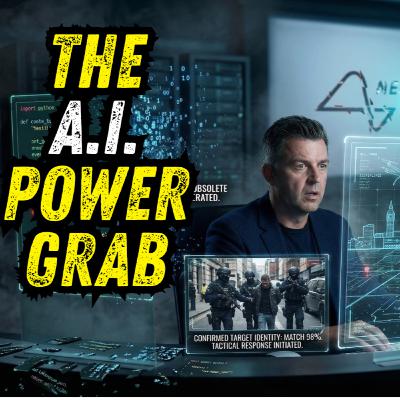
A 13-year-old kid types a joke into ChatGPT... and moments later, he’s arrested by authorities using predictive surveillance software. We are no longer approaching the world of Minority Report - we are living inside of it.In this special masterclass episode of The TrickCast, Alex Siletsky and Amir Abdelazim fuse their most profound conversations on Artificial Intelligence into one continuous journey down the rabbit hole. We track the exact sequence of how AI is rewriting the human experience, the software industry, and global warfare.This episode connects three industry-shaking stories:👁️ The All-Seeing State & Predictive ArrestsHow predictive policing and Palantir’s mass surveillance are building the ultimate algorithmic panopticon, leading to real-world arrests based on AI-flagged intent.🧠 Neuralink & Biological HackingElon Musk’s Neuralink and the terrifying prospect of literally hacking human biology and altering hormones for space travel. We debate the ethics of the ultimate biological control.💻 The SaaS-Pocalypse & The Death of CodingAnthropic's Claude is allowing a single person to replace entire software engineering teams by building end-to-end products in hours. Is the human developer officially obsolete?TOP STORIESSci-Fi Warfare is Here: How Anduril founder Palmer Luckey is ripping high-density lasers and VR war-rooms straight out of Halo and deploying them to the modern battlefield.Apple’s Emotional AI Masterstroke: Inside the quiet, aggressive acquisitions giving Siri the power to read your facial micro-expressions and map your emotional intelligence.The 7 Layers of the AI Economy: From raw compute to chip design, we decode who is making the 75% margins- and who is doomed to become a low-margin "dumb pipe" (Featuring insights from tech veteran Peter Larnholt).Key Themes:Predictive Policing & Algorithmic SurveillanceElon Musk, Neuralink, and Biological HackingPalmer Luckey & Sci-Fi Defense TechAnthropic, Claude, and the "SaaS-Pocalypse"Apple Intelligence & Facial Micro-ExpressionsOrbital Data Centers & Space LasersThe 7 Hidden Layers of the AI Value Chain🎧 TIMESTAMPS00:00 – Intro: Predictive Arrests & The AI Reality Check01:45 – Palantir and the Rise of Algorithmic Surveillance08:20 – Elon Musk, Neuralink & Hacking Human Hormones15:10 – Palmer Luckey: Bringing Sci-Fi Weapons to the Battlefield23:30 – Anthropic, Claude, and the "SaaS-Pocalypse"31:15 – Apple’s Secret Plan for Emotional AI & Micro-Expressions38:40 – Orbital Data Centers & Space Lasers45:20 – The 7 Hidden Layers of the AI Economy🎙️ About The TrickCast:For founders, engineers, and strategists, The TrickCast dissects the hidden power plays and physical shifts in technology. From the cloud to your car, your glasses, and eventually, your brain - we cover the rivalries shaping the future.👉 Subscribe for more on Tech Strategy, AI Rivalries & Business Innovation.#TheTrickCast #ArtificialIntelligence #Palantir #Neuralink #Anthropic #FutureOfTech #PalmerLuckey #SaaSPocalypse #Cybersecurity #TechPodcast
From hacking TV broadcast signals with an Amiga in the 90s to decoding the $1 trillion "SaaS-pocalypse," the AI revolution is fundamentally changing how we build and value technology.In this episode of The TrickCast, Alex Siletsky and Amir Abdelazim sit down with global technology leader and excom.ai investor Peter Larnholt to uncover the hidden economics of the AI boom. We discuss why foundational models might become the next "dumb pipes" and how AI is shifting the power dynamic from how to code to what to build.This episode connects three industry-shaking stories:🔥 The AI SaaS-PocalypseAnthropic's Claude is enabling users to build and release end-to-end products in hours, effectively threatening massive chunks of the traditional SaaS market cap. We debate whether the software developer is dead, or if the barrier to entry has simply been leveled.🛡️ The Cybersecurity Arms RaceWith Anthropic explicitly entering the cybersecurity space, we break down the double-edged sword of AI. It can harden enterprise firewalls, but it also equips bad actors with unprecedented capabilities for impersonation and automated attacks.💰 The 7 Layers of the AI Value ChainWhere is the real money being made in 2026? Peter breaks down the margins across the AI ecosystem—from the 3-5% margins of raw materials to the 75% margins enjoyed by chip designers—and why foundational models might be a terrible investment.TOP STORIESThe Cognizant Paradox: If AI is killing coding jobs, why did Cognizant just announce they are hiring an additional 25,000 software developers? We analyze why AI changes the "how," but human vision is still required for the "what."Data Sovereignty & The Cloud Act: The looming battle over data jurisdiction. We explore the impossible position global tech companies face when local laws clash directly with US government mandates.Boardroom Magic & Leadership: Peter shares his journey from leading massive telecom transformations across Africa and Latin America to his best career advice: "learn math and physics" and embrace the role of the Boardroom Magician.Key Themes:Anthropic’s Growth & Constitutional AIThe "SaaS-Pocalypse" and the Future of DevelopersThe 7 Layers of AI Economics (Hardware vs. Software Margins)Cybersecurity Defenses vs. AI Mind VirusesData Sovereignty & The Cloud ActEmbracing Mistakes and Boardroom Leadership🎧 TIMESTAMPS00:00:00 – Intro: Anthropic's Massive Valuation & The "SaaS-Pocalypse"00:01:18 – Guest Intro: Peter Larnholt's Global Tech Journey00:04:16 – From 90s Amiga Hacks to Telecom Innovation00:12:34 – The Philosophy of a "Value Creator" & excom.ai00:16:09 – Telecom Transformations in Emerging Markets00:25:45 – Anthropic’s Rise, Founders & Constitutional AI00:32:44 – Is AI Killing the Software Industry?00:38:02 – Why Cognizant is Hiring 25,000 Developers Despite AI00:45:50 – Jensen Huang's Theory: AI Changes the "How", Not the "What"00:48:15 – AI in Cybersecurity: Protection vs. Amplified Threats00:53:58 – Government Tech, Data Sovereignty & The Cloud Act00:59:13 – The 7 Layers of the AI Value Chain01:05:49 – Will Telecoms and AI Models Become "Dumb Pipes"?01:10:57 – Career Advice: Learn Math, Physics, and Embrace Mistakes01:13:19 – Boardroom Tactics: The Magician vs. The Scholar🎙️ About The TrickCast: For founders, engineers, and strategists, The TrickCast dissects the hidden power plays and physical shifts in technology. From the cloud to your car, your glasses, and eventually, your brain - we cover the rivalries shaping the future.👉 Subscribe for more on Tech Strategy, AI Rivalries & Business Innovation.#TheTrickCast #Anthropic #SaaS #FutureOfTech #Cybersecurity #TechPodcast #PeterLarnholt #AIStrategy #Leadership
From building Egypt’s first 3G network to Apple’s high-stakes pivot into emotional AI, the future of technology is as much about cultural nuances as it is about hardware.In this episode of The TrickCast, Alex Siletsky and Amir Abdelazim sit down with telecom veteran Yehia to uncover the hidden leadership tactics behind massive, nation-spanning tech rollouts. We discuss why localizing AI is the next geopolitical frontier and how tech giants like Apple are using a 1997 survival playbook to win today's AI wars.This episode connects three industry-shaking stories:🌍 The Telecom Leapfrog & National InfrastructureDeveloping nations skipped landlines entirely and jumped straight into the mobile revolution. We explore the massive infrastructural challenge of launching Etisalat Egypt's 3G and 4G networks, and the unique cultural leadership required to drive national tech adoption under pressure.🍏 Apple’s Master AI PivotTim Cook is running Steve Jobs’ 1997 survival playbook. After a delayed entry into the AI race, Apple is making aggressive acquisitions to integrate emotional intelligence, facial micro-movements, and Google Gemini into Siri. We debate if this "late but best" strategy will allow them to dominate the market.🧠 The Rise of Sovereign AIEnglish is the default language of the internet, but the AI era requires something deeper. We break down the necessity of localized LLMs that don't just translate, but actually "think" in cultural dialects (like Egyptian Arabic)—protecting national identity from outside influence and global "mind viruses."TOP STORIESApple Intelligence & The 1997 Playbook: We analyze Apple's frantic catch-up in the AI race. From stopping the bleeding with OpenAI to acquiring stealth startups for emotional AI, is Tim Cook mirroring Steve Jobs' most desperate, brilliant move?Sovereign AI and Cultural Firewalls: The world is building digital borders. We discuss the critical difference between translating text and building an LLM that inherently understands and reflects local cultural values.Leadership from the Trenches: What does it take to deploy a nation's telecom grid? Yehia shares battle-tested leadership advice on hiring for attitude, creating a "sense of urgency," and the "NASA Janitor" method for motivating engineers.Key Themes:Building National Telecom Infrastructure (3G/4G in MENA)Apple's "Late but Best" AI Strategy & AcquisitionsSteve Jobs' 1997 Turnaround PlaybookSovereign AI & Culturally Localized LLMsHiring for Attitude vs. Technical SkillThe Magician vs. Scholar Leadership Styles🎧 TIMESTAMPS00:00 – Intro: Telecom Leadership & Tech Expansion in the Middle East00:04:16 – Building Egypt’s First 3G Network00:08:46 – Tech Hiring Strategy: Why Attitude Beats Engineering Knowledge00:14:15 – How Developing Nations Adopted Mobile Broadband00:19:54 – Project Management Secrets of a National 4G Infrastructure Launch00:24:00 – The "NASA Janitor" Leadership Lesson00:27:53 – How to Motivate Engineering Teams in the MENA Region00:34:52 – Apple Intelligence 2026: Analyzing Tim Cook’s Device-Based AI Strategy00:37:38 – Apple’s Secret Acquisitions: Integrating Emotional AI & Gemini into Siri00:45:25 – How Steve Jobs’ 1997 Survival Playbook Guides Apple Today00:54:29 – Why Governments Are Building Localized LLMs in 202600:57:07 – Cultural AI: Building the Cognitive Thinking Layer for Arabic LLMs01:01:54 – Boardroom Tactics: Are You a Leadership Scholar or a Magician?🎙️ About The TrickCast: For founders, engineers, and strategists, The TrickCast dissects the hidden power plays and physical shifts in technology. From the cloud to your car, your glasses, and eventually, your brain - we cover the rivalries shaping the future.👉 Subscribe for more on Tech Strategy, AI Rivalries & Business Innovation.#TheTrickCast #SovereignAI #TelecomLeadership #TimCook #SteveJobs #AIStrategy #TechPodcast #LeadershipLessons #TechFounders
Summary:From the massive rollout of Australia’s social media ban to Iran’s total internet blackout and the commercial launch of Boston Dynamics' Atlas, 2026 is exposing a darker, more controlled reality for global technology.In this episode of The TrickCast, Alex Siletsky & Amir Abdelazim go beyond the headlines to reveal how governments and tech giants are reclaiming control over the digital landscape. We discuss why being "offline" is now a geopolitical weapon and how the next decade of robotics is shifting from entertainment to industrial dominance.This episode connects three industry-shaking stories:The Age of the Great Ban — Australia has officially deactivated over 4.7 million social media accounts for users under 16. We analyze the global ripple effect as Europe and the UK consider following suit -and the uncomfortable question: is this about safety, or state-level control over the next generation’s ideology?Digital Darkness in Iran - A total communications blackout has left 92 million people without a voice amid historic protests. We explore the technical "kill switches" used by dictatorships and the urgent global debate on whether internet access should finally be declared a fundamental human right.Atlas Goes Commercial — After decades of "dancing" prototypes, Boston Dynamics’ all-electric Atlas has entered production. With its first fleets shipping to major manufacturing partners, we break down the roadmap for robots to enter nursing homes and medical roles by 2028.TOP STORIESThe Social Media Ban: 4.7M Accounts GoneWe analyze Australia’s world-first under-16 law. Is the "Dopamine Slot Machine" finally being regulated, or are we witnessing the end of digital freedom for the youth?Internet Blackouts as WeaponsThe case study of Iran and the "savage" tech used to suppress global communication. We discuss why a kill switch is the ultimate tool for a "New World Order."The Father of Robotics: Atlas is HereA deep dive into Marc Raibert’s "build it, break it, fix it" philosophy at Boston Dynamics and how Atlas is moving from the lab to your household.Key Themes:Australia’s Under-16 Social Media Ban & Digital IDThe Psychology of Algorithmic AddictionInternet Kill Switches & National SecurityThe UN Debate: Internet as a Human RightBoston Dynamics’ Commercial Roadmap (2026–2039)Leadership Lessons: Marc Raibert’s Engineering Culture🎧 TIMESTAMPS00:00 – Intro: The 2026 New World Order in Tech02:28 – The EU vs. US: Why Europe is "bumping" its own innovation09:35 – Australia’s Social Media Ban: 4.7M accounts deactivated13:16 – The Dopamine Slot Machine: How algorithms were designed for addiction15:52 – Under-16 Age Verification: Facial scanning and ID requirements34:13 – Iran’s 2026 Internet Shutdown: Cutting off 92 million people42:41 – Starlink & Global Mesh Networks: Can we ever truly bypass a kill switch?49:35 – Is Internet Access a Human Right? The 2026 UN Debate51:04 – Boston Dynamics Atlas: The move from hydraulics to all-electric production54:06 – Robot Roadmap: From factory floors to nursing jobs by 202859:13 – The Robot "Kill Switch": Establishing the 3 Laws of Robotics01:01:15 – Build it, Break it, Fix it: The Marc Raibert Legacy🎙️ About The TrickCast: For founders, engineers, and strategists, The TrickCast dissects the hidden power plays and physical shifts in technology. From the cloud to your car, your glasses, and eventually, your brain - we cover the rivalries shaping the future.👉 Subscribe for more on Tech Strategy, AI Rivalries & Business Innovation.#TheTrickCast #SocialMediaBan #IranBlackout #BostonDynamics #AtlasRobot #2026Tech #DigitalRights #Robotics #CyberSecurity #FutureOfTech #AIStrategy #TechPodcast
From retina projection replacing smartphones, to Russia’s brute-force "dishwasher" strategy for semiconductors, to Mark Zuckerberg’s quiet talent heist, 2026 is kicking off a massive "Agricultural Revolution" in AI. This week’s TrickCast exposes the physical reality of the future - where phones die, cars think faster than humans, and nations fight for computing survival.This episode connects three industry-shaking stories:The Death of the Screen – Why tech giants are killing the smartphone in favor of "Retina Projection" and how close we really are to brain implants.The Global Chip War – ASML’s monopoly is under attack. China is reverse-engineering the machines, while Russia ignores size entirely to build "dishwasher-sized" supercomputers.Physical AI & Corporate Heists – Why Mercedes needs Nvidia to survive, and why Meta’s latest acquisition proves Zuckerberg isn't buying companies anymore—he’s stealing talent.TOP STORIESKilling the Screen: The Post-Phone EraWe analyze the biggest news from CES 2026. The phone is now "Enemy of the State." We discuss the shift to AR glasses that project directly into your eyes and the uncomfortable truth: if you don’t get an implant, you will fall behind.The Chip War: "We Don't Care About Size"While the West fights for 2-nanometer chips, Russia and China are rewriting the rules. We break down how China is cloning ASML’s $300M machines and why Russia is using "dishwasher" logic to solve the compute deficit. Is brute force the new strategy?Physical AI: Cars & Corporate HeistsNvidia isn't just making chips; they are building brains for Mercedes. We debate why a 3-second lag in AI is a death sentence on the Autobahn. Plus, Meta’s aggressive acquisition of "Manos" proves Zuck is playing a different game: the war for Agent AI talent.Key Themes:CES 2026 & The "Agricultural Revolution" of AIBio-implants vs. Handheld devicesASML’s Monopoly vs. Chinese Reverse EngineeringRussian tech strategy: Brute force computeNvidia’s role in the German Auto IndustryLeadership lessons: Zuckerberg’s "Talent Heist" strategy🎧 In this episode of The TrickCast, Alex Siletsky & Amir Abdelazim break down:00:00 – Intro: The Agricultural Revolution of AI 01:45 – Killing the Screen: Why the phone is the enemy 10:00 – CES 2026: Retina Projection & AR Glasses 12:15 – The Cyborg Future: "We’re all getting implants" 14:40 – Nvidia + Mercedes: Why 3 seconds is too slow 22:56 – The Chip War: China vs. ASML 29:43 – The $300M Printer Monopoly 32:50 – Russia’s Strategy: "We don't care about size" 34:39 – The Dishwasher Theory 39:48 – Meta’s Heist: Zuckerberg stealing talent, not companies 46:16 – Final Predictions: Physical AI is the trend of 2026 🎙️ For founders, engineers, and strategists: This episode dissects the physical shift of AI - from the cloud to your car, your glasses, and eventually, your brain - and why hardware is the new battlefield.👉 Subscribe for more bold conversations on tech rivalries, power plays, and the hidden “tricks” behind business success.#CES2026 #Nvidia #ChipWar #ASML #Meta #TechPodcast #TheTrickCast #Cyberpunk #FutureTech #RussiaTech #Implants #AI
From the massive potential merger of Netflix and Warner Bros, to Motorola’s pivot into military-grade "self-healing" networks, to Sam Altman’s panic button at OpenAI, this week’s TrickCast exposes the hidden strategies defining the future of media, defense, and AI.This episode connects three industry-shaking stories:Netflix acquiring Warner Bros Discovery - A look at the "traumatized organizations" involved and why this deal could change Hollywood forever.Motorola’s Silent Domination - While you weren't looking, they moved from flip phones to building the "self-healing" communication networks of the future.OpenAI’s "Code Red" - Why ChatGPT might be the next Netscape, and how Google Gemini is quietly winning the ecosystem war.TOP STORIES 1. Netflix + Warner Bros: The Ultimate Monopoly? We analyze the rumors of Netflix buying the debt-heavy giant. Can the culture of "No Rules Rules" survive the legacy of Batman and Game of Thrones?2. Motorola is Back (But Not for Phones) A deep dive into Motorola’s acquisition strategy in mission-critical comms. We discuss "self-healing" mesh networks that work when everything else fails—from terrorist attacks to natural disasters.3. Is OpenAI Dying? Sam Altman declares "Code Red" as Google Gemini flexes its ecosystem muscle. We debate if OpenAI is destined to be the "Netscape" of the AI revolution—first to market, but crushed by the giants.Key Themes:- Media Consolidation: Streaming vs. Theater models- "Traumatized Organizations" & Post-Merger Integration- Mission Critical Tech & Self-Healing Networks- The Netscape vs. Microsoft parallel for OpenAI- Google Gemini’s ecosystem advantage- Leadership lessons: Reed Hastings vs. David Zaslav vs. Sam Altman🎧 In this episode of The TrickCast, Alex Siletsky & Amir Abdelazim break down:00:00 – Intro: Three stories, one theme: Culture Trumps Strategy01:00 – The rumor: Netflix buying Warner Bros Discovery04:36 – The AT&T disaster: How we got here08:58 – David Zaslav’s brutal cleanup job16:42 – Why Netflix actually wants the debt21:27 – Antitrust fears & "Traumatized Organizations"24:45 – Motorola’s smart new acquisition26:30 – What is a "Self-Healing Network"?30:38 – Why "boring" mission-critical tech wins33:56 – OpenAI declares "Code Red"36:00 – The Netscape vs. Microsoft history lesson41:50 – Why Google Gemini is winning the long game44:57 – Final thoughts: Culture is the key🎙️ For founders, engineers, and strategists: This episode dissects the cultural clashes behind the biggest M&A rumors and why being "first" in AI doesn't mean you'll be the last one standing.👉 Subscribe for more bold conversations on tech rivalries, power plays, and the hidden “tricks” behind business success.#Netflix #WarnerBros #OpenAI #GoogleGemini #Motorola #TechPodcast #TheTrickCast #MergersAndAcquisitions #BusinessStrategy #SamAltman #AIWar #MissionCritical
SummaryIn this episode, Amir Abdelazim and Alex Siletsky break down three major stories shaking the tech, aviation, and geopolitical landscape:A viral rumor about Tim Cook leaving Apple, and what it reveals about leadership, innovation cycles, and whether Apple is losing momentum without a visionary founder.A shocking Airbus near-crash triggered by a solar event, exposing how vulnerable modern aircraft are to space weather, sensor interference, and software-dependent aviation systems.Russia’s newest next-gen drone units, including animal-shaped recon drones that mimic wildlife — raising serious questions about asymmetric warfare, surveillance, and the future of battlefield AI.Across the conversation, one theme emerges: Leadership, safety, and power are entering a new era — one shaped by software, sensors, and geopolitics.Key Topics:Apple may be entering its most uncertain decade since Steve JobsTim Cook’s leadership style vs. the visionary-founder modelSolar storms pose a real risk to aircraft sensors & autopilot systemsEurope’s aviation safety protocols may not be ready for space-weather eventsRussia’s new biomorphic drones could redefine stealth and reconnaissanceAI-driven warfare is scaling faster than global regulationInnovation gaps often come from leadership stagnation — not technologyTime Stamps:00:00 – Welcome back to The TrickCast00:40 – Viral topic: Is Tim Cook actually leaving Apple?03:10 – Apple without a founder: innovation vs. stagnation06:25 – The Steve Jobs comparison trap08:45 – Solar flare hits Airbus systems — what really happened11:30 – How vulnerable modern aircraft are to sensor interference14:05 – Aviation safety, autopilot risk & “software-first flying”17:40 – Russia’s new biomorphic drones explained20:55 – Why animal-shaped drones are a battlefield advantage23:40 – AI warfare: low cost, high disruption27:10 – The West’s drone gap — and why it matters30:45 – Leadership, risk & why companies fall behind33:20 – Apple, Airbus, and Russia — the common thread36:50 – Closing thoughts — what this means for the next decade🎙️ If you're a founder, technologist, or geopolitical thinker, this episode reveals how leadership, aviation safety, and AI warfare are colliding to shape the next decade.👉 Subscribe for more bold conversations on tech, power, and the hidden “tricks” behind global change.
SummaryIn this episode, Amir Abdelazim and Alex Siletsky explore two massive breakthroughs redefining the future of robotics and human-machine interaction:NEO, a new generation humanoid robot designed for homes - and Qualtrics’ $6.5B acquisition of Forsta, giving AI the ability to measure human emotions at scale.They break down how NEO signals a shift from factory robots to empathetic companions that can sense touch, respond to human cues, and soon perform complex tasks — including high-risk surgeries.Then they examine how Qualtrics is quietly positioning itself as the “emotional operating system” for hospitals, airports, retailers, and potentially… future robots.Across the conversation, one theme emerges:Robots are gaining bodies + and now they’re learning feelings.Main Themes:And when physical robotics meets emotional AI, everything about work, healthcare, leadership, and human relationships may change.• NEO represents the transition from industrial robots to trustworthy, home-scale humanoids• Robots will increasingly take over dangerous, dirty, and draining jobs• Emotional analytics is becoming the next frontier of AI - and Qualtrics just bought the missing piece• “Turning feelings into data” will reshape healthcare, customer experience, and leadership• Future workers may manage fleets of robots, not tasks• Emotional robots challenge our assumptions about empathy, trust, and human connectionChapter00:00 – Welcome back to The TrickCast00:25 – Robot rights joke & episode intro01:54 – NEO humanoid robot enters the home04:13 – Why robots should take dangerous, dirty & draining work07:14 – The future of work: creativity, UBI & robot fleets12:15 – Trust, leadership & Warren Buffett’s rule14:14 – Qualtrics buys Forsta for $6.5B — what it unlocks16:03 – Turning emotions into data — the father & son example18:19 – Hospitals, airports & training empathetic AI19:16 – Emotional robots replacing managers & HR?21:08 – Why VCs love the deal & what comes next23:50 – Wearables, biometrics & “robots that feel”24:40 – Closing thoughts - emotional AI + robotics = next interface🎙️ If you're a founder, technologist, or futurist, this episode reveals how emotional AI and humanoid robotics may converge into the biggest interface shift since the smartphone.👉 Subscribe for more bold conversations on tech, power plays, and the hidden “tricks” behind business success.
SummaryIn this episode, Amir Abdelazim and Alex Siletsky break down three major stories reshaping tech and geopolitics: Elon Musk’s newly approved $1 trillion Tesla package, the rise of robot doctors and humanoid labor, and the EU’s controversial “Democracy Shield” aimed at policing misinformation across Europe.They explore whether Elon’s deal is visionary or reckless, why humanoid robots may soon replace entire categories of work, and how Europe’s new regulation could redefine speech, truth, and political influence online.The discussion also touches on OpenAI’s rapid evolution and whether the company is now effectively “run” by AI systems themselves.Across these stories, one theme emerges - the future will be shaped by power, control, and who gets to define truth in an AI-driven world.Key Ideas• Elon Musk’s $1T approval signals Tesla’s total dependence on one leader• Humanoid robots could democratize medical care - or disrupt entire labor markets• The EU’s Democracy Shield raises hard questions: who decides what’s “misinformation”?• OpenAI’s speed suggests AI may be running more of the company than humans• Talent, innovation, and governance are becoming the real battlegroundsSound Bites- “Business isn’t a democracy - you hope the dictator is a kind one.”- “Robots may outnumber entire populations.”- “Who defines truth? Who defines misinformation?”- “AI might be running OpenAI faster than humans ever could.”Chapters:00:00 – Welcome back to The TrickCast00:30 – Elon Musk’s $1T Tesla pay package approved01:37 – Humanoid robots and the future of global healthcare04:52 – By 2030, robots may outnumber people in some regions05:12 – OpenAI goes for profit — and aims for a $1T IPO07:25 – Is OpenAI already partially run BY AI?09:23 – How AI agents are starting to build and test products autonomously10:33 – Could Sam Altman let ChatGPT run the company’s roadmap?11:21 – What the EU’s “Democracy Shield” is really about12:19 – Misinformation, truth policing & dangerous precedent13:07 – Who decides what’s “true”? Mandela, censorship & narratives14:06 – Why education systems are breaking democracy15:15 – Governments, intelligence agencies & controlling speech17:04 – Europe’s political tensions and interference battles18:44 – The real problem: declining value for taxpayers22:12 – Why companies are fleeing Germany for Spain & Portugal23:22 – Workforce ethics vs high taxes24:22 – Transition to next episode (robots & labor)🎙️ If you're a founder, technologist, policymaker, or futurist, this episode shines a spotlight on the structural forces - political, economic, and technological - that will define the next decade.👉 Subscribe for more bold conversations on tech, power, and the hidden “tricks” behind global change.🔔 The TrickCast: Boardroom Scholars & Magicians - decoding modern innovators with ancient wisdom.
SummaryIn this episode, Amir Abdelazim and Alex Siletsky break down one of the most important tech leadership battles of our time: Elon Musk vs Jensen Huang — and what Tesla vs NVIDIA reveals about the future of AI, power, and innovation.They unpack Elon’s controversial $1 trillion Tesla compensation package, exploring whether it's visionary, necessary, or an ego-driven gamble. Then they contrast it with NVIDIA’s historic $5 trillion valuation, analyzing the radically different leadership style of Jensen Huang — a founder who built a global empire quietly, methodically, and with a deep engineering culture that compounds.->This is part 2/2 of this conversation - check the previous episode for more context. The conversation expands into bigger questions:– What happens to Tesla if Elon disappears tomorrow?– Is NVIDIA structurally safer because it isn’t built around one man?– Why does leadership continuity matter more than ever in the age of AI?– And which company is truly better positioned for the next decade?The episode also revisits the rapid evolution of OpenAI, questioning whether a public-benefit corporation can stay true to its mission - and what happens when AI giants start blending monetization with moral messaging.Across these stories, one pattern emerges:Great companies are built differently - some around a single star, others around a neural network of leaders.And in the AI era, that difference may decide who survives disruption.Elon Musk’s $1T package highlights Tesla’s dependence on a single iconic leader.Jensen Huang built NVIDIA on distributed intelligence - a “neural network” of 60+ empowered leaders.Tesla’s future may be more volatile; NVIDIA’s may be more structurally resilient.Compensation packages are not just money — they are signals to markets and shareholders.OpenAI’s shift away from nonprofit ideals raises questions about ethics and transparency.Leadership styles shape companies as much as their technology.In AI-driven markets, organizations built on continuity outperform those built on cult of personality.The next decade will reward builders who combine ambition with governance — not just genius.Sound Bites:“Business isn’t a democracy - you just hope the dictator is a kind one.”“A company built around a single star collapses when that star fades.”“Every NVIDIA employee gets stock - they rise together.”“Elon wins even when he loses - that’s the power of a magician.”“Leadership is not charisma; leadership is continuity.”Timestamps:00:00 – Why Elon vs Jensen is the defining tech comparison of the decade00:44 – Elon’s $1T package: genius deal or ego trap?03:20 – Could Tesla survive if Elon disappeared tomorrow?05:05 – Jensen Huang’s leadership model: the ‘scholar’ who built a $5T giant07:48 – Why NVIDIA employees become richer “by the minute”09:52 – Tesla’s central problem: a star at the center vs a system that scales12:30 – Is a business a democracy — or a benevolent dictatorship?14:45 – How NVIDIA 200× while Tesla 20×: a tale of two strategies17:20 – What happens when compensation becomes a market signal19:50 – Why continuity matters more than charisma in AI companies22:10 – Can Tesla reach $8.5T? And what breakthroughs would it require?24:55 – The risk of over-centralized leadership in tech27:10 – OpenAI’s new structure: mission or monetization?30:45 – How the future of AI will be shaped by leadership, not code33:40 – Final thoughts: wisdom of the crowd vs wisdom of the star🎙️ If you're a founder, technologist, or investor, this episode reveals the leadership patterns shaping the next decade of AI - and the billion-dollar bets behind them.👉 Subscribe for more bold conversations on tech rivalries, power plays, and the hidden “tricks” behind business success.🔔 Stay tuned for more episodes of The TrickCast: Boardroom Scholars & Magicians — where modern innovators are decoded like ancient legends.
SummaryIn this episode, Amir Abdelazim and Alex Siletsky connect the world’s oldest wonders with today’s most powerful technologies — tracing how human ambition evolved from carving pyramids to coding AI.They start with Egypt’s Grand Egyptian Museum — a modern engineering marvel preserving 5,000 years of innovation. From there, they move to NVIDIA’s record-breaking $5 trillion valuation, exploring how AI chips became the new global currency of power.Next, they unpack Elon Musk’s controversial $1 trillion Tesla pay package, asking what it reveals about leadership, risk, and the fine line between genius and greed. Finally, they analyze OpenAI’s shift from nonprofit to public benefit corporation, raising questions about ethics, transparency, and whether artificial intelligence still “serves humanity.”Together, these stories reveal one theme: every empire — ancient or digital — is built on the same foundation: creation, control, and courage.The Grand Egyptian Museum embodies humanity’s oldest form of innovation — building to last.NVIDIA’s $5 T milestone proves that silicon is the new steel.Elon Musk’s $1 T deal redefines how ambition and compensation collide.OpenAI’s corporate pivot exposes the tension between mission and monetization.History and technology both follow the same law: whoever builds, leads.The new pyramids are data centers, not tombs — and they’re built for eternity in code.True progress requires both innovation and integrity.Ethics must evolve as fast as technology does.Nations investing in STEM and AI sovereignty are the new superpowers.“We’ve gone from carving stone to carving code.”“Every civilization leaves behind its architecture — ours is artificial intelligence.”“Elon’s not chasing money; he’s chasing immortality through innovation.”“OpenAI promised to serve humanity — now it serves shareholders.”00:00 – What connects ancient Egypt to modern technology?00:44 – Why is Egypt’s new Grand Museum such a big deal?04:50 – Did the Pharaohs have technology we don’t understand yet?08:45 – How should we really use AI — as creators or replacements?11:00 – What does OpenAI’s new corporate structure really mean?15:20 – Will advertising inside ChatGPT change AI forever?18:10 – Why did Elon Musk just get a $1 trillion Tesla deal?21:45 – How did NVIDIA become the world’s first $5 trillion chipmaker?26:10 – Are governments losing control of AI innovation?31:40 – What can we learn from both Pharaohs and Founders?34:45 – Final Thoughts – How do we build lasting impact in the AI age?Alex and Amir close with a message on innovation, moral clarity, and leaving a legacy worth remembering.🎙️ If you’re a founder, technologist, or futurist, this episode reveals the patterns of ambition shaping our future — from stone monuments to silicon empires.👉 Subscribe for more bold conversations on tech rivalries, power plays, and the hidden “tricks” behind business success.🔔 Stay tuned for more episodes of The TrickCast: Boardroom Scholars & Magicians — where ancient wisdom meets the tech wars of tomorrow.
SummaryIn this episode, Amir Abdelazim and Alex Siletsky explore how Palmer Luckey, the visionary behind Oculus VR and Anduril Industries, is transforming science fiction into reality. They discuss the evolution of AI-powered defense systems, the engineering mindset behind Anduril’s innovations, and the moral implications of merging technology with national security.The conversation also unpacks Amazon Web Services’ latest outage and what it reveals about automation’s limits, NVIDIA’s plan to build orbital data centers powered by solar energy, and the Dutch government’s controversial seizure of a Chinese chipmaker affecting Europe’s auto industry.Through these stories, Amir and Alex highlight a single theme: the future belongs to those who innovate, automate wisely, and build with purpose.Palmer Luckey is redefining modern defense with AI-driven systems through Anduril Industries.Building science-fiction-level technology requires both vision and ethical grounding.The AWS outage exposed the risks of over-automation in critical infrastructure.NVIDIA’s orbital data-center project could reshape how we think about cloud computing and sustainability.Europe’s seizure of Chinese chip assets shows how fragile global tech supply chains remain.Real innovation comes from combining open experimentation with practical engineering.Space-based infrastructure is the next frontier for green, high-speed data processing.Strong nations invest in creators and engineers—not just regulations.Defense technology can be ethical when built for protection, not aggression.Visionary founders like Luckey show why creativity and courage still drive the tech frontier.“If you’re strong, no one can take your right.”“Don’t tell them—show them.”“Science fiction is just tomorrow’s engineering manual.”“Automation without understanding is just chaos at scale.”Chapters:00:00 Intro – Welcome to The TrickCast00:51 This Week’s Topics: AWS, Palmer Luckey, Space Data & Chip Seizures02:22 The ‘Dumb’ Reason for the AWS Outage03:56 How a DNS Error Deleted the Internet’s Address Book09:01 Palmer Luckey: From Oculus to Defense Disruptor11:22 His Playbook: “Make Science Fiction Come True”14:05 The Ethics of AI-Powered Defense Tech19:44 Why Taxpayers Overpay for Outdated Military Hardware22:17 Orbital Data Centers in Space – NVIDIA’s Star Cloud23:41 Lasers and Starlink: Speed-of-Light Data Transfer29:03 Dutch Gov Seizes Chinese Chipmaker Nexperia30:31 How the Move Backfired on Volkswagen and Europe’s Supply Chain33:44 Closing Thoughts: Make an Impact & Invest in STEM35:24 Wrap Up🎙️ If you’re a founder, technologist, or futurist, this episode breaks down the signals behind the headlines - helping you position your company for what’s next.👉 Subscribe for more bold conversations on tech rivalries, power plays, and the hidden “tricks” behind business success.🔔 Stay tuned for more episodes of The TrickCast: Boardroom Scholars & Magicians - where past rivalries and today’s tech wars become startup lessons you can use.
SummaryIn this episode, Amir Abdelazim and Alex Siletsky discuss the recent acquisition of Arduino by Qualcomm and Walmart's innovative deployment of battery-free sensors. They explore the implications of these developments for the tech landscape, emphasizing the importance of open source technology, the future of IoT, and the role of edge cloud in real-time decision-making. The conversation highlights how these advancements can democratize technology and improve efficiency in various sectors, particularly in retail and telecommunications.TakeawaysQualcomm's acquisition of Arduino aims to enhance visibility and integration of technology.Arduino has a strong community of 33 million users focused on IoT and edge technology.The future of technology lies in sensors and wearables, moving beyond traditional mobile devices.Walmart's use of battery-free sensors represents a significant innovation in retail supply chains.The concept of edge cloud is crucial for real-time decision-making in AI applications.Open source technology fosters innovation and democratizes engineering.The integration of sensors into everyday objects will revolutionize data collection.AI needs to be close to the data source for effective decision-making.Walmart's strategy focuses on improving supply chain visibility and efficiency.The future of technology will rely on collaboration and shared standards.Sound bites"Open source fosters innovation.""Collaboration is key in technology.""Solve real problems with technology."Chapters00:00 Introduction to Tech Trends and AI01:29 Qualcomm's Acquisition of Arduino12:16 Walmart's Battery-Free Sensors and Supply Chain Innovation25:19 The Future of Edge Cloud and AI🎙️ If you’re a founder, startup leader, or tech strategist, this episode breaks down the signals behind the headlines so you can better position your company for the future.👉 Subscribe for more bold conversations on rivalries, power plays, and the hidden “tricks” behind business success.🔔 Stay tuned for more episodes of The TrickCast: Boardroom Scholars & Magicians - where past rivalries and today’s tech wars become startup lessons you can use.
SummaryIn this conversation, Alex and Amir explore the growing tension between the EU Data Act and U.S. tech interests, including Trump’s pushback against European data regulation. They examine how government control, AI surveillance, and corporate power are shaping the future of privacy and innovation. The discussion expands to cover OpenAI’s meteoric $500B valuation, questions about AI ethics, and whether global tech regulation can keep up with the pace of innovation.Throughout the episode, Amir and Alex unpack the implications of data sovereignty, predictive AI, and market control, offering insights for founders and tech leaders navigating a world where information, not oil, is the most valuable asset.TakeawaysThe EU Data Act could redefine global tech sovereignty and privacy.Trump’s opposition signals rising tension between the U.S. and EU over data control.AI surveillance is expanding from schools to national security systems.Predictive policing raises new ethical questions about privacy and free speech.OpenAI’s rapid growth shows how AI has become the new superpower.Governments are struggling to balance innovation and regulation.The next economic race will center around data and AI infrastructure.Founders must prepare for stricter compliance and transparency requirements.Education and awareness are key to navigating AI-driven governance.Whoever controls the algorithms controls the future.Sound Bites“Control should be for the outliers, not for the mainstream.”“AI is the new superpower - forget about tanks and missiles.”“Whoever owns the data, owns the future.”ChaptersChapters00:00 Intro & Context03:15 Trump vs EU Data Act – Who Controls Global Tech?10:45 AI Surveillance & Predictive Policing Explained18:30 OpenAI Valuation & The New AI Economy26:40 Founder Takeaways & Predictions🎙️ If you’re a founder, startup leader, or tech strategist, this episode breaks down the signals behind the headlines so you can better position your company for the future.👉 Subscribe for more bold conversations on rivalries, power plays, and the hidden “tricks” behind business success.🔔 Stay tuned for more episodes of The TrickCast: Boardroom Scholars & Magicians - where past rivalries and today’s tech wars become startup lessons you can use.
SummaryIn this conversation, Alex and Amir discuss various topics related to technology, cybersecurity, and recent industry events. They delve into the implications of recent cyber attacks, the types of attacks that exist, and the importance of crisis management in the face of such threats. The discussion also touches on the emerging threat of drone attacks, the recent product launch by Meta, and the strategic partnerships forming within the tech industry. Throughout the conversation, Amir shares insights on the current state of cybersecurity and the need for proactive measures to protect against future threats.TakeawaysWe are in the middle of World War III regarding cyber attacks.Ransomware attacks are particularly damaging and complex to handle.Crisis management protocols are essential for businesses facing cyber threats.Drones pose a new level of threat in cybersecurity.Meta's recent product launch faced challenges similar to past tech failures.Industry partnerships are crucial for future technological advancements.Companies should prepare for cyber attacks as a regular occurrence.Backup systems must be robust and ready for immediate deployment.The tech industry is seeing a shift towards domestic production for defense.Timing in business negotiations can significantly impact project execution.Sound bites"We are in the middle of World War III.""You cannot allow lives to be at risk.""Mark is trying to be Steve Jobs on stage."Chapters00:00 Cyber Attacks and Their Implications05:20 Types of Cyber Attacks10:55 Crisis Management in Cybersecurity16:55 Emerging Threats: Drones and Cybersecurity21:55 Meta's Product Launch and Stage Presence25:00 Industry Partnerships and Future Predictions🎙️ If you’re a founder, startup leader, or tech strategist, this episode breaks down the signals behind the headlines so you can better position your company for the future.👉 Subscribe for more bold conversations on rivalries, power plays, and the hidden “tricks” behind business success🔔 Stay tuned for more episodes of The TrickCast: Boardroom Scholars & Magicians - where past rivalries and today’s tech wars become startup lessons you can use.
SummaryIn this episode of The Trickcast, hosts Alex and Amir delve into significant developments in the tech industry, focusing on the recent OpenAI and Oracle deal, the implications of the TikTok and Trump-China situation, and the influential role of Larry Ellison in the tech landscape. They discuss the potential AI bubble, the importance of personal branding in investment, and the future of TikTok amidst regulatory challenges.TakeawaysAmir Abdelaziz has over 20 years of experience in tech leadership.The OpenAI-Oracle deal is valued at $300 billion and involves 4.5 gigawatts of compute.Oracle's partnership with OpenAI marks a significant comeback for the company in the cloud space.There is a growing concern about an AI bubble and overhyped expectations in the industry.Larry Ellison's reputation and personal brand play a crucial role in Oracle's success.The TikTok deal involves significant control by US entities, raising compliance issues.The algorithm of TikTok is designed to cater to user preferences, which may lead to content disparities.The future of TikTok in the US market is uncertain due to regulatory pressures.Ellison's business philosophy emphasizes that everything should be viewed as a profit center.The importance of a solid plan and credibility when raising funds cannot be overstated.Chapters00:00 Introduction to Tech Leadership and Entrepreneurship02:00 Oracle and OpenAI: A Game-Changing Deal09:52 The TikTok Controversy and Its Implications17:07 Larry Ellison: The Mastermind Behind Oracle's Success🎙️ If you’re a founder, startup leader, or tech strategist, this episode breaks down the signals behind the headlines so you can better position your company for the future.👉 Subscribe for more bold conversations on rivalries, power plays, and the hidden “tricks” behind business success🔔 Stay tuned for more episodes of The TrickCast: Boardroom Scholars & Magicians - where past rivalries and today’s tech wars become startup lessons you can use.
In this episode, Alex and Amir discuss the recent geopolitical tensions affecting subsea cables, the implications of technology sanctions, and the innovation landscape, particularly focusing on Apple and emerging startups. They explore how technology can change lives and the importance of maintaining internet neutrality.TakeawaysGeopolitical tensions can significantly impact critical infrastructure like subsea cables.The response to subsea cable disruptions has improved over time, with quicker restoration of services.Countries should consider satellite systems as a backup to traditional internet infrastructure.Sanctions can inadvertently push countries to innovate and develop their own technologies.Internet neutrality is crucial for equitable access to technology.Apple's recent product announcements reflect a focus on reliability rather than groundbreaking innovation.Emerging startups are innovating rapidly, sometimes outpacing established companies like Apple.Life-changing technologies are being developed that can significantly improve quality of life for individuals with disabilities.The importance of collaboration and globalization in technology development cannot be overstated.Technological advancements should prioritize human benefit over geopolitical conflicts.Chapters00:00 Geopolitical Tensions and Internet Infrastructure11:33 China's Technological Advancements in Response to Sanctions19:04 The Role of Technology in Human Enhancement24:16 Innovations in Consumer Technology and Health Gadgets🎙️ If you’re a founder, startup leader, or tech strategist, this episode breaks down the signals behind the headlines so you can better position your company for the future.👉 Subscribe for more bold conversations on rivalries, power plays, and the hidden “tricks” behind business success🔔 Stay tuned for more episodes of The TrickCast: Boardroom Scholars & Magicians - where past rivalries and today’s tech wars become startup lessons you can use.
In this episode, we dive into the latest tech drama as Elon Musk takes on Apple and OpenAI in a legal battle. We explore the implications of these lawsuits, the strategic moves by tech giants, and what it means for the future of AI and innovation.Episode 2 dives into the fights, pivots, and billion-dollar plays shaping the AI era. Three stories, one question: what lessons should entrepreneurs take from the giants?TakeawaysElon Musk is suing OpenAI and Apple, highlighting tensions in the tech industry. Apple's control over the App Store is a central issue in the lawsuit. OpenAI's acquisition strategies are reshaping the AI landscape. Salesforce is laying off employees as AI takes over roles. The tech industry is witnessing a shift towards AI-driven solutions. Elon Musk's open ecosystem approach contrasts with Apple's closed system. Sam Altman's leadership at OpenAI is under scrutiny. Microsoft's influence in the AI sector is growing. The role of partnerships and acquisitions in tech innovation. The future of AI could lead to universal basic income scenarios.🎙️ If you’re a founder, startup leader, or tech strategist, this episode breaks down the signals behind the headlines so you can better position your company for the future.👉 Subscribe for more bold conversations on rivalries, power plays, and the hidden “tricks” behind business success.⏱️ Chapters00:00:00 Introduction to the Tech Showdown 00:03:00 Elon Musk's Legal Battle with Apple and OpenAI 00:09:00 The Role of AI in Tech Industry Shifts 00:15:00 Salesforce and the Rise of AI-Driven Solutions 00:21:00 Future Implications and Industry Insights🔔 Stay tuned for more episodes of The TrickCast: Boardroom Scholars & Magicians - where past rivalries and today’s tech wars become startup lessons you can use.
Why McDonald’s Needs Burger King (and Why Founders Need Rivals)A new chapter of “The Art of Competition” - Episode 3: McDonald’s vs Burger KingHow did two fast-food giants spend decades fighting for dominance without killing each other off?In this episode of The TrickCast, Alex Siletsky and Amir Abdelazim unpack the legendary, symbiotic rivalry between McDonald's and Burger King – and the bigger lesson about why great companies actually need strong competitors to innovate.This conversation isn’t about who makes a better burger. It’s a case study in strategy, branding, and how rivalry shapes culture.We cover:Contrasting Strategies: McDonald’s obsession with speed & scale vs. BK’s focus on personalization & bold moves 🍔The psychology behind risky marketing like BK's "Moldy Burger" campaign 🍄Why neither brand would be the global powerhouse it is today without the other forcing their hand 🤝Consistency vs. Chaos: How contrasting brand identities shaped the entire fast-food industry 🍟🎙️ If you're a founder, leader, or operator, this episode shows why having the right competitor can be your biggest long-term advantage.👉 Subscribe for more bold rivalries, business strategy & leadership lessons.🔔 Don’t miss future episodes of The TrickCast – Boardroom Scholars & Magicians where past rivalries meet today’s business challenges.
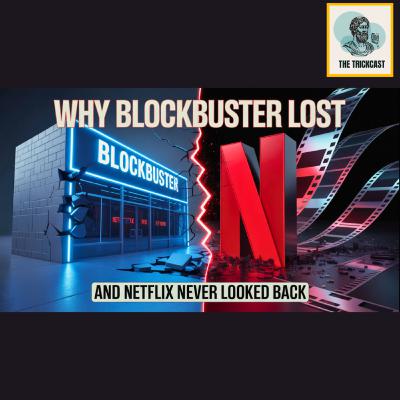
A new chapter of “The Art of Competition” - Episode 2: Netflix vs BlockbusterHow did a tiny DVD-by-mail startup destroy a $5 billion empire?In this episode of The TrickCast, Alex Siletsky and Amir Abdelazim unpack the legendary rivalry between Netflix and Blockbuster - and the bigger lesson about innovation, timing, and killing your own cash cow before someone else does.We cover:The rise of Blockbuster and its missed digital pivot 📼How Netflix bet everything on streaming - and won 💻The parallels to today’s tech wars (Starlink vs Telcos, Disney vs Prime)Why founders must watch customer behavior, not spreadsheetsHow data became Netflix’s real weapon - and what AI means for the next wave🎙️ If you’re a founder or startup leader, this conversation shows how to stay ahead of disruption instead of becoming its victim.👉 Subscribe for more bold rivalries, tech wars & startup lessons.🔔 Don’t miss future episodes of The TrickCast – Boardroom Scholars & Magicians where past rivalries meet today’s tech wars.

Comments

Download from Google Play

Download from App Store
 United States