


 Claim Ownership
Hybrid Pub Scout Podcast
Subscribed: 0Played: 0
Subscribe

© Copyright 2025 Hybrid Pub Scout Podcast
Description
[Theme song by Amy Hakanson | Logo design and artwork by Leigh Kaisen]
75 Episodes
Reverse

This episode’s guest is David Morris of Lake Drive Books.In today’s interview, David tells us more about Lake Drive’s mission, publishing practices, and unconventional financial model. David also offers his takes on how to determine what works for you when it comes to choosing a publishing path and gives some platform-building insights for authors.--Publishing Disrupted - Podcast - Apple PodcastsHyponymous LiteraryFree 30-Day Plottr TrialHybrid Pub Scout's Bookshop.org ShopLake Drive Books | Spirituality, Self Help, WholenessIBPA’s Hybrid Publishing CriteriaHybrid publishing has a bit of a nebulous definition at the moment, but as authors are becoming more disenchanted with traditional publishing and discovering how grueling self publishing can be, they’re becoming more relevant. Since it’s been the standard for such a long time, people are used to the traditional publishing model. They expect that:Publishers pay for everythingAuthors get advances and royaltiesPublishers take care of book promotion and marketingBut here’s a few problems (among others):The “everything” that publishers pay for has a big asterisk attached to it, even in tradAdvances and royalties are more underwhelming than ever (or maybe “less whelming”?)Book promotion and marketing mostly falls on the author now (see point 1)I’ve seen a lot of talk about hybrid publishing being predatory and no different from vanity presses, and in some cases…sure. But when you don’t have a major corporation paying all the up front costs, there are some practicalities to consider. Namely, who’s going to pay for all these professionals to do the work of making a book?If you listened to the show before, hopefully you’ve gotten the message of how hard ghostwriters, editors, designers, marketers, and other publishing professionals work to create the best book possible. And that work needs to be compensated. But, authors, obviously, should get the best deal possible for their work, too.So where does that leave us?How do we bring books into the world while making sure it’s fair to everyone, especially when everyone who isn’t a CEO of a major corporation has such a tight budget? And how do you, as an author, know the money and effort you spend on the publishing side is going to get you to your goal?The Independent Book Publisher’s Association (or IBPA) has tried to set up some standards for hybrid presses in the last several years. At last look, these are what the IBPA says a good hybrid publisher should do:Define a mission and vision for its publishing program.Vet submissions.Commit to truth and transparency in business practices.Provide a negotiable, easy-to-understand contract for each book published.Publish under its own imprint(s) and ISBNs.Publish to industry standards.Ensure editorial, design, and production quality. Pursue and manage a range of publishing rights. Provide distribution services.Demonstrate respectable sales. Pay authors a higher-than-standard royalty. As you may have noticed, there’s considerable wiggle room in there for these definitions (for example, you as the author are...

Recent surveys verify what you probably have already guessed, that there are profound divides between writers who use AI and writers who downright refuse. But interestingly, these surveys have also shown that around 60% of writers do use AI tools of some kind.So, when you’re creating a software program for writers, you have some choices to make. Do you alienate your anti-AI users or your pro-AI users?Or do you try to find a compromise that works for the greatest number of people?One of my favorite tools that I use in my fiction writing is Plottr, which I introduced to y’all back in Episode 74. It’s a program that lets you visualize your story from beginning to end and keep your notes on characters, themes, settings, and other plot elements all in one central place.When I interviewed Plottr’s education outreach lead back in 2023, I had bought the basic program for myself, which is a tool that you download and use offline. I've used it for at least three different writing projects, and it's helped make my process much more streamlined.So when the folks from Plottr reached out to me to chat about new developments, I was excited. However, when I looked into it and saw that they had a new tool that used AI, I got very uncomfortable. I’m way more on the skeptical side of this issue, and I was scared to see another program I used get gobbled up by AI features.But then I got curious, because I noticed that it was being implemented in a different way that we see in products like Google Gemini or Microsoft Copilot (or, if you listened to my last episode ProWritingAid). The difference is that instead of forcing AI features on Plottr users, they offered a choice where users could stick to the completely AI-free Plottr program, or buy the AI-powered Storysnap either on its own or as an add-on. Seriously, it’d be nice if more companies would do that instead of making you jump through hoops to opt out.No matter my own feelings, I can understand how that statistic poses a dilemma for software companies that don’t want to go out of business. Plottr seems to be trying to create a solution that gives both groups what they want, and I wanted to know more about how that choice was made and where those lines were drawn. When I interviewed Plottr’s founder Cameron Sutter about the way they’re trying to employ ethical AI use, I learned that a lot of careful thought was put into how to deploy AI in a way that avoids using stolen works and doesn’t write users’ stories for them.I’m not here to sell you Storysnap, but I did make space in this interview to talk about it (even though, as you’ll hear, I struggle to pronounce it correctly). To keep it simple: Storysnap helps series writers create a personal story bible, so they can easily maintain continuity throughout each book. Cameron does a good job explaining how they’ve attempted to address issues about privacy and what measures they’ve taken to keep the AI from training on users’ work.
A not-so-brief history of National Novel Writing Month from its beginnings in 1999, its growth as a nonprofit, its scandals, and where November Novel-writers can go from here,--It's that time of year again. You may love it, hate it, fear it, or be totally uninterested. I'm talking about...well, what you're calling it now depends on your history with it and your feelings on the way things went down. It used to be National Novel Writing Month, aka., NaNoWriMo, and in some cases it still is. Some are calling it Novel November. Others seem to be not calling it anything and just *describing* what it is.For the sake of ease, I'll be calling it NaNoWriMo (or NaNo for short) during the full duration of its existence as a nonprofit.This is a rabbit hole. I set out to write something about commodifying creativity and the problems of centralizing movements under capitalism. But it ended up being so much more than that.I'm going to do my best to sum everything up according to my understanding of what happened based on the graveyard of evidence from shut-down forums.Sound CreditsJester Dance by Conquest | https://freetouse.com/music/conquest Meditation Music by Dana Music from PixabayTyping Sound Effect by DRAGON-STUDIO from Pixabay"State of NaNoWriMo" closing announcementThread for NaNo Alternatives, Writing Discords & ResourcesTrackBearEllipsus Preptober TemplatesNaNo 2.0Ellipsus's sponsorship retractionDaniel José Older's resignation postNational Novel Writing Month: Inside the A.I. controversy tearing a writing community apart.What is NaNoWriMo's position on Artificial Intelligence (AI)? – National Novel Writing MonthSPEAK OUTNaNoWriMo 2023-2025 controversy summaryNaNoWriMo Moderator accused of child exploitationSpam, Spam, Spam Spam: Inkitt
We’re building Ellipsus as a platform that prioritizes transparency, trust, independence, and creative freedom. Writers shouldn’t have to trade their privacy or their ownership for good tools. The rise of AI scraping and big tech overreach only made that more urgent for us. —Rex at EllipsusWhatever your attitude toward emerging technologies, we can probably agree it’s tough to be online these days. The tools available seem to be multiplying for some and dwindling for others—particularly those who don’t want to use generative AI. A growing distrust of big tech is leading people to search for less exploitative options than Google or Microsoft. Fortunately for them (and also me), new developers are creating tools that don’t push AI without the opportunity to opt-in. One of those new tools is Ellipsus, a writing tool created by a small group of writers who wanted better collaborative document options, and who are solidly for transparency, privacy, and writers' rights to their own work.What Makes Ellipsus DifferentAs a text editor, Ellipsus is a lot like Google Docs, but more focused on better performance for large docs. It’s got a git-style feature for better version control, richer permissions, flexibility, and creative customizations. It’s got a unique knack for supporting real-time collaboration, and is simple enough to start using right away. How Ellipsus Addresses Concerns about AI, Privacy, and AccessEllipsus has been very clear on their stance: no generative AI in the program, ever. They believe writers’ work shouldn’t be harvested to train models without consent. Generative AI, when built on creative labor, undermines originality, and they believe putting it inside a writing tool would be fundamentally counterproductive to fostering genuine voices. Ellipsus's creators want it to be a safe space for writers, and are working on offering better encryption and privacy protections, too.Things that Make Ellipsus FunEllipsus has a vibrant Discord community of writers providing mutual support, betas, collaborators, and the opportunity to commune. Collaboration options in the documents themselves are pretty fun too—I love being able to create different drafts for different beta readers so no one has to feel put on the spot.And another small but mighty feature is the variety of different skins you can apply to your program (my current favorite is Red Velvet 😊🎂).Check out links of interest, including Ellipsus's full statement on generative AI in the notes below.--Music by Amy HakansonLogo design by Leigh Kaisen
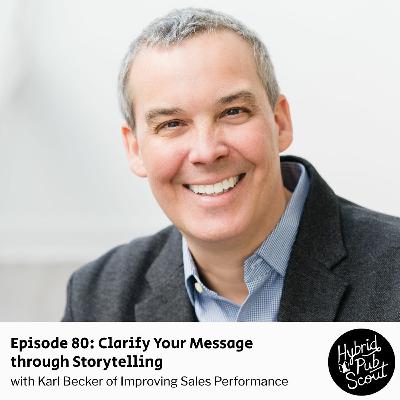
Karl Becker, founder of Improving Sales Performance and author of Iceberg Selling, talks about his books, how they've made a difference in his business and life, and the necessity of being open to surprises during the writing process.

Dr. Amanda Nell Edgar, founder of Page & Podium Press, joins Emily to talk about overcoming impostor syndrome and taking the courageous step to share your story.
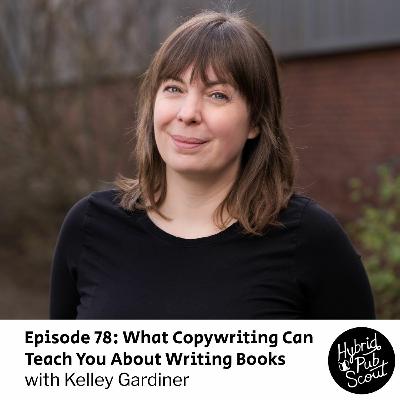
Website copywriter Kelley Gardiner joins Emily to talk about the overlaps between writing clear, attention-getting copy and writing a good nonfiction book.

Emily speaks with Ali about her definition of self-publishing versus independent publishing, how Indigo is working to improve the book world, and the exciting process of learning how to produce audiobooks.This episode's transcript: https://hybridpubscout.com/wp-content/uploads/2023/03/Episode-77-Ali-Shaw-of-Indigo-Editing_otter_ai.docx.pdf Find us on...Our website: hybridpubscout.comTwitter: twitter.com/hybridpubscoutInstagram: www.instagram.com/hybridpubscoutpod/Our newsletter: eepurl.com/gfajR9

Joan Conte joins Emily to talk about their subscription book box for trans people by trans people.Today's transcript: https://hybridpubscout.com/wp-content/uploads/2023/02/76-Joan-Conte-of-Trans-Book-Box-transcript.docx.pdfFind us on...Our website: hybridpubscout.comTwitter: twitter.com/hybridpubscoutInstagram: www.instagram.com/hybridpubscoutpod/Our newsletter: eepurl.com/gfajR9

Chris, Corinne, and Emily discuss the Library of Alexandria and all the things we don't know about it.The Transcript for Episode 75: https://hybridpubscout.com/wp-content/uploads/2023/01/75-library-of-alexandria_otter_ai.docx.pdfFind us on...Our website: hybridpubscout.comFacebook: www.facebook.com/hybridpubscout/Twitter: twitter.com/hybridpubscoutInstagram: www.instagram.com/hybridpubscoutpod/Our newsletter: eepurl.com/gfajR9

Emily interviews Troy Lambert, education lead at Plottr, about how the software helps writers plot everything from their novels to their nonfiction books (and even their marketing plans)!Try Plottr for yourself here: https://plottr.com/Read the transcript here: https://hybridpubscout.com/wp-content/uploads/2023/01/Episode-74-Plottr_otter_ai.docx.pdfFind us on...Our website: hybridpubscout.comFacebook: www.facebook.com/hybridpubscout/Twitter: twitter.com/hybridpubscoutInstagram: www.instagram.com/hybridpubscoutpod/Our newsletter: eepurl.com/gfajR9

Founding members of the new 501C3 Disability in Publishing join Emily and Corinne to discuss their mission and their plans for supporting and collaborating with disabled people in publishing.Read the episode transcript: https://hybridpubscout.com/wp-content/uploads/2022/11/73.Disability-in-Publishing_transcript.docx.pdf Find us on...Our website: hybridpubscout.comFacebook: www.facebook.com/hybridpubscout/Twitter: twitter.com/hybridpubscoutInstagram: www.instagram.com/hybridpubscoutpod/Our newsletter: eepurl.com/gfajR9

This Halloween episode of Hybrid Pub Scout brings you an exploration of Western grimoires: what they were, who used them, and how they were passed from one person to another. Also, we do slightly deeper dives into the Picatrix, The Lesser Key of Solomon, The Petite Albert, and The Grand Grimoire.Read the episode transcript: https://hybridpubscout.com/wp-content/uploads/2022/10/72-Grimoires.final-transcript.pdfFind us on...Our website: hybridpubscout.comFacebook: www.facebook.com/hybridpubscout/Twitter: twitter.com/hybridpubscoutInstagram: www.instagram.com/hybridpubscoutpod/Our newsletter: eepurl.com/gfajR9

Joe Vallese joins us to talk about the queer horror anthology It Came from the Closet, which he conceived of and edited with The Feminist Press.Read the episode transcript: https://hybridpubscout.com/wp-content/uploads/2022/09/71-Joe.Vallese-transcript.pdfFind us on...Our website: hybridpubscout.comFacebook: www.facebook.com/hybridpubscout/Twitter: twitter.com/hybridpubscoutInstagram: www.instagram.com/hybridpubscoutpod/Our newsletter: eepurl.com/gfajR9

Debut author Sierra Elmore talks about self-publishing her Mean Girls remix, Death by Society.Read the episode transcript: https://hybridpubscout.com/wp-content/uploads/2022/08/70-SierraElmore-final-transcript.docx.pdfFind us on...Our website: hybridpubscout.comFacebook: www.facebook.com/hybridpubscout/Twitter: twitter.com/hybridpubscoutInstagram: www.instagram.com/hybridpubscoutpod/Our newsletter: eepurl.com/gfajR9

Emily talks to Ruthie Hanson about her experience running a successful Kickstarter for her upcoming TV project, Ladies of Fortune, as well as writing books, screenplays, and fanfiction.Read the episode transcript: https://hybridpubscout.com/wp-content/uploads/2022/08/Episode-69-Ruthie-Hanson.final_otter_ai.docx.pdfFind us on...Our website: hybridpubscout.comFacebook: www.facebook.com/hybridpubscout/Twitter: twitter.com/hybridpubscoutInstagram: www.instagram.com/hybridpubscoutpod/Our newsletter: eepurl.com/gfajR9

Stephanie Argy, editor for the International Society for Technology in Education, reminds us that strides in learning and technology is cause for optimism.Read the episode transcript: https://hybridpubscout.com/wp-content/uploads/2022/07/Transcript.Episode68-StephanieArgy-ISTE.docx.pdfFind us on...Our website: hybridpubscout.comFacebook: www.facebook.com/hybridpubscout/Twitter: twitter.com/hybridpubscoutInstagram: www.instagram.com/hybridpubscoutpod/Our newsletter: eepurl.com/gfajR9

The difficult truth is this: book publishing has a heavy carbon footprint and produces lots (LOTS) of waste. Rachel Done joins us to discuss a recent study done in partnership with Portland State University, Independent Book Publishers Association, and Pub West about how we can change the status quo and do right by the environment. Read the study here: https://hybridpubscout.com/wp-content/uploads/2022/06/DistributionPractices.pdfRead the episode transcript here: https://hybridpubscout.com/wp-content/uploads/2022/06/67-Rachel-Done-publishing-distribution.docx-1.pdf Find us on...Our website: hybridpubscout.comFacebook: www.facebook.com/hybridpubscout/Twitter: twitter.com/hybridpubscoutInstagram: www.instagram.com/hybridpubscoutpod/Our newsletter: eepurl.com/gfajR9

Content Warning: Discussion of Nazis and neo-NazisShady and unethical journalistic practicesIn 1983, the Stern news magazine in Western Germany, after selling serial rights to publication across the Western world, announced that Hitler's lost diaries had been discovered in the German countryside. Within a few days, Stern was totally discredited, the diaries were exposed as forgeries, and two Hitler-loving dumbasses were arrested.We discussed what kind of dumbasses and dumbassery led up to the diaries being taken for genuine articles and shown to the world as such, exploring what mistakes publishers and reporters made to let something like this happen. And, of course, we will unveil how the scam was brought to an end!Link to the transcript: https://hybridpubscout.com/wp-content/uploads/2022/05/66-HitlerDiaries-Transcript.docx.pdfFind us on...Our website: hybridpubscout.comFacebook: www.facebook.com/hybridpubscout/Twitter: twitter.com/hybridpubscoutInstagram: www.instagram.com/hybridpubscoutpod/Our newsletter: eepurl.com/gfajR9

In the final installment of our fanfiction series, we talk with a publishing professional and fan fiction expert who works in the business of serialized fiction. Katie Fairchild is a marketing associate who uses her expertise in the way fandom audiences read and interact to promote stories on the Radish Fiction app, which is primarily focused on a romance audience. We talk with Katie about the types of campaigns she runs, how serialized fiction fans interact with stories, and how her expertise informs that work.Transcript can be found here: https://hybridpubscout.com/wp-content/uploads/2022/04/Transcript.Episode-65—Katie-Fairchild-of-Radish-Fiction.docx.pdfFind us on...Our website: hybridpubscout.comFacebook: www.facebook.com/hybridpubscout/Twitter: twitter.com/hybridpubscoutInstagram: www.instagram.com/hybridpubscoutpod/Our newsletter: eepurl.com/gfajR9

Comments

Download from Google Play

Download from App Store
 United States