


 Claim Ownership
Get Stacked Investment Podcast
Subscribed: 13Played: 357
Subscribe

© Newfound Research LLC. 2025 All rights reserved.
Description
Join Corey Hoffstein and Rodrigo Gordillo as they explore the world of return stacking with insights from leading experts and real-world applications. Break away from traditional portfolio construction and rethink successful investing.
27 Episodes
Reverse

Drawing from quarterly commentary, Rodrigo Gordillo and Corey Hoffstein review the performance and positioning of the Return Stacked® suite of ETFs. They explore the drivers behind their trend following strategies, explaining the whipsaw experienced in certain markets and the strong performance in others like metals and equities. The discussion also provides a detailed case study on the challenges faced by multi-asset carry (futures yield) strategies, the opportunistic nature of their merger arbitrage approach, and the mechanics of the gold and Bitcoin overlay. This episode offers a comprehensive look at how these distinct strategies navigated the recent market environment.Topics DiscussedAn overview of the Return Stacked® ETF suite's growth, having surpassed $1 billion in assetsThe utility of the RSSB global stocks and bonds ETF as a versatile tool for capital efficiency and creating portfolio overlaysA detailed breakdown of the trend-following replication strategy, which combines top-down and bottom-up models to track a managed futures indexAnalysis of the challenging market environment for trend following, marked by policy-driven whipsaws and unexpected economic newsAn in-depth case study on the multi-asset carry strategy's underperformance, using crude oil to explain the impact of rapid shifts in market expectationsPositioning the merger arbitrage strategy (RSBA) as an attractive, uncorrelated alternative to traditional credit investmentsThe dynamic, risk-parity approach to the gold and Bitcoin overlay in the RSSX ETF for hedging against inflation and currency debasement riskDiscussion on the nature of diversification, emphasizing that it implies zero correlation, not necessarily negative correlation, between assetsRSSX does not invest directly in Bitcoin or Gold.Exposures to gold and bitcoin will be done via exchange traded funds and futures contracts, hence the fund does not invest directly in bitcoin or any other digital asset, and does not invest directly in gold or gold bullion.For prospectus and performance and risks visit the fund pages.RSST – https://www.returnstackedetfs.com/rsst-return-stacked-us-stocks-managed-futures/RSBT – https://www.returnstackedetfs.com/rsbt-return-stacked-bonds-managed-futures/RSSY –
In this special interview, Mike Philbrick explores the principles of systematic macro investing and the behavioral challenges investors face when attempting to diversify traditional portfolios. He explains how Return Stacking addresses the common funding dilemma by layering alternative strategies on top of a core stock-and-bond portfolio rather than replacing existing allocations. Using the Return Stacked® Global Balanced & Macro ETF (RGBM) as a framework, the discussion illustrates how this institutional-grade approach aims to improve portfolio construction—seeking true diversification and potentially higher risk-adjusted returns without requiring investors to abandon their core holdings.Topics DiscussedDefining systematic macro as a data-driven, rules-based strategy across global assets.The vulnerability of traditional 60/40 stock-bond portfolios to inflationary shocks.The funding dilemma and behavioral challenges when adding alternatives by selling core assets.Introducing Return Stacking to layer diversifying strategies on top of core holdings.Applying the institutional concept of portable alpha to individual investor portfolios.The mechanics of using a capital-efficient ETF to achieve greater than 100% exposure.Reducing behavioral tracking error by preserving an investor's familiar core allocations.The goal of outperforming underlying betas by having the stacked strategy beat its cost of financing.Return Stacked® Global Balanced & Macro ETF (“RGBM” or the “ETF”) is an alternative mutual fund, as such, RGBM is permitted to invest in asset classes or use investment strategies that are not permitted for other types of mutual funds. RGBM uses leverage and derivative instruments to stack the returns of a global balanced strategy with those of a systematic macro strategy which can magnify gains and losses.Past Performance is not a guarantee of future results.Commissions, management fees, performance fees and operating expenses may all be associated with an investment in RGBM. The ETF is not guaranteed, its value changes frequently and past performance may not be repeated. The ETF Facts and prospectus contain important detailed information about the ETF. Please read the relevant documents before investing.LongPoint Asset Management Inc. (“LongPoint”) is the Investment Fund Manager of RGBM.ReSolve Asset Management Inc. (“ReSolve Canada”) is the Portfolio Manager of RGBM.ReSolve Asset Management SEZC (Cayman) (“ReSolve Global”) is the Portfolio Sub-Advisor of RGBM.Newfound Research LLC (“Newfound”) is a Co-Promotor of RGBM.
In this in-depth conversation, Corey Hoffstein breaks down merger arbitrage as a distinct risk premium rather than a true arbitrage strategy. He explains how investors can capture the residual spread in announced M&A deals, compares merger arbitrage to traditional credit markets, and discusses why it can offer a low-correlation return stream relative to stocks and bonds. The discussion also explores how return stacking and portable alpha frameworks can enhance portfolio efficiency, positioning merger arbitrage as a powerful diversifier—particularly as an alternative to credit risk within modern portfolio construction.Topics DiscussedDefining merger arbitrage as a risk premium for bearing deal break risk and the time value of moneyThe concept of Return Stacking to add diversifying strategies without selling core assetsComparing the idiosyncratic nature of merger arbitrage risk to the more cyclical credit risk found in corporate bondsUtilizing a combination of Treasuries and merger arbitrage as a direct alternative to corporate bond allocationsAddressing the behavioral challenges of traditional diversification by reducing tracking error against standard benchmarksThe argument for merger arbitrage as a persistent and unique risk premium, distinct from alpha-seeking strategiesOvercoming the historical packaging and adoption challenges of merger arbitrage funds for financial advisorsDemocratizing institutional investment concepts like portable alpha for a wider audienceDefinitionsAlpha: refers to returns above that of a passive market benchmarkTracking error is the variability in the difference between a strategy’s returns and the investor’s benchmark returns.Beta: How much an investment moves vs. a benchmark (like the market).Duration refers to the average life of a debt instrument and serves as a measure of that instrument’s interest rate risk.A Basis Point is equal to 0.01% and is commonly used to express changes in interest rates, fees, or investment returns. For example, 50 basis points equals 0.50%.Leverage Risk. As part of the Fund’s principal investment strategy, the Fund will make investments in futures contracts. These derivative instruments provide the economic effect of financial leverage by creating additional investment exposure to the underlying instrument, as well as the potential for greater loss. You could lose all or substantially all of your investment in the Fund should the Fund’s trading positions suddenly turn unprofitable. The net asset value of the Fund while employing leverage will be more volatile and sensitive to market movements. Stacking does not guarantee outperformance and diversification does not guarantee a profit or prevent a loss.Merger-Arbitrage Risk. Merger-arbitrage investing involves the risk that the outcome of a proposed event, whether it be a merger, reorganization, or other event, will prove incorrect and that the Fund’s return on the investment will be negative, or that the expected event may be delayed or completed on terms other than those originally proposed, which may cause the Fund to lose money or fail to...
In this exclusive interview, Adam Butler provides a comprehensive exploration of diversified Carry strategies, a concept traditionally confined to institutional investors. He begins by defining Carry—the expected return on an investment if its price remains unchanged—and explains its mechanics across equities, bonds, currencies, and commodities. The discussion highlights how combining these various Carry sources offers powerful diversification benefits. Adam then connects this to the concept of Return Stacking, explaining how ETFs like Return Stacked® U.S. Stocks & Futures Yield (RSSY) and Return Stacked® Bonds & Futures Yield (RSBY) seek to broaden access to sophisticated strategies by incorporating them alongside traditional stock and bond allocations.Topics DiscussedDefining Carry beyond the traditional currency trade to include yields from stocks, bonds, and commoditiesThe strategy of diversifying Carry across multiple global asset classes to create a smoother return profileThe mechanics of a long/short global Carry portfolio that maximizes risk-adjusted yield across marketsCarry's role as an uncorrelated diversifier to traditional stock and bond portfolios and its complementary relationship with Trend followingThe concept of Return Stacking as a method to add diversifying strategies without selling core assetsUsing Return Stacking to overcome behavioral biases like investor regret and the reluctance to diversify away from equitiesThe democratization of institutional strategies through ETFs like RSSY and RSBY, which stack Carry on core holdingsThe operational complexity and data-intensive nature of Carry strategies, explaining their historical inaccessibility to retail investorsSetting long-term return expectations for Carry and viewing periods of underperformance as building potential energyThe argument for seeking returns in less efficient macro markets compared to the highly competitive micro world of stock pickingInvestors should consider the investment objectives, risks, charges, and expenses carefully before investing. This and other important information about the Return Stacked® ETF lineup is contained in their respective prospectus', which can be obtained by calling 1-844-737-3001 or clicking here.Investments involve risk. Principal loss is possible. Unlike mutual funds, ETFs may trade at a premium or discount to their net asset value. Brokerage commissions may apply and would reduce returns.ETFs are subject to specific risks, depending on the nature of the underlying strategy of the fund. These risks could include liquidity risk, sector risk, as well as risks associated with fixed income securities, real estate investments, and commodities, to name a...
In this episode, Rodrigo Gordillo, President of ReSolve Asset Management and Co-Founder of Return Stacked ETFs, delves into the history, mechanics, and benefits of managed futures strategies. Gordillo recounts the evolution from the original turtle traders to modern systematic approaches in trend following. He explains the behavioral finance underpinnings that make these strategies effective, including concepts like anchoring and cascading effects. The conversation covers the diversification benefits of managed futures, their non-correlation with traditional asset classes, and their performance in different market regimes. Gordillo also introduces return stacking and portable alpha concepts, illustrating how these methods can provide both diversification and potential outperformance without significantly increasing portfolio risk. The discussion includes practical examples and the mechanics behind ETFs like RSST and RSBT.00:00 Introduction to Managed Futures01:24 Understanding Trend Following03:11 Behavioral Finance and Trend Following04:12 Benefits of Investing in Managed Futures07:46 Challenges of Diversification10:30 Return Stacking Explained13:19 Mechanics of RSST and RSBT21:06 Practical Use Cases for Return Stacking23:45 Conclusion and Further LearningDefinition of terms used:S&P 500: A market-capitalization-weighted index that tracks the performance of approximately 500 leading U.S. publicly traded companies, widely used as a benchmark for the overall U.S. equity market.Investors should consider the investment objectives, risks, charges, and expenses carefully before investing. For a prospectus or summary prospectus with this and other information about the Fund, please click here (https://www.returnstackedetfs.com/rsst-return-stacked-us-stocks-managed-futures/) Read the prospectus or summary prospectus carefully before investing. Investments involve risk. Principal loss is possible. Unlike mutual funds, ETFs may trade at a premium or discount to their net asset value. Brokerage commissions may apply and would reduce returns. Toroso Investments, LLC (“Toroso”) serves as investment adviser to the Funds and the Funds’ Subsidiary. Newfound Research LLC (“Newfound”) serves as investment sub-adviser to the Funds. ReSolve Asset Management SEZC (Cayman) (“ReSolve”) serves as futures trading advisor to the Fund and the Funds’ Subsidiary. Foreside Fund Services, LLC is the distributor for the Funds. Foreside is not related to Toroso, Newfound, or ReSolve.
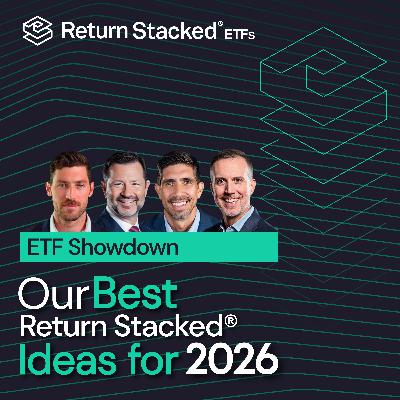
In a special roundtable discussion, Rodrigo Gordillo, Corey Hoffstein, Mike Philbrick, and Adam Butler each present their top investment idea for 2026, centered around a specific Return Stacked® ETF. The conversation explores a range of compelling theses, from the role of scarce assets like gold and Bitcoin to the strategic use of alternatives such as trend following and merger arbitrage. This forward-looking analysis delves into the evolving landscape of portfolio construction, the importance of capital efficiency, and the broader implications of ongoing monetary and fiscal debasement.Topics Discussed• The investment case for stacking scarce assets like gold and Bitcoin on stocks (RSSX) as a hedge against permanent monetary debasement• Utilizing bonds as a portfolio ballast and stacking managed futures strategies like trend and carry for diversification (RSBT & RSBY)• The argument for replacing corporate credit exposure with a combination of Treasuries and merger arbitrage (RSBA) due to tight credit spreads• Using a global stock and bond fund (RSSB) to create capital efficiency for adding low-volatility alternatives or tactical cash positions• The increasing institutional adoption of Bitcoin, signaling its potential shift from a fringe asset to a foundational portfolio component• A defense of holding bond duration for its predictable long-term returns and its role as a diversifier during cyclical recessions• The complementary nature of trend and carry strategies as different ways to harvest risk premia in managed futures• Merger arbitrage as a unique and defensible risk premium that is structurally uncorrelated with traditional equity and credit risk• The paradigm shift in portfolio construction for retail investors enabled by the accessibility of Return Stacking strategiesRSST– https://www.returnstackedetfs.com/rsst-return-stacked-us-stocks-managed-futures/RSBT– https://www.returnstackedetfs.com/rsbt-return-stacked-bonds-managed-futures/RSSY– https://www.returnstackedetfs.com/rssy-return-stacked-us-stocks-futures-yield/RSBY– https://www.returnstackedetfs.com/rsby-return-stacked-bonds-futures-yield/RSBA– https://www.returnstackedetfs.com/rsba-return-stacked-bonds-merger-arbitrage/RSSB – https://www.returnstackedetfs.com/rssb-return-stacked-global-stocks-bonds/RSSX– https://www.returnstackedetfs.com/rssx-return-stacked-us-stocks-gold-bitcoin/BTGD– https://quantifyfunds.com/stackedbitcoingoldetf/btgd/The performance data quoted above represents past performance. Past performance does not guarantee future results. The investment return and principal value of an investment will fluctuate so that an investor’s shares, when sold or redeemed, may be worth more or less than their original cost, and current performance may be lower or higher than...
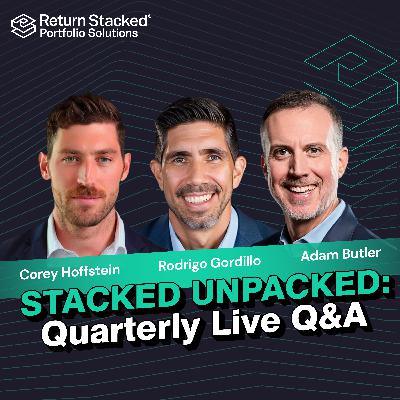
Rodrigo Gordillo, Corey Hoffstein, and Adam Butler review the Q3 2025 performance of their ETF suite, drawing from the latest Return Stacked® ETFs Quarterly Performance Report. The discussion explores the strategies and use cases for each capital-efficient fund, from the core stock/bond RSSB to the newer gold and Bitcoin-focused RSSX. They delve into the underlying mechanics of the stacked strategies, including trend following replication, merger arbitrage, and the concept of portable alpha. This quarterly analysis provides a detailed look at how each fund has performed and is positioned within the broader framework of Return Stacking.Topics Discussed• An overview of the Return Stacking ETF suite's growth to over one billion dollars in assets under management• The capital efficiency and diverse use cases of the RSSB fund, which provides 100/100 exposure to global stocks and bonds• A detailed look at the blended replication approach used to track the trend following managed futures category in RSST and RSBT• The role of the futures yield (carry) strategy as a low-correlation diversifier to trend following• Positioning the RSBA merger arbitrage fund as an alternative to traditional corporate credit, especially with credit spreads at historic lows• Managing exposure to gold and Bitcoin in the RSSX fund through an active inverse volatility weighting strategy• The practical benefits of pre-stacked solutions for advisors, such as simplified implementation and automated rebalancing• A review of recent performance drivers, including the resurgence in trend following and the lifecycle of merger arbitrage dealsRSST– https://www.returnstackedetfs.com/rsst-return-stacked-us-stocks-managed-futures/RSBT– https://www.returnstackedetfs.com/rsbt-return-stacked-bonds-managed-futures/RSSY– https://www.returnstackedetfs.com/rssy-return-stacked-us-stocks-futures-yield/RSBY– https://www.returnstackedetfs.com/rsby-return-stacked-bonds-futures-yield/RSBA– https://www.returnstackedetfs.com/rsba-return-stacked-bonds-merger-arbitrage/RSSB – https://www.returnstackedetfs.com/rssb-return-stacked-global-stocks-bonds/RSSX– https://www.returnstackedetfs.com/rssx-return-stacked-us-stocks-gold-bitcoin/BTGD– https://quantifyfunds.com/stackedbitcoingoldetf/btgd/DefinitionsA Basis Point is equal to 0.01% and is commonly used to express changes in interest rates, fees, or investment returns. For example, 50 basis points equals 0.50%.Duration refers to the average life of a debt instrument and serves as a measure of that instrument’s interest rate risk.Standard Deviation is a statistical measure of how much an investment’s returns vary from its average over time, indicating the degree of volatility or...
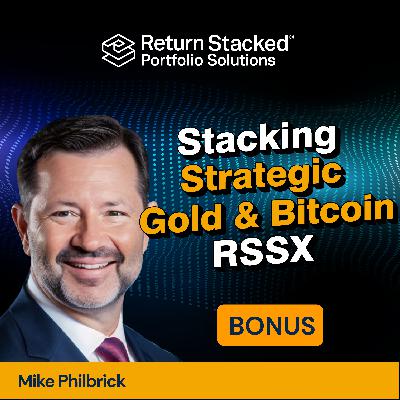
Strategic Diversification with Gold and Bitcoin using Return Stacked U.S. Stocks & Gold/Bitcoin Ticker (RSSX).00:00 Introduction to Strategic Gold and Bitcoin Stacking01:32 The Case for Gold and Bitcoin Diversification02:47 Understanding Return Stacking and Portable Alpha04:33 Position Sizing for Gold and Bitcoin05:59 RSSX ETF: Gold and Bitcoin Overlay08:53 Implementation and Rebalancing Strategies14:29 Behavioral and Regulatory PerspectivesDescription: Investors should consider the investment objectives, risks, charges, and expenses carefully before investing. For a prospectus or summary prospectus with this and other information about the Fund, please click here (https://www.returnstackedetfs.com/rssx-return-stacked-us-stocks-gold-bitcoin/) Read the prospectus or summary prospectus carefully before investing. Investments involve risk. Principal loss is possible. Unlike mutual funds, ETFs may trade at a premium or discount to their net asset value. Brokerage commissions may apply and would reduce returns. Toroso Investments, LLC (“Toroso”) serves as investment adviser to the Funds and the Funds’ Subsidiary. Newfound Research LLC (“Newfound”) serves as investment sub-adviser to the Funds. ReSolve Asset Management SEZC (Cayman) (“ReSolve”) serves as futures trading advisor to the Fund and the Funds’ Subsidiary. Foreside Fund Services, LLC is the distributor for the Funds. Foreside is not related to Toroso, Newfound, or ReSolve.Definitions: Alpha: refers to returns above that of a passive market benchmarkTracking error is the variability in the difference between a strategy’s returns and the investor’s benchmark returns.
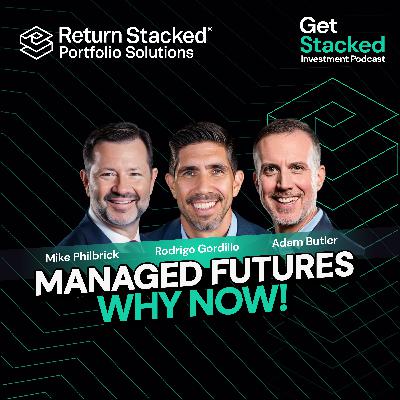
In this episode, Rodrigo Gordillo, Mike Philbrick, and Adam Butler from ReSolve Asset Management Global explore the timely relevance of managed futures, examining why the current macroeconomic environment may be particularly favorable for these strategies. They discuss recent drawdowns, the uncorrelated nature of trend and carry strategies, and the importance of diversification. The conversation also covers the benefits of strategic overlaying in portfolios, the impact of policy shocks, and the potential for managed futures to add value in various market conditions, including inflationary periods.
In this episode, Corey Hoffstein and Adam Butler take you inside the latest Q2 commentary on the Return Stacked® ETF suite. They break down key strategies behind ETFs like RSSX, RSSB, RSBT, and RSST—covering everything from performance differentials in trend strategies to the mechanics of trend model replication.You’ll hear sharp analysis of return stack carry funds, year-to-date performance, and how they behave in multi-asset portfolios. The hosts also explore fixed income sector positioning, the role of energy exposure, and why merger arbitrage deserves a closer look as a diversifier. The episode wraps with the new RSSX ETF, blending U.S. stocks, gold, and Bitcoin to meet evolving market demands.*The performance data quoted above represents past performance. Past performance does not guarantee future results. The investment return and principal value of an investment will fluctuate so that an investor's shares, when sold or redeemed, may be worth more or less than their original cost, and current performance may be lower or higher than the performance quoted above.RSSX does not invest directly in Bitcoin or Gold.For prospectus, performance and risks visit the fund pages. RSST – https://www.returnstackedetfs.com/rsst-return-stacked-us-stocks-managed-futures/RSBT – https://www.returnstackedetfs.com/rsbt-return-stacked-bonds-managed-futures/RSSY – https://www.returnstackedetfs.com/rssy-return-stacked-us-stocks-futures-yield/RSBY – https://www.returnstackedetfs.com/rsby-return-stacked-bonds-futures-yield/RSBA – https://www.returnstackedetfs.com/rsba-return-stacked-bonds-merger-arbitrage/RSSX – https://www.returnstackedetfs.com/rssx-return-stacked-us-stocks-gold-bitcoin/BTGD – https://quantifyfunds.com/stackedbitcoingoldetf/btgd/Forside Fund Services, LLC Distributor. (0:00) Introduction to the Get Stacked Investment Podcast and symposium announcement(5:49) Overview of new ETFs: RSSX, RSSB, RSBT, and RSST(10:29) Performance differentials in RSSB and trend strategies(18:00) Performance tracking and replication strategy of trend models(23:42) Analysis of performance drivers in trend strategy(29:22) Year-to-date return of the trend model and currency trends(31:17) Introduction to return stack carry funds and strategy primer(36:12) Performance and correlation of carry strategy since inception(39:15) Energy potential in portfolio and fixed income sector analysis(44:43) Combining trend and carry strategies in portfolio construction(48:59) Comparison with GSAM cross asset carry index(52:25) Bonds and merger arbitrage strategy introduction and explanation(56:37) Merger arbitrage as a diversifier and comparison with corporate bonds(59:53) Introduction and rationale behind RSSX: US stocks, gold, and Bitcoin ETF(1:07:37) Closing remarks and symposium reminder
In this episode, Rodrigo Gordillo, President of ReSolve Asset Management Global, and Mike Philbrick, CEO of ReSolve Asset Management Global unpack Ric Edelman’s bold argument for allocating 10–40% of a portfolio to Bitcoin. They explore how Bitcoin is evolving from a fringe asset to a foundational one, discuss its role alongside gold, and examine the structural shifts—from regulatory clarity to ETF innovation—that are driving institutional adoption. If you're rethinking diversification in a changing economic landscape, this conversation delivers the key insights.(0:00) Introduction to the Get Stacked Investment Podcast(2:45) Introduction of podcast hosts and disclaimers(3:33) Bitcoin as a digital hard currency compared to gold(7:22) Regulatory clarity and adoption of Bitcoin in portfolios(10:01) Evolving landscape for Bitcoin in traditional finance(13:11) Risk premium of non-cashflow assets(20:05) Benefits and methods of return stacking with Bitcoin(24:34) Behavioral biases in long-term Bitcoin allocation(26:28) Portfolio construction and the Bitwise paper on Bitcoin(31:16) Adjusting portfolios for inflation expectations(33:15) Risk budgeting with alternative assets like gold and Bitcoin(37:10) Using volatility as a heuristic for allocation(39:06) Global adoption and diversification with real assets(41:13) Research resources and concluding remarks
Investors seeking exposure to alternatives like gold and Bitcoin face a tough tradeoff: diversify or stay fully invested in stocks and bonds. What if you didn’t have to choose?In this episode, we unveil Return Stacked® U.S. Stocks & Gold/Bitcoin (RSSX) - an ETF designed to deliver long-term capital appreciation by stacking diversified exposures on top of traditional equity allocations.Discover how RSSX leverages capital-efficient strategies to provide $1 of exposure to U.S. large-cap stocks plus $1 of exposure to a Gold/Bitcoin mix - all for every $1 invested. We’ll walk through the mechanics, behavioral advantages, and real-world application of the latest return-stacking innovation.Whether you're an advisor looking to optimize client portfolios or an investor seeking smarter diversification, this session is a must-listen.*For the RSSX prospectus and risk disclosures, visit: https://www.returnstackedetfs.com/rssx-return-stacked-us-stocks-gold-bitcoin/**Exposures to gold and bitcoin will be done via exchange-traded funds and futures contracts, hence the fund does not invest directly in bitcoin or any other digital asset, and does not invest directly in gold or gold bullion.***Standard deviation measures the volatility of an investment's returns, indicating how much they typically vary from the average. ****Investors should carefully consider the investment objectives, risks, charges, and expenses of the Return Stacked® U.S. Stocks & Gold/Bitcoin ETF. This and other important information about the ETF is contained in the prospectus, which can be obtained by calling 1-844-737-3001 or clicking here. The prospectus should be read carefully before investing.*****Quantify Chaos Advisors, LLC ("Quantify") has entered into a brand licensing agreement with Newfound Research LLC ("Newfound") and ReSolve Asset Management SEZC (Cayman) ("ReSolve"), granting the Quantify the right use the "STKd" brand, a derivative of Return Stacked®. Neither the fund trust nor the investment adviser is a party to this agreement. In exchange for the branding rights, Quantify will pay Newfound and ReSolve a fee based on a percentage of the fund's unitary management fee. Distributed by Foreside Fund Services, LLC.(0:00) Introduction to Return Stacking Symposium and Podcast(2:02) Introduction of hosts and guest speaker with overview of ReturnsTac Suite of Funds(3:29) Discussion on US Stocks and Gold Bitcoin ETF (RSSX) and diversification strategies(7:11) Explanation and practical implementation of return stacking(11:34) Strategy design for gold and Bitcoin allocation(24:12) Portfolio implementation with RSSX, strategy overview, and rebalancing(26:23) Q&A introduction, sponsor message, and rebalancing frequency(27:28) Borrowing costs, allocation structure, and risk weighting(34:22) Comparison between RSSX and BTGD, and impact of borrowing costs(39:25) Risk premium expectations for gold and Bitcoin(45:50) Tax efficiency, ETF liquidity, and fee structure(49:11) Portfolio sizing, volatility, and currency hedging(52:15) Hedged ETF costs, drawdowns, and portfolio impact(55:30) Upcoming resources and gold investment skepticism(57:51) Portfolio construction, hedging benefits, and closing remarks
In this episode hosts Mike Philbrick and Rodrigo Gordillo welcome Mark Valek, partner at Incrementum AG and co-author of the acclaimed In Gold We Trust report. Mark, a seasoned macro investor with decades of expertise at the intersection of gold, monetary policy, and systemic risk, offers deep insights into the evolving roles of gold and Bitcoin. The discussion covers a diverse range of topics including macro investing, fiscal dominance, central bank gold accumulation, innovative portfolio allocations, and the emergence of Bitcoin as digital gold.(0:00) Introduction and Event Announcement(3:04) Introduction of Guest Mark Valek(3:50) "The Big Long" Concept and Central Banks' Role(7:55) Sanctions Impact on Trust and Rise in Gold Purchases(11:33) Fiscal Dominance and Gold's Monetary Role(22:10) Gold Price Stability Amid Quantitative Tightening(28:28) Inflation and Gold Market Projections(33:13) Gold Allocation in Diversified Portfolios(41:31) Gold vs. Bitcoin: Asset Comparison(45:47) Bitcoin Adoption and Market Outlook(51:27) Integrating Gold and Bitcoin in Investment Strategies(53:26) Rethinking the Traditional Investment Portfolio(55:37) Exploring Alternative Assets(58:15) Structuring the New Age Portfolio(59:54) Closing Insights on Portfolio Performance(1:00:13) Guest Information and Incrementum Insights(1:01:40) Outro and Listener Engagement
Return Stacked is back with a deep dive into the world of alternative assets, featuring Mike Philbrick—CEO of ReSolve Asset Management and co-founder of Return Stacked ETFs, and Rodrigo Gordillo, President of ReSolve Asset Management and co-founder of Return Stacked ETFs, both of whom are recognized voices in asset management and diversification. In this engaging episode, Mike and Rodrigo explore a broad range of topics, including gold’s structural fundamentals, bitcoin’s emerging role, portfolio diversification techniques, behavioral biases, and the macro trends shaping global investment strategies.(0:00) Event invitation and podcast introduction(2:30) Episode focus: Gold, Bitcoin, and precious metals(3:03) Historical perspective on gold and its value(5:34) Gold's market dynamics and institutional interest(10:36) Structural reasons for gold's performance and public participation(17:01) Integrating gold into portfolios and comparison with other asset classes(23:27) Future prospects for gold mining stocks(24:33) Bitcoin as the digital counterpart to gold(26:13) Bitcoin vs. gold: Volatility and allocation strategies(30:34) Return stacking in portfolio construction(33:28) Rebalancing strategies with gold and Bitcoin(36:03) Institutional adoption of Bitcoin and gold(38:18) Behavioral finance in commodity investing(44:06) Incorporating non-correlated assets into portfolios(49:32) Developing intuition for emerging asset classes(51:01) Audience questions on volatility and leverage(55:28) Managing risk and avoiding excessive leverage(56:22) Seasonal gold investment strategies(57:00) Leveraging borrowing costs for capital efficiency(58:38) Diversifying with return stacking across asset classes(59:01) Contact information and episode disclaimer(59:48) Closing remarks and next steps

In this episode, Rodrigo Gordillo sits down with Rafael Ortega, a distinguished Spanish investor and Senior Investment Fund Manager at Andbank Wealth Management. Known for pioneering innovative portfolio solutions in Spain—from the classic permanent portfolio to advanced return stacking and off-road strategies—Rafael discusses a wide range of topics including diversification, structural risk balancing, leveraging, regulatory hurdles, and the future of portable alpha in today’s dynamic markets.(0:00) Event announcement: Return Stacking Symposium at Cboe Global Markets(0:44) Introduction to the Get Stacked Investment Podcast and Guest Rafael Ortega(3:40) Discussion on return stacking and balanced portfolio approaches(5:09) Rafael Ortega's journey from engineering to investment management(8:56) Exploring Harry Brown’s permanent portfolio concept(12:16) Asset performance across different economic cycles(17:52) Building a community around structural diversification(22:49) Rafael Ortega on the challenges and opportunities with conservative strategies(26:40) Risk balancing and the impact of volatility on returns(32:04) Understanding the concept of return stacking(34:14) Tackling operational and compliance challenges in investment management(37:02) Examining the role of leverage in diversified portfolios(40:23) Comparing drawdown recovery: S&P 500 vs. diversified portfolios(45:07) Educating investors on the value of diversification(47:21) Debunking misconceptions about all terrain portfolios(48:09) The long-term benefits of a more efficient portfolio(52:43) Managing emotions during market downturns(54:53) Resilience of leveraged portfolios(57:00) Predicting the mainstream adoption of diversifiers(59:30) Tailoring investment strategies to different investor profiles(1:01:00) Growing interest in return stacking and portable alpha(1:03:04) Navigating regulatory challenges in investment strategies(1:06:26) Prospects for the long-term adoption of return stacking(1:07:42) Closing remarks and Rafael Ortega's online presence(1:09:19) Outro and call to action
As financial advisors, we know clients struggle to stay the course with liquid diversifying investments, especially when 60/40 portfolios have been strong.RGBM ETF offers a solution: a 100% global balanced strategy stacked with an additional 100% systematic macro strategy.This 2 for 1 combination is designed to help deliver the diversification your clients may need in a solution they can actually stick to. In this podcast, we explore how RGBM’s unique 'return stacking' approach can improve portfolio resilience and client outcomes. Learn how it minimizes the behavioral challenges of owning diversifying assets.(0:00) Event invitation, speaker announcements, and registration details(0:46) Podcast introduction, purpose, and disclaimer(2:03) Introduction of hosts and overview of ReturnsTact funds(3:14) Return Stack Global Balanced and Macro ETF (RGBM) discussion(3:50) Explanation and benefits of return stacking(11:29) Practical implementation and key components of RGBM(14:08) Tax efficiency and systematic versus fundamental macro(16:46) Risk management and historical performance of systematic macro(21:19) Behavioral aspects and balanced allocation in RGBM(24:11) Capital efficient exposure to global equities and bonds(29:52) Conditional correlation and deploying investment dollars(32:09) Strategies for competitive returns and managing alternatives(35:01) Using RGBM for younger clients and rebalancing benefits(40:32) Long-term objectives and underlying markets of RGBM(43:05) Differences between RGBM and hedge fund strategies(45:01) Historical performance and future plans for Resolve's products(48:35) Closing remarks and resources(49:51) Product brief importance and final points(50:55) Encouragement to rate and review the podcast
Join us for an engaging live session as Rodrigo Gordillo, President and Portfolio Manager at ReSolve Asset Management Global, Corey Hoffstein, Chief Investment Officer of Newfound Research, and Adam Butler, CIO of ReSolve Asset Management Global, discuss recent macroeconomic events and their impact on managed future strategies, specifically trend following and multi-asset carry models. In this video, the panel analyzes key market-moving stories from the past few weeks, including European regulatory reforms, German fiscal stimulus, and international tariff battles. They also explore the recent performance and adjustments in their systematic strategies, providing valuable insights for advisors and investors navigating today's volatile market environment.(0:00) Introduction and guest Adam Butler(2:15) Macroeconomic environment and market analysis(4:25) German fiscal stimulus and European policy changes(6:32) Volatility and major market moves(13:27) Multi-asset carry strategies and market impact(26:17) Risks and performance of carry strategies(34:13) Trend following managed futures discussion(36:46) Adjustments and reactions in trend following strategies(43:06) Trend vs. carry strategy comparison(46:38) Market headlines and investment principles(50:01) Client expectations and strategy management(51:55) Mean reversion and investment energy concepts(53:33) Advisor-client communication in volatile markets(55:10) Dealing with sensitive clients and diversification importance(57:26) Strategy non-correlation and regulatory insights(59:30) Closing remarks and listener engagement
In today’s ever-evolving investment landscape, finding compelling alternatives to traditional fixed income is critical for building resilient portfolios.Enter RSBA, a first-of-its-kind ETF that combines U.S. Treasuries with a merger arbitrage strategy to offer what we believe is a smarter approach to fixed-income diversification.Investors should consider the investment objectives, risks, charges, and expenses carefully before investing. For a prospectus or summary prospectus with this and other information about the Fund, please visit https://www.returnstackedetfs.com/rsba-return-stacked-bonds-merger-arbitrage. Read the prospectus or summary prospectus carefully before investing.Leverage Risk. As part of the Fund’s principal investment strategy, the Fund will make investments in futures contracts. These derivative instruments provide the economic effect of financial leverage by creating additional investment exposure to the underlying instrument, as well as the potential for greater loss. You could lose all or substantially all of your investment in the Fund should the Fund’s trading positions suddenly turn unprofitable. The net asset value of the Fund while employing leverage will be more volatile and sensitive to market movements.Stacking does not guarantee outperformance and diversification does not guarantee a profit or prevent a loss.Merger-Arbitrage Risk. Merger-arbitrage investing involves the risk that the outcome of a proposed event, whether it be a merger, reorganization, or other event, will prove incorrect and that the Fund’s return on the investment will be negative, or that the expected event may be delayed or completed on terms other than those originally proposed, which may cause the Fund to lose money or fail to achieve a desired rate of return.For additional disclosures and risks, visit https://www.returnstackedetfs.com/rsba-return-stacked-bonds-merger-arbitrage/.Distributed by Foreside Fund Services, LLC.(0:00) Introduction and Overview of Return Stacking(4:02) The Problem Return Stacking Solves and Historical Performance Insights(8:14) Comparing Old vs. New World Investment Approaches(10:06) Exploring Stacking for Outperformance and Diversification(12:10) Deep Dive into RSBA ETF and Merger Arbitrage(15:54) Analyzing Merger Arbitrage Performance During Market Drawdowns(18:41) Merger Arbitrage vs. Credit Risk Premium and Bond Strategies(22:15) Understanding Merger Arbitrage and Its Legal Aspects(28:40) Alpha Beta Merger Arbitrage Index: Objectives and Mechanics(30:59) Insights on Portfolio Construction and Leverage Strategy(35:51) Deal Evaluation and Weight Adjustment in Merger Arbitrage(39:41) Q&A Session: Addressing Volatility and Tax Efficiency(42:46) Merger Arbitrage's Correlation with Other Investment Strategies(48:43) Comparing Different Styles of Merger Arbitrage Funds(51:04) Quantitative vs. Discretionary Approaches in Merger Arbitrage(54:13) Discussing Expected Drawdowns and Legal Constraints(56:41) Closing Remarks and Final Thoughts on Investment Strategies
Finding alpha is notoriously difficult.Instead of trying to pick stocks better, what if you simply added the return of high-conviction, alternative strategies on top of your asset allocation?That’s the opportunity portable alpha unlocks for allocators.Join us for an exclusive podcast where we reveal how capital-efficient ETFs can be used to “port” the returns of any alternative investment on top of your asset allocation. Investors should consider the investment objectives, risks, charges, and expenses carefully before investing. For a prospectus or summary prospectus with this and other information about the Fund, please visit https://www.returnstackedetfs.com/rssb-return-stacked-global-stocks-bonds. Read the prospectus or summary prospectus carefully before investing.Leverage Risk. As part of the Fund’s principal investment strategy, the Fund will make investments in futures contracts. These derivative instruments provide the economic effect of financial leverage by creating additional investment exposure to the underlying instrument, as well as the potential for greater loss. You could lose all or substantially all of your investment in the Fund should the Fund’s trading positions suddenly turn unprofitable. The net asset value of the Fund while employing leverage will be more volatile and sensitive to market movements.For additional disclosures and risks, visit https://www.returnstackedetfs.com/rssb-return-stacked-global-stocks-bonds.Distributed by Foreside Fund Services, LLC.(0:00) Introduction of hosts and podcast(0:31) Overview of return stack suite of ETFs and market demand(2:29) Introduction to RSSB, portable alpha, and diversification strategies(9:08) Financing costs, leveraging with futures, and benefits of portable alpha(17:38) RSSB's construction, capital efficiency, and practical applications(23:14) Comprehensive look at stacking strategies and live demonstration(27:10) Rebalancing, portfolio drift, and systematic macro strategies(29:47) Performance evaluation and impact of adding 20% stacks(32:43) Diversified alternatives and live audience interactions(36:26) Market neutral/long-short equity stack examples(38:44) Visualization and behavioral benefits of return stacking(47:12) How to use Portfolio Visualizer for individual strategies(48:02) Final thoughts on market outperformance with stacking(50:00) Extended audience Q&A on ETF specifics and bond considerations(52:08) US vs global bonds in RSSP and stacking pros & cons(55:03) Line item risk and behavioral aspects in portfolio construction(57:27) Closing remarks and resources for further learning
In today's complex market environment, finding genuine diversification and consistent returns has become increasingly challenging. What if you could harness two of the least correlated strategies to traditional portfolios available to investors today?Join us for an exclusive podcast where Rodrigo Gordillo, Portfolio Manager and co-founder of Return Stacked ETFs, reveals how combining trend following and carry strategies as stacks may create a whole that is much greater than the sum of their parts.(0:00) Introduction and systematic macro strategies overview(1:44) Intuitive understanding of trend, carry, and futures markets(7:35) Combining trend and carry strategies: Benefits and theories(16:21) Trend following and futures yield measurement(20:24) Trend and carry strategies comparative analysis(25:02) Non-correlation of carry and trend with traditional assets(27:19) Strategy performance: Conditional correlations and calendar year returns(30:45) Carry strategy performance in various market conditions(34:16) Trend managers and volatility, carry in bear markets(42:47) Introduction to return stacking and implementation challenges(47:09) Behavioral and statistical benefits of return stacking(53:43) Traditional vs. return stacked portfolios comparison(56:38) Leveraging, diversification, and final thoughts on return stacking(1:00:30) Practical implementation and key takeaways(1:01:07) Audience Q&A session(1:08:20) Central bank policies and bond allocation in stack strategies(1:12:57) Wrap-up, final questions, and recent strategy performance(1:14:39) Closing remarks, apologies, and sign-off

Comments

Download from Google Play

Download from App Store
 United States