


 Claim Ownership
Prompted: AI, People and the Creative Spark
Subscribed: 9Played: 75
Subscribe

© 2025
Description
As AI evolves from just a tool to a trusted collaborator, the creative process is being rewritten. Prompted: AI, People and the Creative Spark is a show about this new era, when human inspiration meets artificial intelligence, and new forms of creativity, leadership, and invention take shape.
Hosted by Canva’s Co-founder and Chief Product Officer, Cameron Adams, each episode brings you insight and direction from the leading voices at the intersection of AI and human ingenuity. These are the thinkers and builders reimagining what’s possible when we start treating AI as a co-creator.
If you're curious about the future of creativity, and the people bold enough to shape it, you're in the right place.
Hosted by Canva’s Co-founder and Chief Product Officer, Cameron Adams, each episode brings you insight and direction from the leading voices at the intersection of AI and human ingenuity. These are the thinkers and builders reimagining what’s possible when we start treating AI as a co-creator.
If you're curious about the future of creativity, and the people bold enough to shape it, you're in the right place.
11 Episodes
Reverse
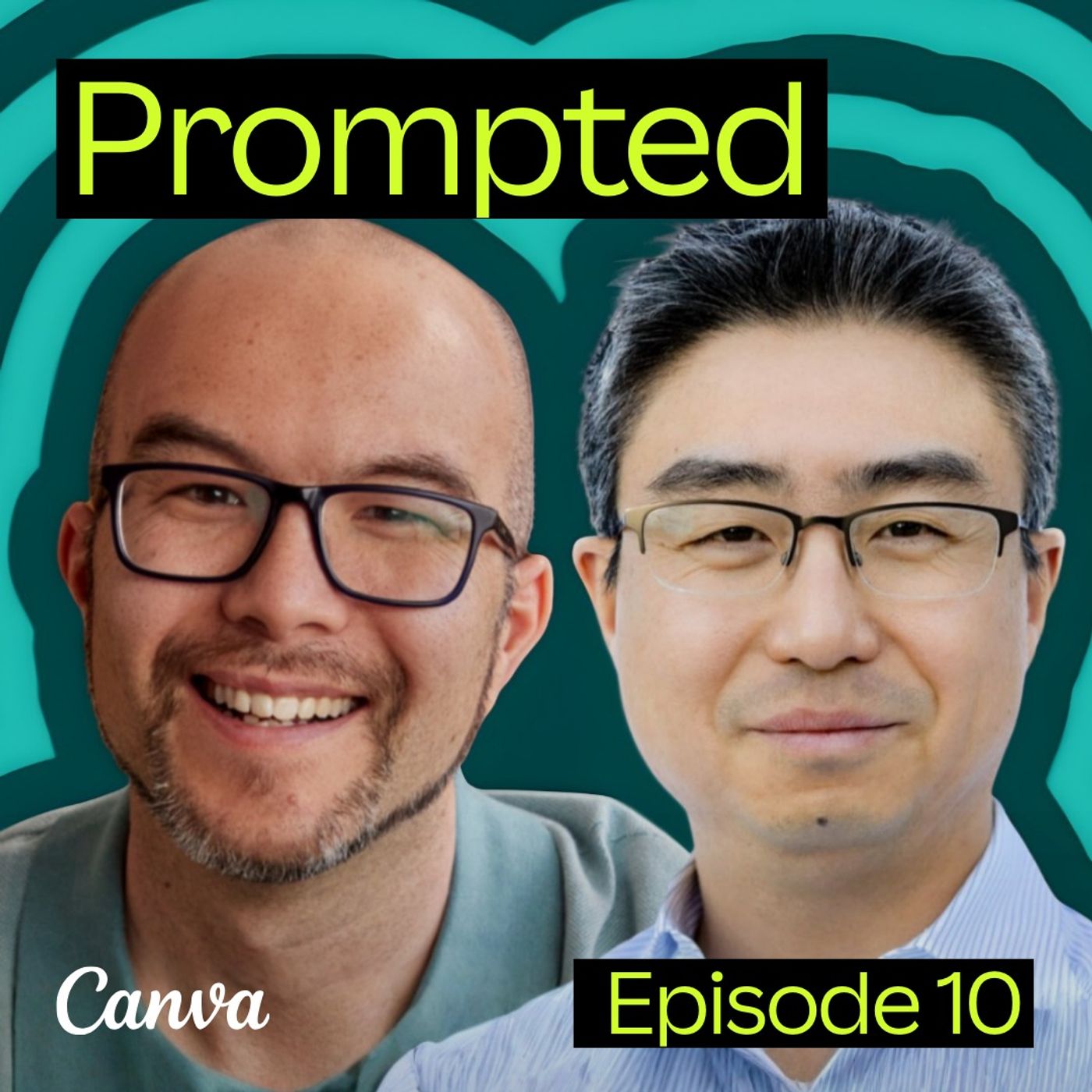
The AI landscape is shifting every week. Startups are racing to challenge the status quo, and investors are closely watching the space.
Peter Deng, a visionary product leader turned investor, joins the podcast. Peter helped shape Facebook Messenger, Instagram, and ChatGPT, driving major launches like ChatGPT Enterprise, voice, and memory at OpenAI.
He is now a General Partner at Felicis, where he backs founders building AI-native companies. In this episode, Peter shares how investors evaluate AI startups today, what separates lasting businesses from surface-level integrations, and what founders must rethink to build companies that hold up over time.
Cam's notes on Substack: promptedwithcam.substack.com
Key Quotes
“There are so many people solving problems that have been solved before, but with old technology, and now they’re solving them with AI in a way that’s ten, a hundred times better.”
“There are a lot of problems that these big model companies are not solving, and that’s where startups are doing really, really well.”
“AI has to be core to the product. Otherwise it’s just not interesting.”
Timestamps
00:00 - Introduction01:16 - The Prompt03:44 - Creative All Hands06:14 - Join teams, or invest, during moments of inflection.09:12 - Use LLMs as a midnight brainstorming partner, when others are asleep.12:00 - Think about "affordances" and shape technology to humans.16:01 - Lean into the back-and-forth to help you clarify and articulate your ideas.19:36 - Startups are solving problems the big model companies are not addressing.21:27 - Founders should relook at old problems, with new technology.25:05 - The top four models will be hard to beat. That's not where the game is being played.26:38 - Product taste and design will be more important over the next 18 months.29:20 - Hopefully AI efficiency will give people more time to spend in real life.34:52 - Startups that extract knowledge out of people's heads, will have an advantage.44:22 - All Star Creative Team47:11 - Design Reveal
Links
Subscribe to the Prompted Newsletter: https://promptedwithcam.substack.com/
Cam on LinkedIn: https://www.linkedin.com/in/themaninblue/
Peter on LinkedIn: https://www.linkedin.com/in/peterxdeng/
Link to Peter, Jade and AI’s Creative Collaboration: https://promptedpodcast.com/episode-10 Hosted by Simplecast, an AdsWizz company. See pcm.adswizz.com for information about our collection and use of personal data for advertising.

 1
1Allie K. Miller has a rare superpower: she makes the cutting edge of AI feel clear, practical, and genuinely fun. Recently named to TIME’s list of the most influential people in AI, Allie has become one of the internet’s most trusted guides—breaking down new models, tools, and workflows for millions, from curious beginners to seasoned builders. In this episode, she joins Cameron Adams to unpack what’s coming next: agentic browsers, “AI-first” reinvention, and why productivity alone can be a trap. Along the way, she shares a simple prompt structure that unlocks better outputs, how to turn fear into agency, and why creativity is often the fastest on-ramp to adoption. Plus: a delightfully weird prediction about how we’ll perceive the world.Cam's notes on Substack: promptedwithcam.substack.comKey Quotes"If they just keep their current workflows in three years, they'll be completely behind the ball.""There is a world in which, with some sort of brain computer interface or new sort of AR overlay to the world, we could see things that are completely imperceptible to humans today.""Productivity is a trap. AI can enable you to do better work and it can enable you to do new work that you weren't able to do before."Timestamps00:00 - Introduction01:45 - The Prompt04:07 - Creative All Hands13:39 - Use AI to simulate future scenarios when convincing teams to change.15:30 - Let small teams move ahead instead of waiting for company-wide adoption.17:37 - Use AI to enable work that was previously impractical to do manually.20:23 - Use creative AI tasks as an entry point before work use cases.23:32 - Encourage skeptics to try AI even if they expect to dislike it.24:40 - Ask permission before introducing AI into group conversations.26:21 - Try this prompt structure: who you are, your objective, then context.28:07 - Add goals, fears, constraints, and resources to improve AI responses.31:29 - Photograph handwritten notes or post-its and upload them as AI context.43:29 - Use AI to analyze patterns across multiple past conversations.52:10 - Turn one detailed input into multiple formats like decks or videos.1:01:08 - Design Reveal1:02:48 - Key TakeawaysLinksSubscribe to the Prompted Newsletter: https://promptedwithcam.substack.com/Cam on LinkedIn: https://www.linkedin.com/in/themaninblue/Allie on LinkedIn: https://www.linkedin.com/in/alliekmiller/Link to Allie, Tisha and AI’s Creative Collaboration: https://promptedpodcast.com/episode-9 Hosted by Simplecast, an AdsWizz company. See pcm.adswizz.com for information about our collection and use of personal data for advertising.

Natalie Piucco, Field CTO at Google Cloud, joins Cameron Adams for a wide-ranging conversation on AI, innovation, and what it really takes to lead through constant change. From her childhood on a banana farm to launching AI-powered products at Google, Natalie shares how creativity, trust, and learning shape high-performing teams.They explore why AI is a fundamentally creative technology, how psychological safety unlocks faster learning, and why we shouldn’t wait to “feel ready” before exploring what problems we can solve with AI. Natalie also unpacks the art of the possible, from creative simulation and education to agentic AI, and explains why the future belongs to high-agency creative generalists. Guest Quote“AI can’t hold the brush, but it can inspire the strokes.”“The future belongs to high-agency creative generalists who can turn vague ideas into momentum.”Time Stamps00:00 - Introduction01:31 - The Prompt03:47 - Creative All Hands07:09 - Create psychological safety so your team can admit what they don't know.08:25 - Train everyone in Design Thinking. It's low cost and unlocks creativity.12:09 - Use NotebookLM to turn long documents into podcasts you can learn from.13:49 - AI is an adult-permission slip to do things differently.17:55 - Add an AI meeting assistant to every call so you can focus on people.19:45 - Before doing any task, pause and ask: could AI do this?24:11 - Define where risk-taking lives in your company. Creativity requires it.25:25 - Don't just adopt AI tools. Help people build mental models for using them.28:00 - Use the Progress Principle: count testing, feedback, and killing ideas as wins.32:09 - Look for AI opportunities in boring, repetitive work like tax or compliance.37:00 - Start your AI experiments with a clear challenge and the metrics associated with that.38:07 - Price every problem. What does it cost in money, time, or customers?40:46 - Use the Moonshot Framework: huge problem, radical solution, breakthrough tech in three circles.43:32 - Build community and in-person connection. AI makes human trust more valuable.44:00 - All Star Creative Team46:30 - Design Reveal49:21 - Rapid Fire LinksCam on LinkedIn: https://www.linkedin.com/in/themaninblue/Natalie Piucco on LinkedIn: https://www.linkedin.com/in/natalie-piucco-7238403b/Prompted Newsletter: https://promptedwithcam.substack.com/Link to Natalie, Harriet and AI’s creative collaboration: https://promptedpodcast.com/episode-8 The Leonardo.ai, Google, James Gulliver Hancock collaboration: https://www.youtube.com/watch?v=ymSfyF3UezU Hosted by Simplecast, an AdsWizz company. See pcm.adswizz.com for information about our collection and use of personal data for advertising.
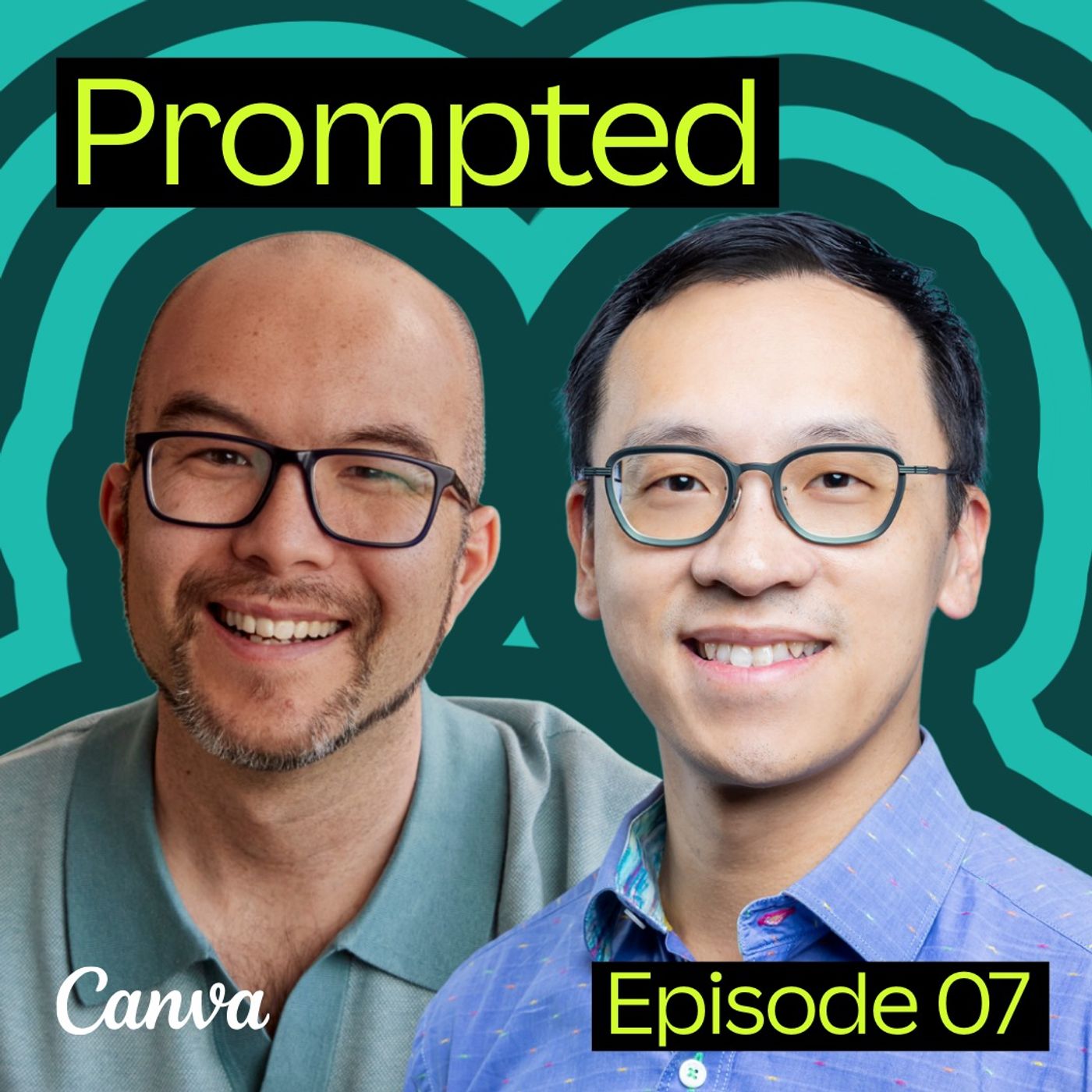
How does one of the world’s fastest-growing companies approach international scale? How is localizing AI different than localizing any other product? Managing Director of OpenAI International, Oliver Jay, joins Cameron to answer these questions and give us a window into what it takes to deploy AI models globally. Drawing on his experience at Dropbox, Asana, and now OpenAI, Oliver explains why AI adoption follows familiar product-led growth principles but moves dramatically faster, how OpenAI works with governments through its OpenAI for Countries program, and why voice, education, and workforce upskilling must coincide to make AI accessible worldwide.Cam’s notes on Substack: promptedwithcam.substack.comKey Quotes“ The models are at the point where you will see an explosion of voice native applications. I think voice changes everything.”“At this scale, you really do need to work side by side with governments to ensure that countries are ready for what's coming.”Timestamps01:12 - The Prompt03:51 - Creative All Hands06:24 - When demand is global, execute in parallel, not sequential country rollouts.07:07 - Familiar interfaces (like chat) can unlock adoption faster than capability alone.07:56 - Start your day by asking AI to preview meetings and prep.10:15 - Scale globally with bottoms-up product work and top-down government partnerships.12:38 - The risk of not having enough compute far outweighs the risk of having too much.13:38 - Upskilling needs systems: academy, certification, and job matching loops.16:02 - Watch usage patterns by country, product breakthroughs can start anywhere.16:48 - Design educational AI like a tutor: prompt, challenge, and guide, don't solve.19:13 - Teach models language principles, and they generalize beyond training languages.23:22 - Voice can replace keyboards as the gateway to digital opportunity.26:23 - Traditional teams can lead innovation when AI removes their biggest bottlenecks.27:55 - Show customers real prototypes fast. Codex can build demos in minutes.43:48 - All Star Creative Team45:20 - Design Reveal47:16 - Rapid Fire49:02 - Key Takeaways LinksSubscribe to the Prompted NewsletterCameron Adams on LinkedInOliver Jay on LinkedInLink to Oliver, Yvonne, and AI's creative collaboration: https://promptedpodcast.com/episode-7 Hosted by Simplecast, an AdsWizz company. See pcm.adswizz.com for information about our collection and use of personal data for advertising.
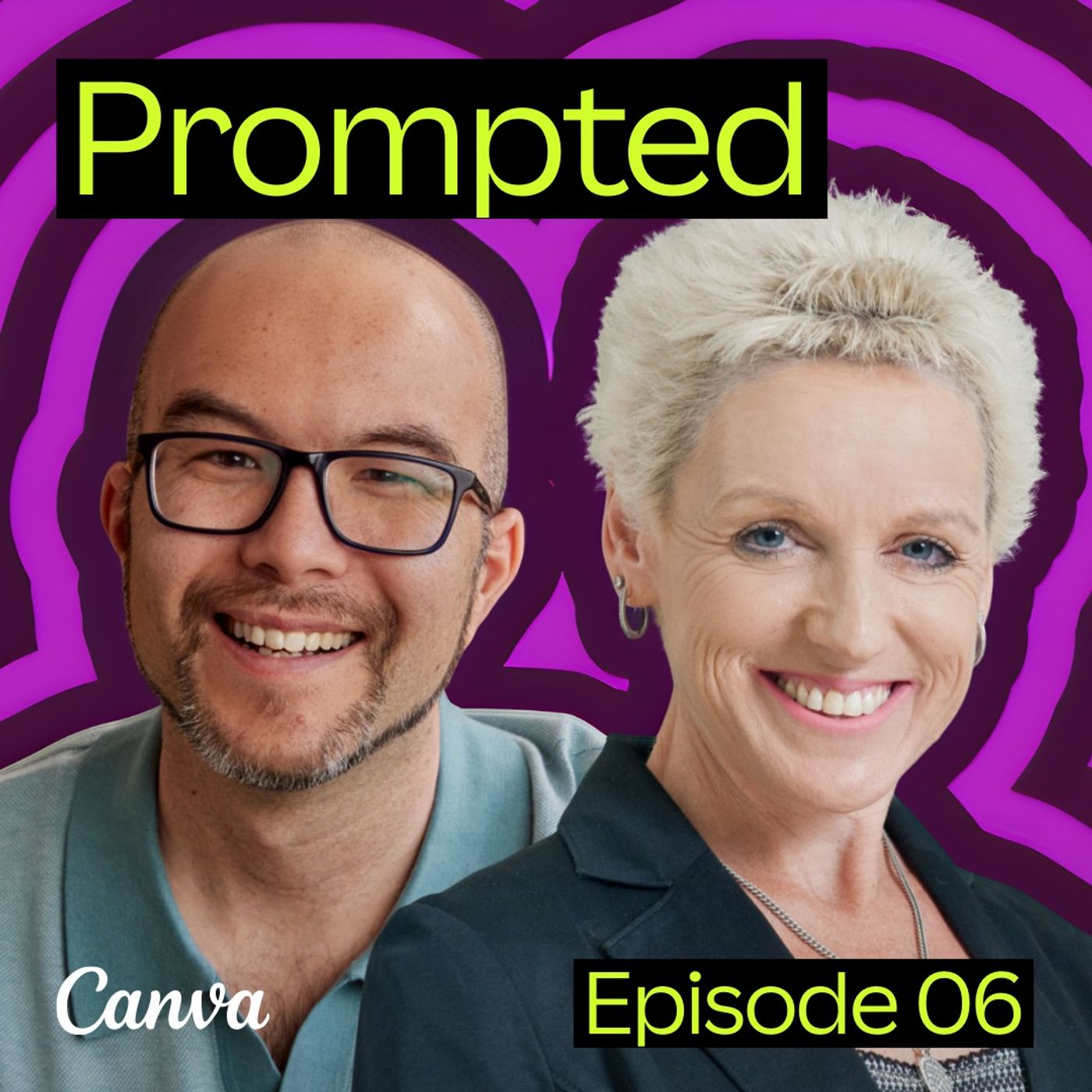
Nic Scoble-Williams, Deloitte’s Global Future of Work and Agentic Workforce Leader, joins Cam to share how AI is reshaping creativity, leadership, and the way we design work. She breaks down what it means to be a futurist, how to ask better questions, and why human imagination is the new competitive advantage. She also dives into different cultural approaches to AI-use around the world, and what we can all learn from each other. Guest Quote“It's still all about the power of humans. Humans bringing the judgment; humans bringing the emotion; humans making it real in the realities of society, of our human interactions.”“The new competitive edge is about human advantage. We have AI level in the playing field. Everyone who's competing, they've got the same access to the technology.”“Questions are a really powerful, important currency in this future that we are navigating today.”Timestamps00:45 The childhood lesson that shaped Nic’s fearless approach to possibility04:00 What a futurist actually does: curiosity, challenge, and connection05:00 How global forces intersect to reveal the real signals of the future06:00 Why great questions start with “I don’t know what I don’t know”07:00 How to give AI the right context to reduce blind spots08:45 The three challenges companies face when adopting AI11:40 Using questions to challenge AI and spot hallucinations15:00 How culture shapes AI adoption across Japan, China, Europe, and the US20:15 The 7-Eleven case study: elevating human roles through AI redesign24:00 The real blockers to AI value: safety, leadership, and human skills29:00 The imagination deficit and why creativity must become core infrastructure38:55 Why humanity becomes the new competitive advantage in an AI-powered world47:28 Cam’s key takeawaysLinksSee Nic, Clouds and AI’s creation: https://promptedpodcast.com/#episode-6 Cam on LinkedIn: https://www.linkedin.com/in/themaninblue/ Nic Scoble-Williams on LinkedIn: https://www.linkedin.com/in/nicole-scoble-williams/ Prompted Newsletter: https://promptedwithcam.substack.com/ Hosted by Simplecast, an AdsWizz company. See pcm.adswizz.com for information about our collection and use of personal data for advertising.
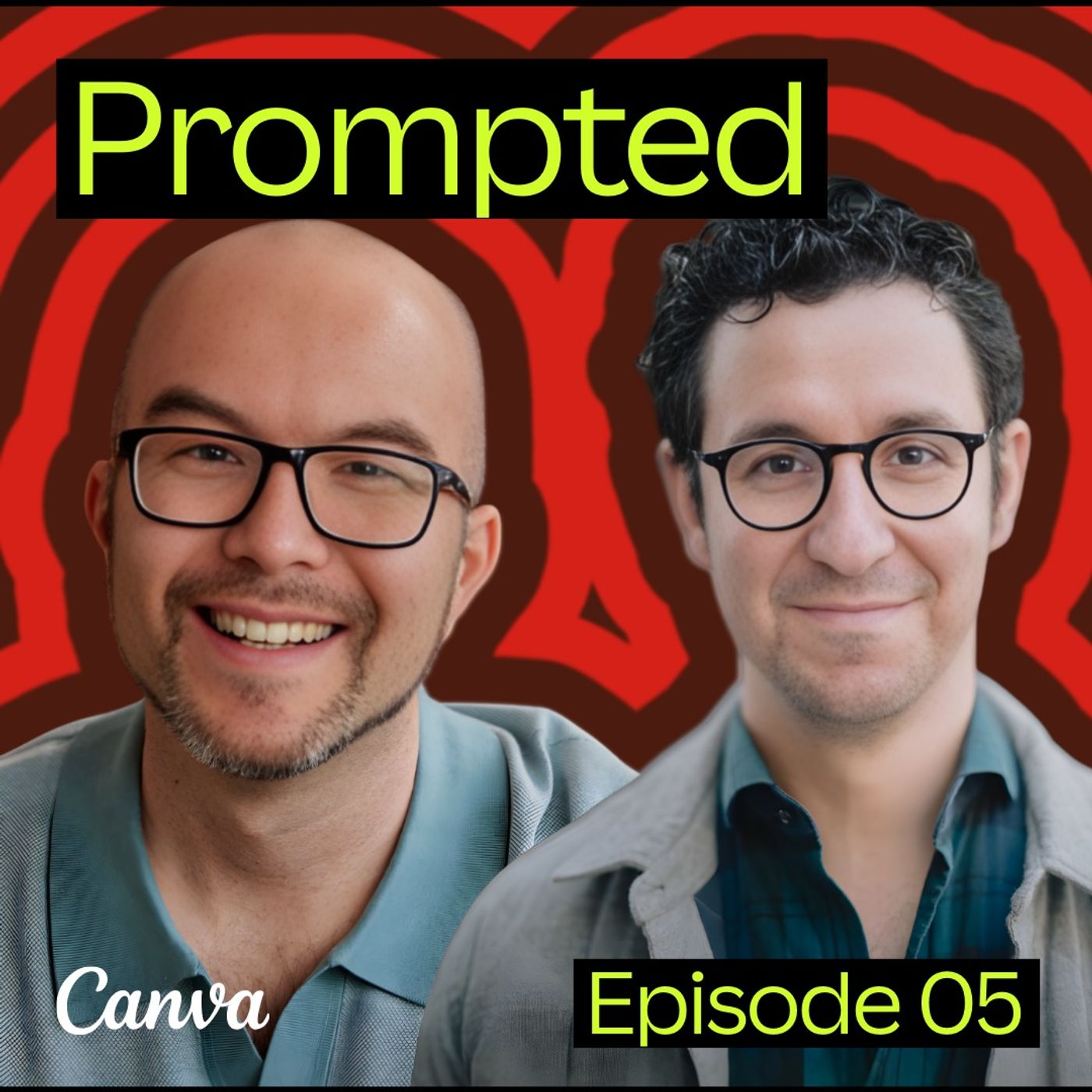
Anthropic’s Head of Product Design Joel Lewenstein joins Cam Adams to explore the evolving relationship between humans and AI—how we build it, test it, and trust it.Joel unpacks how his team designs Claude’s character and behaviors to earn users’ trust, and why the best AI products feel less like tools and more like collaborators. He shares how friction can fuel creativity, how Anthropic’s “AI vending machine” experiment helps them learn about human-AI interaction, and why designing for safety and alignment is as much an ethical mission as a product challenge.Cam’s notes on Substack: promptedwithcam.substack.comKey Quotes“Claude is a sense-making tool for me… I vomit into a document and I know it doesn't make any sense … And then Claude helps me make frameworks and concepts that I can then use in our day-to-day to guide the work.” “ What I did in a pre AI era was I would excitedly write a doc that I just was sure was perfect. I would show it to someone and they would just point out the obvious flaw, the obvious gap…Claude is my first reader on almost literally anything that I make now, and I just find that tremendously helpful” “ A lot of what we think about is how to build, how to train Claude, how to use the research methodologies to make Claude an entity that you really do want to be that vulnerable with. Something that is open-minded, curious, non-judgmental, non-simplistic and non reductive, and embraces the nuance and complexity of your life and of the world.”Timestamps00:30 — Welcome + Intro to Joel Lewenstein, Head of Product Design at Anthropic01:45 — How a childhood coding game sparked Joel’s love of creative systems05:19 — Why Joel uses Claude as his “first reader” for every idea06:09 — Designing for trust, safety, and vulnerability09:29 — The AI-powered vending machine experiment11:21 — Why good friction makes better collaborators15:07 — Volcanoes vs. Skyscrapers: the metaphor behind Anthropic’s design process17:32 — How Anthropic uses Claude to build Claude20:06 — Is Claude creative—or just trying to be creative?24:16 — The future of teams and AI collaboration28:43 — The real skill of the AI era: asking better questions32:12 — Why prompt engineering still matters36:45 — Designer reveal: Joel, Bella and AI’s collaboration39:02 — Rapid fire: songs, kids, and AI-powered beer gardensLinksSubscribe to the Prompted Newsletter: promptedwithcam.substack.comSee Joel, Bella and AI's creation: https://promptedpodcast.com/#episode-5 Cam on LinkedIn: https://www.linkedin.com/in/themaninblue/?skipRedirect=true Joel Lewenstein on LinkedIn: https://www.linkedin.com/in/joel-lewenstein/ Hosted by Simplecast, an AdsWizz company. See pcm.adswizz.com for information about our collection and use of personal data for advertising.

OpenAI Head of Revenue Ashley Kramer joins Cam Adams to discuss how her revenue team is using AI to get ahead. She unpacks how her team bridges research and real-world results, turning powerful models into tools that transform how people work. Ashley also explains how the most boring AI use cases can spark the most valuable“aha” moments, and how OpenAI customers are scaling AI adoption from the top down.Cam’s notes on Substack: promptedwithcam.substack.comKey Quotes“Sometimes the boring, simple thing is the biggest aha moment for a customer.”“You can’t scale headcount forever—but you can scale with AI.” “There has been this fear for a while of will AI replace me? And the answer is not if you know how to leverage it properly, it will really take you to the next level.”Timestamps00:14 — Meet Ashley Kramer, Head of Revenue at OpenAI01:16 — The 1999 World Cup moment that shaped her leadership mindset04:00 — The airplane story that changed how she saw AI’s potential07:00 — From GitLab to OpenAI: chasing the next frontier08:08 — Bridging research and real-world value09:42 — How OpenAI turns breakthroughs into business impact11:40 — Inside OpenAI’s research-led growth model14:35 — What OpenAI learns from enterprise partners like Moderna15:00 — Why small wins drive big AI adoption20:25 — AI success stories (Moderna’s approach)22:26 — Building “Ashley Comms GPT” to streamline communication25:18 — Coaching sales teams with AI avatars and voice agents27:31 — How experimentation fuels OpenAI’s best ideas28:55 — The “make it stronger” lesson on prompting30:30 — Why creativity is still underused in ChatGPT33:08 — How creatives are evolving with AI tools34:22 — Making the world AI fluent: training and certifications35:45 — What’s next for OpenAI’s growth36:48 — Ashley’s All Star Creative Team38:40 — Designer Reveal40:24 — Rapid-fire 42:00 — Cam’s Key TakeawaysLinksCheck out Ashley, Emily, and AI's creation Subscribe to the Prompted NewsletterCam on LinkedInAshley on LinkedIn Hosted by Simplecast, an AdsWizz company. See pcm.adswizz.com for information about our collection and use of personal data for advertising.
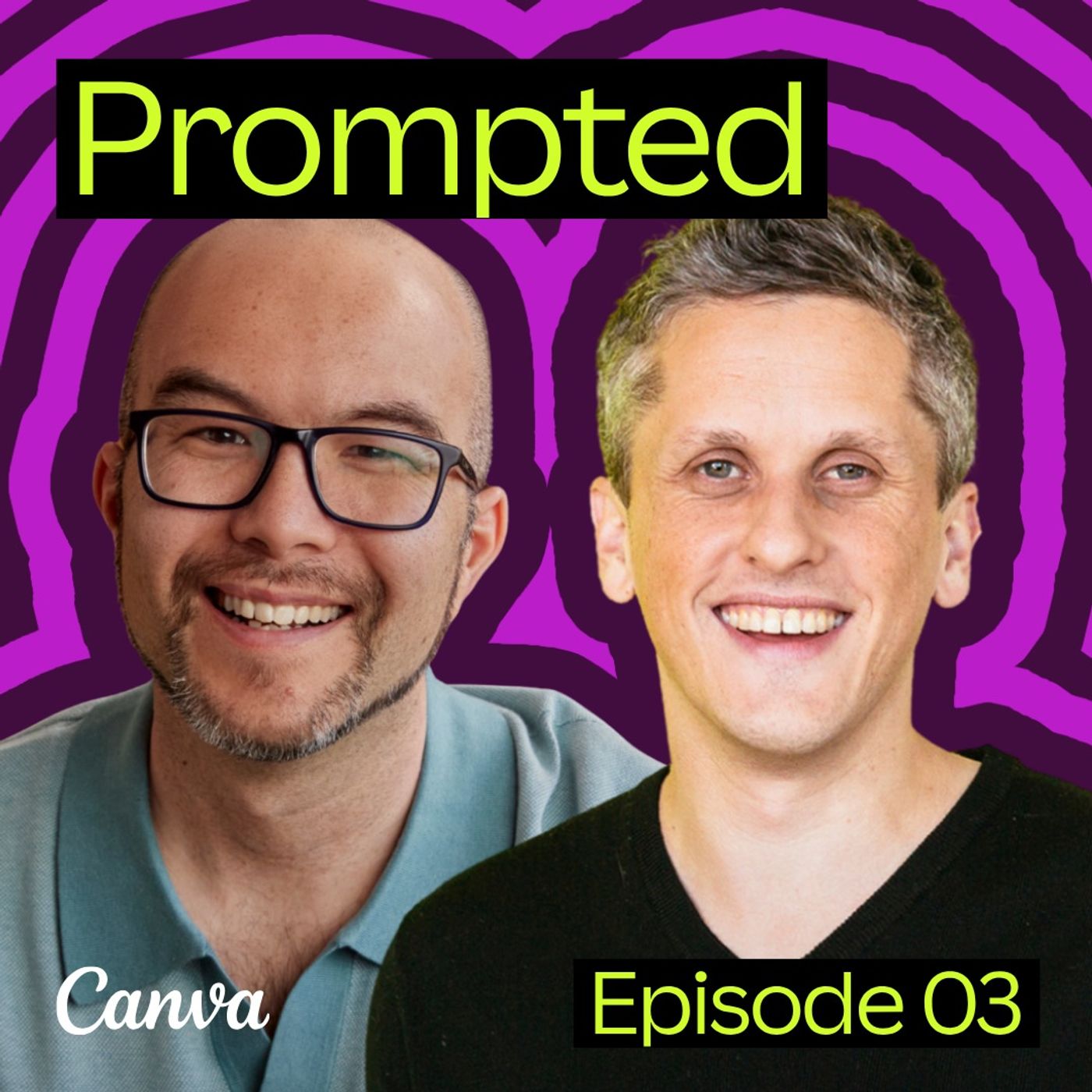
Box Cofounder and CEO Aaron Levie joins Cameron Adams to explore how AI is transforming creativity, scale, and ambition inside organizations. Aaron shares how teams can turn data into a superpower, reinvent their ways of working, and unlock new opportunities to multiply their impact, all while keeping human creativity and judgment at the center. He also discusses how startups can now compete at scale from day one and how abundance thinking should shape what comes next.Cam’s notes on Substack: promptedwithcam.substack.com Key Quotes“If you're in any creative role, the impact and leverage you have is truly 10 to a hundred times more than it was five or 10 years ago.”“A three or five person company now has the impact of a 50 person company.”“We should just start to think about this more as a technology for delivering abundance.”Timestamps00:40 — Welcome + Intro to Aaron Levie01:25 — The Prompt: Magic Camp and the spark of creativity05:41 — What “being human” means in the age of intelligent tools16:47 — Why intentional workflow design is essential17:37 — The rise of prompt-driven companies19:04 — Data is back: turning unstructured information into an advantage28:02 — Abundance thinking and removing long-standing bottlenecks28:31 — Creativity in every corner of the enterprise30:47 — Failing fast and building a culture of experimentation32:44 — Being more ambitious with what you ask AI to do36:14 — Starting Box today: how AI changes what’s possible40:05 — Differentiation and the importance of human spirit41:48 — All-star creative team picks42:56 — Magic Camp designer reveal44:44 — Rapid-fire questionsLinksSee Japes, Aaron and AI’s creative collaboration Subscribe to the Prompted NewsletterCam on LinkedIn: https://www.linkedin.com/in/themaninblue/Aaron on LinkedIn: https://www.linkedin.com/in/boxaaron/Aaron on X: https://x.com/levie Hosted by Simplecast, an AdsWizz company. See pcm.adswizz.com for information about our collection and use of personal data for advertising.
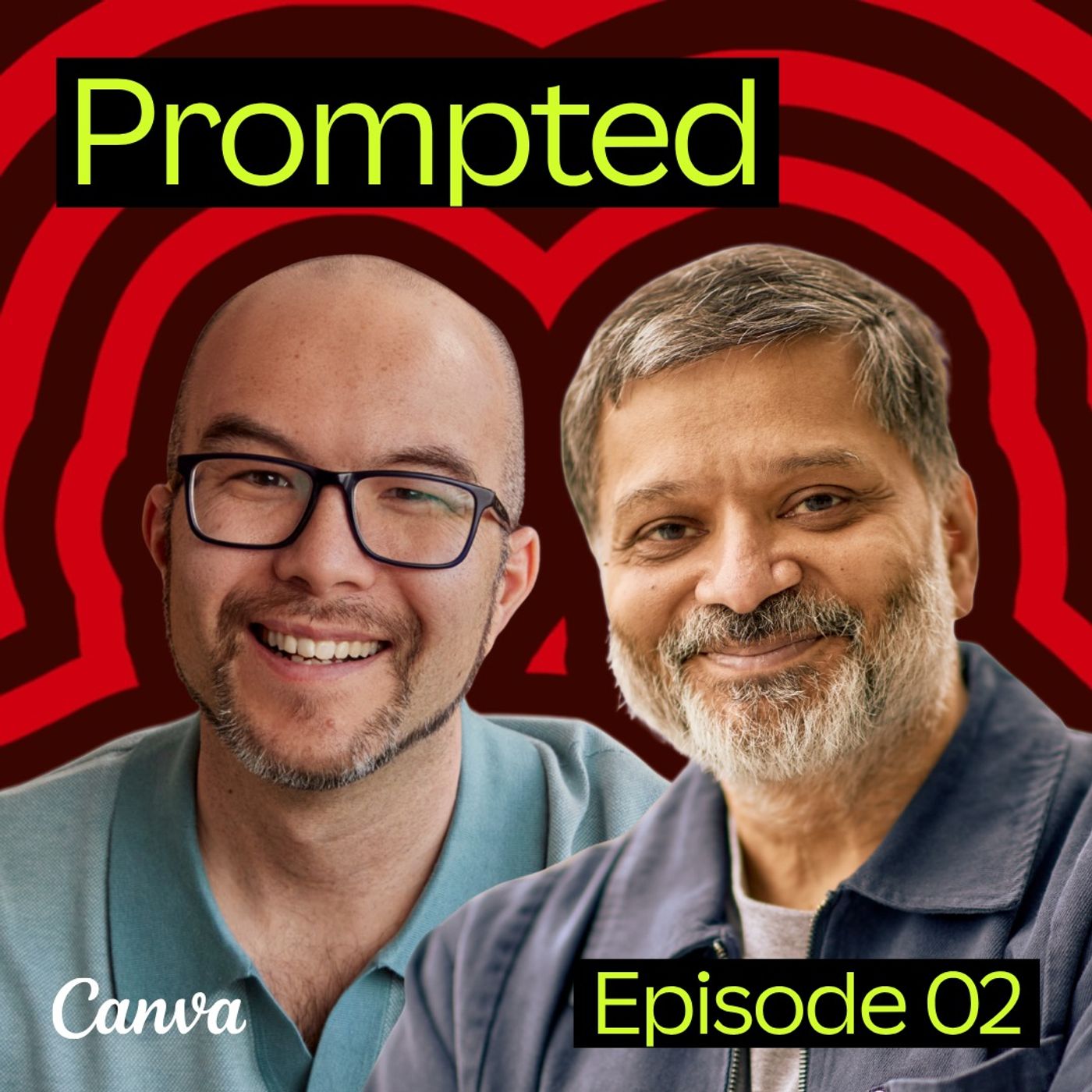
HubSpot Cofounder and CTO, Dharmesh Shah, joins Cameron Adams to explore how AI agents are reshaping work, leadership, and creativity. From culture-as-a-product to tech-powered parenting, Dharmesh shares insights into why he’s still betting on humans, even in the age of powerful AI tools. From building culture as a product to tech-powered parenting, Dharmesh shares insights into why he’s still betting on humans, even in the age of powerful AI tools.Cam’s notes on Substack: promptedwithcam.substack.comKey Quotes: “Culture is the product you build for your team.”“I think of an AI agent as a very adept intern… But when they show up for their first day of work, they don’t know about your business, they don’t know about your policies, they don’t know about their teammates. They don’t know anything other than all the external training that they’ve had.”“In a way, creativity is combining primitives that already exist in novel and unique ways… AI is good at connecting the dots ”“Money is still on the humans. I’m sorry. Humans powered by AI — if they want to use AI, fine — but I want someone that’s got that taste.”Timestamps 00:40 Welcome + Intro to Dharmesh01:28 The Prompt: The Casio keyboard that changed Dharmesh’s life03:47 The spark behind Agent.ai and its growth to 2M users06:13 Dharmesh’s process for building agents 07:04 Can AI truly be creative? 11:47 Hybrid teams: will agents ever be true teammates?15:12 The “adept intern” analogy and why onboarding matters17:57 How AI amplifies creativity across writing, design, and music20:01 Meta prompting: Dharmesh’s trick for better results23:56 Culture is a product — lessons from HubSpot28:19 Tech-powered parenting and raising the next generation with AI32:00 Sorry, Must Pass: Dharmesh’s philosophy on focus33:15 Outcome-based pricing: can you charge for creativity?37:10 Money still on the humans — why taste and judgment matter40:04 All-star creative team picks43:00 Designer reveal with Paolo44:52 Rapid-fire questionsLinksSee Paolo, Dharmesh and AI’s creative collaboration Subscribe to the Prompted NewsletterCam on LinkedIn: https://www.linkedin.com/in/themaninblue/Dharmesh on LinkedIn: https://www.linkedin.com/in/dharmesh/Agents.ai Simple.ai NewsletterMetaPrompt.com Hosted by Simplecast, an AdsWizz company. See pcm.adswizz.com for information about our collection and use of personal data for advertising.
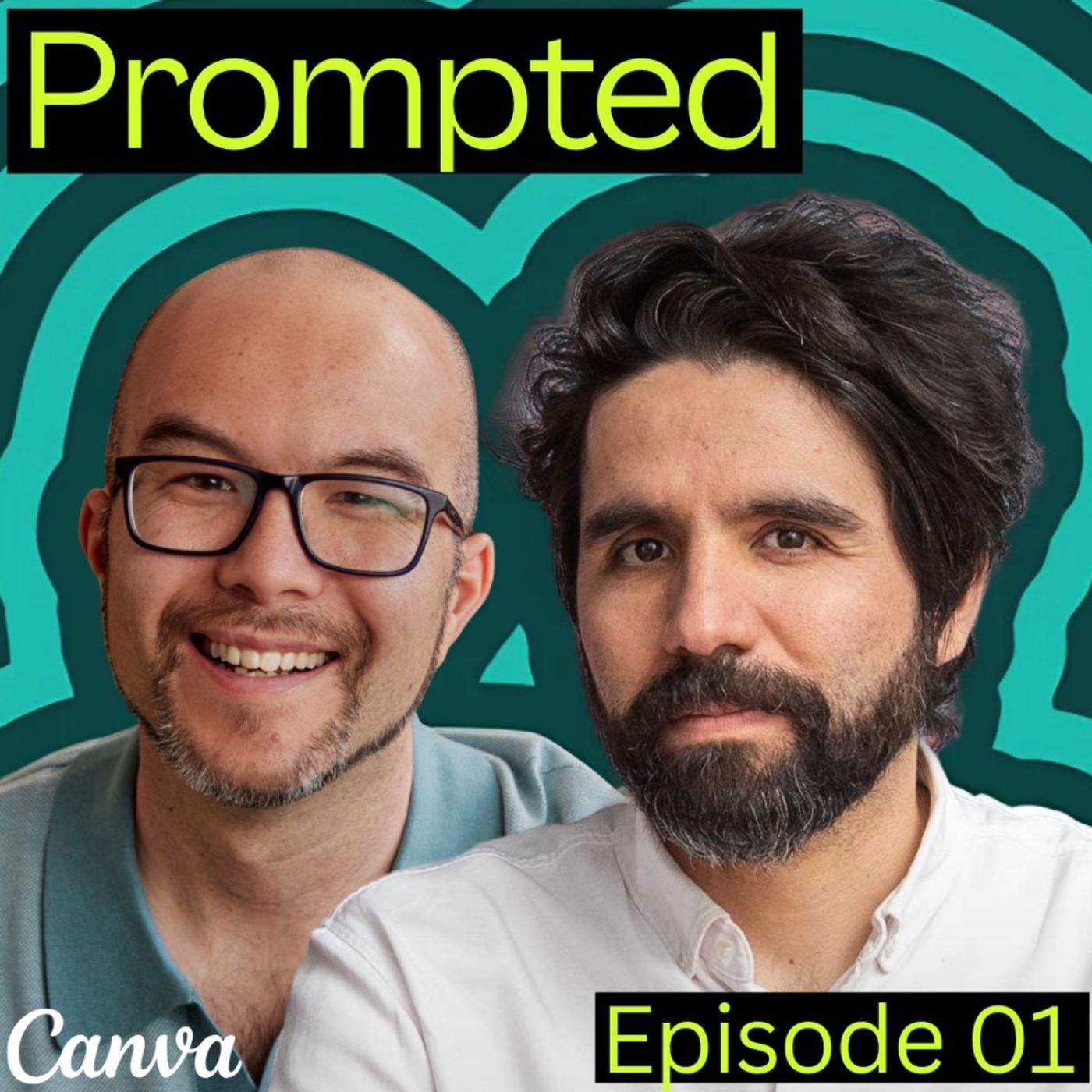
Designer, illustrator, and creative entrepreneur Pablo Stanley joins Cameron Adams, to explore how AI is transforming creativity. From vibe coding and cultivating taste to the rise of hyper-personalized content, they dive into how AI is reshaping the creative process. Pablo shares his thoughts on the role of taste, the importance of friction and how he uses vibe coding to bring prototypes to life. Cam’s notes on Substack: promptedwithcam.substack.comKey Quotes: “AI can do a lot of stuff. It can do volume and it can do it really quick and can give you all the different options, but taste will allow you to know what to ask from it.”“We’re on the sidelines looking at the robot surf and saying like, no, you’re doing the surfing wrong, but the robot is doing the surfing. It’s the fun part, you know?”“I wish sometimes that LLMs…potentially have a slider or something that’s the friction slider…at the moment, it feels like it’s all the way up and it’s always…just like a yes man, and it’s always saying, yes, you’re the best.”“Taste is a skill that you have to develop. It’s a skill that comes with privilege too.”Timestamps 00:44 Welcome + Intro to Pablo02:03 The prompt - from Pablo’s head, to the page, to AI 05:47 From six-finger hands to stunning renders: how fast AI has improved06:23 Low-risk projects and AI experimentation08:50 Building Lummi & real team workflows (language, contracts, ops)15:28 “AI makes volume, taste makes value” — the privilege of developing taste18:56 Hyper-personalized feeds, Minority Report vibes, and brand content23:03 Creative friction: do we need a “friction slider” for AI feedback?27:44 Vibe coding: creating fast prototypes (+ Taco cameo 🐶)35:07 All-Star Creative Team37:41 Designer Reveal: Check out Alvin, Pablo and AI’s collaboration 39:45 Rapid-fire questionsLinks: Cam on LinkedInPablo on LinkedInSee Pablo’s sketch and Alvin, Pablo and AI’s creative collaborationSubscribe to the Prompted Newsletter Hosted by Simplecast, an AdsWizz company. See pcm.adswizz.com for information about our collection and use of personal data for advertising.
As AI evolves from just a tool to a trusted collaborator, the creative process is being rewritten. Prompted: AI, People and the Creative Spark is a show about this new era, when human inspiration meets artificial intelligence, and new forms of creativity, leadership, and invention take shape.Hosted by Canva’s Co-founder and Chief Product Officer, Cameron Adams, each episode brings you insight and direction from the leading voices at the intersection of AI and human ingenuity. These are the thinkers and builders reimagining what’s possible when we start treating AI as a co-creator.If you're curious about the future of creativity, and the people bold enough to shape it, you're in the right place.LinksSign up for our newsletterFind Cam on LinkedIn Hosted by Simplecast, an AdsWizz company. See pcm.adswizz.com for information about our collection and use of personal data for advertising.
Comments

Download from Google Play

Download from App Store
 United States