


 Claim Ownership
Better Minneapolis Podcast
Subscribed: 0Played: 0
Subscribe

© Terry White
Description
96 Episodes
Reverse

On Friday, Minnesota released updated budget projections, and at first glance, they looked surprisingly strong. For FY 2026–27, the state is projecting a $3.7 billion surplus, $1.3 billion more than estimated in November.That surplus provides breathing room. But it doesn’t erase the underlying concerns.Even with the short-term cushion, Minnesota still faces a structural imbalance, with spending projected to outpace revenue by FY 2028–29. And the numbers come with uncertainty. The state is currently in a dispute with the federal government over $259 million in withheld Medicaid funds. It’s money Governor Walz has called “totally illegal and unprecedented.” Federal officials say the move is intended to push the state to strengthen anti-fraud efforts.At the city level, the picture is more complicated. Minneapolis has tallied more than $200 million in lost revenue tied to Operation Metro Surge. Millions in city funds are being redirected toward small business and rental assistance programs. Private donations for food and housing support continue to flow, a sign of both generosity and strain. In downtown real estate, the historic Lumber Exchange building recently sold for $1 — a symbolic marker of a market still searching for its footing.Add to these pressures a war in the Middle East. History shows that when oil prices spike, the ripple effects move quickly through transportation, food, and consumer goods. Given how deeply energy costs are embedded in the broader economy, even a modest increase can tighten household budgets and slow growth.We may not be in a recession. But the prudent posture for local governments is to plan as though growth will be harder to come by.What Exactly is a Recession?Economists typically define a recession as two consecutive quarters of shrinking GDP accompanied by rising unemployment, weaker consumer spending, declining corporate profits, and an increase in business failures.At the city level, the indicators are less precise but just as important. Minneapolis has experienced significant economic disruption tied to recent immigration enforcement actions. The actual number of ICE remaining and the level of activity are difficult to assess. While detentions have lessened, the fear still exists. It will take months before we see comprehensive data showing whether business activity has rebounded.We are likely to see some increase in unemployment, even though not all affected workers may qualify for state benefits. Several major employers have announced layoffs in recent months, including Target, American Public Media Group, Shop HQ, the Star Tribune, Bluestem Brands, OMG Midwest, and Old National Bank. While we don’t yet have full data, anecdotally, we are hearing about more layoffs than hires over the past year.Large corporate profits appear relatively stable. Smaller businesses tell a different story. Restaurants in particular seem to be closing at a faster pace. D’Amico & Sons, Zen Box Izakaya, Café Ceres, and Mesa Pizza are among those that have recently shut their doors. Many local businesses are openly urging residents to shop and dine locally — a sign of both resilience and necessity.At the same time, we hear little discussion from elected leaders about how artificial intelligence and automation may reshape the local job market. Some analysts warn that advances in AI could accelerate job displacement in white-collar fields such as administration, customer service, writing and media, technical analysis, translation, and paralegal work. Whether those predictions materialize or not, the pace of technological change suggests the conversation should be happening now.We meet regularly with readers over coffee or at happy hour. In recent weeks, those conversations have taken on a different tone. People who are deeply invested in their neighborhoods feel unsettled. The Surge is part of it. But there are deeper concerns about the city’s trajectory and its ability to rebound.Some have told us plainly: if not for family ties or business commitments, they would consider leaving Minneapolis. That’s difficult to hear, especially from people who have volunteered their time, money, and hearts to improve this city.The PulseWith so much shifting in Minneapolis — economically, politically, and socially — we want to pause and listen. We’ve put together a short survey to understand where our readers are right now. Your perspective helps shape what we cover and how we cover it. We hope you’ll participate.City Direction and Economic Recovery Survey – Fill out form Get full access to Better Minneapolis at www.betterminneapolis.com/subscribe

We last interviewed Community Safety Commissioner Todd Barnette in August 2024. At that time, he was focused on improving coordination among Police, Fire, 911, Emergency Management, and Neighborhood Safety, while strengthening internal processes and building out the Neighborhood Safety Department. Recruitment for the Minneapolis Police Department and launching the Lake Street Community Safety Center were also top priorities. In this follow-up conversation, our focus shifted to the impact Operation Metro Surge has had on those departments and how the city is preparing for future large-scale federal enforcement activity.The interview was prompted in part by Commissioner Barnette’s recent commentary in the Star Tribune, where he outlined what he believes should guide both authorities and residents during moments of uncertainty. We wanted to better understand how those principles translate into day-to-day decisions inside City Hall.One ongoing source of public frustration is the slow progress on reopening the Third Precinct Community Safety Center. Barnette acknowledged that concern and encouraged residents to use the Lake Street Safety Center at 2228 E. Lake Street while construction continues. Additional information about the city’s response to federal immigration enforcement is available through the website: http://Minneapolismn.gov/federalInterview SummaryIn our latest interview, Community Safety Commissioner Todd Barnette described the “murky gray area” Minneapolis has been navigating during the recent federal immigration surge. Because of the city’s separation ordinance, MPD does not coordinate with federal immigration enforcement on civil matters, yet officers are still responsible for protecting life and preventing serious harm when situations escalate. With thousands of federal agents arriving at one point, the scale and tactics changed quickly, forcing the city to adapt in real time. Barnette explained that officers responding to 911 calls must make fast legal judgments, often without knowing what happened before they arrived, while trying to de-escalate tensions and avoid crossing legal lines themselves.The operational impact has been significant. Overtime costs have climbed across Police, Fire, 911, Emergency Management, and Neighborhood Safety, with the Emergency Operations Center running 24/7. Barnette acknowledged morale concerns as vacations were postponed and staff worked extended hours, calling the recovery period long-term rather than something that will resolve in a few weeks. He also addressed the long-delayed Third Precinct community safety center in south Minneapolis. Construction is expected to begin this summer, with a goal of opening by late 2026. Barnette admitted frustration with the timeline, noting that officers have been operating out of a temporary space for too long and that residents deserve a fully functioning precinct where they can file reports and access services. The new facility is intended to better reflect the city’s commitment to community safety and provide a modern space for officers and partners.On neighborhood safety, Barnette said the department is in a stronger position than it was a year ago. Under Director Amanda Harrington, the office has tightened contracting procedures, clarified priorities, and rolled out safety ambassador pilots along key corridors. Early feedback has been positive, though formal evaluation is still underway. Expansion to areas like Uptown remains uncertain as the city reassesses its budget following the surge. Barnette described the ambassadors as a valuable tool but cautioned that financial constraints may require reprioritization. His broader message was clear: Minneapolis is adjusting under pressure, but rebuilding capacity, restoring morale, and strengthening neighborhood-based safety efforts will take sustained focus and resources. Get full access to Better Minneapolis at www.betterminneapolis.com/subscribe
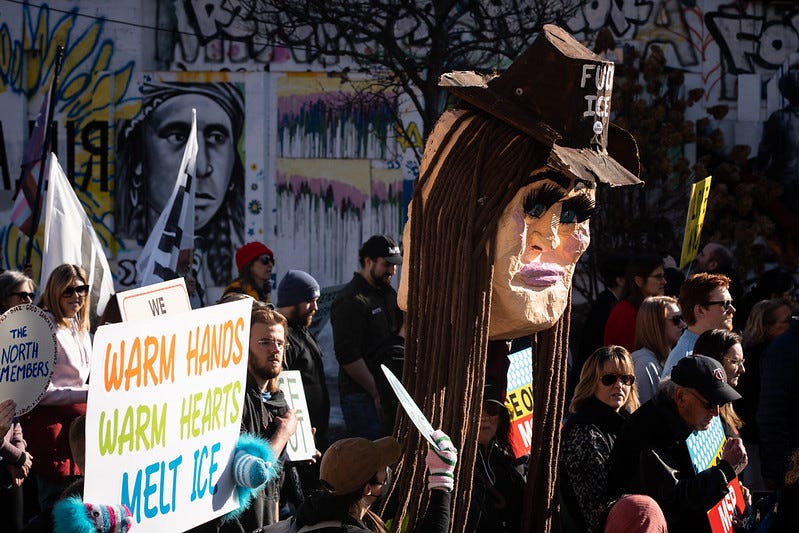
Competence rarely goes viral. It does not dominate headlines or trend online. But steady, smart governance is what allows cities and states to function, and voters tend to notice when it disappears.In Minnesota, Operation Metro Surge may carry long-term political consequences for Republicans. While the goal may have been short-term gains, the tactics used have likely deepened resistance in a state that already leans Democratic. Whether by design or miscalculation, the result could be that Republicans are shut out of state-wide office for many years to come.Nationally, the political landscape remains volatile. Current projections for the U.S. House of Representatives suggest Democrats could regain control if they win the 208 seats currently rated in their favor by the Cook Political Report and capture at least 10 of the 18 toss-up districts. Given President Trump’s weak polling numbers driven by controversies surrounding Epstein, ongoing corruption allegations, immigration policy, tariff disputes, and persistent inflation, Democrats are expected to make gains. Failing to do so would raise serious questions about the party’s strategy and message.The Senate presents a more difficult path. Democrats would need to win the 11 races where they are currently favored, secure all four toss-ups, and flip at least two Republican-held seats. That outcome is possible but unlikely. Even so, control of the House alone would provide a check on executive overreach and shape federal priorities for the next two years.For Minneapolis residents, stability and competence still matter. The quality of governance at every level — federal, state, and local — directly affects budgets, public safety, infrastructure, and the economic health of our communities. Political strategy may grab attention, but effective leadership is what sustains cities over time.How Could Democrats Lose Their Advantage?If Democrats want to squander the advantage they currently hold, the most effective way might be to overestimate the appeal of an anti-Trump, pro-immigration message while underestimating how much voters value competent governance of everyday essentials: schools that balance their budgets, hospitals that remain open, safe streets, and an economy that creates opportunity.Minneapolis may be viewed nationally as a bold symbol of resistance to federal immigration enforcement, but resistance alone does not make a city functional. No wave of admiration is forming around our school finance practices, hospital solvency, or economic competitiveness. That contrast should give DFL leaders pause. Cultural and political signaling may generate headlines, but voters ultimately judge those in power by whether streets are safe, budgets are balanced, and institutions are competently run.Political analyst Ruy Teixeira of The Liberal Patriot argues that Democrats’ deeper problem is not messaging — it is governance. Fraud, he writes, is only one visible symptom of a broader issue: when ideological commitments and interest-group pressures outweigh the practical demands of running government well. Voters, he suggests, ultimately judge a party by whether it delivers results.Put more plainly: if a voter wants safe streets, competent administration, efficient public services, and projects completed on time and on budget, is their first instinct to think of Democratic leadership? In many places, including Minneapolis, that confidence appears to be eroding.Governance is political advertising. When government functions poorly, it weakens the case for those in charge.Several recent developments have raised legitimate questions about whether the DFL and its elected officials are getting the basics right:* Minneapolis Public Schools recently announced that its projected 2026–27 deficit has grown from $30.3 million to $50.5 million. The district’s finance division experienced 50% turnover under its former leader, who departed after disciplinary action. To stabilize operations, the board has approved $830,000 for an outside consulting firm. For families and taxpayers, this does not inspire confidence.* Hennepin Healthcare, operator of Hennepin County Medical Center and now the largest downtown employer following Target’s downsizing, is laying off 100 full-time employees amid a $50 million shortfall. The system provides roughly $100 million in uncompensated care annually. The Hennepin County Board assumed control last year due to financial instability, and additional uncertainty — including the dissolution of UCare — could further strain the system. If conditions worsen, the greatest burden will fall on residents with the fewest resources.* Downtown economic recovery remains fragile. High vacancy rates persist, and businesses continue to struggle. Against that backdrop, the Minneapolis City Council’s public debate over reviewing liquor licenses for two hotels that served federal immigration officials struck many observers as politically performative. Whatever one’s stance on immigration enforcement, the episode raised concerns about how the city presents itself to employers and investors at a time when job growth is urgently needed.* Ongoing fraud investigations have uncovered an alarming number of conspirators and oversight failures. Rapidly escalating reimbursements and minimally vetted providers should have triggered scrutiny earlier. Residents are still asking why accountability has been limited. Republicans have centered this issue in their campaigns, and it continues to erode public trust in state government.The common thread running through all of this is not ideology but competence. Voters may share Democratic values, but shared values are not enough. What sustains political support over time is transparent budgeting, operational stability, real accountability, and sound economic stewardship.If the DFL wants to maintain its position in Minneapolis and Minnesota, it cannot assume that opposition to Trump will carry them. They must demonstrate that they can run complex institutions well.That is the standard voters ultimately apply.DFL Glide PathMinnesota’s DFL candidates for governor and U.S. Senate may have a favorable political landscape ahead of them, but strong state and federal prospects do not lessen the importance of getting local governance right.Consider the Nicollet Avenue bridge over Minnehaha Creek. Beginning March 3, the bridge is scheduled to close for two years for a long-overdue rehabilitation project estimated at $55.2 million. More than 14,000 vehicles per day will be rerouted into surrounding neighborhoods during construction.Two years is a long time for residents and businesses to absorb disruption. And fair or not, projects like this shape public perception. When voters see extended timelines and rising costs, they do not instinctively think government is operating at peak efficiency. That perception problem extends beyond a single bridge or a single party, but it is particularly relevant for the party that currently dominates state and local government.We moved to Minneapolis from the East Coast twenty years ago because of the city’s reputation for good schools, affordable housing, and a strong economy. The fact that it was a drop of blue in a sea of red appealed to us politically, but that was not the primary reason we came. We came for work, for stability, for a place to build a life.We want families and entrepreneurs around the country and the world to see Minneapolis — and Minnesota — as a world-class place to start something. To regain and sustain that reputation, we need leaders focused less on symbolic battles and more on the steady work of maintaining infrastructure, managing budgets responsibly, and ensuring that public systems function well.Competence rarely electrifies a crowd, but it determines who earns the public’s trust. When families weigh which leaders can deliver opportunity and manage the fundamentals of daily life, they reward performance. If the party in power fails to produce tangible results, voters will hand that responsibility to someone else.Signal: bttrmpls.33 Get full access to Better Minneapolis at www.betterminneapolis.com/subscribe
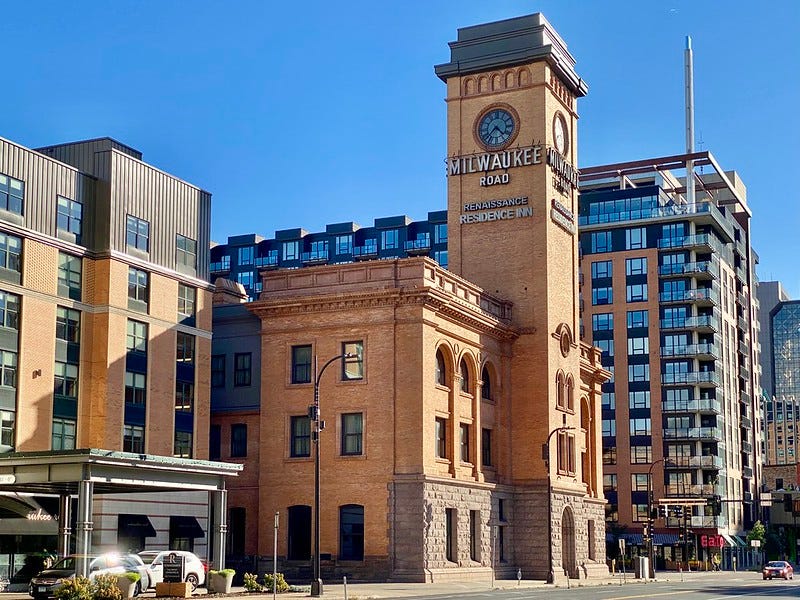
The Minneapolis City Council suspended its regular committee meetings on January 26, citing “ongoing community needs” related to the presence of federal immigration agents in the city.Since then, the Committee of the Whole has wrestled with whether to withhold liquor license approvals for two downtown hotels — Canopy by Hilton and the Depot Minneapolis, a Renaissance hotel. At issue is whether the city can use its licensing authority to pressure private businesses not to cooperate with federal immigration enforcement.On February 17, after a lengthy debate, the committee voted 7–6 to send the matter to the full Council without a recommendation.The Committee of the Whole determines which items advance to the full Council and, if so, whether they do so with a recommendation. The full Council is scheduled to take up the issue on Thursday, February 19, at 9:30 a.m.When we stopped watching to finish this newsletter, the debate had stretched into its fifth hour. The packed agenda was partly due to delays tied to Operation Metro Surge.Business Fallout from ICE ControversyIn this section, we examine two actions that reflect how the Council is responding to businesses connected to ICE activity.The first involved Council Member Wonsley’s proposal to block the appointment of Michael Berk to the Stadium Village Special Service District Advisory Board. Berk is part of the management group for the Graduate Hotel on Washington Avenue, where ICE agents stayed and where multiple noise protests later occurred.An internal message from Berk to hotel employees — leaked on Reddit last month — asked staff to treat ICE agents as they would any other guests. The message sparked significant backlash online, with some commenters sharply criticizing his stance.It is unclear how much that online reaction influenced the Council’s decision. During the meeting, however, City Attorney Quinn O’Reilly cautioned members against screening advisory board appointees based on their political views. Council Member Wonsley argued that the “criminalization of protesters” had taken place and that the hotel’s management bore at least some responsibility.Council Members Rainville, Palmisano, Vetaw, and Warren voted against blocking the appointment. Council Member Whiting abstained.Mixing Liquor and GunsAfter the vote on Berk’s appointment, the Council turned to the legal and ethical arguments surrounding whether hotels could be denied liquor license renewals for providing rooms to ICE agents. The matter will be decided at the full Council meeting on February 19. By a 7–6 vote, the motion was forwarded without recommendation. Council Members Whiting, Warren, Rainville, Osman, Palmisano, Shaffer, and Vetaw voted to move it forward. The remaining six members sought additional time for investigation.Council Member Warren expressed frustration with the review process, saying members were “throwing confetti in the air to see what sticks to the static balloon.” She called the effort “ridiculous” and “discriminatory,” and warned the city was “shooting itself in the foot” with these types of actions.Tensions among members were evident throughout the debate. Council Member Vetaw said, “We’re doing what Trump did to Jimmy Kimmel. We’re using what power we have to get rid of what we don’t like.” She cited the city’s prior attempt to suspend the liquor license of Merwin Liquors at North Lyndale and West Broadway after community complaints about crime associated with the business. At that time, the Council ultimately granted the license based on legal advice that the establishment had not violated city rules. Vetaw argued that disregarding similar legal guidance now would represent a shift in standards.City Attorney Quinn O’Reilly was repeatedly asked to clarify legal questions. He noted that occupation is not a protected class under the law — a point some members interpreted as meaning businesses could legally refuse service based on someone’s employment with ICE.Council Member Chowdhury emphasized safety concerns, referencing the presence of firearms carried by federal agents in hotel spaces where alcohol is served. One speaker testified about reports questioning ICE’s hiring and training processes, arguing that inadequate screening could increase the risk of injury. Of the ten people who testified, most described the presence of ICE as creating unsafe working conditions. Multiple representatives of Unite 17, which represents hotel employees, spoke in support of that view.The first speaker, however, expressed concern about job security as a banquet server, warning that reduced business would mean fewer hours and lower pay. Council Member Rainville returned to that theme several times, saying hotel owners had told him that businesses were canceling future events because of uncertainty surrounding the liquor licenses. Council Member Chughtai questioned that assertion and said she wanted to verify whether events had in fact been canceled and for those stated reasons.We are necessarily summarizing a lengthy debate. Council Member Shaffer distilled the argument for approving the licenses: “We’re sending a message that Minneapolis is not a stable environment for business.”Supporters of the license restrictions framed their concerns primarily around safety and accountability. Opponents warned that using licensing authority in this manner could establish a precedent in which the city weighs political considerations alongside regulatory compliance. The tension between expressing community values and maintaining predictable business standards is likely to shape the final vote.Council members appear united in their belief that ICE’s presence and tactics have harmed the city and its businesses. How to respond and what response is justified remain open questions.Signal: bttrmpls.33 Get full access to Better Minneapolis at www.betterminneapolis.com/subscribe

Note: We are featuring photos of New Mexico in this issue. Frank Spring is based there, and we lived in the state for five years after college. Los Alamos is the birthplace of the atomic bomb. The New York Times recently published an article about New Mexico’s fight with the U.S. Department of Energy over cleaning up radioactive waste that still sits in massive pools dating back to the 1940s. It’s worth a read: “New Mexico Rebukes Federal Agency Over Nuclear Waste at Los Alamos.”“The continued presence of a large volume of unremedied hazardous and radioactive waste demonstrates a longstanding lack of urgency by the U.S. Department of Energy,” regulators wrote in a statement, “and elevates the risk of waste storage failures” at the lab, in northern New Mexico.In case you missed it (ICYMI): The only remaining arms control treaty between the United States and Russia expired last week. The Department of Energy is planning to produce nuclear bomb cores at Los Alamos as part of a $1.7 trillion federal effort to modernize the nation’s nuclear weapons. Critics argue this represents another step backward in national policy.There Are Facts, and Then There Are Government ReportsDisputes over how many people have been detained by the Department of Homeland Security are fueling disagreement and mistrust. Some government sources have claimed that 4,000 people in Minnesota have been detained. That number has been widely questioned and has contributed to growing distrust in government information. The dispute over this figure is not the only one people are debating. In the financial world, there are also doubts about reported employment numbers, job creation, and inflation.A 2025 Gallup/Bentley University poll found that only about one-third (31 percent) of U.S. adults say they have “a lot” or “some” trust in the federal government. Recent actions by ICE agents in Minnesota, along with misleading public statements made by Kristi Noem and others about those actions, may have pushed that number even lower. Many people say they are frustrated when public officials share inaccurate figures or conflicting accounts. This frustration adds to broader skepticism about government reporting and transparency.What has been on display for some time now is that shaping the narrative often takes priority over confronting reality. There appears to be little motivation to pursue solutions grounded in facts. Instead, the goal seems to be charting a path based on how President Trump and his allies want events to be understood. That dynamic is one reason we featured Frank Spring in today’s newsletter. Spring is a founding partner at Altum Insights and managing partner and cofounder of Undaunted Ventures. He has built his career studying how people’s attitudes and biases influence elections. His focus is on identifying the gap between facts and perception and on understanding how beliefs drive behavior.The stories we tell ourselves about events can be more powerful than the events themselves. This administration has placed heavy emphasis on shaping those narratives. What we have seen in Minnesota is a shared determination among residents to define that narrative for themselves. The broader lesson is clear: collective action can shape public understanding. When people come together to tell their own stories, they can influence how their community and the wider world interpret what is happening.Interview SummaryIn this interview, I speak with Frank Spring, a narrative consultant who studies how stories shape political beliefs and behavior. Spring explains that politics is not just about policies, but about the stories leaders tell and the stories voters tell themselves about who they are and what their country represents. He says the current administration believes there is a “silent majority” of Americans who feel threatened by immigration and social change. In response, leaders have tried to create strong narratives about crime, disorder, and the need for crackdowns in cities like Minneapolis.Spring argues that this strategy has not worked as planned in Minneapolis. He says many Americans are not strongly anti-immigrant but instead want an orderly and fair immigration system. When federal agents used force in Minneapolis and officials defended those actions, Spring believes it caused what he calls a “moral injury.” By that, he means people saw authorities harm others and then deny or misrepresent what happened. He says this deepened public anger and distrust, especially when videos and firsthand accounts contradicted official statements.The conversation also explores the future of media and public trust. Spring says traditional news outlets are struggling, and more people are turning to citizen journalism and social media for information. While this shift creates risks, he believes new forms of independent and community-based journalism could emerge. He also notes growing concern about artificial intelligence and its potential to spread misinformation. Overall, he predicts higher civic engagement, stronger grassroots organizing, and significant political consequences in upcoming elections. Get full access to Better Minneapolis at www.betterminneapolis.com/subscribe
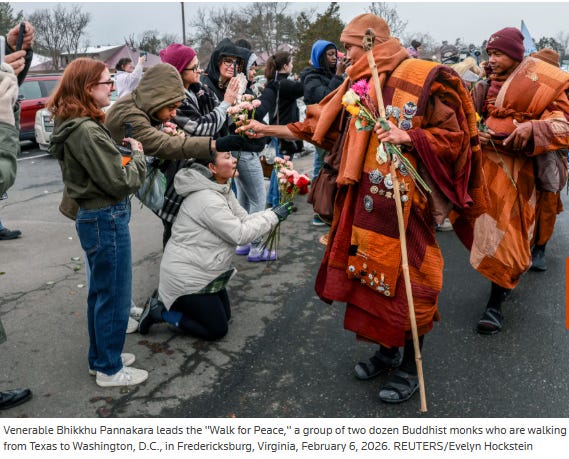
It would have been fitting if the monks who walked from Fort Worth, Texas, to Washington, D.C., to promote peace had been able to stop in Minneapolis along the way.Governor Tim Walz has said he believes ICE agents will be leaving the state within days. If that proves true, the Minnesota left behind after Operation Metro Surge will be markedly different from the one federal immigration agents first encountered. For many residents, their presence has felt less like a law enforcement action and more like a natural disaster — sudden, disruptive, and terrifying.Schools and businesses have emptied. Some storefronts are boarded up. Families are staying inside, afraid to draw attention to themselves. At the same time, neighbors have banded together, delivering food and medicine and checking in on one another. In many practical ways, people are doing what they can to protect those around them.The bonds formed in moments like this between neighbors, friends, and like-minded residents resisting what feels like a hostile invasion are likely to outlast the operation itself. Long after the SUVs with tinted windows and obscured plates have left our streets, those relationships will remain, shaped by a shared experience of fear, solidarity, and care.There are, of course, important differences between what Minneapolis is experiencing and a natural disaster. For one, residents are not waiting for help from the federal government. If anything, many are acting on the assumption that no help is coming. Congress is struggling to agree on basic guardrails for immigration enforcement, such as whether agents should be allowed to conceal their identities. The federal government appears paralyzed and may partially shut down. Where the comparison does hold is in what comes next. As with any disaster, the cameras will leave. The reporters will move on. Minneapolis, meanwhile, will be left to reckon with the aftermath: an estimated $100 million carved out of the local economy, families forced to navigate the costly and painful process of reunification, and residents who have spent weeks in a state of crisis now expected to return to something resembling normal life.Instead of federal aid, the response is coming locally. City leaders are proposing a temporary ban on evictions and would like to commit an additional $1 million toward preventing displacement. The city is shifting $500,000 from the Fire Department’s budget to fund legal defense and exploring the creation of a $5 million pool to support small businesses struggling to survive the disruption.These measures may help, but they also underscore a stark reality: Minneapolis is being asked to absorb the costs of a federal action largely on its own. The state legislative session begins February 17, and it remains an open question whether lawmakers will deliver additional local government aid to help cities recover.Stemming the Tide of TyrannyWe don’t pretend to know the single best way to halt what feels like a growing slide toward authoritarianism in this country. The expanding presence of ICE with its increased budget, broader mandate, and aggressive tactics is only one visible manifestation of a larger pattern.That pattern is evident elsewhere as well: in the erosion of democratic norms, in the casual acceptance of self-enrichment and political favoritism, and in the insistence that truth itself bends to power. In a recent Atlantic essay, “Yes, It’s Fascism,” Jonathan Rauch explains why he has come to believe the term applies to Donald Trump. Central to his argument is the deliberate demolition of norms and the open glorification of force and violence as political tools.That worldview is echoed by Trump adviser Stephen Miller, who has described politics in starkly amoral terms:“We live in a world, in the real world, that is governed by strength, that is governed by force, that is governed by power.”We contrast that belief — that might makes right — with the example set by the several dozen Buddhist monks who walked 2,300 miles to Washington, D.C., to raise awareness of peace, loving kindness, and compassion. Along the way, they endured extreme weather and even a tragic accident that cost one monk his leg. Their leader, Bhikkhu Pannakara, explained that the walk was not a protest, but an effort to “awaken the peace that already lives within each of us.”At our most optimistic, we believe messages like this can still reach people who have traded compassion for the political rewards of coercion. At other moments, that optimism falters. What sustains us are the many forms of peaceful resistance already taking shape — from marches and vigils to quieter acts of solidarity, like knitting circles raising funds for local immigration aid by knitting red resistance hats like those worn by Norwegians in the 1940’s.We don’t know which actions will matter most. It may be marches, music, or mutual aid, or more likely a combination of all the various tactics being used.At a minimum, we can insist on adoption of the basic guardrails now being proposed by Democrats in the federal spending bill, including judicial warrants for home entries, visible identification for agents, a ban on masks, and meaningful local oversight. These are not radical demands. They are basic rights and reasonable limits on a federal agency that has expanded rapidly with little resistance — until it arrived in Minneapolis. Get full access to Better Minneapolis at www.betterminneapolis.com/subscribe
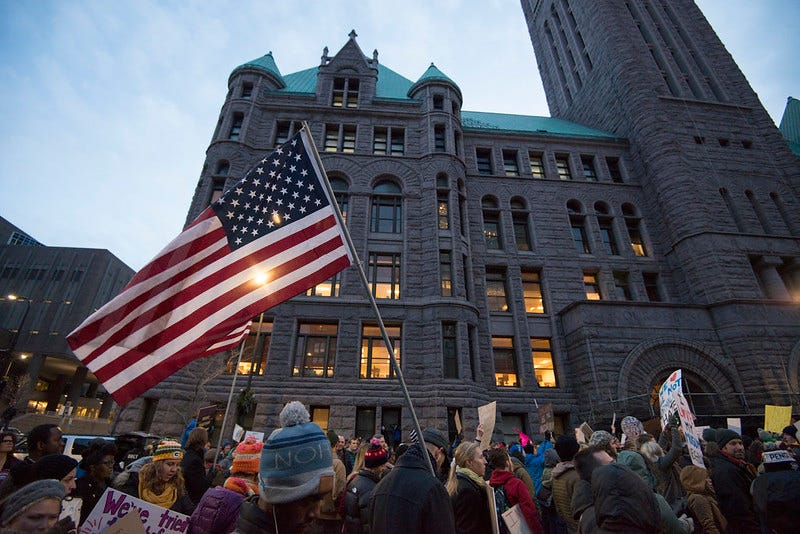
The tragedy unfolding in Minnesota as a result of overzealous immigration enforcement has, for now, strengthened the Democratic Party. Moderate and more left-leaning factions have united in opposition to government overreach and illegal ICE tactics. However, turning this unity into electoral success will require vigilance around a familiar vulnerability: fraud. Republicans will use it aggressively against them.Unity around how to confront and prevent fraud would improve Democrats’ chances in the midterm elections and strengthen the state overall. Republicans are offering a timely example of how a party can erode support from the political center by allowing extremists to set the agenda.Extremism is a Failed PlaybookRepublicans have taken a page from the Democratic playbook in turning public support into aggressive opposition. If they had kept their focus on fraud and mismanagement—issues they leveraged into removing Tim Walz as a candidate for governor—and avoided pivoting to supercharged immigration enforcement, they might have had a chance to win statewide races.Instead, Republicans failed to understand that many people who hold racist beliefs do not want to be seen as racists. This miscalculation has left only the most extreme members of the party willing to openly support Republican candidates. Where they could have expanded their appeal, they instead managed to shrink it.There is a lesson here for Democratic leadership. What Republicans have engaged in is a kind of political self-immolation: allowing the loudest, most extreme, and most aggressive voices in the party to set policy and direction. Governing by the likes and comments of a social media feed is a recipe for failure—regardless of party.Now is the moment for Democrats to attract voters who have abandoned the party in the past, if they can demonstrate a willingness to clean up government, curb wasteful overspending, and put common-sense oversight of social programs in place. Democrats owe it to the families of Renee Good and Alex Pretti to keep MAGA-style Republicans out of office and prevent them from enacting policies that are undermining the economic, social, and political foundations of our state and country. To succeed, Democrats must expand their base, and that requires stepping back from condescending virtue signaling and focusing instead on programs and policies that demonstrate practical, competent governance.Operation Metro Surge has been a disaster on multiple levels. It has shown the country, and even the world, the worst impulses of the Republican Party. It has revealed the extent to which Republicans are willing to disregard the Constitution, the law, and long-standing democratic norms. Resistance from Minnesotans appeared to catch them off guard, and the response was increased brutality. Trump’s memes, along with those of his right-wing influencers, have laid bare the depth of their racism, whether further proof was needed or not. This will not fade away. The midterms will be the first real opportunity for Democrats to reject it. They cannot afford to hand momentum back to Republicans, which could easily happen once federal agents withdraw from the state.Holding onto the High GroundIf Democrats want to maintain the moral high ground they currently occupy, they must be consistent in demanding accountability and transparency in social programs. Consider the findings from the recent review of claims in high-risk social programs administered by the Department of Human Services. The Star Tribune reported, “Ninety percent of claims that Medicaid-funded autism intervention providers billed the state for over a four-year period veered from acceptable standards.” That level of fraud or incompetence cannot be ignored. Government officials failed badly in their responsibility to manage taxpayer funds, and the department heads overseeing these programs should lose their jobs. The politicians who sponsored the legislation creating these programs would best serve the state by becoming the loudest advocates for cleaning up the rot.John Connolly, the agency’s deputy commissioner and the state Medicaid director, said during a press briefing that the findings will be shared with the state Attorney General and the U.S. Attorney’s Office. He added that mass resignations of federal prosecutors have complicated efforts to prosecute fraud in Minnesota. The Star Tribune further reports:The report excludes the names of providers but identifies the types of programs vulnerable to what it calls an “egregious pattern” of irregular claims. Connolly said these range from billing for services that are not clinically justified to documentation that is nonsensical.The programs that stood out include autism intervention, nonemergency medical transportation, and housing stabilization services.The state shut down the housing stabilization program in October amid allegations of widespread fraud . . . Connolly said it could take years for the state to reimagine its social service programs in ways that prevent further wrongdoing, an issue that is expected to be a major focus of the upcoming legislative session.Years of CleanupDemocrats could easily misread their current level of public support and fumble the moment. Most people oppose detaining individuals simply because of the color of their skin. They also oppose overcrowded detention facilities that bear an unsettling resemblance to concentration camps. People want warrants and strong protections for the First, Second, and Fourth Amendments.At the same time, many people also want a functional immigration policy that rewards those who follow the rules and recognizes that deportation is justified in certain cases. They want those carrying out deportations to remove their masks, operate transparently, and be held accountable for their actions.Most people are also strongly opposed to the theft of taxpayer dollars, especially when they themselves are struggling with high taxes, rent, education costs, and health care. The massive fraud that has occurred in this state will remain an issue for years. It will be a sledgehammer Republicans use repeatedly. Democrats must find a way to contain fraud, waste, and extremism within their own ranks if they want a chance to win back control of the U.S. Senate and the presidency. They cannot rely on Republicans to continue destroying themselves. Instead, Democrats must stay ahead of the narrative by clearly explaining that helping those who need it most requires functional social programs that distribute benefits as intended.Signal: bttrmpls.33 Get full access to Better Minneapolis at www.betterminneapolis.com/subscribe

The Minneapolis small business community, particularly its restaurants, is feeling the effects of Operation Metro Surge. While immigrant-owned businesses along Lake Street appear to be facing the sharpest downturn, with the Lake Street Council estimating that 50% of the 1,652 businesses have closed in the last two months, restaurants and small businesses across the city are also being impacted.This conversation with French Meadow Bakery owner Marlene Leiva highlights how precarious the moment has become, not only for business owners but for the entire network that depends on them, including delivery drivers, farmers, and other small vendors.Although some relief efforts are underway, such as the GoFundMe for Mercado Central, and support from the Minneapolis Foundation and the ConnectUp! Institute, they are unlikely to be sufficient on their own. Without a meaningful economic recovery plan from the city and state, the damage now unfolding risks deepening into a broader economic crisis.The Community Call FundraiserA community response supporting local businesses and the people who work for themSATURDAY, FEB 7, 2026 — 2:00 - 6:00 PM; Mayor Jacob Frey to attend @ 2:30At French Meadow’s Nord Social Hall, 2610 Lyndale Avenue SRaffle, Silent Auction, DJ, FoodSuggested Donation $20+ or pay what you canInterview SummaryMarlene Leiva became the owner of French Meadow Bakery in September 2025, stepping into restaurant ownership just as Minneapolis entered another period of upheaval. A longtime resident who built her career in real estate, Leiva was drawn to the restaurant business by a belief in food as a way to build community and bring people together. But only a few months into ownership, she finds herself navigating challenges she never anticipated, ones that go far beyond the already thin margins of the restaurant industry.Leiva says the increased ICE presence in the city has had an immediate and severe impact on her business. Staffing has become unpredictable, with some employees, citizens included, afraid to travel to work. Vendors are affected as well, as reduced sales force smaller orders throughout the supply chain. On top of that, cancellations of private events have surged, often from out-of-state customers who believe Minneapolis is unsafe based on news coverage. Since she took over, Leiva estimates foot traffic at French Meadow has dropped by roughly 40 percent, a decline that makes day-to-day operations increasingly unsustainable.Despite the strain, Leiva continues to push forward, supporting a payroll of roughly 75 employees and drawing on income from her other businesses to keep the restaurant afloat. She worries, however, that if conditions persist for months, many small restaurants won’t survive. Leiva is frustrated by the lack of visible city support for businesses like hers and says words alone won’t pay vendors or employees. Still, she remains committed to Minneapolis, organizing a fundraiser for struggling small businesses and insisting the city is safe and worth supporting. For her, keeping French Meadow’s doors open is about more than one restaurant—it is about preserving a sense of normalcy, dignity, and community in a city she calls home. Get full access to Better Minneapolis at www.betterminneapolis.com/subscribe
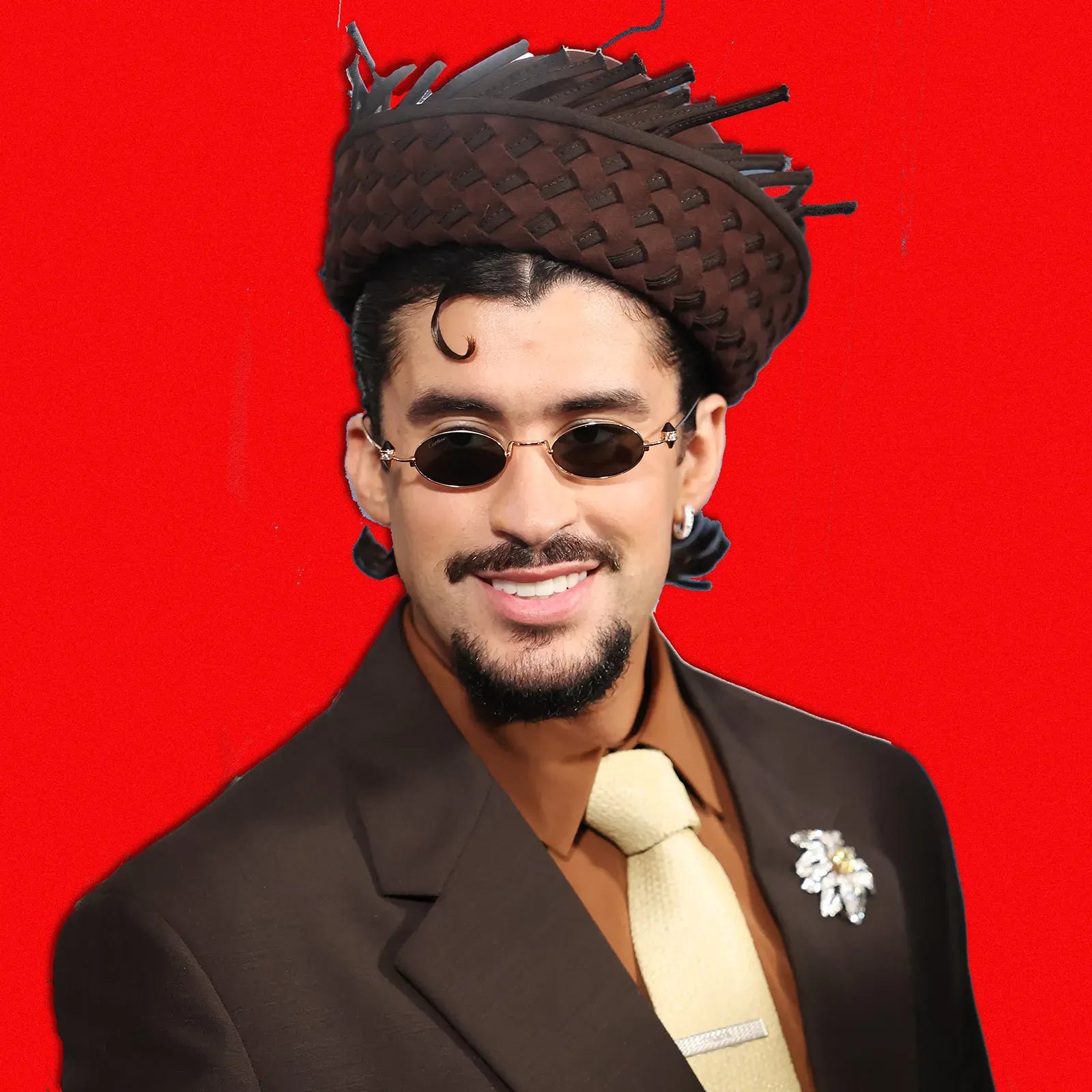
Spectacle of SpectaclesSuper Bowl LX, between the Seattle Seahawks and the New England Patriots on Sunday, will likely generate debate about the presence and tactics of ICE in Minnesota. The National Football League typically tries to keep politics separate from its enormously profitable game, but that became unavoidable when it chose Bad Bunny as its halftime performer.On Sunday, February 1, the artist won three Grammy Awards: Best Album (DeBí TiRAR MáS FOTos), Best Global Music Performance, and Best Música Urbana Album. The NFL didn’t invite him for his politics and will almost certainly ask him to leave them at home during his performance. But during his Grammy acceptance speech, Bad Bunny made his views clear, saying, “Before I say thanks to God, I’m gonna say: ICE out.”The NFL invited him because he is a global superstar who will attract millions of viewers to the halftime show—viewers that translate directly into higher advertising revenue. Bloomberg reports that a 30-second Super Bowl ad now costs between $8 million and $10 million. When musicians and athletes begin speaking out on public issues, it’s often a sign that “normal” voters are paying attention. In another example of this crossover, the Minnesota Timberwolves recently wore warm-up shirts reading “Stand with Minnesota” and released a statement referencing the “times of hardship and need” facing the state. While celebrity endorsements have a mixed record when it comes to producing substantive change, they do signal that the chaos and abuse we’re experiencing are being felt even by those who usually tune politics out.Fans who oppose Bad Bunny’s politics will have an alternative. They can change the channel and watch a halftime show hosted by Turning Point USA, featuring Kid Rock alongside country music performers Brantley Gilbert, Lee Brice, and Gabby Barrett.These competing halftime options are symbolic of the parallel belief systems operating in America today. Some oppose ICE, view its tactics as illegal, and believe they are trying to manipulate us with fear and intimidation rather than immigration enforcement. And some believe that if paid protesters were to simply stand down, ICE could do its job. They often devalue the contribution immigrants have made to the country. There is very little overlap between these two groups.Perhaps the one common denominator this Sunday will be that both sides are drinking beer over bowls of guacamole made with avocados picked by Mexican laborers earning about $10 a day.The Beef with PolicingIf you are among the rare Americans who socialize with people holding different political views than your own, there may be some heated debates this weekend about the role local police and the Hennepin County Sheriff should play when it comes to federal immigration officials.According to “czar” Tom Homan, Sheriff Dawanna Witt could resolve the current standoff simply by opening the Hennepin County jail to ICE agents. In a recent interview with CBS, Sheriff Witt said she felt “scapegoated.” There are several complications with opening the jail to federal agents, including the risk of lawsuits if inmates are held longer than legally allowed. The federal government is not going to step in to cover defense costs or legal fees.Sheriff Witt has said the county will hold someone for federal agents if they present a warrant signed by a judge. One critical factor in this dispute is the complete lack of trust between the agencies involved. Even if Hennepin County were to grant the Department of Homeland Security everything it wants, there is no guarantee that DHS would reduce its presence or change its tactics.Local police find themselves in a similarly difficult position. In a politics-free environment, officers would be responsible for enforcing the law regardless of whether the individual involved is a federal agent or a private citizen. In a recent Star Tribune opinion piece, Community Safety Commissioner Toddrick Barnette wrote:Officers also have a duty to intervene if they observe clearly excessive force, and we will document injuries or property damage caused by federal agents just as we would in any other case. All engagement decisions are reviewed at the command level or by the chief of police. In every instance, the goal is de-escalation.We reached out to Barnette’s office to ask whether this approach is the same as the executive order Chicago Mayor Brandon Johnson signed, known as “ICE On Notice.” That order directs police to document illegal actions by federal agents and forward those cases to the county attorney for prosecution. Mayor Johnson told Democracy Now! host Amy Goodman that the goal was accountability and transparency.The procedure outlined by Barnette in his Opinion are not new for the MPD. We were told the situation isn’t quite as clear-cut as Mayor Johnson suggests. For example, if an agent is masked and lacks visible identification, prosecuting a crime becomes extremely difficult. That reality—more than concerns about doxing—may help explain why federal agents are wearing masks.Still, videos captured by observers could lead to prosecutions. Without citizen-recorded footage, the public would be entirely reliant on the federal government’s version of events. Georgia Fort explained the importance of video documentation in an interview with Rachel Maddow on MS Now. She cited the manipulated photo of Nekima Levy Armstrong as an example. Without alternative images showing Armstrong’s actual expression during her arrest, the public would be left with a government-released photo altered to depict her crying, with her skin tone darkened.This kind of manipulation makes trusting official narratives—and promises about when a drawdown might occur—nearly impossible. Fort and Don Lemon were both prepared to voluntarily turn themselves in for arrest, but DHS instead sought to capture images of them in handcuffs. Actions like these suggest that much of what the federal government is doing is driven more by public relations than by public safety.Puerto Rico WinsRegardless of who wins the Super Bowl, the world will see a proud Puerto Rican singing at halftime. In many ways, they will be witnessing the American dream made real.Born in a small town outside San Juan to a truck driver and a schoolteacher, Benito Antonio Martínez went from bagging groceries and uploading songs to SoundCloud to becoming the biggest global music star.Whether you watch Bad Bunny, tune into Turning Point USA, or protest the Super Bowl altogether, it’s worth remembering that America was widely seen as a beacon of opportunity, free speech, and democracy. That reputation has been compromised by illegal searches, handcuffing women to bathroom sinks, public arrests of journalists, and masked agents roaring through cities in unmarked SUVs. These tactics are the hallmarks of dictators.That damage could be compounded by unnecessary meddling in state elections. If you care about the flag and about democracy, this is a moment to consider how America is being perceived, whether you’re watching the game in Minneapolis, San Juan, Caracas, or Tehran. Get full access to Better Minneapolis at www.betterminneapolis.com/subscribe
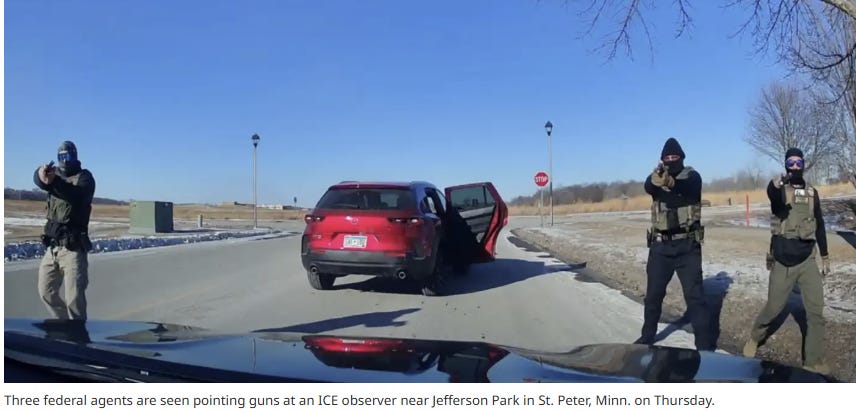
Staying Put Despite ICEA friend texted me last week to say he could see Mark Zuckerberg’s 387-foot yacht, Launchpad, from his hotel room in Playa del Carmen, Mexico. Part of me wished I were there, too, far away from the arbitrary searches and the violence that have become familiar sights on the streets of Minneapolis.But he was writing to ask what was happening here in Minneapolis. And that question made something clear to me: there’s nowhere else I’d rather be right now. It has been inspiring to watch neighbors and strangers stand together, pushing back against a system of power that feels increasingly detached from accountability and the rule of law.What we’re witnessing is what some political theorists describe as a “dual state”—one that preserves legal process for some, while suspending it for others. On the ground, that system is being enforced by ICE agents. They are paid with public dollars to carry out the directives of President Trump and his closest advisers, particularly Stephen Miller.While ICE agents are the visible face of this enforcement and bear the brunt of public anger, they are not the architects of the policy. They are functionaries. The authority that allows masked agents to operate with weapons drawn and minimal transparency flows directly from the White House.The purpose of the bike rally past Alex Pretti’s memorial, the human S.O.S. on Bde Maka Ska, the candlelight vigil at Lake Nokomis, and countless other acts of protest has been consistent: keep pressure on federal immigration enforcement to leave Minneapolis and end a cycle of fear affecting our community. In the weeks since the fatal shootings of Renee Good and Alex Pretti by federal agents, everyday acts of kindness and bravery have played out alongside protest.This morning, we began our social media consumption by watching footage of a woman from St. Peter, Minn., refuse to exit her car even after being threatened by three masked men pointing guns. In the aftermath of Good’s and Pretti’s deaths, that stood out as a profound act of courage and a visceral illustration of the tension and fear gripping our city and state.A judge recently denied Minnesota’s request for an injunction to halt “Operation Metro Surge,” the federal immigration enforcement operation in Minneapolis, meaning the presence of agents will continue for now, and the anxiety many are living with will persist. We don’t yet know how much longer this will last, but there’s hope that as more cities join the protest movement, the national chorus calling for accountability will reach the White House. Demonstrations have spread this week to New York City, Boston, Los Angeles, and Austin.However, it isn’t lost on us that images of protest and statements of solidarity are being shared on platforms like Facebook—platforms that reap enormous profits from our attempts to find and sustain online community. We help pay for Zuckerberg’s $300 million luxury yacht with our clicks, likes, and photos. The tech billionaires who stood behind Trump at his inauguration included Elon Musk, Jeff Bezos, Sundar Pichai, Mark Zuckerberg, and Tim Cook. Business Insider reports that Musk, Bezos, Zuckerberg, and Nvidia CEO Jensen Huang collectively made $288 billion in Trump’s first year.We Are in the Midst of a RuptureCanada’s Prime Minister, Mark Carney, gave a striking speech at the World Economic Forum this year. In it, he described the current moment as a rupture, a break from the accepted world order. Rather than pretending otherwise, Carney urged other nations to acknowledge the change and begin forming new coalitions suited to this reality.At the same time, amid the chaos generated by the Trump administration, the stock market has continued to climb, hovering near all-time highs. These numbers may matter more to the president than poll results or the size of protests in the streets. Market performance creates an illusion of stability or what the German legal scholar Ernst Fraenkel described as the “normative state” in his 1941 book, “The Dual State.”Fraenkel argued that authoritarian systems endure because, for most people, life appears normal. They work, vacation, and go out to brunch. The rules that govern their daily lives remain largely intact and predictable. This normalcy coexists with a second reality, which he called the “prerogative state,” where certain groups are subjected to unlimited arbitrariness and violence, unchecked by legal guarantees.What we are experiencing acutely in Minneapolis, and increasingly across the country, is this dual state in action. For some, especially in other states, life continues uninterrupted. In Minnesota, however, we are seeing the dual state up close. Wanton brutality is observed daily. For much of the country, life can go on, for now, as normal.From the outside, it is easy to dismiss those resisting as agitators. In reality, they include a 72-year-old retiree and a mother of three who can no longer look away from what is happening. Most of the people participating have never protested in their lives and are now volunteering to pack food boxes or standing on street corners in freezing temperatures with whistles. The rupture Carney described is not abstract. It is already here, unevenly distributed, and impossible to ignore.The question is how to reach those living comfortably in the normative state and help them recognize that a rupture has occurred. What feels normal may not last, and a prerogative state already exists, pulling more people into it. There is a growing concern that if this condition hardens, it will lead the country to a dark place.In thinking through that challenge, we came across a proposal from Scott Galloway. He is an academic, an entrepreneur, and a co-host of the podcast Pivot with Kara Swisher. He is calling for what he describes as an “economic strike.” His idea targets the companies that drive the stock market and, in his view, enable the current administration. More details about the effort can be found at resistandunsubscribe.com.Galloway proposes a one-month mass unsubscribe from services provided by Amazon, Apple, Google, Microsoft, Meta, and others. It’s an imperfect but intriguing concept. If it gained real traction, it could offer a way to puncture the divide between the normative and prerogative states. The stock market’s recent strength has been heavily dependent on these firms, and meaningful disruption would not go unnoticed.Regardless of how people choose to participate, some form of action is necessary if we are to avoid slowly accepting capricious and unlawful behavior as the new normal. Trump has repeatedly expressed admiration for leaders like Vladimir Putin, whose power is reinforced by oligarchs invested in regime stability because it protects their wealth.No one is calling for a market collapse that would erase savings or cost families their homes. But it is becoming harder to deny that some form of disruption may be needed to stir widespread resistance to creeping authoritarianism. Get full access to Better Minneapolis at www.betterminneapolis.com/subscribe
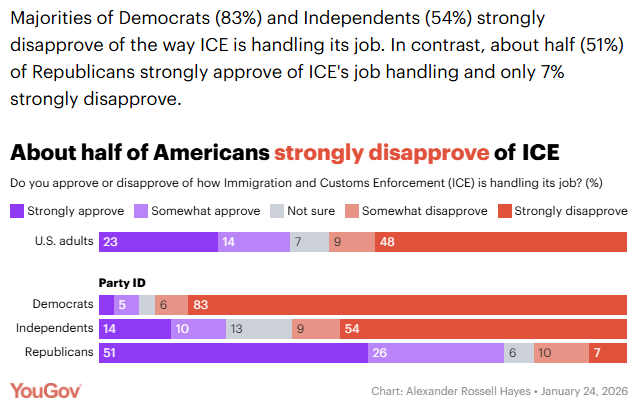
Trump Reacts to Unflattering PollsDespite the recent departure of Commander Bovino, Minnesota continues to contend with an oversized contingent of ICE agents moving through our streets and confronting residents. Community watch groups and mutual aid efforts have not slowed, and it remains unclear how long Minnesotans will be forced to live in this state of heightened vigilance.Democrats must ensure that this moment carries political consequences in the midterm elections this November and in the presidential election in 2028. The deaths of Renee Good and Alex Pretti cannot be allowed to fade from public memory. Nor can we accept the high costs being borne by families and children without demanding meaningful changes to immigration policy and the tactics used to enforce it. The most direct way to achieve that change is through the election of new leaders and the removal of the party currently in power.A recent YouGov poll finds that a substantial portion of Americans view the federal government’s actions in Minneapolis critically in the wake of the shooting of Alex Pretti, with roughly half saying the incident was unjustified. Among respondents who had seen a video of the shooting, about two-thirds felt it was unjustified — evidence that public opinion is shifting on federal immigration enforcement tactics.While significant differences remain between how Democrats and Republicans view agencies like ICE, the current controversy has created an opening for Democratic messaging. Now is a moment for Democrats to reassess how they engage independent voters and moderate Republicans who may be persuadable on this topic.If Democrats want to expand their coalition, they might consider refining their approach. Appeals based solely on broad moral frameworks, such as assertions about diversity or human rights, often have limited impact on voters whose primary concerns center on order, safety, and lawful immigration. Likewise, dismissive language toward opponents, such as portraying all supporters of ICE as irredeemable fascists, tends to alienate people who are undecided or uneasy with recent federal tactics.Shaming or condescension rarely convinces voters to switch sides. Instead, Democrats could focus on arguments that resonate with traditional conservative values, such as the rule of law, local control, and accountability in government. Many Republicans are fundamentally skeptical of federal overreach, and framing critiques of ICE around principled governance and civil liberties may appeal to those concerns.Republicans who have expressed reservations about how immigration enforcement is being carried out are not fringe voices; they reflect a constituency that values strong borders but also expects restraint and accountability from the government. By emphasizing common ground on transparency and oversight, Democrats have an opportunity to attract voters disenchanted with the status quo.Reasons for Republicans to Care About Minnesota* Small businesses are hurting—and some may not survive.Many people of color, regardless of immigration status, are staying home out of fear. They are not going to work, shop, or otherwise support businesses in the city. The result is a significant drop in economic activity and tax revenue. Northstar Policy Action estimates losses of roughly $80 million per week. If you support small businesses, you should be concerned about the chilling effect of ICE activity.* Missed rent payments will ripple through the economy.As workers lose income, many businesses and residents will struggle to pay rent. The Minneapolis City Council is asking the Governor to institute an eviction moratorium to prevent a wave of displacement. When rent goes unpaid, landlords—including Republican landlords—are directly affected, and the broader housing market becomes less stable.* States’ rights and limited government are being undermined.Minnesota is being asked to provide voter rolls and other sensitive personal data, often in ways that conflict with state law. Local roads and neighborhoods are being commandeered for federal operations. For those who believe in limited government and states’ rights, this level of federal overreach should be alarming.* Second Amendment rights are at risk.Alex Pretti had the legal right to carry a firearm. Using the mere presence of a legally owned weapon to justify a shooting sets a dangerous precedent and threatens core Second Amendment protections.* Fourth Amendment protections are being eroded.Unreasonable searches of homes, businesses, and individuals are being reported. ICE has stated it does not always require a warrant signed by a judge. Normalizing these practices creates a precedent that could be used far beyond immigration enforcement.* This is wasteful government spending.Minnesota is spending an estimated $3 million per week on law enforcement overtime. Housing thousands of ICE agents in local hotels is costing the federal government approximately $4.5 million per week. Massive increases in immigration enforcement budgets mean more sole-sourced contracts, minimal oversight, and a higher likelihood of cronyism. This spending adds to the federal deficit while failing to generate the lasting economic benefits associated with investments in education, health care, and infrastructure.* Education is being disrupted.Schools across the Twin Cities are offering remote learning because many students are afraid to attend in person. This morning on social media, I saw a picture of children walking through tear gas to school. These children are worried about themselves, their families, and friends who may be at risk of being picked up by ICE agents, often through misidentification. Frequent disruptions and constant stress make it harder for students to learn, likely leading to lower test scores and long-term educational harm. Anyone who values educational outcomes should be concerned.* Republicans are losing political ground.Polling suggests ICE tactics are broadly unpopular, even among voters who support immigration enforcement. These dynamics risk turning upcoming elections into landslide losses and have already made statewide Republican victories in Minnesota increasingly difficult. Heavy-handed tactics are widely seen as having gone too far.* Law enforcement’s reputation is being damaged.The fallout from aggressive federal actions is often left to local police to manage. Trust between law enforcement and the public suffers when local officers are deployed to manage protests sparked by federal tactics. Rebuilding that trust will be difficult and long-lasting.ConclusionHistory is unlikely to judge the federal agents and political leaders involved in the shootings of Renee Good and Alex Pretti kindly. Still, relying on these tragedies to build support for the Democratic Party is risky. Organized conservative media and influencers are highly effective at framing narratives. By circulating graphic clips of confrontations between protesters and law enforcement, they can reinforce entrenched views and, at times, sway undecided voters.Democrats must instead keep the focus on how damaging the current approach to immigration enforcement is to the lives of every resident in Minnesota. The consequences for Minnesota’s reputation and our way of life will be felt across the state long after the online influencers, whistles, and bullhorns go silent.Signal: bttrmpls.33Email terry@betterminneapolis.com if you would like to become an advertiser. Get full access to Better Minneapolis at www.betterminneapolis.com/subscribe
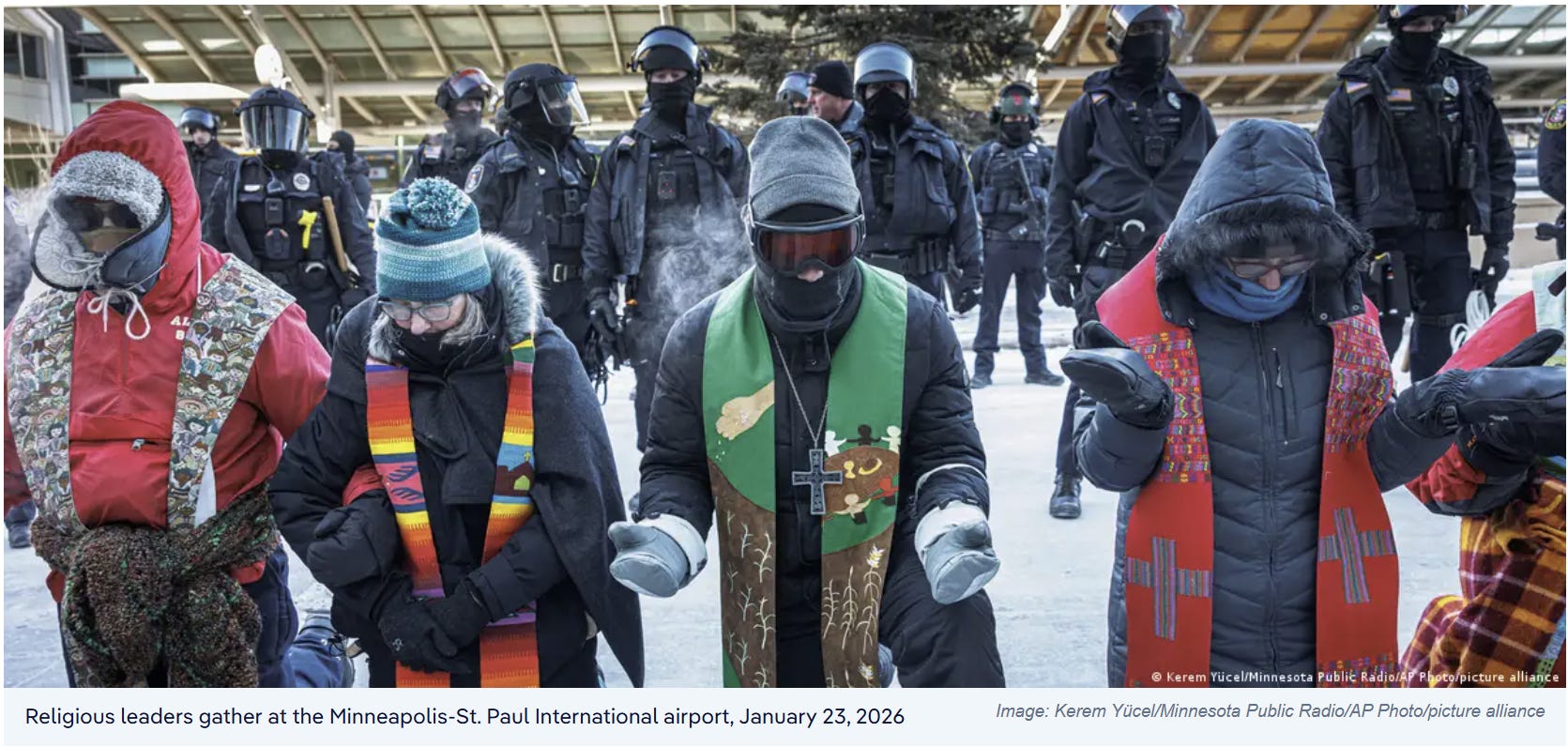
Optimism Is Hard to Come ByJanuary 25, 2026 · 4:36 p.m.It feels important to note the exact day and time of this writing. Life in Minneapolis has been a whirlwind.As recently as Friday, many of us were feeling hopeful. The day began with more than 100 clergy members from across the country being arrested at the airport. They had gathered to protest deportation flights and the detention of airport employees by immigration agents. The temperature was –21 degrees. The clergy knelt in a line, singing hymns as police zip-tied their hands and loaded them onto buses.Later that afternoon, at 2 p.m., the ICE Out march filled downtown Minneapolis. More than 50,000 people came out to march peacefully in solidarity. Old and young, Black, brown, immigrant, and non-immigrant alike braved the subzero cold to stand together and demand that ICE leave Minneapolis. The march became a shared space for grief and anger following the killing of Renee Good, as well as a show of support for immigrant neighbors. It was deeply moving, and many people left believing that change is possible.That optimism largely evaporated Saturday morning after news spread of Alex Pretti’s killing on Nicollet Avenue by an ICE agent. A video circulated on social media and was quickly viewed by millions nationwide. It appeared to show at least six armed agents forcing Pretti to the ground before shooting him ten times. The footage horrified the country and left Minneapolis residents grappling with fear, rage, and disbelief—wondering how such violence can be stopped.Within hours, hundreds of angry residents gathered at the scene. Streets were barricaded. Tear gas and flash-bang grenades were deployed. For a moment, it felt as though violence and a full-scale riot were inevitable. Thankfully, that did not happen. Still, many people remain unsure how to express their outrage or where to turn with their grief.A political battle is now unfolding between Minnesota’s DFL elected officials and the federal government. As so often happens, events like these risk losing their human dimension and becoming little more than talking points. We wanted to make sure that the voices of people living through this moment are heard and highlight the residents forced to navigate daily life amid thousands of masked, heavily armed federal agents in their city.That is why we invited several community members to share their stories and emotions. While politicians spar on the public stage, countless personal experiences go unheard—stories of sacrifice, fear, anger, and emotional exhaustion.We are grateful to our guests: Kurt, Molly, Susan, Barb, Hope, and Paula. Their voices reflect what many Minneapolis residents are feeling as they try to carry on with their daily lives in a city that feels, once again, on edge. Get full access to Better Minneapolis at www.betterminneapolis.com/subscribe

IntroductionThe first question Cedric asked when we met was, “How are you doing with everything that’s going on?” I told him I felt scattered, and, like many people, I was having difficulty concentrating. Neither of us knew when we recorded this interview that, two days later, 37-year-old Alex Pretti would be shot and killed by ICE agents just a block from the Speak MPLS studio where we were sitting.The final question I asked Cedric was this: “What in your background prepares you to manage a crisis? We know there will be one—we just don’t know what it is yet.”We plan to publish a separate newsletter with deeper reflections on the current moment. But as I watched press conferences and scrolled through social media, one lesson stood out: Minneapolis and Minnesota need leaders with the temperament to govern in times of crisis. For the second time in five years, the city finds itself at the center of a national reckoning over how to respond when injustice occurs. How should communities confront systems that appear indifferent to the harm they cause? Elected officials play a critical role in shaping that response.Our democracy works best when voters choose leaders with the judgment, steadiness, and moral clarity to serve the public in an accountable and transparent way. Political parties or endorsement committees don’t bestow these qualities. They’re best evaluated by listening carefully to candidates and making our own assessments. With the Hennepin County Attorney now bearing new responsibilities, including ensuring investigations into federal agent–involved shootings, voters must ask a fundamental question: who do we trust to handle the unforeseen?SummaryIn this interview, Cedric Frazier, a state representative and former public defender, lays out the personal and political experiences driving his campaign for Hennepin County Attorney. Raised on Chicago’s South Side and shaped by firsthand exposure to violence, poverty, and inequity, Frazier describes a career rooted in public service—from criminal defense and education law to six years in the Minnesota Legislature. He frames his candidacy as a response to the current moment, arguing that constitutional rights, due process, and public trust are under renewed threat amid federal overreach and high-profile uses of force.A central theme of the conversation is accountability paired with legitimacy. Frazier strongly supports investigations into officer-involved killings, emphasizing that transparency and evidence-gathering are essential to maintaining public confidence in the justice system. Drawing parallels to the aftermath of George Floyd’s murder, he warns that the absence of credible investigations fuels despair, unrest, and vigilantism. As county attorney, he says his goal would be to reinforce the idea that no one is above the law—and no one is beneath its protections—while continuing reforms that many communities see as long overdue.Frazier also outlines clear priorities for the office: strengthening victim advocacy and communication, expanding youth-focused prevention and accountability programs, investing in community violence intervention, and addressing gun violence and fentanyl addiction through a public health lens. He argues for closer collaboration with law enforcement alongside honest, sometimes difficult conversations, and for standing up to harmful federal policies when they impact residents. Throughout, Frazier presents his vision of public safety as prevention-forward, constitutionally grounded, and built on trust—especially with communities that have historically felt excluded from the system.Frazier is seeking the DFL endorsement. More information about his campaign can be found on his website: https://www.cedrickfrazier.org/Signal: bttrmpls.33 Get full access to Better Minneapolis at www.betterminneapolis.com/subscribe
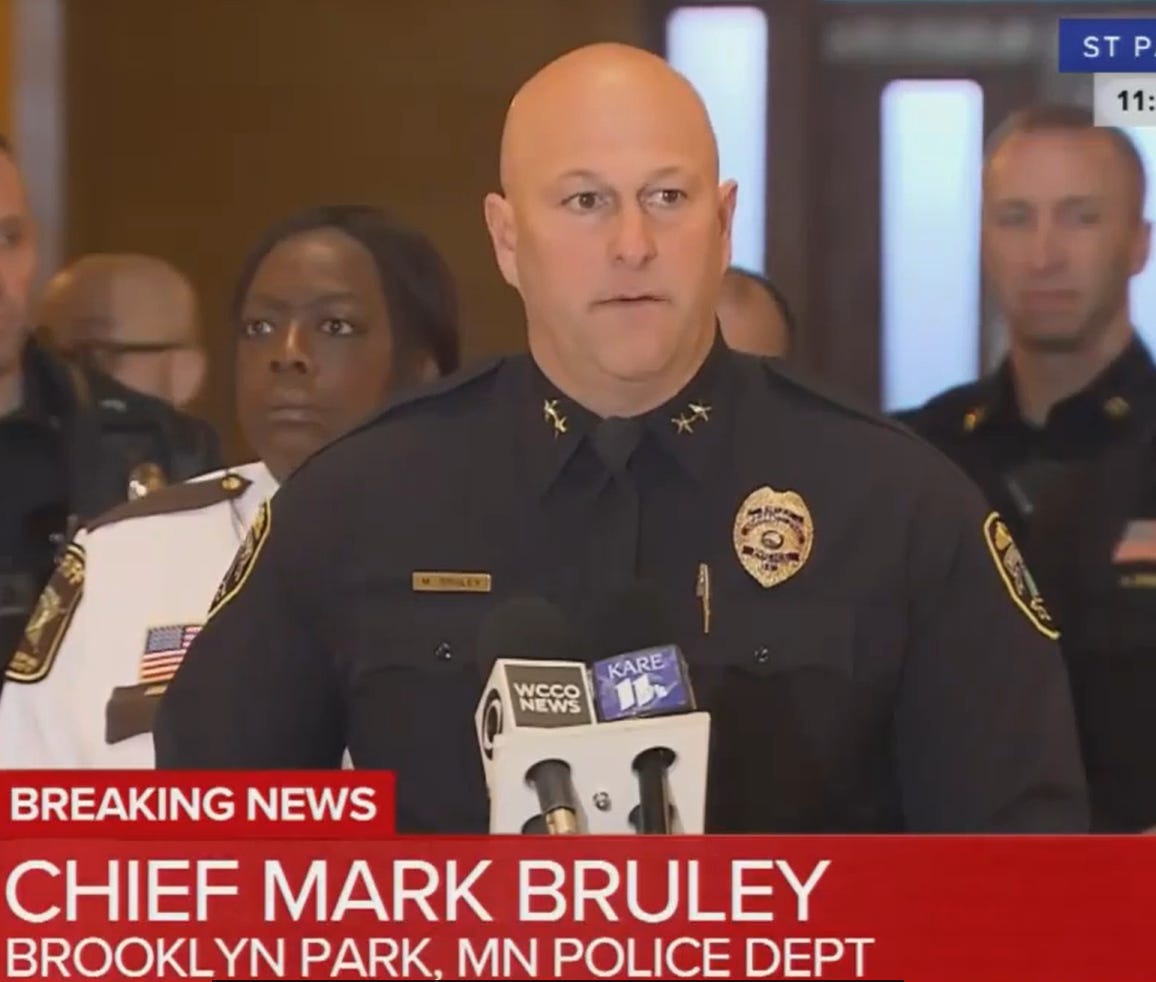
Democrats, both nationally and here in Minnesota, have a long-standing tendency to divide and conquer themselves. That dynamic is once again on display in the debate over immigration enforcement, where slogans like “Abolish ICE” are embraced by some and viewed by others as politically damaging, especially with midterms approaching.This tension surfaced locally on Tuesday, when Brooklyn Park Police Chief Mark Bruley led a press conference calling on Immigration and Customs Enforcement (ICE) to halt practices that amount to racial profiling. Officers described ICE agents stopping Black and brown residents on the street and demanding proof of legal status, tactics that have reportedly even been used against off-duty police officers. There is little dispute that such actions raise serious constitutional concerns. Documentation of these incidents has further eroded public trust in immigration enforcement and, by extension, in Republicans who defend these methods.At the same time, Chief Bruley was careful to draw a distinction that many Democrats struggle to accept. He opened the press conference by saying:You won’t hear rhetoric of ‘Abolish ICE’ or that there shouldn’t be immigration enforcement. The truth is, immigration enforcement is necessary for our national security and for local security. How it’s done is extremely important.The distinction between the need for immigration enforcement and the manner in which it is carried out is where internal Democratic divisions become most pronounced. Some activists argue that ICE has become so abusive that it must be dismantled entirely, rallying behind slogans like “No one is illegal on stolen land.” Others, including many more moderate Democrats, call for reform while maintaining that immigration laws still need to be enforced. These more incremental voices are often attacked from within their own party, even as they reflect the views of a majority of Americans who support both secure borders and humane enforcement.This divide was captured succinctly by Elaine Godfrey in The Atlantic:A growing number of Americans disagree with how the agency is handling its mission. But where many Democrats hear “Abolish ICE” as a righteous call to action, others in the party register the clanging of alarm bells. These anxious Democrats believe that such a maximalist demand plays directly into Republicans’ hands by making the party seem unserious about immigration.For Democrats trying to rebuild trust with swing voters and maintain a governing majority, the challenge is not whether to criticize ICE’s conduct—but how to do so without signaling that enforcement itself is off the table. On that question, the party remains deeply divided, and those divisions are increasingly visible well beyond Minnesota.How Much Is Too Much?The protest action that took place Sunday at Cities Church in St. Paul offers a vivid example of the fault lines running through the Democratic coalition. Some activists, including Nekima Levy Armstrong (formerly Pounds), a prominent figure in the Black Lives Matter movement, defended the action because meaningful protest is meant to make people uncomfortable. Others argued that targeting a house of worship crosses an important line. The episode highlights a lack of shared standards within the DFL-led resistance to ICE and risks eroding the goodwill that has, so far, largely favored Democrats.This debate over tactics is not new. In his 2021 nonfiction book How to Blow Up a Pipeline, Swedish climate activist Andreas Malm challenges the near-universal commitment to nonviolence in progressive movements. Malm argues that climate change is advancing too quickly for gradual, nonviolent protest alone to avert ecological collapse. From that perspective, he contends that direct action against fossil-fuel infrastructure, such as pipelines, is morally justified given the scale of the threat and the human suffering at stake.We’ve been thinking about Malm’s argument in light of recent social media images showing armed residents positioning themselves to deter ICE from their neighborhoods. Our opposition to this approach is both philosophical and practical. History suggests that attempting to prevent violence by threatening even greater violence rarely ends well. De-escalation has been a guiding principle in Minneapolis since the murder of George Floyd; armed standoffs with federal agents move sharply in the opposite direction.There is also a hard political reality to consider. When confronted with the overwhelming force of the federal government, these tactics are likely to end in arrest, or worse, without generating the broader public support needed to achieve the underlying goal: changing ICE’s practices and reducing its presence. In fact, armed civilian resistance could make it easier for Trump to justify sending federal troops into the city.Debates over protest methods are worth having. For some, throwing paint on the yachts of the ultra-wealthy to highlight environmental damage is an acceptable form of disruption; others see it as symbolic but ineffective. These disagreements mirror a larger conflict now playing out in Congress. A bipartisan funding bill would continue ICE’s roughly $10 billion budget, with the backing of Democrats who want agents to wear body cameras and receive additional training. For many on the front lines of protests in Minneapolis and elsewhere, that support feels like a betrayal. They want ICE defunded entirely.The challenge is that these maximalist demands do not reflect a consensus view. Many Americans, including many Democrats, still believe there should be an agency responsible for enforcing immigration laws. As Chief Bruley put it, the central question is not whether enforcement exists, but how it is carried out. Until Democrats can agree on where to draw that line, internal conflicts over protest tactics risk overshadowing the very reforms they are trying to achieve.Preparing for the Midterm BattleOn Tuesday evening, the Department of Justice announced it had subpoenaed Gov. Tim Walz, Minnesota Attorney General Keith Ellison, Minneapolis Mayor Jacob Frey, and St. Paul Mayor Kaohly Her, alleging that their public statements interfered with federal immigration operations. How local leaders respond to this development—and to the protests scheduled later this week—will matter greatly. Moments like this call for a unifying message. Fragmenting the party in an effort to force ideological purity, without agreement on shared goals, only weakens Democrats and invites Republican attacks. Internal debate is healthy, but eventually it must give way to a coherent strategy for immigration policy and for resisting the Trump administration at the ballot box.If Democrats hope to flip the House in the upcoming midterms, they will need alignment on both tactics and messaging around ICE. Should “Abolish ICE” become the dominant message in Minnesota, there is concern that the party could see a similar loss of support to what occurred when “Defund the Police” emerged as a slogan after George Floyd’s murder. If Democrats adopt this language, they will be forced to answer difficult questions about who, exactly, is responsible for immigration enforcement and how that enforcement should function.Minnesota’s sanctuary status already prevents state and local law enforcement from enforcing federal immigration law. It is unlikely that a majority of voters support eliminating enforcement, and even if such a position gained traction here, it would almost certainly push swing voters toward Republicans nationally. A Republican victory would be framed by Trump as an endorsement of his immigration agenda, emboldening him to escalate even further.There is much at stake in how Minnesota meets this moment. Targeting individual ICE employees, such as the pastor at Cities Church, risks turning principled opposition to unjust policies into what looks like personal retribution. When that happens, public sentiment shifts from discomfort to outright opposition. Similarly, adopting the imagery and tactics of armed groups may energize a small base but is likely to alienate far more people than it persuades.The anger and frustration surfacing across Minnesota are real and understandable. But if those emotions dictate strategy, any progress achieved will be fleeting. Lasting change requires building consensus around a shared objective. Allowing the loudest and angriest voices to set the tone all but guarantees a backlash that undermines the cause itself.At the same time, there are encouraging signs. Across the state, neighbors are supporting neighbors through mutual aid efforts and acts of solidarity aimed at countering ICE’s most aggressive tactics. The question is whether Democrats can sustain and expand that goodwill or instead squander it through internal conflict. The DFL caucuses on February 3 will likely be the first real test of local alignment and may help shape Democrats’ chances of reclaiming a House majority nationally.If the DFL hopes to contribute meaningfully to a broader Democratic wave in November, it will need to resolve its internal battles soon.If interested in advertising, email terry@betterminneapolis.comTo message us through the Signal app, use bttrmpls.33 Get full access to Better Minneapolis at www.betterminneapolis.com/subscribe
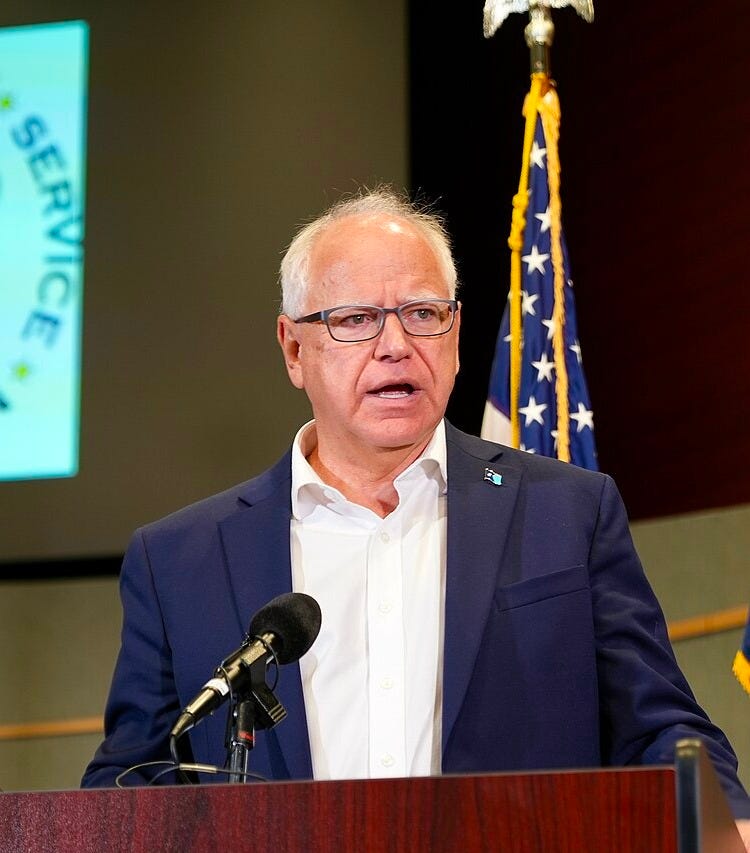
Some online commentators have mocked Gov. Tim Walz for calling Minnesota an “island of decency” and urging people to “protect each other.” Many on the left believe Walz and Minneapolis Mayor Jacob Frey should be doing more to confront the federal government, arguing that strong statements and aggressive tweets are not enough. Social media has been filled with videos demanding that Frey and Walz “grow a spine” and take action. Critics scoff at Frey’s refusal to support abolishing ICE. They voice their anger at the Hennepin County Sheriff for extinguishing the warming fires at the Whipple Building while doing nothing to stop federal agents.At the same time, the prospect of MPD or the National Guard entering into direct armed conflict with federal agents terrifies many residents. Such a confrontation could prompt President Trump to invoke the Insurrection Act and place federal troops in our streets.While some on the left argue city and state leaders haven’t gone far enough, the Department of Justice has announced investigations into Walz and Frey for potential violations of a conspiracy statute. The claim is that their public statements impeded immigration enforcement. Others fear that the conflict unfolding in Minnesota is being staged as a precursor to eliminating midterm elections.It’s difficult to assess how likely that scenario is. What seems more plausible is a wave of investigations into Minnesota’s election systems, particularly mail-in voting and vouching. The groundwork is being laid to question the legitimacy of our elections. Trump has been eager to find a justification for removing Rep. Ilhan Omar from office.Optics Are Everything to TrumpThe number of “influencers” and “independent creators” who have descended on Minneapolis is striking. Some are genuinely documenting what they view as illegal actions by ICE agents. Others appear intent on provoking conflict to promote the narrative that observers and protesters are paid instigators.ICE has allowed favored media outlets to participate in ride-alongs. When Jonathan Ross shot Renee Good, he was recording video. Trump has encouraged ICE to document more of their actions for social media distribution. What some view as abhorrent or illegal behavior is celebrated by others. Violent clashes and chaos are good for those who make a living from online engagement.How these outlets label people, whether as observers, protesters, or paid instigators, often signals exactly who their audience is.Christian Paz described the right-wing influencer ecosystem for Vox this way:They filmed protests; rode along with Immigration and Customs Enforcement and Customs and Border Protection; documented—and at times seemingly instigated—confrontations with protesters; and worked a competing, ICE- and Trump-friendly narrative out of what was happening in Minneapolis. From the ground, they churned out content painting protesters as lawless, demonstrations as riots, and anti-ICE activists as extremists or criminals. Outside of the state, right-wing influencers and large social media accounts amplified these videos to reach much wider audiences.Figures like Nick Sortor and Eric Daugherty have been particularly effective at pushing the ICE-aligned version of events into the broader public discourse. According to online engagement statistics, while left-leaning influencers initially dominated in the day and a half following Good’s shooting, right-wing accounts quickly narrowed the gap.Paz notes that “left-leaning creators and critics are at a disadvantage online in competing with this flood of content.” If that assessment is correct, it helps explain why local media and creators struggle to reach a national audience. There simply isn’t comparable funding or infrastructure on the left to manufacture viral narratives at scale.We highlight the role of right-wing influencers not to legitimize them, but to emphasize that the media frenzy unfolding here is part of a coordinated spin campaign. The administration is waging a public-relations war. Images of ransacked vehicles and stolen documents after the shooting of a Venezuelan man in the leg are highly desired fodder for that machine. The FBI is now offering a $100,000 reward for information leading to arrests.Already, online speculation has surfaced alleging involvement by a trans activist. Whether true or not, that claim will circulate widely—and if it’s wrong, it will never be corrected with the same intensity. Disinformation takes on a life of its own. While many left-leaning creators strive for accuracy, many on the right do not feel bound by the same standards.Winning the Long GameAs more time passes since the murder of George Floyd, public memory of what followed continues to shift. The term “riot” is now used far more comfortably than “uprising.” On Saturday, conservative influencer and January 6 rioter Jake Lang attempted to hold a “March Against Minnesota Fraud” downtown. He was forced into a City Hall window well after counter-protesters hit him with water balloons.We haven’t yet seen how that moment is being framed online, but experience suggests the story will vary dramatically depending on who you follow and which outlets you consume.We support resistance to ICE’s illegal tactics and deeply value the mutual aid neighbors have shown one another. The focus must remain on ICE’s actions and the violence they perpetrate. Winning the public-relations battle is part of that resistance. If public opinion begins to erode Trump’s approval rating, federal agents may withdraw from Minnesota.Right now, national sentiment appears sympathetic to the anti-ICE narrative. That support is fragile. Once attention shifts from ICE’s conduct to disputes over who instigated confrontations between observers and agents, the narrative can change quickly.When Walz says, “Don’t take the bait,” we believe he’s right. He’s warning against the temptation to unleash anger without considering the consequences. What’s happening in Minnesota could become more than a single moment of resistance—it could be the beginning of a movement. For that movement to be sustainable, anger must be harnessed and directed into actions that undermine, rather than reinforce, the administration’s preferred storyline.Ten minutes of unfiltered rage can become ten minutes you regret for the rest of your life.Hate is exhausting. It’s heavy, and the longer it’s carried, the more it weighs you down. Jake Lang came to Minneapolis fueled by hate, seeking attention, clicks, and validation. He succeeded in generating engagement. But the risk facing the resistance is believing in a “right” or justified hatred. Once actions are driven by hatred, they begin to look indistinguishable, especially when flattened into a one-minute social-media clip.Many beautiful things are happening across our city. Neighbors are meeting for the first time through chat groups and volunteer efforts. Trust is being built. Those connections are durable and will serve Minneapolis long after this moment passes. They may not go viral, but they deny others the opportunity to weaponize our anger against us.Some may react skeptically to the idea of considering optics while standing in the streets. But this is the reality of modern politics. It is not enough for actions to be just; they must also be perceived as just. Public perception ultimately determines the outcome of elections. Get full access to Better Minneapolis at www.betterminneapolis.com/subscribe
IntroductionAs we were preparing this interview, several U.S. attorneys in Minnesota’s federal prosecutor’s office unexpectedly resigned, including First Assistant U.S. Attorney Joe Thompson, the lead prosecutor in the high-profile human services fraud cases. Their departures came amid internal disputes over how the office should handle the federal investigation into the killing of Minneapolis resident Renee Good. Reports say a directive from newly appointed U.S. Attorney Dan Rosen, instructing staff not to discuss the investigation with police or the press, along with decisions to limit the Minnesota Bureau of Criminal Apprehension’s involvement, played a role in their decisions to resign.We publish twice a week, so fast-breaking news, especially when developments come every few hours, doesn’t always make it into the newsletter. Many readers have told us they struggle to know which updates to trust, particularly as social media fills with conflicting accounts about the shooting and the subsequent investigation. We encourage readers to be critical of sources and to verify facts before sharing.We’re also concerned about the tone of coverage coming from some corners of social media and local discourse, where heated commentary, including from some public officials, risks inflaming fear and panic. Calls for direct law enforcement action against ICE agents add another layer of tension to a situation that already feels tenuous. Grounded, fact-based reporting and calm civic discussion are especially important right now as the community seeks clarity and justice.A second reason many of the federal prosecutors resigned was reportedly pressure from Justice Department leadership to investigate Renee Good’s wife in connection with the fatal ICE shooting in Minneapolis. President Donald Trump and senior administration officials’ public defense of the ICE agent’s actions and framing of the incident has further inflamed tensions and made it harder to predict how the situation will unfold.This week, Hennepin County Attorney Mary Moriarty and Minnesota Attorney General Keith Ellison announced a lawsuit against the Department of Homeland Security, challenging the large federal law enforcement presence in the state and seeking to limit further deployment of ICE agents. Their filing argues that the surge of federal personnel has strained local resources and heightened community tensions; if successful, the lawsuit could restrict or remove those agents. Analysts, however, say such legal claims face significant hurdles under federal law.These events, federal prosecutors resigning and state officials taking legal and investigative steps, have cast new attention on the Hennepin County Attorney’s office at a moment when national and local conversations about law enforcement, immigration enforcement, and prosecutorial accountability are highly charged. It underscores for many readers why paying attention to local races and the philosophies of candidates for county attorney matters not just for day-to-day crime policy but for broader justice issues that resonate statewide.Caucuses to select delegates for party endorsement will be on February 3, 2026 at 7:00 p. m. The Secretary of State will publish their caucus finder on January 14. https://www.sos.mn.gov/elections-voting/how-elections-work/precinct-caucuses/Interview Summary with Hao NguyenHao Nguyen shares a deeply personal immigrant story that shapes his approach to public service. Born in Vietnam and raised in the aftermath of the Vietnam War, Nguyen came to the U.S. as a refugee after multiple failed escape attempts and years in refugee camps. Sponsored by a Catholic parish in St. Cloud, his family arrived with nothing, and he began his American education learning English in a public school basement. Nguyen says public assistance, public schools, and dedicated teachers gave him the foundation to succeed and a responsibility to give back. Professionally, Nguyen brings a résumé that spans nearly every level of the criminal justice system. He has worked as a corrections officer, a police officer, and for the past 15 years as a prosecutor, handling cases ranging from misdemeanors to homicide and sexual assault. Currently, he serves in a senior leadership role at the Ramsey County Attorney’s Office, where he supervises major trial and appellate divisions and evaluates all officer-involved shootings in the county. Nguyen argued that his experience managing major cases and large teams qualifies him to lead Hennepin County’s attorney’s office.On policy, Nguyen repeatedly stressed a case-by-case approach rooted in both the law and human judgment. He argued against sweeping prosecution policies driven solely by statistics, instead favoring careful analysis of facts, victims’ needs, public safety, and accountability. While open to restorative justice in appropriate cases, he emphasized that serious violent crimes, whether committed by adults or youth, require firm accountability. Nguyen also highlighted the importance of rebuilding trust and communication between prosecutors, law enforcement, and communities, describing himself as a “bridge builder” who prioritizes transparency, accessibility, and respect over ideology or ego.To learn more about Hao Nguyen, visit hao4hennepin.com Get full access to Better Minneapolis at www.betterminneapolis.com/subscribe
Francis Shen Interview SummaryIn this wide-ranging interview, Francis Shen introduces himself as a nontraditional candidate for Hennepin County Attorney, grounded less in courtroom litigation and more in systems thinking, neuroscience, and innovation. Raised in a Catholic family with roots in both Chinese and Irish heritage, Shen traces his path from Jesuit education to the University of Chicago and Harvard, where he completed both a JD and a PhD. His career ultimately led him to the University of Minnesota, where he now runs the NeuroLaw Lab and works at the intersection of law, brain science, and ethics. That background, he argues, uniquely positions him to rethink how the justice system understands human behavior—and why people commit harm in the first place.Shen frames his campaign around a central critique: the current justice system isn’t merely underperforming, it’s obsolete. He points to low clearance rates for violent and property crimes in Minneapolis as evidence of what he calls growing “lawlessness,” arguing that the justice equation breaks down if crimes are not reliably solved. To address this, he emphasizes rebuilding trust between prosecutors, police, and communities, while also utilizing technology strategically, particularly artificial intelligence, to enhance investigations and allocate resources more effectively. Rather than viewing AI as futuristic or optional, Shen presents it as unavoidable, insisting that the real question is whether it will be used ethically, transparently, and competently.The final portion of the interview centers on Shen’s three core priorities: focused deterrence to reduce serious violence, responsible integration of AI across the justice system, and a more individualized, neuroscience-informed approach to prosecution and sentencing. He argues that understanding why someone committed a crime, whether driven by addiction, immaturity, desperation, or repeated disregard for community norms, should shape how the system responds. This philosophy extends to youth justice, where Shen supports developmentally appropriate interventions but resists one-size-fits-all leniency. Throughout, he returns to a consistent theme: being “smart and precise” on crime, centering victims and community trust, and redesigning the system to prevent harm from happening again, rather than simply reacting after the fact.You can find more information about Francis Shen at: shenforsafety.org. Get full access to Better Minneapolis at www.betterminneapolis.com/subscribe
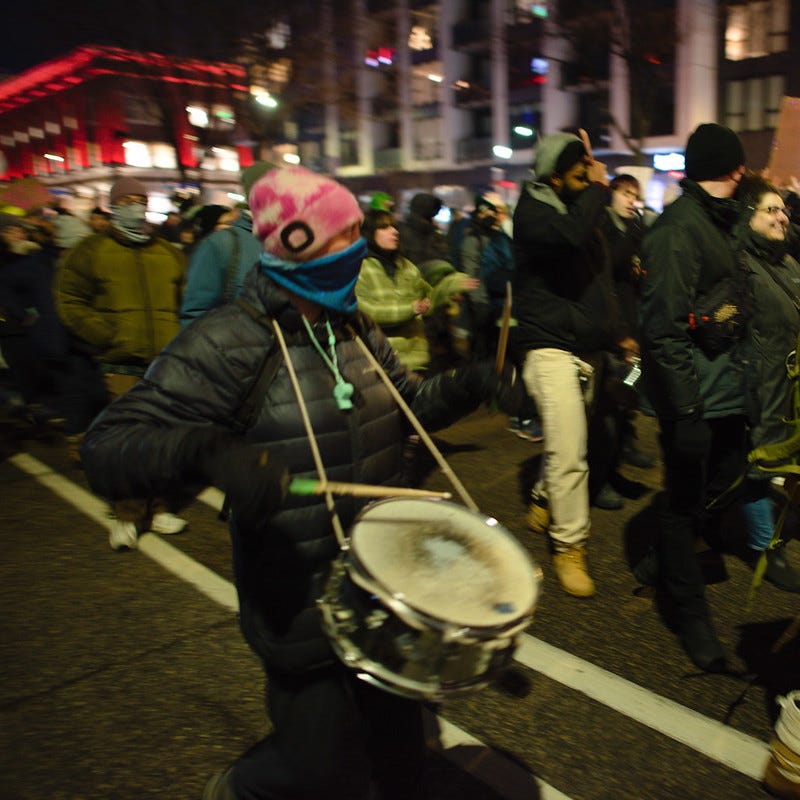
The Revolution Will Be Live StreamedMinneapolis became the epicenter of national attention this week after Renee Good was shot and killed by an ICE officer. The killing sparked immediate outrage, intensified by the federal government’s self-serving interpretation of what occurred and by the rapid arrival of media figures and online personalities from around the country. What began as a local tragedy quickly spiraled into a national spectacle.Renee Good’s death on January 8 sent a shockwave outward. Her family and the bystanders who witnessed her killing felt the impact first, followed by friends, neighbors, and the broader community she was part of. From there, the grief spread across the city and beyond. It is far too soon to understand the full consequences of her killing. Right now, it feels as though we are watching a tsunami form on the horizon, aware of its power, but uncertain how devastating it will be when it finally reaches shore.As the shock spread, Minneapolis was flooded with cameras and livestreams. We became aware of media outlets we had never heard of until they began broadcasting live scenes from the streets, interviewing protesters, offering legal analysis, and dissecting video footage in real time. Among them was Lindell TV, an online outlet launched by the Republican candidate for governor, which began as FrankSpeech.com in 2021 and rebranded in February 2025. The demand for raw footage of every confrontation, protest, and government action is enormous, and many are looking to profit from the tragic events unfolding here. In this environment, the line between journalism and content creation has blurred to the point where “news media” now often means anyone with a phone and a following.Against this backdrop, Mayor Frey has asked media outlets to bring credentials to press conferences, a decision that reflects the confusion over who is reporting in good faith and who is simply chasing engagement. What constitutes legitimate media has become an open question, even as the city struggles to communicate clearly during a moment of crisis.The sense of instability deepened when Governor Walz announced on television that he was activating the National Guard. Watching that announcement, we found ourselves wondering whether we were witnessing the beginning of a larger confrontation between blue states and the federal government. We have entered uncharted territory. The constant stream of content creators speculating loudly about what comes next is just that—speculation. No one truly knows where this leads.Saturday morning, helicopters circled overhead because thousands were gathered to protest in nearby Powderhorn Park. We don’t know whether the helicopters carry oppressors or protectors, and the uncertainty itself is unsettling. The collective trauma Minneapolis experienced after George Floyd’s murder has been reawakened. Each new image of police in riot gear, ICE agents tackling protesters, or clouds of pepper spray deepens the dread and raises the same unresolved question: how does a heavily armed conflict like this end? At the moment, few leaders are offering clear off-ramps toward calm and stability.On January 10, the city reported that the Minneapolis Police Department, the Minnesota State Patrol, and the Minnesota Department of Natural Resources arrested 30 protesters during a downtown march for blocking roadways and damaging property. Officials urged people to protest peacefully. The list of what they cannot do includes throwing objects, blocking roadways, starting fires, damaging property, or using fireworks and weapons. Mayor Frey, who has emerged as a national spokesperson for the city through frequent podcast and television appearances, released a statement saying, “We are standing up to Donald Trump’s chaos not with our own brand of chaos, but with care and unity.”Still, the use of the DNR for law enforcement does little to inspire confidence, particularly as the city and state face a far larger and heavily armed ICE presence. There are reportedly 2,000 ICE agents in Minneapolis, with more expected to arrive. Residents are unsettled by not knowing when ICE will leave, or under what conditions. Compounding that unease, the federal government has sidelined state authorities in the investigation into Good’s killing, raising serious doubts about whether justice will be served under the current administration.On January 9, Hennepin County Attorney Mary Moriarty and Minnesota Attorney General Keith Ellison held a press conference announcing an independent review into the shooting. Candidate Francis Shen also released a statement, which we discussed in our interview with him. These developments raise difficult questions about the limits of state and local authority and how, if at all, they can resist federal power. They are questions about the functioning of the republic itself, and far beyond what we expected to grapple with as a local newsletter.Our mood right now is one of sadness and trepidation. We mourn Renee Good and grieve with her family. We recognize the fear and vulnerability our immigrant neighbors are experiencing amid the ICE presence. We worry about the administration’s apparent willingness to press the country toward civil conflict. We are deeply concerned about the psychological toll this constant stream of violent imagery is taking on our community, especially on children, and about how difficult it is to explain these events to them.We are also concerned that what is happening in Minneapolis will draw people from outside the city and state who see this moment as an opportunity to sow chaos and cause harm. To those choosing to protest or observe, we urge you to stay safe.As always, you can contact us at: terry@betterminneapolis.com or on the Signal app at bttrmpls.33 Get full access to Better Minneapolis at www.betterminneapolis.com/subscribe

Just hours before Minneapolis’ newly elected City Council convened for its first meeting, Governor Tim Walz announced he would not seek a third term. The decision immediately reshaped the state’s political landscape and underscored how volatile the moment has become.That volatility was also evident inside City Hall. What might have been a routine organizational meeting instead revealed deep mistrust between council members. Tensions flared over committee assignments and the creation of new leadership roles, early signals that governing this term may be anything but smooth.State of the State: ObservationsBefore turning to the Minneapolis City Council’s first meeting of the year, it’s worth pausing to consider what Governor Walz’s decision not to seek a third term may signal here and beyond Minnesota.* Republicans across the nation will take what’s happened in Minnesota and try to use it to their advantage in their home states. Ohio is seeing an influx of citizen fraud investigators. If Democrats thought they had a chance of picking up a Senate seat in Ohio, they can forget it. Polymarket is predicting a 61% chance that the Republican candidate, likely Vivek Ramaswamy, wins. In the last video we saw, the YouTuber who made the fraud issue a viral phenomenon was wearing a Polymarket sweatshirt. One of his sponsors appears to be the company, which makes sense, given that his videos seem capable of changing the odds and outcomes of elections.* The state DFL created a fissure when it shut down the local Minneapolis DFL. Now, it must prove its relevance across the state. How will it argue that the fraud that has been reported on — and ignored — for the last decade shouldn’t be viewed as a disqualifying factor for all of its candidates? A network of fraud proliferated in Minnesota because of many enablers within the party. If the DFL retains its current chair, Richard Carlbom, it will be a sign that the party wants to wash the windows and leave the inside in its current state. He was reportedly the one who convinced Walz he could win a third term.* Good governance requires a strong local media ecosystem. We’re witnessing many local reporters and publications defend their coverage of fraud. They are baffled by how one YouTube video could instigate the type of change that multiple reports from local outlets could not.First, this YouTuber was categorically not “independent.” His visit was orchestrated. A more accurate description would be political operative rather than independent journalist. Second, elected DFL officials have grown accustomed to ignoring the local media and can bristle when their statements are questioned. Third, there are more layers of government in Minnesota than there are investigative reporters to cover them. There are the Hennepin and Ramsey County Boards, the Metropolitan Council, the Park Board, the state legislature, and city governments, all of which have subcommittees.The relatively small number of people reporting on their actions means that many important decisions never see the light of day. If you want to see good government, we encourage you to support local media.Elliott Payne Wastes No Time Asserting His Authority as Council PresidentThe council is taking a few days to discuss priorities and goals for 2026. We hope this time will serve to reset the tone established in the opening meeting. Susan Du described it well in her Star Tribune article, “Progressive majority on Minneapolis City Council asserts control in first meeting of the year.”As predicted, Elliott Payne was reelected as council president in an 8–5 vote. It was an early indicator that the divisions witnessed in 2025 will carry over into 2026. Proclamations of working together evaporated quickly. For reasons known only to council members, Aisha Chughtai lost her position as council Vice President and was replaced by Jamal Osman. It’s possible her public denunciation of Mayor Frey at a campaign rally played a role.Osman’s elevation, however, is yet another sign of how little this council appears to be concerned about fraud, waste, and abuse. His connections to Aimee Bock, the transfer of his company, Stigma-Free International, to men later convicted of fraud, and the shutdown of his wife’s nonprofit due to fraud seem to be of no consequence to the voters of Ward 6 or to the majority of council members who voted him in as Vice President. Osman will chair the Business, Housing & Zoning Committee. Chowdhury will serve as vice chair.The accusations and distrust were most evident when Payne introduced the new positions of majority and minority leader. Several council members raised questions, saying they did not understand the purpose or meaning of the new titles. It was a clear sign that more moderate members had been shut out of the deliberations. New Ward 4 council member Pearll Warren was not shy about voicing her opposition, labeling Payne’s actions as “inconsiderate.” Council Member Palmisano also voiced her misgivings, saying, “President Payne, you put the four DSA-ascribed members on everything. This is overrepresentation. I think this is a really poor start, and it shows a lack of leadership.”Ward 7 residents will have noticed that their newly elected council member, Elizabeth Shaffer, was initially shut out of committee assignments. It took an objection vote to have her assigned as vice chair of the Budget Committee, where Chughtai will remain chair. Shaffer presented her qualifications for the committee and stated that, despite the snub, she remained committed to working with all of her colleagues. She said she did not want one meeting to dictate interactions over the next four years. We hope those intentions are not suffocated by the ambitions of her colleagues.The role of Majority Leader was given to Chughtai in what appeared to be a conciliatory gesture after she was replaced by Jamal Osman as council vice president. The Minority Leader position was given to Wonsley, who described the role as representing city residents who voted for Democratic Socialists (DSA) candidates in the last election.Chowdhury noted that the DSA is not an official political party in Minnesota, a distinction that will likely continue to frustrate residents until the DFL either finds a way to formally incorporate DSA-aligned members or they are compelled to form a party of their own.Once the council settles on clear definitions for the new Majority and Minority Leader positions, we hope Council President Payne will accept our invitation to return to the podcast. Many people, both inside the newly remodeled council chamber and outside it, are curious how these roles are meant to function.The next four years may feel very long if each council meeting is as contentious as this first one. Once again, elections have consequences. We hope the soul-searching now underway within the DFL includes a serious look at electoral reform.If you’re interested in advertising, please contact: terry@betterminneapolis.com Get full access to Better Minneapolis at www.betterminneapolis.com/subscribe

Are you ready for the new year?Saturday morning, the U. S. invaded Venezuela and removed its leader. The federal government is withholding money intended for childcare and small businesses in Minnesota. Locally, Mayor Frey and the newly elected City Council will be sworn in on Monday, followed by the council’s first meeting on Tuesday. We expect the council to elect Jamal Osman as Vice President despite his well-documented connections to fraud.The DFL Doesn't Get ItIf you were fortunate enough to spend the holidays away from Minnesota’s snow and ice, you may have missed that we became the center of outrage in America.Of course, you would have had to leave your phone at home and avoid the news entirely to be unaware that a well-known right-wing scandalmonger visited Minneapolis and produced a 42-minute video alleging widespread fraud among Somali-run daycare centers. The video was then amplified by the richest man on earth using his X platform, ensuring that more than 142 million people could share in the outrage, directed not just at lax oversight by the Minnesota government, but at the Somali community broadly.Welcome to 2026.Rage Bait is Oxford’s Word of the Year, a term for content designed to provoke anger or outrage to capture attention. Accuracy is secondary. Consequences are an afterthought. What matters is engagement.Minnesota has just experienced a masterclass in how this works. The effects will linger. Already, the federal government is delaying funds intended for subsidized childcare and small business lending. In the process, legitimate and illegitimate businesses alike are swept up together, punished not by evidence but by perception.The daycare video at the center of this moment highlighted the most inflammatory details, framed the story as a moral emergency, and demanded an immediate emotional response. Sincere civic understanding was never the goal.Since its release, copycat content has followed, along with threats against immigrant-owned businesses in Minnesota and beyond. Efforts to explain the video’s flaws or add nuance have struggled to compete because explanation rarely travels as fast as outrage.When people feel deceived or taken advantage of, anger comes easily. Complex issues are simplified. Conservative media have been quick to supply clear targets for our emotional reaction: Governor Tim Walz and Minnesota’s Somali community. If they are successful at harnessing this anger, Minnesota will end up with someone like Lisa Demuth, Republican Speaker of the House, as governor. Demuth took credit for providing the “independent journalist” with the list of daycare providers to visit.Why Did This Video Strike a Nerve?Over the holidays, we received several calls from friends and family who live outside Minnesota. They checked in, wished us well, and then got to the real question. What did we think of the daycare video? And is the fraud really as bad as it claims?Our first instinct was defensive. No one likes seeing their home reduced to a viral indictment. But we had to acknowledge that the video tapped into a real and longstanding problem.Minnesota legislators built social service programs with too little attention to how they might be abused. Agencies tasked with oversight failed to keep pace as costs ballooned. Some providers took advantage of weak controls. And when rapid growth in program spending should have triggered alarm bells, state government, including DFL leadership, responded slowly, if at all.What made the moment especially jarring is that none of what was reported in the video was new. Variations of these issues have been reported on for more than a decade by local journalists. Yet when the video surfaced, it appeared to catch officials flat-footed, not because the problem was unknown, but because it had never been confronted with urgency.There are several reasons the video spread as quickly and widely as it did. Politics is the most obvious. The creator did not arrive in Minnesota out of a sudden concern for taxpayers or childcare policy. His work fits a familiar political pattern: targeting a Democratic governor in a closely divided state, amplifying allegations that inflame cultural tensions, and releasing the content into a media ecosystem designed to reward outrage.The video was rapidly promoted across Elon Musk’s X platform, Fox News, and a network of right-leaning outlets that specialize in this kind of escalation. Minnesota is competitive terrain, and Republicans are eager to put the state in play ahead of the November midterms, when voters will decide whether Governor Tim Walz deserves a third term.None of this will surprise regular observers of modern media. Conservatives have built a highly effective outrage machine. Their ability to generate and sustain anger far exceeds that of the left, whose moments of mass protest or attention, like the recent “No Kings” rallies, tend to flare briefly and fade.By contrast, conservative media delivers a steady drumbeat of simplified narratives: anti-immigrant, anti-liberal, anti-regulatory, and pro-gun. These messages are reinforced daily through outlets backed by billionaire patrons, creating an ecosystem where rage is not a byproduct, but the business model.The left faces a structural disadvantage when trying to counter a well-funded media ecosystem that is optimized to discredit its ideas. Fact-based reporting, careful language, and an avoidance of emotional manipulation rarely go viral. Outrage does.A recent example illustrates the imbalance. On December 17, the Associated Press reported on a billion-dollar fraud committed by executives at Tricolor Holdings, a subprime auto lender. The scheme involved fabricated data and false statements, the same core allegations leveled against some social service providers. Yet the story generated no viral videos, no outrage podcasts, and no citizen journalists knocking on executives’ doors. It landed, as business news often does, with a dull thud.Moral Instruction Rarely WorksThe left also undermines itself through its own messaging. Too often, it relies on academic language and moral instruction to describe everyday human behavior. People discriminate by religion, language, race, class, sex, and nationality, and while it deserves examination, lecturing people rarely changes it. More often, it drives prejudice underground rather than eliminating it.A more durable approach might emphasize equal standards and shared obligations, respect and tolerance, rather than performative displays of solidarity. When white politicians show up at the Karmel Mall in hijabs to show solidarity with Muslims or eat spicy food with their hands until they are ready to cry, everyone can see it for what it is: pandering. That perception makes it easier for critics to argue that programs are designed to favor certain groups while overlooking misuse or abuse.This pandering is where the left creates its own internal tension. They want programs that elevate some groups over others, but also want everyone to be treated as equals. Conservative media is adept at exploiting that contradiction, using the blunt language and emotional shortcuts of reality television to turn complexity into grievance. The DFL and the left in general might give more consideration to supporting programs that are universal in their appeal rather than designed for specific groups. For example, what would a health care system look like that provided care for all residents, regardless of their income? The DFL would garner support across all demographics if it demonstrated backbone when it comes to confronting health insurance companies, providers, and drug companies.The Paid Family and Medical Leave Program Success Is at StakeOne of the major laws that took effect on January 1 is Minnesota’s Paid Family and Medical Leave Act. The program guarantees eligible workers up to 12 weeks of paid leave for qualifying family or medical events. Because family and medical leave can be used separately, some workers may qualify for up to 20 weeks in a year. To offset the burden on employers, the state also offers loans to businesses that need to cover overtime or hire temporary replacements.Even before the program officially launched, the state received nearly 12,000 applications. To administer it, Minnesota has hired roughly 345 employees, a sign of the scale and complexity involved. In a moment when fraud and oversight have become central political concerns, this program will be closely watched by people both inside and outside Minnesota. Its success or failure will be judged by how effectively it is run.If the program is perceived as vulnerable to fraud and abuse, the political consequences could be severe. Governor Tim Walz and the DFL have staked much of their governing philosophy on the ability of the state to manage ambitious social programs. Failure here would give critics fresh rage-bait content and could jeopardize the program before it has a chance to demonstrate its value.The test for Minnesota in 2026 is practical. Can the state reduce inequality and support workers without unsustainable spending or raising taxes on the middle-class? Can it back legitimate businesses while enforcing clear standards on those that break the rules?In an era of rage bait, competent, transparent governance may be the state’s most effective defense. Get full access to Better Minneapolis at www.betterminneapolis.com/subscribe

Comments

Download from Google Play

Download from App Store
 United States