


 Claim Ownership
Global Development Interrupted Podcast
Subscribed: 3Played: 42
Subscribe

© Petit Media & Consulting LLC
Description
Global Development Interrupted shares the voices of people whose work was upended when USAID was dismantled and foreign aid was cut, revealing what that loss means for America and for progress worldwide.
globaldevinterrupted.substack.com
globaldevinterrupted.substack.com
19 Episodes
Reverse
What does it feel like to edit the word "equality" out of a US government document? To watch global development programs you believed in disappear overnight? Kelli Rogers knows. A global development journalist who moved from the newsroom to the State Department and back again, she's now leading the Aid Report at DevEx — documenting the real human cost of the foreign assistance cuts and the dismantling of USAID, one story at a time. We talk about what journalism looks like right now, the people behind the numbers, what gives her hope, and yes, even Bad Bunny.Listen to the Episode & Read the Aid Report: www.theaidreport.usMaking People VisibleThis space exists to make room for more voices and perspectives from people who worked in global development, and to show why that work mattered in the United States and around the world.Help us keep telling these stories.Your support makes Global Development Interrupted possible. This is a public episode. If you'd like to discuss this with other subscribers or get access to bonus episodes, visit globaldevinterrupted.substack.com/subscribe
She was a new mom, weeks postpartum, when she got fired. No warning. No plan. Just a career she’d spent 18 years building — gone.Kathleen Borgueta wasn’t supposed to become a founder. She was supposed to go back to work at USAID, where she’d overseen global health programs across 15 countries in East and Central Africa, managed COVID vaccine rollouts, and built cold chain infrastructure in Somalia. She had a plan for what kind of working mother she was going to be.Then the dismantling started.In this episode, Kathleen joins host Leah Petit to talk about what it really feels like to be fired, publicly called a villain, and left to rebuild your identity — while keeping a newborn alive. She also talks about what she built from the rubble: Pivoting Parents, a 1,200-member global community for laid-off parents refusing to disappear quietly.This is a conversation about agency — in foreign aid, in motherhood, and in deciding what you do when the thing you built your life around is taken from you.“There are a lot of days that hope feels false. But having a child and being invested in my community and invested in the global community forces me to have hope for the future.”Follow Kathleen: LinkedIn, Instagram, and www.pivotingparents.comMaking People VisibleThis space exists to make room for more voices and perspectives from people who worked in global development, and to show why that work mattered in the United States and around the world.Help us keep telling these stories.Your support makes Global Development Interrupted possible. This is a public episode. If you'd like to discuss this with other subscribers or get access to bonus episodes, visit globaldevinterrupted.substack.com/subscribe
He was in the room when it happened.Alex Natsios sat next to his father, Andrew Natsios — former USAID Administrator, war veteran, conservative Republican — for four and a half hours as members of Congress stood up one by one and repeated the same false claims about USAID. He watched them do it knowing they were false. He watched Fox News run graphics contradicting his father’s own words while he was still speaking.That’s when Alex stopped holding back.In this episode, Alex joins host Leah Petit to talk about what it felt like to witness the dismantling of USAID from the inside — sitting beside the man who helped build it. He shares how watching his father go “once more into the breach” at 75 years old pushed him to find his own way to fight back, and how the flood of misinformation led him to start Unsung Americans — a podcast dedicated to telling the real stories of aid workers on the ground.This is a conversation about truth-telling, legacy, and what it costs when a country decides to stop believing in its own work.“Our level of influence in the world was far more significant than even those of us who were very plugged in understood. And we’re all going to lose. America’s not gaining — we’re losing.”Find Unsung Americans on YouTube or Linktr.eeMaking People VisibleThis space exists to make room for more voices and perspectives from people who worked in global development, and to show why that work mattered in the United States and around the world.Help us keep telling these stories.Your support makes Global Development Interrupted possible. This is a public episode. If you'd like to discuss this with other subscribers or get access to bonus episodes, visit globaldevinterrupted.substack.com/subscribe
What does food security really have to do with global stability and everyday life?In this episode, I’m joined by Marian Ostertag, a former USAID Foreign Service Officer who spent her career working on agriculture and food security. Marian explains why effective development work focuses on long-term systems — food, markets, and institutions — so countries can withstand shocks without constant emergency aid.We talk about how food systems connect far beyond borders, why global supply chains are more fragile than we like to admit, and how agriculture quietly underpins everything from economic resilience to security. Along the way, Marian breaks down why pigs can be a matter of national security, why Paraguay keeps coming up, and what’s lost when long-term development work disappears.This is a grounded, thoughtful conversation about prevention over reaction, systems over short-term fixes, and why food stability matters far more than most of us realize.Making People VisibleThis space exists to center voices from global development and public service.Your support keeps Global Development Interrupted going and helps ensure these stories are told. This is a public episode. If you'd like to discuss this with other subscribers or get access to bonus episodes, visit globaldevinterrupted.substack.com/subscribe
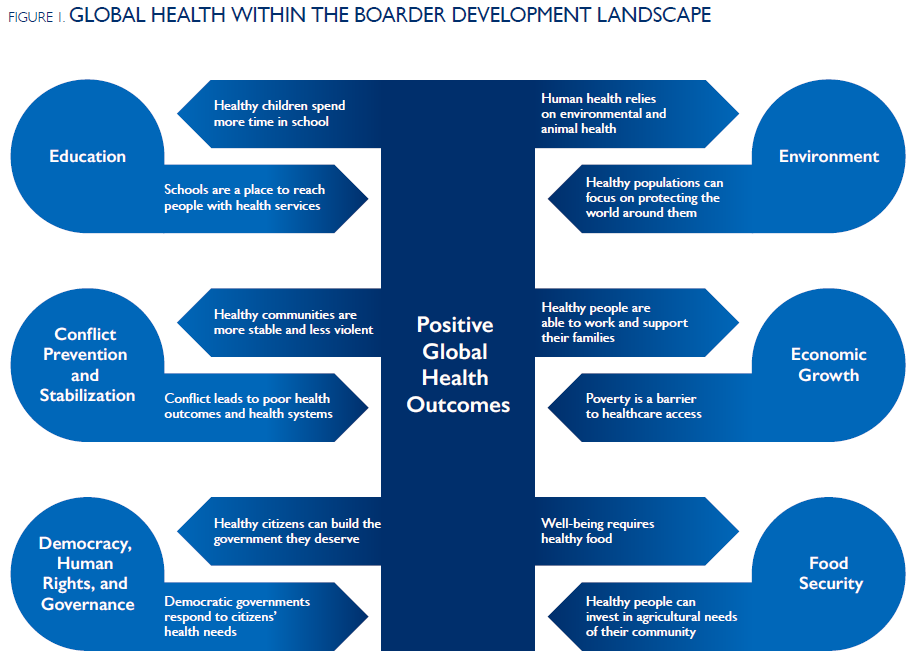
In this powerful conversation, Ramona Godbole, former Deputy Director of Policy Planning and Programs at USAID’s Global Health Bureau, takes us inside the chaotic dismantling of America’s global health infrastructure—and the critical memo that became her final act of public service.Ramona led the development of USAID’s first-ever comprehensive global health policy, a document designed to sunset the need for foreign aid by building sustainable, equitable health systems worldwide. Just months after its release in January 2025, she watched as a new administration took a different approach: sunsetting the aid itself, prioritizing rapid withdrawal over long-term impact.What does it mean when the goal shifts from ending disease to ending assistance? When payment systems freeze even for programs labeled “lifesaving”? When the data that tracks millions of lives suddenly goes dark?Ramona shares what she witnessed during those first chaotic weeks, why she wrote the most important memo of her career, and what happened next. She explains the difference between development and humanitarian assistance—and why conflating them has consequences that ripple far beyond foreign policy. And she reveals where critical health data has gone, what the lack of transparency means for accountability, and why this moment sets a precedent that extends well beyond USAID.This isn’t just a story about foreign aid. It’s about what happens when expertise is sidelined, when transparency vanishes, and when documenting the truth becomes an act of moral courage.Below, you can read the USAID Global Health Policy that Ramona and her team developed—the strategic vision that was released in January 2025, just weeks before the agency’s dismantling began.Policy for Global Health Development: Advancing Life Expectancy and Well-BeingTABLE OF CONTENTEXECUTIVE SUMMARYINTRODUCTIONBACKGROUNDVISIONPRINCIPLES* Equitable, Inclusive, and Person-Centered* Evidence-Based and Adaptable* Locally Led Development and Country Ownership* Collaboration and Diverse PartnershipsPOLICY INTO PRACTICE* The Primary Health Care Approach* Strengthen Systems to Deliver Health Services* Enable Resilient and Sustainable Health Ecosystems* Advance Research and Innovation for HealthLEARNINGCONCLUSIONGLOSSARY (OF TERMS USED THROUGHOUT)ANNEX: GLOBAL HEALTH SUB-SECTOR POLICIES, STRATEGIES, AND GUIDING DOCUMENTSEXECUTIVE SUMMARYIn today’s world, the demand for a robust policy to guide USAID’s global health development work has never been more urgent. We are confronted by a landscape where emerging infectious diseases, persistent health disparities, and the sweeping consequences of climate change intersect. The COVID-19 pandemic starkly revealed these vulnerabilities, exposing significant gaps in health systems and access to services worldwide and emphasizing the necessity for a coordinated and strategic response. It underscored how intricately linked our health is to economic, environmental, and social factors, reinforcing the importance of strengthening resilience capacity—not just for the crises we anticipate, but for those we cannot predict.Through decades of USAID work, it has become increasingly clear that global health outcomes are best achieved when we work across technical areas focusing on strategic, coordinated programming and strengthening cross-cutting systems. This policy provides a new and uniting vision to guide all USAID global health development programming and defines new pathways that connect every aspect of our work. This policy institutionalizes a commitment to intentionally work across all of our health programming toward equitably and sustainably advancing life expectancy and well-being.For the first time, this policy lays out the crucial role of primary health care (PHC) in the Agency’s global health development work and how it is essential to achieving this cross-sectoral vision. This comprehensive, community-based approach helps make services supported through USAID global health programs accessible to all, including individuals from marginalized groups. With a PHC approach, health service delivery is based on a model of integrated and coordinated people-centered care, both within health facilities and in the community. Strengthening PHC is key to building health system resiliency for the future and is foundational to pandemic preparedness.This new framing of USAID’s global health development work and operations are guided by four core principles:* Equitable, Inclusive, and Person-Centered: We believe that all individuals deserve access to health services that respect and respond to their unique needs. This means addressing the barriers that prevent equitable, high-quality care; supporting health services that are both accessible and comprehensive; and putting people at the heart of everything that we do.* Evidence-Based and Adaptable: We are committed to using data and evidence both to design our programming and to foster continuous learning and monitoring and evaluation. This approach allows for effective programming and nimble responses to overcome new challenges and seize emerging opportunities.* Locally Led Development and Country Ownership: We recognize that sustainable health outcomes are best achieved when local governments and communities take the lead. By prioritizing local partnerships and emphasizing local ownership, local actors are able to strengthen health systems and services from within.* Collaboration and Diverse Partnerships: We know that no single entity can tackle global health challenges alone. Our commitment to building partnerships across sectors and with a diverse range of stakeholders allows us to harness collective action, share knowledge, and increase our impact.These principles underpin every aspect of USAID’s health development programming across three pathways through which we work to achieve our health goals, all of which are supported by the scaffolding of PHC:* Strengthen Systems to Deliver Health Services: Strengthening health systems and improving service delivery are mutually reinforcing; effective health systems support better service delivery, and high-quality services enhance the performance and sustainability of health systems.* Enable Resilient and Sustainable Health Ecosystems: Health is influenced by myriad factors as part of a broader health ecosystem, encompassing the social, economic, environmental, political, and legal elements affecting health. Building and strengthening health systems, including service delivery, that are resilient and adaptable to shocks and stresses—such as those from economic downturns, natural disasters, or pandemics—requires consideration of this health ecosystem and cross-sectoral work so that they remain sustainable over the long term.* Advance Research and Innovation for Health: Innovation drives progress. We support the development of and incorporation of new technologies, data systems, diagnostic tools, approaches, treatments, and vaccines into our programs. By fostering research partnerships and promoting local innovations, we help scientific advancements benefit all communities, including people in the most vulnerable situations.At USAID, we aim to continue to foster enduring improvements in global health. As we navigate an increasingly complex and evolving global health landscape, we must sustain the gains made while moving forward with an approach that is both adaptive and strategic and incorporates the most recent advances in innovation and research. This policy is not only a response to immediate needs but also an opportunity to build and strengthen systems that are sustainable and resilient to future shocks and stresses, while enabling the delivery of high-quality and equitable health services.Further, global health development does not exist in a vacuum. Our work in health is part of a larger, multisectoral approach that spans education, food security, economic growth, environment, climate, humanitarian response, and democracy and governance. Progress in health leads to better development outcomes; and USAID’s development work, in turn, improves health.Through this policy, we continue our investments in USAID’s flagship global health programs and unite all global health development priorities around our shared vision to partner with communities and countries to equitably and sustainably advance life expectancy and well-being.INTRODUCTIONFrom its earliest days, USAID’s global health development efforts have focused on reducing the glaring gaps in survival between the richest and the poorest and improving global health security. In partnership with countries around the world—and alongside local actors, other U.S. government agencies, and multilateral organizations—USAID has committed to equitably increasing access to high-quality health care.USAID’s work to save and improve lives takes many shapes: delivering lifesaving vaccines and promoting child health and development; increasing access to HIV/AIDS treatment and prevention options; helping individuals and couples exercise their right to decide whether and when to have children and how many children to have; supporting individuals to give birth safely; and working toward control and elimination of malaria, tuberculosis (TB), and many other neglected and emerging infectious diseases. USAID complements these efforts with bolstering local health systems not just to achieve, but to sustain, progress. And, by demonstrating a steadfast commitment to respecting, protecting, and fulfilling the right to health, USAID has committed to improving health outcomes equitably.USAID’s health programming not only addresses immediate health needs but also contributes to the Agency’s broader development, national security, and diplomacy goals—reinforcing U.S. leadership in creating a healthier, safer world. As the world’s largest bilateral donor for health, USAID is uniquely positioned to use a development diplomacy approach to bring together our co
In the Season Two premiere of Global Development Interrupted, host Leah Petit is joined by Chris Wurst, a former Foreign Service Officer with the U.S. Department of State and the creator and host of the podcast SoftPower/Ful Stories. Chris spent more than two decades working in public diplomacy and communications, where he helped bridge the gap between data and lived experience by telling the human stories behind American engagement abroad.That perspective gave him a firsthand view of how the three Ds of diplomacy, development, and defense once worked together in practice. He reflects on moments when agencies brought distinct but complementary expertise to the table, including the response to the 2004 Indian Ocean tsunami and, during the response to the 2005 Pakistan earthquake, when U.S. agencies were working side by side on the ground. These experiences shaped his understanding of how coordination across institutions helped stabilize communities, save lives, and contribute to a safer world for everyone.Today, that system looks very different. With USAID dismantled and the State Department significantly weakened, this conversation offers a clear-eyed look at what has been lost, why those institutions mattered, and what their absence means for both global stability and the United States. Chris and Leah explore why storytelling is essential in moments of disruption, how soft power operates beyond official policy, and why communication and public understanding are central to rebuilding trust and engagement.Making People VisibleThis space exists to make room for more voices and perspectives from people who worked in global development, and to show why that work mattered in the United States and around the world.Help us keep telling these stories.Your support makes Global Development Interrupted possible. This is a public episode. If you'd like to discuss this with other subscribers or get access to bonus episodes, visit globaldevinterrupted.substack.com/subscribe
In our last episode, Ben Eveslage described what happened when U.S. global assistance suddenly stopped. Programs froze, but local partners kept showing up. Community organizations, peer educators, community volunteers, and community health workers were the ones who held things together when everything else fell away.This episode with Mananza Koné, USAID Côte d’Ivoire’s first Localization Officer, helps explain why that was possible. Known as “Mama Localization,” she spent years strengthening the systems, trust, and leadership that helped local organizations in Côte d’Ivoire expand their programs and deepen their impact as they partnered with USAID. Her work shows what it looks like when investments are made not just in projects, but in people and the systems they carry.When the funding ended, it was those community networks that kept care moving. The referral system, made up of volunteers and community health workers who made sure people got to the clinic, received medication, kept appointments, and stayed in care, continued on even with little to no pay or support. It is exactly the kind of community-driven structure localization was meant to reinforce and one that proved its strength when everything else fell apart.Listening to Ben and Mananza together shows both sides of this moment. Ben saw the resilience of local partners in real time. Mananza helped build the foundation that made that resilience possible. Her message is clear. The talent, systems, and networks built over decades still exist. They are not a waste, and now is the time to listen to communities, invest in them, and invest in the systems that have proven to endure.Thank you for listening and supporting these stories. If you’re able, becoming a paid subscriber helps sustain this work. This is a public episode. If you'd like to discuss this with other subscribers or get access to bonus episodes, visit globaldevinterrupted.substack.com/subscribe
Before USAID was dismantled, one small office was trying to bring the full breadth of America into public service. Eric Smith grew up in Massachusetts with Catholic values, conservative media, and a fascination with the Founding Fathers. That mix eventually led him to USAID, where he worked to expand who gets to serve and why it mattered.Eric explains how his team partnered with universities across the Midwest and South, including Historically Black Colleges and Universities, Hispanic Serving Institutions, Tribal Colleges, and rural schools, creating new pathways for students who rarely saw themselves in global development. These partnerships were not only about representation. They also strengthened programs that connected U.S. students to real global challenges.He reflects on what diversity and inclusion looked like overseas, how colonial histories shaped equity conversations with mission staff, and how initiatives like Feed the Future gave American agricultural students hands-on research experience abroad and brought valuable knowledge back to farms and universities at home.Then came the forty-eight-hour notice that shut it all down.🎧 Listen to Global Development Interrupted on Substack, Spotify, Apple Podcasts, and YouTube. This is a public episode. If you'd like to discuss this with other subscribers or get access to bonus episodes, visit globaldevinterrupted.substack.com/subscribe
Dr. George Siberry, former Chief Medical Officer in USAID’s Office of HIV/AIDS, has spent his career at the heart of the global fight against HIV. A pediatrician by training, George began his journey translating for children with HIV in Baltimore and went on to help shape the President’s Emergency Plan for AIDS Relief (PEPFAR) approach to prevention, treatment, and care around the world. In this conversation, he reflects on the evolution of HIV and the programs created to fight it—from stigma and isolation to people-centered health—and what it takes to build systems that strengthen communities and improve health outcomes rather than treating diseases in isolation.As USAID’s dismantling leaves critical partnerships fractured and PEPFAR’s future uncertain, George speaks candidly about grief, loss, and the work of rebuilding trust. He makes a powerful case for why America’s investments in global health were never just acts of charity—they were expressions of diplomacy, innovation, and shared humanity.If this conversation resonated with you, take a moment to like, share, or comment. It helps more people find Global Development Interrupted and keeps these stories alive. This is a public episode. If you'd like to discuss this with other subscribers or get access to bonus episodes, visit globaldevinterrupted.substack.com/subscribe
Annē Linn, a sixth-generation Montanan, shares how her faith and early exposure to child mortality statistics led her into global health. From Peace Corps Senegal to serving as a USAID Community Health Advisor with the President’s Malaria Initiative, she reflects on the simple, proven tools—bed nets, indoor residual spraying (IRS), medicine—that cut malaria deaths in half across 30 countries. For Annē, that achievement is the very definition of American greatness: saving lives.Thanks for listening! This post is public so feel free to share it. This is a public episode. If you'd like to discuss this with other subscribers or get access to bonus episodes, visit globaldevinterrupted.substack.com/subscribe
JP, a third-generation Joseph Paul from “the other Dallas” (Pennsylvania), spent over a decade working on USAID projects across Africa and beyond—from Nigeria to Bangladesh, South Africa to Tanzania. From combating childhood malnutrition to strengthening civil society, he witnessed firsthand how American development work builds lasting partnerships worldwide.Then came the midnight news alert that changed everything.In this raw and insightful conversation, JP explains why he got into international development not just to help people, but as an exercise in American soft power—and why the sudden dismantling of USAID represents what he calls “a stupid self-own” for U.S. interests. He walks us through the real-world consequences: how Chinese ambassadors are knocking on doors where USAID just walked away, why the “From the American People” branding mattered so much, and what it means when an administration’s goal is to “traumatize” its own workforce.This episode tackles the intersection of patriotism and service, the difference between venial and mortal sins in policy-making, and why staying resilient matters more than ever. Whether you’re familiar with international development or just learning why it matters, JP’s perspective offers a compelling look at what’s at stake when America abandons its soft power.Making People VisibleThis space exists to make room for more voices and perspectives from people who worked in global development, and to show why that work mattered in the United States and around the world.Help us keep telling these stories.Your support makes Global Development Interrupted possible. This is a public episode. If you'd like to discuss this with other subscribers or get access to bonus episodes, visit globaldevinterrupted.substack.com/subscribe
As we close out our focus on World AIDS Day, we talk with Ben Eveslage about a path that starts in suburban Michigan and extends across Ghana, Iraq, East Africa, and beyond, and the photography project he created to capture the people behind the HIV response.Ben shares how coming of age online opened his world and connected him to people far outside the borders of the United States. That instinct to seek out real stories shaped his decade working on HIV programs supported by the U.S. Government, where he helped move outreach into digital spaces that offered safety, belonging, and accurate information to communities often pushed into the shadows.We also talk about the moment that changed everything. After the 2025 stop-work order, the immediate halt of U.S.-funded global assistance, Ben watched appointments collapse in real time as clinics shut down, outreach ended, and staff lost their jobs. Rather than step back, he got on a plane.This Substack is reader-supported. To receive new posts and support my work, consider becoming a paid subscriber.What followed became Holding the Line, his storytelling and photography project documenting the frontline health workers and local organizations who continued serving their communities even after U.S. funding disappeared. Ben traveled through Ghana, Rwanda, Uganda, Kenya, Mauritius, Mozambique, and South Africa, sitting with people who had every reason to give up and yet kept going.Through these stories, we talk about what it means to meet people where they are, how stigma can be more dangerous than disease, and why treatment alone cannot replace trust, dignity, or hope. Ben’s journey reminds us that global development is not defined by budgets or policy memos. It is defined by people, their resilience, their belief in one another, and their refusal to stop showing up.About Holding the LineDocumentary photography from the frontline of the global response to HIV.Ben took time away from his formal role to travel across seven African countries to meet with local organizations and document their ongoing work. His photography captures the people who kept delivering HIV services after U.S. funding stopped.Explore the project and subscribe at holdingtheline.blog. This is a public episode. If you'd like to discuss this with other subscribers or get access to bonus episodes, visit globaldevinterrupted.substack.com/subscribe
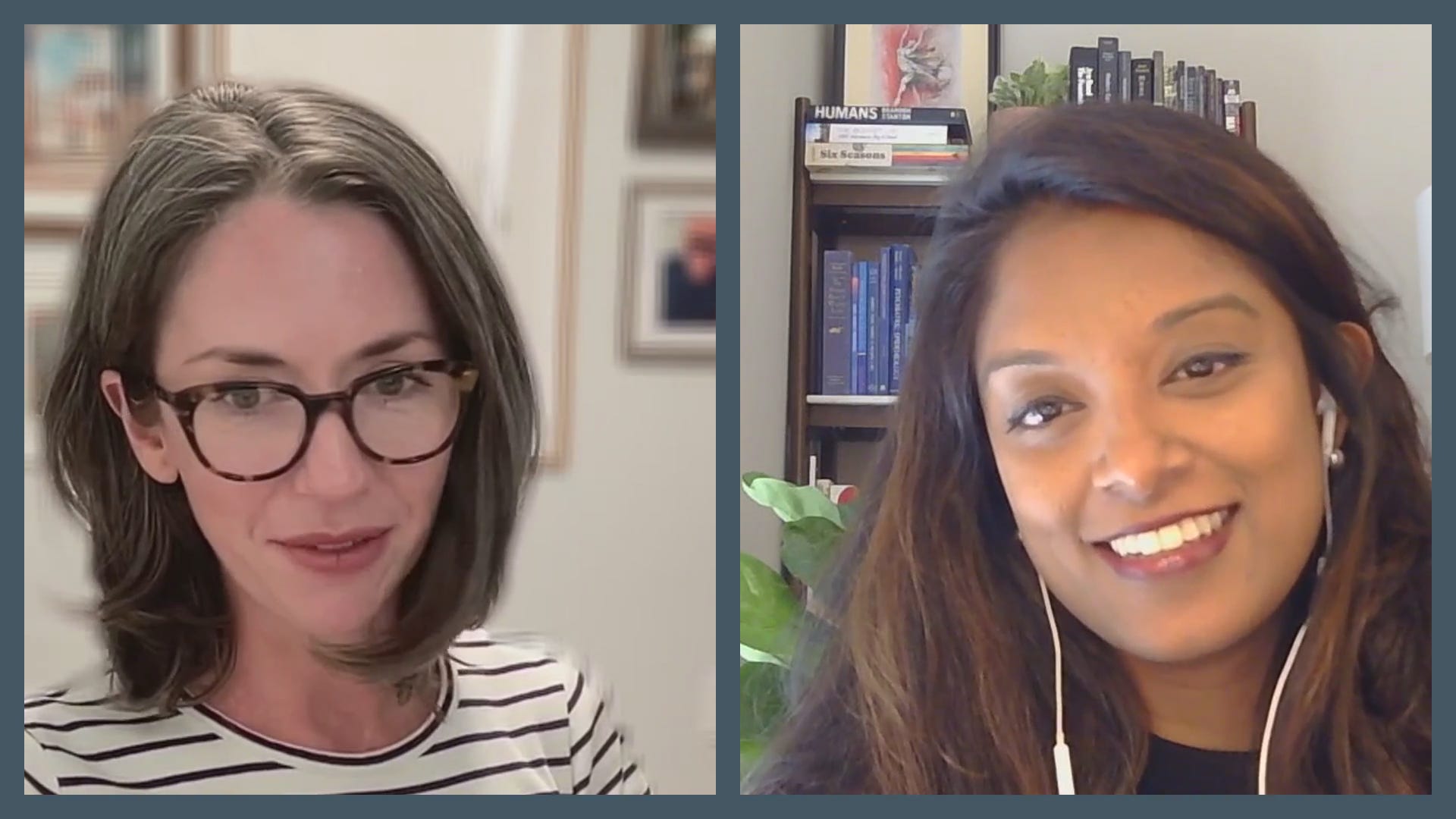
In last week’s episode, Eric Smith shared how USAID’s Office of Diversity, Equity, Inclusion, and Accessibility worked to build an agency where people felt seen, valued, and included. That conversation served as a reminder that inclusion is not just a workplace ideal—it’s a strategy for better outcomes.This week, we carry that idea into the world of HIV.I’m joined by Kent Klindera, who spent more than three decades working with sex workers, transgender communities, gay men, people who inject drugs, and others whose lives have always been deeply shaped by social exclusion. Kent makes one truth impossible to ignore: you cannot end HIV with treatment alone. People don’t live in laboratories—they live in families, in communities, inside legal systems that either protect them or push them underground.Throughout our conversation, Kent unpacks what he witnessed as the first HIV Peace Corps volunteer in Thailand in 1988, and later across Uganda, South Africa, Botswana, and at USAID. He explains why criminalization fuels transmission, how stigma keeps people from returning for care, and what happens when drop-in centers and trusted relationships disappear overnight. He also shares the story of a young peer educator in rural Uganda. A moment that captures the weight people carry when the world around them refuses to make room for their whole selves.This episode is a clear reminder that HIV work has always been about far more than medication. It’s about safety. It’s about dignity. It’s about belonging. And it’s about the systems and people that help someone stay connected to care when life becomes overwhelming.If you’ve ever wondered what truly drives epidemic control, or why inclusive policies and community-led care matter as much as science, this conversation with Kent will shift the way you think about health.Help These Stories Reach More People This is a public episode. If you'd like to discuss this with other subscribers or get access to bonus episodes, visit globaldevinterrupted.substack.com/subscribe
In 2014, Ebola reached U.S. shores—a wake-up call that pandemics anywhere can threaten communities everywhere. In response, the United States with other countries and international organizations launched the Global Health Security Agenda (GHSA), a global partnership to prevent, detect, and respond to emerging diseases before they spread.In this episode, former USAID Senior Public Health Advisor Ashna Kibria reflects on how the U.S. strengthened outbreak preparedness systems around the world and what’s at stake now that USAID is gone. From building early warning networks to partnering with governments, researchers, and the private sector, Ashna helped design programs that connected public health, agriculture, and environmental systems to stop outbreaks before they started. She also led efforts to combat antimicrobial resistance (AMR), one of the world’s most urgent and overlooked health threats.Today, those global partnerships continue but with reduced U.S. coordination and support. As new outbreaks emerge, the world is reminded that health security depends on shared responsibility, not isolation.Listen to learn how USAID’s partnerships once formed a quiet frontline against pandemics—and what it means now that those defenses have shifted to others.Subscribe to Global Development Interrupted for more stories about global health, diplomacy, and what happens when development is disrupted. This is a public episode. If you'd like to discuss this with other subscribers or get access to bonus episodes, visit globaldevinterrupted.substack.com/subscribe
Migration begins long before someone reaches a border — in the loss of stability, opportunity, and trust that makes it impossible to stay.For decades, USAID helped address those root causes by strengthening democratic institutions, supporting communities, and building stability before crises took hold. It was one of the few agencies designed to prevent displacement rather than respond to it.In this clip, Jeremy Williammee, former USAID Director of Democracy and Governance for El Salvador and Central America, reflects on what happens when that work disappears.Watch the full episode to hear our conversation. This is a public episode. If you'd like to discuss this with other subscribers or get access to bonus episodes, visit globaldevinterrupted.substack.com/subscribe
What does it mean to lead with service, not fear?In this episode, former USAID Democracy and Governance Director Jeremy Williamee shares how investing in local governments and community stability helped address the root causes of migration—long before people reached the border. From small-town New York to Central America, his story is a quiet reminder that lasting security comes not from walls or fear, but from opportunity, dignity, and trust in the places people call home.Listen wherever you get your podcasts, and subscribe on Substack for more stories from Global Development Interrupted. This is a public episode. If you'd like to discuss this with other subscribers or get access to bonus episodes, visit globaldevinterrupted.substack.com/subscribe
When USAID was dismantled, Ashley Vij was mid-call planning the rollout of one of the most promising HIV prevention tools in decades — Lenacapavir, a twice-yearly injection that could revolutionize access for women and hard-to-reach communities. In this episode, Ashley reflects on her path from Tucson to USAID, the power of unsexy investments like policy reform, and how she’s channeling loss into action through Root to Rise. A story of science, resilience, and the fight to keep lifesaving innovations within reach.If you would like to learn more about the organization Root to Rise that Ashley co-founded with her former USAID colleagues check out her website HERE. This is a public episode. If you'd like to discuss this with other subscribers or get access to bonus episodes, visit globaldevinterrupted.substack.com/subscribe
At just under two years old, Cathy Nguyen left Vietnam with her mother. On the very day Saigon fell, they landed in Hawaii, where they reunited with her father, who was studying for a master’s in public health on a USAID scholarship. That moment of upheaval and new beginnings shaped her family’s life and her own lifelong commitment to service.Cathy’s story weaves together family legacy, global challenges, and the quiet power of giving back. Drawing on over 20 years of experience advancing humanitarian and public service programs across Africa, Asia/Pacific, and the U.S., she has served as a USAID staffer, PEPFAR Coordinator, and Returned Peace Corps Volunteer. With deep roots in Honolulu and a family history shaped by displacement and opportunity, her commitment to service runs deep.She shares personal stories about her family’s journey, the transformative role USAID scholarships played in their lives, and the core values of community, responsibility, and public service that have guided her path. Together, we explore USAID’s critical work in global health—from supporting HIV/AIDS programs and vulnerable families to pandemic preparedness—and the lasting impact these efforts have on communities worldwide and at home.Cathy also reflects on the current challenges facing foreign aid, the consequences of funding cuts, and the small but meaningful ways individuals can contribute to positive change.Tune in for an inspiring and heartfelt conversation about resilience, global interconnectedness, and the enduring spirit of giving back. This is a public episode. If you'd like to discuss this with other subscribers or get access to bonus episodes, visit globaldevinterrupted.substack.com/subscribe
As a child on Chicago’s South Side, Lauren Murphy dreamed of becoming a nun to help others. Decades later, she found herself working for USAID, supporting the U.S. government’s global efforts to care for children orphaned or made vulnerable by HIV/AIDS.In this conversation, Lauren reflects on what it meant to serve communities affected by HIV — designing programs that kept children healthy, safe, stable, and in school, while supporting caregivers with dignity, not pity. She shares stories from South African townships, lessons in Ubuntu, and the radical belief that the best solutions come from within communities themselves.Lauren also opens up about the abrupt and devastating dismantling of USAID’s work, and the profound sense of betrayal felt by thousands of local leaders and colleagues left behind.This episode explores what happens when systems collapse, what community truly means, and how small acts can still hold up a future. This is a public episode. If you'd like to discuss this with other subscribers or get access to bonus episodes, visit globaldevinterrupted.substack.com/subscribe
Comments


Download from Google Play

Download from App Store
 United States