


 Claim Ownership
This, Again
Subscribed: 1Played: 0
Subscribe

© Copyright 2025 All rights reserved.
Description
History doesn’t just echo — it screams. ”This, Again” is a podcast about the disasters, delusions, downfalls, and bizarre evolutions that prove humans don’t really change…we just change outfits.
I’m Mallory Faust, and in every episode, I dig into the psychology behind the moments when people got it wrong — from witch trials to cult devotion, space shuttles to parties gone fatally wrong. Why do we keep falling for the same tricks, ignoring the same warnings, repeating the same mistakes?
You may think you know these stories, but not like this.
New episodes drop every other Thursday. Subscribe now so you don’t miss the first release — because if history has taught us anything, it’s that we’re doomed to repeat it.
I’m Mallory Faust, and in every episode, I dig into the psychology behind the moments when people got it wrong — from witch trials to cult devotion, space shuttles to parties gone fatally wrong. Why do we keep falling for the same tricks, ignoring the same warnings, repeating the same mistakes?
You may think you know these stories, but not like this.
New episodes drop every other Thursday. Subscribe now so you don’t miss the first release — because if history has taught us anything, it’s that we’re doomed to repeat it.
12 Episodes
Reverse
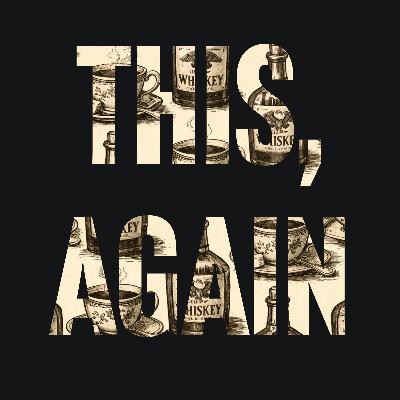
How do you justify rebellion when you are fighting for freedom, and then justify suppressing it once freedom is yours?
In this episode of This, Again, we rewind to the years immediately after American independence, when the Founding Fathers were forced to confront a problem they had not fully planned for. Americans were rebelling again, this time against them.
We begin with the Boston Tea Party before it became a founding myth, when it was still risky, debated, and unresolved. Then we follow that same logic of resistance as it reappears during the Whiskey Rebellion of the 1790s, when farmers in western Pennsylvania challenged a federal law passed by a government that claimed to represent them.
Along the way, we sit with the anxiety, fear, and reasoning that shaped how early American leaders explained the difference between rebellion they celebrated and rebellion they suppressed. This is not an episode about whether the Founders were right or wrong. It is about how people reason under pressure, how legitimacy hardens after survival, and how the logic that creates a revolution does not disappear once power changes hands.
Primary sources from Alexander Hamilton and George Washington anchor the episode, alongside historians who explore the psychological and political aftermath of the American Revolution.
Attribution Notes:
Every effort was made to cross-check primary sources and modern research. Where paraphrasing is used, it’s drawn from the texts below with narrative license for clarity and flow.
If you spot an error or have a source to suggest, DM @thisagainshow
Follow This, Again on Instagram: @thisagainshow
This, Again is written, produced, and hosted by Mallory Faust.
Hamilton, Alexander. Federalist No. 15. 1787.
Avalon Project, Yale Law School.
https://avalon.law.yale.edu/18th_century/fed15.asp
Hamilton, Alexander. Federalist No. 6. 1787.
Avalon Project, Yale Law School.
https://avalon.law.yale.edu/18th_century/fed06.asp
Hamilton, Alexander. Federalist No. 9. 1787.
Avalon Project, Yale Law School.
https://avalon.law.yale.edu/18th_century/fed09.asp
Hamilton, Alexander. Letter to George Washington, August 18, 1794.
In The Papers of Alexander Hamilton, vol. 17. Edited by Harold C. Syrett.
New York: Columbia University Press, 1972.
Hamilton, Alexander. “Tully No. IV.” 1794.
In The Papers of Alexander Hamilton, vol. 25. Edited by Harold C. Syrett.
New York: Columbia University Press, 1977.
Washington, George. Proclamation Calling Out the Militia. September 25, 1794.
Avalon Project, Yale Law School.
https://avalon.law.yale.edu/18th_century/gw02.asp
Petition of the Inhabitants of Washington County, Pennsylvania. 1792.
Quoted in Thomas P. Slaughter, The Whiskey Rebellion: Frontier Epilogue to the American Revolution.
Secondary Sources
Slaughter, Thomas P. The Whiskey Rebellion: Frontier Epilogue to the American Revolution.
New York: Oxford University Press, 1986.
Bouton, Terry. Taming Democracy: “The People,” the Founders, and the Troubled Ending of the American Revolution.
New York: Oxford University Press, 2007.
Wood, Gordon S. The Radicalism of the American Revolution.
New York: Vintage Books, 1993.
Wood, Gordon S. Empire of Liberty: A History of the Early Republic, 1789 to 1815.
New York: Oxford University Press, 2009.
Maier, Pauline. From Resistance to Revolution: Colonial Radicals and the Development of American Opposition to Britain, 1765 to 1776.
New York: W. W. Norton and Company, 1972.
Archival Collections
Avalon Project, Yale Law School.
Founding era documents, Federalist Papers, and presidential proclamations.
https://avalon.law.yale.edu/
National Archives.
Early American government records and founding documents.
https://www.archives.gov/
Petition of the Inhabitants of Washington County, Pennsylvania, 1792, quoted in
Slaughter, Thomas P. The Whiskey Rebellion: Frontier Epilogue to the American Revolution. New York: Oxford University Press, 1986.
Hamilton, Alexander. Letter to George Washington, August 18, 1794.
In The Papers of Alexander Hamilton, vol. 17, edited by Harold C. Syrett. New York: Columbia University Press, 1972.
Hamilton, Alexander. “Tully No. IV,” 1794.
In The Papers of Alexander Hamilton, vol. 25, edited by Harold C. Syrett. New York: Columbia University Press, 1977.
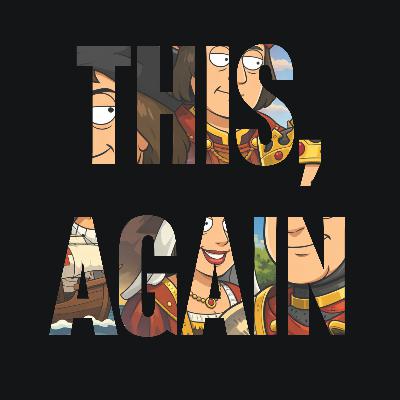
In this episode of This, Again, we look at three familiar figures from late medieval and early modern Europe and ask a different kind of historical question.
Not whether they were heroes or villains.
But how their stories came to be told the way they were.
We start with Christopher Columbus, whose brutality was documented while he was alive and whose authority collapsed long before he became a national symbol. His later transformation into a heroic origin story tells us less about new discoveries and more about what later generations needed him to represent.
From there, we step back to Spain in the late 1400s, where Ferdinand and Isabella unified the crown through religious purity, expulsion, and surveillance. By tracing royal decrees alongside firsthand accounts, we can hear the story being shaped in real time, with moral justification first and consequences handled quietly afterward.
Finally, we look at Henry V of England, a king whose short reign and timely death helped solidify one of England’s most enduring legends. Victories like Agincourt were interpreted as divine approval, while moments that complicated the image were absorbed and sidelined. Over time, Henry became less a man and more a standard against which later instability was measured.
Taken together, these stories show how historical narratives harden not because evidence disappears, but because meaning gets organized around what feels necessary, stabilizing, or reassuring in a given moment.
Attribution Notes:
Every effort was made to cross-check primary sources and modern research. Where paraphrasing is used, it’s drawn from the texts below with narrative license for clarity and flow.
If you spot an error or have a source to suggest, DM @thisagainshow
Follow This, Again on Instagram: @thisagainshow
This, Again is written, produced, and hosted by Mallory Faust.
Primary and Contemporary Sources
Columbus, Christopher. The Diario of Christopher Columbus’s First Voyage to America, 1492–1493. Edited by Oliver Dunn and James E. Kelley Jr. Norman: University of Oklahoma Press, 1989.
https://www.oupress.com/9780806123849/the-diario-of-christopher-columbuss-first-voyage-to-america-1492-1493/
Columbus, Christopher. Select Letters of Christopher Columbus, with Other Original Documents Relating to His Four Voyages to the New World. Translated and edited by R. H. Major. London: Hakluyt Society, 1847.
Select letters of Christopher Columbus : with other original documents, relating to his four voyages to the New World : Columbus, Christopher : Free Download, Borrow, and Streaming : Internet Archive
Las Casas, Bartolomé de. A Short Account of the Destruction of the Indies. Translated by Nigel Griffin. London: Penguin Classics, 1992.
A short account of the destruction of the Indies : Casas, Bartolomé de las, 1484-1566 : Free Download, Borrow, and Streaming : Internet Archive
Henry V and the Hundred Years’ War
Allmand, Christopher. Henry V. Berkeley: University of California Press, 1992.
https://www.ucpress.edu/book/9780520070371/henry-v
Curry, Anne. Agincourt: A New History. Stroud: Tempus Publishing, 2005.
Agincourt : a new history : Curry, Anne : Free Download, Borrow, and Streaming : Internet Archive
Curry, Anne. Henry V: From Playboy Prince to Warrior King. London: Yale University Press, 2015.
Henry V : playboy prince to warrior king : Curry, Anne : Free Download, Borrow, and Streaming : Internet Archive
Prestwich, Michael. Armies and Warfare in the Middle Ages. New Haven: Yale University Press, 1996.
Armies and warfare in the Middle Ages : the English experience : Prestwich, Michael : Free Download, Borrow, and Streaming : Internet Archive
Spain, the Reconquista, and the Inquisition
Kamen, Henry. The Spanish Inquisition: A Historical Revision. New Haven: Yale University Press, 1998.
The Spanish Inquisition : a historical revision : Kamen, Henry : Free Download, Borrow, and Streaming : Internet Archive
Kamen, Henry. Spain 1469–1714: A Society of Conflict. London: Routledge, 2005.
SPAIN, 1469-1714: A SOCIETY OF CONFLICT. : Henry Kamen : Free Download, Borrow, and Streaming : Internet Archive
Netanyahu, Benzion. The Origins of the Inquisition in Fifteenth Century Spain. New York: Random House, 1995.
The origins of the Inquisition in fifteenth century Spain : Netanyahu, B. (Benzion), 1910- : Free Download, Borrow, and Streaming : Internet Archive
The Black Legend and Historical Memory
Gibson, Charles. The Black Legend: Anti-Spanish Attitudes in the Old World and the New. New York: Knopf, 1971.
The black legend : Charles Gibson : Free Download, Borrow, and Streaming : Internet Archive
Pagden, Anthony. Lords of All the World: Ideologies of Empire in Spain, Britain and France c.1500–c.1800. New Haven: Yale University Press, 1995.
Lords of all the world : ideologies of empire in Spain, Britain and France c. 1500-c. 1800 : Pagden, Anthony : Free Download, Borrow, and Streaming : Internet Archive
Columbus, Mythmaking, and National Memory
Irving, Washington. A History of the Life and Voyages of Christopher Columbus. New York: G. and C. Carvill, 1828.
https://archive.org/details/historylifeandv00irvigoog
Prescott, William H. History of the Reign of Ferdinand and Isabella the Catholic. London: Richard Bentley, 1838.
History of the reign of Ferdinand and Isabella, the Catholic, of Spain : Prescott, William Hickling, 1796-1859 : Free Download, Borrow, and Streaming : Internet Archive
Loewen, James W. Lies My Teacher Told Me: Everything Your American History Textbook Got Wrong. New York: The New Press, 2018.
Lies my teacher told me : everything your American history textbook got wrong : Loewen, James W : Free Download, Borrow, and Streaming : Internet Archive
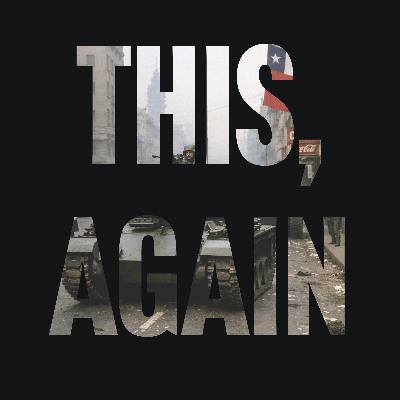
Coups are often remembered as sudden explosions of force. Tanks in the streets. Jets overhead. Governments collapsing overnight. But history tells a quieter, more unsettling story.
In this episode of This, Again, we trace the hidden psychological pattern that links coups across centuries and continents, from Napoleon’s rise in revolutionary France to Cold War interventions in Latin America and beyond. Using the 1973 Chilean coup as our central case study, we examine how democratic systems unravel long before soldiers ever move, through exhaustion, institutional paralysis, rumor, and the slow withdrawal of public belief.
Chile did not collapse because the military was powerful. It collapsed because trust eroded. Because Congress froze. Because courts lost credibility. Because everyday life became unpredictable. And because enough people, across enough institutions, quietly stopped believing the system could recover.
Along the way, we connect Chile’s experience to earlier and later coups in France, Poland, Spain, Greece, Guatemala, and Argentina, revealing a shared emotional architecture that repeats even when politics, ideologies, and eras change.
This is not a story about left versus right. It is a story about legitimacy, exhaustion, and the dangerous silence that settles in just before power changes hands.
History does not repeat in identical events. It repeats in human behavior.
Attribution Notes:
Every effort was made to cross-check primary sources and modern research. Where paraphrasing is used, it’s drawn from the texts below with narrative license for clarity and flow.
If you spot an error or have a source to suggest, DM @thisagainshow
Follow This, Again on Instagram: @thisagainshow
This, Again is written, produced, and hosted by Mallory Faust.
Allende's Final Address: https://youtu.be/IZVWOWA2Hpk?si=xNHlO33Ve9rc0jzU
PRIMARY SOURCES
Chile 1973 — Direct Primary Sources
1. Salvador Allende: Speeches & Broadcasts
Allende’s Last Speech (Radio Magallanes, Sept. 11, 1973)
Transcript + audio:
https://nsarchive2.gwu.edu/NSAEBB/NSAEBB470/
2. Declassified U.S. Government Documents
(All hosted by the National Security Archive at George Washington University)
CIA: “Covert Action in Chile, 1963–1973”
https://nsarchive.gwu.edu/briefing-book/chile-coup-nixon-kissinger
“Foreign Relations of the United States (FRUS), 1969–1976, Vol. XXI: Chile”
https://history.state.gov/historicaldocuments/frus1969-76v21
Nixon/Kissinger Telephone Transcripts on Chile
https://nsarchive2.gwu.edu/NSAEBB/NSAEBB437/
3. Chilean Newspapers (Digitized)
El Mercurio (Digital Archive)
https://www.elmercurio.com/
(Full 1970–73 archives require subscription, but summary archives & headlines are viewable.)
La Nación (Chile) - Historical Archive
https://www.lanacion.cl/archivo/
Clarín (Archive + PDFs)
https://www.clarin.cl/historia/
4. Eyewitness/Oral History Archives
Museo de la Memoria y los Derechos Humanos (Chile) - Oral Histories
https://www.museodelamemoria.cl/archivos/
5. Allende Family & Personal Reflections
Isabel Allende - “Mi País Inventado” excerpts
https://www.isabelallende.com/en/book/my-invented-country
(snippets available via publishers; full text is a book)
B. Global Coup Parallels - Primary Sources with Links
1. Iran 1953
CIA: “The Battle for Iran” (Declassified)
https://nsarchive2.gwu.edu/NSAEBB/NSAEBB435/
The Shah’s Memoir (“Mission for My Country”) - Digital Archive
https://archive.org/details/missionformycoun00moharich
2. Myanmar 2021
NetBlocks Internet Outage Timeline (Jan-Feb 2021)
https://netblocks.org/reports/myanmar-internet-shutdown-tracker-2021/
Reuters Raw Footage of Coup Morning
https://www.reuters.com/world/asia-pacific/myanmar-military-seizes-power-detains-aung-san-suu-kyi-president-tv-2021-02-01/
3. Turkey 2016
Erdogan’s FaceTime Address (archived by BBC)
https://www.bbc.com/news/world-europe-36809083
TRT Military Statement Clip
https://www.youtube.com/watch?v=65FcJXUqBq0
4. Thailand (2006, 2014 coups)
2014 Military Announcement - BBC Coverage
https://www.bbc.com/news/world-asia-27517477
5. Spain 1936
Historical Radio Broadcast Archives (RTVE)
https://www.rtve.es/archivo/
Greece
Clogg, Richard. A Concise History of Greece. Cambridge: Cambridge University Press, 2002.
U.S. Department of State. Foreign Relations of the United States, 1964–1968, Volume XVI: Cyprus; Greece; Turkey.
https://history.state.gov/historicaldocuments/frus1964-68v16
ADDITIONAL SOURCES:
Foundational Works on Chile 1973
1. Peter Kornbluh - “The Pinochet File: A Declassified Dossier on Atrocity and Accountability”
https://nsarchive2.gwu.edu/NSAEBB/NSAEBB110/
2. Patricia Politzer - “Fear in Chile: Lives Under Pinochet”
https://www.usip.org/publications/1990/06/fear-chile-lives-under-pinochet
3. Brian Loveman - “Chile: The Legacy of Hispanic Capitalism”
https://global.oup.com/academic/product/chile-9780195112799
4. Jonathan Haslam - “The Nixon Administration and the Death of Allende’s Chile”
https://press.princeton.edu/books/hardcover/9780691130255/the-nixon-administration-and-the-death-of-allendes-chile
5. Heraldo Muñoz - “The Dictator’s Shadow: Life Under Augusto Pinochet”
https://www.basicbooks.com/titles/heraldo-munoz/the-dictators-shadow/9780786726554/
Academic Journals & Articles
Journal of Latin American Studies
Cambridge University Press:
https://www.cambridge.org/core/journals/journal-of-latin-american-studies
Hispanic American Historical Review (Duke University Press)
https://read.dukeupress.edu/hahr
International Security (MIT Press)
https://direct.mit.edu/isec
Foreign Affairs - Classic Articles on Chile (1971-1974)
https://www.foreignaffairs.com/search?search_api_views_fulltext=Chile
Documentaries
“The Battle of Chile” (Patricio Guzmán)
Streaming on YouTube (Part I):
https://www.youtube.com/watch?v=4SVBm50nApc
Streaming on Vimeo (restored versions):
https://vimeo.com/ondemand/thebattleofchile
PBS Frontline: “Chile: The Other 9/11”
https://www.pbs.org/wgbh/pages/frontline/shows/chile/
“Santiago, Italia” (2018)
Streaming overview:
https://www.ifcfilms.com/films/santiago-italia
Sources for Coup Parallels
1. Naunihal Singh “Seizing Power: The Strategic Logic of Military Coups”
Publisher:
https://www.press.jhu.edu/books/title/4012/seizing-power
2. Edward Luttwak “Coup d'État: A Practical Handbook”
Publisher (Harvard):
https://www.hup.harvard.edu/books/9780674175474
3. Stephen Kinzer “All the Shah’s Men” (Iran 1953)
https://www.wiley.com/en-us/All+the+Shah%27s+Men%3A+An+American+Plot+to+Get+Rid+of+a+Prime+Minister+and+What+It+Can+Teach+Us+Today%2C+Updated+Edition-p-9780470185497
4. Duncan McCargo - Works on Thai politics
https://www.duncanmccargo.net/publications/
5. International Crisis Group – Myanmar, Turkey, Thailand reports
https://www.crisisgroup.org/
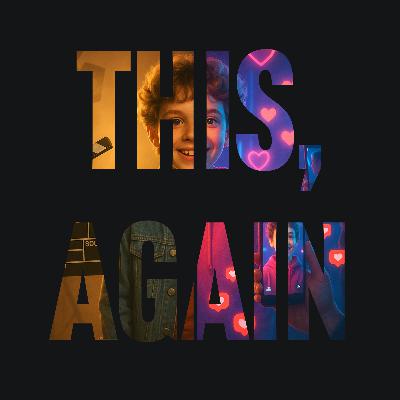
The lights got brighter. The cameras got closer. But the system never changed.
In Part 2, we pick up where we left off and trace the next wave of child stardom, from the 1980s to today. We revisit the sitcom era that gave us tragic headlines, the pop machine that chewed up teen girls for profit, and the digital boom that turned toddlers into monetized brands.
Behind the fame was something more dangerous: a psychological cost that built quietly over time. We look at how parasocial fame warps identity, how trauma bonding creates loyalty to abusers, and how growing up in public reshapes the brain in ways science is just beginning to understand.
From Britney Spears to Ruby Franke, from reality shows to family vlogs, this episode investigates how childhood continues to be scripted, sold, and sacrificed for entertainment.
This is not the end of the story. It’s the part where the machine learns to disguise itself.
Content Warning: This episode includes mentions of child abuse, sexual harassment, addiction, and suicide.
Attribution Notes:
Every effort was made to cross-check primary sources and modern research. Where paraphrasing is used, it’s drawn from the texts below with narrative license for clarity and flow.
If you spot an error or have a source to suggest, DM @thisagainshow
Follow This, Again on Instagram: @thisagainshow
This, Again is written, produced, and hosted by Mallory Faust.
Sources and further reading:
Drew Barrymore’s Early Addiction and Emancipation
Lynsey Eidell, “All About Drew Barrymore’s Relationship with Her Mom Jaid Barrymore,” People, March 25, 2024. https://people.com/all-about-drew-barrymore-jaid-barrymore-mother-daughter-relationship-8406047
Britney Spears and the Conservatorship
Sam Levin, “Britney Spears’s conservatorship terminated after nearly 14 years,” The Guardian, November 12, 2021. https://www.theguardian.com/music/2021/nov/12/britney-spears-conservatorship-terminated
Ruby Franke / Shari Franke and Family Vlogging Controversies
Katie Kindelan, “Ruby Franke’s daughter speaks out to lawmakers on family vlogging dangers,” ABC News (Good Morning America), October 17, 2024. https://abcnews.go.com/GMA/Family/ruby-frankes-daughter-speaks-lawmakers-family-vlogging-dangers/story?id=114904176
Illinois and California Influencer Labor Laws
Illinois (SB 1782): Eric Stock, “Pritzker signs child influencer protections into law,” NPR Illinois, August 14, 2023. https://www.nprillinois.org/illinois/2023-08-14/pritzker-signs-child-influencer-protections-into-law
California (AB 1880 & SB 764): Office of Governor Gavin Newsom, “Governor Newsom joins Demi Lovato to sign legislation to protect the financial security of child influencers,” press release, September 26, 2024. https://www.gov.ca.gov/2024/09/26/governor-newsom-joins-demi-lovato-to-sign-legislation-to-protect-the-financial-security-of-child-influencers/
Advocacy by A Minor Consideration and SAG-AFTRA
Roger Armbrust, “Jackie’s Legacy: Proponents of Coogan Law revisions aim at extending protection of child performers to all cases and all states,” Backstage, November 4, 2019. https://www.backstage.com/magazine/article/jackies-legacy-proponents-coogan-law-revisions-aim-extending-20198/
Margaritoff, Marco. “9 Shocking Stories of Hollywood Stage Parents Who Exploited Their Own Kids.” All That’s Interesting, September 8, 2021. https://allthatsinteresting.com/celebrity-parents-stage-mothers
Chung, Gabrielle, and Tomás Mier. “Britney Spears Says She Wants to Charge Dad Jamie with ‘Conservatorship Abuse’ in New Testimony.” People, July 14, 2021. https://people.com/music/britney-spears-says-she-wants-to-charge-dad-jamie-with-conservatorship-abuse/
“In Wake of Ruby Franke Abuse Case, Utah Adds Protections for Children of Social Media Influencers.” CBS News, March 26, 2025. https://www.cbsnews.com/news/utah-children-influencer-protections-ruby-franke-child-abuse/
Brodsky, Rachel. “The True Story Behind An Update on Our Family and the YouTubers Who Gave Up an Adopted Child.” Time, January 15, 2025. https://time.com/7206477/an-update-on-our-family-true-story-stauffer-family/
Krobot, Anezka. “When Play Becomes Work: How Child Influencers on TikTok Are Being Exploited and How We Can Protect Them.” American Bar Association – Journal of Labor & Employment Law, September 2, 2025. https://www.americanbar.org/groups/labor_law/resources/journal/38-3/how-child-influencers-tiktok-being-exploited-how-we-can-protect-them/
“France Passes New Law to Protect Child Influencers.” BBC News, October 7, 2020. https://www.bbc.com/news/world-europe-54447491
Kindelan, Katie. “Illinois Becomes 1st State to Regulate Kid Influencers: What to Know About the Law.” ABC News, August 14, 2023. https://abcnews.go.com/GMA/Family/illinois-1st-state-regulate-kid-influencers-law/story?id=102259218
Duygu Balan. “Smile for the Camera: The Psychological Toll of Child Fame.” Psychology Today, June 2, 2025:https://www.psychologytoday.com/us/blog/in-the-light-and-in-the-dark/202306/smile-for-the-camera-the-psychological-toll-of-child-fame
Ankita Guchait, MBPsS. “When Your Childhood Is Monetized: Exploring the Psychology Behind Kidfluencing.” Psychology Today, April 14, 2025: https://www.psychologytoday.com/us/blog/the-realities-of-refugee-screening/202504/when-your-childhood-is-monetized
Ariane Resnick, CNC. “Understanding Trauma Bonding.” Verywell Mind, updated November 6, 2025: https://www.verywellmind.com/understanding-trauma-bonding-5185114
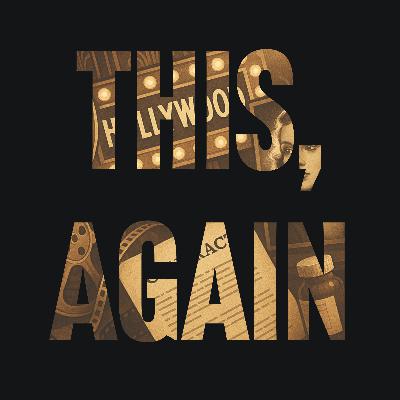
Hollywood has been cashing in on cute kids for over a century, and the kids usually pay the price. In Part 1 of The Child Star Problem, we trace the origins of child exploitation in the entertainment industry, starting even before Hollywood with vaudeville stages, traveling acts, and silent films. This episode unpacks the system that raised children for applause and profit, from Jackie Coogan, whose stolen fortune led to the first child labor law in entertainment, to Judy Garland, whose teen years were fueled by pills, starvation, and studio control.
We explore how the industry industrialized innocence, how parents and executives profited from it, and why this early playbook shaped every cautionary tale that followed. Before #FreeBritney and TikTok families, there were contract girls, fixers, and children sold as miracles during the Great Depression. And the cycle? It was built in from the start.
Content Warning: This episode includes mentions of child abuse, sexual harassment, addiction, and suicide.
Attribution Notes:
Every effort was made to cross-check primary sources and modern research. Where paraphrasing is used, it’s drawn from the texts below with narrative license for clarity and flow.
If you spot an error or have a source to suggest, DM @thisagainshow
Follow This, Again on Instagram: @thisagainshow
This, Again is written, produced, and hosted by Mallory Faust.
Sources & Further Reading
University of Oxford. "Exploitation of Elizabethan Child Actors Revealed."University of Oxford News, June 19, 2013. https://www.ox.ac.uk/news/2013-06-19-exploitation-elizabethan-child-actors-revealed.
Soth, Amelia. "Her Majesty’s Kidnappers."JSTOR Daily, December 17, 2020. https://daily.jstor.org/kidnapping-for-the-queens-choir/.
Hatzinger, Martin, et al. "Castrati - everything to achieve fame." Urologe A 48, no. 6 (June 2009): 649–652. https://pubmed.ncbi.nlm.nih.gov/19333571/.
Pound, Jeremy. "Secrets of the castrati: the eye-watering surgery that created opera’s greatest stars." Classical Music, July 18, 2025. https://www.classical-music.com/articles/secrets-of-castrati
Blakemore, Erin. "The Last Silent Film Star." JSTOR Daily, June 1, 2018. https://daily.jstor.org/the-last-silent-film-star/
Sid Luft, Judy and I: My Life with Judy Garland
https://www.amazon.com/Judy-I-My-Life-Garland/dp/1613735835
Suyin Haynes, “The True Story Behind the Movie Judy,” TIME
https://time.com/5688136/judy-garland-true-story/
Erin Blakemore, “Golden Age Hollywood Had a Dirty Little Secret: Drugs,” History.com
https://www.history.com/news/old-hollywood-drugs-judy-garland
Shirley Temple Black, Child Star: An Autobiography
https://www.amazon.com/Child-Star-Autobiography-Shirley-Temple/dp/0070040085
John F. Kasson, The Little Girl Who Fought the Great Depression
https://www.amazon.com/Little-Girl-Who-Fought-Depression/dp/0393240790
Hillel Italie, “Shirley Temple, Child Star of the Depression, Dies at 85,” Associated Press / Salt Lake Tribune
https://archive.sltrib.com/article.php?id=57525214&itype=cmsid
Judith Levine, “Baby, Take a Bow,” Boston Review
https://www.bostonreview.net/articles/judith-levine-baby-take-bow-child-star-shirley-temple/
Duygu Balan, “Smile for the Camera: The Psychological Toll of Child Fame,” Psychology Today
https://www.psychologytoday.com/us/blog/in-the-light-and-in-the-dark/202306/smile-for-the-camera-the-psychological-toll-of-child-fame
Edward Helmore, “Trauma memoir puts spotlight on mums turning daughters into child stars,” The Guardian
https://www.theguardian.com/culture/2022/aug/21/trauma-memoir-spotlight-stage-parents-child-stars
Ariane Resnick, “Understanding Trauma Bonding,” Verywell Mind https://www.verywellmind.com/understanding-trauma-bonding-5185114
Jackie Coogan and the Coogan Law. Ailbhe Rogers, “More Than Pocket Money: A History of Child Actor Laws,” In Custodia Legis (Law Library of Congress blog), June 2022. https://blogs.loc.gov/law/2022/06/more-than-pocket-money-a-history-of-child-actor-laws/
Baby Peggy / Diana Serra Cary. Pamela Hutchinson, “Diana Serra Cary – aka ‘Baby Peggy’ Montgomery – obituary: the early child star who became an activist for Hollywood’s children,” Sight & Sound (BFI), February 25, 2020. https://www.bfi.org.uk/sight-and-sound/news/diana-serra-cary-aka-baby-peggy-montgomery-obituary-early-child-star-who-became-activist-hollywoods-children
Dana Plato, Gary Coleman, and Diff’rent Strokes Actors. Kellie Gormly, “The Tragic ‘Diff’rent Strokes’ Curse: Remembering Dana Plato & Gary Coleman,” Remind Magazine, May 8, 2024. https://www.remindmagazine.com/article/14088/the-tragic-diffrent-strokes-curse-remembering-dana-plato-gary-coleman-todd-bridges/
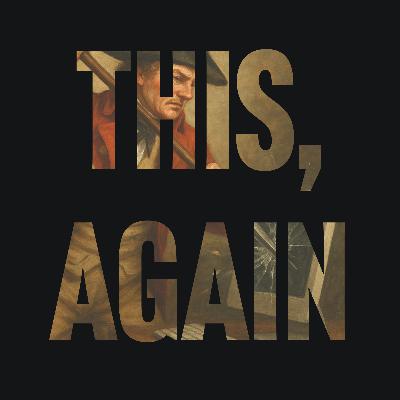
What do 19th century weavers and 21st century tech workers have in common? More than you might think. In this episode, we unpack the real story behind the Luddites, skilled artisans who weren’t afraid of machines but deeply aware of how those machines were being used to undercut their labor and erase their way of life. Their protests were met not just with force, but with a powerful narrative campaign that branded them as backwards and irrational.
Two hundred years later, the same pattern shows up in conversations about AI. When writers, designers, and even tech insiders raise concerns about automation, safety, or fairness, they’re often dismissed with the same tired insult: “Don’t be a Luddite.” But what if that label is more about shutting down the conversation than engaging with it?
We explore how narrative framing has been used historically, and still is today, to marginalize dissent and smooth the path for so-called progress. From Hollywood strikes to tech whistleblowers to protestors stacking rocks in front of food delivery robots, this is a story about what happens when you challenge the dominant script.
Attribution Notes:
Every effort was made to cross-check primary sources and modern research. Where paraphrasing is used, it’s drawn from the texts below with narrative license for clarity and flow.
If you spot an error or have a source to suggest, DM @thisagainshow
Follow This, Again on Instagram: @thisagainshow
This, Again is written, produced, and hosted by Mallory Faust.
Sources & Further Reading:
Kirkpatrick Sale - Rebels Against the Future: The Luddites and Their War on the Industrial Revolution (for a deep historical take on Luddism)
P. Thompson - The Making of the English Working Class (classic work that situates movements like the Luddites in broader context)
Eric Hobsbawm - Labouring Men (insight into labor history and collective action in the industrial age)
Brian Merchant, Blood in the Machine: The Origins of the Rebellion Against Big Tech.
MIT Technology Review - “Stop calling people Luddites” (on why the term is misleading today): https://thereader.mitpress.mit.edu/the-future-encyclopedia-of-luddism/
Richard Conniff, “What the Luddites Really Fought Against,” Smithsonian Magazine (March 2011) https://www.smithsonianmag.com/history/what-the-luddites-really-fought-against-264412/
Smithsonian Magazine - “When Robots Take All of Our Jobs, Remember the Luddites” (for context on the so-called “Luddite fallacy” debate in economics): When Robots Take All of Our Jobs, Remember the Luddites
National Geographic - “Before AI skeptics, Luddites raged against the machine… literally” (Oct 2023) https://www.nationalgeographic.com/history/article/luddite-industrial-revolution-anti-technology
The Luddites' 200th birthday - The Anarchist Library: https://theanarchistlibrary.org/library/bernard-marszalek-the-luddites-200th-birthday
Destroy the machines! The Luddites' violent reaction to new technology: https://www.historyskills.com/classroom/year/9/luddites/?srsltid=AfmBOor_Gy6rqaWj5in-SZSKfYPAVKKV4IQrIjFq1VuOqujc9odrTMIE
Machine-breaking in England and France, 1789-1817: https://quod.lib.umich.edu/w/wsfh/0642292.0031.009/--understanding-crowd-action-machine-breaking-in-england?rgn=main;view=fulltext
Bonus: The legend that French workers threw wooden shoes (sabots) into machines - often cited as the origin of the word sabotage. It’s apocryphal but illustrates how long this impulse of “man vs. machine” has been around in folklore.
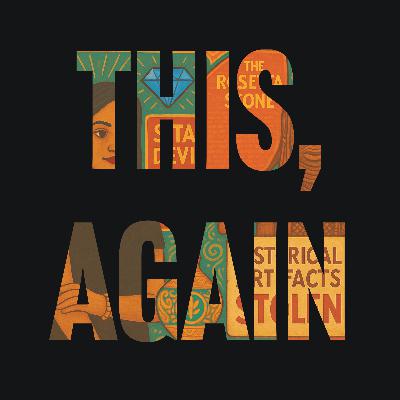
In 1949, the royal vaults of Baroda were supposed to be sealed, transferred to the new Indian state as part of a complex and delicate independence process. But when an audit revealed that hundreds of crown jewels had vanished, suspicion fell on one woman: the Maharani of Baroda, Sita Devi.
A woman as notorious as she was glamorous, Sita Devi didn’t just smuggle the jewels out of India. She wore them on magazine covers, flaunted them in Monte Carlo casinos, and lived a life of velvet defiance while the Indian government scrambled to respond.
In this episode, we unravel the scandal behind the Star of the South and the English Dresden, trace how cultural patrimony can be quietly erased in auction houses, and ask the hard question: Who gets to own history?
From Baroda’s treasure rooms to Sotheby’s glass cases, from the Mona Lisa stolen in 1911 to a daylight jewel heist at the Louvre in 2025, this is a story about ego, erasure, and the price we pay for letting power write the museum labels.
We’ll also explore how today’s restitution debates are evolving, and whether justice for stolen history is finally within reach.
Topics Covered:
Gaekwad Dynasty & the Princely States
Sita Devi’s exile and scandal
Smuggling royal treasures post-Independence
The Star of the South auction
Cultural patrimony and modern restitution
The Mona Lisa Heist from 1911
The Koh-i-Noor, Rosetta Stone, Elgin Marbles
Return of the Durga statue (2023)
French Crown Jewels Heist from the Louvre (2025)
Attribution Notes:
Every effort was made to cross-check primary sources and modern research. Where paraphrasing is used, it’s drawn from the cited texts with narrative license for clarity and flow.
If you spot an error or have a source to suggest, DM @thisagainshow
*** Follow This, Again on Instagram: @thisagainshow ***
This, Again is written, produced, and hosted by Mallory Faust.
Pillai, Manu S. “Sita Devi of Baroda: The 'maharani' who never was.” Mint Lounge, August 19, 2023. https://lifestyle.livemint.com/news/big-story/sita-devi-of-baroda-the-maharani-who-never-was-111660700032901.html
“Runaway Partners – Baroda State Jewels and Sita Devi.” The Indian Quest, January 15, 2018. https://www.theindianquest.com/blog-details/Runaway-Partners---Baroda-State-Jewels-and-Sita-Devi
“The Great Escape: How Baroda’s ‘Runaway Royals’ Made Off With Millions in State Treasure.” Homegrown, August 6, 2023. https://homegrown.co.in/homegrown-voices/the-great-escape-how-barodas-runaway-royals-made-off-with-millions-in-state-treasure
“Gaekwads fight for diamonds and palaces.” Times of India, July 7, 2003. https://timesofindia.indiatimes.com/city/ahmedabad/gaekwads-fight-for-diamonds-and-palaces/articleshow/64548.cms
“Royal inheritance dispute among Gaekwad kin set to intensify.” Times of India, December 21, 2009. https://timesofindia.indiatimes.com/city/vadodara/royal-inheritance-dispute-among-gaekwad-kin-set-to-intensify/articleshow/5363439.cms
Baroda State Administration Report, 1925–26. Baroda: The Baroda State Press, 1927. https://archive.org/details/in.ernet.dli.2015.102917
“Maharaja Pratapsinhrao Gaekwad.” History of Vadodara. Accessed September 2025. https://historyofvadodara.in/maharaja-pratapsinhrao-gaekwad/
Mona Lisa Theft / Cultural Theft Themes
“Theft of Mona Lisa: Topics in Chronicling America.” Library of Congress. Last updated June 12, 2025. https://guides.loc.gov/chronicling-america-theft-mona-lisa
“The Theft of ‘Mona Lisa’ Is Discovered.” History.com, August 22, 1911 (updated 2023). https://www.history.com/this-day-in-history/theft-of-mona-lisa-is-discovered
Georgievska-Shine, Aneta. “The Mona Lisa Is More Than Just a Painting—She’s a Protest Magnet.” Hyperallergic, November 1, 2022. https://hyperallergic.com/775079/the-mona-lisa-is-more-than-just-a-painting-shes-a-protest-magnet/
Langley, William. “The man who stole the Mona Lisa.” The Telegraph, March 1, 2011. https://www.telegraph.co.uk/culture/art/art-features/8355475/The-man-who-stole-the-Mona-Lisa.html
“How Did Vincenzo Peruggia Steal the Mona Lisa?” TheCollector.com, June 3, 2022. https://www.thecollector.com/how-did-vincenzo-peruggia-steal-the-mona-lisa/
Restitution Debates / Cultural Patrimony
“Germany Returns Looted Artifacts to Nigeria.” BBC News, December 20, 2022. https://www.bbc.com/news/world-africa-64038811
“Durga idol stolen 50 years ago returned to India.” The Hindu, August 16, 2023. https://www.thehindu.com/news/national/durga-idol-stolen-50-years-ago-returned-to-india/article67206857.ece
Waxman, Olivia B. “Should Museums Return Looted Artifacts?” Time, March 25, 2021. https://time.com/5947200/reparations-colonialism-museums/
Tsavkko Garcia, Raphael. “Who Gets to Own History?” Al Jazeera, October 1, 2022. https://www.aljazeera.com/opinions/2022/10/1/who-gets-to-own-history
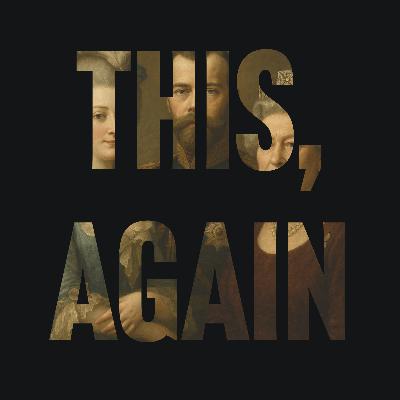
When the world is burning, the most powerful people often have one job: show up. Sometimes it works. Sometimes it’s too little, too late. And sometimes, they don’t bother at all.
In this episode of This, Again, we’re looking at three centuries of leaders who vanished when their people needed them most - and what that absence cost them. From Marie Antoinette’s balcony gamble during the French Revolution, to Tsar Nicholas II’s abdication and brutal end, to Emperor Hirohito’s eerie silence and single broadcast, to the British Royal Family’s quiet misstep at the start of COVID - these are cautionary tales about the optics of leadership.
Along the way, we dig into the history of symbolic leadership, why monarchs morphed from rulers to figureheads, and how public expectations have shifted from balcony waves to livestreams.
What You’ll Learn in This Episode:
Why Marie Antoinette’s forced balcony moment briefly flipped mob rage into cheers.
How Nicholas II’s absence, and a fumbling abdication telegram, doomed the Romanovs.
The eerie impact of Hirohito’s Jewel Voice Broadcast, the first time the Japanese public heard their emperor speak.
Why the British Royals’ initial silence during COVID created a vacuum louder than words.
The psychology of symbolic leadership, and why absence reads as abandonment.
How public expectations of leaders have accelerated in the social media era.
Why It Matters:
Because history keeps proving that in politics, the performance is the power. The moment you disappear from the stage, you risk losing the role entirely.
This, Again? is written, produced, and hosted by Mallory Faust.
For a full list of sources, visit https://thisagain.podbean.com/
Every effort was made to cross-check primary sources and modern research. Where paraphrasing is used, it’s drawn from the cited texts with narrative license for clarity and flow.
If you spot an error or have a source to suggest, DM @thisagainshow
*** Follow This, Again on Instagram: @thisagainshow ***
Marie Antoinette & the French Revolution
Tackett, Timothy. When the King Took Flight. Harvard University Press, 2003.
Schama, Simon. Citizens: A Chronicle of the French Revolution. Vintage, 1989.
Fraser, Antonia. Marie Antoinette: The Journey. Anchor Books, 2002.
Price, Munro. The Road from Versailles: Louis XVI, Marie Antoinette, and the Fall of the French Monarchy. St. Martin’s Press, 2013.
The Public Domain Review. “The Women’s March on Versailles, October 5–6, 1789.” Accessed 2024.
Nicholas II & the Romanovs
Massie, Robert K. Nicholas and Alexandra. Ballantine Books, 1967.
Figes, Orlando. A People’s Tragedy: The Russian Revolution 1891–1924. Penguin, 1997.
Smith, Douglas. Former People: The Final Days of the Russian Aristocracy. Farrar, Straus and Giroux, 2012.
Lieven, Dominic. Nicholas II: Emperor of All the Russias. St. Martin’s Press, 1993.
The Russian State Archive of Social and Political History (RGASPI). “Abdication Telegram of Nicholas II,” March 15, 1917.
Rappaport, Helen. The Romanov Sisters: The Lost Lives of the Daughters of Nicholas and Alexandra. St. Martin’s Press, 2014.
King, Greg & Wilson, Penny. The Fate of the Romanovs. John Wiley & Sons, 2003.
Emperor Hirohito & WWII
Bix, Herbert P. Hirohito and the Making of Modern Japan. HarperCollins, 2000.
Dower, John W. Embracing Defeat: Japan in the Wake of World War II. W. W. Norton & Company, 1999.
Large, Stephen S. Emperor Hirohito and Shōwa Japan: A Political Biography. Routledge, 1991.
Hata, Ikuhiko. “The Gyokuon-hōsō: The Emperor’s Broadcast of Surrender.” Japan Quarterly 42, no. 3 (1995).
Frank, Richard B. Downfall: The End of the Imperial Japanese Empire. Random House, 1999.
The British Royal Family & COVID-19
The Guardian. “Queen’s coronavirus speech: ‘We will meet again’.” April 5, 2020.
BBC News. “Prince Charles tests positive for coronavirus.” March 25, 2020.
The Guardian. “UK lockdown: children’s rainbows in windows raise spirits.” March 30, 2020.
Toronto Star. “The Queen’s silence is a missed opportunity to connect.” March 2020.
YouGov. “Reactions to the Queen’s coronavirus address.” April 2020.
Townsend, Mark. The Monarchy and the Pandemic: How Britain’s Royal Family Responded to COVID-19. Guardian Feature, 2021.
A luxurious nightclub filled with palm fronds and politicians. A festival stage surrounded by screams. In this episode, we revisit two events separated by 80 years - but united by a chilling truth: when crowds gather, things can turn deadly fast.
We start with the Cocoanut Grove fire of 1942, a catastrophe that claimed 492 lives in just ten minutes. Locked exits. Flammable ceilings. One of Hollywood’s biggest cowboy stars. Then, we jump forward to Astroworld 2021 - another event where the warnings were there, but not the will to stop the show.
We explore:
What happens when design and denial collide
Why people freeze in disasters (normalcy bias)
How history keeps repeating, and how little accountability follows
The gut-punch stories of those who didn’t make it out
Why Travis Scott is still headlining festivals, and what that says about the industry
It’s about more than panic. It’s about power, perception, and the illusion of safety.
Attribution Notes:
Every effort was made to cross-check primary sources and modern research. Where paraphrasing is used, it’s drawn from the texts below with narrative license for clarity and flow.
If you spot an error or have a source to suggest, DM @thisagainshow
*** Follow This, Again on Instagram: @thisagainshow ***
This, Again is written, produced, and hosted by Mallory Faust.
Sources:
Cocoanut Grove Fire (1942)
Esposito, John C. *Fire in the Grove: The Cocoanut Grove Tragedy and Its Aftermath*. New York: Da Capo Press, 2006.
United States Fire Administration. *Cocoanut Grove Fire*. U.S. Fire Administration/Technical Report Series. Emmitsburg, MD: FEMA, 1983. https://apps.usfa.fema.gov/pdf/efop/efo47056.pdf.
"Cocoanut Grove Fire." *Boston Fire Historical Society*. Accessed September 2025. https://bostonfirehistory.org/the-story-of-the-cocoanut-grove-fire/.
"The Cocoanut Grove Fire, 1942." *Massachusetts Moments / Mass.gov*. Accessed September 2025. https://www.mass.gov/guides/the-cocoanut-grove-fire.
Astroworld Tragedy (2021–2024)
Queen, Jack, and Mike Spector. "Rapper Travis Scott Avoids Charges over Texas Crowd Crush." *Reuters*, June 29, 2023. https://www.reuters.com/world/us/rapper-travis-scott-faces-possible-criminal-charges-texas-crowd-crush-2023-06-29.
Serrano, Alejandro. "Travis Scott Won’t Be Indicted for Astroworld Concert Tragedy, Grand Jury Decides." *The Texas Tribune*, June 29, 2023. https://www.texastribune.org/2023/06/29/harris-county-astroworld-travis-scott/.
Doyle, Céilí, Matt Sledge, and Angelica Perez. "New Evidence Emerges in Travis Scott Astroworld Tragedy." *Houston Landing / The Texas Tribune*, July 28, 2023. https://www.texastribune.org/2023/07/28/travis-scott-houston-concert-police-report/.
"Houston Police Release Full Investigative Report into 2021 Astroworld Tragedy." *Pitchfork*, July 28, 2023. https://pitchfork.com/news/houston-police-release-full-investigative-report-into-2021-astroworld-tragedy/.
"9 of 10 Wrongful Death Suits over Astroworld Concert Crowd Surge Have Been Settled, Lawyer Says." *AP News*, May 8, 2024. https://apnews.com/article/astroworld-concert-wrongful-deaths-settlement-0a31947b59bc86f5423bf9ec05272557.
"Remaining Wrongful Death Lawsuit Filed after Deadly Astroworld Concert Has Been Settled, Lawyer Says." *AP News*, May 23, 2024. https://apnews.com/article/1cda1e925527de38ad2a37e71ebd99af.
"Judge Declines to Dismiss Lawsuits Filed against Rapper Travis Scott over Deadly Astroworld Concert." *AP News*, April 24, 2024. https://apnews.com/article/travis-scott-astroworld-concert-lawsuits-deaths-36b504c7d03483e7960fd31636cccecc.
"Criminal Probe Opened into Stampede at Rap Concert in Texas." *Reuters*, November 6, 2021. https://www.reuters.com/world/us/least-8-dead-many-injured-texas-music-festival-media-2021-11-06/.
"Travis Scott Headlines Rolling Loud California 2023." *Pitchfork*, January 18, 2023. https://pitchfork.com/news/travis-scott-headlines-rolling-loud-california-2023-lineup/.
"Astroworld Video Shows Fan Climb on Camera Platform Begging to Stop the Show." *The Independent*, November 7, 2021. https://www.independent.co.uk/news/world/americas/astroworld-video-travis-scott-latest-b1953263.html.
"ICU Nurse Recounts Horror at Astroworld Festival." *KHOU News*, November 8, 2021. https://www.khou.com/article/news/local/icu-nurse-astroworld-fest/285-b0f1a92f-d7ea-4aa1-b6cb-dac96227cba0.
Psychology & Disaster Behavior
"Normalcy Bias: The Brain’s Inability to Process the Unthinkable." *Yale School of Medicine*. Accessed September 2025. https://medicine.yale.edu/news-article/normalcy-bias/.
"Normalcy Bias." *The Decision Lab*. Accessed September 2025. https://thedecisionlab.com/biases/normalcy-bias.
Gurton, Amanda. "Cognitive Biases Within Decision Making During Fire Evacuations." *ResearchGate*, 2018. https://www.researchgate.net/publication/323556184_Cognitive_Biases_Within_Decision_Making_During_Fire_Evacuations.
Historical Echoes – The Who, Station, Hillsborough
"Crowd Surge at a Who Concert Killed 11 People in 1979." *Washington Post*, November 9, 2021. https://www.washingtonpost.com/history/2021/11/09/the-who-concert-tragedy/.
"45 Years Later: Reflecting on Deadly Crowd Crush at The Who Concert." *Fox19*, December 3, 2024. https://www.fox19.com/2024/12/03/45-years-later-reflecting-cincinnatis-deadly-crowd-crush-stampede/.
"Eleven People Killed in a Stampede outside Who Concert in Cincinnati, Ohio." *History.com*. https://www.history.com/this-day-in-history/december-3/eleven-people-killed-in-a-stampede-outside-who-concert-in-cincinnati-ohio.
National Institute of Standards and Technology. *Report of the Technical Investigation of The Station Nightclub Fire*. NIST NCSTAR 2. Gaithersburg, MD: U.S. Department of Commerce, 2005. https://www.nist.gov/publications/report-technical-investigation-station-nightclub-fire-nist-ncstar-2-volume-1.
"The Station Nightclub Fire." *Encyclopaedia Britannica*. Accessed 2025. https://www.britannica.com/event/The-Station-nightclub-fire.
"Injuries Sustained and Lessons Learned from the 2003 Station Nightclub Fire." *ASPR TRACIE*, January 9, 2025. https://files.asprtracie.hhs.gov/documents/injuries-sustained-and-lessons-learned-from-the-2003-station-nightclub-fire.pdf.
Hillsborough Independent Panel. *The Report of the Hillsborough Independent Panel*. London: HMSO, 2012. https://assets.publishing.service.gov.uk/government/uploads/system/uploads/attachment_data/file/229019/0581.pdf.
On January 28, 1986, millions watched as the Space Shuttle Challenger lifted off with a teacher on board - only to explode 73 seconds later. Thirty-seven years later, five passengers dove toward the Titanic wreck in OceanGate’s Titan submersible - never to return.
What connects these two tragedies? Not just technology or risk, but human psychology: normalcy bias, diffusion of responsibility, and the seductive power of a good story. In this episode of This, Again, Mallory Faust takes you through the eerie echoes between Challenger and Titan, revealing how warnings were ignored, why accountability gets blurred, and why we still keep making the same mistakes.
Featuring vivid storytelling, historical context, and Mallory’s signature dark humor and empathy, this episode asks: when the evidence is right in front of us, why do we look away? And what does it take to finally listen?
What You’ll Learn in This Episode:
The behind-the-scenes warnings before Challenger’s launch.
Why engineers begged for a delay, and why no one listened.
How Stockton Rush framed safety as “waste” before Titan’s last dive.
The psychology of normalcy bias, ego, and diffusion of responsibility.
Why good narratives often silence bad news.
What Challenger and Titan reveal about us, not just our machines.
📚 Resources & Sources
Rogers Commission Report: Report of the Presidential Commission on the Space Shuttle Challenger Accident (Vols. I–V) NASA SMA+2GovInfo+2
Hearing – Investigation of the Challenger Accident (Volume 1, Senate Hearings) GovInfo
Rogers Commission Summary / Britannica: overview of commission findings and NASA’s fault Encyclopedia Britannica
“Titan implosion: Highlights from the Coast Guard's … hearing” (ABC News) — hearing summary, witness input on Titan ABC News
“Titan submersible implosion final report critical of CEO’s inadequate oversight” (ABC News): latest on Coast Guard’s report and criticism of Stockton Rush ABC News
“All good here’: Last messages revealed from Titan submersible” (ABC News): on the final messaging from Titan before loss of contact ABC News
“Witness gets emotional recounting doomed Titan dive” (ABC News): testimony from a former volunteer during the Titan expedition hearings ABC News
“Chilling audio before sub imploded” (KATV / ABC affiliate): audio captured matching Titan implosion timing during tracking KATV
Attribution Notes:
Every effort was made to cross-check primary sources and modern research. Where paraphrasing is used, it’s drawn from the texts above with narrative license for clarity and flow.
If you spot an error or have a source to suggest, DM @thisagainshow
*** Follow This, Again on Instagram: @thisagainshow ***
This, Again is written, produced, and hosted by Mallory Faust.
We all know the story of Salem: young girls pointing fingers, women dragged to the gallows, and a community unraveling. But the real terror? It wasn’t the witches. It was the certainty.
In this episode of This, Again?, we dig into the Salem witch trials, not just what happened, but why it happened, and why it keeps happening. We explore the deep-rooted fear that gave rise to the Malleus Maleficarum, the mass hysteria of 1692, and the frightening parallels in our own era, from viral accusations to the Central Park Five.
We’ll look at what happens when belief spreads faster than truth, when institutions stop asking questions, and when no one wants to be the one to say: what if we’re wrong?
Because witch trials didn’t end.
They just changed platforms.
Sources & Further Reading
Primary Books & Academic Works:
Broedel, Hans Peter. The Malleus Maleficarum and the Construction of Witchcraft: Theology and Popular Belief. Manchester: Manchester University Press, 2003.
Levack, Brian P. The Witch-Hunt in Early Modern Europe. 3rd ed. London: Routledge, 2006.
Norton, Mary Beth. In the Devil’s Snare: The Salem Witchcraft Crisis of 1692. New York: Vintage Books, 2002.
Federici, Silvia. Caliban and the Witch: Women, the Body and Primitive Accumulation. Brooklyn, NY: Autonomedia, 2004.
Loftus, Elizabeth F. “Planting misinformation in the human mind: A 30-year investigation of the malleability of memory.” Learning & Memory 12, no. 4 (2005): 361–366.
Historical Archives & Primary Sources:
“Salem Witch Trials Documentary Archive.” University of Virginia. https://salem.lib.virginia.edu
Putnam Jr., Ann. “Deposition Against Bridget Bishop.” 1692. [Link to document if available]
Modern Reporting & Analysis:
Innocence Project. https://innocenceproject.org
PBS. “A Timeline of the Central Park Five Case.” https://www.pbs.org/kenburns/centralparkfive/timeline
NPR. “How Reddit Got the Boston Bombing Suspect Wrong.” https://www.npr.org
Attribution Notes:
Every effort was made to cross-check primary sources and modern research. Where paraphrasing is used, it’s drawn from the texts above with narrative license for clarity and flow.
If you spot an error or have a source to suggest, DM me @thisagainshow
*** Follow This, Again on Instagram: @thisagainshow ***
This, Again is written, produced, and hosted by Mallory Faust.
History doesn’t just echo — it screams. This, Again is a podcast about the disasters, delusions, downfalls, and bizarre evolutions that prove humans don’t really change…we just change outfits.
I’m Mallory Faust, and in every episode, I dig into the psychology behind the moments when people got it wrong — from witch trials to cult devotion, space shuttles to parties gone fatally wrong. Why do we keep falling for the same tricks, ignoring the same warnings, repeating the same mistakes?
You may think you know these stories, but not like this.
New episodes drop every other Thursday. Subscribe now so you don’t miss the first release — because if history has taught us anything, it’s that we’re doomed to repeat it.
Comments

Download from Google Play

Download from App Store
 United States