


 Claim Ownership
Resilience Gone Wild (WinWinWin Mindset)
Subscribed: 3Played: 5
Subscribe

© Copyright 2025 Resilience Gone Wild (WinWinWin Mindset)
Description
Explore how nature’s most adaptable species can inspire you to overcome challenges, lead with purpose, and create lasting change in yourself, your organization, and your community. Resilience isn’t just about bouncing back—it’s about evolving, learning, and thriving in the face of adversity.Join Jessica Morgenthal, a positive psychology trainer, teacher, author, speaker, coach, and consultant, as she uncovers stories of nature’s remarkable adaptation and survival. Learn from the resilience of sea turtles, parrotfish, banyan trees, and more, and discover what these incredible examples can teach us about building a win-win-win mindset.Each week, we’ll dive into awe-inspiring stories from the wild and follow up with expert insights, offering practical lessons on resilience that you can apply to your life, leadership, and organization.When nature wins, we win. Subscribe to “Resilience Gone Wild” wherever you listen to podcasts, and let’s grow stronger together.Produced by BLI Studios in partnership with a Win Win Win MindsetConnect with the host Jessica via email: jessica@winwinwinmindset.comOr on the web: winwinwinmindset.comConnect with producer Kai via email: kai@balancinglifesissues.comOr on the web: https://balancinglifesissues.com/podcast-bli/
67 Episodes
Reverse
Episode 67
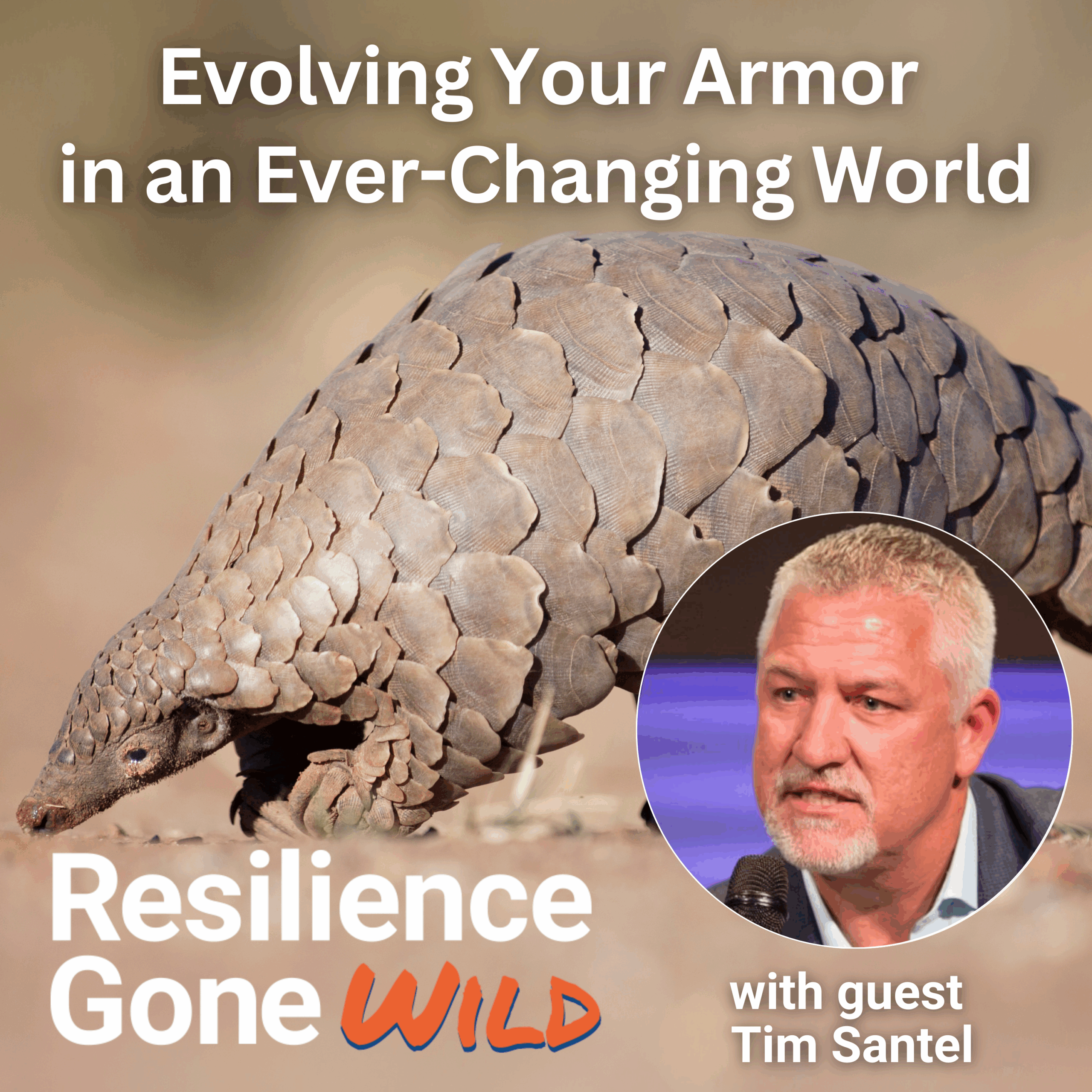
Evolving Your Armor in an Ever-Changing World: What Pangolins Teach Us About Updating Protection and Accepting Help
Guest: Tim Santel, Retired Special Agent in Charge (SAC), U.S. Fish & Wildlife Service Office of Law Enforcement; Senior Advisor & Media Relations Director, Focused Conservation
What if the very thing that once protected you… is the thing that’s now keeping you stuck? And what happens when the world changes faster than your instincts can?
In this episode of Resilience Gone Wild, host Jessica Morgenthal takes us into the moonlit grasslands of Botswana, following the quiet, deliberate life of the pangolin—a living fossil with nature’s most powerful mammal armor. For more than 60 million years, the pangolin’s perfect defense was simple: curl into an unbreakable ball and wait out danger.
Then humans changed the rules.
Today, pangolins are the most trafficked mammals on Earth. Their scales—made of keratin, the same material as human nails and hair—are sold under false claims of medicinal power, and their meat is treated as a luxury. In a single human generation, the pangolin’s ancient protection became its vulnerability.
Jessica pairs this story with a gripping, grounded interview with Tim Santel, one of the most experienced wildlife trafficking investigators in U.S. history. Tim takes us inside the real-world mechanics of trafficking networks—how wildlife is moved like any other commodity, and why weak penalties and low enforcement capacity make illegal wildlife trade so attractive to criminal syndicates.
The resilience lesson is both tender and urgent: we all carry armor built for earlier seasons of life. Some of it still protects. Some of it now constricts. And sometimes resilience means doing the opposite of what we’ve always done—opening instead of closing, seeking new protection instead of relying only on the familiar.
Episode Overview
The episode opens in Botswana, tracing a pangolin’s sensory world—smell, vibration, memory, instinct—and the intelligence of a creature shaped by time. We learn how pangolins live, how they nurture their young, how they “read” the land, and how their scales evolved into the most formidable natural armor carried by any mammal.
Then the story turns: when human trafficking enters the ecosystem, the pangolin’s perfect curl—once a masterpiece—becomes an easy handle for capture and transport. Jessica reframes this as a human mirror: the coping strategies we built to survive earlier threats may not match the threats we face now.
Jessica welcomes Tim Santel to explore what it takes to protect species whose defenses can’t keep up with rapidly evolving human systems. Tim shares his path into wildlife law enforcement, the “voice for wildlife” moment that guided his career, and what he’s learned from decades of investigations into trafficking networks—from pangolin scales to rhino horns and beyond.
The episode closes with two practical reflection practices to help listeners reassess their own protections, and a call to action to support conservation organizations and on-the-ground enforcement efforts working to keep pangolins—and countless other species—from disappearing.
What You’ll Learn
Why the pangolin’s greatest protection became its greatest vulnerability in a human-shaped world
How “armor” shows up in our lives (withdrawing, micromanaging, bracing, overworking) and when it stops serving us
What global wildlife trafficking networks have in common with other criminal trades—and why wildlife is so profitable
The real cost of treating living beings as commodities
Why awareness alone isn’t enough—and why frontline teams matter
How to update your internal protections with intention, clarity, and courage
Two practices for examining what still protects you… and what now constricts you
How attention becomes action—and why action becomes hope
Episode Highlights
[00:00] A moonlit pangolin in Botswana—and the question of protection
[02:17] “A new season is opening…” and why this story feels personal
[02:45] Pangolins as living fossils: lineage, mothering, and the world of scent
[05:11] Intelligence as awareness: tremors, heat, memory maps, and escape artistry
[07:34] The quiet architecture of termite mounds—and the pangolin’s role in soil health
[10:01] When humans arrive: trafficking, false beliefs, and endangered collapse
[12:22] The resilience lesson: protections that once served us can later constrict us
[14:58] Welcome Tim Santel: protecting species that can’t protect themselves
[30:48] “When wildlife dies, it doesn’t make a sound…”
[39:39] Why wildlife trafficking is low risk, high profit—and the convergence of criminal networks
[45:46] Pangolins: docile, ancient, and tragically easy to capture
[48:16] The scale of the trade: what thousands of kilos really means
[50:06] Operation Crash: how value multiplies through trafficking layers
[55:41] What helps most: supporting the frontline, not just online opinions
[01:01:47] Closing reflections: two practices to update your protections—and how to help pangolins now
Meet the Guest
Tim Santel is a passionate, results-driven conservation professional with more than 32 years of experience leading some of the most significant criminal investigations into illegal wildlife trafficking in U.S. history. As the retired Special Agent in Charge (SAC) of the Special Investigations Unit for the U.S. Fish & Wildlife Service Office of Law Enforcement, Tim led elite investigative teams combating global wildlife trafficking and transnational organized crime—protecting some of the world’s most endangered species.
Today, Tim continues that work as a Senior Advisor and Media Relations Director with Focused Conservation, supporting wildlife crime units across Africa and strengthening real enforcement capacity on the ground.
Tools, Frameworks, or Strategies Mentioned
The Pangolin Mirror: noticing when old protections no longer match current threats
Update Your Armor Practice #1: revisit one old protection and ask what danger it once served
Update Your Armor Practice #2: identify a new threat and name a new protection
“Attention → Care → Action” as a resilience pathway
Conservation and enforcement capacity-building as collective resilience in action
Closing Insight & CTA
“Sometimes resilience means opening instead of closing.”
If today’s episode opened something in you—clarity, tenderness, courage, or a new willingness to reassess your own armor—please follow, rate, and review Resilience Gone Wild. And share this episode with someone who might need permission to evolve their protections too.
Resource Links
Named in the episode for saving pangolins:
Focused Conservation – https://focusedconservation.org
Tim’s blog post on pangolin rescue: https://focusedconservation.org/2025/12/09/operation-holy-night-rescuing-pangolins-and-disrupting-trafficking-networks-in-nigeria/
U.S. Fish & Wildlife Service – https://www.fws.gov
Pangolin Crisis Fund (PCF) – pangolincrisisfund.org
World Wildlife Fund (WWF) – worldwildlife.org
Save Pangolins: savepangolins.org
Other organizations working to save pangolins:
Wildlife Crime Prevention (WCP): https://www.wildlifecrimeprevention.com/pangolin-project/
Short film: A Love Like Ours is Rare: youtube.com/watch?v=tA67uPrU440
Film: Kulu’s Journey: discoverwildlife.com/tv/how-to-watch-pangolin-kulus-journey
Wildlife Conservation Society (WCS): wcs.org
Pangolin Conservation and Research Foundation (PCRF): pangolincrf.org
David Shepherd Wildlife Foundation (DSWF): davidshepherd.org/species/pangolins/how-we-help/
Resilience Gone Wild – ResilienceGoneWild.com
Listen to more episodes – pod.link/1765376951
Produced by Balancing Life’s Issues (BLI Studios): balancinglifesissues.com/podcast-bli/

Episode 66
Guest: Daniel J. Cox, Award-Winning Wildlife Photographer and Director of The Arctic Documentary Project for Polar Bears International
What if resilience during the holidays and shifting seasons isn’t about just holding everything together? How much better would it be to meet each moment and each challenge with calm and ease?
In this episode of Resilience Gone Wild, host Jessica Morgenthal returns to one of her most beloved animals — the polar bear — to explore a resilience mindset that feels especially grounding this time of year. As many of us move through holidays, shifting routines, emotional complexity, and the turning of the year, the polar bear offers a powerful model for meeting change with steadiness rather than strain.
Through immersive storytelling and a deeply thoughtful conversation with legendary wildlife photographer Daniel J. Cox, we explore how polar bears adapt to a world that never stops moving — and what their wisdom can teach us about living with more presence, patience, and trust.
This episode introduces the FLOE Mindset: Flexibility Letting go Observation Energy conservation
A resilience tool inspired directly by how polar bears survive and thrive on constantly shifting ice. FLOE is both a metaphor and an acronym — a reminder that life keeps moving beneath us, and we can move with it.
Episode Overview
The episode opens on the Arctic ice, where Jessica revisits the story of a polar bear mother navigating a landscape that is always in motion. Her calm, strategic adaptability becomes the foundation for the FLOE Mindset — a way of meeting uncertainty that feels especially meaningful during the holiday season and the transition into a new year.
Jessica then welcomes wildlife photographer Daniel J. Cox, whose decades of documenting polar bears and Arctic ecosystems have shaped how millions of people understand these animals. Through Dan’s stories, we explore the discipline of waiting, the humility of stepping out of the frame, the ethics of witnessing, and the awe that emerges when we stop pushing and start paying attention.
The episode closes with a reflection on practicing FLOE in daily life — slowing down, conserving energy, making small adjustments, and choosing gentler transitions. It also includes a call to support the conservation efforts that allow polar bears to survive the rapidly changing Arctic.
What You’ll Learn
• The FLOE Mindset: Flexibility, Letting Go, Observation, Energy Conservation • Why polar bears are masters of calm, strategic adaptation • How patience and presence guide both resilience and wildlife photography • Why attention determines what we protect • How to soften seasonal transitions and holiday pressures with practical micro-adaptations • How awe strengthens clarity, steadiness, and connection • What polar bears reveal about navigating a world where conditions can change overnight • Why protecting polar bears is a crucial part of protecting resilience in nature
Episode Highlights
[00:00] Intro: shifting seasons, the holidays, and returning to a favorite resilience story [02:00] The polar bear as a master of adaptation [06:50] Stillness, waiting, and energy conservation in the den [08:30] Introducing Daniel J. Cox — awe, patience, and presence [10:00] The Arctic in real time: warming, loss of ice, and what Dan is witnessing [13:00] Seeing through an animal’s eyes: humility and respect [16:45] Dan’s origin story: the deer, the challenge, and the first spark [20:00] Ethical storytelling: why disappearing from the narrative matters [22:40] Why animals always lose when humans push too far [33:00] Sea ice, seals, and the entire Arctic food system [45:40] Inside the den: what most people never see [56:42] Dan’s closing wisdom: stay, watch, witness [58:00] Jessica’s FLOE reflections for holidays, transitions, and new beginnings

Episode 65
Awakening Our Soulful Intelligence: What the Octopus — and Sy Montgomery — Know
Guest: Sy Montgomery, author of The Soul of an Octopus
What if resilience doesn’t come from thinking harder or pushing faster, but from listening more deeply to the intelligence that already lives within us?
In this episode of Resilience Gone Wild, host Jessica Morgenthal explores the quiet, embodied wisdom of the giant Pacific octopus—and how soulful intelligence can help us navigate our own lives with more clarity, connection, and compassion. Joined by Sy Montgomery, bestselling author of The Soul of an Octopus, we step into a world where intelligence is fluid, intuitive, relational, and alive in every moment.
Episode Overview
In “Soulful Intelligence,” Jessica takes us into the cool stillness of a Northern Pacific kelp forest to meet the giant Pacific octopus—an animal whose distributed, sensory-rich intelligence reveals a different way of knowing the world. Through vivid storytelling, we witness how octopuses perceive, choose, communicate, and relate with a depth that challenges human assumptions about consciousness.
This exploration becomes the foundation for a rich conversation with Sy Montgomery, who expands our understanding of soul, presence, and cross-species connection. Through Sy’s stories—of octopuses, dolphins, turtles, caterpillars, dogs, and the living Earth itself—we learn how soulful intelligence deepens resilience, awakens awe, and invites us into a more relational way of being.
The result is an episode that reconnects us to our own inner wisdom, to the creatures who share our planet, and to the subtle intelligence that thrives everywhere life is paying attention.
What You’ll Learn
How the giant Pacific octopus models soulful intelligence through presence, perception, and attunement
Why soulful intelligence integrates mind, body, intuition, values, and relationships
How slowing down expands our ability to sense meaning and choose wisely
What Sy Montgomery has learned about consciousness and soul from octopuses, turtles, pink dolphins, chimps, and caterpillars
Why love and curiosity are powerful tools of inquiry in science and in life
How awe, reverence, and “beginner’s mind” build resilience and restore connection
How small acts of mending—of relationships, ecosystems, and daily choices—strengthen both the world and our own internal steadiness
Episode Highlights
[00:00] Intro
[02:00] Distributed intelligence: sensing, learning, and decision-making across the body
[04:00] Camouflage as expression: color, texture, emotion, and attunement
[06:50] A quiet greeting: two octopuses meet with curiosity
[08:50] Defining soulful intelligence
[11:15] Why soulful intelligence strengthens resilience
Conversation with Sy Montgomery
[12:21] Welcoming Sy: the writer who opened the world to octopus consciousness
[14:00] Sy’s octopus teachers: Athena, Octavia, Kali, and Karma
[16:10] Soul as connection to the rest of creation
[18:25] Why naming animals changed the science of behavior
[22:39] Jane Goodall, Dian Fossey, Biruté Galdikas, and the revolution of relational science
[27:07] Scar tissue, resilience, and the sacredness of mending
[33:01] The living Earth, Gaia, and the soul of the planet
[35:06] Awe, reverence, and the responsibility of connection
[37:36] Mending as antidote to helplessness
[49:20] How humans silence their own intuition—and how to restore it
[53:49] Being massaged by pink dolphins: a story of cross-species soul
[56:42] The feedback loop of doing good
[59:16] Caterpillars, memory, and the persistence of soul
[01:02:10] Closing reflections: the intelligence that waits beneath our first thoughts
Meet the Guest
Sy Montgomery is a naturalist, bestselling author, and one of the world’s most beloved interpreters of animal consciousness. Her book The Soul of an Octopus was on the New York Times Bestseller List, was a National Book Award finalist, and reshaped public understanding of invertebrate sentience. Sy has written 39 books about animals—from hawks to pink dolphins to turtles—illuminating the relationships that remind us we are part of a living, soulful, interconnected world. Her work invites readers to listen more deeply, love more broadly, and honor the wisdom that exists beyond human boundaries.
Tools, Frameworks, or Strategies Mentioned
Soulful Intelligence: alignment of values, intuition, sensation, and meaning
Distributed Intelligence in Octopuses
Beginner’s Mind in cross-species connection
Awe as a tool for resilience
Mending as a daily practice of healing
The Sphere of Influence: acting where energy can truly make a difference
Gaian consciousness and interconnected living systems
Closing Insight & CTA
“Soulful intelligence grows in the space between stimulus and response—the pause long enough for our deeper knowing to rise.”
If this episode opened something in you, share it with someone who may be searching for more meaning, more connection, or a more soulful way of navigating their life. Follow, rate, and review Resilience Gone Wild to help these stories ripple outward.
Resource Links
Sy Montgomery – https://symontgomery.com/
The Soul of an Octopus – Available wherever books are sold
Resilience Gone Wild – https://resiliencegonewild.com/
Listen to more episodes – https://pod.link/J4yd77
Produced by: Balancing Life’s Issues (BLI Studios) – https://balancinglifesissues.com/podcast-bli/
the whisper of light through kelp, the subtle information carried by the water itself. Her world is built from details we often rush past, and her wisdom rises from a kind of quiet listening that begins long before action. And that’s where today’s story begins. In a place where intelligence doesn’t rush, it simply breathes. Where awareness flows through every part of the body. Where a creature teaches us something humans often forget.
that there is a deeper way to know the world and a deeper way to know ourselves. I’m Jessica Morgenthau, and this is Resilience Gone Wild, where we explore how nature’s quiet brilliance can help us care more deeply for ourselves, for each other, and for the wild world we all share. Today, we’re stepping gently into the world of the giant Pacific octopus to explore soulful intelligence.
Transcript:
Speaker 1 (00:03.758)Inside the cool stillness of a rocky den in the Northern Pacific, something extraordinary is happening. Quietly, slowly, almost invisibly. A being waits here, not in fear, not in hiding. She is intentional, attuned, present. If you pause long enough, you can almost sense what she senses. The faint shift of a current.
a form of inner wisdom that can strengthen our resilience in ways that reconnect us to what matters most.
Speaker 1 (01:35.662)The afternoon light softens as it filters down through the kelp forest, turning the water into a slow-moving tapestry of greens and golds. This is her place, a quiet stretch of the Northern Pacific where cold, oxygen-rich water, drifting kelp shadows, and deep rock crevices create the perfect refuge for a giant Pacific octopus.
Speaker 1 (02:02.306)Beneath the basalt ledge, she rests, eight arms loosely folded, mantle rising and falling as water moves across her gills. Her siphon makes a faint pulse with each exhale. Two dark, forward-facing eyes, shaped much like our own, watch the flicker of shifting light. From a distance, she seems still. Up close, she is quietly awake. Her world is built from subtle information.
Tiny shifts in current, faint chemical traces, the pressure wave of something moving nearby. Nearly 2,000 suckers line her arms, each able to taste and feel at the same time. Her arms, each containing clusters of neurons, make small decisions right where sensation happens, while her central brain integrates everything into something more. Judgment, learning, interpretation.
Scientists understand much of how she senses her world, and they’re increasingly recognizing something else in her behavior too, a thoughtful awareness that goes beyond simple reflex. There is a soulful intelligence in the way she pauses, senses, and responds, as if each moment carries meanings that rise from more than her senses alone. She slips an arm out of her den, then a second, then a third. Each moves with unhurried purpose, curling over a rock,
through crevices, along sand. Giant Pacific octopuses grow astonishingly fast, from hatchlings the size of grains of rice to powerful adults in just a few years. And the only way to manage a life like that is to learn constantly. Where food hides, what patterns matter, how currents carry clues. A crab scrapes faintly across stone. She tastes its chemical signature in the water before she ever sees it. Her eyes narrow slightly.
adjusting to the murky green light. Two arms flow outward with practice coordination. A smooth capture. Her beak, hidden beneath the soft web of her arms, makes quick, precise work of the shell. When she’s done, she uses her siphon to blow the empty fragments out of her den in a neat scatter, a kind of housekeeping that keeps her space clear. Above her, the kelp forest sways. Small fish thread through the fronds. Sunlight flickers in the patterns she has learned to read.
Speaker 1 (04:27.49)Her skin shifts to match the moment, the mottled brown of stone, the softened pattern of kelp shadow. Chromatophores contract and expand beneath her skin, altering color in milliseconds, while tiny muscles raise or smooth her texture to mirror the rocks around her. Camouflage is not only concealment, it’s a way of showing her state, calm, alert, curious, content. There are nearly 300 species of octopus.
Caribbean reef octopuses, common octopuses, tiny pygmy species, drifting Dumbo octopuses, and the giant Pacific octopus, the largest of all, stands apart.
Episode 64
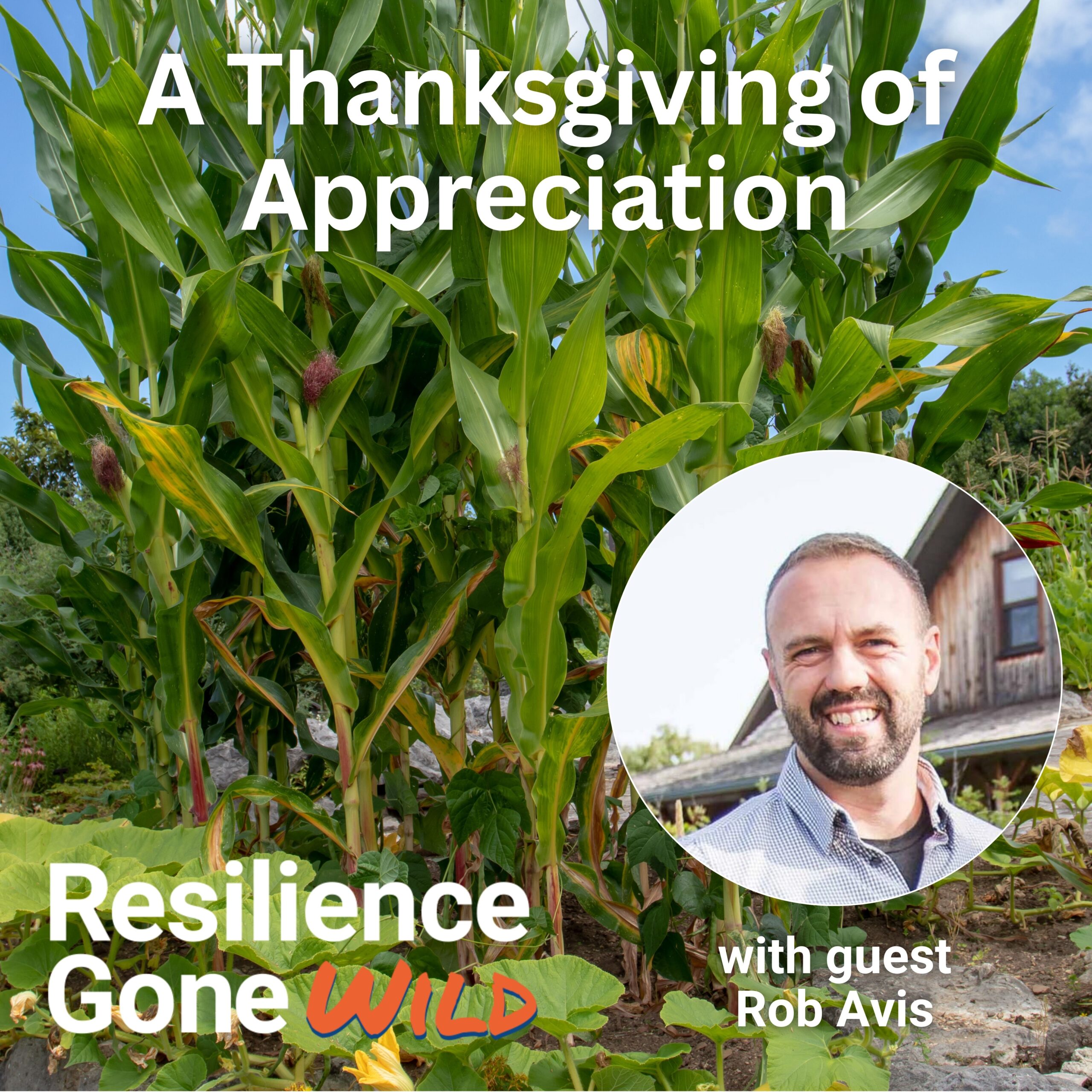
A Thanksgiving of Appreciation: Resilience Takes Root When We Honor One Another
In this Thanksgiving episode of Resilience Gone Wild, Jessica Morgenthal explores the ancient ecological wisdom of the Three Sisters—corn, beans, and squash—and how their centuries-old partnership reveals a living model of regeneration, cooperation, and shared strength. Through immersive storytelling and a powerful conversation with regenerative systems expert Rob Avis, this episode shows how appreciation circulates energy through people, communities, and ecosystems, transforming gratitude into something active, connective, and life-giving.
What if Thanksgiving is really an invitation to let our giving nourish the world that nourishes us?
What You’ll Learn
How the Three Sisters model interdependence, ecological intelligence, generosity, mutual support, and shared abundance
How appreciation is more active, expansive, connective, and outward-moving than gratitude
How energy follows attention, and how what we pay attention to shapes our path
The difference between the sphere of influence and the sphere of concern, and why it matters
How regenerative systems allow energy to flow outward, strengthening community
How regenerative agriculture and Indigenous farming practices reveal long-term resilience
How sensory awareness, humility, and awe reconnect us to the living world
How small, intentional actions create large, positive ripples across systems and generations
How regenerative agriculture echoes the ancient teaching of giving back more than we take
Episode Overview
In this special holiday episode, Jessica guides listeners from a glowing Thanksgiving table into the quiet beauty of a November garden. There, the Three Sisters—corn, beans, and squash—become teachers of partnership, reciprocity, and ecological resilience. Their intertwined lives show how appreciation keeps energy flowing through the whole system.
Jessica then speaks with Rob Avis, engineer, regenerative designer, and Co-Founder of Fifth World. Rob’s journey from the oil and gas industry to regenerative land restoration reflects the core message of this episode: appreciation is energy in motion. He shares insights about how attention shapes reality, why our sphere of influence matters more than our sphere of concern, and how regeneration begins with humility and intention.
The result is a Thanksgiving episode rooted in warmth, wisdom, and renewal—an invitation to shift from gratitude to appreciation, and to let our giving nourish the world that nourishes us.
Episode Highlights / Timestamps
[00:00] Act 1 – A Thanksgiving Table and the Meaning of Appreciation [05:00] Act 2 – The Story of the Three Sisters: Corn, Beans, and Squash [14:40] Act 3 – The Resilience Lesson: Gratitude vs. Appreciation [22:00] Act 4 – Interview with Rob Avis: From Extraction to Regeneration [22:30] Attention as Energy: The Canoe Metaphor [24:30] Sphere of Influence vs. Sphere of Concern [28:00] Quorum Sensing, Biodiversity, and Indigenous Farming Wisdom [33:00] Regenerative Design and Humility [38:00] Why Small Actions Create Expansive Ripples [43:00] Sensory Awareness and Reconnecting with the Real World [48:00] Enlightened Self-Interest and the Win-Win-Win [54:00] Act 5 – Closing Narrative: Letting Appreciation Circulate
Meet the Guest: Rob Avis
Rob Avis is a regenerative systems engineer, educator, and designer. He began his career in the oil and gas industry and later shifted toward ecological restoration, resilience engineering, and land-based systems design. As Co-Founder and Chief Engineering Officer at Fifth World, Rob helps individuals and communities create regenerative water, food, land, and energy systems that give more than they take. His work blends engineering precision with ecological humility, inviting people to see regeneration as both practical and profoundly human.
Tools, Concepts, and Frameworks Mentioned
The Three Paradigms: Extraction, Sustainability, Regeneration
Sphere of Influence vs. Sphere of Concern
Attention as Energy (The Canoe Metaphor)
Quorum Sensing and Multispecies Plant Communities
Regenerative Agriculture and Permaculture Principles
The Three Sisters Model as Cooperation and Mutual Support
Seven-Generation Thinking and Indigenous Ecological Knowledge
Practice: Try This Today
A few gentle ways to strengthen your appreciation muscle:
Speak appreciation aloud with specifics. Name what you see in others that is generous, skillful, wise, or steadying.
Notice and record it. Keep a brief note of moments when someone lifted the energy in a room or made life easier.
Re-sensitize yourself. Step outside for two minutes. Feel the air. Listen. Touch the ground. Let awe reopen your channel for appreciation.
Slow down and name the invisible helpers. The soil, the growers, the pollinators, the microbial worlds, and the human hands behind every meal.
You can find Jessica’s short, guided videos for these practices at ResilienceGoneWild.com and our YouTube channel. Appreciation is energy in motion. When it flows, everyone in the circle grows stronger.
Closing Insight & Call to Action
“Gratitude restores our balance. Appreciation restores the balance of the whole.”
This Thanksgiving episode is an invitation to let appreciation move through you—expansive, outward, and alive.
If this episode resonated, share it with someone who may be ready to shift from gratitude to appreciation and reconnect with the deeper rhythms of giving and receiving.
Resource Links
Learn more about Rob Avis: https://vergepermaculture.ca/meet-our-team/
Explore Fifth World: https://vergepermaculture.ca/
Connect with Jessica: Jessica@resiliencegonewild.com
Listen to more episodes: https://pod.link/J4yd77 and ResilienceGoneWild.com
Produced by: Balancing Life’s Issues (BLI Studios) – https://balancinglifesissues.com/podcast-bli/
Episode 63
What can centuries-old grapevines teach us about resilience, wisdom, and the art of letting go?
In this episode, host Jessica Morgenthal explores how the vineyards of northern Portugal—and the global network of winemakers in The Porto Protocol—reveal timeless lessons about connection, growth, and renewal. Beneath the science of soil and sustainability lies something deeper: a quiet intelligence passed down through nature and community alike.
Episode Overview
In “Lessons from the Wisdom of the Vines,” Jessica weaves narrative and reflection to uncover how vineyards mirror the rhythms of human life—growth, rest, and transformation. Through her conversation with Marta Mendonça, leader of The Porto Protocol, we learn how wisdom lives not in isolation but in connection: between generations, between the roots and the rain, and between people who choose to share what they know.
Marta invites us to see resilience not as endurance but as renewal—to understand that strength begins in what we choose to release. Through the stories of growers, soils, and communities learning together, this episode asks what it means to listen to the lessons nature has been offering all along.
What You’ll Learn
How pruning becomes a living metaphor for resilience, purpose, and letting go.
Why shared wisdom builds stronger systems—ecological and human.
The enduring relationship between tradition and transformation.
What nature’s timing teaches about patience and presence.
How wisdom multiplies when passed from generation to generation.
Why resilience begins with the courage to restore, not just to sustain.
Episode Highlights
[00:00] The Living Memory of the Vine — Nature’s Quiet Resilience
[01:31] The Voice of the Vineyard — Learning from Growth and Rest
[06:40] The Art of Pruning — Letting Go to Grow Stronger
[09:48] Introducing Marta Mendonça and The Porto Protocol
[13:45] From Tradition to Shared Wisdom
[17:00] Listening to Water — Nature as Teacher
[22:50] Restoration in Action — Innovative and Regenerative Practices
[26:20] Stories of Renewal — Learning from the Land
[29:48] Beyond Sustainability — The Meaning of Resilience
[32:31] Closing Reflections — Wisdom Shared, Wisdom Multiplied
Meet the Guest
Marta Mendonça leads The Porto Protocol Foundation, a global network uniting more than 250 vineyards and wine industry partners in the pursuit of climate action through collaboration and shared wisdom. Founded in Portugal with support from Taylor’s Port and launched alongside world leaders like Barack Obama and Al Gore, the organization embodies the belief that we grow stronger—not by competing—but by learning together.
Tools, Frameworks, or Strategies Mentioned
The Porto Protocol’s Core Principles – “Every solution counts, and every action matters.”
Collaborative Knowledge Networks – Building global communities of learning and exchange.
Regenerative Viticulture – Restoring soil health and deepening connection to nature.
The Practice of Pruning – Applying nature’s rhythm of renewal to leadership and life.
Closing Insight & CTA
“Wisdom isn’t what we keep—it’s what we pass on. Resilience begins when we listen, learn, and let go of what no longer serves.”
Listen now and reflect on how wisdom grows when it’s shared.
Visit https://resiliencegonewild.com to explore more stories that remind us: when nature wins, we win.
Resource Links
Learn more about The Porto Protocol: https://www.portoprotocol.com/
Connect with Jessica: https://winwinwinmindset.com/
Subscribe to Resilience Gone Wild: https://pod.link/J4yd77
Produced by: Balancing Life’s Issues (BLI Studios) – https://balancinglifesissues.com/podcast–bli/ Music from Uppbeat https://uppbeat.io/t/arnito/des–gouttes License code: 0GNJHICLKJJ9UXY8

From Ick to Wow: How Worms and Composting Teach Resilience
Episode 62
What if the things we label “icky”: decay, dirt, discomfort, are actually where transformation begins?
In this thought-provoking episode, Resilience Gone Wild host Jessica Morgenthal sits down with Tim Steckel, founder of The Compost Marketing Agency, to explore the hidden brilliance of composting as a metaphor for personal and ecological renewal. From the red wiggler’s quiet labor to the microbial symphony beneath our feet, this episode redefines how curiosity, not control, fuels real resilience, in soil, systems, and self.
What You’ll Learn:
Why curiosity is the catalyst for resilience, and how it transforms fear into fascination.
The biological magic behind composting: microbes, fungi, and the soil food web.
How to move from “ick” to “wow” by shifting perception from avoidance to awe.
Practical ways composting teaches sustainable habits for mind, body, and planet.
How the unseen world of decomposition mirrors our own cycles of growth and renewal.
Episode Highlights:
00:00 – The Halloween connection: composting as nature’s “witch’s brew.”
12:18 – From “ick” to “wow”: transforming fear into fascination through curiosity.
14:21 – Tim’s journey from marketing to sustainability and the creation of The Compost Marketing Agency.
18:49 – The science and art of composting: what really happens inside a pile of decay.
34:27 – The microbial connection between soil health, gut health, and resilience.
40:06 – Composting as a metaphor for letting go, renewal, and collective healing.
Meet the Guest:
Tim Steckel is a sustainability advocate and marketing strategist who founded The Compost Marketing Agency, a niche firm devoted to making composting and organic recycling accessible and mainstream. His work connects the science of soil with the art of storytelling, helping cities, educators, and citizens reimagine waste as renewal.
Tools, Frameworks, & Concepts Mentioned:
The Soil Food Web: how bacteria, fungi, nematodes, and worms sustain ecosystems.
Vermicomposting: composting with red wigglers for faster, richer soil.
The “Ick to Wow” Mindset: shifting from avoidance to awe through curiosity.
Microbial Resilience: how microorganisms mirror human adaptability.
Closing Insight:
“The worm doesn’t panic in the dark, she senses, adjusts, and transforms what’s discarded into life. That’s resilience in action.”
Composting teaches us to stay with the mess long enough to see what’s emerging. When we do, decay becomes design, and every act of renewal begins with curiosity.
Connect with Tim Steckel: linkedin.com/in/steckeltim
Listen on Apple: https://podcasts.apple.com/us/podcast/resilience-gone-wild-winwinwin-mindset/id1765376951
Listen on Spotify: https://open.spotify.com/show/67dhrI6rX4o1hX0Qf2HPAU?si=24d3d984bf974eb9
Subscribe to our YouTube Channel: https://www.youtube.com/@ResilienceGoneWild
Website: https://resiliencegonewild.com
Facebook: https://www.facebook.com/profile.php?id=61565572327566
LinkedIn: https://www.linkedin.com/showcase/104957749/admin/dashboard/
Subscribe to our newsletter: https://mailchi.mp/resiliencegonewild/resilience-gone-wild-newsletter
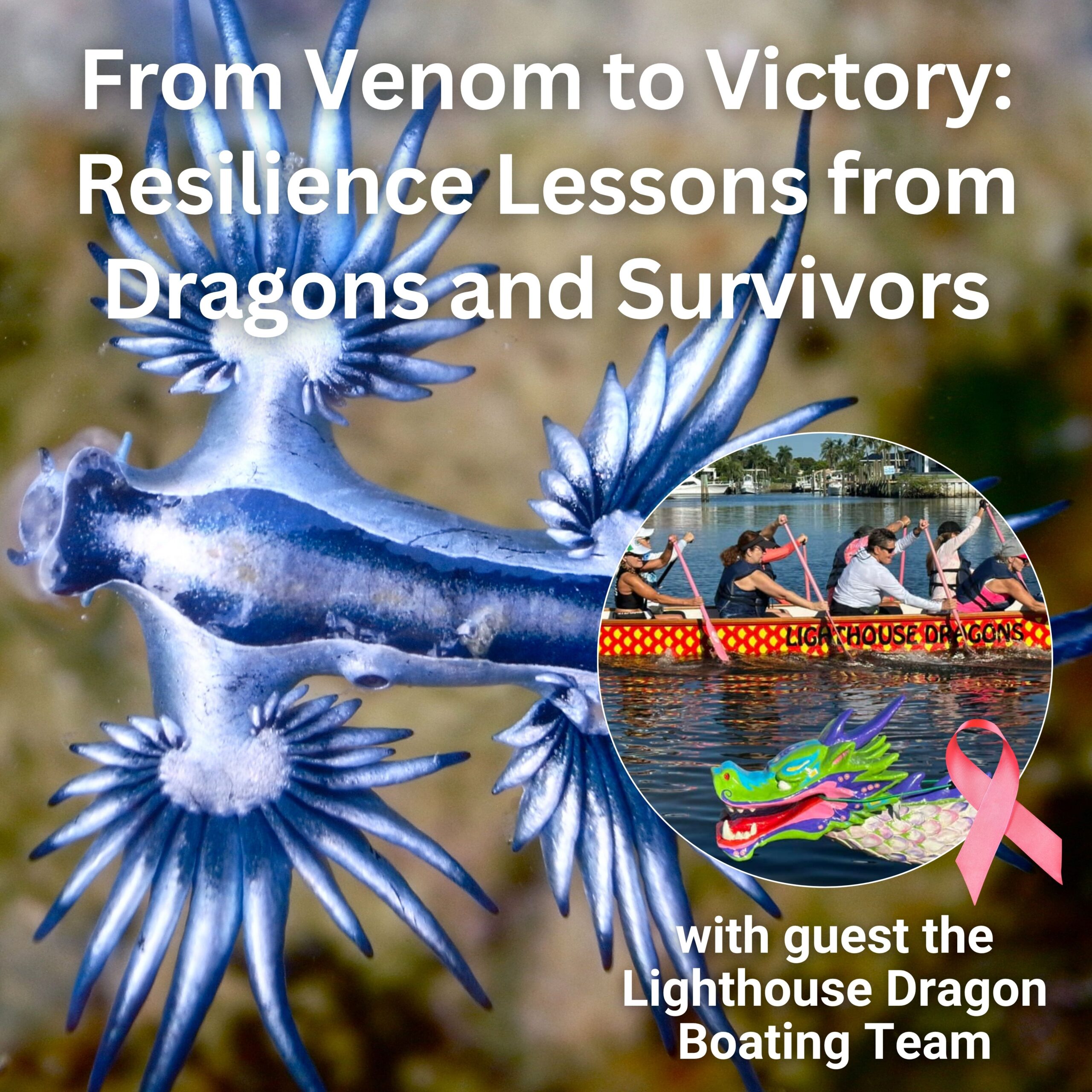
Resilience doesn’t always mean going it alone. In the Lighthouse Dragons, a Florida-based breast cancer survivor and supporter dragon boat team, strength is a shared current. Each stroke through the water reflects a truth found in nature: power grows when it’s given, not hoarded.
I joined the Lighthouse Dragons team after being invited by another supporter I met in Florida, a simple act of connection that changed my understanding of resilience. The Lighthouse Dragons are a community of grounded, team-oriented, and joyful people who embody what it means to show up for each other.
The experience inspired me to help raise visibility for breast cancer research and for the global dragon boating community, a worldwide movement where survivors and supporters paddle together in solidarity and strength.
Through parallels with the blue sea dragon, which transforms venom into protection, and the Long dragon of Chinese mythology, which channels storms into life-giving rain, this story reveals that real resilience is relational. It’s not found in isolation, it’s formed in connection.
Meet the Experts
The Lighthouse Dragons are a powerful example of functional resilience in action, a living, breathing ecosystem of support and renewal. As one of the team’s supporters, I’ve had the privilege of paddling alongside survivors who transform pain into purpose with every race.
Teammates like Pam, Betsy, and Joanne model what it means to be both strong and soft, resilient yet deeply connected. Together, we embody what I call collective flow: the rhythm of shared strength that moves us all forward.
The Big Idea
The great myth of resilience is that it’s built in isolation. But the truth, reflected in nature and in dragon boating, is that we are sustained by connection.
Like the blue sea dragon, which draws venom from others to fortify itself, we can transform adversity by engaging with our environment and community. And like the Long dragon, we can channel chaos into renewal when we move in harmony with others.
Resilience isn’t a solo pursuit. It’s a social ecosystem, one strengthened by empathy, rhythm, and reciprocity.
Key Takeaways
Connection Creates Strength: True resilience comes from being part of something larger than yourself.
Pain Becomes Purpose: Like the sea dragon, we can transform life’s toxins into tools for growth.
Community Is Medicine: Healing accelerates when we move in rhythm with others.
Nature Anchors Us: The water, sunlight, and sound of paddles keep us grounded and present.
Presence Is Power: Even when you can’t paddle, showing up keeps the team, and the heart, in motion.
Tools, Strategies, or Frameworks Mentioned
Functional Resilience Model: Resilience as a dynamic system connecting mind, body, and environment.
Group Flow Theory: Shared movement that enhances emotional well-being and synchrony.
Nature Anchoring: Using natural settings to restore nervous system balance.
Blue Sea Dragon Framework: Transforming challenge into protection through connection.
Final Thoughts
“You don’t have to do hard things alone.”
That’s the greatest lesson the dragons have taught me, both the mythical and the living kind.When we paddle together, our rhythm becomes our resilience.
By raising awareness for breast cancer research and supporting the visibility of dragon boating worldwide, I hope more people discover this truth: that healing happens in motion, and that the current always carries us farther when we move together.
Listen on Apple
Listen on Spotify
Subscribe to our YouTube Channel
Website
Facebook
LinkedIn
Subscribe to our newsletter
Step into the Amazon rainforest with environmental journalist Rhett Ayers Butler, founder of Mongabay, as he shares a lifetime of lessons about connection, resilience, and the hidden systems that sustain life.
This episode of Resilience Gone Wild blends vivid storytelling with science to reveal how the smallest sparks of awe, whether a frog’s call, a monkey’s leap, or a single seed, can ignite powerful change in both ecosystems and human communities.
What You’ll Learn:
How rainforest biodiversity regulates climate, stores carbon, and supports human health.
The origin story of Mongabay and how one child’s love for frogs grew into a global conservation network.
Why storytelling creates deeper engagement than data alone, and how emotional connection drives action.
Lessons from rainforest communities on balance, restraint, and interdependence.
Practical ways to apply systems thinking to daily choices, from the coffee you drink to the products you buy.
Episode Highlights:
02:35 – Immersive sensory journey through the Amazon rainforest’s hidden rhythms.
11:42 – Rhett’s childhood fascination with frogs sparks a lifelong mission for conservation.
19:58 – The founding of Mongabay and the power of digital storytelling to drive global impact.
27:16 – How a single investigative report in Gabon changed national policy on forest rights.
34:03 – Encounters with manta rays, orangutans, and other species that reveal animal intelligence and resilience.
40:25 – Soundscape science: using bioacoustics to measure ecosystem health and biodiversity.
44:10 – The resilience lesson, how small personal actions ripple outward like seeds in a rainforest.
Meet the Guest:
Rhett Ayers Butler is an award-winning environmental journalist and the founder of Mongabay, a leading platform for global conservation news. His work bridges science, storytelling, and community action to protect the world’s most threatened ecosystems.
Tools, Frameworks, or Strategies Mentioned:
Soundscape monitoring and bioacoustic analysis to track biodiversity.
Solutions journalism as a framework for inspiring action through hopeful narratives.
Community-driven conservation models that scale from local victories to global impact.
Closing Insight:
“Resilience grows when small sparks of wonder connect into something larger. Each story, each action, each choice becomes part of the living system that sustains us all.”
Connect with Rhett Ayers Butler: https://www.linkedin.com/in/rhettayersbutler/
Listen on Apple: https://podcasts.apple.com/us/podcast/resilience-gone-wild-winwinwin-mindset/id1765376951
Listen on Spotify: https://open.spotify.com/show/67dhrI6rX4o1hX0Qf2HPAU?si=24d3d984bf974eb9
Subscribe to our YouTube Channel: https://www.youtube.com/@ResilienceGoneWild
Website: https://resiliencegonewild.com
Facebook: https://www.facebook.com/profile.php?id=61565572327566
LinkedIn: https://www.linkedin.com/showcase/104957749/admin/dashboard/
Subscribe to our newsletter: https://mailchi.mp/resiliencegonewild/resilience-gone-wild-newsletter
What if screen time could become a bridge for curiosity instead of a battle at the dinner table?
In this episode, Rion Nakaya, creator of The Kid Should See This (TKSST), reveals how curated educational media can inspire children, parents, and educators to explore the world together. With over 7,000 handpicked videos, Rion shows how shared media experiences nurture trust, spark creativity, and build resilience across generations
What You’ll Learn:
Why co-viewing transforms screen time into a shared learning journey.
How curated video can foster curiosity, creativity, and critical thinking in children.
The importance of trust, attention, and storytelling in building healthy digital habits.
How metaphors like the “children’s menu” limit what kids consume—and why breaking that mold matters.
Practical ways to connect digital content with hands-on, real-world exploration.
Episode Highlights
02:48 – Why “The Kid Should See This” began with Ella Fitzgerald scat singing.
10:15 – Rethinking screen time: from restriction to shared curiosity.
19:02 – How co-viewing creates trust, connection, and a shared vocabulary.
28:37 – The power of factory and nature videos in sparking real-world exploration.
38:55 – On being the “mycelium” that connects experts, educators, and families.
49:22 – How children’s podcasts and storytelling expand attention spans and imagination.
58:47 – Modeling resilience through failure as learning.
01:05:10 – Future of TKSST: community, partnerships, and amplifying unseen voices.
Meet the Guest
Rion Nakaya is the award-winning founder of The Kid Should See This (TKSST), a curated library of over 7,000 educational videos that connect children and adults with science, art, nature, and curiosity. She is also a California Naturalist, storyteller, and digital curator committed to reshaping how families learn together.
Tools, Frameworks, or Strategies Mentioned:
Co-viewing framework: Watching videos together to create shared learning moments.
Living Library Model: A continuously updated archive of trusted educational resources.
Biomimicry & Design Thinking: Learning innovation from nature’s systems.
Resilience Through Failure: Using real-life stories to normalize mistakes as growth.
Closing Insight or CTA:
“We are not grownups, we’re the oldest kids. And learning together is what keeps us resilient.” – Rion Nakaya
Listen on Apple: https://podcasts.apple.com/us/podcast/resilience-gone-wild-winwinwin-mindset/id1765376951
Listen on Spotify: https://open.spotify.com/show/67dhrI6rX4o1hX0Qf2HPAU?si=24d3d984bf974eb9
Subscribe to our YouTube Channel: https://www.youtube.com/@ResilienceGoneWild
Website: https://resiliencegonewild.com
Facebook: https://www.facebook.com/profile.php?id=61565572327566
LinkedIn: https://www.linkedin.com/showcase/104957749/admin/dashboard/
Subscribe to our newsletter: https://mailchi.mp/resiliencegonewild/resilience-gone-wild-newsletter
Have you ever wondered how ancient forests teach us about resilience, connection, and care?
In this episode of Resilience Gone Wild, Jessica Morgenthal explores the hidden intelligence of mother trees, the oldest, strongest trees that sustain life around them through the “wood wide web.” With Mother’s Day as a backdrop, this story shows how nature’s quiet networks reveal timeless lessons about nurturing, legacy, and human resilience.
Listeners will discover how forests model sustainable systems, why unseen acts of care hold entire ecosystems together, and how small, intentional practices can deepen both personal and collective resilience.
What You’ll Learn:
The science behind the mother tree theory and the “wood wide web” of underground fungal networks.
Why resilience is not just bouncing back, but holding space and sustaining others with wisdom.
Practical nature-inspired frameworks like Root & Reach, Circle of Care Mapping, and Legacy Seeds for applying these lessons to daily life.
How old-growth forests stabilize climate, store carbon, and protect biodiversity, and why protecting them protects us.
Episode Highlights:
00:00 – What mother trees reveal about unseen resilience and care
03:12 – The “wood wide web”: how forests communicate and collaborate
06:40 – Why true resilience means conserving strength while nurturing others
10:25 – Nature-inspired tools for building sustainable care (Root & Reach, Circle of Care Mapping, Legacy Seeds)
14:18 – The urgency of protecting old-growth forests and their role in climate resilience
17:10 – A call to honor the quiet nurturers in our lives and communities
Tools, Frameworks, or Strategies Mentioned:
Root & Reach: Aligning personal grounding with intentional acts of care.
Circle of Care Mapping: Visualizing layers of relationships and identifying where small actions can ripple.
Legacy Seeds: Planting values, habits, or practices today that strengthen tomorrow’s systems.
Closing Insight:
“Resilience doesn’t always roar. Sometimes it’s the quiet strength that holds everything together, just like the mother trees.”
Honor the unseen nurturers in your life and explore how intentional care can build stronger systems for people, purpose, and planet.
Listen on Apple: https://podcasts.apple.com/us/podcast/resilience-gone-wild-winwinwin-mindset/id1765376951
Listen on Spotify: https://open.spotify.com/show/67dhrI6rX4o1hX0Qf2HPAU?si=24d3d984bf974eb9
Subscribe to our YouTube Channel: https://www.youtube.com/@ResilienceGoneWild
Website: https://resiliencegonewild.com
Facebook: https://www.facebook.com/profile.php?id=61565572327566
LinkedIn: https://www.linkedin.com/showcase/104957749/admin/dashboard/
Subscribe to our newsletter: https://mailchi.mp/resiliencegonewild/resilience-gone-wild-newsletter
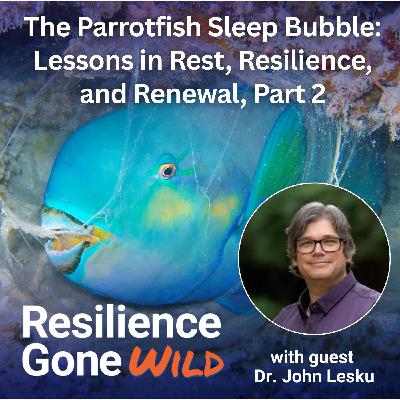
In part 2 of our episode on the extraordinary parrotfish, Jessica and Kai take a deeper look at the parrotfish’s remarkable sleep bubble and its metaphor for resilience.
Along with guest Dr. John Lesku, they uncover how animal sleep patterns, from parrotfish to magpies, reveal hidden lessons for human well-being, environmental adaptation, and the neuroscience of rest.
This conversation connects marine biology, positive psychology, and practical strategies for creating your own “protective bubble” in times of stress, showing why sleep is not just rest, but a foundation for resilience and thriving.
What You’ll Learn:
Why the parrotfish’s “sleep bubble” offers a model for building resilience in stressful environments
The neuroscience behind sleep and how it resets the brain for learning and creativity
How light pollution, noise, and even pharmaceuticals in waterways impact animal and human sleep
Practical strategies for better sleep hygiene, removing distractions, setting boundaries, and creating conditions for recovery
Insights into the resilience of wildlife in urban ecosystems and what that means for human adaptation
Episode Highlights:
02:41 – The parrotfish bubble as a resilience metaphor for protecting sleep
08:15 – Why society undervalues sleep and the hidden costs of sleep deprivation
15:02 – The neuroscience of synapses, memory, and learning during sleep
22:40 – How pollution, light, sound, and psychoactive chemicals disrupt wildlife sleep
31:28 – Why magpies and other birds reveal surprising sleep adaptations
39:12 – Do jellyfish and brainless creatures actually sleep? The answer may surprise you
46:57 – Extreme cases: penguins with 10,000 micro-sleeps and sandpipers thriving with near-total deprivation
55:10 – Final reflections: what humans can learn from the diversity of animal sleep
Meet The Guest:
Dr. John Lesku is a zoologist and a leading expert in animal sleep at La Trobe University, Australia. His research spans species from jellyfish to birds and mammals, uncovering how sleep evolves, adapts, and shapes resilience across ecosystems.
Tools, Frameworks, or Strategies Mentioned:
The Sleep Bubble Framework – inspired by parrotfish, a metaphor for setting boundaries and protecting rest
Sleep Hygiene Protocols – consistent bedtime routines, limiting caffeine, reducing blue light exposure
Somnozoology – an emerging field studying sleep across the animal kingdom
Closing Insight:
“By extending your waking day by eight hours, your capacity drops to the level of someone legally drunk. Sleep isn’t weakness, it’s resilience in action.”
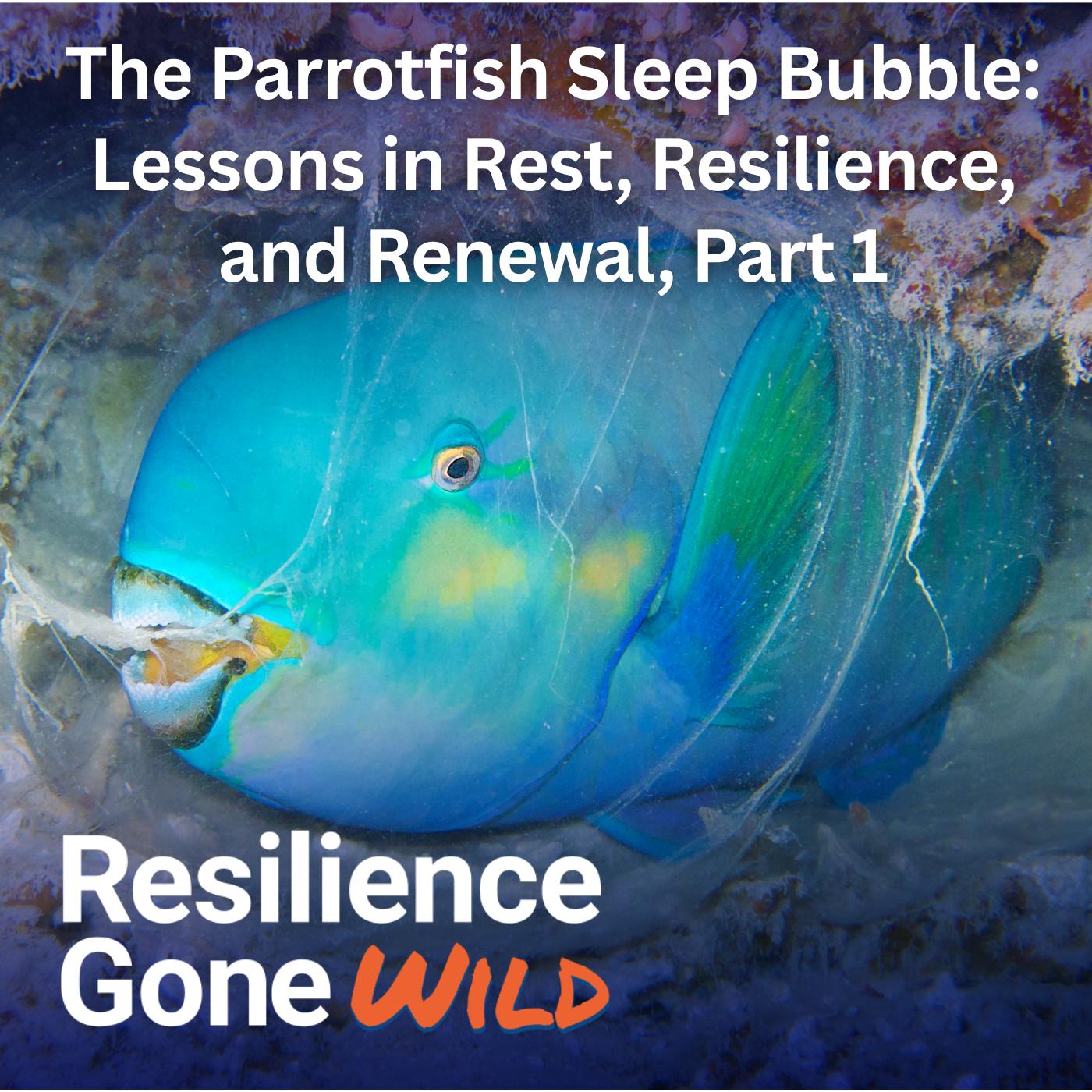
What can a parrotfish’s nighttime bubble teach us about resilience, health, and rest?
In this episode of Resilience Gone Wild, Jessica Morgenthal explores how nature’s most unusual sleep strategies, like the parrotfish’s mucus cocoon, offer profound lessons for humans on stress management, brain health, and creating protective boundaries. Listeners will walk away with practical insights for building their own “sleep bubble” to restore balance and thrive.
What You’ll Learn:
Why parrotfish build protective “sleep cocoons” and what this reveals about resilience
Four critical reasons sleep is non-negotiable for brain, body, and emotional health
How to identify “sleep predators” (external disruptions) and “sleep parasites” (internal worries)
Simple, science-backed tools for creating a healthy nighttime routine
The surprising links between ocean conservation, resilience, and human flourishing
Episode Highlights:
00:00 – Why parrotfish and their sleep bubble matter for resilience
03:10 – How the mucus cocoon protects against parasites, predators, and infection
06:25 – Four essential reasons humans need restorative sleep for resilience
09:40 – “Sleep predators” vs. “sleep parasites”: identifying external and internal disruptors
13:05 – Practical tools: gratitude, journaling, mindfulness, and bedtime rituals
16:45 – Final insights: what parrotfish teach us about protecting both sleep and ecosystems
Tools, Frameworks, or Strategies Mentioned:
Sleep Bubble Framework: predators vs. parasites metaphor for identifying barriers to rest
Gratitude Practice + Journaling as tools to calm internal chatter before bed
Mindfulness Techniques: progressive muscle relaxation, breathing, visualization
Closing Insight:
“Think like a parrotfish: build your protective sleep bubble and wake up ready to thrive.”
Your resilience starts tonight. Rate, review, and share Resilience Gone Wild to help others discover how nature’s wisdom can unlock human flourishing.

What do sharks, sea turtles, and coral reefs teach us about resilience?
In this powerful conversation, Andy Dehart, shark biologist turned CEO of Loggerhead Marinelife Center, shares lessons from the ocean that apply as much to human resilience as they do to marine ecosystems. From tiger sharks’ unique feeding strategies to sea turtles’ fight for survival, this episode uncovers how risk, adaptation, and purpose drive conservation success.
What You’ll Learn:
Why sea turtles embody resilience by balancing risk, survival, and adaptation
How aquariums fuel conservation and education, connecting communities to ecosystems they may never see firsthand
The real threats facing coral reefs and marine life, including plastics, disease, and climate-driven heat stress, and the innovative solutions being tried
Why purpose-driven organizations must operate with business discipline to remain financially sustainable
Inspiring animal encounters that reveal the emotional and cognitive depth of marine species
Episode Highlights:
03:18 – How tiger sharks have adapted to hunt sea turtles, and how turtles outsmart them
09:42 – Lessons in risk and reward from sea turtles’ foraging, and Andy’s own career journey
16:09 – Why aquariums are essential for sparking conservation in communities far from the ocean
24:51 – Coral reef challenges: heat stress, disease, and innovative rescue strategies
33:05 – Balancing purpose-driven missions with business-minded funding models
41:12 – A personal story: bonding with a tiger shark and the surprising intelligence of sharks
49:20 – Loggerhead’s future: education, underserved community access, and immersive ocean technology
Meet the Guest:
Andy Dehart is the CEO of Loggerhead Marinelife Center, a world-renowned sea turtle hospital and conservation hub. With decades of experience in aquariums, shark research, and marine science communication, he has appeared on Discovery Channel and National Geographic, inspiring global audiences with his deep commitment to ocean conservation.
Closing Insight:
“There’s no reward without risk. The biggest leaps in my career came when I stepped into uncertainty.” – Andy Dehart
Connect with Andy Dehart: https://www.linkedin.com/in/andy-dehart-9a35098/
Listen on Apple: https://podcasts.apple.com/us/podcast/resilience-gone-wild-winwinwin-mindset/id1765376951
Listen on Spotify: https://open.spotify.com/show/67dhrI6rX4o1hX0Qf2HPAU?si=24d3d984bf974eb9
Subscribe to our YouTube Channel: https://www.youtube.com/@ResilienceGoneWild
Website: https://resiliencegonewild.com
Facebook: https://www.facebook.com/profile.php?id=61565572327566
LinkedIn: https://www.linkedin.com/showcase/104957749/admin/dashboard/
Subscribe to our newsletter: https://mailchi.mp/resiliencegonewild/resilience-gone-wild-newsletter
In part 2 of our episode on the importance of balancing purpose with profit in ocean conservation, Jessica and Kai take a deeper look at the extraordinary resilience of mama sea turtles and the lessons they offer humans about mistakes, growth, and adaptability.
Through vivid storytelling, we explore how nesting behavior connects to themes of resilience, mindset, and conservation, and why reframing mistakes as learning opportunities is essential for both nature and people.
What You’ll Learn:
Why labeling choices as “mistakes” can block creativity and growth
How mama sea turtles adapt nesting strategies to increase survival odds
The connection between resilience, imperfection, and psychological safety
Practical steps for reframing errors into teachable moments
How sea turtles maintain balance in marine ecosystems and why they need protection
Episode Highlights:
00:00 – Why calling something a mistake damages resilience
02:15 – A July morning on Singer Island: the awe of mama sea turtles nesting
05:42 – How sea turtles navigate thousands of miles back to their birthplace
08:10 – The Herculean labor of nesting and the miracle of hatchling survival
11:05 – Hot chicks and cool dudes: temperature and turtle sex ratios
13:20 – Lessons from false crawls: why there’s no such thing as a mistake
15:45 – Four choices when things go wrong: blame, ignore, or reframe
17:30 – Sea turtles as teachers of resilience, wisdom, and adaptability
Tools, Frameworks, or Strategies Mentioned
Five steps for shifting from mistake to teachable moment
Psychological safety and growth mindset in resilience practice
Loggerhead Marinelife Center & conservation advocacy resources
Closing Insight
“Next time you think you’ve made a mistake, picture the mama sea turtle on the beach, resilient, persistent, and always learning.”
Listen on Apple: https://podcasts.apple.com/us/podcast/resilience-gone-wild-winwinwin-mindset/id1765376951
Listen on Spotify: https://open.spotify.com/show/67dhrI6rX4o1hX0Qf2HPAU?si=24d3d984bf974eb9
Subscribe to our YouTube Channel: https://www.youtube.com/@ResilienceGoneWild
Website: https://resiliencegonewild.com
Facebook: https://www.facebook.com/profile.php?id=61565572327566
LinkedIn: https://www.linkedin.com/showcase/104957749/admin/dashboard/
Subscribe to our newsletter: https://mailchi.mp/resiliencegonewild/resilience-gone-wild-newsletter
What can the fearless honey badger teach us about courage and resilience in everyday life?
In this episode of Resilience Gone Wild, host Jessica Morgenthal explores how nature’s most determined survivor embodies the lessons we need to rise after setbacks, face challenges head-on, and inspire resilience in others.
Through vivid storytelling, Jessica reveals how the honey badger’s adaptability, persistence, and grit offer a natural blueprint for building courage muscles that help us thrive in the wilds of work, relationships, and personal growth.
What You’ll Learn:
The key differences between bravery (a flash of action) and courage (a steady flame).
Why resilience is built through small, repeated acts of courage rather than one big leap.
How the honey badger’s adaptability mirrors our own need for flexibility in uncertain times.
Why setbacks are not failures but essential steps in the resilience journey.
How acts of courage ripple outward to inspire communities, families, and teams.
Episode Highlights:
03:12 – The fearless nature of honey badgers and what it teaches us about resilience.
08:45 – Bravery vs. courage: why one fades quickly while the other endures.
14:20 – Daily practices to strengthen your “courage muscle.”
19:05 – Ripple effects: how personal courage inspires resilience in others.
25:33 – Honey badger conservation and why protecting resilience in the wild matters.
32:10 – Closing reflections: applying nature’s courage lessons to your own life.
Tools, Frameworks, and Concepts:
Functional Resilience – Courage as a daily, practiced skill.
Courage Ripple Effect – One act of courage multiplies across communities.
Resilience Muscle – Built through repeated acts of persistence and adaptability.
Nature as Teacher – Using wildlife as metaphors for personal transformation.
Memorable Quotes:
“True courage isn’t the absence of fear; it’s the willingness to rise again and again, no matter how hard the fall.” — Jessica Morgenthal
“Bravery is a flash. Courage is a flame that never goes out.” — Jessica Morgenthal
“Courage isn’t about giant leaps. It’s about steady, deliberate movement, like the honey badger advancing through the wild.” — Jessica Morgenthal
“By embodying courage, we inspire those around us to do the same, creating waves of resilience that reach far beyond our own lives.” — Jessica Morgenthal
Closing Insight:
Like the honey badger, we can thrive not by avoiding challenges but by stepping into them with persistence and adaptability. Every small act of courage strengthens resilience—for ourselves and for those around us.
Subscribe to our YouTube Channel: https://www.youtube.com/@ResilienceGoneWild
Website: https://resiliencegonewild.com
Facebook: https://www.facebook.com/profile.php?id=61565572327566
LinkedIn: https://www.linkedin.com/showcase/104957749/admin/dashboard/
Subscribe to our newsletter: https://mailchi.mp/resiliencegonewild/resilience-gone-wild-newsletter
How do resilience, adaptability, and courage come together when life feels most uncertain?
In Part 2 of Episode 51 of Resilience Gone Wild, host Jessica Morgenthal dives deeper into the lessons from nature’s most fearless survivor: the honey badger.
This continuation expands on Part 1 by exploring how courage becomes contagious, how resilience grows through setbacks, and how small, deliberate acts of adaptability help us face our own “wild” with strength and purpose.
What You’ll Learn:
Why the resilience muscle grows stronger through daily practice.
How courage and adaptability create ripple effects in families, communities, and organizations.
What the honey badger’s behavior teaches us about confronting challenges without hesitation.
Why setbacks are essential to building long-term resilience.
How nature offers a living blueprint for cultivating courage in human life.
Episode Highlights:
02:50 – Why resilience requires adaptability in the face of the unexpected.
07:18 – The ripple effect of courage: how one person’s bravery inspires many.
11:42 – Lessons from the honey badger on persistence through setbacks.
17:30 – How small, repeated acts of courage shape long-term resilience.
23:55 – Nature as teacher: why observing wildlife transforms our perspective on resilience.
27:40 – Final reflections on courage, adaptability, and thriving in uncertainty.
Tools, Frameworks, and Concepts:
Functional Resilience – Built through adaptability and persistence.
Courage Ripple Effect – How one act inspires others to follow.
Resilience Muscle – Strengthened by repeated acts of courage.
Nature as Teacher – Using wildlife metaphors to understand human growth.
Adaptability Blueprint – Lessons from animals on thriving in uncertainty.
Memorable Quotes:
“Resilience is not built in a single moment—it’s built through the steady rhythm of courage repeated daily.” — Jessica Morgenthal
“Adaptability is resilience in motion, the way we adjust when life throws us into the wild.” — Jessica Morgenthal
“Every setback is not an ending—it’s part of the resilience blueprint.” — Jessica Morgenthal
Closing Insight:
Courage is contagious. Like the honey badger, we can embody persistence and adaptability so fully that our resilience doesn’t just change our lives—it ripples out to strengthen those around us.
Subscribe to our YouTube Channel: https://www.youtube.com/@ResilienceGoneWild
Website: https://resiliencegonewild.com
Facebook: https://www.facebook.com/profile.php?id=61565572327566
LinkedIn: https://www.linkedin.com/showcase/104957749/admin/dashboard/
Subscribe to our newsletter: https://mailchi.mp/resiliencegonewild/resilience-gone-wild-newsletter
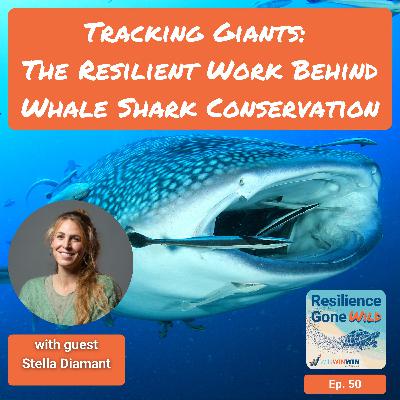
What can a gentle ocean giant teach us about leadership, adaptability, and resilience in the face of uncertainty?
In this episode of Resilience Gone Wild, marine conservationist Stella Diamant shares her journey from Belgium to the turquoise waters of Madagascar, where she founded the Madagascar Whale Shark Project.
Through her lens, we explore Resilience Through Nature, the Win-Win-Win Mindset, and the art of Purpose-Driven Leadership that bridges community needs with environmental stewardship.
What You’ll Learn:
Why whale sharks are living symbols of Resilient Leadership from the Animal Kingdom
How Stella navigated rejection and resource scarcity with a Regenerative Thinking approach
The science, mystery, and global collaboration behind tracking whale shark migration
Practical ways individuals and teams can support conservation without a science background
How conservation leadership mirrors challenges in business, teams, and systemic change
Episode Highlights:
03:14 – The moment Stella realized veterinary work wasn’t her calling
09:28 – How a remote village in Madagascar reshaped her view of conservation
16:45 – Lessons from whale sharks’ “thick skin” and adaptability
24:02 – Building trust with local communities for lasting environmental impact
31:20 – The role of mentorship and global networks in marine research
38:47 – Why whale shark migration remains one of nature’s greatest mysteries
44:55 – Confronting the threats: microplastics, vessel strikes, and climate change
51:33 – Action steps anyone can take to help protect whale sharks
Meet the Guest:
Stella Diamant is the founder of the Madagascar Whale Shark Project, dedicated to researching and protecting whale sharks through science, community engagement, and eco-tourism best practices. Her work blends rigorous research with nature-inspired coaching principles that resonate beyond marine conservation.
Tools, Frameworks, or Strategies Mentioned:
Resilience Through Nature approach
Win-Win-Win Mindset for conservation and community development
Global whale shark photo-ID database (SharkBook)
Tagging technology for long-term marine research
Closing Insight:
“Conservation is about adapting, pivoting, and staying solid in the face of uncertainty.”
Discover how nature’s largest fish can inspire a more conscious, connected way of leading and living. Listen now and explore more episodes of Resilience Gone Wild to fuel your journey toward purpose-driven impact.
Learn more about the Madagascar Whale Shark Project: https://www.madawhalesharks.org/
Website: https://resiliencegonewild.com
Facebook: https://www.facebook.com/profile.php?id=61565572327566
LinkedIn: https://www.linkedin.com/showcase/104957749/admin/dashboard/
Subscribe to our newsletter: https://mailchi.mp/resiliencegonewild/resilience-gone-wild-newsletter
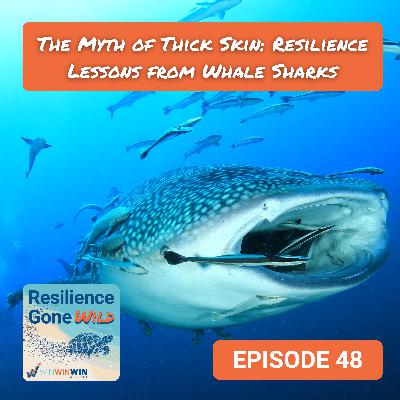
Welcome back to Shark Week! This is Part 3 in the series which follows insightful guest episodes with Rare Shark Guy David Ebert and Marine Life and Shark Artivist Francesca Page. In this episode, host Jessica Morgenthal explores the fascinating world of whale sharks and the surprising lessons their thick skin offers for building resilience and emotional health. Jessica dives into their unique beauty, life, behavior, anatomy, and migration patterns and how these massive the gentle giants of the ocean thrive by filtering in what nourishes them and letting go of what doesn’t serve them. This episode highlights how we, too, can develop emotional resilience by cultivating discernment, practicing mindfulness, and embracing our natural boundaries. Listeners will learn why conservation efforts to protect whale sharks and their ocean habitats matter for the health of our entire planet and how our emotional wellbeing is deeply connected to nature’s wisdom
Takeaways
The thick skin of whale sharks and their ability to filter what serves them offers us a new metaphor for more actively choosing what serves us.
Thick skin is not about shutting out the world but about discernment and healthy boundaries.
We can grow around our wounds and build strength through mindful self-care.
True resilience means managing our emotions with intentionality.
Emotional health thrives when we consciously choose what to let in and what to keep out.
Whale sharks face threats from climate change and pollution; conservation is crucial.Sharing knowledge about whale sharks inspires collective care and environmental awareness.
Our wellbeing and the planet’s health are deeply interconnected.Mindfulness, nature connection, and community action help build resilience for all.
Sound Bites
“We, like whale sharks, are shaped by what we let in, not what we block out.”
“Thick skin doesn’t mean you stop feeling — it means you discern wisely.”
“Resilience is learning to feel deeply without drowning in the waves.”
“When we care for whale sharks, we care for our own emotional ecosystem too.
Whale Shark Resources
Georgia Aquarium Whale Shark Research Program: https://www.georgiaaquarium.org/conserve/whale-shark-research/
Galapagos Whale Shark Project: https://www.galapagoswhaleshark.org/
WWF: Whale Shark Facts and Conservation: https://www.worldwildlife.org/species/whale-shark
National Geographic: Whale Shark Facts: https://www.nationalgeographic.com/animals/fish/facts/whale-shark
Tagging and Tracking: Marine Megafauna Foundation Whale Shark Program: https://www.marinemegafauna.org/whale-sharks
Disney’s Destiny from Finding Dory: https://youtu.be/Vuz8a5C9jYw
National Geographic: https://www.youtube.com/watch?v=uQrBwN39LJI
Video from Bubble Vision: https://www.youtube.com/watch?v=dUMUSFLyZpU
All About Whale Sharks for Children: Whale Shark video for Kids – FreeSchool: https://www.youtube.com/watch?v=jApMS38YR6w
Connect With Us
Listen Now: https://pod.link/J4yd77
Share your thoughts with host Jessica Morgenthal: jessica@ResilienceGoneWild.com
Explore More: Visit Resilience Gone Wild for show notes, photos, and resources: https://winwinwinmindset.com/the-resilience-gone-wild-podcast/
Produced by Balancing Life’s Issues (BLI Studios) in partnership with a Resilience Gone Wild.
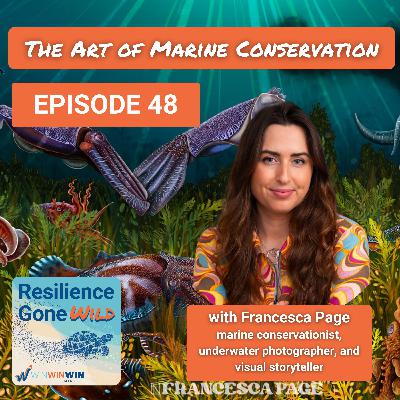
This episode is Part 2 of our special Shark Week celebration on Resilience Gone Wild. Host Jessica Morgenthal talks with Francesca Page — marine conservationist, underwater photographer, and visual storyteller — about her inspiring journey from fearing the ocean to becoming one of its most passionate defenders. Francesca explores how art and storytelling can shift public perceptions about sharks, highlight the impact of bycatch, and drive community action for healthier oceans. She also shares her groundbreaking 200 Sharks initiative and the importance of finding your unique way to contribute to our planet’s wellbeing.
Key Takeaways
Art is a universal language that helps connect people to conservation.
Overcoming fear can open doors to deep, meaningful work.
Sharks are essential for ocean health and biodiversity.
Bycatch remains a major threat to marine life.
Storytelling and visual art can make complex issues relatable.
Community involvement is key to sustainable conservation.
Francesca’s 200 Sharks project brings awareness to sharks’ vital role.
Compassion and understanding strengthen conservation work.
Everyone has unique skills to contribute to protecting the planet.
Turning your passion into action can make real change.
Sound Bites
“Art is this universal language.”
“Fear was all in the mind.”
“Compassion is key in conservation.”
Resources Mentioned:
Francesca Page LinkedIn: https://www.linkedin.com/in/francesca-page-056580317/
Francesca Page Website: https://www.francescapageart.com/
Francesca Page YouTube: https://www.youtube.com/@francescapageart
Award Winning Photo: https://www.francescapageart.com/photography?pgid=m09s3850-fe3ff6c7-d262-4510-9dfe-b84d33d5515c
Brian Skerry, Francesca’s Mentor: https://brianskerry.com/
Francesa Page Instagram: https://www.instagram.com/francescaapage?igsh=Zzl5cTN2dmNpYnox
“I used to be scared of the ocean…” https://www.instagram.com/reel/DGvvUdit_rH/?igsh=eHN4aHg0OGp5Y3A1
200 Sharks Project:
Whale Sharks https://www.instagram.com/reel/DGLud-TN3i0/?igsh=MXRpbHAxbHQ4b3cxNA==
Thresher Sharks https://www.instagram.com/reel/DCzW5EVtXYt/?igsh=cWd6MWJiZWQyODU5
Smoothnosed Wedgefish https://www.instagram.com/reel/DGvvUdit_rH/?igsh=eHN4aHg0OGp5Y3A1
Connect With Us
Subscribe to Resilience Gone Wild wherever you listen to podcasts, and let’s grow stronger together: https://pod.link/J4yd77
Connect with your host Jessica Morgenthal: jessica@ResilienceGoneWild.com
Connect with your producer Kai M Sorensen: kai@balancinglifesissues.com
Visit us online: https://winwinwinmindset.com/the-resilience-gone-wild-podcast/
Produced by Balancing Life’s Issues (BLI Studios) in partnership with a WinWinWin Mindset.
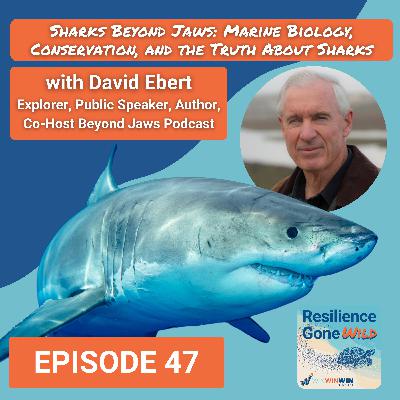
In this very special SHARK WEEK episode of Resilience Gone Wild, host Jessica Morgenthal dives deep with renowned shark scientist David Ebert, exploring how sharks have been misunderstood for decades, especially since the blockbuster impact of Jaws. Dave shares his fascinating journey from childhood curiosity to becoming an internationally recognized marine biologist studying sharks and rays.
Together, they discuss the evolution of shark research, how the cultural fear sparked by Jaws paradoxically boosted funding for shark studies, and why lesser-known shark species are vital for healthy marine ecosystems. The conversation emphasizes the power of education to debunk shark myths, the importance of connecting with local fishing communities for conservation success, and the thrill of exploration that keeps marine biology fresh and impactful. If you’ve ever wondered what sharks are really like—or how you can help protect them—this episode is for you.
Takeaways:
The film Jaws forever changed public perception of sharks, fueling both fear and increased research interest.
Sharks were heavily fished long before Jaws hit theaters, but public awareness was low.
Shark awareness has grown through a mix of media, science communication, and marine exploration.
Sharks have complex behaviors and long-distance migration patterns still being studied today.
Conservation efforts for sharks must include local communities, especially in fishing areas where food security is a concern.
Charismatic species like great whites get the spotlight, but lesser-known sharks are equally critical for biodiversity.
Education and outreach are key to shifting public fear and promoting coexistence with these apex predators.
Cape Town, South Africa, offers a unique environment for pioneering shark research.
A career in marine biology is rarely linear—curiosity and resilience fuel the journey.
Sharing scientific stories can inspire the next generation of ocean stewards.
Keywords:
sharks, shark conservation, shark research, marine biology, shark behavior, Jaws movie, shark awareness, public perception of sharks, biodiversity, lesser-known shark species, charismatic species, local communities, marine ecosystems, ocean conservation, shark attacks, ecosystem health, sustainability, fishing communities, shark myths, Cape Town marine research
Sound Bites:
“Jaws was actually good for sharks—it got people interested.”
“Sharks were fished long before Jaws made them famous.”
“Charismatic species are great ambassadors, but it’s the lesser-known sharks that keep ecosystems strong.”
“Sharks are misunderstood and essential for ocean health.”
Resources:
David Ebert LinkedIn https://www.linkedin.com/in/david-ebert-1b096712/
Sharks of the World: A Complete Guide https://press.princeton.edu/books/hardcover/9780691205991/sharks-of-the-world?srsltid=AfmBOoq-fX_hXiyqBVWFC3uiwoF3Te9tsz85Z_uM27rIb7gQdXOFZ1y9
Beyond Jaws: Exploring Shark Science and Conservation Podcast https://podcasts.apple.com/us/podcast/beyond-jaws-exploring-shark-science-and-conservation/id1576456233
Lost Shark Guy https://www.youtube.com/@lostsharkguy
50th Anniversary of JAWS https://apnews.com/article/jaws-50th-anniversary-spielberg-legacy-a2490a06da79660a19de4ac2bb4bd710
USS Indianapolis https://www.britannica.com/topic/USS-Indianapolis
Leonard Compagno https://www.sharks.org/leonard-jv-compagno
Support shark conservation with Shark Trust https://www.sharktrust.org
Explore marine biology programs and citizen science opportunities https://www.marinebio.org/
Shark Mentions!
“Great White Shark: Biology, Behavior, and Conservation” (Smithsonian Ocean) https://ocean.si.edu/ocean-life/sharks-rays/great-white-shark
“Broadnose Sevengill Shark Facts” (Monterey Bay Aquarium) https://www.montereybayaquarium.org/animals/animals-a-to-z/broadnose-sevengill-shark
“Whale Shark Facts” (WWF) https://www.worldwildlife.org/species/whale-shark
“Basking Shark Facts” https://oceana.org/marine-life/basking-shark/
“Ghost Sharks” https://ocean.si.edu/ocean-life/sharks-rays/ghost-shark
“Spiny Dogfish Shark” https://oceana.org/marine-life/spiny-dogfish/
“Orcas vs. Great White Sharks” https://www.nationalgeographic.com/premium/article/orcas-predators-great-whites-south-africa
Connect With Us:
Listen Now: https://pod.link/J4yd77
Share your thoughts with host Jessica Morgenthal: jessica@ResilienceGoneWild.com
Explore More: Visit winwinwinmindset.com/the-resilience-gone-wild-podcast
Produced by Balancing Life’s Issues (BLI Studios) in partnership with a WinWinWin Mindset.

Comments

Download from Google Play

Download from App Store
 United States