


 Claim Ownership
Villains and Virgins History Podcast
Subscribed: 105Played: 2,561
Subscribe

© Eva Schubert 2020
Description
A history podcast with a focus on violence, religion, and gripping stories, created by Eva Schubert, history nerd, college instructor, and jazz aficionado.
67 Episodes
Reverse
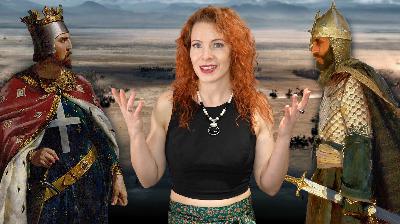
The Third Crusade involves two of the most well known figures of any crusade: Richard I, the Lionheart, King of England, and Salah ad-Din Yusuf ibn Ayyub, Sultan of Egypt and Syria. These two men each command an army, and the fate of the Near East hangs in the balance. After the Siege of Acre, the army of the Third Crusade takes the road to Jerusalem. Along the way they will face Saladin, and have an encounter with the Assassins. Their quest to take the city involves epic battles, murder, surprising camaraderie, and scandalous marriage proposals. This is the story which founded legends.
 1
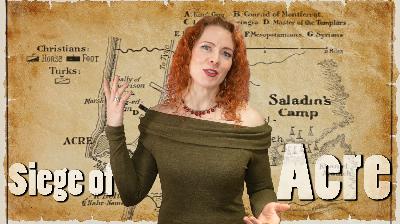
1The siege of Acre, from 1189-1191 was one of the most brutal battles of the Third Crusade. The armies of the King of Jerusalem surrounded the city of Acre, but were themselves under attack from the armies of Saladin. Into this mess, the armies of the Third Crusade, led by King Richard the Lionheart of England and Philip Augustus of France, joined the fight. The brutal siege lasted for two years, inflicting damage, disease, and death on both sides. The catapults are in full swing, hurling Greek fire at the crusaders, while sappers tunnel under ground. The Crusader states are divided over who should be king, and the fight ends with one of the most infamous massacres of the Third Crusade.

Richard the Lionheart is one of the most famous English kings and he made his reputation on the Third Crusade. In this episode we take a closer look at the man behind the legend. His mother was the famous Eleanor of Aquitaine, and his father was the easily angered Henry II. Richard's early career as a feudal enforcer made him an expert in siege warfare. The fall of Jerusalem triggers the call for the Third Crusade, but scandal, infighting, and a massive fight with France keep Richard tied up for two years before he can fulfill his Crusader oath. Richard will finally be crowned King of England and take the road to Jerusalem, joining the King of France, and the Holy Roman Emperor Frederick Barbarossa. Support this podcast on Patreon: Patreon.com/evaschubert Tour link: https://geeknationtours.com/tours/villains-and-virgins-tudor-tour-with-eva-schubert/

Saladin and Richard the Lionheart are two of the most legendary figures in the history of the Crusades. Saladin was both feared and admired by his friends and his enemies. This episode explores the rise of this remarkable character. We also meet the noble knight Balian of Ibelin, Queen Sibylla of Jerusalem, and the bellicose brigand Reynauld of Chatillon. There are Templar knights, a siege during a wedding, and the heroic defense of Jerusalem. The events in this story will launch the Third Crusade.
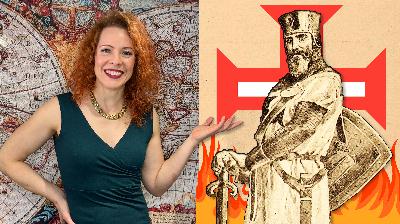
The Knights Templar are one of the most famous medieval orders. They combined legendary discipline and bravery in battle with the ascetic habits of monks. Then they were publicly disgraced in a show trial and soon after the Pope dissolved the Order. But some Templars survived, and even thrived in other parts of Europe, particularly in Portugal. This episode is a sweeping ride through the Reconquista, the founding of Portugal, and the new identity that saved these knights. It also covers a famous Templar named Gualdim Pais who fought in the Siege of Ascalon, and brought his experience back to Portugal to fight a legendary battle years later.

The story of Portugal during the 100 Years War is a story of lust, treachery and murder. It is also a story of survival and resistance. This episode covers Portugal's most notorious queen: a beautiful woman who imprisoned and killed her political enemies. The history of the royal court includes tragic love story of Ines de Castro and the military genius of Nun Alvarez. We also cover Portugal's role in the conflict between England and France, and the involvement of the neighboring kingdom of Castile, culminating in the epic Battle of Aljubarotta which secures Portugal's survival as an independent nation. This episode is a wild ride!
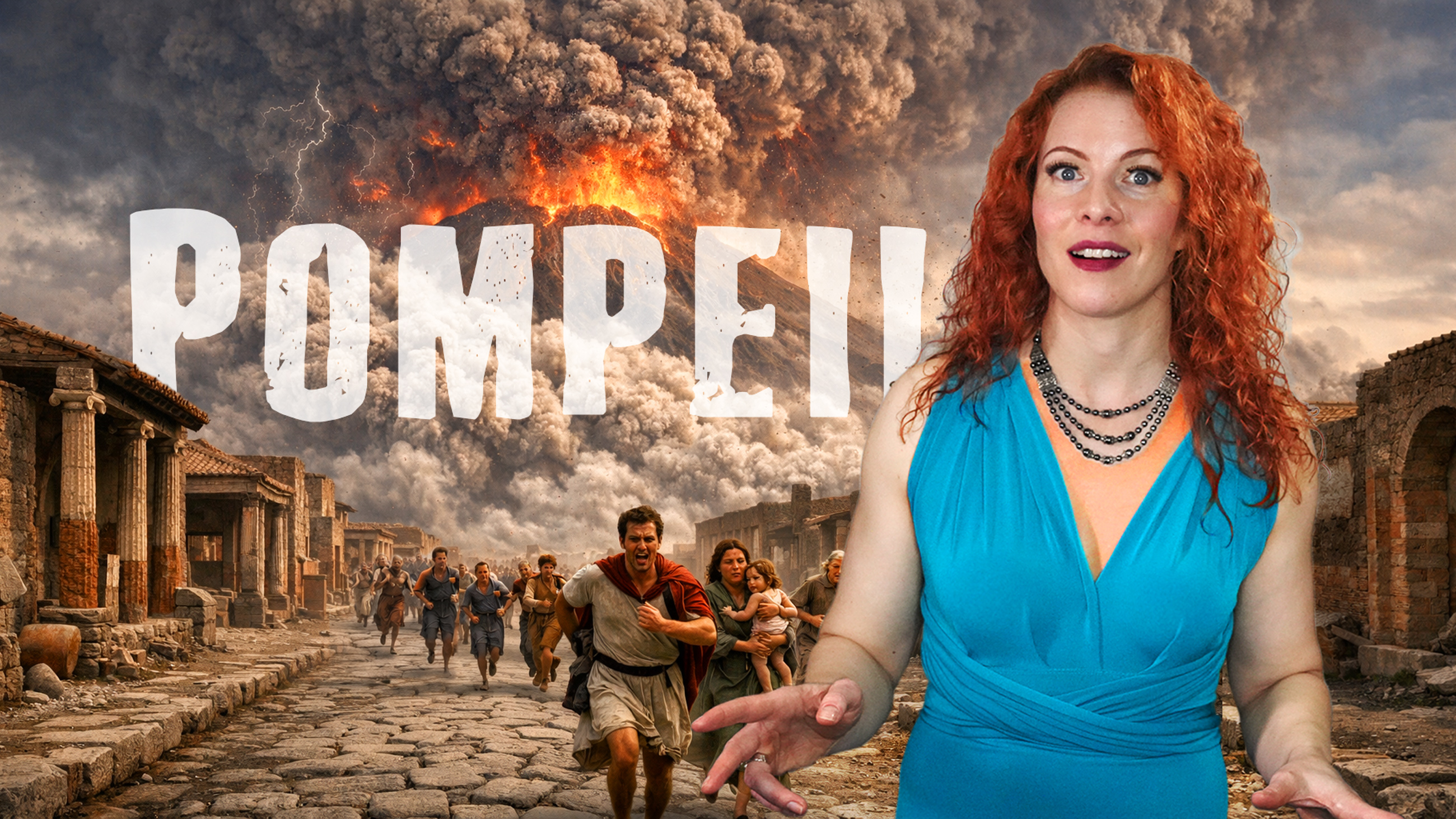
The volcanic eruption that buried Pompeii was a catastrophe of epic proportions. But the mass burial site it created also preserved details of daily life in a first century Roman city that we might otherwise never know. From flying phalluses and gladiators to condiments made from decaying fish, dive into the life and death of Pompeii. To support this podcast on Patreon go to: www.patreon.com/evaschubert For details of Eva's history tour, go to Geek Nation: https://geeknationtours.com/tours/villains-and-virgins-tudor-tour-with-eva-schubert/

Santa Claus is a very strange figure when you think about it. Where does he come from and why does he fly through the sky handing out presents at night? This episode traces the connection with an old Norse god and an Anatolian bishop from the 3rd century, and explores the gritty reality of life in the Roman empire for ordinary people. You will never look at old Saint Nick the same way again.

What did life look like for the average soldier in the Roman army? In this episode we get into the details of packs, march speed, camp construction, and food on the march. Many of the procedures for new recruits in the Roman military machine sound shockingly familiar. The penalties for breaking the rules were extremely severe. Come along on the march with Legionary Valerius and experience a taste of life in the Roman legions. Special thanks to Roger Meara and Chris Cameron @thelegionary72 for supplying images and footage for this episode.
The sword is more than just a weapon. It has been used to dub knights and legitimise kings, determine guilt and settle matters of honour. From the ancient Romans and the Song of Roland to dueling culture and German Mensur matches, this cultural history traces the legends and traditions that have given the sword its enduring mystique.
The horrific murder of Archbishop Thomas Becket in his own cathedral shocked Europe and immediately created one of the most famous martyrs in English history. The story begins with Thomas Becket in exile in France, fleeing the anger of Henry II of England. Despite being the king's pick for Archbishop of Canterbury, he has refused to cooperate with the king's plans for the church. An international game of diplomacy ensues, with the King of France and the Pope heavily involved in an effort to reconcile the two men. King Henry takes extraordinary measures to avoid church punishments, including demanding a loyalty oath from every man in his kingdom. Eventually he promises to reinstate Thomas Becket and make peace... only months before the murder of the century.
King Henry II was a man with a terrible temper. He was determined to have absolute control of his subjects, but one unlikely man stood up to him. In this episode women are seized from convents and forcibly married, messengers suffer grisly punishments, and a good number of body parts are forcibly removed when the king flies into a rage. This is the story of archbishop Thomas Becket who stood up to the vengeful Plantaganet king.
This is the story of how one woman changed the balance of power in Western Europe, by divorcing one man and marrying another. Eleanor of Aquitaine is the Queen of France, but has been alienated from her husband. Her campaign for an end to that marriage led to a shocking remarriage with a much younger man, and the beginning of the Plantaganet dynasty in England. Along the way we discover why our favorite tales of knightly romance, from Lancelot and Guinevere to Tristan and Isolde, are connected to Eleanor and her enormous influence.
The dwindling army of the Second Crusade arrives in Antioch, where a quarrel over military strategy is influenced by rumours of a sex scandal involving the Queen of France. The Crusaders make some very bad decisions, leading to a failed attack and a humiliating retreat. Find out why the Second Crusade was such a dismal failure. Support this podcast on Patreon.com/evaschubert For details of an upcoming history tour with Eva go to: https://geeknationtours.com/tours/villains-and-virgins-tudor-tour-with-eva-schubert/
The Second Crusade leaves Europe under the command of two kings, fielding the largest number of men in a generation. Eleanor of Aquitaine rides with her husband, King Louis VII of France, while Conrad Hohenstaufen leads forces from the Holy Roman Empire. What follows is not glorious victory, but embarrassment and disaster on an epic scale. The fingers of blame point in all directions, as the Crusaders learn that the road to Jerusalem is littered with bad decisions -- and bones.
The Second Crusade would be a disaster, but why did it happen and how did it get started? The call to arms was preached by a closet dwelling ascetic who happened to be the leading churchman of his generation-- none other than Bernard of Clairveaux. In this episode we meet Eleanor of Aquitaine, the queen who ruled both France and then England, and went on crusade. A horrifying mass death, a guilty royal conscience, and one of the most notorious womanisers of the Middle Ages are all part of the story in this episode.

The Templars began as warrior monks, but have been linked to everything from demon worship to forbidden sexual practices. What happened? This episode follows the history of the spectacular fall of a knightly order. A power struggle between a king and a pope, infiltration, torture, and the Inquisition -- it is a turbulent tale. Because of the many rumours about the Templars, I will point out that this episode relies entirely on historical sources, primarily the work of Professor Malcolm Barber. You can support this podcast on www.Patreon.com/evaschubert
The Knights Templar are surrounded by legends and conspiracy theories. Who were they actually? This episode tracks the Templars from their inception as an order of warrior monks in the Crusader state of Jerusalem, to their astonishing expansion into an international organisation of enormous wealth and power. Along the way we encounter Crusader kings, Bernard of Clairveaux, the white slave trade, the Knights Hospitaller, and the Assassins. Footnote: In this episode I mention Krak de Chevalier among the Templar castles because it is perhaps the most stunning example of Crusader fortresses. However, unlike the other castles I have mentioned by name, Krak de Chevalier was used by the Hospitaller Knights, a brother order to the Templars.
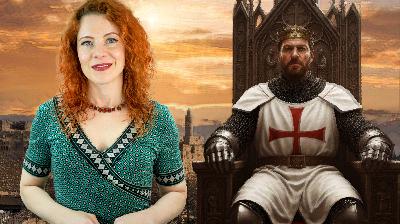
The Crusaders have taken Jerusalem but they face one final battle. When the men start to head home, the legend of the First Crusade is born, and a massive new wave of Crusaders heads east. Not everyone wants to go home however; Godfrey of Bouillon becomes ruler of Jerusalem. His brother Baldwin manages to take control of Edessa, and one Crusader aspires to be not just a prince, but to take the imperial throne for himself. Along the way there are devious marriages, murder plots, and total disasters as the Crusaders defend their kingdoms in the east.
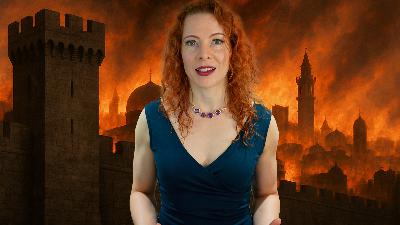
The Crusaders narrowly escape annihilation when they attempt to fight their way out of Antioch. Some men credit the miracle of the Holy Lance for their amazing escape. Divisions emerge amongst the nobles, while the army starves. Some Crusaders turn to cannibalism, and a fiery trial by ordeal ends the career of a peasant preacher. The Crusadering army finally arrives at the walls of Jerusalem in 1099, and the stories of what they do when they get inside are hair raising. Faith, violence, hate, and ambition are all rolled together in this dramatic episode.

Comments

Download from Google Play

Download from App Store
 United States