


The Newcomers Podcast 🎙️
Subscribed: 1Played: 17
Subscribe

© Dozie Anyaegbunam
Description
Interviews with immigrants and stakeholders involved in the immigration process where we explore the immigration journey, raising kids in a new culture, cultural adaptation, integration, identity, and everything in-between.
thenewcomerspod.com
thenewcomerspod.com
145 Episodes
Reverse
In today's episode, I'm speaking with Maria Kamila González, the co-founder of Finanzo, a non-profit organization in Toronto that believes in making newcomers financially aware and has impacted the lives of 100,000 immigrants in the US and Canada.Maria is a psychologist by training, which means that when she talks about money, she doesn't start with budgeting or spreadsheets. She starts with your childhood, your parents, and the patterns you inherited from them, as well as the patterns your culture or society drilled into you about money.In her words, "How you treat money is how you treat everything else." Worth pausing on that for a bit, people. ----------Maria and I chat about:The baseline assessment every newcomer should do before anything elseHow banks profit from immigrants' ignorance about how credit worksHow to handle "black tax" and family remittances Why financial planning is best done progressivelyThe Finanzo origin story----------Dozie's NotesA few things that struck me as I listened through this week's conversation:With money, we're often struggling with the money habits we inherited from our parents and our culture's relationship with worthiness. To solve bad money patterns, one needs to tackle these two layers; the family and cultural layer. The family layer, which is what your parents modeled for you as a child, consciously or not. And the cultural layer, which is what colonisation embedded in entire populations about who deserves wealth and who doesn't. Money is tied closely to our identity.Most people know the right financial move. Where it falls apart is actioning it. Most of us already know that high-interest credit card debt isn't great. But we keep collecting those credit cards like the souvenirs we buy at the duty-free shops. This behaviour is why Maria treats financial literacy as therapy.The first step in taking control of your finances is understanding your baseline. Before any financial tool works, you need to understand where you stand, not just financially but psychologically. How much debt do you carry? How much are you sending home? But also: are you afraid of money? Do you feel you deserve wealth? Do you repeat the same financial mistakes every few years?----------Official Links✅ Connect with Maria Kamila González on LinkedIn✅ Check out the Finanzo websiteOne AskIf you found this story helpful, please consider sharing it with one immigrant you know.
In today's episode, I'm chatting with Mustafa Ansari, Director of Marketing of Toronto Business Development Centre (TBDC), who's made it a personal mission to get more immigrants into trucking and the skilled trades.Mustafa moved from Pakistan to Canada in 2018. After completing his master's degree at Smith School of Business, Queens University, he couldn't find a job in his preferred industry; economic development. So he bounced around a few temporary and contract jobs, and eventually took a junior social media position at TBDC just to get his foot in the door. They then handed him two industries that had zero creative marketing and no public appeal (trucking and skilled trades) and told him to go figure it out. And Mustafa went on a roll.----------Mustafa and I chat about: Why some of the most overlooked careers in Canada might be the smartest career choices for immigrantsThe myths that pervade the skilled trades sector Why he disagrees with the perception that skilled trades are for people who couldn't make it elsewhereUsing video game design principles on the TBDC career websiteHis advice to his younger self if he were to make the immigration journey again----------Dozie's NotesA few things that struck me as I listened through this week's conversation:Women are often told these industries aren't for them. The women inside say otherwise. Mustafa and his team at TBDC now run women-focused programs where they invite other women practitioners to come share their stories and possible pathways to joining the industry.Field trips have done wonders for getting people interested. Mustafa got tired of watching people fall asleep or look glazed during bootcamps. Now he gets them talking directly to people in the industry, riding along in the truck, joining "show-me-how-you-do-it" workshops. We need to find a way to make these jobs cool. The public image is costing everyone. People don't realize that their are companies in these industries that are properly organized, have well-run HR departments, and growth paths to executive roles. The perception is stuck in an older era. And until that changes, the talent gap keeps widening.A three to five week course can change everything. You don't need a four-year degree or have tens of thousands of dollars stashed away for tuition. A few weeks of training, pass the test, and you're earning. As an apprentice, you also make money while you learn.----------Official Links✅ Connect with Mustafa Ansari on LinkedIn✅ Read the Starter Guide to Skilled Trades for Newcomers in OntarioOne AskIf you found this story helpful, please consider sharing it with one immigrant you know.

In today's episode, I'm talking with Diana Palmerín Velasco of the Canadian Chamber of Commerce about how we go about rebuilding trust in Canada's immigration system. Diana moved to Canada in 2011 with all the credentials you'd think would make settling into the country easy. She had a PhD and five years of UK work experience. It still took her two years to land her first job. And she only got it because someone she knew referred her.That was almost 15 years ago, and not much has changed. We are still underutilising talent. And now we have a public trust crisis on top of it.----------Diana and I chat about:The communities across Canada that are desperate for people and can't get themHow the Chamber network is advocating for regional immigration strategiesThe global war for talent and why Canada risks being left behindWhy she believes immigrants are being blamed for problems they didn't createThe paradox of selecting for PhDs when most job vacancies require a high school diplomaWhat the business community can do to bring Canadians back on sideWhy immigration success happens at the local community level----------Dozie's NotesA few things that struck me as I listened through this week's conversation:We need to recover public trust before anything else can work. Diana frames this as the foundation. If immigrants land in communities and don't feel welcomed and valued, everything else falls apart. We all just end up retreating into ethnic enclaves which ends up causing more damage to an already fractured society. The work now is about showing Canadians that immigration benefits everyone, not a few regions or employers , but everyone.When Diana spent two years unemployed, she lost. But Canada lost too. Those were two years where she wasn't paying taxes or contributing to the economy. We talk about immigrant resilience like it's a badge of honour. But the question we should be asking is: should it be this hard? And what does it cost us all when talented people are stuck on the sidelines?We've allowed immigrants to be blamed for systemic failures. Diana says the silence from government on this hasn't been helpful. Housing, healthcare, education—Canadians keep pointing to immigrants as the cause. But that isn't exactly true. The youth unemployment piece, for example, is far more complicated than "immigrants took the jobs." AI is eliminating entry-level roles. Trade uncertainty has businesses freezing hiring. None of these issues deserve simple answers, but simple answers are all we keep getting.Immigrants are not a monolith but the Canadian immigration system tends to treat them like they are. It's frustrating to see people assume all immigrants are the same: desperate, penniless, struggling with English. The reality is wildly different. Canada attracts some of the most talented and experienced people. Folks with advanced degrees, global networks, and multinational work experience. The settlement sector, the policy system, the public conversation just seems to collapse all this diversity into one box. And then we wonder why nothing works.---------Official Links✅ Connect with Diana Palmerín Velasco on LinkedInOne AskIf you found this story helpful, please consider sharing it with one immigrant you know.

In today's episode, I'm talking to the brilliant and straight-shooting Ruairi Spillane, who runs Moving2Canada and Outpost Recruitment. Ruairi is one of the OGs when it comes to helping newcomers move to Canada, find jobs, and settle in nicely. So he was a must-have on The Newcomers Podcast. As someone who's been recruiting local and global talent for Canada for over a decade, he's seen what works, what doesn't, and he's not afraid to tell you the difference. And he dished out dollops of that tough love on this episode. ----------Ruairi and I chat about:The red flags that tell him an immigrant is likely to struggle in the job searchThe three risks employers are evaluating you on during the interview processWhy Canadianizing your resume is about the content, not the formatHow to proactively address your immigration pathway in an interview----------Dozie's NotesA few things that struck me as I listened through this week's conversation:"I can do anything" is a red flag, not a selling point. It screams you haven't done the research. Pick one or two job titles that match your skills in Canada and build your resume around those. Spraying and praying something sticks is exhausting. Canadian employers are evaluating three risks you probably aren't addressing. Settlement risk: Will you stay? Immigration risk: Can you stay? Local experience risk: Can you adapt? Ruairi says employers in professional roles aren't hiring for six months. They're investing in training you for three to four years. If your answer to "How long will you be in Canada?" is "I have a two-year work permit, we'll see if we like it," you've just told them you're a flight risk.Refusing to adapt your resume can mean you might struggle to adapt to the role. Ruairi says it's a pattern he's seen over the last 12 years. When he suggests improvements and a candidate says "my resume is fine the way it is" or "I paid someone to edit this so I'm not changing it," he steps away. Time and time again, that response has usually meant the individual might not be exactly willing to adapt to a new way of doing things in a new country. Brutal? Right?----------Official Links✅ Connect with Ruairi Spillane on LinkedIn✅ Check out the Outpost Recruitment Jobs Board✅ Join the 170K+ strong newcomer community on Moving2CanadaOne AskIf you found this story helpful, please consider sharing it with one immigrant you know.

In our first episode of 2026, I'm speaking with Rodrigo Cotrim de Carvalho, a Brazilian food researcher and educator who left Rio de Janeiro for Ottawa, Canada, through the now shuttered Startup Visa program.There's a lot to reflect on here, folks. But I think the one I kept coming back to was the point Rodrigo makes about all that gets lost in translation as you go through the messy process of fitting into your new home.---------------Rodrigo and I also chat about:Feeling like a prisoner while waiting for PR approvalWhat it means to think in Portuguese but converse in EnglishThe gap between what Canadian immigration promises and what it deliversThe impossibility of being mediocre when you've left everything behindThe three F's that immigrants miss the most---------------Dozie's NotesA few things that struck me as I listened through this week's conversation:Your immigration pathway can sometimes become your identity, even when it shouldn't. Rodrigo finds himself introducing himself through his Startup Visa pathway because it's the easiest thing for people to understand. However, that's just how he got here, not who he is. One person should not define how you see a country. It's easier said than done when you're raw and sensitive as a new immigrant. Hold onto that principle though, it does wonders for your mental health.Autonomy is something we immigrants take for granted before we land. The freedom to be yourself without wondering if you're fitting in or getting it right usually disappears once you start over.---------------Official Links✅ Connect with Rodrigo Cotrim de Carvalho on LinkedIn✅ Check out Babette Food Experiences✅ Listen to Rodrigo's Due Tramonti PodcastOne AskIf you found this story helpful, please consider sharing it with one immigrant you know.
In the last episode of 2025, I’m chatting with Deanna Okun-Nachoff, an immigration lawyer and host of the Borderlines Podcast, about where Canada’s immigration system stands six months into the Carney government. Any sense of accountability on the part of the government for where we are today with immigration has been largely absent from the raging public debate. The now-infamous “come to study or work, come to stay” messaging was pushed hard at some point. And it worked. Hundreds of thousands of temporary residents moved to Canada with the intention of earning permanent residency. Now, the government can’t fulfil those promises for some very obvious reasons. Yet, the blame for everything wrong with the process through which these folks came into the country has landed squarely on their shoulders. The big question I hope this episode helps kickstart is: What kind of nation do we want to build? And are the decisions we make going forward grounded in those values?Deanna believes that whatever path Canada chooses, it must be fundamentally grounded in being upfront, truthful, direct, fair, and accountable.-----------Deanna and I also talk about:The TikTokification of immigration narrativesThe exhausting policy whiplasy of the past 20 monthsWhy she thinks public trust has collapsedWhy she thinks good, fair, humane decision-making is expensive------Dozie's NotesA few things that struck me as I listened through this week's conversation:The policy whiplash means it’s sometimes hard to know what’s working and what isn’t. We keep changing immigration measures. For example, there are measures in place to reunite families. Then it’s suddenly withdrawn. Processing times keep changing. All this is not only exhausting, but it also means that it’s impossible to make measured, empirical decisions about what policies actually achieve their goals, because no plan lasts long enough to be evaluated.Accountability is needed in the immigration discourse. The silence from the government is corrosive and will harm the Canadian brand in ways that will take us years to comprehend. Of course, we are allowed to make hard decisions. But let’s take ownership of what led us here in the first place.The Canadian government appears to have become enforcement-minded. So much prioritisation has gone to enforcement. This approach has fundamentally altered the relationship between the government and its citizens. Once the government starts regarding the public as a threat, something that needs to be surveilled, it becomes a totally adversarial relationship.Official Links✅ Connect with Deanna Okun-Nachoff on LinkedIn✅ Listen to the Borderlines PodcastOne AskIf you found this story helpful, please consider sharing it with one immigrant you know.

In this episode, I’m speaking with Aashrit Parvangada, a historical nerd based in Berlin, and one of the best folks to chat with about geopolitics, nationalism, and immigration.I must say this was a sobering conversation, but also an enlightening one for me. Aashrit is not one to hold back on what he thinks about the world and how geopolitics and history shape most of what we’ve seen in recent times.And for someone who’s lived in Dubai, India, Canada, the United States, Germany, and speaks English, Hindi, Japanese, and German, he has the lived experience to back up his takes.Aashrit and I talk about:Why he thinks the West has always struggled with multiculturalism and diversityWhy he believes the current anti-Indian hate is actually a lesson for IndiansThe “great divergence” that made the West wealthy, and the “great convergence” happening nowWhy the question of a multicultural future belongs to the West, not immigrantsWhat he finds exciting about the world’s trajectory
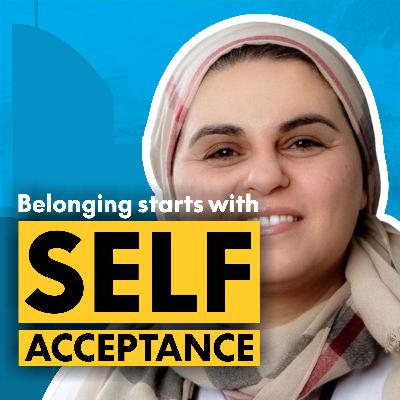
In this episode, I’m chatting with Rania Younes, who grew up as a third-culture kid in Kuwait, attended the American University in Cairo, and built a career in Dubai before ultimately settling in Canada.When Rania’s family moved to Canada, she had to stay behind to complete her university studies. However, watching her parents struggle to settle into the country and find their footing meant that when it was time to return, she hesitated.She came over anyway, years later, because watching her siblings integrate gave her hope that Canada could give her kids something she had never had…a place to call home.Then she lost her baby brother in 2010.And processing that loss made Rania realise that she had been mourning an imagined version of herself for the last ten years. A trajectory of a self she should have been. The social circles and friends she had to leave behind to move to Canada.Rania and I chat about:Why children of immigrants grieve belonging while parents grieve statusHow moving from a collectivist to an individualist culture creates frictionWhy understanding matters more than acceptanceThe difference between systemic acceptance and social acceptanceHow civic engagement builds belonging faster than job hunting

In this episode, I’m chatting with Dapo Bankole, a project manager and founder of Mentorfy. His viral TEDx talk, “The Hidden Struggles and Triumphs of Immigrant Professionals in Canada,” is painfully relevant to loads of immigrants looking to settle in Canada.My primary reason for interviewing Dapo on the podcast was to learn the story behind his TEDx talk.The version that includes the number of times he choked up in tears during rehearsals. The version where he describes a 19-year dream that started before he’d even applied for immigration. The version where he describes the day his family had to decide between gas and food.The one where he gets moody, irate, and flares up at the small things.Dapo and I dig into:The moment he realized the struggle of the Canadian immigrant professional is systemicThe day his Nigerian credit card saved him at a Canadian ATMStarting his podcast (The Immigrant Life) to sort out the mess in his own headBuilding Mentorfy to connect immigrant professionals with mentors who get itThe one thing he’d do differently if he were to start over

In this episode, I’m chatting with Precious Kolawole, who moved from Nigeria to Canada through the Shopify Dev Degree program, and has also seen her TEDx talk “How coding can change your life-and the world” go viral.There’s a trap that awaits most immigrants. It’s subtle, and it sounds like self-awareness: Maybe they won’t pick me because of my accent. Maybe I don’t belong here. Maybe I should expect less.Precious knows this too well. She describes sitting before a performance review at Shopify, telling herself to calm down, preparing for disappointment despite knowing she’d worked harder than anyone. When her supervisors told her she’d earned the highest rating, she screamed on the call. They paused, confused. Why this reaction? Because she’d already decided she wouldn’t get it. “It’s very funny how we think,” she says. “We think too much. We’re immigrants.”But what makes Precious different is how she reorients herself. She traces it back to coding, specifically, to debugging. When you debug code, errors are problems that always have a solution, that’s if you’re willing to keep looking.And that mindset has carried into how she approaches her immigration journey in Canada.Precious and I dig into:Leaving behind a medical degree, a Microsoft Nigeria offer, and communities she foundedHow her family stays connected across four countries through mandatory Sunday callsWhy Canada’s talent visa puts power in employers’ hands, and what that costs the countryThe Nobel Prize effect and the danger of letting success make you comfortable

In this episode, I’m speaking with Bryan McInnis, who moved from the United States to Kampala, Uganda with his wife and two daughters.Every immigrant has felt the tension of the pull towards your people as you settle into the new country. The comfort of shared references, familiar jokes, conversations that don’t require any literal or cultural translation.Bryan McInnis was no different. But he and his wife left the United States specifically to give their kids a more robust picture of the world. You can’t do that if you only hang out in the expat bubble.And so 6+ months into life in Kampala, Bryan’s learning about cultural differences that only show up if you dig in.Bryan and I chat about:What it’s like to move the United States to UgandaThe trip that kicked off everythingThe Ugandan entrepreneurial impulse that defies the “Africa is slow” stereotypeWhat it means to raise third-culture childrenWhy he thinks his family is more intentional now than ever

In this episode, I’m speaking with Simon Trevarthen, who leads the Toronto Region Immigrant Employment Council (TRIEC). A big part of their work is helping helping immigrants see their skills through a different lens while helping employers access talent they desperately need.And so the big question I hoped to answer with this episode is one I have been noodling on for a bit, which is:"How do we help more immigrants see that their skills are exponential, not linear? And that the work you did in your home country can apply across multiple industries here.”Simon and I also chat about:The hidden job market and how TRIEC helps immigrants access that pool of opportunitiesHow informational interviews can help you land a job in CanadaWhy networking is non-negotiable for immigrantsWhy work connects to identity and how that complicates the immigrant experience when you have to take a role beneath your qualifications

In this episode, I’m speaking with Aman Chawla, who moved from India to Fredericton, New Brunswick in 2023.Canada wasn’t Aman’s first choice when he and his wife started considering immigrating. He wanted Ireland. The time-zone difference wasn’t much. Flights back home lasted about 13 hours.But the pandemic meant that didn’t happen. They also considered Australia. That didn’t work out too. So Canada it was. His wife moved over first for an MBA.Aman and their toddler followed along six months after. But this was only possible because a member of parliament stepped in to help with the family reunification.Aman and I chat about:Making Fredericton, New Brunswick homeLanding a job within weeks through preparationWhat four months of unemployment taught himWhy he believes immigrants need to stop complaining and start contributing

In this episode, I’m speaking with Yauhan Mehta, a career coach who’s helped 750+ immigrants land jobs they love at global companies.A major part of his success is an interesting approach he takes to career coaching. He won’t start coaching with resume work. Instead, he begins with a soul-searching session to identify what people want.Then, if they have the financial means, they can focus on getting their target role. If they don’t have savings, they get something quickly that’s still somewhat related to their profession or has transferable skills.1 like that. Because more often than not, immigrants take jobs that are not in sync with who they are or their skillset, and then continue doing that for many years.Yauhan and I also chat about:His journey from India to Dubai to CanadaHow he dropped out of engineering and ended up as a career coachWhy he’s passionate about helping fellow immigrants get their best jobsHow long it took him to settle somewhat into Canada

In this episode, I’m speaking with Selene Ricart, who moved from Argentina to Canada five years ago.There’s this unspoken rule about being the good and perfect immigrant. Don’t say too much. Stay in your box. Be grateful. And if you ever step out of line, if you ever start speaking up about stuff you think could be better, someone will curtly remind you to go back and fix your country.And sadly, it happens to immigrant women more often than not. It happened to Selene on LinkedIn.But after five years in Canada, here’s Selene’s biggest lesson: belonging does take time, but you can’t wait until you belong to use your voice to advocate for good. And I agree. Your voice matters. And if you’re going to make Canada your home, you need to shape what that home becomes.There’s this quote Selene loves that captures this sentiment beautifully: first understanding, then adjustment. As immigrants, we’ve already done the first part.We’ve listened. We’ve observed. We’ve learned how things work here. We’re more empathetic, more adaptable, because we’ve had to be. Now comes the adjustment part. And that requires you speak up and offer perspectives that come from a place of understanding.That’s the advantage you have as someone who’s lived in multiple cultures.Selene and I also chat about:Language as identityWhy she always makes pasta from scratchWords as emotion, not just communicationHow immigrating forces us to start thinking of things we took for granted, and more

In this episode, I’m speaking to Rim Aoude, marketer, poet, and all-round amazing human.Rim moved from UAE to Canada as a teenager. And we explore what it means when you’re born without a place to call home. Her granddad left Palestine. Her parents were born in Lebanon as refugees. She was then born in UAE with refugee documents. And her kids, they were born Canadian. The first in three generations to be born with citizenship. “It was a huge deal in our family,” she says. She talks about arriving in Canada at 17. Her dad had gotten sick in UAE, and couldn’t pay her school fees. Which meant she couldn’t certify her high school diploma. She went to Concordia, told them her situation. And they said, “You’re Canadian. You have the right to education.” They enrolled her immediately. That’s when she knew, she could do well here.But being in Canada did something else. It allowed her to become who she actually was. She became more Palestinian in Canada than she ever was in the Gulf, where saying you’re Palestinian wasn’t something you advertised.Rim and I also chat about:The lessons she’s gathered from living across three countriesWhy her kids speak French but she doesn’tMoving back to Canada from Qatar and starting overHow struggle makes you attached to your identity

In this episode, I’m speaking with Kundan Joshi, Founder and CEO of TheAppLabb & AI Labb, a leading app innovation firm that boasts of clients like Unilever, Samsung, Dell, Suncor, Petro Canada, RBC, TIFF, among others.However, Kundan fell into entrepreneurship by accident. He needed a summer job after first year as his Dad was struggling to find work. He looked for software engineering jobs but couldn’t find any.But not having a job wasn’t an option as he had to support the family. So Kundan took the best option at the time; sales.And so, door-to-door energy sales. Selling credit cards at the intersection of Yonge and Dundas. Then a mall kiosk selling high-speed internet. He did so well that the owner told him, “You won’t make this much money in a year after you graduate. Why go back to school?”But Kundan went back to school. But he also became a franchisee for Rogers, selling high-speed internet at Weston St, London, Ontario.Kundan and I chat about:How failures expose your blind spotsWhy approaching every person you meet without judgement is freeingHis entrepreneurial journey Why every crisis is also an opportunity

In this episode, I’m speaking with Jennifer Aikoroje, host of the Inside Your Finance podcast. Jennifer and I explore what happens when you’re too young to grasp the full weight of immigration, when you don’t have the words to explain the churning feelings inside you. But then you grow up. You become an immigrant yourself. And suddenly, your parents’ impossible choices start to make sense.She talks about that moment when her dad left her in Canada and returned to Nigeria for two more years. As a teenager, she felt like he had abandoned her. Now she gets it. Especially after making sure she secured a job before she moved to the United Kingdom.But we don’t only talk about heavy stuff.Jennifer and I also chat about:Taking professional risks when you don’t feel readyWhy showing up beats being perfectImmigrating to the UK as an adult and the lessons she learned

In this episode, I’m speaking with Imole Ashogbon, a fractional HR consultant who helps small and mid-sized businesses, executives, and HR teams when they need senior-level HR leadership, without the cost of a full-time executive.Imole and I explore a nagging question I have about Canada’s much-talked about productivity decline: Are we declining in productivity because we lack talent OR because our broken systems aren’t able to take advantage of all the talent we have seating around in Canada?Imole thinks we’ve created a strange contradiction. We bring in immigrants through Express Entry (a competitive immigration pathway meant to attract young, educated, upwardly mobile individuals.) Then we act like we’re doing them a favor. Like immigration is charity work. It’s not.45% of recent immigrants have university degrees but work in jobs that don’t require post-secondary education. Which is an absurd waste of talent in my opinion.Imole and I chat about:Why businesses need to culturally integrate just as much as immigrantsWhy immigration is investment, not aidHow to build systems that actually deploy immigrant talentThe misalignment between immigration policy, employment strategy, and economic growth targets

In this episode, I’m speaking with Jerry Onyegide, who launched a tax educational platform after answering questions about Canadian taxes on Twitter for years.Jerry never intended to formalize his knowledge. He’d see misinformation about Canadian taxes, correct it with detailed explanations, and move on with his day. People stopped arguing and started asking more questions. Eventually someone told him, “You need to formalize this. We don’t have anyone in the community who explains taxes this way.”And that’s how he launched Tax Whiz. Still, he was surprised by the number of people who reached out for clarity on their taxes.Jerry and I discuss common tax mistakes immigrants make. We also explore:The confusing Canadian tax systemWhy your tax planning needs to start in January instead of May

Comments

Download from Google Play

Download from App Store
 United States