DiscoverWhat I learned in business (that didn't kill me!)
What I learned in business (that didn't kill me!)
Claim Ownership

What I learned in business (that didn't kill me!)

Author: James H Stewart

Subscribed: 0Played: 1
Share

Description

Have you ever wondered why some businesses go broke and others are successful? Have you ever wondered why some leaders rise to the top in difficult situations?


For 40 years I was a corporate undertaker. I buried businesses that failed and helped save those where there was still a pulse.


I was parachuted into some of corporate Australia’s biggest financial crisis, insolvencies and turnaround environments. I have been in Board rooms, Court rooms and on shop floors when all seems lost (and sometimes it was).


Over decades at the coal face of business (often in the most difficult circumstances), I have seen & heard stories that delighted and inspired me, as well as those which serve as a guide of the path not to take.


I also spent years in leadership roles at Ferrier Hodgson and KPMG Australia where I sat on the Board and was the National Consumer and Retail leader.


The purpose of What I learned about Business (that didn’t kill me!) is to share the stories behind some of the world's most interesting business situations, how they unfolded, how my guests dealt with them, and how those experiences changed them and the way they do business.


I hope that my podcast entertains and engages listeners who want to know more about the worlds great business leaders and the lessons that didn’t kill them…….


Hosted on Acast. See acast.com/privacy for more information.

22 Episodes
Reverse
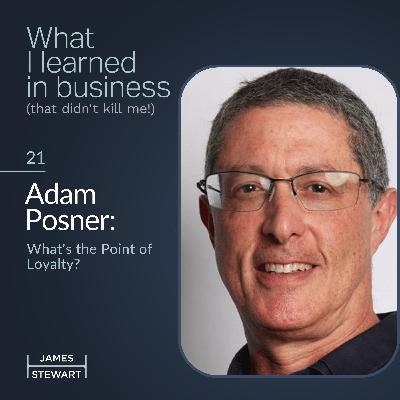
What is customer loyalty — really?Is it points? Discounts? Retention metrics? Or is it something deeper?In this episode of What I Learned in Business (That Didn’t Kill Me!), I sit down with Adam Posner, founder of The Point of Loyalty, host of the What’s the Point of Loyalty? podcast, and author of For Love or Money™ — one of Australia’s longest-running loyalty research studies, spanning nearly two decades and 18 editions.But before Adam became a loyalty strategist, his life gave him a very different education. Growing up in Johannesburg during apartheid, living through conscription into national service, surviving a terrorist car bomb explosion, and emigrating to Australia to start again from scratch — Adam’s worldview was shaped long before he ever designed a loyalty program.From walking the streets delivering scratch-and-save cards into letterboxes, to building a direct marketing agency and ultimately pivoting into customer research and loyalty strategy, Adam has spent nearly 20 years asking a deceptively simple question:What actually makes customers stay?In this conversation, we explore:Why loyalty is about Behaviour, Belief and BelongingThe importance of retail response when the customer experience disappoints loyaltyWhy customer loyalty and trust are closely connectedWhy the world needs a “Pandemic of Joy” — and what Adam calls JoyaltyHow AI and agentic technology may redefine brand–customer relationshipsThis episode is a masterclass in what Adam calls “the finance of feelings” — the commercial power of emotion in a data-driven world.If you lead a brand, manage customer strategy, sit on a board, or simply care about how businesses build trust — this one is for you.DisclaimerThe views expressed in this podcast are those of the individual guest and host and do not constitute financial, legal, investment, marketing or professional advice.This podcast is intended for general informational and educational purposes only. Any discussion of brands, loyalty programs, corporate events or data breaches reflects publicly available information and personal opinion at the time of recording. Listeners should conduct their own independent enquiries and seek appropriate professional advice before making any commercial or strategic decisions.This episode is not a promotional platform and no endorsement of any organisation or product is intended or implied. Hosted on Acast. See acast.com/privacy for more information.
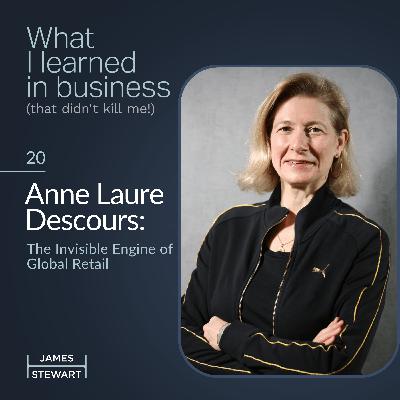
Everyone talks about sustainable retail products and saving the planet, but who really cares? Retailers? Customers? Government?The global retail sourcing & supply chain is invisible to most consumers, yet it is one of the most complex, highly integrated and culturally nuanced business ecosystems in the world.James H Stewart sits down with Anne-Laure Descours, one of the world’s most senior and respected leaders in global sourcing and sustainable manufacturing in the footwear and apparel industry.Anne-Laure spent more than three decades in the engine room of global retail — living and working across China, Vietnam, Bangladesh and Hong Kong — and ultimately serving as Chief Sourcing Officer of PUMA, overseeing the manufacturing and supply-chain operations that power an €8+ billion global brand.Before PUMA, she held senior leadership roles at Li & Fung, the legendary Hong Kong-based sourcing powerhouse that helped shape modern global manufacturing.Since leaving PUMA in 2025, Anne-Laure has continued her work in responsible supply chains, joining the board of Gildan Activewear (owner of American Apparel) and serving as an advisor and board member to Haelixa, a Swiss innovator in DNA-based traceability solutions for fashion and textiles.In this wide-ranging conversation, we explore:What global supply chains actually look like behind the scenesThe realities of sustainable sourcing across AsiaCultural intelligence and leadership under pressureThe role of government and regulation in driving changes to sourcing models and sustainability reportingWhy end of life products are the biggest unsolved hurdle for sustainable manufacturing - and this goes to the heart of consumer demand.How DNA tracing is reshaping sourcing transparencyWhat three decades in high-stakes global operations teaches you about resilience and trustThis is a rare, inside-the-system perspective from someone who has led through crisis, transformation and geopolitical disruption — at scale.🔎 ConnectJames H Stewart is a former KPMG restructuring partner and Australian Board member who interviews global leaders about the hard lessons they’ve learned in business — and survived.Connect with James:LinkedIn: https://www.linkedin.com/in/jameshstewart/Website: https://jameshstewart.com⚠️ DisclaimerThis podcast is for general informational and educational purposes only. The views expressed by guests are their own and do not necessarily reflect the views of their past or present employers, affiliated organisations, or the host. Nothing discussed in this episode constitutes financial, investment, legal, regulatory or professional advice. Listeners should seek appropriate independent advice before making any commercial or investment decisions. All commentary is based on publicly available information and personal experience at the time of recording. Hosted on Acast. See acast.com/privacy for more information.
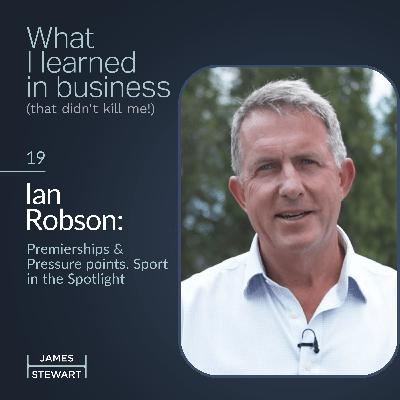
Ian Robson is one of the most experienced and battle-tested sports administrators in Australia.At just 32 years old, with no prior CEO experience, Ian was appointed Chief Executive of the New Zealand Warriors, building the club ahead of its entry into top-tier rugby league.From there, his career spans:CEO of Hawthorn Football Club during its rebuild and 2008 premiershipCEO of Essendon Football Club during the supplements sagaCEO of Melbourne Victory during A-League successCEO of Rowing Australia, navigating Olympic sport, funding pressures and global competitionLeadership roles in UK sport, including CEO of Sport ScotlandToday, Ian is CEO of the iconic Kooyong Lawn Tennis Club, long associated with the Australian Open.Across rugby league, AFL, soccer, Olympic sport and government-funded systems, Ian has seen the intersection of culture, governance, pressure and public accountability at the highest levels.What we cover in this episodeBuilding a professional sports club from scratch in New ZealandThe Hawthorn rebuild and the 2008 AFL premiershipThe Essendon supplements saga — what happened, how it unfolded, and the lessons learnedGovernance failures, salary cap breaches and the cost of cutting cornersDrugs in professional sport — performance enhancing and recreationalGambling, match fixing and player welfareRacism, tribalism and sexual diversity in elite sportThe difference between running a football club and leading a taxpayer-funded Olympic sportThis is not a highlight reel. It’s a serious conversation about leadership when the stakes are public and the consequences are generational.DisclaimerThis podcast is for general informational and educational purposes only. The views expressed are those of the participants at the time of recording and do not constitute legal, financial, medical or professional advice. Discussions about historical events, investigations and sporting matters are based on publicly available information. Listeners should form their own views and seek independent advice where appropriate.If you enjoyed this episode, please follow, rate and share the podcast.You can connect with me, James H. Stewart (GAICD), via LinkedIn or at www.jameshstewart.com. Hosted on Acast. See acast.com/privacy for more information.
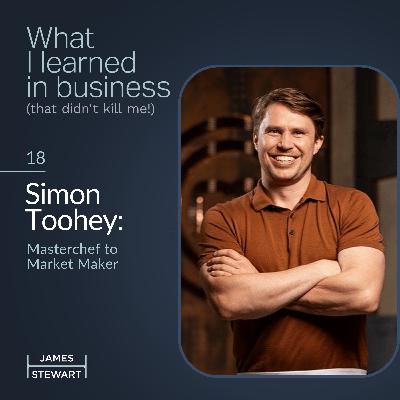
MasterChef finalist, television host and food entrepreneur Simon Toohey, is this week's guest.Many Australians know Simon from MasterChef Australia (Season 11 and “Back to Win”) or from his SBS series Freshly Picked. But behind the television profile is a far more layered story — one that spans cocktail bars in London, a Masters in Gastronomy in Edinburgh, plant-forward food innovation, pop-up smokehouses, consulting internationally, and now launching the fast-growing Geelong City Market, attracting thousands of visitors every Saturday.We discuss:Growing up in a food-loving family and learning to cook when independence forced itWorking in London hospitality, including at globally recognised bar Callooh CallayWhy he chose plant-forward cooking as his point of differenceThe reality of competing on MasterChef — the pressure, structure and exposureBuilding a media brand through Freshly Picked on SBSLaunching the Geelong City Market — vision, business case, government support, and startup challengesWhat he has learned about entrepreneurship in the food industryThe hard days, the pivots, and the principles he anchors toThis is a conversation about food — but also about reinvention, resilience, public profile, sustainability, and backing yourself when you see a gap in the market.If you are interested in food systems, food startups, media, or building a purpose-driven career, this episode is for you.About the ShowWhat I Learned in Business (That Didn’t Kill Me!) explores the real stories behind business leaders, founders and professionals — the successes, the setbacks, and the lessons learned along the way.DisclaimerThe views expressed by guests are their own and are shared for general informational purposes only. This podcast does not constitute financial, legal, investment or professional advice. Listeners should seek appropriate independent advice before making business or financial decisions.If you enjoyed this episode, please follow the show and share it with someone who might find value in it.You can connect with me via:LinkedIn: James H Stewart GAICDWebsite: www.jameshstewart.com Hosted on Acast. See acast.com/privacy for more information.
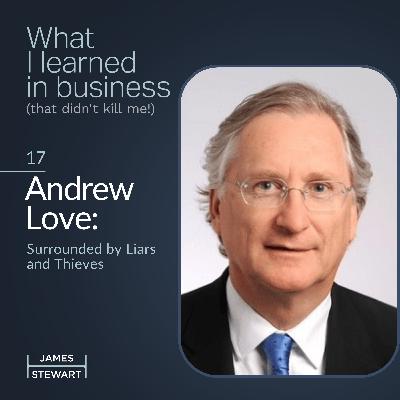
The collapse of Rothwells Bank in late 1988 signalled the beginning of the end for WA inc.In this episode, James H Stewart sits down with Andrew J Love, one of Australia’s most experienced former restructuring advisers and non-executive directors, for a deep dive on the collapse of Rothwells Bank and the beginning of the end for WA Inc in the late 1980's.Andrew spent nearly three decades as a senior partner at Ferrier Hodgson, and at just 34 years old, found himself advising the Western Australian Premier, Peter Dowding during one of the most politically charged and financially catastrophic episodes of the WA Inc era.Rothwells, was a merchant bank controlled by Laurie Connell, was authorised to take deposits from the public and ultimately collapsed owing enormous sums to creditors — many of them everyday “mum and dad” investors. The failure became a defining moment in Australian corporate and political history, and a formative experience for Andrew’s approach to risk, governance and transparency.The discussion traces how that baptism of fire shaped Andrew’s career — from leading mining restructurings, to stepping into boardrooms across mining, oil and gas, property, aged care and infrastructure.Andrew also reflects on his time as Director of multiple companies in the ming sector through volatile commodity cycles, offering candid insights into why boards fail, how cycles repeat, and what experienced directors learn to watch for.The conversation also takes an unexpected but revealing turn into the world of modern art. Andrew shares how he and his wife Amanda became deeply involved in the contemporary art community, including his time as Chair of the Museum of Contemporary Art in Sydney, and how the diversity of the modern art community help shape his thinking in the boardroom.This episode is a masterclass in lived experience — from advising governments in moments of crisis, to navigating boardrooms through boom and bust, and understanding why humility, scepticism and independence of thought matter more than ever in business.⚠️ Important DisclaimerThis podcast is provided for general information and discussion purposes only. The views expressed by the host and guest are personal in nature and reflect individual experiences at the time. Nothing in this episode constitutes, or should be relied upon as, legal, financial, investment, accounting or professional advice. Listeners should seek their own independent advice before making any decisions based on matters discussed in this podcast.Any references to historical events, companies or individuals are based on publicly available information and personal recollections, and are shared for educational purposes only. Hosted on Acast. See acast.com/privacy for more information.
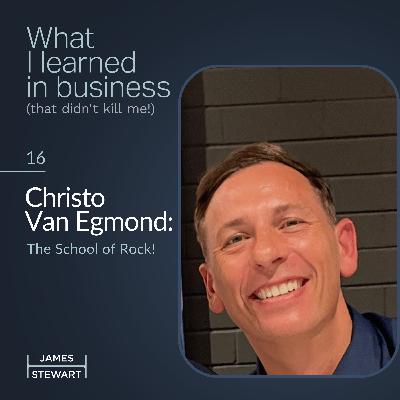
Christo Van Egmond — Inside the Business of Live MusicACDC is one of the worlds biggest rock bands.So what does it really take to bring the world’s biggest artists to Australia?In this episode James Stewart goes inside the live-entertainment industry with Christo Van Egmond, Managing Director of TEG Van Egmond, one of Australia’s most influential concert promoters.Christo quite literally grew up in the music business — selling merchandise for the Moscow Circus at eight years old, spending time around global artists such as Dire Straits and INXS as a child, and learning the craft alongside his father, the late Garry Van Egmond, a legendary promoter who helped shape modern touring in Australia.Christo lifts the curtain on an industry most of us only ever experience from the audience — revealing the commercial realities, financial risks and leadership judgement required to make live entertainment work at scale.In this episode, we explore:How the live-entertainment business actually works — promoters, agents, artists and venuesWhy promoters are often “betting the house” before a single ticket is soldThe impact of private-equity ownership on live entertainmentHow technology, data and AI are reshaping touring and audience engagementArtist anecdotes, industry insights and the risks that paid offThe leadership lessons Christo has learned along the way — including what he’d tell his younger self⚠️ DisclaimerThis podcast is for general information and discussion purposes only.The views and opinions expressed by the host and guest are their own and do not constitute financial, legal, investment or professional advice. Any references to companies, transactions, artists, tours or commercial arrangements are illustrative only and should not be relied upon as advice. Listeners should seek independent professional advice before making any decisions based on the content of this episode.🔗 Connect with the showIf you enjoyed this episode, please follow, rate and share What I Learned in Business (That Didn’t Kill Me).To connect with James Stewart, visit:🔹 LinkedIn: James H Stewart GAICD🔹 Website: www.jameshstewart.com Hosted on Acast. See acast.com/privacy for more information.
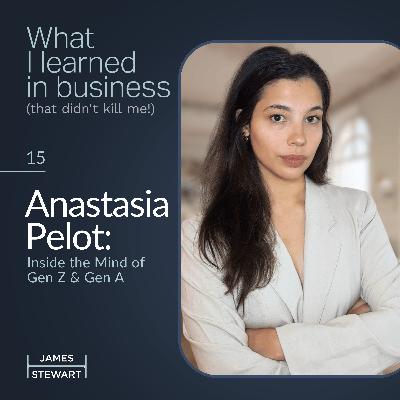
In this episode of What I Learned in Business (That Didn’t Kill Me!), James Stewart explores one of the most important and misunderstood challenges facing leaders, employers, marketers and boards today: how to understand and engage the next generations of consumers and workers—Gen Z and Gen Alpha.James is joined by Anastasia Pelot, founder of House of Context and a youth-culture strategist who helps organisations decode how young people think, behave, buy and communicate. Raised across Kenya, Greece, Germany, Syria and Lebanon before moving to the United States at 15, Anastasia brings a rare global and cultural lens to the question of identity, belonging and generational change.The conversation begins with Anastasia’s extraordinary upbringing as a Third Culture Kid (TCK), the cultural shock of settling in the US as a teenager, and how those experiences shaped her sensitivity to identity formation, emotional safety and belonging—themes that sit at the heart of her work today.James and Anastasia then dive deep into the real differences—and overlaps—between Gen Z and Gen Alpha, cutting through stereotypes and simplistic labels. Anastasia explains why she views youth not as a “segment” but as a signal—an early indicator of where culture, leadership, work and consumer behaviour are heading next.Key themes explored include:Why dividing young people strictly into Gen Z versus Gen Alpha can obscure deeper behavioural patternsGen Z as the first generation to experience “public adolescence” online, and the self-protective instincts that emerged as a resultGen Alpha as a more AI-native, immersive and sensory-driven cohortHow young people form identity, relationships and belonging in an algorithmic worldThe headwinds and tailwinds shaping youth development today, from mental health pressures to economic uncertaintyFrom there, the discussion shifts to a business and consumer lens, examining what authenticity really means to younger generations, how brands succeed—or fail—when engaging them, and why traditional measures of loyalty often miss what actually matters: community, participation, advocacy and influence.The episode also looks forward, exploring how emerging technologies such as AI, augmented and virtual reality, digital avatars and immersive platforms are reshaping expectations—and what businesses should be doing now to remain relevant.Finally, James and Anastasia discuss Australia’s new laws restricting access to social media for under-16s from December 2025, the potential cultural consequences, and how Gen Alpha in particular may adapt to a more regulated digital environment.This is a wide-ranging, practical and thought-provoking conversation for anyone trying to understand the future of leadership, marketing, culture and commerce—and the generations who will define it.⚠️ DisclaimerThis podcast is provided for general information and discussion purposes only. The views and opinions expressed by the host and guest are their own and do not constitute financial, legal, investment, regulatory or professional advice. Listeners should not rely on the information discussed in this episode as a substitute for independent advice tailored to their specific circumstances. While every effort has been made to ensure accuracy at the time of recording, no representations are made as to the completeness or ongoing accuracy of the information.🔗 Connect with the ShowTo learn more about the podcast, access episode notes, or explore upcoming guests, visit jameshstewart.com. You can also connect with James on LinkedIn at James H Stewart GAICD. Hosted on Acast. See acast.com/privacy for more information.
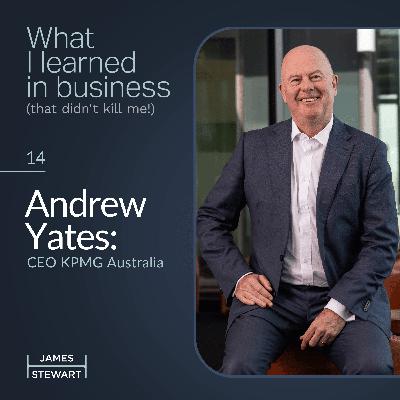
Big 4 accounting firms are never far from the spotlight.In this episode of What I Learned in Business (That Didn’t Kill Me!), James Stewart sits down with Andrew Yates, CEO of KPMG Australia, to explore what it really takes to lead one of the country’s largest and most scrutinised professional-services firms.Andrew oversees more than 10,000 people including c.800 partners across Australia, Papua New Guinea and Fiji, and manages some of the most complex audit, assurance and advisory relationships in the country, including Westpac, ANZ, Macquarie Bank, Qantas, IAG, Sydney Airport, Perpetual and the Reserve Bank of Australia.Before stepping into the CEO role, Andrew led KPMG’s national audit and risk consulting practice, worked in Hong Kong and New York, and guided audit engagements at the highest levels of corporate Australia. On Day 1 as CEO, he made headlines by introducing 26 weeks of fully paid parental leave for every new parent, signalling a bold stance on culture, inclusion and purpose.In this candid conversation, Andrew and James unpack:Andrew’s early years, his love of cricket — and the truth behind his nickname “The Kettle”How his international experience shaped his leadership philosophyThe transition from audit leader to CEO in a partnership model where you lead your peersThe inside story of managing culture and cohesion across a 10,000-person organisationHow KPMG responded to the PwC Australia tax scandal and the sector-wide scrutiny that followedThe heavy regulatory environment the Big 4 operate in — including Royal Commissions, Senate inquiries, ASIC oversight and global regulatorsThe future of audit vs non-audit services, and the UK’s “operational separation” modelThe impact of AI and emerging technologies on professional-services firms — structurally, commercially and culturallyA wide-ranging conversation with a leader who “likes to bowl straight at the stumps,” this episode offers a rare, inside view of the pressures, decisions and opportunities shaping the future of the professional-services industry.Disclaimer.The views and opinions expressed in this podcast are those of the individuals involved and do not represent the views, positions or policies of any organisations they are associated with, including KPMG Australia.Nothing in this episode is intended to constitute financial, legal, professional or other advice. Listeners should seek their own independent advice relevant to their circumstances. All discussion is for general information and educational purposes only.Connect.LinkedIn: www.linkedin.com/in/jameshstewartWebsite: www.jameshstewart.com Hosted on Acast. See acast.com/privacy for more information.
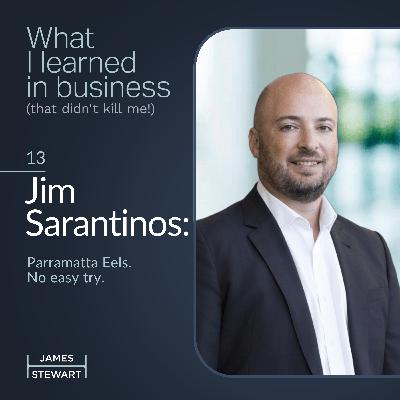
The Parramatta Eels are of Australia's Iconic sporting clubs. In this episode of What I Learned in Business (That Didn’t Kill Me!), James H Stewart sits down with Jim Sarantinos, CEO of the Parramatta Eels, one of the most passionately supported and closely scrutinised rugby league clubs in Australian sport.Before taking the reins at the Eels, Jim spent two decades at Ferrier Hodgson, helping navigate some of Australia’s most complex restructures — including Rick Damelian Group, Dick Smith Electronics, Topshop Australia, and Steinhoff Australia during its global financial challenges.But perhaps his most defining challenge came in 2016, when the Eels faced one of the biggest governance crises in NRL history — board sackings, salary cap breaches, and a club community in turmoil. Working alongside Ferrier Hodgson legend Max Donnelly, Jim helped rebuild trust, governance and transparency — lessons that continue to shape the club today.His story is also deeply personal. In his early thirties, Jim was diagnosed with non-Hodgkin’s lymphoma. Surviving that experience reshaped his outlook on life, leadership and what truly matters — lessons that echo across every part of this conversation.From crisis management to culture, and from chemotherapy to comeback, this is a conversation about resilience, accountability and the power of second chances — in business and in life.HighlightsWhat corporate turnarounds can teach sporting organisations about leadership and accountabilityInside the Eels’ 2016 governance crisis and the rebuild of its foundationsHow surviving cancer changed Jim’s leadership perspectiveThe continuing challenge of turning potential into performance at a professional sporting clubConnectFor more episodes, visit jameshstewart.comConnect on LinkedIn: James H Stewart GAICDFollow the show on Apple Podcasts, Spotify or wherever you listen.DisclaimerThis podcast is for educational and general discussion purposes only. The views expressed by guests are their own and do not represent the views of any organisation, past or present. Nothing discussed should be taken as financial, legal or professional advice. Listeners should seek their own professional guidance before acting on any information contained in this episode. Hosted on Acast. See acast.com/privacy for more information.
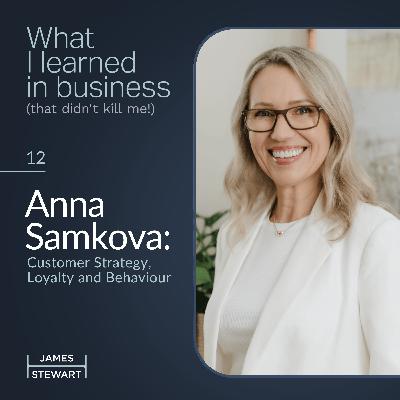
From surviving a devastating car accident in Ukraine to becoming one of Australia’s most influential thinkers in customer loyalty and digital strategy — this is the extraordinary journey of Anna Samkova.Born outside Kiev and raised in Odessa during the final years of the Soviet era, Anna grew up behind the Iron Curtain. At 20, she survived a serious accident that required multiple surgeries and left doctors unsure whether she would ever have children. Three years later, she migrated to Australia, unable to speak English and holding a degree that wasn’t recognised — only to find herself unexpectedly pregnant and unsure she could carry her baby to term.What follows is a story of grit, reinvention and unbreakable determination.Anna learned English while raising her daughter, studying marketing, working her first job at Ozito Tools and running her own health and wellness centre. She went on to design one of Australia’s earliest large-scale loyalty programs at Dodo Internet, before joining American Bank Note to help retailers nationwide shape customer behaviour and loyalty from the ground up.In 2011 she joined the PAS Group — home to Review, Black Pepper, Yarra Trail, JETS and more — eventually becoming Head of Digital and Loyalty for almost a decade. She later continued in this role with Brand Collective after PAS was acquired out of Voluntary Administration, giving her rare insight into customer loyalty during periods of severe financial distress and organisational change.Today, as Co-Founder of Albany Advisory, Anna helps boards and CEOs transform customer strategy, behavioural insight and digital capability into sustainable competitive advantage.In this episode we explore:Growing up behind the Iron Curtain and how it shaped her worldviewSurviving a life-altering accident and rebuilding her lifeMigrating to Australia with no English and no safety netJuggling study, work, motherhood and entrepreneurshipBuilding loyalty from scratch at Dodo InternetA decade driving digital transformation at PAS GroupWhat happens to customer loyalty during Voluntary AdministrationThe future of loyalty in an AI-driven worldThe difference between customer strategy, behaviour and loyaltyThis episode is a masterclass in resilience, customer insight and the psychology of loyalty in a world defined by disruption and digital acceleration.Disclaimer.The views and opinions expressed in this episode are those of the individuals involved and do not represent the views, policies or positions of any companies, boards or organisations referenced. Nothing in this podcast should be taken as financial, strategic, legal or professional advice. Listeners should always seek their own independent advice before making decisions relating to business, investment or governance.Connect with me.Website: https://jameshstewart.comLinkedIn: https://www.linkedin.com/in/james-h-stewart-gaicd-83b46a9 Hosted on Acast. See acast.com/privacy for more information.
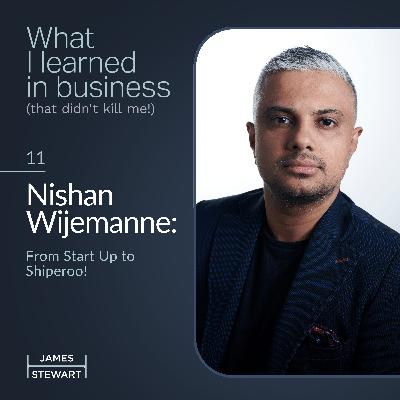
From escaping civil war in Sri Lanka at just six years old, to building one of the most successful automation start-ups in Australia and New Zealand, Nishan Wijemanne has lived a business journey defined by resilience, reinvention and relentless curiosity.In this episode, we trace Nishan’s extraordinary path — from his early years in Christchurch, to his foundational training at Dematic, one of the world’s largest logistics automation companies, and then to founding Cohesio Group. Cohesio quickly became a market leader, securing major clients such as The Reject Shop, Kmart and Wesfarmers’ Officeworks, and forging a groundbreaking partnership with Chinese robotics giant Geek+, before being acquired by German technology conglomerate Körber in 2019.Nishan then teamed up again with long-time collaborator Rizan Mawzoon to launch Shiperoo in 2023 — a next-generation fulfilment and returns platform using robotics, automation and a modern tech stack to give retail brands an Amazon-level customer experience without becoming Amazon themselves. Today, Shiperoo is backed by Australia Post, and supported by industry leaders including John King, Paul Greenberg and Gary Starr.We unpack the lessons Nishan learned building and selling Cohesio, the turning point that made him realise the returns economy was the next frontier of ecommerce logistics, and his views on the future of AI, automation and robotics in global supply chains.Whether you’re in retail, ecommerce, logistics, robotics or leadership — or you simply enjoy stories of grit and ambition — this is a conversation you won’t want to miss.⚠️ Strong DisclaimerThe views and opinions expressed in this episode are those of the guest and do not necessarily reflect the views of the host, James H Stewart, or the production team behind What I Learned in Business (That Didn’t Kill Me!). This podcast is for informational and educational purposes only and does not constitute business, financial, investment or professional advice. Listeners should seek their own independent advice before making decisions based on the content of this episode. All business examples, company references and personal experiences are presented in good faith and are based on publicly available information or the guest’s personal account. No responsibility is taken for any errors, omissions or changes in factual circumstances after the date of recording. Hosted on Acast. See acast.com/privacy for more information.
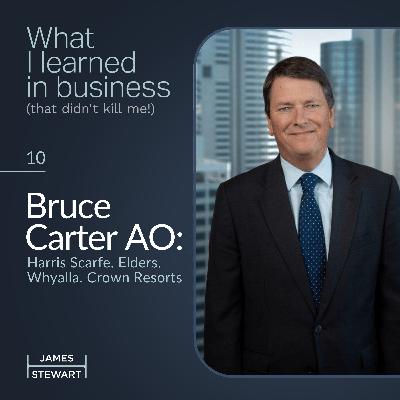
Bruce Carter AO is one of Australia’s most respected commercial advisors and arguably South Australia’s “Mr Fix-It”. Over more than three decades, Bruce has become the person governments, boards and business leaders call when the stakes are high and commercial pragmatism is in demand.Bruce built his career in corporate restructuring and insolvency as a young partner at EY before founding Ferrier Hodgson’s Adelaide office. From there he became pivotal in some of South Australia’s biggest corporate challenges — Harris Scarfe’s collapse, the Elders refinancing, and government advisory roles on the Port Pirie smelter, Whyalla steelworks, the Olympic Dam expansion, and more. In 2021 he was appointed to the Board of Crown Resorts as it faced an existential reputational crisis and three Government Royal Commissions.In this wide-ranging and deeply personal conversation, Bruce talks through:His early life, influences and pathway to becoming a restructuring and insolvency professionalTwo decades as an Australian Rules football umpire — and how quick decisions under pressure shaped his business instinctsThe collapse of Harris Scarfe — including the discovery of two sets of books, unreliable records, and the race to rebuild the businessElders’ turbulent GFC period — eight banks, competing agendas, and a 2.5-year workout that pushed the business to the edgeHis mid-career pivot and personal tragedy — the sudden loss of his wife Briony, and how it changed his life and directionWhyalla’s collapse, the economic shockwaves, and the complexity of saving a regional community’s largest employerCrown Resorts in 2021 — what it was like inside Australia’s most scrutinised boardroom during three simultaneous Royal Commissions and 110 board meetings in a single yearHis principles for dealing with extreme complexity and stakeholder chaosHow he approaches modern governance — integrity, transparency, humility, and never losing touch with the real businessBruce’s reflections are candid, thoughtful and packed with lessons for leaders, directors and anyone navigating high-pressure decisions.This is a rare window into the mindset of someone who has helped steer companies, governments and communities through their most pivotal moments.⚠️ DisclaimerThe views expressed in this episode are personal opinions only and do not represent the views of any organisation, board, government body or company with which Bruce Carter AO or James H. Stewart is or has been associated. Nothing in this episode constitutes financial, legal or professional advice. Listeners should seek their own independent advice before making any decisions based on the topics discussed.Contact James Website: jameshstewart.comLinked in: https://www.linkedin.com/in/james-h-stewart-gaicd-83b46a9/ Hosted on Acast. See acast.com/privacy for more information.
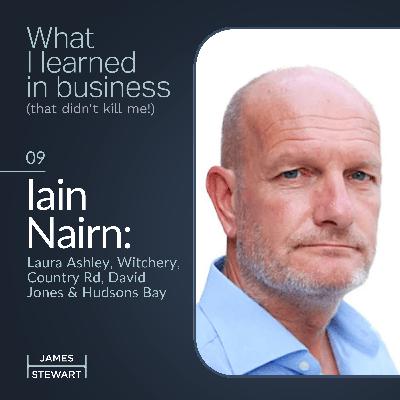
When Iain Nairn walks into a room, he brings over 40 years of global retail experience — and a lifetime of lessons in leadership, resilience, and reinvention.From his early days with Laura Ashley in the UK to record-breaking years at Country Road Group, a short but powerful stint at David Jones, and a complete digital reinvention of Hudson’s Bay in Canada, Iain has led through every challenge retail can throw at you — turnarounds, acquisitions, cultural clashes, and even a global pandemic.But its not all beer and skittles. In this conversation, we unpack:The challenges of managing the multi platform, multi geographic model of Laura AshleyThe success of Witchery and Country Rd when they were powerhouses of Australian retailThe challenges of business model transformation under pressureThe transformation of David Jones under new ownership — and why he chose to leave at the height of its successThe reinvention of Hudson’s Bay, one of the world’s oldest retailers, into a modern digital marketplace.What leadership really looks like when pressure is relentless, the future is uncertain, and you still have to inspire people to perform.It’s a powerful look inside the mind of a CEO who’s led billion-dollar brands, faced boardroom politics head-on, and still believes retail is a human story — not just a balance sheet.🔗 Connect with James StewartFor more insights, episode notes, and behind-the-scenes content, visit jameshstewart.com or connect on LinkedIn.⚠️ DisclaimerThe views and opinions expressed in this episode are those of the guest and host and do not represent the views of any organisation, employer, or affiliate. All information is provided for general discussion and educational purposes only and should not be relied upon as professional advice. Listeners should seek independent guidance before making any business, financial, or investment decisions. Hosted on Acast. See acast.com/privacy for more information.
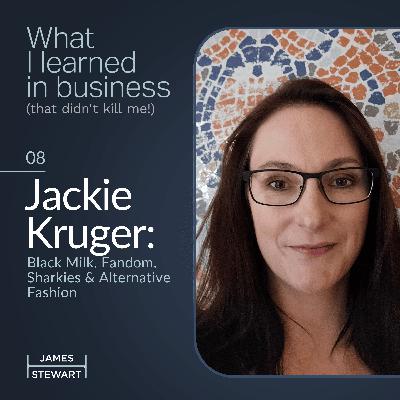
From a kitchen table in Brisbane to a global online fashion movement — this is the story of Black Milk Clothing.In this episode of What I Learned in Business (That Didn’t Kill Me!), host James H. Stewart sits down with Jackie Kruger, CEO of Black Milk Clothing, the cult Australian label known for its bold designs, product range diversity, and fiercely loyal community of Sharkies.Jackie shares how she stepped into the CEO role following the tragic passing of founder James “jL” Lillis, and what it takes to balance creativity, commercial discipline, and community trust in a brand built on authenticity. Together, they unpack:How Black Milk grew from James Lillis’s home sewing machine to an international e-commerce forceThe emotional and operational realities of leading through grief and transitionHow community and connection fuel long-term brand loyaltyThe leadership, culture and resilience lessons that apply to founders, executives and team leaders alikeThis conversation is a powerful look at creativity, courage, and the soul of a brand — and what it takes to carry that forward.🎧 Listen now on Acast, Apple Podcasts, Spotify, or wherever you get your podcasts.Connect with James:🌐 Website: https://jameshstewart.com🔗 LinkedIn: https://www.linkedin.com/in/james-h-stewart-gaicd-83b46a9⚠️ DisclaimerThe views and opinions expressed in this episode are those of the individuals involved and do not necessarily reflect those of the host, producers, or any affiliated organisations. The content is provided for general information and entertainment purposes only and should not be considered professional, financial, or business advice. Listeners should conduct their own research or seek independent professional guidance before acting on any information discussed. Hosted on Acast. See acast.com/privacy for more information.
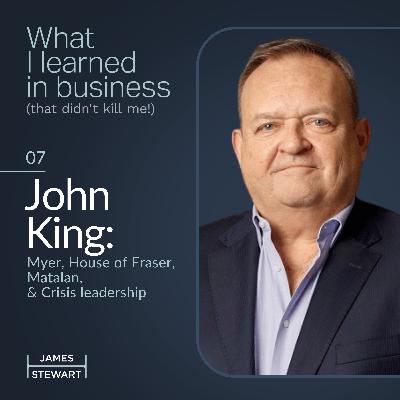
John King's global experience in retail and wholesale brands is unique. He led three major retailers—Matalan, House of Fraser, and Myer—through wildly different market cycles, against major headwinds and each with their own unique set of challenges. After an early career with Sainsbury's and Marks and Spencer in the UK, he spent 13 years in the wholesale sector, witnessed the 9/11 attacks on the Twin Towers in NYC, guided House of Fraser through the GFC and then Myer through Covid.If you are a retail nut, this episode is a not to be missed conversation where James and John discuss the levers that actually move the needle in legacy retail: footprint and lease strategy, loyalty economics, online performance, and what it takes to lead through a crisis, stabilise balance sheets and set a retail business up for success.DisclaimerThe views and opinions expressed in this episode are those of the guest and host and do not necessarily reflect the views of any associated companies, organisations, or affiliates.This podcast is intended for informational and entertainment purposes only and should not be relied upon as professional, financial, or legal advice.All rights reserved © What I Learned in Business (that didn’t kill me!)Connect with JamesWebsite: jameshstewart.comLinkedIn: James H. Stewart GAICD Hosted on Acast. See acast.com/privacy for more information.
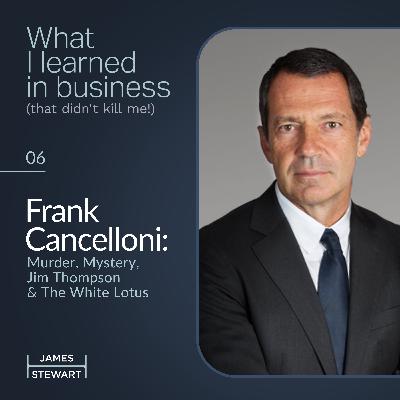
The Jim Thompson story is a spy mystery that leads to the launch of the Thai Silk industry In this episode, James H. Stewart sits down with Frank Cancelloni, Group CEO of Jim Thompson — Thailand’s most iconic names in silk design, craftsmanship, and culture.Frank shares his journey from leading global retail giants in Asia like Lacoste, Tommy Hilfiger, and Calvin Klein to reimagining Jim Thompson for a new era. Under his leadership, the brand has evolved far beyond silk — opening the spectacular Heritage Quarter in Bangkok, expanding into fashion, homeware, and hospitality, and even featuring in The White Lotus (Season 3).Together, James and Frank explore:How to lead transformation without losing authenticity or heritageThe lessons learned from global brand leadership across AsiaWhy culture, design, and storytelling matter more than everThe enduring mystery — and legacy — of Jim Thompson, the man who built it allThis is a conversation about reinvention, resilience, and respect for legacy — and a rare glimpse into what it takes to carry a 75-year-old brand into the future of global lifestyle retail.🎧 Listen now on Spotify, Apple Podcasts, or wherever you get your podcasts.Connect with JamesVisit jameshstewart.com for updates, speaking events, and more episodes of What I Learned in Business (that didn’t kill me!).⚖️ DisclaimerThe views and opinions expressed in this episode are those of the guest and host and do not necessarily reflect the views of any associated companies, organisations, or affiliates.This podcast is intended for informational and entertainment purposes only and should not be relied upon as professional, financial, or legal advice.All rights reserved © What I Learned in Business (that didn’t kill me!) Hosted on Acast. See acast.com/privacy for more information.
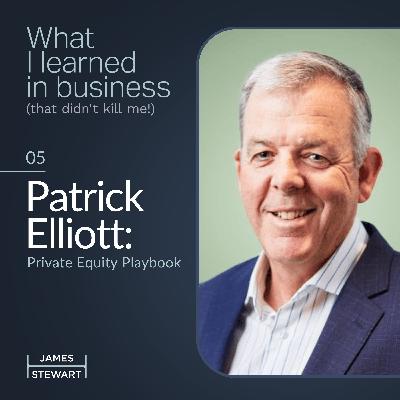
Private-equity veteran Patrick Elliott (Founding Partner, Next Capital; ex-Macquarie PE; former Chair of JB Hi-Fi) joins James H Stewart to unpack career pivots, equity investing and what they teach us about risk, governance, and value creation.Patrick traces his path from restructuring at Ferrier Hodgson to Private equity investing at Macquarie, then the leap to found Next Capital. We dig into the JB Hi-Fi MBI-to-IPO journey, the lessons from the collapse of Topshop Australia and how to approach turnarounds when the exit options are limited.Whether you’re a founder, operator, or investor, you’ll get a playbook in patient investing, strategic pivots, and why great businesses are built around great people.Practical, candid, and loaded with real examples.Key Takeaways:How to know when it’s time to change directionThe mindset required to transition from advisor to investorLessons from private equity and rethinking growth after crisis“If you’re not learning or growing, you’re already going backwards.” — Patrick ElliottAbout Patrick Elliott:Patrick Elliott is Co-Founder of Next Capital and former executive at Macquarie Bank. A graduate of IMD (Switzerland), he has led investments across retail, consumer, and industrial sectors — combining analytical precision with entrepreneurial instinct.Connect with Patrick:https://www.linkedin.com/in/patrick-elliott-374a3214bhttps://nextcapital.com.au🎧 Listen on Apple Podcasts or Spotify — and don’t forget to follow, rate, and share.What I Learned in Business (That Didn’t Kill Me!) — hosted by James H. Stewart, exploring the stories behind resilience, reinvention, and leadership.Connect with James:🌐 JamesHStewart.com | LinkedInDisclaimer: The views and opinions expressed in this podcast are those of the individuals involved and do not necessarily reflect the views of their organisations, affiliates, or of the host. This podcast is for general informational purposes only and should not be taken as business, financial, or professional advice. Listeners should seek their own independent advice before making decisions related to any topics discussed. Hosted on Acast. See acast.com/privacy for more information.
Di Gillett is a former fashion-design student, turned retailer, turned headhunter, turned podcaster — whose life and career are a study in resilience and reinvention.Di began her career in fashion and retail with Myer and Country Road, before spending more than 30 years in executive search, working with industry icon Andrew Banks at Talent 2 and later founding her own firm, Agora Partners. Today, she hosts the acclaimed Power of Women Podcast, and with almost 100 episodes, is approaching the top 1% of podcasters globally.In a deeply honest conversation, Di shares the moments that shaped her — from surviving sudden alopecia to navigating the loss of her sister-in-law, elite cyclist Amy Gillett, whose death inspired a national road-safety movement.Together, James and Di explore how adversity reshapes ambition, and why confidence and visibility matter more than ever for women in business.Key Takeaways:How to transform adversity into purposeWhy visibility and connection matter for women in businessThe importance of authenticity in leadership and storytelling“When you lose what defines you, you find out who you really are.” — Di GillettAbout Di Gillett:Di Gillett is a business founder, podcast host, and advocate for women’s empowerment. With a background in retail and recruitment — including work with Andrew Banks and Talent2 — Di brings a grounded perspective on leadership, courage, and finding voice through adversity.Connect with Di:https://www.linkedin.com/in/di-gillett-power-of-womenhttps://powerofwomen.com.au/🎧 Listen on Apple Podcasts or Spotify — and don’t forget to follow, rate, and share.What I Learned in Business (That Didn’t Kill Me!) — hosted by James H. Stewart, celebrating real stories of resilience, leadership, and growth.Connect with James:🌐 JamesHStewart.com | LinkedInDisclaimer: The views and opinions expressed in this podcast are those of the individuals involved and do not necessarily reflect the views of their organisations, affiliates, or of the host. This podcast is for general informational purposes only and should not be taken as business, financial, or professional advice. Listeners should seek their own independent advice before making decisions related to any topics discussed. Hosted on Acast. See acast.com/privacy for more information.
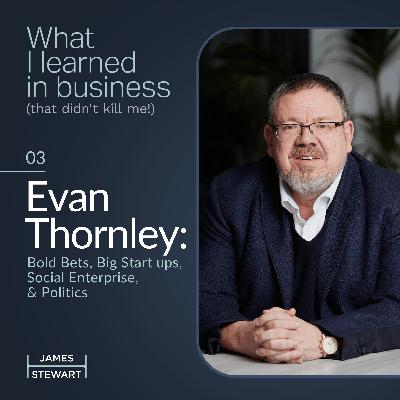
Evan Thornley is an entrepreneur, investor, reformer, and one of Australia’s most original thinkers on business and social change.Evan’s career has been anything but conventional. He co-founded LookSmart, one of Australia’s first tech companies to list on NASDAQ at the height of the dot-com boom, before riding out its spectacular crash. He later entered Victorian politics, led the global Better Place electric-vehicle venture, helped rescue ABC Learning through the creation of Goodstart Early Learning, and today chairs LongView, a business tackling housing affordability and generational inequality.James and Evan explore:What it was like to ride the rise and fall of the dot-com bubbleThe lessons from taking billion-dollar risks — and losingWhy Evan left politics to lead change from outside governmentThe story behind Goodstart and the ABC Learning rescueHow LongView is rethinking housing and wealth inequality in AustraliaWhat Evan's learned about resilience, risk, and purpose across every chapterThis is a conversation about big ideas, bold failures, and rebuilding success with meaning.Key Takeaways:How failure can sharpen strategy and convictionWhy purpose-driven business models are the futureWhat leadership looks like in times of technological and ethical disruption“The line between visionary and fool is very thin — but it’s where all the progress happens.” — Evan ThornleyAbout Evan Thornley:Evan Thornley is an Australian tech entrepreneur, investor, and impact leader. He co-founded LookSmart, led Better Place Australia, was a driving force behind the GoodStart consortium that rescued 650 childcare centres from the financial collapse of ABC learning and now heads LongView, a purpose-driven property business focused on long-term wealth and housing reform.Connect with Evan:LinkedIn | https://longview.com.au🎧 Listen on Apple Podcasts or Spotify — and don’t forget to follow, rate, and share.What I Learned in Business (That Didn’t Kill Me!) — hosted by James H. Stewart, exploring the real lessons from business, innovation, and resilience.Connect with James:🌐 JamesHStewart.com | LinkedInDisclaimer: The views and opinions expressed in this podcast are those of the individuals involved and do not necessarily reflect the views of their organisations, affiliates, or of the host. This podcast is for general informational purposes only and should not be taken as business, financial, or professional advice. Listeners should seek their own independent advice before making decisions related to any topics discussed. Hosted on Acast. See acast.com/privacy for more information.
Paul Howes is one of Australia’s most recognisable public figures and a leader whose career has spanned the union movement, politics, and corporate life.Raised by a single mother in Sydney’s Blue Mountains, Paul became the youngest ever National Secretary of the Australian Workers’ Union, rising to national prominence during the Beaconsfield mine disaster. He later became a key player in Labor’s 2010 leadership drama which led to Julia Gillard becoming Australia's first female prime minister— an experience he chronicled in his book Confessions of a Faceless Man.Today, Paul reflects on the lessons learned from crisis leadership, public scrutiny, and career transformation — from the factory floor to the boardroom. He also discusses his work with Beyond Blue, and his next chapter as CEO of Tenet Advisory & Investments, founded by Luke Sayers.This is a candid, insightful, and at times surprising conversation about resilience, reinvention, and what leadership looks like under the spotlight.Key Takeaways:How to lead during crisesWhy empathy mattersThe value of reinvention“Leadership isn’t about power — it’s about accountability when it matters most.” — Paul HowesAbout Paul Howes:Paul Howes is the incoming CEO of Tenet Advisory and Investments (from January 2026), former National Secretary of the Australian Workers’ Union, National Managing Partner of KPMG's Enterprise and Consulting divisions and a respected voice on business transformation and social reform. He served on the National COVID-19 Advisory Board and the Beyond Blue Board, bringing together business and community leadership.Connect with Paul:https://www.linkedin.com/in/pahowes/https://tenetadvisory.com.au/🎧 Listen on Apple Podcasts or Spotify — and don’t forget to follow, rate, and share.What I Learned in Business (That Didn’t Kill Me!) is hosted by James H. Stewart — senior commercial advisor uncovering the real stories behind leadership and resilience.Connect with James:🌐 JamesHStewart.com | LinkedInDisclaimer: The views and opinions expressed in this podcast are those of the individuals involved and do not necessarily reflect the views of their organisations, affiliates, or of the host. This podcast is for general informational purposes only and should not be taken as business, financial, or professional advice. Listeners should seek their own independent advice before making decisions related to any topics discussed. Hosted on Acast. See acast.com/privacy for more information.
loading
Comments 
loading