


 Claim Ownership
Q is stand for QUALITY
Subscribed: 0Played: 2
Subscribe

© Veljko Massimo Plavsic
Description
Essendo un esperto nell'ambito della qualità ho deciso di condividere con voi le conoscenze professionali accumulate in 30 anni di lavoro
Become a supporter of this podcast: https://www.spreaker.com/podcast/q-is-stand-for-quality--6499607/support.
Become a supporter of this podcast: https://www.spreaker.com/podcast/q-is-stand-for-quality--6499607/support.
17 Episodes
Reverse
Hoshin Kanri: A Socio-Technical System for Organizational Alignment and LearningExecutive SummaryHoshin Kanri is frequently misunderstood as a simple strategic planning tool, but its true power lies in its function as a dynamic, socio-technical process that aligns an entire organization. It integrates every level, both vertically and horizontally, through a shared purpose, collaborative problem-solving, and continuous learning. A common failure in its application is superficial adoption—treating it as a rebranded Management by Objectives (MBO) or Objectives and Key Results (OKR) system focused on technical forms like the X-matrix. This approach ignores the crucial social dimensions of collaboration, communication, and coaching that are the essence of the process.The success of exemplary practitioners like Toyota, with over 60 years of experience, is rooted in the deep integration of Hoshin Kanri with two core human processes: rigorous problem-solving to understand root causes and on-the-job development (OJD), where every leader is a coach responsible for developing their team's capabilities. Effective implementation requires a fundamental cultural shift towards shared ownership and collaborative learning, rather than merely adopting a new planning template. Ultimately, Hoshin Kanri is a journey of organizational learning, where the goal is not perfection but a relentless movement toward a desired state or "True North."Defining Hoshin Kanri Beyond the ToolsWhile often associated with specific forms and templates, Hoshin Kanri is fundamentally a management system that unites strategy with daily execution. Its success depends on viewing it as an integrated system of people and processes, not just a technical procedure.The Socio-Technical DualityThe core of Hoshin Kanri is its nature as a socio-technical process. Many implementations fail because they "jump to the tool" and focus exclusively on the technical aspects (e.g., filling out forms) while neglecting the essential social components.• Social Processes: These include collaborative planning, communication across departments, coaching to build capability, and robust deliberation to gain alignment.• Technical Processes: These include the structured application of tools and methodologies like PDCA (Plan-Do-Check-Act) to achieve strategic goals.The real essence of Hoshin Kanri is found in addressing the "how" and the "who": how the organization will execute and learn dynamically, and who will be involved to ensure alignment both horizontally and vertically.Core Purpose and the Ideal StateThe ultimate aim of Hoshin Kanri is to achieve a state of complete organizational alignment, described as a type of "organizational nirvana" or "True North." In this ideal condition:• Every team member, from 10 to 100,000, is fully aligned with the organization's purpose and vision.• Individuals understand how their personal contributions connect to the broader strategy.• Teams have a laser-focused view of their goals and how achieving them supports others.• The planning process is a collaborative effort involving leaders, peers, and team members, leading to shared commitment.Learning from obstacles is shared collectively, enabling adaptive responses to changing conditions.Practitioners understand this perfect state is an unreachable ideal, but the Hoshin Kanri process keeps the organization moving ever closer toward it.Become a supporter of this podcast: https://www.spreaker.com/podcast/q-is-stand-for-quality--6499607/support.
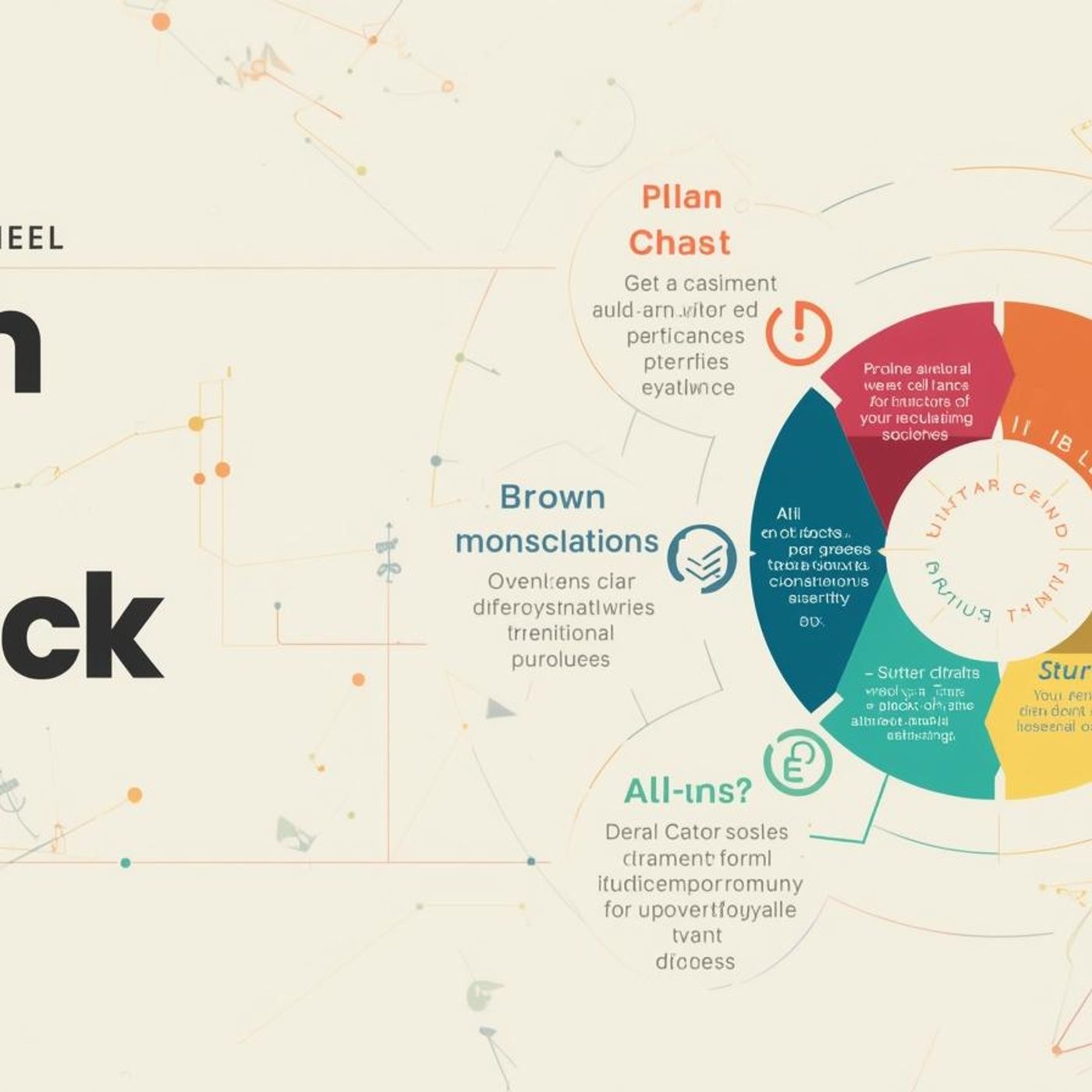
Using PDCA method on your daily life can bring evident advantage and benefits... discover how by hearing my podcastUsare il metodo PDCA nella vita quotidiana può avere dei vantaggi...scopri come potresti fare ascoltando questo podcast Become a supporter of this podcast: https://www.spreaker.com/podcast/q-is-stand-for-quality--6499607/support.
Transformation Transition: A Briefing on Quality 5.0Executive SummaryThis document synthesizes key insights from an analysis of Quality 5.0, an emerging paradigm in quality management. As a product of Industry 5.0, Quality 5.0 represents a significant evolution, building upon the technological foundations of Quality 4.0 while introducing new, critical dimensions: human-centricity, sustainability, resilience, and social responsibility. This shift blends advanced technology with a deeply human and ethical focus. The successful implementation of Quality 5.0 hinges on overcoming substantial challenges, including cultural resistance, complex technology integration, and significant workforce skill gaps. A central tenet of this transformation is that the labor force must adapt, leading to an evolution in job roles and required skills. Ultimately, Quality 5.0 is positioned as a foundational element that contributes to the broader concept of Society 5.0—a Japanese vision for a future where technology and human needs are harmoniously integrated to enhance quality of life and drive sustainable development.Become a supporter of this podcast: https://www.spreaker.com/podcast/q-is-stand-for-quality--6499607/support.
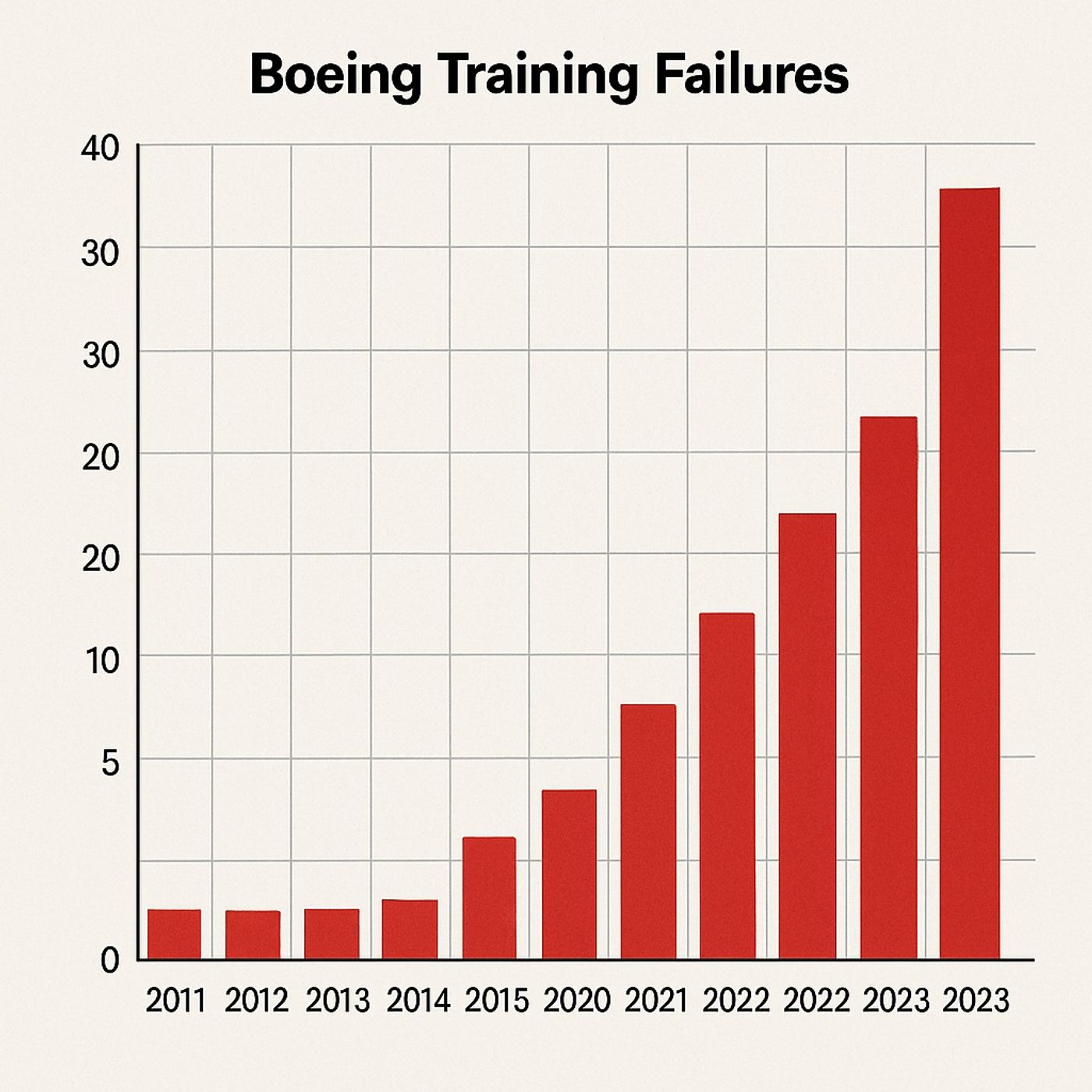
The article from Manufacturing Dive reports on the National Transportation Safety Board's (NTSB) findings regarding the January 2024 Alaska Airlines door plug blowout, attributing the incident to Boeing's inadequate training, guidance, and oversight of its factory workers. The NTSB's investigation revealed that missing bolts were not replaced after repairs at a Boeing factory and that proper records and inspections were not completed. Furthermore, the report criticizes the Federal Aviation Administration (FAA) for its ineffective compliance enforcement and lack of oversight on Boeing's safety management system. Consequently, the NTSB issued safety recommendations for both Boeing and the FAA, aiming to prevent future incidents through improved training, revised processes, and enhanced regulatory supervision.Become a supporter of this podcast: https://www.spreaker.com/podcast/q-is-stand-for-quality--6499607/support.

The provided sources explore the multidimensional concept of quality within organizations, particularly focusing on the Italian context. They discuss how quality extends beyond mere compliance, evolving into a strategic and cultural imperative that profoundly impacts customer satisfaction, organizational efficiency, and long-term sustainability. The texts identify key obstacles to effective quality implementation, such as cultural resistance, cost perception, skill gaps, and time pressure, while also examining various quality management models like ISO 9001, TQM, Lean, Six Sigma, and Agile. Finally, the sources highlight the crucial role of leadership, effective communication, continuous training, digital transformation, and social responsibility in successfully embedding quality as a core organizational value.Become a supporter of this podcast: https://www.spreaker.com/podcast/q-is-stand-for-quality--6499607/support.

Become a supporter of this podcast: https://www.spreaker.com/podcast/q-is-stand-for-quality--6499607/support.

W. Edwards Deming è stato un influente statistico e consulente, considerato uno dei padri della gestione della qualità. Il suo lavoro ha trasformato le pratiche di produzione, specialmente in Giappone dopo la Seconda Guerra Mondiale, dove i suoi insegnamenti hanno portato a miglioramenti significativi e alla creazione del Premio Deming. Deming ha sviluppato i 14 Punti per la Gestione e il Sistema di Conoscenza Profonda, principi fondamentali per il miglioramento continuo e la leadership efficace. La sua filosofia enfatizza il processo decisionale basato sui dati, la riduzione della variabilità e il coinvolgimento dei dipendenti. Il suo impatto si estende oltre la produzione, influenzando anche l'istruzione e altri settori. L'eredità di Deming continua a plasmare la gestione moderna, sottolineando l'importanza della qualità per il successo aziendale.Become a supporter of this podcast: https://www.spreaker.com/podcast/q-is-stand-for-quality--6499607/support.
Become a supporter of this podcast: https://www.spreaker.com/podcast/q-is-stand-for-quality--6499607/support.
Become a supporter of this podcast: https://www.spreaker.com/podcast/q-is-stand-for-quality--6499607/support.
Become a supporter of this podcast: https://www.spreaker.com/podcast/q-is-stand-for-quality--6499607/support.
Become a supporter of this podcast: https://www.spreaker.com/podcast/q-is-stand-for-quality--6499607/support.

Become a supporter of this podcast: https://www.spreaker.com/podcast/q-is-stand-for-quality--6499607/support.

Become a supporter of this podcast: https://www.spreaker.com/podcast/q-is-stand-for-quality--6499607/support.

Panoramica dell'MSA L'MSA è un approccio sistematico per valutare l'efficacia e l'affidabilità dei sistemi di misurazione in vari settori, in particolare nel manifatturiero. Il suo scopo principale è identificare e quantificare le variazioni introdotte dai processi di misurazione, assicurando che i dati raccolti siano accurati e affidabili. L'MSA è fondamentale per il controllo della qualità e per processi decisionali basati su dati solidi.Become a supporter of this podcast: https://www.spreaker.com/podcast/q-is-stand-for-quality--6499607/support.
Become a supporter of this podcast: https://www.spreaker.com/podcast/q-is-stand-for-quality--6499607/support.
Become a supporter of this podcast: https://www.spreaker.com/podcast/q-is-stand-for-quality--6499607/support.
Become a supporter of this podcast: https://www.spreaker.com/podcast/q-is-stand-for-quality--6499607/support.
Comments


Download from Google Play

Download from App Store
 United States