


 Claim Ownership
Scaling Your Healthy Food Product
Subscribed: 0Played: 8
Subscribe

© 2025
Description
If you are an enterepreneur or solopreneur selling healthy/ "Better-for you" product to the world looking to scale and commercialize, this podcast is for you.
In this podcast you will learn from a food scientist with 12 years plus experience in the food industry. I have successfully helped companies develop, scale and launch their healthy food products.
If you are looking to scale your healthy food product by having it listed in more healthy food stores and displayed on more grocery store chains shelves, you are in the right place. This podcast will provide you with actionable steps and tips to help you succeed. You will learn how to correctly prepare your product to scale and commercialize like a pro.
Stay tuned.
In this podcast you will learn from a food scientist with 12 years plus experience in the food industry. I have successfully helped companies develop, scale and launch their healthy food products.
If you are looking to scale your healthy food product by having it listed in more healthy food stores and displayed on more grocery store chains shelves, you are in the right place. This podcast will provide you with actionable steps and tips to help you succeed. You will learn how to correctly prepare your product to scale and commercialize like a pro.
Stay tuned.
62 Episodes
Reverse
If your business has a single point of failure, you don't have a supply chain—you have a countdown timer. In today's environment, supply chain disruptions are no longer rare. From climate impacts to certification requirements, relying on one supplier can quietly put your product—and your retail opportunities—at risk. In this episode, we explore why secondary sourcing is no longer optional and how it gives founders leverage, flexibility, and resilience as they scale. You'll learn: • Why dual sourcing reduces risk and improves cost control • The hidden risks of relying on one supplier • How certifications and compliance impact supplier decisions • Why secondary suppliers create both protection and opportunity • How to build a resilient supply chain before you need it 🎁 Download the Secondary Supplier Readiness Checklist for Food Founders to help you evaluate and secure the right suppliers: [Get Checklist Here] If you're building your product and preparing to scale, this episode will help you move from reactive decisions to strategic supply chain planning. If you are thinking about scaling in Q2-Q4 or want to understand exactly where you stand, do not guess. Take the Scale Up and Retail Readiness Quiz.
Many food founders believe the hardest part of building a food brand is developing the product. Perfecting the recipe. Designing the packaging. Getting those first customers. But the real challenge often begins after the product works. There is a stage in building a food brand that almost no one talks about—the stage between product development and true scale. This is where many founders stall as new questions begin to surface around manufacturing, margins, shelf life, and operational structure. In this episode, we go behind the scenes of scaling a food business and explore why this middle stage is often the most challenging for founders. In this episode we discuss • Why product development is only the first step in building a food brand • The hidden operational challenges that appear when founders begin scaling • Why manufacturing decisions impact margins and product consistency • The shift from product developer to business builder • How preparation and structure support sustainable growth Many founders discover during this stage that they don't necessarily need more information—they need structure and guidance as they navigate scaling decisions. That's exactly why the Emerging Food Business Hub was created. The Hub is designed for founders who have moved past the idea stage and have a product that works but are still building the operational foundation behind their business. It's also a great starting point for founders who are not yet ready to invest in the more intensive Retail Readiness Program but want continued support as they prepare to scale. Inside the Hub, founders can continue learning, ask questions, and build the systems behind their product before taking the next step toward retail. Scaling a food business doesn't happen in one leap. There are stages along the way, and the stage between product development and scale is where the real work begins. If you are thinking about scaling in Q2-Q4 or want to understand exactly where you stand, do not guess. Take the Scale Up and Retail Readiness Quiz. #FoodFounder#CPGBrand#ScalingaFoodBusiness#FoodEntrepreneur#FoodManufacturing#CoManufacturer#WomeninFood
Developing the product is only the beginning. Many food founders stall after product development when new challenges emerge around manufacturing, margins, shelf life, and retail readiness. In this episode, we explore why scaling requires a shift from product development to building the structure needed to support growth. If you are thinking about scaling production or working with a co-manufacturer, this episode will help you assess whether you are truly ready. If you're navigating this stage, join my upcoming live workshop Finding the Right Co-Manufacturer on March 12, where we'll walk through how to evaluate readiness, ask the right questions, and choose a manufacturing partner strategically. Register here If you are thinking about scaling in Q2-Q4 or want to understand exactly where you stand, do not guess. Take the Scale Up and Retail Readiness Quiz. #food founders, #scaling food business, #manufacturing challenges, #retail readiness, #food safety, #co-manufacturing, #margins, #product development, #food industry, #business growth
Choosing the wrong co-manufacturer can quietly destroy your margins, product consistency, and retail credibility. Co-manufacturing does not create readiness. It reveals it. In this episode, we break down how scaling amplifies weaknesses, why fragile margins collapse under minimum order quantities, how equipment changes impact formulation and shelf life, and what retail buyers expect before saying yes. If you are evaluating co-manufacturers this year, join my upcoming live workshop, Finding the Right Co-Manufacturer, where we walk through readiness criteria, alignment questions, margin protection, and red flags to avoid. Register here and scale responsibly. If you are thinking about scaling in Q2-Q4 or want to understand exactly where you stand, do not guess. Take the Scale Up and Retail Readiness Quiz.
At some point, more information is not the answer. If you are preparing to scale into retail but still feel uncertain, the real gap may not be knowledge. It may be structure. In this episode, I break down the difference between learning mode and execution mode, why retail buyers think in risk, and how to know when it is time to move into structured support. If retail is on your horizon in the next 6 to 12 months, this episode will help you determine your next step. Considering Retail Readiness? Retail Readiness Cohort 2 begins Thursday. Enrollment happens through a short qualification call where we assess whether this program is the right container for your current stage. Schedule a Retail Readiness Fit Call here: #Retail Readiness #Food Business #Scaling a Food Business #Retail Strategy
In this conversation, Jacinta Kemboi discusses the critical role of trade shows in scaling food businesses and emphasizes the importance of understanding product readiness before presenting to retailers. She introduces the ETS method framework, which helps entrepreneurs evaluate their product's state and prepare for successful market entry. The conversation highlights the risks of rushing into retail without proper preparation and the significance of maintaining trust with buyers. Takeaways -Go to trade shows as soon as possible. -Understand your product's readiness before scaling. -Gauge interest at trade shows to inform product development. -The ETS method helps evaluate product stages. -Skipping preparation stages can jeopardize success. -Trust with retailers is crucial for long-term relationships. -First impressions matter in retail presentations. -Use market testing to refine your product. -Be proactive in knowing your product's status. -Take the quiz to assess your product's readiness. Chapters 00:00 The Importance of Trade Shows for Product Launch 02:40 Understanding Product Readiness and Retail Relationships 05:28 The ETS Method Framework for Scaling Products 08:21 Preparing for Retail: The Scale-Up and Readiness Quiz Take the Scale Up and Retail Readiness Quiz and find out where your product stands. Until next week keep scaling your food business.
Margins don't disappear overnight, they slowly erode. Ingredient costs rise, transportation increases, retail fees stack up, and suddenly a once-profitable product is barely breaking even. In this episode, Jacinta tackles a question many food founders wrestle with: Can you improve margin by swapping or reducing an ingredient without changing your product? The answer is yes, but only when it's done strategically. Jacinta breaks down how to evaluate ingredient changes while protecting flavor, coordinating labeling and packaging, and keeping customer trust intact. If you have a signature SKU you don't want to lose, this episode will help you protect both your product and your profit. In this episode, you'll learn: Why margin erosion quietly kills food businesses How to identify the ingredient hurting your margins most When reducing vs swapping makes sense Why flavor, labeling, and packaging must be considered together How small formulation shifts can keep legacy products profitable Key takeaway: Margin can be improved without losing customers when formulation, packaging, and customer experience are treated as one system. Perfect for: Food founders in retail or preparing to scale who feel squeezed by rising costs. Next step: If your margins are tightening and you're unsure what to adjust, start with clarity. 👉 Take the 3-Minute Product Scale up & Retail Readiness Quiz to see where your product and margins stand.
Today's episode is about the power of focus and why growth does not come from doing everything at once. Jacinta Kemboi invites food founders to pause and identify the one thing that will move their business forward this season. Not five things. Not ten. One. Inspired by a family trip to Kenya, Jacinta shares a story about her youngest son's laser focus on seeing a lion during a safari. Despite distractions along the way, that clarity made all the difference. The same kind of focus, she explains, is what food founders need when scaling their Better for You products. In this episode, Jacinta explores why scattered focus slows growth, how to identify your true priority, and why areas like packaging, shelf life, and margins cannot be ignored if you want to scale sustainably. Your product has already been validated. People want it. Now the question is simple. What is your lion? If you need help finding your next focus, Jacinta invites you to take the Scale Up and Retail Readiness Quiz for clarity on your next step. #foodbusiness #scaling #retail #productgrowth #entrepreneurship #businessstrategy #directtoconsumer #packaging #shelflife #profitmargin
High-protein isn't going anywhere — and it's shaping how food products will be built and judged in 2026. But many food founders are asking the real question: Are we building better products, or just chasing higher protein numbers? I sat down with Melissa Fernandez, Assistant Professor in the School of Nutrition Sciences and a Registered Dietitian, to cut through the noise and rethink what high-protein should actually mean in product development. We talk about responsible protein communication, realistic targets for meals and snacks, whole-food protein vs isolates, and why growing concern around ultra-processed foods may change consumer expectations. Melissa also shares insights from her research on online grocery and food delivery — why convenience is accelerating, what it may be costing us in health and food skills, and why meal kits or online groceries can be a better compromise than frequent restaurant delivery. If this made you pause and rethink how ready your product really is for scale in 2026, the next step is clarity. 👉 Take the Scale-Up & Retail Readiness Quiz to see where your product stands and what to focus on next. Takeaways High protein is a continuing trend in food products. Protein needs vary based on individual health goals. Aim for 15 grams of protein per meal and 8 grams per snack. Consumers often do not eat foods in isolation. Choosing whole food sources of protein is preferable to isolates. The food industry is moving towards less processed options. Target audience should be considered in product development. Reliable sources of nutrition information are crucial for founders. Avoid unnecessary sugars and fats in products. The protein trend is expected to persist in the coming years. 👉 Celebrating 52 episodes with a giveaway for food founders. Enter to win essential tools used every week.
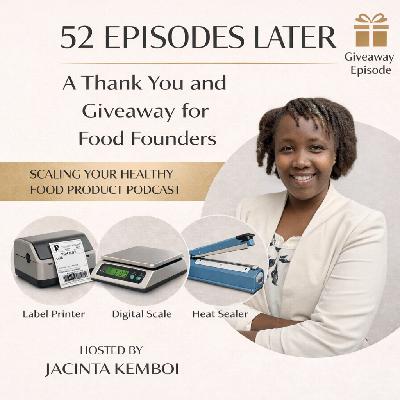
This episode is a celebration. When I set the goal to record 52 podcast episodes, I committed to showing up consistently for food founders navigating the real work of building and scaling their businesses. Reaching this milestone reinforced something I see every day in my work: growth does not come from doing everything at once. It comes from building simple systems and using them consistently. In this episode, I'm reflecting on what recording 52 episodes taught me about consistency, focus, and the behind-the-scenes work that actually supports growth for direct-to-consumer food brands. To say thank you, I'm hosting a giveaway created specifically for DTC (Direct to Consumer) food founders. These are three tools I see founders use every single week — practical essentials that save time, protect margins, and help your brand show up professionally. Giveaway: DTC Food Founder Toolkit One winner will receive: A label printer for shipping and product labels A digital scale for accurate batching and portioning A heat sealer for clean, professional packaging How to Enter the Giveaway There are two ways to enter. Option 1: Podcast Listener Entry Listen to this episode of Scaling Your Healthy Food Product Leave an honest review on Apple Podcasts or Spotify Submit the giveaway entry form with a screenshot of your review Option 2: Quiz Entry Complete the Scale Up and Retail Readiness Quiz Submit the giveaway entry form using the email address where you received your quiz results Entry Rules One entry per method Founders who complete both methods receive two entries Maximum of two entries per founder or business Important Details Open to food founders selling direct to consumer Open to Canada and U.S. residents Giveaway closes on January 15th, 2026 at 11:59 PM EST Winner will be announced via email and on the podcast-January 16th Whether you're still producing in small batches or refining your fulfillment systems, this episode — and this giveaway — is a reminder that small operational upgrades can make a big difference as you grow.
In this year-in-review episode, I reflect on what 2025 taught me about scaling food businesses and the conversations founders truly need as they grow from kitchen production to retail readiness. We revisit key themes from the year including retail readiness beyond buyer meetings, shelf life and formulation stability, co-manufacturing preparation, and the leadership decisions that quietly shape long-term success. I also share what's ahead for the podcast in 2026, including more ETS Method–aligned episodes, deeper technical discussions, and founder spotlights focused on real scale-up decisions. If 2026 is the year you want to scale with clarity, confidence, and intention, this episode will help you understand what to focus on next. If you are thinking about scaling in Q1 or want to understand exactly where you stand, do not guess. Take the Scale Up and Retail Readiness Quiz.
In this milestone 50th episode, Jacinta Kemboi reflects on the journey of building the Scaling Your Healthy Food Product podcast and the founders who have grown alongside it. She dives into the power of specialty food stores, one of the most overlooked but highest leverage opportunities for emerging food brands. Jacinta breaks down: • Why specialty food stores are one of the fastest ways to validate demand and build early retail traction • How to confidently approach store owners and buyers without overthinking it • The hidden advantages of local listings, from real-time product feedback to increased visibility in your own community • Why follow up matters more than the first outreach • The relationship building strategies that help you become a preferred brand on their shelves This episode is a practical nudge to take action. Identify the specialty stores in your area, reach out with intention, and prepare yourself for a strong 2026 retail push. If you have been waiting for the right time to knock on local doors, this episode will give you the clarity and the confidence to start now. If you are thinking about scaling in Q1 or want to understand exactly where you stand, do not guess. Take the Scale Up and Retail Readiness Quiz. Takeaways This is podcast number 50, a milestone worth celebrating. Consider listing your products in specialty stores. Specialty stores have fewer regulations than larger retailers. Starting local can significantly boost your brand visibility. Engaging with local stores can provide valuable consumer feedback. You can maintain a higher profit margin with specialty stores. Farmers markets are great for initial product testing. Follow up with store managers to stay top of mind. Aim for a manageable number of stores to approach. 2026 is a year for growth and new opportunities.
Many food founders reach a point where they ask the same thing: "How do I actually know if my product is ready for bigger production runs, wholesale, or a co-manufacturer?" It is easy to feel almost ready, but without a clear assessment, it is just guesswork. Food founders either move too early and get stuck in reformulations, packaging issues, and expensive delays, or they hold back because they are unsure what ready really looks like. After helping brands launch millions of units into retail, I created a simple way to evaluate readiness using my ETS Method Framework: Evaluate, Test and Improve, Scale. In this episode, I walk you through how to spot the gaps in your product, process, packaging, supply chain, and business, and how to fix them before scaling. You will learn what true retail readiness looks like and the steps that make scale up smoother, faster, and more profitable. If you are thinking about scaling in Q1 or want to understand exactly where you stand, do not guess. Take the Scale Up and Retail Readiness Quiz. Takeaways Can I produce my product consistently batch to batch? Do I know my exact process at this point? If you have any doubt in terms of those questions... Those questions can really let you think about the evaluating piece. Chapters 00:00 Introduction to Scale Up and Retail Readiness Assessment 00:27 The Importance of Process Refinement

In this episode, I sit down with Dezie St. Hilaire, co-founder of The Sea Moss Guy & Co, to unpack how a simple wellness habit turned into a fast-growing sea moss brand — and why wholesale became the unexpected growth engine behind their business. We cover the move from home production to a commercial kitchen, navigating perishable shipping, supplying cafés and wellness studios, and the real work behind running a business with your spouse. If you're an emerging founder considering wholesale, this is a story you need to hear. Attend upcoming workshop on finding the right co-manufacturer and the hidden gaps that cost founders time and money. If co-manufacturing is on your horizon, you will not want to miss it. Register Now to Attend the Free Workshop here https://camaresearch.com/resources to Download resources including "Questions to Ask Potential Co-Manufacturers" to help you as you grow your better-for-you food brand. Schedule a free hot seat strategy call here
In this episode, I break down a question almost every emerging food founder asks: When is the best time to reach out to a co-manufacturer? The truth is simple. There is no perfect time. There is only a prepared time. Co-manufacturers do not expect perfection. They expect clarity in your recipe, process flow, packaging direction, volume estimates, and cost targets. When you have these pieces, anytime can be the right time. I also share why Q4 is one of the strongest seasons to approach co-manufacturers. Plants are forecasting next year's capacity, some categories slow down, budgets reset, and you avoid the January to March rush. If you are thinking about scaling in Q1 or you want to understand what readiness really looks like, this episode will give you the confidence and timing strategy you need. At the end of the episode, I share details about my upcoming workshop on finding the right co-manufacturer and the hidden gaps that cost founders time and money. If co-manufacturing is on your horizon, you will not want to miss it. Register Now to Attend the Free Workshop here https://camaresearch.com/resources to Download resources including "Questions to Ask Potential Co-Manufacturers" to help you as you grow your better-for-you food brand. Schedule a free hot seat strategy call here
At some point, every food founder has to make the shift from doing it all — production, sales, deliveries — to leading with vision and trust. In this episode, Jacinta Kemboi talks with leadership coach Odette Cote about how to make that transition successfully. They dive into what it means to lead with purpose, build a coaching culture, and create psychological safety within your team. Odette shares practical tools to help you delegate with confidence, reduce burnout, and lead through values — even when tough decisions arise. If you're ready to grow beyond the kitchen and lead a team that scales with you, this episode is your roadmap. https://camaresearch.com/resources to Download resources including "Questions to Ask Potential Co-Manufacturers" to help you as you grow your better-for-you food brand. Schedule a free hot seat strategy call here Leadership, coaching, food founders, trust, delegation, burnout, psychological safety, self-reflection, generational differences, decision making
Are you running your food business after work — squeezing in production between dinner and bedtime, wondering if it'll ever be enough to grow? You're not alone. Thousands of food founders start exactly this way — balancing a full-time job while chasing their dream of bringing better-for-you products to the world. I know what that feels like — the long nights, the doubt, and the quiet determination to keep going when no one's watching. In this week's episode, I'm speaking directly to those founders — the ones managing school drop-offs, meetings, and kitchen runs — who are still putting in the work to make their food business real. We'll talk about those moments that make you question if it's worth it — and why those moments actually mean you're becoming the kind of founder who will succeed. I'll share practical ways to stay encouraged and focused while juggling your 9–5 — from setting realistic goals and managing your time with intention, to finding mentorship and community through the Emerging Food Business Hub. If you've ever felt like you're behind, this episode will remind you: you're not. You're building differently — and that's your strength. P.S. If you're building your business after hours and want to be part of a supportive space for founders like you, I'm opening the Emerging Food Business Hub soon — a place to learn, grow, and connect with others walking the same path. [Learn more About Emerging Food Business Hub Here] You'll be the first to know when doors open and get early access to resources designed to help you scale smarter — not harder. https://camaresearch.com/resources to Download resources including "Questions to Ask Potential Co-Manufacturers" to help you as you grow your better-for-you food brand. Schedule a free hot seat strategy call here #FoodFounders #EmergingFoodBrands #FoodEntrepreneurship #ScalingWithConfidence #SideHustleToStartup #BetterForYouBrands #ETSMethod#FoodBusinessGrowth #FoundersJourney #WorkLifeBalance #EntrepreneurEncouragement #FoodStartupCommunity #KitchenToMarket #FemaleFounders #SmallBusinessGrowth
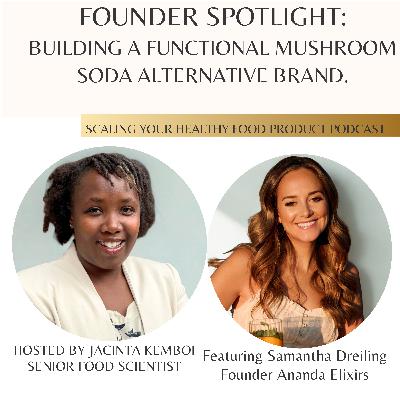
How Samantha and her husband turned a kitchen experiment into a functional mushroom soda brand redefining what it means to "follow your bliss." In this Ottawa Founder Spotlight episode, I sit down with Samantha Dreiling, co-founder of Ananda Elixirs, to talk about building a beverage brand rooted in intuition, wellness, and bliss. After rediscovering her energy and health through functional mushrooms, Samantha set out to create a soda alternative that actually made people feel good — no sugar spikes, no crash, just clean, sparkling bliss. From early kitchen extractions to pitching on Dragon's Den, Samantha shares the highs, hurdles, and heart behind bringing a wellness beverage to life — and how trusting her gut (literally and figuratively) helped her find the right co-manufacturer, fulfillment partners, and rhythm in business. Tune in for an inspiring story about resilience, intuition, and building from the heart — right here in Ottawa. I have tried the Shroom Soda's myself and I have enjoyed them so far. To try and get 10% off your order https://camaresearch.com/resources to Download resources including "Questions to Ask Potential Co-Manufacturers" to help you as you grow your better-for-you food brand. Schedule a free hot seat strategy call here
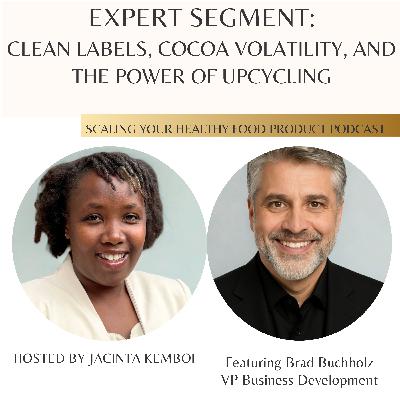
In this expert segment, Brad Buchholz, VP of Business Development at POM Wonderful, shares how clean-label innovation, upcycling, and grit are shaping the future of food. From the MAHA movement and microbiome health to rising cocoa costs and ingredient reformulation, Brad reveals how founders can create products that are both sustainable and scalable — without sacrificing performance. We also dive into one of the most overlooked growth levers for better-for-you brands: shelf life. Brad explains how natural antioxidants and polyphenol-rich upcycled ingredients can extend product stability while meeting clean-label expectations — a critical insight for any founder preparing to scale. If you want to learn how to strengthen your product's shelf life, reduce waste, and prepare for co-manufacturing success, join my upcoming Shelf Life Workshop — where we'll cover real-world testing, natural preservation strategies, and formulation tools that protect your margins. 🎟️ Reserve your spot now and make your product shelf-ready with confidence. https://camaresearch.com/resources to Download resources including "Questions to Ask Potential Co-Manufacturers" to help you as you grow your better-for-you food brand. Schedule a free hot seat strategy call here
Scaling a recipe sounds simple — just make more of it, right? Not quite. In this episode, I'm breaking down the three most overlooked things food founders need to pay attention to before scaling their recipe — and how to avoid costly mistakes that could derail your growth. You'll learn: Ingredient & Process Consistency: Why your small-batch process doesn't always translate in manufacturing — and how to adjust for scale without losing quality or taste. Formulation Costing & Margin Clarity: How scaling impacts cost per unit, ingredient sourcing, and your retail pricing strategy — and what to calculate before you commit. Shelf Life & Product Stability: Why scaling can change your product's texture, flavor, and safety — and what tests you should run before your first production run. If you've ever wondered "How do I make my recipe ready for retail?", this episode will give you the roadmap — and it's the perfect primer for my upcoming Scaling Your Recipe Workshop on October 16th. Join the workshop: We'll go deeper into testing, troubleshooting, and scaling your formulation for consistent, profitable growth. → [Scaling Your Recipe Workshop] Because when you scale smart, you protect your product, your margins, and your peace of mind. #ScalingYourRecipe #RetailReady #FoodFounderTips #BetterForYouBrands

Comments

Download from Google Play

Download from App Store
 United States