


 Claim Ownership
Amateur Radio News and Notes Podcast
Subscribed: 0Played: 0
Subscribe

© Mount Vernon ARC
Description
News and notes for Amateur Radio Operators and members of the Mount Vernon Amateur Radio Club compiled by Ed N2EC.
mvarc.substack.com
mvarc.substack.com
50 Episodes
Reverse

In the log this week* Contest Spotlight: ARRL International DX Contest on SSB* Bouvet Island 3Y0K DXpedition Update* Yaesu Radio Prices to Increase* Amateur Radio News and Notes Podcast Celebrates Its First Year* MVARC Breakfast and Meeting Recap* MVARC Nets on the Air* What’s happening with DX? * Solar Activity Update* Upcoming Contests* Interesting Online Radio Content As always, links to all referenced content can be found in the show notes, or at our Substack at mvarc.substack.com Thanks for reading Amateur Radio News and Notes. Subscribe for free to receive new posts and support my work.Contest Spotlight: ARRL International DX Contest on SSBThis weekend brings one of the biggest DX contests on the air, the ARRL International DX Contest this time on SSB. There is so much DX that it may even be possible to get DXCC (100 countries) in a weekend. If you like working DX, this is a great time to get on the air. The contest starts 0000 UTC on Saturday, March 7 (that’s 7 PM ET Friday night) and continues through 2359 UTC Sunday, March 8 (6:59PM ET Sunday). To participate, the DX stations can only work US and Canadian stations, this means this is a contest where the DX is chasing you!The exchange for the contest on the US/Canada side of things to send a signal report and state/province. DX stations send signal report and power as a number or abbreviation. So for me in Virginia, my exchange would be “59 VA”. Bands are 160, 80, 40, 20, 15, and 10 meters and power classifications are QRP (5 Watts and below), LP (Above 5 W to 100W), and HP (up to 1500 Watts). You can work stations once per band and each QSO is worth 3 points. For US/Canada multipliers are each DXCC entity once per band and for DX it is each State or Province (including DC) once per band. Total score = QSO Points x Multipliers. Logs need to be submitted within 7 days of the end of the contest. Full rules and details can be found at https://www.arrl.org/arrl-dx. Good Luck! Bouvet Island 3Y0K DXpedition UpdateImage Courtesy https://3y0k.comThe highly anticipated 3Y0K DXpedition to Bouvet Island was able to land on Bouvet and logged its first QSO on March 1, 2026. The latest log upload at press time was from March 5th where they reported a total of 24,180 QSOs with 5,721 on CW, 13,558 on FT8, and 4,901 on SSB. North America received 17.6% of the QSOs while Europe got 42.5%, Asia got 31.1%, Africa got 1.3%, Oceania got 1.9%, and South America got 5.6% with the rest being “not determined”. In all the team had made contact with 131 DXCC entities and the percentage of duplicate contacts was 3.28%. You can see if you’re in the log and see the latest posted statistics at https://www.m0oxo.com/oqrs/logsearch.php.In an update from DXpedition Pilot James KB2FMH on the 3rd he said that both camps had been established with 8 tents in total. One of the camps is situated to maximize conditions toward North America. At that time they had 10 ICOM 7610 radios and 10 assorted ACOM amplifiers with antennas on all bands but 10 meters. He expected the 10 meter antennas to go up on the 4th. Looking at their logs, it appears they were successful. The operation is expected to continue until March 18-20th.Your author has not yet been successful getting in the logs and the pile-ups have been intense. Sadly, there has been significant deliberate interference (DQRM) so far with stations keying up over the Bouvet station and trying to make it difficult to contact them. A reminder, for CW and SSB the DXpedition (like most DXpeditions) will be working split. This means that the team is transmitting on one frequency and will be looking above their frequency for replies. Do not transmit on the same frequency you hear them on as they won’t be listening on that frequency and you will be making it very difficult for others to be able to hear the station in Bouvet. It is important to operate in a courteous manner so that as many operators as possible can participate in the fun together. More details on the band plan and operating details of the DXpedition can be found on their official site. Good luck.Links with more information can be found at:The Official Site: https://3y0k.com/DX News Coverage: https://dxnews.com/3y0k/ Yaesu Radio Prices to IncreaseIn a post to their web site dated March 3rd, Yaesu distributor GigaParts announced they had received new wholesale pricing increases from Yaesu for their North American products effective March 1st. As part of those changes, GigaParts expects prices to rise for consumers with the next shipments they receive from 4% to 58% for some products. GigaParts says that existing stock will remain at the current prices until stocks are depleted at which time new shipments will be priced according to the new rates. They cite rising material and manufacturing costs, updated tariffs, and volatility in logistics and operations as bringing on these costs. They also report that previous increases had been absorbed by them in the past, but the new increases no longer make that possible. At press time we didn’t see other retailers referencing these changes, but prices between the retailers is usually the same. GigaParts full statement can be found at https://connect.gigaparts.com/t/important-update-upcoming-pricing-adjustments-for-yaesu-products/2361.Amateur Radio News and Notes Podcast Celebrates Its First YearWith today’s episode, Amateur Radio News and Notes celebrates a year of keeping you up to date with amateur radio in podcast form. We sent out our first podcast version on March 7, 2025 and a year later, this is our 50th episode. It has been a lot of fun seeing things grow each week and we’re honored that you have taken the time to make us a part of your weekly routine. In addition to distributing the podcast online, we’re delighted to be broadcast each week by 88.3 FM KRHJ in Lamar, Colorado at 6 PM Mountain time on Fridays.Before it was in podcast form, Amateur Radio News and Notes started as a weekly newsletter on February 23, 2024 sent out to the members of the Mount Vernon Amateur Radio Club. Shortly thereafter we started posting it on our Substack and things started growing from there. It has been a fun two years with lots of fun events and developments in amateur radio along the way. We really are glad you’re here.If you find anything of interest you think would be good to share here or have any feedback about what you like or what could be improved, feel free to reach out. I’m good on QRZ.MVARC Breakfast and Meeting RecapImage Courtesy Corey KN4YZYLast Saturday the Mount Vernon Amateur Radio Club got together for our weekly breakfast at the IHOP in Hybla Valley. After breakfast we made it over for our in-person meeting where we had an introduction to the club’s new Discord server. It was great seeing everyone, and we look forward to seeing you again this month.MVARC Nets on the Air* 2 Meter FM Net: Tuesdays at 7 PM [146.655/- MHz (141.3 Hz PL Tone) ] * 2 Meter Digital Net: Immediately Follows 2 Meter FM Net [146.655/- MHz C4FM] * MVARC Slow Speed CW Roundtable: Saturday and Sunday at 7:30 AM [3.565 MHz CW]* MVARC Cherry Tree Net: Saturday and Sunday at 8:30 AM [3.920 MHz LSB]What’s Happening with DXAs you would expect on a big DX contest weekend, there will be a lot of DX on the air this week. Stations on the air include Bouvet Island (3Y0K), Bonaire (PJ4G), Guam (AH2R), Dominica (J75A), Guinea Bissau (J51A), Austral Islands (TX5EU), Gambia (C5SP), Palau (T8OK), Mayotte (FH/UR9IDX), Anguilla (VP2EAD, VP2ELX, VP2EWE), Ghana (9G5RR, 9G5CC, 9G5ZP), Sint Maarten (PJ7AA), Bangladesh (S21WD), Minami Torishima (JG8NQJ/JD1), Colombia (HK3JCL), and Solomon Islands (H44MS).A calendar of DXpeditions can be found at https://dxnews.com/calendar/ Solar Activity UpdateAs we go to press the Solar Flux Index (SFI) was 146 and the estimated sunspot number was 73 with 5 numbered sunspot regions visible from Earth. Over the last week the SFI has increased. Solar activity has been at low levels in the last 24 hours. The geomagnetic field has been at quiet levels and the Kp index reached 2 yesterday. The solar wind peaked at 456 km/s. Solar activity is predicted to be at low levels with a chance of M-class flares today through Sunday. The geomagnetic field is forecast to be at quiet to minor storm levels today and quiet to active levels on Saturday and Sunday. The chance of solar radiation storms at the S1 or greater level is at 1% today through Sunday. R1 to R2 radio blackouts are possible in the near term with a predicted probability of 20% today through Sunday. R3 or greater blackouts are unlikely with a 1% chance predicted today through Sunday. It remains a fantastic time for amateurs to get on the air and work the world. Good sources of real-time solar information include https://www.spaceweatherlive.com/ and https://solarham.com/. A good overview of conditions can be found at https://dx.qsl.net/propagation/. To see D-layer absorption data and associated radio blackouts, visit https://www.swpc.noaa.gov/products/d-region-absorption-predictions-d-rap. To see real-time Maximum Usable Frequency (MUF) and Critical Frequency (foF2) information from radiosonde data, visit https://prop.kc2g.com/. Upcoming ContestsThis weekend brings the ARRL International DX Contest on SSB we mentioned earlier as well as the Novice Rig Roundup, the Wake-Up! QRP Sprint, the Russian YL/OM Contest, the UBA Spring Contest on CW, the FIRAC HF Contest, the Classic Exchange on CW, and the 4 States QRP Second Sunday Sprint. As always the K1USN SSTs, MSTs, and CWTs will also be on the air. The full contest calendar with events and exchanges can be found at https://www.contestcalendar.com/weeklycont.phpInteresting Online Radio ContentThe ICQ Podcast Interviews Former ARRL Atlantic Division Director Bob Famiglio K3RF about By Law 46 - https://www.icqpodcast.com/download-the-show/2026/2/22/icqpodcast-episode-477-arrl-bylaw-46-changesHadrian YO2BT

In the log this week* Contest Spotlight: CQ World Wide 160-Meter Contest* DXpedition Spotlight: J51A Guinea Bissau* Bouvet Island 3Y0K DXpedition Update* Desecheo Island KP5/NP3VI DXpedition to be QRT March 3* HamClock Gets New Community Backend * MVARC Nets on the Air* What’s happening with DX? * Solar Activity Update* Upcoming Contests* Interesting Online Radio Content As always, links to all referenced content can be found in the show notes, or at our Substack at mvarc.substack.com Thanks for reading Amateur Radio News and Notes. Subscribe for free to receive new posts and support my work.Contest Spotlight: CQ World Wide 160-Meter ContestThis weekend brings the latest edition of the CQ World Wide 160-meter contest on SSB. The contest starts at 2200 UTC on Friday, February 27th (5 PM Eastern Time Friday) and ends at 2200 UTC Sunday, March 1 (5 PM Eastern Time Sunday). The contest is all about having amateurs from around the world make as many contacts with U.S. states, Canadian provinces, and countries as possible using the 160-meter band. For single operator assisted stations only, operators are able to use one remote receiver within 100 kilometers of the main transmitter if conditions (like local noise) require. This includes WebSDRs, but they must be within the 100 km limit. The unassisted entries may not use a remote receiver. Single operator stations can work as much as 30 hours of the 48 hour period. Operating categories include Single Operator with no QSO finding assistance allowed for High Power up to 1500 Watts of power, Low Power up to 100 Watts of power, and QRP up to 5 Watts of Power. There is also the Single Operator Assisted categories (High Power, Low Power, and QRP) with spotting assistance allowed and a remote receiver is permitted within 100 km of the station. The exchange is the RST, State for US, Province for Canada, or CQ Zone for DX. So for me in Virginia, my exchange would be “59 VA”. Multipliers are the 48 contiguous US States plus DC, the 14 Canadian Provinces (VO1 and VO2 count as two provinces), and DXCC countries including WAE countries. Points are awarded as 2 for QSOs in ones own country, 5 points for other countries on the same continent, and 10 points for contacts on other continents. Maritime mobile counts for 5 points but no multiplier. Logs must be submitted by March 6, 2026 at 2200 UTC. This is a great opportunity to make a lot of contacts on the top band. Good luck.DXpedition Spotlight: J51A Guinea BissauImage Courtesy https://www.dx-world.net/j51a-guinea-bissau/The J51A DXpedition to the Bijagos Archipelago in Guinea Bissau has been very active on the bands in the last week. Your author was able to work them on 15, 17, and 30 meters CW with a strong signal into the East Coast. Yesterday the team reported they had logged 61,300 QSOs in 69 hours of operation. The operators include several members from the Bavarian Contest Club. They are currently scheduled to operate until March 15. Guinea Bissau is a country on the West coast of Africa with a population of about 2 million people. It is currently listed as #84 on the ClubLog Most Wanted List. For more information about the DXpedition with photos, live streams, log searches, and team updates visit https://www.qrz.com/db/J51A and https://www.dx-world.net/j51a-guinea-bissau/. Look for them on the bands and good luck.Bouvet Island 3Y0K DXpedition UpdateImage Courtesy https://3y0k.comThe highly anticipated 3Y0K DXpedition to Bouvet Island departed from Cape Town, South Africa in the last week and has been steadily making its way to Bouvet. On February 25th the team provided an update saying that the boat was in an area of bad weather which was slowing down their journey. They slowed their speed for safety since they would not be missing any weather windows for landing. They were 140 miles from the island when they posted on the 25th and believe that their ETA will be Friday the 27th around 6 PM Local Time (Noon Eastern Time).The 3Y0K DXpedition is one of the most expensive and logistically complicated in history with a reported budget of around $1.7 million. The plan is to have a 3 week DXpedition although with extreme weather at Bouvet, they will be dependent on weather windows to get to the island via their helicopter. The 3Y0K team has mentioned that they have received reports of individuals pirating the call sign on-air. They ask you not to work the pirates and do say there will be official communications from pilots or a team leader when the team is operational.Links with more information can be found at:The Official Site: https://3y0k.com/ The Ship Tracker: https://www.vesselfinder.com/?imo=7104752DX News Coverage: https://dxnews.com/3y0k/ Desecheo Island KP5/NP3VI DXpedition to be QRT March 3Image Courtesy https://desecheo2026.com/kp5/ The KP5/NP3VI Desecheo DXpedition has had very successful and extended run with its remote operations with the total number of QSOs exceeding 100,000 as we went to press. Sadly, all good things must come to an end, and this DXpedition is no exception. They are scheduled to be QRT on March 3, 2026. If you haven’t gotten Desecheo in your logs, you still have time, but make sure to act fast. For more information including schedule plans and log searching visit https://desecheo2026.com/kp5/ . Good Luck.HamClock Gets New Community Backend Image courtesy https://qso365.co.uk/2024/01/hamclock/The announcement that the popular HamClock software would stop working after the passing of its creator Elwood Downey WB0OEW set the community into action to provide alternatives to the amateur radio community. This week the team at https://hamclock.com/ announced that they have created a back end server that allows HamClock to continue to function. They have instructions on their site for how to modify your installation to have it work with their back end. Their site says they are already serving over 2,700 HamClock installations. For more information visit https://hamclock.com/.MVARC Nets on the Air* 2 Meter FM Net: Tuesdays at 7 PM [146.655/- MHz (141.3 Hz PL Tone) ] * 2 Meter Digital Net: Immediately Follows 2 Meter FM Net [146.655/- MHz C4FM] * MVARC Slow Speed CW Roundtable: Saturday and Sunday at 7:30 AM [3.565 MHz CW]* MVARC Cherry Tree Net: Saturday and Sunday at 8:30 AM [3.920 MHz LSB]What’s Happening with DXThere will be a lot of DX on the air this week. Stations on the air include Ethiopia (ET3AA), Bouvet Island (3Y0K), Guinea Bissau (J51A), Gambia (C5SP), Palau (T8OK), Anguilla (VP2EAD, VP2ELX, VP2EWE), Bangladesh (S21WD), Desecheo Island (KP5/NP3VI), Colombia (HK3JCL), and Solomon Islands (H44MS).A calendar of DXpeditions can be found at https://dxnews.com/calendar/ Solar Activity UpdateAs we go to press the Solar Flux Index (SFI) was 130 and the estimated sunspot number was 43 with 3 numbered sunspot regions visible from Earth. Over the last week the SFI has increased. Solar activity has been at low levels in the last 24 hours. The geomagnetic field has been at quiet to active levels and the Kp index reached 4 yesterday. The solar wind peaked at 613 km/s. Solar activity is predicted to be at low levels with a chance of M-class flares today through Sunday. The geomagnetic field is forecast to be at quiet to unsettled levels today and Saturday and at unsettled to active levels on Sunday. The chance of solar radiation storms at the S1 or greater level is at 1% today through Sunday. R1 to R2 radio blackouts are possible in the near term with a predicted probability of 25% today through Sunday. R3 or greater blackouts are unlikely with a 5% chance predicted today through Sunday. It remains a fantastic time for amateurs to get on the air and work the world. Good sources of real-time solar information include https://www.spaceweatherlive.com/ and https://solarham.com/. A good overview of conditions can be found at https://dx.qsl.net/propagation/. To see D-layer absorption data and associated radio blackouts, visit https://www.swpc.noaa.gov/products/d-region-absorption-predictions-d-rap. To see real-time Maximum Usable Frequency (MUF) and Critical Frequency (foF2) information from radiosonde data, visit https://prop.kc2g.com/. Upcoming ContestsThis weekend brings the CQ World Wide 160-Meter Contest on SSB, the UBA DX Contest on CW, the South Carolina QSO Party, the North Carolina QSO Party, the North American QSO Party on RTTY, the NA Collegiate Championship on RTTY, the UBA Spring Contest on 2m, the NSARA Contest, the SARL Hamnet 40m Simulated Emergency Contest, and the WAB 3.5 MHz Phone Contest. As always the K1USN SSTs, MSTs, and CWTs will also be on the air. The full contest calendar with events and exchanges can be found at https://www.contestcalendar.com/weeklycont.phpInteresting Online Radio ContentStuart VE9CF talks about the scheduled shut down of Canadian Weather Radio - Tim K5OHY builds and tests a 300 Ohm Ladder Line Fed Doublet - Mike K8MRD looks at the new community backend for HamClock and shows you how to switch - Walt K4OGO takes us behind the scenes at “Shack Day” in Chesapeake, VA - Dugbo KD7DUG does 2m CW for SOTA - Jason KM4ACK shows his Hamvention haul - Mort G4BSK shows how he builds his 3D Printed microphones - Bob WV1W takes a look at the Xiegu VK-6 Paddles - Lewis M3HHY listens in to pirates jamming Russian military signals - Forrest KI7QCF talks about what QRP means to him - Yuri UT4LW shows his 2BSIQ run for ARRL DX CW - Mike K8MRD takes us along at the Greater Houston Hamfest - Lidi KQ3Q builds a 17-five antenna and gets it on the air for POTA - Dr. Tamitha Skov WX6SWW talks about the first spotless sun in years - Steve KM9G takes a look at a portable solar power bank for portable operations - Forrest KI7QCF shows part of his ARRL DX CW run - Colin MM0OPX tells you why you should be using the 10 meter band right now - Mark KD7DTS takes us aboard the Battleship Iowa to see the radio facilities - Peter VK3YE shows what you c
In the log this week* Contest Spotlight: ARRL International DX Contest* ARRL Delta Division Assistant Director Frank Howell K4FMH Resigns* Bouvet Island 3Y0K DXpedition Update* FCC Updates Rules to Require FRN Updates Within 10 Days of Changes* MVARC George Washington’s Birthday Special Event Station Recap* MVARC Nets on the Air* What’s happening with DX? * Solar Activity Update* Upcoming Contests* Interesting Online Radio Content As always, links to all referenced content can be found in the show notes, or at our Substack at mvarc.substack.com Contest Spotlight: ARRL International DX ContestThis weekend brings one of the biggest DX contests on the air, the ARRL International DX Contest on CW (SSB is the first week of March). There is so much DX that it may even be possible to get DXCC (100 countries) in a weekend. If you’re a CW op, this is the time to get on the air. The contest starts 0000 UTC on Saturday (that’s 7PM ET Friday night) and continues through 2359 UTC Sunday (6:59PM ET Sunday). To participate, the DX stations can only work US and Canadian stations, this means this is a contest where the DX is chasing you!The exchange for the contest on the US/Canada side of things to send a signal report and state/province. DX stations send signal report and power as a number or abbreviation. So for me in Virginia, my exchange would be “599 VA”. Bands are 160, 80, 40, 20, 15, and 10 meters and power classifications are QRP (5 Watts and below), LP (Above 5 W to 100W), and HP (up to 1500 Watts). You can work stations once per band and each QSO is worth 3 points. For US/Canada multipliers are each DXCC entity once per band and for DX it is each State or Province (including DC) once per band. Total score = QSO Points x Multipliers. Logs need to be submitted within 7 days of the end of the contest. Full rules and details can be found at https://www.arrl.org/arrl-dx. Good Luck! ARRL Delta Division Assistant Director Frank Howell K4FMH ResignsFrank Howell K4FMH, who served as the Assistant Director of the Delta Division for the ARRL for 12 years, resigned on February 13, 2026. In his letter to Delta Division Director David Norris K5UZ he cited the recent changes in the ARRL By-Laws, specifically By-Law 46 as the reason for his resignation. The by-law requires directors to annually “recertify” that they have “read, understand, and agree to comply with the ARRL Board Member Statement“ or be made ineligible to serve on the board. The statement requires a Duty of Care, Duty of Loyalty, and Duty of Obedience. Of particular concern to those who have not signed the document or resigned due to its enforcement is the clause concerning the “Duty of Loyalty” which requires directors “maintain confidentiality to ensure candid deliberations and effective strategic and tactical planning”. Some have interpreted that clause to be in conflict with the responsibilities of the directors to the membership and potentially in conflict with Connecticut state law.Howell stated that due to Director Norris signing the statement he “cannot support [his] actions under this stipulation as [he] believe[s] it is not a good outcome for the members of the League. This is a principle issue in [his] eyes. Therefore, [he is] resigning as an Assistant Director of the Delta Division”. This follows the removal of Atlantic Division Director Robert Famiglio K3RF and the resignation of Eastern Pennsylvania Section Manager Bob Wilson W3BIG in the last few weeks. Howell’s full letter can be found at https://k4fmh.com/2026/02/13/why-i-resigned-after-12-years-as-assistant-director-of-the-arrl-delta-division/.Bouvet Island 3Y0K DXpedition UpdateImage Courtesy https://3y0k.comThe highly anticipated 3Y0K DXpedition to Bouvet Island reached a milestone this week. The transport ship Argus arrived in Cape Town, South Africa. The arrival comes after the announcement in January that the team was expecting a delay of about two weeks due to vessel maintenance requirements. The location of the Argus can be tracked at https://www.vesselfinder.com/?imo=7104752. The 3Y0K DXpedition is one of the most expensive and logistically complicated in history with a reported budget of around $1.7 million. They plan to leave from Cape Town, South Africa and sail to Bouvet for a 3 week DXpedition, but at press time an exact date of departure has not been announced. The 3Y0K team has mentioned that they have received reports of individuals pirating the call sign on-air. They ask you not to work the pirates and do say there will be official communications from pilots or a team leader when the team is operational.Links with more information can be found at:The Official Site: https://3y0k.com/ The Ship Tracker: https://www.vesselfinder.com/?imo=7104752 DX News Coverage: https://dxnews.com/3y0k/ FCC Updates Rules to Require FRN Updates Within 10 Days of ChangesThe Federal Communications Commission amended section 1.8002(b)(2) of the Commission’s rules to require that individuals who register with the FCC for a FCC Registration Number (FRN) must update the information in that registration within 10 business days of that change. According to the ARRL, this is a change as there was no specific deadline for those updates previously. All amateurs must have an FRN to file applications. Since that information is separate from the license applications, it needs to both be maintained via different updates via CORES and the License Manager System. The FCC issued a public notice to clarify this change on February 6. MVARC George Washington’s Birthday Special Event Station RecapPhoto Courtesy Corey KN4YZYLast weekend the Mount Vernon Amateur Radio Club operated as K4US from the grounds of George Washington’s Mount Vernon Estate to celebrate his 294th birthday. The event was very successful with many members of the club and the community joining us on site and on the air. We operated two 100 Watt stations on the 20 and 40 meter bands using an Icom 7100 and Yaesu FT-991A connected to an N2EC VersaHex antenna in V-dipole mode and a Chelegance MC-750 vertical antenna. All in all we got over 220 QSOs in the log working the United States, Canada, Puerto Rico, the Bahamas, Belgium, and England as well as 26 states and 3 Canadian Provinces. As always, the club is deeply grateful for Mount Vernon hosting us again this year. Thanks for everyone who made this such a fun event.MVARC Nets on the Air* 2 Meter FM Net: Tuesdays at 7 PM [146.655/- MHz (141.3 Hz PL Tone) ] * 2 Meter Digital Net: Immediately Follows 2 Meter FM Net [146.655/- MHz C4FM] * MVARC Slow Speed CW Roundtable: Saturday and Sunday at 7:30 AM [3.565 MHz CW]* MVARC Cherry Tree Net: Saturday and Sunday at 8:30 AM [3.920 MHz LSB]What’s Happening with DXAs you would expect on a big DX contest weekend, there will be a lot of DX on the air this week. Stations on the air include the Azores (CR2X), Bermuda (VP9I), Martinique (TO4A), Belize (V3T, V3O, V31KO), Barbados (8P5A, 8P9XB), Costa Rica (TI7W), Bonaire (PJ4K), Aruba (P44W), Guyana (8R1WA), Gambia (C5SP), Guinea Bissau (J52EC, J51A), Desecheo Island (KP5/NP3VI), Mali (TZ1CE), Colombia (HK3JCL), and Solomon Islands (H44MS).A calendar of DXpeditions can be found at https://dxnews.com/calendar/ Solar Activity UpdateAs we go to press the Solar Flux Index (SFI) was 119 and the estimated sunspot number was 43 with 3 numbered sunspot regions visible from Earth. Over the last week the SFI has decreased. Solar activity has been at low levels in the last 24 hours. The geomagnetic field has been at quiet to unsettled levels and the Kp index reached 3 yesterday. The solar wind peaked at 558 km/s. Solar activity is predicted to be at low levels with a slight chance of M-class flares today through Sunday. The geomagnetic field is forecast to be at quiet to unsettled levels today and at quiet levels on Saturday and Sunday. The chance of solar radiation storms at the S1 or greater level is at 1% today through Sunday. R1 to R2 radio blackouts are unlikely in the near term with a predicted probability of 10% today through Sunday. R3 or greater blackouts are unlikely with a 1% chance predicted today through Sunday. There is a chance of 6 meter propagation so keep an eye on the band and spotting clusters to be ready for the next time the magic band does its thing. It remains a fantastic time for amateurs to get on the air and work the world. Good sources of real-time solar information include https://www.spaceweatherlive.com/ and https://solarham.com/. A good overview of conditions can be found at https://dx.qsl.net/propagation/. To see D-layer absorption data and associated radio blackouts, visit https://www.swpc.noaa.gov/products/d-region-absorption-predictions-d-rap. To see real-time Maximum Usable Frequency (MUF) and Critical Frequency (foF2) information from radiosonde data, visit https://prop.kc2g.com/. Upcoming ContestsThis weekend brings the ARRL International DX Contest on CW we mentioned earlier as well as the REF Contest on SSB, the Russian PSK WW Contest, the Feld Hell Sprint, the World Wide Argentina DX Contest, the High Speed CW Contest, and the Classic Exchange on Phone. As always the K1USN SSTs, MSTs, and CWTs will also be on the air. The full contest calendar with events and exchanges can be found at https://www.contestcalendar.com/weeklycont.phpInteresting Online Radio ContentMatt M0DQW looks at the new FT2 mode for digital communication - Michael KB9VBR builds an inexpensive Yaesu headset adapter - Mike K8MRD puts up an antenna with his dad - Kevin W1DED gives a POTA update for February 2026 - Matt M0DQW looks at the Allstar Radioless Node Z2 - Bob WV7W talks about antenna efficiency - Josh KI6NAZ looks at the new BuddiPole BuddiHex Mini - Stuart VE9CF talks about his favorite DX cluster - Craig KM6LYW talks about the differences between various digital modes - Lewis M3HHY uses a spectrum analyzer and directional antenna to hunt for signals - Matt M0DQ
In the log this week* New U.S. 60 Meter Band Allocation Effective Today 2/13/2026* KP5/NP3VI Desecheo DXpedition To Continue Operations Until 3/3/2026* MVARC Special Event Station at George Washington’s Mount Vernon This Weekend 2/14/2026-2/15/2026* MVARC Nets on the Air* What’s happening with DX? * Solar Activity Update* Upcoming Contests* Interesting Online Radio Content As always, links to all referenced content can be found in the show notes, or at our Substack at mvarc.substack.com Thanks for reading Amateur Radio News and Notes. Subscribe for free to receive new posts and support my work.New U.S. 60 Meter Band Allocation Effective Today 2/13/2026Today marks the effective date of the new 60 Meter Band allocation in the United States. The main change relates to spectrum around the former channel at 5358.5 kHz which has been replaced by an allocation from 5351.5 kHz to 5366.5 kHz. The new allocation is limited to no more than 9.15 Watts Effective Radiated Power (ERP) which is a change from the previous limit of the channel of 100 Watts ERP. The other channels at 5332, 5348, 5373, and 5405 kHz remain as before with 100 Watts ERP. Bandwidth on the 60 meter band is limited to 2.8 kHz and amateurs are reminded that our privileges on the band are secondary to other stations authorized by the FCC and NTIA, other nations in the fixed service, and all other nations in mobile with the exception of aeronautical mobile.This is an exciting new addition on a very useful band and the low power levels will make it a great place to enjoy QRP communications. More information about the changes can be found at:* https://docs.fcc.gov/public/attachments/FCC-25-60A1.pdf* https://www.federalregister.gov/documents/2026/01/14/2026-00587/implementation-of-the-final-acts-of-the-world-radiocommunication-conference-geneva-2015-wrc-15-other* https://www.arrl.org/news/new-60-meter-frequencies-available-as-of-february-13 KP5/NP3VI Desecheo DXpedition To Continue Operations Until 3/3/2026Image Courtesy https://desecheo2026.com/kp5/ On February 10, 2026 the KP5/NP3VI team announced that the Desecheo DXpedition has been extended until March 3, 2026. The remote Radio-in-Box systems were initially slated to be retrieved on February 12, but deteriorating conditions at sea prompted the schedule to be delayed. As a result, the team will continue remote operations to get more operators in the log. As of the 10th the team reported over 66,000 QSOs with 14,771 stations, for a total of 3,674 All-Time-New-Ones (ATNOs). Your author was able to get KP5/NP3VI in the log on 30 meters CW on 2/8/2026 and the contact was confirmed on Logbook of the World and Club Log within minutes.The team also announced what they’re calling ATNO Day which is scheduled for Sunday, February 15, 2026 at 0000 UTC (Saturday Night at 7 PM ET) until Monday, February 16, 2026 at 0000 UTC (Sunday Night at 7PM ET) where the team will be focusing on operators who have never made a contact with Desecheo (so for them, it would be an ATNO). They will focus on FT8 from 1200-1400 UTC after which time they will focus on SSB with frequencies being in the U.S. General bands. They ask that ops who have them in their logs already let those who do not have them in their logs get their ATNO on this day. Operating schedules and updates can be found on their web site at https://desecheo2026.com/kp5/. Good luck!MVARC Special Event Station at George Washington’s Mount Vernon This Weekend 2/14/2026-2/15/2026This weekend the Mount Vernon Amateur Radio Club will be operating as K4US from the grounds of George Washington’s Mount Vernon Estate to celebrate his 294th birthday. The club plans to get on the air around 1500 UTC on Saturday (10 AM ET) until 2000 UTC (3 PM ET) and then again on Sunday from 1330 UTC (8:30 AM ET) until 1600 UTC (11 AM ET). Look for us on spotting networks and around centers of activity around 7.042 and 14.042 for CW and 7.242 and 14.242 for SSB. QSL cards will be available via the address on the K4US QRZ page. We look forward to celebrating on the air and hope to get you in the log. MVARC Nets on the Air* 2 Meter FM Net: Tuesdays at 7 PM [146.655/- MHz (141.3 Hz PL Tone) ] * 2 Meter Digital Net: Immediately Follows 2 Meter FM Net [146.655/- MHz C4FM] * MVARC Slow Speed CW Roundtable: Saturday and Sunday at 7:30 AM [3.565 MHz CW]* MVARC Cherry Tree Net: Saturday and Sunday at 8:30 AM [3.920 MHz LSB]What’s Happening with DXThere will be a lot of DX on the air this week. Stations on the air include Gambia (C5SP), Guinea Bissau (J52EC, J51A), Desecheo Island (KP5/NP3VI), Greenland (OX7A, OX7AM, OX7AKT, OX3LG, OX3LX), Mali (TZ1CE), Cambodia (XU7O), Belize (V3O, V31KO), Solomon Islands (H44MS), Colombia (HK3JCL), and Antarctica (DP0GVN, FT4YM).A calendar of DXpeditions can be found at https://dxnews.com/calendar/ Solar Activity UpdateAs we go to press the Solar Flux Index (SFI) was 129 and the estimated sunspot number was 82 with 7 numbered sunspot regions visible from Earth. Over the last week the SFI has decreased. Solar activity has been at moderate levels in the last 24 hours. The geomagnetic field has been at quiet to active levels and the Kp index reached 3 yesterday. The solar wind peaked at 461 km/s. Solar activity is predicted to be at low levels with a slight chance of M-class flares today through Sunday. The geomagnetic field is forecast to be at quiet levels today, at quiet to unsettled levels on Saturday, and at quiet to minor storm levels on Sunday. The chance of solar radiation storms at the S1 or greater level is at 1% today through Sunday. R1 to R2 radio blackouts are unlikely in the near term with a predicted probability of 10% today through Sunday. R3 or greater blackouts are unlikely with a 5% chance predicted today through Sunday. There is a chance of 6 meter propagation so keep an eye on the band and spotting clusters to be ready for the next time the magic band does its thing. It remains a fantastic time for amateurs to get on the air and work the world. Good sources of real-time solar information include https://www.spaceweatherlive.com/ and https://solarham.com/. A good overview of conditions can be found at https://dx.qsl.net/propagation/. To see D-layer absorption data and associated radio blackouts, visit https://www.swpc.noaa.gov/products/d-region-absorption-predictions-d-rap. To see real-time Maximum Usable Frequency (MUF) and Critical Frequency (foF2) information from radiosonde data, visit https://prop.kc2g.com/. Upcoming ContestsThis weekend brings the YLRL YL-OM Contest, the CQ World Wide RTTY WPX Contest, the PODXS 070 Club Valentine Sprint, the Asia-Pacific Spring Sprint on CW, the SKCC Weekend Sprintathon, the KCJ Topband Contest, the Dutch PACC Contest, the OMISS QSO Party, the WAB 1.8 MHz Phone Contest, the RSGB 1.8 MHz Contest, the Balkan HF Contest, and the Run for the Bacon QRP Contest. As always the K1USN SSTs, MSTs, and CWTs will also be on the air. The full contest calendar with events and exchanges can be found at https://www.contestcalendar.com/weeklycont.phpInteresting Online Radio ContentMatt M0DQW takes a look at the Anytone AT-D890UV DMR and NXDN HT - Mike K8MRD fixes his base station antenna installation and sings the praises of TennTennas - Dr. Tamitha Skov WX6SWW takes a look at some space weather conditions from earlier this week - Half as Interesting talks about an experiment to enhance propagation by sending millions of needles to space - Hayden VK7HH talks about how take-off angles change with antenna elevation and how to make it work to your advantage - Walt K4OGO discusses long path and short path propagation for DX - Josh KI6NAZ talks about using Linux for amateur radio - Save it for Parts experiments with receiving satellite signals from his geodesic radar dome - Mr. Carlson’s Lab explains how to extend the life of your soldering iron tips - Geerling Engineering shows how broadcast TV sports are produced - Tim N7KOM takes a look at the quick-to-deploy BeeTenna Yagi - Dan WD4DAN looks at new features for OpenHamClock - That’s it for this week.Best 73,EdN2EC This is a public episode. If you would like to discuss this with other subscribers or get access to bonus episodes, visit mvarc.substack.com
In the log this week* Contest Spotlight: North American Sprint on CW * Creator of Hamclock Elwood Downey WB0OEW Silent Key* ARRL Eastern Pennsylvania Section Manager Bob Wilson W3BIG Resigns After Removal of Atlantic Division Director Robert Famiglio K3RF* MVARC Nets on the Air* What’s happening with DX? * Solar Activity Update* Upcoming Contests* Interesting Online Radio Content As always, links to all referenced content can be found in the show notes, or at our Substack at mvarc.substack.com Thanks for reading Amateur Radio News and Notes. Subscribe for free to receive new posts and support my work.Contest Spotlight: North American Sprint on CW This weekend brings the latest edition of the North American Sprint on CW from 0000 UTC on Sunday, February 8 (7 PM ET Saturday Night) until 0359 UTC Sunday (10:59 PM ET Saturday Night). The object of this contest for North American stations is to make as many contacts as possible, and for those outside North America to make as many contacts with North American stations as possible. This is a Sprint contest, so there is a special QSY rule that states that if you solicit a contact (e.g. call CQ, say “QRZ”, or solicit a frequency change like “UP 5”) you need to change your frequency after that contact. This basically means you can’t just stay on a single frequency and “run”. Entry classifications are High Power (up to 1,500 Watts), Low Power (up to 100 Watts), and QRP (up to 5 Watts). The Sprint is single operator only and use of spotting information of any kind is prohibited. The mode is, of course, CW, and the bands of operation are 80, 40, and 20 meters only. The organizers suggest frequencies above 3.525 MHz, 7.025 MHz, and 14.025 MHz. The exchange is the other station’s call sign, your call sign, a sequential serial number, your name, and your location (State/Province/Country or DX for those outside North America). So if I were working K4US for my 42nd contact the exchange would be “K4US N2EC 42 Ed VA”. For the contact to be valid, you have to log all the information correctly. The score is the number of contacts multiplied by the sum of contacted States, Provinces, and Countries (not including the US and Canada). Logs must be submitted no later than 7 days after the Sprint in Cabrillo format. Certificates will be available for top scorers from the NCJ web site after the event. So get on the air this weekend and give the North American Sprint a try. Rules and information can be found at https://ncjweb.com/Sprint-Rules.pdf. Good luck. Creator of Hamclock Elwood Downey WB0OEW Silent KeyImage courtesy https://qso365.co.uk/2024/01/hamclock/Elwood Downey WB0OEW, the creator of the popular HamClock software passed away January 29, 2026. His contributions to the amateur community are substantial and he will be greatly missed. HamClock allowed amateurs to visualize greyline location, ionospheric propagation conditions, VOACAP predictions, as well as spots from the DX Cluster, POTA, and SOTA. It was able to run on a wide variety of hardware and was made freely available to the amateur community. The servers that keep HamClock running will shut down in June of 2026, at which point it is expected that the software will cease to function. The final version of HamClock is 4.22.There are several projects that are trying to create alternatives to HamClock including Open HamClock, Open HamClock Backend, Ham Dashboard, along with several others. We send our deepest condolences to the family and friends of Elwood Downey WB0OEW.ARRL Eastern Pennsylvania Section Manager Bob Wilson W3BIG Resigns After Removal of Atlantic Division Director Robert Famiglio K3RFImage Courtesy ARRL EPA Section Web Site In a post to the ARRL Eastern Pennsylvania Section Web Site, Eastern Pennsylvania Section Manager Bob Wilson W3BIG resigned from his position as EPA Section Manager. The post has since been removed from the site at the request of ARRL management, according to Wilson, but remains available in social media posts. In his statement, Bob Wilson stated that he believes “the leadership of the ARRL has deteriorated in such a fashion that [he] can no longer remain a part of the Field Service Division in good faith”. He cites the removal of Atlantic Division Director Bob Famiglio K3RF covered last week as a key reason for his own departure. Wilson writes that Bob Famiglio “is one of the most dedicated and tireless individuals [he has] ever met” and details his concerns with the policies and actions that led to his removal. He concludes by thanking the members of the EPA Section for their friendship, dedication, and generosity during his tenure. As we go to press the ARRL has not yet updated their section pages to remove his name or announce his successor.MVARC Nets on the Air* 2 Meter FM Net: Tuesdays at 7 PM [146.655/- MHz (141.3 Hz PL Tone) ] * 2 Meter Digital Net: Immediately Follows 2 Meter FM Net [146.655/- MHz C4FM] * MVARC Slow Speed CW Roundtable: Saturday and Sunday at 7:30 AM [3.565 MHz CW]* MVARC Cherry Tree Net: Saturday and Sunday at 8:30 AM [3.920 MHz LSB]What’s Happening with DXThere will be a lot of DX on the air this week. Stations on the air include Lakshadweep Islands (AU7RS), Tanzania (5H3DX), Gambia (C5SP), Guinea Bissau (J52EC), Desecheo Island (KP5/NP3VI), Greenland (OX7A, OX7AM, OX7AKT, OX3LG, OX3LX), Mali (TZ1CE), Cambodia (XU7O), Rwanda (9X2AW), Guadeloupe (FG4KH), South Sudan (Z81D), Solomon Islands (H44MS), Colombia (HK3JCL), and Antarctica (DP0GVN, FT4YM).A calendar of DXpeditions can be found at https://dxnews.com/calendar/ Solar Activity UpdateAs we go to press the Solar Flux Index (SFI) was 167 and the estimated sunspot number was 166 with 8 numbered sunspot regions visible from Earth. Over the last week the SFI has increased. Solar activity has been at high levels in the last 24 hours. The geomagnetic field has been at quiet to minor storm levels and the Kp index reached 5 yesterday. The solar wind peaked at 659 km/s. Solar activity is predicted to be at moderate levels with a chance of X-class flares today through Sunday. The geomagnetic field is forecast to be at unsettled to minor storm levels today, at quiet to active levels on Saturday, and at quiet to minor storm levels on Sunday. The chance of solar radiation storms at the S1 or greater level is at 30% today through Sunday. R1 to R2 radio blackouts are likely in the near term with a predicted probability of 80% today through Sunday. R3 or greater blackouts are possible with a 40% chance predicted today through Sunday. There is a chance of 6 meter propagation so keep an eye on the band and spotting clusters to be ready for the next time the magic band does its thing. It remains a fantastic time for amateurs to get on the air and work the world. Good sources of real-time solar information include https://www.spaceweatherlive.com/ and https://solarham.com/. A good overview of conditions can be found at https://dx.qsl.net/propagation/. To see D-layer absorption data and associated radio blackouts, visit https://www.swpc.noaa.gov/products/d-region-absorption-predictions-d-rap. To see real-time Maximum Usable Frequency (MUF) and Critical Frequency (foF2) information from radiosonde data, visit https://prop.kc2g.com/. Upcoming ContestsThis weekend brings the Vermont QSO Party, the Minesota QSO Party, the British Columbia QSO Party, the LABRE-RS Digi Contest, the 10-10 International Winter Contest on SSB, the Mexico RTTY International Contest, the European Union DX Contest, the F9AA Cup on CW, the FYBO Winter QRP Sprint, the AGCW Straight Key QSO Party, and the North American Sprint on CW. As always the K1USN SSTs, MSTs, and CWTs will also be on the air. The full contest calendar with events and exchanges can be found at https://www.contestcalendar.com/weeklycont.phpInteresting Online Radio ContentCraig KM6LYW takes a look at the Baofeng Mini for Packet Radio - Mike K8MRD plays with a wire delta loop antenna - Chris N8PEM shows his Hidden Woodsman M55 Haversack POTA kit - Ciprian YO6DXE shows off his modified Pixie kit for the 20 meter band - Tim K5OHY shows us some modeling and real world results for the KJ6ER Marauder Antenna - Dan WD4DAN talks about OpenHamClock as a potential replacement for the sunsetting HamClock - Save it for Parts builds a model satellite kit - Alan W2AEW shows his Hidden Woodsman M55 Haversack go bag for his Elecraft KX2 - Jason KM4ACK shows a flaw in APRS message handling on the BTECH UV Pro - Pablo VA3HDL takes a look at OpenHamClock as a replacement for HamClock - Matt M0DQW looks at the Blackview Xplore 1 Android DMR radio - Dr. Tamitha Skov WX6SWW gives a review of recent solar weather - Mike K8MRD shows 9 useful 3D prints for amateur radio - Kevin W1DED talks to young op Si WD5JR about his POTA and DXpedition adventures - Nanofix talks about the differences between various solder alloys - Lidi KQ3Q takes us along as she activates as K3Y/4 for Straight Key Month - Mort G4BSK shows us his custom microphone for the QMX and other compact rigs - Steve KM9G takes a look at the Xplore 1 Android DMR radio - Mike K8MRD takes a look at the MAT-TUNER MAT-1F Antenna Tuner - Jason KM4ACK talks about how he was able to use APRS during the snow storm to get information out - That’s it for this week.Best 73,EdN2EC This is a public episode. If you would like to discuss this with other subscribers or get access to bonus episodes, visit mvarc.substack.com
In the log this week* Contest Spotlight: North American SSB Sprint* ARRL Atlantic Division Director Declared Ineligible For Office* Desecheo DXpedition Update* MVARC Winter Field Day Recap* MVARC Nets on the Air* What’s happening with DX? * Solar Activity Update* Upcoming Contests* Interesting Online Radio Content As always, links to all referenced content can be found in the show notes, or at our Substack at mvarc.substack.com Thanks for reading Amateur Radio News & Notes. Subscribe for free to receive new posts and support my work.Contest Spotlight: North American SSB SprintThis weekend brings the latest edition of the North American SSB Sprint. This contest starts at 0000 UTC on Sunday, February 1, 2026 (7 PM Eastern Time Saturday) and goes until 0359 UTC Sunday (10:59 PM Eastern Time Saturday). The objective for the contest is for North American stations to make as many contacts as possible and for non-North American stations to contact as many North American stations as possible. One feature of the contest that makes this one a bit different is the QSY rule that makes it a “sprint” which stipulates that any station that calls CQ, says QRZ, or says “Going Up 5” or something to that effect to solicit a contact needs to change frequency by at least 1 kHz after the completion of that contact. Essentially, you can’t stay on a single frequency and make more than a single contact if you’re calling CQ. The exchange for the contest is the other station’s call sign, your call sign, your sequential serial number (starting with 1), your name, and your location (State/Province/Country with DX for outside of North America stations). So if I was contacting K4US for my 42nd QSO, my exchange would be “K4US N2EC 42 Ed VA”. Participants can enter as QRP (5 Watts or less), Low Power (100 Watts or less), and High Power (1500 Watts or less). The contest is limited to 20, 40, and 80 meters with suggested frequencies between 14200-14275 kHz, 7125-7225 kHz, and 3700-3825 kHz (but stay out of the DX window from 3790-3800 kHz). The multipliers are US States, Canadian Provinces, and North American countries listed in the rules. DX doesn’t count as a multiplier, but does count for QSO points. Logs must be submitted within 7 days of the event and Cabrillo format is preferred.This should be a fun contest to test your skills and get a bunch of contacts in the log. More information can be found at https://ssbsprint.com/. Good luck! ARRL Atlantic Division Director Declared Ineligible For OfficeImage Courtesy ARRL.org In a bulletin to members sent on January 28, 2026 the American Radio Relay League announced that Atlantic Division Director Robert Famiglio K3RF was made ineligible to remain in his elected position due to him not signing a recertification of the “Board Member Statement on Authority, Responsibility, and Expectations” that had been added to the ARRL By Laws section 46(d) last year in the July 2025 board meeting. In a separate communication from Robert Famiglio he wished to make it clear that he is not resigning, but “being removed without [his] consent by the application of the new code of conduct rules passed in July of 2025”. Famiglio, who is also a lawyer, believes that the new rules “now limit or prohibit a director’s ability to advise his division of matter involving important board decisions without advance permission”. He continues that his “interpretation of the new rules and required confidentiality agreement, and that of other lawyers [he has] consulted, contradicts [his] obligations under Connecticut law to [ARRL members].” He adds that he “cannot in good conscience sign the new director’s oath of confidentiality that is now demanded by the new bylaws”.As a result of his removal as director, Marty Newingham AG3I, the previous Vice Director for the Atlantic division, has assumed the role as Atlantic Division Director.Desecheo DXpedition UpdateImage Courtesy https://desecheo2026.com/kp5/ In an update on their web site on January 28, 2026 the KP5/NP3VI DXpedition announced that they had made over 43,000 QSOs with over 10,700 unique call signs in 123 DXCC entities. They have been working through the challenges of operating the station remotely under renewable battery power. They state that low power and efficiency are key to their operations, band choices will follow real-time propagation, and adjustments will be made as necessary. They plan to continue operations on CW, SSB, and digital. They also have been posting provisional schedules for modes and targets on their web site at https://desecheo2026.com/kp5/. Good luck.MVARC Winter Field Day RecapPhoto Courtesy Corey KN4YZYLast Saturday the Mount Vernon Amateur Radio Club operated Winter Field Day in Alexandria, Virginia as K4US. We were a 2O station (2 transmitter outdoor station) and despite temperatures in the morning of 12 degrees Fahrenheit we had a great turn out. The club was hosted by club president Corey KN4YZY and his wife who made sure everyone felt welcome and had plenty of warm food and drink. Ed N2EC brought a double-sized ice fishing hut and a diesel heater to allow for the operating team to have a warm shelter that got up into the mid-80s during the event. We made 58 contacts on CW and 73 on SSB for a total of 131 QSOs including the first HF contact ever for a new operator who joined us. We operated primarily on the 15 and 20 meter bands using the N2EC VersaHex Antenna and a Chelegance MC-750 attached to an Icom 7100 and a Yaesu FT-991A. We decided to call it a day in the late afternoon as the severe snow event was barreling down on the Eastern half of the US and we wanted to make sure that everyone got home safe and sound. Thanks to everyone who joined in the fun to help us set-up, get on the air, socialize, and take down the station. It was an absolute blast.MVARC Nets on the Air* 2 Meter FM Net: Tuesdays at 7 PM [146.655/- MHz (141.3 Hz PL Tone) ] * 2 Meter Digital Net: Immediately Follows 2 Meter FM Net [146.655/- MHz C4FM] * MVARC Slow Speed CW Roundtable: Saturday and Sunday at 7:30 AM [3.565 MHz CW]* MVARC Cherry Tree Net: Saturday and Sunday at 8:30 AM [3.920 MHz LSB]What’s Happening with DXThere will be a lot of DX on the air this week. Stations on the air include Saint Kitts (V47JA), Rwanda (9X2AW), Guadeloupe (FG4KH), Tanzania (5H3DX), Gambia (C5SP), Guinea Bissau (J52EC), Desecheo Island (KP5/NP3VI), South Sudan (Z81D), Solomon Islands (H44MS), Colombia (HK3JCL), and Antarctica (DP0GVN, FT4YM).A calendar of DXpeditions can be found at https://dxnews.com/calendar/ Solar Activity UpdateAs we go to press the Solar Flux Index (SFI) was 129 and the estimated sunspot number was 135 with 9 numbered sunspot regions visible from Earth. Over the last week the SFI has decreased. Solar activity has been at low levels in the last 24 hours. The geomagnetic field has been at quiet to minor storm levels and the Kp index reached 4 yesterday. The solar wind peaked at 781 km/s. Solar activity is predicted to be at low levels with a slight chance of an M-class flare today through Sunday. The geomagnetic field is forecast to be at quiet to active levels today, at quiet to unsettled levels on Saturday, and at quiet levels on Sunday. The chance of solar radiation storms at the S1 or greater level is at 1% today through Sunday. R1 to R2 radio blackouts are unlikely in the near term with a predicted probability of 15% today and 10% Saturday and Sunday. R3 or greater blackouts are unlikely with a 1% chance predicted today through Sunday. There is a chance of 6 meter propagation so keep an eye on the band and spotting clusters to be ready for the next time the magic band does its thing. It remains a fantastic time for amateurs to get on the air and work the world. Good sources of real-time solar information include https://www.spaceweatherlive.com/ and https://solarham.com/. A good overview of conditions can be found at https://dx.qsl.net/propagation/. To see D-layer absorption data and associated radio blackouts, visit https://www.swpc.noaa.gov/products/d-region-absorption-predictions-d-rap. To see real-time Maximum Usable Frequency (MUF) and Critical Frequency (foF2) information from radiosonde data, visit https://prop.kc2g.com/. Upcoming ContestsThis weekend brings the Feld Hell Sprint, the UBA DX Contest on SSB, the North American SSB Sprint, the Marconi Club ARI Loano Slow CW QSO Party, and the Real Time Contest. As always the K1USN SSTs, MSTs, and CWTs will also be on the air. The full contest calendar with events and exchanges can be found at https://www.contestcalendar.com/weeklycont.phpInteresting Online Radio ContentThe Long Island CW Club has a presentation about the CW journey of members - Dugbo KD7DUG gets QRP DX to Japan with a straight key from a mountain - Ciprian YO6DXE shows off his new Spy Transceiver with just 3 transistors - Duff WA7BFN gives another edition of the Long Island CW Club Podcast with the NAQP, Arduino Programming, DXpeditions, and AI - Mike K8MRD gives us a tour of his ham shack - Peter VK3YE’s tin can transmitter is heard 2,500 km away - Matt M0DQW shows off his desktop SSTV receiver system - John AE5X does Winter Field Day from Florida by motorcycle - Mike K8MRD saves an old Kenwood HT from the trash bin and shows it to us - Walt K4OGO daydreams about a 100 Watt Xiegu rig he wishes would exist - Fact Quickie talks about why circuit boards are generally green - Callum M0XXT builds a vertical from scrap materials and gets it on the air - Kevan 2E0WMG shows how amateur radio and kayaking are a “match made in heaven” - Craig KM6LYW talks about the MeshCore messaging platform - Jeff KF0MYB takes a look at a portable Fnirsi oscilloscope - Steve KM9G looks at a flexible solar panel setup for his portable operations - Rob N1NUG asks us to be kind and helpful in our interactions with newer operators - George VK2 AOE does round two of his Tasmanian portable operations - Save
In the log this week* Winter Field Day This Weekend (1/24/2026-1/25/2026)* Contest Spotlight: CQ World Wide 160 Meter Contest on CW* MVARC Nets on the Air* What’s happening with DX? * Solar Activity Update* Upcoming Contests* Interesting Online Radio Content As always, links to all referenced content can be found in the show notes, or at our Substack at mvarc.substack.com Winter Field Day This Weekend (1/24/2026-1/25/2026)This weekend beings the 2026 edition of Winter Field Day. Winter Field Day is an annual event that like its Summer counterpart seeks to get amateur radio operators out in the field to make contact with stations around the world and practice their skills in emergency communications and field operations. Like Summer Field Day, there are a wide array of operating categories and possibilities, with plenty of ways to test your skills and develop new ones. While you can operate from anywhere, field operations under emergency power are incentivized along with using a diversity of antennas and making contacts via satellite.The event starts at 1600 UTC on Saturday the 24th (11 AM ET Saturday) and continues for 30 hours until 2159 UTC Sunday (4:59 PM ET Sunday). Station classes include Home, Indoor, Outdoor, and Mobile. Bands of operation are all bands except for 12, 17, 30, and 60 meters. All modes except WSJT modes are permitted. The reason for excluding WSJT modes is that this is meant to be an emergency preparedness exercise, and modes like FT8 don’t allow for passing information and the required exchange. The exchange is the category (number of transceivers running simultaneously) and operating class and a location identifier (ARRL/RAC section for US and Canadian stations, MX for Mexico, and other stations send DX). So for the Mount Vernon club, which will be running as K4US with 2 transceivers outdoors in Virginia, the exchange would be “K4US 2O VA”. QSO Points are 2 for CW and digital modes and 1 for Phone. Multipliers include operating on alternative power, operating away from home, using multiple antennas, making an FM satellite contact, making a SSB/CW satellite contact, sending and receiving a Winlink message, copying the Field Day Bulletin, making at least 3 contacts on 6 different bands, making at least 3 contacts on at least 12 different bands, using multiple modes, operating QRP, and operating for at least 6 hours. All stations are limited to 100 Watts PEP. Logs must be submitted electronically by 2359 UTC on March 1st.Whether you go out into the field or operate from home, this promises to be a fun event. So give Winter Field Day a try this year and get on the air this weekend. More information including rules and announced stations on the air can be found at https://winterfieldday.org/. Good luck. Contest Spotlight: CQ 160 Meter Contest on CWThis weekend brings the latest edition of the CQ World Wide 160-Meter Contest on CW. This is always a busy contest on the top band and a great way to get a ton of contacts. The fun starts at 2200 UTC on Friday, January 23 (5 PM ET Friday) and goes until 2200 UTC on Sunday (5 PM ET Sunday). The objective is to make as many contacts with as many U.S. States, Canadian provinces, and countries as possible using the 160 meter band. Categories include Single Operator (no assistance allowed, 1500 Watts maximum), Single Operator/Low Power (no assistance allowed, 100 Watts maximum), Single Operator Assisted High Power (assistance allowed, 1500 Watts maximum), Single Operator Assisted/Low Power (assistance allowed, 100 Watts maximum), QRP (assistance allowed, 5 Watts Maximum), and Multi-Operator (assistance allowed, 1500 Watts maximum). The exchange is RST and state for US, province for Canada, and CQ Zone for DX. So for me, the exchange would be “5NN VA”. Points are 2 points for QSOs in the same country, 5 points for QSOs with other countries on the same continent, 10 points for QSOs with other continents, and 5 points for maritime mobile QSOs. The final score is the total of QSO points multiplied by the sum of multipliers (states, provinces, and dx countries). Logs must be submitted by 2200 UTC on January 30, 2026. Full rules and details can be found at https://cq160.com/. Good luck. MVARC Nets on the Air* 2 Meter FM Net: Tuesdays at 7 PM [146.655/- MHz (141.3 Hz PL Tone) ] * 2 Meter Digital Net: Immediately Follows 2 Meter FM Net [146.655/- MHz C4FM] * MVARC Slow Speed CW Roundtable: Saturday and Sunday at 7:30 AM [3.565 MHz CW]* MVARC Cherry Tree Net: Saturday and Sunday at 8:30 AM [3.920 MHz LSB]What’s Happening with DXThere will be a lot of DX on the air this week. Stations on the air include Saint Kitts (V47JA), Rwanda (9X2AW), Guadeloupe (FG4KH), Santa Elena Ecuador (HC1MD/2), Tanzania (5H3DX), Gambia (CY5K), Aruba (P40AA), Desecheo Island (KP5/NP3VI), Curacao (PJ2ND), Roatan Island (VE3VSM/HR9), South Sudan (Z81D), Solomon Islands (H44MS), Colombia (HK3JCL), and Antarctica (DP0GVN, FT4YM).A calendar of DXpeditions can be found at https://dxnews.com/calendar/ Solar Activity UpdateAs we go to press the Solar Flux Index (SFI) was 194 and the estimated sunspot number was 206 with 12 numbered sunspot regions visible from Earth. Over the last week the SFI has increased. The past week brought very high solar storm activity with G4 level storms. Solar activity has been at low levels in the last 24 hours. The geomagnetic field has been at quiet to active levels and the Kp index reached 5 yesterday. The solar wind peaked at 679 km/s. Solar activity is predicted to be at moderate levels with a slight chance of an X-class flare today through Sunday. The geomagnetic field is forecast to be at quiet to active levels today and at quiet to unsettled levels on Saturday and Sunday. The chance of solar radiation storms at the S1 or greater level is at 10% today through Sunday. R1 to R2 radio blackouts are likely in the near term with a predicted probability of 60% today through Sunday. R3 or greater blackouts are unlikely with a 15% chance predicted today through Sunday. There is a chance of 6 meter propagation so keep an eye on the band and spotting clusters to be ready for the next time the magic band does its thing. It remains a fantastic time for amateurs to get on the air and work the world. Good sources of real-time solar information include https://www.spaceweatherlive.com/ and https://solarham.com/. A good overview of conditions can be found at https://dx.qsl.net/propagation/. To see D-layer absorption data and associated radio blackouts, visit https://www.swpc.noaa.gov/products/d-region-absorption-predictions-d-rap. To see real-time Maximum Usable Frequency (MUF) and Critical Frequency (foF2) information from radiosonde data, visit https://prop.kc2g.com/. Upcoming ContestsThis weekend brings Winter Field Day, the CQ World Wide 160-Meter Contest, the Kawanua DX Contest, the REF Contest on CW, the BARTG RTTY Sprint, and the Australia Day Contest. As always the K1USN SSTs, MSTs, and CWTs will also be on the air. The full contest calendar with events and exchanges can be found at https://www.contestcalendar.com/weeklycont.phpInteresting Online Radio ContentSteve KM9G takes a look at a car based charging system for solar generators - Save it for Parts builds an antenna for receiving Military Satellite Communications and compares it to a commercial antenna - Forrest KI7QCF shows us some CW operations in Sint Maarten - Steve KM9G shows how to update the firmware on the Xiegu XPA125B - George VK2AOE operates portable from Tasmania with his QMX Plus - Adam Savage talks about flaws in 18650 cells discovered by CT scans - Mike K8MRD shows a version of HamClock for the Mac - Jason KO4TFE modifies his QMX Plus to get increased output and voltage tolerance with additional BS170 transistors - Matt M0DQW builds a WSPR beacon for less than $20 - Dugbo KD7DUG works 2m CW for POTA 74 miles away - Chuck KK6USY designs a 3D printed dipole center - Alan W2AEW installs a 500 Hz CW filter in his FT-857D - Jason KM4ACK looks at ham made accessories for power switching - Tim K5OHY looks at a HOA Friendly 40m and 30m antenna - Mike K8MRD tests the Yaesu FC-80 ATU against other solutions and does not like what he finds - That’s it for this week.Best 73,EdN2EC This is a public episode. If you would like to discuss this with other subscribers or get access to bonus episodes, visit mvarc.substack.com
In the log this week* Contest Spotlight: North American QSO Party SSB* United States 60 Meter Band Changes Effective 2/13/2026* DXpedition Spotlight: KP5/NP3VI Desecheo Island* MVARC Nets on the Air* What’s happening with DX? * Solar Activity Update* Upcoming Contests* Interesting Online Radio Content As always, links to all referenced content can be found in the show notes, or at our Substack at mvarc.substack.com Thanks for reading Amateur Radio News and Notes. Subscribe for free to receive new posts and support my work.Contest Spotlight: North American QSO Party SSBThis weekend brings the latest edition of the North American QSO Party to the air, this time on SSB. The goal of this contest is to work as many North American stations as possible during the contest. It runs from 1800 UTC on Saturday, January 17th (1 PM ET Saturday) until 0559 UTC on Sunday, January 18 (12:59 AM ET on Sunday). For the purposes of the contest North American stations are defined by the ARRL DXCC list, plus Hawaii. The exchange is a simple one: operator name and location (state, province, or country). So for me in Virginia, my exchange would be “Ed VA”. For non-North American stations the exchange is just their name. Operating categories include Single Operator (no spotting assistance permitted), Single Operator Assisted (spotting assistance permitted), and Multioperator Two Transmitter. Power is limited to 100 Watts for the Low Power category and 5 Watts and under for QRP. Allowed bands include 160, 80, 40, 20, 15, and 10 meters. Multipliers are all 50 US states and DC the 13 Canadian provinces and territories, and other North American DXCC Entities. Non-North American entities don’t count as a multiplier, but do count for QSO credit. The score is the number of valid QSOs multiplied by the sum of multipliers worked on each band. There is also a team competition that allows you to have your score added to a cumulative team score. Logs are due no later than 7 days after the end of the contest and electronic submission via Cabrillo format is preferred. For more information check out the contest rules at https://www.ncjweb.com/NAQP-Rules.pdf. Good luck. United States 60 Meter Band Changes Effective 2/13/2026The modifications to the US 60 Meter Band that were announced in FCC Report and Order 25-60 was published in the Federal Register Document Number 2026-00587 which means the changes will be effective February 13, 2026. The main change relates to spectrum around the current channel at 5358.5 kHz which will cease to exist and be replaced by an allocation from 5351.5 kHz to 5366.5 kHz. The new allocation will be limited to no more than 9.15 Watts Effective Radiated Power (ERP) which is a change from the previous limit of the channel of 100 Watts ERP. The other channels at 5332, 5348, 5373, and 5405 kHz remain as before with 100 Watts ERP. Bandwidth on the 60 meter band is limited to 2.8 kHz and amateurs are reminded that our privileges on the band are secondary to other stations authorized by the FCC and NTIA, other nations in the fixed service, and all other nations in mobile with the exception of aeronautical mobile. In an update to ARRL Roanoke Division members, Division Director Jim N2ZZ and Vice Director Bill N2COP remind amateurs of that secondary status, saying “When we were originally given channels in this band, we were limited to 50 Watts PEP. Afterwards, our power level was increased to 100 Watts PEP because we were ‘good neighbors’. We hope that this will happen once again. Enjoy our new privileges!”. This is an exciting new addition on a very useful band and the low power levels will make it a great place to enjoy QRP communications. More information about the changes can be found at https://docs.fcc.gov/public/attachments/FCC-25-60A1.pdf and https://www.federalregister.gov/documents/2026/01/14/2026-00587/implementation-of-the-final-acts-of-the-world-radiocommunication-conference-geneva-2015-wrc-15-other.DXpedition Spotlight: KP5/NP3VI Desecheo IslandImage Courtesy https://desecheo2026.com/ A highly anticipated DXpedition to Desecheo Island in Puerto Rico is currently underway. Desecheo Island is one of the most sought after DXCC entities on the Club Log Most Wanted List currently ranked as #14 on the list. The island is managed by the U.S. Fish and Wildlife Service and is currently closed to the public due to the presence of unexploded military ordinance from its previous use as a bombing range from 1940-1964. As such, it is quite challenging to make contact with this DXCC entity. Image Courtesy US Fish & Wildlife Service, Public Domain, https://commons.wikimedia.org/w/index.php?curid=81262995 The island is relatively small at 360 acres of rugged and mountainous terrain with a semi-deciduous dry forest and grassland. The island has no source of fresh water. The island has also been part of extensive efforts to restore the the island to its prior status by successful invasive species eradication efforts from 2003 until 2017 when the island was declared free of invasive mammals. The KP5/NP3VI team was able to obtain a special use permit from the US Fish and Wildlife Service for a very special type of DXpedition. They are using a state of the art remote operating system which allows for radios to be on the island and for the operators to be off the island helping to ensure the safety of both the native species on the island and the DXpeditioners. A small team deployed two Remote Deployable Units (RDUs) that should allow the team to operate 24 hours a day for 30 days. The RDUs were made by the Manyana DX Foundation and are run on battery power and are recharged using solar panels helping to ensure a minimal environmental impact while allowing operations from 160-6 meters. This DXpedition from Desecheo is the first organized by a Puerto Rican team in over 46 years and the and the first time in 17 years that Desecheo has been activated. The pileups have been intense and the signals to the Eastern US have been strong. There is a large group of operators making this DXpedition a reality so that Desecheo can get into the logs of as many amateurs as possible. They are livestreaming their operations on Club Log and have facilities for operators to verify they are in the log. The organizers hope that this will be a model for future operations in ecologically sensitive areas, allowing more DX to be on the air. More information about the island and operations can be found at https://desecheo2026.com/kp5/, https://desecheo2026.com/kp5/log-search/, and https://www.fws.gov/refuge/desecheo. Get on the air and in their log. Good luck.MVARC Nets on the Air* 2 Meter FM Net: Tuesdays at 7 PM [146.655/- MHz (141.3 Hz PL Tone) ] * 2 Meter Digital Net: Immediately Follows 2 Meter FM Net [146.655/- MHz C4FM] * MVARC Slow Speed CW Roundtable: Saturday and Sunday at 7:30 AM [3.565 MHz CW]* MVARC Cherry Tree Net: Saturday and Sunday at 8:30 AM [3.920 MHz LSB]What’s Happening with DXThere will be a lot of DX on the air this week. Stations on the air include Rwanda (9X2AW), Tanzania (5H3DX), Aruba (P40AA), Desecheo Island (KP5/NP3VI), Curacao (PJ2ND), Gambia (CY5K), Roatan Island (VE3VSM/HR9), South Sudan (Z81D), Greenland (OX7A, OX7AM, OX7AKT, OX3LG), Solomon Islands (H44MS), Colombia (HK3JCL), and Antarctica (DP0GVN, FT4YM).A calendar of DXpeditions can be found at https://dxnews.com/calendar/ Solar Activity UpdateAs we go to press the Solar Flux Index (SFI) was 139 and the estimated sunspot number was 123 with 5 numbered sunspot regions visible from Earth. Over the last week the SFI has stayed about the same. Solar activity has been at low levels in the last 24 hours. The geomagnetic field has been at quiet to unsettled levels and the Kp index reached 3 yesterday. The solar wind peaked at 675 km/s. Solar activity is predicted to be at moderate levels with a slight chance of an X-class flare today through Sunday. The geomagnetic field is forecast to be at quiet to active levels today and at quiet to minor storm levels on Saturday and unsettled to minor storm levels on Sunday. The chance of solar radiation storms at the S1 or greater level is at 1% today through Sunday. R1 to R2 radio blackouts are likely in the near term with a predicted probability of 55% today through Sunday. R3 or greater blackouts are unlikely with a 10% chance predicted today through Sunday. There is a chance of 6 meter propagation so keep an eye on the band and spotting clusters to be ready for the next time the magic band does its thing. It remains a fantastic time for amateurs to get on the air and work the world. Good sources of real-time solar information include https://www.spaceweatherlive.com/ and https://solarham.com/. A good overview of conditions can be found at https://dx.qsl.net/propagation/. To see D-layer absorption data and associated radio blackouts, visit https://www.swpc.noaa.gov/products/d-region-absorption-predictions-d-rap. To see real-time Maximum Usable Frequency (MUF) and Critical Frequency (foF2) information from radiosonde data, visit https://prop.kc2g.com/. Upcoming ContestsThis weekend brings the AWA Linc Cundall Memorial CW Contest, the Hungarian DX Contest, the PRO Digi Contest, the RSGB AFS Contest on SSB, the North American QSO Party on SSB, the NA Collegiate Championship on SSB, the ARRL VHF Contest, the Feld Hell Sprint, and the Run for the Bacon QRP Contest. As always the K1USN SSTs, MSTs, and CWTs will also be on the air. The full contest calendar with events and exchanges can be found at https://www.contestcalendar.com/weeklycont.php.Interesting Online Radio ContentMike K8MRD gives an unfavorable review of the Yaesu FC-80 Antenna Tuner - Dugbo KD7DUG punches through pileups with his QRP Labs QMX - Ed W4EMB does a POTA Pack Mule activation on CW - Stuart VE9CF advocates for less negativity in radio - Josh KI6NAZ builds a crystal radio kit - The Smokin Ape looks at the RF
In the log this week* Contest Spotlight: North American QSO Party CW* ARRL Announces America250 Worked All States Award* QRZ.com Announces USA250 Award* Youth on the Air Camp Accepting Applications for 2026 YOTA Camp* Reminder: Free Extra Class Course Online Starting January 15, 2026* MVARC Nets on the Air* What’s happening with DX? * Solar Activity Update* Upcoming Contests* Interesting Online Radio Content As always, links to all referenced content can be found in the show notes, or at our Substack at mvarc.substack.com. Thanks for reading Amateur Radio News and Notes! Subscribe for free to receive new posts and support my work.Contest Spotlight: North American QSO Party CWThis weekend brings the latest edition of the North American QSO Party to the air, this time on CW. The goal of this contest is to work as many North American stations as possible during the contest. It runs from 1800 UTC on Saturday, January 10th (1 PM ET Saturday) until 0559 UTC on Sunday, January 11 (12:59 AM ET on Sunday). For the purposes of the contest North American stations are defined by the ARRL DXCC list, plus Hawaii. The exchange is a simple one: operator name and location (state, province, or country). So for me in Virginia, my exchange would be “Ed VA”. For non-North American stations the exchange is just their name. Operating categories include Single Operator (no spotting assistance permitted), Single Operator Assisted (spotting assistance permitted), and Multioperator Two Transmitter. Power is limited to 100 Watts for the Low Power category and 5 Watts and under for QRP. Allowed bands include 160, 80, 40, 20, 15, and 10 meters. Multipliers are all 50 US states and DC the 13 Canadian provinces and territories, and other North American DXCC Entities. Non-North American entities don’t count as a multiplier, but do count for QSO credit. The score is the number of valid QSOs multiplied by the sum of multipliers worked on each band. There is also a team competition that allows you to have your score added to a cumulative team score. Logs are due no later than 7 days after the end of the contest and electronic submission via Cabrillo format is preferred. For more information check out the contest rules at https://www.ncjweb.com/NAQP-Rules.pdf. Good luck. ARRL Announces America250 Worked All States AwardImage Courtesy ARRL2026 brings the semiquincentennial (250th anniversary) of the signing of the Declaration of Independence and several celebrations are planned to mark this milestone. The ARRL has announced they will be running a year-long Worked All States operating event to commemorate the occasion with their America250 WAS event. The event is also part of their “Year of the Club” initiative and will see participation from ARRL affiliated club stations as well as several W1AW/portable stations. Even if you’ve already achieved WAS, this will be a fun way to get a commemorative certificate (shown above) that is available for purchase. There will also be endorsements for WAS by contacting W1AW/portable stations, WAS by contacting ARRL Affiliated Club Stations, and a WAS Triple Play by contacting all states on 3 modes (phone/CW/digital) that can be received after being awarded the America250 WAS. You can monitor your progress for the award and apply on ARRL’s Logbook of the World. More information can be found on page 76 of the January 2026 QST magazine and at https://www.arrl.org/america250-was. Good luck!QRZ.com Announces USA250 AwardImage Courtesy QRZ.comQRZ.com announced that they’ll be issuing the USA 250 Award during 2026 to commemorate the semiquincentennial. To get the award operators need to make 250 confirmed QSOs (on QRZ.com) with US-based amateur radio stations. All operators in any location are eligible and QSOs need to take place in 2026 and be logged and confirmed on the QRZ logbook. Endorsements based on mode are also available. Applications for the award are free. This is another fun way to celebrate the United States’ 250th anniversary. More information about the event can be found at https://forums.qrz.com/index.php?threads/announcing-the-usa250-award.976740/. Good luck!Youth on the Air Camp Accepting Applications for 2026 YOTA CampImage Courtesy https://youthontheair.org/ Youth on the Air (YOTA) Camp is accepting applications for their session this Summer, June 14-19 2026, in Huntsville, Alabama. YOTA Camp is for licensed amateur radio operators between the ages of 15 and 25 years old. This year the theme of the camp will be “Space”. The application process is free and the process continues until May 1, but for the best chance at being selected they recommend completing applications by January 15, 2026 at 2359 UTC. If accepted a $100 deposit is required, although scholarships and waivers are available to those in need. Up to 50 campers will be accepted this year with a priority being given to first time attendees. For more information check out the YOTA web site at https://youthontheair.org/huntsville2026/ and apply at https://youthontheair.org/campapply/.Reminder: Free Extra Class Course Online Starting January 15, 2026Rol Anders K3RA and the National Electronics Museum will be starting a 11 week online course to help operators study for the Amateur Extra Class license. Classes will be held on Zoom on Thursdays at 6:30 PM ET from January 15, 2026 until March 26, 2026. Attendees should hold (or be studying for) the General Class license. If you’ve been considering upgrading your license and learning a lot more about the hobby, these free classes are a fantastic opportunity. To sign up contact Rol at roland.anders@comcast.net. MVARC Nets on the Air* 2 Meter FM Net: Tuesdays at 7 PM [146.655/- MHz (141.3 Hz PL Tone) ] * 2 Meter Digital Net: Immediately Follows 2 Meter FM Net [146.655/- MHz C4FM] * MVARC Slow Speed CW Roundtable: Saturday and Sunday at 7:30 AM [3.565 MHz CW]* MVARC Cherry Tree Net: Saturday and Sunday at 8:30 AM [3.920 MHz LSB]What’s Happening with DXThere will be a lot of DX on the air this week. Stations on the air include Palau (T88HS), Burkina Faso (XT2MAX), Lakshadweep Islands (AU7RS), Cambodia (XU7GNY, XU7O), Aruba (P40AA), Gambia (CY5K), Roatan Island (VE3VSM/HR9), South Sudan (Z81D), Greenland (OX7A, OX7AM, OX7AKT, OX3LG), Solomon Islands (H44MS), Colombia (HK3JCL), and Antarctica (DP0GVN, FT4YM).A calendar of DXpeditions can be found at https://dxnews.com/calendar/ Solar Activity UpdateAs we go to press the Solar Flux Index (SFI) was 140 and the estimated sunspot number was 95 with 6 numbered sunspot regions visible from Earth. Over the last week the SFI has decreased. Solar activity has been at low levels in the last 24 hours. The geomagnetic field has been at quiet to active levels and the Kp index reached 4 yesterday. The solar wind peaked at 442 km/s. Solar activity is predicted to be at low levels with a chance of an M-class flare today through Sunday. The geomagnetic field is forecast to be at quiet to minor storm levels today and at quiet to active levels on Saturday and quiet to unsettled levels on Sunday. The chance of solar radiation storms at the S1 or greater level is at 10% today through Sunday. R1 to R2 radio blackouts are possible in the near term with a predicted probability of 45% today through Sunday. R3 or greater blackouts are unlikely with a 10% chance predicted today through Sunday. There is a chance of 6 meter propagation so keep an eye on the band and spotting clusters to be ready for the next time the magic band does its thing. It remains a fantastic time for amateurs to get on the air and work the world. Good sources of real-time solar information include https://www.spaceweatherlive.com/ and https://solarham.com/. A good overview of conditions can be found at https://dx.qsl.net/propagation/. To see D-layer absorption data and associated radio blackouts, visit https://www.swpc.noaa.gov/products/d-region-absorption-predictions-d-rap. To see real-time Maximum Usable Frequency (MUF) and Critical Frequency (foF2) information from radiosonde data, visit https://prop.kc2g.com/. Upcoming ContestsThis weekend brings the YB DX Contest, the Old New Year Contest, the SKCC Weekend Sprintathon, the UBA PSK63 Prefix Contest, the North American QSO Party on CW we spotlighted earlier, the NRAU Baltic Contests on SSB and CW, the DARC 10 Meter Contest, the RSGB AFS Contest on Data, and the 4 States QRP Second Sunday Sprint. As always the K1USN SSTs, MSTs, and CWTs will also be on the air. The full contest calendar with events and exchanges can be found at https://www.contestcalendar.com/weeklycont.phpInteresting Online Radio ContentJason KM4ACK talks about problems with APRS on the new Retevis Ailunce HA2 - Ed W4EMB talks about choosing a portable radio on the second edition of his podcast - Michael KB9VBR finds a budget headset that he likes for POTA activations - Matt M0DQW takes a look at the Ailunce HA2 - Craig KM6LYW puts a webcam on the air via Winlink - Jason KM4ACK upgrades the USB jack on his Icom 705 - Steve KM9G talks about a Xiegu G90 firmware upgrade that breaks FT8 and how to fix it - Linas LY2H uses the FX-4CR to activate a park on 20 Watts - Bob WV7W talks about antenna marketing hype and how to be informed about your purchase - Matt M0DQW takes a look at the new PACTOR modem from SCS - Steve KM9G experiments with a Chameleon remote antenna tuner - Mike K8MRD builds a 3D Printed PowerPole Distribution box - Mark KD7DTS and Di KO6BTM activate SOTA in Australia - Rob N1NUG takes a look at an abandoned AM transmitter site for sale in Connecticut - Mike K8MRD gets signal reports from his new Icom 7300MK2 - George VK2AOE has a challenging POTA activation at a nude beach in Australia - Peter VK3YE builds a QRP transmitter on a tin can - Callum M0XXT talks antennas for small yards - Kevan 2E0WMG activates island portable with his new IC-705 - Matt M0DQW takes a look at Intercept software for RTL-SDRs -

In the log this week* Amateur Radio News and Notes on New Years Break Next Week* Straight Key Night Returns New Years Day* ARRL Kids Day 1/3/2026* Reminder: Free Extra Class Course Online Starting January 15, 2026* MVARC Nets on the Air* What’s happening with DX? * Solar Activity Update* Upcoming Contests* Interesting Online Radio Content As always, links to all referenced content can be found in the show notes, or at our Substack at mvarc.substack.com Thanks for reading MVARC News! Subscribe for free to receive new posts and support my work.Amateur Radio News and Notes on New Years Break Next WeekAmateur Radio News and Notes will be taking a break next week to enjoy the coming of the New Year and get on the air with Straight Key Night. We’ll return for our next edition on January 9, 2026. We wish you and yours a joyous holiday season and a prosperous New Year filled with great DX and fun on the air.Straight Key Night Returns New Years DayNew Year’s Day brings one of the most fun operating events of the year: ARRL Straight Key Night. From 0000 UTC on New Year’s Day (7 PM ET New Year’s Eve) until 2359 UTC New Year’s Day (6:59 PM ET New Year’s Day) people will be on the air using their straight keys and bugs. The idea behind the event, which is not a contest, is to celebrate our CW heritage utilizing manual keys like straight keys or bugs. This is always a fun event, with a laid back pace, and a social feel. I’ve had many great ragchews on Straight Key Night and had some great conversations. Since it isn’t a contest, all bands are fair game. I particularly enjoy working it on New Year’s Eve (on the East Coast) as it is always a whole lot more entertaining than the countdown shows trying to get you to watch more advertising before the year’s end. Slow things down a bit and get out your favorite old key and get on the air for a great way to close out 2025 and welcome 2026. If you end up having an interesting QSO you can submit it to the ARRL as well. For more information visit https://www.arrl.org/straight-key-night. Good luck.ARRL Kids Day 1/3/2026On Saturday, January 3, 2026 the ARRL will host the next edition of their Kids Day special event. The event is designed to build excitement about Amateur Radio with kids and the community at large. The idea is to get kids on the air with licensed amateurs to make contacts around the country and the world. The event runs from 1800 UTC (1 PM ET) until 2359 UTC (6:59 PM ET) and the ARRL encourages you to operate as much or as little as you like. The suggested exchange is Name, Age, Location, and Favorite color. If the operator changes, working the same call sign again is encouraged. When calling CQ say “CQ Kids Day” to let people know what you’re doing. The ARRL encourages you to submit stories and pictures on the Kids Day Soapbox page and there is a printable certificate you can give to young ops who get on the air. This is a great way to get kids on the air. I know from events I have done with kids that this brings out some of the kindest and most welcoming ops in the hobby to share the magic of radio. For more information including suggested frequencies and stories about past Kids Day operations visit https://www.arrl.org/kids-day. Good luck. Reminder: Free Extra Class Course Online Starting January 15, 2026Rol Anders K3RA and the National Electronics Museum will be starting a 11 week online course to help operators study for the Amateur Extra Class license. Classes will be held on Zoom on Thursdays at 6:30 PM ET from January 15, 2026 until March 26, 2026. Attendees should hold (or be studying for) the General Class license. If you’ve been considering upgrading your license and learning a lot more about the hobby, these free classes are a fantastic opportunity. To sign up contact Rol at roland.anders@comcast.net. MVARC Nets on the Air* 2 Meter FM Net: Tuesdays at 7 PM [146.655/- MHz (141.3 Hz PL Tone) ] * 2 Meter Digital Net: Immediately Follows 2 Meter FM Net [146.655/- MHz C4FM] * MVARC Slow Speed CW Roundtable: Saturday and Sunday at 7:30 AM [3.565 MHz CW]* MVARC Cherry Tree Net: Saturday and Sunday at 8:30 AM [3.920 MHz LSB]What’s Happening with DXThere will be a lot of DX on the air over the next two weeks. Stations on the air include South Sudan (Z81D), Morocco (CN2DM), Cambodia (XU7GNY), Greenland (OX7A, OX7AM, OX7AKT, OX3LG), Gambia (C5YK), Solomon Islands (H44MS), Palau (T88HS), Colombia (HK3JCL), and Antarctica (DP0GVN, FT4YM).A calendar of DXpeditions can be found at https://dxnews.com/calendar/ Solar Activity UpdateAs we go to press the Solar Flux Index (SFI) was 134 and the estimated sunspot number was 103 with 8 numbered sunspot regions visible from Earth. Over the last week the SFI has increased. Solar activity has been at low levels in the last 24 hours. The geomagnetic field has been at quiet to unsettled levels and the Kp index reached 3 yesterday. The solar wind peaked at 663 km/s. Solar activity is predicted to be at low levels with a chance of an M-class flare today through Sunday. The geomagnetic field is forecast to be at quiet to unsettled levels today and at quiet levels on Saturday and Sunday. The chance of solar radiation storms at the S1 or greater level is at 1% today through Sunday. R1 to R2 radio blackouts are possible in the near term with a predicted probability of 40% today and 45% on Saturday and Sunday. R3 or greater blackouts are unlikely with a 5% chance predicted today through Sunday. There is a chance of 6 meter propagation so keep an eye on the band and spotting clusters to be ready for the next time the magic band does its thing. It remains a fantastic time for amateurs to get on the air and work the world. Good sources of real-time solar information include https://www.spaceweatherlive.com/ and https://solarham.com/. A good overview of conditions can be found at https://dx.qsl.net/propagation/. To see D-layer absorption data and associated radio blackouts, visit https://www.swpc.noaa.gov/products/d-region-absorption-predictions-d-rap. To see real-time Maximum Usable Frequency (MUF) and Critical Frequency (foF2) information from radiosonde data, visit https://prop.kc2g.com/. Upcoming ContestsSince Amateur Radio News and Notes will be taking a break next week, here are the highlights on the contest calendar over the next two weeks. This weekend brings the Stew Perry Topband Challenge, the Original QRP Contest, and the RAEM Contest. During the week we’ll see the YOTA Contest, the Worldwide Sideband Activity Contest, the QRP Fox Hunt, and the Bogor Old and New Contest. Next weekend will bring the PODXS 070 Club PSK Fest, the Marconi Club ARI Loano QSO Party Day, the WW PMC Contest, the RSGB AFS Contest on CW, the ARRL RTTY Roundup, ARRL Kids Day, the EUCW 160 meter Contest, and the FOC Old School Classic 1960s QSO Party. As always the K1USN SSTs, MSTs, and CWTs will also be on the air. The full contest calendar with events and exchanges can be found at https://www.contestcalendar.com/weeklycont.phpInteresting Online Radio ContentSteve KM9G assembles some All-In-One-Cable boards - Sean W9FFF transforms a Spotify Car Thing into a radio controller using AI - SAQ Grimeton makes its annual Christmas Eve transmission on VLF and we get a tour - Adam K6ARK climbs a challenging summit with friends with zero SOTA Activations - Ciprian YO6DXE tries to listen to SAQ’s VLF transmission using an upconverter - Kevin KB9RLW designs and 3D prints a wrist mounted set of CW paddles - Craig KM6LYW shows how to use AX.25 to connect to BBSes via Packet Radio - Ciprian YO6DXE shows us how he built his VLF up-converter - Tim K5OHY shows us the SaVVy Portable Yagi by Jacob KC7WXD - Steve KM9G shows off his TOADS DI6 board and gives a demo - Matt M0DQW talks about PoC radios that use the cellular networks to communicate - Ara N6ARA gives us part 3 of the build and test of his Tiny Gawant antenna - Mike M0MSN refines his mobile installation - That’s it for this week.Best 73,EdN2EC This is a public episode. If you would like to discuss this with other subscribers or get access to bonus episodes, visit mvarc.substack.com
In the log this week* Special Event Spotlight: The 12 Days of Christmas* Contest Spotlight: ARRL Rookie Roundup CW* Free Extra Class Course Online Starting January 15, 2026* MVARC Nets on the Air* What’s happening with DX? * Solar Activity Update* Upcoming Contests* Interesting Online Radio Content As always, links to all referenced content can be found in the show notes, or at our Substack at mvarc.substack.com Special Event Spotlight: The 12 Days of ChristmasThe 7th annual 12 Days of Christmas Special Event station is currently underway from December 14th through the 25th. There will be 12 1x1 calls to represent the lines from the classic 12 days of Christmas song including 12 Drummers Drumming (W2D), 11 Pipers Piping (K2P), 10 Lords a-Leaping (K2L), 9 Ladies Dancing (W2L), 8 Maids a Milking (W2M), 7 Swans a Swimming (W2S), 6 Geese a-Laying (W2G), 5 Golden Rings (W2R), 4 Calling Birds (W2C), 3 French Hens (W2F), 2 Turtle Doves (W2T), and a Partridge in a Pear Tree (W2P). There will also be a bonus station WP3S in Puerto Rico. If you work any of the stations you’ll be eligible for a certificate, and if you get them all you’ll get a Full Sweep endorsement. Ops will be on all bands on both CW and Phone. More information can be found on the QRZ pages for each of the special event calls and on https://forums.qrz.com/index.php?threads/tis-the-season-12-days-of-christmas-is-on-the-air.975349/. Happy Holidays and Good Luck! Contest Spotlight: ARRL Rookie Roundup CWThis weekend brings the latest edition of the ARRL Rookie Roundup. This contest is a 6 hour event that focuses on newly licensed amateur radio operators who have been licensed in the last 3 years. The event runs Sunday from 1800 UTC (1 PM ET) until 2359 UTC (6:59 PM ET) and this edition is entirely on CW. The purpose is to get newly-licensed ops (which the ARRL calls “Rookies”) in North America on the air. Experienced ops are very much encouraged to participate. The bands of operation are 80, 40, 20, 15, and 10 meters and power is limited to 100 Watts. The exchange is the call sign of the station worked, your call sign, your first name, the two digit number of the year you were first licensed (called a “check”) and your state/province (or DX for all others). For example if I were working K1ABC my exchange would be “K1ABC DE N2EC ED 90 VA”. For scoring, each rookie-to-rookie QSO gets 2 points and rookie-to-non-rookie QSOs get 1 point. Contacts not with a Rookie station are not valid for the purposes of the contest. Multipliers are each US State and DC, Canadian Provinces, Mexican Call Sign Areas, and 1 DX multiplier for all other areas.Logs need to be submitted within 72 hours of the end of the event. The top 5 rookies in each US call area, Canadian province, Mexican call areas, and DX will get electronic certificates emailed and all rookies who submit a score get a participation certificate. This is a great way to dip your toes into CW contesting if you’re a new op, or a great way to give back to the next generation of ops if you’re more experienced. More information and full rules can be found at https://www.arrl.org/rookie-roundup. Get on the air this weekend and have some fun. Good luck.Free Extra Class Course Online Starting January 15, 2026Rol Anders K3RA and the National Electronics Museum will be starting a 11 week online course to help operators study for the Amateur Extra Class license. Classes will be held on Zoom on Thursdays at 6:30 PM ET from January 15, 2026 until March 26, 2026. Attendees should hold (or be studying for) the General Class license. If you’ve been considering upgrading your license and learning a lot more about the hobby, these free classes are a fantastic opportunity. To sign up contact Rol at roland.anders@comcast.net. MVARC Nets on the Air* 2 Meter FM Net: Tuesdays at 7 PM [146.655/- MHz (141.3 Hz PL Tone) ] * 2 Meter Digital Net: Immediately Follows 2 Meter FM Net [146.655/- MHz C4FM] * MVARC Slow Speed CW Roundtable: Saturday and Sunday at 7:30 AM [3.565 MHz CW]* MVARC Cherry Tree Net: Saturday and Sunday at 8:30 AM [3.920 MHz LSB]What’s Happening with DXThere will be a lot of DX on the air this week. Stations on the air include South Sudan (Z81D), Madagascar (5R8IC), Mali (TZ4AM), Colombia (HK3JCL), Gabon (TR8CR), Greenland (OX7A, OX7AM, OX7AKT, OX3LG), Gambia (C5YK), Solomon Islands (H44MS), Marcus Island Minami Tori Shima Islands (JG8NQJ/JD1), and Antarctica (DP0GVN, FT4YM).A calendar of DXpeditions can be found at https://dxnews.com/calendar/ Solar Activity UpdateAs we go to press the Solar Flux Index (SFI) was 116 and the estimated sunspot number was 68 with 5 numbered sunspot regions visible from Earth. Over the last week the SFI has decreased. Solar activity has been at low levels in the last 24 hours. The geomagnetic field has been at quiet to minor storm levels and the Kp index reached 4 yesterday. The solar wind peaked at 723 km/s. Solar activity is predicted to be at low levels with a slight chance of an M-class flare today through Sunday. The geomagnetic field is forecast to be at quiet to unsettled levels today through Saturday and at quiet levels Sunday. The chance of solar radiation storms at the S1 or greater level is at 1% today through Sunday. R1 to R2 radio blackouts are unlikely in the near term with a predicted probability of 15% today through Sunday. R3 or greater blackouts are unlikely with a 1% chance predicted today through Sunday. There is a chance of 6 meter propagation so keep an eye on the band and spotting clusters to be ready for the next time the magic band does its thing. It remains a fantastic time for amateurs to get on the air and work the world. Good sources of real-time solar information include https://www.spaceweatherlive.com/ and https://solarham.com/. A good overview of conditions can be found at https://dx.qsl.net/propagation/. To see D-layer absorption data and associated radio blackouts, visit https://www.swpc.noaa.gov/products/d-region-absorption-predictions-d-rap. To see real-time Maximum Usable Frequency (MUF) and Critical Frequency (foF2) information from radiosonde data, visit https://prop.kc2g.com/. Upcoming ContestsThis weekend brings the AGB-Party Contest, the Feld Hell Sprint, the OK DX RTTY Contest, the RAC Winter Contest, the Croatian DX Contest, the ARRL Rookie Roundup on CW, and the Run for the Bacon QRP Contest. As always the K1USN SSTs, MSTs, and CWTs will also be on the air. The full contest calendar with events and exchanges can be found at https://www.contestcalendar.com/weeklycont.phpInteresting Online Radio ContentMark KD7DTS, Ara N6ARA, and Josh KI6NAZ talk SOTA, YouTube, and Antenna on Sofas on the Air - Jerry KM4ZKB builds a 1:1 choke balun for his ZS6BKW antenna - Walt K4OGO give his top 5 portable commercial HF antennas - Peter VK3YE shows how to support a mast with your own body weight - Matt M0DQW tests out the Xiegu GPA100 100 Watt amplifier - Mike K8MRD does an A/B comparison between the Icom 7300 and the Icom 7300 MK2 - George VK2AOE talks about some issues he’s had with his QMX radio - Farhan VU2ESE demonstrates the newly available Larcset 40 meter radio kit - Peter VK3YE shows the FreeDV mode on HF and how it provides power efficient voice communication - Steve KM9G tests the ATU-10 QRP ATU - Mike K8MRD takes a first look at the Icom 7300 MK2 - Matt M0DQW looks at the HamGeek 6699 radio - Rob N1NUG builds a hidden transmitter for foxhunting - Evan K2EJT shows his most used radios of 2025 - Alan W2AEW uses a TinySA to measure keyer speed on a Kenwood TS-890S - The Long Island CW Club has a new promo video with a voice you may recognize - Kevin W1DED reads “Twas the Nite B4 Ten Opened” by Mike VE9AA - Walt K4OGO builds a Rhombic Antenna - Mike K8MRD builds an antenna with paracord like RSE line - That’s it for this week.Best 73,EdN2EC This is a public episode. If you would like to discuss this with other subscribers or get access to bonus episodes, visit mvarc.substack.com
In the log this week* Parks on the Air Delists Virginia WMAs and State Fishing Lakes From The POTA Database* HamSCI Meteor Scatter QSO Party* Contest Spotlight: ARRL 10 Meter Contest* FCC Expands Access to the 60 Meter Band* MVARC Holiday Party Recap* MVARC Nets on the Air* What’s happening with DX? * Solar Activity Update* Upcoming Contests* Interesting Online Radio Content As always, links to all referenced content can be found in the show notes, or at our Substack at mvarc.substack.com Parks on the Air Delists Virginia WMAs and State Fishing Lakes From The POTA DatabaseLogo Courtesy Parks on the AirParks on the Air Virginia mapping coordinator Sean Pyne W4BKR announced on a Facebook post that all State Wildlife Management Areas (WMAs) and State Fishing Areas in the Commonwealth of Virginia have been inactivated on the POTA.app site. He states that there have been increasing conservation officer contact with activators at many WMAs and most State Fishing Lakes due to not having a Special Use Permit (SUP). When activators have filed for an SUP that request has been denied. Sean notes that authorities have indicated that all future requests would also be denied. The reasoning is that “amateur radio activity is considered outside the intended purpose of these areas”.Allen Graves AG4VA sent a follow-up email on the SOTAppalachia groups.io to address the SOTA side of things and recommends suspending SOTA activations in Virginia in State WMAs including Blue Mountain, Fork Mountain, Jack Mountain, Fort Lewis Mountain, and Short Hills High Point which all reside in various WMAs. Allen goes on to share some research he has done about the WMAs and Fishing lakes and the legal basis for these issues. The properties are designated for primary uses only (to include hunting, fishing, wildlife restoration, habitat protection, and boating and angling access). Anything not on that list is defined as a special use (including bird watching, photography, hiking, amateur radio, and school groups among others). The need for special use permits predates the existence of POTA and SOTA. He advocates some solutions in his email including pursuing blanket exemptions, simplified permits, or partnerships with the agencies. Hopefully some progress can be made in those directions, but for now, it is best to refrain from radio operations in Virginia WMAs and State Fishing Lakes.This highlights the importance of ensuring that we do our best as amateur radio operators to maintain positive interactions with those who manage the public areas we use for portable operations. To that end, Sean had some advice. Always try to keep your activation footprint small and minimize impact on the environment and other park users. If you do have an encounter with the authorities it is important to be respectful and polite. If you are asked to leave, do not argue. If you have permits, show them, but don’t escalate the situation. And finally, if you have problems contact the state mapping representatives so they are aware and can work to address them.More information can be found at https://qrper.com/2025/12/pota-sites-deactivation-in-virginia-wildlife-management-areas-and-fishing-lakes/ and https://groups.io/g/SOTAppalachia (requires membership). HamSCI Meteor Scatter QSO PartyOn December 12-13 HamSCI is hosting their Meteor Scatter QSO Party. The QSO Party is a combination of an operating event and a citizen science endeavour that seeks to better understand propagation via meteor scatter. Activity will be on 6 meters (50.260 MHz) and 10 meters (28.145 MHz) using the MSK144 mode during this year’s Geminid meteor shower. They need stations that can both be Two-Way (transmit/receive) and Monitor stations (receive only) and will be using reception reports sent to PSKReporter (so make sure to set your software to report as described on their web site). If you run FT8, you’re already setup as WSJT-X supports MSK144. This is a great way to be a part of scientific exploration into our hobby while having a whole lot of fun. For more information check out the HamSCI Meteor Scatter QSO Party site at https://www.hamsci.org/msqp. Contest Spotlight: ARRL 10 Meter ContestThis weekend brings this year’s highly anticipated ARRL 10 meter contest on December 13-14, 2025. This is a great contest that can be worked by all amateurs, regardless of license class. Since we are near the top of Cycle 25 propagation should be excellent to make lots of contacts around the globe. The contest starts at 0000 UTC on Saturday (7 PM ET Friday) and goes until 2359 UTC Sunday (6:59 PM ET Sunday). The band will, of course, be the 10 meter band. Contacts can be made on Phone and CW and you can contact stations only once per mode. Categories of operation include Single Operator and Single Operator Unlimited which can enter as CW Only, Phone Only, or Mixed-Mode. Multioperator stations can only enter as Mixed-Mode. The Single Operator category can’t use spotting assistance, however Single Operator Unlimited and Multioperator stations may use spotting assistance. Power levels include High (more than 100 Watts), Low (between 5 and 100 Watts), and QRP (5 Watts or less). There is also a Limited Antennas Overlay for those using single element antennas no more than 50 feet elevation at its highest point. The exchange for US, Canadian, and Mexican stations is to send their State or Province. DX stations send a serial number, and Maritime Mobile stations send their ITU region. So for me in Virginia, my exchange would be “599 VA”. Phone contacts count for 2 QSO points while CW contacts count for 4 QSO points. Multipliers include US States, Canadian Provinces, Mexican States, DXCC entities, and ITU Regions. Total score is QSO Points multiplied by the sum of Multipliers. Logs must be submitted within 7 days of the conclusion of the event, with Cabrillo formatted logs being the preferred method.This may be one of the last opportunities to work this contest during Solar Cycle 25, so get on the air and have some fun this weekend. Full rules and details can be found at https://www.arrl.org/10-meter. Good luck.FCC Expands Access to the 60 Meter BandOn December 9, 2025 the FCC released its Report and Order FCC 25-60 which among other actions, expands the Amateur Radio allocation on the 60 meter band to include a new region of spectrum from 5351.5 kHz to 5366.5 kHz. This is in addition to the discrete channels already assigned at 5332, 5348, 5373, and 5405 kHz. This new allocation harmonizes with a proposal from WRC-15 to allocate it globally in all ITU regions with a maximum of 15 Watts equivalent isotropically radiated power (EIRP) which is about 9.15 Watts effective radiated power (ERP). This means that inside the new 15 kHz allocation we are limited to 9.15 Watts ERP. The FCC decided to limit it to this lower level to protect the Federal operations on the band which are the primary users. (the Amateur service is permitted usage on a secondary basis). The four channels that are outside this range are still permitted to run at 100 Watts. The amendments to the rules should be effective 30 days after publication in the Federal Register. The full Report and Order can be found at https://docs.fcc.gov/public/attachments/FCC-25-60A1.pdf and the sections relating to the 60 meter band allocation are on pages 18-24. Additional coverage can be found at https://qrper.com/2025/12/welcome-breaking-news-our-60-meter-band-just-got-bigger/. MVARC Holiday Party RecapImage Courtesy Corey KN4YZYLast night, we had a great turn out to our annual MVARC Holiday Party at the Hybla Valley Denny’s. We had lots of great conversation and enjoyed each other’s company. We hope that you and yours have an absolutely wonderful holiday season.MVARC Nets on the Air* 2 Meter FM Net: Tuesdays at 7 PM [146.655/- MHz (141.3 Hz PL Tone) ] * 2 Meter Digital Net: Immediately Follows 2 Meter FM Net [146.655/- MHz C4FM] * MVARC Slow Speed CW Roundtable: Saturday and Sunday at 7:30 AM [3.565 MHz CW]* MVARC Cherry Tree Net: Saturday and Sunday at 8:30 AM [3.920 MHz LSB]What’s Happening with DXThere will be a lot of DX on the air this week. Stations on the air include South Sudan (Z81D), Madagascar (5R8IC), Mali (TZ4AM), Colombia (HK3JCL), Gabon (TR8CR), Greenland (OX7A, OX7AM, OX7AKT, OX3LG), Gambia (C5YK), Solomon Islands (H44MS), Marcus Island Minami Tori Shima Islands (JG8NQJ/JD1), and Antarctica (DP0GVN, FT4YM).A calendar of DXpeditions can be found at https://dxnews.com/calendar/ Solar Activity UpdateAs we go to press the Solar Flux Index (SFI) was 147 and the estimated sunspot number was 123 with 7 numbered sunspot regions visible from Earth. Over the last week the SFI has decreased. Solar activity has been at moderate levels in the last 24 hours. The geomagnetic field has been at quiet to major storm levels and the Kp index reached 6 yesterday. The solar wind peaked at 500 km/s. Solar activity is predicted to be at moderate levels with a slight chance of an X-class flare Friday and moderate conditions through Sunday. The chance of solar radiation storms at the S1 or greater level is at 10% today, 5% Saturday, and 1% on Sunday. R1 to R2 radio blackouts are likely in the near term with a predicted probability of 65% today, 60% Saturday, and 55% on Sunday. R3 or greater blackouts are possible with a 10% chance predicted today and 5% Saturday and Sunday. There is a chance of 6 meter propagation so keep an eye on the band and spotting clusters to be ready for the next time the magic band does its thing. It remains a fantastic time for amateurs to get on the air and work the world. Good sources of real-time solar information include https://www.spaceweatherlive.com/ and https://solarham.com/. A good overview of conditions can be found at https://dx.qsl.net/propagation/. To see D-layer absorption data and associated radio blackouts, visit https://www.swpc.noaa.gov/products/d-region-absorption-predicti
In the log this week* The Santa Net returns for its 20th Year* Special Event Spotlight: AU2JCB Jagadish Chandra Bose Birthday Celebration* Contest Spotlight: ARRL 160 meter CW* MVARC Nets on the Air* What’s happening with DX? * Solar Activity Update* Upcoming Contests* Interesting Online Radio Content As always, links to all referenced content can be found in the show notes, or at our Substack at mvarc.substack.com Thanks for reading MVARC News! Subscribe for free to receive new posts and support my work.The Santa Net returns for its 20th YearThe Santa Net returns for its 20th year on 3916 kHz giving girls and boys the ability to talk to “Santa” at 8 PM Eastern time (0100 UTC) on December 5, 6, 11, 12, 13, 18, 19, 20, 21, 22, and 23. Check-ins start at 7:45 PM ET. According to the Santa Net site there are “strategically placed operators who relay the voice of Santa”. When it started 20 years ago they connected with 10 kids, and this year they expect to connect with over 1,000. More information including videos of kids talking to Santa and live stream links can be found at https://www.cqsanta.com/. Special Event Spotlight: AU2JCB Jagadish Chandra Bose Birthday CelebrationImage Courtesy http://www.setileague.org/photos/wghorn.htm AU2JCB is currently on the air for a special event to commemorate the birth of Indian scientist Jagadish Chandra Bose who was born on November 30, 1858. Bose was a pioneer of microwave radio, providing some of the first understanding of the nature of those higher frequencies. He was the first to use a semiconductor junction for radio wave detection and made many components still used in microwave work today. His research was decades ahead of its time. In addition to groundbreaking research on microwaves, he also founded the Bose Institute, studied botany, and wrote science fiction. Fitting of the legacy of such an important scientist, the special event seeks to measure solar radiation, solar flares, and solar storms as Solar Cycle 25 is near its peak. The event will be run by VU2DSI from November 28, 2025 until December 15, 2025. Additionally, VU2XPN will operate as AU5JCB. Look for AU2JCB on 28545, 28520, 28490, 28350, and 29600 kHz on 10 meters and 21235, 21310, 21350, and 21360 kHz on 15 meters. Also look on 14215, 14250, and 14310 on 20 meters and 7040 and 7150 kHz on 40 meters and 3650 kHz on 80 meters. Also on FM look for them on 50800, 51500, and 29700 kHz. QSL direct to VU2DSI. For more information visit https://www.qrz.com/db/AU2JCB and good luck!Contest Spotlight: ARRL 160 meter CWThis weekend brings the ARRL 160 meter contest on CW. This is a DX contest, so DX to DX QSOs don’t count for credit, which means that US stations will be in-demand. Stations located in overseas and non-contiguous US territories get to double dip and work both US and DX stations. The contest starts at 2200 UTC on Friday (5 PM Friday ET) and ends on 1559 UTC on Sunday (10:59 AM Sunday). The entire 42 hour period is open to operate without limitation, so get your coffee pot fired up! The exchange for US and Canadian stations is the signal report and ARRL/RAC section. So for me that would be “599 VA”. DX stations just sent a signal report. Certificates will be awarded for the top scoring QRP, low-power, and high power single operator stations as well as low-power and high-power unlimited stations in each ARRL/RAC section and DXCC country as well as the top scoring Multioperator High and Low Power stations in each ARRL division and continent. This is a great opportunity to get some DX on the Top Band. More information and rules can be found at https://www.arrl.org/160-meter. Good luck!MVARC Nets on the Air* 2 Meter FM Net: Tuesdays at 7 PM [146.655/- MHz (141.3 Hz PL Tone) ] * 2 Meter Digital Net: Immediately Follows 2 Meter FM Net [146.655/- MHz C4FM] * MVARC Slow Speed CW Roundtable: Saturday and Sunday at 7:30 AM [3.565 MHz CW]* MVARC Cherry Tree Net: Saturday and Sunday at 8:30 AM [3.920 MHz LSB]What’s Happening with DXThere will be a lot of DX on the air this week. Stations on the air include Sint Maarten (PJ7UK), Saint Martin (TO9W), Colombia (HK3JCL), Gabon (TR8CR), Greenland (OX7A, OX7AM, OX7AKT, OX3LG), Madagascar (5R8IC), Mali (TZ4AM), Solomon Islands (H44MS), Marcus Island Minami Tori Shima Islands (JG8NQJ/JD1), and Antarctica (DP0GVN, FT4YM).A calendar of DXpeditions can be found at https://dxnews.com/calendar/ Solar Activity UpdateAs we go to press the Solar Flux Index (SFI) was 220 and the estimated sunspot number was 165 with 7 numbered sunspot regions visible from Earth. Over the last week the SFI has increased. Solar activity has been at high levels in the last 24 hours. The geomagnetic field has been at active to minor storm levels and the Kp index reached 5 yesterday. The solar wind peaked at 771 km/s. Solar activity is predicted to be at moderate levels with a chance of M-class flares through Sunday. The chance of solar radiation storms at the S1 or greater level is at 15% today through Sunday. R1 to R2 radio blackouts are likely in the near term with a predicted probability of 75% today through Sunday. R3 or greater blackouts are possible with a 25% chance predicted today through Sunday. There is a chance of 6 meter propagation so keep an eye on the band and spotting clusters to be ready for the next time the magic band does its thing. It remains a fantastic time for amateurs to get on the air and work the world. Good sources of real-time solar information include https://www.spaceweatherlive.com/ and https://solarham.com/. A good overview of conditions can be found at https://dx.qsl.net/propagation/. To see D-layer absorption data and associated radio blackouts, visit https://www.swpc.noaa.gov/products/d-region-absorption-predictions-d-rap. To see real-time Maximum Usable Frequency (MUF) and Critical Frequency (foF2) information from radiosonde data, visit https://prop.kc2g.com/. Upcoming ContestsThis weekend brings the ARRL 160-Meter Contest, the Kalbar Contest, the Wake-Up! QRP Sprint, the PRO CW Contest, the INORC Contest, and the FT Challenge. As always the K1USN SSTs, MSTs, and CWTs will also be on the air. The full contest calendar with events and exchanges can be found at https://www.contestcalendar.com/weeklycont.phpInteresting Online Radio ContentPia DL7PIA activates POTA from a snowy Black Forest - Dr. Tamitha Skov WX6SWW goes over last week’s space weather - Sean W9FFF shows off his “DX Commando” prototype multi-band vertical - Tim K5OHY continues his deep dive into the EFHW Antenna and looks at DX performance - Matt M0DQW looks at the new Quansheng UV-K1 - IMSAI Guy looks at a push-on SMA connector - Walt K4OGO turns a JPC-7 into a delta loop antenna - Steve KM9G takes a look at a new Gabil RF Power Meter - Kevin KB9RLW shows how to make a call sign desk sign using 3D Printing - Matt M0DQW takes a look at the new Choyong WT2 internet radio and UHF/PoC radio - IMSAI Guy takes a look at a Si4732 radio - George VK2AOE updates his workbench ahead of lots of homebrewing - Kevin W1DED talks to Chris KL9A about his preparation at CQ9A for CW WW CW - Ramon EA5IW takes us along for mountain QRP with the uSDX+ V2 - Mark KD7DTS takes us to a summit to see his ultralight coffee setup for SOTA - Ciprian YO6DXE starts his build of a Matchbox Transceiver - Dan N6MJ shows himself operating during CQ WW CW at EF8R - Mike K8MRD shows us his favorite “hidden gems for ham radio” at Harbor Freight - IMSAI Guy looks at a new F-Nirsi power supply - Kevin W1DED talks to Dan N 6MJ about his plans for last week’s CQ WW CW Contest - That’s it for this week.Best 73,EdN2EC This is a public episode. If you would like to discuss this with other subscribers or get access to bonus episodes, visit mvarc.substack.com
In the log this week* Contest Spotlight: CQ World Wide DX Contest on CW This Weekend* Special Event Spotlight: K2K Krampusnacht on the Air Interview with Caryn Eve Murray KD2GUT* FCC Experiencing Continued Systems Degradation and ARRL VEC Processes Most of Backlogged Applications* MVARC Breakfast and Meeting Recap* MVARC Nets on the Air* What’s happening with DX? * Solar Activity Update* Upcoming Contests* Interesting Online Radio Content Thanks for reading MVARC News! Subscribe for free to receive new posts and support my work.As always, links to all referenced content can be found in the show notes, or at our Substack at mvarc.substack.com. Contest Spotlight: CQ World Wide DX Contest on CW This WeekendThis weekend brings one of the most popular contests of the entire year: CQ World Wide CW. For operators who love DX, it is like Christmas comes a month early! The contest usually has over 35,000 contestants that get on the air the last weekend of November for to work the world on CW. The event starts at 0000 UTC on Saturday, November 29 (so 7 PM Eastern Standard Time on Friday) and ends at 2359 UTC on Sunday (or 6:59 PM Eastern Standard Time on Sunday). The goal is to make as many contacts with different DXCC entities and CQ Zones as possible. The opportunities for working DX in this contest cannot be overstated. In contests like this, some folks have managed to get a DXCC in a single weekend. Even working more casually, getting 50 or more countries isn’t unlikely. Even if you’re not planning on submitting a contest entry, working the stations is a great way to get some incredible DX in your log, and the QSOs count for them too, even if you don’t submit a log. Of course, submitting one is encouraged and helps their software do proper log checking, so if you can, join in the fun. There are operators around the globe with powerful stations waiting for your call.The contest is limited to the 160, 80, 40, 20, 15, and 10 meter bands and the exchange is a signal report along with your CQ zone. For East Coast folks that would be “599 05” -- so quite a simple exchange and no serial numbers to worry about. QSO points are 3 points for contacts on different continents, 2 points for North American contacts in different countries, 1 point for contacts on the same continent but different countries (outside North America), and 0 points for contacts in the same countries (but you do get CQ Zone and Country multipliers for those QSOs). The score is the total number of QSO Points multiplied by the sum of zone and country multipliers. There are several categories you can enter at various power levels. For Single Operators there is the classic Single Operator category where no spotting assistance is permitted and the Single Operator Assisted category where you can use QSO spotting networks. Power levels are High Power (over 100 Watts), Low Power (Over 5 Watts up to 100 Watts), and QRP (5 Watts or less). Entries may also be Single Band or All-Band. In addition to the main categories there are overlays like “Classic Operator” which specifies no spotting assistance and operating for up to 24 of the 48 hours, Rookie for ops licensed within the last 3 years, and Youth where the op is 25 years of age or under.For Multi-Operator categories (All-Band Only) there is Multi-Single where only one transmitted signal on one band is permitted during any 10 minute period with power levels either High or Low. Multi-two has a maximum of 2 signals on 2 different bands. Multi-Multi allows all 6 bands to be activated simultaneously with one signal per band at any time. And Multi-Distributed has a maximum of 6 transmitted signals with one per band at a given time from stations in different locations (but the same DXCC entity and CQ Zone).There is also a club competition where you can add a club you’re a member of and within a 250 mile radius circle from the center of the club area for additional awards. Participants get certificates automatically from the site and plaques will be awarded for top performance in categories. Logs must be submitted in Cabrillo format within 5 days of the end of the contest (2359 UTC December 5, 2025). Full rules can be found at https://cqww.com/rules.htm. This is always an exciting contest, and I encourage you to get on the air and work the world this weekend. Good luck!Special Event Spotlight: K2K Krampusnacht on the Air Interview with Caryn Eve Murray KD2GUTImage Courtesy Rod Eyer and Caryn Eve Murray KD2GUTNext week, a special event station will be on the air to celebrate Krampusnacht. From 00:00 UTC on Thursday, December 4th—that’s 7:00 PM Eastern Time on Wednesday night—until 23:59 on Friday, December 5th, or 6:59 PM on Friday night, a team of operators operating as K2K will head to the air with their paddles and microphones to celebrate ahead of the official observance of St. Nicholas Day on Saturday, December 6th.To find out more about the history of Krampusnacht and what operators can expect from K2K Special Event, I’m joined by Caryn Eve Murray, KD2GVT, who’s been coordinating this year’s on-air celebration. Caryn, welcome to Amateur Radio News and Notes.Caryn: Thank you so much, Ed, and thank you for the invitation. I’m very, very excited.Ed: Me too. And I know Krampusnacht has a long and storied history, especially in Europe. But for any of our listeners who may not be familiar with what Krampusnacht is, and the Krampus for whom the event is named... who they... who they are—and also, maybe, because there might be more than one—the Krampus... and what happens on Krampusnacht? Maybe you can tell us a little bit about that.Caryn: Absolutely. It is in the plural, actually. It is who really are the Krampuses? Or... it’s not the “Krampii.” I have been doing a lot of reading in preparation for this because I wanted to know more about this fascinating creature. And one of the books I read indicated that the plural of Krampus is Krampuses. I thought it would have been Krampii. Whatever the plural may be, we want our hunters, our chasers, to work as many Krampuses or as many Krampi among us as they can.Who is Krampus? Who are the Krampus? The Krampus is a folkloric figure. If you’ve ever met him, you would remember him. He is a large, horned, goat-like figure who carries chains that he rattles and switches, and he menaces children. He started menacing them in the Alpine regions of Europe, but now he’s kind of expanded his territory. He’s here in the U.S. People have taken up the cause of Krampus and Krampusnacht and had their own parades and celebrations of him.He usually comes right before St. Nicholas Day, when the bearded fellow—not to be confused with the other bearded fellow—shows up and brings sweets to children. Krampus, the Krampus, reminds children to be good. Um... I don’t want to draw any comparisons, but I’m sort of thinking there’s the Enforcement Bureau of the FCC, and then there’s Krampus, who shows up before Santa Claus. So, Krampus is fearsome, but in recent years he’s been a little more gentle. He may grab a kid and roar at him, but I don’t think he’s been stuffing them in his sack and carrying them off anymore.Ed: Well, that definitely sounds like a lot of fun, and I’m glad that they’re not getting hauled away in the sack. You do have a big group of operators this year. I know I’m honored to be a part of the team. How will the folks on the air be celebrating Krampusnacht with the world?Caryn: Well, we’re going to be talking a lot about Krampus, the Krampus, which is why we’re using conversational modes. We’re using Sideband, we’re using Phone. And we’re using CW for those who’d like to ragchew a little bit about the Krampus. We even have DMR. We’ve been very fortunate to have a DMR channel made available to us, a talk group that has a bridge to D-STAR and Fusion.So we are using conversational modes to talk about the Krampus and to hear people’s stories. You do know one of our ops has a... I don’t want to say personal acquaintance, but at least personal knowledge and experience with a Krampus, and that would be Mike, N2PPI, who was personally terrorized by a Krampus or two during his childhood when he spent the holiday season in Bavaria.Ed: Well, hopefully, he has lived to tell the tale and has some good stories to tell on the air. Now, one thing I’ve heard is that the people who are going to be running this event, that they all have their own Krampus names. So I know I’m going to be Belsnickel this year, who is a disheveled Krampus who carries a switch to beat the naughty children, and also brings cakes, nuts, and candies for those who are good. I’m going to try to be more in the cake, nut, and candy category. But he traditionally hails from the southwestern part of Germany and is also popular mythology with the Pennsylvania Dutch communities as well. What is going to be your Krampus name this year, and is there anything that we should know about your version of the Krampus?Caryn: Oh, yes. Oh, yes. I am Knecht Ruprecht. I am not going to attempt to send that full name when I am operating CW. So I encourage listeners to this podcast to not be afraid to come back to me if you hear me calling CQ Krampus. I will not make you copy Knecht Ruprecht in CW. I will be using it definitely during my time on phone, though.My Krampus... not too different from your Krampus. Filthy, filthy person... or creature, I should say. With soot and ashes. Giving nuts and candies and fruits to the kids who’ve behaved well, and giving, you know what, to the others. Switches, punishment, and instilling great fear in them.Now, one thing I did learn about Knecht Ruprecht—a very privileged thing—Knecht Ruprecht apparently had a composition Robert Schumann wrote in 1848. It’s on his Album for the Young. It’s one of, I think, 43 pieces he composed. So, I am probably representing the most musical of the Krampuses. I’m kind of happy about that because it’s not all screaming, yelling, and chain-rattling.Ed: Very
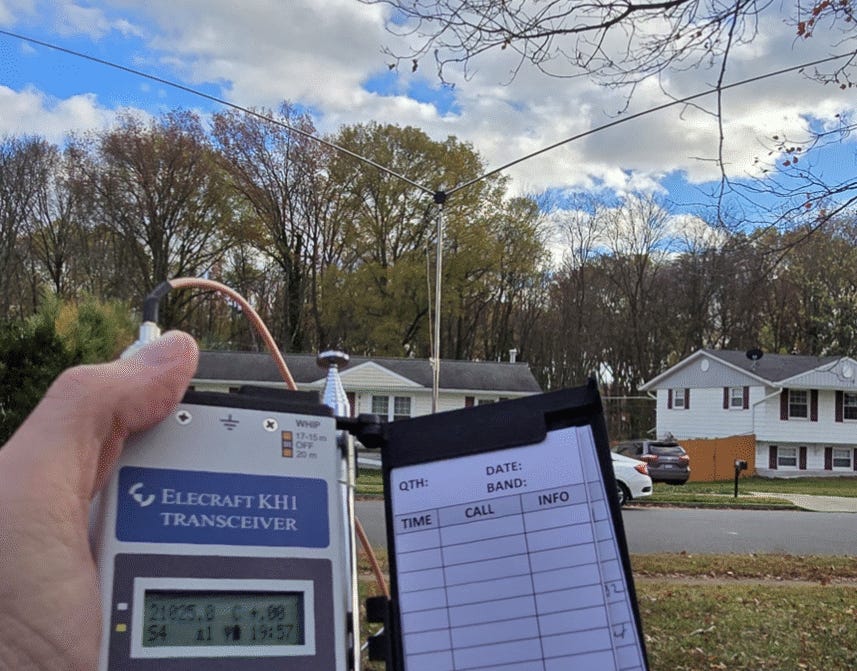
In the log this week* FCC Extends Filing Deadlines and ARRL Prepares To Send Backlog of License Filings* MVARC Club Meeting Tomorrow 11/22/2025: Learn about the N2EC VersaHex Antenna* MVARC Breakfast Tomorrow 11/22/2025* Contest Spotlight: North American SSB Sprint* MVARC Nets on the Air* What’s happening with DX? * Solar Activity Update* Upcoming Contests* Interesting Online Radio Content FCC Extends Filing Deadlines and ARRL Prepares To Send Backlog of License FilingsThe Federal Communications Commission announced that it would extend the filing deadline to March 5, 2026 for any licenses that were set to expire during the period between October 1, 2025 and March 5, 2026 in their Public Notice DA-25-943. The shutdown of the federal government earlier in the month was the reason for this extension. This means anyone whose license renewal deadlines were missed during the period now has more time to complete the filings and continue operations. The shutdown also caused a large backlog of new license applicants who passed their tests but were not able to get their FRN or have their licenses issued. The ARRL VEC announced that they will be submitting over 2,500 amateur radio license applications that were held up during the shutdown as soon as possible. The Electronic Batch Filing system used for that purpose has had problems this week and is no longer accepting applications. The FCC’s site reported that users should expect delays in search results, delays in processing of applications, intermittent timeouts of submissions, general sluggishness, and inability to complete fee payments. While they’re working to resolve the issues the FCC asks that users postpone non-urgent filings and refrain from repeated submissions if there are errors. According to the FCC “FCC technical staff and contractors are actively investigating the cause and are working to restore normal system performance as quickly as possible. This issue is being treated with the highest priority.” More information can be found at:https://www.fcc.gov/document/fcc-announces-revised-filing-deadlineshttps://www.fcc.gov/wireless/uls-asr-tcns-experiencing-significant-performance-degradation https://www.arrl.org/news/arrl-vec-ready-to-file-2-500-ham-radio-license-applications-fcc-extends-renewal-filing-deadline MVARC Club Meeting Tomorrow 11/22/2025: Learn about the N2EC VersaHex AntennaTomorrow at 10:30 AM is the Mount Vernon Amateur Radio Club’s next club meeting at the Mount Vernon Government Center, 2511 Parkers Lane, Alexandria, VA 22309. Our speaker this month is club member Ed N2EC who will be talking about the 3D printed antenna he designed, the N2EC VersaHex. It is a portable antenna designed for versatility and experimentation and supports use as a v-dipole as well as a vertical with the ability to add loading coils, extensions, tripods, and ground plane systems for resonant operation from 40 meters to 6 meters. If you’ve joined us for our recent POTA activations, ARRL Field Day, the George Washington’s Birthday Special Event Station, or the Masonic Lodges on the Air event this year, you’ve seen it in action. Now learn how it was designed and tested and how you can 3D print and build your own for a modest investment in parts. More information about the VersaHex Antenna can be found on Ed’s blog at https://n2ec.us/project/the-n2ec-versahex-antenna/. We look forward to seeing you in-person or online at tomorrow’s meeting.MVARC Breakfast Tomorrow 11/22/2025Tomorrow, Saturday, November 22, 2025, is the date of our next monthly breakfast. As usual we will meet up at 8 AM in the IHOP at 7694 Richmond Highway in Alexandria, Virginia for great conversation, camaraderie, and breakfast too. We have been having a great turn out in the last few months and there is always room for you to join in the fun. We hope to see you there.Contest Spotlight: North American SSB SprintThis weekend brings the fall edition of the North American SSB Sprint Contest. The Sprint is a relatively short four hour contest running from 0000 UTC Sunday November 23 (or 7 PM ET Saturday, November 22) until 0359 UTC (or 10:59 PM ET Saturday) running on SSB on 20 meters, 40 meters, and 80 meters. This contest has some interesting quirks having to do with the “sprint” portion. If you’re running (i.e. calling CQ or saying QRZ) you can only make one QSO on the frequency you’re running. After that QSO you have to QSY (change frequency) at least 1 kHz to answer another station or 5 kHz if you want to call CQ again. This has the effect of somewhat equalizing the field between those who run and those who search and pounce. The organizers suggest activity in the following ranges 14.200-14.275 MHz on 20 meters, 7.125-7.225 MHz on 40 meters and 3.700-3.825 MHz on 80 meters (with the exception of the DX window from 3.790-3.800 MHz).The exchange for the contest is the other station’s call sign, your call sign, a serial number starting at 1, your first name, and your State/Province/Country. So if I was having my 42nd QSO with K1ABC the exchange would be “K1ABC N2EC 42 Ed Virginia”. Stations outside of North America should give “DX” as their location. For the purposes of the contest North America is defined by the rules of CQ World Wide DX Contests plus KH6. In terms of multipliers each US state plus DC count as multipliers as are the 13 Canadian provinces and territories. There are also several listed North American countries listed in the rules as well. Logs must be submitted within 7 days of the sprint. Cabrillo formatted logs sent via the web form on their site is preferred, with a mailed CD or paper log being other options. Check out their web site at https://ssbsprint.com/ for rules and more information. If you’re looking to try something a little different this weekend, give the sprint a try. Good luck.MVARC Nets on the Air* 2 Meter FM Net: Tuesdays at 7 PM [146.655/- MHz (141.3 Hz PL Tone) ] * 2 Meter Digital Net: Immediately Follows 2 Meter FM Net [146.655/- MHz C4FM] * MVARC Slow Speed CW Roundtable: Saturday and Sunday at 7:30 AM [3.565 MHz CW]* MVARC Cherry Tree Net: Saturday and Sunday at 8:30 AM [3.920 MHz LSB]What’s Happening with DXThere will be a good amount of DX on the bands this week. Stations on the air include Saint Kitts (V47JA), Benin (TY0RU), Aruba (P44W), Cambodia (XU7RRC), Bahamas (C6AQQ), Bermuda (VP9I), Bhutan (A52AA), Chatham Islands (ZL7IO), Sint Eustatius (PJ5C), Vanuatu (YJ0GC), Grenada (J38W), San Andres (5J0EA), Lord Howe Island (VK2/LZ1GC), Ghana (9G5ZZ), Uganda (5X1XA, 5X1DF, 5X7W), Gabon (TR8CR), Rodrigues Island (3B9KW, 3B9/M0CFW), Colombia (HK3JCL), Madagascar (5R8IC), Mali (TZ4AM), Marcus Island Minami Tori Shima Islands (JG8NQJ/JD1), Solomon Islands (H44MS), and Antarctica (DP0GVN, FT4YM).A calendar of DXpeditions can be found at https://dxnews.com/calendar/ Solar Activity UpdateAs we go to press the Solar Flux Index (SFI) was 121 and the estimated sunspot number was 51 with 4 numbered sunspot regions visible from Earth. Over the last week the SFI has decreased. Solar activity has been at low levels in the last 24 hours. The geomagnetic field has been at quiet levels and the Kp index reached 3 yesterday. The solar wind peaked at 456 km/s. Solar activity is predicted to be at low levels with a slight chance of M-class flares through Sunday. The chance of solar radiation storms at the S1 or greater level is at 1% today through Sunday. R1 to R2 radio blackouts are unlikely in the near term with a predicted probability of 15% today through Sunday. R3 or greater blackouts are unlikely with a 1% chance predicted today through Sunday. There is a chance of 6 meter propagation so keep an eye on the band and spotting clusters to be ready for the next time the magic band does its thing. It remains a fantastic time for amateurs to get on the air and work the world. Good sources of real-time solar information include https://www.spaceweatherlive.com/ and https://solarham.com/. A good overview of conditions can be found at https://dx.qsl.net/propagation/. To see D-layer absorption data and associated radio blackouts, visit https://www.swpc.noaa.gov/products/d-region-absorption-predictions-d-rap. To see real-time Maximum Usable Frequency (MUF) and Critical Frequency (foF2) information from radiosonde data, visit https://prop.kc2g.com/. Upcoming ContestsIt is a bit of a quiet weekend for contests as we are in the calm between the storms of ARRL Sweepstakes SSB last weekend and CQ World Wide CW next weekend. That said, we do have a couple events in store. On the contest calendar this weekend we will see the LZ DX Contest and the North American SSB Sprint Contest we spotlighted earlier. As always the K1USN SSTs, MSTs, and CWTs will also be on the air. The full contest calendar with events and exchanges can be found at https://www.contestcalendar.com/weeklycont.phpInteresting Online Radio ContentRob N1NUG tests out the ATU-100 Antenna Tuner - George VK2AOE tries to diagnose a failure in his QMX radio - Hayden VK7HH talks about different size LiFePO4 batteries - Simon VA7BIX experiments with a remote antenna tuner - Imsai Guy reviews the FNIRSI LC1020 LCR Meter - Dave KE0OG talks about the ZS6BKW antenna - Chris K2CJB muses about the perceived decline of amateur radio - Thomas K4SWL activates rainy day POTA with a Vibroplex bug - The Slow Mo Guys join Jeff KF0MYB and Joe KF0MYJ to see how RF burns from broadcast antennas look in slow motion - Dugbo KD7DUG activates the wind swept peak of Sugarloaf Mountain for SOTA - Mike K8MRD takes a look at the Micro PA50 Gen 3 Amplifier - Peter VK3YE builds a tin can delta loop antenna - Hayden VK7HH takes a look at an integrated power station and how it impacts HF - Matt M0DQW looks at the Sirio Monsoon 5/8 wavelength 10 meter antenna - Hayden VK7HH encourages you to get on the bands while we’re near the top of the solar cycle - Sean W9FFF builds a multi-band multi-vertical ant
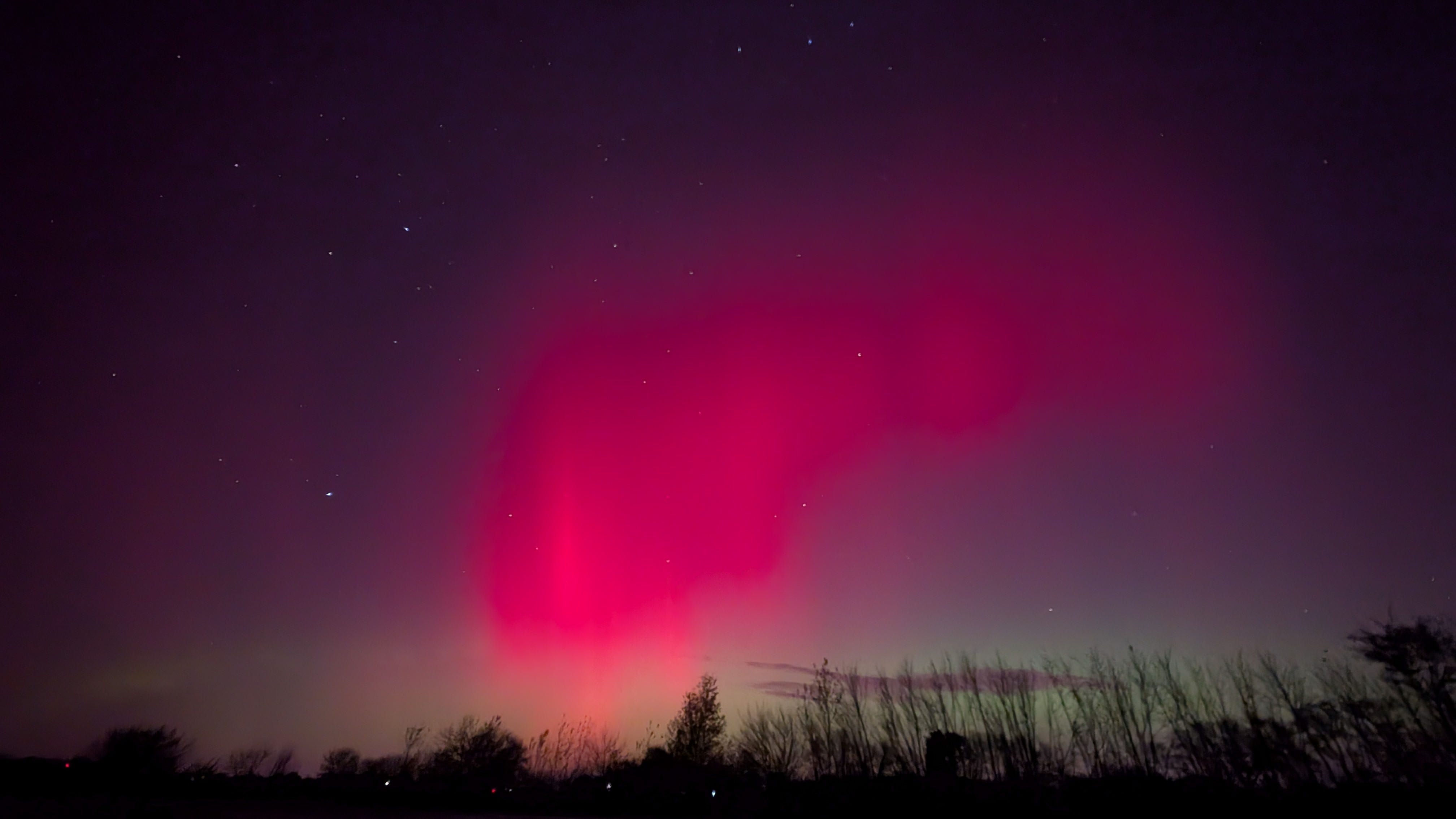
In the log this week* Amateur Radio on the ISS Celebrates 25 Years with SSTV Transmissions* Contest Spotlight: ARRL Sweepstakes on SSB This Weekend* Solar Weather Brings Aurora and Challenging Conditions* MVARC Nets on the Air* What’s happening with DX? * Solar Activity Update* Upcoming Contests* Interesting Online Radio Content Thanks for reading Amateur Radio News and Notes. Subscribe for free to receive new posts and support my work.Amateur Radio on the ISS Celebrates 25 Years with SSTV TransmissionsImage Courtesy https://ariss-usa.org/ARISS_SSTV/Amateur Radio on the International Space Station (ARISS) is celebrating 25 years of operation with continuous transmission of Slow Scan TV (SSTV) images from November 12 through November 19. ARISS started their operations on November 13, 2000 with the ISS Expedition-1 Crew and have continued to make contacts with about 200,000 students, educators, and enthusiasts every year with people in orbit. ARISS encourages any decoded SSTV images to be uploaded to the ARISS SSTV gallery at https://ariss-usa.org/ARISS_SSTV/ and you can also see the images that have been received by others. SSTV is being transmitted on 145.800 MHz except when there are scheduled contacts with schools and current transmitter status can be found at https://www.ariss.org/current-status-of-iss-stations.html. ISS passes can be calculated at https://www.amsat.org/track/?lang=en&satellite=ISS. It is always fun to receive a picture from the ISS. Good luck.Contest Spotlight: ARRL Sweepstakes on SSB This WeekendHot on the heels of the CW version two weekends ago, this weekend brings the second installment of one of the oldest and most unique contests on the air: the ARRL Sweepstakes on SSB. The contest starts at 2100 UTC (4 PM EST) on Saturday, November 15 and runs through 0259 UTC Monday (9:59 PM EST Sunday night). The objective of November Sweepstakes is to encourage “self training in radiocommunications” with a focus on message passing. To that end, Sweepstakes has one of the most involved contest exchanges on the air. The exchange includes a serial number (starting with 1), a precedence, your Call Sign, and your ARRL/RAC Section, and a Check (consisting of the last 2 digits of the year the operator was first licensed). Those precedence values include “Q” for Single Operator QRP, “A” for Single Operator Low Power (5-100 Watts), “B” for Single Operator High Power (>100 Watts), “U” for any Single Operator Unlimited Power Category, “M” for Multioperator stations, and “S” for School Clubs. So as an example, for me my exchange for a 1 person 100 Watt station for my 30th contact would be “30 A N2EC 90 VA”. As you can imagine, this really ups the challenge, and acts as more of a simulation of an actual emergency message passing operation than your average contest. Stations in the Sweepstakes can work no more than 24 of the 30 hours. If you work more than that time, only the first 24 hours of QSOs will be counted. Any “off time” needs to be at least 30 consecutive minutes without operating (and listening counts as operating in the rules). Logs need to be submitted within 7 days after the event is over and can be sent electronically in Cabrillo format (which is the preferred method) or via mail. Certificates for top operators will be issued for each ARRL/RAC section and division and all overall and division winners will get a plaque. Participation pins and coffee mugs are also available for purchase. The CW version was quite busy and I had a blast making contacts with 149 stations in a total of 62 sections. SSB promises to be a lot of fun this year as well. This is a great way to test your mettle and operating skill, so give it a go this weekend and have some fun. Rules and more information can be found at https://www.arrl.org/sweepstakes. Good luck! Solar Weather Brings Aurora and Challenging ConditionsPhoto Courtesy Richard KE4WLEThere have been a lot of solar storms in the last week which brought widespread Aurora to Northern latitudes. The picture above was taken by my friend Richard KE4WLE in Ohio during one of the storms. The conditions were quite extreme with G4 level storms being experienced and Kp index values of 8. In addition to the light show, the storms had wide-ranging impacts. Blue Origin’s New Glenn rocket mission to Mars with two NASA ESCAPADE spacecraft was postponed due to the geomagnetic effects of the aurora. Additionally, radio propagation was severely impacted with R1 to R3 radio blackouts reported and auroral flutter being heard on the HF bands. In the podcast version of Amateur Radio News and Notes you can hear what some of that auroral distortion sounded like on the evening of November 11th in a QSO I had with N3VO on 40 meters. The forecast is looking more favorable in the days ahead for communications, but it was certainly an exciting week for space weather.MVARC Nets on the Air* 2 Meter FM Net: Tuesdays at 7 PM [146.655/- MHz (141.3 Hz PL Tone) ] * 2 Meter Digital Net: Immediately Follows 2 Meter FM Net [146.655/- MHz C4FM] * MVARC Slow Speed CW Roundtable: Saturday and Sunday at 7:30 AM [3.565 MHz CW]* MVARC Cherry Tree Net: Saturday and Sunday at 8:30 AM [3.920 MHz LSB]What’s Happening with DXThere will be a good amount of DX on the bands this week. Stations on the air include Palau (T88MZ), Saint Kitts (V47JA), Benin (TY0RU), Togo (5V7RU), Chatham Islands (ZL7/LZ1GC), Burundi (9U1RU), Tanzania (5H3MB), Ghana (9G5ZZ), Uganda (5X1XA, 5X1DF, 5X7W), Madagascar (5R8IC), Mali (TZ4AM), Rodrigues Island (3B9KW, 3B9/M0CFW), Gabon (TR8CR), Colombia (HK3JCL), Marcus Island Minami Tori Shima Islands (JG8NQJ/JD1), Solomon Islands (H44MS), and Antarctica (DP0GVN, FT4YM).A calendar of DXpeditions can be found at https://dxnews.com/calendar/ Solar Activity UpdateAs we go to press the Solar Flux Index (SFI) was 156 and the estimated sunspot number was 104 with 8 numbered sunspot regions visible from Earth. Over the last week the SFI has remained about the same. Solar activity has been at low levels in the last 24 hours. The geomagnetic field was at unsettled to severe storm levels and the Kp index reached 7 yesterday. The solar wind peaked at 999 km/s. Solar activity is predicted to be at high levels with the G1 to G2 (Minor to Moderate) storm conditions today with conditions calming by the end of the day with quiet to unsettled levels Saturday and Sunday until a coronal hole high speed stream arrives bringing likely G1 storm conditions. The chance of solar radiation storms at the S1 or greater level is at 40% today through Sunday. R1 to R2 radio blackouts are expected in the near term with a predicted probability of 70% today through Sunday. R3 or greater blackouts are possible with a 30% chance predicted today through Sunday. There is a chance of 6 meter propagation so keep an eye on the band and spotting clusters to be ready for the next time the magic band does its thing. Despite the current stormy conditions, it remains a fantastic time for amateurs to get on the air and work the world. Good sources of real-time solar information include https://www.spaceweatherlive.com/ and https://solarham.com/. A good overview of conditions can be found at https://dx.qsl.net/propagation/. To see D-layer absorption data and associated radio blackouts, visit https://www.swpc.noaa.gov/products/d-region-absorption-predictions-d-rap. To see real-time Maximum Usable Frequency (MUF) and Critical Frequency (foF2) information from radiosonde data, visit https://prop.kc2g.com/. Upcoming ContestsOn the contest calendar this weekend we will see the ARRL Sweepstakes on SSB as mentioned earlier as well as the Ham Spirit Contest, the All Austrian 160 meter Contest, the REF 160 Meter Contest, the South American Integration Contest on CW, the Feld Hell Sprint, the RSGB 1.8 MHz Contest, the Fists Sunday Sprint, the Homebrew and Oldtime Equipment Party, and the Run for the Bacon QRP Contest. As always the K1USN SSTs, MSTs, and CWTs will also be on the air. The full contest calendar with events and exchanges can be found at https://www.contestcalendar.com/weeklycont.phpInteresting Online Radio ContentJohn AE5X unboxes a new Apache Labs Anan-10E - Walt K4OGO builds and tests a Bobtail Curtain Antenna - Simon VA7BIX builds an antenna with parts from AliExpress and gets on the air - Matt M0DQW takes a look at the Antuner ATR-1000 Antenna Tuner - Michael KB9VBR reviews the Alpha Antenna HexTenna - Vince VE6LK shows a tool to eliminate ground loops on USB connections - Jasonoid bulds a Harbor Freight Power Station - Mellow Labs hacks a cheap multimeter to give it WiFi capability - Ben VE6SFX shows the new antenna wire he made with nickel coated carbon fiber in a paracord sheath - Vince VE6LK tests out Ben VE6SFX’s new antenna wire/paracord - Mike K8MRD goes POTA activating in rough conditions - Vince VE6LK takes a look at the Little Dude 6 Mast - Steve KM9G tests out some attenuators - Mike M0MSN starts setting up a radio van - Matt M0DQW looks at the latest ATS Mini V4 receiver - Craig KM6LYW shows “a day in the life” as a amateur radio operator - Rob N1NUG looks at a digital microscope - Josh KI6NAZ tries out the VGC BMH-88 Bluetooth Mic with multiple rigs - Mike K8MRD shows some silicone cable ties for organization - That’s it for this week.Best 73,EdN2EC This is a public episode. If you would like to discuss this with other subscribers or get access to bonus episodes, visit mvarc.substack.com
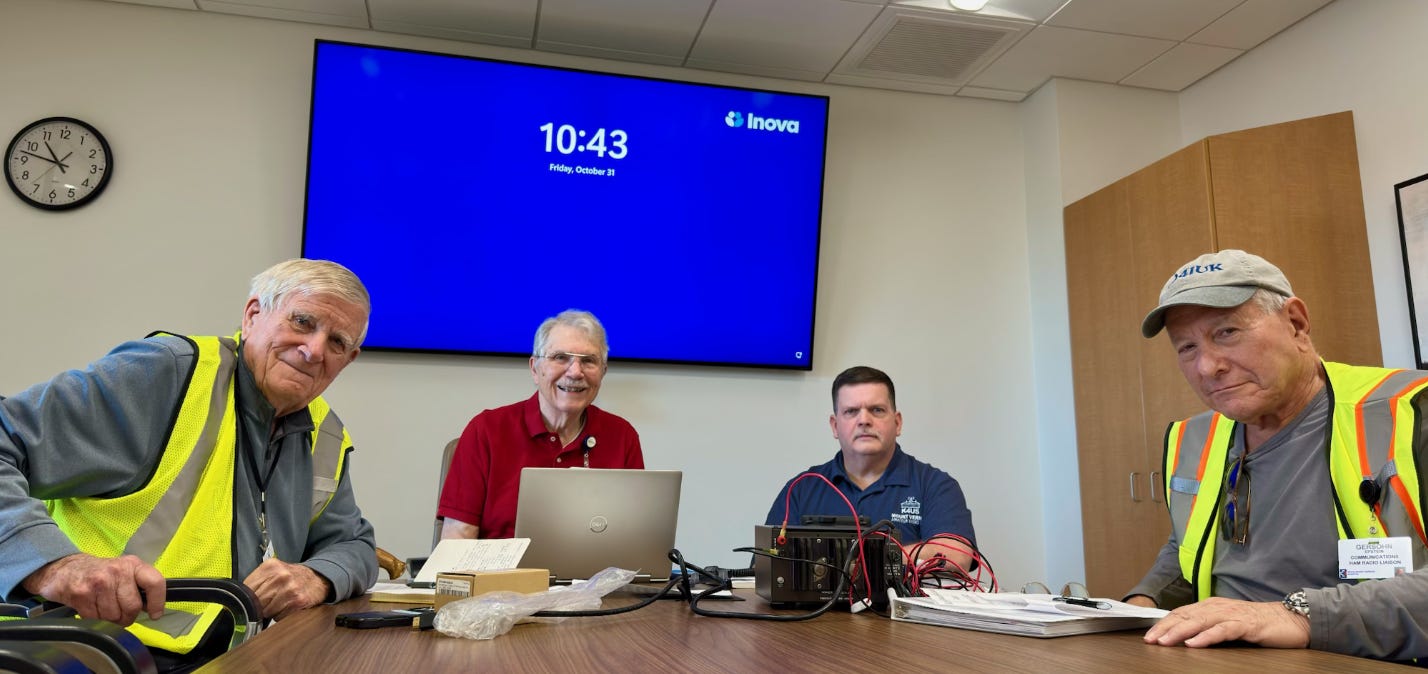
In the log this week* Contest Spotlight: Worked All Europe DX RTTY* MVARC Gets Prepared at Mount Vernon Hospital* MVARC Nets on the Air* What’s happening with DX? * Solar Activity Update* Upcoming Contests* Interesting Online Radio Content Thanks for reading MVARC News! Subscribe for free to receive new posts and support my work.Contest Spotlight: Worked All Europe DX RTTYThis weekend brings the Worked All Europe DX Contest on RTTY from 0000 UTC on Saturday, November 8 (so 7 PM ET on Friday) until 2359 Sunday, November 9 (6:59 PM ET on Sunday). The exchange consists of signal report and a serial number starting at 001. If a station does not send a serial number, 000 should be logged. Bands of operation will be 80 meters, 40 meters, 20 meters, 15 meters, and 10 meters. Operating categories include Single-Op LOW (100 Watts or less), Single-Op HIGH (Over 100 Watts), and Multi-Op. Single-Op stations can only work 36 of the 48 hours of the contest and off times must be a minimum of 60 minutes. Multipliers for non-European stations are the number of countries defined in the WAE Country List and for European stations they are every non-European DXCC entity with some exceptions in the rules. Country multipliers are also weighted by band so 80 meter mults are multiplied by 4, 40 meter mults by 3, and 20/15/10 meter mults by 2. The total multiplier is the sum of the weighted multiplier points of all bands. Unlike the SSB and CW variants, in the RTTY version everyone can work everyone. The only intercontinental requirement is in QTC traffic. And what is QTC traffic? Well, it is a unique part of the WAE contests where you can get additional points by reporting contest QSOs to DX stations. These are involved message passing style reports consisting of time, call sign, and serial number. So the example given in the rules is “1307 DA1AA 431” which means that the station DA1AA was contacted at 1307 UTC and sent serial number 431. Those QTCs can only be sent once, and if transferred correctly count for a point to the sender and receiver. Up to 10 QTCs can be sent by two stations. There are some involved rules for sending multiples, so make sure to check out the rules for details. Final scores are the total QSOs plus QTCs on all bands multiplied by the band-weighted multipliers. Full details and rules can be found at https://www.darc.de/der-club/referate/conteste/wae-dx-contest/en/wae-rules/. The WAE contests are a great way to work a bunch of DX and test your message passing mettle with the QTCs. Good luck.MVARC Gets Prepared at Mount Vernon HospitalPhoto Courtesy Corey KN4YZYThis week MVARC went to Mount Vernon Hospital to check the radio gear that is in place for potential emergencies. Ken W4RUS, Corey KN4YZY, Gersohn KO4IUK, and Jim K4HYT made sure everything was working as needed. Jim provided a new microphone for the setup as the existing one had a cracked cable. They also updated the memories programmed into the FTM-400XDR with the latest information for frequencies around the area. It was a successful outing and the team followed it up with lunch. Thanks to the team for their hard work to keep us prepared to assist the hospital in times of need.MVARC Nets on the Air* 2 Meter FM Net: Tuesdays at 7 PM [146.655/- MHz (141.3 Hz PL Tone) ] * 2 Meter Digital Net: Immediately Follows 2 Meter FM Net [146.655/- MHz C4FM] * MVARC Slow Speed CW Roundtable: Saturday and Sunday at 7:30 AM [3.565 MHz CW]* MVARC Cherry Tree Net: Saturday and Sunday at 8:30 AM [3.920 MHz LSB]What’s Happening with DXThere will be a good amount of DX on the bands this week. Stations on the air include Cambodia (XU7O), Ogasawara Islands (JD1BMH), Sierra Leone (9L8MD), Madagascar (5R8IC, 5R8TT, 5R8XX), Togo (5V7RU), Chatham Islands (ZL7/LZ1GC), Tanzania (5H3MB), Burundi (9U1RU), Gabon (TR8CR), Mali (TZ4AM), Rodrigues Island (3B9KW, 3B9/M0CFW), Colombia (HK3JCL), Marcus Island Minami Tori Shima Islands (JG8NQJ/JD1), Solomon Islands (H44MS), and Antarctica (DP0GVN).A calendar of DXpeditions can be found at https://dxnews.com/calendar/ Solar Activity UpdateAs we go to press the Solar Flux Index (SFI) was 163 and the estimated sunspot number was 104 with 5 numbered sunspot regions visible from Earth. Over the last week the SFI has increased. Solar activity has been at moderate levels recently. The geomagnetic field was at G1 (minor) to G3 (strong) storm levels and the Kp index reached 7 yesterday. The solar wind peaked at nearly 700 km/s. Solar activity is predicted to be at moderate to high levels with geomagnetic activity at G3 (strong) storming levels today due to the anticipated arrival of a full halo coronal mass ejection, at G2 storming levels Saturday due to the arrival of a second coronal mass ejection, and at unsettled to active levels Sunday. The chance of solar radiation storms at the S1 or greater level is at 20% today through Sunday. R1 to R2 radio blackouts are expected in the near term with a predicted probability of 80% today through Sunday. R3 or greater blackouts are possible with a 35% chance predicted today through Sunday. There is a chance of 6 meter propagation so keep an eye on the band and spotting clusters to be ready for the next time the magic band does its thing. Despite the current stormy conditions, it remains a fantastic time for amateurs to get on the air and work the world. Good sources of real-time solar information include https://www.spaceweatherlive.com/ and https://solarham.com/. A good overview of conditions can be found at https://dx.qsl.net/propagation/. To see D-layer absorption data and associated radio blackouts, visit https://www.swpc.noaa.gov/products/d-region-absorption-predictions-d-rap. To see real-time Maximum Usable Frequency (MUF) and Critical Frequency (foF2) information from radiosonde data, visit https://prop.kc2g.com/. Upcoming ContestsOn the contest calendar this weekend we will see the ARRL EME Contest, the WAE DX Contest on RTTY, the PODXS 070 Club Triple Play Low Band Sprint, the FISTS Saturday Sprint, the 10-10 International Fall Contest on Digital, the JIDX Phone Contest, the SKCC Weekend Sprintathon, the OK/OM DX Contest on CW, the CQ-WE Contest on CW, the AWA Bruce Kelley 1929 QSO Party, the FIRAC HF Contest, and the 4 States QRP Group Second Sunday Sprint. As always the K1USN SSTs, MSTs, and CWTs will also be on the air. The full contest calendar with events and exchanges can be found at https://www.contestcalendar.com/weeklycont.phpInteresting Online Radio ContentTim K5OHY takes a look at the NorCal Doublet Antenna - Mark KD7DTS, Ara N6ARA, and Justin K5EM talk about building community through radio sport for Sofas on the Air - Randy K5ZD talks CQ WW RTTY with Gabry IT9RGY and Prezmek SQ9ORQ - Today I Found Out explores the origins of SOS as a Universal Distress Call - Steve KM9G takes a look at versions 2 and 3 of the SI4732 radios - Mike K8MRD takes a look at chokes made by KF8ASE - George VK2AOE builds a digital VFO for a 49er kit - Walt K4OGO builds and tests the ARRL Momobeam Moxon and Yagi for 10 and 6 meters - Rob N1NUG takes a look at the zBitx QRP radio - Walt K4OGO tests out a phased vertical array using the Performance Z-Arrays system - Matt M0DQW takes a look at a portable Vivid RTL-SDR from UUGear - Josh KI6NAZ compares and contrasts the Baofeng Mini and TidRadio H3 and H3 Plus - That’s it for this week.Best 73,EdN2EC This is a public episode. If you would like to discuss this with other subscribers or get access to bonus episodes, visit mvarc.substack.com
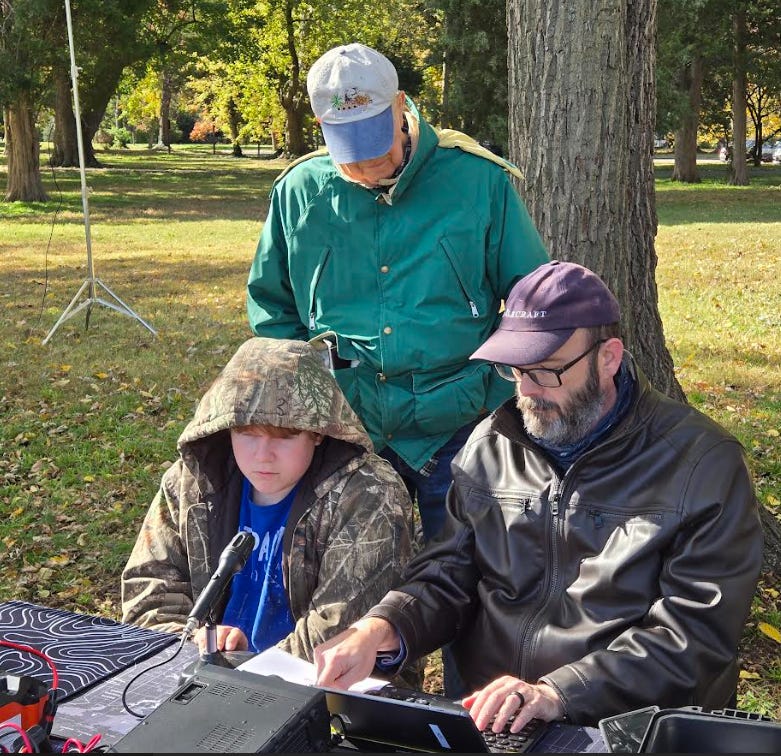
In the log this week* Contest Spotlight: ARRL Sweepstakes on CW This Weekend* MVARC POTA Activation Recap* MVARC Nets on the Air* What’s happening with DX? * Solar Activity Update* Upcoming Contests* Interesting Online Radio Content Thanks for reading MVARC News! Subscribe for free to receive new posts and support my work.Contest Spotlight: ARRL Sweepstakes on CW This WeekendImage Courtesy ARRLThis weekend brings one of the oldest and most unique contests on the air: the ARRL Sweepstakes on CW. The contest starts at 2100 UTC (5 PM EDT) on Saturday, November 1 and runs through 0259 UTC Monday (9:59 PM EST Sunday night - note the change from EDT to EST this weekend). The objective of November Sweepstakes is to encourage “self training in radiocommunications” with a focus on message passing. To that end, Sweepstakes has one of the most involved contest exchanges on the air. The exchange includes a serial number (starting with 1), a precedence, your Call Sign, and your ARRL/RAC Section, and a Check (consisting of the last 2 digits of the year the operator was first licensed). Those precedence values include “Q” for Single Operator QRP, “A” for Single Operator Low Power (5-100 Watts), “B” for Single Operator High Power (>100 Watts), “U” for any Single Operator Unlimited Power Category, “M” for Multioperator stations, and “S” for School Clubs. So as an example, for me my exchange for a 1 person 100 Watt station for my 25th contact would be “25 A N2EC 90 VA”. As you can imagine, this really ups the challenge, especially on CW, and acts as more of a simulation of an actual emergency message passing operation than your average contest. Stations in the Sweepstakes can work no more than 24 of the 30 hours. If you work more than that time, only the first 24 hours of QSOs will be counted. Any “off time” needs to be at least 30 consecutive minutes without operating (and listening counts as operating in the rules). Logs need to be submitted within 7 days after the event is over and can be sent electronically in Cabrillo format (which is the preferred method) or via mail. Certificates for top operators will be issued for each ARRL/RAC section and division and all overall and division winners will get a plaque. Participation pins and coffee mugs are also available for purchase. This is a great test to test your mettle and operating skill, so give it a go this weekend and have some fun. Rules and more information can be found at https://www.arrl.org/sweepstakes. Good luck! MVARC POTA Activation RecapImage Courtesy Philip AK4KMLast Saturday, the Mount Vernon Amateur Radio Club had another successful activation for Parks on the Air. We had a nice turnout at Belle Haven Park and ended up with 70 QSOs in the log at a very sociable outing. Operators included Joseph WB9KMJ, Ed KJ4WJC, and Ed N2EC. Since the CQ World Wide SSB contest was in full effect that weekend, we decided to operate on the 17 meter band and conditions were quite good. We ran at 100 Watts using a Yaesu FT-897 into an N2EC VersaHex Antenna working SSB and CW. Image Courtesy Philip AK4KMWe worked all over the United States and Canada as well as Germany, Austria, Norway, Scotland, Poland, France, and England with great signal reports all around. The weather held up for us and we had a beautiful morning down by the Potomac River. We were concerned that the park might have been closed due to the government shutdown, but while other park areas were closed along the George Washington Memorial Parkway, Belle Haven was open. Thanks to everyone who joined us on Saturday, both in-person and on-the-air. A map of our QSOs is below. We hope to see you at our next activation.MVARC Nets on the Air* 2 Meter FM Net: Tuesdays at 7 PM [146.655/- MHz (141.3 Hz PL Tone) ] * 2 Meter Digital Net: Immediately Follows 2 Meter FM Net [146.655/- MHz C4FM] * MVARC Slow Speed CW Roundtable: Saturday and Sunday at 7:30 AM [3.565 MHz CW]* MVARC Cherry Tree Net: Saturday and Sunday at 8:30 AM [3.920 MHz LSB]What’s Happening with DXThere will be a good amount of DX on the bands this week. Stations on the air include Madagascar (5R8IC, 5R8TT, 5R8XX), Sierra Leone (9L8MD), Burundi (9U1RU), Saint Vincent and Grenadines (J88PI), Gabon (TR8CR), Galapagos Islands (HD8R), Rodrigues Island (3B9KW, 3B9/M0CFW), Wallis and Futuna Islands (FW5K), Gambia (C5R), Tanzania (5H3MB), Colombia (HK3JCL), Cyprus (ZC4RH), Ogasawara Islands (JD1BMH), Chatham Islands (ZL7/LZ1GC), Marcus Island Minami Tori Shima Islands (JG8NQJ/JD1), Mali (TZ4AM), Solomon Islands (H44MS), and Antarctica (DP0GVN).A calendar of DXpeditions can be found at https://dxnews.com/calendar/ Solar Activity UpdateAs we go to press the Solar Flux Index (SFI) was 120 and the estimated sunspot number was 68 with 5 numbered sunspot regions visible from Earth. Over the last week the SFI has decreased. Solar activity has been at very low levels recently. The geomagnetic field was at quiet levels and the Kp index reached 5 yesterday. The solar wind peaked at 677 km/s. Solar activity is predicted to be low with geomagnetic activity at unsettled to active levels today and at quiet to unsettled levels over the weekend. The chance of solar radiation storms at the S1 or greater level is low at 1% today through Sunday. R1 to R2 radio blackouts are unlikely in the near term with a predicted probability of 5% today and Saturday and 10% on Sunday. R3 or greater blackouts are unlikely with a 1% chance predicted today through Sunday. There is a chance of 6 meter propagation so keep an eye on the band and spotting clusters to be ready for the next time the magic band does its thing. It remains a fantastic time for amateurs to get on the air and work the world. Good sources of real-time solar information include https://www.spaceweatherlive.com/ and https://solarham.com/. A good overview of conditions can be found at https://dx.qsl.net/propagation/. To see D-layer absorption data and associated radio blackouts, visit https://www.swpc.noaa.gov/products/d-region-absorption-predictions-d-rap. To see real-time Maximum Usable Frequency (MUF) and Critical Frequency (foF2) information from radiosonde data, visit https://prop.kc2g.com/. Upcoming ContestsOn the contest calendar this weekend we will see the ARRL Sweepstakes we highlighted earlier as well as the YBDXPI FT8 Contest, the IPARC Contest on CW, the Silent Key Memorial Contest, the UK/EI DX Contest on SSB, the IPARC Contest on SSB, the EANET Sprint, the High Speed Club CW Contest, and the Classic Exchange Phone Contest. As always the K1USN SSTs, MSTs, and CWTs will also be on the air. The full contest calendar with events and exchanges can be found at https://www.contestcalendar.com/weeklycont.phpInteresting Online Radio ContentDr. Tamitha Skov WX6SWW discusses recent solar conditions and her forecast - Forrest KI7QCF looks at a 3D Printed case to make the QMX compete with a KX1 - Michael KB9VBR takes a look at the CentyLab Pocket PD USB power supply - Matt M0DQW builds a VLF receiver to listen to natural phenomena - Di KO6BTM takes Ormoo the cat on a SOTA adventure - Tim K5OHY takes a deep dive on doublet antennas and finds a lot to like - Mike K8MRD operates remote from PJ2T in Curacao from a living room - Valery RA1AOM shows one of his new paddles at QRQ - Anton discusses solar cycles and recent discoveries - Steve KM9G tests carbon fiber whips as antennas - Jeff KF0MYB and Joe KF0MYJ talk about lighting on antenna towers - Matt M0DQW revives an old satellite setup for QO-100 - Callum M0MCX talks about numbers in the NATO phonetic alphabet - Kevin KB9RLW shows us a new Fnirsi LCR Meter - Craig KM6LYW announces the release of DigiPi 2.0 - Mike K8MRD looks at the latest features in WSJT-X version 3 - Nanofix goes over some basics of oscilloscopes - Callum M0MCX shows how to get started with N1MM for contest logging - That’s it for this week.Best 73,EdN2EC This is a public episode. If you would like to discuss this with other subscribers or get access to bonus episodes, visit mvarc.substack.com

In the log this week* Contest Spotlight: CQ World Wide SSB This Weekend* MVARC Breakfast Tomorrow 10/25/2025* MVARC POTA Activation Planned Tomorrow 10/25/2025* MVARC Nets on the Air* What’s happening with DX? * Solar Activity Update* Upcoming Contests* Interesting Online Radio Content Thanks for reading MVARC News! Subscribe for free to receive new posts and support my work.Contest Spotlight: CQ World Wide SSB This WeekendThis weekend brings one of the most popular contests of the entire year: CQ World Wide SSB. The contest usually has over 35,000 contestants that get on the air the last weekends of October for SSB and November for CW. The event starts at 0000 UTC on Saturday October 25 (so 8 PM Eastern Daylight Time on Friday) and ends at 2359 UTC on Sunday (or 7:59 PM Eastern Daylight Time on Sunday). The goal is to make as many contacts with different DXCC entities and CQ Zones as possible. The opportunities for working DX in this contest cannot be overstated. In contests like this, some folks have managed to get a DXCC in a single weekend. Even working more casually, getting 50 or more countries isn’t unlikely. Even if you’re not planning on submitting a contest entry, working the stations is a great way to get some incredible DX in your log, and the QSOs count for them too, even if you don’t submit a log. Of course, submitting one is encouraged and helps their software do proper log checking, so if you can, join in the fun. There are operators around the globe with powerful stations waiting for your call.The contest is limited to the 160, 80, 40, 20, 15, and 10 meter bands and the exchange is a signal report along with your CQ zone. For East Coast folks that would be “59 05” -- so quite a simple exchange and no serial numbers to worry about. QSO points are 3 points for contacts on different continents, 2 points for North American contacts in different countries, 1 point for contacts on the same continent but different countries (outside North America), and 0 points for contacts in the same countries (but you do get CQ Zone and Country multipliers for those QSOs). The score is the total number of QSO Points multiplied by the sum of zone and country multipliers. There are several categories you can enter at various power levels. For Single Operators there is the classic Single Operator category where no spotting assistance is permitted and the Single Operator Assisted category where you can use QSO spotting networks. Power levels are High Power (over 100 Watts), Low Power (Over 5 Watts up to 100 Watts), and QRP (5 Watts or less). Entries may also be Single Band or All-Band. In addition to the main categories there are overlays like “Classic Operator” which specifies no spotting assistance and operating for up to 24 of the 48 hours, Rookie for ops licensed within the last 3 years, and Youth where the op is 25 years of age or under.For Multi-Operator categories (All-Band Only) there is Multi-Single where only one transmitted signal on one band is permitted during any 10 minute period with power levels either High or Low. Multi-two has a maximum of 2 signals on 2 different bands. Multi-Multi allows all 6 bands to be activated simultaneously with one signal per band at any time. And Multi-Distributed has a maximum of 6 transmitted signals with one per band at a given time from stations in different locations (but the same DXCC entity and CQ Zone).There is also a club competition where you can add a club you’re a member of and within a 250 mile radius circle from the center of the club area for additional awards. Participants get certificates automatically from the site and plaques will be awarded for top performance in categories. Logs must be submitted in Cabrillo format within 5 days of the end of the contest (2359 UTC October 31, 2025). Full rules can be found at https://cqww.com/rules.htm. This is always an exciting contest, and I encourage you to get on the air and work the world this weekend. Good luck!MVARC Breakfast Tomorrow 10/25/2025Tomorrow, Saturday, October 25, 2025, is the date of our next monthly breakfast. As usual we will meet up at 8 AM in the IHOP at 7694 Richmond Highway in Alexandria, Virginia for great conversation, camaraderie, and breakfast too. We have been having a great turn out in the last few months and there is always room for you to join in the fun. We hope to see you there.MVARC POTA Activation Planned Tomorrow 10/25/2025Tomorrow, Saturday October 25, 2025 the Mount Vernon Amateur Radio Club is planning another club activation as K4US for Parks on the Air. We plan to meet at Belle Haven Park near the North end of the parking lot to activate together starting around 10 AM. We are hoping that the park will be open as it has been periodically closed during the federal government shutdown. The park was open on Thursday evening, so we’re hoping that it remains so for Saturday. The plan is to start in the morning and continue until at least Noon with a 100 Watt HF setup. Conditions have been fantastic of late, and with the CQ World Wide DX contest we’re likely to be able to work a whole lot of DX. We’ll have control operators on hand so no matter what kind of license you have (or even if you don’t have a license) you can get on the air and have some fun with us in the park. We hope to see you there!MVARC Nets on the Air* 2 Meter FM Net: Tuesdays at 7 PM [146.655/- MHz (141.3 Hz PL Tone) ] * 2 Meter Digital Net: Immediately Follows 2 Meter FM Net [146.655/- MHz C4FM] * MVARC Slow Speed CW Roundtable: Saturday and Sunday at 7:30 AM [3.565 MHz CW]* MVARC Cherry Tree Net: Saturday and Sunday at 8:30 AM [3.920 MHz LSB]What’s Happening with DXThere will be a lots of DX on the bands this week due in large part to this weekend’s CQ WW SSB Contest. Stations on the air include Antigua (V62B), Martinique (FM/VE3LA, TO2M), Rhodes (SX5P), Peru (OA4O), Saint Kitts and Nevis Islands (V47T), Belize (V31VP), Aruba (P44W, P40W), Hawaii (KH7M), Montserrat (VP2MPN), Gambia (C5Y), Lakshadweep Islands (VU7T), Cape Verde (D4D), Barbados (8P5A), Saint Barthelemy (TO4K), Saint Vincent (J8K), San Andres (5K0UA), British Virgin Islands (VP2VRX), Galapagos Islands (HD8R), Somalia (6O3T), Canary Islands (EF8R), Rodrigues Island (3B9KW, 3B9/M0CFW), Angola (D2A), Saba Island (PJ6A, PJ6Y), Wallis and Futuna Islands (FW5K), Bonaire (PJ4K), Tanzania (5H3MB), Madagascar (5R8IC), Burkina Faso (XT2AW), Marcus Island Minami Tori Shima Islands (JG8NQJ/JD1), Colombia (HK3JCL), Mali (TZ4AM), Solomon Islands (H44MS), and Antarctica (DP0GVN).A calendar of DXpeditions can be found at https://dxnews.com/calendar/ Solar Activity UpdateAs we go to press the Solar Flux Index (SFI) was 130 and the estimated sunspot number was 117 with 8 numbered sunspot regions visible from Earth. Over the last week the SFI has decreased. Solar activity has been at low levels recently. The geomagnetic field was at quiet levels and the Kp index reached 2 yesterday. The solar wind peaked at 501 km/s. Solar activity is predicted to be low with geomagnetic activity quiet levels today and Sunday and at quiet to unsettled levels on Saturday. The chance of solar radiation storms at the S1 or greater level is low at 10% today and at 1 % on Saturday and Sunday. R1 to R2 radio blackouts are unlikely in the near term with a predicted probability of 15% today through Sunday. R3 or greater blackouts are unlikely with a 1% chance predicted today through Sunday. There is a chance of 6 meter propagation so keep an eye on the band and spotting clusters to be ready for the next time the magic band does its thing. It remains a fantastic time for amateurs to get on the air and work the world. Good sources of real-time solar information include https://www.spaceweatherlive.com/ and https://solarham.com/. A good overview of conditions can be found at https://dx.qsl.net/propagation/. To see D-layer absorption data and associated radio blackouts, visit https://www.swpc.noaa.gov/products/d-region-absorption-predictions-d-rap. To see real-time Maximum Usable Frequency (MUF) and Critical Frequency (foF2) information from radiosonde data, visit https://prop.kc2g.com/. Upcoming ContestsOn the contest calendar this weekend we will see the CQ World Wide DX Contest on SSB as well as the 902 MHz and Up Fall Sprint and the Classic Exchange on CW. The calendar is relatively quiet otherwise as CQ World Wide will be this weekend’s big event. As always the K1USN SSTs, MSTs, and CWTs will also be on the air. The full contest calendar with events and exchanges can be found at https://www.contestcalendar.com/weeklycont.phpInteresting Online Radio ContentDr. Tamitha Skov WX6SWW discusses recent solar conditions and her forecast - Kevin W1DED talks to the contest crew about CQ WW SSB - Kevin W1DED talks to the European Contest Crew about CQ WW SSB - Mike K8MRD takes a look at Messi and Paoloni Airborne 5 coax - Brian KC9USB takes a look at his favorite radio accessories at Harbor Freight - George VK2AOE talks about upcoming homebrew projects he has planned - Mark KD7DTS, Ara N6ARA, and Tim N7KOM talk SOTA, memes, and fun on Sofas on the Air - Hayden VK7HH builds a flower pot antenna for 2 meters - Matt M0DQW looks at the MX-S3 SDR TR Switch - Walt K4OGO experiments with co-phased antennas - Red NJ7V reviews the KM4CFT Iambic Paddles - Geochron announces and demonstrates the new Atlas Pro - That’s it for this week.Best 73,EdN2EC This is a public episode. If you would like to discuss this with other subscribers or get access to bonus episodes, visit mvarc.substack.com
In the log this week* PJ6Y Youth DXpedition to Saba Island Underway* Event Spotlight: DX Marathon Sprint * Reminder: ARRL Requests Amateurs Contact Representatives About Amateur Radio Emergency Preparedness Act* MVARC Nets on the Air* What’s happening with DX? * Solar Activity Update* Upcoming Contests* Interesting Online Radio Content Thanks for reading MVARC News! Subscribe for free to receive new posts and support my work.PJ6Y Youth DXpedition to Saba Island UnderwayImage Courtesy https://pj6y2025.com/ As we go to press the PJ6Y Saba Island DXpedition should now be underway. The PJ6Y DXpedition will be activating the island of Saba (IOTA NA-145) with a team of fourteen young operators from around the world with nine of those ops being first-time DXpeditioners. Additionally, there will be 30-40 young amateurs who will participate remotely using NexGen2 RiBs made possible from a Northern California DX Foundation grant. The DXpedition is set to run from October 15 until October 29, 2025. Saba island is in the Caribbean and is the smallest special municipality of the Netherlands. The dormant volcano Mount Scenery dominates the landscape with a height of 2,854 feet or 870 meters. The island’s population was 2,158 in January 2025 and it has the smallest territory by permanent population in the Americas. Look for them on the bands and check out their web site for more information at https://pj6y2025.com/. Event Spotlight: DX Marathon Sprint This weekend marks the start of the 2025 CQ DX Marathon Sprint. The sprint aims to promote DXing activity with new and existing entrants of the CQ DX Marathon which is a year-long annual event. The sprint itself is a 10-day event which follows the majority of the same rules, just for a shorter time. All contacts on all bands that are direct (not using repeaters, satellites, or the Internet) count when operated from a single location. Participants submit logs to the DX Marathon site and a point is awarded for each new country or entity as well as a point for each new CQ zone worked. Contacts for the Sprint also count for the Marathon itself. For more information on rules and how to participate, visit https://dxmarathon.com/rules/2025-sprint/. Good luck.Reminder: ARRL Requests Amateurs Contact Representatives About Amateur Radio Emergency Preparedness ActImage Courtesy: United_States_Capitol_-west_front.jpg: Architect of the Capitol derivative work: O.J. - United_States_Capitol-_west_front.jpg, Public Domain, LinkThe American Radio Relay League is asking American amateur radio operators to contact their representatives and senators in support of the “Amateur Radio Emergency Preparedness Act”. The legislation seeks to give amateur radio operators rights equal to users of antennas for broadcast television, wireless internet, and flagpoles. The bills, H.R. 1094 in the House of Representatives and S.459 in the Senate seek to prevent overly restrictive homeowner’s association (HOA) regulations that prohibit the installation of antennas, even when placed inconspicuously. The ARRL asks that all amateur radio operators go to https://send-a-letter.org/hoa/ which will allow for a letter to be sent on your behalf to your Representative and Senators. More information can be found at http://www.arrl.org/member-bulletin?issue=2025-09-17 https://www.arrl.org/current-legislation https://www.arrl.org/news/arrl-launches-nationwide-grassroots-campaign-to-pass-amateur-radio-emergency-preparedness-act-1 MVARC Nets on the Air* 2 Meter FM Net: Tuesdays at 7 PM [146.655/- MHz (141.3 Hz PL Tone) ] * 2 Meter Digital Net: Immediately Follows 2 Meter FM Net [146.655/- MHz C4FM] * MVARC Slow Speed CW Roundtable: Saturday and Sunday at 7:30 AM [3.565 MHz CW]* MVARC Cherry Tree Net: Saturday and Sunday at 8:30 AM [3.920 MHz LSB]What’s Happening with DXThere will be a good amount of DX on the bands this week including Vanuatu (YJ0CA), Manihiki Atoll North Cook Islands (E51MWA), Niue (E6AD), Greenland (OX3LX), Montserrat (VP2MPN), Gambia (C5Y), Lakshadweep Islands (VU7T), Saint Barthelemy (TO4K), Aruba (P40W), Saint Vincent (J8K), British Virgin Islands (VP2VRX), San Andres (5K0UA), Canary Islands (EF8R), Angola (D2A), Rodrigues Island (3B9KW, 3B9/M0CFW), Saba Island (PJ6A, PJ6Y), Wallis and Futuna Islands (FW5K), Bonaire (PJ4K), Tanzania (5H3MB), Guatemala (TG9BBV), Madagascar (5R8IC), Burkina Faso (XT2AW), Marcus Island Minami Tori Shima Islands (JG8NQJ/JD1), Colombia (HK3JCL), Mali (TZ4AM), Kuwait (9K2HN), Solomon Islands (H44MS), and Antarctica (DP0GVN).A calendar of DXpeditions can be found at https://dxnews.com/calendar/ Solar Activity UpdateAs we go to press the Solar Flux Index (SFI) was 161 and the estimated sunspot number was 132 with 7 numbered sunspot regions visible from Earth. Over the last week the SFI has increased. Solar activity has been at high levels recently. The geomagnetic field was at quiet levels and the Kp index reached 2 yesterday. The solar wind peaked at 498 km/s. Solar activity is predicted to be moderate with geomagnetic activity at unsettled to minor storm levels today, quiet to active levels on Saturday and Sunday. The chance of solar radiation storms at the S1 or greater level is low at 10% through Saturday and at 5% Sunday. R1 to R2 radio blackouts are likely in the near term with a predicted probability of 60% through Saturday and at 40% Sunday. R3 or greater blackouts are possible with a 15% chance predicted today through Saturday and 5% on Sunday. There is a chance of 6 meter propagation so keep an eye on the band and spotting clusters to be ready for the next time the magic band does its thing. It remains a fantastic time for amateurs to get on the air and work the world. Good sources of real-time solar information include https://www.spaceweatherlive.com/ and https://solarham.com/. A good overview of conditions can be found at https://dx.qsl.net/propagation/. To see D-layer absorption data and associated radio blackouts, visit https://www.swpc.noaa.gov/products/d-region-absorption-predictions-d-rap. To see real-time Maximum Usable Frequency (MUF) and Critical Frequency (foF2) information from radiosonde data, visit https://prop.kc2g.com/. Upcoming ContestsOn the contest calendar this weekend we will see the the JARTS WW RTTY Contest, the 10-10 International Fall Contest on CW, the New York QSO Party, the Illinois QSO Party, the Worked all Germany Contest, the Stew Perry Topband Challenge, the Feld Hell Sprint, the Argentina National 7 MHZ Contest, the Asia-Pacific Fall Sprint on CW, the UBA ON Contest on 2m, the YLRL DX/NA YL Anniversary Contest, and the Run for the Bacon QRP Contest. As always the K1USN SSTs, MSTs, and CWTs will also be on the air. The full contest calendar with events and exchanges can be found at https://www.contestcalendar.com/weeklycont.phpInteresting Online Radio ContentDr. Tamitha Skov WX6SWW discusses recent solar conditions and her forecast - Mike K8MRD shows us some ambulance conversions for amateur radio and camping - Nanofix takes a look at an inexpensive thermal camera for electronics work - Mike K8MRD shows the launch of a Pico Balloon - Matt M0DQW takes a look at the new SenHaiX HT with HF reception - Josh KI6NAZ takes a look at the new Baofeng UV-5R Mini - Dugbo KD7DUG takes us along as he participates in the SKCC Weekend Sprintathon - Nanofix shows his methodology for diagnosing faults for electronics repair - Kevin KB9RLW shows how to use 3D Modeling to make a fan grill for the spooky season - Patrick F2DX shows us the amazing logistics and beautiful scenery behind the FP5KE DXpedition to St. Pierre and Miquelon - Mike K8MRD shows us a 10 meter Yagi on a pneumatic mast - Mike M0MSN shows us the Retevis Ailunce H1 DMR HT - Tim N7KOM paints his navy flameproof key for a whole new look - Josh KI6NAZ discusses whether the IC-705 is still worth it 5 years in - Steve KM9G makes a Raspberry Pi Weather Station with an eInk display - Kevin W1DED talks to Tim K3LR about his legendary contest station and Multi-Multi Operations - Walt K4OGO makes a telescopic vertical antenna with a reflector and gets it on the air - Matt M0DQW tests out the AntRunner Satellite Tracker Azumith/Elevation Rotator - Kurt ON7FF shows us what’s new in the latest version of the Thetis SDR software for the Hermes Lite 2 - Callum M0XXT gets his new 4 square setup ready for testing - Sean W9FFF builds a spool fed Rybakov antenna - Mike K8MRD does a POTA rove in the Puget Sound - Matt M0DQW takes a look at the PortaRF HackRF Radio - Practical Engineering shows the engineering behind the bases of large antenna towers - That’s it for this week.Best 73,EdN2EC This is a public episode. If you would like to discuss this with other subscribers or get access to bonus episodes, visit mvarc.substack.com

Comments

Download from Google Play

Download from App Store
 United States