


 Claim Ownership
The Life of Her Mind
Subscribed: 1Played: 0
Subscribe

© Labroots Inc
Description
The Life of Her Mind is dedicated to learning about how these women think — how they think about their careers, disciplines, and future. Each episode focuses on a single professional working in or around the sciences, with an eye toward uncovering what makes each individual’s contributions unique.
Stay up to date with the latest in science at labroots.com.
Stay up to date with the latest in science at labroots.com.
14 Episodes
Reverse
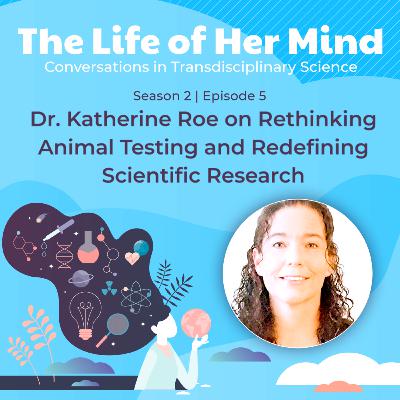
What drives women in science to challenge the status quo? In this episode of The Life of Her Mind, host Mia Wood sits down with Dr. Katherine Roe, Chief Scientist in the Laboratory Investigations Department at People for the Ethical Treatment of Animals (PETA). Hear Dr. Roe: - explain her initial interest in science, which led her to graduate magna cum laude from Syracuse University, with degrees in biology and psychology - discuss her graduate work in psychology and cognitive science at the University of California San Diego, culminating in a PhD - discuss her post-doc fellowship at Johns Hopkins University and then research fellowship at the National Institute of Mental Health - explain the development of her thinking about the use of non-human animals in the sciences and her move to PETA - discuss the challenges and opportunities of shifting scientists’ thinking from traditional non-human animal experimentation in the sciences - explain ways in which new and emerging techniques and technologies for scientific experimentation are superior to non-human animal testing - discuss the opportunities to influence funding sources, like the NIH, on moving away from costly and minimally useful non-human animal testing in the sciences If you’re inspired by women who are reimagining science and shaping the future of discovery and how that discovery happens, this conversation is one you won’t want to miss. Episode Resources:Dr. Roe's Academia.edu PageDr. Roe and Dr. Juan Carlos G. Marvizón Debate Animal ExperimentationSome of Dr. Roe's publications — Share your feedback: Have questions for our guests or suggestions for the show? Fill out our feedback form - we'd love to hear from you! Connect & explore more: Visit The Life of Her Mind to listen, share, and access links and resources. Check out Labroots scholarship opportunities here. Submit a scientific poster to be featured in our event(s) here.
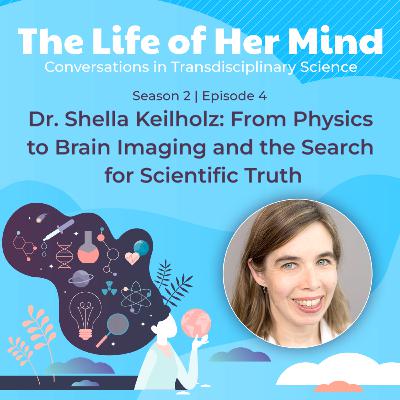
What drives groundbreaking women in science to push beyond boundaries? In this episode of Life of Her Mind, Mia Wood sits down with Dr. Shella Keilholz, Principal Investigator in The Keilholz Mind Lab at Emory University and Georgia Tech. Dr. Keilholz discusses her academic journey, starting with physics and eventually focusing on non-invasive brain imaging through MRI. Hear Dr. Keilholz explain how her interest in combining physics with medical science led to the study of biomedical engineering, particularly MRI technologydescribe her transition from studying blood flow and kidneys to brain imaging during her postdoc position at NIH, where she had access to high-field MRI scannersdiscuss an interdisciplinary research approach to scientific knowledge, highlighting the challenges and benefits of collaborating across fields like physics and neuroscienceemphasize the importance of understanding brain function, including the role of neuromodulatory nuclei in controlling large areas of the cortexreflect on the nature of science as a search for truth and the need to embrace complexity rather than oversimplifying findingsdiscuss the overhyping of research results and the public's tendency to view science as providing definitive answers, rather than understanding the nuances and uncertainties involved. If you’re inspired by women who are reimagining science and shaping the future of discovery, this conversation is one you won’t want to miss. Episode Resources:Faculty Profile: EmoryFaculty Profile: Georgia TechThe Keilholz Mind LabScholarly Publications___International Day of Women and Girls in Science Giveaway - Official RulesPrize: Four (4) winners will each receive a $25 gift card the the Labroots Science StoreHow to Enter: Comment on any episode of Life of Her Mind on your preferred podcast platform with either: (a) a question you'd love to ask a woman scientist, OR (b) your favorite Life of Her Mind episode or guest Subscribe to Life of Her Mind wherever you listen to podcasts for 10 bonus entries (optional)Submit the entry form here with your name, email, and confirmation of steps completedEntry Period: Entries accepted from January 29, 2026 8:00 am through February 11, 2026 5:00 pm PST.Eligibility: Open to listeners 18 years or older. Void where prohibited by law. Winner Selection: Four winners will be selected via random drawing on or around February 12, 2026. Winners will be notified via email within 48 hours of selection and must respond within 72 hours to claim prize. If a winner does not respond, an alternate winner will be selected.Limit: One entry per person.Additional Terms:No purchase necessary to enter or winOdds of winning depend on number of eligible entries receivedPrizes cannot be transferred or substitutedLife of Her Mind/Labroots is not responsible for lost, late, or undeliverable prizesEmail addresses will only be used for giveaway administration and winner notificationThis giveaway is not sponsored, endorsed, or administered by Spotify, Apple Podcasts, or any other podcast platformBy entering, participants agree to these official rulesQuestions? Contact us at podcasts@labroots.com.Share your feedback: Have questions for our guests or suggestions for the show? Fill out our feedback form - we'd love to hear from you!Connect & explore more: Visit The Life of Her Mind to listen, share, and access links and resources. Check out Labroots scholarship opportunities here. Submit a scientific poster to be featured in our event(s) here.
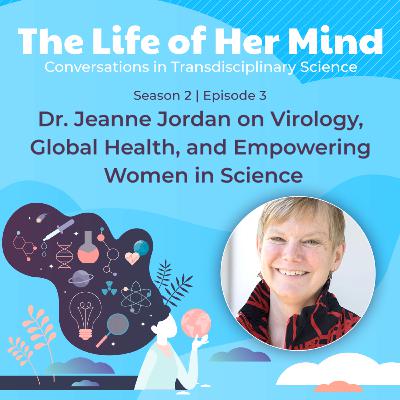
Dr. Jeanne Jordan discusses her long and exemplary career, which was prompted by growing up in the era just before the polio vaccine was created and an outbreak of Newcastle disease in her father’s flock of chickens. Jeanne talks about her work in global public health, scientific education, and her experiences navigating a male-dominated professional environment, while emphasizing the importance of mentoring young scientists and making research accessible to local communities. Jeanne brings her decades of experience and expertise to bear as the Director of the International Institute for Public Health Laboratory Management a collaboration between APHL and George Washington University, which provides a training platform for international public health lab professionals. Among the topics Jeanne discusses are her journey into science and virology research, her decision to pursue a degree in medical technology -- which led to her first job at the University of Wisconsin-Madison, where she worked in microbiology and parasitology –her subsequent work at the National Institutes of Health, the Centers for Disease Control, and her first publication. Episode Resources:Profile, Milken Institute School of Public HealthProfile, American Society for MicrobiologyProfile, University of PittsburghGoogle Scholar___International Day of Women and Girls in Science Giveaway - Official RulesPrize: Four (4) winners will each receive a $25 gift card the the Labroots Science StoreHow to Enter: Comment on any episode of Life of Her Mind on your preferred podcast platform with either: (a) a question you'd love to ask a woman scientist, OR (b) your favorite Life of Her Mind episode or guest Subscribe to Life of Her Mind wherever you listen to podcasts for 10 bonus entries (optional)Submit the entry form here with your name, email, and confirmation of steps completedEntry Period: Entries accepted from January 29, 2026 8:00 am through February 11, 2026 5:00 pm PST.Eligibility: Open to listeners 18 years or older. Void where prohibited by law. Winner Selection: Four winners will be selected via random drawing on or around February 12, 2026. Winners will be notified via email within 48 hours of selection and must respond within 72 hours to claim prize. If a winner does not respond, an alternate winner will be selected.Limit: One entry per person.Additional Terms:No purchase necessary to enter or winOdds of winning depend on number of eligible entries receivedPrizes cannot be transferred or substitutedLife of Her Mind/Labroots is not responsible for lost, late, or undeliverable prizesEmail addresses will only be used for giveaway administration and winner notificationThis giveaway is not sponsored, endorsed, or administered by Spotify, Apple Podcasts, or any other podcast platformBy entering, participants agree to these official rulesQuestions? Contact us at podcasts@labroots.com.Share your feedback: Have questions for our guests or suggestions for the show? Fill out our feedback form - we'd love to hear from you!Connect & explore more: Visit The Life of Her Mind to listen, share, and access links and resources. Check out Labroots scholarship opportunities here. Submit a scientific poster to be featured in our event(s) here.

Dr. Veena Joy, the U.S. Lead for Strategic Partnerships in Allergy and Autoimmunity at Thermo Fisher Scientific discusses her career transition from academic research to industry work at Thermo Fisher Scientific. Driven by her interest in health economics and the underexplored aspects of autoimmune disease diagnostics, Dr. Joy transitioned to a focus on translational medicine and autoimmune diagnostics. Emphasizing the value of thinking beyond narrow specializations, Dr. Joy discusses how her diverse experiences have enabled her to make a broader impact in the autoimmune diagnostics field, particularly improvements in autoimmune disease diagnostics. The holistic diagnostic approaches Dr. Joy discusses include the consideration of factors like genetic predisposition, environmental triggers, and societal influences. In addition, health economics, the role of empathy and innovation in scientific advancements also play roles in a complete approach to diagnostics, with the ultimate goal being to improve patient outcomes.Dr. Joy notes that, while diagnostic improvements have been ongoing for 20-30 years, there has been significant momentum in the past decade, particularly with advancements in CAR-T therapy, which holds promise for eliminating certain autoimmune diseases. More specifically, Dr. Joy discusses the potential of CAR T-cell therapy to revolutionize autoimmune disease treatment by re-engineering cells and removing certain autoimmune conditions.Women face notable diagnostic challenges, like receiving timely and accurate diagnoses for autoimmune conditions when, for example, symptoms are dismissed as hormonal or not taken seriously by healthcare providers. Dr. Joy further notes that women tend to deal with symptoms on their own and that there are significant disparities in diagnosis rates between women and men, with women being diagnosed or misdiagnosed at higher rates despite comprising the majority of autoimmune condition patients. Addressing these issues to improve women's health and access to care, particularly for marginalized groups, is a major goal.By focusing on improving diagnostic techniques and ensuring their value through health economics, Dr. Joy’s holistic approach to diagnostics is aimed at reducing those disparities. Educating clinicians and patients, as well as optimizing the use of existing diagnostic tests are part of this more complete picture.Dr. Joy emphasizes the importance of empathy in science and highlights Thermo Fisher's commitment to innovation and patient care under CEO Mark Casper. With various challenges and opportunities in the scientific community, scientists must be collaborative changemakers by considering multiple perspectives and impacts of their work.Episode Resources:B·R·A·H·M·S Biomarkers for Preeclampsia ScreeningUpcoming Micro-Lecture — Connect & explore more: Visit The Life of Her Mind to listen, share, and access links and resources. Check out Labroots scholarship opportunities here. Submit a scientific poster to be featured in our event(s) here.
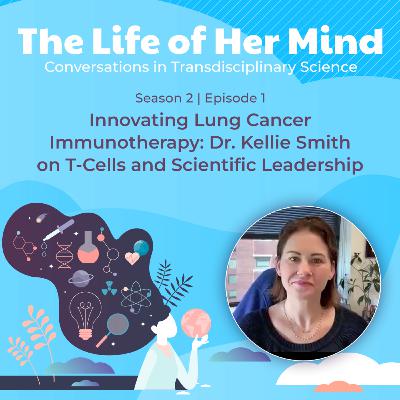
Dr. Kellie Smith is an Associate Professor of Oncology in the Bloomberg-Kimmel Institute for Cancer Immunotherapy at the Johns Hopkins School of Medicine. In this interview, Dr. Smith shares how she came to study science and specialize in T-cell immunology and immunotherapy. She also discusses how she developed an original assay for detecting anti-tumor immune responses in specific types of lung cancer, called MANASCORE. She also shares some details about the goal of comprehensively understanding immunotherapy-resistant immune cells. Dr. Smith reveals the basic thought process that led her to a focus on integrating multi-omics technologies to study tumor-reactive T cells in the setting of various cancer types, with a specific focus on lung cancer; what brought her to Johns Hopkins, and how remaining at the institution throughout her career been an asset to her research. In a field that is highly technical and requires sustained, years-long dedication that some people could find draining or otherwise unrewarding — the big Hollywood moments are presumably rare. Dr. Smith describes how she paces herself, determines benchmarks, and frames big-picture questions that structure her work. Finally, scientists have long worked at the center of the tension between advancing (empirical) knowledge, and the realities of socio-political and cultural pressures. Dr. Smith discusses how scientists should grapple with the current tension.Episode Resources:Profile Page, Johns Hopkins MedicineGoogle Scholar PageKeynote Presentation: Immunogenomic Characterization of Tumor-Reactive TIL in Lung Cancers w/ Live Q&AKeynote Presentation: Characterizing the phenotype, function, and spatial interactions of tumor-reactive TILConnect & explore more: Visit The Life of Her Mind to listen, share, and access links and resources. Check out Labroots scholarship opportunities here. Submit a scientific poster to be featured in our event(s) here.
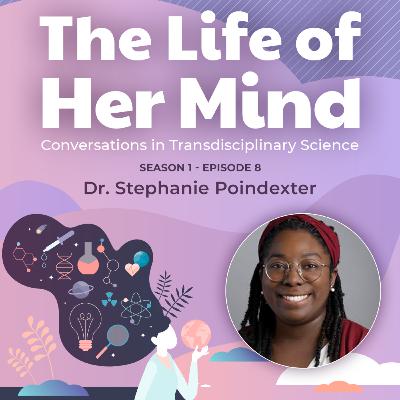
Dr. Stephanie Poindexter is a biological anthropologist at the University of Buffalo specializing in primatology. Doctor Poindexter conducts field, lab, and desk-based research into how primates use and navigate their habitats. More specifically, Doctor Poindexter investigates primate movement, morphology, and cognition. Of particular interest is the slow loris. Dr. Poindexter investigates how the environment, other animals, and their own cognitive and physical capacities influence the nocturnal slow loris's movement.In this episode, we learn how Dr. Poindexter loved primates as a child, planned for medical school, then rediscovered and fell in love with primatology as an undergrad. We also learn how Dr. Poindexter came to specialize in the slow loris, and how she expands the scope of thinking about evolutionary drivers of movement and cognition.Episode Resources:Faculty Page, University at BuffaloCheck out Dr. Poindexter’s conservation work at Project ChimpsStay up to date on the latest in science at Labroots.com.
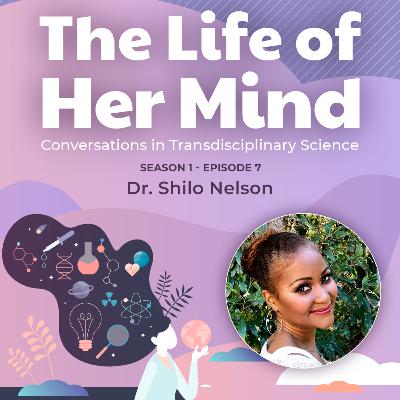
Kinesiology Professor Shilo Nelson’s story highlights the important point that there is no one correct way to approach a career in STEM. Our conversation covers a range of topics, including the following: Prof. Nelson’s experience in the United States Air ForceHow Prof. Nelson parlayed her discipline and physical fitness into a stint as a Seattle Sea Hawks cheerleader;The importance of seeing – and taking – opportunities that don’t seem obvious fits with one’s background;How Prof. Nelson’s path as a kinesiology major at Eastern Washington University led to body building, work as an aerobics instructor, goat yoga, and more!Stay up to date on the latest in science at Labroots.com.
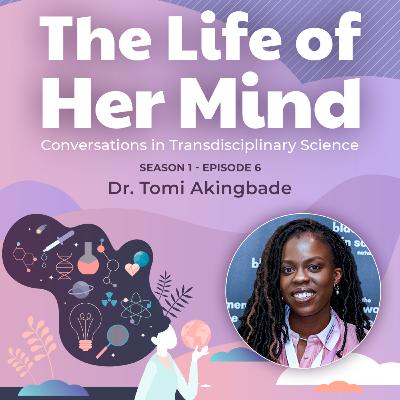
Tomi Akingbade is the founder of the Black Women in Science Network and a Ph.D. student in Neurochemistry at the University of Cambridge. Tomi’s scientific research centers on the inflammatory mechanisms of aggregates in Alzheimer’s disease. Interested in science since childhood, Tomi founded the Black Women in Science Network as a response to the lack of frank conversations about being a Black woman in science, and the supportive community such conversations generate. The image of what it is to be a scientist is changing, and must continue to do so, if the sciences are to achieve a comprehensive understanding of nature. Partly to that end, Tomi is working to expand the Black Women in Science Network into a global organization.Cambridge University neurochemistry Ph.D. student, Tomi Akingbade is founder of the Black Women in Science Network. Tomi’s scientific research centers on the inflammatory mechanisms of aggregates in Alzheimer’s disease. Our conversation covered a range of topics, including the following: How Tomi discovered neuroscience early in high school, but didn’t study in the field until years later because she didn’t know it was a career pathThe trials and tribulations of finding your way to – and through – a Ph.D. program, and the importance of supportive mentors throughoutHow Tomi started work in a virology lab in February 2020 – just before the COVID pandemic startedHow Tomi decided to start the Black Women in Science networking group in 2018Episode Resources:Tomi Akingbade on LinkedInBlack Women in Science NetworkStay up to date on the latest in science at Labroots.com.
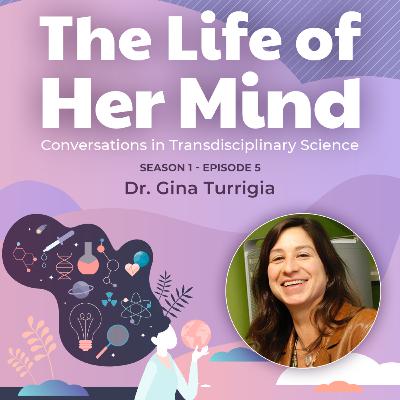
Groundbreaking neurobiologist, Dr. Gina Turrigiano heads up the Turrigiano Lab in Brandeis University’s Biology Department. Dr. Turrigiano’s work focuses on brain plasticity. Our conversation covered a wide range of topics, including the following: How Dr. Turrigiano and her husband, electrophysiologist, Dr. Sasha Nelson, navigated the challenges involved in couples hiring at research institutions – especially when young children are in the mix; How Dr. Turrigiano’s undergraduate career as a biology major at Reed College led to a concentration in neurobiology; What “brain plasticity” means and how it applies to Dr. Turrigiano’s work; What homeostatic plasticity mechanisms are; Why Dr. Turrigiano thinks science is fun; and What Dr. Turrigiano’s life is like outside the lab. Dr. Gina Turrigiano is the Joseph Levitan Professor of Vision Science in the Biology Department at Brandeis University, where she heads the Turrigiano Lab.Dr. Turrigiano completed her undergraduate studies at Reed College, and her PhD at the University of California, San Diego, before moving to Massachusetts for her post-doctoral work at Brandeis. Publishing on a variety of topics in neuroscience since 1997, Dr. Turrigiano has long focused her research on brain plasticity. Recent research furthers the understanding of homeostatic plasticity mechanisms through studying sleep-wake cycles, and the results of her research include advancements in understanding how so-called self-tuning mechanisms relate to brain disorders like epilepsy and autism.Dr. Turrigiano’s work has been recognized with fellowships from the MacArthur foundation and Sloan foundation, and awards from the McKnight foundation, the National Institutes of Health, and the Human Frontier Science Program Organization. A member of the American Academy of Arts and Sciences and National Academy of Sciences, a Fellow of the American Association for the Advancement of Science, and the President of the Society of Neuroscience, Dr. Turrigiano is a groundbreaking researcher working at the leading edge of neuroscience.Episode Resources:Brandeis University FacultyTurrigiano Lab on Twitter/XStay up to date on the latest in science at Labroots.com
Dr. Daphna Joel is Professor of Psychology and Neuroscience at Tel Aviv University. Dr. Joel is a member of the School of Psychological Sciences and the Sagol School of Neuroscience.After having completed her PhD in Psychobiology at Tel Aviv University in 1998, Dr. Joel received the Alon Fellowship for Young Scientists and then joined Tel Aviv University’s faculty. Dr. Joel’s work focuses on the relations between sex, gender, and brain structure and function. She has published over 70 papers and is the author of Gender Mosaic: Beyond the Myth of the Male and Female Brain. One of Dr. Joel’s central findings is that there is no “male” or “female” brain. Instead, each brain is a unique “mosaic” (combination) of features — some features may be more common in males, others in females, and others still common in both. Similarly, each individual possesses a unique mosaic of gender characteristics, such as behaviors, personality traits, and cognitive abilities.More generally, Dr. Joel’s research reveals that even though biological sex is not an illusion, our binary conceptualization of sex, brain, and gender is illusory. Learn More about the Gender Mosaic Project and fill out the Questionnaire here: https://gendermosaic.tau.ac.il/Episode Resources:The Gender Mosaic Project QuestionnaireBiography - Dr. Daphna JoelX - @DaphnaJoelWikipedia - Dr. Daphna JoelStay up to date on the latest in science at Labroots.com
Dr. Kisha Supernant, Biography from The University of Alberta: Dr. Kisha Supernant (Métis/Papaschase/British) is the Director of the Institute of Prairie and Indigenous Archaeology and a Professor in the Department of Anthropology at the University of Alberta. An award-winning teacher, researcher, and writer, her research interests include the relationship between cultural identities, landscapes, and the use of space, Métis archaeology, and heart-centered archaeological practice. Her research with Indigenous communities (including Métis and First Nations) in western Canada explores how archaeologists and communities can build collaborative research relationships.She leads the Exploring Métis Identity Through Archaeology (EMITA), a collaborative research project which takes a relational approach to exploring the material past of Métis communities, including her own family, in western Canada. She is currently a co-director of a new interdisciplinary research project on Métis kinscapes of Lac Ste Anne, Alberta with a team of Indigenous scholars, as well as a co-investigator on Cartographies of Deep Time, a recently funded SSHRC Insight Grant project that explores the complexities of history and different ways of knowing with Tsimshian communities in British Columbia. Over the past several years, she has been increasingly engaged in helping First Nations communities in Western Canada use remote sensing technologies to locate and protect unmarked burials. She has published in local and international journals on GIS in archaeology, collaborative archaeological practice, Métis archaeology, and indigenous archaeology in the post-TRC era. In the past few years, she has been named to the Royal Society of Canada's College of News Scholars, Artists, and Scientists and Edmonton’s Top 40 under 40 by Avenue Magazine. She is also co-director of the Situated Knowledges: Indigenous Peoples and Place University of Alberta Signature Area and the Vice-President of the Indigenous Heritage Circle. Recently, she was appointed to the National Advisory Committee on Missing Children and Unmarked Graves. Episode Resources:Archaeologies of the Heart’ (Springer, 2020),Blurring Timescapes, Subverting Erasure: Remembering Ghosts on the Margins of History’ (Berghahn Books, 2020)Dr. Kisha Supernant , Faculty Page University of Alberta Stay up to date on the latest in science at Labroots.com.
The Life of Her Mind is dedicated to learning about how these women think — how they think about their careers, disciplines, and future. Each episode focuses on a single professional working in or around the sciences, with an eye toward uncovering what makes each individual’s contributions unique.Please join us in welcoming Dr. Alyssa Rhoden, Principal Scientist at Southwest Research Institute in Boulder, Colorado, to episode two of ‘The Life of Her Mind’.Dr. Rhoden previously held posts at Arizona State University, where she was an Assistant Professor of Planetary Science, Johns Hopkins University, where she was a member of the Europa Clipper Pre-Project Team in Johns Hopkins’ Applied Physics Laboratory, and a NASA Post-Doc Fellow and then Mission Scientist at Nasa’s Goddard Space Flight Center.Dr. Rhoden completed her B.S. in Physics (with minors in math and planetary science) at the University of Arizona in Tucson (Go Cats!), and her PhD in Earth and Planetary Science at Berkeley. Her dissertation, “The rotation and fracture history of Europa from modeling of tidal-tectonic processes” set the stage for her current work at SwRI. Dr. Rhoden is not only committed to advancing scientific knowledge of Europa, but she is also committed to advancing students’ careers. Dr. Rhoden is always open to giving advice to budding scientists searching for their place in the field of their choice, not only because she is enthusiastic about the power of sharing knowledge and experience, but also because she knows how daunting it can be to figure out what’s going to work for one’s own particular situation. After having two young children, Dr. Rhoden was herself confronted with the challenge of juggling motherhood and a high-level career. Her experiences show us how professionals can achieve both their professional and personal goals through innovation and creativity.Read more about Dr. Rhoden in a Labroots exclusive interview and connect with her on Twitter @aRhoDynamics.Episode ResourcesAlyssa Rhoden: Icy Moon Geophysicist, Mom, and Guitar PlayerTwitterLinkedInPlanetary Science DirectorateStay up to date on the latest in science at Labroots.com.
In our inaugural conversation, we had the opportunity to speak with Alice Dreger, PhD. Dr. Dreger is an historian and philosopher of science, a journalist, and an activist. One of those rare thinkers who draws her readers into complex and controversial topics as if they’re just hanging out, jawing over a couple of drinks, Dreger’s work makes people question the long held “scientific” doctrine. In doing so, she forces them to consider that these beliefs are rooted in political bias as much as anything else. Trained in the history and philosophy of science, Dr. Dreger is the author of four books (editor of five, many, many articles, and even many more talks). Dreger’s work reveals a fascinating combination of serious scholar, old school muckraker, and prodigious instigator – a modern-day Socrates. Indeed, Dreger is unafraid to ask how and why people believe what they do. Dr. Dreger began her career as an academic focused on analyzing the history of medical approaches to infants born with non-specific genitalia. This work led her to become an advocate for intersex people, those born with combinations of male and female biological traits. Dreger realized early on that social norms often influence scientific investigation and the interpretation of evidence – all too often to the detriment of those individuals who did not fit neatly into “normal” categories. For Dreger, truth is worth fighting for, tirelessly, and without fear or favor. Indeed, some of Dreger’s advocacy work has brought her into direct conflict with groups on various sides of the issue at hand. Undaunted, Dreger continues her work. Episode ResourcesAlice Dreger’s websiteInquisitive Magazine, for which Dreger serves as EditorDreger writes a weekly column for Heterodox AcademyIs it time for hormonal classes, like weight classes, in sports?"“Debate: Is Sex Binary? Co-hosted by the MIT Free Speech Alliance & Adam Smith Society”Stay up to date on the latest in science at Labroots.com.
Labroots is excited to announce the relaunch of The Life of Her Mind, a podcast series focusing on the lives, perspectives, career pathways, and research of women working across STEM fields.Stay up to date on the latest in science at Labroots.com.
Comments


Download from Google Play

Download from App Store
 United States