


 Claim Ownership
Yes, this.
Subscribed: 0Played: 0
Subscribe

© Julia B
Description
Exploring the symbiotic potential between the living world and our technologies. Philosophy of science and progress, focusing on climate, AI, and aligned world building.
yesthis.substack.com
yesthis.substack.com
29 Episodes
Reverse

What would it be like to be a mammoth brought back from extinction—without your consent?This conversation with the visionary Wendi Yan radically expanded my mind 🤯We talked about:- How storytelling shapes which science gets funded and built- The liminal space where fiction and science converge- How dystopian cultural narratives risk becoming self-fulfilling if technologists and artists remain siloed- Why collective imagination might be our most critical toolAnd much more on simulating alternative futures through art and science! This is a public episode. If you would like to discuss this with other subscribers or get access to bonus episodes, visit yesthis.substack.com
An interview with Douglas Guilbeault, Assistant Professor in Organizational Behavior at Stanford University's Graduate School of Business. We explore how AI and large language models might teach us about our own collective humanity, drawing connections between the engineered and algorithmic world and the complex, cultural, and living. Douglas uses computational social science to study social structures, with fascinating implications for everything from content moderation to climate policy to the spread of behaviors like mask-wearing during COVID. What if LLMs weren't replacements for human intelligence, but instead portals into our collective cultural knowledge that depends on our continued creativity and agency?Episode OutlineBridging humanities, sciences, and computational methods [6:00 - 13:55]Computational Social Science and Meaning [14:00 - 22:05]Research methodologies and applications for understanding meaning in digital age [22:05 - 27:00]Case studies on group size, gender, and macro distortions [27:00 - 33:45]Content moderation and policy implications [33:45 - 47:45]Collective Intelligence [47:45 - 55:00]Complex Contagions [55:00 - 1:07:40]LLMs as Cultural Technologies [01:07:40 - 01:20:35]Optimistic Perspective on AI [01:20:35 - 01:25:35]Scientific discovery revealing greater complexity [01:25:35 - 01:32:45] This is a public episode. If you would like to discuss this with other subscribers or get access to bonus episodes, visit yesthis.substack.com
In this episode, we explore how the Eden Forest Collective is applying syntropic principles—where diversity and complexity create harmonious outcomes—in their land cultivation as well as in their cultural and community practices. Eden is an operating (abundantly!) food forest, educational nonprofit, and event center whose mission is to heal the story of separation through regenerative cultural practice. Eden’s mission centers on healing the story of separation through reconnection with nature and regenerative land practices. Among many things, we discuss visions of abundant futures, the importance of inner work, and having the creative process itself embody the values we seek to cultivate more of — joy, patience, connection. This is a public episode. If you would like to discuss this with other subscribers or get access to bonus episodes, visit yesthis.substack.com
Tangible's mission is to decarbonize buildings. Their software tool helps identify, manage, and track sustainable building materials. Co-founder, Anneli Tostar, walks us through her unexpected journey from Harvard, to Sao Paolo, Sweden, London, and finally to San Francisco. This is a public episode. If you would like to discuss this with other subscribers or get access to bonus episodes, visit yesthis.substack.com
Matt Plante is the president and co-founder of Voltus, a distributed energy resources platform whose mission is to fulfill the promise of the energy transition. Voltus’s technology platform, VoltApp, connects any distributed energy resource, from energy efficiency to demand response, to any wholesale market in North America. In this episode, we discuss the electric grid of the future, the DER technology and policy to get us there, lessons learned from the Texas and California blackouts, and what makes Voltus special. This is a public episode. If you would like to discuss this with other subscribers or get access to bonus episodes, visit yesthis.substack.com
Sy Bohy is the co-founder of Seam, a startup offering a device- and brand-agnostic API for developers to control homes and buildings. Seam’s IoT platform enables organizations to control building devices, like opening door locks, controlling thermostats, turning off lights, and more. Sy and his co-founder Dawn bring years of expertise from Nest and Sonder to progress the burgeoning building management industry. This is a public episode. If you would like to discuss this with other subscribers or get access to bonus episodes, visit yesthis.substack.com
SteamaCo enables utilities to sell energy anywhere on the planet. Their data-efficient energy management system helps overcome cost and infrastructure barriers to underserved energy customers in 10 African countries. This episode covers why last-mile connectivity is such a challenge, how SteamaCo augments and automates preexisting smart metering and cloud technology, and three frameworks around limiting beliefs, procrastination, and motivation to succeed as an entrepreneur. This is a public episode. If you would like to discuss this with other subscribers or get access to bonus episodes, visit yesthis.substack.com
Angelo Campus is the founder of BoxPower, a startup offering small scale renewable microgrids in 20-ft shipping containers. They are expanding energy access to rural, often-low income, communities that are off-grid or recovering from a natural disaster. They also provide back-up power to critical infrastructures like hospitals in California that are experiencing more blackouts than ever before. Angelo started learning about solar PVs and battery systems as a kid when homeschooled and never looked back. This episode dives into microgrid technology, entrepreneurship, and how to carve your own path when none of the visible paths are what you want. This is a public episode. If you would like to discuss this with other subscribers or get access to bonus episodes, visit yesthis.substack.com
Wendy Owens is the founder and CEO of Hexas, a clean-tech startup producing and distributing sustainable, plant-based biomass. Their giant grass, called Xanograss, replaces wood biomass and is an exceptional climate-change fighting species because of its low-cost sustainable building material, energy fuel, and carbon sequestration properties. Wendy brings over a decade of materials and biotech experience to Hexas and in this episode shares insights on the future of sustainable construction and renewable energy sectors, her experience as a founder, and her general philosophy for success. Books mentioned: An Introduction to Mathematics by Alfred North Whitehead The Art of War by Sun Tzu This is a public episode. If you would like to discuss this with other subscribers or get access to bonus episodes, visit yesthis.substack.com
Bettina Grab, founder and President of Impact B2B, helps climate tech start-ups have a bigger, impact faster through growth and effective sales & marketing strategies. She is also a Zero Waste blogger, speaker & activist. The first part of the episode focuses on Bettina’s shift from corporate marketing to climate-focused marketing and why there is such a need for it today. She offers many great tips for current and aspiring founders, so take a listen if that applies to you! The second part focused on zero waste living, what she has learned from living a plastic-free life, and some surprising facts about why recycling is really the last resort. This is a public episode. If you would like to discuss this with other subscribers or get access to bonus episodes, visit yesthis.substack.com
Did you know that Bamboo Engineered Lumber is stronger, more fire-resistant, and more sustainable than wood, steel, and concrete? Troy Carter co-founded Rizome, a startup working to make bamboo a primary global construction material. In this episode, we discuss the future of regenerative, climate-positive cities, bamboo forests for carbon sequestration, and the unique elements of bamboo as a construction material. Books mentioned: Drawdown: The Most Comprehensive Plan Ever Proposed to Reverse Global Warming by Paul Hawken A Pattern Language: Towns, Buildings, Construction by Christopher Alexander https://medium.com/rizome/the-cities-of-the-future-will-be-made-of-bamboo-894e86055b3f This is a public episode. If you would like to discuss this with other subscribers or get access to bonus episodes, visit yesthis.substack.com
Sean Kidney is the CEO of the Climate Bonds Initiative, an international NGO working to mobilize debt capital markets for climate solutions. The Climate Bonds Initiative works to create standards and transparency in the green bond market such as by creating a certification scheme, advising the EU, and working with China's central bank to grow green bonds. Sean discusses the climate crises from a holistic perspective, framing the role of finance in a broad picture of the urgency but also hope that exists, especially as relating to the COVID-19 global pandemic. Take a listen to learn about green bonds and more, and enjoy! This is a public episode. If you would like to discuss this with other subscribers or get access to bonus episodes, visit yesthis.substack.com
Deb Kemper is an impact investor and experienced advisor with cross-cultural leadership. She is an angel investor in Golden Seeds Venture Group and the Clean Energy Venture Group and supports innovation in clean-tech, med-tech, and women’s empowerment. Prior to joining Golden Seeds Ventures, she built a portfolio of over two dozen early-stage investments via Libra Global Partners, LLC, and worked in management consulting at McKinsey & Co. Deb has served on non-profit Boards of Directors in the United States, Peru, and China and was the founding organizer for TEDxShanghaiWomen in 2012. This wonderful conversation covers much more than Deb’s work experiences, as she comments on living internationally, balancing work and life, and how to make career decisions. This is a public episode. If you would like to discuss this with other subscribers or get access to bonus episodes, visit yesthis.substack.com
Gina Foote is the Director of Fund Development at Conservation Law Foundation Ventures, where she helps cultivate market-based solutions to environmental issues. Gina is an impact investing and finance expert and applies her banking and venture investing experience to social issues. She has woven a fascinating career in international economic development and finance, working in China, Latin America, and the US, serving as COO for a private equity fund investing in clean energy and materials, the CFO for an international education company, a consultant for the financial inclusion-focused Accion International, and a professor of Finance and Business History at Boston University. In this episode Gina shares helpful insights on non-linear career trajectories. Take a listen to learn more about impact investing, environmental issues, and working abroad. This is a public episode. If you would like to discuss this with other subscribers or get access to bonus episodes, visit yesthis.substack.com
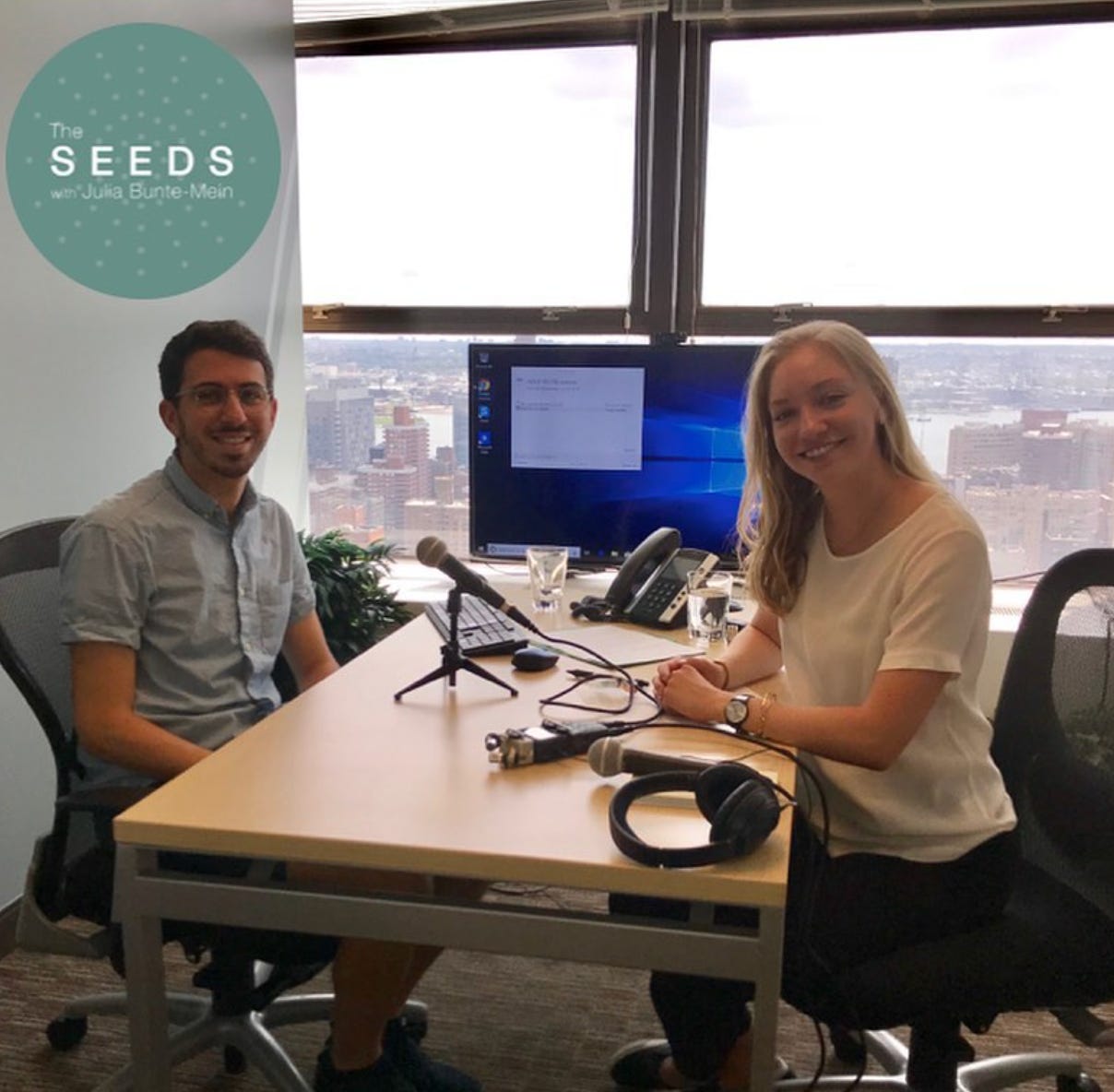
Redstone Strategy Group is a boutique consulting firm that helps leading philanthropies, non-profits, and governments solve the world's most urgent social problems. Redstone works in a variety of sectors including education, global development, emerging philanthropy, energy and climate, and the environment, but today’s episode focuses on one specific project. Listen to Sam Greenberg explain how they facilitated a collaboration of New York City’s top food assistance providers to get more food more efficiently to where it is needed most. This is a public episode. If you would like to discuss this with other subscribers or get access to bonus episodes, visit yesthis.substack.com
This episode is a little different. Rather than doing an interview with one person, I recorded an a panel discussion held at the Delphi Academy for European Studies in Greece. This was a two-week seminar program on Climate Change and the Environmental Humanities I attended in 2019. In this excerpt, we hear from three distinguished professors sharing their different disciplinary perspectives. We have John Barry from Queen's University in Belfast, Northern Ireland; Professor of Green Political Economy at the School of History, Anthropology, Philosophy and Politics., James Engell from Harvard University; Professor of English Comparative Literature, and Verena Conley also from Harvard University; Professor of Comparative Literature and of Romance Languages and Literatures. This is a public episode. If you would like to discuss this with other subscribers or get access to bonus episodes, visit yesthis.substack.com
Cool Crop is a start-up in India with a mission to improve small and marginal farmer livelihoods and reduce food waste. In India, there are 240 million farmers, and 3 out of every 4 of them are classified as small and marginal farmers who plant an area roughly the size of a soccer field. The harvested produce waste of these farms can be up to 60% due to lack of proper preservation facilities. Cool Crop's on-farm cold storage technology can reduce crop wastage from 20% to less than 5%, extend produce life up to 6 times, and allow farmers to sell their produce later when the prices can go up to 10 times higher. After meeting Niraj Marathe in Bangalore, I had the great opportunity to then record an interview with his co-founder Kendall Nowocin back in Boston! This is a public episode. If you would like to discuss this with other subscribers or get access to bonus episodes, visit yesthis.substack.com
John Barry is a Professor at Queen’s University Belfast in Northern Ireland, an author, and a former politician in Ireland’s Green Party. On this episode, we discuss the age of the Anthropocene, a term used to describe the geological epoch in which humans have become the major force determining the continuing livability of the Earth, whether a free market economy can achieve environmental goals, and how human development and poverty alleviation are connected to decarbonization and combatting climate breakdown. Barry also speaks to the importance of governance and a radical shift away from a consumerist capital culture driven by a carbon economy, which is also the subject of his book. Although I am clearly a proponent of sustainable technology and innovation, this conversation made it very clear to me that along with general greening, we need to change our ideas, especially in the United States, around what progress, development, and the “good life,” mean. Book recommendations: The Politics of Actually Existing Unsustainably: Human Flourishing in a Climate-Changed, Carbon-Constrained World, John Barry Hope for the Hopeless, Vaclav Havel #Green political theory #Political economy of sustainability #Environmental and sustainable developmental politics #Environmental ethics #Transition to a low-carbon/renewable energy economy This is a public episode. If you would like to discuss this with other subscribers or get access to bonus episodes, visit yesthis.substack.com
Eleanor Joseph has woven an impressive career through the domestic and international healthcare, fin-tech, and transportation industries. She currently serves as the Director of Business Development at Via, the leading developer of on-demand transit systems. She previously founded Ubuntu Capital, a company assisting small businesses and their customers within urban, emerging markets. On this episode you’ll get a comprehensive understanding of Via, why it is different from sharing services, and how it is working to transform the public transportation industry today. We’ll also hear Eleanor’s inside perspectives on the challenges of starting her own company, what trust looks like in today’s economy, and how working in the social impact industry has made her earlier dreams for the world a tad more realistic. This is a public episode. If you would like to discuss this with other subscribers or get access to bonus episodes, visit yesthis.substack.com
Sarah Kearney is the founder of PRIME Coalition, a Cambridge-based 501c3 public charity working to combat climate change. PRIME partners with philanthropists to place charitable dollars into market-based solutions for reducing carbon emissions. They fund start-ups offering innovative technologies in this space, but are different from impact investing and traditional Venture capital in a few critical ways. Kearney is a visionary and an optimist for the climate cause - building PRIME out of her MIT graduate dissertation when she was only 26 years old. Listen to learn about impact investing, philanthropic capital, and innovation tackling climate change. This is a public episode. If you would like to discuss this with other subscribers or get access to bonus episodes, visit yesthis.substack.com

Comments

Download from Google Play

Download from App Store
 United States