


 Claim Ownership
Going Off Snowboard History Podcast
Subscribed: 6Played: 171
Subscribe

© Going Off
Description
As the early days of snowboarding begin to slide into the long past, Going Off documents its oral history. We trace back what made it so strange and explosive, why it changed all those lives and still bonds people for life. From the history of snowboard fashion to how halfpipes were born, from the birth of jibbing to pivotal movies, music and magazines, each episode drops in on a new topic.
14 Episodes
Reverse
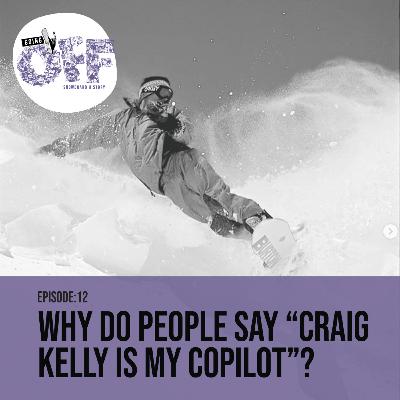
In historical snowboard time, “B.C.” stands for “Before Craig.” A god-tier talent in snowboarding’s early years, Craig Kelly helped forge the path of style, gear tech, and where riding could go. In this episode, Tricia and Jen examine the legend of CK and why a certain sect of core snowboarders still invoke the line “Craig Kelly is my copilot” 23 years after his death. They regale 2 special heads: Eric Blehm—author of “The Darkest White” and the definitive expert on CK, and Erik Traulsen of FnRad Podcast—a respected curator of many conversations about Craig. The gang dips waist-deep into 3 parts of snowboarding Kelly changed forever: riding style, “pro snowboarder” as a job description, and the world of freeriding and backcountry. Finally, they discuss how even in death, he’s still helping us navigate our path forward.Cover photo: Trevor Graves
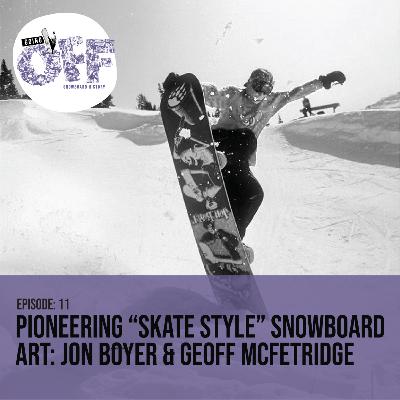
In 1992, Canadian pro Jon Boyer hired his friend Geoff McFetridge to create some unlike-all-the-other-shit graphics for his new pro-model snowboard on Barfoot. They were loud, expressive and created to hang on the snowboard shop wall. In this episode, Jen and Tricia sit down with Boyer (now an LA director) and McFetridge (now an acclaimed illustrator and artist) to talk about how Boyer’s boards challenged conventional notions of snowboard graphic art—bringing a skate ethos to a surf and ski driven world. They dip into the rise of the pro model age, the very first digitally created board graphic, techniques, inspirations, production fails, and of course—what the piles of royalty cash bought for these two young hooligans from Calgary, Alberta. Follow Going Off for more snowboard history.
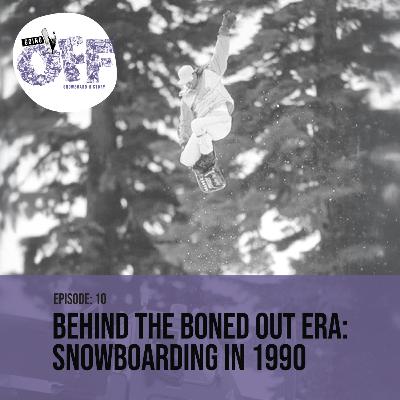
Once upon a time the colors were freaky, and tuck-knees and tweaks ruled the day. Going Off dives behind the scenes on an iconic 1990 photo of Jason Ford shot by Rod Walker—to learn from one of the masters what it took to be a snowboarder in the Boned Out Era. In this episode, Jen, Tricia and legend Jason Ford talk about how riders were riffing off what the 80s vert skaters were doing—styling out their straight airs and achieving levels of poking and tweaking that have never been seen again in snowboarding. They dip into the equipment of the day, and being on the Burton A team with Craig Kelly and Brushie. After 36 years of gossip and conjecture, Ford finally reveals how he got his tricks so totally boned out.They also tackle what it takes for an image to hold up after 3 decades of progression, and why this era remains so beloved to snowboarders in their ibuprofen-popping years.
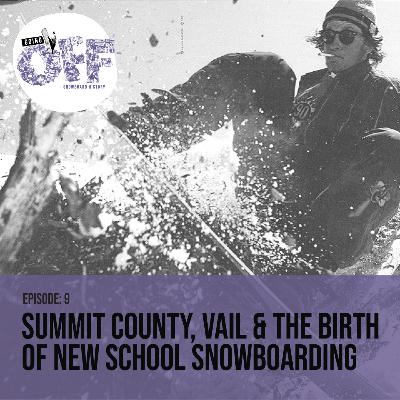
In the early 90s, 2 counties in Central Colorado became the unlikely breeding ground for a snowboarding style revolution. This is that story, so gather round the fire. Armed with intel from tons of CO OGs, Jen and Tricia trace how the “new school” scenes in Breckenridge and Vail first kicked off. They dive into early jibbing, equipment mods, rider-generated videos, Super Mario Land, big-pantism, Burton’s famous Lucky Strike ad, aspen-tree rainbows, DJ culture and more. They discuss how this movement helped fuel what was one of the biggest reinventions to ever happen in snowboard culture—as the sport’s second gen of pros sought to make it their own.At the end, Ali Goulet—certified snowboard icon and former Vail resident, joins Jen and Tricia to expound on what lured him to Colorado, what went down when he got there, and why everyone moved to Utah when the era ended.Image: 1992 Burton ad featuring Jason Girardi, photo - Justin Hoystenek
Was it the fat-stance fat-pants period? The era of the big film star? The wild pioneer days of the 70s and 80s? Join the snowboard history debate team as they dive into our sport’s primordial stew. The mission: to unearth which time in snowboarding lives on in our collective imagination as the true golden age. After a fly-by-night tour of our sport’s history to date, Jen and Tricia identify a specific season that dons the golden mantle. Later in the hour, snowboard-media-luminary Pat Bridges taps in with an informed rebuttal—suggesting a different era entirely. Facts, opinions, controversy, and nostalgic rants all abound in Episode 8 of Going Off. What’s your take? Let’s keep it going in the chat.
Snowboarding-wise, the ’98 Nagano Games and 2002’s Salt Lake Games were polar opposites. We went from mocked and misunderstood to celebrated with stadium seating. And it’s in this 4-year window of history that we first earned our identity as one of the most widely watched Olympic sports of all time. In this 2-part series, Tricia and Jen go deep on the hype, the hope and the heartbreak of snowboarding’s first 2 Olympic appearances. Ross Powers, the true Boss of snowboarding and a medal holder in both events (famously leading the U.S. podium sweep in Salt Lake), taps in as our live human expert. Part 2 of the series covers what went down on event day in both Nagano and Salt Lake—from avalanche warnings on course to the backside air seen round the world, from the medals won to ones lost—and how snowboarding was wildly transformed.

The Olympics either saved snowboarding or ruined it, depending on who you talk to. We were the first un-Olympic sport to join the Games and had to pave the way for other countercultural movements to become Olympic on their terms. In this 2-part series, Tricia and Jen go deep on the hype, the hope and the heartbreak of snowboarding’s first 2 Olympic appearances: Nagano in 1998 and Salt Lake City in 2002. Ross Powers, the true Boss of snowboarding and a medal holder in both events (famously leading the U.S. podium sweep in Salt Lake), taps in as our live human expert. Part 1 of the series drops into a wild ride on the road to Nagano. Heroic dreams. Snowboarder vs. skier culture wars. Contested qualifications. Olympic uniform foibles. It’s all in a day’s work when you’re going for the gold.
Hang onto your Mambosoks—this holiday special is a feast of historical snowboard trivia. Tricia and Jen solve the great James Bond stunt-double debate, reveal which famous 90s board graphic earned a cease and desist from the Cosby corporation, and go BTS on the heavy private sessions at one of snowboarding’s first-ever superpipes. From Lance Violette’s take on how Burton’s Uninc series was born to Todd Richards’ rant about what snowboard culture has lost, this episode is a spicy cocktail of unsolicited (yet highly interesting) information—plus bonus stories from previous episodes. Happy New Year from Going Off!
Arguably the most beloved snowboard movie of ’93 captures an essential time—in a unique way. Roadkill, a 24-minute Fall Line Films production, was the birth of “new school,” and a spark that ignited soon-to-be legendaries like Jamie Lynn, Bryan Iguchi and Terje Haakonsen. In this episode, Jen and Tricia sit down with Roadkill director Dave Seoane to expound on the making of this loud-and-fast ode to the road. Stay tuned for talk of technical butters and unapologetic big pants, mad respect to resort riding, and sliding vintage Caddy limos through snowdrifts on the Mt. Baker Highway. They divulge what it took to shoot and release a 16mm film in 2 months, dropping it mid-winter (instead of the next fall) to capture the era’s rapid progression. They uncover what it meant to be a snowboarder in 1993—when freestyle snowboarding was being reinvented by names that are still in our hall of GOATs.
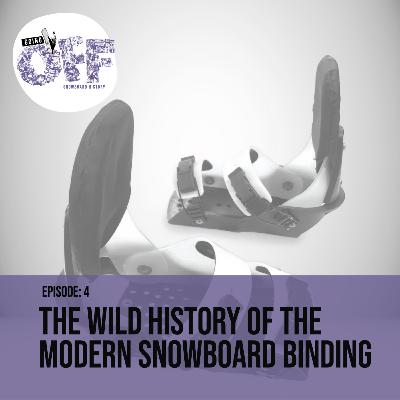
Once upon a time, snowboarders deployed plastic milk jugs for highbacks and donned sneaker-esque “riding shoes.” Today’s snowboard binding is a feat of ingenuity—an embodiment of the right-brain spirit that has always fueled riders. In this episode, Tricia and Jen track down the modern snowboard binding’s strange and true history over half a century. With hot intel from such experts as Trent Bush, Chris Doyle and Dennis Nazari, they trace the evolution from a single rubber toe strap to an injection-molded riding appliance. They reminisce on the lowbacks and T Bolting craze of the “fat stance” era. They talk hole patterns, channel systems, and who invented the highback. And they fearlessly (some would say foolishly) wade into the Great Step-In Debate. After another unapologetically lengthy deep dive, they bring in legendary snowboarder and style icon Russell Winfield for some quality binding banter. Russ divulges such secrets as how heelside carves happened in the days before highbacks (hint: they didn’t) and the backstory behind Ride Snowboards’ seminal ’90s baseless binding.
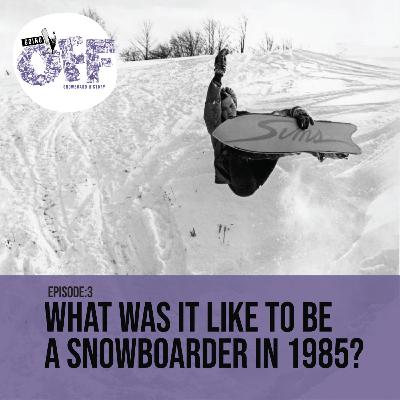
No highbacks. No cell phones. No chairlifts. All anarchy and style. On the 40th anniversary of a legendary photograph shot by Trevor Graves of Scott Clum, we uncover and celebrate what it was like to be a snowboarder in 1985. In this episode, Tricia and Jen bring in two live human experts, Trevor and Scott themselves, to reminisce and expound on the vibe of the day. They talk about the equipment, tricks and culture unfolding in snowboarding at that time in history. They discuss the tidal wave of influence that snowboarding’s very first halfpipe scene at the Tahoe City Dump, and California characters like Tom Sims, had on the world of snowboarding at large. And how—in a parallel universe out in Utica, New York—this small crew of East Coast riders were creating and defining what they thought snowboarding was, too. Other knowledge dropped: what it was like to live in Tom Sims’ secret Santa Barbara tree house, why everyone wore wetsuit bottoms while they rode, how broke college kids got film developed for free, and what exactly “Burger King” boots are. Link in bio to listen – and score your own limited-edition print of the image.PRINT FOR SALE: Style that started it all. East Street Archives excellently printed a limited run of this 1985 Scott Clum frontside air by Trevor Graves in Utica, NY. Link in bio to get one for ya wall.https://www.eaststreetarchives.com/store/p/trevor-graves-limited-edition-17x22-photo-rag-matte-print
Hop in, graphics nerds. We’re going on a wild ride from the explosion of 80s neon through the pro model snowboard era that kicked off the 90s board graphics revolution, then on to the great consolidation that happened at the turn of the century—and what rippled out when the bubble burst. In this episode, Jen and Tricia bring in a host of live human experts—Brad Steward, Barrett Christy, Shannon Dunn, Lance Violette, Corey Smith and more—to divulge the stories behind some of the most important snowboard graphics and board-graphic movements of all time. Hot takes abound, like why Sims refused to put mountains on their boards and how Original Sin may have been the first brand to bring true art to a snowboard deck. For a fun Going Off drinking game, take a big sip every time someone says the word “iconic.”
Before it became an icy 22-foot U-shaped monstrosity, the snowboard halfpipe was a hand-shaped, Roman Coliseum-style venue where snowboarders would go to see and be seen, meet other misfits, and throw down for a chance to be recognized as best rider in the world. In this episode, Jen and Tricia trace the snowboard halfpipe from its origins in backyard ditches to its machine-cut glory days across the world. They talk about the tools, technologies and tricks that changed everything, and which riders reigned supreme over these early eras. They track down who built the first superpipe (allegedly). They talk about how much it costs to build a modern-day snowboard halfpipe (hint: a lot). And they try in earnest to zero in on which nail was the exact last nail in the coffin for this lauded terrain feature. After an unapologetically lengthy deep dive, they bring in a live human expert, legendary pro snowboarder Todd Richards, to expound on what halfpipe has meant to snowboarding as a subculture and what the future of it may bring.
Going Off is the snowboard history podcast. As the early days of snowboarding begin to slide into the long past, Going Off documents its oral history. We trace back what made it so strange and explosive, why it changed all those lives and still bonds people for life. From the history of snowboard fashion to how halfpipes were born, from the birth of jibbing to pivotal movies, music and magazines, each episode drops in on a new topic.Hosts: Jennifer Sherowski and Tricia Byrnes
Comments

Download from Google Play

Download from App Store
 United States