


 Claim Ownership
Japanese Modernity Podcast
Subscribed: 1Played: 3
Subscribe

© Christopher Gerteis
Description
11 Episodes
Reverse

This episode dives into the “source code” of postwar Japanese politics—how a technocratic, conservative order has stayed remarkably stable since 1945, even amid public disaffection. Framed by Article 9’s pacifist identity and the U.S.–Japan alliance, the show uses Okinawa as a recurring stress test where constitutional ideals meet geopolitical reality. It traces the rise of bureaucratic stewardship and LDP dominance, showing how electoral reforms reshaped tactics without uprooting power. You’ll hear how local networks adapted from patronage to casework, and how symbolic “faith talk” (values, ritual, continuity) helps bind coalitions. The hosts distill four “cushions” that turn shocks into manageable friction—administrative resilience, alliance scaffolding, adaptive networks, and symbolic politics—while noting the costs: concentrated base burdens, high barriers to newcomers, and a narrowed policy imagination. This is a public episode. If you would like to discuss this with other subscribers or get access to bonus episodes, visit japanesemodernity.substack.com

This podcast explores the construction and subsequent unraveling of the “general middle-class society” myth in postwar Japan. It begins by questioning the analytic meaning of “middle class”when over ninety percent of the population self-identifies as such, tracing how this narrative of class homogeneity was established through surveys, media, and government policy, often intertwined with the discourse of Japanese uniqueness (Nihonjinron). Significant focus is placed on the gendered architecture of this model, centered on the male salaryman and the full-time housewife, whose corporate standing granted access to “welfare corporatism” and social citizenship. This is a public episode. If you would like to discuss this with other subscribers or get access to bonus episodes, visit japanesemodernity.substack.com

This episode examines the fascinating story behind the terrorist group Japanese Red Army (日本赤軍) and its unique connection to the People's Front for the Liberation of Palestine (PFLP).Sponsored by Mondly: Mondly by Pearson - speak a new language fluently fast. Explore language learning exercises for reading, listening, writing and speaking, enhanced with a dictionary, verb conjugator and state-of-the-art speech recognition technology - you’ll feel like having your own tutor in your pocket! This is a public episode. If you would like to discuss this with other subscribers or get access to bonus episodes, visit japanesemodernity.substack.com
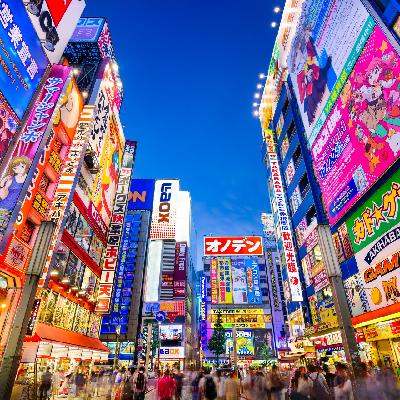
This episode explores a compelling parallel between historical rickshaw pullers in colonial East Asia and contemporary delivery riders in the gig economy.Sponsored by Mondly:Mondly by Pearson - speak a new language fluently fast. Explore language learning exercises for reading, listening, writing and speaking, enhanced with a dictionary, verb conjugator and state-of-the-art speech recognition technology - you’ll feel like having your own tutor in your pocket! This is a public episode. If you would like to discuss this with other subscribers or get access to bonus episodes, visit japanesemodernity.substack.com
Welcome to Japanese Modernity, the podcast that explores Japan's journey through transformative eras of social, economic, and cultural change. Each episode dives into pivotal moments that shaped modern Japan, from the Meiji era's industrialization to the nation's emergence on the global stage.Join us as we uncover the stories, decisions, and innovations that defined this remarkable evolution, with insights from leading historians and scholars. Whether you're a history enthusiast, a student, or simply curious about Japan’s fascinating past, Japanese Modernity offers a deeper understanding of how tradition and modernity intersected to create a lasting legacy.Stay tuned, and let’s embark on this journey together. This is a public episode. If you would like to discuss this with other subscribers or get access to bonus episodes, visit japanesemodernity.substack.com
This episode examines the context of Japan's so-called ‘Akiya Boom’. Vacant for decades, abandoned to the elements, Japan’s empty homes offer a troubling glimpse into Japan’s past, present, and future. The AI-generated podcast is based on: This is a public episode. If you would like to discuss this with other subscribers or get access to bonus episodes, visit japanesemodernity.substack.com
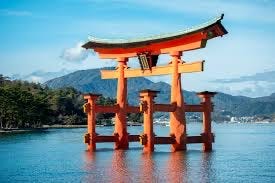
In this episode, we take a deep dive into Shinto, Japan’s indigenous spiritual tradition. Together, we explore a rich collection of articles, historical records, and descriptions of shrines and artifacts, uncovering the layers of this fascinating belief system.Join us as we examine what makes Shinto unique, including its absence of a single sacred text like the Bible, and discover the cultural and historical significance behind its practices and sacred spaces. This is an episode for anyone curious about Japan’s spiritual heritage and the enduring influence of Shinto in Japanese culture. This is a public episode. If you would like to discuss this with other subscribers or get access to bonus episodes, visit japanesemodernity.substack.com
This episode explores the dynamic and often overlooked aspects of historical memory. Discussion focuses on the importance of critical engagement with history beyond conventional sources like textbooks and museum exhibits. The podcast delves into lesser-known areas of historical narratives, highlighting how this approach can lead to surprising discoveries and insights. It encourages listeners to take a critical perspective by questioning established historical narratives, portraying history as a vibrant field ripe for exploration and discussion. Christopher Gerteis curated and reviewed this AI-generated discussion for accuracy. Japanese Modernity @ Substack is a platform for presenting research in a clear, engaging, and accessible way. We aim to make historical scholarship enjoyable for a wide audience. We invite you to join the conversation and share your thoughts on this innovative approach to communicating complex ideas. Contact Christopher Gerteis at cg24@soas.ac.uk if you have a book or article you would like to contribute to the discussion. This is a public episode. If you would like to discuss this with other subscribers or get access to bonus episodes, visit japanesemodernity.substack.com
This episode explores the complex dynamics of youth activism in postwar Japan. It highlights how both the far left and far right sought to harness the energy of disaffected youth to shape Japan’s future. The podcast aims to reflect on the generational dynamics of political activism, questioning what contemporary societies can learn from these movements’ successes and failures in shaping future values.The AI-generated discussion is based on Christopher Gerteis’ Mobilizing Japanese Youth: The Cold War and the Making of the Sixties Generation (Cornell 2021), which the author has reviewed for accuracy. Japanese Modernity @ Substack is a platform for presenting research in a clear, engaging, and accessible way. We aim to make historical scholarship enjoyable for a wide audience. We invite you to join the conversation and share your thoughts on this innovative approach to communicating complex ideas. Contact Christopher Gerteis at cg24@soas.ac.uk if you have a book or article you would like to contribute to the discussion. This is a public episode. If you would like to discuss this with other subscribers or get access to bonus episodes, visit japanesemodernity.substack.com

This episode delves into the complex relationship between labor unions, popular culture, and gender equality in Japan during the years following World War II. It explores how the initial commitment to women's equality gradually gave way to conservative gender norms that prioritized male workers' interests and diminished the role of women within the labor movement. The AI-generated discussion is based on Christopher Gerteis’ book Gender Struggles: Wage-Earning Women and Male-Dominated Unions in Postwar Japan (Harvard 2010), which the author has reviewed for accuracy. Japanese Modernity @ Substack is a platform for presenting research in a clear, engaging, and accessible way. We aim to make historical scholarship enjoyable for a wide audience. We invite you to join the conversation and share your thoughts on this innovative approach to communicating complex ideas. Contact Christopher Gerteis at cg24@soas.ac.uk if you have a book or article you would like to contribute to the discussion. This is a public episode. If you would like to discuss this with other subscribers or get access to bonus episodes, visit japanesemodernity.substack.com
This discussion on the Google Deep Dive podcast delves into the legal, social, and political dynamics surrounding the Maria Luz Incident, unpacking how it intersected with global narratives of emancipation and Japan’s evolving legal frameworks. The focus of this discussion is Bill Mihalopoulos’s recent article, “Liberty, the Maria Luz Incident, and the Liminal Legal Status of Chinese Indentured Labourers and Japanese Licensed Prostitutes” published in the journal Past & Present, 19 August 2024. The author has reviewed this AI-generated discussion for accuracy.Japanese Modernity @ Substack offers a platform for presenting research in a clear, engaging, and accessible way. We aim to make historical scholarship enjoyable for a wide audience. We invite you to join the conversation and share your thoughts on this innovative approach to communicating complex ideas. This is a public episode. If you would like to discuss this with other subscribers or get access to bonus episodes, visit japanesemodernity.substack.com
Comments

Download from Google Play

Download from App Store
 United States