


 Claim Ownership
The Next New Thing
Subscribed: 2Played: 3
Subscribe

© 2025 Bootstrapped Giants
Description
Creating with AI is fun. Turning it into a growing business is even more fun.
22 Episodes
Reverse
Presented by Zapier https://zapier.com/Episode Highlights / Timestamps00:00 Revenue explodes after building for AI agents00:18 The origin of Postiz as an open-source social media scheduler01:12 Finding a “blue ocean” inside a crowded market01:57 Adding MCP and early AI integrations02:42 Why automation dramatically reduces churn03:54 Growing Postiz to $17K–$20K MRR04:03 Discovering OpenClaw and the shift toward agent-driven software05:06 Building a CLI so agents can control Postiz05:51 The viral “Larry” OpenClaw agent story07:48 Why agents need strong documentation and skills09:18 Turning a full API into a simple CLI with Claude11:51 Why CLI tools may become the default interface for agent startups12:45 The next startup idea: agent-native UGC video generation13:03 Why CLI reduces token usage compared to APIs16:21 Using Claude to build the CLI automatically17:06 Postiz reaches $45K MRR In this episode of The Next New Thing, Andrew Warner talks with Nevo David, the creator of Postiz, about how his revenue jumped to $45K+ MRR after a surprising shift: he stopped building primarily for humans and started building for agents.
Presented by Zapierhttps://zapier.com/Episode Highlights / Timestamps00:00 Marketing to agents, not humans00:45 What “agent marketing” actually means01:30 How agents decide which products to pick02:15 What works: clean docs, fast pages, agent-friendly content03:54 How people are testing and tracking agent recommendations04:48 Is SaaS dead?04:57 Zapier’s CPTO vibe-codes a meeting recorder05:24 Why they still won’t cancel SaaS subscriptions06:27 When vibe coding is worth it (and when it isn’t)06:45 Software spend vs headcount spend07:57 The “War Council” Claude skill08:33 How it spins up subagents + personas09:54 How Wade built it fast using Cursor + Granola notes11:06 Skills as a commodity vs software as a business12:54 Using War Council for hiring decisions14:51 Using it to analyze sales performance + feedback16:21 Wade’s Cursor setup + switching between models17:42 Using Codex to critique Claude when it gets stuck18:09 How Wade structures personal context files21:18 Building an AI chief-of-staff system22:03 Using Zapier MCP to draft emails / run actions24:09 Getting 800 people at Zapier using Cursor / Claude Code / Codex25:39 Example: AI reviewing 4 massive spreadsheets fast31:03 The “NO” hat and staying focused32:06 Wrap 📄 War Council Skill (Claude Skill mentioned in the episode): https://docs.google.com/document/d/1CU674IKmPCAZm2xuqMGklTA-Bq1xr1GNQW6hNydxXrE/edit?tab=t.0Are you marketing to humans… or to agents?In this episode of The Next New Thing, Andrew Warner sits down with Wade Foster to unpack a shift that’s already starting to change how companies grow:AI agents are beginning to choose products on behalf of humans.That means you may no longer be “selling to a person.” You’re trying to get ChatGPT, Claude, and other models to recommend you instead of a competitor — and the tactics are different. Wade explains what “agent marketing” actually means, what agents care about (and what they ignore), and why teams are already building tools to measure how models mention their brand.They also tackle a question every founder is asking:Is SaaS dead?Wade shares an example from inside Zapier: their CPTO vibe-coded a meeting recording tool internally. It worked as a proof of concept — but they’re not canceling their SaaS subscriptions. Wade breaks down why building is cheaper than ever, but maintenance, polish, and focus are still what make commercial software worth paying for.Then the conversation gets tactical: Wade shows how he’s using AI daily as a “second brain” inside Cursor — including a Claude skill he calls The War Council, which spins up sub-agents (ruthless CFO, wartime operator, hiring expert, design visionary, etc.) to debate decisions and return a synthesized recommendation.This is a real look at how AI-native leadership works inside an 800-person company — without hype.
Presented by Zapierhttps://zapier.com/ Episode Highlights / Timestamps00:00 AI that runs your company01:03 How Polsia’s agents are structured02:33 One-click Meta ads explained04:30 Why friction kills growth06:18 Subscription model + nightly CEO agent08:24 Launching multiple companies as a “fund”10:21 Revenue split: 80/20 alignment14:24 The Polsia economy vision16:30 A real customer story19:39 Should you build elsewhere first?24:09 How Polsia grew from $20K to $600K+ run rate25:12 The AI fundraising stunt27:00 Live revenue dashboard explained34:57 Live demo: launching a company42:18 Tasks, credits, and iterations49:30 Solo founder with AI engineers52:12 Humans selling to humans vs agents selling to agentsIn this episode of The Next New Thing, Andrew Warner interviews Ben Cera, creator of Polsia — a platform where autonomous agents build, market, and operate companies with minimal human involvement.Polsia sets up the infrastructure (server, database, email, GitHub), builds the MVP, runs Meta ads, sends cold emails, posts on Twitter, answers support, and even iterates on product decisions.Ben is a solo founder. Zero employees.And Polsia is already showing a ~$600K+ run rate across subscriptions, tasks, ad usage, and revenue share — just weeks after launch.But here’s the surprising part:Most of the companies on the platform are only weeks old. The biggest revenue-generating startup inside Polsia is still early. This isn’t about overnight unicorns. It’s about a new operating model.You bring the idea.Polsia spins up the company.You decide the budget.The agents execute.And Polsia takes 20% of revenue — aligning incentives with the founder.
Presented by Zapierhttps://zapier.com/Episode Highlights / Timestamps00:00 The first billion-dollar solo company (Minecraft)00:27 Elad’s investing track record01:12 What “making it” really means04:03 Where today’s “toys” become tomorrow’s giants08:51 AI puts building power in millions of hands09:45 Will more builders mean smaller outcomes?13:03 AI service shops and vertical software15:00 AI cutting permitting time from months to hours16:39 Does AI replace CRMs and SaaS?19:12 Is off-the-shelf software dead?23:15 The shift from seats to AI labor units27:36 Alexandria: translating the world’s most important books30:36 How Elad uses AI personally35:06 Where new AI ideas come from37:48 What’s exciting for the next decade“The first billion-dollar one-person company? That already happened. It was Minecraft.”In this episode of The Next New Thing, Andrew Warner sits down with legendary investor Elad Gil — early backer of companies like Airbnb, Coinbase, Stripe, Instacart, and more — to talk about where AI is really going… and what founders are getting wrong.Elad argues that we’re still in the early innings of AI — and that “software is AI.” The shift isn’t just better SaaS. It’s a move from seat-based software to metered digital labor. From buying tools… to buying units of work.They discuss:Whether “toy” AI apps can become real businessesWhy small vibe-coded projects can turn into giant companiesThe agent shift (and why it changes TAM completely)How AI eats into labor markets, not just software categoriesWhether CRMs, ERPs, and landing page tools surviveWhy some companies should be bought and rebuilt with AIThe real opportunity in foundation models beyond languageElad also shares what he’s personally experimenting with — scraping and interrogating large datasets using Claude, OpenAI, and Deep Research — and why he believes the next decade will look like the early SaaS boom… but bigger.And in a surprising turn, he talks about something very un-Silicon Valley: monuments, art, and rebuilding public beauty — including a project called Alexandria aimed at translating the world’s most important books into languages covering 80%+ of humanity.
Presented by Zapierhttps://zapier.com/Episode Highlights / Timestamps00:00 $7M ARR as a solo founder01:21 Profit, margins, and team size02:51 Josh’s path from Uber to Wave05:24 Choosing ideas in the early AI days06:18 Why summarization felt like the killer app08:15 Competing with Otter, Fireflies, and others10:21 Recording real-world audio vs meeting bots12:18 Spending more on AI to improve quality13:39 Knowing you’re onto something from user emotion15:09 Why Wave stayed general instead of vertical16:12 Learning to build with ChatGPT18:00 How Wave’s architecture evolved19:39 Using Claude Code day-to-day21:00 AI agents analyzing analytics and logs25:21 The tools behind Wave (Cursor, Twilio, Adapt)27:27 Building instead of buying SaaS tools30:00 Using AI to ship features faster32:06 Why Zapier matters for data portability34:03 The future of cheap, abundant software36:09 Running Wave like a corner store, not a startup40:12 Growth goals without VC pressure42:18 How Wave gets customers today49:03 Why SEO side projects didn’t convert50:24 “If you’re good, things might work out”54:45 Revenue breakdown and take-home profitWhat does it look like when a single founder builds a profitable AI company — alone — and quietly grows it to millions in revenue?In this episode of The Next New Thing, Andrew Warner sits down with Josh Mohrer, creator of Wave AI, to unpack how he built a $7M ARR AI business with no full-time team — and how modern AI tools fundamentally changed what’s possible for solo founders.Josh previously helped scale Uber in its early days, but Wave AI is a very different story. It’s a one-person, profitable SaaS built around a deceptively simple idea: record real-world conversations, transcribe them, and generate high-quality summaries people actually trust. No hype. No venture capital. No big team.
Presented by Zapierhttps://zapier.com/Episode Highlights / Timestamps00:00 Why every email should be personalized00:18 Ryan’s background and what Untangle does00:45 Rethinking traditional email drips01:12 Customizing emails based on user situations01:39 A real example that led to a signup02:06 Daily automated marketing insights via email03:00 Doing things that don’t scale with AI04:03 Walking through the AI email system05:06 Using lead magnets and contextual data06:09 Enriching leads and storing user context06:45 Hourly cron jobs and email scheduling07:39 Feeding context into the LLM correctly08:15 Preventing hallucinated features08:24 Sending emails with Resend09:18 Measuring clicks instead of opens10:12 Layering engagement-based follow-ups10:39 Long-term personalized nurture loops12:00 Turning marketing emails into real value13:03 Building vertical-specific AI agents14:15 Using Zapier and modern automations16:12 Building systems with AI coding agents18:27 Running multiple AI agents at once21:27 Deciding what to build in a world of “free code”24:09 Daily AI-generated growth recommendations27:45 Using AI to generate and validate ideas31:03 Increasing insight frequency, not brilliance34:21 Why personalized email is a massive opportunity34:48 Final takeawaysWhy isn’t every email completely customized for the person receiving it — especially now that AI can do it for us?In this episode of The Next New Thing, Andrew Warner sits down with Ryan Carson, a three-time founder currently building Untangle, to walk through a very practical, very real AI system he uses every day to grow his business.Ryan has spent over 25 years building startups, but while setting up a “standard” email drip for Untangle, he stopped and asked a simple question: why are we still sending the same emails to completely different people? Instead of writing dozens of templates, he built an AI-powered workflow that generates fully personalized emails — based on each user’s situation, behavior, and engagement — and adapts over time.
Presented by ZapierEpisode Highlights / Timestamps[00:00] Why Pat decided to build his own video platform after YouTube strikes [02:06] Rebuilding a YouTube-style site in just a few hours with Claude Code [07:30] Designing the video experience before worrying about features [14:06] Using modern frameworks without writing code [23:06] Adding video streaming with third-party APIs instead of building from scratch [34:03] Letting AI debug and test the app automatically [42:00] Deploying the app live with one command [48:18] Why your website should be the hub, not social platformsIn this episode of The Next New Thing, Andrew Warner talks with Pat Walls, founder of Starter Story, about how he used AI coding tools to quickly rebuild a version of YouTube after his channel was hit with content strikes.Pat walks through how he used Claude Code to design, build, debug, and deploy a working video platform in real time — without writing traditional code. Along the way, he explains why founders should treat social platforms as distribution, not infrastructure, and how owning your audience and your software changes how you think about risk, growth, and leverage.If you’ve ever wondered how far AI can really take you in building real products, this episode shows exactly what’s possible today.
Presented by ZapierEpisode Highlights / Timestamps[00:00] Building AI software for companies, not just selling tools[00:36] Crossing $2M in annual revenue[01:12] A real-world AI document automation example[02:15] Why hourly pricing breaks in AI services[03:36] Using consulting to learn before building products[06:09] Landing the first customers through relationships[09:18] Founder-led sales and networking strategies[10:39] Hosting events to build credibility and deal flow[17:06] Why most AI pilots fail in production[23:06] How Press W positions itself as an AI engineering firm[27:09] Why “AI transformation” stopped working as a pitch[36:36] Inside Press W’s AI-native operating systemIn this episode of The Next New Thing, Andrew Warner sits down with Tarun Thummala, founder of PressW, to break down how his team builds custom AI systems for real businesses — and why services, not SaaS, were the right starting point.Tarun runs an AI engineering firm that designs and ships production-grade AI applications for companies in regulated industries like finance, healthcare, and legal. Instead of selling vague “AI transformation,” his team focuses on concrete workflows: document processing, internal tools, sales ops, and systems that actually ship and get used.
Presented by Zapierhttps://zapier.com/Episode Highlights / Timestamps[00:00] A broker replaces himself with an AI voice agent[00:45] Early pricing and first customers[01:30] The reality of cold calling expired listings[04:21] Why off-the-shelf AI voice tools weren’t good enough[05:15] First AI-booked listing appointment[08:15] Launching without a website using Meta lead forms[12:27] Using Zapier to glue the system together[14:51] Why this model works beyond real estate[16:12] Fine-tuning models for sales conversations[19:12] Shutting down a profitable agency to build SaaS[22:12] Founder roles and co-founder fit[30:00] What AI coding tools really do (and don’t) replace[32:42] Breaking down the early revenue[35:24] Naming the company and what comes next What happens when someone is so fed up with cold calling that they build an AI to do it for them — and it actually works?In this episode of The Next New Thing, Andrew Warner sits down with Yevgeniy Matsay and Aidan Richards, co-founders of Rezora. They share how a frustrating real-estate sales job turned into an AI voice-agent business that generated real revenue — and why they ultimately shut down a profitable agency model to build scalable software instead.Yevgeniy started as a real estate agent, spending entire days cold calling expired listings. When early AI voice agents emerged, he decided to build one tailored specifically for sales conversations. It landed listing appointments almost immediately. Instead of keeping it to himself, he sold it as a service to other brokers, validating demand fast — but also running into the limits of manual setup and constant customization.From there, the conversation digs into how they:Proved demand with a scrappy agency-style rolloutUsed tools like Zapier and voice AI to stitch together a working system before SaaS existedLearned why “just prompting” breaks down for sales callsTransitioned from custom workflows to a self-serve product built on fine-tuned language modelsThought about scalability, founder roles, and when to pause revenue to build the right thingThis is a grounded, technical, and honest look at turning AI automations into a real business — including the tradeoffs, the hard parts, and what actually works in practice.
Episode highlights:[00:00:00] Joe’s businesses and revenue breakdown[00:00:45] Five ways to make money with AI[00:00:54] Selling AI headshots as a done-for-you service[00:02:06] Delivering with VAs and prompts[00:03:36] Getting customers via LinkedIn polls and ads[00:06:00] Teaching AI while learning it yourself[00:08:24] Selling ideas before creating the product[00:09:27] Building a course entirely with AI[00:14:15] Selling AI-generated infographics to franchises[00:17:24] Using AI to build landing pages and funnels[00:22:21] ChatGPT as a co-founder and therapist[00:25:30] Scaling an agency without adding employees[00:30:00] Monetizing AI education and communities[00:34:03] Building basic software and prompt generators[00:40:03] Creating MVPs without developers[00:45:27] Focusing ideas into one scalable product[00:49:03] Rebuilding after COVID, divorce, and burnoutIn this episode, Andrew Warner sits down with Joe Apfelbaum, founder of Ajax Union and EvyAI, to break down five practical ways to make money using AI right now — without needing to code, raise money, or build complex software.Joe walks through real examples from his own businesses, including AI-powered services, courses, and lightweight software tools that generate revenue fast. More importantly, he explains why these models work: people want outcomes, not software — and AI lets you deliver those outcomes with tiny teams and massive leverage.This is a raw, tactical conversation about turning AI into income, rebuilding after setbacks, and designing businesses that scale without adding people.
Episode highlights:[00:00:00] The vision: media customized to one person[00:02:15] Why revenue isn’t the point — yet[00:03:18] Seeing early personalization at Spotify[00:06:00] Why kids’ content felt broken[00:07:48] Making the child the hero of the story[00:08:42] The hardest problem: image consistency[00:11:24] Why scaling AI products is nothing like demos[00:14:06] Personalized media won’t replace broadcast — it adds new behavior[00:16:21] Why parents are the buyer, not the consumer[00:20:51] Bedtime as a repeatable ritual[00:23:42] Why Dream Stories is a service, not a novelty product[00:28:12] Distribution is the real bottleneck[00:32:15] Why repeat purchases beat subscriptions[00:39:00] From “pull” products to “push” experiences[00:45:00] Context and memory as the real moat[00:50:06] Learning directly from customers[00:54:09] Synthetic data and AI-generated avatars[00:59:06] Automating PR and support with AIIn this episode, Andrew Warner talks with Ricardo, founder of Dream Stories, a company using AI to create fully personalized children’s books where each child becomes the hero of their own story.Ricardo shares how a simple idea — making a better bedtime story for his own son — turned into a scalable business with tens of thousands of unique characters created. But more importantly, he lays out a bold vision: a future where movies, TV shows, books, and media are customized for a single person, not the masses.They dive deep into what it actually takes to build a consumer AI company beyond demos and hype — from image consistency problems and synthetic data, to distribution, paid acquisition, and turning one-time novelty purchases into repeat behavior.This is a rare, honest look at where AI-generated media is headed — and what founders should really be building right now.
Episode highlights:[00:00:00] Businesses built entirely on Zapier[00:01:30] The roofer-turned-automation-agency story[00:03:54] What AI enables that wasn’t possible before[00:07:12] OpenAI Agents vs. Zapier workflows[00:11:15] Connecting AI agents to real business tools[00:13:03] Building a meeting-prep agent live[00:18:00] Why AI is great at building workflows, not just running them[00:23:06] Zapier customers, revenue, and bootstrapping discipline[00:28:57] AI-powered lead qualification in real time[00:33:18] Automation agencies and speed-to-lead economics[00:40:03] Why Zapier is positioned to last[00:42:45] Using AI as a neutral leadership coach[00:47:06] AI tools Wade personally usesIn this episode, Andrew Warner sits down with Wade Foster, co-founder and CEO of Zapier, to explore how AI agents, automation, and workflows are reshaping how modern businesses operate — from solo founders to companies doing hundreds of millions in revenue.Wade shares real examples of people who’ve gone from running local service businesses to launching automation agencies powered almost entirely by Zapier. Together, they break down how AI changes what workflows can do, why agents and automations are complementary (not competitors), and how founders can turn speed-to-lead, personalization, and internal tooling into real revenue.You’ll see a live walkthrough of building AI agents inside Zapier — including meeting prep, lead qualification, and internal coaching — all without writing code.👉 Join us: https://thenextnewthing.ai/👉 Team member feedback Zap: https://l.thenextnewthing.ai/r/Pdja7P
🎧 Highlights:[00:00:00] Humans doing the work of AI — before AI existed[00:01:12] Why accounting is mostly about language, not numbers[00:02:33] Shadowing bookkeepers to find automation opportunities[00:06:00] Manual work Quanta knew software had to replace[00:07:30] Why building on top of legacy systems wasn’t enough[00:08:24] Rebuilding the ledger from the ground up[00:10:12] Continuous reconciliation vs. monthly closes[00:11:24] From Affirm to founding Quanta[00:13:30] Why delayed financials are useless for startups[00:16:03] Validating willingness to pay before building[00:17:42] Using humans for the “last mile” while automating the rest[00:20:15] Solving trust and data-ownership concerns[00:22:48] Why most QuickBooks challengers failed[00:26:33] Saying no to customers to protect quality[00:33:36] Why AI makes real-time margins mandatory[00:36:45] Raising $15M Series A ($20M total)[00:37:21] Prism: asking your financials questions in plain EnglishIn this episode, Andrew Warner interviews Helen Hastings, founder of Quanta, an AI-powered accounting platform built for modern software companies.Before AI could reliably understand financial data, Helen and her team had humans doing what AI does today — reading receipts, interpreting memos, categorizing transactions, and reconciling books by hand. That hands-on approach helped her uncover where automation really mattered, leading to a ground-up rebuild of accounting software that works in near real time.Helen shares how Quanta replaces legacy systems by owning the data end-to-end, combining clean ledgers, continuous reconciliation, and AI-powered analysis — and why this approach helped the company raise $15M in Series A funding (over $20M total) and land nearly 100 customers so far.
🎧 Highlights: [00:00:00] From Makerpad to Factory — Ben Tossell’s journey [00:01:33] Life after acquisition and redefining work [00:05:06] Why AI might make things harder, not easier [00:07:30] No-code lessons and the illusion of simplicity [00:10:42] From teaching no-code to debugging workflows [00:12:00] Learning to code with AI as your translator [00:15:09] Curiosity as the new technical skill [00:16:21] Building a “source of truth” AI system inside Factory [00:23:42] How Ben uses AI to search across code, docs, and tickets [00:27:36] Teaching AI to follow his workflow [00:30:27] Getting comfortable with the command line [00:33:45] The first time AI made him feel like a real builder [00:35:42] Makerpad’s growth, Slack community, and hiring from within [00:41:24] Newsletter growth hacks and lessons from Ben’s Bites [00:46:03] Selling Makerpad and rediscovering purpose [00:49:39] Investing through Ben’s Bites Fund [00:50:33] Returning to his roots: teaching, learning, and building again [00:53:18] The one-person billion-dollar company — myth or movement? In this episode, Andrew Warner talks with Ben Tossell, creator of Makerpad — the #1 community for no-code builders, which he later sold to Zapier. Now at Factory, Ben is helping developers build with AI instead of code — and rethinking what “technical” even means.Ben opens up about the post-acquisition burnout that came after his sale, why he avoided starting another company, and how AI has reignited his creativity. Together, they explore what it means to go from no-code to “AI-native,” and why the dream of one-person billion-dollar companies might be closer than it sounds.👉 Join us: https://thenextnewthing.ai/
🎧 Highlights:[00:00:00] From freelance writer to $10M ARR founder[00:03:36] How Pepper scaled from a marketplace to an AI-powered content engine[00:05:06] The hybrid model: humans and AI creating together[00:07:12] Building “Nimbus” — Pepper’s internal AI platform[00:08:24] Re-optimizing thousands of old pages automatically[00:13:03] Why FAQs and freshness signals help you rank in AI results[00:15:00] GEO: Generative Engine Optimization explained[00:16:12] Tracking brand mentions across ChatGPT, Claude, Gemini, and Perplexity[00:18:00] Using AI to generate videos, voices, and creative assets[00:25:12] Scaling creative testing with 30,000+ AI-made ad banners[00:27:18] How smaller creators can apply these lessons today[00:30:27] Reddit, LinkedIn, and UGC as new AI search signals[00:33:00] Cold-emailing OpenAI’s Greg Brockman and getting access to GPT-3[00:34:21] Building PepperType.ai and learning from early AI adoption[00:35:30] Using AI personally to optimize meetings and calendar timeIn this episode, Andrew Warner interviews Anirudh Singla, founder and CEO of Pepper, a company that uses AI and human expertise to produce hundreds of thousands of pieces of content for enterprise brands.Anirudh shares how he went from writing on Upwork to building a platform now doing over $10M ARR, powered by a blend of automation, creativity, and data. He reveals how Pepper uses AI agents to write, edit, and even refresh old content — and why the next big wave isn’t SEO, it’s GEO: Generative Engine Optimization.
Andrew shares the AI tools that real startup founders are using every day — not hype, but the ones that actually help them work smarter. From AI note-takers that surface your blind spots to automations that coach your team after meetings, these are the tools that top entrepreneurs rely on.🔗 Tools mentioned:Granola App: https://www.granola.ai/Claude Console: https://console.anthropic.com/TextBlaze: https://chromewebstore.google.com/detail/text-blaze-templates-and/idgadaccgipmpannjkmfddolnnhmeklj?hl=en-USWade’s Zap: https://agents.zapier.com/copy/f17868bc-cc23-433a-b211-af402f47e1b4Garry’s Script Prompt: https://l.thenextnewthing.ai/r/OD14YAAlex Lieberman's EOS GPT: https://l.thenextnewthing.ai/r/5BB4doWhich of these are you already using — or planning to try next?

🎧 Highlights: [00:00:00] Intro – “Don’t start with SEO. Start with AEO.” [00:00:36] Why this is the right time to focus on answer engine optimization [00:01:30] Case study: Webflow drives 8% of signups from LLMs [00:03:00] Onsite vs. offsite optimization — Reddit and YouTube matter most [00:06:18] Why Help Center content outperforms traditional SEO pages [00:13:30] Why AEO is ideal for small startups without big budgets [00:16:39] “SEO is not dead” — and why Google’s share of search stays stable [00:19:39] Myths: LLM.txt, robots.txt, and how misinformation spreads [00:23:06] The scientific method for testing what actually works [00:25:57] Affiliates and citations — how paid mentions impact LLM rankings [00:27:27] How to find high-value questions to target [00:31:12] 60+ AEO tools — and the new “content scoring” era [00:35:06] How to build an AEO agency (and what services to offer) [00:39:36] Marketing Graphite — why thought leadership still wins [00:43:00] The AEO roadmap: what to do first, step by step [00:47:00] The MasterClass SEO story [00:48:18] Fires, gardens, and creative thinking in constraint SEO is changing—and the next frontier is AEO: Answer Engine Optimization.In this episode, Andrew Warner sits down with Ethan Smith, founder of Graphite, to break down how brands are already winning visibility on ChatGPT, Perplexity, and Claude — before their competitors even realize what’s happening.Ethan explains why SEO isn’t dead, but answer engines are the next big channel — and how to optimize your site, videos, and community presence so AI models actually cite your brand in their answers.
🎧 Highlights:[00:00:00] Intro[00:02:06] Alex & Arman’s founding story — from pivot to partnership[00:03:09] Why engineers experience AI’s biggest leverage[00:05:15] “Think of it as a high-quality AI-powered dev shop”[00:06:36] The big vision: Building the McKinsey of AI[00:09:09] Crossing the chasm: From pre-AI to post-AI[00:13:03] Intelligence arbitrage vs. labor arbitrage[00:15:00] Using AI to double productivity in dev work[00:19:12] Why services with recurring revenue outperform “one-off” AI projects[00:23:06] Real client examples: healthcare, billboards, SaaS[00:26:06] Debate: Will AI transformation companies run out of work?[00:29:15] Becoming the CEO’s “growth partner” in the AI era[00:31:00] The trillion-dollar dev industry opportunity[00:33:00] Live demos: Claude Code, multi-agent coding, and real-time automation[00:50:00] Human-in-the-loop AI and the ethics of automation[00:55:00] How Tenex thinks about pricing, margins, and scaling[01:00:45] Building “Morning Brew for AI leaders”In this episode, Andrew Warner, along with Jesse Pujji sits down with Alex Lieberman (Morning Brew) and Arman Hezarkhani, co-founders of Tenex, to unpack how their company is reshaping software development and consulting with AI.They reveal how engineers are “living in the future,” how AI is collapsing the cost of production, and why most companies won’t have the resources to cross the chasm from pre-AI to post-AI. From building mobile apps in days instead of months to using AI agents that code and run business tasks autonomously, Tenex shows what AI transformation really looks like inside modern organizations.
⏱️ TIMESTAMPS00:00 – Intro Montage00:52 – Every’s portfolio: Monologue, Spiral, Cora, and Sparkle01:48 – How many people use their tools today?02:15 – Mostly bootstrapped, with a small raise from Reid Hoffman04:00 – Building based on internal needs and workflows06:45 – Monologue’s origin story: weekend build, instant love09:00 – Why Monologue works for “hybrid language” thinkers10:30 – Writing → Building → Sharing: the creative flywheel12:00 – Dan’s AI rituals: Journaling, reading, and thinking15:00 – Using GPT for self-reflection and lightweight therapy17:30 – Getting through dense philosophy (e.g., Kierkegaard) with AI19:00 – Spiral’s evolution from summarizer to ghostwriter21:00 – Cora: an AI assistant that preps your inbox23:00 – Sparkle: automatic file organization, context-aware25:00 – How Dan uses AI to create team handbooks and meetings27:00 – The “interviewer agent” and writing in your voice30:00 – Why Spiral isn’t just a wrapper—it’s a writing copilot33:00 – “Software is the new content”: product = publishing35:00 – AI is the new Excel, and apps are the new templates37:00 – How Every maintains creativity while growing beyond 10 people40:00 – “Smuggled Intelligence” and why AI benchmarks need humans43:00 – Launching without distribution: the value of momentum46:00 – Dan’s personal life as product inspiration (love, thoughts, therapy)Dan Shipper Every, Spiral AI, Monologue app, Cora email assistant, Sparkle file organizer, AI startup tools, bootstrapped SaaS, AI writing tools, AI for journaling, AI productivity apps, GPT for thinking, AI therapy use, AI benchmarks, smuggled intelligence, building with LLMs, Andrew Warner podcast, product-led AIEvery’s style guide + prompthttps://l.thenextnewthing.ai/r/rjyLzl
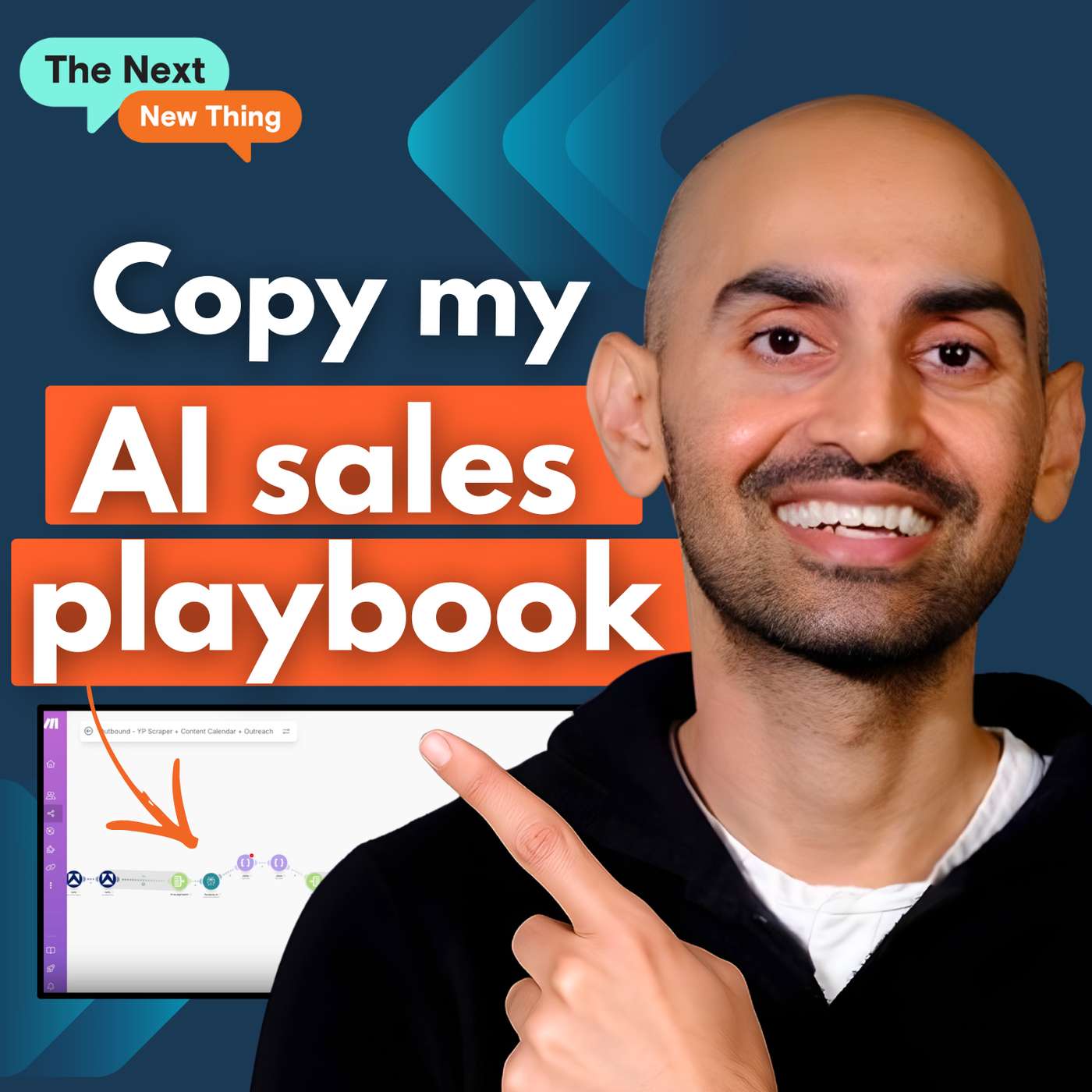
⏱️ Timestamps / Episode Guide 00:00 – Intro 01:12 – Why most companies fail to get ROI from AI 02:06 – The #1 mistake: Using AI for content without strategy 03:00 – Fragmented data = wasted AI potential 04:00 – How Neil’s team fixes that: Find what drives revenue first 05:24 – Real case study: Med spas using AI to win back Google traffic 07:00 – How to get your pages in Google's AI Overview box 09:00 – When AI writing is valuable—and when it’s not 11:06 – ChatGPT rankings: Why HubSpot wins (and how you can too) 13:00 – LLM SEO strategy: Tables, reviews, comparisons, citations 15:00 – How top companies (and AI startups) get actual user growth 17:00 – The influencer growth playbook—without needing followers 18:36 – Cursor: AI that saves $20K+/engineer per year 20:00 – The two AI use cases that never fail: saving or making money 22:00 – AI dashboard startup critique: “More data” ≠ better business 24:00 – Messaging that works: From “data hub” to “cost savings” 26:00 – Case study: SaaS site messaging that drives conversion 28:00 – Should you build an “AI agency”? Neil breaks it down 30:00 – Why verticalized AI services outperform generalists 31:00 – NP Digital’s full automation demo with AI scraping + voice + outreach 34:00 – Saulo walks through the end-to-end Make.com automation 36:00 – Scraping Yellow Pages → Personalized voice memos → Clients 39:00 – Using Perplexity, ChatGPT, DALL·E, and Gmail for outreach 41:00 – Tips for scaling this system legally and effectively 44:00 – Tool stack: Appify, Invent.ai, Perplexity, ChatGPT, HubSpot 45:00 – Using AI to fuel growth until your sales team can't keep up✍️ About This Episode Neil Patel is one of the most respected names in digital marketing. In this episode, he brings hard-won lessons from AI consulting, automation experiments, and agency growth. With examples from HubSpot, med spas, SaaS tools, and beyond, this conversation cuts through the noise to show how AI really creates business value. Whether you're a founder, marketer, or agency builder, you'll walk away with practical frameworks to deploy immediately.✅ JOIN US: https://thenextnewthing.ai/Neil Patel’s AI sales automation:https://l.thenextnewthing.ai/r/nrxLBo

Comments

Download from Google Play

Download from App Store
 United States