


 Claim Ownership
In Conversation with Janina Fisher: Wisdom Between Colleagues; Insights For Us All
Subscribed: 14Played: 119
Subscribe

© Janina Fisher, PhD
Description
In Conversation with Janina Fisher features intimate, unscripted dialogues between Dr. Janina Fisher and leading voices in trauma therapy. Each episode explores the nuances of healing—from attachment wounds and somatics to IFS, memory reconsolidation, and anti-oppressive care. Thoughtful, relational, and deeply human, these conversations offer insight and inspiration for clinicians and curious minds alike.
20 Episodes
Reverse
In this episode of In Conversation with Janina Fisher, Janina sits down with psychologist and EMDR pioneer Deborah Korn for a rich conversation about the evolution of trauma treatment and the delicate art of working with traumatic memory. Known for her thoughtful and compassionate approach to EMDR therapy and for her book Every Memory Deserves Respect, Debbie reflects on the clinical lessons that have shaped her decades of work with trauma survivors.Together, Debbie and Janina Fisher explore what it means to approach traumatic memories with respect, patience, and humility. Debbie shares insights from her experience using EMDR with complex trauma, emphasizing the importance of pacing, preparation, and careful attunement to clients’ nervous systems. Their conversation highlights the ways therapists can support healing while avoiding overwhelm—helping clients process painful experiences without losing a sense of safety or stability.Through personal stories and clinical reflections, Debbie discusses the responsibility therapists carry when guiding clients through trauma work, as well as the importance of curiosity, flexibility, and deep respect for each client’s inner experience. The result is a thoughtful dialogue about how trauma therapy continues to evolve and how clinicians can remain grounded in compassion while doing this powerful work.Key TakeawaysEvery traumatic memory deserves respect. Trauma work requires careful pacing, sensitivity, and deep respect for the protective role memories and symptoms have played in a client’s life.Preparation is essential in trauma treatment. Stabilization, resource-building, and strong therapeutic alliance create the safety needed for effective trauma processing.EMDR can be powerful for complex trauma when used thoughtfully. Skilled clinicians must adapt protocols and pace the work according to the client’s nervous system and capacity.Therapists must balance courage with caution. Trauma processing requires both clinical confidence and humility about the risks of moving too quickly.Attunement guides the work. The therapist’s ability to notice shifts in the client’s body, emotions, and parts of self helps determine when to move forward and when to slow down.Healing unfolds through collaboration. The most effective trauma therapy happens when therapist and client work together with curiosity, respect, and patience.Deborah L. Korn, PsyD maintains a private practice in Cambridge, MA and is on the training faculty of the Trauma Research Foundation and the EMDR Institute. Dr. Korn has authored numerous articles and chapters focused on EMDR therapy, including comprehensive reviews of EMDR applications with Complex PTSD. She is an EMDR International Association-approved consultant and is also on the Editorial Board of the Journal of EMDR Practice and Research. She presents and consults internationally on the treatment of adult survivors of childhood abuse and neglect and recently released Every Memory Deserves Respect—a book about EMDR therapy, written for the layperson. Website:https://www.everymemorydeservesrespect.com/Book:https://www.everymemorydeservesrespect.com/Please promote this program: https://www.cape.org/courses/emdr-therapy-debbie-korn-2026
In this moving conversation, trauma therapist Janina Fisher speaks with grief expert David Kessler about the evolving understanding of grief and its deep connection to trauma. Reflecting on his work with Elisabeth Kübler-Ross and his own personal loss, Kessler shares how the concept of a sixth stage of grief—meaning—emerged. Together, they explore why grief is never linear, how compassion supports healing, and how loss can gradually be integrated into a life that continues to hold love, purpose, and connection.Key Takeaways:Why grief is not a linear processThe meaning behind the “sixth stage” of griefHow trauma and loss intersect in healingWhy compassion and connection matter in grief recoveryDavid Kessler is one of the world’s foremost experts on grief and loss. His decades of experience with thousands of people on the edge of life and death has taught him the secrets to living a happy and fulfilled life, even after life’s tragedies. He is the author of seven books including his latest bestselling book, Finding Meaning: The Sixth Stage of Grief, as well as a new Finding Meaning Companion Workbook. He co-authored two books with Elisabeth Kübler-Ross, Life Lessons and On Grief and Grieving. He co-wrote You Can Heal Your Heart with Louise Hay and also wrote Visions, Trips and Crowded Rooms: Who and What You See Before You Die. His first book, The Needs of The Dying received praise from Saint (Mother) Teresa. His new online model of grief support, Tender Hearts, offers over twenty-five online grief groups. David leads one of the most respected Grief Educator Certification programs. He is the founder of Grief.com.show noteswebsite Grief.comsocial media instagram@Iamdavidkesslerfacebook@Iamdavidkessler
In this tender, wise, and delightfully expansive conversation, Janina Fisher reunites with longtime colleague, author, hypnotherapist, and teacher Nancy J. Napier—whose book Getting Through the Day shaped a generation of trauma clinicians and clients.Together, they explore the evolution of their work across four decades: implicit states, parts, SE, hypnosis, spirituality, multidimensionality, and the deep privilege of accompanying clients back into their wholeness. Nancy shares the origins of her “future self” and “alternate self” work, her grandmother’s teaching of the rain cloud of knowable things, and how ideas emerge collectively across time. Janina reflects on why naming, noticing, and staying with implicit states is at the heart of healing.Whether you’re a therapist, a client, or someone who loves Nancy’s or Janina’s work, this episode is a warm, soulful exploration of healing, wholeness, and what it really means to grow over a lifetime.Implicit states are young body–mind states Nancy and Janina describe implicit states as pre-verbal, deeply embodied experiences carried by young parts of self. The clinical task is to help the adult nervous system stay present with those states, not become them.Naming and noticing implicit states is itself an intervention The “noticing brain,” a term Nancy adopted from Janina, helps clients observe rather than drown in their experience. Noticing activates regulation, calms the amygdala, and brings more presence online.Spirituality belongs in the therapy room Nancy shares how many clients historically had no safe place to speak about their spiritual lives without being pathologized. Both she and Janina affirm that spirituality and trauma work naturally intersect.Future selves and alternate selves offer new templates for living Nancy’s “future self” and “alternate self” processes emerged from teaching, intuition, and synchronicity—what her grandmother called a “rain cloud of knowable things.” These practices help clients embody new possibilities, not just think about them.Love and gratitude as healing frequencies Nancy frames love as a universal healing frequency and encourages daily gratitude toward the body and its “community of non-human entities,” as well as toward protective parts. Janina echoes the importance of thanking parts that helped clients survive.Implicit healing changes how we grieve later in life Nancy shares how metabolizing an early implicit state of “I’m shattered” transformed her later grief over losing her cats—shifting from overwhelming, childlike collapse to grounded adult mourning.Trauma therapy requires active guidance and co-regulation Both clinicians push back against overly neutral, hands-off models. They emphasize that trauma clients are “lost in the trauma world” and need the therapist’s nervous system, structure, and guidance to find their way out.Nancy J. Napier, LMFT, is a psychotherapist and hypnotherapist in private practice in New York City, specializing in trauma resolution. She is author of Recreating Your Self: Increasing Self-Esteem Through Imaging and Self-Hypnosis; Getting Through the Day: Strategies for Adults Hurt as Children; Sacred Practices for Conscious Living, and co-author of Meditations & Rituals for Conscious Living.She also has recordings of guided meditations on subjects including accessing your optimal future self, mindfulness, healing wounded child parts, and healing shame, to mention a few that may be downloaded from iTunes and CDBaby. She also has training videos for professionals on Vimeo.com Videos on Demand. In addition, she posts a monthly audio guided meditation on her website, www.nancynapier.com, as well as on her YouTube channel, along with “Videos on Multidimensional Living”, as well as videos from talks given on issues related to spirituality.

In this intimate, wide-ranging conversation, Janina Fisher and therapist, educator, and former child refugee Linda Thai explore what it means to live, work, and speak from a body shaped by war, displacement, and structural oppression—while also becoming a “celebrity” in the mental health world. Together they name the “mental health speaker celebrity industrial complex,” the imposter parts that never quite go away, and the quiet cost of being placed on a pedestal while still longing to feel like you truly belong.Linda shares how her refugee history lives in her nervous system as future-oriented survival strategies—like always carrying her passport or mapping exit plans in response to the current political climate in the U.S.—and how the wilds of Alaska, dogs, and the rhythms of land, seasons, and subsistence living have slowly helped repair her sense of safety and synchrony. Janina reflects on privilege, boundaries, and learning to let in applause and appreciation, while Linda names humiliation as a core, often unnamed wound in the experience of being “othered.”For clinicians, this conversation offers both personal and clinical wisdom: how we think about refugee and immigrant clients, how we recognize non-human relationships and nature as sources of attachment and regulation, how we soften the “white gaze,” and how we bring more heart, soul, and judicious self-disclosure into our teaching and therapy spaces without losing our professional center.Imposter syndrome doesn’t just “go away.” Janina and Linda normalize imposter feelings as lifelong companions—especially for those who did not grow up with a gut-level sense of belonging—and explore how purpose and mission can coexist with ongoing self-doubt.Humiliation as a core wound of othering. Linda names humiliation as a central, under-discussed wound in collective experiences of racism, xenophobia, and being cast as “unwanted,” beyond the more familiar language of shame, self-loathing, or harsh inner critics.Refugee trauma as future-oriented survival strategy. Linda describes always carrying her passport and planning an exit route as trauma-shaped, future-oriented strategies that live in the present—illustrating how political conditions can re-activate refugee terror and planning.Privilege and the “mental health celebrity industrial complex.” Janina reflects on learning about privilege through collaborations on implicit bias, and both she and Linda unpack what it means to be visible, admired, and sometimes de-personed within a conference culture that elevates “names” while blurring boundaries.Nature, Alaska, and more-than-human attachment. Living in rural Alaska, hunting, fishing, gardening, and tracking the seasons helped Linda reconnect with cyclical rhythms after trauma’s disruption of internal and interpersonal timing. She highlights the clinical importance of including pets, land, and non-human relationships when asking about clients’ support systems.Dogs, nervous systems, and attachment in the therapy room. Both clinicians note how the presence of dogs shifts nervous systems—Janina’s clients become more regulated, and Linda can often read a client’s attachment style more clearly from how they interact with their dog than from formal checklists.From deprivation-based needing to wholehearted wanting. Linda shares how years of “I don’t need anyone” survivalism gradually transformed into an ability to want and need people from a place of joy rather than deprivation—an arc that mirrors many trauma survivors’ journeys.Softening the white gaze and taking in warm, soft eyes. Linda describes how “white gaze” can trigger performance and appeasement parts, while intentionally orienting toward “warm, soft eyes” changed her experience of audiences. Janina, in turn, reflects on consciously softening her own gaze as a white clinician to communicate safety and respect.
In this heartfelt and insightful conversation, Janina Fisher, PhD sits down with Licia Sky, somatic educator and co-founder of the Trauma Research Foundation, to explore the living wisdom of the body and what it truly means to “listen within.”Together, they trace how Western culture’s disconnection from embodiment has shaped therapy — and how reclaiming a felt relationship with our bodies changes everything. Licia shares how curiosity, movement, and breath create safety and connection in the therapy room, and why therapists must first cultivate an intimate relationship with their own bodies before guiding others.Through stories, laughter, and grounded wisdom, Janina and Licia illuminate the subtle dance between mind and body, the courage it takes to feel, and the healing that emerges when we meet ourselves — and our clients — through sensation rather than story.Key Takeaways (for YouTube, Spotify, Apple):Why “the body keeps the score” is only the beginning — and how to truly access the body’s language How therapists can model embodiment through self-attunement and curiosityThe difference between talking about emotions and feeling them in the body How simple actions — standing, sighing, breathing — can shift state and restore connection The power of vulnerability, mutual regulation, and relational presence in healing workWhy grief, shame, and love all live in the body — and what changes when we listenLicia Sky, Co-Founder, Trauma Research Foundation: https://traumaresearchfoundation.orgBio Licia SkyLicia Sky is the Co-founder of the Trauma Research Foundation. She is a somatic educator, artist, singer-songwriter, and bodyworker who works with traumatized individuals and trains mental health professionals to use mindful meditation in movement, theater exercises, writing, and voice as tools for attunement, healing, and connection. She is a regular instructor in trauma healing workshops at Cape Cod Institute, Kripalu, and Esalen. For the past decade, she has been teaching expanded awareness in workshops to clinicians and laypeople around the world.
In this rich, relational conversation, Janina Fisher sits down with somatic psychologist, yoga teacher, and trauma expert Dr. Arielle Schwartz to explore how embodiment can transform the treatment of complex PTSD and dissociation.They trace Arielle’s path from early work with adjudicated youth and community mental health into somatic psychotherapy, EMDR, and private practice—and how Janina’s work on structural dissociation and parts has deeply influenced Arielle’s clinical lens. Together, they question the long-standing emphasis on “event-focused” trauma treatment and instead highlight the power of working with implicit experience, the nervous system, and everyday triggers.Across the conversation, Janina and Arielle explore:How yoga, somatics, and Buddhist-influenced training at Naropa shaped Arielle’s clinical foundationsWhy classic EMDR protocols can inadvertently harm highly dissociative clients—and how integrating somatic awareness changes everythingThe shift from processing events to working with the effects of trauma: implicit memory, nervous system patterns, and partsStructural dissociation, protector parts, and the inner conflicts that keep clients stuck (“I want closeness / I’m terrified of closeness”)Why “resource-heavy” work, safety, and widening the window of tolerance can reduce the need for intense memory processingThe power of simple language—like “notice”—and why some clients can’t even tolerate the word bodyProprioceptive practices (contact, weight, boundaries in space) as safer gateways into embodiment for highly traumatized or dissociative clients“Embedded relational mindfulness” and how a therapist’s own embodied presence can prevent burnout and compassion fatigueThis episode is especially relevant for:Therapists working with complex PTSD, dissociation, and highly defended nervous systemsEMDR clinicians wanting to work more safely and somaticallySomatic, parts-oriented, and body-based practitioners refining how they talk about “the B word” with clientsAnyone curious about how neuroplasticity, parts work, and somatic mindfulness intersect in trauma recovery🎧 Settle in, notice what happens in you as you listen, and join Janina and Arielle in this grounded, embodied dialogue about what truly heals in trauma therapy.https://drarielleschwartz.com/Dr. Arielle Schwartz, PhDRenowned speaker, author, and esteemed clinical psychologist, Dr. Arielle Schwartz has been widely recognized for her research and clinical advancements in trauma treatment, which have shaped the landscape of trauma recovery and elevated the standard of care all across therapeutic settings.Dr. Schwartz promotes a strength-based, embodied approach to trauma recovery that emphasizes self-driven healing to facilitate post-traumatic growth. Drawing on the principles of EMDR, somatic psychology, mindfulness-based therapies, and relational psychotherapy, she developed Resilience Informed Therapy—an integrative model of care for facilitating recovery from childhood trauma, PTSD, complex-PTSD and Dissociation.Dr. Schwartz has been teaching therapeutic yoga since 2008, and she is the author of Therapeutic Yoga for Trauma Recovery, a widely referenced guide to applied Polyvagal Theory for trauma recovery. She has also authored numerous books covering extensive research and guiding techniques in trauma treatment.https://drarielleschwartz.com/www.resilienceinformedtherapy.com/https://www.youtube.com/channel/UC5LUxnXbReV7I5cEzvb46sQhttps://www.facebook.com/drarielleschwartz/https://www.instagram.com/arielleschwartzboulder/
In this warm, candid, and deeply human conversation, Janina Fisher sits down with her longtime colleague and friend Deb Dana, the clinician who has brought polyvagal theory to therapists around the world. Together, they explore how understanding the nervous system transforms clinical practice, therapeutic presence, and even how we move through our own lives.Spanning more than two decades of shared history—from Sensory Motor Psychotherapy trainings in Portsmouth to the early days of Deb’s work with Stephen Porges—this dialogue weaves personal stories with practical wisdom. Janina and Deb speak the same language: relational safety, parts, states, regulation, and the powerful ripple effect of ventral vagal connection.Core themes in this conversation include:How polyvagal theory “completes the puzzle” for clinicians trained in somatic, parts-based, or talk therapiesThe therapist’s state as the primary intervention: why being regulated matters more than doing somethingVentral vagal as “an unopposable force” and the surprising contagion of safety and connectionParts work inside the nervous system: how sympathetic, dorsal, and ventral shape what parts become availableWhy clients may fear ventral regulation—especially those with complex trauma or dissociative processesThe dangers of rushing: urgency, sympathetic drivenness, and the pressures therapists feel to “make something happen”Working with dorsal states without pulling clients out before their system is readyTrauma-informed communication cues—facial expression, tone, and the subtle signals clients register instantlyReal talk about aging, travel, grief, loneliness, and sustaining meaningful work over a long careerThe gift of humor, warmth, and genuine relational presence in trauma therapyHow regulation is a daily living practice, not just a clinical techniqueThis episode feels like sitting with two mentors who let you behind the curtain—not just into what they teach, but how they live it, struggle with it, and return to it again and again.If you’ve ever felt pressure to “do more” in the therapy room, or wondered how to stay grounded while holding clients’ complex states, this conversation will feel like a breath of ventral air.Deb Dana, LCSW, is a clinician, author, speaker, and internationally recognized expert on the clinical application of Polyvagal Theory. She is a founding member of the Polyvagal Institute and an advisor to Unyte. In her work she plays a critical role in advancing the application of Polyvagal-informed approaches in clinical settings.Deb is well known for her ability to translate the complexities of Polyvagal Theory into accessible, client-centered interventions. Through her Rhythm of Regulation® methodology, she has introduced groundbreaking tools and practices that empower professionals and individuals alike to understand their nervous systems and change the way they navigate their daily lives. Deb’s clinical work published with W.W. Norton includes The Polyvagal Theory in Therapy, Polyvagal Exercises, the Polyvagal Flip Chart, and the Glimmers Journal. Her work with Sounds True for a general audience includes Anchored and The Nervous System Workbook. Deb can be contacted via her website www.rhythmofregulation.com
Janina Fisher PhD talks with psychologist Robert Schwarz about energy psychology, EFT tapping, and how curiosity and compassion can guide trauma recovery. Together they explore stabilization, implicit memory, and the healing power of presence in therapy. 👉 Learn more at doctor-bob.comhttps://www.doctor-bob.com/https://www.doctor-bob.com/about-meRobert Schwarz, PsyD, DCEP, ACAP-EFT has been a licensed psychologist for 40 years. He was executive director of the Association for Comprehensive Energy Psychology from 2008-2024. Bob has organized over 30 conferences on Ericksonian hypnosis, trauma treatment, and energy psychology, ACEP’s Science of energy healing online programs and ACEP’s EFT training program.He has authored 3 books including: Tools for Transforming Trauma and We’re No Fun Anymore: Guiding Couples to a Joy Filled Marriage, as well as numerous articles and papers. He recently released a new online program Transforming Trauma and limiting Beliefs with EFTBob presents workshops and keynotes internationally on EFT and energy psychology and trauma treatment. He is known for his ability to provide specific clinical skills within an integrative model. Bob believes that it is crucial to prioritize joy and creativity in one’s life. He does this personally through music and songwriting and improv.
Internationally renowned clinician-researcher Ruth Lanius, MD, PhD joins Janina to trace their shared roots at Bessel van der Kolk’s Trauma Center and explore how brain science can—and should—change what we do in the therapy room. They dig into why grounding must precede mindfulness for highly dissociative clients, the promise of Deep Brain Reorienting, adapting SMART for adults, and how real-world samples (not just tightly controlled trials) can finally validate the integrative treatments therapists use every day. They wrap with a clear, brain-based take on psychedelics (hello, default mode network) and a hopeful vision for the next decade of trauma care.In this episode, you’ll hear:The early days at the Trauma Center—and why a non-blaming, grief-literate clinical culture mattersLanius’s pivotal neuroimaging findings that differentiated hyperarousal from dissociationWhy many clients “retain nothing” without grounding, grounding, grounding before skills trainingWhat Deep Brain Reorienting (DBR) targets (orienting → shock → pain/affect) and who it’s not forAdapting SMART (Sensory Motor Arousal Regulation Treatment) for adults and how sensory pathways invite language and connectionThe case for real-world evidence so insurers cover integrative, neuroscience-guided careA concise brain-based explanation of how psychedelics may help (disrupting habitual patterns, influencing the default mode network)Ruth Lanius: https://www.ruthlanius.com/Finding Solid Ground (program & research) — by Bethany Brand, Ruth Lanius, and colleaguesSensory Pathways to Healing from Trauma: Harnessing the Brain’s Capacity to Heal — Lanius et al. (new book mentioned)Deep Brain Reorienting (DBR) — Frank Corrigan’s model (overview + training/info site)
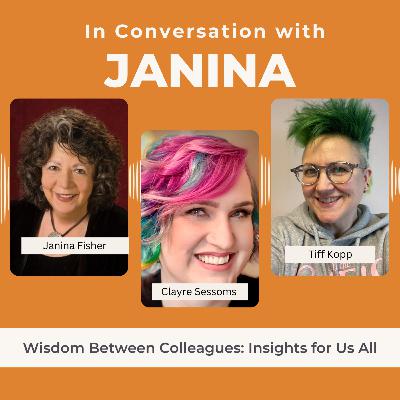
In this engaging and heartfelt conversation, Janina Fisher, PhD is joined by Tiff Kopp and Clayre Sessoms, senior facilitators of Trauma-Informed Stabilization Treatment (TIST) in Vancouver. Together, they explore what it really means to meet trauma with curiosity instead of control — and how TIST helps clients build safety, connection, and self-compassion without retraumatization.From their roots in victim services to their current work as art therapists and supervisors, Tiff and Clayre share how TIST weaves together neuroscience, mindfulness, and relational repair. They discuss how the model honors every part of the self — including those born from oppression, fear, or survival — and how humor, play, and the willingness to “know nothing” open the door to genuine healing.With warmth and laughter, this conversation reminds us that stabilization isn’t the opposite of depth — it’s the foundation that allows deeper work, creativity, and love for all our parts to unfold.Key Takeaways:✨ What makes TIST a safe, non-pathologizing approach for complex trauma ✨ How relationship and context restore dignity for marginalized clients ✨ Why curiosity and play are essential to healing and integration ✨ How therapists can unlearn “fixing” and embrace presence instead ✨ The role of humor, creativity, and repetition in building safety ✨ How true healing begins when we can care for even our most difficult partsClayre Sessoms, RP, CCC, ATR-BCPronouns: she/theyClayre Sessoms is a relational and experiential psychotherapist, art therapist, and senior facilitator of Trauma-Informed Stabilization Treatment (TIST). Based in Vancouver on unceded Coast Salish lands, she works at the intersections of parts, power, and belonging, offering care grounded in curiosity, embodied presence, and social justice.As a trans, queer, and disabled human, Clayre brings lived understanding to her collaborations and mentorships, centering safety, dignity, and connection over performing calm or competency, or fixing. She invites you to move from self-management toward self-relationship, and from surviving within oppressive systems to cultivating inner and collective belonging.She is the founder of Clayre Sessoms Psychotherapy, a practice dedicated to relational, creative, and justice-oriented care, and co-host of The Living Practice Podcast, where she and Laura Hoge, RSW explore what it means to live the practices that matter most to each of them.clayresessoms.comThe Living Practice PodcastTiff Kopp, RCC, BCATR (she/they) is a trauma therapist and Certified Trauma-Informed Stabilization Treatment (TIST) Facilitator who integrates somatic and art therapy with parts work. With more than fifteen years in the anti-violence and advocacy field, Tiff now focuses on supporting people living with complex trauma and providing consultation for therapists developing somatic and parts-based approaches. A queer clinician, Tiff brings an intersectional, relational lens to her work. Outside of sessions, she finds joy in photography, music, dance and time in natureTrauma-Informed Stabilization Treatment (TIST): https://janinafisher.com/tist
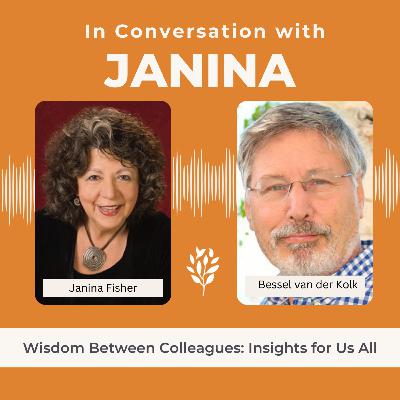
In this lively and deeply reflective conversation, Janina Fisher, PhD and Bessel van der Kolk, MD revisit their decades-long friendship and parallel journeys through the emergence of modern trauma therapy. From their early research days in Boston to the global impact of The Body Keeps the Score, they explore how far the field has come—and how much there still is to learn.Together, they trace the shift from “the talking cure” to body-based and parts-oriented approaches, discussing what really heals: mindfulness, curiosity, compassion, and the slow unlearning of shame and self-blame. With humor and candor, they reflect on the limits of diagnosis, the evolution of trauma research, the importance of relational attunement, and the shared privilege of witnessing human resilience.At its heart, this is a rare, intimate dialogue between two pioneers who helped shape trauma therapy as we know it—and who remain lifelong students of its unfolding complexity.Key Takeaways:• How trauma treatment evolved from talk therapy to somatic and parts-based approaches• Why remembering isn’t healing—and what actually supports integration• The tension between research, manualized methods, and relational attunement• Compassion as the antidote to self-hatred and blame• The limits of diagnostic systems and “evidence-based” models• Why curiosity, play, and humility keep the work aliveLinks:Bessel van der Kolk, MD – https://besselvanderkolk.comThe Body Keeps the Score – Book on Penguin Random HouseTrauma Research Foundation (TRF): https://traumaresearchfoundation.org
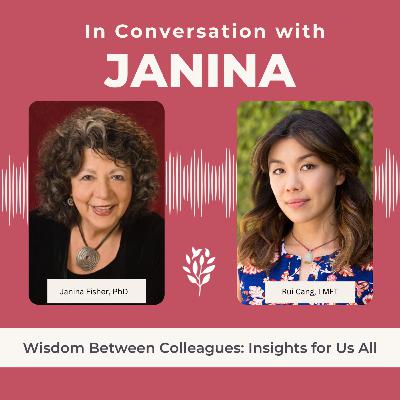
In this rich and deeply personal episode of In Conversation with Janina Fisher: Wisdom Between Colleagues—Insights for Us All, Dr. Janina Fisher is joined by Rui Cang, LMFT, a Los Angeles–based psychotherapist, TIST facilitator, and Sensory Motor Psychotherapy practitioner whose clinical expertise is grounded in her own lived experience as a Chinese-born immigrant and bicultural therapist.Together, they explore the complex and often unspoken challenges faced by Asian and Asian American clients—from navigating intergenerational trauma and collectivist family systems to reclaiming language for emotion, boundaries, and the self in a culture where those concepts have long been taboo.Through stories from her practice and her own journey, Rui illuminates:The role of shame and compliance in collectivist cultures—and how they can inhibit healingWhy the concept of “boundary” may feel foreign or even threatening to many Asian clientsHow helicopter parenting, fear-based caregiving, and emotional withholding create patterns of anxiety and indecisiveness across generationsThe cultural value of endurance (zhen)—and how it both protects and harmsThe profound attachment trauma that can arise even in multi-generational, tightly bonded familiesHow enduring racism, war, and displacement have shaped bodies and nervous systems across Asian diasporasThe emotional toll of code-switching, assimilation, and survival-driven identity loss in Western contextsHow language itself can limit emotional expression—and how somatic and parts-based therapy helps bridge the gapJanina and Rui reflect on what it means to offer culturally responsive trauma therapy that honors the beauty and pain of collectivist traditions. They discuss the paradox of Asian family systems that are close-knit and supportive—yet often silence individuality, emotional vulnerability, and self-expression. Rui shares how many of her clients, especially first- and second-generation immigrants, are caught between two worlds: Western individualism and Eastern collectivism—and how therapy can help them reclaim a self that belongs to both.Throughout the conversation, Rui’s compassion and insight shine. She speaks candidly about:Growing up in Beijing in the absence of emotional vocabularyTraining in psychology in China before such programs truly existedThe challenges of doing Mandarin-language therapy with clients whose native culture lacks words like “empathy,” “self-worth,” or “boundary”Her clinical use of parts language (TIST) to help clients honor their loyal parts, submit parts, and protective parts without shameThis episode is not only a profound exploration of Asian cultural dynamics in therapy—it’s also a masterclass in attunement, humility, and the courage to question inherited beliefs.Whether you’re a clinician working with Asian clients, an immigrant navigating dual identities, or simply someone interested in how culture shapes our inner world, this conversation offers nuance, validation, and a path toward integration.“Our clients aren’t being resistant,” Rui reminds us. “They’re carrying centuries of survival strategy—and they’re doing the best they can.https://www.thewholisticconnection.com/Rui is a licensed marriage and family therapist with a deep passion for supporting individuals and families in healing from trauma. She specializes in PTSD, Complex PTSD, dissociative disorders, and attachment-related challenges, and is certified in both Sensorimotor Psychotherapy and Trauma-Informed Stabilization Treatment, and has advanced training in Attachment-Focused EMDR and Relational Life Therapy for couples.Rui’s approach is warm, relational, and holistic—integrating mind, body, and spirit. She believes that healing happens through connection, compassion, and the discovery of inner resilience.
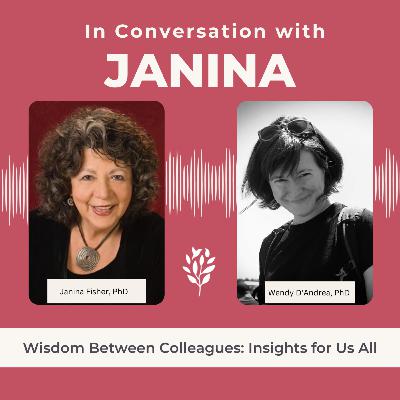
In this thoughtful and provocative episode, Janina Fisher, PhD, sits down with Wendy D’Andrea, PhD—research psychologist, clinician, and Chief Scientific Officer of the Trauma Research Foundation—to explore a timely and often misunderstood question in the world of psychotherapy:Who gets to define what healing looks like—and who is left out of the conversation?Wendy and Janina unpack the persistent divide between researchers and clinicians, questioning how we define "evidence," who decides what counts as success, and why many trauma survivors don't benefit from the treatments that look most effective on paper.With humor, warmth, and critical insight, they explore:Why clinicians are often discouraged from participating in research—and how to change thatHow research literacy makes better therapists, not just better scientistsThe pitfalls of prolonged exposure therapy, especially for clients with complex trauma or multiple traumatic exposuresWhy “reduction in PTSD symptoms” doesn’t always mean a better lifeThe disconnect between what gets measured in research and what actually matters to clients (like shame, intimacy, or feeling safe enough to hug your child)How cultural mistrust and racial bias shape access to and outcomes in trauma careThe limitations of a one-size-fits-all approach to trauma treatment—and the urgent need for relational, nuanced, and individualized careWhy creating research that’s relational, co-created, and clinically relevant is the next frontierWendy shares her experience as a first-generation college student-turned-researcher, navigating a system that values intellectual authority over lived experience—and how that journey shaped her commitment to making research accessible, collaborative, and human.Together, she and Janina imagine a future where:Clinicians are empowered to ask research questions that come from the heartResearchers speak in language that clinicians and clients can understandEvidence-based practice doesn’t mean ignoring the client’s voice, culture, or nervous systemTherapeutic approaches are evaluated not just by symptom reduction, but by emotional resonance, relational impact, and lived transformationAs Wendy puts it:“Researchers need clinicians to know what’s true in their data—and clinicians need research that respects the complexity of human suffering.”This conversation is a must-listen for therapists, supervisors, and researchers who are ready to move beyond the tired binary of “data vs. intuition”—and instead build a bridge rooted in curiosity, collaboration, and compassion.If you’ve ever wondered why the most “evidence-based” treatments don’t always work—or how we might build a better future for trauma therapy—this episode offers a critical, hopeful starting point.Dr. Wendy D'Andrea is a clinical psychologist with expertise in trauma, psychobiology, and healing. After completing degrees at Oberlin College and the University of Michigan, and postdoctoral specialty training in trauma treatment with Bessel van der Kolk at the Trauma Center, she joined the New School for Social Research and Lang College in 2010. Since joining the New School, she has taught classes on psychopathology, trauma, research methods, and treatment, and her lab has become a vibrant working collective producing over 50 publications with student collaboration. She is also a thought leader in the field of trauma, working as the Chief Science Officer for the Trauma Research Foundation, leading forward the integration of science and practice, and brings a strong interest in understanding processes like embodiment, interpersonal connection, and self-expression in venues such as theater, dance, sport, humanitarian work, and therapy. https://traumaresearchfoundation.org/about/trf-team/https://www.dandreatraumalab.com/wendy
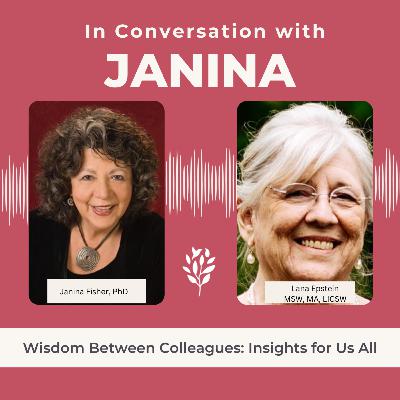
In this tender and richly insightful episode of In Conversation with Janina Fisher: Wisdom Between Colleagues—Insights for Us All, Janina Fisher, PhD, welcomes friend, longtime collaborator, and trauma expert Lana Epstein, MSW, MA, LICSW. Together, they reflect on their 30-year journey as clinicians, supervisors, teachers—and kindred spirits working to understand the nuances of healing trauma.From their days as board members of the New England Society for the Treatment of Trauma and Dissociation to co-teaching for Bessel van der Kolk’s early conferences, Janina and Lana recount their shared roots, deep clinical respect, and mutual influence. But this conversation is more than nostalgic—it’s a profound dive into the integrative work of healing both trauma and attachment wounds.Lana brings a unique voice to the field as a hybrid clinician fluent in EMDR, Sensorimotor Psychotherapy, clinical hypnosis, and parts work (including IFS and TIST). She shares how she weaves these modalities into a deeply relational, body-informed practice—one that doesn’t fix clients, but co-creates with them the conditions for change.Together, Janina and Lana explore:Why attachment wounds are often the “last piece” clients can’t resolve through traditional therapyThe clinical challenge of teasing apart trauma from early relational injuriesHow to work with clients who “armor up” even when they desperately want loveA powerful, somatic case vignette involving curling inward, reaching, and receivingThe role of bilateral stimulation in calming nervous system overwhelm—even before trauma processingWhy chunking down and co-regulating through presence matters more than technical masteryThe importance of right brain-to-right brain attunement and implicit communicationAn accessible explanation of memory reconsolidation and how it rewires the emotional weight of traumaLana also shares a poignant personal story of her own breakthrough in a group therapy session—when, in the midst of crying about feeling unloved and alone, she instinctively bolted upright when others tried to offer physical support. That reaction, she says, taught her more than years of insight-oriented therapy. It was the moment she began to understand how to help clients unveil what they long for but push away.Throughout the episode, Janina and Lana model the humility, humor, and humanity that defines truly effective trauma treatment. They speak candidly about not always knowing what they’re doing—and why collaboration, not clinical certainty, is the real key to healing.Whether you're an EMDR-trained therapist wondering how to bring the body into the room, or a somatically trained clinician looking to integrate memory reconsolidation techniques, this episode is a masterclass in respectful integration.If you would like to connect with Lana Epstein, please reach out to her at: lanaeps@verizon.netLana Epstein, MA, LICSW, has maintained a private practice in Lexington, MA, since 1984 and currently has office hours in NYC. Her focus has been on individual, couple, and group psychotherapies, specializing in the treatment of clients who have survived traumatic childhoods. She is a past supervisor at the Trauma Center, was a member of the New England Society for the Treatment of Trauma and Dissociation board for six years, and is a founding member of the New York City Association of Trauma Therapists. Integrating a number of therapeutic models, Lana presents internationally and is interested in the integration of Sensorimotor Psychotherapy and EMDR.Show Notes:
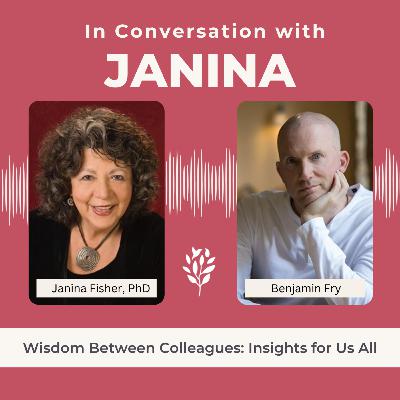
In this powerful and deeply personal conversation, Janina Fisher, PhD, sits down with longtime friend and colleague Benjamin Fry, founder of the internationally renowned Khiron Clinics in the UK. What unfolds is a moving reflection on Fry’s descent into despair, his search for healing, and how his lived experience ultimately gave birth to a trauma treatment model that has helped countless others find their way home to themselves.Benjamin shares how, despite being a trained psychotherapist with a thriving private practice and media presence, he was blindsided by a severe breakdown that left him nonfunctional and terrified. After exhausting conventional options—therapy, medication, even hospitalization—he discovered somatic and neurobiologically-informed trauma therapy at a small clinic in Arizona. That four-month stay, which included EMDR and Somatic Experiencing, not only saved his life, but planted the seed for what would become Khiron House, now part of Khiron Clinics: a residential and outpatient program rooted in presence, relationship, and embodied care.Janina and Benjamin explore the core philosophy behind Khiron’s success: healing through community. Clients don’t just receive therapy—they cook together, clean together, participate in groups, share rooms, and show up for each other. The environment is intentionally non-institutional and non-hierarchical, creating opportunities for relational repair and nervous system regulation in real time.They also discuss the vital role of Janina’s TIST model (Trauma-Informed Stabilization Treatment), which Khiron adopted early on. Clients began using parts language organically, even outside of sessions—deepening their capacity for self-understanding and co-regulation.The conversation dives into:Why acknowledging trauma—not just managing symptoms—mattersThe therapeutic power of safe community as co-regulatorHow Khiron responds to self-harm and dysregulation with relationship, not punishmentWhy everyday activities like cooking and shopping can be profoundly therapeuticThe emotional toll and extraordinary reward of working in residential trauma careThe unique challenges of treating complex trauma and dissociation (including DID) in a shared environmentHow Khiron staff manage risk through containment, collaboration, and compassionThe importance of “parts contracting” and providing multiple therapeutic relationshipsWhy many clients find healing at Khiron after being failed by every other systemAs Fry puts it, “At the core of every damaged person is an undamaged place that’s just trying to find a way out.” This episode is a moving tribute to what happens when clinical innovation meets lived experience—and when care is offered with courage, nuance, and community at its heart.https://benjaminfry.co.uk/https://khironclinics.com/Benjamin Fry is a leading voice in the field of trauma and relationships. He is the founder of Khiron Clinics, one of the world’s foremost residential centres for the treatment of trauma-related mental health issues, and of Televagal, an innovative mental health technology platform that supports nervous system regulation in therapy.An accredited psychotherapist, couples therapist, speaker, author, and entrepreneur, Benjamin has written four books, including The Invisible Lion: How to Tame your Nervous System and Heal your Trauma, which explores how trauma shapes our behaviours, bodies, and relationships and how we can heal.Benjamin’s new book, Re-Pair: How to Fix Any Relationship, is a practical guide to transforming the patterns trauma creates in love, helping us reconnect through awareness, communication, and care.He now speaks internationally and delivers workshops on trauma recovery and relationship repair. His work raises awareness of nervous system-based therapies and helps individuals and couples understand how trauma disrupts connection and how to restore it.
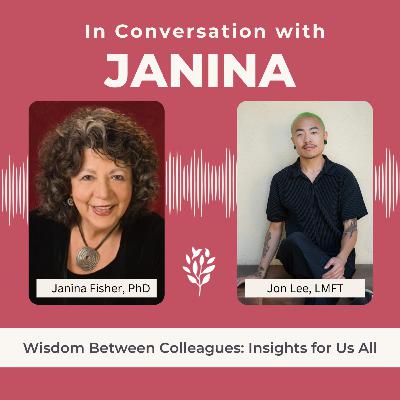
In this profoundly moving and deeply relevant episode of In Conversation with Janina Fisher: Wisdom Between Colleagues—Insights for Us All, Janina Fisher, PhD, welcomes trauma therapist, TIST facilitator, and activist Jon Lee, LMFT (they/them), for an honest and layered conversation about working with trans and autistic clients—especially in a world where the threats they face are not just historical, but ongoing.Together, Janina and Jon explore the emotional, clinical, and political weight of supporting clients whose suffering is shaped not just by past trauma, but by active, escalating systemic oppression. As anti-trans and anti-neurodivergent rhetoric and policy gain momentum, therapists face a dual responsibility: to be trauma-informed and to be anti-oppressive.Jon speaks candidly about the emotional toll of holding space for trans clients when they too are grieving and fearful. They reflect on how therapy can (and can’t) address trauma rooted in systemic harm—and why the goal isn't always “feeling better,” but rather helping clients build internal and external support so they can keep moving forward in spite of everything.This episode explores:What it means to do therapy when clients are in real-time dangerThe limitations of individual therapy in the face of systemic violenceWhy “helping parts” in therapists must learn to tolerate discomfortThe role of mutual aid, community support, and decentralizationHow TIST can support trans and autistic clients—when and how it fitsThe cost of masking and how to create space for unmasking with careCommon misconceptions and stereotypes about autism in therapyWhy nuance is essential—and how exposure builds itAccommodations that respect neurodivergent ways of processing and communicatingThe overlap between trauma and neurodivergence—especially in how emotion is expressedHow clinicians can work toward decolonization and anti-oppressive frameworks in practiceJon also shares their personal story of discovering they are autistic, and how this new understanding became a special interest that deepened their empathy and transformed their clinical lens. They challenge therapists to stop forcing neurodivergent and gender-expansive clients into neurotypical norms—and instead co-create spaces that honor difference, flexibility, and complexity.Rather than asking, “How can I get my client to be more neurotypical?” Jon encourages a different question: “How can I adjust my therapeutic stance to meet the client where they are?”Whether you’re a clinician, advocate, educator, or simply someone trying to show up better for the people around you, this episode is a compassionate call to hold nuance, embrace imperfection, and engage in collective resistance.https://www.jonleemft.com/Some resources Jon would love to to share with people:Crisis resources (including for queer, trans, gender-expansive people) that don't involve non-consensual reporting to authorities -- not for imminent life-threatening emergencieshttp://jonleemft.com/resourcesFree app including extensive mental health resources by and for trans peoplewww.voda.co"Modern Therapist's Survival Guide" Podcast episode about clinical considerations and engaging with this current political moment, for trans clients (with Artie Hartsell, MSW - director of organizing, ACLU of North Carolina)https://podcasts.apple.com/ee/podcast/what-therapists-need-to-know-to-support-the-trans/id1310770477...A place to start learning about autism and more resourceshttps://embrace-autism.com"Unmasking Autism" by Devon Price, PhD - book about un-masking autism and intersections with gender identity and trauma manifestations, written by Devon Price, PhD (psychologist of trans experience)https://www.penguinrandomhouse.com/books/688819/unmasking-autism-by-devon-price-phd/
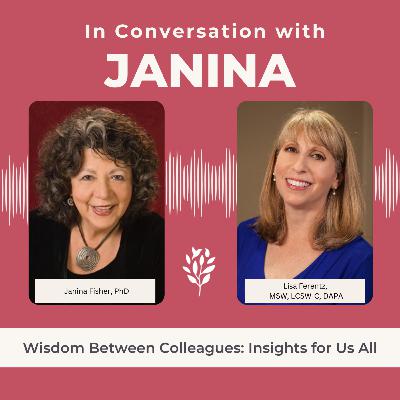
In this episode of In Conversation with Janina Fisher: Wisdom Between Colleagues—Insights for Us All, Janina Fisher, PhD, sits down with longtime friend, collaborator, and trauma therapist Lisa Ferentz, LCSW-C, DAPA, for a spirited, heartfelt, and refreshingly honest conversation on the art of psychotherapy. Together, they explore what it means to truly work in an integrative, client-centered way—where healing is not prescribed from a manual but discovered collaboratively, through relationship, creativity, and humility.Lisa reflects on her decades of experience as a therapist, educator, and founder of the Ferentz Institute, where she trains clinicians across modalities. She shares the philosophy behind her best-selling book Letting Go of Self-Destructive Behaviors and its accompanying workbook, as well as her more recent publication Finding Your Ruby Slippers, a guided journey in accessing one’s inner wisdom. Drawing inspiration from The Wizard of Oz, Lisa offers a deeply compassionate, empowering lens for understanding trauma survivors—not as broken or resistant, but as protectively adaptive.This episode touches on:Why integration beats allegiance to any single modelThe difference between being a “baker” vs. a “cook” in therapyHow parts work, somatics, and expressive modalities intersect organicallyWhy terms like “resistant” and “avoidant” do more harm than goodThe “phobia of vulnerability” and what it really signalsHow clinicians can be creative, sneaky, and humble in equal measureWhy modeling self-compassion matters more than teaching itJanina and Lisa’s shared belief: the client is always the expert on the clientWith warmth, laughter, and remarkable alignment, Janina and Lisa discuss how they’ve both spent decades advocating for a strengths-based, non-pathologizing, and emotionally nuanced approach to trauma treatment. They reflect on the early days of their friendship (which began at an empty book signing table!), and why both believe in weaving rather than worshipping therapeutic modalities.Whether you’re a seasoned clinician, a student just beginning the journey, or a survivor in search of hope, this conversation is filled with insight, validation, and encouragement. As Lisa puts it, “Be a cook, not a baker”—therapy isn’t about perfect recipes. It’s about presence, attunement, and the courage to trust both your client and yourself.Lisa is a recognized expert in the strengths-based, de-pathologized treatment of trauma and has been in private practice for over 40 years. She presents workshops and keynote addresses nationally and internationally, and is a clinical consultant to practitioners and mental health agencies in the United States, Canada, the UK, Italy, Ireland, Spain, and Israel. She has been an Adjunct Faculty member at several Universities, and is the Founder of “The Ferentz Institute,” now in its eighteenth year of providing continuing education to mental health professionals and graduating thousands of clinicians from her two Certificate Programs in Advanced Trauma Treatment. In 2009 she was voted the “Social Worker of Year” by the Maryland Society for Clinical Social Work. Lisa is the author of “Treating Self-Destructive Behaviors in Traumatized Clients: A Clinician’s Guide,” now in its second edition, “Letting Go of Self-Destructive Behaviors: A Workbook of Hope and Healing,” and “Finding Your Ruby Slippers: Transformative Life Lessons From the Therapist’s Couch.” Lisa also hosted a weekly radio talk show, writes blogs and articles for websites on trauma, attachment, self-destructive behaviors, and self-care, teaches on many webinars, and is a contributor to Psychologytoday.com. You can follow Lisa’s work on her website, theferentzinstitute.com, YouTube, LinkedIn and Twitter.
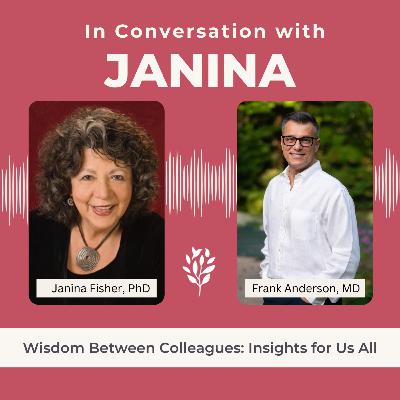
In this engaging and heartfelt episode of In Conversation with Janina Fisher: Wisdom Between Colleagues—Insights for Us All, Janina Fisher, PhD, is joined by psychiatrist, author, and trauma specialist Frank Anderson, MD for a wide-ranging conversation that is both clinically insightful and deeply personal.With over three decades in the field of trauma and dissociation, Frank reflects on his evolution from a young Harvard-trained psychiatrist to a pioneering voice in Integrating Internal Family Systems (IFS), neuroscience, and psychopharmacology. Now, with multiple bestselling books, a production company, and a growing public platform, Frank is on a mission to bring trauma healing beyond the therapy office—to the wider world.Together, Janina and Frank explore:How to prescribe medication with respect for parts and without re-enacting power dynamicsWhy trauma-informed psychopharmacology must be collaborative, consensual, and education-focusedThe healing power of internal consensus—“all parts must agree” before a script is writtenThe myth that antidepressants “fix” depression—and how they actually work to widen the window of toleranceWhy therapy that only targets memory, but not blended parts, misses the heart of complex traumaFrank’s concept of medications as unblending agents, helping clients step out of reliving and into relationship with their experienceStories of early trauma treatment missteps—and the lessons we’ve learned from themThe shift from regressive parts mapping to strategic, systems-informed integrationFrank also shares highlights from his books:To Be Loved — a memoir and upcoming feature film exploring truth, trauma, and transformationTranscending Trauma — a guide to treating complex PTSD with IFS and neuroscienceIFS Skills Training Manual — a practical workbook that became a foundational tool for cliniciansThe episode also includes a moving discussion about Frank’s production company, Trauma-Informed Media, and their work developing a docuseries adaptation of The Body Keeps the Score in collaboration with Bessel van der Kolk. Frank speaks passionately about reaching trauma survivors around the globe who may never access therapy—and about the urgent need for accessible, accurate information at scale.Throughout, Janina and Frank reflect on their 30-year friendship, their complementary clinical philosophies, and their shared reputation for helping the clients others fear to touch. Their chemistry is warm, funny, and real—and their insights speak directly to clinicians navigating the complex intersections of parts, trauma, and pharmacology.This episode is for:Therapists curious about how medication fits in trauma treatmentClinicians working with blended, suicidal, or highly dysregulated clientsSurvivors looking to understand the why behind their healing journeyAnyone seeking hope, humility, and clarity in the chaos of complex traumaAs Frank says:“I educate. You decide. And no medication happens until all parts are on board.”Whether you’re a therapist, survivor, educator, or just trauma-curious, this conversation offers validation, vision, and a gentle challenge: How can we take what we know—and share it with the world?Frank Anderson, MD, is a Harvard-trained psychiatrist and psychotherapist, specializing in trauma and dissociation. He is a lead trainer for the IFS Institute and has a long-standing affiliation with Bessel van der Kolk’s Trauma Center. He also serves as an advisor to the International Association of Trauma Professionals. His most recent books include To Be Loved: A Story of Truth, Trauma, and Transformation, a memoir about his personal journey, and Transcending Trauma: Healing Complex PTSD with Internal Family Systems. https://www.frankandersonmd.com/Program with Janina: https://www.frankandersonmd.com/trauma-beyond-the-story
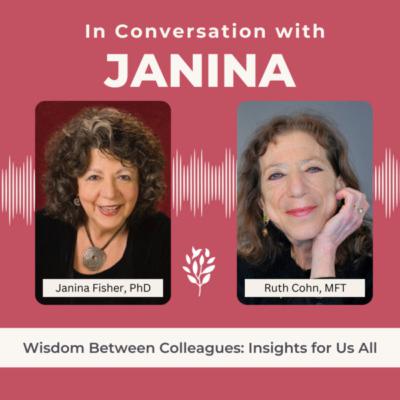
In this powerful first episode of In Conversation with Janina Fisher: Wisdom Between Colleagues—Insights for Us All, Janina Fisher, PhD, is joined by longtime friend and colleague Ruth Cohn, MFT, for a deeply moving exploration of one of the most overlooked forms of trauma: neglect.Ruth shares the origins of her groundbreaking work on neglect—what she calls “the trauma of nothing”—and invites listeners to rethink the invisible wounds carried by those who, on the surface, report no abuse or violence. Together, Janina and Ruth illuminate how missing experiences, in addition to overt events, shape our relationship templates, emotional regulation, and sense of self.This episode touches on:The origins of Ruth’s clinical curiosity about neglectWhy “nothing happened to me” can signal a profound traumaIntergenerational transmission of disconnection and diffuse attentionGendered vulnerability in attachment and emotional developmentThe survival strategy of caregiving in children with unmet needsThe importance of attuning to implicit memory and early relational absenceA compassionate reframing of “avoidant” clients and men in therapyWith warmth, clinical insight, and decades of experience between them, Ruth and Janina challenge the field to hold space for what has too often been dismissed: nothingness that shaped everything.
In Conversation with Janina Fisher features intimate, unscripted dialogues between Dr. Janina Fisher and leading voices in trauma therapy. Each episode explores the nuances of healing—from attachment wounds and somatics to IFS, memory reconsolidation, and anti-oppressive care. Thoughtful, relational, and deeply human, these conversations offer insight and inspiration for clinicians and curious minds alike.
Comments


Download from Google Play

Download from App Store
 United States