


 Claim Ownership
Silk and Sentences (Previously Between the Covers with Danielle)
Subscribed: 0Played: 0
Subscribe

© Danielle Robinson
Description
Danielle Robinson hosts Silk & Sentences, a literature podcast where book reviews sit alongside deeper explorations of theme, craft, and cultural context. Each episode moves beyond summary into thoughtful, conversational analysis—considering not only what a story is about, but what it reveals, how it’s written, and why it lingers. With a focus on atmosphere, memory, and emotional undercurrent, this is a space for readers who want more from the books they love. New episodes released every Tuesday.
30 Episodes
Reverse
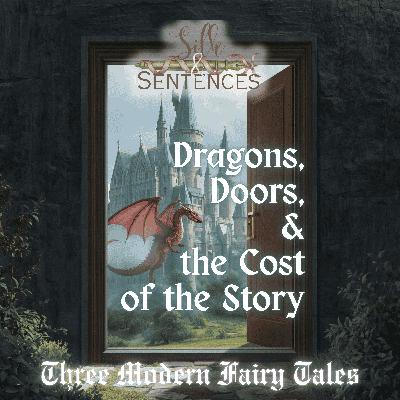
What do dragons, hidden worlds, and crumbling kingdoms really ask of the people who enter them?In this episode of Silk & Sentences, Danielle Robinson moves through three modern fantasy novels—Fairy Tale by Stephen King, The Eyes of the Dragon by Stephen King, and King Sorrow by Joe Hill—to explore how traditional fairy-tale structures have shifted in contemporary fiction.From portal fantasy and dark academia to classic high fantasy and Arthurian influence, these novels revisit familiar motifs—chosen heroes, cursed realms, and monstrous adversaries—but strip away their simplicity. What emerges instead is a deeper interrogation of moral responsibility, consequence, and the cost of stepping into a story that no longer promises escape.This is not a conventional book review. It’s a literary deep dive into how modern fantasy reworks the language of fairy tales, examining themes of guilt, power, corruption, heroism, and the enduring figure of the dragon—not as a symbol of evil alone, but as something far more intimate.If you’re interested in Stephen King fantasy, Joe Hill novels, dark fantasy analysis, or the evolution of fairy tales in literature, this episode offers a thoughtful, atmospheric exploration of stories that refuse to leave their characters unchanged.
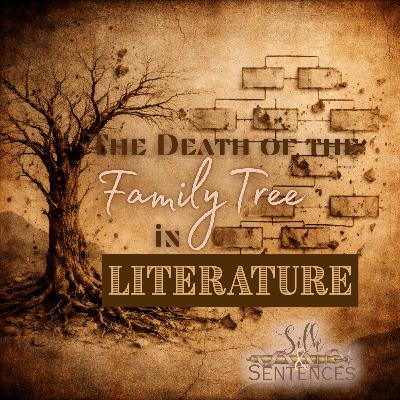
What if the way we’ve been telling family stories… is wrong?In this episode of Silk & Sentences, we explore the quiet disappearance of the traditional family epic—and what’s replacing it.For decades, literature has relied on the idea of the family tree: a clear, linear structure where stories move from one generation to the next. But contemporary fiction—especially from debut novelists—is beginning to dismantle that model entirely.Instead of neat timelines and inherited legacies, modern novels are embracing fragmentation, non-linear storytelling, and layered memory. These stories don’t move forward—they loop, echo, and return.So what changed?This episode is a deep dive into:the hidden structure behind classic family sagashow storytelling has been shaped by history and powerwhy modern literature is moving away from linear narrativesand how generational trauma and memory reshape the stories we tellAlong the way, we’ll look at how contemporary fiction is redefining narrative structure—and what that means not just for how we read, but how we understand our own histories.Because the family tree may feel familiar.But it might not be telling the truth.
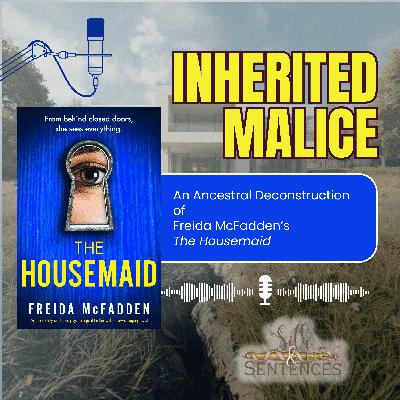
In this episode of Silk & Sentences, we peel back the polished veneer of the Winchester estate to examine the "sentences" passed down through bloodlines. Moving beyond the typical tropes of the domestic thriller, we conduct a clinical deconstruction of Freida McFadden’s 2022 juggernaut, The Housemaid.We move past the "seen" surface of the murder in the attic to explore the "unseen" architecture of generational trauma. This is an autopsy of the Ancestral Path, where we interrogate the conflicting performances of motherhood—contrasting Nina Winchester’s tactical "madness" with the chilling, disciplinary legacy of the matriarch, Evelyn Winchester.In this deep-dive analysis, we explore:The Performance of Motherhood: How Nina Winchester weaponises her reputation to shield her daughter, Cecelia, from a cycle of perfection.The Making of a Monster: Tracing the origins of Andrew Winchester’s sadistic rituals back to the white baby clothes and the pliers of his own upbringing.The Socio-Legal Sentence: Why the "invisible" class—represented by Millie and Enzo—are the only forces capable of subverting a corrupt social hierarchy.Reactive vs. Proactive Violence: A philosophical debate on Millie Calloway’s history of retaliation and her evolution into a professionalised deterrent for the domestic sphere.Join us as we examine what happens when the "silk" of a perfect life is shredded, leaving only the cold reality of the attic behind.
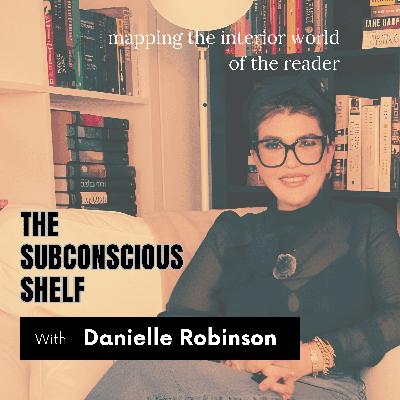
Ever wonder why you reach for a "comfort read" fantasy novel after a stressful day, while that "challenging" non-fiction book gathers dust on your nightstand? It isn’t just a "vibe"—it’s a psychological mechanism.In this deep-dive episode, we go beyond the BookTok aesthetics to uncover the hidden psychological engine driving your literary choices. We explore the surprising psychology of reading habits, revealing how your TBR pile acts as a secret map to your subconscious needs, emotional regulation, and intellectual pursuits.In this episode, we discuss:The Literary Algorithm: Why your brain picks your next read before you do.Comfort vs. Challenge: The neurochemistry of tropes and why we use certain genres to regulate stress.The Mirror Effect: How to use your reading list for radical self-awareness and personal growth.Format Psychology: The hidden difference between physical books, E-readers, and audiobooks.Whether you’re a hardcore bibliophile, a mood reader, or just curious about behavioral psychology, this episode will help you understand your brain's literary cravings in a whole new light. Stop wondering why you read what you read and start grasping the "why" today.Subscribe/Follow for new episodes every week!📚 Mondays: In-depth Book Reviews & Recommendations🧠 Thursdays: Deep dives into the psychology of literature and reading culture.
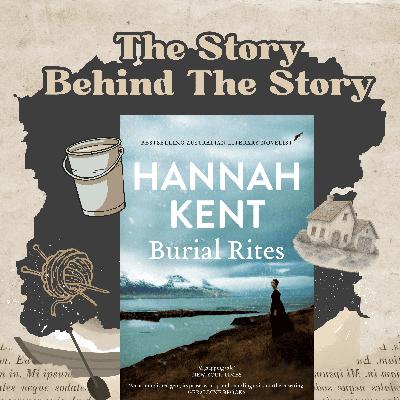
In this episode of Between the Covers with Danielle, we explore Burial Rites by Australian author Hannah Kent — the internationally acclaimed historical fiction novel inspired by the real-life case of Agnes Magnúsdóttir.Set in northern Iceland in 1829, the novel reconstructs the final months of Agnes’s life after she is convicted of participating in the murder of two men and sentenced to execution. With no prisons available in the region, Agnes is sent to live on a remote farm while awaiting her fate, where a reluctant household and a young assistant reverend attempt to understand the woman history has already condemned. But Burial Rites is far more than a historical crime story.In this conversation, we examine the novel as a work of literary historical fiction, exploring how Kent reconstructs the emotional and psychological life behind a historical record that once reduced Agnes to a single act. We discuss themes of crime and punishment, power and powerlessness, storytelling, faith, and the fragile line between justice and judgement — all set against the stark Icelandic landscape that shapes the lives of everyone within the novel. This episode looks closely at:• the real historical case behind the Illugastaðir murders• the literary craft that makes Burial Rites such a powerful debut novel• the question at the heart of the book: who controls the stories history remembers?If you enjoy thoughtful literary discussions, historical fiction analysis, and deep dives into the books that stay with us long after the final page, you’re in the right place.
We rarely question our shelves.Books feel virtuous. They feel like self-improvement, intellectual curiosity, and cultural refinement. In a world increasingly concerned with minimalism, sustainability, and intentional living, books seem to occupy a morally protected category.But should they?In this episode of Between the Covers with Danielle, I explore the ethics of book ownership — the psychological, cultural, and philosophical questions that sit quietly behind our personal libraries.Why does buying books feel inherently good?When does collecting become accumulation?And what is the difference between owning books and truly living with them?Drawing on ideas from literary culture, psychology, and the history of libraries, we examine:• the halo effect that makes book buying feel virtuous• aspirational identity and the “future reader” we purchase books for• the difference between a living library and an aesthetic one• how relationship, curation, and stewardship shape meaningful book ownershipThis is not an argument against loving books.It is an invitation to think more carefully about the relationship between reading, identity, and intellectual life.If you love literature, personal libraries, and deeper conversations about the culture of reading, this episode is for you.Follow the podcast to join future conversations about literature, attention, and the interior life — and share the episode with someone whose shelves are as full as their curiosity.
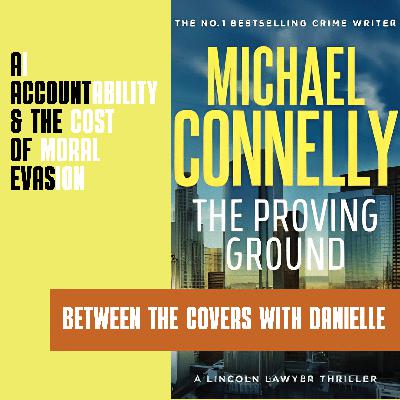
In this episode of Between the Covers with Danielle, I explore The Proving Ground by Michael Connelly — the eighth novel in the Lincoln Lawyer series — and examine how this legal thriller confronts one of the most urgent questions of our time: who is responsible when artificial intelligence causes harm?Mickey Haller steps into civil litigation, representing a grieving mother in a lawsuit against a technology company whose AI companion app allegedly failed to implement adequate safeguards. What unfolds is not a sensational “AI gone rogue” story, but a sharp and timely courtroom drama about corporate accountability, technological ethics, and the manipulation of truth within the justice system.I discuss the novel’s recurring motif of “Garbage In, Garbage Out,” the symbolism of the AI companion Clair (Wren), and how the settlement resolution ultimately validates Haller’s combative “Octagon” philosophy of legal strategy.This is a thoughtful deep dive into contemporary legal fiction, crime fiction, and the ethical implications of AI development — perfect for readers interested in courtroom drama, tech ethics, and intelligent thriller analysis.New book review episodes release weekly, with longer-form literary and cultural commentary regularly on the podcast.

Are bestseller lists measuring literary excellence — or simply sales velocity?In this long-form literary essay, Danielle explores the difference between visibility and value in contemporary publishing culture. Bestseller lists measure units sold within specific time frames, shaped by marketing budgets, distribution power, and discoverability pipelines. But they do not measure depth, endurance, or interior transformation.Through close analysis of Outline by Rachel Cusk, Dept. of Speculation by Jenny Offill, and Gilead by Marilynne Robinson, this episode examines how fragmentation, ambiguity, moral slowness, and psychological interiority resist the attention economy — and why those very qualities often define the most enduring literary fiction.This is a conversation about slow reading, serious literary analysis, backlist endurance, cultural visibility, and the ethics of attention. It asks what happens when we equate popularity with significance — and what we might rediscover when we read beyond the loudest shelf.For readers interested in literary criticism, contemporary fiction, intellectual book discussions, and thoughtful cultural commentary, this episode offers a measured alternative to hype-driven book culture.Next episode: The Ethics of Owning Books.Read slowly. Choose well.
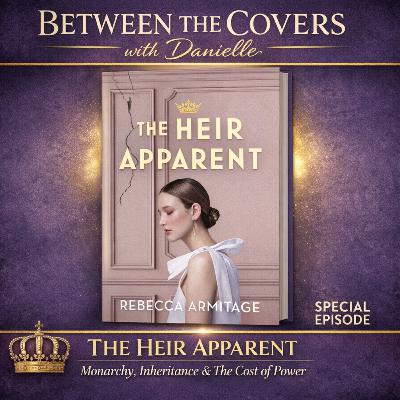
In this in-depth literary analysis, I explore The Heir Apparent — a contemporary royal novel that examines succession, institutional power, gender, media control, and the moral cost of inherited authority.When Princess Alexandrina “Lexi” Villiers is summoned back to England after the sudden death of her father and the incapacitation of her twin brother, she finds herself unexpectedly positioned as heir to the British throne. What unfolds is not simply a royal drama, but a layered examination of monarchy as structure: secrecy, image management, generational inheritance, and the pressure placed on women inside legacy institutions.In this episode, I walk chronologically through the novel’s full arc (spoilers included), offering both synopsis and critical commentary. We examine the symbolism of the crown and jewellery, the politics of succession and gendered inheritance, media manipulation within modern monarchy, and the philosophical question at the heart of the story: what does it mean to refuse power?This is a reflective, ideas-first book review podcast for readers interested in literary fiction, political fiction, royal narratives, and contemporary novels about identity, legacy, and institutional control.New book review episodes release every Monday, with deeper cultural and literary analysis episodes available each Thursday.
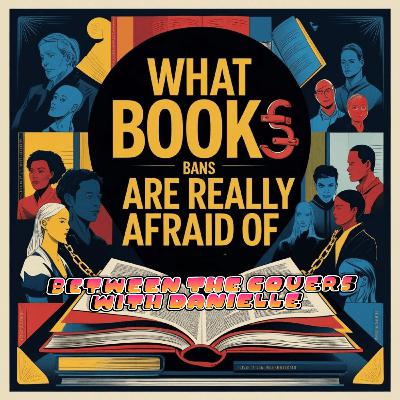
What are book bans really afraid of?In this episode of Between the Covers with Danielle, we move beyond headlines and controversy to examine the deeper structure of modern censorship. Through To Kill a Mockingbird, The Catcher in the Rye, The Hate U Give, The Great Gatsby, and The Handmaid’s Tale, this conversation traces how literature forms readers — and why that formation provokes institutional anxiety.This is not a list of banned books.It is an exploration of reader formation:• How novels teach us to recognise injustice• What happens when recognition produces alienation• Why voice carries social and political consequence• How narrative control shapes powerFrom classic literature to contemporary fiction, we examine freedom to read, intellectual independence, cultural commentary, and the subtle mechanics of censorship in the United States and globally.Because book bans are rarely about isolated passages.They are about trajectory — and the kind of reader that emerges when interpretation is left unsupervised.If you care about literature, critical thinking, banned books, and the cultural power of reading, this episode is for you.
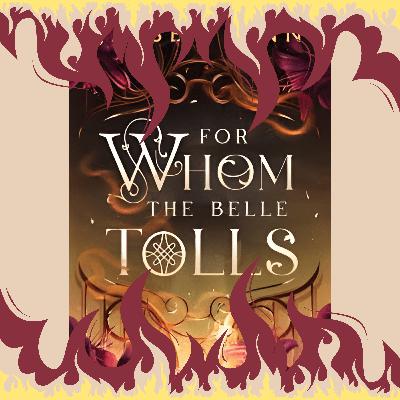
In this deep-dive episode of Between the Covers with Danielle, I explore Jaysea Lynn’s For Whom the Belle Tolls — a romantasy set in an Afterlife structured around choice, hierarchy, and moral consequence.Beginning with Lily’s death at thirty-four and her arrival in the Celestial Lobby, this novel reimagines Heaven and Hell not as opposites, but as administrative systems. Hell is governed. Judgment is procedural. And belonging is not assigned — it is chosen.In this full spoiler discussion, I walk through the novel’s complete arc: the creation of the Hellp Desk, Lily’s relationship with Bel, the introduction of Sharkie, the soul file revelation, the inter-universal war, Lily’s confrontation in Heaven, and the final choice that reshapes her eternity.This is a levelled, objective critique of a book with strong conceptual ambition — examining its worldbuilding, tonal shifts, romance, found family, and thematic execution.For listeners who value thoughtful, ideas-first literary conversations rather than reaction-driven reviews, this episode offers a measured reading of a novel that blends satire, explicit romance, trauma, and metaphysical conflict.You can also find extended written reviews on my website, video versions on YouTube, and reading updates on Goodreads and social media.
In this episode of Between the Covers with Danielle, I explore the lost art of marginalia — the underlines, annotations, dog-eared pages, and handwritten notes readers leave in their books — and what they reveal about intellectual development, belief formation, memory, and the interior life.Far from nostalgia, marginalia has historically functioned as a serious intellectual practice. It is where readers interrupt authority, wrestle with ideas, test convictions, and record the evolution of their thinking over time. From medieval glosses to modern annotation, the margin has long served as a site of dialogue between reader and text.This episode examines marginalia as:A cognitive and psychological recordA space for unfinished thoughtA form of intellectual resistanceA cultural practice at risk in the age of digital reading and algorithmic memoryWhat happens when readers stop leaving visible traces of response?What is lost when reading becomes consumption rather than conversation?If you value deep reading, critical thinking, and long-form literary essays, this episode is for you.You can watch the full visual essay on YouTube and read extended reflections on my website. New episodes weekly.https://www.betweenthecoverswithdanielle.com/www.youtube.com/@BetweenTheCoversWithDanielle

In this episode of Between the Covers with Danielle, I take a long, reflective look at A Tale of Cursed Tides by T.R. Sherring — a slow-burn romantasy that uses love, bargaining, and belonging as a lens for much larger questions about survival, coercion, and choice.Rather than approaching the book as a plot-driven fantasy romance, this episode explores what happens when love is no longer freely chosen, but required — when intimacy becomes labour, and affection carries a deadline. We talk about witch bargains, court power, and the moral cost of assimilation, as well as the novel’s disciplined magic system and its treatment of the ocean not as metaphor, but as biological and spiritual necessity.This is a spoiler-aware, ideas-first conversation for readers who enjoy thoughtful fantasy, emotionally intelligent romance, and slow, intentional reading. I also reflect on the chapter where the novel’s prose most clearly reveals its purpose, and why restraint — rather than spectacle — is what gives this story its lasting weight.I received an ARC of this book ahead of release in exchange for an honest review, and I rated it a rare five stars — a response grounded in coherence, emotional discipline, and thematic depth.You’ll find the full written review on my website.https://www.betweenthecoverswithdanielle.comSocials: @betweenthecovers.withdanielle - Instagram. @betweenthecoverswithdanielle - Facebook @bookishdr - TikTok @betweenthecoverswithdanielle - Linkedin
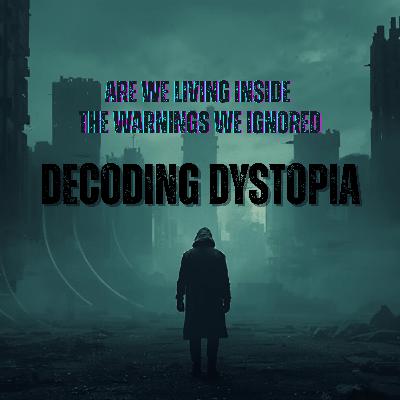
In this episode of Between the Covers with Danielle, I explore dystopian fiction written as futures — novels that deliberately project forward from their author’s present to examine where power, technology, scarcity, and control might lead if left unchecked.Drawing on works such as 1984, Brave New World, The Children of Men, Neuromancer, and Dune, this episode looks at how dystopian literature functions not as fantasy, but as cultural warning.Rather than treating these novels as predictions, the conversation examines how dystopia emerges through gradual adaptation — surveillance normalised, comfort prioritised, resources controlled, and authority embedded quietly into everyday life. These imagined futures reveal patterns of compliance, dependency, and power that feel increasingly familiar in the present.This is a reflective, literature-led discussion about attention, agency, and what dystopian fiction has been trying to tell us for decades — if we’re willing to read closely.
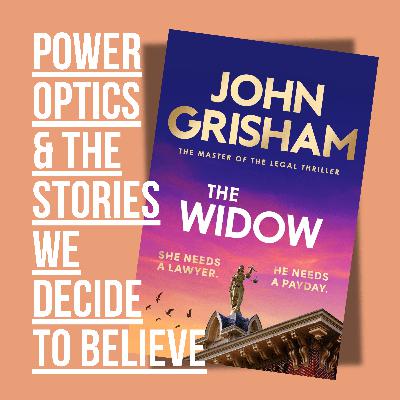
In this episode of Between the Covers with Danielle, I take a deep, considered look at The Widow — a legal thriller less interested in plot twists than in power, optics, and the stories we decide to believe.Rather than asking whodunnit, this conversation explores how suspicion forms, how reputations collapse, and how quickly proximity can be mistaken for guilt. We move scene by scene through the novel, examining what works, what doesn’t, and where the book’s ideas about justice, narrative control, and institutional pressure are at their strongest — and where they strain under momentum.This is not a surface-level review or a rushed summary. It’s a slow, spoken-first analysis of a novel that sits in the grey space between legality and innocence, perception and proof. Along the way, we look at moral passivity, media framing, courtroom logic, and the uncomfortable reality that truth often struggles to survive once a story takes hold.If you enjoy thoughtful book discussions, legal thrillers with psychological depth, and literary criticism that assumes an intelligent reader, this episode is for you.New episodes of Between the Covers with Danielle explore books, power, identity, and the interior lives shaped by the stories we consume.

Reading has never been easier—but ease has consequences.In this episode, I explore how reading is changing in 2026, not just in format, but in attention, embodiment, and depth. As digital reading becomes more seamless, adaptive, and optimised, many readers are left wondering why they feel more distracted, less absorbed, or less changed by the stories they consume.This is not a debate about physical books versus digital reading, and it’s not a nostalgic defence of paper. Instead, it’s a thoughtful cultural essay on what reading once required of us—and what may be quietly lost as friction disappears.The episode examines slow reading, the attention economy, embodied cognition, and the subtle psychological shifts that occur when stories adapt to us instead of asking us to adapt to them.For readers, thinkers, and anyone interested in literature, media, and the future of attention.See the visual version on Youtube: https://youtu.be/QGcRND8Z5e8?si=Eh-v7orjLS4wJgCcRead the article online:https://www.betweenthecoverswithdanielle.comFollow on socials:@betweenthecovers.withdanielle on Instagram: @bookishdr on Tiktok: @betweenthecoverswithdanielle on Facebook
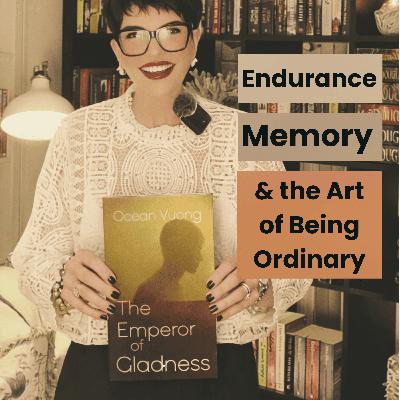
In this episode of Between the Covers with Danielle, I’m spending time with The Emperor of Gladness — a quiet, demanding, deeply human novel that resists drama, spectacle, and easy resolution.This is a first-person, long-form book review and discussion that walks through the story as it unfolds, alongside what worked, what asked for patience, and why the novel ultimately stayed with me. Rather than racing through plot points, this episode sits with the book’s world: work and labour, memory and forgetting, friendship, grief, and the quiet endurance of ordinary lives.We talk about Hai, a restrained and observant central character shaped by early loss; Sony, whose relationship to memory reframes much of the novel’s emotional core; and Grazina, whose grounded presence offers one of the book’s most compelling forms of wisdom. We also look closely at the novel’s depiction of physical labour, fatigue, and the emotional cost of survival — without romanticising it or turning it into metaphor.This episode includes both synopsis and critique, woven together in a conversational way: where the writing is at its strongest, where the pacing may challenge some readers, and who this book will resonate with most. If you’re drawn to contemporary literary fiction that values restraint, character, and emotional honesty over plot-driven momentum, this conversation is for you.🎧 Topics include:contemporary literary fiction, character-driven novels, quiet books, modern literary realism, book reviews, Ocean Vuong, long-form reading, endurance, memory, and friendship.You can also find the full written review on my website and extended video content on YouTube — links are in the show notes.
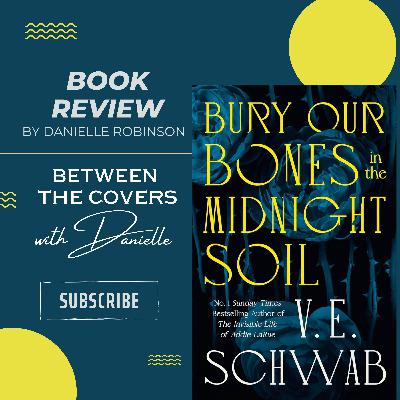
In this episode of Between the Covers with Danielle, I slip between the pages of Bury Our Bones in the Midnight Soil, a gothic, centuries-spanning novel that uses vampire mythology to explore hunger, power, desire, and survival.This is not a romanticised take on immortality. Living forever doesn’t liberate anyone here — it erodes them. Power becomes seductive. Love turns dangerous when it’s uneven. And hunger, when denied long enough, mutates into something feral.Rather than offering a plot summary, this episode is a thoughtful, first-person literary analysis of what the novel is really doing beneath the surface. We explore female hunger, autonomy, rage, consent, power dynamics, and the quiet systems that repeat themselves across time.If you’re drawn to dark, intelligent fiction, feminist gothic themes, and book conversations that go deeper than the blurb, this episode is for you.Pour something beautiful, settle in, and let’s slip between the covers.

In this episode of Between the Covers with Danielle, I dive into Post Office — one of the most controversial and polarising novels in modern American literature.This is not a comfortable book, and it isn’t meant to be. As a woman reading it, I found it confronting, abrasive, and often difficult. But when analysed through a literary and artistic lens, Post Office reveals itself as a sharp, unflinching critique of institutional labour, bureaucracy, burnout, and the quiet erosion of the human spirit under systems built on compliance.In this episode, we unpack why Post Office continues to divide readers decades after its publication, how Bukowski uses repetition and discomfort as deliberate literary tools, and what the novel gets right — and wrong — about masculinity, work, survival, and resistance. We also explore why books that make us uneasy often have the most to say about the world we’re living in now.This is a thoughtful, critical conversation about discomfort in literature, the difference between likability and brilliance, and why honesty — even when it’s ugly — still matters.🎧 Listen now for a deep-dive literary analysis.
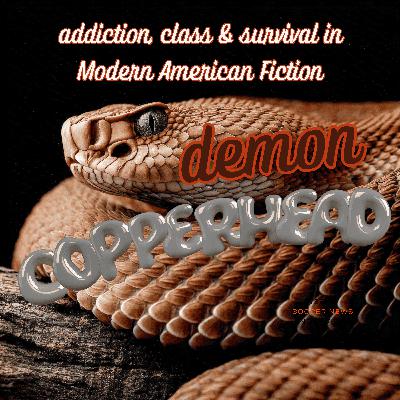
n this episode of Between the Covers with Danielle, I take a deep, first-person look at Demon Copperhead—a powerful contemporary novel that examines poverty, foster care, addiction, and resilience in rural America.This is a long-form literary review and cultural analysis, exploring how Kingsolver reimagines the coming-of-age narrative to confront the realities of the opioid crisis, systemic failure, and the cost of survival. Through close attention to voice, character, and structure, this episode unpacks why Demon Copperhead is not just a story about individual struggle, but a broader indictment of the social and economic systems that shape lives long before choice enters the picture.We discuss themes of class, childhood trauma, addiction, recovery, and creative autonomy, alongside the novel’s place within modern American literary fiction. This episode is designed for readers who value thoughtful criticism, context-rich discussion, and books that engage directly with the world we live in.If you’re interested in serious fiction, literary analysis, contemporary novels, or books that tackle social justice and inequality with compassion and precision, this episode is for you.

Comments

Download from Google Play

Download from App Store
 United States