


 Claim Ownership
At the Water's Edge
Subscribed: 11Played: 40
Subscribe

© All rights reserved by WRKdefined
Description
The At the Water’s Edge Podcast explores national security and geopolitics from an insider’s perspective, looking at how national power, industrial policy, diplomacy, and military might shape our world and America’s place in it.
45 Episodes
Reverse
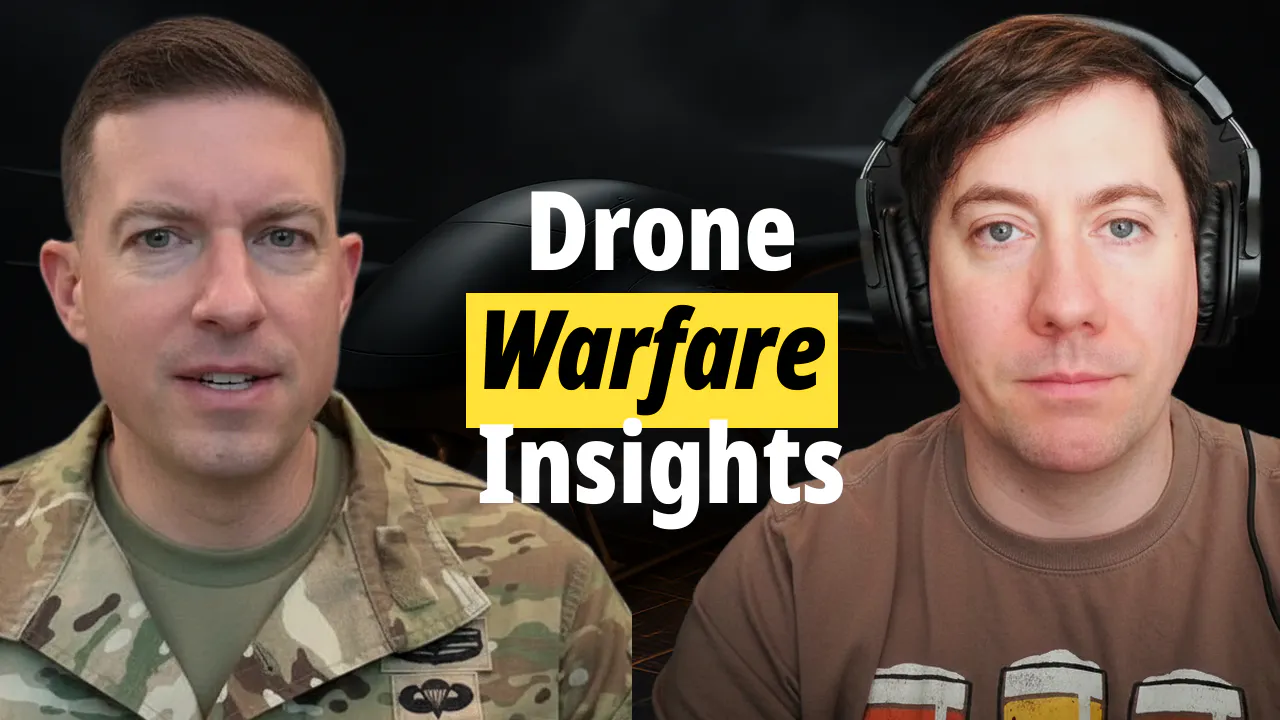
Episode Title:The Drone Threat Is Already Here
Episode Description:
Drones are no longer just a battlefield problem.
From Ukraine to the Middle East, unmanned systems are reshaping how wars are fought—cheap, scalable, and increasingly accessible to both states and non-state actors.
But the most important shift may not be happening overseas.
It’s happening at home.
In this episode, Scott sits down with Paul Lushenko, Chief Strategist at Joint Interagency Task Force 401, the U.S. military’s newest effort to coordinate a whole-of-government approach to countering drones.
Drawing on both operational experience and research, Lushenko breaks down how drone warfare is evolving, what we’re learning from Ukraine and the current conflict with Iran, and why defending the U.S. homeland against drones is far more complex than most people realize.
Are drones a revolution in warfare—or just the next evolution?
What the war in Ukraine is actually teaching us (and what we’re getting wrong)
How drones are being used in high-end state conflict with Iran
The growing threat of drones to U.S. bases, infrastructure, and public spaces
Why the biggest challenge isn’t technology—it’s coordination
The cost problem: $1M missiles vs. $10K drones
How tactics spread globally through a “contagion effect”
The role of Joint Interagency Task Force 401 in countering drone threats
Why mindset, training, and policy matter as much as hardware
“This isn’t just a capability reserved for distant battlefields. It’s on our shores. It’s on the southern border. It’s at stadiums.”
Paul Lushenko is the Chief Strategist for Joint Interagency Task Force 401, where he helps synchronize U.S. military and interagency efforts to counter drone threats at home and abroad.
He is a career Army officer with nearly two decades of experience supporting special operations and has conducted extensive research on drone warfare, military innovation, and the integration of AI into modern conflict.
Drone warfare is no longer confined to distant battlefields.
As the technology spreads and becomes more accessible, the United States faces a new kind of challenge—one that requires not just better technology, but better integration across the military, government, and society.
This conversation explores what that future looks like—and how prepared we really are.
Follow At the Water’s Edge for conversations on national security, geopolitics, and the future of warfare from a practitioner’s perspective.
🔑 Key Topics Covered🎯 Key Insight🎙️ About the Guest📌 Why This Episode Matters🔗 Listen / Follow
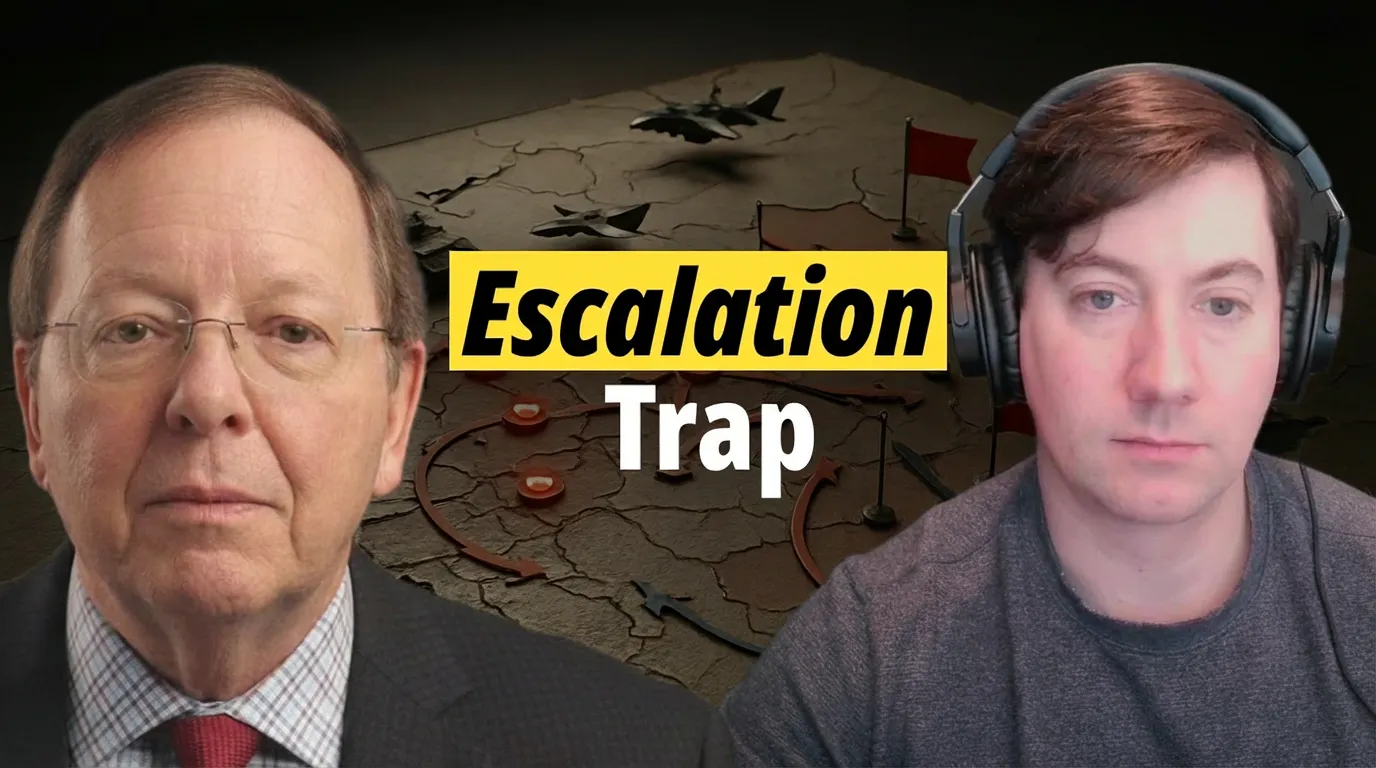
The Escalation Trap: Robert Pape on Iran, Airpower, and Strategic Failure
Robert Pape will be giving a live briefing the status of the conflict and what stage 3 escalation looks like at 5pm EST 22 March 26 on his substack, Escalation Trap.
Robert Pape Robert Pape's Substack HERE (https://escalationtrap.substack.com/)
Description:
What if the biggest risk in war isn’t failure—but success?
In this episode, I’m joined by Robert Pape, Professor at the University of Chicago and one of the leading scholars on coercion, airpower, and political violence.
As the conflict with Iran escalates, Professor Pape explains why what we’re seeing isn’t just a series of military exchanges—but a predictable pattern he calls the “escalation trap.”
A dynamic where each step forward reduces control, increases pressure to escalate, and makes it harder to achieve political objectives.
We break down:
Why airpower alone has never achieved regime change
How escalation actually progresses in stages
Where the real center of gravity lies in the current conflict
Why Iran may have more leverage than it appears
What policymakers and the media are getting wrong
What a realistic endgame could look like
This is a practitioner-focused conversation on how wars actually work—and where this one may be headed.
Note:
This conversation was recorded in real time as events were unfolding.
Timestamps:
00:00 Introduction
02:00 The Escalation Trap explained
08:30 Why airpower fails strategically
17:30 Escalation stages and shifting advantage
26:30 Economic warfare and oil leverage
35:00 Who has the advantage right now
39:00 What policymakers are getting wrong
42:00 What happens next
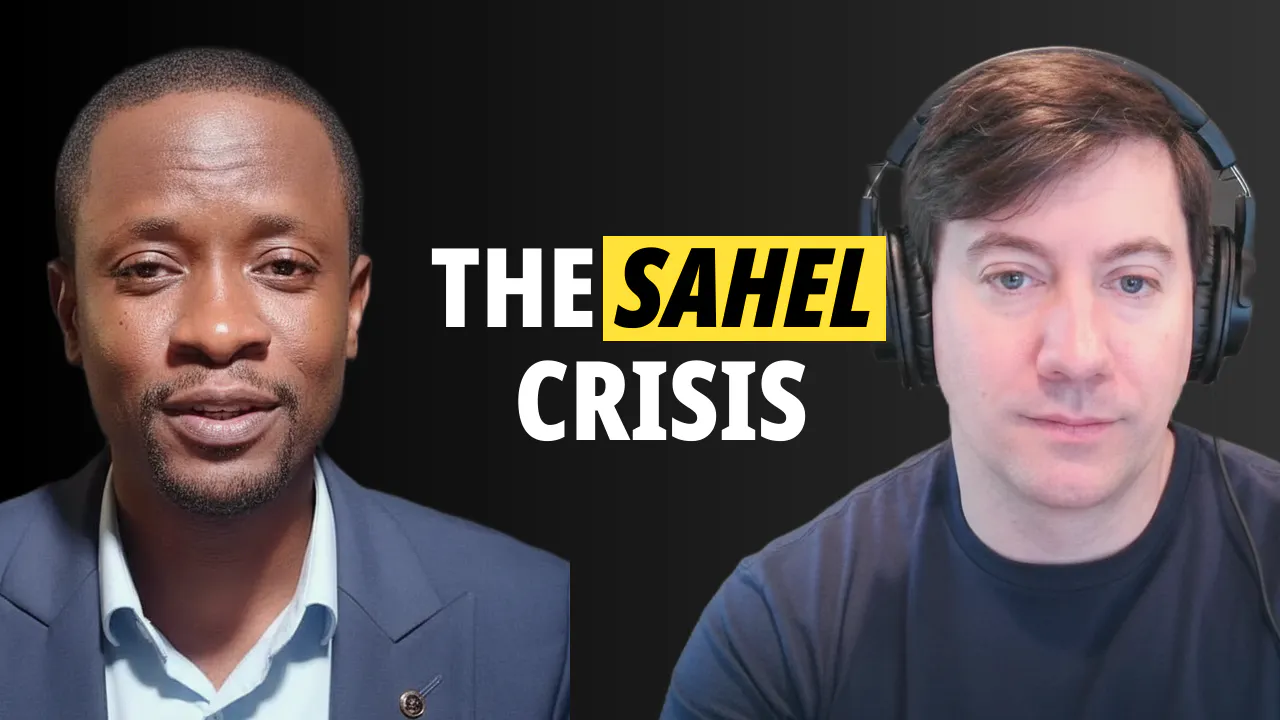
The Sahel region of West Africa has become one of the most unstable security environments in the world. A wave of military coups, expanding jihadist insurgencies, and the growing influence of Russia and the Wagner Group are reshaping the geopolitical landscape across Mali, Burkina Faso, Niger, and the surrounding region.
But what is actually driving the crisis?
In this episode of At the Water’s Edge, Scott Kelly sits down with Fidel Amakye Owusu, a security analyst specializing in West African and Sahelian security dynamics, to unpack the forces behind the region’s instability.
They discuss the origins of jihadist movements in the Sahel, the collapse of state authority across parts of Mali, Burkina Faso, and Niger, and how insurgent groups are increasingly performing functions traditionally associated with governments — including taxation, control of trade routes, and local security.
The conversation also examines the role of French counterterrorism operations, the political consequences of recent military coups, and how Russia and the Wagner Group have expanded their presence as Western forces have withdrawn.
Finally, they explore one of the most important questions facing the region: can the democratic states surrounding the Sahel contain the instability, or will the crisis spread further into coastal West Africa?
This episode provides a practitioner’s perspective on the evolving security crisis in the Sahel, one of the most important and least understood geopolitical challenges in the world today.
Fidel Amakye Owusu is a Ghanaian security analyst focused on terrorism, insurgency, and governance challenges across West Africa and the Sahel. His work examines extremist movements, regional security cooperation, and the political dynamics shaping stability in the region.
The rise of jihadist insurgencies in the Sahel
Why governance gaps fuel instability in Mali, Burkina Faso, and Niger
How insurgent groups fund themselves through taxation, trade routes, and resource control
The impact of French counterterrorism operations in West Africa
The recent wave of coups across the Sahel
Russia and Wagner’s expanding role in regional security
Whether democratic states like Ghana and Senegal can contain the crisis
What is the war in Ukraine teaching the world about modern warfare?
In this episode of At the Water’s Edge, Scott Kelly speaks with Samuel Bendett of the Center for Naval Analyses, one of the leading analysts tracking Russian military adaptation and the role of drones and emerging technology on the battlefield.
They discuss how Western analysts misunderstood Russian capabilities before the 2022 invasion, how the massive proliferation of small drones has made the battlefield increasingly transparent, and why both Russia and Ukraine have turned to commercial technology and civil society to sustain combat operations.
The conversation also explores the early role of artificial intelligence in the war, how soldiers on both sides are modifying technology at the tactical edge, and what lessons the United States military should be learning from the conflict.
As China, Iran, and other major powers study the war closely, Ukraine has become a real-time laboratory for the future of warfare—and a warning about how quickly modern conflicts can evolve beyond anyone’s expectations.
• The battlefield is becoming transparent.
The widespread use of small drones means that forces operating near the front line are increasingly visible, forcing militaries to rethink mobility, concealment, and survivability.
• Commercial technology is now part of warfare.
Both Russia and Ukraine have relied heavily on off-the-shelf drones, radios, and other commercial components, often sourced through civil society networks.
• Civil society has become a wartime logistics system.
Volunteer groups and online fundraising campaigns have helped supply frontline units with critical equipment—from drones to communications gear.
• AI is beginning to appear on the battlefield.
Artificial intelligence is being used to process massive quantities of battlefield data and assist with target identification, though fully autonomous systems remain limited.
• The world’s militaries are watching closely.
China, Iran, North Korea, and others are studying the war in Ukraine to understand how drones, electronic warfare, and battlefield adaptation are reshaping modern conflict.
Retired Major Richard Ojeda joins At the Water’s Edge to discuss his campaign for North Carolina’s 9th Congressional District, why he believes veterans should play a larger role in American politics, and what he sees as the biggest failures of Washington today.
Ojeda spent 24 years in the U.S. Army, much of that time at Fort Bragg, before returning to his hometown in southern West Virginia, where he served as a state senator and became known for his outspoken populist style of politics. In this conversation, we explore how military service shapes his political worldview, the challenges veterans face when transitioning to civilian life, and the role Congress should play in overseeing the executive branch during times of geopolitical tension.
The discussion covers everything from VA bureaucracy and rural economic decline to war powers, foreign policy, and populism in both political parties.
While the conversation touches on highly political issues, the goal of this episode is not endorsement but understanding—examining how a combat veteran running for Congress views the current strategic and political moment in the United States.
Transitioning from military service to civilian life
The VA disability system and challenges veterans face navigating it
Why Ojeda believes veterans should run for public office
Campaigning as a populist Democrat in a Republican-leaning district
The role of grassroots campaigning vs. corporate PAC funding
Congressional oversight of the executive branch
War powers and constitutional limits on presidential authority
How foreign policy decisions affect military communities
Trade policy, manufacturing, and the economic challenges facing rural America
Working across the aisle in Congress
Richard Neece Ojeda II is a retired U.S. Army major and former West Virginia state senator. During his military career he served in multiple deployments during the Global War on Terror. After leaving the Army, he entered politics and became known for his outspoken advocacy on behalf of working-class communities and veterans.
He is currently running for Congress in North Carolina’s 9th District.
Scott Kelly is a former U.S. Army Special Forces officer and the host of At the Water’s Edge, a podcast examining national security, geopolitics, and the strategic challenges shaping the world today from a practitioner’s perspective.
If you enjoy the show, please consider:
Following the podcast
Leaving a rating or review
Sharing the episode with someone interested in national security or public service
The views expressed by guests are their own and do not necessarily reflect those of the host or the podcast
The United States and Israel are now at war with Iran. Airstrikes, missile exchanges, and regional escalation have reshaped the strategic landscape in a matter of days.
But the larger question remains:
What happens next inside Iran?
In this follow-up conversation, Scott Kelly is joined again by Zolal Habibi, a member of the Foreign Affairs Committee of the National Council of Resistance of Iran (NCRI), to examine how one major opposition movement views this moment—and what they believe comes after.
This episode explores the practical, political, and strategic dimensions of regime change in real time.
Whether war strengthens or weakens the Iranian regime internally
The NCRI’s announcement of a provisional government
Claims of resistance activity inside Iran
The formation of a potential “Liberation Army”
Opposition unity and tensions with the monarchist camp
Kurdish autonomy vs. territorial integrity
The risk of state collapse and “Libya scenarios”
Whether foreign coordination is necessary—or dangerous
What a post-regime transition would actually require
Does war produce a rally-around-the-flag effect inside Iran?
What would signal real regime fracture versus narrative momentum?
Can armed opposition movements coordinate without fragmenting?
What safeguards would prevent a cycle of revenge or state failure?
What confidence can be offered that Iran would not become the next failed state?
There are multiple competing Iranian opposition groups with different visions for Iran’s political future.
Zolal Habibi represents one of those organizations. Invitations have been extended to other factions—including representatives from the monarchist camp—to present their perspectives in future episodes.
The claims expressed in this conversation are those of the guest and her organization and may not be independently verifiable in real time.
Regime change is often discussed as a headline.
Much less often is it examined as a messy, structural process involving institutions, armed actors, coalition dynamics, and governance capacity.
This episode focuses on those mechanics—not just the rhetoric.
Ethan Brown returns to At the Water’s Edge to discuss the second volume of his JTAC trilogy, Visual Friendlies: Tally Target, which examines the evolution of close air support during the surge years in Iraq (2006–2008) and Afghanistan (2011–2013).
We explore how 20 years of uncontested air dominance reshaped American warfighting culture — from precision targeting in dense urban battle spaces to the rise of persistent ISR and smartphone-level situational awareness tools at the platoon level.
Key topics include:
How close air support evolved during the surge years
The relationship between ground commanders, JTACs, and pilots
Risk mitigation culture in the post-9/11 wars
Whether technological dominance created institutional dependency
NATO’s role at the tactical edge of the fight
Jointness as one of GWOT’s enduring legacies
The political-military divide and the importance of clearly defined end states
We also discuss what must be unlearned from GWOT as the U.S. military prepares for potential large-scale conflict in contested environments — where air superiority and persistent coverage may not be guaranteed.
This episode is a candid reflection on tactical excellence, institutional adaptation, and strategic ambiguity.
Ethan Brown is a former U.S. Air Force Tactical Air Control Party (TACP) specialist who served 11 years, including time embedded with the 75th Ranger Regiment as part of Air Force Special Tactics. He is the author of the JTAC trilogy, a detailed examination of close air support and air power integration during the post-9/11 wars.
Visual Friendlies: Tally Target
Available via Amazon, Barnes & Noble, and Casemate Publishers.
Subscribe to At the Water’s Edge for weekly long-form conversations on national security, civil-military relations, and emerging strategic challenges.
In this episode of At the Water’s Edge, Scott sits down with Zolal Habibi, an activist affiliated with the National Council of Resistance of Iran (NCRI), to examine the structure, strategy, and claims of Iran’s organized opposition movement.
The conversation explores recent protest activity, internet shutdowns, disputed casualty figures, and the role of so-called “resistance units” operating inside Iran. Scott presses on difficult questions: When do protests evolve into insurgency? How durable is the Islamic Republic’s security apparatus? What would political transition actually look like? And how realistic are competing visions — from secular republic to monarchy restoration?
Topics include:
The significance of Tehran’s bazaar strikes
Nationwide protest dynamics and generational shifts
Internet blackouts and information verification challenges
Claims of organized “resistance units” operating inside Iran
Casualty reporting and the difficulty of independent confirmation
The historical designation and delisting of the MEK
Armed resistance and the “right to resist” debate
Competing opposition visions: republic vs. monarchy
Kurdish autonomy and territorial integrity
U.S. policy toward the Islamic Republic
What a post-regime transition plan might entail
This episode presents the perspective of an organized Iranian opposition figure. Claims regarding casualties, arrests, and internal dynamics are contested and difficult to independently verify under blackout conditions. The purpose of this discussion is analytical: to examine how resistance movements conceptualize escalation, legitimacy, and political transition.
This discussion does not advocate for any particular faction. Instead, it examines how one organized resistance constituency conceptualizes escalation, legitimacy, and regime change — and where those assumptions warrant scrutiny.
Future episodes will examine regime durability, fragmentation risks, and competing analytical perspectives.
Episode: Jahara “Franky” Matisek (USAF Lt Col) — Fixing America’s Broken Arsenal
Guest: Lt Col Jahara “Franky” Matisek, U.S. Air Force | PhD Political Science | prolific writer on strategy, security assistance, and the defense industrial base
What this episode is about
America’s military can execute at breathtaking speed—but sustaining a long war is a different game. In this conversation, Lt Col Jahara “Franky” Matisek breaks down why the U.S. defense industrial base struggles to surge production, why supply chains are more opaque than most policymakers admit, and why “resilience” can’t be wished into existence with slogans and PowerPoint.
Key topics
Why the U.S. can be “tactically awesome” for a short fight—then hit limits in missiles, munitions, and sustainment
The “black box” problem: the government often lacks visibility into tier-2 and tier-3 suppliers
Why throwing money at production doesn’t automatically remove chokepoints (casings, propellant, and other bottlenecks)
The mine-to-missile reality: minerals, refining, machining, certification, and how China shows up at multiple points in the chain
The tradeoff between efficiency (markets) and resilience (surge capacity)—and why the market won’t fund resilience “as a charity”
Continuing resolutions, short funding cycles, and how uncertainty drives small suppliers out of the defense ecosystem
The workforce constraint: skilled trades, machinists, and why you “can’t Zoom-call the bolts into a submarine”
Strategic infrastructure beyond the obvious: power grids, pipelines, and data centers as a bedrock of modern command-and-control
Why “digital warfighting” runs into practical limits: electricity, cooling, transformers, copper, and long lead times
Notable quotes
“We can do great war stuff for about a week. Anything longer than that gets really hard.”
“Resilience isn’t something the market provides out of charity.”
“You can’t Zoom-call the nuts and bolts of making a submarine.”
“The defense industrial base is a black box—and that’s terrifying in a crisis.”
Referenced reading
Foreign Policy: “How to Fix America’s Broken Arsenal” (Matisek and co-authors)
Additional related work discussed: resilience and industrial base commentary (FPRI)
Follow / connect
Scott Kelly — Host, At the Water’s Edge
Lt Col Jahara “Franky” Matisek — USAF, scholar-practitioner on strategy and the defense industrial base
Call to action
If this episode made you rethink “deterrence,” share it with one person in defense tech, infrastructure, or policy—and drop a comment with the single chokepoint you think would break first in a major-power conflict.
Retired Major General Matt Smith joins Scott to unpack why veteran transition isn’t just a “feel-good” topic—it’s a long-term national security issue tied directly to readiness and recruiting. They discuss Emory University Goizueta Business School’s Master of Business for Veterans (MBV) Program, the importance of community during transition, and how veterans can translate military leadership into the “language of business.” This is a tactical conversation for leaders leaving uniform—and for employers who want to actually harness veteran talent.
Key Takeaways
Why how we treat the GWOT generation directly impacts future recruiting and readiness.
What the MBV is (and isn’t): “half an MBA,” built to give senior leaders the core business foundation.
The underrated value of grad school for vets: time, perspective, and exposure to “what’s possible.”
Why in-person cohort/community can be a force multiplier during the 1–2 year transition window.
How veterans should think about GI Bill ROI (and why everyone wants your benefits dollars).
The veteran “secret sauce” businesses miss: disciplined initiative + relentless after-action review mindset.
Why the chain of command often gives well-intentioned but wrong transition advice—and how to recalibrate.
“A PhD in the human condition”: the leadership dataset vets carry into any organization.
Quotes
“Transition is a process, not an event… it takes about two years.”
“Graduate business education exposes you to what’s in the realm of possible—and what you don’t want to do.”
“If you’re spending other people’s money, they won’t give it to you unless you know how to run a business.”
“Veterans bring disciplined initiative—the secret sauce of the American military.”
“You have a PhD in the human condition.”
Chapters
00:00 Why veteran transition is a national security issue
03:16 MG Matt Smith’s background + what the MBV is
06:58 Classroom dynamics: experience, discipline, and veteran accountability
13:12 2001 vs now: how academia’s view of veterans has changed
15:43 The “three buckets” of MBA value (skills, translation, time) + what’s missing
19:52 Timing grad school with retirement + the power of an in-person support system
24:28 “It’s okay not to know”—transition goals and changing plans
29:41 GI Bill ROI, reality checks, and why location/industry matters
31:03 “Business as a language course” + the PMP as translation
34:13 Doing anything you want (and failing fast) after service
39:49 “PhD in the human condition” and why vets don’t see their own value
44:15 Advice to employers: how to actually utilize veteran talent
47:14 MG Smith’s personal transition at the one-year mark
49:29 What Emory could do next + why society needs vets at places like Emory
54:22 Closing thoughts: GWOT ended quietly; transition didn’t—plus gratitude to Vietnam vets
🎙️ Episode Description
In this episode of At the Water’s Edge, Scott Kelly is joined by former Air Force pilots, Tactical Air Control Party (TACP) veterans, and military scholars to take on one of the most contentious debates in U.S. defense policy: should the A-10 Warthog be retired?
Drawing on combat experience from Iraq and Afghanistan, Pentagon planning, and military history from World War II to Ukraine, the panel makes a clear case that retiring the A-10 isn’t about obsolescence—it’s about priorities. They break down what close air support (CAS) actually requires, why multi-role fighters like the F-35 cannot replace a dedicated CAS platform, and what is lost when institutional knowledge and CAS culture disappear.
This is a ground-truth conversation about war as it is actually fought—low, slow, close, and unforgiving—and why the A-10 still matters in an era of great-power competition.
Steve Call — Former B-52 pilot, Pentagon strategist, military historian, author of Danger Close
Nathan Bachand — Former TACP, Air National Guard, PhD historian, founder of the TACP Foundation
Conan Higgins — Former TACP with 25 years of service, former law enforcement officer, PhD in international law, author on crisis leadership
What the A-10 was actually designed to do—and why that mission still exists
The difference between dedicated CAS and “CAS as a checkbox”
Why speed, stealth, and altitude don’t replace loiter time, visibility, and survivability
The limits of the F-16 and F-35 in real close-air-support scenarios
CAS as an offensive enabler, not just a defensive backstop
Lessons from World War II, Korea, Vietnam, Iraq, Afghanistan, Ukraine, and Taiwan war games
Why drones and light attack aircraft are not true A-10 replacements
Institutional incentives, budget priorities, and the Air Force–Army divide
What ground troops lose when CAS culture disappears
Close Air Support is not obsolete—it has been deprioritized
No existing aircraft replaces the A-10’s combination of survivability, loiter time, and firepower
CAS requires people, culture, and repetition, not just sensors and software
Future wars will still put soldiers in the mud—and they will still need air support they can trust
“You can atomize terrain from the air forever—but if you want to keep it, you put young men in the mud.”
“The sound of the A-10 gun is the hand of God saying: don’t worry, I’ve got you.”
“If the F-35 had outperformed the A-10, you’d already know about it.”
CAS — Close Air Support
TACP — Tactical Air Control Party
JTAC — Joint Terminal Attack Controller
FACA — Forward Air Controller (Airborne)
In this episode, Scott and LTG (ret.) Walt Piatt discuss the critical issue of supporting veterans as they transition from military to civilian life. They explore the role of the Wounded Warrior Project in providing essential services, the challenges veterans face in reintegration, and the importance of finding purpose after service. The conversation also delves into the complexities of navigating the VA system, the future of veteran support, and the pressing need for mental health resources. Walt emphasizes the importance of community support and the need for veterans to connect with one another to overcome their struggles.
Takeaways
Veterans face significant challenges when transitioning to civilian life.
The Wounded Warrior Project plays a vital role in supporting veterans.
Finding purpose is crucial for veterans after service.
The VA system can be complex and difficult to navigate.
Community support is essential for veterans' mental health.
Veterans should not feel alone in their struggles.
There is a need for better mental health resources for veterans.
The stigma around seeking help is decreasing.
Veterans are valuable members of society and should be supported.
Trustworthy organizations are essential for helping veterans.
Chapters
00:00 Introduction and Personal Connections
03:13 Wounded Warrior Project: Mission and Impact
04:11 Transitioning from Military to Civilian Life
07:15 Challenges Veterans Face in Reintegration
10:03 Finding Purpose After Service
13:17 Navigating the VA System
16:14 Bureaucratic Challenges and Solutions
23:12 The Importance of Supporting Veterans
25:18 Transitioning from War: The Future of Veteran Support
27:56 The Ongoing Battle: Mental Health and Suicide Among Veterans
33:23 Finding Purpose: The Path to Healing
36:39 Addressing Mental Health: The Need for Immediate Support
46:31 Navigating the Veteran Service Organization Ecosystem
53:08 A Message to Veterans: You're Not Alone
In this conversation, Wendy Cutler, a former U.S. trade negotiator, discusses the complexities of international trade, the role of government in negotiations, and the evolving landscape of U.S. trade policy. She emphasizes the importance of understanding cultural nuances in negotiations, the impact of political changes, and the need for a balanced approach to trade that considers both economic prosperity and national security. The discussion also highlights the unique challenges posed by China and the necessity of collaborating with allies to address these issues effectively.
takeaways
Trade is not just about money; it involves various stakeholders.
The government plays a crucial role in negotiating trade agreements.
Political changes can significantly impact trade negotiations.
Cultural factors are essential in understanding negotiation dynamics.
The U.S. has shifted from a focus on economic prosperity to economic security in trade policy.
China is a formidable economic rival that requires a strategic approach.
Working with allies is crucial in addressing the China challenge.
NAFTA's impact shows the need for careful consideration of trade agreements.
Trade policies should be holistic, addressing both international and domestic concerns.
The future of trade will involve navigating complex international relationships.
Navigating the Complex World of Trade
The Role of Government in Trade Negotiations
"Trade is not just about money."
"Trade negotiations take years to develop."
"Economic security is becoming a priority."
Chapters
00:00 Understanding Trade Negotiation
02:26 Negotiation Tactics and Challenges
07:25 Political Dynamics in Trade Negotiations
14:05 Evolution of U.S. Trade Policy
19:52 Economic Security vs. National Security
28:41 The Role of Allies in Trade
33:38 Lessons from NAFTA and Future Trade Agreements
38:08 Advice for U.S. Trade Policy
In this conversation, Scott shares his unexpected journey from a viral resume incident to appearing on national television. He discusses the challenges and excitement of being contacted by major media outlets, preparing for his appearance on The Tonight Show with Jimmy Fallon, and the surreal experience of meeting the Jonas Brothers. Scott reflects on the importance of veteran transitions and the support of the military community, while also navigating the chaos of newfound fame and media attention.takeaways
Take every call; it sharpens your skills.
The military teaches accountability and communication.
Viral moments can lead to unexpected opportunities.
Networking is crucial, especially for veterans.
Preparation is key for public speaking engagements.
Embrace the chaos of media attention.
Always protect your personal information online.
Unexpected connections can lead to great opportunities.
The importance of community support for veterans.
Humor can be a great way to connect with others.
Chapters
00:00 A Dog's Emergency and a Viral Moment
13:53 Media Attention and Career Opportunities
16:34 Preparing for the Tonight Show
19:43 The Journey to New York City
22:26 Unexpected Media Engagements
24:48 The Impact of Viral Fame
25:11 Preparing for the Tonight Show
27:59 Navigating the Green Room Experience
30:54 The Anticipation of Going Live
33:52 Going Off Script on National Television
36:55 Meeting the Jonas Brothers
40:05 Transitioning to Fox and Friends
43:01 The Aftermath of Fame
46:28 Returning to Reality
The conversation with Logan Harris, CEO of Spotter Global delves discusses how radar combined with other sensors are critical to detecting threats in real time and enable decision makers to counter the threat of drone. The risks of drone used by nefarious actors is matched by the risk of inadvertent civilian use and Logan shares his recommendations for policy makers to protect our critical infrastructure.
There are nearly 26 million drones in total.
Only about a million drones are registered.
25 million drones remain unregistered.
Most drones are relatively new and prone to crashing.
Information can be readily obtained from most drones.
Drones present a danger to helicopters and low-flying aircraft.
The risk associated with drones is expected to increase.
Unregistered drones complicate aviation safety.
The technology surrounding drones is rapidly evolving.
Regulatory measures are needed to address drone safety.
In this conversation, Douglas Holtz-Eakin discusses the pressing issues surrounding America's national debt and fiscal health. He explores the implications of government shutdowns, the role of deficits in economic growth, and the structural challenges posed by entitlement programs. Holtz-Eakin emphasizes the need for political leadership to address these issues and the importance of long-term thinking in economic policy. He also touches on the Federal Reserve's independence, the impact of tariffs, and the future of social security, providing insights into how these factors intertwine with national security and global economic dynamics
takeaways
America's national debt is a significant concern that has been growing for decades.
Government shutdowns have minimal economic impact but highlight political dysfunction.
Deficits can hinder economic growth and limit opportunities for future generations.
Entitlement programs like Social Security and Medicare contribute to structural deficits.
Political leadership has failed to address the looming fiscal crisis effectively.
The future of Social Security is uncertain, with potential cuts looming in the next seven years.
AI may improve productivity, but it won't solve fiscal issues overnight.
Sovereign wealth funds are not a viable solution for the U.S. due to a lack of surplus.
Tariffs raise revenue but can harm economic growth and are a regressive tax.
Supply chain resilience is crucial for national security and economic stability.
Chapters
00:00 Introduction to Douglas Holtz-Eakin
04:49 Government Shutdown Dynamics
07:57 Impact of Shutdown on Fiscal Health
12:49 The Deficit Dilemma
17:44 Entitlement Programs and Structural Deficits
22:46 Potential Solutions for Social Security
26:47 The Role of AI and Sovereign Wealth Funds
30:57 Tariffs and Global Supply Chain Fragility
32:15 Supply Chain Resilience Post-Pandemic
34:02 Government's Role in Supply Shortages
35:30 Long-Term Thinking in American Politics
36:51 Congressional Accountability and Military Actions
38:25 Influence of Special Interests in Politics
38:49 Understanding the Congressional Budget Office
41:54 The Future of the Dollar and Global Trade
44:40 The Federal Reserve's Independence and Its Importance
48:58 Comparing Monetary Policies: U.S. vs. Other Countries
53:54 National Security and Fiscal Policy
57:43 Bipartisan Solutions for Economic Reform
Find out more about Douglas Holtz-Eakin and the American Action Forum here
In this conversation, Henrietta Levin, a senior fellow at CSIS, discusses the evolving dynamics of the Shanghai Cooperation Organization (SCO) and its implications for global governance, US-China relations, and regional partnerships. She highlights China's ambitions to reshape the international order, the complexities of India-China relations, and the significance of recent developments within the SCO. The discussion also touches on the risks associated with China's growing confidence, the appeal of its development model, and the potential for alternative financial systems. Levin emphasizes the importance of understanding these dynamics for American businesses and policymakers.
00:00 Introduction to Henrietta Levin and Her Background
07:58 European Perspectives on China
11:04 Understanding the Shanghai Cooperation Organization
14:03 China's Long-Term Goals with the SCO
16:56 China's Vision for Global Governance
20:15 The Significance of the Recent SCO Summit
23:12 China-India Relations and Their Implications
25:57 The Future of the SCO and Regional Dynamics
30:23 China's Growing Influence in Asia
36:10 Contrasting Development Models: China vs. the West
41:03 The SEO and Alternative Financial Systems
46:58 Turkey's Role in the SEO and Its Complex Relations
54:19 Navigating US-China Relations: Strategies and Outcomes
Send us a text
Scott and Jake Dyal, CEO of Certus Core, discuss the intersection of AI, data integration, and national security. They explore the challenges faced by government agencies in managing and utilizing data, particularly in the context of drone and sensor data. Jake shares insights from his experience transitioning from government service to the private sector, highlighting the bureaucratic hurdles and the need for innovative solutions in government contracting. The conversation also touches on the importance of small bets in defense innovation and the evolving role of the Defense Innovation Unit (DIU).
takeaways
Custom data products are essential for various government missions.
Integrating multiple data sources enhances decision-making capabilities.
Philosophical foundations can influence data integration technologies.
The ATO process is a significant barrier to innovation in government.
Startups face numerous challenges in navigating government contracting.
The DIU has had mixed success in facilitating innovation.
Bureaucratic processes often hinder timely technology adoption.
Small bets in defense can lead to significant advancements.
Building relationships with trusted partners is crucial for success.
Chapters
00:00Introduction to Certus Core and Its Mission
03:08The Challenge of Data Integration in National Security
05:59Philosophical Foundations of Data Communication
09:05Transitioning from Government to Private Sector
11:56Navigating Bureaucracy in Government Contracting
15:03The Role of Innovation in Defense
17:48Barriers to Effective Government Acquisition
20:58The Future of Defense Technology and Partnerships
Support the show
Send us a text
In this episode of 'At the Water's Edge,' host Scott interviews Alex Tarascio, a pollster from Cygnal, a private GOP polling firm known for its accuracy. They discuss the intricacies of polling, the differences between private and public polling, and the impact of partisanship on polling results. Alex shares insights on current voter sentiment, the role of corporate clients, and the challenges of polling on national security and foreign policy issues. The conversation also touches on the disconnect between military perspectives and public opinion, the future of national security issues in polling, and the importance of political accountability in democracy promotion. As they look ahead to the midterms, they explore key trends and issues that may influence voter behavior.
Contact the Show: contact@atthewatersedge.org
Cygnal Polling: https://www.cygn.al/
Magpie Spice Co: https://www.instagram.com/magpiespice/
takeaways
Polling accuracy has improved significantly since 2016.
Private polling firms have different incentives than public ones.
Voter sentiment on national security is low, around 5%.
Partisanship heavily influences polling results and methodologies.
Benchmarking polls serve different purposes than public polls.
Corporate clients can impact the type of polling conducted.
Young women are becoming disengaged from politics and news.
The issue of abortion is losing its significance in voter motivation.
Public perception of tariffs is mixed, with many preferring free market solutions.
Political accountability is essential for effective democracy promotion.
Chapters
00:00Introduction to Polling and Alex Tarascio
04:45The Evolution of Polling Post-2016
07:47The Impact of Partisanship on Polling
10:41Confidentiality and Trust in Polling
13:39Public vs. Private Polling Approaches
16:35National Voter Trends and Current Polling Insights
19:33Sampling and Its Importance in Polling
22:37Corporate Clients and Political Affiliations
25:39Trump's Favorability and Public Perception
28:36Tariffs and Public Opinion
30:35Understanding Partisan Dynamics in Polling
32:42The Impact of Tariffs on Public Opinion
34:47National Security and Foreign Policy in Polling
38:07Public Sentiment on Foreign Policy Issues
41:02The Shift in American Foreign Policy Perspectives
44:01The Role of Political Diversity in Democracy Promotion
49:20Challenges in U.S. Foreign Assistance Programs
53:12Polling Insights for Upcoming Elections
01:01:29Engaging with Signal's Work and Personal Projects
Support the show
Send us a text
In this episode, Scott and Dr. Jahara 'FRANKY' Matisek discuss the current state of global conflicts, particularly focusing on the dynamics between Israel and Iran, and the tensions between Pakistan and India. They delve into Trump's national security strategy, exploring its foundations and implications, including a modern interpretation of the Monroe Doctrine. The conversation also highlights the role of Security Force Assistance Brigades (SFABs) in U.S. military strategy, the impact of sanctions on Russia, and the shifting landscape of U.S. global leadership. The discussion culminates in reflections on the need for accountability and a coherent grand strategy in national security policy.
Original article
Contact the show: contact@atthewatersedge.org
takeaways
Trump's national security strategy is often seen as a symptom of broader issues rather than the root cause.
Sanctions can have a delayed effect, impacting economies over time despite immediate appearances.
The U.S. is perceived as breaking the international order, which could have long-term consequences.
A coherent grand strategy is essential for effective national security policy.
Accountability in the national security establishment is lacking, leading to a disconnect with the public.
The Monroe Doctrine is being reinterpreted to address modern challenges, particularly with China.
SFABs play a crucial role in enhancing military strategy and interoperability with allies.
America's soft power is diminishing, affecting its global standing.
The national security establishment is facing challenges in adapting to new political realities.
Trump's foreign policy reflects a unique approach that diverges from traditional strategies.
Chapters
00:00Introduction and Background of the Guest
05:22Trump's National Security Strategy Overview
08:30The Monroe Doctrine and Its Modern Implications
11:38Shifts in Military Strategy and Resources
14:30The Role of SFABs in Modern Warfare
17:43Comparing Trump's Policies to Previous Administrations
20:27Sanctions and Their Effectiveness
23:30The Future of U.S.-Russia Relations
26:31Conclusion and Future Implications
34:36Global Perceptions: America vs. China
36:36The Evolution of Soft Power in U.S. Foreign Policy
38:59Trump's Administration: A Shift in Foreign Policy Dynamics
42:29The National Security Community's Disconnect
43:56The Impact of U.S. Wars on Global Reputation
48:42Trump: A Symptom of Deeper Issues
54:29Accountability in National Security
Support the show

Comments

Download from Google Play

Download from App Store
 United States