


 Claim Ownership
Calvary Cork Podcast
Subscribed: 0Played: 0
Subscribe

© Calvary Cork
Description
Jesus-Centred, Bible-Centred, Humility-Pursuing sermon audio + classes + interviews from Calvary Cork.
95 Episodes
Reverse
In this Leaders’ Corner devotional, Rachel helps us to reflect on how God delights in lives lived as a fragrant offering to Him. Drawing on Scripture and everyday beauty, this short message points us to Christ, whose sacrifice makes our imperfect obedience pleasing and accepted by God.
What happens when you know what God is asking of you, but still choose to run?In Jonah 1:4–17, we encounter a reluctant prophet, a violent storm, and a God who refuses to be ignored. Jonah runs from God, falls asleep while danger surrounds him, and resists prayer even as chaos grows. Yet through that same storm, God awakens unexpected faith in others and continues His pursuit of the one who is running.This message explores the idea of spiritual sleep - how it is possible to know about God, speak the right language, and stay busy with activity, while quietly disengaging from a living relationship with Him. It also reflects on how God sometimes uses disruption, discomfort, and unanswered questions not to punish us, but to wake us up.Along the way, we see a powerful contrast between a prophet who avoids God and pagan sailors who respond to mercy with reverence, prayer, obedience, and worship. The story raises honest questions many people carry:What if I am running from God?What if I have gone too far?What if God is still reaching out to me?Rather than offering easy answers or moral pressure, this sermon presents a God who pursues, confronts, and rescues. A God who does not give up on people who resist Him. A God whose mercy often meets us in the middle of storms we would rather avoid.This sermon was preached at Calvary Cork as part of a Lenten series through the book of Jonah. It is especially suited for listeners who are exploring faith, returning after time away, or quietly searching for meaning and direction.You are very welcome to listen, reflect, and consider what God might be saying to you.
![When God Says Go, Why Do We Say No? [ Running from God | Jonah 1:1–3 ]](https://s3.castbox.fm/16/9a/ff/c0c090ac96112fcd567e13fdc6b2cd476b_scaled_v1_400.jpg "When God Says Go, Why Do We Say No? [ Running from God | Jonah 1:1–3 ]")
When God speaks clearly, why do we so often resist?In Jonah 1:1–3, God calls His prophet to go, and Jonah does the unthinkable - he runs in the opposite direction. This opening message in our Lenten series through Jonah explores why even Bible-knowing, church-going people can resist God’s will when obedience feels costly, uncomfortable, or threatening to our sense of justice and control.As we begin Lent, Jonah confronts us with an uncomfortable truth: we love God’s mercy for ourselves, but often struggle when that same mercy is extended to others. Yet this passage also points us forward to the hope of the gospel - not in Jonah’s obedience, but in Christ’s.📖 Passage: Jonah 1:1–3⛪ Church: Calvary Cork🕊 Series: The Gospel According to Jonah (Lent 2026)Whether you feel close to God or find yourself quietly drifting, this message invites you to stop running and consider the gracious God who still speaks, still calls, and still welcomes sinners home.Calvary CorkSundays 11am25 South Side Industrial Estate, T12 R792Website: https://calvarycork.orgInstagram: @CalvaryCorkFacebook: /CalvaryCork
What does it really mean to be a Bible-Treasuring church, and how do we stay that way over time?In this message, Elder Stephen Lane teaches on part 3 of Calvary Cork’s Core Values series. Using the biblical image of the vine and the branches, he shows that a Christ-centred church is formed by Christ-centred people who continue to abide in Jesus as their first love.
What does it really mean to be a Christ-centred church, and how do we stay that way over time?In this message, Elder Victor Sabbe teaches from John 15 and Revelation 2 as part 2 of Calvary Cork’s Core Values series. Using the biblical image of the vine and the branches, he shows that a Christ-centred church is formed by Christ-centred people who continue to abide in Jesus as their first love.This sermon explores:What it means to live a Christ-centred lifeWhy abiding in Christ is about connection, not effortHow obedience flows from love, not pressureThe danger of drifting from Jesus while remaining busy in ministryJesus’ warning to the church in Ephesus about losing their first loveWhy churches must continually return to Christ, not programmes or preferencesRather than calling us to do more, this message calls us to abide more. To keep our eyes on Jesus. To remain connected to the true Vine so that lasting fruit, real joy, and faithful witness can grow.This sermon is part of Calvary Cork’s Core Values series, focusing on what it means to be a Jesus-centred church in everyday life.Scripture references:John 15:1–12Revelation 2:1–7Isaiah 61:3Colossians 1:18If you were encouraged by this message, please like, subscribe, and share it with others who want to keep Christ at the centre of their faith and church life.
In Luke 4, Jesus declares that Isaiah’s promise has been fulfilled “today.” In this short devotional, Peter Daunt reflects on Jesus as the promised Messiah who did not merely speak about deliverance, but came to be our deliverance.Drawing from Isaiah 61, Luke 4, Ephesians 1, and Philippians 2, this meditation reminds us that salvation is not only rescue from judgment, but God’s active work in us right now: healing broken hearts, opening blind eyes, and bringing freedom from sin’s power. Jesus is still at work today, inviting us to walk with Him into wholeness, freedom, and joyful obedience.
This message opens Calvary Cork’s three-week Core Church Values series, exploring what must shape the life of the local church. In Part 1, Stephen Lane addresses the foundational value of Humility Pursuing, arguing that without humility there is no church.Teaching from Philippians 2:1-11, Stephen Lane calls believers to share the mind of Christ - the self-giving mindset that emptied itself for the sake of others. He then applies this humility to church life through the images of Mind, Body, and Heart, drawing from 1 Corinthians 12 and 13 to show how humility leads to unity, dependence, and love within the body of Christ.Core Values Series:Humility Pursuing | Jesus Centred | Bible Treasuring

As we move through the first weeks of 2026, Jesse O’Regan reflects on our plans, God’s purposes, and the call to faithful preparation. Drawing from Proverbs 19:21 and 21:31, this short Leaders Corner update reminds us to plan wisely, work diligently, and ultimately rest in the Lord whose purposes always stand.If you want it even tighter for audio platforms, here is a slightly shorter alternative:Jesse O’Regan shares a brief Leaders Corner reflection on planning, preparation, and trusting God with the year ahead. Rooted in Proverbs, this message encourages wise action alongside deep confidence in the Lord’s purposes.

Everyone Is Being Formed | Discipleship According to Jesus (Matthew 28:16–20)Everyone is being shaped by someone or something.The real question is not whether we are being formed, but by whom.In this sermon from Matthew 28:16–20, we explore what Jesus meant when He said, “Go and make disciples,” and why discipleship is not a niche Christian programme but the core of the Christian life. Long before podcasts, influencers, and social media feeds, people were shaped through proximity, imitation, and shared life. Jesus worked within that ancient pattern - and then sent His disciples to do the same.Drawing on Scripture and insights from writers such as John Mark Comer (“learning to be with Jesus, become like Jesus, and do what Jesus did”) and Dallas Willard (“Discipleship is the lifelong process of becoming who Jesus would be if He were you”), this message looks at how formation actually happens - slowly, relationally, and over time.The sermon also reflects on discipleship in everyday life in Cork - in homes, friendships, workplaces, families, and church communities. Whether you are deeply involved in church, loosely connected, or just curious about Christianity, this message invites you to consider how your life is being shaped and what it might look like to follow Jesus in a confusing and noisy world.This message is part of our journey through the Gospel of Matthew at Calvary Cork, and it connects the Great Commission with ordinary, lived-out faith in a real city with real people.Key themes include:Everyone is being formed by the voices they listen toWhat Jesus actually means by “make disciples”Discipleship as a process, not a momentApprenticeship, mentoring, and shared lifeFollowing Jesus in modern Ireland📍 Calvary CorkSundays at 11amCork City, Irelandhttps://calvarycork.orgIf this message helped you, consider subscribing, sharing it, or watching the previous sermon on the Great Commission for a more exegetical walk through the text.
Mike and Stephen talk about lessons learned about Jesus via His disciple Matthew, and what it means to follow Him, and be a student of His word in 2026 Cork.
In this sermon from Matthew 28:16–20, we look closely at the Great Commission and the surprising honesty of the scene where it is first given. The risen Jesus sends His disciples into the world with a global mission, but He sends them as they are: imperfect, worshipping, and still wrestling with doubt.This message explores:Why the Great Commission is “great” not because of the disciples, but because of JesusWhat it means that ALL authority in heaven and on earth belongs to ChristWhy making disciples is more than making convertsHow the mission of the church flows from the authority and presence of JesusThe comfort and courage found in Jesus’ promise: “I am with you always”Along the way, we draw on insights from trusted Christian voices including Matthew Henry, Abraham Kuyper, Al Mohler, C.S. Lewis, and Grace Sutton, showing how the Great Commission has shaped Christian faith, mission, and hope across generations.Whether you are confident or struggling, newly following Jesus or walking with Him for decades, this passage reminds us that we are never sent alone.We have a Great Commission, but we also have a Great Companion. “He is with us to guide us in our duty, to assist us in our difficulties, and to comfort us in our discouragements.”— Matthew Henry, Commentary on Matthew 28:20
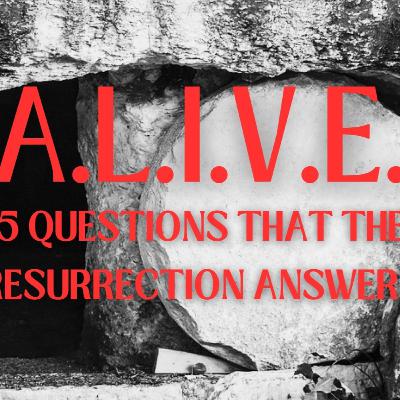
What really happened after the resurrection of Jesus?In Matthew 28:11–15, we find the very first attempt to explain away the empty tomb. While some worship the risen Christ, others scramble to control the narrative.In this message, we explore why the resurrection of Jesus is not only a matter of faith, but a claim rooted in history. Drawing on biblical testimony, early non-Christian sources, and careful reasoning, we walk through five widely recognised historical facts from the first century using the A.L.I.V.E. framework.This sermon addresses common sceptical explanations, considers the earliest objections to the resurrection, and asks a simple but searching question: which explanation best accounts for what we know?Whether you are a long-time believer, a thoughtful sceptic, or someone with honest questions about Christianity, this message invites you to examine the evidence and consider what the empty tomb means for us today.
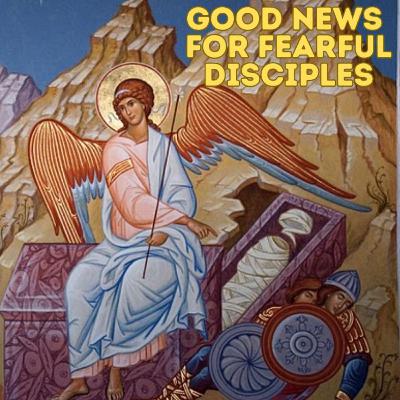
What does the resurrection mean, and what does it reveal about God’s heart toward fearful and faltering disciples?In this expositional message from Matthew 28:1–10, we follow the first witnesses to the empty tomb as grief turns to “great joy” and worship. Matthew shows us that the resurrection is not only a miracle to marvel at, but God’s decisive verdict on the cross - confirming that Jesus’ saving work is finished and accepted.We also consider three theological implications of the resurrection: it declares the cross effective, it affirms God’s redemption of the whole person (body and soul), and it inaugurates new creation and living hope for all who belong to Christ. Finally, we see the risen Jesus meet frightened followers with gentleness, receive their worship, and speak family language over faltering disciples: “Go and tell my brothers.”This sermon is part of Calvary Cork’s verse-by-verse series through Matthew, aimed at strengthening believers, helping honest doubters, and encouraging thoughtful, Jesus-centred faith.Passage: Matthew 28:1–10Theme: Victory over death - grace for the fearfulCalvary CorkSundays 11am | 25 South Side Industrial Estate, T12 R792Website: https://calvarycork.org | Instagram: @CalvaryCork | Facebook: /CalvaryCork
In Acts 9, we encounter one of the most dramatic and important moments in the New Testament: the conversion of Saul of Tarsus on the road to Damascus. This sermon explores what happens when the risen Jesus shows up, not to someone searching for Him, but to someone actively opposing Him.Saul is a religious zealot, convinced that he is serving God by persecuting the early church. He is authorised, confident, and sincere. Yet when the risen Jesus appears, Saul is confronted in his blindness, humbled by divine authority, and radically reoriented. His direction, identity, and purpose are forever changed.This message traces the movement of Acts 9 as Jesus confronts Saul with the truth, reorients his life under Christ’s lordship, and incorporates him into God’s people and mission. Along the way, we see how Jesus identifies Himself with His church, how real conversion produces real change, and how grace transforms even the most unlikely people.The sermon also reflects on themes of repentance, obedience, spiritual blindness and sight, the body of Christ, and what it means to truly follow Jesus. Paul’s later reflections on his own conversion, including passages such as 1 Timothy 1 and 2 Corinthians 5:17, help us understand how deeply this encounter shaped his theology and his life.As this message was preached at the end of the year, it also offers a thoughtful invitation to consider how encountering Jesus leads not only to belief, but to belonging and service within the local church. Following Jesus is never merely private or theoretical; it reshapes how we live, who we serve, and where we commit ourselves.📖 Bible passage: Acts 9:1–31📍 Recorded at Calvary Cork🎙️ Preaching from the book of Acts✝️ Themes: the risen Jesus, conversion, repentance, grace, the church, obedience, and transformation🔎 Keywords: Acts 9 sermon, conversion of Saul, road to Damascus, Paul’s conversion, Jesus appears to Saul, New Testament preaching, Christian sermon, Bible teaching
What does an ancient story about a fiery furnace have to do with Christmas?In Daniel 3, three faithful young men refuse to bow to a false god and are thrown into a blazing furnace. But they are not alone. A mysterious fourth man appears in the fire with them, and everything changes.In this Advent sermon from Daniel 3:8–28, we explore how this dramatic moment points us to the true meaning of Christmas. Christmas is not just about where Jesus was born. It is about God choosing to be with His people, even in their fiery trials.This message is especially shaped for a mixed congregation, including children and those new to the Christian faith, and shows how God’s presence, not escape from suffering, is our deepest need. From the furnace in Babylon to the manger in Bethlehem, the Bible tells one unified story of a God who draws near.Key themes include:Faithfulness under pressureGod’s presence in sufferingThe fourth man in the fireChristmas as “God with us”Why Jesus came and what our deepest need truly isWhether you are facing hardship, exploring Christianity, or reflecting on the meaning of Christmas, this message points us to the hope found in Emmanuel, God with us.
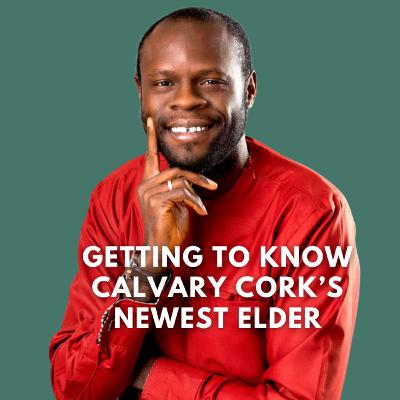
In this episode, we sit down with Tobi Bashiru to hear his story, his work as a health and safety professional, and the ways the Lord has shaped him through faithful service at Calvary Cork. Tobi reflects on lessons learned through behind-the-scenes ministry, discipleship, and how God met him with grace during a season of deep loss and trial.
In Joshua 5:13-15, Joshua stands on the edge of Jericho carrying the weight of leadership, fear, and uncertainty. It is here, in this in between moment, that he meets a mysterious figure with a drawn sword: the Commander of the Lord’s army.In this Advent sermon, Pastor Mike explores how Christ, the true Commander, meets His people in their own liminal spaces. As Joshua discovers, the Lord does not come to take sides but to take charge. He confronts our assumptions, claims our allegiance, and comforts our hearts with His holy presence.We reflect on what this means for followers of Jesus today: how God meets us in seasons of transition, how He refuses to be co-opted into our agendas, and how His presence turns ordinary ground into holy ground. The same One who stood before Joshua with a sword is the One who stepped into the world at Bethlehem, fully God and fully man, to shine light into our darkness.If you are walking through uncertainty, change, or fear, this passage offers deep hope. Christ meets us at the threshold, leads us forward, and reminds us that we never stand on the edge alone.Scripture: Joshua 5:13-15Series: Light in the Darkness – Advent 2025Church: Calvary Cork • https://calvarycork.org
In this follow up conversation to our Advent message on Genesis 32, Mike Neglia is joined by Nick Cady, pastor of White Fields Community Church in Longmont, Colorado, to explore Jacob’s long night of wrestling with God and the meaning of walking with a limp.Together they talk through why God sometimes meets us in seasons of fear, uncertainty, and exhaustion; what a theophany or Christophany actually is; how divine wrestling frees us from self reliance; and why weakness often becomes the place where God’s grace does its deepest work. They also consider how Jacob’s story prepares us for Advent and points to Jesus, who enters our darkness and brings light, hope, and transformation.If you’ve ever felt like you’re struggling spiritually or being pushed beyond your strength, this conversation offers encouragement and insight.God often meets His people most profoundly in the struggle.Watch Nick's sermon here: https://www.youtube.com/watch?v=uHcQi3Ilgms
Why would God choose to meet someone in the dark with a fight?In this Advent message from Genesis 32:22-32, Mike Neglia explores Jacob’s long night of wrestling with God – a turning point not only for Jacob’s life, but for anyone who has ever struggled with fear, uncertainty, or exhaustion.Jacob is alone at the Jabbok, out of schemes and out of strength. But in the darkness he discovers a God who comes close, who confronts, who wounds in order to heal, and who gives a new name and a new identity.This message traces the pattern of God’s grace: how He wrestles us out of our self reliance, how He reshapes us through weakness, and how He still meets His people in the places we least expect Him.As Advent begins, Jacob’s story points us forward to Jesus – the God who enters our darkness, who wrestles in Gethsemane, who is pinned to the cross, and who rises to give us His strength and His peace.If you are in a season of struggle, or searching spiritually, this message offers hope:God is often closest when we feel weakest.
In this sermon from Matthew 27:57-66, Mike Neglia explores the often-overlooked moment between the cross and the resurrection: the burial of Jesus. Far from being a narrative pause, the burial is part of the gospel itself. It proves that Jesus truly died, exposes the weakness of alternative theories, and prepares us to grasp the wonder of the resurrection.We look closely at Joseph of Arimathea and the way the death of Jesus draws courage out of a once-hidden disciple. We consider the costly devotion of those who handled the Lord’s body, the rich symbolism behind His burial, and the way Scripture anticipates Christ taking our cross, our grave, and even our uncleanness.The message then moves from history to personal hope, showing how Romans 6 teaches that believers share in Jesus’ death, burial, and resurrection. His story becomes our story. His grave becomes the turning of the tide. And because He broke the tomb open from the inside, we can step into the new life He gives.Title: He Took My Cross, He Took My GraveText: Matthew 27:57-66Speaker: Mike NegliaChurch: Calvary CorkFor more information about Calvary Cork or to find Sunday service details, visit calvarycork.org or follow @CalvaryCork on Instagram and Facebook.

Comments

Download from Google Play

Download from App Store
 United States