DiscoverHow To Invest in Austin Real Estate
How To Invest in Austin Real Estate
Claim Ownership

How To Invest in Austin Real Estate

Author: Scott Carson

Subscribed: 1Played: 0
Share

Description

Alright, y'all listen up! Saddle up for "How to Invest in Austin Real Estate," the bi-weekly podcast where we spill the brisket on investing in Central Texas real estate! 🤠 Hosted by Scott Carson –– we're bringing you trends, tools, tactics & stories to help you CRUSH it in Austin!

Each week you’ll gain valuable knowledge from Scott and his group of real estate investing friends, designed to help you take your real estate investing to a whole new level of success. You’ll find out what’s working and not working in the Austin market and how you can avoid making costly mistakes. 

What You'll Get:

  • National Expert Insights: Hear from top real estate investing pros sharing strategies that work coast-to-coast.
  • Local Vendor & Investor Scoop: Uncover hidden gems from the folks in the trenches of the Austin and Central Texas markets.
  • Actionable Advice: Walk away with concrete steps you can implement NOW, whether you're a newbie or a seasoned investor. We’ll focus on what’s working in TODAY’s marketplace.
  • Market Updates: Stay ahead of the curve with the latest on Austin and Texas real estate trends, including home values, property valuations, and emerging opportunities.
  • Case Studies: We’ll share current deals and case studies from real investors closing deals in today’s market to help you on your path to financial independence!

Scott Carson: A Real Estate Journey

Scott Carson's journey as a real estate investor for over 20 years in the Lone Star State started with him buying his first home in Round Rock, TX. A graduate of Southwest Texas State University in San Marcos, Scott has called Central Texas home for over two decades. He has bought, sold and invested millions in the area while also helping thousands of other investors invest in Central Texas. His experience and insights as a mortgage broker, banker, and distressed mortgage expert will help you find the deals while avoiding the duds. Whether you are a native Texan, or looking to move to the Austin area, this is the podcast to help you buy your first home or add to your investment portfolio!

Join us as we dissect the hottest topics in:

  • Austin Real Estate Investing
  • Texas Real Estate Market
  • Note Investing
  • Distressed Real Estate
  • Real Estate Finance
  • Investment Strategies
  • Real Estate News
  • And much, much, more!

Ready to become an Austin real estate mogul? Let's ride! 🚀

55 Episodes
Reverse
The Rise of the Accidental Landlord: Turning Market Stalls into Strategic WinsWhat do you do when you’ve got a property for sale that simply won’t move? Maybe you’ve taken a new job, moved for family reasons, or are facing a financial shift, but you’re unwilling to slash your price by tens of thousands of dollars. If this sounds familiar, you aren’t alone—you are likely becoming an "accidental landlord". According to recent Zillow data, we are currently at a three-year high for homeowners who, unable to secure their desired sale price, have pivoted to renting their properties out instead. In this episode, we dive into the data behind this shift, the cities leading the charge, and the practical steps you need to take if you find yourself managing a rental you never planned for.5 Key Topics Covered in This EpisodeThe "Choice-Driven" Market Shift: Unlike the "shock-driven" market of late 2022 when mortgage rates first skyrocketed, the current trend is driven by choice. Homeowners today aren't necessarily in distress; rather, they are refusing to settle for less than what their "heart says their home is worth" and are using renting as a way to "buy time" until the sales market rebalances.The Texas and Florida Factor: A staggering 7 out of the top 10 metros for accidental landlords are in Texas or Florida. While Denver holds the #1 spot, Texas dominates the list with Houston (#2), Austin (#3), San Antonio (#4), and Dallas (#8) all seeing high percentages of for-sale listings re-entering the market as rentals.Property Type Disparity: Single-family detached homes are the most common property type for accidental landlords, making up 3.4% of rental listings. However, condos are seeing the fastest growth in this trend, as they are often less sensitive to interest rate fluctuations but more sensitive to shifts in urban buyer demand.Pitfalls of New Landlords: Managing a property isn't as simple as collecting a check. Scott Carson shares personal lessons on the dangers of property managers holding reserve funds that can put you behind on your mortgage, as well as the critical importance of running background checks and requiring ACH or cashier's checks to avoid the nightmare of bounced payments and lengthy evictions.Creative Exit Strategies: If you don't want to be a landlord, there are alternatives. The episode explores creative finance options like wrap-around mortgages, owner financing, or even short sales if you are upside down on the property. These strategies can often provide a better outcome than traditional renting for those who aren't built for property management.Becoming an accidental landlord is often the result of "good things happening to good people" or simply a shifting economic tide. While it can be a headache, it is also an opportunity to build long-term wealth if handled correctly. The key is to take the emotion out of the game, look at the black-and-white numbers, and understand your local market competition. Whether you choose to hire a professional property manager or pivot to a creative finance exit, remember that you don't have to navigate this journey alone. Reach out to experts, use the right tools like Rentometer, and make sure your next move is a calculated one. Stop waiting for the market to change and start taking action to make the market work for you.Watch the Original VIDEO HERE!Here is the Zillow article HERE!Book a Call With Scott HERE!
Stop Chasing Algorithms and Start Answering Questions: The New Era of Content MarketingIntroduction In an era where traditional advertising costs are skyrocketing, and organic social media reach is plummeting to less than 2%, how does a small business owner or real estate investor stand out? The "old way"—dumping thousands of dollars into Google Ads or mindlessly boosting Facebook posts—is increasingly resulting in a big fat zero for ROI. Enter Logan Hassinger, a real estate investor turned marketing maven who has cracked the code on "omnipresence." By leveraging AI to create deep, answer-based content, Logan has transformed how local businesses dominate their niches without the "school of hard knocks" price tag. 5 Key Topics Covered in This EpisodeThe Myth of Social Media Dominance: Many entrepreneurs focus 100% of their effort on platforms like Facebook, unaware that less than 2% of their followers actually see their content. True growth comes from diversifying where your brand lives. The Power of Answer-Based Content: Search engines like Google are "dying for content" that provides direct answers to specific consumer pain points. Instead of broad trends, focus on specific questions like "Why is my AC making a clicking noise?" to capture high-intent traffic. Implementing the "Content Octagon": Don't let your content die on one platform. Learn how to take a single topic and reformat it into blog posts, YouTube videos, infographics, podcasts, and news articles to ensure you are everywhere your customer is. AI-Driven Deep Research Workflow: Logan shares his exact tech stack—using tools like Google Gemini for deep research and Claude for high-quality writing—to produce 4,000-word blog posts that establish authority and build trust with "DIY" searchers. Building Domain Authority Through Mass Distribution: Learn how small-town news mentions and strategic backlinks can move a website from a "zero" blip on the radar to a high-authority site that Google trusts to show to searchers. The secret sauce for 2026 isn't about having the biggest ad budget; it’s about having the most helpful content. By listening to the "dumb" questions your customers ask on the phone and turning those into detailed online resources, you build a trust factor that ads simply can't buy. Whether you are a real estate investor searching for motivated sellers or a trade professional looking for more calls, the path to the top of the search results is paved with consistency and a willingness to provide value before asking for a sale. Stop refreshing your empty analytics and start building your content octagon today. Connect with Logan HERE! or via email at logan@reachlocalmedia.comWatch the Original Video HERE!Book a Call With Scott HERE!
Are you tired of the "dark side" of real estate—dealing with toilets, tenants, and trash? In this episode, Scott Carson, "The Note Guy," pulls back the curtain on a real-world case study in Texarkana to show you how to become the bank, not the landlord. We dive deep into a performing note deal on a $65,000 property that delivers a staggering 16% return—or even an infinite return if you know how to structure the arbitrage. Whether you are looking to invest a small amount of your own capital or want to learn how to raise private money using Self-Directed IRAs, this episode provides the blueprint for building a cash flow machine without the headaches of traditional property management.What You’ll Learn in This EpisodeThe Texarkana Case Study: A breakdown of a 3-bedroom, 2-bath asset sold on owner-finance terms with a 13% interest rate.The Math of a 16% ROI: How buying a performing note at 80% of the Unpaid Principal Balance (UPB) creates immediate equity and high-yield cash flow.The "Infinite Return" Strategy: How to use private money at 8–10% to fund 85% of a deal while you keep the difference in interest and a "cha-ching" on the front end.The Three "Cha-Chings": Identifying profit centers on the front end (origination/funding difference), the middle (monthly cash flow), and the back end (payoff/refinance).The 6-Figure Blueprint: Why you only need approximately 20 "small" deals to generate over $100,000 in annual income.SDIRA Secrets: How to find the 6 to 9 private investors you need to raise $1,000,000 for your note portfolio.Foreclosure as a Safety Net: Understanding why Texas is a "friendly" state for note holders, allowing for a 90-day foreclosure process if a borrower stops paying.Asset Appreciation: How a $65,000 property can grow to $100,000 over 10 years, increasing your security and potential REO profit.11 Exit Strategies: From "The Flip" to "The Flow," learn the various ways to monetize both performing and non-performing notes.Market Insights for 2026: Why note buying is the smartest strategy in a landscape where traditional REOs and wholesale deals no longer make sense.Stop flipping burgers and start flipping notes. Real estate investing in 2026 is about being a "Lienlord" and leveraging the power of the bank. If you're ready to master the fundamentals and start your journey toward a 6-figure side hustle, don't miss our upcoming 3-day Virtual Note Buying Workshop. We offer a 100% money-back guarantee because we know this proven plan has helped thousands of investors succeed. Visit NoteBuyingForDummies.com to grab your seat at 50% off and start building your cash flow machine today! Watch the Original Video HERE!Book a Call With Scott HERE!Sign up for the next FREE One-Day Note Class HERE!Sign up for the WCN Membership HERE!Sign up for the next Note Buying For Dummies Workshop HERE!
Are you tired of chasing the same tired foreclosure lists that every other investor in town is already cold-calling? In today’s market of chaos and distressed debt, the real "Monopoly" winners aren't just collecting $200 for passing Go—they are finding the deals six to twelve months before they ever hit the public radar. In this episode, Scott Carson pulls back the curtain on a massive influx of distressed debt hitting the market. We’re talking about "loan level" data on thousands of notes across the country where borrowers are 6, 12, or even 24 months behind on payments. Whether you are a "hustler" looking for your next creative real estate deal or a realtor hungry for fresh listing leads, this episode shows you how to tap into a private stream of opportunities that most people don't even know exist. What You’ll Learn in This Episode:The "Crumb Investor" Advantage: Why you don't need a billion-dollar license to profit from the massive portfolios being moved by banks and hedge funds. Deep-Dive Data: Understanding "loan level" information, including exact addresses, equity positions, and exactly how many months a borrower is in default. Creative Exit Strategies: How to turn these distressed leads into "Subject To" deals, owner financing opportunities, or traditional listings. Geographic Opportunities: Why this isn't just a Texas or Florida play—opportunities are popping up in New York, New Jersey, and even Alaska and Hawaii. The Partnership Model: How to work with Scott to get these leads delivered to your inbox once or twice a month, either through a small fee or a referral relationship. Due Diligence Support: How Scott’s team can now assist with BPOs, O&Es, and other critical due diligence documents for your deals. Are You Ready to Jump on the Board?The market isn't "bad"—it's just changing. If you are willing to pick up the phone, knock on a door, or start a mail campaign, there is plenty of room on the Monopoly board for you. Don't wait for the foreclosure auction; get the lead while the borrower is still in the early stages of default and nobody else is looking.Watch the Original Video HERE!Book a Call With Scott HERE!
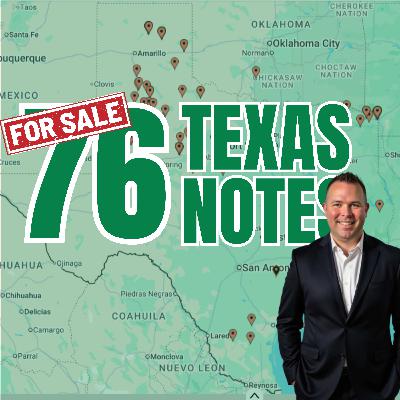
Navigating the Wild West of Texas Note Deals: Red Flags & Real ReturnsHave you ever been sent a deal that looks too good to be true, or perhaps just a little... "off"? In this special edition of Note Night in America, we’re pulling back the curtain on a recent tape of 76 performing Texas notes. While the high interest rates and rural charm might catch your eye, the real story lies in the due diligence. Join us as we dissect a "daisy chain" of brokers, hunt down the truth through county records, and show you exactly how to calculate if a low-balance note is a diamond in the rough or a high-cost headache. Whether you’re a seasoned pro or a "note buying for dummies" student, this deep dive into the "Spidey senses" of investing is a masterclass you can't afford to miss.Key Topics Covered in This Episode:Identifying "Joker Brokers" & Daisy Chains: How to spot when a deal is being passed through too many hands and why not being "direct to the seller" can frustrate your negotiations.The "Spidey Sense" of Due Diligence: Why a lack of loan numbers, third-party servicing, or RMLO (Registered Mortgage Loan Originator) verification should be an immediate red flag for any investor.Deep-Dive Research Techniques: Learn how to use batch geo-mapping, county deed searches, and lender website audits to verify the "hustle" and find the true origin of the notes.The Math of Arbitrage: A step-by-step breakdown of buying notes at 80% of the Unpaid Principal Balance (UPB) while funding them with private money at 85% to create instant "up-front" profit and long-term cash flow.Texas High-Cost Loan Hazards: Understanding the risks of interest rates exceeding 10% in Texas and how low down payments (under 10%) can complicate foreclosures.Amortization & Exit Strategies: How to use amortization tables to determine exactly when you must sell a note before the balance drops below what you owe your investors.Rural Property Realities: The challenges of getting accurate BPOs (Broker Price Opinions) in small towns like Alice, Spur, and Sweetwater, and why "windshield time" is sometimes the only way to verify value.Closing thoughts:Success in note investing isn't just about finding a list; it's about having the discipline to walk away when the numbers—or the stories—don't add up. We appreciate the hustle of every new investor, but our goal is to ensure you’re making bids that actually close and protecting your reputation with your funding partners. Don't let a "daisy chain" wrap you in knots. Take these lessons, sharpen your research tools, and keep marketing. We'll see you at the top!Watch the Original VIDEO HERE!Book a Call With Scott HERE!
Texas Real Estate: Navigating the March 2026 Foreclosure LandscapeEverything is bigger in Texas—including the opportunities for savvy real estate investors. Whether you are a local pro or an out-of-state investor looking at the Lone Star State, the March 2026 foreclosure update provides a critical roadmap for finding distressed assets, from residential homes to commercial powerhouses.Currently, the Texas market is holding steady with 3,973 total foreclosure filings. While some counties are seeing slight peaks and others are cooling off, the overall volume remains consistent at roughly 4,000 filings per month. This stability offers a predictable environment for those looking to tap into pre-foreclosures, "subject-to" deals, or even private lending leads.Key Market Insights & Data PointsUnderstanding where the inventory is located is half the battle. Here is the breakdown of the March 2026 data:Commercial Sector Breakdown: There are 547 commercial filings across five major regions.Central Texas: Leads the pack with 161 filings (Austin, San Antonio, Waco, College Station).East Texas (Houston Area): 131 commercial filings.North Texas (DFW/Panhandle): 126 filings, which is slightly down for the region.South Texas (RGV/Corpus Christi): 110 filings.West Texas: Only 19 filings, representing a 20% decrease from its usual average.Top Counties by Volume:Harris County (Houston): The perennial leader with 614 foreclosures.Bexar County (San Antonio): 317 filings.Dallas County: 295 filings.Tarrant County (Fort Worth): 237 filings.Hidalgo County: 226 filings, noted as a surprising jump this month.Travis County (Austin): 158 filings.Strategic Opportunities:Distressed Debt: Use these lists to track down banks with "bad debt" and negotiate to buy their entire portfolios.Private Money Leads: Identifying individuals foreclosing on LLCs can reveal potential private lenders for your next deal.Growth Areas: Fast-growing areas like Comal (23) and Hays (17) counties remain extremely competitive with low foreclosure inventory.Watch the Original Video HERE!Book a Call With Scott HERE!Take Action: Master the Art of Note BuyingDon't just watch the market—learn how to dominate it. Join our Virtual Note Buying Workshop from March 20-22, 2026. We spend three full days diving into how to find, fund, and flip non-performing paper using the latest 2026 strategies.Special Offer: Use code "weclosenotes" at 4closure.info to get $20 off your list subscription. To grab your 50% off workshop tickets (which include a seat for your spouse and full replays), visit notebuyingfordummies.com.Stop waiting for the "perfect" deal and start creating them. We'll see you at the top!
The Secret Weapon for Scaling Your Real Estate BusinessAre you a "solopreneur" working a demanding nine-to-five while trying to build a real estate empire in the margins of your day? Most part-time investors find that marketing and due diligence are the first things to fall off the plate when they get home exhausted at 6:00 PM. But if you want to reach six figures in your first year, you cannot keep doing $15-an-hour tasks and expect a high-level bank account. In this episode, we’re diving deep into the tactical side of leveraging virtual assistants (VAs) to clone your efforts, automate your systems, and ensure your business is working—even while you’re asleep. Key Strategies for Leveraging a Virtual AssistantAutomated Due Diligence & Spreadsheet Scrubbing: Instead of manually checking every asset on a tape, a trained VA can "scrub" your spreadsheets to pull Zillow values, rental rates, and back taxes. They can even save property photos into a Dropbox and run preliminary calculations based on your specific formulas, delivering a narrowed-down list for your final review. Dominating Local Markets via Direct Marketing: A VA can act as your "social sleuth," performing skip tracing to find borrower phone numbers and emails or pulling IRA investor contacts directly from county records. They can manage your entire marketing funnel—from designing postcards in Canva to executing mail merges and scheduling email blasts in your CRM—so your outreach stays consistent without you lifting a finger. Social Media & Content Management: Don't let your social profiles become a "ghost town." VAs can take your recorded podcast audio or video and transform it into YouTube descriptions, blog posts, and LinkedIn newsletters. They can also manage your Facebook groups, design daily marketing graphics, and ensure your "30 by 30" marketing matrix is executed every single day. High-Level Asset Management & Outreach: Beyond simple admin tasks, VAs can handle the heavy lifting of calling bank asset managers or research probate leads in specific counties. They can also serve as a "contract-to-close" manager, coordinating between attorneys, loan processors, and service providers to ensure your deals move from a signed contract to a funded asset smoothly. The ROI of Delegation: While a quality real estate VA typically costs between $10 and $12 an hour, the return on investment is massive. For roughly $850 a month, you gain 20 hours of weekly productivity that allows you to focus on the "big rocks"—finding deals and raising capital. This system replaces the need for expensive local office space and full-time staff while providing a 24/7 engine for your business growth. Success in real estate investing isn't about working harder; it's about working smarter by delegating the tasks that are below your pay grade. As we move through 2026, the gap between the "hobbyists" and the "heavy hitters" will be defined by who uses the tools of automation and delegation most effectively. Don't wait for "perfection" to start marketing—perfection is the enemy of results. Take action today, find a partner like Riva Global to help you staff up, and start focusing on the big-money moves that will actually change your life. Ready to stop doing it all yourself? Book a call at talkwithscottcarson.com to discuss how we can help you systematize your note business for the new year!Watch the original Video HERE!Got Questions? Book a Call With Scott HERE!Connect with Scott on LinkedIn here! Use Scott's AI Clone HERE!
Maximize Your Reach: The Power of Repurposing ContentIn this episode, Scott Carson breaks down the "Rinse and Repeat" method, a marketing strategy used by global giants like McDonald's to stay top-of-mind with their audience. Many investors make the mistake of "one and done" marketing—posting a video or sending a letter once and giving up when they don't see immediate results. Scott argues that to truly scale a real estate or note investing business, you must embrace remarketing your content, pitch decks, and case studies to ensure you are seen by more than just the small percentage of followers reached by initial algorithms. By leveraging modern AI tools and strategic scheduling, you can turn a single piece of high-quality content into a continuous lead-generation machine.Key Topics Covered:The McDonald’s Marketing Model: Scott explains how major brands run the same 30-second ad thousands of times a week to build brand recognition, contrasting this with the typical investor's "one and done" approach.The 15-Minute Pitch Deck: Learn why a concise, fifteen-minute pitch deck is your most powerful tool for raising capital and how to effectively "chum the water" to attract private investors.AI-Enhanced Repurposing: Discover how to use tools like Gemini to transform one video transcript into multiple SEO-rich blogs, descriptions, and social media posts, making AI think you have more content than you actually do.Strategic Scheduling and Re-streaming: Scott shares his personal workflow for using tools like Restream and Buffer to broadcast live content multiple times and rotate infographics daily to maintain a consistent presence.Leveraging YouTube Analytics: Insights into using your channel's "Audience" data to determine the optimal times for uploading and live-streaming to maximize engagement and algorithm favor.Success in raising capital and closing deals isn't just about creating content; it's about making sure that content is seen repeatedly by your target audience. Most sales are made after the fifth contact, yet most investors stop after the first. By applying the rinse and repeat method—tweaking titles, updating thumbnails, and rescheduling your best assets—you can build the credibility and recognition needed to dominate your local market. As Scott says, don't let your hard work fall on deaf ears; take action, use the tools available, and see you at the top.Watch the Original Video of this Episode HERE!Got Questions? Book a Call With Scott HERE!Connect with Scott on LinkedIn here! Use Scott's AI Clone HERE!
In this episode of the Note Closer Show, host Scott Carson sits down with real estate veteran Felipe Soares to dissect the realities of the 2026 fix-and-flip market. With over 18 years of experience and more than 400 rehabs under his belt, Soares provides a masterclass in transitioning from wholesaling to high-volume rehabbing without using your own capital.The Anatomy of a Successful FlipSoares emphasizes that while the business is simple, it is far from easy. He argues that the biggest mistake investors make is failing to truly dial in their After Repair Value (ARV). In a market where values can fluctuate by 10% or more, Soares suggests that if you cannot accurately predict the ARV, you shouldn’t touch the deal. He also stresses the importance of the 78% rule; paying more than 78 cents on the dollar (including repairs and holding costs) often leads to negative returns for short-term projects.Efficiency is the name of the game in 2026. Soares reveals his "rule of thumb" for timelines: every $10,000 in scope requires two weeks of work. To maintain this pace, he operates his own licensed construction umbrella, managing four dedicated general contracting crews that work exclusively for him. By purchasing materials directly and leveraging "Pro" relationships at major retailers, he maximizes margins while earning millions of travel points to fund a first-class lifestyle.Key Topics Covered:The Power of Persistence: Soares shared how it took him 18 months to close his first $3,000 wholesale deal, proving that "putting in the reps" is the only way to reach $60 million in transactional volume.Precision Underwriting: Why the ARV is the ultimate "deal killer" and why investors must account for the 90-day FHA anti-flip seasoning rule when projecting exit timelines.Leveraging Technology: The use of AI tools like CubiCasa for instant floor plans and Richer Values for AI-driven appraisal data even in non-disclosure states like Texas.Relationship-Based Contracting: Why treating contractors "like family" and keeping them busy year-round is better than always chasing the lowest bid.High-Impact Aesthetics: Focusing budget on "Say Yes to the Dress" moments—specifically kitchens and master suites—using quartz counters, heated floors, and strategic lighting to trigger emotional buys.Felipe Soares’ journey from an underage investor trying to sneak into networking events to a "Stud Muffin-aire" educator proves that success in real estate isn't about luck—it's about systems. By combining conservative underwriting with modern AI tools and a "boots on the ground" approach to project management, investors can navigate even the toughest market cycles. As Scott Carson notes, the only way to reach the top is to take these tactics and move into action.Watch the Original VIDEO HERE!Here is a list of websites and tools mentioned in this episode:CubiCasa: A free mobile app used to scan a house and generate a blueprint with actual measurements, CAD upgrades, and floor plans within minutes.Richer Values: An AI-powered tool that provides accurate After Repair Value (ARV) data and appraisal-level documentation, even in non-disclosure states like Texas.Real.Vision: A professional photography service used for high-end property marketing, providing interactive virtual tours, drone shots, and dedicated property mini-sites.Home Depot Pro & Managed Elite Account: Felipe leverages high-level "Pro" relationships and the "ProDesk" to get bulk discounts, special pricing on paint, and managed deliveries.Floor & Decor Pro: Used for interior design coordination and logistical management of flooring materials across multiple stores.REOLink: An LTE-based security camera system that runs on SIM cards and battery power, allowing for remote monitoring of job sites without Wi-Fi.Got Questions? Book a Call With Scott HERE!Connect with Scott on LinkedIn here! Use Scott's AI Clone HERE!
Unlocking Wealth: Why 2026 is the Year of the "Lien Lord"Are you tired of the "Three Ts" of real estate—Toilets, Tenants, and Trash outs? In a market where traditional deals are drying up and competition is fierce, seasoned investor Scott Carson is showing both new and experienced investors how to stop being a landlord and start being the bank. Welcome to the world of note investing, where you can stack massive cash flow and collect six-figure checks by purchasing distressed debt directly from banks at steep discounts. Whether you're looking to supercharge your self-directed IRA or find a passive way to exit the fix-and-flip grind, this episode dives deep into real-world case studies—from $300-a-month steady cash flow to $250,000 gross profits on a single deal. It’s time to move past the outdated strategies of the 90s and learn how to leverage AI and bank relationships to build a premier deal flow in today's economy. Key Takeaways from the Workshop:Becoming the Bank: Note investing allows you to earn above-average returns without the headaches of physical property management by purchasing first-lien mortgages at 70% of the value or less. Direct Bank Deal Flow: Learn how to bypass the MLS and foreclosure auctions by getting deal lists directly from the 5,000+ registered banks and 19,000+ lending institutions that need to move bad debt off their books. Diverse Exit Strategies: Discover 11 different ways to profit, including rehabbing the borrower to reinstate payments for long-term cash flow, offering "cash for keys" to gain equity, or foreclosing to sell the property as a fix-and-flip. Funding with OPM: You don't need millions to start; Carson explains how to use Other People’s Money (OPM) or self-directed IRAs to fund deals, allowing for tax-free growth and infinite rates of return. Modern Marketing & AI: Stay ahead of the competition by utilizing AI tools and automated marketing strategies designed for the 2026 market to identify "duds" during due diligence and find the best "cherry-picked" notes. The "sexy side" of real estate isn't about swinging a hammer; it's about owning the paper. If you're ready to stop chasing deals and start having banks send them to you, join the upcoming Austin Virtual Note Buying Workshop from February 27th to March 1st. With a 100% money-back guarantee and a tuition refund if you close a deal in your first six months, there’s no reason to stay on the sidelines. Visit http://notebuyingfordummies.com to claim your 50% discount and start your journey to becoming a "Lien Lord" today!Watch the Original Video of this Episode HERE!Got Questions? Book a Call With Scott HERE!Connect with Scott on LinkedIn here! Use Scott's AI Clone HERE!
The Ultimate Marketing Safety Net: Why You Don't Own Your AudienceIn the fast-paced world of 2026, many entrepreneurs are making a fatal mistake: they are building their entire business on "rented land". Whether you are a note investor, a realtor, or a fix-and-flipper, the reality is that we are all in the marketing business first. If your primary way of reaching clients is through a free platform like Facebook or LinkedIn, you are one algorithm change or account deletion away from having your business vanish overnight.I’ve seen it happen to the best of us. From podcasting experts losing 20-year-old accounts to major email services flagging databases, the message is urgent: you must own your data. Success in today’s market isn't just about finding deals; it's about "carpet bombing" your message across multiple channels while funneling every lead into a database you actually control.5 Keys to Dominating Your Marketing in 2026Own the "Gold" (Name, Email, and Phone): Social media followers are great for presence, but the only true assets you own are your contacts' names, email addresses, and cell phone numbers. These three pieces of information are the most valuable resources in your business, allowing you to bypass platform gatekeepers and connect directly with your audience.The Power of the Weekly Drip: Consistency is the antidote to being forgotten. You should be sending at least one email per week to your database to stay top-of-mind. Frequent communication leads to lower opt-out rates because you are building a relationship rather than just asking for money when you have a deal.Leverage AI for Content Multiplicity: You don't need to spend hours writing from scratch. Use AI to take a single long-form video or podcast transcript and "chop" it into 30 short-form videos, blogs, and newsletters. This "multi-touch" approach ensures you are seen on every platform—from LinkedIn newsletters to YouTube—without doubling your workload.Implement "Mother Ship" Landing Pages: Every piece of content should lead back to your "mothership"—your website. Use simple one-page landing pages with "opt-ins" like free classes or case studies to capture lead information. Even if they don't buy immediately, you've captured the data necessary for future marketing.The "Jab, Jab, Jab, Right Hook" Philosophy: Most investors fail at raising capital because they only reach out when they are desperate for a deal. Instead, provide value through "edutainment"—sharing case studies, industry articles, and networking updates. By giving 75% of the time, your "ask" for funding will feel like a natural opportunity for your investors rather than a cold pitch.Conclusion: Take Action Before the "Fade"Don't let your business fade away like a character in a movie. If you aren't growing your database, you aren't growing your income. Start by exporting your contacts from LinkedIn or your calendar service and moving them into a dedicated CRM. Remember, email still provides the highest ROI in marketing—returning roughly $44 for every $1 spent. Stop being a "secret agent" and start sharing your journey consistently.Watch the Original Video of this Episode HERE!Got Questions? Book a Call With Scott HERE!Connect with Scott on LinkedIn here! Use Scott's AI Clone HERE!
Building Your Real Estate Dream Team: Why Lone Wolves Lose (and How to Win!)Hey everybody! Scott Carson here, and with the Super Bowl almost upon us, it got me thinking: what makes a championship team? It's certainly not one person trying to play every position. The same goes for real estate investing! Too many of you are trying to be the quarterback, running back, offensive line, and even the water boy all at once. Spoiler alert: you're gonna get sacked, big time.I used to coach new investors hands-on, and the most successful ones always did their homework: assembling a "Dream Team" of investor-friendly professionals. You can't be a solo-preneur and expect to scale your wealth. It's time to stop thinking you can do it all and start building your championship roster.Here's your blueprint for assembling a winning real estate dream team:Your Home Base: The Investor-Friendly REIA Club: First, find your tribe! Your local Real Estate Investor Association (REIA) is the ultimate recruiting ground for investor-friendly realtors, title companies, lenders, and fellow investors. Go to REiclub.com, Meetup.com, or Google your city – there's a club for every market. Don't be a wallflower; get there early and network!The Quarterback & Offensive Line: Realtor & Title/Attorney: You need an investor-friendly realtor for comps, market insights, and even rehab ideas. Pair them with a savvy title company (especially for creative deals) or a real estate attorney for complex closings and entity structuring. These are your foundational players!The Money Backfield: Hard & Private Money Lenders + IRA Custodians: Finding capital is key! Network with hard money lenders for fix-and-flips and identify private money lenders. Ask your existing lenders and title reps if they know private investors. Also, connect with an IRA custodian, preferably local, who specializes in self-directed accounts.The Defense: Your Boots-on-the-Ground Vendor Crew: Build a reliable network of contractors (roofers, HVAC, plumbers, electricians), landscapers, and pest control. Get three bids, always, and don't be afraid to utilize side-hustle contractors for cost savings. Your realtor can often provide invaluable referrals here.The Coaching Staff: Mentors & Coaches (Like Me!): Even the best teams have coaches. Whether it's a dedicated real estate coach (like yours truly!) or specialists in areas like due diligence or BPOs, external guidance helps you avoid costly mistakes and leverage experience.You are not Adam Sandler in The Longest Yard trying to throw it to yourself with no blocking. You need blockers! You need people to take tasks off your plate, provide expertise, and even bring you deals. My mom thought I'd be a football coach; instead, I'm a real estate coach helping investors build teams.Stop being the bottleneck. Leverage your network, trust your team, and empower yourself to delegate. If you need help finding vendors, due diligence support, or just a coach to guide you, reach out. Let's put your dream team together, ladies and gentlemen. Go out, take some action, and we'll see you at the top!Watch the Original Video of this Episode HERE!Got Questions? Book a Call With Scott HERE!Connect with Scott on LinkedIn here! Use Scott's AI Clone HERE!
Texas Foreclosure Update: Opportunities in the Lone Star StateThe Texas real estate market is constantly shifting, and for savvy investors, the monthly foreclosure auctions—often called Super Tuesday—provide a unique window into emerging opportunities. This February, while total foreclosure numbers across the state have seen a slight dip compared to last month, the data reveals specific pockets of activity that investors should be watching closely.Whether you are looking for residential flips, commercial assets, or distressed notes, staying ahead of the numbers is key to making informed bids. Let’s dive into the latest data across the state's largest counties.Key Market Insights for FebruaryAccording to the latest data from Roddy’s List, the Texas foreclosure landscape is showing some interesting trends this month:Overall State Numbers: There are currently 3,811 total foreclosures scheduled across Texas, a small decrease from the approximately 4,000 recorded last month.Commercial vs. Residential: Out of the total filings, 504 are commercial foreclosures, leaving 3,307 residential properties hitting the auction block.Commercial Hotspots: Central Texas (Austin/San Antonio) leads the commercial sector with 144 filings, followed closely by North Texas (DFW) with 138, and East Texas (Houston) with 109.West Texas Stability: True to its history, West Texas remains steady and low with only 23 commercial foreclosures.County-by-County BreakdownThe activity varies significantly depending on which major metropolitan area you are targeting. Here is how the residential numbers look for some of the largest counties in the state:Harris County (Houston): Remains the "behemoth" with a whopping 640 residential foreclosures this month.Bexar County (San Antonio): Showing higher than usual activity with 342 filings.Dallas & Tarrant (DFW): Dallas County has 311, while Tarrant County sits at 228.Hidalgo County: A surprising surge in South Texas with 198 residential properties set for auction.Travis County (Austin): A relatively low count for its size, with only 115 filings.Other Notable Areas: Fort Bend has 116, Montgomery has 110, and El Paso is seeing an increase with 85 filings.How to Leverage This DataFor investors, these lists represent more than just properties; they are a gateway to various strategies. You might find a direct REO deal, a short sale opportunity, or even non-performing notes.One of the best ways to utilize this information is to identify private lenders who are foreclosing. These individuals are often looking to exit a bad deal and may be willing to offer owner financing or lend on your future projects once you establish a relationship.Despite a slight cooling in total numbers, the Texas foreclosure market remains a fertile ground for those who know where to look. From the high-volume streets of Harris County to the growing distress in Hidalgo, there is something for every type of investor this Super Tuesday.If you're ready to take action, head over to 4closure.info to pull your own lists and start your due diligence. Remember, success in real estate isn't just about the deal you find; it's about the action you take. We’ll see you at the auction! Make sure to use our discount code when you sign up! WECLOSENOTESWatch the Original Video of this Episode HERE!Got Questions? Book a Call With Scott HERE!Connect with Scott on LinkedIn here! Use Scott's AI Clone HERE!
Welcome to the new era of real estate investing. If you’ve been following the market lately, you know the old rules are changing. Values are shifting, mortgage defaults are ticking upward, and traditional "fix-and-flip" or rental strategies are becoming harder to scale. I’m Scott Carson from WeCloseNotes.com, and I’ve spent years helping thousands of investors transition from the headaches of physical property management to the high-yield world of note investing. In 2026, the biggest opportunity isn’t in owning the dirt—it’s in owning the debt. It’s time to stop being a landlord and start being the bank.5 Key Insights from the 2026 Note Investing OutlookEscape the "Three Ts" of Landlording: Traditional real estate often comes with "Toilets, Trash, and Tenants". Note investors avoid these by owning the mortgage rather than the physical property, meaning you never have to deal with broken ACs or midnight repairs.The Power of the Discount: One of the greatest advantages is buying notes at a significant discount from banks. For example, you might buy a $100,000 debt for $70,000, giving you immediate equity and higher yields than traditional rentals.Capitalizing on Market Chaos: With mortgage defaults increasing and values dropping in some areas, banks are eager to move "non-performing" notes off their books. This creates a massive "secondary market" where savvy investors can find high-potential deals.Passive Income without Property Managers: Because the borrower is responsible for the property's upkeep, taxes, and insurance, your role is purely financial. You collect the monthly principal and interest just like a major bank would.Superior Position in the Market: As a note holder, you hold a superior legal position compared to a landlord. If a tenant doesn't pay a landlord, the landlord loses income; if a borrower doesn't pay a note holder, you have the right to foreclose and take the property itself, often for much less than it’s worth.The window of opportunity in 2026 is wide open, but it won't stay that way forever. Whether you’re a tired landlord, a frustrated flipper, or a new investor overwhelmed by the current market, note investing offers a path to truly passive wealth. Don’t let another year go by dealing with the same old headaches. It’s time to level up your strategy and start making offers that make sense in today's economy. If you’re ready to take the next step, visit NoteBuyingForDummies.com and let’s turn 2026 into your most successful year yet. Let’s go out there and kick some ass!Watch the Original VIDEO HERE!Got Questions? Book a Call With Scott HERE!Connect with Scott on LinkedIn here! Use Scott's AI Clone HERE!
The Strategic Investor's Guide to TexasTexas real estate investing is defined by its lack of state income tax, which shifts the financial burden to an aggressive property tax system. Understanding these mechanics is the first step in ensuring your portfolio remains profitable.1. Tax and Legal FoundationsProperty Tax Reality: Expect to pay between 2% and 3.5% of a property's value annually in property taxes. Because there is no state income tax, local governments rely on these funds for schools and services.Protesting is Mandatory: Every May, owners can protest their appraised values at the County Appraisal District (CAD). Most successful investors hire professional firms to handle this automatically to ensure they aren't overpaying.Asset Protection: Utilizing a Series LLC is highly recommended in Texas. This allows you to separate multiple properties into different "cells" under one umbrella, protecting your personal assets without the cost of 30 separate LLCs.The Homestead Limit: You cannot claim a homestead exemption on an investment property; this benefit is strictly for your primary residence.2. Location and Market DynamicsThe Texas Triangle: The region between Dallas-Fort Worth, Houston, and San Antonio contains 70% of the state’s population and is considered the safest bet for long-term demand.Secondary Markets: With prices rising in major metros, many 2026 investors are looking toward secondary markets like Killeen, Temple, or New Braunfels for better entry points.Foundation Concerns: Due to expansive clay soil, foundation issues are common. Always ask if a foundation has been leveled and if there is a transferable warranty.3. Financing and OperationsThe 1% Rule Shift: In 2026, the traditional 1% rule (where rent equals 1% of purchase price) is difficult to find in Texas. Many investors are now targeting 0.7% to 0.8%, though sticking closer to 1% is still preferred to avoid overpaying.DSCR Loans: Debt Service Coverage Ratio (DSCR) loans are popular because they qualify based on the property’s rent rather than the investor's personal income. These typically require a 20% down payment.Fast Evictions: Texas is a landlord-friendly state where the eviction process typically takes only 30 to 45 days from the initial notice to the writ of possession.Avoiding the "Texas-Sized" MistakesSuccess in Texas often comes down to what you don't do. One of the biggest pitfalls for new investors is "over-rehabbing" a property. While it’s tempting to install custom finishes, sticking to simple updates like paint, carpet, and standard GE or LG appliances ensures you don't eat into your cash flow. Additionally, be wary of HOA "trapdoors" by verifying if there are rental caps in the neighborhood before you buy.Texas remains the "best place to buy, own, and invest," but it requires a disciplined approach to the math and a deep respect for the local laws. Whether you are navigating the high-heat summers that drive up HVAC costs or calculating your tax redemption periods, being informed is your greatest asset. Stay smart, don't over-rehab, and keep your eye on the cash flow.Watch the original VIDEO HERE!Got Questions? Book a Call With Scott HERE!Connect with Scott on LinkedIn here! Use Scott's AI Clone HERE!
Good morning! Look, it is absolutely freezing here in Austin, Texas. We are talking 18 degrees, which basically means the entire state shuts down because—let’s be honest—nobody here knows how to drive on ice. So, while the roads are slick, we are chilling inside where the coffee is hot, and the deals are even hotter.If you missed our massive livestream this past Saturday, don’t worry. We spent over two hours breaking down a tape of 3,067 non-performing first liens. But for today’s coaching call, I wanted to peel back the onion a little further. We are doing a deep dive specifically into the remaining 200+ Texas assets. Why Texas? Because it’s the fastest foreclosure state in the country, and when you combine speed with equity, you find the magic.In this episode, I’m walking you through my exact process of filtering a massive spreadsheet—hiding the columns that don’t matter (looking at you, "QM Flags") and highlighting the ones that equal profit. We take a serious look at a specific asset in Tyler, Texas. This isn't just looking at numbers; we become digital detectives. We look at the borrower's emotional equity (solar panels and garden gnomes count!), the "Zillow Zombie" values, and even do a Google search that reveals the heartbreaking backstory of why the borrower likely defaulted.We also tackle the difference between chasing "Subject To" deals versus buying the Non-Performing Note. Spoiler alert: You aren't getting a massive discount on a note that is only 90 days late. We run the math on calculating yields, determining legal balances, and deciding when to aim for a re-performing note versus when to accept that a property is headed for foreclosure (like a massive upside-down property we found in Dripping Springs).In this episode, we cover:The Texas Deep Freeze: Why staying off the icy Austin roads is the best investment decision you can make today.The 3,000 Note Breakdown: A recap of the massive tape we analyzed on Saturday and where to find the remaining opportunities.Geographic Breakdown: Mapping out opportunities from the Panhandle to the Valley, including Dallas, Houston, and the Piney Woods.Spreadsheet Mastery: How to filter data efficiently—calculating estimated legal balances, equity percentages, and hiding useless columns.The Tyler, Texas Case Study: A full breakdown of a property with 82% equity, analyzing photos, tax records, and potential 17-19% cash-on-cash returns.The "Human" Element: How a simple Google search revealed a borrower's personal tragedy and how that informs our strategy.Bankruptcy & Foreclosure Plays: Analyzing a deal in Montgomery, TX involving a bankruptcy plan, and a luxury builder home in Dripping Springs that is $200k upside down.Sub2 vs. NPN: Why buying the note makes more sense than a Subject To deal when the borrower is 6+ months behind.Texas Foreclosure Trends: A look at Roddy’s List and current numbers in Travis, Bexar, Dallas, and Harris counties.Look, it might be 20 degrees outside, but these yields are keeping us warm. Whether you are looking to get a borrower back on track with a modification or taking a property back in a fast foreclosure state, the opportunity is right there in the data. You just have to know how to filter for it.Watch the Original Video of this Episode HERE!Got Questions? Book a Call With Scott HERE!Connect with Scott on LinkedIn here! Use Scott's AI Clone HERE!
Kicking off 2026, I’m spotlighting an investor who’s quietly becoming a force in one of the most overlooked corners of real estate: mobile home parks and affordable housing. In this episode, I’m joined by Amanda Cruise of Voyage Investing, a consistent educator on LinkedIn who backs up her content with real deals and real numbers.Amanda’s path into mobile home parks wasn’t linear. She started in a traditional career track with a background in chemistry and statistics, moved into the corporate world at Capital One, and then pivoted hard into real estate. After realizing she “sucked at managing contractors” on heavy renovation projects, she went looking for a more scalable, less chaotic strategy—and found it in mobile home parks.We dig into why Amanda believes MHPs are one of the best risk-adjusted plays in today’s market. She explains how they provide stable, high-demand affordable housing with less volatility than many multifamily assets, and how targeting mom-and-pop owners of smaller (sub-100-lot) parks creates consistent acquisition opportunities. These are often owners who are simply tired of managing tenants and collecting rent door-to-door.Amanda also breaks down the real levers for adding value beyond just raising rents. She walks through the impact of basic but powerful upgrades—paving roads, adding or upgrading mailboxes, cleaning up common areas, and infilling vacant lots with new homes—to significantly increase income and overall park valuation. On the capital side, she shares how she structures deals with a mix of bank loans, seller financing, and private lenders (often at 10% annual interest, paid monthly) to sometimes achieve near 100% loan-to-cost and accelerate equity growth.Finally, Amanda doesn’t sugarcoat the pitfalls. We talk about the importance of physically walking every park-owned home, why certain utilities and wastewater treatment setups can be deal-killers, and how consistent, professional follow-up with owners is one of the biggest competitive advantages investors overlook. If you’re looking for scalable, recession-resistant, impact-driven investments that generate strong cash flow, this conversation is a must-listen. Connect with Amanda at voyageinvesting.com and follow her on LinkedIn to watch how she’s executing this strategy in real time.Watch the Original Video of this Episode HERE!Got Questions? Book a Call With Scott HERE!Connect with Scott on LinkedIn here! Use Scott's AI Clone HERE!
Good morning, afternoon, and good evening, real estate investors! Scott Carson here, ready to tackle the burning questions keeping you up at night. I asked Google's Gemini AI for the 20 most frequently asked questions by new real estate investors. If you're wondering how much money you really need to start, if your real estate license is just collecting dust, or why you should never chase appreciation alone, you've come to the right place. There are no dumb questions, folks – only the ones you don't ask that end up costing you three times what they should!I’ve been doing this for over two decades (and still look damn good for it!), so trust me when I say we’re cutting through the BS to give you the practical answers you need to stop making rookie mistakes and start building serious wealth.Here’s what we uncovered in this jam-packed investor Q&A:Foundation & Strategy for Serious Wealth: Get real answers on starting capital (yes, "no money down" exists, but so does 20%+ for traditional buys!), the critical choice between cash flow vs. appreciation (always prioritize cash flow, you heathens!), and why you probably don't need a real estate license to invest.Cracking the Code: Analysis & Math That Matters: Demystify investor jargon like "cap rate" (buy high, sell low!), "cash on cash return" (it's about net profit!), and "ARV" (After Repair Value, not "as-is" BS). Learn how to accurately estimate repair costs by talking to three different pros (not just your buddy's cousin!).Navigating Financing & Legal Landmines: Understand the golden rule: NEVER buy investment property in your own name (LLC or bust!). We break down the best loan types for beginners (FHA/VA for primary, DSCR for investment), how rising interest rates affect your strategy, and what those sneaky closing costs actually include.Operations & Management: Keeping Your Sanity: Decide whether to DIY or hire a property manager (especially if you're out of state!). Learn how to screen for "perfect tenants" (spoiler: it's not a magical unicorn) and what to do if a tenant stops paying rent (hello, eviction process!).Scaling Up: Out-of-State & BRRRR Strategy: Explore if investing out of state is right for you, and get the lowdown on the popular BRRRR (Buy, Rehab, Rent, Refinance, Repeat) strategy – and why rising costs mean it might not work as well as it used to (so check your numbers, buttercup!).We all started somewhere, putting our underwear on one leg at a time! The biggest secret to success? Joining your local real estate investment club (REIA) and asking questions. Don't be that person who learns the hard way. If you've got questions I didn't hit, reach out at talkwithscottcarson.com – I might just do an episode (or a coaching session) on it! Go out, take some action, everybody, and we'll see you at the top!#RealEstateInvesting #NewInvestors #InvestorFAQs #CashFlow #Appreciation #LLCforRealEstate #PropertyManagement #BRRRRStrategy #RealEstateAdvice #RealEstateEducation #TexasRealEstate #InvestmentProperty #PodcastWatch the Original Video of this Episode HERE!Got Questions? Book a Call With Scott HERE!Connect with Scott on LinkedIn here! Use Scott's AI Clone HERE!
Good morning, afternoon, and evening, everybody! Scott Carson here, and I'm ready to kick off 2026 by tackling a question I get constantly: "How do I raise private capital when I've only got $19?" This isn't about wishing for a magic cheat code or waiting for Moby Dick to show up with a half-billion-dollar fund. This episode is about the real, raw, mental game of raising money, and how to pump up those "money muscles" (yes, I like that hashtag!).I dove into the AI well (Chatbot, Gemini, all the cool kids) to get the straight goods on the top 10 marketing strategies for attracting private money. But let's be real, folks: these tools mean squat if you're not playing the mental game right. Stop being a "wallflower" at events or thinking you're "begging for money." You're offering opportunity, and it's time to act like it!Here’s your no-nonsense guide to pumping up your private capital:Conquer the "Mental Money Block": Ditch the fear of "begging" and embrace the fact you're offering opportunity. Remember the "80% of sales after the fifth contact" rule – consistency, not desperation, wins!The AI-Approved Marketing Arsenal: Get the top 10 strategies (straight from the internet's brain!) for attracting investors: from compelling pitch decks and one-page summaries to killer case studies and targeted email newsletters.Your Email List is Your Gold Mine: Why owning your audience through your email database and an investor newsletter (like LinkedIn's, which hits their inbox!) is your most valuable asset, far more reliable than fickle social media platforms.ABM (Always Be Marketing) & Momentum: Learn why consistent daily/weekly marketing activities – whether it's short videos, email blasts, or networking – are crucial. You can't build "money muscles" by only hitting the gym once a month!Networking Ain't a Spectator Sport: Stop hiding! Show up at local investor clubs, ask questions, and be ready with your pitch deck. Investors fund people they know, like, and trust, not anonymous logos or people glued to their phones in the corner.This isn't about an overnight transformation (unless you "cut a leg off" to lose 50lbs!). It's about consistent action. If you want different results in 2026, you gotta do different things. And guess what? Most of you are smarter and more educated than 99% of people out there – so start sharing your "gold" (deal flow, expertise)! Don't let your "perfect" stand in the way of "delivered."If you're ready to get off the sidelines and into the game, join me at our upcoming workshop (notebuyingfordummies.com) or book a call (talkwithscottcarson.com). Let's make 2026 your most profitable year!Watch the original VIDEO HERE!#PrivateCapital #RealEstateInvesting #NoteInvesting #CapitalRaising #InvestorMarketing #AIMarketing #FinancialFreedom #Networking #Podcast #MoneyMuscles #PitchDeck #EmailMarketing #ConsistencyGot Questions? Book a Call With Scott HERE!Connect with Scott on LinkedIn here! Use Scott's AI Clone HERE!
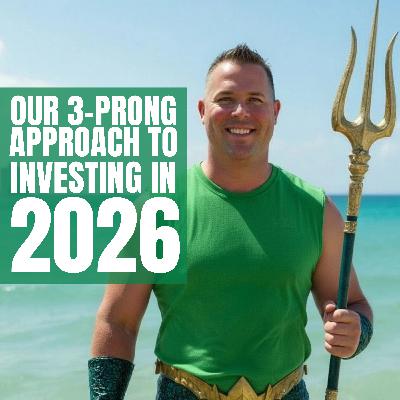
Good morning, afternoon, and evening, everybody! Happy New Year! It's 2026, and despite "feeling like ass" with a nasty flu, I'm fired up to share our 3-pronged attack strategy for the year ahead. History's repeating itself, folks: distressed real estate is on the rise, from residential notes to commercial defaults. Texas (and Florida's "errors") are hotspots, and opportunity knocks for those willing to roll up their sleeves!Forget 3% mortgages; people are tapping equity at 7% to survive, meaning more distressed assets hitting the market. Austin's getting a little too "hectic" with its "Democratic socialists" for my taste, so we're looking to South Texas for some probate action! This isn't just theory; it's our tactical approach to turn chaos into cash flow.Here’s our battle plan for conquering distressed real estate in 2026:Non-Performing Notes & Strategic Sub-To Deals: We're targeting non-performing notes we can buy cheap enough for big checks or 12%+ cash flow. If not, we pivot to subject-to acquisitions with borrowers who have 20%+ equity, saving them from foreclosure while we pick up solid assets (using legal Texas wrap-arounds or lease options).South Texas Probate Power Plays: As Austin gets "not nice," we're diving deep into direct mail campaigns for probate deals in South Texas, aiming to scoop up properties from families who just want to move on.Capitalizing on Distressed Property & Borrower Engagement: Learn how we're reactivating direct marketing campaigns and old websites to find distressed properties, engaging directly with homeowners to help them avoid a credit-crushing foreclosure.The Unsung Hero: Consistent Marketing & Capital Raising: Discover why "consistency" is my word for 2026. Without it, you're a "ghost." We'll talk about effective social media (LinkedIn's good, Facebook's a "dumpster fire"), email lists, and why January-March are prime months for networking to raise capital.Why You Need to Take Action (Seriously!): This isn't a hobby; it's a business. Whether it's funding delinquencies or light rehab, you'll need capital. And if you've got a killer case study or a burning topic, reach out – we love to feature badasses closing deals!This isn't about sitting back and waiting; it's about leaning into the storm and finding the gold. If you're ready to stop getting "hobby results" and want to turn distressed properties into real wealth, it's time to act. Don't be a stranger – book a call at talkwithscottcarson.com, text me at (512) 585-3810, or join our Note Buying for Dummies workshop in Austin (notebuyingfordummies.com – includes a spouse/partner, so no excuses!). Go out, take some action, everybody, and we'll see you at the top!#RealEstateInvesting #DistressedRealEstate #NonPerformingNotes #SubjectTo #ProbateInvesting #TexasRealEstate #RealEstateStrategy #CashFlow #InvestorMindset #2026Goals #RealEstateMarketing #PodcastWatch the Original VIDEO HERE!Got Questions? Book a Call With Scott HERE!Connect with Scott on LinkedIn here! Use Scott's AI Clone HERE!
loading
CommentsÂ