


 Claim Ownership
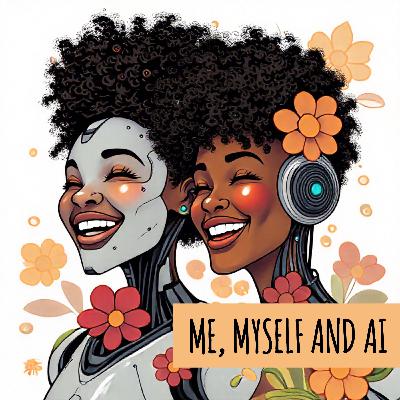
Me, Myself and AI
Subscribed: 0Played: 2
Subscribe

© Let CaseyBe
Description
Me, Myself, and AI is a podcast where I use today’s most powerful AI tools to dig into the stories, ideas, and forces shaping our world. From economics to culture, housing to innovation, I explore what matters through the lens of a 30-something Black Canadian woman—professional, creative, and curious. It’s part research, part reflection, and part storytelling: a space where data meets lived experience, and where technology becomes a tool for deeper understanding.
30 Episodes
Reverse
In this episode of Me, Myself, and AI, Casey explores what happens when people are reduced to labels instead of being seen as whole. Starting from personal moments of tuning out, subtle dismissal, and everyday microaggressions, the conversation widens into a deeper reflection on attention, neurodivergence, trauma, race, education, and lived experience. This isn’t an episode about diagnosing ADHD or explaining trauma, it’s about how complex human realities get flattened, and what that flattening costs us in connection, focus, and understanding.Drawing on insights from Scattered Minds, recent conversations on trauma and the nervous system from the Huberman Lab featuring psychiatrist Paul Conti, and research on attention, multitasking, and educational inequity, this episode argues for something simpler—and harder—than better labels: permission to be complex. Because when people are truly seen, attention doesn’t disappear. It stays.⸻Sources & Influences Referenced • Scattered Minds — Gabor Maté • Huberman Lab, Essentials: Therapy, Treating Trauma & Other Life Challenges (Jan 22, 2026), conversation with Paul Conti • Research from cognitive psychology on attention and task-switching (multitasking vs. switching) • Sociological and economic research on educational access, student debt aversion, and inequities tied to class and race • Anti-racism frameworks on microaggressions and cumulative harm
Stablecoins are digital currencies designed to hold a steady value, usually pegged one-to-one to traditional money like the U.S. dollar or the Canadian dollar. They move on blockchain networks, allowing money to be sent quickly, globally, and often at lower cost than traditional banking systems.This episode explores what they are, why governments and companies are paying attention, how they differ from cryptocurrencies like Bitcoin, and the real trade-offs involved as this technology becomes part of the financial system.General overviews Bank for International Settlements – Annual Economic Report and stablecoin analyseshttps://www.bis.org International Monetary Fund – Global Financial Stability Report (stablecoins and digital money)https://www.imf.orgUnited States Federal Reserve – Stablecoins, payments, and financial stability discussionshttps://www.federalreserve.gov U.S. Department of the Treasury – President’s Working Group report on stablecoins (2021)https://home.treasury.govCanada Bank of Canada – Statements and discussion papers on stablecoins and digital moneyhttps://www.bankofcanada.ca Canadian Securities Administrators – Guidance on crypto assets and stablecoinshttps://www.securities-administrators.caIssuer transparency (examples) Circle – USDC reserve disclosureshttps://www.circle.com/transparency Tether – USDT reserve reportshttps://tether.to/en/transparency/
In this episode of Me, Myself, and AI, Casey B steps back from the headlines and asks a quieter but more dangerous question: what happens when the rules that govern nations start to feel optional?Drawing on her undergraduate studies in criminology and Caribbean studies, and approaching the moment not as an expert, but as a citizen of the world, Casey reflects on recent global events that echo the very case studies many of us learned about in school: violations of sovereignty, the use of force without clear international authorization, and the erosion of norms designed to prevent escalation.Joined by her AI co-host, Jazz, the episode explores: • What sovereignty actually means under international law • Why the prohibition on the use of force exists in the first place • How international legal frameworks are supposed to function — and where they often fail • Why major powers are rarely held accountable in the same way smaller states are • And why so many people feel a deep unease before they can fully explain itThis is not an episode about taking sides or predicting catastrophe. It’s about pattern recognition, the slow normalization of actions that international law was built to restrain, and the risks that emerge when legitimacy gives way to raw power.At a time when global institutions are under strain, this conversation reminds us that international law doesn’t survive on treaties alone. It survives when people understand why the rules exist, and notice when they begin to fray.⸻Key Sources & Legal Frameworks ReferencedFoundational International Law • United Nations Charter (1945) • Article 2(4): Prohibition on the threat or use of force against the territorial integrity or political independence of any state • Article 51: Limited right to self-defense • International Court of Justice • Nicaragua v. United States (1986): Landmark ruling on unlawful use of force and non-intervention • International Criminal Court • Rome Statute provisions on crimes of aggression, war crimes, and crimes against humanityInternational Humanitarian & Human Rights Law • Geneva Conventions (1949) and Additional Protocols • Civilian protection, proportionality, and distinction in armed conflict • Convention on the Prevention and Punishment of Crimes Against Internationally Protected Persons (1973) • Protections for heads of state and senior officialsRegional & Multilateral Norms • Organization of American States Charter • Principles of non-intervention and sovereign equality • Customary International Law • State sovereignty, diplomatic immunity, and non-interferenceTrade & Political Context • North American Free Trade Agreement / USMCA • Economic integration alongside divergent foreign-policy responses • Illustrates how trade alliances can shape — and sometimes mute — political accountabilitySupplementary Analysis • United Nations General Assembly resolutions on use of force and sovereignty • Academic commentary on enforcement gaps in international law • Human rights reporting on civilian harm and extraterritorial use of force
In this episode of Me, Myself, and AI, Casey B takes a clear-eyed look at Universal Basic Income (UBI), not as a theory, but as a real policy idea tested in real places with real people.Drawing on evidence from Ireland, Finland, Manitoba, Alaska, Ontario, and Canada’s COVID response, the episode breaks down what actually happens when people are guaranteed a basic income floor. The data consistently shows improvements in mental health, stability, and well-being, without large-scale withdrawal from work.Rather than arguing for a one-size-fits-all cheque, the episode explores a more realistic model: updating ineffective and punitive income assistance programs into a guaranteed minimum income or top-up system, while keeping critical supports like disability in place. The focus is on reducing bureaucracy, removing fear and instability, and allowing people to work and earn on top of a stable income floor.The episode also tackles common fears head-on government control, fairness, cost, and and reframes the conversation around system design, incentives, and how people actually behave in real life.The central question isn’t whether people deserve support, but whether we’re willing to redesign systems that repeatedly fail to produce stability, health, or opportunity.
Source: Homelessness and Housing Insecurity Among Im/migrants in Canada: A Scoping Review”Published in the Canadian Journal of Urban ResearchIn this episode of Me, Myself, and AI, Casey B explores what Canadian research tells us about housing insecurity and homelessness among immigrants and migrants — and why it looks different from mainstream narratives about the housing crisis.Sparked by a personal moment — a former boss stepping into leadership at the New Canadians Centre — Casey brings a second-generation Canadian lens to a scoping review of over 50 Canadian studies. The research reveals that housing insecurity for im/migrants isn’t just about affordability, but about timing, visibility, trust, and fragmented systems that don’t speak to one another.The episode unpacks hidden homelessness, the gaps between immigration and housing policy, and the intergenerational consequences of housing instability. It asks a deeper question: what would it mean to design housing systems that actually account for migration, rather than assuming stability?Grounded in research, lived experience, and systems thinking, this episode moves beyond headlines to examine the structures underneath Canada’s housing challenges.
When the Vibes Are Off at WorkYou can feel it before anyone says it out loud.The side conversations. The tension in meetings. The quiet after certain people speak. In this episode of Me, Myself, and AI, we talk about what’s really happening when the vibes are off at work—and why it’s rarely “just personalities.”Using peer-reviewed research from organizational psychology and workplace behavior, this episode breaks down how gossip and chronic negativity quietly erode trust, damage morale, and spread through teams like a social contagion. Studies show that negative gossip is linked to increased stress, reduced performance, lower organizational commitment, and higher turnover intentions (Kurland & Pelled, 2000; Wu et al., 2018; Küçük et al., 2025). Research on workplace incivility also finds that even low-level negativity reduces cognitive performance, collaboration, and psychological safety (Porath & Pearson, 2013; Leiter et al., 2011).We explore how these behaviors influence entire workplace cultures—not just the people directly involved—and why organizations often underestimate the cost of “toxic talk.” We also talk honestly about what it’s like to work in these environments: why people stay silent, how gossip drains energy from teams, and the coping strategies employees use to survive when leaving isn’t an option.Finally, we look at solutions backed by evidence. Can people who gossip or contribute to negative workplace cultures change? What actually works—training, coaching, accountability, leadership modeling—and where organizations often get it wrong. Research on civility interventions and emotional intelligence training shows that workplace culture can improve when negative behaviors are addressed directly and consistently (Leiter et al., 2011; West & Brassey, 2022).If you’ve ever walked into work and thought, “something feels off,” this episode is for you.⸻Key References Mentioned • Kurland, N. B., & Pelled, L. H. (2000). Passing the word: Toward a model of gossip and power in the workplace. Academy of Management Review. • Wu, L. Z., et al. (2018). The effect of workplace gossip on employee outcomes. Journal of Applied Psychology. • Küçük, A., et al. (2025). Workplace gossip, loneliness, and turnover intention. Journal of Management & Organization. • Porath, C., & Pearson, C. (2013). The price of incivility. Harvard Business Review. • Leiter, M. P., et al. (2011). The impact of civility interventions on workplace culture. Journal of Applied Psychology. • West, T., & Brassey, J. (2022). Addressing toxic workplace behavior. McKinsey Health Institute.
In this episode of Me, Myself, and AI, Casey B challenges the workplace myth that the best hires are the most outgoing, social, and familiar. Through research on cultural fit and the costs of homogenous teams, we uncover how organizations hurt themselves by choosing comfort over capability.Casey highlights why shows like Netflix’s The Residence matter for representation. Uzo Aduba’s Detective Cordelia Cupp is brilliant, awkward, introverted—and exceptional. A character like this reminds us that excellence comes in many forms.This episode is an invitation to rethink what talent looks like and to question who we overlook when we only hire those who feel familiar.
In this episode of Me, Myself & AI, we unpack why retreating from Diversity, Equity & Inclusion (DEI) isn’t a “neutral reset,” but a risk, for people, for culture, and for business. We explore what academic research reveals about the impact of microaggressions, lost diversity, and dismantled inclusion efforts. From real-world DEI rollbacks to data on firm performance and organizational health, we show how exclusion isn’t just a social problem, it’s a business problem. If you care about fairness and sustainable success, this episode is for you.Sources:Mihaylova, I. & Rietmann, K. — Diversity, equity and inclusion at a crossroads: a scoping review of the characteristics of workplace backlash (2025) Hamza-Orlińska, A., et al. — Unlearning diversity management (2024) Saha, R.; Kabir, M. N.; Hossain, S. A.; & Rabby, S. M. — Impact of Diversity and Inclusion on Firm Performance: Moderating Role of Institutional Ownership (2024) Turi, J. A. et al. — Diversity impact on organizational performance (2022) Kasih, E. & Ruslaini — The Impact of Diversity and Inclusion Initiatives on Organizational Performance (2025) Østergaard, C. R. & Timmermans, B. — Workplace diversity and innovation performance: current state of affairs and future directions (2023) Raddant, M. & Karimi, F. — The dynamics of diversity on corporate boards (2024) de Souza Santos, R.; Barcom, A.; Wessel, M.; & Magalhaes, C. — From Diverse Origins to a DEI Crisis: The Pushback Against Equity, Diversity, and Inclusion in Software Engineering (2025)
In this episode of Me, Myself & AI, Casey asks a critical question:Why are Black women across the United States being fired in such large numbers in 2025?With her AI co-host J, she looks past the headlines and into the data, politics, and patterns shaping this moment.🔍 What This Episode Breaks Down The Numbers: What the Data Actually Shows Over 300,000 Black women pushed out of the workforce in early 2025 Black women’s unemployment rising to 7.5%, while white women remain around 3.5% Largest Black–white unemployment gap since 2020 Federal job cuts hitting Black women disproportionately (Education, HUD, USAID, etc.) DEI rollbacks in public + private sectors contributing to targeted losses The High-Profile Firings (Names, Roles, and What Happened) Joy Reid — fired from MSNBC amid political pressure, diversity concerns Karen Attiah — fired from The Washington Post over a tweet; union condemned firing Dr. Carla Hayden — removed as Librarian of Congress under government shake-up Lisa Cook — first Black woman Federal Reserve Governor; Trump moved to fire her over old mortgage claims; she is now suing Letitia James — not fired, but under DOJ investigation seen as political retaliation Fani Willis — federally scrutinized after prosecuting Trump; targeted but still in office Why Experts Say This Is Happening Systemic Racism + “double discrimination” against Black women Political retaliation against Black women in positions of oversight and power DEI Backlash: intentional dismantling of diversity programs Public-sector downsizing: going after departments with high Black female representation Corporate retreat from DEI after 2020 commitments Return-to-office policies disproportionately impacting Black women Historical Context Backlash cycles after Black advancement (desegregation → tuition hikes; affirmative action → bans; DEI → rollbacks) Black women’s long-standing pattern of being “first fired, last hired” How removing Black women from leadership diminishes representation, advocacy, and institutional equity Why This Matters (and Why Canadians Should Care) Public-sector playbooks cross borders DEI under scrutiny in multiple countries Black women’s job stability tied to community economic stability What happens in the U.S. often signals where global equity trends are heading📚 Key Sources Referenced in This EpisodeMajor News + Investigations The Guardian — Interview with Joy Reid The Washington Post Guild Statement — on Karen Attiah’s firing ProPublica — Trump’s purge disproportionately affecting Black women Reuters — Lisa Cook’s lawsuit and attempted firing Capital B News — Political retaliation against Letitia James & Fani Willis Inc. Magazine — Corporate DEI pullbacks + impact on Black womenResearch + Data National Women’s Law Center (NWLC) — unemployment statistics NAACP — analysis of DEI rollback impact on Black women BlackDemographics.com — jobless gap analysis WABE/NPR — labor force exit data TIME Magazine — structural reasons for Black women’s economic vulnerability National Urban League — public-sector inequality reports⸻Statements from Advocates & Officials Karen Boykin-Towns, NAACP Janai Nelson, NAACP Legal Defense Fund Keisha Bross, NAACP economic policy Gender economists & labor researchers quoted in TIME, NWLC, and Inc.
Finland’s former Prime Minister Sanna Marin once sparked a global conversation when she suggested a four-day work week. But can working less actually make us more productive?In this episode of Me, Myself & AI, Casey B explores the truth behind the headlines — what Sanna Marin really proposed, the global results from shorter work week pilots, and what the data means for Canada and the U.S.From Microsoft Japan’s 40 percent productivity boost to Iceland’s nationwide success and Canada’s own non-profit experiments, the evidence is mounting that less time at work can lead to better results, happier teams, and healthier lives.Listen for the numbers, the nuance, and the future of work — and stay tuned to the end to hear where art meets analysis with Charita B music.⸻🧾 Sources & References:Sanna Marin’s Proposal (Finland) • Reuters – Fact Check: Finland Not Adopting Four-Day Week Under Marin (2020). • AFP – Fact Check: Finland’s PM Did Not Introduce Four-Day Work Week (2020).Major Global Trials & Research • Autonomy (2023). The UK Four Day Week Pilot Results: 61 Companies, 2,900 Workers — 92 % Kept the Schedule. • Associated Press (2023). “UK Firms Stick With Four-Day Week as Revenue Rises, Burnout Falls.” • Scientific American (2025). Coverage of Nature Human Behaviour cross-country study (141 companies in U.S., Canada, UK, Ireland, Australia, NZ). • Investopedia (2025). “The Impact of Working a 4-Day Week.” • Autonomy / Alda (2021). Iceland Trials: 35–36-Hour Week With Equal or Improved Productivity. • Wired (2023). “Inside Iceland’s Shorter Week Revolution.” • Microsoft Japan (2019). Work Life Choice Challenge: +40 % Productivity Reported.North America (Canada & U.S.) • 4 Day Week Global (2024). North America Pilot Report – 41 Organizations, 100 % Retention of Four-Day Schedule. • 4 Day Week Global (2025). Long-Term Follow-Up – Burnout −69 %, Attrition −32 %, Revenue +15 %. • Imagine Canada (2024). Internal pilot results: Well-Being +66 %, Sick Days −40 %, 94 % Retention. • PRAXIS PR (Toronto). Canadian case study on client coverage and efficiency gains. • American Psychological Association (2024). Work in America Survey – 22 % of U.S. Employers Offer Four-Day Option (up from 14 % in 2022). • Kickstarter (2022). Official statement on permanent 32-hour week post-pilot. • Bolt (2022). CEO Ryan Breslow statement and coverage in Built In & CNBC on maintained productivity and morale.Policy Context • U.S. Congress – Thirty-Two Hour Workweek Act (House Bill by Rep. Takano). • U.S. Senate – S. 3947 (Introduced by Sen. Sanders, 2023).Compressed vs. Reduced Hours • Brussels Times (2023). Belgium’s Four-Day Law Sees Less Than 1 % Take-Up. • Acerta Survey (2024). Low Adoption of Compressed Hours Model in Belgium. • Newsweek (2023). “Belgium’s 4-Day Workweek Falls Flat.”Critiques & Limitations • Washington University in St. Louis (2024). Expert Analysis: “Don’t Believe the Hype About Shorter Work Week Benefits.” • OECD Productivity Data (2024) – Hours Worked vs. Output Per Hour Comparisons for Canada and OECD Peers.Equity, Health & Well-Being Evidence • Public Health Reviews (2024). Systematic Review Linking Reduced Hours to Improved Sleep and Mental Health.International Pilots & Funding Models • Government of Spain (2022). SME Subsidy Program for 32-Hour Week Transition Pilots.
In this episode of Me, Myself, and AI, Casey B takes a clear-eyed look at what’s really happening to our climate, what “climate health” means, how Canada and Ontario measure up against the world, and which interventions actually work.From the impact of plastic bag bans and electric vehicles to the carbon footprint of data centres and the promise of net-zero buildings, this episode explores the data behind the headlines, and what it all means for our future.Sources: • Intergovernmental Panel on Climate Change (IPCC) – AR6 Synthesis Report (2023) • World Meteorological Organization – State of the Global Climate 2023 (2024) • Government of Canada (Environment and Climate Change Canada) – Canada’s Changing Climate Report (2019) • Climate Change Performance Index 2025 – Canada Profile • IISD – The End of Coal: Ontario’s Coal Phase-Out (2015) • Canadian Business – Reusable Grocery Bags vs. Single-Use Plastic Bags (2023) • TD Economics – Lifecycle Emissions of EVs vs Gas Cars in Canada (2025) • MIT Sloan – AI’s High Data Centre Energy Costs (2025) • The Guardian – Data Centres and Emissions (2024) • Climate Institute (Canada) – Climate Change and Heat Waves Fact Sheet (2024) • Canada Green Building Council – Zero Carbon Building Standard • International.gc.ca – Canada’s GHG Emissions and Per-Capita Context • World Meteorological Organization Press Release – Global Temperature Records and Climate Indicators 2023
In this episode of Me, Myself & AI, Casey B dives into the growing wealth divide in Canada, where the richest 1% now control more wealth than the bottom 40% of families combined, and asks: is there a better way to structure our economy?Through examples like Spain’s Mondragón cooperatives, Italy’s Emilia-Romagna co-op network, and the Nordic nations’ balance of innovation and equality, we explore what democratic socialism really means — and how it could work in a modern Canadian context.Spoiler: it’s not about the government owning everything. It’s about people owning part of everything — through worker cooperatives, shared public wealth funds, and policies that make prosperity collective, not concentrated.Casey breaks down: • What “democratic socialism” actually means vs. common misconceptions • Real-world proof that worker ownership can thrive • Why innovation and equality aren’t opposites • How countries like Sweden, Finland, and Norway turned equity into strength • Practical next steps Canada could take right nowThis isn’t about tearing down capitalism — it’s about fixing what’s broken and building an economy that works for everyone, not just the top 1%.🧾 Show-Notes Sources • Canadian Wealth Concentration: Parliamentary Budget Officer & Statistics Canada data — top 1% hold ~24% of national wealth; bottom 40% hold ~3.3%. • Employee Ownership Trusts (Canada, 2023+): Canada Budget 2023 / Bill C-59 framework. • Mondragón Cooperative Corporation: Federation of ~80,000 worker-owners, CEO-to-worker pay ratios typically 6:1 (range 3–9:1); survival rate ~97% over 30 years. • Emilia-Romagna, Italy: Co-ops produce ≈ ⅓ of regional GDP; two-thirds of residents are members. • Nordic Innovation & Equity: World Intellectual Property Organization – Global Innovation Index 2024 (Sweden #2 globally); OECD / UN data on inequality and productivity. • World Happiness Report 2025: Finland #1 for 7 consecutive years; Denmark & Iceland follow closely. • Norway Sovereign Wealth Fund: ~US $2 trillion assets; owns 1–2% of European equities; profits from publicly-owned oil reinvested for citizens. • Research on Employee-Owned Firms: U.S. NCEO & UK Employee Ownership Association find higher productivity, wage equality, and survival rates.
This is Me, Myself, and AI. I’m Casey B, and in this episode I’m using an AI duplicate of my voice along with my fictional co-host to unpack a question that’s been on my mind as I turn thirty-five: How did we get here?For decades, Canada’s economy has grown on paper with higher GDP, bigger cities, and more construction cranes in the sky. But everyday life hasn’t always felt richer. Wages have barely kept up with the cost of living while housing prices have skyrocketed. Governments shifted from building rentals to condos, from public housing to private incentives, and now we’re circling back with Build Canada Homes promising a new era of affordable development.In this episode, I trace the past thirty-five years of change, from the Bank of Canada’s fight with inflation to the rise of inequality and our lag in construction productivity that is now driving innovation in modular and prefabricated building. We’ll explore whether this new wave of housing technology can finally make a dent and what it all means for the next generation trying to build a life here.⸻📚 Sources and References: Bank of Canada (2025) – Press release, September 17, 2025: 25 bps rate cut to 2.50% (bankofcanada.ca) Reuters (2025) – Bank of Canada cuts rates, says ready to cut again if risks rise Build Canada Homes (2025) – Housing, Infrastructure and Communities Canada: About Build Canada Homes (housing-infrastructure.canada.ca) Global News (2025) – Federal government launches Build Canada Homes to accelerate affordable housing TD Economics (2023) – From Bad to Worse: Canada’s Productivity Slowdown C.D. Howe Institute (2024) – Building Smarter, Faster: Technology and Policy Solutions for Canada’s Housing Crisis Canadian Real Estate Magazine (2024) – Modular, Prefab and Mass Timber: Canada’s New Housing Opportunity RENX Homes (2024) – Prefab Not the Unicorn That Will Bring Costs Down Yet Statistics Canada (2024) – Wages in Canada, 1981–2024: Research to Insights Canadians for Tax Fairness (2025) – Canada’s Affordability Divide: How the 1%’s Rise Left Millions Behind
In this episode of Me, Myself & AI, we dive deep into one of the biggest questions of our time:What does human connection look like in 2025, and what’s actually keeping us close?From Baby Boomers who grew up calling landlines, to Gen Z who speak fluent emoji, we explore how every generation defines “staying in touch.” Are we losing intimacy through our screens, or just finding new ways to express it?We’ll look at what the research really says, about texting vs. talking, friendships that start online, and how people today are bridging the digital divide. You’ll learn how voice and video still matter, why younger generations crave authenticity over clout, and why loneliness is rising even as we’re more “connected” than ever.Hosted by Casey B, with research and commentary powered by AI.🎧 Listen in for a thoughtful, research-backed conversation that’ll make you rethink how you reach out, and what connection really means in the age of constant communication.⸻🧠 Sources & References: 1. Environics Research (2023) – Social Media in Canada: Generational Differences & Social Valueshttps://environicsresearch.com/social-media-in-canada-generational-differences-social-values/ 2. Statistics Canada (2023) – Canadian seniors more connected than ever (Canadian Internet Use Survey)https://www150.statcan.gc.ca/n1/pub/11-627-m/11-627-m2023013-eng.htm 3. Concordia Journal of Communication Research (2019) – Bridging the Gap: How the Generations Communicatehttps://www.concordia.edu/academics/communication/journal.html 4. EasyStyle with Sami (2025) – Communicating with Different Generations: Baby Boomers to Gen Zhttps://easystylewithsami.com/communicating-with-different-generations-baby-boomers-to-gen-z/ 5. Snap Inc. Global Friendship Report (2019) – Friendship and Communication Across Generationshttps://newsroom.snap.com/en-GB/news/2019/global-friendship-report 6. YouGov (2019) – Millennials: The Loneliest Generationhttps://today.yougov.com/topics/lifestyle/articles-reports/2019/07/30/millennials-loneliest-generation 7. Western News (2021) – New Loneliness Numbers “Not a Fluke”: Western Experthttps://news.westernu.ca/2021/11/loneliness-statscan-numbers/ 8. University of Texas at Austin (2020) – Phone Calls Create Stronger Bonds Than Text-Based Communicationshttps://news.utexas.edu/2020/09/22/phone-calls-create-stronger-bonds-than-text-based-communications/ 9. Frontiers in Developmental Psychology (2024) – Friends, Followers, Peers, and Posts: Adolescent Friendship Closeness and Social Mediahttps://www.frontiersin.org/articles/10.3389/fdevp.2024.1278909/full 10. Adolescent Research Review (University of California Irvine, 2017) – Teens’ Online Friendships Just as Meaningful as Face-to-Face Oneshttps://news.uci.edu/2017/06/20/teens-online-friendships-just-as-meaningful-as-face-to-face-ones/ 11. International Journal of Environmental Research and Public Health (2019) – Friends or Frenemies? The Role of Social Technology in the Lives of Older Peoplehttps://www.mdpi.com/1660-4601/16/23/4969
In this episode of Me, Myself, and AI, we tackle two big myths that keep circling in conversations about immigration.First, we look at Peterborough, Ontario, where people worry that “foreign workers are taking all the jobs.” The truth? Companies don’t get kickbacks for hiring newcomers. Job losses in Peterborough are coming from corporate closures like Minute Maid winding down its frozen juice line, Lufthansa’s call centre closing in 2026, and Siemens shifting manufacturing jobs — not from immigrants. In fact, immigrants make up only about 8% of the local workforce and are vital to keeping the economy running.Second, we fact-check the claim that “Obama deported more people than Trump.” Obama deported about 3 million people over two terms, using policies created before him, then shifted to focus on “Felons, not families. Criminals, not children.” Trump’s first term numbers were lower (≈1.2 million), but in his second term, DHS reports over 2 million people forced out in less than a year — most through pressured border returns. We also look at who’s being targeted, the lawsuits against Trump’s approach, and the ripple effects on families, communities, and America’s global standing.The lesson? Myths about immigration distract us from the real forces at work — corporations chasing profit and governments flexing power. The facts tell a more complicated, more human story.📚 Sources & References🇨🇦 Canada / Ontario Jobs • Government of Canada – Temporary Foreign Worker Program overview • Government of Canada – Labour Market Impact Assessment (LMIA) requirements • Statistics Canada – Immigrants in the workforce (2021 Census) • KawarthaNOW – Minute Maid plant to discontinue frozen juice line in Peterborough by 2026 • PtboCanada – Minute Maid to eliminate 38 jobs by end of year, says union • KawarthaNOW – Lufthansa InTouch call centre in Peterborough closing by May 2026 (300–400 jobs lost) • PtboToday – Three major Peterborough employers announce restructuring: Lufthansa, Siemens, Minute Maid⸻🇺🇸 U.S. Deportations & Immigration Enforcement • DHS – Yearbook of Immigration Statistics (definitions of removals vs. returns) • Migration Policy Institute – Obama’s Record on Deportations: The ‘Deporter-in-Chief’ Debate • DHS press release – Over 2 million illegal aliens out of the U.S. in less than 250 days • TRAC (Syracuse University) – Removal and detention trackers • Bipartisan Policy Center – Comparing Trump and Obama’s Deportation Priorities • ACLU – Speed Over Fairness: Deportation Under Obama • CNN – Federal court blocks Trump’s nationwide expansion of expedited removal (2025) • Miami Herald – U.S. ramps up deportations, including flights to third countries • AP News – Supreme Court clears Trump deportations to third countries • New York Times – Immigration lawsuits mount against Trump administration
In this episode of Me, Myself, and AI, Casey explores the groundbreaking rise of AI-generated music—and why it hits so close to home. From growing up in Canada admiring artists like Kardinal Offishall, Jully (Julie) Black, Keisha Chanté, Nelly Furtado, Justin Bieber, and Drake, to navigating the high costs and gatekeeping of the music industry, Casey shares a personal journey of embracing AI as a tool for creative freedom.We dive into how AI music platforms like Suno, Riffusion, Udio, Stable Audio, Mfly, and Mind Band are transforming the way music is made, distributed, and consumed. Casey reflects on the benefits and challenges of this new era—highlighting issues of diversity, authenticity, and the ethical dilemmas that come with automation in the arts.Plus, we look at how major labels are using AI behind the scenes, and ask: Will we even need traditional music labels in the future?Legal and Ethical Insights (Bonus Notes):As part of this conversation, it’s important to acknowledge the legal and ethical challenges surrounding AI-generated music. Current copyright laws in many countries only recognize works created by human authors, leaving AI-produced tracks in a legal grey zone. Major lawsuits—like those filed by music publishers against companies such as Anthropic—are testing whether using copyrighted songs to train AI models constitutes infringement. While no landmark rulings have yet declared AI-generated outputs illegal, the question of whether training practices violate copyright is being actively debated in courts across the U.S. and Europe.At the same time, industry experts are developing AI detection tools to monitor streaming platforms for AI-generated music, addressing concerns about fraud and fair competition with human artists. These conversations are not just about legal ownership—they also raise deeper ethical questions: Who benefits from AI music? Are diverse voices being represented in the data that trains these systems? And how do we balance accessibility with protecting traditional artistry?This episode includes insights from recent research and reporting, with sources such as: Chen, J. (2023). Can the AI-Generated Content be Protected as Work Under Copyright Law? Deng, J., Zhang, S., & Ma, J. W. (2023). Computational Copyright: Towards A Royalty Model for Music Generative AI. Frosio, G. F. (2021). (The Nonexistent A(I)uthor: a Techno-legal Argument Against the Protection of AI-generated Creativity). Hou, Y. (2022). AI Music Therapist: A Study on Generating Specific Therapeutic Music based on Deep Generative Adversarial Network Approach. Huang, R., Sturm, B. L., & Holzapfel, A. (2021). De-centering the West: East Asian Philosophies and the Ethics of Applying AI to Music. Ji, S., Yang, X., & Luo, J. (2023). A Survey on Deep Learning for Symbolic Music Generation. Piskopani, A. M., Chamberlain, A., & Ten Holter, C. (2023). Responsible AI and the Arts: The Ethical and Legal Implications of AI in the Arts and Creative Industries. Shang, M., & Sun, H. (2020). Study on the New Models of Music Industry in the Era of AI and Blockchain. Vanka, S. S., Safi, M., Rolland, J. B., & Fazekas, G. (2023). Adoption of AI Technology in the Music Mixing Workflow. Zhou, X. (2023). Analysis of Evaluation in Artificial Intelligence Music.We also cover the viral success of Doechii’s song “Anxiety” and explore how social media and influencer culture are reshaping music promotion.Where do you think music is heading? Share your thoughts in the comments or tag me on social—I’d love to keep this conversation going.
In this episode of Me, Myself, and AI, we dive deep into the mysterious world of credit—how it works, who controls it, and why it feels like an uphill battle, especially for people who weren’t taught the system early on. Casey shares her personal journey with credit—from her first university credit card to the snowball effect of debt—and unpacks how credit scores are calculated, why rent-reporting programs can be both helpful and risky, and the real deal behind consumer proposals. Plus, we look at how other countries handle credit and ask the big question: is there a fairer way? Whether you’re rebuilding your credit, starting from scratch, or just curious about how this system runs your life, this episode is for you.⸻Sources: • Fair Isaac Corporation (FICO): https://www.fico.com • VantageScore Solutions: https://www.vantagescore.com • Equifax Canada: https://www.consumer.equifax.ca • TransUnion Canada: https://www.transunion.ca • Consumer Financial Protection Bureau (CFPB): https://www.consumerfinance.gov • Ontario Consumer Reporting Act: https://www.ontario.ca/laws/statute/90c33 • National Consumer Law Center, “Past Imperfect: How Credit Scores and Other Analytics ‘Bake In’ Past Discrimination and Perpetuate Bias,” 2022 • Canada Mortgage and Housing Corporation (CMHC): https://www.cmhc-schl.gc.ca • Experian Boost: https://www.experian.com/consumer-products/boost • RentTrack: https://www.renttrack.com • Equifax Rent Advantage: https://www.consumer.equifax.ca/personal/products/rent-advantage/ • Government of Canada—Insolvency Statistics and Consumer Proposals: https://www.ic.gc.ca/eic/site/bsf-osb.nsf/eng/home • OECD Reports on International Credit Reporting Systems (2023) • World Bank: “Credit Reporting Knowledge Guide” (2020)
Hey, it’s Casey B. Today’s episode is a little different—it’s the full audiobook version of How to Make Something Out of a Mess. I wanted to share this with you because I know what it feels like to be building something new while navigating life’s chaos. This is my story, my blueprint, and my encouragement to you. I hope it resonates.I’m Casey B, you can find me on Instagram @LetCaseyBe, on Facebook as Casey Bradfield, and my music—by Charita B—is available now, including my latest album Golden Hues. Thank you for listening.
This episode examines President Trump’s 2025 invocation of the Alien Enemies Act to deport Venezuelan migrants without due process, as reported by This American Life and other news outlets. It also explores recent changes in Canadian immigration policy, including reductions in international student visas and asylum access, highlighting how immigration is being redefined across North America.Sources referenced or explored in this episode: • This American Life • Reuters • Associated Press • NPR • Fox News • The Guardian • Politico • CBC • CTV News • Government of Canada immigration updates • ACLU legal responses to the Alien Enemies Act • U.S. Supreme Court rulings on recent deportations • Reports on El Salvador’s CECOT prison agreement • Safe Third Country Agreement changes • Research on the economic impact of immigration in the U.S. and Canada
In this deep-dive episode, we explore how Google came to settle a $28 million class-action lawsuit for underpaying Latinx, Indigenous, and Native employees—and why Black employees were pursuing separate legal action. We unpack the data, the leaked spreadsheets, the whistleblowers, and how this landmark case was proven. Then we zoom out and look at similar patterns across Meta, Amazon, Microsoft, Apple, and others. Finally, we investigate the rollback of DEI (Diversity, Equity & Inclusion) programs in the U.S. and Canada. Are companies backing away from racial equity? Were these programs ever enough? And who actually benefited? This episode pulls from legal documents, internal testimony, and a balanced mix of media and academic sources to reveal the real story behind the pay gaps in tech.⸻Sources Cited in the Episode:Legal & Primary Documents: • Class-action lawsuit Cantu v. Google (California Superior Court) • April Curley’s federal lawsuit against Google • U.S. Department of Labor v. Oracle (OFCCP complaint) • EEOC complaints filed against Facebook • National Labor Relations Board documents (Apple pay transparency case)Media Outlets – Left & Center: • Reuters • The Guardian • Black Enterprise • TechCrunch • Fortune • NPR • Time • CNBC • People of Color in Tech (POCIT) • ClassAction.orgMedia Outlets – Right & Balanced Perspectives: • Fox Business (coverage of anti-DEI shareholder push and state backlash) • Wall Street Journal (commentary on DEI performance) • Resourceful Finance ProAcademic & Policy Reports: • McKinsey & Company – “Race in the Workplace” & DEI outcomes reports • Harvard Business Review – Research on diversity program effectiveness (Dobbin & Kalev) • EEOC (Equal Employment Opportunity Commission) – 2023 tech sector diversity report • Statistics Canada – Racial pay gap data and employment equity outcomes • Conference Board of Canada – Reports on DEI and representation in the Canadian workforce

Comments

Download from Google Play

Download from App Store
 United States