


 Claim Ownership
The BookJelly Podcast
Subscribed: 0Played: 0
Subscribe

Description
On 'The BookJelly Podcast', I talk about books, ideas and the world around them – all solo, unfiltered, in my own words. Since my interests are varied, you may find me vacillating between fiction and nonfiction, business strategy and travelogues, essays and poetry, and much more.
If you like sharp insights, storytelling without fluff and honest reflections on books that make you think, you’ll feel at home here.
If you like sharp insights, storytelling without fluff and honest reflections on books that make you think, you’ll feel at home here.
11 Episodes
Reverse
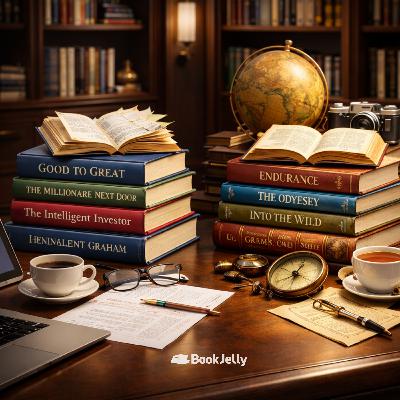
Why do so many famous business books age poorly, while narrative and literary nonfiction continues to endure?
In this episode of the BookJelly Podcast, I examine why business nonfiction struggles to remain timeless. Drawing from The Millionaire Next Door, Good to Great, and The Intelligent Investor, I argue that business books are bound to data, context, and systems that inevitably decay.
In contrast, literary nonfiction like Alfred Lansing’s Endurance survives because it explores enduring human conditions rather than temporary frameworks.
This episode is a diagnosis, not an attack. And a reminder to choose our “classics” carefully.
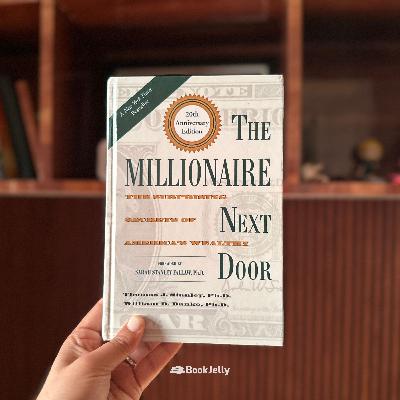
I avoided *The Millionaire Next Door* for nearly fifteen years. When I finally read it, three decades after its publication, I found a book that still delivers on behavior, but falls short on investing.
In this episode, I unpack what the book gets right about quiet wealth, where it feels dated, and why it’s more a sociological study of millionaires than a practical guide to building capital.
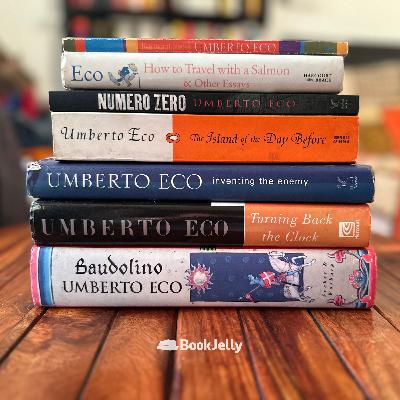
Ten years after his passing, this episode revisits Umberto Eco, the novelist, philosopher, semiotician and one of the last true public intellectuals.
From his childhood in Fascist Italy to The Name of the Rose, from Foucault’s Pendulum to essay collections like Inventing the Enemy, I explore how Eco studied power, propaganda, conspiracy, and the way meaning shapes the world around us.
Eco believed books are never innocent. Reading is not leisure. It is training.
He did not want admirers. He wanted alert readers.
This is not an obituary. It is a return to a mind that still challenges us to slow down, think clearly and distrust easy answers.
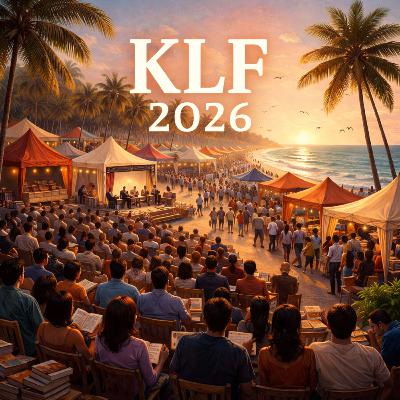
In this episode of The BookJelly Podcast, I reflect on three days spent at the Kerala Literature Festival in Kozhikode - my attempt to understand what literary festivals are really meant to do to a reader.
I begin with a quiet skepticism I carry into every literary festival. Not cynicism, but doubt. What exactly am I doing here? Are festivals meant to inform us, impress us, validate us, or simply remind us why we read in the first place?
Using KLF 2026 as a lived case study, I talk about arriving early at the beachside venue, feeling the physical shift from North Indian winter to coastal warmth, and watching the festival transform from calm to chaos within hours.
I reflect on the burden of choice that large festivals impose and why incompleteness is not a failure, but a condition of serious reading.
I discuss sessions that stayed with me. I also talk about what didn’t work. The frustrations of virtual sessions, technical glitches, and how scale and spectacle can sometimes interrupt thought.
More than anything, this episode is about Kozhikode as a reading city and why KLF feels rooted rather than parachuted in. About readers, not audiences. About festivals that complicate you rather than flatter you.
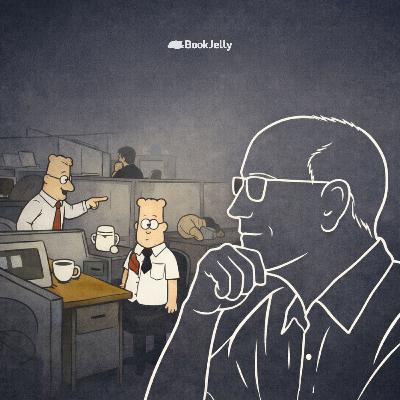
Scott Adams is no longer with us. He passed away on January 13, 2026, at the age of 68, after battling stage IV prostate cancer that had spread to his bones.
For many of us, Adams was more than the creator of Dilbert. Long before corporate life was dissected by management gurus and LinkedIn influencers, he was quietly documenting how organizations actually functioned, not as they claimed to. What we first laughed at as satire eventually revealed itself as realism.
This episode is not an attempt to canonize him, nor to litigate his controversies. It is a clear-eyed reflection on his work, his ideas, his contradictions, and why his writing mattered to those who learned to see systems, incentives, and power more clearly because of him.
Scott Adams’ life has ended. His ideas haven’t.
The only real tribute is to read him.

In this episode of The BookJelly Podcast, I step away from my usual book-led conversations to respond to the moment we are living in. A recent US attack on Venezuela, carried out without UN approval or Congressional authorization, raised an old and uncomfortable question. How restrained is power, really?
That question pulled me back to The Doomsday Machine by Daniel Ellsberg. A book that exposes how nuclear policy during the Cold War was built not on wisdom or control, but on delegation, secrecy, and a terrifying willingness to risk annihilation. Ellsberg, best known for leaking the Pentagon Papers, reveals how close the world came to destruction not by accident, but by design.
This episode connects Ellsberg’s warnings to the present. It is not a political rant, nor a book review in the conventional sense. It is a reflection on unaccountable power, manufactured justifications, and the enduring myth that someone, somewhere, is firmly in control.
Listen slowly. Some books do not age. They wait.
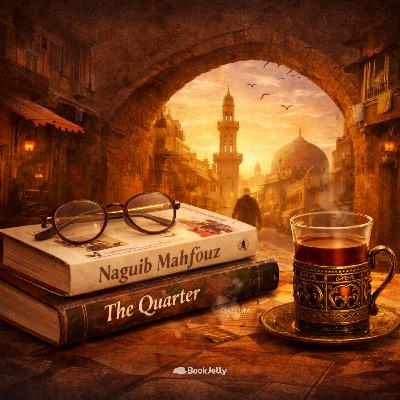
In this episode of The BookJelly Podcast, I speak about arriving late to a writer. My first sustained encounter with Naguib Mahfouz came not through syllabi or reputation, but almost accidentally, via Salman Rushdie’s Knife. The Quarter, a posthumously discovered collection of short stories set in a single Cairo neighborhood, became my entry point into Mahfouz’s world.
I reflect on hesitation toward fiction, the texture of everyday life Mahfouz captures so quietly, and why this uneven but honest book lingered with me. This is not a definitive review, but a first reading. A beginning, not a conclusion.
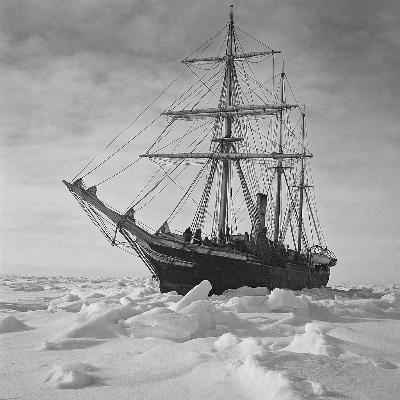
In the concluding part of this book review, we witness how Alfred Lansing created, inadvertently perhaps, a moral parable for courage and leadership. We follow Shackleton’s men through their unimaginable voyage across the Drake Passage and end with the final, hard-won rescue.
What happens when human ambition meets the cold indifference of nature? In Part I of Endurance book review, I explore Alfred Lansing’s breathtaking account of Shackleton’s doomed Antarctic voyage: a story of courage, chaos and the thin line between civilization and survival.
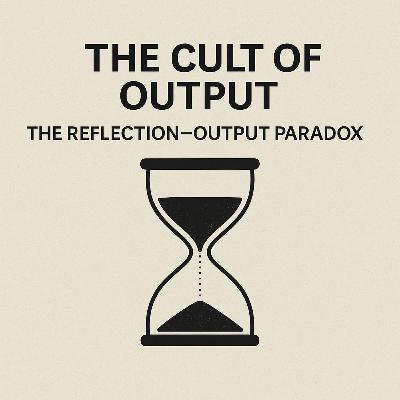
In a world obsessed with maximizing every minute, we’ve mistaken motion for meaning. Our calendars are full, our minds are empty.
In this solo episode, I explore how efficiency became the new theology and why silence, slowness and reflection are no longer signs of laziness but acts of quiet rebellion.
From monastic scribes to modern “content creators,” from Archimedes’ bath to your own overstuffed to-do list, this episode asks a simple question: Can you think if you never stop moving?
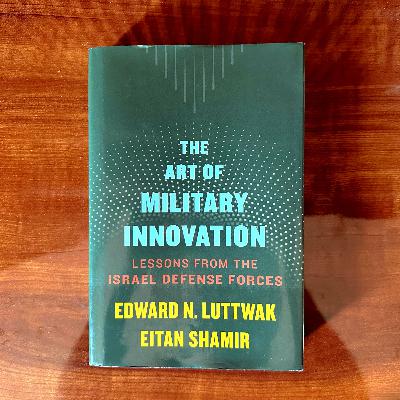
In this episode, I explore The Art of Military Innovation: Lessons from the Israeli Defense Forces by Edward N. Luttwak and Eitan Shamir — a fascinating deep dive into how Israel turned scarcity, improvisation, and urgency into an engine of military innovation.
Comments

Download from Google Play

Download from App Store
 United States