


 Claim Ownership
Beatles Rewind Podcast
Subscribed: 5Played: 96
Subscribe

© Steve Weber
Description
135 Episodes
Reverse
The new McCartney documentary Man on the Run just debuted on Amazon Prime, a date Beatles fans had been circling for months. For most viewers, the film lived up to the hype. But some hard-core fans have quibbles. The problem: Man on the Run was dumbed-down for a general audience. Was it outright corporate censorship, or simply a strategy to cap the running time at 120 minutes? That question is worth examining. 🔍What the Critics Said* Rotten Tomatoes: A perfect 100% score from the site’s 56 professional critics, and rank-and-file fans rated it 91%. Darned near perfect, which is exceedingly rare for a documentary. 🎬* Hollywood Reporter called it “revelatory,” praising the archival richness and director Morgan Neville’s decision to avoid talking heads. (The only on-camera interviews are from a few vintage Beatles clips.)* NPR called it “an impressive, inspirational second act,” noting that McCartney speaks with “refreshing honesty” about the Beatles breakup, his feud with John Lennon, and his Japan drug arrest.* IndieWire Praised the film as satisfying for both casual fans and longtime devotees—definitive but “lacking in edge.”My take: good film, wrong audience—at least for the people who wanted it most. 📺Why the Completionists Were Let DownThe primary complaint from dedicated fans is blunt: they’ve seen this before. Not this specific footage—much of it is genuinely rare—but this particular shape of the story, this curation of a narrative they have followed for 50 years through Archive Collection reissues, the McCartney Legacy volumes, and Wingspan itself. Super Deluxe Edition’s review put it plainly: the film is “aimed at the fan who has a passing interest and the barrier to entry is appropriately low.” 😤The editing drew specific criticism. IndieWire noted significant omissions—Red Rose Speedway, Venus and Mars, London Town, and remarkably, “Live and Let Die” receive little or no treatment. The film’s decision to avoid completist album-by-album structure is defensible—but some viewers felt it went too far in the other direction. 🌍The Incredible Shrinking Beatles DocWhy did Man on the Run feel superficial to some hardcore fans? The rough cut of the film ran 150 minutes, but the final cut was trimmed down to 120 minutes. The skimpy version was, plainly, a commercial choice, not an artistic one. I have the sneaking suspicion that some of the best stuff was left out.Because that’s exactly what happend to The Beatles Anthology when it appeared on Disney+ this past November—there was a major controversy regarding the edits. While the “new” version was marketed as “restored and expanded” (mostly due to the brand-new 9th episode), the original episodes were chopped up. The original DVD version ran for approximately 10 hours (roughly 75 minutes per episode). The Disney+ 2025 version clocks in at just under 9 hours (roughly 60 minutes per episode).We don’t know exactly what happened with Man on the Run, but we do know exactly what happened when Disney meddled with Anthology: three types of censorship.Less Edgy, More Palatable* The “Sanitized” Stories: Some of the Beatles’ more “unfiltered” anecdotes were removed from Anthology. Exhibit A: the story of Paul and Pete Best lighting a condom on fire in Hamburg (which led to their deportation) was cut entirely.* Cultural Sensitivity: References that haven’t aged well by 2026 standards—such as George Harrison’s “slightly gay-looking boys” comment or John Lennon’s “spastic” impressions—were removed to align with Disney’s brand safety guidelines.* The “Available Elsewhere” Footage: Many of the full musical performances (like the Ed Sullivan clips or the Washington Coliseum concert) were snipped. The logic seems to be that since these are now available in high quality as standalone videos on YouTube, they were “fat” that could be trimmed to keep the documentary pacing fast.What’s missing from Man on the Run? For one thing, there is fascinating footage of alternate takes and run-throughs of songs from Band on the Run and other albums—they’ve appeared on lesser-known documentaries over the years. Why weren’t they restored and upscaled for this new doc?The reason: There’s been a dumbing-down and sanitizing of creative works in the past several years, and two steaming giants, Disney and Amazon, are the biggest culprits. Their meddling usually falls into three categories: brazen censorship, brand-alignment, and creative takeovers.1. Disney: The “Family-Friendly” FilterDisney is famous for “scrubbing” its acquisitions to match its brand. The Beatles Anthology edit is a perfect example of this, but it’s not the only one:* Splash: In one of the biggest visual fiascos in film history, Disney tried using digital trickery to artificially lengthen Daryl Hannah’s hair, covering a brief glimpse of nudity (from 36 years prior). The coverup was so poorly done it looked like fur growing out of her back. (And it begged the question: “Do mermaids have butts, or not?” 😂).* Andor (Star Wars): In the 2025 season finale, a character’s final line was famously changed from “F*ck the Empire” to “Fight the Empire.” While some argue it’s a better call to action, it’s a clear example of Disney pruning the grit for a broader rating.* "The “Maclunkey” Edit: When A New Hope hit Disney+, fans discovered that the “restored” 4K master had actually altered the original Han/Greedo scene, adding the nonsensical word “Maclunkey”—a Huttese threat that translates to “it’ll be the end of you.”2. Amazon: The “Creative Muscle”Amazon tends to meddle more at the executive level, forcing “commercial” changes onto prestige franchises.* The James Bond “Impasse”: As of early 2025, reports emerged that Amazon MGM and Eon Productions (the Broccoli family) were at an “impasse.” Amazon has reportedly pushed for Bond Spin-offs and “universe building,” while the Broccolis have famously resisted, preferring the “one major event film” model. This meddling has significantly delayed Bond 26.* The Lord of the Rings: The Rings of Power: Amazon reportedly mandated a “15-certificate” level of violence/grit to be toned down to a “12” to ensure a massive global reach, leading to a “softer” feel than some Peter Jackson fans expected.Party Viewing vs. Watching in Your Man CaveWith Man on the Run, the gap between professional and fan reception is small but real. A 100% critics score exists alongside some fan frustration—and that’s not a contradiction so much as a description of two different audiences watching the same film. Critics are evaluating Man on the Run as a piece of documentary filmmaking: is it well-constructed, emotionally resonant, historically valuable? By those measures, it succeeds. Where it falls short: a slice of the hardcore fans expected unreleased tracks, deeper archival dives, the Lagos sessions given the Get Back treatment. 📊Worth noting: The pro critics, like the 56 scribes on Rotten Tomatoes who handed out those perfect scores, saw the film at the Telluride Film Festival in August 2025, in a darkened theater, surrounded by other film lovers, probably with a drink in hand and a buzz in the air. But regular fans encountered it on Amazon Prime last week—sandwiched between a true crime series and a cooking competition—on a Thursday night in February. Some of them probably clicked away during the doc’s dreadfully slow start. Context, as they say, is everything. 🍿Super Deluxe Edition framed this generously but honestly—it’s “not really Morgan Neville or Paul McCartney’s fault if the viewer is already very familiar with the story.” The facts are the facts, and McCartney’s account is legitimate. But knowing that doesn’t make the film more satisfying for the person who has already read every biography and memorized every song. 🤔The Vault ProblemNothing frustrates dedicated fans more reliably than the sense that the archive is way deeper than what we’re getting. Exhibit A and B: when a major documentary arrives without pulling these recordings into the light, and when the accompanying soundtrack reads as “assembled for a general audience” rather than the faithful. 🎵 As part of the Man on the Run launch, McCartney released a “soundtrack” album, but it contains a paltry 12 songs and virtually no rarities, just a few remixes.The Beatles’ and Wings’ official canon have been repackaged so many times, I’ve lost count.Who This Film Is Actually ForMan on the Run is a better documentary than most artists at McCartney’s career stage receive, and a lesser documentary than the Band on the Run story deserves. Both things are true, which is why the reception has split rather than settled. Casual viewers encountering the Wings story for the first time will find it warm, honest, and beautifully assembled. Completionists who have been waiting for the film that does to Band on the Run what Get Back did to Let It Be will finish it feeling the archive remains largely untapped. 🎬The silver lining is this: the appetite clearly exists. What other 83-year-old musician has such a rabid fan base? Whatever its limitations, Man on the Run demonstrates a large, engaged audience hungry for serious McCartney material—and that the Wings era has stories still worth telling at full length, with full access. The next project has both the market and the roadmap. 🌟Visit my Beatles Store: Get full access to Beatles Rewind at beatlesrewind.substack.com/subscribe
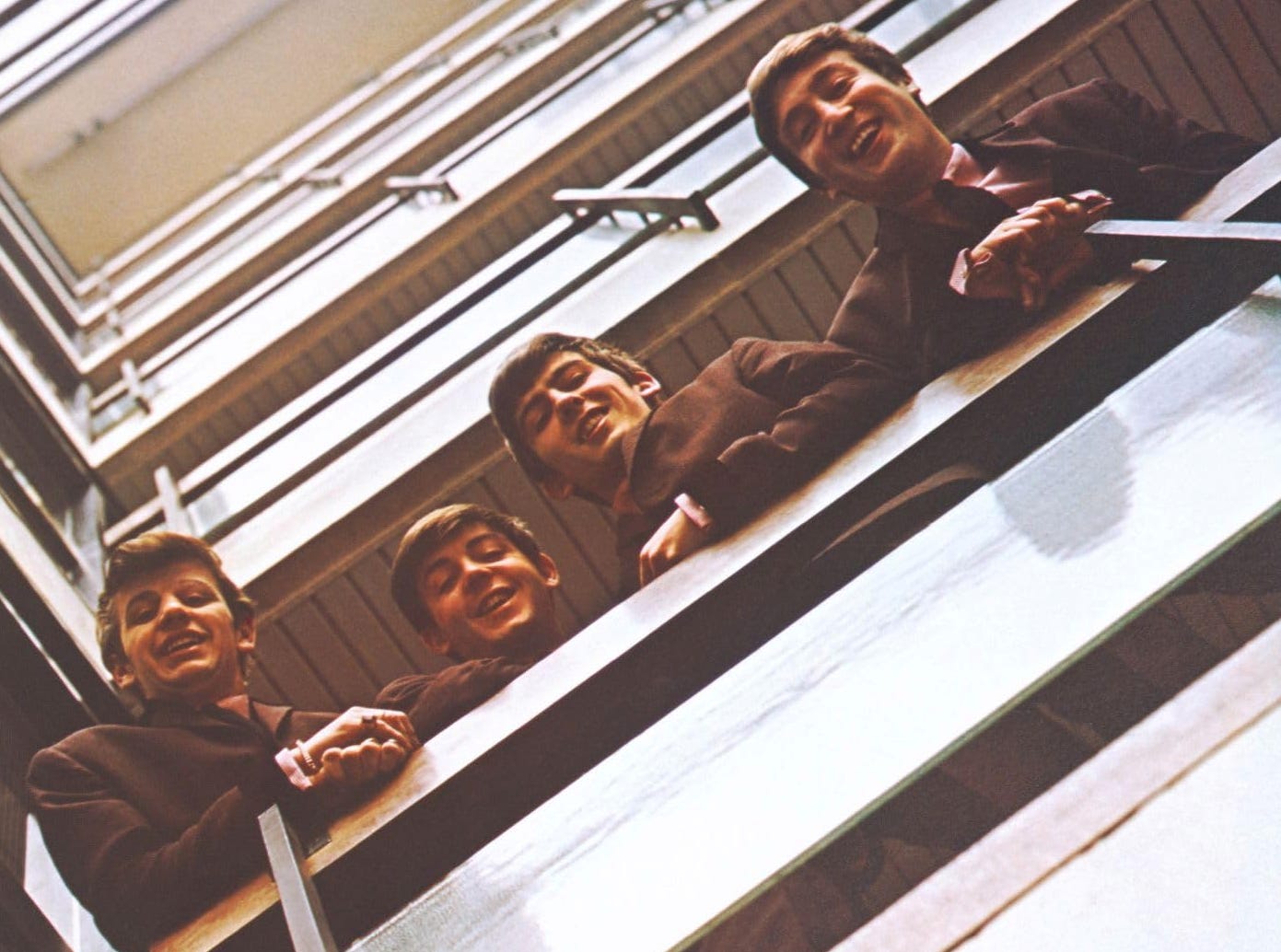
February 16, 1963. EMI House, Manchester Square, London. A man in a nice suit is crumpled on his back on the floor of an office stairwell, staring up at the ceiling with a camera. Four amused young men from Liverpool are peering down at him from the balcony above. Nobody knows if this is going to work. 🎬This is how one of the most famous album covers in music history got made—almost by accident, in about 20 minutes, by a photographer who was totally unprepared.But let’s rewind, because the real story starts with bugs.The Zoo Said NopeThe well-connected producer George Martin was a fellow of the Zoological Society of London, of course. And when it came time to shoot the cover for the Beatles’ debut album, Please Please Me, Martin had a clever idea: photograph the Beatles at the London Zoo’s insect house. Beatles. Beetles. Get it? The zoo said no.Martin, undeterred, rang up Angus McBean (no relation to Mr. Bean, the British comedian). McBean was a theatrical photographer whose résumé included Audrey Hepburn, Marlene Dietrich, and Laurence Olivier. Martin asked if McBean could swing by EMI House and do something in a stairwell.McBean arrived, spotted the stairwell, and flopped onto the floor. He had to be on the floor because he’d brought the wrong lens. “I only had my ordinary portrait lens,” he later recalled, “so to get the picture, I had to lie flat on my back in the entrance. I took some shots, and I said, ‘That’ll do.’” 📸The Eye Behind the LensMcBean wasn’t an obvious choice for a pop album cover. He’d built his reputation shooting the great theatrical stars of mid-century Britain—surrealist-influenced portraits with a dreamlike quality that made him the go-to photographer for anyone who wanted to look simultaneously glamorous and slightly otherworldly.The shoot was done in an almighty rush. Martin later described it as being executed with the same breathless energy as the album’s recording sessions (also dashed off in a day)—fast, instinctive, yet somehow exactly right. The outtakes from the photo session proved so useful that they were repurposed across multiple releases, including the Red and Blue compilation albums that became millions of people’s introduction to the Beatles’ catalog.Six Years Later: Same Stairwell, Different WorldIn 1963, while McBean had the boys looking down at him, he asked John Lennon how long they thought they’d stay together as a group. Lennon’s answer: “Oh, about six years, I suppose—who ever heard of a bald Beatle?” 🤣It was, give or take a few months, almost exactly right.So in May 1969, the Beatles commissioned McBean to return to EMI House and recreate the shot for the cover of their planned Get Back album. Same location. Same photographer. Same stairwell. The intention was to create a deliberate bookend—here’s where we started, here’s where we are now—and to let the visual contrast do the talking.The contrast did not disappoint. The four clean-cut mop-tops of 1963 had become four very hairy men in their late twenties, wearing the rumpled, slightly frayed look of a band that had been through just about everything. Where the 1963 photo radiates uncomplicated delight—four young men who can’t quite believe their luck—the 1969 version carries a different weight entirely. They’re still smiling. But they know things now.McBean arrived to find that EMI had built a new porch since 1963, which prevented him from getting into the same floor position. Rather than improvise, EMI simply tore down the porch and rebuilt it after the shoot. The session itself produced one more memorable image: John Lennon, fascinated by cameras as always, lying down next to McBean to peer through his viewfinder, while EMI office staff streamed down the stairs around both of them. The snapshot of Lennon and McBean on the floor has never been publicly released.The 1969 cover photo was ultimately used not for Get Back (which became Let It Be and got a different cover entirely) but for the Blue Album compilation—placed alongside the 1963 image on the sister Red Album, so that anyone who bought both could see exactly how much six years had cost and given in equal measure. 🎵Enter Robert Freeman: The ArtistThe McBean stairwell shot launched the Beatles visually, but it was Robert Freeman who transformed their album covers from pop product into something approaching art.Freeman was a Cambridge-educated photojournalist and jazz photographer whose portraits of John Coltrane and Dizzy Gillespie had impressed manager Brian Epstein enough to bring him in for the second album. He arrived in Bournemouth in August 1963, where the band was playing a summer residency, and improvised a studio in a hotel corridor—a dark passageway with natural light flooding in from windows at one end and a deep maroon curtain behind them.The result was the With The Beatles cover: four faces half-submerged in shadow, unsmiling, staring directly at the camera with the focused intensity of people who knew exactly what they were doing and didn’t need to fake enthusiasm. George Harrison later said that the Please Please Me cover had been “crap” and that With The Beatles was “the beginning of us being actively involved in the Beatles’ artwork—the first one where we thought, ‘Hey, let’s get artistic.’” 🖤Harrison was being slightly harsh on McBean, who had done excellent work with limited notice and a lobby floor. But the point stands: Freeman was operating in a different register entirely. He was drawing on the black-and-white Astrid Kirchherr photos from Hamburg that the band already loved, bringing a jazz musician’s sense of mood and shadow to a pop context that had no idea what to do with either. EMI vetoed his original idea—to run the With The Beatles image edge-to-edge on the cover, with no text or logo. Apparently, the Beatles weren’t yet famous enough to carry a nameless cover.Freeman went on to shoot five consecutive British album covers—With The Beatles, A Hard Day’s Night, Beatles For Sale, Help!, and Rubber Soul—and each one tracked the band’s evolution with an almost uncanny precision. The Rubber Soul cover came about by accident: Freeman was projecting the photographs onto a piece of cardboard to show the band how they’d look, the card fell backwards, and the image stretched. Instead of straightening it, everyone shouted “can we have that?” Freeman said yes. The slightly elongated, vaguely psychedelic faces of Rubber Soul arrived at exactly the moment the music started going somewhere new.He was paid £75 for With The Beatles. Three times the standard fee, Epstein had negotiated. Freeman himself noted this was a remarkable bargain for what became one of the most imitated album covers in rock history. 💷What the Stairwell KnowsThe old EMI building was demolished years ago. But the stairwell itself was preserved—physically removed and reinstalled at EMI’s new headquarters — which is either a touching act of cultural preservation or evidence that large corporations understand the value of mythology better than they’re generally credited for.Two photographs. The same stairwell. Six years apart. One taken by a theatrical photographer lying on a lobby floor who spent 20 minutes on the job. The other taken by the same man, six years later, after the whole porch had to be dismantled to recreate his original vantage point.Somewhere between those two images is the entire story of the Beatles—the giddy ascent and the complicated arrival at the top, the boys who became men who became legends, the band that Lennon predicted would last about six years, and did.Who ever heard of a bald Beatle, indeed. 🎸Visit my Beatles Store: Get full access to Beatles Rewind at beatlesrewind.substack.com/subscribe
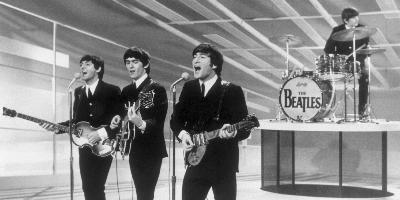
Something extraordinary is coming to the auction block in New York this month: The Jim Irsay Collection—widely regarded as the most significant private assemblage of rock and roll memorabilia ever gathered, and the Beatles portion alone is expected to generate tens of millions of dollars. It is, by any measure, a once-in-a-lifetime sale.Irsay, the Indianapolis Colts owner who died in 2024, spent decades acquiring instruments and artifacts with the obsessive devotion of someone who understood that these objects were not merely collectibles, but physical evidence of cultural history. The Beatles items in the collection document the full arc of the band’s story.The guitars in the broader Irsay Collection have been described as the greatest such grouping on earth—instruments that once belonged to Jimi Hendrix, Pete Townshend, Prince, Lou Reed, Eddie Van Halen, Johnny Cash, Les Paul, U2’s The Edge, Walter Becker of Steely Dan, Neal Schon of Journey, and John McVie of Fleetwood Mac, among others.But it is the Beatles material that sits at the collection’s heart. No comparable grouping of artifacts from a single band has ever appeared at auction. What follows is a look at the crown jewels.The Beatles: The Logo Drum Head Used for Their Debut Appearance on The Ed Sullivan Show, 1964Estimate: $1,000,000 – $2,000,000A 1964 Remo Weather King bass drum head—painted black with the Beatles’ iconic “drop-T” logo and the Ludwig brand mark—this is the actual drum head Ringo Starr played on his second Ludwig Black Oyster Pearl kit during one of the most consequential weeks in rock and roll history. The head was used for the Beatles’ American debut on The Ed Sullivan Show on February 9, 1964, an appearance watched by an estimated 73 million viewers that effectively launched Beatlemania in the United States. It then traveled with the band to Washington, D.C., for their first American concert at the Washington Coliseum on February 11, and on to two landmark performances at Carnegie Hall on February 12. Ringo played this same drum head for two additional Ed Sullivan appearances on February 16 and 23, completing what remains one of the most celebrated concert runs in pop history.George Harrison: A Gibson ‘SG’ Standard Guitar Used Extensively from 1966 to 1968Estimate: $800,000–$1,200,000. A 1964 Gibson SG Standard—serial number 227666—with the Gibson name inlaid at the headstock and the mahogany body and neck finished in cherry red.This is one of the most historically significant guitars in the Beatles story. Harrison acquired a pair of Gibson SG Standards in 1966, and this instrument was played extensively during one of the most creatively explosive periods in the band’s career. It appears in some of the most iconic photographs from the Sgt. Pepper’s Lonely Hearts Club Band era and was used during the recording sessions that produced Revolver, Sgt. Pepper’s, and The Beatles (the White Album). The Beatles/Paul McCartney: Handwritten Lyrics for 'Hey Jude', 1968 Estimate: $600,000–$1,000,000Few artifacts in rock and roll history carry the weight of this single sheet of paper. Written in Paul McCartney’s distinctive hand, these are the working lyrics for “Hey Jude”—one of the best-selling singles ever released, a song that spent nine weeks at number one in the United States and remains one of the most recognizable pieces of popular music ever recorded.McCartney wrote “Hey Jude” in the summer of 1968 as a gesture of comfort to John Lennon’s son Julian, then five years old and struggling to make sense of his parents’ separation. The song was recorded at the end of July and into early August 1968, split between sessions at Abbey Road and Trident Studios in Soho—and this lyric sheet was present for those sessions, a working document from one of the defining recording moments of the decade. John Lennon: A Gretsch 6120 Chet Atkins Used During the Recording Sessions for 'Paperback Writer”Estimate: $600,000–$800,000The Gretsch 6120 Chet Atkins was one of the defining guitars of early rock and roll — a hollow-body instrument with a warm, resonant tone that Gretsch had originally designed with country music in mind, but which found its most iconic home in the hands of players like Eddie Cochran and a young John Lennon, who had coveted the model since his earliest days in Liverpool. This particular example, built in 1963 in Gretsch’s Brooklyn factory, was the instrument Lennon brought to the “Paperback Writer” and “Rain” sessions in April 1966—a recording date that found the Beatles operating at the absolute peak of their studio ambitions.Approximately a year after those sessions, Lennon gave the guitar to his cousin David Birch—a characteristically generous gesture from a band that, as the auction notes observe, had a well-documented habit of passing instruments along to friends and family. The guitar’s provenance is confirmed by a precise match in the wood grain—the kind of physical detail that makes the difference between strong circumstantial evidence and certainty. The Beatles: Ringo Starr's First Ludwig Drum Kit Used from May 1963 to February 1964 Estimate: $1,000,000–$2,000,000When Ringo Starr joined the Beatles in August 1962, replacing Pete Best, he brought with him the Premier kit he’d been playing with Rory Storm and the Hurricanes. It was a fine working drummer’s kit, but it wasn’t what the Beatles needed for where they were going. In early 1963, Ringo acquired this Ludwig outfit from Drum City, a legendary London shop on Shaftesbury Avenue that was, as the auction notes recall, an almost intoxicating destination for any young drummer who walked through its doors. The kit’s distinctive Black Oyster Pearl finish would become one of the most recognizable visual signatures in rock history.What happened next is one of the great compressed success stories in popular music. From May 1963 through February 1964—a span of less than a year—Ringo played this kit as the Beatles went from promising British act to the most famous band on earth. It is the kit heard on the early recordings that defined the sound of the era: the thunderous fills on “She Loves You,” the propulsive drive of “I Want to Hold Your Hand,” the recordings that sent Beatlemania sweeping first across Britain and then across the Atlantic.The kit was retired from active use in February 1964—replaced by the second Ludwig outfit Ringo used for the Ed Sullivan appearances—which means its working life ended at precisely the moment the story became global.John Lennon: The Broadwood Upright Piano on Which He Composed 'Lucy in the Sky with Diamonds', 'A Day in the Life', and 'Being for the Benefit of Mr. Kite!'Estimate: $400,000–$600,000John Broadwood & Sons had been building pianos in London since 1728—instruments that passed through the hands of Haydn, Beethoven, and Chopin before the firm’s Victorian-era uprights began finding their way into the parlors and drawing rooms of middle-class Britain. This particular example, completed in 1873, eventually made its way to John Lennon sometime after August 1964, when he moved into Kenwood, his newly purchased mock-Tudor mansion in the Surrey stockbroker belt—his first real home, a vast space that needed filling.The likely story of how it arrived there is quietly charming. Cynthia Lennon’s mother, Lillian Powell, had developed a passion for attending auctions around Britain, and Lennon gave her open-ended permission to buy whatever she felt suited the house. A beautiful Victorian upright with the gravitas of a 19th-century London maker would have been exactly the kind of object that caught her eye—and, as the auction notes observe, the kind of thing whose aesthetic would have appealed deeply to Lennon himself.What Lennon then did at this piano places it among the most significant instruments in the history of popular music. During the Sgt. Pepper’s sessions of late 1966 and early 1967, he composed three of the album’s most enduring and ambitious pieces on this keyboard—songs that between them encompass psychedelic wonder, orchestral grandeur, and Victorian circus nostalgia, and which helped make Sgt. Pepper’s the most critically celebrated rock album ever made.Ringo Starr: A Pinky Ring Worn During His Career with The Beatles Estimate: $60,000–$100,000Ringo Starr was always the Beatle who wore his personality most visibly—the rings stacked on his fingers became as much a part of his visual identity as his Ludwig kit. This particular gold pinky ring is one of the most extensively documented pieces of personal jewelry in Beatles history, appearing at two of the most significant moments in the band’s recorded visual legacy.It is visible on Ringo’s hand on the front cover of Please Please Me, the debut album released in March 1963 that launched everything—a cover photograph taken in the stairwell of the EMI Manchester Square offices in a session that lasted all of eleven minutes. It reappears on the back cover of Help! in 1965, by which point the Beatles had become the most photographed people on earth. And it made the journey to America in February 1964, present on Ringo’s hand during the Ed Sullivan appearances that introduced the band to 73 million American viewers—quite possibly the most-watched musical performance of the 20th century.The Beatles: A Signed Poster, 1967 Estimate: $60,000–$80,000A rare color UK Beatles Fan Club poster for Sgt. Pepper’s Lonely Hearts Club Band, signed in blue ink by all four Beatles.The significance of the album being celebrated here is difficult to overstate. Released on 1 June 1967, Sgt. Pepper’s spent 27 weeks at the top of the UK charts and 15 weeks at number one in the United States, won four Grammy Awards including Album of the Year—the first rock album ever to do so—and is routinely cited in critical polls as the greatest rock album ever made. The cover alone, designed by Peter Blake and Jann Haworth, became one of the most recognized images of the 20th century.Fan Club posters from this era were distribut
Amazon Prime dropped a new Paul McCartney documentary yesterday, and I sat down with sky-high expectations and a large beer. Two hours later, I emerged confused, sober with a half-empty mug, and the nagging sense that someone had been handed a great story and decided to make a mood reel instead. 🎬Problem #1: the working title alone—Man on the Run—points directly at one of music’s most dramatic origin stories: the Band on the Run album, recorded in Lagos, Nigeria in 1973 under conditions that would have broken a lesser artist. Three of the five scheduled musicians quit the night before rather than travel to Africa. McCartney boarded the plane anyway, along with wife Linda and the ever-loyal guitarist Denny Laine. His job: make a miracle comeback album with a band that no longer exists. Then he nearly died from a bronchial spasm in the studio. Then armed robbers stole the master tapes at knifepoint on a Lagos street. Then Fela Kuti accused him of coming to steal African music.And then Paul made one of the best albums of his career.That story has everything—desperation, reinvention, physical danger, creative triumph against impossible odds, and sweet vindication. It practically writes itself. If you gave that material to a competent documentary filmmaker with access to the man himself, you should end up with something extraordinary. 🎙️What we got instead is... different. The Band on the Run drama didn’t get much treatment during the film’s two hours.I watch a lot of films, and I have a habit of pausing the video every now and then, just to see how many remaining minutes there are. Every once in a while, a great film stops me from doing that—because I don’t want to know how many minutes are left, I don’t want things to end. During Man on the Run, I paused the video way more than usual. And each time, I could hardly believe how much time was still remaining.Blurry Images and Missing FacesThe doc opens dreadfully slow, with meandering landscapes and practically no narration. In fact, there are no on-camera interviews except from some old Beatles clips that we’ve all seen dozens of times. I suspect that many casual fans will stop watching during that slow buildup. Quite a bit of time is devoted to McCartney’s strained relationship with John Lennon during the 1970s, but there is virtually no mention of George Harrison or Ringo Starr at all, which seemed odd.Here is the thing that irked me more than anything: The quality of the archival footage (and there’s a lot of it) is shockingly poor. Apparently, no attempt was made to restore the film, to upscale it to make it sharper, or even to brush the dust and dirt off it. And unless I’m mistaken, some passages were deliberately fuzzed up even more, making them even grainier. I suppose that was an artistic choice, but a couple of times, the picture was so bad I feared I was losing my Internet connection.The Second Viewing was BetterI watched the film again this morning, and actually enjoyed it much more on the second viewing. I guess my expectations had fallen back to earth. The film had been so hyped for so long, I was expecting much more drama.To be fair, Man on the Run is not without its pleasures. Watching anything about Paul McCartney for two hours is not a hardship. The man remains one of the most naturally compelling subjects in music, and even a documentary that doesn’t quite know what to do with him benefits from his presence. There are moments that land. There are glimpses of the story that should have been the whole film.But those glimpses make the absences more frustrating, not less. Every time the film approached the Band on the Run material with something resembling depth—the Lagos sessions, the chaos and improvisation that produced an album McCartney’s detractors still have to reckon with—it pulled back. Subject changed. More fuzzy footage. 🎸The professional critics have been kinder to the film than I have. Variety's Chris Willman—one of the most respected music critics in American journalism—praised the film's energy (though he rightly noted that McCartney's off-camera voiceovers sounded more like a series of voicemails than a proper visit.) Kevin Maher of The Times gave it four out of five stars, praising director Morgan Neville for standing back and allowing the archive material to do the heavy lifting—but he pointed out there are "no revelations, just a warm and cozy restatement of cultural history." NPR gave it a thumbs-up. The film currently sits at 100% on Rotten Tomatoes from 44 reviewers. So perhaps the consensus is that Man on the Run delivers exactly what it promises—just not quite what I was hoping for. 🎬The VerdictAm I telling you not to watch Man on the Run? Of course not. A world will never exist in which I recommend skipping a Beatles-related film, even the ones that stink. You should watch it. Paul McCartney is worth two hours of anyone’s time under almost any circumstances, and there is real pleasure to be found here, even amid the frustrations.The Band on the Run story deserves the full treatment: 90 focused minutes, clear photographs and film, and someone willing to let the drama of what actually happened in Lagos in 1973 do what drama does.That documentary is still waiting to be made. 🎵Visit my Beatles Store: Get full access to Beatles Rewind at beatlesrewind.substack.com/subscribe
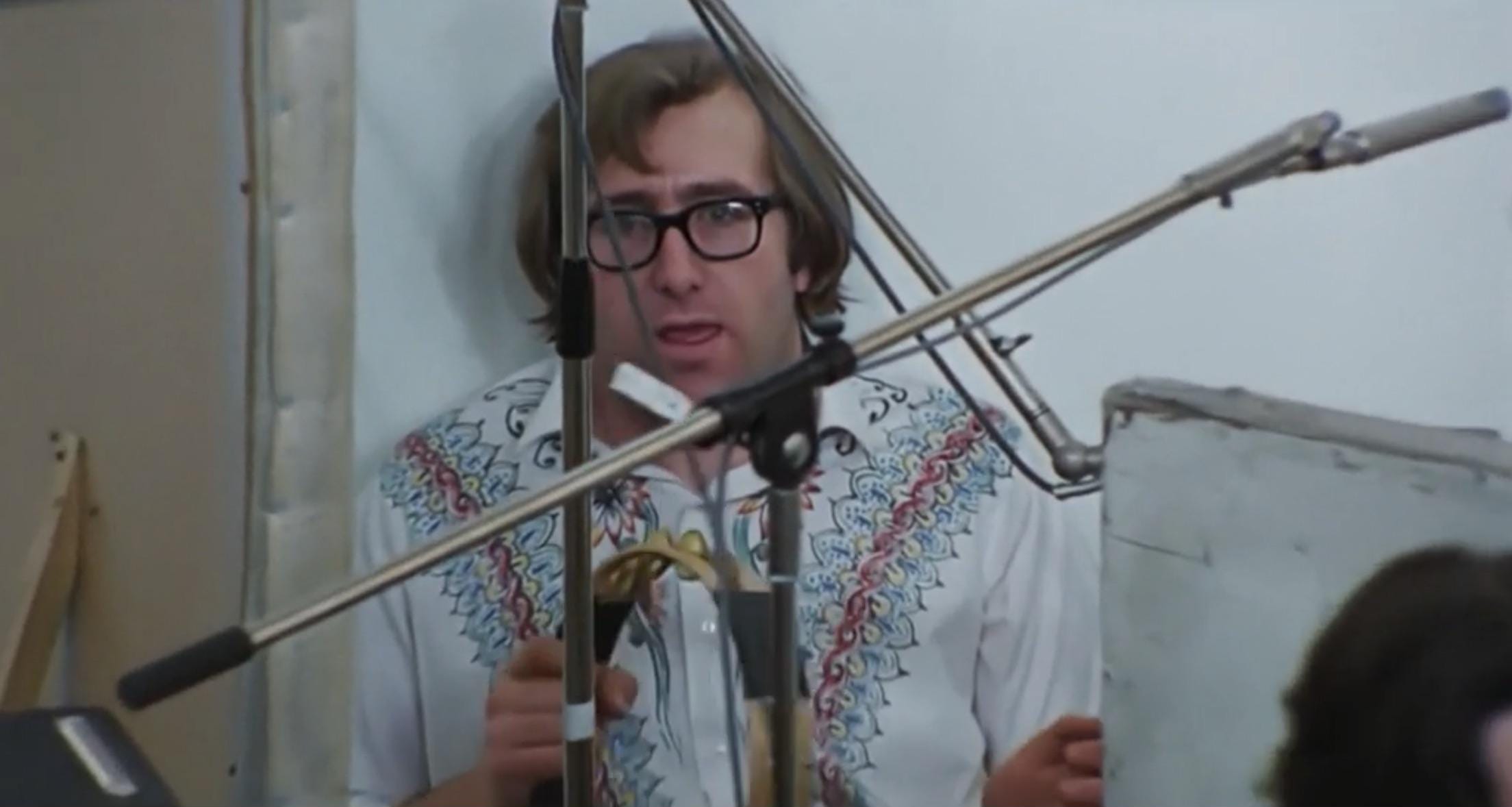
Go back and watch Get Back again. Not for John Lennon’s wisecracks or Paul McCartney’s melodic brainstorming or George Harrison’s increasingly strained patience—watch the edges of the frame. There’s a massive bloke with thick eyeglasses, clipboard in hand, scribbling down lyrics as fast as the band can say them, hauling equipment, keeping the sessions from collapsing into total chaos, and grinning like a man who genuinely cannot believe how lucky he is to be there. That’s Mal Evans. Road manager. Personal assistant. The guy they called when they needed something heavy lifted or something impossible sorted out.Mal simply enjoyed being around the band, and once said: “I can live on it, it’s better than food and drink.” Mal was working as a telephone engineer in Liverpool when he started taking his lunch breaks at the Cavern Club to watch the Beatles play. George Harrison took a liking to him and recommended him to the club's manager as a bouncer—a natural fit given that Mal was 6'6" and built like a truck. Within a year, he was the band’s roadie.He’s also the guy whose voice you’ve heard on one of the greatest rock recordings ever made, whose physical effort powered one of Abbey Road’s most memorable moments, and whose notebooks contain lyric contributions that nobody has ever properly credited him for. Let’s explore what Mal Evans actually did—and what the Beatles’ catalog would sound like without him.The “Mal Sound”—What You’ve Actually Been Hearing 🎵Let’s start with the one you can clearly hear if you know where to listen.“A Day in the Life”—arguably the greatest thing the Beatles ever recorded—has a famous middle section where the orchestra builds from almost nothing to a screaming, unhinged wall of sound across 24 bars. Someone had to vocally count out those 24 bars during the recording so the session musicians could navigate the chaos. That someone was Mal. His voice, increasingly swallowed by the orchestral crescendo, is clearly audible on the track: “One … Two … Three ... Four…” The band planned to edit that out. Then someone noticed that the alarm clock ringing at the end of the build—which Mal had also triggered—perfectly set up McCartney’s “woke up, fell out of bed” section, and suddenly what was supposed to be a technical placeholder became one of the most distinctive moments on Sgt. Pepper. Mal, totally by accident, shaped the architecture of the most acclaimed rock song ever made. And then he was one of five people who simultaneously hammered the final E major chord into three pianos to create that extraordinary, 53-second fade. Whether you knew it or not, you’ve been hearing Mal Evans your whole life.“You Won’t See Me” on Rubber Soul needed a Hammond organ part—a sustained, thick texture underneath the track. Nobody in the Beatles was available or particularly interested in doing it, so Mal held down the organ note for the duration of the song. Not playing a melody. Not improvising. Just holding a note with the patience of a man who understood that sometimes the job is just to hold the note.“Being for the Benefit of Mr. Kite!” required a harmonica texture that was more atmospheric than melodic—a slightly chaotic, fairground-organ quality that Lennon wanted. Mal and assistant Neil Aspinall both grabbed harmonicas and blew different notes simultaneously, creating the aural equivalent of a Victorian circus. It shouldn’t work. It absolutely does. 🎪The Man Who Drove 200 Miles With No Windshield in the Freezing Cold 🚐Before Mal ever set foot in the recording studio, he'd already become legendary on the road. In January 1963, driving the band back to Liverpool from London in the dead of winter, a pebble shattered the van’s windshield. Most people would have pulled over and asked for help. Instead, Mal punched the remaining glass out with his fist, wrapped his hat around his hand, and drove 200 miles through freezing fog with no windshield. Meanwhile, the Beatles piled on top of each other in the back of the van with a bottle of whisky, trying to stay warm in what Paul later called a "Beatle sandwich." Mal didn't gripe. He got them home.The Anvil Situation (It’s Heavy) ⚒️During the Get Back rehearsals in January 1969, Paul sent Mal to find a blacksmith’s anvil and a hammer to produce the clanging sound he wanted on “Maxwell’s Silver Hammer.” Mal—because it’s what Mal did—found an anvil, dragged it into the Twickenham film studio, and sat cross-legged in front of it in a director’s chair, clipboard on his knee, hitting it on the first two beats of each chorus, every time they ran through the song. You can see this in Get Back, a wonderful image of Mal grinning ear-to-ear.Now, the technical caveat: when the song was actually recorded for Abbey Road six months later in July 1969, most sources—including author Mark Lewisohn—credit Ringo with the final anvil performance on the record. Recording engineer Geoff Emerick’s memoir describes Ringo attempting it but lacking the arm strength to swing the hammer properly, with Mal stepping back in. The sourcing is genuinely contested. What isn’t contested: it was Mal who found the anvil, Mal who established the part during months of rehearsals, and Mal who was the primary anvil player for the band’s entire relationship with the song until the actual recording date. The part exists because of Mal. Whether his specific hammer strikes are on the final take is up for debate.The Notebooks—The Contribution Nobody Talks About 📓Mal’s diaries—which went missing years after his death in 1976—were rediscovered in a trunk in a New York publisher’s basement and eventually made available through Kenneth Womack’s 2023 biography Living the Beatles Legend. The diary entries suggest creative contributions going well beyond fetching anvils and holding organ notes.Mal also transcribed lyrics by hand throughout the recording sessions, which meant he was often the first person to see a song fully written out, working alongside the composer as lines were finalized. According to his notes, Mal was in the room when Paul was writing “Fixing a Hole” and contributed to the lyrics. A collectibles dealer sold those lyric sheets in 2006 for $192,000. Page one was written by Paul on Apple Corps letterhead, and the other two pages were written by Mal. He noted being promised royalties for Sgt. Pepper’s Lonely Hearts Club Band, but he never got any. His weekly wage at the time was £38 (about $850 in today’s U.S. dollars).The creative assistant role is harder to quantify than the alarm clock or the harmonica. But the diaries make clear that Mal Evans was not a wallflower standing in the corner waiting to be useful. He was the right-hand man. 🎶The Gentle Giant’s Ending 🕯️After the Beatles broke up in 1970, Mal kept working—with solo Beatles, with Badfinger (he’d discovered them and brought their demos to Paul, who signed them and wrote their first hit “Come and Get It”), producing sessions, trying to make a career in the music industry that he’d spent a decade helping to build from the inside.It didn’t go well. He was fired by Allen Klein from Apple, eventually reinstated, and then slowly edged out as the Beatles’ organization contracted. He moved to Los Angeles, separated from his wife Lily, and spent the mid-70s in the loose orbit of Harry Nilsson and the remnants of John’s “Lost Weekend” crowd. He was working on a memoir—Living the Beatles Legend—due to his publisher in January 1976.He never delivered the manuscript. On January 4, 1976, despondent and heavily medicated, Mal picked up an air rifle at his apartment on West 4th Street. His girlfriend called the police. When they arrived, they shot him four times. He was 40 years old. His ashes were sent back to England by post and got lost in the mail. When Lennon heard the news, he suggested looking in “the dead letter file.”It’s a cruel joke. It’s also heartbreaking. The man who spent a decade making sure four other people got where they needed to be couldn’t find his own way home.The Real Fifth Beatle 🎤Who was the “Fifth Beatle?” George Martin? Brian Epstein? Stuart Sutcliffe? Pete Best? These are all plausible answers. But Mal Evans is the one who was actually there—every tour, nearly every session, every crisis, every moment of impossible creative productivity. His voice is on the records. His physical effort shaped the sessions. His notebooks capture the creative process from the inside.He never got the royalties he was promised. He never got the credit. He got £38 a week and the privilege of being in the room while history happened.Visit my Beatles Store: Get full access to Beatles Rewind at beatlesrewind.substack.com/subscribe
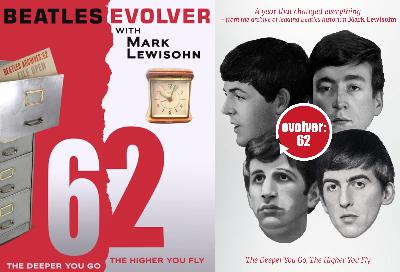
I’ll be honest—I stumbled onto this gem totally by accident. Last night I was scrolling through TV listings, looking for something Beatles-related I hadn’t already seen a dozen times, and there it was: Evolver:62, a documentary I’d somehow never heard of. The title alone was intriguing enough to click, but what I wasn’t expecting was just how good it turned out to be. Over the next 90 minutes or so, I found myself repeatedly pausing to process something I’d never heard—a detail, a reframing, a piece of context that made a story I thought I already knew inside-out suddenly feel brand new. If you consider yourself a serious Beatles fan and you haven’t seen this yet, clear your evening. 🎬The Time Machine in a SuitThe documentary opens with a moment that sets the tone perfectly. Host Mark Lewisohn—widely regarded as the world’s foremost Beatles historian, the man who’s spent decades doing the kind of archival detective work most historians only dream about—is standing in modern-day London, holding a grainy 1962 photograph up against the actual street corner it depicts. Past and present, overlapping in real time. It’s a simple image, but it’s quietly thrilling. 📸This is exactly what Evolver:62 promises and delivers: not mythology, but forensic reconstruction. This isn’t the Beatles of legend. This isn’t the mop-tops on Ed Sullivan, the Fab Four conquering America with matching haircuts and coordinated bows. This is something rawer and more interesting—the transitional year, the hinge point, the 12 months when four working-class lads from Liverpool made a series of decisions that would reshape pop culture for the next century. The leather jackets were on their way out. The Pierre Cardin suits were on their way in. And everything was about to change. 🌍The film is available on Amazon Prime Video, Apple TV / iTunes, YouTube Movies, Fandango at Home (Vudu), and DVD.The Great Decca “Rejection” MythAsk any casual Beatles fan about January 1, 1962, and they’ll tell you the story: the Beatles auditioned for Decca Records, got rejected because guitar groups were supposedly “on the way out,” and the rest is history. It’s one of the most notorious blunders in entertainment history, right up there with the publisher who passed on Harry Potter. 🙅♂️But Evolver:62 explodes this narrative entirely, and it’s one of the documentary’s most satisfying moments. Lewisohn lays out the evidence that Decca’s decision was less a hard “no” than a “we’ll see”—a hedge that backfired spectacularly. The Decca suits weren’t blind to what they were hearing. But they were cautious in the way that major labels were always cautious, waiting to see which way the wind was blowing before committing.What makes this reframing so interesting isn’t just the historical detail, it’s what the rejection did to the band. The Decca audition tape, so lovingly analyzed and dissected by Lewisohn, shows a group that was already extraordinary but not yet quite themselves. But the failure lit a fire. Every door that closes can reveal genius; every true artist builds their own universe. Without the Decca rejection, the hunger that drove the band through the rest of 1962 might have been less fierce. 📈Dumb and DumberWhat makes the Decca saga even richer is what the documentary reveals about the actual offer that came out of that audition. Decca didn't simply slam the door. They would allow the Beatles to record for the label, but with a catch: Beatles manager Brian Epstein would have to foot the bill for pressing the records himself. His answer, of course, was a big fat no. But in a twist that’s almost too ironic to believe, Decca also offered to publish some of the Beatles' songs. The songwriting, not the recording, was what caught their attention. 🤔 This was early 1962, when Lennon and McCartney were still finding their voice as composers, when the band's set list leaned heavily on covers. Decca saw value in publishing songs by unknown songwriters who were quickly becoming great, yet still couldn't bring themselves to simply sign the band. It's the kind of near-miss that makes you wonder how many other world-changing artists slipped through somebody's fingers for equally baffling reasons. 📋The Suit: Corporate Sellout or Creative Choice?Here’s where the documentary really earns its place in the Beatles canon. The conventional story of Epstein’s makeover—replacing the Beatles’ leather jackets with neat suits, smoothing their raw Hamburg energy into BBC-friendly respectability—has always had a faint whiff of tragedy about it. The wild boys domesticated. The dangerous act defanged. 🧥Lewisohn pushes back on this, and he does it with evidence. The Beatles chose it. It wasn’t Epstein marching them into a tailor’s shop against their will. They understood, with the cold, strategic clarity that would define their entire career, that looking “safe” was the price of admission to the mainstream—and that once they were in, they could do whatever they wanted. The BBC wouldn’t playlist a band that looked like it had just rolled in from a Hamburg dive bar at 4 a.m. The suits were a tactical decision, a Trojan horse. And Lewisohn reveals how the Beatles actually designed the suits themselves. 🎭The Drummer DilemmaIf 1962 has a dramatic centerpiece, it’s the moment that has been discussed, debated, and mythologized more than almost any other in Beatles history: Longtime drummer Pete Best is fired, and Ringo Starr arrives. The final piece of the puzzle clicks into place. The band that will conquer the world is now complete. 🥁What Evolver:62 shows so well is the cold-blooded efficiency of that decision. The documentary doesn’t wallow in sentimentality about Pete Best, it follows the evidence, and the evidence suggests that the band made a business calculation as much as an artistic one. They weren’t just friends making music together. They were an organization gunning for a very specific outcome. They needed the best drummer available, and Pete Best, despite being a nice guy, was not the best guy.Merseyside to the World: The Geography of GeniusOne of the things that distinguishes Evolver:62 from the average music documentary is its commitment to physical place. Lewisohn doesn’t just talk about history, he stands in it. The actual street corners. The real stage doors. The venues that either still exist or have been replaced by something much less interesting. 📍This matters. The Beatles’ story is so large, so thoroughly mythologized, that it can start to feel weightless—floating free of any particular time or location, existing in some eternal pop-culture dimension. Seeing Lewisohn physically navigate the Liverpool and London of 1962 tethers the story back to earth. These were real places. Real vans driving down real highways at ungodly hours in freezing weather. Real rehearsal rooms with bad acoustics and no heating. The Beatles weren’t legends who fell from the sky. They were four working-class lads doing a job, getting good at it the hard way, one step at a time. Why 1962 Still MattersLewisohn’s key insight—shown with evidence, passion, and the authority of someone who’s read every document and interviewed every surviving witness—is that “overnight success” never happens. Not ever. The Beatles’ “overnight success” took years of grueling work in Hamburg, endless gigs around Merseyside, and then one very long van ride to London with a lot riding on the outcome.The pop song as art form, the album as statement, the idea that four people with guitars could be the most important cultural force on the planet—all of it traces back, in one way or another, to the decisions made in that single pivotal year. Evolver:62 takes you back to the moment it all became possible, and reminds you that it was never inevitable. It was chosen, worked for, and earned. 🍏Visit my Beatles Store: Get full access to Beatles Rewind at beatlesrewind.substack.com/subscribe
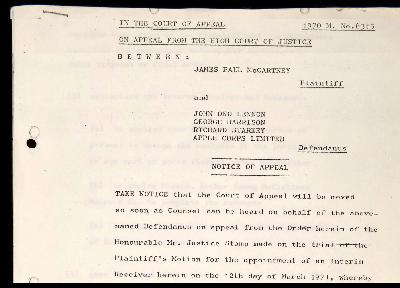
A Cupboard Full of Rock HistoryJust when you think you know everything about the Beatles, it turns out you don’t. Someone in Surrey, England, who was recently rummaging through their cupboard, unearthed 300 pages of confidential documents explaining the real reason for the Beatles’ breakup. 📦What makes this archive so remarkable is that it moves the breakup story out of the realm of rock mythology and into cold, documented reality—a reality ruled by lawyers and bean-counters who made an even bigger mess of things. These documents have no agenda.The papers go under the hammer at Ewbank’s auction house in Surrey on February 26, 2026, and the collecting world is buzzing. The auction lot is titled—with admirable bluntness—“The Break-Up of The Beatles,” and it contains the full paper trail of the High Court battle that made it all official: James Paul McCartney v. John Ono Lennon, George Harrison, Richard Starkey, and Apple Corps Limited, 1970-1971.The Usual Story — And Why It’s IncompleteMost Beatles fans know the broad outline. 🎸 John and Paul stopped getting along. Allen Klein arrived as manager and immediately divided the room. Yoko Ono was vilified, as was Linda McCartney. The 1969 Let It Be recording sessions had been miserable. Somebody said something unforgivable. It’s a great story—dramatic, personal, laden with the weight of genius colliding with ego—and it’s also, according to these documents, only half the picture.The other half is considerably less romantic. It involves tax liabilities, missing money, construction projects nobody told Paul about, and a legal situation so chaotic that the band’s own lawyers questioned whether it was worth untangling.As auctioneer Andrew Ewbank explains:This is an extraordinary record … particularly important in two ways: in recording the fallout that was commonplace in the early days of modern music, when musicians were naïve about business and often exploited by those who managed them, and in providing a highly reliable detailed source of the dynamics within The Beatles and what drove them.On a happier note, the auction includes a gold record awarded for $1 million in U.S. sales of Meet The Beatles!, which was #1 for eleven consecutive weeks and turned the band into a global phenomenon. Get your checkbook ready, bidding starts at £4,000 😀.You Never Give Me Your MoneyHere’s the thing about Apple Corps that gets lost in the romantic mythology: It was, by most accounts, a financial disaster. 💸 The idealistic vision—a company run by artists, for artists, without the usual corporate machinery grinding everyone down—collided with the reality that running a company requires someone to actually run it. If there’s a villain in the Beatles’ story, Allen Klein is the poster child, and these documents make that case more than ever. 💼 Klein was the New York music manager brought in by John, George, and Ringo to run Apple Corps—over Paul’s vociferous and sustained objection. Paul wanted his father-in-law, Lee Eastman. That disagreement alone might have been survivable. What followed was not.Things came to a head when Paul discovered the construction of a second recording studio he knew nothing about. 🏗️ This is the kind of detail that gets lost in the “John vs. Paul” personality narrative. The personal animosity was real, but it was accelerated and amplified by a dysfunctional business situation.Meanwhile, as Apple’s accountants were trying to sort out the financial mess, tax authorities were demanding answers. This wasn’t just a personality clash.The Ringo Mystery Nobody Talks AboutHere’s the detail that will genuinely surprise most Beatles fans, even the hard-core. 🥁 Buried in the paperwork is a document revealing that no agreement was signed when Pete Best, the band’s original drummer, was fired and Ringo Starr joined in 1962. None. The most consequential personnel change in rock history—the moment the classic Beatles lineup was assembled—was apparently handled on a handshake and a prayer, with no formal documentation.This created a significant legal headache years later when the lawyers were trying to figure out exactly who had been a Beatle, when, and under what terms. The lack of paperwork for Ringo’s joining meant that the entire structure of the band’s legal partnership had a gap in its foundation that nobody had noticed or cared about while things were going well—but became impossible to ignore once everyone was suing everyone else.What This ChangesFor decades, the Beatles breakup has been understood primarily as a human story—four friends who grew apart, pulled in different directions by ego, ambition, and the impossible weight of being four different superstars. 🔍 That story is true as far as it goes. What these documents add is the institutional dimension: the paper trail of a business empire that was never properly organized.The lawyers didn’t cause the breakup. But they made very sure it couldn’t be undone.Visit my Beatles Store: Get full access to Beatles Rewind at beatlesrewind.substack.com/subscribe
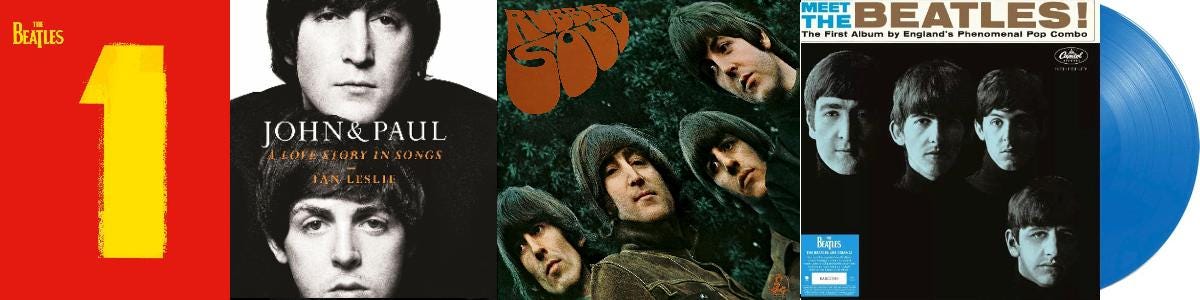
The Impossible Second ActBy the end of 1973, Paul McCartney had pulled off one of the most remarkable comebacks in rock history. 🎸 Band on the Run—recorded in Lagos, Nigeria, with a depleted lineup after two members quit—had silenced the critics, topped the charts on both sides of the Atlantic, and reminded the world that the most melodically gifted Beatle still had plenty of gas in the tank. But that kind of success created its own kind of kind of pressure.How do you follow up an album that saved your career? For most artists, the answer is to play it safe—make Band on the Run again, slightly louder, hope nobody notices. Paul, characteristically, had other ideas. He didn’t want to survive again. He wanted to conquer.A Real Band at LastThe Wings that showed up to make Venus and Mars was different from the group that had slogged through Lagos. 🎶 Drummer Joe English and guitarist Jimmy McCulloch had joined, and their arrival transformed “Paul-and-friends” into a bona fide five-piece rock band with real chemistry and firepower.McCulloch was crucial. A Scottish guitar prodigy who’d already played with Thunderclap Newman and Stone the Crows before his twentieth birthday, he gave Wings something they’d always been missing—an edge. You can hear it in the muscular crunch beneath “Rock Show,” in the loose, confident interplay that runs throughout the album. This wasn’t the tentative band of Wild Life. This was a group that knew exactly what it could do and was ready to show it.Joe English brought a drumming style that was both technically sharp and deeply groovy—and that groove was going to matter enormously for what Paul had planned next. 🥁New Orleans and the Sound of a PartyPaul decided to take the band to Sea-Saint Studios in New Orleans. 🎷 Allen Toussaint had built Sea-Saint as a home for the funk and soul sounds that were reshaping American music in the mid-seventies, and the city’s DNA—second-line brass bands, Bourbon Street jazz, the whole glorious mess of it—seeped directly into Wings’ sessions.Celebrity visitors wandered through constantly. Lee Dorsey. The Meters. Dave Mason. Paul and Linda even attended Mardi Gras dressed as clowns, jamming with The Meters on a river cruise. The whole thing had the feel of an extended party, and Paul absorbed every bit of it. Where Band on the Run was forged under pressure in a foreign city with a skeleton crew, Venus and Mars was built with something approaching pure joy—and you can hear the difference from the first note.Paul himself described writing the title track with characteristic breezy charm, telling Melody Maker in 1975: “It’s really a total fluke. I was just sitting down and started singing ANYTHING and some words came out... I got this idea about a fellow sitting in a cathedral waiting for this transport from space that was going to pick him up and take him on a trip.” 🌙 That kind of loose, inspired spontaneity runs through the whole record.“Listen to What the Man Said” is the purest expression of that spirit. Built on a melody so naturally effervescent it seems like it’s always existed, the track features a saxophone solo from Tom Scott that remains one of the most instantly recognizable horn moments in McCartney’s entire catalog. It hit number one on both sides of the Atlantic without breaking a sweat—the most Paul McCartney thing imaginable. 😎The Suite, the Singles, and the Deep CutsThe album opens with one of the great arena-rock sequences of the decade. 🔥 The title track begins as something almost dreamlike—a gentle, slightly trippy reverie that lulls you into a false sense of calm before “Rock Show” absolutely detonates beneath it with enough force to fill the largest stadium on earth. That transition is seamless, deliberate, and devastating. Paul understood instinctively what the opening of a stadium concert needed to feel like, and he literally built it into the album’s DNA.“Rock Show” itself deserves way more credit than it gets. Running over five minutes, name-checking Madison Square Garden and the Hollywood Bowl, it celebrates the communal ritual of the live concert with the genuine enthusiasm of someone who still finds the whole thing thrilling. This wasn’t a rock star going through the motions. This was a fan who happened to be the headliner. 🎤And then there’s Linda. Her contributions to Venus and Mars are woven so naturally into the vocal architecture that it’s easy to take them for granted—which is exactly what the critics did, to their lasting embarrassment. 🎵 Listen carefully to “Spirits of Ancient Egypt,” Denny Laine’s gorgeous deep cut, and pay attention to what Linda’s voice does to the harmony blend. The warmth, the centering quality, the way she softens and grounds Paul’s melodies—dismissing her was always the wrong call, and Venus and Mars is evidence.Critics Gotta HateNot everyone was swept up in the good vibes. Rolling Stone’s review was one of the most savage notices of McCartney’s career, dismissing the album as “a press-release concept, generally uninspired melodies and some of the dumbest lyrics on record”—a take so hostile it almost feels personal. You can read the full review here. 😤More measured—and ultimately more accurate—was the retrospective assessment from Super Deluxe Edition, which noted that the album was “full of strong commercial pop songs that sounded great on the radio and worked well in arenas” while acknowledging that “its only fault was that it wasn’t Band on the Run.” You can read that full piece here. The gap between those two critical responses tells you everything about how Venus and Mars was received—and how wrong the hostile camp turned out to be. History, commercial success, and fifty years of devoted fans have rendered their verdict. 🎯The Launchpad for a World TourVenus and Mars hit number one in both the United States and the United Kingdom, and at that point the conversation was officially over. 🌍 Paul McCartney wasn’t trading on Beatles nostalgia. He wasn’t in rehabilitation mode. He was operating at the peak of his powers with a band capable of delivering the goods anywhere on earth.And the venues were about to get very large indeed. The Wings Over the World tour of 1975 and 1976—arguably the greatest sustained live achievement of McCartney’s entire solo career—grew directly from the foundation Venus and Mars had built. The setlist, the sonic confidence, the cultural momentum that allowed Wings to play to audiences rivaling anything the Beatles had faced a decade earlier—all of it started in New Orleans, in those loose, joyful sessions at Sea-Saint. The Wembley shows, the Australian dates, the triumphant American run—none of it happens without this album. 🏟️Better Than Band on the Run?Here’s the honest answer: they’re playing completely different games. 🤔 Band on the Run is a survival story—an album that carries its circumstances inside it, that sounds like something forged under pressure because it genuinely was. You can’t separate the drama of Lagos from the drama of the music. That tension is the whole point.Venus and Mars is what comes after survival. It’s the sound of a band with nothing left to prove, choosing to enjoy itself anyway—polished, expansive, generous in its pleasures and completely unashamed of its ambitions. Whether that makes it better depends entirely on what you’re listening for.Which kind of greatness matters more, the kind that gets forged in a crisis, or the kind that arrives when the crisis is finally over? 🎸Visit my Beatles Store: Get full access to Beatles Rewind at beatlesrewind.substack.com/subscribe
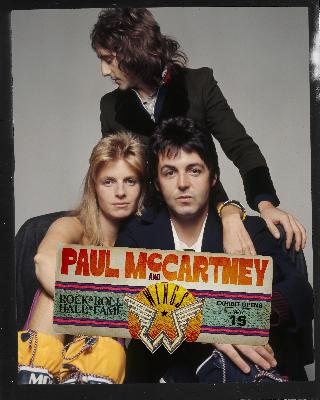
The Rock and Roll Hall of Fame will debut “Paul McCartney and Wings” on May 15th, 2026—the first major museum exhibition dedicated to exploring Wings’ decade-long journey from 1970 through 1981. It’s about damn time. For years, Wings has been treated as rock history’s awkward stepchild: too successful to ignore, too uncool to celebrate properly, forever overshadowed by what came before. This exhibition, featuring never-before-displayed artifacts from Paul’s personal archives, handwritten lyrics, instruments from recording sessions, and previously unseen photography, finally gives Wings the serious institutional recognition the band earned but rarely received.Here’s the context younger fans might not know: Wings dominated 1970s commercial radio with seven top 10 hits including “Band on the Run,” “Listen to What the Man Said,” “Silly Love Songs,” and “With a Little Luck.” This wasn’t Paul desperately clinging to relevance—this was a legitimate juggernaut that sold millions of albums and filled stadiums. The exhibition traces this arc of reinvention, from Paul’s self-titled 1970 debut through Wings’ formation to the band’s 1981 dissolution. 🏆The timing couldn’t be better. Morgan Neville’s documentary Man on the Run will debut February 27th on Amazon Prime Video. The documentary focuses on Wings’ 1970s ascension, particularly the dramatic Lagos sessions that produced Band on the Run—one of the craziest near-disasters in rock history.Obviously, Paul looks back at Wings’ run with great fondness, recently telling Rolling Stone:Starting from scratch after the Beatles felt crazy at times. There were some very difficult moments, and I often questioned my decision. But as we got better I thought, ‘OK, this is really good.’ We proved Wings could be a really good band.”Why This Exhibition Actually MattersThe Rock Hall promises “the most extensive collection of items from Paul’s personal archives to be made accessible to the public,” including instruments, stage clothing, handwritten lyrics, original artwork, and tour memorabilia. Paul’s exhibition is taking over the space previously occupied by “Bon Jovi: Forever” which closed recently after a two-year run at the Cleveland museum.But what makes this significant isn’t just the artifacts themselves—it’s what they represent about who gets credit for defining the 1970s sound.After the Beatles’ breakup, the narrative stuck for decades that John Lennon had been the major creative force behind the Beatles, and Paul was the lightweight, dragging his untalented wife around. Never mind Wings’ album sales. Never mind Band on the Run is legitimately brilliant. Never mind “Live and Let Die” became one of the decade’s most iconic performances. The critical consensus dismissed Wings as inconsequential, and that judgment persisted for forty years.This exhibition challenges that narrative not through argument but evidence: the handwritten lyrics demonstrating Paul’s craft, the instruments that created those massive hits, the tour memorabilia from sold-out stadium shows. You can’t examine Wings’ creative output and commercial success while maintaining this was some vanity project. This was a major band that defined a significant chunk of 1970s rock, whether critics admitted it or not. Any objective critic who looks back at Paul’s body of solo work has to concede this: he was prolific, successful, and on the whole, pretty darned good. 🎯Paul was inducted into the Rock Hall twice: as a Beatle in 1988 and as a solo artist in 1999. Wings has not been inducted separately.What Happened in Lagos (A Masterpiece Made from Chaos)In 1973, McCartney’s first three Wings albums had received brutal critical reception, and the pressure to deliver something great was existential. Paul’s solution: record in Lagos, Nigeria—partly for tax advantages, partly to immerse himself in a different musical culture. Then everything went sideways. 🌍Just before sessions began, guitarist Henry McCullough and drummer Denny Seiwell quit, leaving McCartney with only Linda and guitarist Denny Laine. The skeletal lineup forced Paul to play nearly every instrument himself. Shortly after arriving, Paul and Linda were mugged at knifepoint—the thieves stole his notebooks of lyrics and demo tapes, meaning Paul had to reconstruct everything from memory. The studio equipment malfunctioned constantly. The heat was unbearable. Nigerian musician Fela Kuti publicly accused him of cultural appropriation. Political unrest simmered throughout the city. 🌡️The smart move would’ve been abandoning the project and flying home. Instead, Paul sweated through his clothes playing bass, then drums, then piano, then guitars, overdubbing parts until the album took shape. Band on the Run topped charts worldwide, won a Grammy, and silenced critics who’d written him off. Sometimes the best revenge is a triple-platinum album that people discuss fifty years later. And that story—that moment of crisis and creative determination—deserves museum recognition alongside the actual artifacts from those sessions. 💔Linda McCartney’s Contributions (The Historical Record Needs Correction)One aspect the exhibition must address properly is Linda McCartney’s role—a subject distorted by decades of sexist criticism and lazy assumptions. Critics dismissed Linda as dead weight who only had a career because she married a Beatle. The Man on the Run documentary shows Linda not just playing keyboards and singing backing vocals, but actively shaping creative decisions.There’s footage of Paul struggling with vocal arrangements for “Band on the Run,” and Linda suggests a different approach, demonstrating a vocal line Paul builds upon. The finished version blends both their voices so seamlessly it’s impossible to separate them. If the Rock Hall exhibition includes artifacts showing Linda’s contributions—her keyboard parts, her vocal arrangements, her creative input—it would help correct the historical record. Linda McCartney was more than “Paul’s wife in the band.” She was a legitimate creative collaborator whose contributions have been systematically undervalued. 💕The Immersive Experience (Making History Feel Alive)The exhibition promises an “immersive experience incorporating archival video, audio and images,” which matters more than it might seem. Rock history shouldn’t be experienced like Renaissance paintings—reverently staring at static objects behind glass. Rock history should feel chaotic, sweaty, dangerous, thrilling. You should hear the music while examining artifacts. You should see footage of Paul working out Lagos arrangements while viewing the actual instruments he played.This is particularly crucial for Wings because so much of the story is about process—about rebuilding from scratch, about band members who came and went, about creative evolution from simple rock to complex arrangements. Static artifacts alone can’t tell that story. You need to hear how the sound evolved album by album. You need concert footage to understand why they filled stadiums. 🎬Why Now? (The Slow Process of Reassessment)Paul’s documented his career for decades, each project serving different purposes. Wingspan (2001) attempted rehabilitating Wings’ reputation. McCartney 3, 2, 1 (2021) with Rick Rubin explored songwriting craft. The Man on the Run documentary focuses specifically on crisis—on that 1973 moment when everything was collapsing and Paul had to prove himself. And now this Rock Hall exhibition synthesizes everything, presenting Wings not as a Beatles footnote but as significant creative achievement in its own right.This timeline shows the slow process of historical reassessment. Wings didn’t suddenly become good retroactively—the albums were always there, the hits were always massive, the creative achievement was always real. What changed is the critical lens through which we view the 1970s and the willingness to take Wings seriously rather than dismissing them as uncool. 📖What You’ll Actually See (If You Make the Trip)The exhibition opens May 15th, and will display Paul’s basses, guitars, and keyboards. You’ll see clothing worn by the band, documenting their visual evolution from simple rock band to elaborate stage productions. You’ll see handwritten lyrics revealing Paul’s creative process. You’ll see original artwork and tour memorabilia from stadium shows. You’ll see previously unseen photography documenting the band’s decade-long journey. 📷But most importantly, you’ll see evidence that Wings mattered—that this wasn’t some vanity project or desperate attempt at relevance, but a legitimate creative enterprise that produced remarkable music under often impossible circumstances. You’ll see proof that Paul McCartney didn’t coast on Beatles nostalgia, but fought to prove he could still create something extraordinary. And examining those artifacts, understanding that determination and creative resilience, should be absolutely riveting. 🌟Finally, this exhibition proves Wings was the real deal. The Rock Hall got this one right.Visit my Beatles Store: Get full access to Beatles Rewind at beatlesrewind.substack.com/subscribe
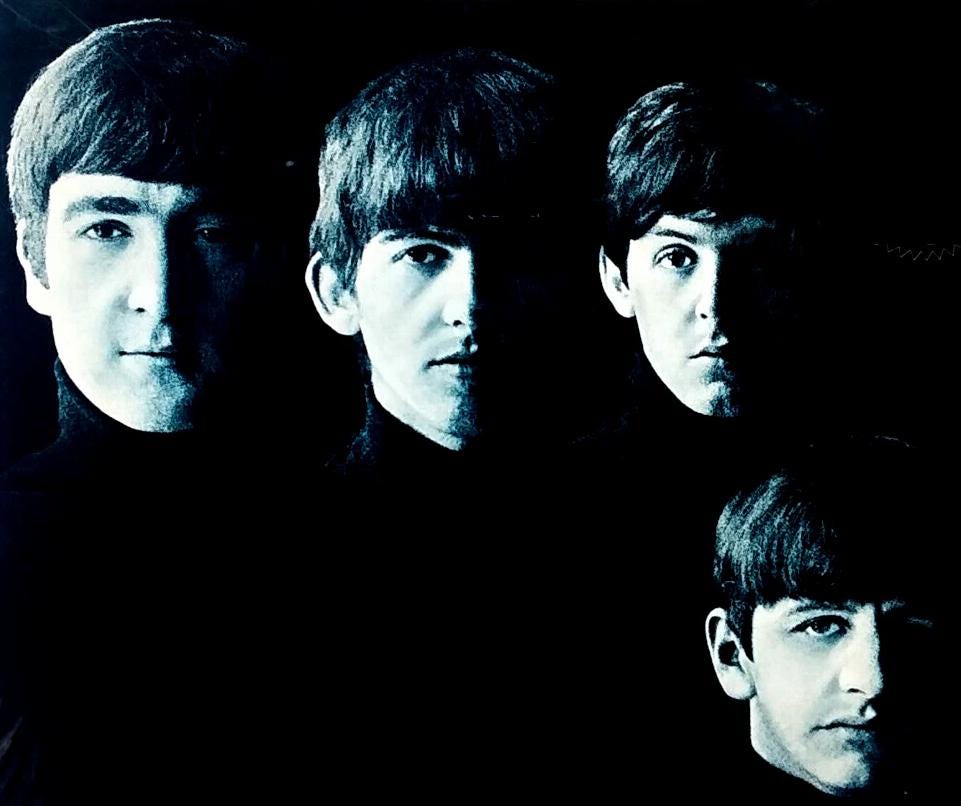
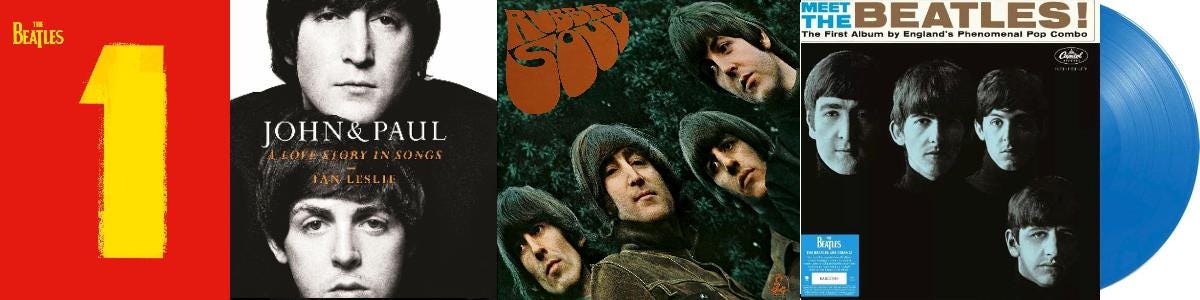
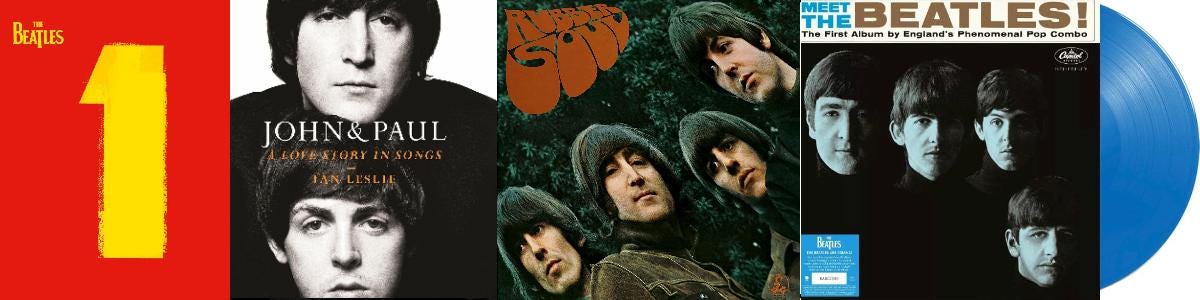
Robert Freeman took perhaps the most iconic photograph in music history when he snapped a picture of the Beatles in a hotel hallway in 1963. The half-shadowed faces on With the Beatles became the visual template for what a serious rock band should look like. Before Freeman, album covers were just headshots of people grinning like they were posing for yearbook photos. After Freeman, darkness and moodiness were aspirational. 📸The Man Who Made Them Look Like ArtistsFreeman’s run as the Beatles’ house photographer lasted from 1963 to 1966, during which he shot five consecutive album covers and established a visual language for the band that was as important as George Martin’s production. Then, just as suddenly as he’d arrived, he was gone. Replaced by an illustrator for Revolver, sidelined entirely for Sgt. Pepper, and never brought back into the fold even as the Beatles continued releasing albums through 1970. What happened? Short answer: the Beatles outgrew him. The longer answer is more interesting. When Freeman first met the Beatles in August 1963, they were still wearing matching suits and had yet to crack America. He was a jazz photographer who’d worked with John Coltrane and understood how to make musicians look serious rather than approachable. The setup for With the Beatles was deceptively simple: four faces emerging from darkness, half-lit, wearing black turtlenecks, no smiles. It looked like album covers for French existentialist films, not pop music. 🖤In a tribute he wrote when Freeman died in 2019, Paul McCartney recalled:People often think that the cover shot for Meet The Beatles of our foreheads in half shadow was a carefully arranged studio shot. In fact, it was taken quite quickly by Robert in the corridor of a hotel we were staying in where natural light came from the windows at the end of the corridor.The effect was transformative. Manager Brian Epstein had spent months trying to make the Beatles look clean-cut and non-threatening to parents. Freeman made them look like they didn’t care what your parents thought. The cover became so influential that every band for the next three years tried to replicate it—the Stones, the Kinks, the Who all attempted variations on the moody-faces-emerging-from-darkness template. Freeman had accidentally invented the visual vocabulary of rock credibility.For A Hard Day’s Night in 1964, Freeman gave them the grid of faces—five images each, twenty portraits total, showing different expressions. It was playful without being childish, artistic without being pretentious. The album was the soundtrack to their first film, and Freeman’s cover made it clear this wasn’t just a cash-grab movie tie-in. This was Art. 🎬Then came Beatles for Sale in late 1964, and Freeman did something unexpected: he made them look sad. Shot in autumnal Hyde Park, the four Beatles stare at the camera with tired, slightly melancholic expressions. They’d spent 1964 being chased around the world by screaming fans, and Freeman captured what that exhaustion looked like. No other pop band at the time would have allowed a cover that suggested they were anything less than thrilled to be famous. The Beatles did, because Freeman made it look cool. 🍂The Beginning of the EndHelp! in 1965 should have been the warning sign. Freeman shot the cover—the four Beatles in ski clothes spelling out a message in semaphore flag positions. Except they’re not actually spelling “HELP.” Freeman arranged them for visual composition rather than accuracy, and the actual semaphore reads something like “NUJV.” When this was pointed out, everyone shrugged. It looked good, and that was what mattered. But the willingness to prioritize aesthetics over meaning was very Freeman, and increasingly not very Beatles. 🎿By Rubber Soul in December 1965, the relationship was starting to show cracks. The famous stretched, distorted faces on the cover were actually an accident. McCartney recalled:His normal practice was to use a slide projector and project the photos he’d taken onto a piece of white cardboard which was exactly album sized, thus giving us an accurate idea of how the finished product would look. During his viewing session the card, which had been propped up on a small table, fell backwards, giving the photograph a ‘stretched’ look. Instead of simply putting the card upright again, we became excited at the idea of this new version of his photograph. … Because the album was titled Rubber Soul, we felt that the image fitted perfectly.It became one of the most recognizable album covers of the sixties, but it also revealed something important: the Beatles were now making aesthetic decisions themselves rather than deferring to their photographer. Freeman was still technically in charge, but the band was increasingly directing the vision. 🎸The cover also showed the absolute limit of what Freeman could do with photography. He could make them look moody, playful, tired, or distorted, but he couldn’t make them look psychedelic. He couldn’t make them look like the music was starting to sound. Enter Klaus VoormannFor Revolver in August 1966, the Beatles hired Klaus Voormann, an old friend from Hamburg, to create a pen-and-ink illustration featuring collaged photographs and surreal line drawings. It was unlike any album cover that had come before, and it signaled a complete departure from Freeman’s stark realism. The Beatles were no longer interested in looking like sophisticated jazz musicians. They wanted to look like their minds were expanding. Freeman couldn’t deliver that with a camera. 🖊️Freeman wasn’t fired, exactly. He wasn’t replaced with another photographer. He was replaced with a different medium entirely. The Beatles had moved past photography as the primary visual language for their work. By the time Sgt. Pepper rolled around in 1967, they needed pop art collage, not moody portraits. Peter Blake and Jann Haworth created the now-iconic cover, and Freeman was nowhere in the conversation. 🎭Why They Never Came BackEven when the Beatles could have used Freeman again, they didn’t. The White Album in 1968 had a completely blank white cover with just the embossed title—no photo needed. Abbey Road in 1969 was a simple photograph of them crossing the street, which Freeman could have easily shot. Let It Be in 1970 used individual portrait photos that any competent photographer could have handled. But they never called Freeman back. 🚶Part of this was practical: by 1968, the Beatles had largely stopped working as a unified group. They recorded separately, socialized separately, and certainly didn’t coordinate on album cover shoots the way they had in 1963. The idea of gathering all four Beatles for a Freeman photo session was increasingly impossible.But the deeper reason is that Freeman represented an era they’d left behind. His aesthetic was early-sixties sophistication—darkness, moodiness, European art film sensibility. By the late sixties, that looked dated. The Beatles were interested in Indian mysticism, avant-garde experimentation, and pastoral English countryside vibes. Freeman’s half-shadowed faces in black turtlenecks belonged to a different band entirely. ☮️The LegacyFreeman went on to photograph other bands and pursue other projects, but he never again captured anything as culturally significant as those five Beatles covers. How could he? Those images defined an entire era. The half-shadowed With the Beatles faces are so iconic that parody versions still circulate today. The stretched Rubber Soul faces became shorthand for sixties experimentalism. Freeman’s work didn’t just document the Beatles—it helped create the visual language of rock music as a serious art form. 📷The irony is that Freeman’s aesthetic eventually came back into fashion. Modern indie bands still borrow his moody, high-contrast, black-and-white approach. Those With the Beatles faces look timeless in a way that the Sgt. Pepper collage, for all its brilliance, doesn’t quite manage. Freeman created something that lasted. He just didn’t get to stick around long enough to see the Beatles through to the end.Five album covers in three years, and then he was gone—replaced by illustrators, pop artists, and eventually nobody at all. The Beatles didn’t need a house photographer anymore. They’d become the image themselves. 🎨Visit my Beatles Store: Get full access to Beatles Rewind at beatlesrewind.substack.com/subscribe
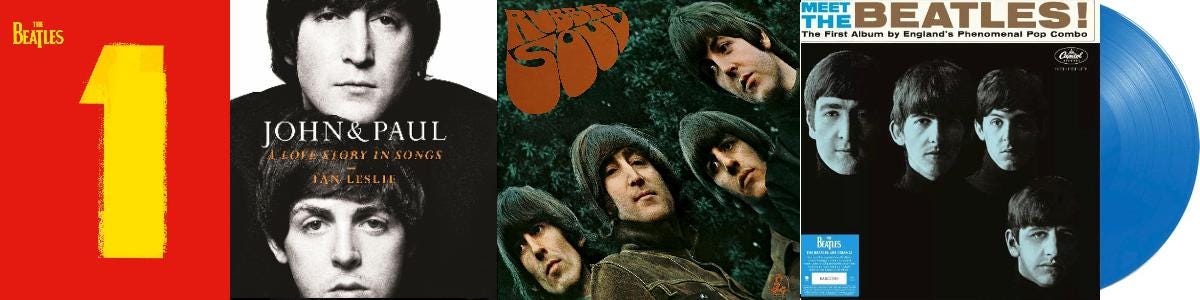
September 8, 1969. The album is finished. Abbey Road won’t be released for another three weeks, but the four Beatles are gathered at their Apple offices on Savile Row for a meeting that should be celebratory. It isn’t. John Lennon has a proposal, and it’s less “let’s talk about the next record” and more “I want a divorce.” 💔What John actually proposes is an “equal rights” system—a radical restructuring that would strip Paul McCartney of his de facto leadership role and give George Harrison equal footing in the band’s creative hierarchy. It’s the kind of demand you make when you’ve already checked out but haven’t figured out how to say it yet. Also, John dismisses the Side Two medley as “junk,” insisting his songs be grouped together on one side, away from Paul’s “granny music.” The album they’ve just finished—the one that will become their most cohesive statement—was apparently built on shifting sand. 🎸Fragments Held Together By TapeThe medley—Paul’s vision for a continuous, symphonic suite closing Side Two—was born out of necessity as much as ambition. They had fragments, half-songs. Ideas that couldn’t quite stand on their own. Paul, still thinking in Sgt. Pepper terms, saw an opportunity: stitch them together into something that sounds purposeful, a mini-opera that makes the listener forget they’re hearing musical scraps held together by George Martin’s production wizardry and sheer force of will. 🎵John wasn’t buying it. By mid-1969, he’s deep in his Plastic Ono phase—raw, unvarnished, confessional. He wants statements, not puzzles. “I Want You (She’s So Heavy)” is eight minutes of primal heaviness that builds and builds until it just stops, like someone cut the tape with scissors. That’s the aesthetic John is after: brutal honesty, not baroque arrangements. The medley feels like a cop-out to him, a way for Paul to hide weak songwriting behind clever editing. The artistic split between them isn’t just about the medley—it’s about two fundamentally incompatible visions of what the Beatles should be in 1969. The medley becomes a metaphor for the band itself: bits and pieces held together by tape and the collective pretense that everything’s fine. 🎭George’s Quiet RevolutionWhile John and Paul are fighting over whether to tape fragments together or let them stand alone, George walks in with “Something” and “Here Comes the Sun”—the two best songs on the album, and it’s not particularly close. Frank Sinatra will call “Something” the greatest love song ever written. George wrote it about Pattie Boyd, though by this point their marriage is quietly falling apart, just like everything else. ☀️Paul’s dismissive comment during the sessions—that George’s songs “weren’t that good” until now—is both an admission and an insult. George has been delivering quality material since Revolver, but Paul’s finally willing to acknowledge it right as the band is disintegrating. The timing is not lost on George, whose newfound confidence (and his deepening friendship with Eric Clapton) makes him considerably less willing to sit quietly while John and Paul argue about sequencing. He’s been a sideman long enough. The walkout mentality from the Get Back sessions in January—when George quit for five days—is still simmering. If they’re going to treat him like a hired hand, he can go be a star somewhere else. 🌟The Accident That Defined The Ending“The Long One”—the original trial edit of the medley—runs about 15 minutes and contains a 20-second problem. Paul had placed “Her Majesty” between “Mean Mr. Mustard” and “Polythene Pam,” but it ruins the transition. The key is wrong, the mood is wrong, the whole thing just doesn’t work. Paul’s solution is simple: throw it away. 🗑️Except you can’t just throw away a Beatles recording. Junior engineer John Kurlander, following the rule that nothing gets erased, splices “Her Majesty” onto the end of the reel instead of tossing it. And then something serendipitous happens: they forget it’s there. When the next engineer plays back the reel, “Her Majesty” pops up after the final chord of “The End” with that weird crashing note at the beginning (the last chord of “Mean Mr. Mustard” that it was originally spliced after). Paul hears it, loves the accidental quality of it, and decides to leave it. The “hidden track” that defines Abbey Road’s ending—23 seconds of solo Paul that feels like an afterthought or a secret—exists because a junior engineer refused to follow orders. Sometimes the best decisions are made by accident. 🎲Communicating Through Instruments“The End” contains one of the rarest moments in late-period Beatles history: John, Paul, and George trading guitar solos in a single take, each getting two bars to say something before handing it off to the next guy. For one brief moment, the fighting stopped. They couldn’t communicate through words anymore—the resentments and unspoken grievances had made conversation nearly impossible—but they could still talk through their instruments. 🎸The symbolism is almost too perfect: three virtuosos taking turns soloing, no one stepping on anyone else, each voice distinct but part of a larger conversation. It’s the kind of musical democracy John had been demanding in meetings, achieved spontaneously on the studio floor because they stopped thinking and just played. And then Paul closes it with his Shakespearean couplet—”And in the end, the love you take is equal to the love you make”—and even John, who’s been calling Paul’s work “granny music,” admits it’s perfect. For a moment, the argument stops. The fault line holds. ❤️The Masterpiece They Couldn’t Admit They’d MadeSix days before Abbey Road’s release, John tells the others he wants a “divorce.” It’s the September 20 meeting at Apple where he makes it official: he’s out. Lennon recalled with characteristic bluntness during his 1970 “Lennon Remembers” Rolling Stone interview:“I said to Paul, ‘I’m leaving.’ ... Paul just kept mithering on about what we were going to do, so in the end I just said, ‘I think you’re daft. I want a divorce.’”He also admitted to a bit of alpha-male regret later on, noting that he was annoyed Paul "beat him to the punchline" by being the one to officially announce the breakup to the public in April 1970.The album they’ve just spent months perfecting—the most cohesive-sounding thing they’ve ever made—was created by four people who could no longer stand to be in the same room together. The paradox is almost funny if it weren’t so sad. 😔The medley wasn’t just a swan song, though it functions as one in retrospect. It was a desperate attempt to stick the fragments of a brotherhood back together—musical bits taped end-to-end in the hope that the seams wouldn’t show. And for 16 minutes and change, it works. You can’t hear the arguments. You can’t see John’s resentment or Paul’s frustration or George’s quiet revolution. All you hear is four guys who were once the best band in the world proving they still can be, even if only for the length of a long-playing record. The masterpiece was built on a fault line, but it holds. That’s the miracle and the tragedy of Abbey Road, wrapped up together in a side-two suite that shouldn’t have worked but does. 💿The fragments stayed taped together just long enough.Visit my Beatles Store: Get full access to Beatles Rewind at beatlesrewind.substack.com/subscribe
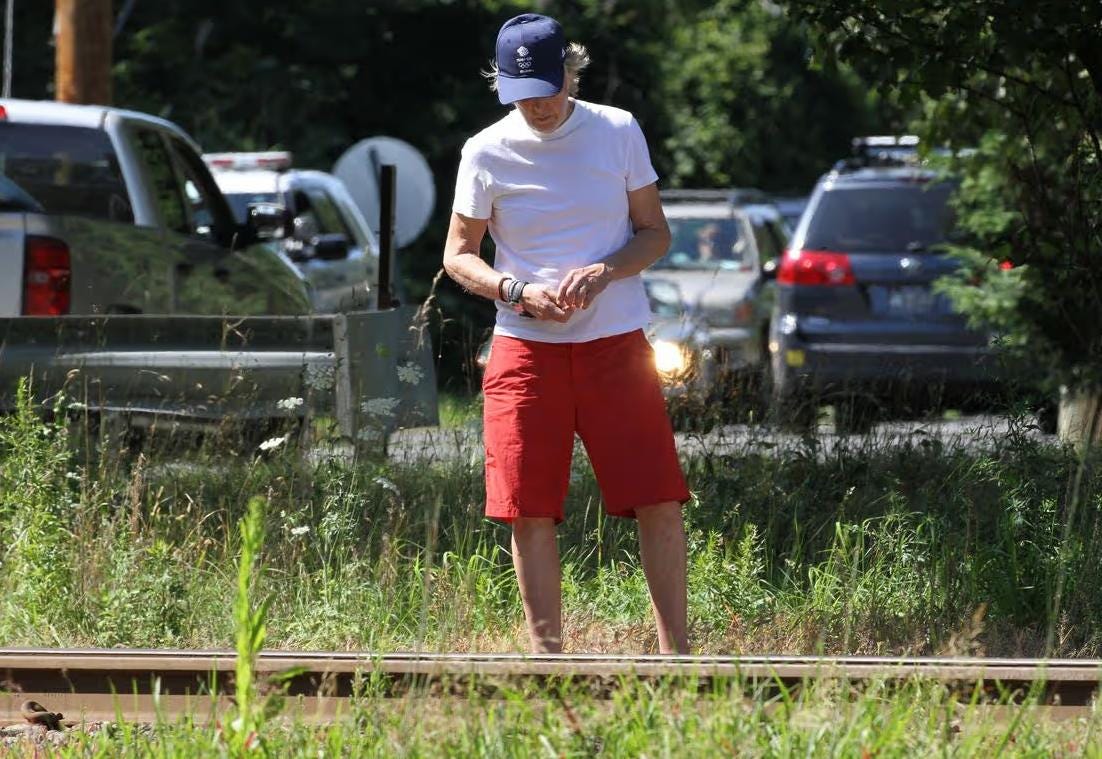
There’s a persistent legend about Paul McCartney that feels too charming to be fake. The story goes that Sir Paul—a man who could afford a gold-plated factory—used to make his guitar picks by lining up pennies on train tracks and letting a locomotive do the flattening. Whether it was a one-time experiment or a career-long habit is up for debate, but the image of the world’s most famous bassist scavenging for flattened copper is irresistible. It’s also, in a strange way, the perfect introduction to how the Beatles approached the humble guitar pick. These small, almost disposable pieces of plastic—or apparently, occasionally, smashed currency—were the first point of contact between the players and the music. And the choices they made, from cheap celluloid in Liverpool coffeehouses to the specific picks that helped define some of the most recorded bass lines in history, turn out to be more interesting than anyone who’s never lost a pick under their couch cushion might expect.The Skiffle Years and the Hardware Shop Problem 🎵When John Lennon formed the Quarrymen in 1956, the available guitar equipment in Liverpool was, to put it diplomatically, limited. The picks available in British music shops were basic celluloid affairs, thin and cheap, the kind that came in whatever was on the shelf. You played what you could get.The picks of the era offered a blend of flexibility and brightness that worked okay for strumming chords on a skiffle guitar. The main choices were the teardrop shape and the slightly wider “home plate” profile—so called because of its resemblance to baseball’s fourth base.🎶The Home Plate Era 🎸As the Quarrymen evolved—Johnny and the Moondogs, the Silver Beetles, eventually the Beatles—and as the group tightened up through their relentless Hamburg residencies, the three guitarists developed a shared preference. All three—Paul, John Lennon, and George Harrison—were known for favoring a “home plate” shaped pick during the Beatles years. It looked like a standard pick but with slightly different side angles, giving it a marginally different feel in the hand and a slightly different attack on the string. In photographs and film from the Cavern Club era through the peak touring years, this shape appears consistently, clutched between thumb and forefinger as they hammered away. 🎤The specific brand that gets mentioned most frequently in this context is Bert Weedon, a British guitarist whose instruction book Play in a Day was quite literally the manual for an entire generation of British rock musicians. McCartney, Harrison, Keith Richards, Eric Clapton, all of them were influenced by Weedon’s book, which made the basics of guitar accessible to working-class British kids in a way nothing else had. ✨John’s Teardrop 🎵While all three shared the home plate preference as a group default, John Lennon’s personal pick of choice evolved to a celluloid teardrop-shaped medium. Unassuming, common, the kind of pick that cost almost nothing and was easily lost and easily replaced. The teardrop medium was well suited to Lennon’s role in the band. He was primarily a rhythm guitarist — something he was somewhat defensive about during his lifetime but which musicologists have increasingly recognized as a brilliant and underrated skill. The chord-driven strumming and chopping that powered songs like “A Hard Day’s Night” and “I Feel Fine” was rhythm guitar work of a very high order, and a medium celluloid teardrop was exactly the right tool. Not too stiff to strum, not too floppy to lose definition. 🎸George’s Evolution 🌟George started where everyone starts: basic celluloid mediums, the standard issue of the era. His early playing on guitars like the Höfner Club 40 and then the Gretsch Duo Jet didn’t require anything more specialized. But as Harrison’s playing deepened—as he moved from competent lead guitarist to one of the most distinctive voices on the instrument—his approach to picks evolved alongside everything else.Over time, George adopted the 351 pick shape in medium celluloid, the same general family as where he started, but more deliberately chosen. The pick that let him move between the delicate fingerpicked passages he loved and the more aggressive lead work that appeared as the band’s music grew more complex. 🎶Paul McCartney: The Bassist Who Never Got the Memo 🎸The convention in bass playing, established well before McCartney ever touched the instrument, was fingerstyle. The great Motown bassists—James Jamerson chief among them, an artist McCartney genuinely admired—used their fingers. Fingerstyle gives bass a warmer, rounder tone with more dynamic variation. It was the accepted approach, the “proper” technique, the thing bass players just did.McCartney had none of this training and did not particularly care. A pick on the Höfner 500/1 violin bass produces a sharper, brighter attack than fingers would — more presence in the midrange, cleaner note separation, a sound that cuts through drums and guitars rather than sitting warmly beneath them. For the music the Beatles were making, this turned out to be exactly right. Those melodic, inventive, harmonically sophisticated bass lines that gradually became McCartney’s signature needed to be heard, not felt. One of the things that bugged Paul the most about Beatles records was that his bass, he thought, was never loud enough.Paul began the Beatles years with the “home plate,” and also heavier felt picks, giving a softer, rounder attack when the song called for it. Later in his career he settled on heavy Fender 351-style picks for bass work, switching picks when he moved between guitar and bass onstage. He reportedly became so attached to the tactile feedback of a pick that on tour, when the nail on his picking finger wore down, his wife Nancy suggested he get a fake nail applied to maintain consistent feel. 💅It’s unclear whether Paul really used pennies for picks, but such a thing isn’t totally unheard of—Queen guitarist Brian May uses sixpence coins as a his signature guitar pick—he enjoys the “chime” effect created by the serrated edge. A footnote: In 2019, London’s Daily Mirror newspaper published several photos of someone who looks very much like McCartney placing coins on a railroad track. However, Paul wasn’t interviewed for the story.The Tiny Plastic Thing That Changed Everything ✨It would be easy to dismiss the guitar pick as the most boring component of the Beatles’ gear—the thing you think about after you’ve finished discussing the Rickenbacker 325, the Höfner violin bass, the Vox AC30s, and George Martin’s arrangements. But picks are the interface. They’re what actually touches the string.Today, picks that were actually used by the Beatles are highly prized by collectors. A pick John used for rehearsals at his Madison Square Garden performance in 1972 sold for $2,560 a few years ago through Julien’s Auctions.As the legend goes, Paul’s journey started with flattened pennies on the Liverpool tracks. It ended with a sound that redefined the bass forever. The distance between those two points is one of the great arcs of rock history—a transformation fueled by a simple piece of celluloid or felt that changed everything in ways no one saw coming. 🎸✨Visit my Beatles Store: Get full access to Beatles Rewind at beatlesrewind.substack.com/subscribe
Picture this. It’s 1968. John Lennon is at Kenwood, his sprawling home on the St. George’s Hill estate in Weybridge, Surrey. He’s in the middle of one of the most turbulent periods of his life—his marriage to Cynthia is falling apart, Yoko has arrived, and the world he’d carefully built is coming undone around him. He’s burning it all down—the house, the marriage, the version of himself that had lived here—and anything connected to that old life has become impossible to look at.Including, apparently, a painting on the wall.That painting was a portrait of Lennon himself, made by his closest friend, Stuart Sutcliffe—dead at twenty-one and never gotten over. It had hung in the sunroom at Kenwood throughout the Cynthia years, a quiet reminder of the young man John had been before all of this. And now, in the middle of all that chaos and grief and upheaval, he’s standing there tearing it apart.Bernard Clark, the director of a local photo studio, happened to be at Kenwood that day delivering gear—a task he handled personally to spare the Beatles from being mobbed. Seeing Lennon in mid-tear, Clark stepped in with a beautifully simple request: "Can I have it?" Without a second thought, Lennon handed over the pieces.Bernard had no idea what he was walking out with.Two Boys from Liverpool 🎸To understand why that painting matters, you have to go back about a decade—back to Liverpool College of Art, where John Lennon met Stuart Sutcliffe in 1957. The two were inseparable almost immediately. Beatles historian Mark Lewisohn put it simply: “They inspired each other and they laughed, drank, painted and read together.” They pushed each other in ways that only the best of friends can.Sutcliffe was, by many accounts, the more naturally gifted visual artist of the two. When Lennon was pulling together the band that would eventually become The Beatles, he wanted his best friend along for the ride. The fact that Stuart couldn’t really play bass was treated as a minor detail. Stu sold a painting, bought a guitar, and joined the band. 😄Hamburg changed everything. The Beatles went there for their legendary residencies, and it was there that Sutcliffe met photographer Astrid Kirchherr, fell completely in love, and made a decision that felt inevitable: he left the band to study painting at the Hamburg College of Art under the legendary Eduardo Paolozzi. Lennon understood. The friendship didn’t just survive, it deepened.The portrait is believed to have been painted in 1961 or 1962, in the attic studio of the Kirchherr family home in Hamburg—the same house where the whole band was welcome, where Astrid fed them English breakfast and introduced them to ideas that were quietly reshaping who they were. Sutcliffe captured Lennon in a highly stylized head study—pen, ink, watercolor, and mixed media—abstract enough to be serious art, but specific enough that every single person who sees it says the same thing: that’s John Lennon. A simple “J” is inscribed to the left of the sitter’s neck. That’s the only signature the painting needs.Then, on April 10, 1962, Stuart Sutcliffe died of a brain hemorrhage. He was twenty-one years old. Lennon was devastated—the kind of grief he rarely let show, but that people close to him recognized immediately. He had lost his closest friend, his artistic conscience, the person who perhaps knew him better than anyone. On the Wall at KenwoodLennon kept the portrait, of course. It hung in the sunroom at Kenwood — his favorite room in the house — for years. And here’s where the story gets genuinely thrilling for anyone who loves this kind of historical detective work.A photograph taken sometime between June and December 1967 shows John lying on a couch in that sunroom. And there, just above his head, on the wall behind the sofa, is a painting. A face. The Attic, the Box, and the DiscoveryAfter Bernard brought the torn pieces home and had the painting repaired, it had one more long chapter before the world got to see it. His wife, who had been close friends with Cynthia Lennon, was deeply unhappy about the way John and Cynthia’s marriage had ended. She didn’t want the reminder of that era on the wall. The painting was banished to the attic—like a portrait of Dorian Gray, sealed away and forgotten.In 2024, after Bernard and his wife passed away, their son, Stephen, was clearing the family estate when he opened a box and found the portrait. When the painting came up for auction, the photograph of John in his sunroom was used to authenticate the painting. John Silk of Ewbank’s Auctions performed a gloriously nerdy piece of art forensics. He took the image of the painting they’d been consigned for auction, “parallelogramtized” it (his word)—squished it, angled it, reduced the opacity, and overlaid it on the photograph.Perfect match. 🔍The painting that Bernard Clark had walked out of Kenwood with in 1968 was the same one that had hung above John Lennon’s head the year before, while he was recording Sgt. Pepper and Magical Mystery Tour and living inside the most creative period of his life. A portrait of John, painted by the friend he’d lost, watching over him from the wall.The Sale 🏛️When the portrait went to Ewbank’s Entertainment & Memorabilia, the pre-auction estimate was cautiously set at £3,000 to £5,000. It sold for £19,500 (about $26,500 in today’s U.S. dollars)—nearly four times the auction estimate—which surprised exactly no one who understood what the painting actually represented.This wasn’t just a piece of Beatles memorabilia. It was a painting made by a twenty-one-year-old artist for his best friend, kept by that friend for years after his death, nearly destroyed in a moment of grief and upheaval, saved by a simple act of kindness, hidden in a loft for decades, and finally brought back into the world. Every one of those layers is visible in the torn, reassembled surface of the thing itself.Stuart Sutcliffe left The Beatles to become the artist he believed he was meant to be. He never got the chance to find out how the story ended. But the portrait survived. And in the end, that feels like exactly the right outcome. 🎶Visit my Beatles Store: Get full access to Beatles Rewind at beatlesrewind.substack.com/subscribe
There’s a moment — you’ve heard it a thousand times — where a single guitar note bends upward out of silence, and before the second note even arrives, you already know exactly what song it is. That’s the power of the “Day Tripper” riff. Two bars. One chord. Infinite replay value. It’s the musical equivalent of a perfectly thrown punch — compact, precise, and impossible to shake once it lands.Released in December 1965 on the world’s first double A-side single (alongside “We Can Work It Out”), “Day Tripper” arrived at a pivotal moment. The band was under pressure to deliver a Christmas single and had just returned from an American tour soaked in Motown and Stax soul. That summer on the road changed everything about how they heard rhythm, groove, and the relationship between guitar and bass. The riff they came back with wasn’t just a song — it was a statement. 🎵🕵️ Who Wrote It?Here’s where things get delightfully murky, because the Beatles being the Beatles, almost nothing about their creative process was ever simple or clean.John Lennon claimed the riff as his own, loudly and repeatedly. In a 1980 interview, he was characteristically blunt: “That’s mine. Including the lick, the guitar break and the whole bit.” Classic John — no ambiguity, no hedging, no room for argument. Paul McCartney, in his more diplomatic fashion, has said it was a collaboration but that John deserved the main credit, which in McCartney’s careful world of credit-sharing essentially means John wrote it.Who played it? John almost certainly didn’t play it on the record. The riff you hear — that grinding, insistent, perfectly executed two-bar figure running through the entire song — was almost certainly played by George Harrison, doubled by Paul on bass, with John likely handling rhythm guitar and the guitar solo. The irony isn’t lost on serious fans: Lennon came up with one of the most celebrated riffs in rock history and then handed it to his lead guitarist to actually perform. 🎸George was playing a Gibson ES-345 and a 1963 Gretsch Tennessean on the session, and the tonal quality of the riff lines up far more naturally with those instruments than with John’s Rickenbacker 325. Paul, brilliantly, doubled the riff on his Rickenbacker bass — not on the open E string but up on the 7th fret of the A string — which gave the bottom end an unusual compression and punch that would directly influence the approach they’d later refine on “Paperback Writer.” The whole recording is a masterclass in how three musicians can lock onto a single idea and make it feel like one enormous instrument. 🥁🎵 The Bobby Parker ConnectionNo honest account of the “Day Tripper” riff can skip over Bobby Parker. Lennon himself acknowledged it — the riff drew heavily from Parker’s obscure 1961 track “Watch Your Step,” a grinding blues-soul number that made the rounds on American R&B radio and in the record collections of serious British musicians who were hunting for the authentic stuff.This wasn’t plagiarism. It was the Beatles doing what they had always done with surgical brilliance: absorbing the DNA of American music and reassembling it into something that felt entirely new. “Watch Your Step” was itself indebted to earlier blues traditions, and Lennon had already pulled from Parker once before when constructing the “I Feel Fine” riff in 1964. He knew exactly where he was fishing.Musicologist Walter Everett traces the “Day Tripper” riff even further, identifying it as a synthesis of ostinatos from multiple Motown recordings — the Temptations’ “My Girl,” Barrett Strong’s “Money (That’s What I Want),” Marvin Gaye’s “I’ll Be Doggone” — with a rockabilly undertow that recalls Roy Orbison’s “Oh, Pretty Woman.” There’s also a compelling theory that Lennon was directly motivated by competitive instinct toward the Rolling Stones: their massive 1965 hit “(I Can’t Get No) Satisfaction” had shown the world what a simple, repeated guitar figure could do to a song, and Lennon reportedly wanted to improve on it. If true, mission accomplished. 🏆🔥 Is It One of the Greatest Guitar Riffs Ever Written?Let’s make the argument properly, because it deserves one.The case for “Day Tripper” sitting in the conversation with the all-time greats rests on several pillars. First, pure memorability — author John Kruth noted that the riff was something every young guitarist in the UK and the US simply had to learn in 1965, and that kind of mandatory cultural transmission is the ultimate measure of a riff’s power. Lenny Kaye, later of the Patti Smith Group, called it one of the era’s truly great riffs and pointed out that Beatles music was consistently harder to master than it looked — the Stones and the Yardbirds wrote riffs you could fake; the Beatles wrote riffs that punished imprecision. 🎯Second, structural elegance. The “Day Tripper” riff is built on a single chord — E major — across two bars, which sounds almost absurdly simple until you actually play it and realize how many musicians would have cluttered it. The genius is in the note choices and the rhythmic placement, the way the riff creates momentum without ever resolving until it absolutely has to. It opens the song, forms the foundation of the verses, migrates through the chord changes (shifting to A, then B during the solo section), and closes the song. The whole thing is essentially the riff wearing different hats for three minutes. Most songs use riffs as decoration. “Day Tripper” uses it as architecture. 🏗️Third, influence. The Total Guitar/Guitar World poll of the greatest riffs ever placed “Ticket to Ride” — another Beatles groove — at number 49, and “Day Tripper” perennially appears in these lists alongside the giants: Jimmy Page’s “Whole Lotta Love,” Keith Richards’ “Satisfaction,” Ritchie Blackmore’s “Smoke on the Water,” Tony Iommi’s “Iron Man.” These are the riffs that didn’t just accompany great songs — they became the reason those songs existed in the first place. “Day Tripper” belongs in that company.🎸 The Brotherhood of the Great RiffTo understand where “Day Tripper” sits historically, it helps to look at the company it keeps.Keith Richards and “(I Can’t Get No) Satisfaction” (1965) — Richards came up with the riff half-asleep in a hotel room, recorded it on a cassette before he fell back to sleep, and woke up not entirely sure he hadn’t dreamed it. Three fuzztone notes that became the most recognizable guitar sound of the decade. ⚡Jimmy Page and “Whole Lotta Love” (1969) — Page constructed this on a houseboat on the Thames, drawing from Willie Dixon’s blues vocabulary and amplifying it into something that sounded like it was coming from a different planet. Total Guitar called it the definitive riff. 🚀Tony Iommi and “Iron Man” / “Paranoid” (1970) — Iommi had lost the tips of two fingers in an industrial accident and learned to play with homemade prosthetics, which forced him to tune down and attack the strings differently, accidentally inventing the heavy metal guitar sound in the process. 🖤Ritchie Blackmore and “Smoke on the Water” (1972) — The most widely played riff in history by sheer volume of beginners attacking it in guitar shops worldwide. Four notes in fourths, conceived while watching a casino burn in Montreux. Its power lies in its almost aggressive simplicity. 🔥Jack White and “Seven Nation Army” (2003) — Three descending notes through an octave pedal that became a stadium chant heard at sporting events worldwide. Proof that great riffs weren’t a vintage phenomenon locked in the 60s and 70s — the right idea at the right moment still hits the same way. ⚡What all these riffs share with “Day Tripper” is the quality that separates great riffs from merely good ones: they don’t just introduce a song — they make the song inevitable. You can’t imagine any of these recordings starting any other way. The riff isn’t a hook bolted onto the front — it IS the song, and everything else is built around it.🎵 The Day Tripper LegacyThe recording itself, completed in just three takes on October 16, 1965 — with Paul’s unusual high-register bass doubling, Ringo’s increasingly aggressive drumming building through the verses, and that deliberately mysterious guitar dropout near the end that George Martin apparently let stand as an intentional quirk — remains one of the most tightly constructed three minutes in rock history. 2:47 of pure economy, as Paul would later describe it. Nothing wasted. Nothing missing.The song’s subject matter — Lennon’s arch portrait of a “weekend hippie,” the day-tripper who wanted the experience of counterculture without the commitment, the dabbler who took the easy way out — gave the riff an edge that pure musicianship alone couldn’t supply. The riff doesn’t sound like an invitation. It sounds like an accusation. That tension between the grinding, relentless guitar figure and the slightly contemptuous lyric is what keeps “Day Tripper” feeling dangerous sixty years later when so many of its contemporaries feel merely nostalgic. 🎶Whether it was John’s idea executed by George, or George’s instincts shaping John’s concept in real time — the answer, honestly, is probably both — “Day Tripper” gave the world a riff that young guitarists are still learning, still arguing about, and still unable to play just once. That’s the only definition of greatness that actually matters. 🌟Visit my Beatles Store: Get full access to Beatles Rewind at beatlesrewind.substack.com/subscribe
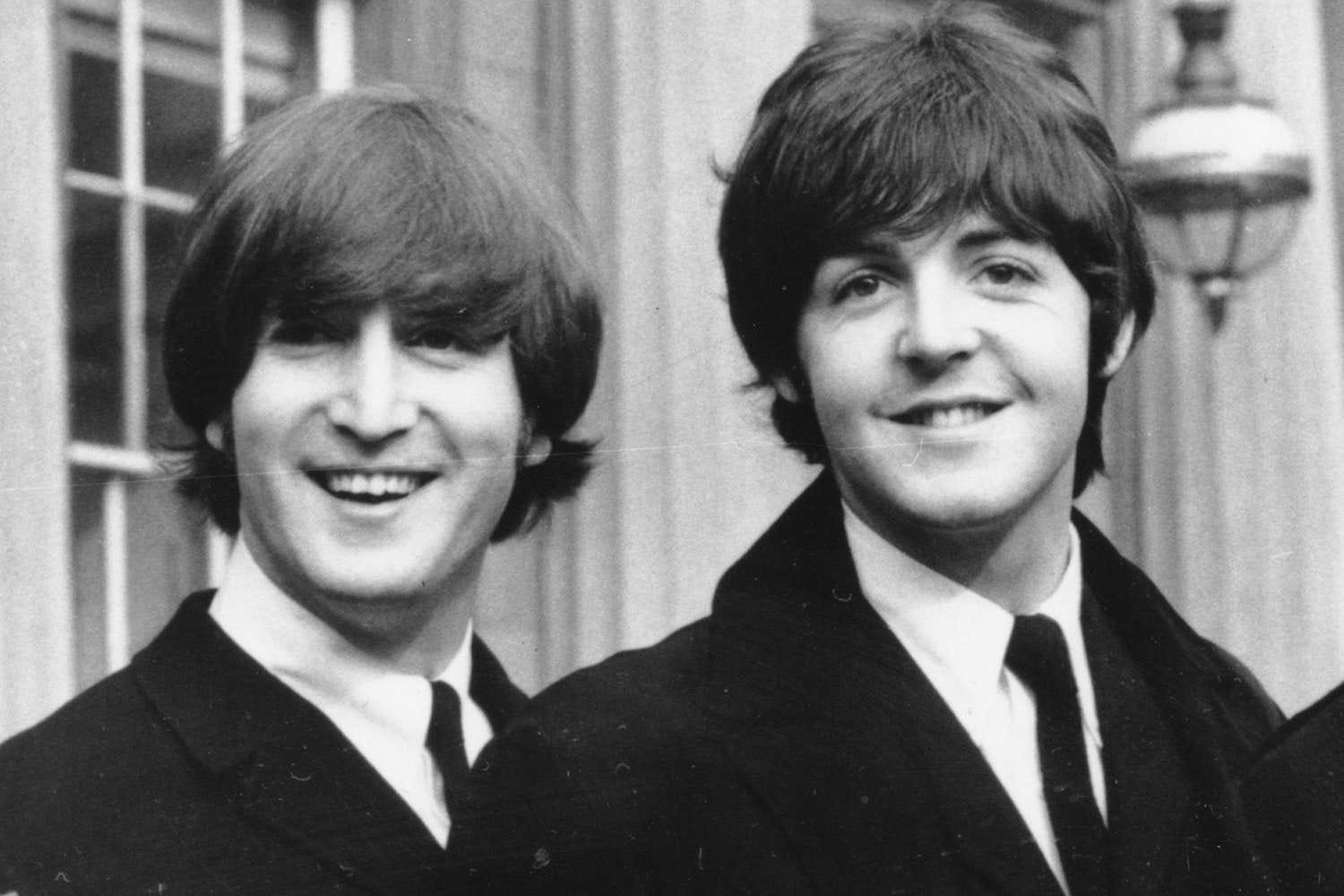
When John Lennon and Paul McCartney first met at a church fete in Woolton on July 6, 1957, neither could have predicted they were about to form what would become the most successful songwriting partnership in the history of recorded music. The Beatles would go on to sell over 600 million records worldwide, with John and Paul credited on approximately 180 songs between 1962 and 1970. But the numbers, as staggering as they are, tell only part of the story. What made this partnership truly extraordinary wasn’t just the quantity of hits they produced—it was the way their collaboration pushed both men to heights neither could have reached alone. 🎸In the beginning, they wrote songs the old-fashioned way: sitting across from each other with acoustic guitars, working “eyeball to eyeball” as John later described it. He remembered the moment they got the chord that made “I Want to Hold Your Hand”—they were in Jane Asher’s house, downstairs in the cellar playing on the piano at the same time, both contributing in real-time to create something neither had walked in with. This was true collaboration in its purest form, where the line between “John’s contribution” and “Paul’s contribution” blurred into irrelevance. The song that emerged belonged to both of them equally. 💿McCartney once said they never had a writing session that wasn’t successful during those early years, it always resulted in a song. That’s a remarkable claim, but it speaks to the chemistry they developed. They had made an agreement before the Beatles became famous that everything they wrote individually or together would be credited to both names—Lennon-McCartney. This decision would later cause some friction, but in those early days it reflected their genuine belief that they were a team, that their collaboration was integral to their identity as songwriters. 📝What distinguished Lennon-McCartney from many other famous songwriting partnerships was that both men wrote both music and lyrics. Unlike George and Ira Gershwin, Rodgers and Hammerstein, or Elton John and Bernie Taupin—where one partner focused on music and the other on words—John and Paul were both complete songwriters. This meant they could challenge each other on every aspect of a song, pushing back on a weak lyric or suggesting a better chord change. As John’s first wife Cynthia Lennon observed, “John needed Paul’s persistence and attention-to-detail while Paul needed John’s anarchic, lateral thinking.” They complemented each other perfectly, one’s strength covering the other’s weakness. ⚖️As their career progressed, their writing process evolved. By the mid-1960s, it became more common for one of them to write most of a song individually and then bring it to the other for refinement and input. This is where the real magic of their partnership became evident—not in the songs they wrote together from scratch, but in how they improved each other’s individual compositions through constructive criticism and creative additions. Paul wrote the melody for “In My Life,” a song that’s become intrinsically linked to John’s confessional lyrical style. Meanwhile, John later admitted he had a significant hand in creating “Eleanor Rigby,” which is typically credited solely to Paul. 🎵The contributions each made to the other’s songs are legendary. When Paul brought in “Getting Better,” a song with its relentlessly optimistic chorus, John added the cynical counterpoint “It can’t get no worse,” grounding Paul’s sunny disposition with a dose of Lennon realism. For “A Day in the Life,” John had written the opening section and the “I’d love to turn you on” refrain, but the song lacked a middle section. Paul contributed the “Woke up, fell out of bed” bridge, which provided the perfect contrast to John’s dreamier verses. The result was a masterpiece that neither could have created alone—John’s surrealism and Paul’s mundane everyday imagery creating something greater than the sum of its parts. 🌟Their healthy competition drove both men to continually raise their game. When John wrote “Strawberry Fields Forever,” Paul responded with “Penny Lane.” When Paul delivered “Yesterday,” John felt pressure to come up with something equally profound, eventually producing “In My Life.” This wasn’t destructive rivalry—it was the kind of competitive edge that elite athletes talk about, where having a worthy opponent makes you perform at your peak. Paul would later say that having John in the room kept him from being lazy, from settling for the easy lyric or the obvious melody. And John admitted that Paul’s meticulous attention to craft pushed him to be more disciplined, to not just rely on raw talent and inspiration. 🏆Their producer, George Martin, observed this dynamic up close and understood its importance. He once said that while John and Paul were both extraordinary talents, what made them truly special was their willingness to accept criticism from each other. Most artists are protective of their work, defensive when someone suggests changes. But John and Paul had developed enough trust and mutual respect that they could say “that lyric isn’t working” or “that melody is boring” without the other taking offense. This created an environment where songs could be refined ruthlessly until they reached their potential. 🎹Compare this to the partnership of Richard Rodgers and Oscar Hammerstein II, widely considered the greatest collaboration in American musical theater history. Rodgers composed the music while Hammerstein wrote lyrics and libretto—a clear division of labor that worked brilliantly for shows like Oklahoma!, South Pacific, and The Sound of Music. But their process was more sequential than collaborative: Hammerstein would write the lyrics first, then Rodgers would compose music to fit those words. When Rodgers had previously worked with Lorenz Hart, the process was reversed—Rodgers wrote music first, Hart added lyrics. These partnerships succeeded through complementary skills rather than overlapping ones. 🎭The Gershwin brothers—George composing, Ira writing lyrics—created timeless standards like “I Got Rhythm” and “Embraceable You” through a similar division of labor. George died tragically young in 1937, and while Ira continued working with other composers, he never recaptured the magic of that fraternal partnership. Jerry Leiber and Mike Stoller, who wrote rock and roll classics like “Hound Dog” and “Jailhouse Rock,” also maintained clear roles—Leiber handled lyrics, Stoller focused on music. They met at 17 and worked together for decades, but their collaboration was built on specialization rather than the kind of all-encompassing partnership Lennon and McCartney developed. 🎼What made Lennon-McCartney different—and arguably more dynamic—was that both could do everything. This meant genuine collaboration where they could meet each other on any level of the songwriting process. It also meant they could work independently when needed, which became increasingly important as their individual artistic visions diverged in the late 1960s. By the time of the White Album, most songs were essentially solo compositions with minimal input from the partner. Yet even then, the Lennon-McCartney credit remained, a testament to the foundation they’d built together. 📀The contrast in their personalities fueled their creative chemistry. Paul was meticulous and organized, always carrying a notebook to jot down ideas in his neat handwriting. John was the opposite—scrambling to find scraps of paper to write unreadable notes whenever inspiration struck. Paul was diplomatic and smooth in communication; John was confrontational and provocative. Paul would work methodically through a song, refining it over time; John preferred to capture the initial burst of inspiration and move on. These differences could have been fatal to the partnership, but instead they created a creative tension that generated electricity. ⚡The partnership began to fracture in the late 1960s for reasons that had as much to do with business and personal relationships as with creative differences. The death of manager Brian Epstein in 1967 removed a stabilizing force, and disagreements about how to manage the Beatles’ affairs created tensions that spilled into the studio. John’s relationship with Yoko and his desire to pursue more experimental, avant-garde work clashed with Paul’s more commercial instincts. By the time they recorded Abbey Road, they were barely functioning as a partnership, though that album’s medley showed what they could still achieve when they set ego aside. 💔After the Beatles split in 1970, both men embarked on solo careers that would test the hypothesis of whether they were better together or apart. The results were... complicated. Paul formed Wings and enjoyed massive commercial success throughout the 1970s with hits like “Band on the Run,” “Live and Let It Die,” and “Silly Love Songs.” His melodic gifts and pop sensibility served him well, and Wings became one of the decade’s biggest acts. John, meanwhile, produced raw, confessional work like “Imagine” and “Jealous Guy” that showcased his lyrical depth and emotional vulnerability. Both proved they could succeed independently. 🎤But neither ever quite recaptured the consistent brilliance of their Beatles output. Paul’s solo work, while commercially successful, was sometimes criticized for being too lightweight, too eager to please. Without John around to add edge and cynicism, Paul’s natural optimism occasionally tipped into saccharine territory. John’s solo work could be powerful and moving, but also self-indulgent and under-produced. They needed each other more than either wanted to admit. 💭This is the paradox of great partnerships: two talents combining to create something neither could achieve alone, yet the partnership itself can become constraining over time. Both John and Paul felt stifled by the Beatles toward the end, eager to pursue their individual visions without compromise. But listening to “
Paul McCartney just announced a companion album for the upcoming documentary Man on the Run, set for release on February 27th on Amazon Prime Video. The album serves as a musical complement to director Morgan Neville’s movie documentary exploring McCartney’s creative rebirth and Wings’ remarkable trajectory through the 1970s following the Beatles’ dissolution. 🎸The soundtrack offers what McCartney’s team describes as “a snapshot of Paul’s creativity in the 1970s in 12 songs,” drawing from the extensive Wings catalog and McCartney’s solo work from that transformative decade. However, Paul’s announcement leaves some ambiguity regarding exactly how much genuinely new material fans can expect versus remastered versions of familiar classics—a question that’s probably keeping McCartney obsessives up at night parsing every word of the press release. 📀Based on the track listing (shown below) and promotional materials, the album appears to contain three previously unreleased recordings that constitute the “new” content: “Arrow Through Me (Rough Mix)” from the 1979 Back to the Egg album sessions, “Live and Let Die (Rockshow)” from the 1980 concert film, and “Gotta Sing Gotta Dance” from the 1973 television special “James Paul McCartney.” The remaining nine tracks appear to be remastered versions of established recordings spanning 2010 through 2018 remasters. So if you’re hoping for a vault-clearing treasure trove of unreleased Wings material, this might not be your moment—but those three tracks still promise something intriguing. 💿Sneak peeks of two tracks—”Arrow Through Me (Rough Mix)” and “Live and Let Die (Rockshow)”—are now available on the Amazon Music streaming service, and those tunes are most intriguing offerings for devoted McCartney scholars. The rough mix provides insight into the creative process during the 1979 Back to the Egg sessions, a period when Wings was experimenting with new wave influences and expanding their sonic palette beyond the melodic rock that defined their mid-1970s peak. The Rockshow version of “Live and Let Die” captures Wings in full theatrical concert mode, performing the James Bond theme that became one of their signature live spectacles complete with pyrotechnics and dramatic staging—because if you’re going to perform a Bond theme, you might as well bring the explosions. 🎬“Gotta Sing Gotta Dance,” the third previously unreleased track, originates from the 1973 ABC television special that represented McCartney’s ambitious attempt to showcase his versatility across multiple entertainment formats. Its inclusion suggests Neville’s documentary explores not just Wings’ musical evolution but McCartney’s broader creative ambitions during the decade when he deliberately sought to establish an identity independent of Beatles nostalgia—no small task when you’re the guy who wrote “Yesterday.” 📺This essay continues below. Click on the title of this product to view on Amazon. As an Amazon Associate, I earn from qualifying purchases.Man On The Run Soundtrack (Amazon Exclusive)The album’s sequencing tells a deliberate narrative arc. Opening with “Silly Love Songs (Demo)” is a brilliant choice that acknowledges both the critical dismissal McCartney faced (accusations of writing lightweight pop rather than meaningful art) and his defiant response to those critics. The track listing then moves chronologically through his early solo work (”That Would Be Something”), the partnership with Linda that defined his post-Beatles personal and professional life (”Long Haired Lady,” “Too Many People”), Wings’ progressive development (”Big Barn Bed”), their commercial and critical peak (”Band on the Run”), and their unexpected late-decade successes including the massive UK hit “Mull of Kintyre” and the new wave-influenced “Coming Up.” 🎵After the Beatles’ acrimonious breakup, conventional wisdom suggested the band members’ solo careers would pale in comparison to their collaborative work. McCartney’s determination to prove otherwise drove Wings’ evolution. Looking back on his body of work, there’s no denying McCartney achieved massive commercial success and, more importantly, artistic validation on his own terms—showing the world that yes, he could absolutely do it without the other three Beatles looking over his shoulder. 💭What remains unclear from the announcement is whether additional unreleased material exists in Neville’s documentary that didn’t make the soundtrack album. Documentaries often feature rehearsal footage, alternate takes, and studio conversations that provide context for the finished recordings. If Man on the Run includes such material, fans may find themselves wishing for a more comprehensive archival release beyond this 12-track snapshot—maybe a deluxe box set with 47 discs and a USB drive shaped like a taxi? One can dream. 🎞️The February 27th simultaneous release of documentary and soundtrack represents strategic cross-platform marketing, encouraging viewers to engage with McCartney’s 1970s catalog while watching Neville’s film chronicle that era’s creative battles and triumphs. For longtime McCartney devotees, the three previously unreleased tracks justify purchase despite the familiar remastered material. For newer fans discovering Wings through the documentary, the album serves as an expertly curated entry point into a catalog that remains somewhat overshadowed by Beatles mythology despite producing numerous classics that defined 1970s rock and pop. The question is whether these particular selections—however well-chosen—can fully capture the creative restlessness and remarkable productivity that characterized McCartney’s most underappreciated decade. ⚠️Man on the Run - Music from the Motion Picture Soundtrack, Track listing:1 Wings - Silly Love Songs (Demo)2 Paul McCartney - That Would Be Something (2011 Remaster)3 Paul and Linda McCartney - Long Haired Lady (2012 Remaster)4 Paul and Linda McCartney - Too Many People (2012 Remaster)5 Paul McCartney and Wings - Big Barn Bed (2018 Remaster)6 Paul McCartney - Gotta Sing Gotta Dance7 Wings - Live and Let Die (Rockshow)8 Paul McCartney and Wings - Band on the Run (2010 Remaster)9 Wings - Arrow Through Me (Rough Mix)10 Wings - Mull of Kintyre (2016 Remaster)11 Paul McCartney - Coming Up (2011 Remaster)12 Paul McCartney and Wings - Let Me Roll It (2010 Remaster)Visit my Beatles Store: Get full access to Beatles Rewind at beatlesrewind.substack.com/subscribe
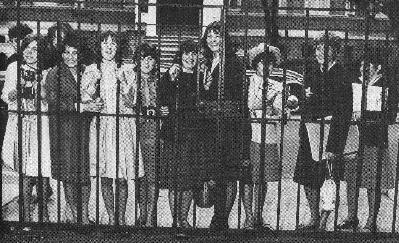
The Beatles sang “All You Need Is Love,” but let’s be real: they also needed appointment secretaries, highly creative alibi generators, and a lifetime supply of tea to soothe their long-suffering partners. These four lads from Liverpool didn’t just conquer the music world; they treated romantic fidelity like a trendy guitar effect—fun to try, but ultimately something you could toggle off when the mood struck. 🕶️Of course, it wasn’t unusual for 1960s rock stars to attract groupies, but the Beatles took it to a whole new level. It wasn’t exactly nonstop orgies—that word suggests an organized event. Hamburg was more of a chaotic, 24-hour blur of proximity. The Beatles lived in a tiny, windowless room behind a cinema screen, and living quarters became a rotating door of fans and local residents.Behind the mop-top charm and "yeah yeah yeah" innocence lay a reality of constant sexual opportunity that few men in history have experienced, and the Beatles took full advantage of it from Hamburg through their solo careers.The question isn’t whether the Beatles were world-class flirts—that’s just documented rock history. The real mystery is: who actually took home the “Womanizer” trophy? Is it the one who spent a year in bed for peace, or the “Quiet One” who was actually running a very busy schedule behind the scenes? The answer might surprise you. 💔Hamburg: The “University of Sin” 🍺The transformation began in Hamburg’s Reeperbahn district, where the Beatles performed marathon sets in clubs surrounded by sex workers, sailors, and a general atmosphere of moral flexibility. This wasn’t the sanitized Beatlemania to come—this was raw, dirty rock and roll in Germany’s red-light district. All four Beatles lost whatever innocence they’d brought from Liverpool during those residencies.Before the tailored suits, the Beatles were just four sweaty guys in leather jackets living in a tiny room behind a screen at the Bambi-Kino cinema. Their “education” in Germany’s red-light district involved mastering eight-hour sets and dodging the advances of local characters. John Lennon later joked that they learned more about life in those wild German nights than they did in any Liverpool classroom. It was basically a PhD program in “How to be a Rock Star,” with a heavy emphasis on the fringe benefits.John Lennon later described Hamburg as their sexual awakening. The band members were young, far from home, performing in front of women who were sexually available and interested. They learned that being in a band came with benefits their day jobs in Liverpool never offered. Pete Best, the drummer before Ringo, later claimed the Beatles had sex with numerous women during the Hamburg period, sometimes in the same room while others were performing or sleeping. This established a pattern of viewing women as conquests and treating fidelity as optional—a pattern that would persist throughout their careers.Beatlemania: A 24-Hour Buffet of Chaos ⚡By 1964, the temptations didn’t just walk up to them; they literally broke down hotel room doors. Fans were known to hide in laundry baskets and luggage carts just to get a glimpse of their favorite lad. Paul McCartney and John were the primary targets, generating the loudest screams, but all four were essentially living in a state of permanent siege. Saying no would have required the discipline of a monk—and let’s face it, these guys were closer to mischievous choirboys. 🍭Beatlemania and the Hotel Room Years (1963-1966)When Beatlemania exploded, the sexual opportunities escalated exponentially. Fans literally threw themselves at the band with such frequency that saying no became the exception rather than the rule. The Beatles’ road manager and confidantes have described hotel rooms filled with female fans who’d managed to get past security, backstage areas resembling harems, and a general atmosphere where sex was as readily available as room service.During their first visit to America in February 1964, several hookups began:* Geri Miller: A Peppermint Lounge dancer who dated Ringo. They met when the Beatles came to watch her dance troupe. She recalled Ringo asking her out even though she didn’t drink or smoke, and they arranged to meet after her 4am shift.* Jill Haworth: A film actress who dated Paul McCartney during this period.* Estelle Bennett: One of the Ronettes, who had a relationship with George Harrison that apparently predated this tour and was resumed during the visit.John was already married to Cynthia Powell by this point—they’d wed hastily in 1962 when she became pregnant with Julian. But marriage didn’t slow John’s extramarital activities. He had affairs throughout the Beatlemania years, though many remain unconfirmed. One rumored relationship was with British singer Alma Cogan, though this has never been definitively proven.The Hotel Room Setup. Philip Norman's authorized McCartney biography describes an "extraordinary setup" the Beatles had during tours that allowed them to "unwind after gigs." Beatles road managers Neil Aspinall and Mal Evans reportedly kept their rooms "full of junk and w****s and who-the-f**k-knows-what, and policemen with it," according to John Lennon's own description.The "Apple Scruffs." A dedicated group of female fans who waited outside Apple Corps and Abbey Road Studios. Key members included Margo Stevens, Jill Pritchard, Nancy Allen, Carol Bedford, and Wendy Sutcliffe. According to Carol Bedford's published account, George Harrison went home with her one night and confided that his marriage to Pattie Boyd was in trouble. George even wrote a tribute song called "Apple Scruffs" for them on his All Things Must Pass album.Journalist Larry Kane, who traveled with the Beatles on their 1964 and 1965 U.S. tours and maintained a lifelong friendship with Lennon, wrote about incidents where stage mothers would procure their daughters for the Beatles.Lennon described their tours as "Satyricon"—referring to Fellini's 1969 film full of orgies and wild sex—saying "Wherever we went, there was always a whole scene going. We had our four separate bedrooms... There's photographs of me crawling about in Amsterdam on my knees coming out of whorehouses." (Though these Amsterdam photographs have never surfaced publicly.)The Married Years: It’s... Complicated 💍John Lennon: The Honest Rogue. John married Cynthia Powell in 1962, but he treated the marriage more like a secret club that he forgot to attend. He was notoriously jealous, despite being the one usually breaking the rules. The Beatles' womanizing had profound effects on their personal lives and relationships. Cynthia Lennon spent years feeling humiliated and abandoned, raising Julian largely alone while John pursued fame and other women.And John didn’t confine his womanizing to one-night-stands; while married to Cynthia, he had a long affair with Alma Cogan, a major British pop star of the 1950s. The two reportedly met in secret at Alma’s London apartment, a place John viewed as a refuge from the chaos of the band. She was nearly 10 years older than John, and they shared a secret, intense relationship that many insiders believe was one of the most significant of his life. Some biographers suggest John was genuinely enamored by her sophistication and success, and her sudden death in 1966 at only 34 devastated him.Cynthia had the last word, but she didn’t wallow in bitterness. In her 2005 memoir John, she painted a picture of a man who was deeply insecure and used womanizing as a way to "reassure himself". She noted that while the world saw a rock star, she saw a husband who was "hopeless at resisting temptation" once the fame became overwhelming. Her tone was less about anger and more about a profound, weary sadness at how the "Beatlemania" machine essentially ate her marriage.The children suffered too. Julian Lennon grew up with an absent, unfaithful father, but eventually John showed more interest in his second son, Sean. The emotional distance John maintained from Julian paralleled the emotional distance he maintained from Cynthia—both were casualties of his selfishness and inability to commit.John's relationship with Yoko Ono began while he was still married to Cynthia, with significant overlap that made the transition messy and public.However, John gets points for brutal honesty. He onced proclaimed, “I was a hitter and a womanizer,” which is a dark bit of self-reflection you didn’t often hear from 60s pop stars. His wild streak peaked during the infamous “Lost Weekend” in the 70s, where he and 22-year-old personal assistant May Pang cut a path through Los Angeles that would make a Viking blush. 👨👦 The period was known as John’s “Lost Weekend,” but the weekend stretched on for 18 months.Technically, John’s affair with May Pang wasn’t cheating. Yoko had orchestrated the relationship, and her logic was practical in a way only Yoko could be. “The affair was not something that was hurtful to me,” she recalled. “I needed a rest. I needed space.”But according to May, Yoko kept a close watch over the relationship, phoning ten to fifteen times daily to monitor the relationshipIn 1974, Yoko actually asked for a divorce, and John told May “I’ll be a free man in six months.” But later, Yoko changed her mindMay claims that after John returned to Yoko in 1975, she and John continued having phone conversations and "sexual intimacies" for the next five years, with John's last call coming six months before his murder in 1980.Lennon never sugar-coated his nonstop womanizing. In a 1975 interview, he told TV host Tom Snyder that his original reason for picking up a guitar wasn’t spiritual enlightenment or musical theory—it was the “birds” and that in the early days, the promise of female attention was the engine that drove the band forward, long before they cared about changing the world with their lyrics.According to Elliott Mintz (friend to both John and Yoko), John and Yoko’s separation began after John had "loud, raucous sex" with a woman at a
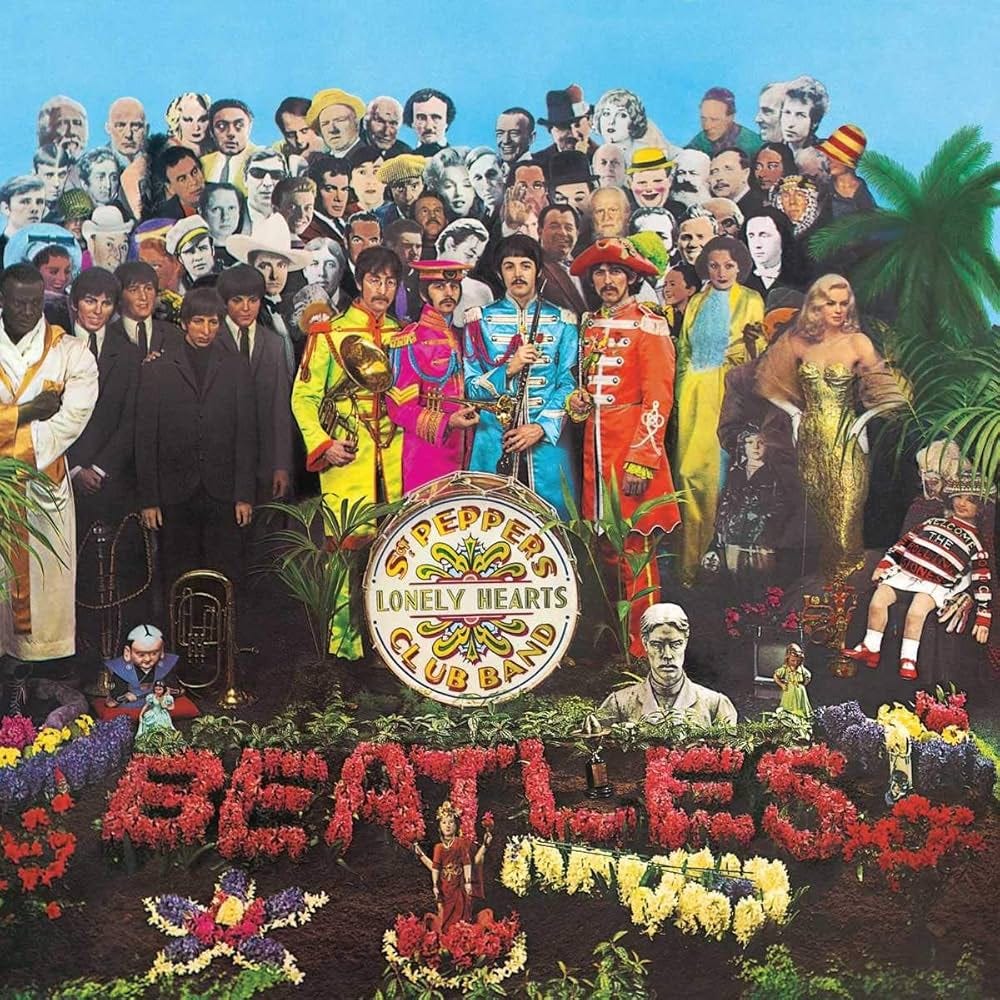
By the spring of 1967, the Beatles had grown tired of being “the four lads you’d take home to meet your mother.” They had stopped touring, started meditating, and were beginning to dress like they’d just looted a Victorian costume shop. When it came time to design the cover for Sgt. Pepper’s Lonely Hearts Club Band, they didn’t want a simple band photo; they wanted a funeral for their own past, attended by every hero, villain, and occultist who had ever rattled around in their collective subconscious. 🎩The concept was simple: a crowd of people the Beatles admired (or loathed). But as the lists started coming in from John, Paul, and George, the lawyers at EMI got nervous. McCartney wanted high-brow literati and Hollywood starlets; George Harrison wanted a mountain of Indian gurus to prove his spiritual street-cred; and Lennon, ever the professional provocateur, wanted to see if he could sneak in history’s most famous dictator and the world’s most famous Christian. Both were vetoed by the record company, among others. 🚩Pop artist Peter Blake and Jann Haworth were tasked with turning this chaotic wishlist into a life-sized collage of cardboard cutouts. It was a logistical nightmare involving telegrams sent to movie stars asking for permission to use their likenesses—most of whom said “yes.” But not everyone was a fan of the idea, leading to a frantic, last-minute game of musical chairs with history’s most famous faces. ✂️So, behind the vibrant colors and the famous “Beatles” drum skin, a silent war of airbrushing was taking place. As the cameras prepared to click, the record label’s suits intervened, physically hiding the most controversial figures behind the band members or scrubbing them from the negatives entirely. It was the first time a rock album cover had been treated like a state secret, subject to censorship that would make a MI6 agent blush. 🕵️♂️What remains is a vibrant lie—a masterpiece of editing that tells us as much about what the world wasn’t ready to see as what it was. From the “ghost” of Leo Gorcey to the coverup of Mahatma Gandhi, the album photo is a map of the era’s shifting taboos and the band’s refusal to play by the old rules of celebrity. 🎨 By looking at who they included—and who the censors forced them to remove—we see a band caught between their working-class Liverpool roots, their Hollywood dreams, and a new, radical desire to challenge every boundary in sight.The Ones Who Didn’t Make ItAdolf HitlerWho: The dictator of Nazi Germany. Why: Believe it or not, John Lennon requested him. John’s goal was to be as provocative as possible, but the idea was immediately vetoed. A cardboard cutout of Hitler was actually made and brought to the studio—he is visible in several “behind the scenes” outtake photos—but he was carefully positioned so that he was completely obscured by the Beatles themselves in the final shot.Mahatma GandhiWho: The leader of the Indian independence movement. Why: He was originally in the lineup (right next to Lewis Carroll). However, Sir Joseph Lockwood, the head of EMI, became terrified that including Gandhi would cause a riot in India or lead to a ban on the album in the Far East. To protect international sales, Gandhi was painted over with a palm tree at the last minute.Jesus ChristWho: The central figure of Christianity. Why: This was another provocative request from John Lennon. However, this was less than a year after John’s “more popular than Jesus” comment had caused Beatles records to be burned in the American South. The record label put their foot down immediately, fearing that putting Jesus on a pop cover would be the final nail in the band’s coffin in the United States.Leo GorceyWho: One of the “Bowery Boys” comedy team. Why: He made the cut for the photo but was airbrushed out later. He was the only person who demanded a fee ($400) for using his likeness. In a legendary show of Beatles “frugality” (or perhaps just principle), they chose to erase him entirely rather than pay the fee.The “Unknown” SoldierWho: An anonymous soldier figure. Why: During the shoot, a waxwork of a soldier was placed near the back, but he was shifted around so much during the lighting setup that he effectively vanished behind other taller figures. He exists in the “set,” but he is a ghost on the finished cover.Sophia LorenWho: The iconic Italian actress. Why: A longtime favorite of the Beatles, she was originally requested and a cutout was prepared, but like Mae West, there were initial concerns about permissions. Unlike Mae West (who was persuaded by a personal letter from the band), Loren’s placement was eventually swapped out for other figures during the chaotic assembly of the set.The Ones Who Made It (Back Row)Sri Yukteswar GiriWho: A renowned Hindu guru and the author of The Holy Science. Why: He was one of the four Indian gurus suggested by George Harrison, reflecting George’s burgeoning obsession with Eastern philosophy and meditation.Aleister CrowleyWho: A notorious English occultist, ceremonial magician, and novelist. Why: Suggested by John Lennon. John was fascinated by “outsider” figures and rebels, and Crowley’s “Do what thou wilt” philosophy appealed to the counter-culture spirit of 1967.Mae WestWho: A legendary American actress and sex symbol of the 1930s. Why: Initially, she refused to appear, famously asking, “What would I be doing in a Lonely Hearts Club?” The Beatles wrote to her, and she changed her mind.Lenny BruceWho: A provocative American stand-up comedian known for his trial regarding obscenity charges. Why: Bruce had died only a year earlier in 1966. The Beatles (especially John) admired his “truth-telling” comedy and his status as a free-speech martyr.Karlheinz StockhausenWho: A German avant-garde composer. Why: Suggested by Paul McCartney. At the time, Paul was deeply into electronic “musique concrète,” which influenced the sound collage of “A Day in the Life.”W.C. FieldsWho: An American comedian known for his “curmudgeonly” persona. Why: A group favorite. The Beatles loved his sharp, cynical wit, which matched the dry humor they often used in interviews.Jung-u-KuoWho: A high-ranking officer in the Chinese military during the early 20th century. Why: He was another choice by Lennon, who was browsing through books of historical figures. His inclusion adds to the diverse, global “crowd” feeling of the cover.Edgar Allan PoeWho: The famous American writer and poet known for his macabre and mystery stories. Why: Suggested by John Lennon. The Beatles often cited Poe as an influence on their more surreal lyrics; John even mentioned him by name later that year in the song “I Am the Walrus.”Fred AstaireWho: The legendary American dancer, singer, and actor. Why: He was a personal favorite of the band. Astaire was reportedly “delighted” to be included on the cover, which wasn’t always the case with the Hollywood stars they asked.Richard MerkinWho: An American painter and illustrator. Why: Merkin was a friend of the cover’s designer, Peter Blake. His inclusion was a “nod” to the contemporary art scene that Blake was a part of in London during the mid-60s.The “Ghost” of Leo GorceyWho: One of the “Bowery Boys” actors. Why: Gorcey was originally in the lineup, but he was the only person to demand a payment ($400) for the use of his likeness. The Beatles refused to pay, so he was airbrushed out, leaving a distinct, slightly discolored blue gap in the crowd next to Huntz Hall.Huntz HallWho: Another member of the “Bowery Boys” comedy team. Why: Unlike his co-star Leo Gorcey, Hall was happy to appear for free. He remains on the cover, standing right at the edge of the gap where Gorcey used to be.Simon RodiaWho: The Italian-American artist who spent 33 years building the Watts Towers in Los Angeles. Why: He was a symbol of “outsider art” and individual perseverance—themes that resonated with the Beatles’ desire to break away from traditional pop music constraints.Bob DylanWho: The folk-rock icon and a massive influence on the Beatles’ transition to “serious” songwriting. Why: By 1967, Dylan was a peer and a friend. His inclusion was mandatory; without Dylan’s influence, the Beatles likely wouldn’t have felt empowered to create an album as experimental as Sgt. Pepper.Aubrey BeardsleyWho: A famous 19th-century illustrator known for his provocative, black-and-white ink drawings. Why: His “Art Nouveau” style was a major influence on the psychedelic aesthetic of the 1960s. Beardsley’s influence had already appeared on the Beatles’ previous album, Revolver, which featured Klaus Voormann’s Beardsley-inspired line art.Sir Robert PeelWho: A 19th-century British Prime Minister and the founder of the modern Metropolitan Police. Why: British police officers are still called “Bobbies” because of him. His inclusion was likely a playful, quintessential British reference—a “nod” to authority figureheads in a decidedly counter-culture collage.Aldous HuxleyWho: The English author famous for the dystopian novel Brave New World and his essay The Doors of Perception. Why: The Doors of Perception, which detailed his experiences with mescaline, was “required reading” for the 1967 hippie movement. The band The Doors even took their name from his book.Dylan ThomasWho: A legendary Welsh poet known for his booming voice and poems like Do not go gentle into that good night. Why: All the Beatles were fans of his work, but Robert Zimmerman (Bob Dylan) famously took his stage name from this poet. By including both Dylans on the same row, the Beatles were acknowledging the lineage of their own inspirations.Terry SouthernWho: An American satirical novelist and screenwriter who wrote Dr. Strangelove and Easy Rider. Why: He was a friend of the band and a key figure in the “Beat” generation. He actually gave a copy of his book Candy to the Beatles, and his presence on the cover represented the “hip” literary circle they were now a part of.The Second RowThe second row begins just below and to the left of the
Here’s an uncomfortable truth about the Beatles: The greatest songwriting partnership in rock history actively conspired to keep their lead guitarist out of the creative process. John Lennon and Paul McCartney didn’t just dominate the band’s songwriting—they agreed to limit George Harrison’s contributions. And for years, it worked. George was the kid brother, the “young follower,” the talented guitarist who should stick to what he does best and leave the composing to the grown-ups. 🎸As Paul recounted in the band’s 2000 autobiography, Anthology: “I remember walking up through Woolton... with John one morning... [asking] ‘Should we? Should three of us write, or would it be better just to keep it simple?’”They decided to keep the songwriting partnership between the two of them.Except George didn’t stay in his lane. He broke through the gatekeeping to release a massive triple solo album in late 1970, filled with masterpieces that had been shelved or ignored during the Beatles years. All Things Must Pass didn’t just top the charts—it became a cultural phenomenon, achieving a level of critical and commercial success that proved, once and for all, that George had been a giant in hiding all along.The story of how George went from dismissed sideman to vindicated genius is one of the most satisfying underdog tales in music history, and it starts with John Lennon fundamentally misunderstanding the “quiet” Beatle.The Young FollowerLet’s set the scene: When George joined the Quarrymen in 1958, he was just 15 years old—a grammar school kid who looked up to John Lennon with absolute hero worship. John was already an art student, older, more experienced, more confident. Paul was John’s songwriting partner and intellectual equal. George? George was the guitarist they were lucky to have, but he wasn’t part of the creative brain trust. That hierarchy got established early and hardened into concrete over the years. 🎭John admitted this dynamic years later with remarkable candor: “George’s relationship with me was one of young follower and older guy. He was like a disciple of mine when we started. I was already an art student when Paul and George were still in grammar school.” Translation: George was the kid, and kids didn’t get to write songs for the Beatles. John further acknowledged it was a “love/hate relationship” and that George bore “resentment toward me for being a daddy who left home.”George hadn’t been a songwriter... because John and Paul never let him be a songwriter. They controlled access to the recording studio, they decided which songs made the albums, and they had an actual gentleman’s agreement to keep George’s contributions to a minimum. 💔So George was excluded because he lacked experience. But how do you gain experience when you’re systematically excluded? It’s the musical equivalent of “you can’t get a job without experience, but you can’t get experience without a job.”The First AttemptsGeorge’s first original Beatles song was “Don’t Bother Me,” which appeared on their second album, With the Beatles, in 1963. The story behind it is both mundane and revealing: George wrote it while sick and bored in a Bournemouth hotel room during a tour. He was literally killing time with a guitar, seeing if he could actually write a song. The result was... fine. Not great, not terrible—just fine. It’s a competent but unremarkable track that sounds exactly like what it was: a first attempt by someone teaching himself to write songs while his bandmates had years of practice. 🏨Songwriting is a skill you develop through practice, something that most people struggle with during the first five or ten years. John and Paul had been writing together since they were teenagers, churning out dozens (maybe hundreds) of songs before the Beatles ever recorded their first album. George was starting from scratch in his early twenties, trying to learn in public while working alongside two of the most naturally gifted songwriters in rock history, and a pair of huge egos.George himself acknowledged the struggle: “The most difficult thing for me is following Paul’s and John’s songs. … They obviously got better and better, and that’s what I have to do.”George wasn’t demanding equal time. He was apologizing for even suggesting his songs might be worth recording. That’s what years of being shut out will do to you. 🎵The Turning PointSo when did John Lennon finally realize George Harrison was a serious songwriter? The answer: 1967’s Sgt. Pepper’s Lonely Hearts Club Band.George contributed only one song to that groundbreaking album—”Within You Without You”—but it was a quantum leap forward in quality and ambition. Influenced by his time in India and his friendship with Ravi Shankar, George created something entirely unique: a philosophical meditation set to Indian classical music that somehow fit on an album full of psychedelic pop experiments. It wasn’t trying to be a Lennon song or a McCartney song. It was unmistakably, undeniably a George Harrison song. ✨Years later, in 1980, shortly before his death, John finally gave George credit for ‘Within You Without You’—the credit he’d withheld:“One of George’s best songs. One of my favourites of his, too. He’s clear on that song. His mind and his music are clear. There is his innate talent; he brought that sound together.” That was the moment John could no longer deny what was becoming obvious to everyone else: George Harrison had found his voice, and it was spectacular. 🌅But here’s the beautiful irony: John actually helped George become the songwriter who would eventually challenge the Lennon-McCartney monopoly. George credited John with giving him crucial advice that changed his entire approach: “John gave me a handy tip. He said, ‘Once you start to write a song, try to finish it straight away while you’re still in the same mood.’”That single piece of advice helped George complete “Something”—which John himself later called “the best song on Abbey Road“ and which Frank Sinatra declared “the greatest love song of the past 50 years.” 💕The Floodgates OpenBy 1968-69, George was on an absolute tear. “While My Guitar Gently Weeps.” “Something.” “Here Comes the Sun.” These weren’t just good songs—they were great songs, songs that could stand alongside anything John or Paul had written. George had gone from writing one forgettable track per album to creating genuine classics that would define the Beatles’ legacy.But recognition came with a bitter edge. By 1969, during the contentious Let It Be sessions, the Beatles’ internal dynamics had become toxic. George briefly quit the band, frustrated by his continued second-class status. When the band tried to regroup and plan their future, John Lennon proposed something radical: each songwriter—John, Paul, and George—should get four songs per album, with two more slots available for Ringo if he wanted them. Equal space. Equal respect. Equal status. 🤝Paul McCartney rejected the plan.Paul, who often positioned himself as George’s ally, said no. The Beatles never recorded another album together.The Ultimate VindicationHere’s where the story gets deliciously ironic: In 1970, the Beatles broke up. Each member went solo. And George—the dismissed kid brother, the songwriter who’d been rationed to one or two songs per album—released All Things Must Pass, a massive triple album that became a critical and commercial smash. The guy they’d kept in the shadows for a decade immediately proved he had a catalog’s worth of incredible songs that never got recorded because there wasn’t room on Beatles albums.The LessonGeorge’s exclusion might have made him better. Being shut out forced him to find his own voice instead of trying to write Lennon-McCartney pastiches. Being dismissed made him determined. Being the underdog made him hungry. When he finally got his moment in the spotlight, he was ready—and he had years of pent-up creativity to unleash. ⚡The tragedy is that by the time John fully recognized George’s talent and tried to give him equal status in the band, it was too late. The Beatles were done. The “young follower” had become a master, but the teacher would never get to fully appreciate the student’s graduation.Visit my Beatles Store: Get full access to Beatles Rewind at beatlesrewind.substack.com/subscribe

Here’s a riddle: What cost $40 in 1962, was designed to make guitars sound like tubas, then sat gathering dust in music stores for three years, then overnight became the most iconic sound of 1960s rock?The answer is George Harrison’s secret weapon—and it’s one of the strangest accidents in music history. 🎸The device in question is the Gibson Maestro Fuzz-Tone FZ-1, and it’s the unsung hero behind some of the most memorable guitar tones ever recorded. While everyone obsesses over George’s guitars, the Gretsch Country Gentleman, his Gibson SG Standard, or his famous rosewood Telecaster, the real magic often came from a simple foot pedal that cost the same as a cheap amplifier. In today’s money, that $40 translates to roughly $400—not pocket change, but hardly a king’s ransom for something that would revolutionize rock. The crazy part? Nobody wanted it. At least not at first.The World’s Most Unwanted PedalGibson introduced the Maestro Fuzz-Tone in 1962 with a head-scratching marketing pitch. The gadget promised to make guitars, banjos and string basses sound like “trumpets, trombones and tubas.” That’s right, they built a guitar pedal... to make guitars not sound like guitars. 🤦So, guitarists in 1962 asked the obvious question: “Why would I want my guitar to sound like a tuba?” Gibson made 5,000 units that first year, and watched them gather dust. In 1963, they sold exactly zero units. In 1964, they sold a handful. The Fuzz-Tone looked like it was destined to be Gibson’s version of the Edsel.Keith Richards to the RescueThen Keith Richards changed everything. In 1965, the Rolling Stones were recording “(I Can’t Get No) Satisfaction,” and Richards laid down a scratch track using a Maestro Fuzz-Tone intending it just as a placeholder riff for the session brass players to play later. Except the brass section never showed up. And when everyone listened back to the track, that fuzzy, aggressive, in-your-face guitar sound was so compelling that producer Andrew Loog Oldham insisted they keep it. Richards reportedly hated the idea and wanted to re-record it “properly,” but Oldham won the argument. ✨The rest is history, the song became a massive worldwide hit, and suddenly the Maestro was sold out. The pedal that nobody wanted for three years became the most sought-after piece of guitar gear on the planet. Gibson sold 40,000 units after “Satisfaction” hit the airwaves. The era of guitar effects pedals—the entire modern pedal industry—essentially started with this one accidental success (we’ll explore that in a minute).The Beatles Were There FirstNow let’s talk about the Beatles. They were early adopters of the Maestro Fuzz-Tone, acquiring one from the Selmer music shop in London in 1963 (yes, before “Satisfaction” made it cool). Photos show George Harrison using the pedal during the July 1, 1963 recording session for “She Loves You,” and John Lennon was photographed using it a few months later during the session for “Don’t Bother Me.” According to a Melody Maker journalist who was there, Lennon was thrilled with the fuzzy sound, but producer George Martin—ever the classical music purist—vetoed it, and the fuzz didn’t make the final cut. 🎵But they didn’t give up on fuzz. By November 1965, as the Beatles were racing to complete Rubber Soul before the Christmas deadline, they finally unleashed the fuzz effect on a recording—and it became one of the most groundbreaking moments in recording history.Paul McCartney Makes Fuzz History (With a Bass)The song was “Think for Yourself,” written by George Harrison, and here’s the twist: The most famous fuzz sound on a Beatles record wasn’t played by George on guitar—it was Paul McCartney playing fuzz bass. This was apparently the first time in recording history that a bass guitar had been run through a fuzzbox. The track actually features two bass lines: one standard bass part and one fuzz bass part that Paul overdubbed using a Tone Bender pedal. The fuzz bass serves as a lead guitar line throughout the song, snarling and growling with an aggressive edge that perfectly matched the dark, confrontational lyrics.Paul played his Rickenbacker 4001S bass (not his usual Höfner) through the fuzz pedal, creating what one critic described as “the snarls of an enraged schnauzer, snapping and striking at its lead.” The inclusion of fuzz bass—and its layering beside a standard bass part—typified the Beatles’ willingness to experiment with sound on Rubber Soul. It was unprecedented, audacious, and it worked brilliantly. The song marked the start of George Harrison’s emergence as a serious songwriter, and the fuzz bass became an integral part of its menacing, vitriolic mood.George Takes the TorchBy 1965, as the Beatles moved from Merseybeat pop into more experimental territory, fuzz boxes became a regular part of George’s sonic toolkit. He used various fuzz pedals—including the Maestro Fuzz-Tone, the Sola Sound Tone Bender, and later the Dunlop Fuzz Face—to create the distinctive, aggressive tones heard on tracks like “Taxman” (While George played the fuzzy rhythm guitar on “Taxman,” the lead guitar solo—the fast, Indian-influenced “screeching” lead solo was played by Paul.)George continued his fuzz affair throughout the Revolver and Sgt. Pepper’s albums. On “Hey Bulldog” (1968), he used the built-in fuzz circuit of a Vox Conqueror solid-state amplifier, which utilized germanium transistors in a circuit similar to a Tone Bender pedal.The Happy Accident That Started It AllWhat makes the Maestro Fuzz-Tone story so fascinating is how accidental the whole thing was. The original “fuzz” sound came from a faulty mixing console transformer during a 1960 Nashville session. Country singer Marty Robbins was recording a ballad called “Don’t Worry” when session bassist Grady Martin plugged into the malfunctioning channel, creating a bizarre, buzzing bass tone that shouldn’t have worked on a soft piano ballad... but somehow did. The song went to No. 1 on the Billboard Hot 100.Recording engineer Glenn Snoddy saved the broken transformer and partnered with fellow engineer Revis V. Hobbs to design a standalone device that could recreate that fuzzy sound. They sold their circuit design to Gibson, which released it as the Maestro Fuzz-Tone FZ-1 in 1962—ironically receiving their patent in 1965, just as the pedal was finally becoming a commercial success thanks to Keith Richards.How It Actually WorkedHere’s the technical bit: The original FZ-1 contained three germanium transistors, powered by two 1.5-volt AA batteries, with just two control knobs—Volume and Attack (basically “how much fuzz”). No fancy tone-shaping controls, no built-in reverb, no complex circuitry.Germanium transistors are temperature-sensitive and react dynamically to how hard you hit the strings—unlike modern silicon-based pedals. This unpredictability was part of the charm. The Fuzz-Tone interacted with your playing style in organic, musical ways. Harrison understood this instinctively and used it to add texture and aggression without losing the musicality underneath. 🎶The LegacyThe legacy of the Maestro Fuzz-Tone extends far beyond the Beatles. Pete Townshend used it. Jimi Hendrix favored the Fuzz Face. Countless psychedelic and garage rock bands made fuzz a cornerstone of their sound. The pedal Gibson couldn’t give away in 1963 became the foundation for an entire category of guitar effects. Modern boutique pedal makers still design fuzz circuits inspired by the original FZ-1, and vintage units sell for big money. Original 1964 pedals are regularly traded on eBay for up to $4,999.So yes, George Harrison played incredible guitars—his Gretsch Duo Jet, his Gibson SG, his rosewood Telecaster. But the next time you listen to “Taxman” or marvel at the aggressive snarl of “Think for Yourself,” remember: it wasn’t just the guitar (or bass). It was a $40 foot pedal originally designed to make guitars sound like tubas, sat unsold for three years, and then accidentally became one of the most important pieces of equipment in rock history.Not bad for an Edsel, huh? ⚡Visit my Beatles Store:Sources:* Patent information and early history: Vintage Guitar Magazine - Maestro Fuzz-Tone* Beatles’ use of fuzz pedals: Fuzzboxes.org - The Beatles* George Harrison’s gear and Vox Conqueror: Guitar World - Hey Bulldog tone* “Think for Yourself” fuzz bass: Wikipedia - Think for Yourself* “Think for Yourself” recording details: The Beatles Bible - Think For Yourself* Maestro Fuzz-Tone history: Wikipedia - Maestro FZ-1* Gibson Maestro Fuzz-Tone history and pricing: Guitar World - History of the Maestro FZ-1 Get full access to Beatles Rewind at beatlesrewind.substack.com/subscribe


Download from Google Play

Download from App Store
 United States
I owned one.