


 Claim Ownership
 Past Medical History: The Story of EMS
Past Medical History: The Story of EMSSubscribed: 14Played: 86
Subscribe

© 2025 FlightBridgeED
Description
Past Medical History: The Story of EMS is an immersive audio drama that dives deep into the incredible, often untold history of Emergency Medical Services and the medical world that shaped it.
Hosted by paramedics Evan Claunch and Sophie Fuller, two seasoned clinicians and self-proclaimed EMS history nerds, each episode brings to life the defining moments, forgotten figures, and unlikely innovations that built Emergency Medical Services from the ground up.
Through cinematic storytelling, rich soundscapes, and dramatic narration, the PMHX podcast explores how heroes, disasters, and ideas collided to create the world of EMS we know today. Sometimes it’s dark, sometimes it’s inspiring, but it’s always real, raw, and rooted in the passion of those who answer the call.
Whether you’re an EMT, flight paramedic, nurse, or just someone fascinated by the stories that built emergency medicine, this is your history… told like never before.
Hosted by paramedics Evan Claunch and Sophie Fuller, two seasoned clinicians and self-proclaimed EMS history nerds, each episode brings to life the defining moments, forgotten figures, and unlikely innovations that built Emergency Medical Services from the ground up.
Through cinematic storytelling, rich soundscapes, and dramatic narration, the PMHX podcast explores how heroes, disasters, and ideas collided to create the world of EMS we know today. Sometimes it’s dark, sometimes it’s inspiring, but it’s always real, raw, and rooted in the passion of those who answer the call.
Whether you’re an EMT, flight paramedic, nurse, or just someone fascinated by the stories that built emergency medicine, this is your history… told like never before.
17 Episodes
Reverse
On September 11, 2001, in Manhattan, sirens stack on top of each other, and the sky turns gray long before the dust reaches the streets. Ambulances roll south. Triage lanes are built on the West Side Highway. Radios fill with call signs and static. Amid the noise, one hospital-based EMS crew responds to an assignment that will not clear.This episode isn’t about headlines. It’s about what it means to respond when the scale exceeds imagination. It’s about how systems bend under pressure… how voices search for each other through static… and how a profession carries loss without stepping away from the work.On 9/11, some units were returned to service.One did not. This is the story of 10-DAVID… and the weight EMS learned to carry after the towers fell.
A small plane disappears into the dark over rural Nebraska. Hours later, a family walks out of the wreckage... injured, freezing, alive. But the moment that changes emergency medicine doesn’t happen at the crash site. It happens somewhere far more unsettling. Inside a hospital that isn’t ready. What follows isn’t malpractice or cruelty. It’s something quieter. More dangerous.That night, James Styner sees something he can’t unsee. And somewhere else, another surgeon, Norman McSwain, is already wrestling with the same problem from a completely different angle.Two men. Two environments. One shared realization.Episode 12: The Sequence is the story of how trauma care learned that chaos isn’t defeated by skill alone.
In the late 1970s, emergency dispatch was little more than a switchboard. Calls came in as panic. Help went out as guesswork. And the minutes before an ambulance arrived were largely empty.Then one night, a dispatcher stayed on the line with a terrified parent and talked them through saving their baby’s life... using nothing but calm questions, structured instructions, and a voice that refused to let time win. This episode explores the moment dispatch stopped being the front desk of EMS and became its first clinical intervention. We follow Dr. Jeff Clawson’s radical idea that chaos could be translated into order, that panic could be shaped into action, and that ordinary people could be turned into capable hands before help arrived.This is the story of how EMS learned to fight time without lights, sirens, or equipment, and how a voice became medicine.
On a summer night in 1981 in Kansas City, a crowded hotel atrium feels safe. Ordinary. Predictable. Then something truly disastrous happens. What follows is not just a collapse of steel and concrete, but a test of an entire city’s ability to respond when everything moves at once. Ambulances flood toward a single address. Dispatch boards fill. And across town, emergencies continue to happen with no one left to answer them.This episode explores what happens when disaster doesn’t just injure people... it consumes capacity. When speed alone isn’t enough, and when emergency medicine is forced to confront a question it had never fully answered before: How do you design a system that can survive the unimaginable?
On a sunlit highway in Israel in 1978, an ambulance races toward a burning bus under live gunfire. Inside is a young physician who helped write the rules that will decide who lives and who dies in the next few minutes. Her name is Nancy Caroline, and this moment captures the idea that would define her life’s work: survival is decided long before the hospital doors ever open.In this episode, PMHX traces the extraordinary story of the woman who helped invent modern paramedicine. Nancy Caroline helped prove that advanced medical care belongs wherever people collapse, bleed, and stop breathing... not just inside hospitals. You’ll follow her as she transforms struggling street crews into true clinicians, writing the protocols, building the training, and standing beside her medics under real danger. You’ll see how that vision spread beyond the U.S. to Israel’s national EMS system, where her training was tested during mass-casualty attacks and later to remote regions of Africa, where she carried emergency medicine to places that had never known it. This is a story about beating the clock, about collapsing the deadly gap between injury and care, and about a physician who believed that if you know how to help, you have a responsibility to step forward. Because sometimes the difference between death and survival is nothing more than what happens in the next few minutes and who is willing to stand there and act.
In 1967, in Pittsburgh’s Hill District, calling an ambulance was often a gamble and too often, a losing one. In this episode of PMHX: The Story of EMS, we tell the powerful story of Freedom House Ambulance Service, a group of Black men and women who changed emergency medicine forever.Before paramedics existed, before emergency care reached the streets, patients were scooped up and left alone in the back of police wagons, or hearses with little hope of survival. With guidance from pioneers like Peter Safar and Nancy Caroline, Freedom House trained local residents of Pittsburgh's Hill District to deliver advanced medical care in the space between the incident and the hospital. This episode traces the birth, success, and heartbreaking dismantling of Freedom House, and shows how they proved that life-saving medicine could happen on sidewalks and in living rooms, how they invented the paramedic before the word even existed, and how politics and prejudice nearly erased their legacy. This is the story of how modern EMS was born on the streets of the Hill District, through necessity, courage, and a refusal to accept that nothing could be done.
In June of 1966, an eleven-year-old girl struggles to breathe in a Pittsburgh living room. Help is called. Transport arrives. Care does not. Her death exposes something medicine had not yet learned how to see... the most dangerous moments are often not the ones inside the hospital, but the minutes before anyone is trained or permitted to act. In this episode, we follow Dr. Peter Safar as he confronts the limits of resuscitation, the silence between collapse and intervention, and the realization that saving lives would require more than new techniques. It would require moving care into places it had never existed before. From the development of airway management and CPR to the emergence of intensive care units and the first true experiments in prehospital medicine, this is the story of how emergency care began to claim the space between injury and hospital doors, and why waiting was no longer an option.
In the late 1960s, trauma surgeon R. Adams Cowley became obsessed with a question that refused to leave him alone: why were patients still dying even when everything seemed to be done “right”?By tracking cases minute by minute, Cowley uncovered a brutal truth. The most lethal enemy in trauma care wasn’t always the injury itself, but the time lost before definitive treatment. Quiet injuries were being missed. Patients were waiting. And once shock took hold, even perfect care often came too late. In this episode, we follow Cowley from his early years in thoracic surgery to the bedside patterns that led him to define the Golden Hour. Along the way, we trace how highways replaced battlefields as the primary source of trauma, how Maryland built the first true shock trauma network, and how helicopters, dispatch, and paramedics were reorganized around one ruthless priority: speed. We also meet Peter Safar, whose work on CPR and airway management tackled the minutes before the hospital, proving that the Golden Hour could only be won if someone kept patients alive long enough to reach it. This is the story of how emergency medicine stopped reacting to injuries and started racing the clock.
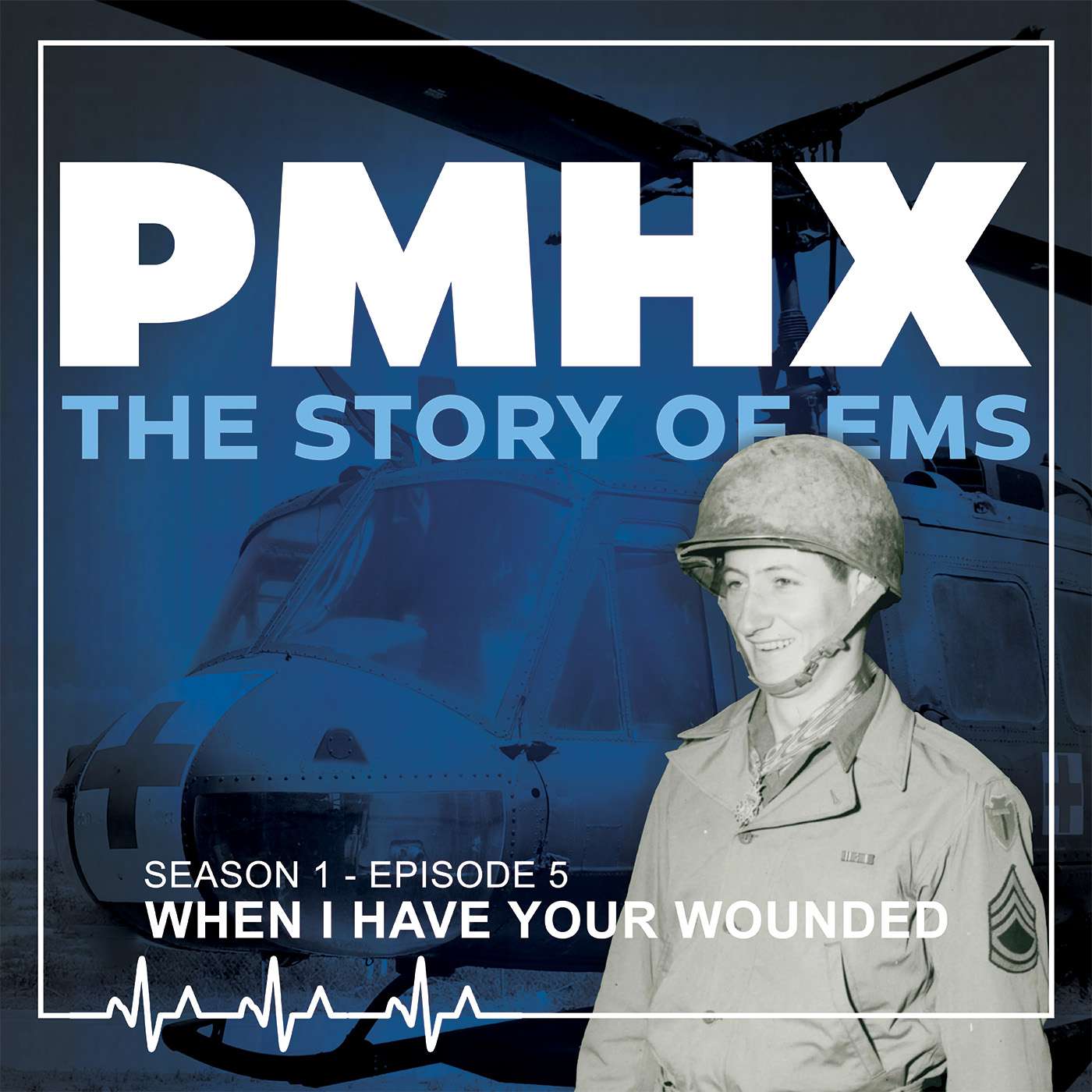
As unarmed helicopters flew into active combat zones, pilots and medics made a radical commitment: they would go wherever the wounded were, no matter the danger. At the center of that promise was Major Charles Kelly, commander of the 57th Medical Detachment, whose final radio transmission... “When I have your wounded”... became the creed of Dustoff.This episode traces the evolution of helicopter medical evacuation from its earliest experiments in World War II, through Korea, and into the Vietnam War, where Dustoff crews transformed battlefield survival. Flying into “hot” landing zones without weapons, these crews proved that speed was the most powerful medical intervention of all.We follow the rise of the Huey, the birth of airborne rescue medicine, and the staggering survival rates that validated what would later be known as the Golden Hour. From the jungles of Southeast Asia to highways and trauma centers back home, the legacy of Dustoff reshaped emergency medicine forever. This is the story of courage, innovation, and the moment when time became the true enemy of survival.
In this week’s aftershow, we take you behind the creation of The Scalpel in the Storm and into the world of Dr. Michael E. DeBakey in a way the main episode didn’t have room for. This is a bit of a deeper push into the wild details, the human moments, and the medical drama you won’t believe is real. Plus, a bit of the showrunner's thoughts and creative insights into creating the audioscape.If Episode 3 was about confronting suffering, Episode 4 is about outpacing it. In this aftershow, we explore how that theme resonates with anyone who has ever worked in emergency or critical care medicine.
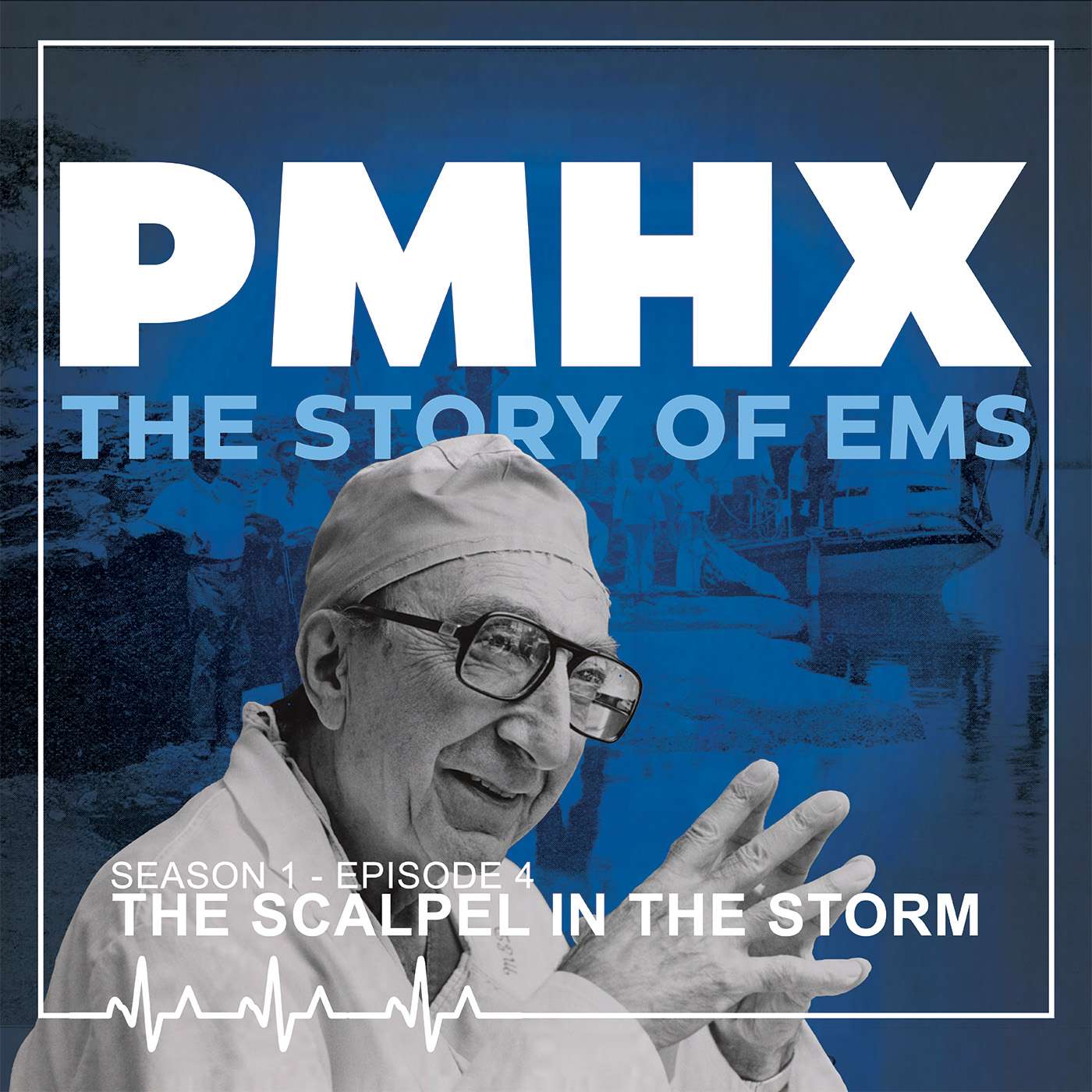
Before he became one of the most influential surgeons in modern history, Michael DeBakey was just a fourteen-year-old boy in New Orleans holding the wrist of a dying neighbor and learning how fast life can slip away. That moment became the engine that drove him through lecture halls, operating rooms, and eventually into the largest war the world had ever seen. This episode follows DeBakey from the humid streets of Louisiana to the chaos of WWII, where he transformed battlefield medicine, redesigned evacuation systems, and planted the seeds that would become MASH, helicopter evacuation, trauma centers, and the Golden Hour itself. A story of relentless innovation, quiet grief, and the surgeon who dared to fight time.
PMHX: No FX is the official aftershow for Past Medical History: The Story of EMS.Each week, creator and co-hosts Sophie, Evan, and some occasional special guests break down the episode in a raw, unscripted conversation about the story, the research, the decisions, and the creative process behind the scenes. No sound design. No effects. Just the humanity, the history, and the craft that shape every chapter of the season. If you love the cinematic episodes and want to dive deeper into how they’re built — and why these stories matter — No FX is your place.
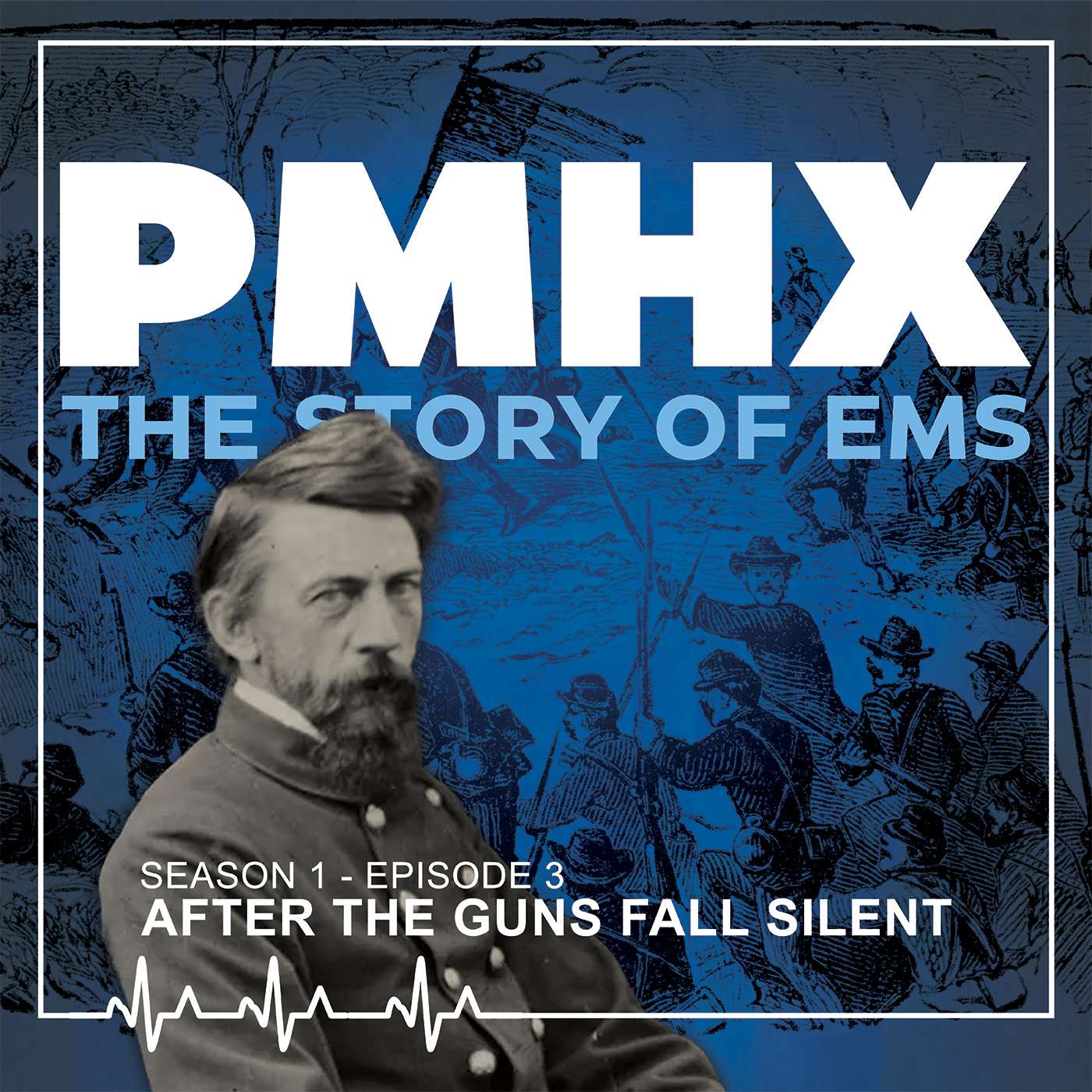
When the guns stop firing, the dying doesn’t end.In this episode, we follow the story of a wounded Union lieutenant left to perish on the field at Second Bull Run. He is abandoned not by fate, but by a broken system. That single tragedy may have become the turning point for a quiet, analytical surgeon named Jonathan Letterman. From the coal-smoked streets of Pennsylvania to the cholera-ridden wards of Philadelphia, Letterman grows into the one mind capable of diagnosing the Army itself. And on the battlefields of Antietam, Fredericksburg, and Gettysburg, he builds the first true American trauma system, a blueprint that will shape EMS for the next 160 years. This is the story of how one man changed the fate of the wounded… long after the guns fell silent.
In 1793, the French Revolution burned across Europe. Amid the chaos, a young surgeon named Dominique Jean Larrey refuses to stand idle as wounded soldiers bleed and die where they fall. Against orders and tradition, he builds a system that will change the fate of the injured forever... a flying ambulance that brings care to the battlefield itself. Through Larrey’s defiance and innovation, Past Medical History: The Story of EMS explores the birth of organized emergency medicine, where compassion met ingenuity, and where the first principles of triage were forged in the smoke and fire of war. This is where mercy began to move.
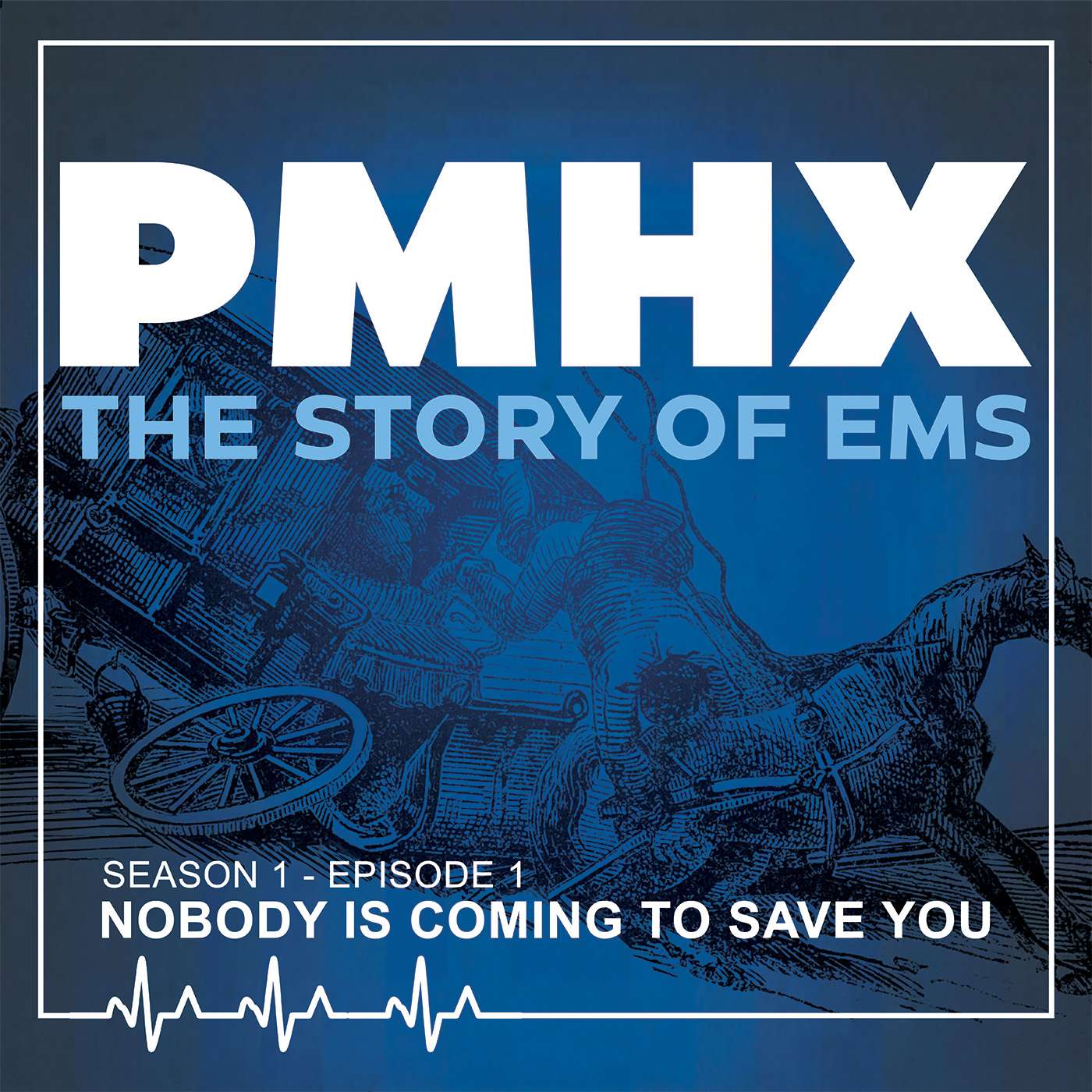
In 1783, a young merchant’s son lies dying on a frozen Scottish road, his leg shattered, his lifeline severed, and no help in sight. Before ambulances, before medicine as we know it, survival depended on luck, distance, and the kindness of strangers.Through one man’s struggle to survive, Past Medical History: The Story of EMS traces the origins of emergency care from rural folk healers to the first anatomy theaters of Edinburgh to a battlefield surgeon who refused to accept that dying in the dirt was inevitable.This is where it all began: the moment humanity realized that help had to come.
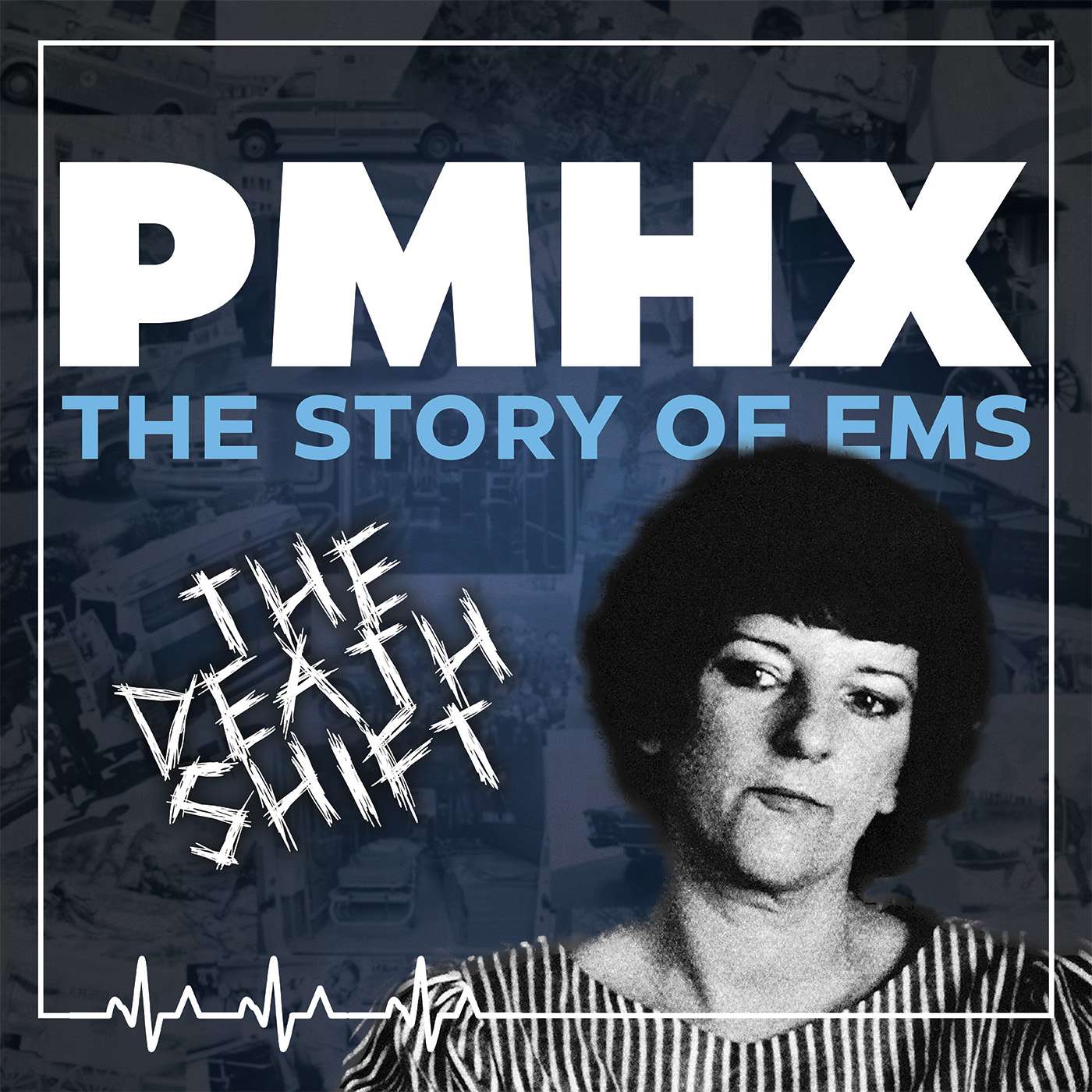
In 1981, the night shift at Bexar County Hospital in San Antonio earned a name whispered in fear... the Death Shift. Tiny lives in the pediatric ICU began to fail without warning. Alarms blared. Monitors flatlined. And at the center of it all stood one nurse whose touch brought not healing, but horror.In this Halloween Special Edition of Past Medical History: The Story of EMS, we take you into one of medicine’s darkest legends: the chilling true story of Genene Jones, the “Angel of Death.” From the fluorescent corridors of a Texas hospital to the courtroom where justice finally spoke for the silenced, this episode unravels the nightmare that changed healthcare forever.Blending cinematic soundscapes, immersive storytelling, and historical accuracy, this special episode marks the launch of our brand-new podcast series. Our first season is already in production, bringing you more true stories where medicine and humanity collide.If you enjoy this episode, it would mean the world to us if you took a moment to rate and review the show wherever you’re listening. Your feedback helps others discover these stories and keeps us inspired to share more. Know someone who’d love this episode? Send it their way and help us grow the conversation.Be sure to follow us on Instagram @pmhxpodcast for behind-the-scenes updates and announcements about our first season... coming soon. Stay tuned for release dates and more exclusive content.
Step inside the ambulance of history. Past Medical History: The Story of EMS is a cinematic documentary podcast that unearths the wild, untold, and sometimes downright eerie origins of modern emergency medicine. Hosted by flight paramedics Evan Claunch and Sophie Fuller, this isn’t your typical medical lecture, it’s an adventure through time.Through immersive soundscapes, cinematic scoring, and audio-drama-style storytelling, Evan and Sophie bring history to life — from battlefield medicine and bizarre experiments to the birth of paramedicine itself. Each episode drops you into the moments, voices, and chaos that shaped how we save lives today.
Comments


Download from Google Play

Download from App Store
 United States