DiscoverStumbling Blocks: How Great Leaders Are Made
Stumbling Blocks: How Great Leaders Are Made
Claim Ownership

Stumbling Blocks: How Great Leaders Are Made

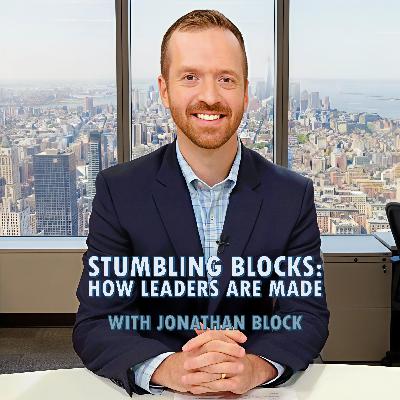
Author: Jonathan Block

Subscribed: 1Played: 16
Share

Description

Here, leaders share their stumbling blocks, what they learned through the stumble, and how it changed them.

You'll hear leaders as they really are: challenged, battered, and deeply flawed. And you'll see them picking back up, dusting themselves off, and leading again. Because our stumbling blocks make us better, if we let them.

Welcome to Stumbling Blocks: How Great Leaders are Made.

I’m Jonathan Block. I ask leaders to take us back to the moments that don't make it to highlight reel:

• The day they got laid off.

• The crisis that almost broke them.

• The loss that re-shaped how they see the world.

Join me to uncover the fires that forge great leaders.

This leadership podcast is what gritty, authentic leadership looks like. No AI slop.

Episodes drop every Thursday. Subscribe today.

Welcome to The Stumble.

Questions? Comments?
Linkedin: www.linkedin.com/in/jonathanfblock
Insta: @JonathanFBlock
Twitter: @JonathanFBlock
Email: Jonathan@BlockLeadershipGroup.com

14 Episodes
Reverse
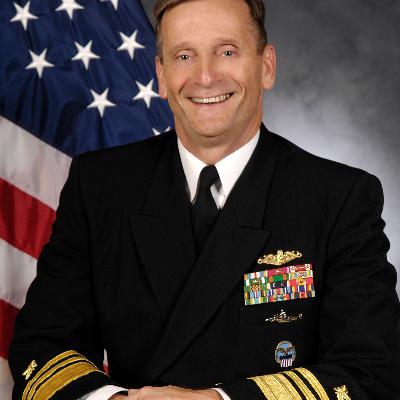
In this episode, I welcome Rear Admiral Tim Ziemer, the former chief of the President’s Malaria Initiative (PMI) and former CEO of World Relief. Admiral Ziemer explains how and why he saved 12 million people from death by malaria, and prevented another 2 billion cases of the disease.He reflects on a life of disciplined service bookended by tragedy, from the 1968 attack in Vietnam that killed his father and left his mother with 18 grenade wounds, to the sudden loss of his wife of 54 years, Jodi. From Admiral Ziemer, you'll learn these 3 things:1) The surprising note his mom gave him after she landed in an air ambulance at Andrews AFB2) What it took for him to say "yes" to the call from the White House3) How to design a lifeChapters00:00 – Introduction03:40 – Understanding the scale of the world's deadliest disease.08:31 – The "Decommissioning" of USAID12:56 – The Drill Instructor’s "Black Book"15:00 – A Childhood in a Leper Colony19:19 – Processing the murder of his dad and the capture of his mom.22:06 – A Note of Gratitude: The incredible moment on a medical transport plane.26:52 – Returning to Vietnam31:31 – "I Don’t Coordinate": Negotiating with the Bush White House for authority to get things done.40:06 – "Go Save Lives": A direct briefing in the Oval Office46:14 – Alone on Golden Pond: Navigating grief and finding purpose after the death of his wife.47:31 – The Final Challenge: Design a life around faithfulness.Links:KFF Research https://www.kff.org/global-health-policy/the-trump-administrations-foreign-aid-review-status-of-the-presidents-malaria-initiative-pmi/CDC Website: PMI Celebrates 15 Yearshttps://archive.cdc.gov/www_cdc_gov/globalhealth/stories/2020/celebrating-15-years.htmlNIH Report on PMIhttps://pmc.ncbi.nlm.nih.gov/articles/PMC8176495/Wheaton Magazine: Hope in the Healerhttps://magazine.wheaton.edu/stories/hope-in-the-healerRemarks upon Receiving the Roger E Joseph Prizehttps://www.rogerejosephprize.org/2015Jodi Ziemer Obituaryhttps://vacremationsociety.com/obituary/gene-joanne-jodi-ziemer/Admiral Tim Ziemer: Rallying the World to Defeat Malariahttps://medium.com/@PMIgov/rallying-the-world-to-defeat-malaria-4c2b63f231e2New York Times: The Malaria Fighterhttps://www.nytimes.com/2014/10/21/science/a-quiet-approach-to-bringing-down-malaria.htmlPHOTO BY GREG KAHN FOR THE NEW YORK TIMES
A conversation with former Reuters Canada Bureau Chief Steve Scherer on job displacement, the gig economy, and America’s identity crisis.Steve was once a high-level journalist, a Reuters Bureau Chief for Canada, who interviewed world leaders like Justin Trudeau and covered global financial markets. Then, a budget cut cost him his job, his work visa, and forced him to move his family out of Canada. Now, he’s driving for Uber to make ends meet. He chronicled his experience a viral Substack essay, "My Journey from Foreign Correspondent to Uber Driver in Trump's America."In this raw and honest conversation, Steven shares the story of his displacement and offers a powerful and humbling perspective on the economic anxieties, political divisions, and human needs that connect us all.Steve talks about what it is like to turn over the keys to a role that filled him with pride, gave him leverage, and provided a powerful platform... and slide into the driver's seat of an Uber.Timestamps[00:00] From Reuters Bureau Chief to Uber Driver: The viral essay and the shock of displacement.[02:54] How a high salary and a lost work permit forced Steven and his family to leave Canada.[09:41] The unexpected family move to Italy and why Steven's wife fears returning to "Trump's America."[12:30] The decision to drive for Uber: flexibility, low pay, and the surprising feeling of being "invisible."[16:25] Why returning to the U.S. after 28 years felt like coming home to a more divided country.[23:56] The roots of "politics as entertainment": covering Silvio Berlusconi[31:02] Steven's most moving story: Covering the deadliest migration route in the world from Libya to Italy and rescuing 530 people in a single day.[35:28] Connecting personal unemployment and loss of "leverage" to the desperation of migrants.See Steve's substack here:https://stevescherer.substack.com/p/my-journey-from-foreign-correspondent?utm_campaign=post-expanded-share&utm_medium=web&triedRedirect=trueSteve's Twitter Feed:https://x.com/SchererSteve
Brent Beshore made his first million at 28. Visited the White House. Got ranked 28th on the Inc. 500. Got everything he wanted.And realized he had summited the wrong mountain.In this raw conversation, Brent—CEO of Permanent Equity, a private equity firm that owns 16 companies generating $400M in revenue with zero debt—goes places most CEOs do not.He talks about weighing 252 pounds while everything he ate tasted grey. About earning a million dollars but telling his wife he didn't love her. About being an ardent atheist who made fun of Christians before everything changed.This isn't your typical CEO interview. Brent breaks down why traditional private equity is broken, how his firm operates without debt or forced exits, and why treating people well isn't just nice—it actually delivers better returns.But the real lesson?"The lie is that money will make you someone else. The truth is that money only makes you more of what you already are."If you've ever felt like you're winning the wrong game, this conversation will hit hard.TIMESTAMPS:[01:27] What is Permanent Equity?[06:43] The two stakeholders traditional PE serves—and everyone it doesn't[08:04] The portfolio: 16 companies, $400M revenue, $50M free cash flow, zero debt[10:48] "We want to be a kind, generous, long-term owner"[20:24] 28 years old: First million, Inc. 500, White House advisor, and completely hollowed out[22:47] Climbing the wrong mountain[27:36] "I don't even know what love meant when we got married"[28:05] Why he never wanted kids (and why he wishes he had five more now)[29:32] "He who has the gold makes the rules" vs. "The meek shall inherit the earth"[32:23] "Do I own the things I create? No, of course not."[37:36] Living generously: Why they give away 25% before taxes[45:25] Good reasons to sell vs. bad reasons to sell[48:37] How long-term thinking changes everything—with investors, employees, and communities[50:55] The Main Street Summit: "You belong here. You're important. You matter."[53:38] Being known vs. being loved: The safeguard against blowing up your life[54:08] Addiction, affairs, and cutting corners: What happens when you're unknown[56:50] The "Brené Brown bullsh*t" review (his favorite)[58:06] The day everything changed: Dropping the performance and being authentic[1:03:49] We're all going to anonymity—so what really matters?[1:07:04] Advice for someone climbing the wrong mountain: You're not alone[1:09:09] "Study the greats—all the greats study Jesus"GUEST: Brent Beshore CEO, Permanent Equity Columbia, MissouriHOST: Jonathan Block Founder, Stumbling Blocks PodcastLINKS: https://www.permanentequity.com/linkedin.com/in/brentbeshorehttps://www.mainstreetsummit.com/If this conversation resonated, please pass it along.
In this episode, I sit down with Linda Rutherford, former Chief Administration Officer of Southwest Airlines for the second half of our conversation. Linda, described as the "keeper of Southwest's corporate soul," provides a rare, behind-the-scenes look at how one of the world’s most iconic brands survived two of the most disruptive forces in its 50-year history: Winter Storm Elliott and the hostile takeover by Elliott Investment Management.The conversation explores the "Twin Elliotts"—the 2022 operational meltdown that stranded millions and cost the airline $1.2 billion; and the 2024 activist investor surge that forced a radical reinvention of the airline.From paying for a customer’s Craigslist car to the end of open seating, Linda discusses the high-stakes leadership required to maintain a company's heart while satisfying Wall Street's demands.Show Highlights & Timestamps[00:00] The First Storm: Winter Storm Elliott (2022) Linda recounts the unprecedented operational "brownout" during the 2022 holiday season. She explains how mismatched aircraft and crews led to 17,000 cancellations and a $1.2 billion recovery effort.[02:00] The Strategy Behind the Change Jonathan and Linda discuss the historic shift from open seating to assigned seating and the introduction of premium cabin options.[03:30] Keeping the Corporate Soul How do you maintain a "culture of love" (and the LUV ticker) through four CEO transitions? Linda explains her role in bridging the gap between founding legends Herb Kelleher and Colleen Barrett and the modern era.[13:26] The Vulnerability Playbook A deep dive into the "war room" during the meltdown. Linda discusses why Southwest chose radical transparency, including a public-facing checklist of operational fixes to earn back passenger trust.[17:38] The $1.2 Billion "Make-Good" The extraordinary measures taken to compensate 2 million displaced passengers, including refunding cruises and even a car purchased on Craigslist.[18:50] The Second Storm: Elliott Investment Management (2024) The arrival of activist investors. Linda details the "all-hands" internal response, the restructuring of the Board of Directors, and the pressure of a languishing stock price.[24:00] Going to School on Activism Linda describes the steep learning curve for the executive team as they engaged with activist demands for the first time in company history.[28:54] Leadership Advice: The Nitty-Gritty of Change Linda’s parting wisdom for leaders facing "disruptive reinvention": why a memo isn't enough and why psychological safety is the key to successful transformation.Key Takeaways for LeadersTrust is a Bank Account: Southwest’s Net Promoter Score (NPS) plummeted to single digits during the meltdown but stayed positive because of decades of "goodwill deposits."Reinvention vs. Transformation: Linda argues that Southwest isn't changing; it’s reinventing its business model to meet modern traveler expectations while protecting labor contracts.Change Management Matters: In a period of constant crisis, communication must move beyond "checking the box" to address the psychological needs and upskilling of the workforce.Questions? Guest Pitches? Shoot me an email at Jonathan@Blockleadershipgroup.com
In this episode, Linda Rutherford, the former Chief Administration Officer at Southwest Airlines, shares insights into the secret sauce that makes Southwest the 'LUV airline.' She discusses the legacy left by the airline's founding CEO, Herb Kelleher, and president, Colleen Barrett, as well as her role as a growth catalyst for the airline.Linda also reflects on her early life, resilience, and the impact of generosity and vulnerability on her leadership style. The conversation covers the power of vulnerability in building workplace relationships, Linda's early career and transition to Southwest Airlines, her experience working with legends Herb Kelleher and Colleen Barrett, the importance of shaping company culture, CEO transitions, and crisis management, and the role of Linda in preserving the heart and soul of Southwest Airlines: its culture.TakeawaysSouthwest's secret sauce is rooted in love and a unique cultureGenerosity and vulnerability are key qualities in effective leadership Vulnerability as a superpowerThe impact of Herb Kelleher and Colleen Barrett on company cultureChapters00:00 The Love Airline: Southwest's Secret Sauce15:54 The Power of Vulnerability25:28 Working with Legends: Herb Kelleher and Colleen Barrett30:29 Shaping Company Culture41:44 Keeping the Soul of Southwest
When Oscar Munoz stepped in as CEO of United Airlines, he didn't head for the executive suite. He headed for a Houston hangar at 2:00 AM to jump on a picnic table and listen to 500 angry aircraft mechanics.In part two of this deep-dive conversation, Oscar reveals why he threw out the "business school rule book" to save an airline with a broken spirit. We discuss:The Power of the Listening Tour: Why he told Wall Street "I don't know" and went to talk to the people who handle the bags, pour the coffee, and fly the planes.The 3 Ds: How he diagnosed a culture that was disenfranchised, disillusioned, and disengaged. And what he did about it.Hiring Your Rival: The calculated risk of bringing in Scott Kirby from American Airlines and why true leaders start planning their exit on their first day.The Sara Nelson Breakthrough: How a story about a $500 check and a "Siberian" meeting room ended a five-year union stalemate in just 10 weeks.Oscar concludes with a challenge for every leader: the "Common Denominator" math equation that forces each of us to take a hard look in the mirror.Oscar's Book: Turnaround Timehttps://www.amazon.com/Turnaround-Time-Uniting-Employees-Friendly/dp/0063284286#Leadership #Culture #UnitedAirlines #CEO #Transparency #Trust #Listening #EmployeeRelations #Union #ChangeManagement #Turnaround
The viral video that changed aviation—and the CEO who broke the rules to fix it.On April 9, 2017, United Airlines faced the world’s first truly global viral crisis when a passenger, Dr. David Dao, was forcibly dragged off a flight in Chicago. The internet exploded, calls for resignation mounted, and the airline’s initial response—calling the incident a "re-accommodation"—only poured gas on the fire.In this episode of Stumbling Blocks, I sit down with former United CEO Oscar Munoz to take you inside the war room during the company’s darkest hours.Oscar pulls back the curtain on the disaster, revealing:The "Insider" Reality: Why the facts of the incident were far more complex than the video showed.The Advice Trap: How legal fears and corporate mumbo-jumbo led to one of the worst apologies in corporate history.The Turning Point: The spiritual moment in the middle of the night—inspired by his grandmother—that convinced Oscar to stop listening to the experts and throw away the script.The Gamble: Why he threw away his prepared talking points on Good Morning America to take full blame on live TV.Special Feature: This episode features real-time breaking news audio from 2017, immersing you in the crisis exactly as it unfolded.Note: This is Part 1 of a 2-part conversation.Next Week: We explore the turnaround, the massive union negotiations, and the "Day 1" surprises.Follow the show now so you don’t miss the conclusion.Links:Oscar's Book, Turnaround Time: https://www.amazon.com/Turnaround-Time-Uniting-Employees-Friendly/dp/0063284286United Airlines: United.comCredits: ABC Nightly News with David Muir: https://www.youtube.com/watch?v=DdWe6I3hBxkGood Morning America: https://www.youtube.com/watch?v=90jSUe_vdhM&t=32sCBS Evening Newshttps://www.youtube.com/watch?v=GyHu76Ofp2YCNBChttps://www.cnbc.com/video/2017/04/11/united-airlines-faces-social-media-backlash-in-china.htmlQuestions? Ideas? Shoot me a note:Jonathan@BlockLeadershipGroup.com

If your team is disengaged, cynical, or burnt out—Doug Conant has been there before. As CEO of Campbell's Soup, he inherited a culture that consultants called "Swamp Water." But by putting honoring people at the center of his leadership dashboard, Doug turned the company around, both in terms of employee engagement and also in terms of financial performance. In this episode, the former CEO of Campbell’s Soup reveals the brutal reality of leadership. He opens up about being fired at 32 and going home to a "very large mortgage" with no plan. He talks about what it took to bounce back and become CEO 17 years later. We deconstruct his specific turnaround playbook:The "Swamp Water" Problem: Leading by giving your people chances to "Live, Love, Learn, and Leave a Legacy"The 30,000 Note Strategy: Doug wrote 10-20 handwritten notes every single day for a decade. We break down exactly why, how, and what the impact was.The "TouchPoint" Tactic: How to turn a 2-minute hallway conversation into a loyalty-building moment.Resources Mentioned:The Blueprint: 6 Practical Steps to Lift Your Leadership to New Heights – Amazon LinkTouchPoints: Creating Powerful Leadership Connections – Amazon Link[00:00] The Cold Open: "My career felt as if it was over in a snap..."[01:05] The Intro: From fired to Fortune 500 turnaround artist.[02:47] The "Noon" Deadline: The brutal details of the day Doug lost his job.[05:40] "Swamp Water": Measuring the toxic culture at Campbell's (and the 4 L's Framework).[07:56] The 30,000 Notes: Writing 20 notes a day in the back of a car for a decade.[12:41] The Only Way Out is In: Why you cannot lead until you know your own life story.[20:10] The CEO Bubble: Why nobody tells the CEO the truth (and how to fix it).[23:52] The ROI of Kindness: Why high-engagement cultures are 23% more profitable.[31:37] The "TouchPoint" Method: How to lead by listening in 2-minute increments.[35:32] Next Week: The CEO who had a heart transplant while leading an airline.
Pete shares why he decided to tell the world his secret, what he did after finding what broke his heart, and what he'll do with the rest of his life after selling his company, AP Emissions Technology, to Berkshire Hathaway. He discusses how the Filotimo Foundation serves people with Cystic Fibrosis, what he would say to his 19 year old self, and giving back more than the disease will takeLinks: December 14, 2025 Lung Run https://filotimofoundation.org/lung-run-2025/ Filotimo Foundation: https://filotimofoundation.org/ Pete's Full ABC News Interview on ABC 11TogetherFilotimo Foundation Lung Run - ABC Interview   Keywords Cystic Fibrosis, Family Business, Philanthropy, Health Journey, Immigrant Story, Personal Growth, Advocacy, Nonprofit, Adoption Support, Life Expectancy Takeaways, Adoption, Infertility, Lung Run, ABC News Raleigh NC, Berkshire Hathaway, AP Emissions Technology, Mergers, Acquisitions, M&A, Legacy, death sentence, secret
Pete shares his remarkable journey from being diagnosed with cystic fibrosis, to hiding the disease as a CEO, to selling to Warren Buffett, to finding what broke his heart and refusing to look away. He discusses his family's immigration story, the evolution of their business, the challenges he faced growing up with a chronic illness, and the time his mom threatened to break a social worker's legs.Don't miss Part 2.Links: December 14, 2025 Lung Run https://filotimofoundation.org/lung-run-2025/ Filotimo Foundation: https://filotimofoundation.org/ Pete's Full ABC News Interview on ABC 11Togetherhttps://youtu.be/OwIr7_f9a9IKeywordsCystic Fibrosis, Family Business, Philanthropy, Health Journey, Immigrant Story, Personal Growth, Advocacy, Nonprofit, Adoption Support, Life ExpectancyTakeaways, Adoption, Infertility, Lung Run, ABC News Raleigh NC, ABC News, Blooper
In this conversation, Sandra Sucher, a professor at Harvard Business School and expert on trust, shares her unique journey from growing up in Detroit to teaching at Harvard. She discusses the importance of apologies in repairing trust, the nuances of moral leadership, and the challenges of navigating career paths. Through personal anecdotes and research-driven insights, Sandra emphasizes the significance of acknowledging responsibility, understanding the impact of actions, and the complexities of restoring trust in both personal and professional relationships.TakeawaysApologizing is a process that requires acknowledging responsibility, explaining the "why" (without being defensive!) and making an offer of repair.Trust can be regained but not fully restored to its original state.Moral leadership involves making intentional choices and understanding consequences.Career challenges are common, and taking charge of your own path is essential.Understanding the difference between intent and impact is crucial in trust-building.The process of making hard choices strengthens moral character over time.Restoring trust is like mending a translucent vase; cracks remain visible.Chapters00:00 The Importance of Apologies in Business14:27 Sandra's Journey: From Detroit to Harvard18:58 Navigating Career Transitions24:32 Moral Leadership and Missed Opportunities33:52 Restoring Trust: Can It Be Regained?38:31 Legacy and Impact: A Life Well SpentLinks: Sandra's Personal WebsiteSandra Sucher - Trust ResearcherAmazon: "The Power of Trust"Amazon.com: The Power of Trust: How Companies Build It, Lose It, Regain It: 9781541756670: Sucher, Sandra J., Gupta, Shalene: BooksAmazon: "The Moral Leader"Amazon.com: The Moral Leader: Challenges, Tools and Insights: 9780415400640: Sucher, Sandra J.: BooksResearch on Effective ApologiesAn Exploration of the Structure of Effective Apologies - Lewicki - 2016 - Negotiation and Conflict Management Research - Wiley Online LibraryKeywordstrust, apology, moral leadership, career challenges, Harvard, Sandra Sucher, business ethics, organizational behavior, personal growth, leadership lessons
We’ve all seen the White House from the outside. But what's it really like on the inside? Especially the East Wing?Mark Farkas knows. As the producer of the first-ever HD documentary on the White House, he spent 9 months filming in rooms most people will never see. The "stumbling block" was navigating the immense security and hidden protocols of the most secure building on Earth.Mark gives us an unprecedented virtual tour, from the private movie theater to the official White House Chocolate Shop. He offers behind the scenes anecdotes of the First Lady and the President. This is the human side of the People's House.Listen for these "insider" stories:The tense moment the Secret Service almost shut down filming on the Truman Balcony.What it was really like to interview President and Mrs. Bush in their private residence.The secrets of the (now-demolished) East Wing.Links to Mark's documentary are below.The White House Art and ArchitecturePresident Bush on Living in the White HouseWhite House Tour with Laura Bush
What does it take to lead when the stumbling block is a Category 5 hurricane, a massive earthquake, or two global wars?Welcome to a masterclass in crisis leadership. Vice Admiral Mark Harnitchek (Retired) is one of the few people on Earth who truly knows.He served on nuclear-armed submarines, commanded the $46 billion Defense Logistics Agency, and was the military's "boots on the ground" leader for the US response to Hurricane Katrina, Hurricane Sandy, and the 2010 Haiti earthquake.In this gripping conversation, VADM Harnitchek gives Jonathan an unfiltered look at making impossible decisions under unimaginable pressure, and how to build a team that can handle anything.In this episode, you will learn:The #1 leadership lesson learned from the silent service of a nuclear submarine.How he managed the overwhelming logistics of two global wars.The lessons-learned from Hurricane Katrina that came in handy during Superstorm Sandy.How to lead with empathy and humanity...even in the toughest circumstances. Vice Admiral Harnitchek's Biography
What's the one thing that will destroy a team, a company, or a career faster than anything else?According to Charlie Green, creator of the Trust Equation, the answer is simple: self-orientation. It’s the single biggest "stumbling block" to effective leadership.In this episode, Charlie joins Jonathan to dismantle the idea that "if you can't measure it, you can't manage it." He makes a powerful case for why our ego is the enemy of trust, and how a relentless focus on the "human" side of business is the only real path to success.In this episode, you will learn:The four components of the Trust Equation (and the one that divides all the others).Why being "unselfish" is a concrete, strategic advantage, not just a soft skill.How to spot self-orientation in yourself and your team—and what to do about it.Links to Charlie's Work:Understanding The Trust Equation | Trusted Advisor
Comments 
loading