


 Claim Ownership
Creative Minds, Smart Money: Finance & Business Tips for Creatives
Subscribed: 7Played: 34
Subscribe

© 2025 Firestorm Finance
Description
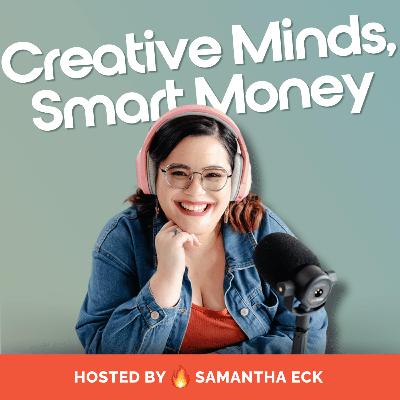
Creative Minds, Smart Money is the go-to podcast for creative entrepreneurs who are ready to stop treating their finances like a side character in their business story. Hosted by Samantha Eck, bookkeeper and fractional CFO, this show breaks down the financial side of running a creative business into actionable steps that actually make sense.
Each week, we tackle everything from pricing strategies and cash flow management to making smart business decisions that keep your creative business thriving (yes, even during those slow months). You'll get real, practical advice on managing your money and growing your business while still having time and funds to enjoy what you love.
Beyond the numbers, we explore the full picture of creative business success - from marketing strategies to efficient systems - because building a sustainable business requires more than just good bookkeeping. And occasionally, I bring in industry experts to share their insights on taking your creative business to the next level.
Ready to turn your creative talents into a thriving business that actually pays you what you're worth? Hit subscribe and let's make it happen.
Each week, we tackle everything from pricing strategies and cash flow management to making smart business decisions that keep your creative business thriving (yes, even during those slow months). You'll get real, practical advice on managing your money and growing your business while still having time and funds to enjoy what you love.
Beyond the numbers, we explore the full picture of creative business success - from marketing strategies to efficient systems - because building a sustainable business requires more than just good bookkeeping. And occasionally, I bring in industry experts to share their insights on taking your creative business to the next level.
Ready to turn your creative talents into a thriving business that actually pays you what you're worth? Hit subscribe and let's make it happen.
82 Episodes
Reverse

New year, new you? Your business doesn't need a brand-new version of you—it needs you to show up with the same consistency you'd bring to any relationship you care about. If you've been treating your finances like a January project that fades by February, you're missing the steady rhythm your business actually needs to thrive.
In this episode of Creative Minds, Smart Money, I break down why New Year's resolutions fail creative entrepreneurs and what to do instead: treat your business like a relationship, not a resolution.
Topics Covered
In this episode, I cover:
Why resolutions fade by February — the shiny-object trap that keeps you from building sustainable financial habits
The relationship framework for your business — attention (reviewing your numbers regularly), communication (listening to what your financial statements tell you), and consistency (showing up beyond January)
What a financially healthy relationship looks like — knowing how much money is coming in and going out, never ghosting your books for months, and building rhythm with weekly money dates, monthly reviews, and quarterly check-ins
Monthly vs. quarterly vs. annual reviews — monthly tells you what happened, quarterly shows you what's changing, and annual planning reveals what's next
The four pillars of a financially strong relationship — clarity (honest communication with your numbers), consistency (showing up regularly), context (listening to the story your numbers tell), and intention (walking in the same direction as your goals)
What changes when you stop treating your business like a resolution — calmer decisions, confident pricing, understanding your capacity and cash flow, and building steady, sustainable growth instead of one-time spikes
How to recommit to your business in 2026 — weekly check-ins, noticing when something feels off, stopping decisions driven by fear or scarcity, and honoring the financial goals you've set together
Your business doesn't need an overhaul. It needs you to keep showing up for the relationship you've already built. When you treat your finances like a partnership instead of a project, you move from reactive panic to proactive clarity.
Hit play now and learn how to build a financially healthy relationship with your business—one that lasts all year long.
Resources & Links
Website: https://firestormfinance.com/Podcast Home: https://firestormfinance.com/podcast/Book a Discovery Call: https://firestormfinance.com/contact
Listen & Subscribe:
Apple Podcasts: https://podcasts.apple.com/us/podcast/creative-minds-smart-money-finance-business-tips-for/id1751025388
Spotify: https://open.spotify.com/show/2m2SRDIAEjeWSXOgKS4Ff4
Free Resources:
Strategic Success Mini Workshop: https://firestormfinance.myflodesk.com/blmpbbkjq6
QuickBooks Setup Checklist: https://firestormfinance.myflodesk.com/quickbooks-checklist
5-Minute Money Clarity Checklist: https://firestormfinance.myflodesk.com/5minutemoneyclarity
Social
Instagram: https://www.instagram.com/firestormfinance
Threads: https://www.threads.com/@firestormfinance
LinkedIn: https://www.linkedin.com/in/samantha-e-8796b6176/
Facebook: https://www.facebook.com/firestormfinance
YouTube: https://www.youtube.com/@FirestormFinance
Pinterest: https://www.pinterest.com/firestormfinance/

You've closed the books on 2025, reviewed your numbers, and built your forecast—now what? Most creative entrepreneurs stop right there, but the real power comes from turning all that financial clarity into a roadmap you can actually follow. In this episode of Creative Minds, Smart Money, I'm walking you through a mini strategy session you can do yourself with just a notebook, your favorite drink, and an honest look at what worked (and what didn't) in 2025.
Topics Covered
In this episode, I cover:
Why reflection beats resolution — How analyzing your 2025 financial wins and energy drains helps you avoid overcommitment in 2026
Finding your one main focus — Why narrowing down to a single North Star goal (like increasing profit margin or building sustainable cash flow) makes every decision easier
The Core Four framework — Four key pillars your business needs to rest on: financial systems, offer alignment, operational flow, and owner well-being
Setting up your rhythm of review — Monthly money dates, quarterly strategy checks, and year-end reflections that keep you on track without burnout
Turning strategy into action — How to break big goals into small, clear steps so you actually implement instead of just planning
If you're ready to stop putting out fires and start thinking bigger about your business, this episode gives you the exact framework to walk into 2026 with clarity and power. You've done the hard work of cleaning your books and understanding your numbers—now it's time to trust yourself and use what you've built.
Resources & Links
Website: https://firestormfinance.com/
Book a Discovery Call: https://firestormfinance.com/contact
Freebie: 5-Minute Money Clarity Checklist: https://firestormfinance.myflodesk.com/5minutemoneyclarity
Listen & Subscribe:
Apple Podcasts: https://podcasts.apple.com/us/podcast/creative-minds-smart-money-finance-business-tips-for/id1751025388
Spotify: https://open.spotify.com/show/2m2SRDIAEjeWSXOgKS4Ff4
Social Media:
Instagram: https://www.instagram.com/firestormfinance
Threads: https://www.threads.com/@firestormfinance
LinkedIn: https://www.linkedin.com/in/samantha-e-8796b6176/
Facebook: https://www.facebook.com/firestormfinance
YouTube: https://www.youtube.com/@FirestormFinance
Pinterest: https://www.pinterest.com/firestormfinance/

Saying yes feels good in the moment—but what if every yes is quietly costing you profit, peace of mind, and the opportunities that actually matter? As you plan for 2026, it's time to get honest about overcommitment and what it's really doing to your business.
In this episode, I'm breaking down the emotional drivers that push us to say yes, the financial toll of stretched-thin schedules, and the three filters you need to protect your energy and margins in the year ahead.
Topics Covered
The emotional triggers behind overcommitment — why fear of missing out, scarcity mindset, and people-pleasing disguise themselves as opportunities and turn saying yes into a reflex instead of a decision
How overcommitment erodes profit — the direct connection between too many projects, rushed work, errors, and shrinking margins that show up when you track your time
Why filling your calendar with misaligned work blocks better opportunities — how low-paying or random clients leave no room for high-value retainers when they come along
The burnout tax on your business — late nights, mental fatigue, and emotional exhaustion don't just hurt you, they cost you money through delays, mistakes, and missed growth
How constant yeses kill your focus — why saying yes to everything means nothing gets the best version of you, and how it dilutes your brand, boundaries, and bandwidth
The emotional and energy cost of resentment — what happens when you start dreading the work you love because you're stretched too thin across clients that don't align
The power of a strategic no — how to use "no" as a growth tool that creates space for better yeses, not as rejection
The 3-filter decision framework for 2026 — only say yes when it aligns with your financial goals, supports your capacity and mental health, and moves your business in the direction you actually want to go
If you've ever felt like you're doing too much but not seeing the results you want, this episode will help you course-correct before 2026 begins. You don't need to say yes to every opportunity to build a thriving business—you just need to say yes to the right ones.
Hit play now and learn how to protect your profit, your peace, and your growth in the new year.
Resources & Links:
Website: https://firestormfinance.com/
Podcast Home: https://firestormfinance.com/podcast/
Book a Discovery Call: https://firestormfinance.com/contact
Listen & Subscribe:
Apple Podcasts: https://podcasts.apple.com/us/podcast/creative-minds-smart-money-finance-business-tips-for/id1751025388
Spotify: https://open.spotify.com/show/2m2SRDIAEjeWSXOgKS4Ff4
Social:
Instagram: https://www.instagram.com/firestormfinance
Threads: https://www.threads.com/@firestormfinance
LinkedIn: https://www.linkedin.com/in/samantha-e-8796b6176/
Facebook: https://www.facebook.com/firestormfinance
YouTube: https://www.youtube.com/@FirestormFinance
Pinterest: https://www.pinterest.com/firestormfinance/

Planning for 2026 doesn't mean predicting the future perfectly—it means giving yourself a realistic roadmap so your cash flow doesn't blindside you. After reviewing your 2025 numbers, it's time to flip the page and build a cash flow forecast you'll actually use. In this episode, I walk you through how to make a cash flow forecast that's grounded in real data, accounts for your known income and expenses, and helps you spot problems before they become crises.
Topics Covered
Why your 2025 data is your forecast foundation – Using your actual monthly averages (revenue, costs, expenses, owner's pay, and taxes) to establish a realistic baseline instead of overly optimistic projections
The difference between expected and potential income – How to map out predictable revenue like retainers, memberships, and confirmed contracts without inflating your forecast with "maybe" money
Fixed vs. variable expenses – Identifying non-negotiable costs (rent, software, insurance, payroll) and understanding variable expenses (contractors, marketing, travel) so you can plan accurately
Planning for taxes and owner's pay in your forecast – Why paying yourself affects cash flow and how to set aside 25–30% for taxes to avoid April panic
Identifying cash flow gaps before they hit – Spotting months that might dip negative, understanding when expenses spike, and planning solutions now (whether that's increasing marketing, building a cash cushion, or adjusting your revenue strategy)
Why cash flow forecast is important for growth – How forecasting cash flow helps your business layer in new offers, pricing changes, hiring plans, and major purchases with matching expenses so growth doesn't blindside you
Turning your forecast into a living tool – Why updating it monthly with actuals, adjusting upcoming months, and noting patterns or surprises is what makes forecasting powerful (the maintenance is where the magic happens)
If you've been flying blind into the new year or building forecasts that just collect dust, this episode gives you a framework that's simple, realistic, and actionable. Understanding how cash flow forecast helps a business means you can move from reaction to intention. When you know what's coming, your numbers start working for you instead of against you.
Resources & Links
Website: https://firestormfinance.com/
Podcast Home: https://firestormfinance.com/podcast/
Book a Discovery Call: https://firestormfinance.com/contact
Resources:
Strategic Success Mini Workshop: https://firestormfinance.myflodesk.com/blmpbbkjq6
QuickBooks Setup Checklist: https://firestormfinance.myflodesk.com/quickbooks-checklist
5-Minute Money Clarity Checklist: https://firestormfinance.myflodesk.com/5minutemoneyclarity
Listen & Subscribe:
Apple Podcasts:
https://podcasts.apple.com/us/podcast/creative-minds-smart-money-finance-business-tips-for/id1751025388 Spotify: https://open.spotify.com/show/2m2SRDIAEjeWSXOgKS4Ff4
Social
Instagram: https://www.instagram.com/firestormfinance
Threads: https://www.threads.com/@firestormfinance
LinkedIn: https://www.linkedin.com/in/samantha-e-8796b6176/
Facebook: https://www.facebook.com/firestormfinance
YouTube: https://www.youtube.com/@FirestormFinance
Pinterest: https://www.pinterest.com/firestormfinance/

Your year-end reports aren't just a stack of paperwork to send off to your CPA—they're the roadmap to understanding what worked, what didn't, and what needs to shift in 2026. If you've been wrapping up your books and filing everything away without actually digging into the data, you're missing the story your business is trying to tell you.
In this episode of Creative Minds, Smart Money, I walk you through how to analyze your 2025 numbers on a month-by-month, quarter-by-quarter, and year-over-year basis so you can make strategic decisions that fuel real growth.
Topics Covered
In this episode, I cover:
Why your reports are more than just data – How your profit and loss and balance sheet reveal the heartbeat and rhythm of your business
Month-over-month analysis – Spotting predictable patterns, cash flow crunches, and seasonal dips so you can plan ahead instead of reacting
Quarter-over-quarter momentum checks – Looking at how each quarter performed against the last to track sustained progress versus one-off wins
Year-over-year comparisons – Understanding if your revenue growth translated into profit growth or if expenses expanded right alongside it
The whole year as a single body of work – Removing comparisons and analyzing your total revenue, expenses, profit, and owner's pay against your original goals
Finding your best and worst months – Identifying what caused them (new clients, launches, burnout, industry shifts) and using that intel to guide your 2026 strategy
Repeating patterns versus one-offs – Learning to distinguish between anomalies and actionable trends so you don't overreact to noise
Turning data into decisions – Using your numbers to inform pricing, spending, profitability, and growth strategies that actually work
Your numbers aren't a judgment call—they're there to guide you. When you stop treating your reports like a compliance task and start treating them like a strategic tool, you move from reactive bookkeeping to intentional business building.
🎧 Hit play now and learn how to read the story your 2025 numbers are telling you.
Resources & Links
Website: https://firestormfinance.com/
Podcast Home: https://firestormfinance.com/podcast/
Book a Discovery Call: https://firestormfinance.com/contact
Listen & Subscribe:
Apple Podcasts: https://podcasts.apple.com/us/podcast/creative-minds-smart-money-finance-business-tips-for/id1751025388
Spotify: https://open.spotify.com/show/2m2SRDIAEjeWSXOgKS4Ff4
Free Resources:
Strategic Success Mini Workshop: https://firestormfinance.myflodesk.com/blmpbbkjq6
QuickBooks Setup Checklist: https://firestormfinance.myflodesk.com/quickbooks-checklist
5-Minute Money Clarity Checklist: https://firestormfinance.myflodesk.com/5minutemoneyclarity
Social
Instagram: https://www.instagram.com/firestormfinance
Threads: https://www.threads.com/@firestormfinance
LinkedIn: https://www.linkedin.com/in/samantha-e-8796b6176/
Facebook: https://www.facebook.com/firestormfinance
YouTube: https://www.youtube.com/@FirestormFinance
Pinterest: https://www.pinterest.com/firestormfinance/

Another year in business is worth celebrating, but your year-end checklist determines how smoothly next year starts. In this episode, I walk you through the exact steps creative entrepreneurs need to take before December ends to set up a stress-free tax season and a financially clear 2026.
Topics Covered:
Why cleaning up your books in December matters more than scrambling in April – Getting transactions categorized and reconciled now means you can file taxes early (or at least on time) without the panic.
The receipt documentation rule you can't ignore – Especially for purchases over $75, proper documentation protects you during an audit and tells the full financial story of your business.
How to review your financials strategically, not emotionally – I show you how pulling your 2025 profit and loss and balance sheet to compare year-over-year reveals patterns, surprises, and opportunities for smarter decisions in 2026.
Checking your owner's pay and distributions – Are you paying yourself properly? For S corps, this includes verifying reasonable compensation to stay compliant.
Tax prep essentials before January ends – From collecting W-9s and issuing 1099s (due in January, not April) to downloading payroll packages and estimating Q4 tax savings.
What changed in 2025 tax law – Updates to standard deductions and the OBBBA (One Big Beautiful Bill Act) may affect your personal and business tax strategy, so consult your CPA.
Choosing 2-3 metrics to track in 2026 – Whether it's owner's pay ratio, gross margins, or another KPI, tracking the right numbers keeps you aligned with your goals.
If you're heading into 2026 without a clear financial picture, now's the time to change that. Wrapping up your year-end books and preparing for tax season doesn't have to be overwhelming. Whether you need a strategy session or help catching up on your bookkeeping, starting the new year with clarity makes all the difference.
Resources & Links
Website: https://firestormfinance.com/
Podcast Home: https://firestormfinance.com/podcast/
Book a Discovery Call: https://firestormfinance.com/contact
Listen & Subscribe:
Apple Podcasts: https://podcasts.apple.com/us/podcast/creative-minds-smart-money-finance-business-tips-for/id1751025388
Spotify: https://open.spotify.com/show/2m2SRDIAEjeWSXOgKS4Ff4
Free Resources:
Strategic Success Mini Workshop
QuickBooks Setup Checklist
5-Minute Money Clarity Checklist
Social:
Instagram: https://www.instagram.com/firestormfinance
Threads: https://www.threads.com/@firestormfinance
LinkedIn: https://www.linkedin.com/in/samantha-e-8796b6176/
Facebook: https://www.facebook.com/firestormfinance
YouTube: https://www.youtube.com/@FirestormFinance
Pinterest: https://www.pinterest.com/firestormfinance/

You're saving receipts, but are you actually using them? Most creative entrepreneurs treat receipts like paperwork clutter—tossing them in a shoebox or snapping photos that disappear into their camera roll. But receipts aren't just about IRS compliance. They're the details that protect your business, clarify your spending, and give you real financial power when organized correctly.
Topics Covered
Why the IRS requires receipts over $75 — and why you should keep receipts for smaller purchases anyway to maintain complete financial clarity
The difference between keeping receipts and using receipts — how premium bookkeeping turns that pile of paper into actionable insights for your business
What counts as a valid receipt — digital confirmations, invoices, and itemized statements all qualify as proof of business expenses
How receipts prevent audit nightmares — attaching receipts to every transaction creates "bulletproof books" that protect you if the IRS ever has questions
Why receipts matter for categorization — a charge labeled "Amazon" could be office supplies, inventory, or client gifts, and only the receipt can tell the real story
The premium bookkeeping advantage — how organized, attached receipts save hours of stress and give you deeper cashflow awareness by showing exactly what you bought and why
Simple systems for capturing receipts in real time — snap a photo the moment you get it, upload to your bookkeeper's system, and never let receipts float around unattached again
Receipts are leverage. When they're handled right, they give you credibility, clarity, and control. If you shove them in a shoebox and forget about them, they're just clutter. But when you integrate them into your financial story, those details protect and empower you as a business owner. It's worth keeping them clean and organized.
Resources & Links
Website: https://firestormfinance.com/
Podcast Home: https://firestormfinance.com/podcast/
Book a Discovery Call (primary CTA): https://firestormfinance.com/contact
Listen & Subscribe (secondary CTA):
Apple Podcasts: https://podcasts.apple.com/us/podcast/creative-minds-smart-money-finance-business-tips-for/id1751025388
Spotify: https://open.spotify.com/show/2m2SRDIAEjeWSXOgKS4Ff4
Social
Instagram: https://www.instagram.com/firestormfinance
Threads: https://www.threads.com/@firestormfinance
LinkedIn: https://www.linkedin.com/in/samantha-e-8796b6176/
Facebook: https://www.facebook.com/firestormfinance
YouTube: https://www.youtube.com/@FirestormFinance
Pinterest: https://www.pinterest.com/firestormfinance/

Your bookkeeping categories aren't just for tax season—they're the foundation of every smart money decision you make in your business. If you've been treating categorization like a compliance checkbox, you're missing out on the clarity that drives profitability, cash flow planning, and confident pricing. In this episode of Creative Minds, Smart Money, I break down why categorization matters far beyond what you send to the IRS, and how custom categories can transform the way you understand and grow your creative business.
Topics Covered
In this episode, I cover:
Why categorization is about more than taxes – How your categories write your financial story and reveal where your money is actually going
The profitability problem with broad buckets – Why lumping expenses together (like "software and subscriptions") hides what's eating your profit
Decision-making clarity – How clean categories help you answer critical questions like "Can I afford to hire?" and "Which service is most profitable?"
Cash flow planning made easier – Why separating recurring costs from one-time expenses helps you forecast what's coming due each month
Pricing strategy with confidence – Understanding your true cost of service delivery so you can price without guessing
Benchmarking your business – Using custom categories to compare your spending against industry standards and identify where you're overspending
Real examples of categorization in action – From miscellaneous expense disasters to tracking profitability by service package or client tier
Accountability and peace of mind – How seeing where your money goes leads to more intentional spending choices and reports that actually serve your business
Categorization isn't just about keeping the IRS happy—it's about giving yourself the financial clarity you need to make smarter, more confident decisions every single day. When your categories reflect the real story of your business, you stop guessing and start knowing.
🎧 Hit play now and discover how a few strategic tweaks to your categorization can completely transform your financial picture.
Resources & Links
Website: https://firestormfinance.com/
Podcast Home: https://firestormfinance.com/podcast/
Book a Discovery Call: https://firestormfinance.com/contact
Listen & Subscribe:
Apple Podcasts: https://podcasts.apple.com/us/podcast/creative-minds-smart-money-finance-business-tips-for/id1751025388
Spotify: https://open.spotify.com/show/2m2SRDIAEjeWSXOgKS4Ff4
Free Resources:
Strategic Success Mini Workshop
QuickBooks Setup Checklist
5-Minute Money Clarity Checklist
Social
Instagram: https://www.instagram.com/firestormfinance
Threads: https://www.threads.com/@firestormfinance
LinkedIn: https://www.linkedin.com/in/samantha-e-8796b6176/
Facebook: https://www.facebook.com/firestormfinance
YouTube: https://www.youtube.com/@FirestormFinance
Pinterest: https://www.pinterest.com/firestormfinance/

AI-powered bookkeeping tools promise to automate your financial life and save you money—but at what cost? Everyone online makes AI sound like the magic fix for messy books, but here's the truth: I see creative entrepreneurs rely too heavily on automation and end up with misclassified transactions, compliance nightmares, and zero strategic insight into their numbers. In this episode of Creative Minds, Smart Money, I break down the real risks of AI in bookkeeping and why pairing technology with human expertise is the smartest path forward.
I walk through where AI shows up in bookkeeping right now—QuickBooks' new AI categorization, Xero, Wave, and tools like Puzzle.io—and explain why the technology isn't ready to replace the nuance, context, and judgment your business needs. You'll leave understanding exactly where AI falls short and how to use it as a tool (not a replacement) so your books stay accurate, compliant, and actually help you make decisions.
In this episode, I cover:
Where AI shows up in bookkeeping today—automated transaction categorization in QuickBooks, Xero, Wave, and AI-first platforms like Puzzle.io that still recommend human oversight
Why misclassification is the biggest risk—how AI can't differentiate between a Starbucks gift card, a networking coffee, or a sponsorship expense, and why those errors distort profit margins and tax deductions
Context blindness AI can't solve—why AI won't ask why your revenue dipped, whether a big expense is a one-time investment or an asset, or if payroll shifts are seasonal versus permanent
Compliance issues that require human judgment—sales tax rules, industry-specific regulations, and IRS red flags (like the difference between 50% deductible meals and client gifts) that AI doesn't understand
The overconfidence trap—why assuming the computer got it right leads to compounding errors over time, especially without regular human oversight
What bookkeepers catch that AI can't—patterns like fraud, duplicate charges, seasonality, client behavior shifts, and the context behind your numbers
The balance between AI and bookkeepers—how to treat AI as an assistant that speeds up work while keeping a human in the loop for strategy, insight, and compliance
If you've been tempted to let AI handle your books completely—or you're wondering if your bookkeeper is even necessary anymore—this episode will change how you think about the role of technology versus human insight in your financial foundation.
🎧 Hit play now and learn how to use AI smartly without sacrificing accuracy, compliance, or the strategic support your business needs.
Resources & Links
Website: https://firestormfinance.com/
Podcast Home: https://firestormfinance.com/podcast/
Book a Discovery Call: https://firestormfinance.com/contact
Listen & Subscribe:
Apple Podcasts: https://podcasts.apple.com/us/podcast/creative-minds-smart-money-finance-business-tips-for/id1751025388
Spotify: https://open.spotify.com/show/2m2SRDIAEjeWSXOgKS4Ff4
Social
Instagram: https://www.instagram.com/firestormfinance
Threads: https://www.threads.com/@firestormfinance
LinkedIn: https://www.linkedin.com/in/samantha-e-8796b6176/
Facebook: https://www.facebook.com/firestormfinance
YouTube: https://www.youtube.com/@FirestormFinance
Pinterest: https://www.pinterest.com/firestormfinance/

Everyone online makes bookkeeping platforms sound like a magic fix: low cost, hands-off, done-for-you. But here’s the truth—I see creatives pick a platform too fast (or switch too late) and end up with messy categorization, limited data ownership, and zero strategic insight. In this episode of Creative Minds, Smart Money, I break down how to choose between a bookkeeping platform vs. a bookkeeper, when to switch, and how to keep your bookkeeping data portable no matter what you pick.
I walk through the real trade-offs between popular platform bookkeeping options—Bench, Collective, Pilot, Xendoo, inDinero, Paro, KPMG Spark—and hiring a dedicated bookkeeper for creatives who knows your business inside and out. You’ll leave with a simple decision rubric to evaluate scope, continuity, and bookkeeping migration concerns, so your numbers actually help you make decisions.
In this episode, I cover:
Platform bookkeeping vs. dedicated bookkeeper—what you’re truly buying (beyond “my books are done”)
How your business model (offers, payment processors like Stripe/Square/ThriveCart, sales tax, payroll) changes the answer
Data ownership & portability: set up your stack so you’re never stuck if you switch (think QuickBooks or Xero access, exports, reporting)
Continuity & context: why a single point of contact can prevent rework and errors as you grow
Red flags it’s time to switch: multiple revenue streams, contractors, inventory, or new growth plans
Questions to ask before choosing (scope, SLAs, cleanup policies, reporting, migration/export options)
A quick decision rubric to pick your best-fit today—and revisit in 6–12 months
If you’ve wondered whether a platform or a person is the smarter move for your stage, this episode gives you a clear, no-BS way to decide—without pressure, panic, or FOMO.
🎧 Hit play now and find your best-fit bookkeeping support—so your numbers actually help you run the business.
Resources & Links
Website: https://firestormfinance.com/
Podcast Home: https://firestormfinance.com/podcast/
Book a Discovery Call (primary CTA): https://firestormfinance.com/contact
Listen & Subscribe (secondary CTA):
Apple Podcasts: https://podcasts.apple.com/us/podcast/creative-minds-smart-money-finance-business-tips-for/id1751025388
Spotify: https://open.spotify.com/show/2m2SRDIAEjeWSXOgKS4Ff4
Social
Instagram: https://www.instagram.com/firestormfinance
Threads: https://www.threads.com/@firestormfinance
LinkedIn: https://www.linkedin.com/in/samantha-e-8796b6176/
Facebook: https://www.facebook.com/firestormfinance
YouTube: https://www.youtube.com/@FirestormFinance
Pinterest: https://www.pinterest.com/firestormfinance/
Sales tax is confusing—no way around it. Every state has different rules, the jargon feels overwhelming, and half the time you’re left wondering if you’re even supposed to charge it.
But here’s the thing: even service providers sometimes owe sales tax. And not knowing the rules can leave you stressed, noncompliant, or accidentally footing the bill yourself.
In this episode of Creative Minds Smart Money, I break down sales tax in plain English—what it is, when you need to collect it, and how to keep things simple with the right systems and tools.
In this episode, we cover:
✅ What sales tax actually is and who it applies to
✅ The difference between state, county, and local rules
✅ Real-world examples for service providers, photographers, designers, product sellers, and course creators
✅ What “nexus” means and why it determines whether you owe sales tax
✅ The steps to register, collect, and stay compliant (without overcomplicating your books)
✅ Common mistakes to avoid—like collecting before registering or accidentally spending tax money
✅ Tools that can make sales tax compliance easier (TaxJar, Avalara, Shopify, HoneyBook, etc.)
If sales tax has ever made your head spin, this episode will give you the clarity and confidence to set it up once—and move forward without the stress.
🎧 Hit play now and make sales tax one less thing to overthink.
🔗 Resources & Links
Website: https://www.firestormfinance.com/
Instagram: https://www.instagram.com/firestormfinance/
Threads: https://www.threads.net/@firestormfinance?hl=en
LinkedIn: https://www.linkedin.com/in/samantha-e-8796b6176/
Newsletter: https://www.firestormfinance.com/newsletter
📝 Want to see a specific topic on the show? Submit your suggestion here!
📢 If this episode helped untangle sales tax for you, share it with a friend and leave a review—it helps more creatives make confident money moves.
Everyone online makes becoming an S-Corp sound like the ultimate financial glow-up: lower taxes, more legitimacy, instant upgrade. But here’s the truth—jumping in too early can actually hurt your business more than it helps.
In this episode of Creative Minds Smart Money, I break down the real dangers of switching to an S-Corp before you’re ready. From payroll requirements to higher admin costs to IRS scrutiny, we’ll cover what you need in place before making the leap, and a checklist to know when the timing is actually right.
In this episode, we cover:
✅ What an S-Corp really is (and what it’s not)
✅ Why becoming your own payroll provider can be overwhelming if you’re not ready
✅ The hidden costs: payroll software, CPA fees, tax filings, compliance
✅ Why “reasonable salary” is a legal gray zone and how it can trigger IRS red flags
✅ Why tax savings aren’t always worth the stress (especially under $60K net profit)
✅ A clear checklist to know when you’re actually ready to elect S-Corp
✅ What to do instead if it’s too early (and how to prep your business for the switch later)
If you’ve ever wondered whether becoming an S-Corp is right for you, this episode gives you the clarity to make that decision without pressure, panic, or FOMO.
🎧 Hit play now and find out whether an S-Corp is your next smart move—or just an expensive distraction.
🔗 Resources & Links
Website: https://www.firestormfinance.com/
Instagram: https://www.instagram.com/firestormfinance/
Threads: https://www.threads.net/@firestormfinance?hl=en
LinkedIn: https://www.linkedin.com/in/samantha-e-8796b6176/
Newsletter: https://www.firestormfinance.com/newsletter
📝 Want to see a specific topic on the show? Submit your suggestion here!
📢 If this episode gave you clarity about S-Corps, share it with a friend and leave a review—it helps more creatives make confident money moves.
Ever wondered if your business is actually doing okay—or if you’re falling behind?
That’s where benchmarking comes in. Don’t worry, it’s not a fancy finance term you need to memorize—it’s simply comparing your numbers to industry standards so you know what’s normal, where you’re strong, and what could use some tweaking.
In this episode of Creative Minds Smart Money, I’ll walk you through how to give your numbers context without spiraling into comparison. Instead of copying someone’s “six-figure month” on social media, you’ll learn how to use real benchmarks to figure out if your pricing, expenses, and profits are in a healthy range—and what to do if they’re not.
In this episode, we cover:
✅ What benchmarking really means (and why it’s not about copying internet strangers)
✅ The financial numbers worth comparing—profit margin, owner’s pay, client retention, and more
✅ Real-world benchmarks for designers, photographers, product sellers, course creators, and social media managers
✅ What to do if your niche is unique (or you’re new) and don’t have an industry benchmark yet
✅ How to use benchmarks to raise prices, trim costs, reshape offers, and make better decisions—without shame or panic
🎧 Hit play now and learn how to see whether your numbers are “normal”—and how to use that knowledge to grow with confidence.
🔗 Resources & Links
Website: https://www.firestormfinance.com/
Instagram: https://www.instagram.com/firestormfinance/
Threads: https://www.threads.net/@firestormfinance?hl=en
LinkedIn: https://www.linkedin.com/in/samantha-e-8796b6176/
Newsletter: https://www.firestormfinance.com/newsletter
📝 Want to see a specific topic on the show? Submit your suggestion here!
📢 If this episode helped you feel clearer about your numbers, share it with a friend and leave a review—it helps more creatives build confident, profitable businesses.
KPIs get tossed around a lot—but most creatives aren’t told which ones actually matter or how to use them.
In this episode of Creative Minds Smart Money, we break down KPIs in plain English and turn them into decision-making shortcuts. You’ll learn how to pick a small set of metrics that fit your business model, track them without drowning in spreadsheets, and use them to improve pricing, delivery, delegation, and profit.
In this episode, we cover:
✅ What a KPI really is and why it must be tied to a goal and an action
✅ Core KPIs every business should know: net profit margin, owner’s pay %, average client value, offer profitability, operating expense %
✅ Creative-industry KPIs to consider (designers, photographers, social managers, course creators, influencers)
✅ How to choose your 3–5 KPIs using simple prompts you can revisit monthly
✅ The danger of vanity metrics (likes, follower counts, top-line revenue, “busy = successful”) and what to track instead
✅ How to make KPIs visible and useful with a lightweight monthly cadence
If you’ve ever wondered whether your effort is actually moving the needle, these KPIs will give you clarity and control without turning you into a spreadsheet queen.
🎧 Hit play now and set up KPIs that fit your business, your brain, and your goals.
🔗 Resources & Links
Website: https://www.firestormfinance.com/
Instagram: https://www.instagram.com/firestormfinance/
Threads: https://www.threads.net/@firestormfinance?hl=en
LinkedIn: https://www.linkedin.com/in/samantha-e-8796b6176/
Newsletter: https://firestormfinance.myflodesk.com/ajmiv1kyt1
📝 Want to see a specific topic on the show? Submit your suggestion here!
📢 If this episode helped you focus on what really matters, share it with a friend, leave a review, and help more creatives make confident money moves.
Bringing in steady revenue but still wondering where all your money is going? That’s where profitability analysis comes in.
In this episode of Creative Minds Smart Money, I break down what profitability analysis is, why it matters, and how it helps you stop guessing and start making smarter, more profitable decisions. We’re not just talking about whether your business as a whole is profitable—we’re diving into whether your offers, clients, and projects are actually generating profit.
From spotting underpriced packages to uncovering sneaky expenses eating into your margins, this conversation will show you how to finally understand what’s working in your business (and what isn’t).
In this episode, we cover:
✅ What profitability analysis really means (beyond net income)
✅ How to calculate profit per offer, per client, per project, and per month
✅ Why underpricing and scope creep kill your margins—and how to stop it
✅ The three-part profitability formula: revenue, direct costs, and hours
✅ Common pitfalls like bloated software, over-delivering, and not tracking time
✅ When to run a profitability check (monthly, quarterly, and after big changes)
✅ How to use profitability data to price smarter, scale the right offers, and pay yourself well
If you’ve ever felt like your bank account is a revolving door despite consistent revenue, this episode will give you clarity on where the leaks are and how to plug them.
🎧 Hit play now and learn how profitability analysis turns messy money questions into confident, strategic decisions.
🔗 Resources & Links
Website: https://www.firestormfinance.com/
Instagram: https://www.instagram.com/firestormfinance/
Threads: https://www.threads.net/@firestormfinance?hl=en
LinkedIn: https://www.linkedin.com/in/samantha-e-8796b6176/
Newsletter: https://firestormfinance.myflodesk.com/ajmiv1kyt1
📝 Want to see a specific topic on the show? Submit your suggestion here!
📢 If this episode helped you rethink your pricing, services, or offers—share it with a friend, leave a review, and help more creatives run profitable businesses with confidence.
Cash vs accrual accounting might sound like the most boring finance term in the world—but it’s one of the most important decisions you’ll ever make for your business.
In this episode of Creative Minds Smart Money, I break down the difference between cash basis and accrual basis accounting using plain language and real-world examples. From why your P&L sometimes says you lost money even after a big sale, to how unpaid invoices or prepaid retainers can distort your numbers, this episode will finally clear up the confusion.
Whether you’re a service provider working with deposits, a product-based business with inventory, or just someone who wants to actually trust their reports, this conversation will help you decide what’s right for your stage of business.
In this episode, we cover:
✅ What cash basis really means (and why it’s simpler for early-stage businesses)
✅ What accrual basis really means (and why it gives you a clearer performance picture)
✅ The pros and cons of each method
✅ How your choice impacts taxes, forecasting, and decision-making
✅ When you might be required to use accrual, especially if you sell products or carry inventory
✅ My recommendations as a CFO for when to use cash, when to switch to accrual, and why one isn’t “better” than the other—it’s about what you need from your numbers
If you’ve ever wondered “Why do my reports look wrong?” or “Am I using the right accounting method?”—this episode will finally give you clarity.
🎧 Hit play now and learn how to choose the method that fits your business, your goals, and your stage of growth.
🔗 Resources & Links
Website: https://www.firestormfinance.com/
Instagram: https://www.instagram.com/firestormfinance/
Threads: https://www.threads.net/@firestormfinance?hl=en
LinkedIn: https://www.linkedin.com/in/samantha-e-8796b6176/
Newsletter: https://firestormfinance.myflodesk.com/ajmiv1kyt1
📝 Want to see a specific topic on the show? Submit your suggestion here!
📢 If this episode helped you understand your numbers better, share it with a friend, leave a review, and help more creatives make confident money moves.

Think Airtable is just another tool to organize your tasks? Think again.
In this episode, we’re diving into how Airtable can become the blueprint for your entire business helping you plug profit leaks, make smarter pricing decisions, and create systems that give you real freedom.
Elisabeth Jackson, operations specialist and founder of her own process improvement agency, shares how she uses Airtable to build client health trackers, quote calculators, no-login client portals, and more. If you’ve ever felt like your data is scattered and your systems are holding you back, this conversation will show you a better way.
In this episode, we cover:
✅ Why Airtable is “Google Sheets on steroids” and how relational data works in plain English
✅ The profit leaks that cost agencies time and money—and how to spot them
✅ Real-world use cases: sales tracking, proposal pricing, capacity planning, client support hubs
✅ How to combine Airtable with tools like Asana or ClickUp without creating tech chaos
✅ Where to start if you’re intimidated by the tech and when it’s time to bring in a systems expert
If you’ve ever caught yourself saying “I know the data is somewhere, but I can’t find it” this episode will help you finally feel in control of your business backend.
🎧 Hit play now and see how Airtable can turn scattered information into clear decisions.
🔗 Resources & Links
Elisabeth Jackson
Instagram: https://www.instagram.com/elisabethjackson/
LinkedIn: https://www.linkedin.com/in/lizzijackson/
Threads: https://www.threads.net/@elisabethjackson
Website: http://theafrocoach.com
Samantha Eck | Firestorm Finance
Website: https://www.firestormfinance.com/
Instagram: https://www.instagram.com/firestormfinance/
Threads: https://www.threads.net/@firestormfinance?hl=en
LinkedIn: https://www.linkedin.com/in/samantha-e-8796b6176/
Newsletter: https://firestormfinance.myflodesk.com/ajmiv1kyt1
📝 Want to see a specific topic on the show? Submit your suggestion here!
📢 If this episode gave you clarity on how to streamline your systems, share it with a friend, leave a review, and help more creatives build businesses that run smoothly.
Making payroll mistakes can cost you more than money! It can cost you your peace of mind. If you’ve hired employees and are now staring at a list of payroll apps wondering which one is best, this episode will break it down in simple terms.
In this episode of Creative Minds, Smart Money, we explore the most popular payroll tools, the legal requirements for paying employees, and how to choose the right system without the overwhelm.
Questions answered in this episode:
Do you really need a payroll app to pay employees, or can you just use Venmo?
What are the basic legal requirements for running payroll?
Which payroll apps work best for small businesses and creative entrepreneurs?
What are the pros and cons of Gusto, QuickBooks, Paychex, and Square Payroll?
How can you avoid the most common payroll mistakes that trip up business owners?
Listen to this episode so you can pay your team the right way, stay compliant, and focus on growing your business with confidence.
🔗 Resources & Links
Website: https://www.firestormfinance.com/
Instagram: https://www.instagram.com/firestormfinance/
Threads: https://www.threads.net/@firestormfinance?hl=en
LinkedIn: https://www.linkedin.com/in/samantha-e-8796b6176/
Newsletter: https://firestormfinance.myflodesk.com/ajmiv1kyt1
📝 Want to see a specific topic on the show? Submit your suggestion here!
📢 If this episode helped you feel a little more grounded in your growth—share it with a friend, leave a review, and help more creatives make confident money moves.
In this episode of Creative Minds Smart Money, host Samantha Eck breaks down one of the biggest hiring questions creative business owners face: should you bring on an employee or a contractor?
Choosing the wrong classification can be a costly mistake legally, financially, and emotionally. Samantha explains the differences between employees and contractors in plain language and shares real-world examples to help you avoid IRS red flags while building the type of support system that works best for your business model.
If you’ve been debating whether it’s time to grow your team—or you’re worried about hiring the wrong way, this episode will give you the clarity and confidence you need.
Questions answered in this episode:
What’s the real difference between an employee and a contractor?
How does the IRS decide if someone is classified correctly?
What are the pros and cons of hiring a contractor?
What are the pros and cons of hiring an employee?
What risks do you face if you misclassify a role?
What questions should you ask yourself before making a hiring decision?
How can contracts and paperwork protect you when hiring
🔗 Resources & Links
Website: https://www.firestormfinance.com/
Instagram: https://www.instagram.com/firestormfinance/
Threads: https://www.threads.net/@firestormfinance?hl=en
LinkedIn: https://www.linkedin.com/in/samantha-e-8796b6176/
Newsletter: https://firestormfinance.myflodesk.com/ajmiv1kyt1
📝 Want to see a specific topic on the show? Submit your suggestion here!
📢 If this episode helped you feel a little more grounded in your growth—share it with a friend, leave a review, and help more creatives make confident money moves.
Think cash flow forecasting is just a fancy spreadsheet exercise? Think again.
In this episode, we’re digging into why cash flow forecasting is one of the most powerful leadership tools in your creative business—and how it gives you permission to plan, not panic.
From knowing when you can afford to hire or invest to making sure you don’t underpay yourself “just in case,” forecasting helps you grow with confidence (and sleep better at night).
Whether you’ve got monthly retainers or variable income, this episode breaks down how to use your numbers to make proactive, strategic decisions instead of reacting to your bank balance.
In this episode, we cover:
✅ What cash flow forecasting actually is (and how it’s different from a budget)
✅ Why forecasting is essential for growth—not just survival
✅ What goes into a good forecast: from starting cash to buffers
✅ How forecasting helps you hire, invest, and pay yourself without the guesswork
✅ When it’s time to bring in a fractional CFO for deeper support
If you’ve ever found yourself saying “Can I actually afford this?”—this episode will help you answer that with clarity.
🎧 Hit play now and see how forecasting gives you more than just numbers—it gives you peace of mind and a path forward.
🔗 Resources & Links
Website: https://www.firestormfinance.com/
Instagram: https://www.instagram.com/firestormfinance/
Threads: https://www.threads.net/@firestormfinance?hl=en
LinkedIn: https://www.linkedin.com/in/samantha-e-8796b6176/
Newsletter: https://firestormfinance.myflodesk.com/ajmiv1kyt1
📝 Want to see a specific topic on the show? Submit your suggestion here!
📢 If this episode helped you feel a little more grounded in your growth—share it with a friend, leave a review, and help more creatives make confident money moves.

Comments

Download from Google Play

Download from App Store
 United States