


 Claim Ownership
Scientific Parenting Diary
Subscribed: 0Played: 0
Subscribe

© Yizhou Wang
Description
Scientific Parenting Diary is a podcast for curious, thoughtful parents who want to raise children with clarity, confidence, and compassion. Blending science, everyday experience, and practical insights, this show explores how evidence-based parenting can guide the way we nurture, teach, and grow with our kids.
30 Episodes
Reverse
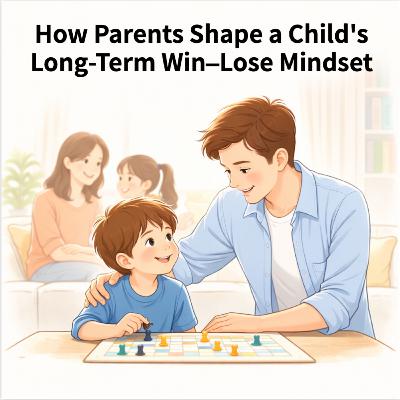
In a child’s world, winning and losing are never just about the outcome.What truly matters is the meaning they attach to losing.In this episode, we take a long-term developmental perspective on how parents shape a child’s win–lose mindset during the critical transition years of 4 to 7. We explore how children link outcomes to self-worth, how family climate influences mastery versus performance orientation, the difference between process praise and person praise, how parental reactions to failure transmit mindset, and how frustration tolerance is built gradually over time.This is not an episode about calming meltdowns in the moment.It is about building the underlying structure. When competition becomes a training ground rather than a courtroom, children can develop both drive and psychological safety—learning to strive to win, and to lose with strength.
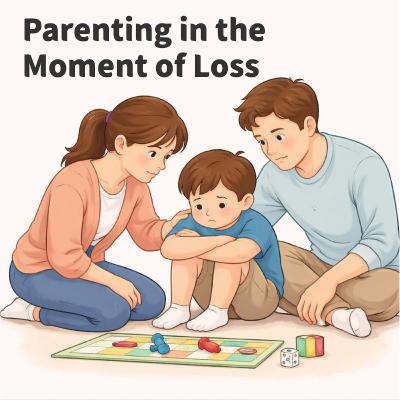
In this second episode of our series on preschool competitiveness, we shift from understanding to action. Last time, we explored why children around ages 4–6 suddenly care so deeply about winning and why losing can feel overwhelming. This episode brings us back to the game table—the moment when your child loses, says “It’s not fair,” questions the rules, or melts down.What is actually happening in that moment? And more importantly, how should a parent respond?We explore what research suggests about in-the-moment guidance: how to use active listening in a way that truly regulates emotion rather than dismisses it; how to decide whether to pause the game or continue; how rewards may unintentionally intensify win-lose anxiety; and why inviting children to participate in rule-making can dramatically reduce feelings of unfairness.This is not a checklist of techniques. Instead, we unpack the logic behind real-time decisions—how to hold structure without escalating conflict, how to protect fairness without protecting outcomes, and how to help children experience losing as practice rather than threat.

For adults, Lunar New Year often represents culture, tradition, and heritage. For preschool children, however, it is experienced very differently. They may not grasp the historical meaning behind the holiday, but they deeply remember the atmosphere—the colors, the food, the sounds, and the emotional tone of the family gathering. In this episode of The Scientific Parenting Diary, we explore from a developmental perspective what traditional festivals truly mean to young children. Why do children remember feelings more than facts? How do repeated rituals help them understand the passage of time? In what ways do sensory experiences quietly shape identity and belonging? Rather than focusing on teaching cultural knowledge, we look at how children live and internalize tradition through emotion, memory, and shared experience.
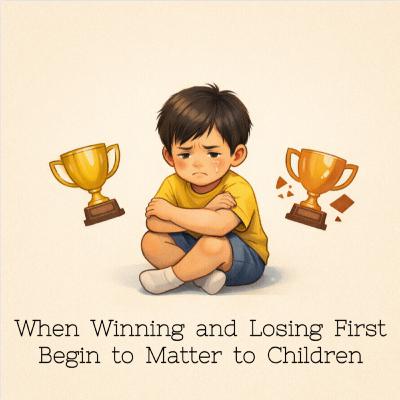
Around ages four to six, many children suddenly seem to care deeply about winning and losing. A game that used to be fun can quickly turn into tears, frustration, or angry protests of “It’s not fair.” When adults see this, it’s easy to worry: Is my child becoming too competitive? Are they a sore loser? Did we do something wrong?In this episode of The Scientific Parenting Diary, we step away from advice and strategies, and focus instead on understanding. From a developmental and emotional perspective, we explore what is actually happening inside a preschool child when winning starts to feel urgent — and losing starts to feel unbearable.We look at why this shift often emerges around ages four to six, how children’s developing sense of self, fairness, and control shapes their reactions, and why losing can feel like a personal threat rather than just an outcome. We also unpack why children may respond very differently when they lose to parents versus when they lose to peers.This is a mechanism-focused episode, designed to help parents see these moments not as behavior problems to fix, but as signals of important emotional and cognitive development. By understanding what “winning” and “losing” mean to young children at this stage, we can approach these moments with more clarity, patience, and emotional safety — for both our children and ourselves.
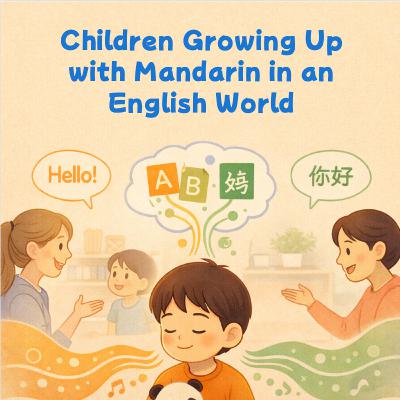
For preschool children growing up in English-dominant environments, understanding Mandarin often comes much earlier than speaking it. In the previous episode, we explored why this is a normal and healthy stage of bilingual development—not a failure on the child’s or the parents’ part.In this episode, we take the next step and ask a more practical question:What kinds of Mandarin input are actually most brain-friendly for preschoolers?Rather than adding more tasks or pressure, this episode focuses on optimizing what families already have. Drawing from developmental science, we discuss:Why “doing more” isn’t always better, and when less pressure leads to better outcomesHow Mandarin input should differ for children ages 3–4 versus 5–6When it’s appropriate to gently invite children to speak—and when it’s better not toParent-friendly ways to encourage Mandarin use without triggering resistanceHow to think about the timing of more structured learning or professional instructionThis episode isn’t about quick results. It’s about building a sustainable, emotionally safe foundation—so that when children are ready to use Mandarin more actively, the language already feels familiar, meaningful, and their own.
Preschoolers growing up in an English-dominant environment often understand Mandarin far better than they speak it. Many parents wonder: If my child understands Chinese, why do they always answer in English? Are they really learning the language, or just passively hearing it?In this episode ofThe Scientific Parenting Diary, we look at how young children process two languages from a developmental perspective. We explore how children separate languages by context and relationship, why receptive understanding naturally comes before expressive speech, and how emotional safety plays a critical role in whether a child chooses to use a heritage language.This conversation is not about pushing language output or correcting children. Instead, it helps parents understand what is developmentally typical for bilingual preschoolers—and why many seemingly “worrisome” behaviors are actually signs of healthy language development. By seeing the process more clearly, families can support heritage language growth with less pressure and more confidence.
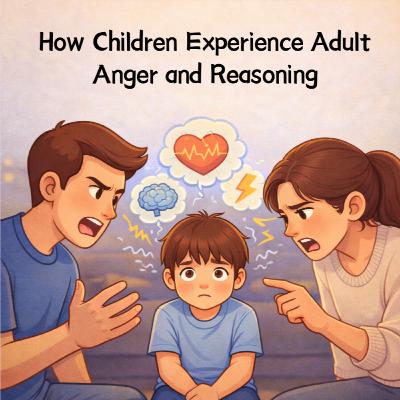
Many parents have experienced this moment: you’re upset, trying to explain what went wrong, and speaking more firmly than usual—when suddenly your child goes quiet. They stop responding, stop moving, and seem to shut down completely. It’s easy to interpret this as defiance, avoidance, or refusal to listen. But for children between the ages of four and six, something very different is often happening.In this episode of The Scientific Parenting Diary, we look at these moments through the lens of child development and brain science. When adults are emotionally activated and trying to reason, young children are usually not focused on understanding the logic of the message. Instead, their brains are busy processing emotional signals and assessing safety. What looks like “not listening” is often a freeze response, cognitive overload, or a temporary withdrawal from interaction—all normal protective reactions at this stage of development.This episode does not offer quick fixes or discipline strategies. Instead, it aims to help caregivers understand what children are experiencing internally when adult emotions run high. By clarifying how young brains handle stress, language, and emotional intensity, we can better distinguish between moments when children are ready to engage and moments when they are simply overwhelmed.Our hope is that this conversation brings more clarity and fewer assumptions into everyday parenting interactions—and helps adults respond with understanding when children seem to go silent at the hardest moments.

When it comes to education planning in the United States, the 529 plan is often presented as a universal solution. But for families living in California, the real question is rarely whether to use a 529—it’s how to use it without making costly mistakes. With no state tax deduction, a high number of private-school families, and widespread confusion about financial aid, many parents find themselves overwhelmed by conflicting advice.In this episode of The Scientific Parenting Diary, we move beyond the basics and focus specifically on what California families need to understand. We explore why a 529 plan can still play an important role even without state tax benefits, why using a 529 for K–12 private school tuition in California can trigger unexpected tax consequences, and how FAFSA actually evaluates parent-owned education savings.We also place the 529 plan within a broader family planning framework, discussing how California families often balance 529 plans, custodial accounts, and taxable investments—each serving a different purpose. Rather than promoting a one-size-fits-all approach, this episode offers clarity, structure, and context, so parents can make informed decisions with confidence instead of anxiety.Our goal is not to push families to save more, but to help them understand where each tool belongs. With clearer rules and fewer misconceptions, education planning becomes less about fear of doing something wrong, and more about creating flexibility and choice for the years ahead.

For many parents, questions about a child’s future arrive long before the child is old enough to ask them. Even while our kids are busy learning letters, making friends, and discovering the world one tiny step at a time, we may already be wondering: How much will college cost? Should we start saving now? What if we’re not prepared in time?In this episode of The Scientific Parenting Diary, we take a calm, clear look at the 529 education savings plan—a tool many American families hear about but rarely feel confident using. We break down what a 529 actually is, why it matters, and how it can quietly create more options, more flexibility, and more breathing room for your child’s future.We’ll explore:• What a 529 plan does, and why it’s considered the most flexible way to save for education in the U.S.• Why starting early matters more than saving perfectly• Common misconceptions—like what happens if your child doesn’t go to college• How a 529 affects financial aid (and why most parents worry too much)• The core idea behind education savings: not pressure, but possibilityYou’ll discover that a 529 isn’t just a financial account—it’s a gentle form of future planning. One that allows children to step into adulthood with more choices and a sense of security built quietly, steadily, and lovingly over time.May this episode help you approach education planning with less stress, more clarity, and the confidence that small steps today truly can support big dreams tomorrow.
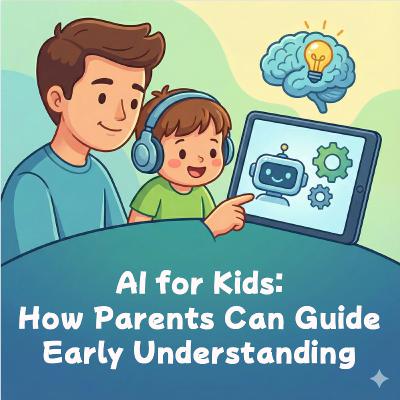
AI is no longer a distant concept—it’s in our living rooms, our phones, and even our bedtime stories. Smart speakers answer questions, apps generate drawings, and story tools respond to a child’s imagination in real time. But when a four- or five-year-old encounters AI for the first time, the experience can feel like magic.They may ask:“Who’s talking inside the speaker?”“Is it alive?”“Does it like me?”In this episode, we explore how to introduce artificial intelligence to young children in a way that is natural, safe, and developmentally appropriate. What can preschoolers truly understand about AI—and what remains far beyond their cognitive stage? How do we help them see AI as a helpful tool rather than a friend with feelings? And how can parents use AI for storytelling, art, curiosity questions, and learning without letting it overwhelm a child’s emotional world?We discuss:• How 4–5-year-olds think about machines, people, and “smart things”• What young children can and cannot grasp about AI• Simple, child-friendly ways to explain what AI does• How to play, create stories, and explore with AI together• How to avoid overreliance, confusion, or emotional attachment• The role of parents as co-users, guides, and interpreters in the AI eraThis episode is not about teaching kids coding or technology—it’s about helping parents create healthy, curious, and grounded early experiences with AI. Our goal is to let AI enrich childhood, not replace it, and to raise children who can explore technology with both wonder and boundaries.
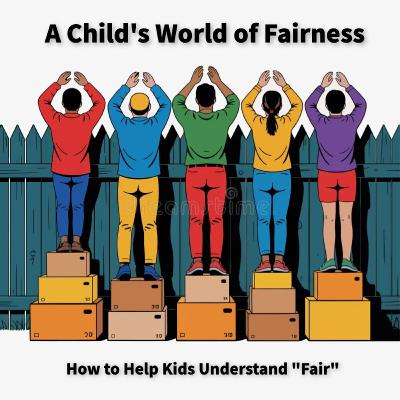
Young children often say, “That’s not fair,” whether they’re sharing snacks, taking turns, or simply observing how adults make decisions. But for children around ages three to six, fairness is not a moral principle or a rule-based judgment—it’s an emotional experience. Fairness, at this age, is deeply connected to feeling noticed, included, and valued.In this episode ofThe Scientific Parenting Diary, we take a gentle, science-based look into how young children understand fairness, why they react so strongly to perceived unfairness, and what these moments actually mean in their development. We explore the emotional and cognitive foundations of early fairness, the difference between equality and true fairness, and how children interpret attention, inclusion, and parental responsiveness.More importantly, we discuss how parents can guide children through these “not fair” moments—how to respond with empathy, how to explain the situation in a way young children can understand, and how everyday routines can nurture fairness, cooperation, and early problem-solving.Fairness is not taught in one conversation. It grows slowly through many small interactions—sharing, waiting, negotiating, asking for what they need, and being truly heard.This episode invites you to step into a child’s world of fairness and to discover how small moments can shape their understanding of others, their sense of self, and their place in the social world.
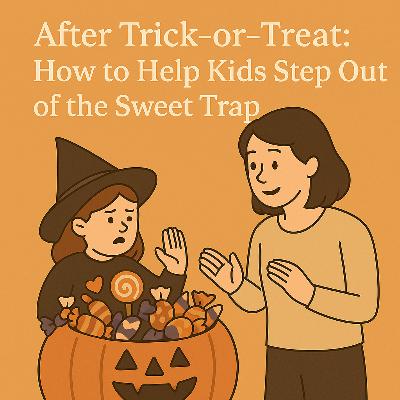
After Halloween, the candy pile at home looks endless—and while your child’s smile is sweet, you might already be wondering how to handle it all. In this episode of The Scientific Parenting Diary, we take a calm, science-based look at what happens when kids consume too much sugar and how parents can help them build healthier habits without turning it into a battle.We’ll explore:• How sugar triggers dopamine release in the brain and why kids find it so irresistible.• The difference between natural sugars and added sugars like high-fructose corn syrup and maltose.• The subtle ways sugar can affect sleep, focus, and emotional regulation.• What to look for on food labels—the “-ose” ingredients and hidden syrups that disguise real sugar content.• Practical strategies for parents after Halloween: sorting candies, setting limits with kindness, and turning the moment into a learning opportunity for self-control.This isn’t about fear or restriction—it’s about understanding how sweetness works, inside and out. By blending neuroscience, nutrition, and gentle parenting, we’ll help you guide your child out of the “sweet trap” with empathy, confidence, and balance.

In many Chinese families, grandparents play a central role in raising young children — but “grandparent caregiving” is far more complex than simply helping out. It’s an act of love that bridges generations, yet it also reveals gaps in communication, differences in discipline, and hidden emotional dependencies. In this episode of The Scientific Parenting Diary, we explore what happens when grandparents become primary caregivers: how their warmth can shape a child’s sense of security, and where overprotection may limit independence. We’ll unpack the emotional and developmental impact of grandparent-led caregiving, drawing on psychology and family research, and offer evidence-based ways for parents and grandparents to collaborate without conflict.Because true grandparent caregiving isn’t just about childcare — it’s about mutual growth, understanding, and love across generations.
In this second part of our deep dive into public and private schooling, we move beyond structure and statistics to explore the “soft environment” that truly shapes a child’s growth. What kind of community helps children build confidence, empathy, and a sense of belonging? How do diversity, class size, and school culture influence social and emotional development? We’ll look at what research says about peer relationships, family involvement, and how different school settings fit different temperaments—from shy, sensitive children to bold, outgoing ones. This episode helps parents see that education isn’t just about better academics—it’s about finding the environment where your child can thrive emotionally, socially, and psychologically.
For many parents, choosing between public and private school isn’t about ideology—it’s about understanding what truly differs beneath the surface. In this episode of The Scientific Parenting Diary, we break down the structural, financial, and regulatory contrasts between U.S. public and private elementary schools.Drawing on the latest national and California data, we explore how the two systems diverge in funding and oversight, teacher qualifications, class size, facilities, admissions processes, and total cost—including hidden expenses. We also examine regional variations, using Los Angeles as a case study, and discuss the “hidden advantages” of public education and the potential risks of private schooling.Finally, we close with a practical framework for parents: when public schools may offer a better fit—with inclusivity, certified teachers, and guaranteed services—and when private schools may align better with specific learning styles, smaller environments, or specialized programs.This episode is not about taking sides—it’s about clarity. Backed by evidence and data, it helps parents make an informed, balanced decision that fits their child, their values, and their family resources.
In early childhood, interests are never “just hobbies.” They are often the bridges through which children enter the world of peers and the mirrors that help them understand themselves. A child who joins a soccer team may, for the first time, experience the meaning of teamwork and competition. Another child who immerses themselves in drawing or piano learns independence, focus, and emotional expression. Interests can serve as both a bridge to friendship and a foundation for self-identity.But combining interests and social life also brings challenges. Children may face competition, unfair role distribution, or even exclusion from peers. Sometimes peer influence fuels passion and motivation, while at other times it triggers comparison and discouragement. At the same time, many parents fall into two common traps: treating early hobbies as career paths, or turning them into tools for social display and comparison. Both approaches can strip away joy and add unnecessary pressure.In this episode, we explore: the unique developmental value of group versus individual interests; how parents can respond when children encounter conflict or rejection in their activities; how peer influence can serve as both a positive model and a negative distraction; and how parents can help children build confidence from their interests without slipping into comparison. We also discuss why preschool hobbies should not be equated with future careers, how to handle external praise and rising expectations when a child excels, and how interests can help children bridge cultural or language gaps to strengthen their sense of belonging.Interests are not stages for performance—they are warm, personal paths that help children explore the world and discover who they are. Parents are not directors but companions and guides. With the right support, hobbies can become lasting sources of motivation, confidence, and identity—not burdens.
Children’s interests don’t grow in a straight line—they rise and fall like a heartbeat. One day, your child is eager to swim, paint, or practice piano, and the next day they sigh, “I don’t want to do this anymore.” For many parents, these moments trigger worry: Is my child losing focus? Have they lost their passion completely? Or is this just a temporary slump?In this episode, we explore why dips in motivation are a natural part of childhood development, what common triggers lead to low points—such as increasing difficulty, peer comparison, fatigue, or parental pressure—and how parents can respond in ways that protect enthusiasm instead of extinguishing it. You’ll learn how to tell the difference between temporary boredom and genuine loss of interest, what a parent’s first reaction should be, and how to use a simple four-step strategy—empathy, breaking goals into smaller steps, positive reinforcement, and creating small success experiences—to help children bounce back.We’ll also look at how sensitive children and those with shorter attention spans may need tailored approaches, why “pushing harder” often backfires, and what unique challenges arise in different types of hobbies—artistic, physical, or cognitive—during low points. Finally, we’ll discuss how role models and stories of resilience can help children see setbacks not as failures, but as stepping stones to growth.By the end of this episode, you’ll see that slumps are not the end of a passion, but a chance to build resilience, patience, and confidence—qualities that will help children not just in hobbies, but throughout life.
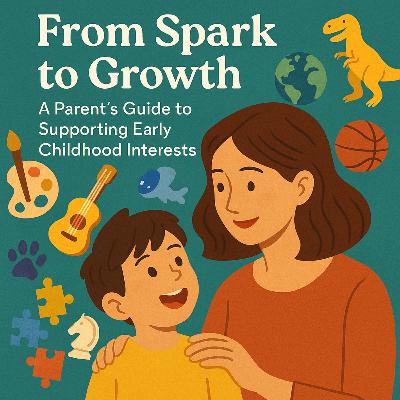
A child’s interests are like windows into their inner world. Some kids can spend hours drawing, dancing, or singing, pouring emotions and imagination into their creations. Others are fascinated by bugs, rocks, or little experiments, showing a natural curiosity about how the world works. Some thrive on physical activity—running, climbing, swimming, or playing ball games—finding joy in movement and challenge. And then there are the “thinkers,” children who love puzzles, numbers, or chess, displaying focus, patience, and a love for structure. Sometimes, interests blend across categories—like children’s theater, robotics clubs, or science groups—where creativity, teamwork, and logical thinking all come together.But here’s the challenge: parents often fall into two traps. One is the achievement trap—treating interests as stepping stones to future careers, resumes, or social status, which kills intrinsic motivation. The other is projection—placing our own unfulfilled dreams on our kids, turning what could be joyful hobbies into heavy burdens. In both cases, the child’s authentic spark risks being lost.In this episode, we’ll explore:How can we categorize children’s interests, and what developmental values does each type bring?For expressive interests (art, music, dance), how can we nurture creativity while gradually building skills?For exploratory interests (nature, science experiments), how do we balance freedom with structured guidance?For physical interests (sports, swimming, skateboarding), how can parents strike the right balance between safety and challenge?For cognitive interests (puzzles, chess, early coding), how do we avoid rigid, premature training that kills curiosity?For blended interests, what unique benefits do they bring to a child’s holistic development?In daily parenting, what does it mean to “give more space and fewer instructions”?What is the “achievement trap” in hobby cultivation, and why does it undermine intrinsic motivation?How can parents recognize and avoid projecting their own ambitions onto their children?How can families adjust their environment and resources to support different types of interests?When children frequently switch hobbies, should parents encourage exploration or guide them toward focus?By drawing on developmental psychology, temperament theory, and educational science, we’ll see that children’s interests aren’t about being “talented” or “not talented,” nor about “sticking with it” versus “quitting.” They are seeds of curiosity, requiring sunlight, patience, and the right soil. The parent’s role is not to push or control, but to accompany, encourage, and create an environment where interests can grow freely. With the right approach, hobbies don’t just bring joy—they help children build resilience, focus, and a stronger sense of identity.So if you’ve ever wondered, “Should I sign them up for more classes? Should I push them to continue? Should I let them quit?”—this episode offers a new perspective. Interests flourish not under pressure, but in environments rich with curiosity, patience, and emotional safety.
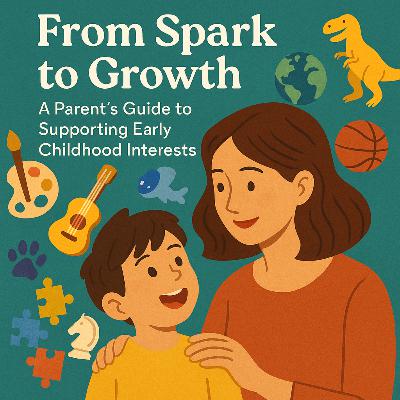
In this episode of The Scientific Parenting Diary, we dive into one of the most common yet often misunderstood challenges for parents: how to guide a child’s hobbies and interests in a healthy, science-based way. Whether it’s drawing, singing, piano, swimming, puzzles, or sports, these activities are not just skills—they are windows into how children explore the world, express themselves, and build confidence. Yet many parents fall into two traps: pushing too hard, turning hobbies into achievements or résumé items, or projecting their own unfulfilled dreams onto their children, turning joy into burden. In this episode, we explore the most common categories of early childhood interests—artistic, physical, cognitive, and exploratory—and the unique developmental benefits each provides. We’ll unpack how parents can nurture these interests with balance, finding the sweet spot between “giving space” and “gentle guidance.” We’ll also tackle big questions parents face: How do you spark genuine motivation without turning play into a chore? What is the “achievement trap,” and why does it kill intrinsic drive? How can you recognize and avoid projecting your own ambitions onto your child? And when children frequently switch interests, should parents follow their explorations or help them focus? Finally, we’ll discuss how to make thoughtful choices based on a child’s temperament, abilities, and family environment when selecting hobbies—whether it’s sports, music, or problem-solving activities. By the end of this episode, you’ll walk away with evidence-based strategies to support your child’s passions with patience and balance—so that interests become sources of joy and growth, not stress and pressure.

Every child has sparks of curiosity—but how do you know which ones could grow into lasting passions? In this episode of The Scientific Parenting Diary, we explore the subtle, everyday clues that reveal what truly lights up your preschooler. From noticing where they lose themselves in play, to understanding how temperament, emotional safety, and environment shape their interests, you’ll learn how to read the “signal lights” of early childhood enthusiasm. We’ll talk about why emotionally sensitive, shy, or easily distracted children may express their passions differently, how bilingual or immigrant family backgrounds create unique opportunities and challenges, and how to tell the difference between a passing fad and a pursuit worth nurturing. Most importantly, we’ll share ways to track and support your child’s evolving interests—without pressure, labels, or rushing the process. Whether you’re wondering if it’s time to sign them up for more classes, or simply want to better understand what excites them, this episode will help you see their curiosity in a whole new light.

Comments

Download from Google Play

Download from App Store
 United States