


 Claim Ownership
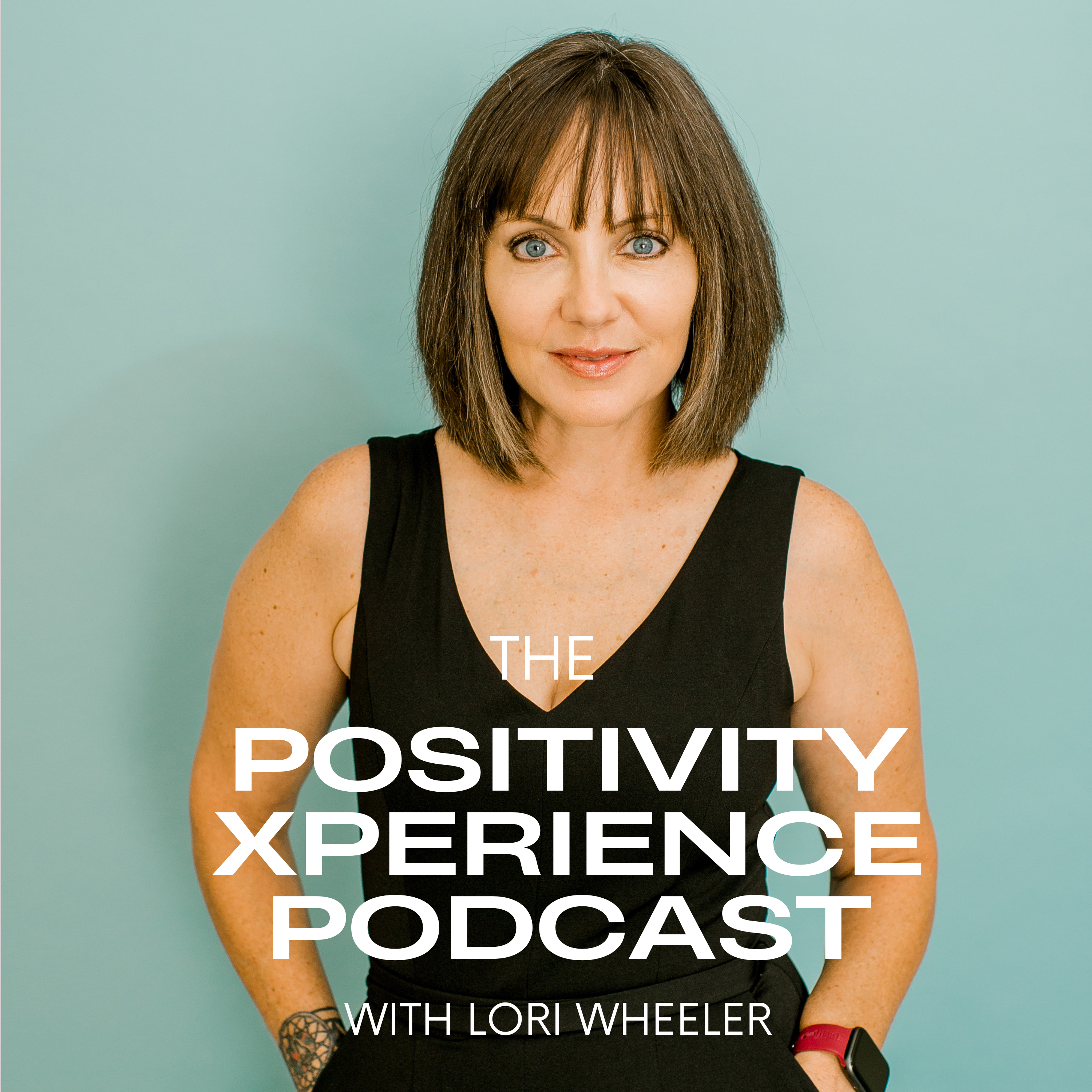
The Positivity Xperience
Subscribed: 150Played: 4,967
Subscribe

© All Rights Reserved Lori Wheeler
Description
Weekly podcast to help bring some relief of living with anxiety, depression, Overthiinkng and soooo many other things so many of us deal with daily. I am an alternative therapist and life coach who has struggled and still do with anxiety and overthinking. I will also teach you to love yourself
279 Episodes
Reverse

If your feelings aren't facts… then what about your thoughts? In this episode, we take the next step and break down the psychology and neuroscience of thoughts — where they come from, why they feel so real, and why trying to "get rid of them" often makes them stronger. Your brain is constantly generating thoughts as part of its prediction and survival system. Most of these thoughts are not objective truths — they are mental events shaped by past experiences, conditioning, bias, and pattern recognition. Yet they feel personal, convincing, and often unquestionable. We explore how the brain produces thoughts through neural networks and predictive processing, why familiar thoughts feel true even when they're not accurate, and how something called cognitive fusion causes you to identify with your thoughts instead of observing them. We also connect this to last week's episode on feelings — because thoughts and emotions are constantly reinforcing each other. Thoughts create emotional reactions, and emotions strengthen the thoughts, creating loops that can feel impossible to break. You'll learn why thought suppression doesn't work (and can actually increase intrusive thinking), how your brain prioritizes efficiency over accuracy, and why stepping back from your thoughts is one of the most powerful shifts you can make for emotional clarity. In this episode, we cover: *What thoughts actually are from a neuroscience perspective *How the brain generates thoughts using memory, prediction, and pattern recognition *Why familiar thoughts feel true even when they're not accurate *The concept of cognitive fusion and how it keeps you stuck in mental loops *Why trying to suppress thoughts makes them stronger *How thoughts and feelings reinforce each other *How to create distance between you and your thoughts Your thoughts are real. But they are not facts. And they are not who you are. Become A Patreon: www.patreon.com/thepositivityxperience Let's Work Together: www.thepositivityxperience.com
Have you ever felt something so strongly that it seemed like absolute truth? Feeling ignored. Feeling rejected. Feeling disrespected. Feeling anxious about something that hasn't even happened yet. Here's the reality: your feelings are real, but they are not always factual. In this episode, we explore the neuroscience behind emotions and why the brain can make feelings seem like undeniable truth—even when they're based on interpretation rather than objective reality. Your emotional brain reacts faster than your thinking brain. The limbic system—particularly the amygdala—is designed to detect potential threats quickly and trigger emotional responses before your rational mind fully processes what's happening. This is incredibly useful for survival, but it also means your brain can create powerful emotional reactions based on past experiences, learned patterns, and assumptions. That's why emotions can feel convincing even when they're not telling the full story. In this episode, we break down how the brain generates emotions, why emotional reactions often happen before logical thinking, and how confirmation bias can reinforce emotional narratives once they begin. We also talk about the difference between validating a feeling and believing the interpretation attached to it, and why learning to pause between emotion and conclusion is one of the most important parts of emotional maturity. In this episode you'll learn: The neuroscience behind emotions and how the brain processes feelings Why the amygdala reacts before your rational brain can analyze the situation How confirmation bias reinforces emotional stories in your mind Why past experiences shape emotional triggers in the present The difference between acknowledging emotions and treating them as facts How emotional regulation creates space for clearer thinking and healthier relationships Emotions are powerful signals. They tell you something about what's happening inside you. But emotional clarity comes from learning to question the meaning your brain attaches to those feelings instead of automatically treating them as reality. When you learn to separate emotion from interpretation, you gain something incredibly valuable: perspective. Become A Patreon: www.patreon.com/thepositivityxperience Get More Resources: www.thepositivityxperience.com
Have you ever brought up an issue with someone and somehow ended up defending yourself instead? In this episode we break down the psychological tactic known as DARVO — Deny, Attack, Reverse Victim and Offender. This manipulation pattern is often used to escape accountability, distort conflict, and regain narrative control. We explore the science behind DARVO, why it works so effectively on empathetic people, and how it shows up in relationships, workplaces, and family dynamics. We also discuss how to recognize this pattern in others — and how to catch it in yourself before it damages trust. 🎧 In this episode we cover: *What DARVO actually is *The psychology behind denial and blame reversal *Why your nervous system gets hijacked during conflict *Real-life examples of DARVO in relationships and families *How to stay grounded when someone tries to flip the narrative *How to recognize when you might be using DARVO yourself Become A Patreon: www.patreon.com/thepositivityxperience Let's Work Together & Resources: www.thepositivityxperience.com

Have you ever left a conversation feeling confused, guilty, or unsure of what actually happened? In this episode, we break down the psychology behind narrative control and how manipulators subtly rewrite events to avoid accountability and maintain power. We explore minimization, reversal, selective memory, emotional hijacking, and how confusion becomes a compliance tactic. 🎧 In this episode, we cover: *Why manipulators distort reality *How narrative control creates leverage *The covert tactics you don't see in real time *Why you end up defending instead of addressing *How to stop debating memory and anchor to truth If you've ever felt foggy or destabilized after conflict, this episode will help you understand why. Become A Patreon: www.patreon.com/thepositivityxperience Let's Work Together: www.thepositivityxperience.com
Do you feel responsible for other people's emergencies — their emotional spirals, financial messes, relationship chaos, or even their mental health crises? In this episode, we break down the psychology behind over-responsibility, nervous system conditioning, and why "being the strong one" becomes a role you can't turn off. We explore how crisis-responsibility develops through conditioning and attachment patterns, why urgency hits your body like a mandate, and what it actually looks like to care without carrying. 🎧 In this episode, we cover: Why some people feel responsible for everyone else's crises How over-functioning creates codependent crisis loops Why mental health is NOT your responsibility to manage How guilt becomes a control mechanism (even unintentionally) The difference between support, rescue, and emotional hostage situations How to set containment boundaries without becoming cold If you've been living like a crisis manager — this episode will help you reclaim your life without losing your compassion. Become A Patreon: www.patreon.com/thepositivityxperience Let's Work Together: www.thepositivityxperience.com
If you struggle to relax even when life feels calm, this episode will help you understand why. In this episode, we explore the psychology and nervous system conditioning behind chronic tension, hypervigilance, and the inability to rest. We break down why relaxation can feel unsafe, how early environments shape the stress response, and why thinking your way into calm rarely works. 🎧 In this episode, we cover: Why relaxation is a nervous system state — not a mindset How hypervigilance develops without obvious trauma Why calm can feel uncomfortable or unsafe The role of ego and identity in staying activated What actually helps the nervous system learn safety This is a grounded conversation about responsibility, healing, and learning how to feel safe in stillness again. Become A Patreon: www.patreon.com/thepositivityxperience Let's Work Together: www.thepositivityxperience.com
Victim mindset isn't just about how you think — it's about who you allow access to you. In this episode, we explore how victim mentality is reinforced through relationships, environments, and emotional access. Drawing from psychology, attachment theory, and nervous system science, this conversation breaks down why mindset work often fails when access doesn't change — and how growth requires more than just insight. 🎧 In this episode, we cover: *How victim mindset is reinforced socially *What "access" actually means psychologically *Why attachment and belonging keep people stuck *How ego protects familiar identities *Why environment matters more than intention *What actually shifts when access changes This episode is a direct, grounded conversation about responsibility, healing, and choosing relationships that support who you're becoming — not who you've been. Become A Patreon: www.patreon.com/thepositivityxperience Let's Work Together www.thepositivityxperience.com
You Need to Know Why You Become the Emotional Dumping Ground If people constantly unload their emotions, problems, and frustrations onto you, this episode will help you understand why — and what to do about it. In this episode, we explore the psychology behind becoming the emotional dumping ground, including how early conditioning, emotional over-functioning, and ego identity quietly reinforce this pattern. We break down the difference between healthy vulnerability and emotional dumping, why boundaries alone don't always stop it, and what you may be unconsciously signaling that keeps this dynamic in place. 🎧 In this episode, you'll learn: Why people emotionally dump on certain individuals The difference between empathy and emotional absorption How ego identity reinforces being "the safe one" Why boundaries fail without energetic change How to stop over-functioning emotionally without shutting down This is a direct, psychology-based conversation about reclaiming emotional space, responsibility, and self-respect — without losing compassion. Become A Patreon: www.patreon.com/thepositivityxperience Let's Work Together: www.thepositivityxperience.com

The Four Agreements are simple — but they're not easy. And the reason most people don't practice them isn't because they don't understand them. It's because practicing them requires giving up ego-driven habits like blame, vagueness, mind-reading, people-pleasing, and self-bullying. In this episode, we break down what The Four Agreements actually are, where they originated, where people get them wrong, and why so many people cherry-pick the parts that feel comforting while avoiding the parts that would actually change their relationships and self-respect. 🎧 In this episode, you'll learn: *What the four agreements are and what they were meant to teach *The most common ways people misuse "don't take it personally" and "always do your best" *Why ego resists these agreements (and how that shows up in your daily life) *How to apply them without using them as spiritual bypassing This is a direct, psychology-informed conversation about responsibility, communication, and emotional maturity — so you can stop quoting the principles and start living them. Become A Patreon: www.patreon.com/thepositivityxperience Let's Work Together: www.thepositivityxperience.com
If you feel compelled to soothe, explain, reassure, or fix whenever someone is upset, this episode is for you. In this episode, we unpack why so many people take responsibility for other people's emotions — and why this pattern is often mistaken for empathy. We explore the psychology behind emotional fixing, how early conditioning teaches us that discomfort is dangerous, and why the ego reinforces the need to manage others' feelings. You'll learn the difference between presence and control, why letting people feel their emotions can feel terrifying, and how fixing others actually prevents growth — for them and for you. This episode is about releasing emotional responsibility without guilt and reclaiming your energy, boundaries, and nervous system regulation. 🎧 In this episode, you'll learn: Why fixing feelings is not empathy How emotional responsibility gets conditioned early The role ego plays in fixing and rescuing Why letting others feel feels unsafe How to support without over-functioning This is a direct, psychology-based conversation about boundaries, emotional ownership, and learning to care without carrying what isn't yours. Become A Patreon: www.patreon.com/thepositivityxperience Get The Workbook And Other Resources: www.thepositivityxperience.com
Intensity often feels like depth — but it isn't the same thing as connection. In this episode, we explore why so many people confuse emotional intensity with closeness, chemistry, or intimacy, and how nervous system dysregulation and ego reinforcement keep this pattern alive. If calm feels boring, unsettling, or emotionally empty to you, there's a psychological reason — and it has nothing to do with your capacity for love or connection. We break down how attachment patterns, early emotional conditioning, and ego identity can make urgency, emotional highs, and volatility feel meaningful, while steady, grounded connection feels unfamiliar or wrong. This episode challenges the belief that depth requires chaos and explains what real connection actually feels like when safety replaces stimulation. 🎧 In this episode, you'll learn: Why emotional intensity feels like connection How attachment and nervous system conditioning shape attraction The role ego plays in chasing emotional highs Why calm can feel unsafe or "boring" How to recognize real connection versus emotional activation This is a psychology-based conversation about retraining your nervous system, releasing ego-driven patterns, and learning to experience connection without overwhelm. Become A Patreon: www.patreon.com/thepositivityxperience Let's Work Together: www.thepositivityxperience.com
Some people don't control through aggression — they control through concern. In this episode, we break down the psychology of fake concern and how kindness can quietly become a tool for emotional leverage. If someone frames control as care, uses "worry" to influence your decisions, or subtly plays on your insecurities while appearing helpful, this conversation will help you see it clearly. We explore why weaponized kindness is so effective, how guilt and obligation are created without direct confrontation, and why people who use fake concern often appear reasonable, supportive, and well-intentioned on the surface. This episode explains the psychological mechanisms behind emotional control, moral superiority, and subtle manipulation — without labeling or diagnosing. If you've ever felt confused, pressured, or smaller after a "supportive" conversation, this episode will help you understand what's actually happening and how to reclaim your autonomy without guilt. 🎧 In this episode, you'll learn: The difference between genuine care and fake concern Why kindness becomes leverage in certain relationships How insecurities are subtly targeted and reinforced The psychology of emotional obligation and moral framing How to recognize control disguised as support This is a direct, psychology-based conversation about discernment, boundaries, and self-trust — not becoming cynical, but becoming clear. Become A Patreon: www.patreon.com/thepositivityxperience Get MORE Resources: www.thepositivityxperience.com
Healing doesn't just change how you feel — it changes how you show up in relationships. And that shift can be deeply uncomfortable for the people who benefited from the old version of you. In this episode, we explore what actually happens when you begin healing, setting boundaries, regulating your nervous system, and stepping out of familiar emotional roles — while others stay stuck in the same patterns. If you've noticed tension, guilt-tripping, distance, or backlash since doing the inner work, this episode will help you understand why. We'll break down the psychology behind it, including: • Why your healing disrupts emotional roles and power dynamics • How ego reacts when it can no longer control or rely on you • Why unhealed people experience boundaries as rejection • How projection, shame, and insecurity drive resistance • Why calm and regulation feel threatening to dysregulated nervous systems • Why people try to pull you back into who you used to be • How to stop explaining, shrinking, or self-betraying to keep the peace • How to hold compassion without abandoning yourself You'll learn why healing doesn't make you selfish or cold — it makes you less available for dysfunction. This episode is for anyone who is growing, changing, and wondering why relationships suddenly feel harder. Because healing doesn't destroy relationships — it reveals which ones depended on your unhealed self. Get The Worksheet On Patreon: www.patreon.com/thepositivityxperience Get The Journals & Resources: www.thepositivityxperience.com
If You Feel Everyone Else's Emotions, Listen to This If you constantly absorb other people's emotions, moods, or stress, this episode will challenge everything you've been told about empathy. Feeling everyone else's emotions isn't a gift — it's often a trauma response rooted in hypervigilance, emotional conditioning, and nervous-system dysregulation. In this episode, we break down the psychology behind emotional absorption, why so many people confuse it with empathy, and how early environments teach us to monitor others to feel safe. We explore emotional contagion, identity diffusion, people-pleasing, and why letting go of emotional responsibility can feel terrifying — even when it's necessary. This is a direct, fact-based conversation about boundaries, emotional ownership, and reclaiming your internal authority. If you feel drained after interactions, responsible for others' feelings, or disconnected from your own emotional needs, this episode is for you. 🎧 Topics include: *Hypervigilance and trauma responses *Emotional contagion vs true empathy *Why absorbing emotions leads to burnout *Identity loss and boundary confusion *How to stop carrying emotions that aren't yours Become A Patreon: www.patreon.com/thepostivityxperience.com Dive Deeper www.thepositivityxperience.com
Most people don't fail because their goals are impossible — they fail because they wait for a date on a calendar to save them. In today's episode, The Science of Starting Now: How Micro-Actions Beat Motivation, we're breaking down why New Year's resolutions, "I'll start Monday," and waiting for motivation actually train your brain to delay your life. When you put change off, you create more stress, more shame, and more pressure… and that pressure becomes the reason you avoid doing anything at all. You'll learn the real psychology and neuroscience behind procrastination: Why your brain sees "future you" as a stranger How planning gives dopamine without progress Why perfectionism secretly keeps you stuck How delaying decisions destroys self-trust Most importantly, you'll learn how small actions right now can completely rewire your identity, reduce anxiety, and build the version of you that actually follows through. No more waiting for Mondays. No more waiting for motivation. Today counts. If you're ready to ditch shame-based resolutions and start living the life you want now, this episode is your wake-up call. 🎧 Listen, take the micro-action challenge, and share this with someone who keeps delaying their own potential. Become A Patreon: www.patreon.com/thepositivityxperience For More Resources: www.thepositivityxperience.com
Religion can be a powerful source of community, comfort, and guidance — but for many, it also becomes a source of fear, guilt, and lifelong emotional distress. When faith is tied to shame, control, and conditional love, it stops being spirituality… and becomes trauma. In this episode, we reveal the psychological and emotional impact of religious trauma: how rigid belief systems, spiritual manipulation, fear-based teachings, and family conditioning shape identity and self-worth long after someone leaves the church. You'll learn: ◼ how shame is weaponized to enforce obedience ◼ how fear of punishment replaces genuine morality ◼ the link between religious gaslighting and self-doubt ◼ why breaking away can feel like betrayal, even when it's healing ◼ how purity culture deeply damages self-image ◼ why questioning beliefs triggers panic ◼ how to rebuild spirituality on your own terms ◼ how to separate identity from indoctrination ◼ how to heal the guilt and anxiety that linger for years This episode will help you understand that you are not weak, broken, or "lost" — you were conditioned to believe your safety relied on obedience. Now you get to redefine what spirituality means, without shame being the cost of belonging. Become A Patreon: www.patreon.com/thepositivityxperience Get More Resources: www.thepositivityxperience.com
If you've lived your life waiting for impact — waiting for the next crisis, the next emotional explosion, the next let-down, the next shoe to drop — this episode is for you. Because some people don't struggle with motivation or discipline. Some people struggle with a nervous system that never turns off. In this episode, we're breaking down the neuroscience of chronic activation — why your body stays braced even when your mind knows you're safe — and how survival mode becomes a personality, a habit, an identity. We'll explore: ◼ why your nervous system can't relax, even during calm ◼ how early life conditions shaped your internal alarm system ◼ what hypervigilance, catastrophizing, and overthinking really are ◼ why rest feels dangerous instead of peaceful ◼ how perfectionism, people-pleasing, and control form as protection ◼ the brain chemicals behind anxiety and constant scanning ◼ how to begin retraining your body to feel safe — slowly and gently ◼ body-first tools to regulate instead of mentally wrestle with panic ◼ how to prepare for the new year without pressure or urgency This isn't another "just breathe more" episode. This is nervous system literacy. This is survival recognition. This is learning how to step out of emergency mode one micro-step at a time. If you're exhausted by always being "on," this episode will help you name it, understand it, and finally begin reversing it. Because you don't need to be a new you in January. You need a nervous system that isn't fighting for its life. Become A Patreon: www.patreon.com/thepositivityxperience Get The Journals! www.thepositivityxperience.com
Most people think anxious attachment means someone "loves harder," cares more, or is just afraid of losing you… but the truth is deeper and far more complicated. In this episode, we break down the psychology and neuroscience behind anxious attachment and why it can turn relationships into emotional pressure rather than connection. If you've ever felt smothered by someone's "love," guilty for needing space, or responsible for someone else's emotional stability, this episode will give you clarity and tools to break the cycle. We'll explore: ◼ why anxious attachment turns affection into urgency ◼ how fear becomes disguised as love ◼ the brain chemicals responsible for panic-bonding ◼ why they want YOU to regulate their emotions ◼ how guilt is used (consciously or unconsciously) to keep you close ◼ why you get trapped in rescuing ◼ how your nervous system gets hooked by their panic ◼ what to STOP doing immediately ◼ how to step out of caretaker mode without abandoning yourself ◼ how to set boundaries without becoming the villain You'll learn how to recognize the difference between real intimacy and emotional dependency, how to protect your peace, and how to stop being someone's emotional stabilizer. This episode will give you clarity, language, tools, and permission. Especially if you're tired of feeling responsible for other people's emotional worlds. Become A Patreon: www.patreon.com/thepostivityxperience Get The Journals & Let's Work Together: www.thepositivityxperience.com
Some people don't manipulate through anger — they manipulate through weakness. In this episode of The Positivity Xperience, Lori Wheeler breaks down the psychology, neuroscience, and emotional patterns behind feigned vulnerability and feigned helplessness — two of the most subtle and powerful forms of manipulation. You'll learn: • How people fake fragility to gain control • The psychology behind "playing helpless" • How learned helplessness and attachment wounds feed manipulation • The dopamine reward loop that keeps YOU rescuing them • Why your empathy makes you the perfect target • How to break the cycle without guilt or fear Lori exposes how emotional collapse, tears, helplessness, victimhood, and "I can't" statements are often used as covert power plays — especially when you try to hold boundaries. This episode blends neuroscience, attachment theory, and real-world examples to help you: • stop falling for guilt-based manipulation • stop absorbing responsibility that isn't yours • stay grounded when someone acts fragile • keep your boundaries even when they escalate If you've ever felt drained, guilty, or confused after dealing with someone who "just can't do things," this episode will finally give you clarity — and tools to take your power back. — 🎧 Listen on: Spotify | Apple Podcasts | YouTube 💜 Patreon: Access the full worksheet and extended content at www.patreon.com/thepositivityxperience 🌐 Website: www.thepositivityxperience.com
Ever wonder why no matter how much you have — it never feels like enough? In this episode of The Positivity Xperience, Lori Wheeler dives deep into the scarcity mindset — the psychological, energetic, and neurological patterns that keep you stuck in lack. You'll discover: • Why your brain is wired to focus on what's missing (and how to reprogram it) • The neuroscience of negativity bias and how it fuels fear-based thinking • How your energetic vibration mirrors your beliefs about "enough" • Grounding techniques to calm your nervous system and embody abundanc Lori blends neuroscience, mindset work, and energetic awareness to help you stop chasing safety through scarcity and start creating it through trust. 🔹 Learn how to shift your frequency from fear to flow. 🔹 Understand why your body resists abundance — and how to teach it safety. 🔹 Reclaim your energy and create from peace instead of panic. If you've ever felt like you're living in survival mode — this is your roadmap back to ease, safety, and self-trust. 🎧 Listen now on: Spotify | Apple Podcasts | YouTube 💬 Join the Patreon for exclusive worksheets and deeper mindset work: www.patreon.com/thepositivityxperience 🌐 Visit www.thepositivityxperience.com for The Transformational 5 Journals and coaching.

Comments

Download from Google Play

Download from App Store
 United States