


 Claim Ownership
find your cause
Subscribed: 2Played: 17
Subscribe

© 2025 Joseph Smalzer
Description
"find your cause" is the official podcast of Greater Than Zero Percent (GTZP). GTZP is 501(c)(3) non-profit on a mission to find people and organizations that are changing the world and sharing their stories.
We believe that however big or small of a positive impact you have, every bit counts. As long as you are adding greater than zero percent, the momentum you build is already changing the world.
192 Episodes
Reverse
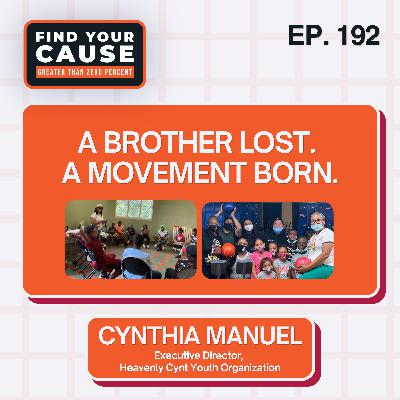
In this interview, Cynthia Manuel, executive director of Heavenly Cynt Youth Org, explains the organization’s mission to empower youth through mentorship, literacy, life skills, sports, and positive community connections, rooted in her brother’s 1998 death from street violence and her desire to protect and expand opportunities for youth in Chicago’s North Lawndale. She describes using exposure as a key tool: taking kids outside their neighborhoods, running mentoring programs since 2016, and creating unique experiences like horse care, gardening, and career tours that helped one youth pursue phlebotomy. Cynthia also discusses addressing desensitization to violence, rebuilding youth perceptions of police through relationship-building activities, and plans for a funded community center and trade-focused programming. She promotes her anti-bullying children’s book, “Cindy the Cowgirl Teaches Kindness,” and requests volunteers, donations, partnerships, and support for monthly literacy and CPR events.Sponsor Inquiry: https://calendly.com/gtzp/gtzp-impact-alignment/ Guest Intro Call: https://calendly.com/gtzp/intro-meetingTimestamps:00:15 Mission of Heavenly Cynt00:36 The Why Behind It01:58 North Lawndale Reality03:04 Horses and New Horizons04:52 Cindy Cowgirl Book06:18 Desensitized to Violence09:10 Mentorship and Alumni10:42 Exposure Builds Trust13:58 Success Stories and Police16:18 What Keeps Her Going17:31 Next Decade Vision20:53 Life Skills Curriculum21:52 Measure Impact and Support23:53 Kindness Pledge ClosingConnect with Cynthia Manuel Social: https://www.instagram.com/heavenly.cynt/https://www.instagram.com/heavenly_cynt_youth_org/https://mzcynthia59.wixsite.com/heavenlycyntyouthincConnect with GTZP:YouTube: https://www.youtube.com/@gtzp Instagram: https://www.instagram.com/greaterthanzeropercent/ LinkedIn: https://www.linkedin.com/company/greaterthanzeropercent/
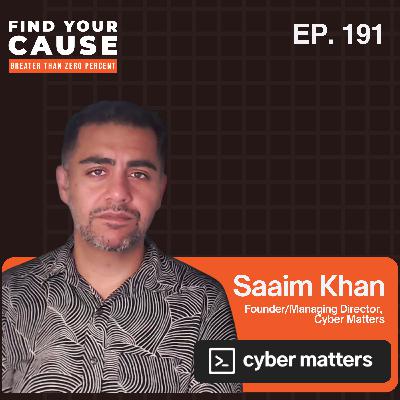
Partner with us: https://calendly.com/gtzp/gtzp-impact-alignmentSaaim Khan spent 20 years inside some of the world's largest cybersecurity consulting firms before stepping away to build something he could not find anywhere else.Not a bigger firm. Not a flashier one. Just an honest one.As Managing Director of Cyber Matters, Saaim built a company around radical transparency, a flat structure where no one is anyone's boss, and a single guiding value that is far more direct than anything you will find on a typical company values page.In this conversation, Saaim shares what he deliberately kept and left behind from corporate consulting, why he thinks trust should never have to be earned through hoops, and what it actually looks like to build a business where people genuinely do not dread logging in on Monday morning.*Connect with Cyber Matters:*https://www.cybermatters.io/https://www.linkedin.com/in/saaimkhanhttps://www.linkedin.com/company/cybermattersio/*Social*Instagram: https://www.instagram.com/greaterthanzeropercent/LinkedIn: https://www.linkedin.com/company/greaterthanzeropercent/TikTok:https://www.tiktok.com/@greaterthanzeropercentFacebook: https://www.facebook.com/greaterthanzeropercent/*Listen*Spotify: https://open.spotify.com/show/2ZeAnlQdjwKX5JodvYFwp2Apple Podcasts: https://podcasts.apple.com/us/podcast/find-your-cause/id1528910691*Connect*Website: https://www.gtzp.orgYouTube: https://www.youtube.com/@gtzpChapters:00:00:00 Teaser00:00:44 Introduction00:01:22 What is Cyber Matters and why it exists00:02:07 20 years in big consulting: what he kept and what he left behind00:06:28 Why flexible work is really a question of trust00:10:05 The problem with 50-page proposals00:16:58 Flat structure, no bosses, and speaking your mind00:22:42 How the culture has landed with the team00:27:00 How Cyber Matters lets people go with dignity00:28:20 The one company value that guides everything00:29:19 The next six years: compliance beyond cybersecurity00:31:28 Closing thoughts#FindYourCause #Nonprofits #Chicago #CommunityImpact #501c3 #SocialImpact #GTZP #GreaterThanZeroPercent
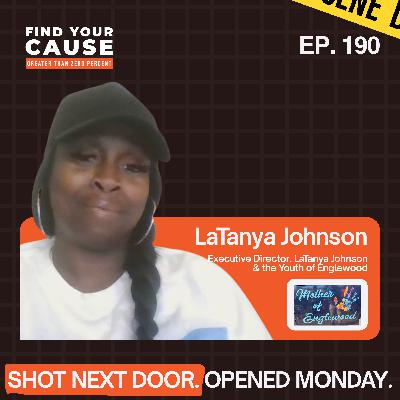
A shooting happened right next door to her youth center. She closed for one day. Then she opened back up on Monday.LaTanya Johnson is the Executive Director of LaTanya and the Youth of Englewood, a 501(c)3 that has been serving children ages five and up in Inglewood, Chicago since 2013.Recreational activities, educational programming, mentorship, entrepreneurship, community events, and family support. All of it, completely free.In this community check-in episode, Joseph and LaTanya go deep into what has changed since they last spoke. She talks about the shooting that happened right outside her door, why she sent the kids home that Friday and came right back Monday, and the invisible calculus families in Englewood make every day just to survive in their own neighborhood.She shares what 12 years of free programming has actually produced, which activities changed the trajectory of real kids' lives, and what she needs most right now to keep going.TIMESTAMPS:[00:00:00] Intro[00:00:39] LaTanya's background and organization mission [00:02:06] Why she started 12 years ago[00:03:31] The alderman's office and how it all began [00:05:55] Why she starts programming at age five [00:07:25] Joseph's time at Chicago juvenile detention [00:08:58] What activities created the most lasting impact [00:12:10] Gardening, go-karts, photography, and building [00:13:13] Phones, safety, and keeping kids engaged [00:14:18] The shooting next door [00:16:16] The battle parents face living in Englewood [00:17:41] Poverty, cost of living, and why families stay [00:19:50] What LaTanya wants to build next [00:22:27] Sports, arts, and why variety matters [00:23:09] How to connect with LaTanya [00:24:50] ClosingConnect with LaTanyaLinkedIn: https://www.linkedin.com/in/latanya-johnson-7a202a154/Social Instagram: https://www.instagram.com/greaterthanzeropercent/ LinkedIn: https://www.linkedin.com/company/greaterthanzeropercent/TikTok: https://www.tiktok.com/@greaterthanzeropercent Facebook: https://www.facebook.com/greaterthanzeropercent/Listen Spotify: https://open.spotify.com/show/2ZeAnlQdjwKX5JodvYFwp2 Apple Podcasts: https://podcasts.apple.com/us/podcast/find-your-cause/id1528910691Connect Website: https://www.gtzp.org YouTube: https://www.youtube.com/@gtzp Partner with us: https://calendly.com/gtzp/gtzp-impact-alignment#FindYourCause #Nonprofits #Chicago #Inglewood #YouthDevelopment #CommunityImpact #501c3 #SocialImpact #GTZP #NonprofitLeadership #GreaterThanZeroPercent #CorporatePhilanthropy
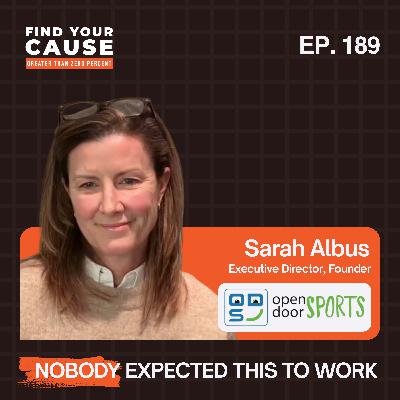
Sarah Albus was a college soccer player at Vanderbilt, a mom of four, and completely done with her first career when her daughter Hannah, born at 25 weeks with cerebral palsy and visual impairment, asked where her skis were. That question changed everything.In this episode, Sarah shares how she launched Open Door Sports in 2017 with no nonprofit experience, how six schools said yes before she had the staff to serve them, and why the most powerful outcome of her work wasn't the sports at all.Chapters:[00:00:00] Teaser[00:00:33] Welcome and Introduction[00:00:56] What is Open Door Sports?[00:01:23] Sarah's Personal Journey: Hannah's Story[00:03:04] The Gap in After-School Programming[00:09:28] First Programs: Soccer, Basketball, and Bocce[00:13:23] Unexpected Benefits: Community and Friendship[00:18:21] What Fuels Engagement: Stories Over Data[00:22:16] Open Door Sports and Special Olympics[00:24:44] The Future of ODS[00:27:22] How to Get InvolvedConnect with Open Door Sports:https://opendoorsports.org/https://www.instagram.com/opendoorsports/https://www.facebook.com/OpenDoorTeam/Connect with UsWebsite: gtzp.orgSponsor inquiry: https://calendly.com/gtzp/gtzp-impact-alignment/ListenSpotify: https://open.spotify.com/show/2ZeAnlQdjwKX5JodvYFwp2Apple Podcasts: https://podcasts.apple.com/us/podcast/find-your-cause/id1528910691FollowYouTube: https://www.youtube.com/@gtzpInstagram: https://www.instagram.com/greaterthanzeropercent/LinkedIn: https://www.linkedin.com/company/greaterthanzeropercent/TikTok: https://www.tiktok.com/@greaterthanzeropercentFacebook: https://www.facebook.com/greaterthanzeropercent/#FindYourCause #GreaterThanZeroPercent #Nonprofit #DisabilityInclusion #AdaptiveSports #OpenDoorSports #SocialImpact #Inclusion #SpecialNeeds #PodcastForGood

Is the Philippines actually "Gay Friendly," or is that just a myth?In this episode, Eljay Bernardo, Executive Director of Rainbow Rights Philippines, reveals the shocking legal reality for the LGBTQ+ community. From "gayness" being used as a legal ground to lose your property in annulment cases to archaic vagrancy laws used by police to target gay men, we pull back the curtain on why "being friendly" is no longer enough.We discuss the 26-year battle for an anti-discrimination bill, the economic cost of exclusion, and how legal "first aid" is saving lives on the ground.Timestamps02:55 How are archaic laws used to villainize gay people?04:35 Can being homosexual cost you your property?10:28 How a 2005 police crackdown sparked a 20-year movement.16:21 Are police attitudes actually changing?21:59 The economic cost of ignoring marriage equality.26:04 Why "being friendly" is not enough.Connect with Rainbow Rights PhilippinesWebsite: https://rrightsphl.orgInstagram/Facebook/X: @RRightsPHLSupport Find Your CauseWebsite: https://www.gtzp.orgBook an Intro Call: https://calendly.com/gtzp/intro-meetingRefer a Nonprofit: https://form.jotform.com/gtzp/nonprofit-referral
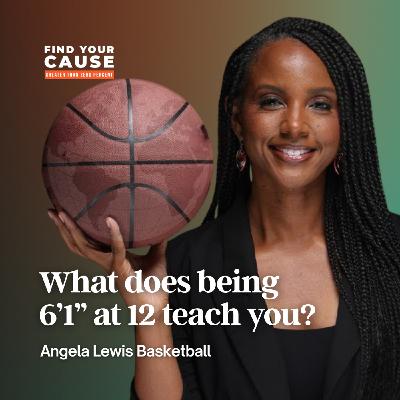
How does basketball shape confidence, identity, and leadership in young women around the world?In this episode of Find Your Cause, Joseph speaks with Angela R. Lewis, founder of Angela Lewis Basketball, about using sport as a platform to build confidence, character, and courage on and off the court.Angela shares lessons from her journey as a Division I athlete, coach, author, and global youth mentor — and why the court is more than a place to play. It’s a place to become.⸻Timestamps:01:12 — How Can Basketball Help Young Women Embrace Who They Are?08:18 — What Does It Really Take to “Get Out of the Valley”?11:22 — Can Sports Expand Your Empathy and Worldview?24:36 — How Do You Discover the Gifts You’re Meant to Share?27:11 — What Does It Mean to Be Truly Unstoppable?⸻Connect with Angela LewisWebsite: https://angelarlewis.comLinkedIn: https://www.linkedin.com/in/angela-lewis/Instagram: @TheAngelaRLewisInstagram: @AngelaLewisBasketball⸻Want to Get Involved?Interested in being featured on Find Your Cause?Book a short intro call here:https://calendly.com/gtzp/intro-meetingKnow an NGO doing impactful work?Refer them here:https://form.jotform.com/252598727309167Explore more episodes and learn more about Greater Than Zero Percent:https://www.gtzp.org
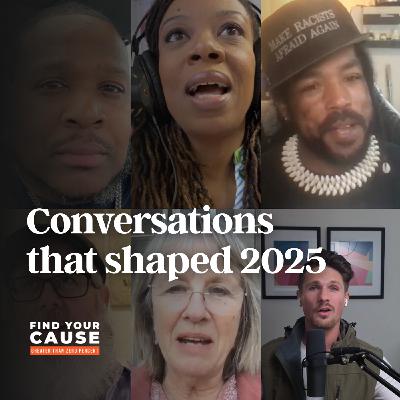
As we step into a new year, we’re taking a moment to look back at some of the most meaningful conversations from 2025. This New Year reflection episode revisits standout moments from Find Your Cause, highlighting voices that challenged narratives, strengthened communities, and grounded hope in evidence, culture, and human connection.From rehumanizing youth through hip hop and building economic pathways to prevent exploitation, to redefining resilience after trauma and pushing back against fear driven health misinformation, these conversations continue to offer insight as we move forward.Timestamps00:13 - E180: Marlon Richardson on rehumanizing Black and Brown young people through hip hop arts education00:50 - E181: Dr. Kisha Roberts Tabb on economic intelligence, transferable skills, and prevention pathways02:57 - E182: Khafre Jay on Flow Lounge, hip hop community, and creating spaces for vulnerability and healing05:15 - E183: John Gardner on using music to build respect across cultures and cultural understanding06:03 - E184: Diana M. Canant on resilience as becoming better than bouncing back after trauma07:16 - E185: Spencer Lalk on evidence based health information and empowering qualified medical voices
In this episode of Find Your Cause, Joseph talks with Dr Spencer Lalk, founder of Med Story Studio, about how evidence based medical stories can compete with fear based health influencers.Spencer shares the story of his mom’s cardiology scare, why she left a long awaited visit more confused than before, and how that moment led him to create clearer, more human health education. They dig into rushed appointments, insurance pressure, lawsuits, and why so many people now look to influencers before clinicians.You will hear how Med Story Studio helps doctors become trusted storytellers, where AI fits in, and how patients and clinicians can both share better health stories online.Chapters00:01:19 | What problem is Med Story Studio trying to solve00:01:43 | How did Spencer’s mom’s health scare lead to Med Story Studio00:05:10 | Why do patients leave appointments confused and afraid00:06:13 | How do the system and insurance limit what doctors can do00:11:16 | Why do US health and happiness outcomes lag other countries00:12:18 | What could a better health care model look like00:15:52 | How is AI changing doctor visits and patient prep00:19:30 | How did Med Story Studio actually get started00:20:43 | How does Med Story help doctors become storytellers00:21:26 | Why do human stories matter in a digital health care world00:22:02 | Why is recording doctor visits so complicated00:23:18 | If Spencer could redesign health care, what would he change first00:24:56 | Where is Med Story Studio going next00:27:18 | What does evidence based medicine really mean00:28:23 | How can we tell if a health influencer is dangerous00:32:08 | How can patients vet health information for themselves00:33:25 | How can clinicians get involved with Med Story Studio00:34:05 | What is Spencer’s invitation to patients and doctorsMedStory Media links:Website: https://medstorymedia.com/LinkedIn: https://www.linkedin.com/in/spencer-lalk-dpt-/Podcast: https://podcasts.apple.com/us/podcast/medstory-podcast/id1804185340Instagram: https://www.instagram.com/lalkhealth/?hl=enSpotify: https://open.spotify.com/show/19UwCxHTbUtH7POBm0HM9LYouTube: https://www.youtube.com/@MedStoryMediaFacebook: https://www.facebook.com/profile.php?id=61567995375537#Visit gtzp.org for more info.
In this episode, Diana M. Canant, Executive Director of LifeSpheres, shares how people heal through presence, guided dialogue, and community support rather than advice or isolation. She explains the Peer Community Co Care Program, a process that helps individuals resolve trauma safely, rebuild resilience, and support one another through structured, one-on-one sessions.Diana breaks down the psychobiology of trauma, why presence is more powerful than advice, and how healing becomes possible when people feel seen and understood.Her insights offer a new way to think about trauma and the importance of not facing it alone.Timestamps: 00:02:22 | What does resilience really mean00:05:41 | What kinds of trauma do communities experience00:06:17 | Introduction of the Peer Community Co Care Program00:07:23 | Why Diana focuses on young people and the elderly00:09:46 | How the program teaches presence and listening00:13:14 | Orientation, commitment, and how the program begins00:16:18 | How individual plans are created00:18:46 | How healing sessions work00:21:23 | How participants complete the program00:23:27 | What makes Life Spheres’ method effective00:28:43 | What trauma informed practice really means00:30:46 | How exposure therapy should and should not be done00:35:22 | Why healing should not be done alone00:40:48 | The future of Life Spheres and scaling impact00:48:39 | Where to find Life Spheres00:51:10 | Closing remarksRelevant links from LifeSphere:LinkedIn: https://www.linkedin.com/company/lifespheres/Instagram: https://www.instagram.com/turningthetideoftrauma/Website: https://www.lifespheres.org/Facebook: https://www.facebook.com/TurningTheTideOfTrauma/

What if music could break down racism?John Gardner, Executive Director of the World Music Foundation, has dedicated his life to proving that it can.In this episode, John shares how music creates real human connection across cultures, dissolves prejudice, and opens doors to understanding that conversations alone often cannot. From global touring to community work in Chicago, his mission is simple and powerful: use music to build respect across cultures.You’ll hear personal stories, community impact, and the practical ways the Foundation is changing lives one performance at a time.Full Episode Highlights01:20 - How lack of exposure fuels prejudice and why the Foundation tackles it02:00 - John’s lived experience with racism and how it shaped his cause06:00 - Creating a multicultural performance space in Chicago07:20 - Why music is the most powerful connector across cultures08:10 - The India story the moment music overcame language and culture barriers11:06 - Founding the nonprofit after witnessing real unity through music15:00 - The Foundation’s measurable impact increasing empathy and reducing intolerance18:40 - From global touring to deep local community work in Edgewater19:30 - Designing events that intentionally foster cross cultural respect21:20 - Everyday cultural exchange Joseph’s Uber playlist22:10 - Future plans monthly concerts, community singing, cultural holidays23:10 - Food as the next bridge the Foundation’s pop up restaurants and hot sauce23:50 - How to attend free events, join the newsletter, and support the mission24:50 - Why finding a cause matters for purpose, community, and mental health26:00 - How anyone can participate talk to people at live events and build human connectionLinkedIn: https://www.linkedin.com/in/jgardner-wmfWebsite: https://theworldmusicfoundation.org/Podcast: https://wmfpodcast.org/Facebook: https://www.facebook.com/TheWorldMusicFoundationInstagram: https://www.instagram.com/theworldmusicfoundationFind Your Cause. Greater Than Zero Percent.Listen, learn, and take one small step toward a more connected world.Visit https://www.gtzp.org/ for more info.
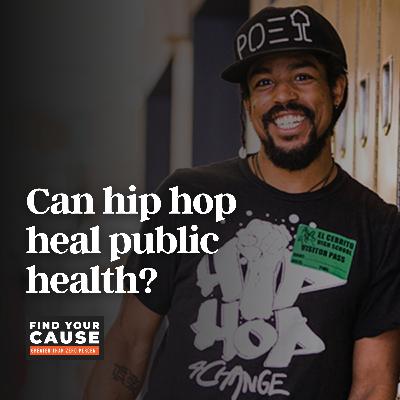
What if hip hop could heal communities?In this episode, Joseph sits down with Khafre Jay, Executive Director of Hip Hop For The Future, to explore how he’s using hip hop to tackle public health, misinformation, and systemic inequity across the Bay Area. From raising nearly $250,000 to fund grassroots health programs, to creating safe spaces like Flow Lounge where people use rap as therapy, Khafre shares how music can restore connection and dignity in communities that have long been overlooked.He breaks down the real impact of representation, the dangers of cultural misappropriation, and what it means to fight dehumanization through art. You’ll also hear about his powerful movement that transforms open mics into spaces for healing and hope.Keypoints of this episode:• The intersection of hip hop, health, and activism• Building community through culture• Black maternal health and grassroots change• Art as a tool for truth and healingLearn more:hiphopforthefuture.orgWant to learn more, donate, or get engaged?LinkedIn: https://www.linkedin.com/in/khafrejay/Website: https://www.khafrejay.com/Instagram: https://www.instagram.com/khafrejay/Facebook: https://web.facebook.com/khafrejay?_rdc=1&_rdr#YouTube: https://www.youtube.com/channel/UCgdT-NwYK5DYNLMCAVY-lKwTimestamps:00:22 — Mission Statement01:21 — Why He Took on the Mission01:41 — The Corporate Takeover of Hip Hop02:05 — Building Platforms for Local Artists03:25 — Turning Disillusionment into Action04:50 — Hip Hop as a Weapon for Public Health06:45 — Therapy Through Hip Hop07:12 — Grassroots vs. Corporate10:24 — Dehumanization and Media Portrayal12:18 — Responsibility to Know and Connect15:31 — Doing What He Can Do17:13 — Having Hard Conversations19:40 — Confronting Privilege in Public Spaces22:04 — Disrupting Comfort, Speaking Truth24:52 — Knowing Where to Spend Your Energy28:45 — What’s Next for Hip Hop For ChangeWatch more episodes of Find Your Cause for stories of people creating hope and change around the world.

Most people think human trafficking looks like the movie Taken.Dr. Kisha Roberts-Tabb says it’s often much closer to home.In this episode of Find Your Cause, host Joseph Smalzer talks with Dr. Kisha, community psychologist, founder of the Social Butterflies Foundation, and creator of Girls Night Out Chicago, about what trafficking really looks like in our neighborhoods, why victims rarely see themselves as victims, and how community collaboration can truly save lives.They discuss:How homelessness and survival often lead to exploitationWhy economic empowerment is the key to preventionHow trauma-informed care rebuilds trust and hopeWhat families and communities can do to make a differenceListen and learn from one woman’s mission to bring healing, empowerment, and long-term change to Chicago.Want to learn more, donate, or get engaged?WebsiteFacebookLinkedInLearn more at gtzp.orgTimestamps / Chapters00:00 Introduction and Joseph’s welcome00:49 What drives Dr. Kisha’s mission01:29 Early experiences in juvenile court03:58 Seeing the link between justice and trafficking05:27 Creating Girls Night Out to reach survivors07:55 Expanding impact across Chicago10:45 What trafficking really means13:08 Why victims don’t recognize exploitation15:15 Building trust before intervention19:40 How collaboration saves lives21:51 Long-term solutions through education and work35:10 Key hotlines and community resources44:11 Rethinking blame and promoting compassion45:35 Staying committed to the cause46:09 Closing message and call to actionPresented by Greater Than Zero Percent and Fluent Radio
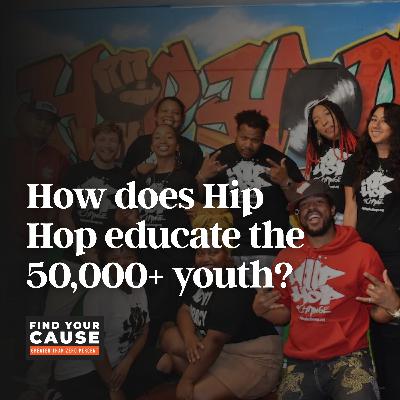
In this episode of the Greater Than Zero Podcast, Joseph speaks with Marlon Richardson, Executive Director of Hip Hop For Change, Inc. Based in Oakland, this nonprofit uses grassroots activism and hip hop culture to educate about socio economic injustices and advocate solutions.For over 12 years, Hip Hop For Change has reclaimed hip hop as a vehicle for education, empowerment, and employment, reaching more than 50,000 participants with programs that inspire personal growth, social justice, and workforce development.Timestamps:00:00 – What is Hip Hop For Change and why was it created?04:15 – How did Marlon Richardson step into this movement?09:30 – Why is hip hop an effective tool for education and social justice?16:20 – What challenges do grassroots organizations like Hip Hop For Change face?22:55 – How are youth and marginalized communities impacted by their programs?29:40 – How does art and culture help dismantle harmful stereotypes?35:10 – What can listeners do right now to support Hip Hop For Change?Learn More & Support Hip Hop For ChangeWebsite: www.hiphopforchange.orgDonate: Become a monthly donor – https://hiphopforchange.networkforgood.com/projects/125291-become-a-monthly-donor-todayPhone: (510) 350-7730Email: unlearn@hiphopforchange.orgInstagram: www.instagram.com/hiphop4changeLinkedIn: https://www.linkedin.com/company/hip-hop-for-changeFacebook: https://m.facebook.com/61568529146858/YouTube: www.youtube.com/hiphopforchange
What if generosity could be part of your daily life, not just a once-a-year act? In this episode, Joseph Smalzer speaks with the founders of Bgiving, a social impact platform designed to make giving simple, transparent, and personal. The team shares how they are using technology to connect donors, volunteers, and nonprofits in one seamless ecosystem where every contribution matters. From supporting grassroots projects to helping local communities grow through consistent micro-giving, Bgiving is proving that small, intentional acts can create large-scale change.Tune in to Find Your Cause to discover how Bgiving is inspiring a new generation to give smarter, live kinder, and build a world where generosity is the norm.Want to learn more, donate, or get engaged?LinkedIn pageVisit GTZP.org to learn more.

What happens when housing, mental health, and employment come together under one mission? In this episode, Joseph Smalzer speaks with Patty Capouch and Vince Henigan of Impact Behavioral Health Partners, an organization helping people with mental illness live independently through safe housing, clinical care, and job support. Founded during the deinstitutionalization era, Impact has grown from a single building in 1988 to serving over 1,100 participants today. Patty and Vince share personal stories of why they joined this work, what “trauma-informed care” really means, and how stable housing can transform lives.Listen to Find Your Cause to learn how Impact Behavioral Health Partners is redefining mental health housing and proving that stability starts with compassion.Visit Impact Behavioral Health Partners:WebsiteFacebookInstagramLinkedInVisit GTZP.org to learn more.

When families are forced to flee their homes, starting over in a new country can feel impossible. In this episode, Joseph Smalzer speaks with Shawn Smith, Executive Director of Global Impact Initiative, about how his team helps refugees rebuild their lives in Central Texas. From finding housing and learning English to gaining employment through CDL training and the Refugee Sewing Collective, GII provides the support needed to turn survival into stability. Shawn shares the realities of refugee resettlement, the cultural challenges many families face, and how his organization is creating real pathways to independence.Listen to Find Your Cause to learn how Global Impact Initiative is helping refugees not just adapt, but thrive.Visit Global Impact Initiative using the following links:WebsiteLinkedInInstagramFacebookVisit GTZP.org to learn more.
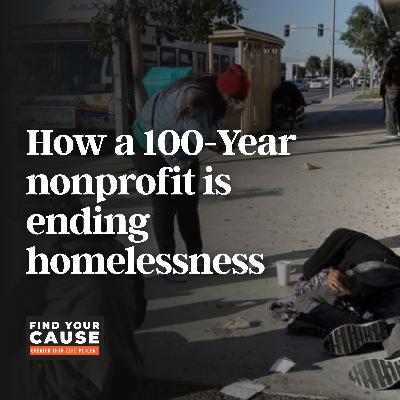
In this episode we interview Livi Kerszenbaum, Senior Director of Corporate Social Responsibility (CSR) at Orange County United Way. Orange County United Way’s mission is to improve lives in Orange County by delivering measurable long-term solutions to complex issues in education, financial stability, health and housing. Orange County United Way’s unique approach comes from an understanding that the community’s most critical issues are interrelated and must be tackled in an interconnected way to provide long-term solutions that break the cycle. Orange County United Way is focused on four key initiatives: United to End HomelessnessUnited for Financial SecurityUnited for Student Success2-1-1 OC. Want to learn more, donate, or get engaged? Donate: https://givebutter.com/orange-county-united-way Phone: +1 (949)660-7600 Email: https://www.unitedwayoc.org/contact-us/ Website: https://www.unitedwayoc.org Facebook: https://www.facebook.com/UnitedWayOC/ Instagram: https://www.instagram.com/unitedwayoc/ LinkedIn: https://www.linkedin.com/company/orange-county-united-way/ YouTube: https://www.youtube.com/user/ocunitedway Guest Information Guest Name: Livi Kerszenbaum Guest LinkedIn: https://www.linkedin.com/in/livi-kerszenbaum/
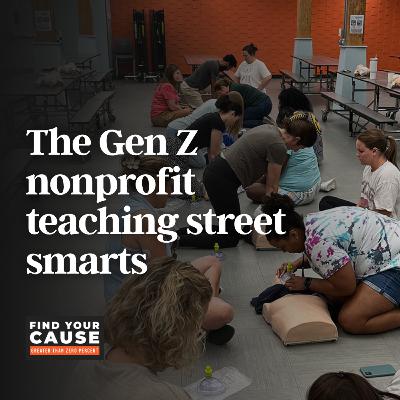
In this episode we interview Isaac Esene, Founder/Director at GoodWorks. GoodWorks’s belief is clear: to create safer communities, we must foster a more informed and proactive generation. Beyond just witnessing, we are cultivating a generation equipped to act, ensuring fewer preventable deaths and injuries in emergencies.Through tailored workshops, strategic partnerships, and cultural engagement, we simplify crucial life-saving concepts like bleeding control, opioid overdose response, harm reduction, and CPR.Want to learn more, donate, or get engaged? Donate: https://givebutter.com/iVR97h Email: operations@goodworkshealth.org Website: www.goodworkshealth.org Instagram: @dagoodworks LinkedIn: https://www.linkedin.com/company/86925972/
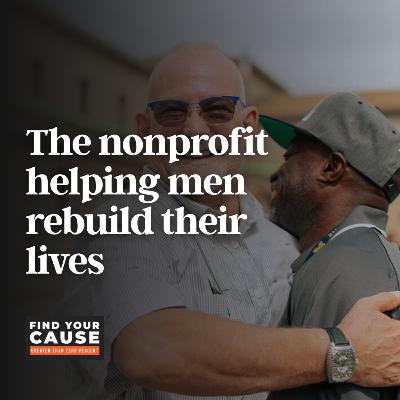
In this episode we interview Robb Munger, Founder & President of Exodus Place. Exodus Place’s mission is to Glorify God by meeting each man where they are. We provide a hand up rather than a handout by equipping these men with physical, emotional, mental and spiritual tools for successful reintegration into the community. Exodus Place is the largest transitional Housing Facility for men in Michigan. Transitional Housing is a stepping stone for homeless people who need temporary residence until they can afford long term or permanent housing. Exodus place can house up to 135 men at a given time and we call our residents members. We provide our members with a hand up not a hand out. Members pay low monthly dues (not rent) to live here. These dues include access to case management, education & job training, meal program, spiritual counseling, medical care and more. Although we deal primarily with the homeless population, we are not a homeless shelter. We're different for the following reasons: We never put an expiration date on a member's stay. Members pay low monthly dues to live here. We offer programs to assist in our members' development.At Exodus Place, we understand that problems require big solutions that's why we're different from a shelter. We don't treat the symptoms for homelessness, we provide the cure. Want to learn more, donate, or get engaged? Donate: https://www.exodusplace.org/donate.html Phone: +1 616-242-9130 Email: info@exodusplace.org Website: http://www.robbmunger.com Facebook: https://www.facebook.com/ExodusPlace/ Instagram: https://www.instagram.com/exodus.place.gr/ LinkedIn: https://www.linkedin.com/company/exodus-place/ YouTube: https://www.youtube.com/channel/UCMrDXQpIbWhBJbOV-dhJQZAGuest Information Guest Name: Robb Munger Guest LinkedIn: https://www.linkedin.com/in/robbmunger/
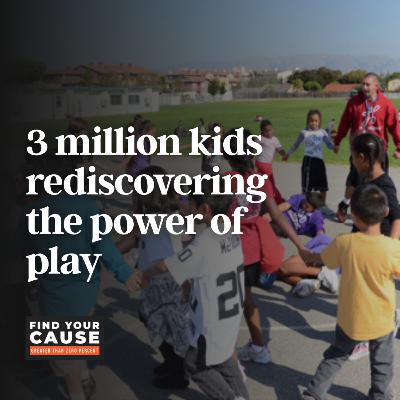
In this episode we interview Elizabeth Cushing, CEO at Playworks. Playworks’s mission is to improve the health and well-being of children by increasing opportunities for physical activity and safe, meaningful play.Playworks is the leading national nonprofit leveraging the power of play to transform children’s physical and emotional well-being. With more than 25 years of experience, the organization aims to bring out the best in every kid and hopes that one day, every child in America will get to play every day. Through direct-service coaching of youth and providing training and consultation for adults working with kids, Playworks partners with elementary schools, districts, and community-based organizations to bring games and youth development practices. With an emphasis on social, physical, and emotional skill-building, students feel included while being active and developing valuable skills needed to thrive in and out of the classroom. During the 2023-2024 school year, the nonprofit is ensuring more than 600,000 youth in over 1,300 schools and community partners experience safe and healthy play during and beyond the school day nationwide.Want to learn more, donate, or get engaged? Donate: https://donate.playworks.org/give/46209/#!/donation/checkout Website: https://www.playworks.org Facebook: https://www.facebook.com/MakeRecessCount Instagram: https://www.instagram.com/playworksrecess/ LinkedIn: https://www.linkedin.com/company/playworks YouTube: https://www.youtube.com/user/playworksorg Twitter: https://twitter.com/Playworks

Comments

Download from Google Play

Download from App Store
 United States