


 Claim Ownership
For the Love of Yoga with Nish the Fish
Subscribed: 76Played: 3,749
Subscribe

© 2026 For the Love of Yoga with Nish the Fish
Description
The world of Yoga is wide and varied. In this podcast, yogi Nish the Fish shares the deeper dimensions of Yoga, Vedanta and Tantra, asking the big questions: why do we practice? What is meditation? What is the purpose of a human life? What is Beauty? What is Death? Nishanth Selvalingam studied various South Asian philosophies with his Shaivite grandfather in an ashram in Kuala Lumpur, Malaysia and moved to Los Angeles to study philosophy, teach yoga and play guitar in a rock band. Join him and special guests as they explore Yoga, in all its splendours. For more episodes and instruction, and to support this humble offering of the heart, visit me on Patreon: patreon.com/yogawithnish
380 Episodes
Reverse

Since it was Chaitra Navarātri last week, as part of our last Friday morning Abhinava Gupta Paramārthasāra class, we explored some key śaiva ideas that appear in the opening teaching of the Devī Māhātmyam. In this talk, we first explain the mythic context in the Bhagavad Gītā, the Upanishads and of course, the Devī Māhātmyam and explain from a śaiva perspective, why all these aesthetic and poetic features of the teacher are central to our metaphysical and soteriological framework! Also, we...

This is rather foundational discussion about the role of pūjā (ceremonial worship) in spiritual life in the modern age. As you know, the Tāntrik tradition is above all, when we consider the primary sources, about rituals and ceremonies. Now, these can often be very intimidating to learn given their technical and often elaborate nature. And this is especially a problem when you love pūjā but don't have the time and/or inclination to get all the materials and worship for 5 or 6 hours at a time,...

In our What Is Our Lineage, Actually? | Tradition vs. Innovation lecture, we started an inquiry into lineage, responsibility and accountability by taking into consideration all the subtleties and nuances of our tradition, from a historical and somewhat academic perspective. I offer a few stories from various sampradāyas (traditions) to show how multifaceted all of this can be to drive home the complexity of the Ramakrishna lineage and the ideals which we, across different interpretations, sta...

Towards the end of 2024, we gave a talk called What's Our Lineage? and then in May of 2025, we presented a sequel called Our Tantrik Lineage. Both these talks are my attempt to reflect upon and understand the diverse influences that pour like so many streams into my lectures and spiritual life. These two talks are also a commentary on how complex and nuanced the lineage of Sri Ramakrishna is! But even having presented these ideas over the course of the last three years, and even having give...

A rather foundational and exciting discussion about linguistic mysticism in both its psychological and metaphysical dimensions. We first sketch out the Sanskrit language system and then we make a case for how words sculpt our reality, on a psychological level. But then, we daringly go beyond mere linguistic mysticism to a far deeper insight on the inseparability of the world and language. The world IS language! And so if Tantra is a tradition that promises to create change in the world throu...

Sanskrit words are multivalent: they mean many different things in many different contexts. And so understanding the context in which a charged word like "God" or "Tantra" is used is very important since almost all of our misunderstandings between one other might just come down to this: we assume we all mean the same thing and have the same experiences with terms that we use in common, like "God" and "Tantra." Because this is simply not the case, we take some time in this video to carefully s...

Tonight is the eclipse full moon celebrating the birthday of Sri Chaitanya, the Incarnation of Divine Love (premāvatara) and commemorating both the burning of the demoness Holikā (as per the Vaishnava story of Prahlāda, the demon boy who loved Vishnu) as well as the burning of Kāmadeva, or Cupid (as per the Shaiva and Shakta Puranic stories of Shiva burning Kāmadeva and Lalitā defeating Bandhāsura). Since many are already familiar with the celebration of Holi (pelting each other with colored ...

Besides the fact that Sri Krishna and Ma Kali share the same bīja mantra and besides the significant historical and cultural overlap between these two traditions in Bengal, there is a certain esoteric "bħāvic" connection between these two deities, one of madness and ecstasy that we see so perfectly expressed in Sri Ramakrishna. In this talk, we explore that bhāva of mad love, with some important digressions into the Tāntrik understanding of Deity and of Mantra. Happy Holika/Kama Dahanam...

We start by explaining the pañca-makāras, the transgressive offerings in the context of Kālī pūjā in the Vāmācāra, the so-called "left-hand path" of Tantra, mainly to point out the "curse" that is on alcohol & meat with reference to King Parsokhit in the Bhāgavātam, and to Pauranic stories of Brahmā & Śukra who all have cursed alcohol. We explain also how meat is cursed also before offering some modern day examples to show how that curse plays out. These remarks act as a sort of...

Śiva is often described as "vicitra", strange and wonderful! Having touched upon this idea off Śiva's weirdness a little bit in our Shiva, Paradox Personified lecture, we go in with some finer brush strokes to make a point about how all the various depictions of Śiva in Pauranic literature might be pointing to a very unique, mind-boggling kind of theology that is wholly unlike anything else you might have heard in the world of comparative religion! We gave this talk as part of our Śiva ...

Just a little riffing on the Puranic depictions of Shiva, as per or Shiva Ratri festivities this year! There's something very weird and wonderful (vicitra, in Sanskrit) about our Mahadeva, is there not? Support the show Lectures happen live every Monday at 7pm PST and again at Friday 11am PST Use this link and I will see you there: https://www.zoom.us/j/7028380815 For more videos, guided meditations and instruction and for access to our lecture library, visit me at: https://www.p...

I'm a little late on this video (I had meant to get it out before the festivities this year) but hey, maybe this is for next year and if you're particularly hardcore, for next month (since there's a śiva rātri every month the night before the new moon)! In this talk, we go over some rituals and practices for observing śiva rātri for people asking questions like, "when/what is śiva rātri?", "what should I do all night?", "what is fasting and how to do it?" etc. Here is a playlist of all ou...

Leading up to Śiva Rātri (which is coming up for us this Sunday on February 15th, 2026), I'm releasing a bunch of videos on different aspects of our tradition, as part of the celebration! Having already put out Secret Kālī Teachings in Śaiva Texts which featured a (śaktra reading) of sample from the Paramārthasāra, a profound non-dual transmission from the master, Abhinava Gupta, we now turn to something even more esoteric (guhya) and essential (sāra): a teaching from the Vijñāna-Bhairava T...

In this talk, we ask the question "which deity should I worship?" & "does it even matter?" going off last week’s reflection on how Tantra works and our conjectures about Swami Brahmananda’s Ishta (chosen deity). Naturally, we end up discussing some of the nuances and complexities around the central claim of our lineage: "all religions are true" which for Tāntrikas shopping for an Ishta, comes across as "all deities are different forms of the One Absolute Reality" pointing to t...

Recently, we've started giving some classes on the हठप्रदीपिकां haṭha-pradīpikāṁ, the central text on the post-classical tradition in the Nāth sampradāya as part of our weekly Wednesday postural yoga class on zoom. The other day, I was looking at some of the letters Swami Premeshanandaji sent to Swami Svahanandaji in the book "Go Forward" and I was struck by this elegant and beautiful idea that the former was expressing to the latter: Swami Vivekananda is subtly reinterpreting Hatha Yoga ...

Since we are in the lineage of Sri Ramakrishna and since you will be interacting with his life and teachings quite a bit in our community, it’s important at this point to say that no one interpretation of Sri Ramakrishna and of his lineage can ever be absolute or definitive. A lot of what you will hear us say about Sri Ramakrishna might be markedly different from what some other places that represent Sri Ramakrishna are saying and that’s just fine and as it should be to show the many colors ...

What does Tantra really look like in practice? Whether its "right" hand path Tantra or the so-called "left" hand path, Tantra is essentially a form of Deity Yoga, that is, an ongoing practice of cultivating a deep, personal, devotional relationship to a Deity. Importantly, the "deity" is a particular reading on the one, Absolute Reality. We call the deity an Ishta, the "Chosen Ideal." Since we are all of us unique, the way we are each of us going to understand the Absolute Reality, the...

Here is a particularly inspired and lively discussion from our Atlanta retreat in which we sketch out the Sāmkhya, Yoga & Śaiva Siddhānta traditions & thus, prepare the foundations for understanding Non-Dual Śaiva/Śākta tantra, in both theory and practice, in a much deeper way. By Ma's grace, this talk turned out to be all at once a good introduction for absolute beginners, a helpful review for intermediate practitioners/students and a subtle, direct path teaching on the higher dimens...

Some years back, we gave a talk called "Can Atheist Be Spiritual?" (alas its gone now since the YouTube ban of 2025!) Anyway, there, I presented some non-theistic traditions like Advaita Vedanta, Buddhism, Jainism and of course, Sāmkhya to show how Indian spirituality is inclusive to all spiritual dispositions. i.e: you don't have to believe in "God" to make spiritual progress! In that talk, we also pointed out how the atheistic position is important for theists too since we must first...
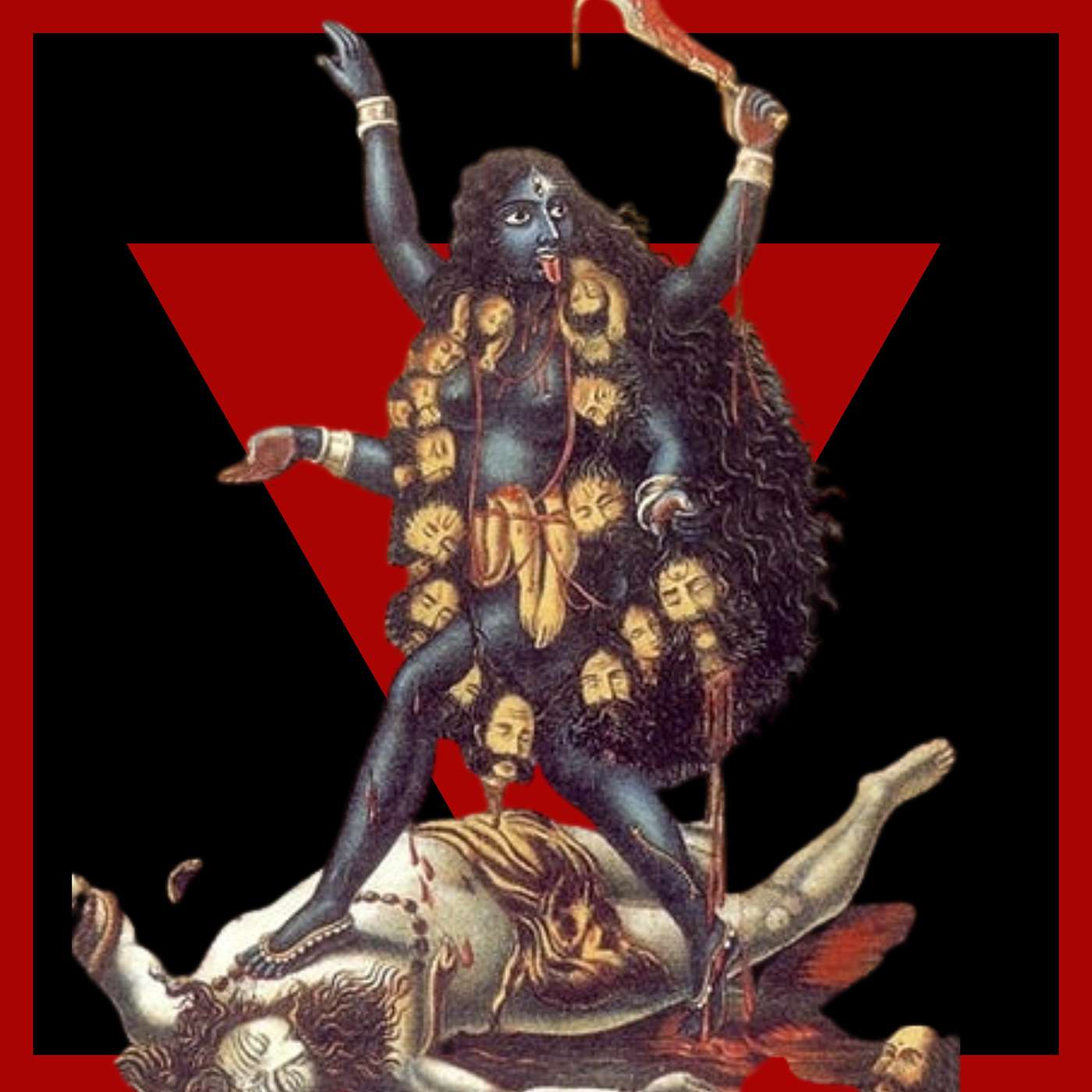
After our second day of talks at the Atlanta retreat, I was feeling particularly charged and inspired and so I insisted on hosting the Monday night zoom satsangh and this is the discussion we happened to have! In this talk, I first sketch out some foundational metaphysical principles of pūjā, Tāntrik ritual worship which is at the heart of the tradition. Then, I compare various schools of thought within the wider tradition to make a case, like Abhinava Gupta and Ramakrishna, that the broade...


Download from Google Play

Download from App Store
 United States
I found you a few months ago on YouTube. your discourses are very eye opening, and I love your bubbly, bright, positive demeanor! I was sad to find out today that your youtube got terminated:( I had to scramble to find this podcast Channel. much love! can't wait to join a zoom meeting soon!