


 Claim Ownership
Live Inspired Podcast with John O'Leary
Subscribed: 3,361Played: 231,463
Subscribe

Description
Expected to die, today he's inspiring others to truly live.
World-renowned inspirational speaker + national bestselling author John O'Leary wants to help you wake up from accidental living so you can do, be, achieve and impact more through your life. Every Monday, John shares a quick burst of inspiration to help start your week on fire. Every Thursday, John interviews an amazing guest on their story, successes, failures, lessons, and life to help you uncover tips to apply in yours.
World-renowned inspirational speaker + national bestselling author John O'Leary wants to help you wake up from accidental living so you can do, be, achieve and impact more through your life. Every Monday, John shares a quick burst of inspiration to help start your week on fire. Every Thursday, John interviews an amazing guest on their story, successes, failures, lessons, and life to help you uncover tips to apply in yours.
865 Episodes
Reverse
"What advice would you give yourself at age 20?" It's a question I've asked every single guest on the Live Inspired Podcast. And after 500 episodes, the answers always move me. As the interviewer, I always learn something from the answer. But it wasn't until the tables were turned and I was asked that question that I realized the true power of taking a moment to consider the answer in our own life. It forces us to take stock of both who we are today and revisit who we were.
Recently, Mom and I shared coffee with a man who helped shape our lives decades ago. He wasn't a celebrity. He didn't make headlines. He was a caregiver at Mercy Hospital's burn unit, and we came to know him as Nurse Roy. Let me explain.

Piera Gelardi is a creative entrepreneur passionate about helping others reclaim creativity and possibility through the power of play. As the co-founder of Refinery29 and author of The Playful Way, Piera helps individuals and organizations rediscover something many of us have lost along the way: the courage to play. Today, Piera shares how growing up in a small town in Maine shaped her sense of wonder, how building a global brand led to unexpected self-doubt and burnout, and how reclaiming play became her path back to creativity, connection, and joy. She explains practical ways to integrate playfulness into our daily lives and how small moments can shift perspectives, deepen connection, and bring more curiosity, wonder, and joy into everyday life. My friends, if you've been feeling stuck, overwhelmed, or like life has become more about checking boxes than actually living, this conversation is for you. You'll leave with a fresh perspective on how to break free from perfectionism, reconnect with your creativity, and find joy again in the small, everyday moments that make a life truly meaningful.
On any given day in Marietta, Georgia, men line up for a haircut from Travis Sanders. But what draws them in and liberates them to wait isn't simply getting their hair styled. It's connection, encouragement and a powerful reminder that hardship does not get the final word. Let me explain.
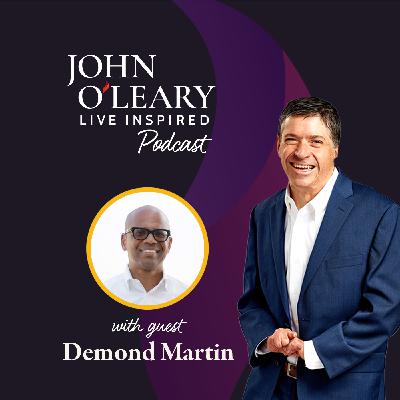
Demond Martin is an investor, philanthropist, and CEO of WellWithAll, a health and wellness company committed to closing gaps in care by reinvesting profits into underserved communities. As a leader shaped by experiences ranging from the White House to Wall Street, Demond uses his platform to champion a powerful idea: that the relationships we build ultimately shape the lives we live. Today, Demond shares how a childhood marked by instability and hardship became the foundation for a life of purpose, how mentors and "second fathers" helped him see a future beyond his circumstances, and how the concept of "friends of the good" has guided his journey from surviving to serving. He reflects on the power of vulnerability, the responsibility we have to give back, and why true friendship is one of the most overlooked forces behind success. My friends, if you've ever wondered how the people in your life are shaping your future, this conversation is for you. You'll leave reminded that no one succeeds alone, that your story is still being written, and that the right relationships can lift you higher than you ever imagined.
What would you do if you knew today was your last? At nine years old, that wasn't a hypothetical question for me. It was my reality. After being burned on 100% of my body in a gasoline explosion, I was given less than a 1% chance to survive the first night. Although I survived that night, and the following five months in the hospital, the prospect of death never faded. It felt closest, though, on the nights before surgery. Because burned skin doesn't grow back, doctors had to take skin from one part of my body and graft it onto another. In my case, the only usable donor site was my scalp. So more than a dozen times, they took skin from my scalp and transplanted it, piece by piece, across my body. Each surgery carried the very real risk that this could be the last. To alleviate my anxiety and sadness, the night before became a celebration. My parents and siblings would come, we'd eat pizza, drink milkshakes, stay up late. Sometimes they'd bring gifts. On those nights, they did everything possible to diminish the fear and elevate me. So let me ask you again: If tonight were your last, how would you spend it?
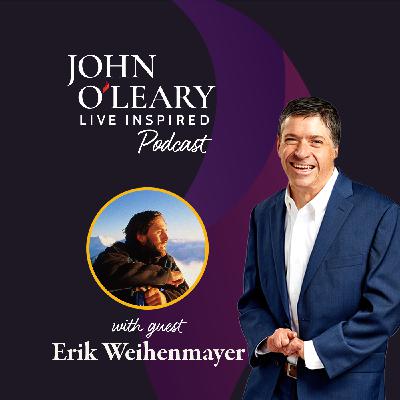
Erik Weihenmayer is an adventurer, bestselling author, and motivational speaker… but he's perhaps best known as the first blind person to summit Mount Everest. After losing his vision as a teenager, Erik refused to let blindness define his limits. Instead, he became a world-class climber, kayaker, and co-founder of No Barriers—a global movement helping people turn adversity into possibility. Today, Erik shares how losing his sight reshaped his identity, how climbing became both his passion and his teacher, and how summiting Everest was never a solo achievement but a testament to trust, teamwork, and community. He opens up about learning to navigate fear, why saying "yes" to challenge is the doorway to growth, and how every one of us (regardless of circumstance!) can live a No Barriers life. My friends, if you've ever felt limited by your circumstances, this conversation is for you. You'll leave inspired to rethink what's possible, encouraged to lean into community rather than go it alone, and reminded that your greatest obstacles might just become the foundation for your greatest purpose.
In a world overflowing with pessimism, cynicism, and negativity, what might happen if we chose something different? What might change if we instead stepped into life with hope, optimism, faith? I get to see what that looks like almost every day through the life of my daughter, Grace. She lives with a powerful posture toward every aspect of life: Yes. Let me explain.
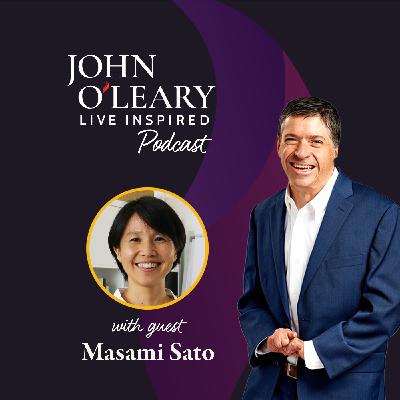
Masami Sato is the Founder and CEO of B1G1 (Buy1Give1), a global giving movement that has helped thousands of businesses turn everyday transactions into acts of generosity. A two-time TEDx speaker and best-selling author, Masami has helped inspire more than 394 million acts of kindness worldwide. Today, Masami shares how a lonely childhood led her to travel the world with little money and even fewer words, how witnessing both poverty and generosity reshaped her understanding of happiness, and how holding her newborn daughter sparked the realization that none of us are too small to make a difference. She explains the simple but powerful idea behind B1G1: what if everyday actions, even something as small as buying a cup of coffee, could change someone else's life? My friends, you'll leave this conversation inspired by the power of small acts, reminded that generosity isn't reserved for the wealthy or powerful, and encouraged to start making a difference today rather than waiting for someday.
Ten years ago this week, ON FIRE was released. When the book first went out into the world, I wasn't expecting bestseller lists, translations into a dozen languages, or a feature film. My hope was far simpler: to honor the people who saved my life. In sharing their stories, my hope was simple: to remind readers that they, too, could be part of someone else's miracle. Because what made these heroes remarkable wasn't supernatural power. It was their decision to use their lives to elevate someone else's. A superpower available to all of us. My hope was that readers would recognize the heroes in their own story—and then choose to become one in someone else's. And yet, something remarkable happened. Let me explain.

Chris Seilkop is a four-time Paralympian and longtime member of the U.S. men's sitting volleyball team. After losing his leg in a lawnmower accident at just seven years old, Chris refused to let tragedy define him. Instead, fueled by resilience, family support, and a love of sports, he built a life defined by perseverance. Along the way, he competed on the world stage, served others through his work with the YMCA and mentored individuals navigating life after amputation. Today, Chris shares how the childhood accident reshaped his life, the community that helped him move forward, and the mindset that carried him from a hospital bed to four Paralympic Games. He reflects on heartbreaking losses, meaningful victories, and the perspective that helped him keep going. My friends, if you've ever faced a setback that made you wonder what comes next, this conversation is for you. You'll leave reminded that life's hardest moments do not get the final word.
Years ago, I spoke with 40 business owners. The goal of the event was to bring together some of the highest achievers, connect them with one another, and expand their businesses and their lives. Wondering what success even meant to them, I kicked off the session by asking what they would do professionally if they could achieve anything and knew they could not fail. After a moment of reflection, a brave gentleman stood and proudly announced, "I'd make it big. I mean, like really, really big!" He wanted to increase sales, expand personal accomplishments and significantly achieve more success than any of his friends or former classmates. This conversation was eerily similar to one I was part of almost a decade earlier with another gentleman. He, too, had strived to "make it big. Really, really big." The difference was that the conversation with him wasn't taking place in a boardroom with a lifetime of possibility in front of him. No, this conversation took place in a hospital room with a lifetime of regrets staring back at him. Let me explain.
Today, we're joined by Lauren Abraham, a leader helping guide the national Student to Student Program of the Newark Institute, as well as two student participants of the program: Yehudah Greenberg and Ayden Nelson. Through this program, Yehudah and Ayden are boldly stepping into conversations that many adults shy away from and sharing stories, traditions, and lived experiences in an effort to replace stereotypes with understanding. Together, they are proving that real change begins face to face. In our time together, Lauren, Yehudah, and Ayden share how courage grows when you choose visibility over fear and how education becomes transformational when it's personal. Yehudah speaks about living out his Orthodox Jewish faith openly, even after experiencing antisemitism, and why he refuses to let fear define him. Ayden reflects on growing up in a split-faith household and how her unique perspective allows her to connect with classmates across differences. My friends, if you've been wondering whether empathy still stands a chance in today's world, this conversation is for you. You'll leave reminded that change rarely comes from shouting louder; it comes from listening better. And you'll be inspired by young leaders choosing courage over comfort…maybe even prompting you to start a meaningful conversation of your own.
Nearing the end of a hectic week of speaking, I could feel it coming. What began as a raspy voice at the start of one talk turned into a whisper by the end. As a sinus infection intensified, my throat swelled, swallowing hurt and my body ached, but the hardest part wasn't the pain. It was the silence brought on by laryngitis. For a man who makes his living with words, losing my voice felt like losing a part of myself. After a week of quiet, though, as my voice slowly returned, I realized something unexpected: Losing my voice gave me gifts I didn't know I needed. Let me explain.
Mary DeMuth is a bestselling author, international speaker, host of the Pray Every Day podcast, and has devoted her life to helping people heal from difficult stories. And yet, before guiding others toward hope, Mary was a little girl growing up in chaos, navigating abuse, neglect, addiction, and the loss of her father. Today, Mary shares how to move from victim to survivor to healer, why lament is not weakness but faith refusing to let go, and what forgiveness really looks like in real life. She speaks honestly about trauma resurfacing years later, the difference between forgiveness and reconciliation, and how striving to prove your worth can quietly shape your identity. Her words are gentle, grounded, and deeply practical. My friends, if you are tired of carrying pain in silence or rushing yourself past grief, this conversation is for you. You will leave with courage, practical wisdom and the reminder that the best is yet to come.
Early in life, I learned an important truth that would guide the rest of my life: growth rarely happens in comfort. It happens in supply closets when scarred knees are stretched, at dinner tables when you're forced to relearn how to pick up a fork, and on screen porches when you're reminded that the can of gasoline isn't chasing you anymore. Growth doesn't begin when the path is clear and the circumstances are perfect. It begins when we step forward anyway into situations where we feel uncertain, unqualified, even afraid. And when we live like that, it not only changes our lives, but also the lives of those we encounter. Jonathan Babcock lives this truth. Let me explain.
Candace Lightner is the founder of MADD: Mothers Against Drunk Driving and We Save Lives, nationally and internationally recognized organizations reshaping America's response to drunk driving. After her 13-year-old daughter, Cari, was killed by a repeat drunk driver in 1980, Candace transformed unimaginable grief into a grassroots movement that has saved more than 600,000 lives and led to the passage of over 700 state and federal laws, including raising the drinking age to 21. Today, Candace shares how she turned heartbreak into bold action, why anger can be a catalyst instead of a curse, and what it takes to change laws and culture. She explains why words matter—it's not an "accident," it's a crash or a crime—and how ordinary people, especially grieving mothers, became powerful advocates nationwide. She also reveals how her work continues today through campaigns addressing drunk, drugged, and distracted driving, empowering passengers to speak up and pushing for accountability. My friends, if you've ever looked at injustice and thought, "Someone should do something," this conversation is for you. You'll leave reminded that one voice (your voice!) can spark change, and that grief and anger can be turned into impact.
"John, everything is going to work out fine." With these words my sweet dad was trying to encourage me and cheer me up. It wasn't working, though. Let me explain.
Rudy Ruettiger is the legendary underdog behind the iconic film RUDY, the walk-on who made one unforgettable play for the University of Notre Dame and became the first player in school history to be carried off the field. One of 14 children raised in a modest home, Rudy overcame dyslexia, rejection, and doubt to become an award-winning speaker, author, producer, and founder of the Rudy Foundation. Today, Rudy shares how discipline and scarcity forged deep gratitude, how the loss of a close friend pushed him to pursue his dream without a backup plan, and how showing up day after day changed everything. He reflects on the ordinary people who encouraged him, the rejection letters that strengthened his resolve, and the persistence it took to turn a long shot into a legacy. At its core, this is a story of hope, perseverance, and courage. My friends, if you have ever felt underestimated, overlooked, or unqualified, this episode is for you. If you are standing at the edge of a dream and wondering whether to take the next step, you will leave reminded that perseverance beats pedigree, character outweighs credentials, and your story has the power to inspire someone else.
Recently I shared a story online about a flight delayed because of the arrogance of one person. Thousands of people liked the post. Hundreds more commented. And the vast majority agreed that the man in first class was profoundly arrogant. Here's what I learned after that post went live: It turns out, I was the arrogant one. Let me explain.


Download from Google Play

Download from App Store
 United States
滚你的大蛋去呀!给脸不要脸呀!
Dude....everyone's gonna say photo album and jesus..:)
Hope matters. yes, yes it does!
What a fascinating person Evy is, great episode and very inspiring well done.
Read his book, On Fire. It is excellent!
😍
Very profound inspirational episode. Personally, I too lost a dear adopted family member to suicide many years back. She was like a sister to us. I still feel her loss. It takes a lot of faith and spiritual wisdom to understand why these things happen. Society needs to deal with these issues in a compassionate manner. Thanks for sharing this episode. God bless!
Great words! Hard to listen to, but a simple yet amazing science proven tool available for everyone. Thanks John and Mel!
Great podcast!!!
when you know your why you can endure anything