


 Claim Ownership
Conversing with Mark Labberton
Subscribed: 178Played: 5,516
Subscribe

Description
Conversing with Mark Labberton invites listeners into transformative encounters with leaders and creators shaping our world at the intersection of Christian faith, culture, and public life.
257 Episodes
Reverse
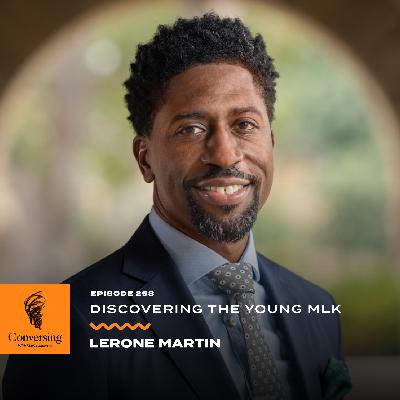
At fifteen, Martin Luther King Jr. didn't want to be a preacher—he wanted to be a lawyer, a sharp dresser, and nothing like his father. Stanford scholar Lerone A. Martin joins Mark Labberton to discuss Young King—a revelatory new account of Martin Luther King Jr.'s childhood, adolescence, and calling to ministry. "He's extraordinary and ordinary and everything in between." In this episode, Martin reflects on how MLK's early formation forged the conviction and courage of the man the world would come to know. Together they discuss King's childhood encounters with racism, the transformative summer in Connecticut where King first preached, his courtship of Coretta Scott, his first sermon at Dexter Avenue, the theology of Personalism, and Martin's own formation in Black Baptist and Pentecostal traditions. Episode Highlights "His mother tells him a message that really sticks with him his entire life and is really core to his ministry. And that is that you are somebody and that you're in God's eyes. You are just as good as anybody else." "I kept my mind at the front of that streetcar, and I said to myself, one day, I'm going to put my body where my mind is." "She says within the first 20 minutes he starts to become handsome because they start talking about dismantling Jim Crow." "He's extraordinary and ordinary and everything in between." "God has chosen to work with us and to invite us to be coworkers with God, to bring about God's will in the world." About Lerone A. Martin Lerone A. Martin is the MLK Jr. Centennial Professor in Religious Studies at Stanford and director of the King Research and Education Institute. His books include Young King, The Gospel of J. Edgar Hoover, and Preaching on Wax. He holds a BA from Anderson University, MDiv from Princeton Seminary, and PhD from Emory. His commentary has appeared on NBC's Today Show, PBS, CNN, and NPR. Helpful Links and Resources Young King by Lerone A. Martin https://www.amazon.com/Young-King-Making-Martin-Luther/dp/0063340941 The Gospel of J. Edgar Hoover https://press.princeton.edu/books/hardcover/9780691218939/the-gospel-of-j-edgar-hoover Martin Luther King, Jr. Research and Education Institute https://kinginstitute.stanford.edu Lerone A. Martin on X https://x.com/DirectorMLK The Luminous Darkness by Howard Thurman https://www.amazon.com/Luminous-Darkness-Anatomy-Segregation/dp/0913408468 Show Notes Martin's upbringing between Black Baptist and Pentecostal traditions Parents debating religion and politics during the Moral Majority era Anderson University, Princeton Seminary, Emory PhD Martin's mother told him he was "a child of God" and "beautiful"—a refrain shaped by her awareness of sending her darkest-skinned child into a world defined by colorism and racism "He's extraordinary and ordinary and everything in between." King and his brother dismembering his sister's Barbie dolls Incessant curiosity—trying big words on the Auburn Avenue librarian Racism at age six: white friends' parents ending the friendship "You are somebody and in God's eyes you are just as good as anybody else" King's mother explained racism to a six-year-old as something manmade, not what God intends—a distinction that became core to his ministry for the rest of his life "One day, I'm going to put my body where my mind is." Jitterbug dancer, sharp dresser, speech contest competitor King Sr. as fighter and provider—but King Jr. was sensitive, nonconfrontational, and determined to find his own path outside his father's shadow Resisting his father's model of ministry—wanting to be a lawyer Appearing to acquiesce to Dad, then doing what he wanted Connecticut tobacco fields at 15—first time outside the segregated South King wrote letters home marveling that he sat anywhere he wanted in restaurants, went to a white church, and didn't have to sit in the balcony at the movies "His sister says he left a boy and came back a man." Professor George Kelsey's Bible course at Morehouse—King's only A Howard Thurman's The Luminous Darkness and the enormous psychological energy required just to maintain a sense of "somebodiness" under Jim Crow's built environment of dehumanization "Within the first 20 minutes he starts to become handsome because they start talking about dismantling Jim Crow." Coretta wrestled with giving up her music career to become a minister's wife, ultimately deciding that partnership with King was itself an act of service toward justice First sermon at Dexter Avenue Baptist Church: "Love Your Enemies" Theology of Personalism—humanity as coworkers with God #YoungKing #MLK #LeroneMartin #KingInstitute #CivilRights #BlackHistory #FaithAndJustice #ConversingPodcast Production Credits Conversing is produced and distributed in partnership with Comment Magazine and Fuller Seminary.
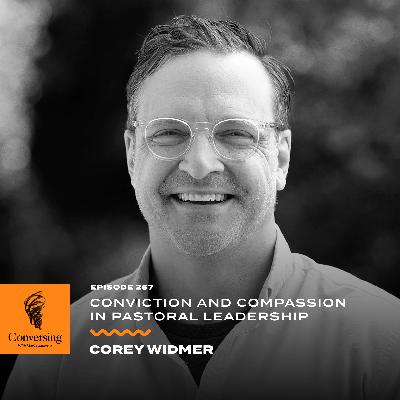
What does it cost to pastor faithfully in a city shaped by both beauty and deep injustice? Corey Widmer has spent twenty years navigating race, politics, and the gospel in Richmond, Virginia. "We're living in an extraordinary moral and spiritual crisis that we will either look back and say the American church was an accomplice, or the American church was a prophet." In this episode with Mark Labberton, Widmer reflects on bridging divided communities and the spiritual practices that can sustain pastors as they serve their congregations and communities. Together they discuss pressures facing pastors in a polarized era, the prophet-priest-king calling, Richmond's racial history, pastoral burnout, John Stott's legacy, and the contemplative life. Episode Highlights "We're living in an extraordinary moral and spiritual crisis that we will either look back and say the American church was an accomplice, or the American church was a prophet." "No political party could possibly align with the ethic of the radical upside down kingdom of Jesus." "Bridges are stretched between two points and bear tremendous weight." "At the heart of the universe is not power. At the heart of the universe is communion, is love." "You know when you're really not a prophet is when after you say the hard word, you leave the room and say, I hope they still like me." About Corey Widmer Corey Widmer is senior pastor of Third Church, a Presbyterian congregation in Richmond, Virginia. Corey has served as a pastor in Richmond for over twenty years, both at Third Church and at East End Fellowship, a multi-racial neighbourhood congregation. Corey has an MDiv from Princeton Theological Seminary and a PhD in theology and missiology from the Free University of Amsterdam. He is married to Sarah, a public health nurse, and they have four daughters. Helpful Links and Resources Corey Widmer on Substack: https://coreywidmer.substack.com Third Church, Richmond: https://www.thirdrva.org Corey Widmer on X: https://x.com/coreywidmer For Richmond Immigration Statement (full text): https://www.forrichmond.org/recent-news-blog/immigration Richmond Faith Leaders on Immigration (Virginia Public Media): VPM News James Davison Hunter, Democracy and Solidarity (Yale, 2024): https://yalebooks.yale.edu/book/9780300284898/democracy-and-solidarity/ David Whyte, Crossing the Unknown Sea: https://davidwhyte.com/store/book/crossing-the-unknown-sea/ Lausanne Covenant: https://lausanne.org/about/the-lausanne-covenant John Perkins, Let Justice Roll Down: https://ccda.org/product/let-justice-roll-down/ Barna, State of Pastors: https://www.barna.com/trends/pastoral-flourishing/ Show Notes Introducing Corey Widmer—lead pastor, Third Church, Richmond Describing the moment: fraught, volatile "Every pastor in every time has a similar calling—to shepherd the people of God under the supremacy of Jesus's lordship" Christian message used in ways antithetical to Jesus "Where am I?"—the pastor's constant calibration John Stott's bridge-building model Richmond: Patrick Henry, slave markets, Confederate capital John Perkins' call to relocation and reconciliation Thirteen years co-pastoring multiracial church plant "Bridges are stretched between two points and bear tremendous weight" Transition to lead pastor of suburban congregation Emotional containment—absorbing conflict George Floyd, Confederate monuments, Richmond reckoning Stott and Lausanne Covenant: justice at center of mission "No political party could possibly align with the radical upside down kingdom of Jesus" Lent and the cruciform way vs. pursuit of power Hunter's Democracy and Solidarity: erosion of common moral center "The American church was an accomplice, or a prophet" Prophet, priest, king—framework for preaching Pastoral letters, teaching classes, Deuteronomy on immigration Richmond clergy coalition on immigrant dignity Pastoral burnout, isolation, friendship crisis David Whyte: "The antidote to exhaustion is wholeheartedness" Centering prayer and contemplative life "You're not a prophet when you leave the room and say, I hope they still like me" #PastoralMinistry #ChurchLeadership #RacialReconciliation #ChristianNationalism #PastorBurnout #CruciformLife #RichmondVA #JohnStott #LausanneCovenant Production Credits Conversing is produced and distributed in partnership with Comment magazine and Fuller Seminary.
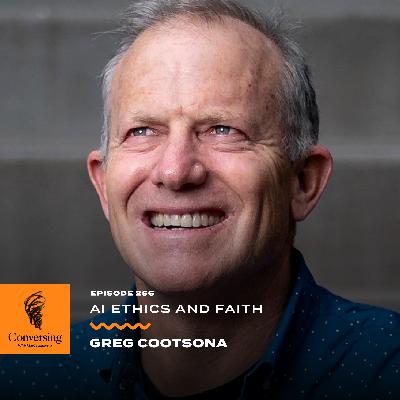
We might be living through the most consequential technological moment in human history. In this episode, Greg Cootsona—theologian, pastor, and executive director of AI and Faith—joins Mark Labberton reflect on a lifetime's convergence of work in faith, science, and ethics now fully engaged at the frontier of artificial intelligence. "AI is not simply a technical project. It is an expression of human hopes and fears, our longings for power, our craving for convenience, and our hunger for transcendence and meaning. In that sense, every AI model carries an implicit anthropology and an embedded moral vision." Together they discuss why religious wisdom belongs in the room where AI is shaped, the ethical stakes of human dignity and representation in AI systems, and the strategic power of interfaith collaboration with leading tech companies. Together they also explore how individual users can exercise genuine agency over AI, the risks of AI-mediated relationships, and what it would mean to make AI truly for us—in the deepest theological sense of that phrase. Episode Highlights "You among mortals are chosen to solve every problem effectively and efficiently."—on Silicon Valley's unspoken gospel "The gospel is not fragile and it grows best in situations that are not ideal and conditions that are not ideal." "AI is not simply a technical project. It is an expression of human hopes and fears, our longings for power, our craving for convenience, and our hunger for transcendence and meaning. In that sense, every AI model carries an implicit anthropology and an embedded moral vision. Whether or not its designers name it." "A third of teenagers say they prefer to have a relationship with a chatbot." "I think hope is taking steps today for a vision of tomorrow that you want to see occur. And that is what makes positive change in us as human beings and positive change in the world around us." About Greg Cootsona Greg Cootsona (PhD, Graduate Theological Union, Berkeley) is the executive director of AI and Faith, a global interfaith organization bringing religious wisdom to the ethical challenges of artificial intelligence. He is a lecturer in comparative religion and humanities at California State University, Chico, and an ordained Presbyterian Church (USA) minister. Cootsona co-founded Science for the Church, directed multiple Templeton Foundation–funded projects connecting science and religious communities, and is a recognized specialist in C.S. Lewis, theology, and science. He has authored nine books, including Science and Religions in America: A New Look (Routledge, 2023) and Mere Science and Christian Faith (InterVarsity Press, 2018). He has appeared on The Today Show, CNN, NPR, BBC, and in the New York Times and Wall Street Journal. Helpful Links and Resources AI and Faith https://aiandfaith.org Greg Cootsona's website https://www.gregcootsona.com Forthcoming book—An AI Made for Us https://www.gregcootsona.com/books/ AI and Faith Podcast https://podcasts.apple.com/us/podcast/ai-and-faith/id1726277555 Science for the Church https://scienceforthechurch.org Mere Science and Christian Faith https://www.ivpress.com/mere-science-and-christian-faith Science and Religions in America: A New Look https://www.routledge.com/Science-and-Religions-in-America-A-New-Look/Cootsona/p/book/9781032102122 AI and Faith on LinkedIn https://www.linkedin.com/company/aiandfaith AI and Faith on X/Twitter https://twitter.com/AIandFaith Show Notes Greg Cootsona's background: grew up in Menlo Park, California—Silicon Valley before it had that name His engineer father modeled a problem-solving worldview; transcendence not required "You among mortals are chosen to solve every problem effectively and efficiently."—the unspoken gospel of Silicon Valley Grew up in a non-religious, even "anti-religious" household Became a Christian his first year at UC Berkeley—a conversion he describes with a laugh as the obvious outlier C.S. Lewis's writings on meaning and love: too reasonable, too wise to dismiss Earl Palmer at First Presbyterian Berkeley: preaching that gave confidence amid secular challenge "The gospel is not fragile and it grows best in situations that are not ideal." Princeton Seminary for biblical studies; study years in Tübingen and Heidelberg PhD dissertation at GTU: Karl Barth (theology from above) in dialogue with Alfred North Whitehead (science from below) Advisors Robert John Russell (PhD in quantum physics) and Ted Peters at the Graduate Theological Union Pastoral ministry at Fifth Avenue Presbyterian, New York City, then Bidwell Presbyterian, Chico Began working with Templeton Foundation through early exposure to science-faith dialogue during the Human Genome Initiative years Two $2 million Templeton projects: Scientists in Congregations and Science and Theology for Emerging Adult Ministries (STEAM) Bidwell Presbyterian received what may have been the first Templeton Foundation grant ever given directly to a local church AI and Faith founded by Thomas Osborne and David Brenner in Seattle—building near Amazon and Microsoft, they saw the need early Cootsona became the organization's first executive director on October 1, 2025 The network: 220 experts in 20 countries, partnering with 34 organizations "AI is not simply a technical project. It is an expression of human hopes and fears, our longings for power, our craving for convenience, and our hunger for transcendence and meaning." Interfaith strategy: shared ethical ground across traditions is broader than divisions—and tech companies respond better to a multi-religious voice Currently invited to provide Anthropic feedback on the Claude Constitution—because of AI and Faith's interfaith structure Human dignity at stake: between 2 and 2.5 billion people not on the internet are absent from AI training data Only 0.06 percent of AI models are trained on Arabic-language sources—600 million speakers AI data centres consume potable water and enormous energy to cool GPU processors Senior tech leaders at a major company admitted to Labberton: "None of us has any training in ethics"—a real and witnessed crisis "A third of teenagers say they prefer to have a relationship with a chatbot." Three publics: AI industry experts, religious congregations, and the broader public—AI and Faith works across all three Forthcoming book: An AI Made for Us—riffing on Jesus's Sabbath words: the Sabbath was made for humanity, not humanity for the Sabbath Users have more agency than they think: we can set limits, log off, choose not to be defined by our AI engagement Harvard Human Flourishing Project: in-person worship is the highest correlate with religious flourishing—embodied community cannot be replaced Community—not the individual—is the right unit of moral accountability for navigating AI "I think hope is taking steps today for a vision of tomorrow that you want to see occur." AI's genuine promise: accelerating medicine for rare diseases; recalibrating cosmological understanding; reducing human suffering at scale Five to one: more people fear AI than welcome it—AI and Faith works to change that ratio with grounded, religious wisdom #AIandFaith #ArtificialIntelligence #FaithAndTechnology #AIEthics #HumanFlourishing #ScienceAndFaith #ChristianFaith #TechAndReligion #AIandHumanity #GregCootsona Production Credits Conversing is produced and distributed in partnership with Comment magazine and Fuller Seminary.
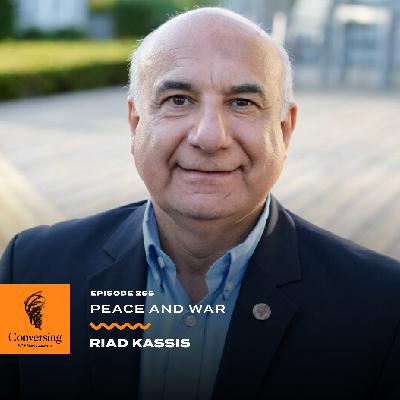
Riad Kassis joins Mark Labberton from Beirut as airstrikes continue, 700,000 people have been displaced across Lebanon, and children's toys are visible in the rubble. He leads Langham Partnership and has spent decades serving the church across one of the world's most contested regions. He names the spiritual danger of sanctifying power with religious narrative while insisting peace cannot be forced by violence. "Peace does not come by power. It comes by genuine love and concern. It comes when you invest in the education of new generations." In this episode, Kassis reflects on war, displacement, pastoral witness, and hope in God's sovereignty from the middle of Lebanon's crisis. Together they discuss the civilian toll of the war, how religious fundamentalism operates across traditions, the Psalms and Habakkuk as tools for lament, and what American Christians can actually do. Together they ask what it means for the church to hold protest and hope together when cycles of war feel endless and religiously justified. Episode Highlights "It is not an operation. It is a war on Lebanon." "When power—whether political, military, financial, or technological—is sanctified by religious narratives that justify everything, that is what really bothers me." "No one cures and destroys with more passion than someone who believes that God is on their side." "When I think that these 85 children were killed mainly by American ammunition and weapons, I cannot comprehend this—even as a Christian and as a theologian." "Peace does not come by power. It comes by genuine love and concern. It comes when you invest in the education of new generations." About Riad Kassis Riad Kassis is a Langham Scholar from Lebanon and is deeply committed to global theological education. He has served as International Director of the International Council for Evangelical Theological Education (ICETE), Regional Director for Overseas Council, as well as visiting professor of Old Testament at The Arab Baptist Theological Seminary and Near East School of Theology in Beirut, and the Dean of the Program for Theological Education by Extension in Syria and Lebanon. Riad obtained his Bachelor of Arts in Economics in Damascus, Syria. He went on to obtain his Master of Divinity from Alliance Biblical Seminary, Manila, Philippines and Master of Theology from Regent College, Canada. Riad received his Doctor of Philosophy in Old Testament as a Langham scholar from The University of Nottingham, UK and his Master of Nonprofit Management from Regis University in Denver, Colorado. Helpful Links and Resources Riad Kassis, Frustrated with God: A Syrian Theologian's Reflections on Habakkuk https://www.amazon.com/Frustrated-God-Theologians-Reflections-Habakkuk/dp/1533513171 Langham Partnership https://us.langham.org/ Show Notes Kassis speaking live from Beirut as war unfolds around him Home in Bika Valley, Mount Hermon visible each morning—Syria, Lebanon, Israel, Palestine converging "It is not an operation. It is a war on Lebanon." 150 airstrikes in 24 hours; 550+ killed, 1,500+ injured, including 85 children 700,000 displaced; 200,000 children; many still on the streets of Beirut Schoolbooks and children's toys found in the rubble Christian village of Alma ordered to evacuate; mayor on television in tears A Catholic priest who stayed to help an injured family was killed in a second strike His wife Izdihar's center for Syrian refugee women and girls shut down; staff now distributing meals, mattresses, medical care in shelters Hoped the war could be avoided—feared it could not "When power—political, military, technological—is sanctified by religious narratives that justify everything, that is what really bothers me." Iranian author Shiha Dejani, herself a survivor of the Iranian regime: if your vision of liberation comes through destroying innocent lives, it is not freedom you are after Grew up admiring America as a beacon of democracy and discovery; that view has changed "When I think these 85 children were killed mainly by American ammunition, I cannot comprehend this—even as a Christian and as a theologian." "No one cures and destroys with more passion than someone who believes that God is on their side." Walter Wink: the dominant religion on the planet is not Christianity, Islam, or Judaism—it is the pervasive faith in violence Preaching Habakkuk two days before this conversation; the cry "how long, O Lord?" as pastoral anchor Psalms of disorientation as communal tools for protest, lament, and stubborn hope Lent and Ramadan overlapping: identifying suffering with Christ's suffering; "after Friday, we will experience an amazing Sunday" 2,000 years of Arab Christian presence in this region—not just survival, but witness and contribution "Peace does not come by power. It comes by genuine love and concern. It comes when you invest in the education of new generations." Asks for prayer for the war's end, for political wisdom, for his canceled flight—he is trying to reach his first grandson's dedication Labberton closes in prayer: for restraint of ego-driven leaders, for human dignity, for a peace that is both merciful and just #ConversingWithMarkLabberton #RiadKassis #Lebanon #MiddleEast #Peacebuilding #ChristianWitness #Theology #Habakkuk #LanghamPartnership #WarAndFaith Production Credits Conversing is produced and distributed in partnership with Comment Magazine and Fuller Seminary.

David Ford joins Mark Labberton to explore why the Gospel of John still feels inexhaustible—cosmic, intimate, and urgently relevant in a fractured age. Ford has spent over two decades inside this text and finds it as generative as ever. "Any of us can begin this quiet revolution in our own corner of things." Together they reflect on John as a gospel of encounter, trust, and lifelong rereading. Together they discuss the prologue as a frame for all reality, John 17 as midrash on the Lord's Prayer, the theology of greatness, and Christian unity as gift before task. Together they ask how rereading John forms resilient communities of truth, love, and daring friendship. Episode Highlights "You can reread and reread and reread, and the levels go on deepening and deepening that it never comes to an end." "The meeting with God in John is through trusting Jesus." "Every time we read this as we are now, we are in the presence of the one we are talking about." "Unity, this unity is a gift before it's a task." "We are a centered set, not a bounded set. It's not the boundaries that define us, it's the center." About David Ford David F. Ford OBE is Regius Professor of Divinity Emeritus at Cambridge and a Fellow of Selwyn College. He founded the Cambridge Inter-Faith Programme, co-founded scriptural reasoning, and co-chairs the Rose Castle Foundation. His books include The Gospel of John: A Theological Commentary, Theology: A Very Short Introduction, and Meeting God in John. Learn more and follow at https://www.divinity.cam.ac.uk/directory/david-ford (Sources: Cambridge Faculty of Divinity; Center of Theological Inquiry, Princeton) Helpful Links and Resources Meeting God in John: https://spckpublishing.co.uk/meeting-god-in-john The Gospel of John: A Theological Commentary: https://bakeracademic.com/products/9781540964083_the-gospel-of-john Theology: A Very Short Introduction: https://global.oup.com/academic/product/theology-9780199679973 The Five Quintets, Micheal O'Siadhail: https://www.baylorpress.com/9781481307093/the-five-quintets/ Rose Castle Foundation: https://www.rosecastlefoundation.org/home Show Notes Shared mentor Steven Sykes; Ford later succeeded him at Cambridge Reading the prologue aloud (John 1:1–18, NRSV) Light, life, word—simple Greek, inexhaustible depth "The levels go on deepening and deepening that it never comes to an end." Super abundance A theological ecosystem—for beginners and lifelong readers Meeting God, not merely studying John Thomas's "My Lord and my God"—the climactic theological statement Believing as trusting "We are in the presence of the one we are talking about." Exquisite and approachable The word as intercultural headline Five moods of faith: indicative, imperative, interrogative, optative, subjunctive Jesus's first words: "What are you looking for?" Read John every 90 days, like the Psalms 50-year friendship with poet Micheal O'Siadhail; The Five Quintets as improvisation on the Prologue Reading John 17 with Richard Hays and Richard Bauckham—21 sessions, Cambridge, 2009 John 17 as midrash on the Lord's Prayer "Unity is a gift before it's a task." The word "world" appears 16 times in John 17 Rose Castle Foundation: scriptural reasoning across divides Paul Cefalu's Johannine Renaissance—tumultuous eras turn to John Theology of greatness: foot washing versus the emperor's claim Signs of abundant life—Cana, feeding of the five thousand Daring friendships: crossing barriers as Jesus did "Any of us can begin this quiet revolution in our own corner of things." #GospelOfJohn #DavidFord #MeetingGodInJohn #ChristianUnity #ScripturalReasoning #John17 #Lent #Theology Production Credits Conversing is produced and distributed in partnership with Comment Magazine and Fuller Seminary.
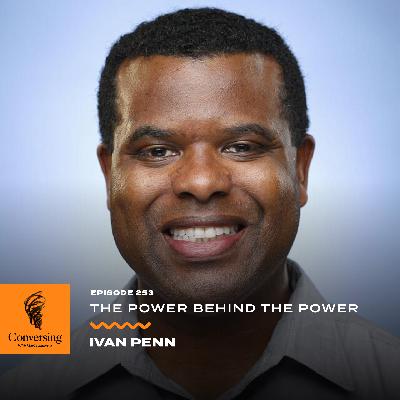
Electricity underwrites nearly every aspect of modern life, yet decisions about power, cost, and control are increasingly opaque. New York Times energy correspondent Ivan Penn joins Mark Labberton to unpack how data centres, AI, utilities, and politics are reshaping the grid—and who ultimately bears the cost. "The real focus is who pays and who gets paid." In this episode with Mark Labberton, Penn reflects on his journey into journalism, his unexpected path into energy reporting, and how covering power revealed the economic forces shaping daily life. Together they discuss electricity as a moral and economic issue, the rise of AI-driven data centres, nuclear power's return, utilities versus tech giants, consumer vulnerability, racial inequity in journalism, and faith as a commitment to truth. –––––––––––––––– Episode Highlights "The real focus is who pays and who gets paid." "Electricity is the most important resource we have." "The utilities once the Goliath have suddenly become a David." "We wouldn't have need for any of this if you didn't build a data centre." "To be able to stop abuse with a pen is a powerful thing." –––––––––––––––– About Ivan Penn Ivan Penn is an energy correspondent for the New York Times, where he reports on electricity, utilities, nuclear power, data centres, and the economic forces shaping the energy transition. He has covered energy and utilities for more than fifteen years and has previously worked at the Los Angeles Times, Tampa Bay Times, Baltimore Sun, and Miami Herald. Penn's reporting has examined nuclear plant failures, grid reliability, climate pressures, and the growing influence of technology companies in energy markets. A longtime journalist shaped by investigative reporting, he is also attentive to issues of equity, public accountability, and consumer protection. Penn is a graduate of the University of Maryland and was the first black editor-in-chief of its student newspaper. He also holds a master's in global leadership from Fuller Theological Seminary and was a John S. Knight Fellow at Stanford University. His work reflects a commitment to accuracy, fairness, and public service journalism. Learn more and follow at nytimes.com/by/ivan-penn –––––––––––––––– Helpful Links and Resources Ivan Penn – New York Times profile https://www.nytimes.com/by/ivan-penn The New York Times – Energy and Environment coverage https://www.nytimes.com/section/climate Three Mile Island nuclear plant background https://www.nrc.gov/reading-rm/doc-collections/fact-sheets/3mile-isle National Association of Regulatory Utility Commissioners https://www.naruc.org PJM Interconnection electricity market https://www.pjm.com –––––––––––––––– Show Notes Childhood shaped by public-school educators and nightly news rituals Early journalism roots as school weatherman and student editor Becoming first Black editor-in-chief at University of Maryland paper "It was a powerful thing that I was able to experience." Early reporting career across major regional newspapers Assigned to energy and utilities beat as apparent punishment Broken Crystal River nuclear plant sparks investigative focus Anonymous source meeting at a Chili's launches major reporting trail NRC documents unlock public-records investigation Rare use of anonymous sources, reliance on verifiable documents Sixteen years covering nuclear, utilities, and electricity markets Nuclear renaissance promised dozens of reactors, delivered only two Return of nuclear amid AI-driven electricity demand Rise of small modular and advanced reactor proposals Debate over safety, fuel design, and reactor scale Data centers driving exponential growth in electricity demand "Anything connected to the grid plays a role." Grid costs shared across homeowners, businesses, and industry Tech companies argue for shared infrastructure responsibility Consumer advocates argue data centers cause new costs Utility regulation spanning local, state, and federal levels "The real focus is who pays and who gets paid." Tech giants eclipse utilities as dominant financial players Consumer advocates outmatched by utility and tech resources Journalism as faith-shaped commitment to truth and fairness –––––––––––––––– #EnergyPolicy #ElectricityGrid #Journalism #FaithAndPublicLife #AIInfrastructure #Utilities #ClimateEconomy –––––––––––––––– Production Credits Conversing is produced and distributed in partnership with Comment magazine and Fuller Seminary.
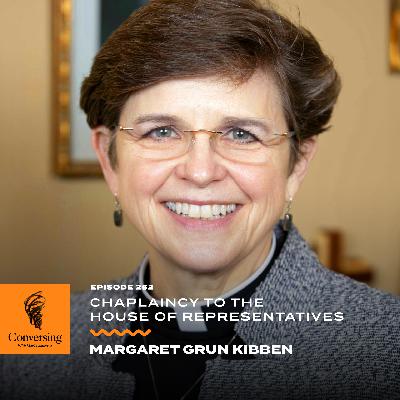
When public life feels loud and divided, what does quiet faithfulness look like? In the US House of Representatives, every legislative day begins with prayer. This responsibility rests with the chaplain of the house and shapes the daily spiritual rhythms of the institution. "Chaplains aren't combatants. We carry no weapon." On January 3, 2021, Rev. Dr. Margaret Grun Kibben was elected by the House to be its sixty-first chaplain. She offers daily prayer and steady pastoral presence and care in one of the most visible and contested institutions in American life. In this conversation with Mark Labberton, she reflects on vocation, pastoral identity, pluralism, crisis leadership, prayer in public life, and the quiet discipline of blessing those entrusted with leadership. She reflects on her early call to ministry as a teen, her formation as a military chaplain to the Navy, a defining season in Afghanistan, and her unexpected path to serving in the House. Together they discuss confidential care, advising leaders, the ministry of presence, praying across differences, the history of prayer in Congress, and how to bless leaders without turning prayer into a tool of ideology. Episode Highlights "I had a sense of call to ministry when I was about fourteen." "Chaplains are where it matters, when it matters, with what matters." "What is your theology of ministry?" "It is the ninety-nine who were leaving the room that needed the shepherd." "God is on his throne. He hasn't stepped down." About Margaret Grun Kibben Rev. Dr. Margaret Grun Kibben serves as the sixty-first chaplain of the United States House of Representatives. Ordained in the Presbyterian Church (USA), she previously completed a thirty-five-year career in the US Navy, including service as the twenty-sixth chief of Navy chaplains and director of religious ministry for the Department of the Navy. In that role, she advised senior naval leadership and oversaw chaplains serving sailors, Marines, and Coast Guardsmen around the world. She holds degrees from Goucher College and Princeton Theological Seminary and earned a doctor of ministry focused on theology and leadership. Her ministry has included deployments overseas and senior-level advisement in complex, pluralistic environments. Helpful Links And Resources Office of the Chaplain, US House of Representatives: https://chaplain.house.gov US House Chaplain YouTube Channel (Daily Prayers before Sessions) https://www.youtube.com/@USHouseChaplain January 6, 2026 Prayer https://www.youtube.com/watch?v=QQLhXt3gWBg Show Notes Call to ministry at fourteen; early clarity of vocation Presbyterian upbringing and the influence of youth pastor Blair Mooney Visit to the Naval Academy and discernment of Navy chaplaincy Integrating Christian ministry with military service "Chaplains aren't combatants. We carry no weapon." Serving people in uniform, not serving an institution as ideology Four core capabilities: provide, facilitate, care, advise Religious pluralism in the armed forces; more than 200 faith traditions Protecting sacraments, holy days, and dietary practices in deployment settings Facilitating worship for traditions not one's own Confidential communication and priest-penitent privilege across beliefs "There is 100 percent confidentiality." Advising commanders on ethics, conscience, and moral complexity Early overwork, burnout, and lack of pastoral identity Mentorship and formation in the first years of service "What is your theology of ministry?" Doctor of Ministry studies and theological self-understanding Afghanistan deployment as convergence of preparation and calling "There wasn't a day… that I didn't have a sense that God had prepared me for that particular moment." Retirement discernment and formation of Virtue in Practice Unexpected invitation to serve as Chaplain of the House Bipartisan search process and interview experience Ministry of presence during extended floor sessions and late-night votes January 6: emergency, prayer, and calm in uncertainty "It is the ninety-nine who were leaving the room that needed the shepherd." Daily opening prayer as constitutional tradition since 1789 1774 Continental Congress and Psalm 35 as precedent Political interpretation of prayer across American history "Pray for and not pray on the members." Crafting public prayer that blesses without excluding "God is on his throne. He hasn't stepped down." #MargaretGrunKibben #HouseChaplain #FaithAndLeadership #MinistryOfPresence #MilitaryChaplaincy #Prayer #ChristianVocation #Conversing Production Credits Conversing is produced and distributed in partnership with Comment magazine and Fuller Seminary.
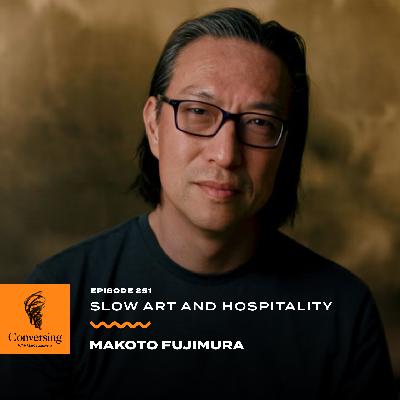
As we approach Ash Wednesday and the 2026 Lenten season, Makoto Fujimura's vision of slow art, hospitality, and kenotic creativity invites us to resist the speed, fear, and fragmentation of this cultural moment by learning again how to pay attention, to rest, and to become people capable of holding one another with care even amid grief, violence, and uncertainty. In this conversation, fine artist Makoto Fujimura reflects on art, trauma, hospitality, and the slow practices that help us remain human in fractured times. "I wanted this book to serve as a portal… to recognize something as maybe ordinary or as extraordinary as holding your granddaughter." Together with Mark Labberton, Fujimura reflects on art as generativity, kenosis, and the healing practice of attention. Together they discuss slow art, Ground Zero and trauma, Japanese aesthetics and hospitality, dandelions and attention, Sabbath rest, and self-emptying love. They explore how making art helps people remain human amid violence, polarization, and technological acceleration. Episode Highlights "I wanted this book to serve as a portal… to recognize something as maybe ordinary or as extraordinary as holding your granddaughter." "We are not just making… we are being made." "God is indeed the host." "Art is… a way for us to navigate our complex times." "It is okay for me to give my life away." About Makoto Fujimura Makoto Fujimura is a contemporary artist, writer, and cultural thinker known for "slow art" rooted in Japanese Nihonga painting traditions. His work explores generativity, culture care, theology of making, and the relationship between beauty and suffering. Having lived and worked near Ground Zero after 9/11, his artistic practice reflects themes of trauma, hospitality, and new creation. He is the author of Art Is: A Journey into the Light and other books on art, faith, and culture. Helpful Links And Resources Art Is: A Journey into the Light https://yalebooks.yale.edu/book/9780300273656/art-is/ Makoto Fujimura Website https://makotofujimura.com/art International Arts Movement https://iamculturecare.com/ Art and Faith: A Theology of Making https://yalebooks.yale.edu/book/9780300285482/art-and-faith/ Show Notes Lifelong friendship, artistic influence Slow art as resistance to acceleration Minneapolis demonstrations; dignity across legal status; 50,000 people marching in extreme cold as witness to human worth "I was holding Jane." Art as portal into ordinary life Making and being made simultaneously Scientist father, generative language framework Kamakura childhood aesthetics Insider–outsider identity formation Japanese language, visual thinking, layered perception Ground Zero studio years after 9/11 shaping imagination, community awareness, and artistic responsibility Hospitality as artistic and theological practice Survivor identity discovered through conversation with Columbine survivor "God is indeed the host." Attention, "minute particulars," and gratitude amid suffering Dandelions meditation: beauty in unwanted places; seeds surrendering to wind; healing compacted soil; overlooked gifts of creation Slow art practice: pausing, observing, letting meaning emerge rather than forcing conclusions Sabbath, rest, and imagination as resistance to productivity-driven identity Kenosis paintings, gold, generosity, and self-emptying love as cultural antidote "It is okay for me to give my life away." #MakoFujimura #SlowArt #CultureCare #FaithAndArt #Hospitality #Kenosis #CreativeProcess #SpiritualFormation Production Credits Conversing is produced and distributed in partnership with Comment magazine and Fuller Seminary.
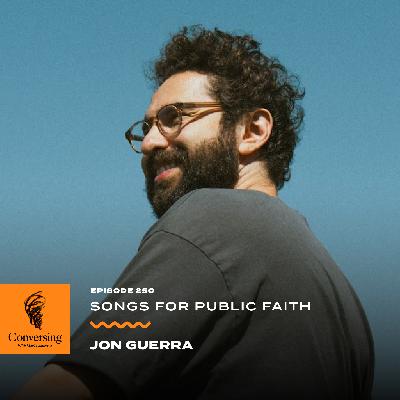
Singer-songwriter Jon Guerra joins Mark Labberton to explore devotional songwriting, public faith, and the tension between the kingdom of Jesus and American cultural power. Through music and reflection, Guerra considers how art can hold grief, courage, and hope together in turbulent times. "Love has a million disguises, but winning is simply not one." In this episode with Mark Labberton, Guerra reflects on songwriting as prayer, the call to love enemies, and artistic courage in moments of cultural crisis. Together they discuss devotional music, George Herbert's influence, the Beatitudes and American culture, citizenship and immigration imagery, increasing polarization, suffering and grace, and the vocation of Christian artists. Episode Highlights "Love has a million disguises, but winning is simply not one." "When Jesus says to love your enemies… he is giving us a means of survival." "This is not sentimentality… the only way to resist becoming what one hates." "My songwriting… would be a means of coming into contact with the invisible God." "Beauty puts us in contact with invisible things." About Jon Guerra Jon Guerra is a singer-songwriter based in Austin, Texas, known for devotional music that blends poetry, theology, and contemporary cultural reflection. His albums include Little Songs (2015), Keeper of Days (2020), Ordinary Ways (2023), and American Gospel. Guerra has also composed music for film, including Terrence Malick's A Hidden Life (2019). The son of immigrants from Cuba and Argentina, his work often explores themes of citizenship, prayer, justice, and the teachings of Jesus. His songwriting draws inspiration from figures like George Herbert and Howard Thurman, and seeks to connect spiritual devotion with public life. Helpful Links and Resources Jon Guerra website: https://www.jonguerramusic.com/ American Gospel album: https://jonguerra.bandcamp.com A Hidden Life film: https://www.searchlightpictures.com/ahiddenlife Jesus and the Disinherited by Howard Thurman: https://www.beacon.org/Jesus-and-the-Disinherited-P1781.aspx The Porter's Gate: https://www.portersgateworship.com/ Show Notes Devotional songwriting George Herbert influence on the pursuit of prayerful craft "Music for attending to the soul." Monday morning prayer music framing devotional practice Beauty and invisible realities in artistic experience American Gospel song introduction and cultural critique Beatitudes inversion in American culture "How do I give Christ a say in this conversation?" Love Your Enemies composition and album Jesus Howard Thurman's influence on enemy-love theology (Jesus and the Disinherited) Emotional formation through news, anger, and public life Death of ego and kingdom discipleship Kierkegaard and faith beyond ideology Worship as reordering power Kingdom of Jesus song and Pilate encounter Allegiance to a greater kingdom beyond nationalism Citizenship as foreignness imagery Immigrant family background shaping songwriting Citizens song written after 2017 inauguration "Come to you because I'm confused." Five-four musical structure expressing disorientation Groaning beauty and Romans 8 resonance Artists as "holy fools" naming reality Moltmann and theology near the cross Simone Weil: gravity and grace reflection "Love has a million disguises, but winning is simply not one." Hashtags #JonGuerra #DevotionalMusic #LoveYourEnemies #ChristianArt #AmericanGospel #PublicFaith #Jesus #Gospel #SpiritualFormation Production Credits Conversing is produced and distributed in partnership with Comment Magazine and Fuller Seminary.
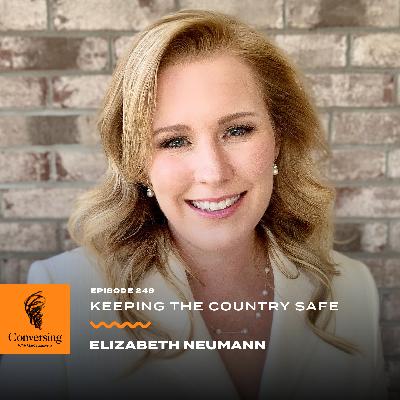
When federal agents kill civilians and public outrage sweeps the nation, who gets to define justified force and who gets to hold power accountable? The killings of Renée Good and Alex Pretti have sparked protests, national shutdowns, and fresh debate about what security should look like in America. Elizabeth Neumann, former assistant secretary for counterterrorism at the US Department of Homeland Security, joins Mark Labberton for a wide-ranging conversation about fear-based governance, moral responsibility, constitutional guardrails, and what faithful leadership looks like in a moment of political crisis. "Cruelty is a deterrent." In this episode with Mark Labberton, Neumann reflects on how Christian faith and public service shaped her national security career and why recent forceful immigration enforcement and lethal encounters challenge constitutional limits and moral clarity. Together they discuss the moral and political meaning of the Minneapolis killings, trauma and vocation, immigration enforcement and democratic consent, fear-driven leadership, and how citizens and faith communities respond when institutions break down. Episode Highlights "Cruelty is a deterrent." "I realized how much my hope and trust had been in man." "We wrapped the flag around the cross." "We see sufficiently, but not transparently." "This is not normal, and this is not okay." About Elizabeth Neumann Elizabeth Neumann is a national security expert and former assistant secretary for counterterrorism at the US Department of Homeland Security. She served across three presidential administrations, including senior roles during the George W. Bush and Trump administrations, and worked extensively on counterterrorism, prevention of political violence, and domestic extremism. A frequent public commentator and congressional witness, Neumann has become a leading voice on the moral and constitutional dangers of fear-driven governance. Her work bridges public policy, trauma studies, and Christian ethics, particularly where political power collides with faith commitments. She is the author of Kingdom of Rage, a deeply personal and analytical account of extremism, nationalism, and the cost of unexamined allegiance. Helpful Links and Resources Kingdom of Rage: The Rise of Christian Extremism and the Path Back to Peace https://www.amazon.com/Kingdom-Rage-Christian-Extremism-Peace/dp/1546002057 Show Notes Elizabeth Neumann's experience growing up in North Texas Faith and party loyalty culturally fused "To be a Christian meant you were a Republican." Early fascination with politics and government service University of Texas, late 1990s political climate George W. Bush campaigns as formative training ground Entry into White House work through campaign victory Faith-based initiatives before September 11 reshaped national priorities September 11 as lived experience, not abstraction Crossing the 14th Street Bridge as the attacks unfolded "We were under attack," and nothing felt safe Fog, confusion, smoke, radios, and unanswered phone calls Trauma before resilience, fear before context Learning endurance from older colleagues who said, "We will get through this." Trauma as vocational fuel Hypervigilance, workaholism, and mission-driven identity National security as moral calling rather than career ambition Warning from a CIA colleague: rebuild a cadence of normal life Vigilance versus fear-driven overwork Marriage, family, and a season of spiritual deepening Scripture as disruption: Jeremiah 17 and misplaced trust "I realized how much my hope and trust had been in man." Public policy confidence challenged as spiritual idolatry Russell Moore sermon and the shock of naming Christian nationalism "We wrapped the flag around the cross." Cultural Christianity exposed as formation, not gospel Deconstructing politics without deconstructing faith Becoming comfortable with ambiguity and moral gray Labberton on seeing "through a glass darkly" Interpretive humility versus certainty culture Returning to government during the Trump administration Saying yes out of mission, not agreement Guardrails inside government: translating impulse into lawful action Illegal orders, pressure, and survival mode governance Lafayette Square as turning point Peaceful protesters met with militarized force Optics over constitution Immigration enforcement reframed as cruelty-based deterrence "Cruelty is a deterrent." ICE, CBP, and DHS operating outside traditional norms First, Second, and Fourth Amendment violations described Warrantless searches and administrative authority Law enforcement trained for war zones policing civilian streets Rapid ICE expansion without vetting or adequate training Fear rhetoric inside agencies creating enemy mentality Officers taught to expect violence from the public Predictable escalation and preventable deaths Moral injury to agents and terror inflicted on communities "This is not normal, and this is not okay." Democracy requires consent of the governed Public trust collapsing when law breaks the law Call for stand-down, retraining, and accountability Faithful resistance as moral clarity, not partisan alignment #ElizabethNeumann #FaithAndPolitics #NationalSecurity #ImmigrationCrisis #MoralCourage #PublicFaith Production Credits Conversing is produced and distributed in partnership with Comment Magazine and Fuller Seminary.
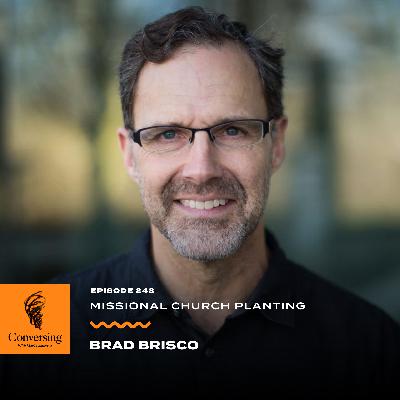
Church planting is thriving at the very moment the church faces a crisis of credibility. What if the problem isn't too few churches—but too narrow a vision of what church is for? In this episode with Mark Labberton, Brad Brisco reflects on church planting shaped by Christology before strategy, mission before institution, and incarnation before programs. Together they discuss missionary imagination in the modern West, co-vocational ministry, alternative expressions of church, micro-church networks, church growth assumptions, vocation and work, justice and proximity, and what it means to return—daily—to the ways of Jesus. –––––––––––––––– Episode Highlights "We need to help church planters think less like pastors starting a Sunday service and more like missionaries engaging a unique context." "If by church we mean buildings, then no—we don't need more of those." "Mission isn't really ours. It's about what God's already doing." "We can say we're gospel-centered and still miss the ways of Jesus." "The only way the church gets this far off is by being void of the ways of Jesus." –––––––––––––––– About Brad Brisco Brad Brisco is a missiologist and church planting leader, trainer, and writer who has spent more than twenty-five years coaching and resourcing church planters across North America. After beginning his career in the restaurant industry, Brisco entered ministry through church planting and later joined Send Network, where his work has focused on alternative expressions of church, co-vocational leadership, and missionally engaged discipleship. He also serves on the national leadership team for Forge America Mission Training Network. Brad is the co-author of "Missional Essentials," a 12-week small group study guide, "The Missional Quest: Becoming a Church of the Long Run" and "Next Door As It Is In Heaven." He is widely known for challenging church growth assumptions and for advocating Christ-centered, incarnational approaches that integrate faith, work, and neighborhood life. Brisco remains closely connected to decentralized microchurch networks and innovative models of mission in urban contexts. Follow him on X: https://x.com/bradleybrisco –––––––––––––––– Helpful Links and Resources Missional Church Network https://www.missionalchurchnetwork.com/ Send Network https://sendnetwork.com The Shaping of Things to Come – Alan Hirsch and Michael Frost https://www.amazon.com/Shaping-Things-Come-Innovation-Mission/dp/1565636597 Permanent Revolution – Alan Hirsch https://www.amazon.com/Permanent-Revolution-Apostolic-Imagination-Practice/dp/0470907746 Tampa Underground https://www.tampaunderground.com/ –––––––––––––––– Show Notes Church planting boom alongside institutional church crisis Restaurant business background shaping entrepreneurial ministry instincts Conversion, seminary, and inherited assumptions about "real" ministry Early confusion about church planting as a category From planting one church to training planters nationally Church defined beyond buildings toward embodied communities "If by church we mean buildings, then no—we don't need more of those." Missionary context of the modern West Do we need more churches or more ways of being church? Underserved neighborhoods and unengaged people groups Declining interest in traditional church programs Airplane anecdote exposing attractional church assumptions "You just need a really good sound system and a good speaker." Mission versus Sunday-centric church planting Christology–missiology–ecclesiology framework Jesus shaping mission before shaping church "Most church planters start with ecclesiology rather than the ways of Jesus." Church growth movement assumptions challenged Recapturing the missionary nature of the church Church as sent people, not religious service provider Incarnational presence in neighborhoods and workplaces "Mission isn't something we do over there." Participation in the mission of God "The mission isn't really ours—it's about what God's already doing." Individual salvation versus communal discipleship Robust Christology beyond the cross alone Incarnation, life, resurrection, and kingdom shaping mission Brokenness, proximity, and responsibility for place Mission as communal, not individual activity Bi-vocational and co-vocational ministry distinctions Marketplace calling as missional advantage Sacred–secular divide challenged Time constraints forcing alternative church models Team-based leadership as non-negotiable Theology of work as essential formation Financial freedom reshaping church planting incentives Fully funded models drifting toward attractional pressure Co-vocational longevity and sustainability Microchurch networks and decentralized leadership Tampa Underground as proof of concept Mission-first communities addressing justice and brokenness "Mission is the mother of adaptive ecclesiology." Diverse expressions emerging from contextual mission Established churches learning from church planting frameworks Incremental versus wholesale institutional change Sending churches supporting new expressions Calling the church back to the ways of Jesus "We can be gospel-centered and still miss the ways of Jesus." Credibility gap between Jesus and the church today Recalibrating discipleship for public faithfulness –––––––––––––––– #ChurchPlanting #MissionalChurch #FaithAndWork #Discipleship #ChristianLeadership #PublicFaith #Vocation –––––––––––––––– Production Credits Conversing is produced and distributed in partnership with Comment Magazine and Fuller Seminary.
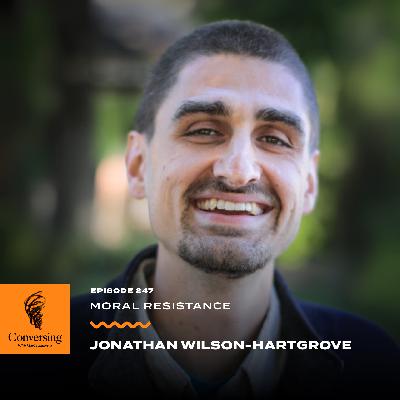
Christian faith has been politicized. Arguably, this is not new. But what we see in America and other societies has a jarring impact for those who seek a credible public Christian faith. To examine how Christian faith has been politicized in recent years, preacher and public theologian Jonathan Wilson-Hartgrove joins Mark Labberton, asking what moral resistance requires in this authoritarian moment. "I couldn't know Jesus in the fullness of who Jesus is without integrating faith and justice." In this episode: Wilson-Hartgrove reflects on his Southern Baptist formation, his political awakening, and a conversion that reordered his understanding of Jesus, justice, and public life. And: Trying to understand Christian nationalism, authoritarian power, poverty and race, moral fusion movements, just war theology, the discipline of prayer, and how churches can reclaim biblical values for the common good. Episode Highlights "I couldn't know Jesus in the fullness of who Jesus is without integrating faith and justice." "The radical separation of faith from justice was a way my faith was stolen from me." "We are in an authoritarian crisis that tells its own version of reality." "Christian nationalism offers an alternative reality that very sincere people come to trust." "Prayer interrupts the liturgy of consumerism and gives us another story." About Jonathan Wilson-Hartgrove Jonathan Wilson-Hartgrove is an author, preacher, and public theologian working at the intersection of Christian faith, moral movements, and public life. He serves as Assistant Director of the Yale Center for Public Theology and Public Policy and has spent more than two decades in faith-rooted movements for social change. A longtime collaborator with Bishop William J. Barber II, he has helped articulate the Moral Movement's moral framing of poverty, race, and democracy. Wilson-Hartgrove is the author of multiple books on public faith, justice, and Christian discipleship, and a co-creator of the widely used prayer resource Common Prayer. He lives in North Carolina, where his work remains grounded in local churches and communities. Learn more and follow at jonathanwilsonhartgrove.com and @wilsonhartgrove Helpful Links and Resources Revolution of Values: Reclaiming Public Faith for the Common Good https://www.broadleafbooks.com/store/product/9781506484136/Revolution-of-Values Common Prayer (with Shane Claiborne) https://www.zondervan.com/p/common-prayer/ White Poverty (with William J. Barber II) https://www.uncpress.org/book/9781469661927/white-poverty/ Yale Center for Public Theology and Public Policy https://publictheology.yale.edu/ Show Notes – Growing up in rural North Carolina tobacco country; The Andy Griffith Show based on his former community – Southern Baptist formation, scripture memorization, and the King James Bible – Moral Majority era shaping faith and politics – Early ambition to serve Jesus through political power – Greyhound trip to Washington, DC with grandfather – Becoming a Senate page at sixteen – Working in the office of Strom Thurmond – Encountering the racial subtext of American politics – "There was a distance between Sunday school and what was practiced" – Learning how southern politics realigned after civil rights – Leaving partisan politics searching for faithful public life – Disorientation and not knowing another way to be Christian – Meeting a preacher shaped by the civil rights movement – Discovering a faith that named injustice without condemnation – "I needed another way to be Christian in public" – Colorblind theology and segregated church life – Conversion as seeing Jesus and reality differently – Faith reordered by relationships, not ideology – Christian opposition to the Iraq War – Traveling to Iraq during U.S. bombing – "According to just war theory, this wouldn't be a just war" – How common sense changes over time – Christian nationalism and manufactured moral narratives – Alternative realities formed by trusted information sources – "We are in an authoritarian crisis" – Mutual aid, churches, and local resistance – Poverty as a moral and political vulnerability – Prayer as resistance to consumerist liturgy – Common Prayer and the rhythm of scripture – "Prayer gives us another story to live inside" #JonathanWilsonHartgrove #Authoritarianism #PublicFaith #ChristianNationalism #MoralMovement #FaithAndJustice #CommonGood Production Credits Conversing is produced and distributed in partnership with Comment Magazine and Fuller Seminary.
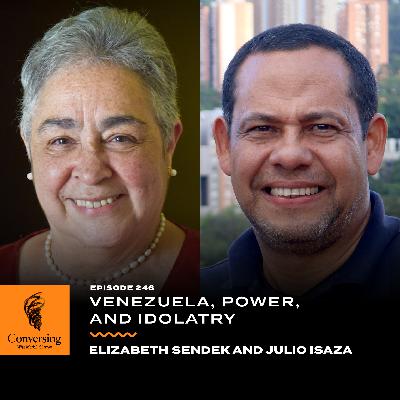
As violence erupts around the world, how must we respond to those who worship power? In Venezuela, global power has reshaped lives overnight, and Elizabeth Sendek and Julio Isaza join Mark Labberton to reflect on faith, fear, and Christian witness amid political upheaval in Latin America. "It made me question, if power is the ultimate good, then questions of morality or theology have no place. We have chosen our idol." Together they discuss how experiences of dictatorship, displacement, and pastoral caution shape Christian responses to invasion and regime change; the relationship between power and idolatry; the moral realities that come with violent and nonviolent action; fear and pastoral responsibility; the global impact of diaspora and migration; how prayer informs action; and how the church bears faithful witness under ruthless power. –––––––––––––––––– Episode Highlights "It made me question, if power is the ultimate good, then questions of morality or theology have no place. We have chosen our idol." "Prayer is a spiritual resource, valuable, needed, urgent every day, in times of peace and in times of crisis." "Prayer must also go alongside personal and collective actions in the defense of life, justice, freedom, reconciliation, and peace." "They are very cautious, because they are not sure who is in control." "We should not normalize violence just because it has always existed in history." –––––––––––––––––– About Elizabeth Sendek Elizabeth Sendek is a theologian and educator specializing in Latin American Christianity, theology and power, and the church's public witness under political violence. Her work draws from lived experience across Latin America, particularly contexts shaped by dictatorship, corruption, displacement, and ecclesial resilience. She has taught theology in academic and pastoral settings, engaging questions of ethics, political theology, and Christian responsibility in fragile societies. Sendek is widely respected for her ability to connect historical memory, biblical theology, and contemporary crises, especially regarding migration, authoritarianism, and Christian hope. Her scholarship and public engagement consistently emphasize prayer joined with concrete action, resisting both naïveté and cynicism. She speaks regularly to churches, students, and leaders seeking faithful responses to power and suffering. About Julio Isaza Julio Isaza, born in Colombia, is married to Katie Isaza and is the father of Samuel and Benjamin. He served with the Covenant Church of Colombia from 1995 to 2006 and later earned a master of divinity degree in Chicago, where he lived for six years. Between 2012 and 2015, he worked in the formation of university students and young professionals with Serve Globally in Medellín, Colombia. From 2016 to 2025, he served in peace-building processes in conflict areas of Colombia and also as a professor at the Biblical Seminary of Colombia, teaching in the areas of missional theology, cultural context, and holistic impact strategies. During this time, he also worked with Indigenous communities in the Colombian rainforest, engaging in oral theology initiatives. His work has focused on holistic discipleship, theological education, and peace-building. He holds a master's degree in Conflict and Peace from the University of Medellín and is currently pursuing a PhD in Theology and Peace at the Oxford Centre for Mission Studies in England. A US citizen, he resides in Minnesota with his family, where he is writing his doctoral dissertation titled "Cultivating Integral (Biblical) Peace in a Context of Socio-environmental Violence." –––––––––––––––––– Helpful Links And Resources Princeton Theological Seminary https://www.ptsem.edu Psalm 73 (New International Version) https://www.biblegateway.com/passage/?search=Psalm+73&version=NIV New Community Covenant Church (David Swanson) https://newcommunitycovenant.com/ Christians for Social Action https://christiansforsocialaction.org –––––––––––––––––– Show Notes News of Venezuelan invasion and presidential extrication Awakening to international headlines and Colombian news coverage Power displacing morality and theology "It made me question, if power is the ultimate good, then questions of morality or theology have no place." "We have chosen our idol." Violence beyond headlines and unseen civilian consequences Personal stories from Caracas neighbourhoods and bomb damage "You see in the news about Maduro taken, but you don't see the consequences of what happened." "Some of her family was killed in Caracas because of the bombs." Childhood shaped by armed conflict in rural Colombia Guerrilla groups, military raids, and forced displacement Paramilitary violence and state-backed terror in towns "When I was a child, I would draw helicopters and militaries killing each other." Conversion shaped by studying the life of Jesus "When I began to study the gospel, I thought that Jesus's way is not a violent way." Pastoral caution under volatile political regimes Fear shaping Christian speech and public silence "For the sake of my congregation, I cannot voice any opinion." Churches continuing ministry amid uncertainty "They agreed that this time is an opportunity to share the gospel of hope." Prayer as resistance and sustenance "Prayer is a spiritual resource, valuable, needed, urgent every day, in times of peace and in times of crisis." Prayer joined with embodied action "Prayer must also go alongside personal and collective actions in the defense of life, justice, freedom, reconciliation, and peace." Long histories of dictatorship shaping Latin American theology Skepticism toward purely academic liberation theology Credibility rooted in lived solidarity with the poor Diaspora pressure and forced return narratives "Now people say Venezuelans can go back to their own country." Xenophobia and fear within host communities Displacement as ongoing trauma for migrant families Scripture shaping hope amid cynicism "When I tried to understand all this, it troubled me deeply, till I entered the sanctuary of God." Refusing to normalize power's violence "Our call is not to normalize it, nor to declare it an act of God." –––––––––––––––––– #FaithAndPolitics #LatinAmerica #ChristianWitness #PowerAndViolence #Venezuela #ChurchAndState #PublicTheology Production Credits Conversing is produced and distributed in partnership with Comment magazine and Fuller Seminary.
What happens when a long pastoral calling ends, friendships fade, and the church faces cultural fracture? Bishop Kenneth C. Ulmer (42 years in ministry at Faithful Central Bible Church in Inglewood, CA) joins Mark Labberton for a searching conversation about retirement from pastoral ministry, loneliness, leadership, and the meaning of credible witness in the Black church today. "Ministry can be a lonely business." In this episode, Bishop Ulmer reflects on the stepping away after four decades of pastoral leadership, navigating aloneness, disrupted rhythms, and the spiritual costs of transition. Together they discuss pastoral loneliness, friendship and grief, retirement and identity, church leadership after elections, authenticity versus attraction, political division in congregations, and whether the church still centers Jesus. Episode Highlights "Ministry can be a lonely business." "[Boy, pointing to a church] Is God in there? [Pastor] Sometimes I wonder." "There's a Moses in you that will see farther than you'll go." "The tension is authenticity versus attraction." "Jesus is the answer for the world today." About Kenneth C. Ulmer Bishop Kenneth C. Ulmer is Bishop Emeritus of Faithful Central Bible Church in Inglewood, California, where he served as senior pastor for more than four decades. A nationally respected preacher, civic leader, and mentor, Ulmer played a significant role in the spiritual and economic life of Los Angeles, including the preservation of the Forum as a major community asset. He has been a prominent voice in conversations about the Black church, urban ministry, and faithful Christian leadership amid cultural and political change. Ulmer continues to teach, preach, and advise leaders while reflecting publicly on vocation, aging, and wisdom in ministry. Learn more and follow at https://www.faithfulcentral.com Helpful Links And Resources Faithful Central Bible Church: https://www.faithfulcentral.com Conversing with Mark Labberton: https://comment.org/conversing Credible Witness podcast: https://faith.yale.edu/credible-witness Show Notes Long pastoral tenure ending after more than four decades of leadership Friendship formed through shared grief and the loss of trusted companions Prayer, friendship, and ministry forged "on our knees" at Hollywood Presbyterian Loss of regular companionship revealing unexpected loneliness and aloneness "Ministry can be a lonely business." Absence of trusted friends exposing a deep relational void Final sermon titled "I Did My Best," echoing 2 Timothy imagery and the words on Kenneth Ulmer's father's grave "I fought a good fight" as closing vocational reflection Disrupted spiritual rhythm after forty-one years of weekly preaching "My rhythm is off." Identity shaped by Sunday coming "every seven days" Question of where and how to worship after stepping away Public recognition colliding with uncertainty about purpose Therapy as a faithful response to grief and transition Energy and health without a clear channel for vocation Question of "what do you do now?" after leadership ends Seeing farther than you will go as a leadership reality Deuteronomy 34 and Moses viewing the Promised Land "There's a Moses in you that will see farther than you'll go." Passing vision to a Joshua who will go farther than he can see Grief of cheering from the sidelines while no longer on the field Wrestling with authenticity versus attraction in church leadership John 12:32 and the tension of lifting up Jesus to draw others "The tension is authenticity versus attraction." Fear of entertainment, production, and celebrity eclipsing Christ Question of whether churches are built on preaching or personality Political polarization dividing congregations and pulpits Question pastors must ask: "Who am I going to be after this ballot?" Kingdom identity beyond donkey or elephant, only the Lamb "Holding up the bloodstained banner" as faithful witness Doors of the church open—how wide are they, and for whom? Concern for credibility after the benediction and after the election Civic engagement without surrendering theological center Preserving community good beyond church walls and buildings Forum purchase as economic stewardship, not church expansion Question of whether God is still "in that house" How much of the God inside gets outside into the neighborhood? Jesus as the enduring answer amid cultural confusion Worship song, "We Offer Jesus" "Jesus in the morning, Jesus at noonday, Jesus in the midnight hour." Call to be the extended incarnation in ordinary life: "You are the temple." "Who are you turning away that he [Jesus] would not turn away?" #KennethCUlmer #PastoralLeadership #ChurchAndCulture #CredibleWitness #FaithAfterRetirement #AuthenticityVsAttraction Production Credits Conversing is produced and distributed in partnership with Comment Magazine and Fuller Seminary.
Can joy be anything but denial in a rage-filled public life? Michael Wear joins Mark Labberton to reframe politics through the kingdom logic of hope, agency, and practices of silence and solitude. As 2025 closes amid political discord, we might all ask whether joy can be real in public life—without denial, escapism, or contempt. "… Joy is a pervasive and constant sense of wellbeing." In this conversation, Michael Wear and Mark Labberton reflect on joy, hope, responsibility, and agency amid a reaction-driven politics. Together they discuss the realism of Advent; the limits of our control; how kingdom imagination reframes anger; hope beyond outcomes, dignity under threat, and practices (including silence and solitude) that restore clarity. Episode Highlights "Joy is a pervasive and constant sense of wellbeing. … Joy is not a technique to then get people to do what you want them to do." "God's Kingdom is the range of his effective will." " Someone whose hope is rightly placed sees that a dignity denying culture does not have the final say." "Our will is effective and those things in which our will is not effective." "The pattern of domination and violence is an old one." About Michael Wear Michael Wear is the Founder, President, and CEO of the Center for Christianity and Public Life, a nonpartisan nonprofit that contends for the credibility of Christian resources in public life, for the public good. He has served for more than a decade as a trusted advisor to civic and religious leaders on faith and public life, including as a presidential campaign and White House staffer. He is the author of The Spirit of Our Politics: Spiritual Formation and the Renovation of Public Life and Reclaiming Hope: Lessons Learned in the Obama White House About the Future of Faith in America. Learn more and follow at https://www.michaelwear.com. Helpful Links and Resources Michael Wear, The Spirit of Our Politics https://www.zondervan.com/9780310367239/the-spirit-of-our-politics/ Michael Wear, Reclaiming Hope https://www.thomasnelson.com/9780718082338/reclaiming-hope/ Center for Christianity and Public Life https://www.ccpubliclife.org/ A National Call to Silence and Solitude https://www.silenceandsolitude.org/ Dallas Willard: "Personal Soul Care" https://dwillard.org/resources/articles/personal-soul-care Howard Thurman, Jesus and the Disinherited https://www.beacon.org/Jesus-and-the-Disinherited-P1781.aspx Show Notes End of 2025, cusp of Christmas; fraught public moment; joy as the lynchpin for faithful presence in politics and public life Joy held with pain, suffering, complexity Refusing denial while trusting a God who relentlessly pursues the world in love and hope Joy intertwined with hope, responsibility, agency Where does responsibility end and faithful agency begin? "Willard would say joy is a pervasive and constant sense of wellbeing." " It is very difficult to have joy if you are taking responsibility for things that are not your responsibility." Public life as joyless space; lacking imagination for joy amid provocation, antagonism, and constant political showmanship "If there are places in our life where we can't conceive of joy, it's a problem with our view of God." Misplaced responsibility, misplaced hope; joy collapses when taking on burdens that aren't ours and treating agency as ultimate "God's kingdom is the range of his effective will." "We each have our own little kingdoms … where what we say to be done is done." Politics reveals limits; a clarity about what we can do, what we can't do, and what we must import into the rest of life "Our will is effective, and there are things in which our will is not effective." "Faithfulness is not the ability to determine a righteous outcome … to everything in which our lives touch." False responsibility, obscured agency Are we taking charge of what isn't ours while ignoring the real choices we do have? "That's a recipe for joylessness." Poked and prodded by provocations; entertainment, antagonisms, and helplessness normalize reaction and justify complicity Anger as political fuel Many assume that raising your voice is the only faithful posture inside the public arena. "I've had people respond to me: 'How am I going to get anything done in politics without anger?'" "Political imagination has been taken over by a political logic as opposed to a kingdom logic." Relearning responsibility and agency; hope not grounded in our effectiveness, but in what God is doing beyond our reach. "Ultimate hope lies outside of the range of our effective will." "It is in that realm in which we are perfectly safe." Hope is for a life that pervades all things. "So when your hope is in the right place, you can hope for a whole range of things." " Someone whose hope is rightly placed sees that a dignity denying culture does not have the final say." Hope and joy "when your back is against the wall" Allen Temple Baptist Church: Joy at the margins of culture Fannie Lou Hamer Howard Thurman, Jesus and the Disinherited First Presbyterian Church in Evanston, IL Michael Wear, The Spirit of Our Politics Psalm 23 as distress-psalm: Enemies are still present, yet God leads beside still waters and cares most in greatest distress. "Take off the old self with its practices and put on the new self." "Put on Christ now in a way that will affect everything around us." Herod: The paranoid leader Advent into Christmastide—what it means to dwelling in Emmanuel "This is why the incarnation is such an extraordinarily important cornerstone: It's that God enters in through Jesus into our world, in a world in which, yes, there may be great praises in heaven and on earth from those who understand something at least of who he is and what he's there to do. But it also lands him in a world of immediate physical and familial vulnerability of political and social, if not military, violence." Are we protected from vulnerability, or living in precarity? The pattern of domination and violence Refusing forgetfulness as 2026 approaches with fresh pressures and fresh calling. National call to silence and solitude; disinvesting from reactionary instincts to engage the world with renewed vision and clarity. silenceandsolitude.org "Silence and solitude… can infuse your public activity with right vision and right clarity." #MichaelWear #MarkLabberton #ChristianPublicLife #ChristianPolitics #SpiritualFormation #Joy #Advent #SilenceAndSolitude #Hope #PublicWitness Production Credits Conversing is produced and distributed in partnership with Comment Magazine and Fuller Seminary.
What if taking Mary seriously actually deepens, rather than distracts from, devotion to Jesus? Art historian and theologian Matthew Milliner joins Mark Labberton to explore that possibility through history, theology, and the Incarnation. In a searching conversation about Mary, the meaning of Marian devotion, and the mystery of the Incarnation, they draw from early Christianity, Protestant theology, and global Christianity, as Milliner reframes Mary as a figure who deepens devotion to Christ rather than distracting from it. "I don't see how anyone cannot understand this to be the revolution of revolutions in regards to the way that women are understood." In this episode, they reflect on Mary as presence, witness, and theological key to understanding God's entry into human life. They discuss Marian devotion before the Reformation, excess and restraint in Christian practice, the Incarnation's implications for embodiment and gender, Protestant fears and recoveries, global Marian traditions, grief and discipleship, and why Mary ultimately points beyond herself to Christ. Episode Highlights "I love Jesus so much that I love his mom too. Isn't she great too?" " What relationship do you have in your life where if you knew the parents of the person you're in relationship with, that would damage the relationship? … It's a sign of deep intimacy." "There is no Christianity without Mary. That's how God came into the world." "She is my tutorial in grief." "If it's the real Mary you're dealing with, she will point you to Jesus." "The answer to the abuse is to point to the best use." "She became a presence in the church for me." "I don't see how anyone cannot understand this to be the revolution of revolutions." About Matthew Milliner Matthew J. Milliner is Associate Professor of Art History at Wheaton College, where he specializes in early Christian, Byzantine, and global Christian art. His scholarship explores theology through visual culture, with particular attention to Mary, the Incarnation, and Christian devotion across traditions. Milliner is widely published in academic journals and popular outlets, including Comment Magazine, where he has written extensively on Marian theology and Christian art. He is a frequent speaker and lecturer on Christianity and aesthetics, and his work bridges evangelical theology, Anglican practice, and historic Christian tradition. Milliner is also known for his teaching on icons, pilgrimage, and the relationship between art, doctrine, and discipleship. Helpful Links and Resources Read Matthew Milliner's column, Material Mysticism, for Comment Magazine https://comment.org/columns/material-mysticism/ Matthew Milliner, Mother of the Lamb: The Story of a Global Icon: https://www.amazon.com/Mother-Lamb-Story-Global-Icon/dp/1506478751 Matthew Milliner faculty page: https://www.wheaton.edu/academics/faculty/matthew-milliner/ Stephen Shoemaker, Mary in Early Christian Faith and Devotion: https://yalebooks.yale.edu/book/9780300217216/mary-in-early-christian-faith-and-devotion/ Rosemary Radford Ruether, Goddesses and the Divine Feminine: https://www.ucpress.edu/books/goddesses-and-the-divine-feminine/paper William Johnston, The Wounded Stag: https://www.harvard.com/book/9780823218394 The Angelus Prayer (recited in this conversation): https://www.usccb.org/prayers/angelus Shrine of Our Lady of Walsingham: https://www.walsinghamanglican.org.uk Show Notes Opening prayer invoking Mary's witness, comfort, and example as a way of drawing listeners toward Christ rather than away from him Evangelical identity reclaimed as gospel proclamation rather than political alignment or cultural branding Early Marian devotion emerging "early and often" in Christian history, grounded in Jerusalem rather than later medieval invention "I love Jesus so much that I love his mom too. Isn't she great too?" Honoring Mary without worship, framed through Revelation imagery of the bride and the people of God Archaeological and manuscript discoveries reshaping assumptions about early Christian practice Marian devotion expanding intimacy rather than competing with Christological focus Newman on devotion requiring excess, extravagance, and emotional overflow to be genuinely human "Let the Christian Church let it boil over every once in a while." Reformation dynamics producing extremes: feverish excess on one side and stone-cold rejection on the other Rosemary Radford Ruether, Goddesses and the Divine Feminine Pagan goddess traditions contrasted with Marian imagery and their treatment of women's bodies Aphrodite imagery as endorsement of male desire versus Marian imagery as reverence for God's entry into flesh "Find me an image of Mary that does anything close to that." Incarnation reshaping how Christians see the female body, sexuality, and dignity "This is the body God entered the world through." The angel Gabriel's Annunciation and Mary's consent Annunciation framed as consent rather than coercion, with Luke emphasizing Mary's agency "Nothing happens to her until she consents." Mary as theological answer to pornographic and exploitative religious imaginations "I don't see how anyone cannot understand this to be the revolution of revolutions." Guadalupe as evangelistic bridge for indigenous peoples pointing toward Christ without blood sacrifice Mary's global accessibility across Muslim, Hindu, and non-Christian contexts "She is a real evangelist, Mary." Walsingham pilgrimage as Anglican recovery of Marian devotion Marian attraction functioning as penumbra drawing outsiders toward Christianity "If it's the real Mary you're dealing with, she will point you to Jesus." Abuse of Marian devotion acknowledged alongside historical self-correction within Catholicism "The answer to the abuse is to point to the best use." Matthew Milliner's personal spiritual journey from childhood Catholicism through evangelical conversion Anti-Mary phase followed by rediscovery through art history and theology "She became a presence in the church for me." Mary understood as presence rather than abstract idea, without becoming divine William Johnson's, The Wounded Stag: God is beyond gender Devotional practice as tributary flowing into Trinitarian worship rather than replacing it "There is no Christianity without Mary. That's how God came into the world." Angelus prayer as scriptural meditation culminating in Trinitarian praise "Pour your grace into our hearts, O Lord." Psychological and spiritual healing through Marian presence without theological confusion Mary as guide for grief through images of sorrow and seven swords "She is my tutorial in grief." Black Madonna traditions interpreted through devotion, time, soot, and divine darkness Darkness as sign of overwhelming divine light rather than absence of God #ConversingPodcast #MatthewMilliner #MaryTheology #Incarnation #ChristianTradition #AdventReflections #FaithAndArt Production Credits Conversing is produced and distributed in partnership with Comment Magazine and Fuller Seminary.
How should Christian faith shape work in an era of pluralism, fear, and systemic inequality? Sociologist Elaine Howard Ecklund (Rice University) is presenting new insights for faith at work through data, theology, and lived experience. "People love to talk about individual ethics … but what was really hard for them to think about was, what would it mean to make our workplace better as a whole?" In this episode, Ecklund joins Mark Labberton to reflect on moving from individual morality toward systemic responsibility, dignity, and other-centred Christian witness at work. Together they discuss faith and work, the gender and race gaps created by systemic injustice, fear and power, religious diversity, rest and human limits, gender and racial marginalization, and the cost of a credible Christian witness. Episode Highlights "People love to talk about individual ethics." "What would it mean to make our workplace better as a whole?" "People are much more apt to take us seriously if we first take them seriously." "Suppression of faith in particular is not the answer." "God is God and I am not." About Elaine Howard Ecklund Elaine Howard Ecklund is professor of sociology at Rice University and director of the Boniuk Institute for the Study and Advancement of Religious Tolerance. She is a leading sociologist of religion, science, and work whose research examines how faith operates in professional and institutional life. Ecklund has led large-scale empirical studies on religion in workplaces and scientific communities, supported by the National Science Foundation, Templeton Foundation, and Lilly Endowment. She is the author or co-author of several influential books, including Working for Better, Why Science and Faith Need Each Other, and Science vs. Religion. Her work informs academic, ecclesial, and public conversations about pluralism, justice, and moral formation in modern society. Learn more and follow at https://www.elaineecklund.com and https://twitter.com/elaineecklund Helpful Links And Resources Working for Better (IVP): https://www.ivpress.com/working-for-better Why Science and Faith Need Each Other (IVP): https://www.ivpress.com/why-science-and-faith-need-each-other Elaine Howard Ecklund website: https://www.elaineecklund.com Rice University Boniuk Institute: https://boniuk.rice.edu Conversing with Mark Labberton: https://comment.org/conversing Show Notes Sociological study of religion, work, and group behavior Christian faith taken seriously at personal and academic levels Ecklund's former research focus on science as a workplace environment Expanding faith-at-work research beyond scientific communities Compartmentalized Christian faith and the fear of offending colleagues Friendship and collaboration emerging from leadership retreats Large-scale data-driven study on religion in changing workplaces Religious pluralism at work and changing workplace demographics Writing for Christian audiences shaped by empirical research From individual ethics toward systemic responsibility at work "People love to talk about individual ethics." Systemic injustice blind spots Moral shorthand focused on time sheets and office supplies Organizational leadership and culture change Difficulty imagining organizational or structural workplace change Fear of retaliation when confronting unjust systems Responsibility for workplace realities Power underestimated by those holding leadership positions Costly examples of speaking up against workplace injustice Christian fear of marginalization in pluralistic environments Suppression of religious expression as common workplace response Suppression versus accommodation: "Suppression of faith in particular is not the answer." Religious diversity as unavoidable reality of modern work Other-centered faith rooted in dignity of every person Imago Dei shaping engagement across religious difference "People are much more apt to take us seriously if we first take them seriously." Racialized religious minorities: the double marginalization of racial minorities of faith Gender inequity and underexamined workplace power dynamics Faith-based employee groups Fear masquerading as anger in cultural and religious conflict Workplaces as rare spaces for meaningful civic encounter Justice beyond activism Rest as theological foundation for justice and leadership Limits, Sabbath, and resisting productivity as ultimate value "God is God and I am not." Human limits in leadership Production Credits Conversing is produced and distributed in partnership with Comment magazine and Fuller Seminary. #FaithAndWork #ElaineHowardEcklund #ChristianEthics #WorkplaceJustice #ReligiousPluralism #RestAndFaith
As global powers double down on militarism and defense, Daniel Zoughbie argues that the most transformative force in the Middle East has always come from citizen diplomacy. A complex-systems scientist and diplomatic historian, Zoughbie joins Mark Labberton to explore how twelve US presidents have "kicked the hornet's nest" of the modern Middle East. Drawing on his work in global health and his new book Kicking the Hornet's Nest: U.S. Foreign Policy in the Middle East from Truman to Trump, Zoughbie contrasts the view from refugee camps and micro-clinic networks with the view from the Oval Office, arguing that American security rests on a three-legged stool of defence, diplomacy, and development. He explains why Gerald Ford stands out as the lone president who truly leveraged diplomacy, how the Marshall Plan model of enlightened self-interest can guide policy now, and why nationalism, not mere economics, lies at the heart of Gaza's future. Throughout, he presses listeners toward "citizen diplomacy" that resists pride, militarism, and fatalism. Episode Highlights "We've constantly ignored diplomacy." " You don't have to be enemies with people to get them to do what is in their own self-interest." "You can build skyscrapers in Gaza. You can build the Four Seasons in Gaza and it's not going to work. You're just going to have another war until you address that core issue of nationalism." "These three D's, defense, diplomacy, development, are the three-legged stool of American security and we know how important diplomacy and development are." "From Truman to Trump, only one president, and that is Gerald Ford, surprisingly the only unelected president, gets this right." "Pride—national pride, the pride of any one individual—is toxic. It's toxic to the individual. It's toxic to the nation. It's toxic to the world." "Foreign policymaking is not just something for secretaries of state and those in power. All of us in a democracy have a role to play." Helpful Links and Resources Kicking the Hornet's Nest: U.S. Foreign Policy in the Middle East from Truman to Trump https://www.simonandschuster.com/books/Kicking-the-Hornets-Nest/Daniel-E-Zoughbie/9781668085226 American University of Beirut (founded as Syrian Protestant College), a key example of long-term educational diplomacy https://www.aub.edu.lb Al-Ahli Arab (Gaza Baptist) Hospital in Gaza City https://en.wikipedia.org/wiki/Al-Ahli_Arab_Hospital Max Weber, "Politics as a Vocation" https://dn790009.ca.archive.org/0/items/weber_max_1864_1920_politics_as_a_vocation/weber_max_1864_1920_politics_as_a_vocation.pdf Quaker Friends School, Ramallah: https://www.rfs.edu.ps/en Amman Baptist School: https://baptist.edu.jo/ American Colony Hotel in Jerusalem founding in the Husseini Estate by the author of "It is Well" https://www.loc.gov/exhibits/americancolony/amcolony-family.html and https://en.wikipedia.org/wiki/American_Colony_Hotel Foreman Christian College, Pakistan (Presbyterian) https://en.wikipedia.org/wiki/Forman_Christian_College American University of Cairo (Presbyterian) https://en.wikipedia.org/wiki/American_University_in_Cairo About Daniel Zoughbie Daniel E. Zoughbie is a complex-systems scientist, historian, and expert on presidential decision-making. He is associate project scientist at UC Berkeley's Institute of International Studies, a faculty affiliate of the UCSF/UCB Center for Global Health Delivery, Diplomacy, and Economics, and principal investigator of the Middle East and North Africa Diplomacy, Development, and Defense Initiative. He is the author of Kicking the Hornet's Nest: U.S. Foreign Policy in the Middle East from Truman to Trump and of Indecision Points: George W. Bush and the Israeli-Palestinian Conflict. His award-winning research has appeared in journals such as PLOS Medicine, Mayo Clinic Proceedings, and Social Science and Medicine. A Phi Beta Kappa graduate of UC Berkeley, he studied at Oxford on a Marshall Scholarship and completed his doctorate there as a Weidenfeld Scholar. Show Notes Middle East Background and Micro-clinic Origins Daniel Zoughbie recalls visiting the Middle East as a child—"frankly horrified" by what he saw UC Berkeley protests over the Iraq War and post-9/11 US policy in the region Metabolic disease and type 2 diabetes as an overlooked "greatest killer in the region." Neighbours in the West Bank sharing food, medicine, and blood-pressure cuffs—leads to the "micro-clinic" concept Good health behaviours, like bad ones and even violence, can be contagious through social networks Social Networks, Anthropology, and Security Social anthropology, political science, and international relations Medical problems as simultaneously biological and sociological problems Understanding Middle East security demands attention to decisions "at the very bottom" as well as "the view from above" October 7 and 9/11 illustrate how small groups of people can "change the world with their decisions." Complex Systems and Foreign Policy Complexity is always increasing, and diplomacy and development exist to slow it down. Definition of "complex system": as one where many inputs produce outcomes that cannot be reduced to single causes. "We almost have a new law here, which is that complexity is always increasing in the universe. And the role of diplomacy and development, as I see it in international relations, is to slow things down. It's to stop complexity from advancing so that people have time to cool their tempers and to solve major security crises." Type 2 diabetes as a model for thinking about how city planning, economics, relationships, and habits interact He applies that lens to international relations: nations, leaders, institutions, and history form a "cascade of complexity." From Refugee Camps to Presidential Palaces George Shultz and Tony Blair: decision-makers as "real human beings," not abstractions Theological and ideological forces—such as certain apocalyptic readings of Scripture—that shape US foreign policy Gnosticism and eschatology within American right-wing Christianity Painstaking global health work on the ground and sweeping decisions made in Washington, Brussels, or New York Twelve Presidents and One Exception Kicking the Hornet's Nest: analysis of twelve presidents from Truman to Trump through the lens of Middle East decision-making Core claim: Only Gerald Ford truly rebalanced the three D's of defence, diplomacy, and development. US policy in the Levant: heavy reliance on militarism, coups, and covert actions while underinvesting in diplomacy and development Claim: "Far better alternatives were on the table" for every administration, yet consistently passed over. Gerald Ford, Kissinger, and the Path to Peace Daniel contends that the 1967 and 1973 wars were both preventable and nearly became global nuclear catastrophes. Ford inherits the presidency amid Watergate and national division, but keeps Henry Kissinger at State. Ford presses Israel and Egypt toward serious negotiations, empowering Kissinger's shuttle diplomacy and personal ties. A sharply worded letter threatening to "reconsider" the US-Israel relationship Ford's diplomacy and the development of Camp David and the enduring Egypt-Israel peace based on "land for peace." Pride, Personality, and Presidential Failure Did Ford's temperament keep him from making himself the center of the story? In contrast, many presidents and other leaders write themselves "thickly" into the narrative of the conflict. Pride—personal and national—as a toxic force that repeatedly undermines US policy The Iraq War and democracy-promotion agenda and the self-defeating nature of moralistic, militarized crusades Marshall Plan and Enlightened Self-Interest George Marshall and harsh punishment after World War I helped produce Nazi Germany The Marshall Plan models an "enlightened way of viewing the American self-interest": rebuilding Europe and Japan to secure U.S. security. He contrasts that with the neglect of the Levant, where aid and institution-building never matched military activism. Marshall's genius lies in locating the intersection between others' deepest needs and American capabilities. Militarism, Iran, and Nuclear Risk Recent US-Israel-Iran confrontation as an "extremely dangerous moment"—with 60 percent enriched uranium unaccounted for JCPOA as an imperfect but effective diplomatic achievement, but dismantled in favor of militarism Claim: Bombing Iran scattered nuclear material and increased complexity rather than reducing the threat. He warns that one nuclear device could be delivered by low-tech means—a boat or helicopter—endangering civilians and US forces in the Gulf. The only realistic path forward: renewed multilateral diplomacy between US, Israel, Iran, Russia, China, Pakistan, India, and regional actors Ethical Realism and Max Weber "Ethical realism"—Max Weber's distinction between the ethic of the gospel and the ethic of responsibility Statespeople bear responsibility for using force, yet the greatest can still say "here I stand and I can do no other." Claim: True leadership seeks a higher ethic where national interest aligns with genuine concern for others. Gaza, Nationalism, and Two States Welcoming the end of active war between Israel and Hamas and critiquing reconstruction plans that ignore politics Conflict is fundamentally nationalist: a struggle for self-determination by both Jewish and Palestinian peoples Claim: Economic development without a credible political horizon will not prevent "another October 7th and another terrible war." In his view, only partition of mandatory Palestine into two states can meet legitimate self-determination claims. For example, "You can build skyscrapers in Gaza… and it's not going to work" without addressing nationalism. Citizen Diplomacy and a Better Way Foreign policy is not only the work of secretaries of state; democratic citizens have responsibilities. American University of Beirut and the Gaza Baptist Hos
Rabbi Michael G. Holzman joins Mark Labberton to explore the formation of his Jewish faith, the pastoral realities of congregational life, and the multi-faith initiative he helped launch for the nation's 250th anniversary, Faith 250. He reflects on his early experiences of wonder in the natural world, the mentors who opened Torah to him, and the intellectual humility that shapes Jewish approaches to truth. Their conversation moves through the unexpected depth of congregational ministry, the spiritual and emotional weight of the pandemic, the complexities of speaking about God in contemporary Jewish life, and the role of cross-faith friendships. The episode concludes with Rabbi Holzman's reflections on how the suffering in Israel and Palestine reverberates among Jews and Muslims in America. Episode Highlights "I think we are desperately in need of ways to get Americans to agree that they're in the same community… simply by naming the Declaration of Independence as a piece of shared American scripture… we are inviting people and really challenging ourselves to think about the words in those documents seriously, and prayerfully." "My formation as a child was relatively non-theological… my mother just would sit there and say, 'Do you feel that wind?' And for me, knowing that it was in a national park mattered… being in such a grand and awesome space, under the enormity of the heavens." "The pursuit of truth with epistemic humility really became the cornerstone…if Moses wasn't allowed to see God's face, I'm never gonna see God's face—and yet we are all still pursuing what the meaning of this incredible text is." "I was a little bit unprepared… until you experience it as a pastor, you don't really understand the power of those things. That rootedness in this particular congregation gave me a sense of existential meaning that I didn't anticipate." "The thing that got me through that darkness was Saturday morning Torah study… just being there with the text and with these faces and these people… that to me was my path through the darkness." "When people are sitting over the text, the most palpable experience of God is this moment of understanding another human being… it's so vulnerable and it's so fleeting and it's so beautiful." "There is an experience happening on the ground of absolute suffering and horror on both sides… and there's a parallel experience happening for Jews and Muslims in America. It's powerful, spiritually powerful, emotionally powerful, and to people's core." Helpful Links and Resources Faith 250 https://www.faith250.org/ "The New Colossus" by Emma Lazarus https://www.poetryfoundation.org/poems/46550/the-new-colossus "What to the Slave Is the Fourth of July?" by Frederick Douglass https://teachingamericanhistory.org/document/what-to-the-slave-is-the-fourth-of-july/ "America the Beautiful" by Katherine Lee Bates https://www.gilderlehrman.org/history-resources/spotlight-primary-source/america-beautiful-1893 I and Thou, Martin Buber https://press.princeton.edu/books/paperback/9780684717258/i-and-thou About Rabbi Michael G. Holzman Rabbi Michael G. Holzman is the Senior Rabbi of Northern Virginia Hebrew Congregation (NVHC), where he has served since 2010. His work focuses on spiritual formation, civic engagement, multi-faith partnership, and the cultivation of communities grounded in dignity, learning, and ethical responsibility. He founded the Rebuilding Democracy Project, which developed into Faith 250, a national multi-faith initiative preparing communities for the 250th anniversary of the United States through shared reflection on foundational American texts. He teaches and writes on Jewish ethics, civic life, and spiritual resilience. Show Notes Faith 250 American Scripture Faith 250 as a response to political despair and a way for clergy to exercise agency Four core American texts explored as shared scripture across faiths Intent to counter politicization of the 250th anniversary through spiritual depth Multi-faith relationships grounding the initiative in shared civic and moral concern Emphasis on clergy as conveners of spiritually safe, local containers for reading The Declaration, New Colossus, Frederick Douglass, and America the Beautiful as "scriptural" portals to civic meaning "American scripture" as a means of naming shared identity and shared community Jewish Formation and Torah Childhood shaped by nature, wonder, and ethical awareness rather than synagogue life Early encounters with the Everglades as formative experiences of spirit and awe Discovery of Torah study as a young adult across Orthodox, Conservative, and Reform settings Epistemic humility as a defining mark of Jewish study practice Pursuit of truth understood through the "through a glass darkly" frame of Moses Torah received "through the hand of Moses" as mediating truth and mystery Chevruta (paired study) as the engine of discovery, disagreement, and meaning Pastoral Life and Congregational Meaning Surprised by the depth of pastoral work: weddings, funerals, life-cycle passages Intimacy of congregational leadership as a source of meaning rather than tedium Congregational relationships forming an existential and vocational anchor The role of community support during family medical crises How decades-long pastoral presence shapes shared covenantal life Teaching 12- and 13-year-olds to encounter the text as spiritual practice The power of intergenerational relationships in spiritual resilience Pandemic and Spiritual Survival Early months of 2020 as a time of fear, isolation, and emotional strain Counseling families whose loved ones were dying without visitors Previous experience with depression creating early warning signals Telehealth therapy as a critical intervention Saturday morning Torah study on Zoom becoming the path through darkness Growth of the study community throughout the pandemic Predictable humor and shared reading as markers of communal stability Textuality, God-Language, and Jewish Hesitations Jewish discomfort speaking explicitly about God for theological and cultural reasons Layers of humility, anti-mysticism, differentiation from Christianity, and historical experience Sacredness and mystery of the scroll growing in the digital age Physicality of the Torah scroll attracting deeper attention and reverence Hebrew as a source of multivalent meaning, sonic power, and spiritual resonance Reading together as the most common encounter with God: understanding another's soul Pastoral awareness of individuals' life stories shaping group study dynamics Cross-Faith Devotion and Shared Honor Friendships with Muslim, Christian, and Hasidic leaders deepening spiritual insight Devotion in others sparking awe rather than defensiveness Disagreement becoming a site of connection rather than separation Devotion in other traditions prompting self-reflection on one's own commitments Stories of praying with and learning from ultra-Orthodox leaders Shared pursuit of truth across tradition lines as a form of civic and spiritual honor American religious diversity offering unprecedented exposure to sincere piety Israel, Gaza, and American Jewish Experience Suffering, fear, and horror experienced by Israelis and Palestinians Parallel emotional and spiritual pressures faced by Jews and Muslims in America Concern about political manipulation of community trauma Generational trauma and its transmission, including Holocaust-era family stories Emotional resonance of global conflict in local congregational life Distinction and connection between geopolitical realities and American spiritual experience Call to honor emotional realities across neighborhoods and communities Production Credits Conversing is produced and distributed in partnership with Comment Magazine and Fuller Seminary.
In this Thanksgiving reflection, Mark Labberton opens up about a period of darkness and despair, when as a younger man he considered ending his life. But when he was invited to share Thanksgiving dinner with a local couple, his eyes were opened to concrete acts of hope, friendship, and joy—all embodied in the simple feast of a community "Friendsgiving" potluck. Every year since, Mark calls these friends on Thanksgiving Day, in gratitude for and celebration of the hospitality, generosity, beauty, friendship, and hope he encountered that day. Here Mark reflects on the emotional and psychological difficulties he was going through, the meaning and beauty of friendship, how every dish of a Thanksgiving dinner is an act of hope and community, and how hospitality and generosity can uplift every member of a community. If you or anyone you know is struggling with depression or considering suicide, there is help available now. Simply call or text 988 to speak with someone right away, share what you're going through, and get the support you need. About Mark Labberton Mark Labberton is the Clifford L. Penner Presidential Chair Emeritus and Professor Emeritus of Preaching at Fuller Seminary. He served as Fuller's fifth president from 2013 to 2022. He's the host of Conversing. Show Notes A story about Thanksgiving Day many years ago, during Mark Labberton's master of divinity degree at Fuller Seminary "… not just overwhelmed, but really undone" " … the possibility of ending my life …" Every Thanksgiving dish as an act of hope and community Beauty of friendship A magnificent extravaganza Sharing not just food but hope "Things had radically changed. And that in fact they had, they had not only changed my mindset, but they had saved my life." "For me, Thanksgiving Day holds this deep and pensive awareness that Thanksgiving doesn't always come easy, that often it's a difficult act, that it involves things that are sometimes impossible for certain people to carry. And at the same time, it's possible for other people to carry them in our place, which is what these friends did for me that day." If you're feeling despair, seek professional help. Call or text 988 for an immediate response with a counsellor. Seek community. "Whether you're in darkness or in light, whether your heart feels full of gratitude or whether it may not, I just hope that you'll be aware that God is with you, that you are not alone, that there are people that want to support you and help you, and that there are people that know you who would welcome you into a circle of celebration and gratitude today." Production Credits Conversing is produced and distributed in partnership with Comment magazine and Fuller Seminary.

Comments

Download from Google Play

Download from App Store
 United States